Fans of American metal act Iced Earth have long hoped for a new sign of life from their icons. On 28 April 2023, the wait will be over at last: Guitarist and founder member Jon Schaffer has announced the release of two new EPs on ROAR! Rock Of Angels Records. Entitled 'Hellrider' and 'I Walk Among You', these releases will include rare recordings from the transition phase between singer Tim 'Ripper' Owens' and predecessor/successor Matt Barlow in 2007 and 2008, a particularly exciting and eventful period in Iced Earth's band history. The 'Hellrider' EP consists of the songs 'Prophecy', 'Birth Of The Wicked' and 'The Coming Curse', originally from the album 'Something Wicked This Way Comes' (1998), voted one of the best power metal records of all time by Metal Hammer. In late summer 2007, all three tracks were re-recorded, featuring Tim 'Ripper' Owens. Schaffer: "Before now, these releases hadn't been issued on anything other than CD. Now they've been remastered, with new artwork, new mastering, new formats on vinyl, picture disc, and they'll be available for digital download for the first time."
Поиск:angel r
Все
Symphony Orchestra is a new group from Maximilian Turnbull and Michael Rault. Both Rault and Turnbull are accomplished songwriters, performers and producers in their own right, with Turnbull leading The Badge Epoque Ensemble, playing with the group Darlene Shrugg, and once releasing records under the name Slim Twig and Rault having released several psychedelic rock & roll classics under his own name in the past decade. The pair have worked together in various capacities for many years, writing and recording together on U.S. Girls' In A Poem Unlimited, and contributing to each other's releases, but the debut LP from Symphony Orchestra (due out May 12th on Telephone Explosion) marks their first release as an official entity.
Needless to say, there is a potent creative chemistry between Rault and Turnbull and Radiant Music showcases the alchemy between their distinct skill sets. The album is an exercise in pure collaboration. After years spent focusing on solo projects and working as hired guns on other projects, the duo came together with no specific intentions other than to work free of boundaries and direction. Freeing themselves from the familiar pressures of deadlines and expectations, they found a sense of discovery through togetherness. Duties on this project were split between Rault acting primarily as a one-man rhythm section and lead vocalist with Turnbull bringing chord sketches and his trademark aphoristic lyrical musings to the table. Trading off roles on guitar and keys from song to song, the duo's deft approach to melody bleeds through their instrumental parts as much as it does through Rault's vocal melodies. The majority of this album was self-engineered over the course of three sessions in 2018, at Michael's Montreal studio. Dormant during the pandemic, Rault's move to Los Angeles and the birth of Turnbull's twin sons, work reignited in 2022. The latterly tracked instrumental 'Concerto' and ballad 'Unthink The Thinkable' provide a dynamic depth to the album perhaps attributable to this tumultuous pause. Mixing came courtesy of Steve Chahley & Tony Price (U.S. Girls, BÉE, Jane Inc, etc).
In all of their work, Rault and Turnbull have made a hallmark of elaborately precise production and arrangement, Radiant Music is no different, though its pared-back simplicity provides a streamlined directness. The pairing of Rault's soulful, elastic vocal with Turnbull's evocatively cerebral lyrics provides a thrilling sensation unlike anything else in their respective catalogs. With an explosive, groove-forward approach, kaleidoscopic walls of vocal harmony and technicolor displays of guitar work, these 31 minutes of music will most certainly stimulate the mind of any fan of classic pop rock and funk. The blown-out breakbeats, winsome woven vocal melodies and propulsive wah-wah guitars of the title track evoke memories of an after-school cartoon special that never really existed outside of a lysergic daydream. "Harp In The Wind" is a perfect moment of overcast melancholy complete with ribbons of weeping synthesizers and velcro-fuzz guitar that could rip a clean line through Kevlar. "Know Thyself" and the harmony-rich "Intersection" are standout tracks that find a kinship in Stereolab's space-age effervescence. "Concerto" is a slab of beaming, mischievous funk that nods to Billy Preston's extraterrestrial keyboard explorations.
Radiant Music, like the best pop music, is life-affirming, confectionary, and enticing. Symphony Orchestra have created an album that hits you right where you need it, anchoring heady, adventurous sonic ideas down to a solid foundation of masterful songcraft, virtuosic instrumental performances and undeniable groove. Not a bar, nor beat is wasted.
To need, to be needed, in four corners. Sleep and privacy, gases come and gases go, and now you are the only one in the room you sit in, you are one with the room you sit in, as if there are no negatives and no positives--did you know that you are an extension of your apartment? Did you know that you are in a codependent relationship with your apartment? Did you know that your apartment knows and appreciates all of your secrets?--I feel safe, which is not a new need for human beings, but a very ancient one, almost the first one. It is enacted by the possibility of sound, humming or strumming something mostly. But the quiet apartment makes its own sounds: a single longing note of birdsong told to the beat of restful breathing, the angelic insistence of tinnitus, the neighbours. Sometimes I wonder if silence means nobody's home. How still I sit. Sometimes I return to silence and feel hugged by the cool lightness of its touch, like sleeping with just a sheet in summertime. Like turning the key. Like a visit from the cat next door. Like a somnambulant ray reaching across the room, asking if you'd like to step outside. Reste Envie is a desirous message to oneself, made from a place of lived solitude: the parameters of home. Roger 3000 is a painter and a musician from Brussels, Belgium. Rest En Vie follows his 2020 release on his own imprint Tundra Records, Fiftine. His first solo EP, UFO Love Letters, was released by JJ Funhouse in 2014, followed by a contribution to Ekster's 2017 compilation album EXO3. Roger 3000 frequently collaborates with other musicians and artists, most recently with Lawrence le Doux (with whom he released the EP Chou Chou on Lexi Disques in 2021); with Carole Louis as Ondine & Turbotin for the EP Club Solitude, as well as with Bitsy Knox, with whom he released the LP OM COLD BLOOD in 2018 on Tanuki Records. Text by Bitsy Knox
Recently created Guatemalan label Identidata is extremely proud to present Sacratávica, the very first collected survey of Joaquín Orellana’s compositions. With a career spanning over 50 years of activity across contemporary art, performance, theater and sound art, Orellana is a highly singular figure in Guatamalan culture. Often considered to be the sole avant-garde composer in the country, his work has a deeply interdisciplinary quality. Most of his music was created using an orchestra of his self-built instruments, also known as Útiles Sonoros. Sitting at the border of sculpture, sound installation and musical instrument, these Útiles Sonoros, which he’s been building and developing since the late ‘60s, are at the center of his artistic activity.
Aside the obvious formal aspect, his compositions also have a strong political message, while being deeply rooted in Guatemalan history, folklore and various identities, both indigenous and modern. Playful opener “Híbrido a presión” was one of the first of his compositions to be performed entirely using the Útiles Sonoros. However, due to its technical complexity the piece was seldom reproduced, except for a later staging that Orellana directed in Louisville, Kentucky. “Ramajes”(1984), initially titled “Evocación profunda y ramajes de una marimba” , tracks the many incarnations of the marimba across history, before reaching its final form as one of Orellana’s instruments by combining vibrational percussion with melody and poetry fragments.
The title track, ‘’Sacratávica’’, represents one of the most ambitious and emotionally charged pieces from the album. An expansive 22 minute composition mixing textures that mimick field recordings and multi-layered vocal melodies culminating in choral catharsis, ‘’Sacratávica’’ deals in baroque maximalism without ever feeling cluttered. For the casual listener, the track immediately stands out, not only because of the moving vocal layered harmonies, but also through its epic scale and strong sonic narrative. Dubbed “Las voces del Rio Negro”, the piece references the massacres that took place in Coban during a period where the army massacred numerous towns, throwing the bodies in the nearby Rio Negro (the Black River).
Final track, “Fantoidea”, a glistening, metallic ambient improvisation, was a reimagining of Disney’s Fantasia using Paul Dukas’s “The Sorcerer's Apprentice” as inspiration.
Despite his work being presented in numerous exhibitions and concerts in various prestigious museums and theaters across the world, very few quality recordings exist to date. The only previously available recordings so far or either of very poor quality or did not receive enough attention. This is why, although The compositions presented not being previously unheard, having them all together in a high quality audio object represents a key moment In Guatemalan and Latin American culture.
Recorded on August 31st 2016 during a historical concert attended by over 1000 people at the Centro Cultural Miguel Angel Asturias, designed by Efrain Recinos, one of Guatemala’s leading contemporary artist from the last century, the four pieces were performed by a selection of over 90 musicians (including 60 vocalists) who were already familiar with Orellana’s instruments, cherry-picked from the Guatemalan Conservatory.
For the people behind Identidata, it has been a long and arduous process to put together these pieces. Trying to offer a panoramic view of Orellana’s work, the curators have selected pieces ranging from different decades and artistic periods. Sacratávica is a portrait of a singular artist whose work speaks not only to his culture, but carries strong aesthetic sensibilities that resonate universally.
"Drums from heaven, keys from Mars, a bass made from mother earth's soil and guitars from a guy who's time-traveling from German Kraut in the last 60ies into the next 60ies and who happens to gift us today with this funky, dirty, pulsating, delicious music that's everything which music is supposed to be: ALIVE! (Note to self: Always keep a copy of this record in your suitcase!)." (Malakoff Kowalski)
"Afrokraut" is a stylistic expression of Krautrock, primarily associated with Can, and their creative use of time and space in music. "A Guide To Afrokraut III" is David Nesselhauf´s third and last contribution to the dusty shrine of this long forgotten style.
Next to "Afrokraut" (2016) and "Afrokraut II: The Lowbrow Manifesto" (2018), this album completes a humble sonic Trypticon in honour of David Nesselhauf's musical heroes. Experimentation was key in the immersive process of producing this album, which encompasses elements of Funk, Afrobeat and Krautrock as well as otherworldly Drones, early Elektronische Musik and even field recordings.
Inspired by the unfinished manuscript 'History Deletes Itself' by the late science fiction author Joseph Sabiers, Nesselhauf decided to produce a b-movie soundtrack to the original plot, ignoring the fact that there will likely never be a movie to this music.
In the original script, a virus has infected history, the resulting changes of historical facts leading to an unpredictable present and future for mankind. Every attempt to solve the problem – including time travelling – only worsens the situation. But three planets at the end of the known universe seem to be unaffected by the phenomenon, they become a sanctuary known as 'Afrokraut III'. Three brothers arrive there to start new lives. They are introduced to The Guide, their mysterious advisor...
The striking parallels to today's uncertainties, a strong feeling of hope and the idea to never stop exploring (come what may) certainly have encouraged the making of this album, which sees a belated release due to the obstacles everyone faces right now.
David Nesselhauf lives in Hamburg/Germany and appears as a bass player/songwriter in bands like Hamburg Spinners, The Drawbars, Diazpora, and Angels Of Libra.
Over the years veteran producer Mark Ambrose wrote some of the most unique, energetic house / techno tracks. Those found their place in sets of many leading underground djs, Ricardo Villalobos, Sonja Moonear and Marcel Dettmann to name a few. The Journey is an essential and timeless compilation that collect his most rare and hard to find classics. Must have!!
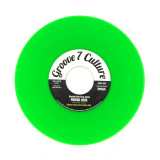
Groove Culture and Irma Records teamed up on this beautiful fluorescent green coloured 7'' and provided two of the best house music classics ever made in Italy. Two crazy timeless hits: ‘Found Love’ by Double Dee and ‘Say It Again’ by Jestofunk.
On the A side we find a peak time pumping version of ‘Found Love’ by the one and only maestro Dimitri From Paris, on the back a funk fuelled version of ‘Say It Again’ by Micky More & Andy Tee, who painstakingly reconstructed all the arrangements of the original and added some delicious sax phrases to elevate the track to new heights. A must have for of any true music lover.
Supported by: DJ Spen, Danny Krivit, Mousse T, Simon Dunmore, David Penn, Dr Packer, Dirty Channels, Angelo Ferreri and many others…
In the Middle of Nowhere is the fourth studio album by Modern Talking. It was released on 10 November 1986 in Germany and in other territories. The album contains the international hit single “Geronimo’s Cadillac”, which reached a top-5 position in Germany and Austria while entering the top-10 in many other countries including Switzerland, Sweden and Norway. The album also features follow-up singles “Give Me Peace on Earth” and “Lonely Tears in Chinatown” as well as fan-favorite “Angels sing in New York City”.
In the Middle of Nowhere entered the No. 1 position in Germany on 1
December 1986. After spending total of seven weeks within the top-10 in the German album chart, it eventually reached a gold status selling well over 250,000 units in Germany alone.
In the afterglow of her acclaimed 2020 album Silver Ladders (a year-end favorite of NPR, Pitchfork, The New Yorker, and others), Los Angeles-based harpist Mary Lattimore returns with a culminating counterpart release, Collected Pieces: 2015-2020. The limited-edition LP features new and previously unreleased material, Bandcamp-only singles, and other obscurities alongside standouts from her 2017
tape Collected Pieces. Beyond the vinyl compendium, an expanded tracklist on the cassette/digital version brings more of Lattimore’s archives together for the first time. Lattimore has described the process of arranging these releases as akin to “opening a box filled with memories,” and here that box continues to populate, accessible for both the artist and fans. Evocative material separated by years, framed as a portrait of an instrumental storyteller who rarely pauses, recording and often sharing music as soon as it strikes
- A1: Dreams (Feat Xênia França&Zé Leônidas)
- A2: Kismeti (Feat Matthias Schriefl)
- A3: Asase (Feat Eric Owusu)
- A4: Sábado (Feat Zé Leônidas)
- A5: Carrossel (Feat Zé Leônidas)
- B1: Caio & Eric (Feat Eduardo Camargo)
- B2: Ndiyakhangela (Feat Bongani Givethanks &Amp; Mpho Nkuzo)
- B3: Agôra (Feat Matthias Schriefl)
- B4: Oblique Sunshine (Feat Rebekka Ziegler)
Global pointing Brazilian jazz trio releases their new album Agôra, that sparkles with electric funk and Herbie-esque eclecticism. It features a myriad of guest vocalists and musicians including Brazilians Xênia França and Zé Leônidas, Jembaa Groove's Ghanaian singer Eric Owusu and South African artists Bongani Givethanks & Mpho Nkuzo
Re-wiring the concept of 'fusion' for 2023, Agôra is Brazilian trio Caixa Cubo's resurgent new record with the title referring to 'now', based upon the intuitive and fluid nature of the trio's method, and this inspired recording. With shoots to black music culture, from Brazil to Brooklyn, Ghana and South Africa, Agôra is the group's ninth album yet is their first where they've invited guests, mainly singers, onto each track and follows their last, Angela from 2020, released on Heavenly Records, which won a BBC 6 Music Album of the Year (Huey Morgan's selection) granting them much deserved international recognition.
The core musical elements of Caixa Cubo are Henrique Gomide (keys), João Fideles (drums) and Noa Stroeter (bass), all from São Paulo, Brazil and where they met as teenagers and would continue their friendship and musical bond at the Royal Conservatory in The Hague, Netherlands. Now all in their mid thirties, João and Noa live back in the city where it all started but Henrique has settled in Cologne, Germany where the recording of Agôra took place, over the course of 3 days, at the home cum studio of Chris 'Dusty' Doepke, their friend and owner of the label they signed to, Jazz & Milk.
In line with all their creations where flow and energy provide the magic, allowing what the moment provides, the album shines not only for its virtuosity but for its minimalism, the depth of space, and for the first time, the ability to figure in and outside of the jazz fold, as the trio decided, for the first time, to bring in singers and add a new aesthetic to their sound.
"Agôra is a wake-up call to reality, a reminder that the infinite possibilities of technological progress should not disconnect us from the earth, from eye-to-eye relationships, and from moments lived in person" the band are keen to point out. "And that we must not be consumed by greed, for all we truly possess.... is the NOW."
Turning hope and metaphor into music, the debut single Sábado, an electrified future- jazz-fizz reflects perfectly the spontaneity that permeated the entire recording of the album. "When we got to the studio, we had no idea what we were going to record. We started playing a groove, kind of inspired by Gilberto Gil's 80s albums, and our drummer João started singing this funny song 'Sábado Barrigudão' (Big Belly Saturday) alongside the bass groove and that was that". Inspired by their city of birth, São Paulo, it features long time collaborator and vocalist Zé Leônidas, with cuicas, tamborim, agogo and shakers providing the most obvious Brazilian affect from the album.
Dreams is the band's first foray into R'n'B melding the group's simple and sporadic instrumentation of drums, keys and bass into a Jill Scott inspired song that could have been born in Brooklyn yet sung by Brazilian singer and Grammy nominated Xênia França and Zé Leônidas in both English and Portuguese. Xênia recently performed online for hip-to-it website Colors and it's her latest collaboration with Caixa Cubo, having first met in 2009 for a series of live performances.
South African artists Bongani Givethanks & Mpho Nkuzo come to the record with a wholly different approach on Ndiyakhangela, providing spoken word and vocal refrains on top of an Afro-Brazilian percussion jam with a delivery and verse in Xhosa, Zula and Ndebele. Asase is the album opener and features vocals of Eric Owusu who is part of highlife pioneer Pat Thomas's live band and most recently, co-leader of Jembaa Groove, an Afro-soul band from Berlin. It's a synth wig out with djembe grooves and offers a brand new take on Afro-soul-jazz.
Other contributions come from Cologne based jazz singer Rebekka Ziegler (Oblique Sunshine), São Paulo based guitarist Eduardo Camargo (Caio & Eric) and trumpet player Matthias Schriefl on Kismeti, a gorgeous and rolling number that ebbs and flows, exemplifying the group's effortless ability to craft a sound energised by a belief in one-self and the idea of having faith without the need to look at each other for verification.
As drummer and percussionist João Fideles perfectly surmised upon arriving for the recording session, "What drums do you have? Whatever you have, I'll use it". Agôra is testament to nearly 20 years of camaraderie, friendship and most importantly, trust.
Angelo is an LP, named after a car, featuring nine songs Brijean have crafted and carried with them through a period of profound change, loss, and relocation. It finds percussionist/singer Brijean Murphy and multi-instrumentalist/producer Doug Stuart processing the impossible the only way they know how: through rhythm and movement. The months surrounding the acclaimed release of Feelings, their full-length Ghostly International debut in 2021 which celebrated tender self-reflection and new possibilities, rang bittersweet with the absence of touring and the sudden passing of Murphy’s father and both of Stuart’s parents. In a haze of heartache, the duo left the
Bay Area to be near family, resetting in four cities in under two years. Their to-go rig became their traveling studio and these tracks, along with Angelo, became their few constants. Whereas Feelings formed over collaborative jams with friends, Angelo’s sessions presented Murphy and Stuart a chance to record at their most intimate, “to get us out of our grief and into our bodies,” says Murphy. They explored new moods and styles, reaching for effervescent dance tempos and technicolor backdrops, vibrant hues in contrast to their more somber human experiences. Angelo beams with positivity and creative renewal — a resourceful, collective answer to “what happens now?”
Angelo the car is a 1981 Toyota Celica they got off Craigslist during their first stint in Los Angeles, where Murphy and Stuart have since settled. “Such a bro-y, ‘80s dude car, it’s been super fun to drive around in a new town,” Murphy says. “He’s older than us, he’s a classic, he’s got a story.” It is a spiritual vehicle with a cinematic appeal, first dropping them off in an alleyway for the scene-setting intro, “Which Way To The Club.” The question is quickly resolved by “Take A Trip” as a cruising bassline mingles with crowd sounds, hand-claps, cuíca hiccups, whip-cracks, even a horse neigh. Brijean have found some club on this cross-dimensional trip — the kind of
imagined space or chamber within one’s self capable of “shifting a fraction of who you are,” says Murphy. They wrote the track with the simple intention to be “as free as we could be,” adds Stuart, likening the flip on the B section to a realm unlocked: ”What if the world changed completely? You open the door to a new room.”
Next is “Shy Guy,” a motivational anthem for the wallflowers among us. Murphy sets up the daydream: “We are in junior high, we’re on the dance floor, what’s going down, who is dancing, who is not, how are we gonna make them dance?” The narrator, the MC, hypes up the room as conga-driven rhythms bounce between languid synth and guitar lines. “Show me how to move...I feel something...I know you feel it too,” Murphy sings sweetly, calling back to the opening lines of Feelings, and this time the audience chants it back. It is easy to picture Brijean performing this one — something they only got to do a handful of times until more recently, opening shows for Khruangbin and Washed Out, an experience they found informative. Murphy explains, “It was inspiring to be out there and let loose more. To see how people can expand their expression on stage gave me more liberty with how I viewed my musicianship. My role for so long was to be a backup percussionist, so why would I ever leave the drums, you know? But then after playing all these runs, you see these artists and realize you can, you have permission.”
“Angelo” and “Ooo La La” deliver the danciest stretch in Brijean’s catalog to date. The title track adopts a deep house pulse replete with strings, hi-hats, and kicks. The latter opts for a funkier groove that foregoes verses in favor of warbled hums and extended breakdowns. What follows is perhaps the duo’s dreamiest run, a comedown initiated with the honey-hued interlude “Colors” drifting into “Where Do We Go?”, a tropicália reverie where Murphy contemplates the passage of time and space.
It all culminates in “Caldwell’s Way,” a fond farewell to their Bay Area community — “a part of my life that I knew couldn’t come back,” says Murphy. Above shimmering organ sounds, lush strings, and the birdcall of their former neighborhood, she wistfully articulates the uncertainty of moving on by remembering the characters dear to them. There’s the wisdom of their neighbor, Santos, who refused payment when helping them move out: “I’d rather have 100 friends than 100 dollars.” And the song’s namesake, Benjamin Caldwell Brown, a friend and club night cohort for many years. “I’m only miles away, maybe I’m just feeling lonely,” the line resigns to warm nostalgia, and “Nostalgia” runs the closing credits to this healing and transportive collection.
Seit gut 30 Jahren zählt Adriana Calcanhotto nun schon zu den größten und einflussreichsten Stimmen jener weiblichen Singer/Songwriter-Generation aus Brasilien, deren Vertreterinnen gleichermaßen als Komponistinnen, Instrumentalistinnen und Dichterinnen erfolgreich sind.
Vor drei Jahren hatten die pandemiebedingten Lockdown-Maßnahmen im Land sie dazu gezwungen, das 2020 veröffentlichte Album "Só" ("einsam/allein") unter ungewöhnlichen Bedingungen aufzunehmen: als virtuelle Zusammenarbeit mit anderen Musiker:innen, die (genau
wie sie selbst) in den eigenen vier Wänden festsaßen.
Kein Wunder, dass das Resultat vor allem jene Einsamkeit zum Ausdruck brachte, unter der in jenen Tagen die meisten Menschen leiden mussten.
Nun jedoch meldet sich die zweifache Latin-Grammy-Gewinnerin
(2006 & 2010) mit einem ganz anders klingenden und sehr viel extrovertierteren Longplayer zurück: "Errante" - was im Deutschen so viel wie "umherziehend" bedeutet.
Tatsächlich bewegt sich Adriana Calcanhotto auf ihrem 13. Studioalbum sehr frei und legt große Distanzen zwischen ganz unterschiedlichen Stilen und Genres zurück (alles von Bossa Nova, Samba-Canção, Xote, Maxixe und Samba-de-Roda bis hin zu Rock/Pop und Funk Carioca (Favela Funk)), wobei auch die Themenpalette ähnlich groß angelegt ist, wenn es etwa um die Liebe und deren Ende geht, ums Flirten, um Verluste, um Trauer und Selbstreflexion.
2023 Repress.
In honor of the January full moon, 2016.
Supported by Alan Backdrop, Claudio PRC, Ness, Svreca, Antonio de Angelis, Arnaud le Texier, Exium, Kwartz, Takaaki Itoh, The Noisemaker, Unam Zetineb, Vilix, Oscar Mulero, Eric Cloutier, Conrad van Orton, Acronym, Felix Lorusso, Jose Pouj, Nihad Tule, Nobody Home, Brando Lupi, Brendon Moeller (Echologist), Francois X, Gianluca Meloni, Artefakt, Iori, Rasmus Hedlund, Reggy van Oers, Retina.IT, Stefan Vincent, Antonio Ruscito, Sam Kdc and more.
Orange Vinyl
»Love As Projection« is the new album by Frankie Rose, her fifth studio LP and second for Night School following the reissue of her interpretation of The Cure’s »Seventeen Seconds«. Frankie Rose has forged an enviable musical legacy, from playing with bands like Crystal Stilts and The Vivian Girls but on »Love As Projection« she takes a bold step into electronic pop production. A sumptuous recorded statement, it dances in ecstasy and broods on the tumult of the western world’s decay in equal proportion. At the heart of the album is glowing, confident songwriting, resplendent in hooks and choruses but still touched with an optimism undimmed.
After spending nearly two decades establishing herself across New York and Los Angeles independent music circles, Rose re-emerges after six years with a fresh form, aesthetic, and ethos. Celebrated over the years for her expansive approach to songwriting, lush atmospherics, and transcendent vocal melodies and harmonies, »Love As Projection« is a reintroduction of her established style through the lens of contemporary electronic pop. Recorded with producer Brandt Gassman and mixed with long-term collaborator Jorge Elbrecht this is the album Frankie Rose has been building up to her entire career.
More than a rebirth, a refinement, a resurgence, »Love As Projection« boasts a widescreen scope: a long- form project heavily considered for half of a decade, culminating in the most personal and accessible collection of art-pop that Frankie has ever written. When Rose aims for the pop jugular as in first lead track »Anything«, the result is unstoppable. A majestic pop song built for radio, it erupts into an irresistible chorus that marries classic epic 80s American pop with the cult effervescence of Strawberry Switchblade »It’s like a prom scene in a John Hughes movie. It’s a hopeful song about abandoning fear even if the world is quite literally on fire.. In the end, at least we have each other,« says Rose. »Sixteen Ways« further boasts a propulsive, massive chorus, though tempered by a cynicism built in global post-truth, global malaise. »It’s about getting your hopes up, but simultaneously making lists in your head about how it will never work out in your favour.«
The big anthems don’t let up there. On »DOA« some massive, rolling drums lathered in big mid-80s gated reverb dovetail with a syncopated baseline for the ages as Rose’s vocal sails effortlessly above. The effect isn’t unlike ethereal vocalists Clannad circa Howard’s Way or Enya jamming with Simple Minds in their stadium-conquering heyday. Rose tempers the adrenalin with heart-tugging bittersweet tones and there are plenty of them. »Sleeping Night And Day« takes its time with an off-the-cuff chorus, swirling around in harmony and chorus-bass. »Saltwater Girl« picks up the balladeering baton with another nod to album track-mode Switchblade, deep space opening up in the mid-tempo drum track and soupy, digital atmospherics. Album closer »Song For A Horse«, reimagines modern Pop production a-la-PC Music but shorn of the meta-atmosphere. Pianos, swelling synths, minor keys cut through with major. These moments, also seen in Feel Light offer ballast to the soaring pop choruses. Moments like these are big oceans of emotion to fall into before being led out by Rose into a bright new day.
»Love As Projection« is released in the USA by Slumberland.
The next transmission from planet BRUK comes courtesy of Lårry, an enigmatic artist ploughing an individualist furrow through various fields of electronic expression, one hand tweaking the tiller and the other casually dismissing the rules of rave. You might have caught their sharply-pointed sound on Super Hexagon or Awkwardly Social, or perhaps stumbled across their fabled 2021 live performance from Fitzroy in Berlin, or even unconsciously swayed to something spun in a set any time over the past five years. Lårry's discography is modest but mighty, and How Was That For You builds into that idea with four
precise tools for forward-leaning soundsystem communion. From the fractalised barbs of electronica stepper 'In Water' to patiently dread-eyed wobbler 'Angela's Knife', 'Uniform Uninform's icy incisions to the snaking spiral staircase of 'Yargachin', this is brain fodder first and foremost, with bassweight impact threaded through as an added bonus. Keeping fine company amongst the other oddities inhabiting the Bruk mandate, Lårry continues to keep us on our toes, literally and figuratively.
- A1: Bonobo Feat Innov Gnawa - Bambro Koyo Ganda
- A2: Moullinex & Selma Uamusse - Ngoma Nwana
- A3: Bonga - Mona Ki Ngi Xica (Pablo Fierro Remix)
- A4: Vaudou Game Feat Roger Damawuzan - Pas Contente
- A5: Philippe Cohen Solal Feat Angélique Kidjo & Mo Laudi
- B1: Leeroy & Seun Kuti - Beasts Of No Nation (French 79 Eve
- B2: De Gama - Afrika (Radio Edit)
- B3: Daniel Rateuke - Marimbo
- B4: Cesaria Evora - Sangue De Beirona (Main Pass By Francoi
- C1: Guts - Kenke Corner
- C2: Lanu Feat Aloe Blacc & Quantic - Mother Earth
- C3: M, Toumani Diabaté & Sidiki Diabaté Feat Fatoumata Di
- C4: Oumou Sangaré - Kamelemba (Pouvoir Magique Remix)
- D1: Anchorsong - Ancestors
- D2: Daniel Haaksman Feat Spoek Mathambo - Akabongi (Kapo
- D3: Nyaruach - Gatluak (Hyenah Dub)
- D4: Manu Dibango Feat M.c. Mell'o - Mincalor (Dance Mix)
black repress !
Everyone's favourite Italian duo Micky More & Andy Tee joined in full force with house music icons Cevin Fisher and Roland Clark. The Logo side sees ‘All About The Culture’ feat. Cevin Fisher, a track doused in live bass, fiery grooving Rhodes chords and spoken word lines that shines a light on the freedom of expression and liberation found through the culture of house music. Already tested on the dancefloors of New York, London And Ibiza this track is ready to become a future classic!
Flip it to find ‘The Rhythm’ feat. Roland Clark; a groove heavy concoction of live instruments from strings and guitar, to keys and bass that come together tp create a warm, uplifting, funk-disco-house heater topped off with those spine tingling spoken word vocals. A timeless original production.
Repressed on Black Vinyl.
DJ Support:
The Shapeshifters, Hector Romero, Terry Hunter, Seamus Haji, Quentin Harris, CJ Mackintosh, Quibiko, Northy Cotto, Double Dee, Roog, Dr. Packer, Angelo Ferreri, Kenny Carpenter, Benji Candelario, Dj Disciple, Dj Pope, Luis Radio, Richard Earnshaw, Lenny Fontana, Dj Pippi, Marco Fullone