Search:ant law
It's been four years since Sweatbox Dynasty, the fourth solo LP from Pennsylvanian experimentalist TOBACCO. In that time, Tom Fec's project has toured with Nine Inch Nails, provided the theme song to HBO series Silicon Valley, and teamed with Aesop Rock for a collaborative album as Malibu Ken. He now returns to Ghostly International for Hot Wet & Sassy, a full-length album oozing with his most playful and approachable songs to date, which, conversely, express notions of antilove, self-hate, and disappointment in others. Pop impulses have always surged beneath the surface of his sound - blown-out bass, analog synths, drum machines, and Fec's unmistakable analog gurgle and hiss - here they've bubbled to the top. "I feel like it's the most I've been able to refine what I'm doing," says Fec. "For the past decade I've had this motherfxcker on my shoulder that makes me pick away at structure and melody. Purposely covering up moments because I can. That really came to a peak on Sweatbox. So I wanted the opposite this time. Write the songs without ripping them in half. I went from 'what would the Butthole Surfers do?' to 'what would Cyndi Lauper do?'" And what would Trent Reznor do? Fec found his answer straight from the source. Their collaborative track, "Babysitter," fuses their voices into one deranged presence: "I'm the new babysitter," they alert, before pivoting into a menacingly saccharine bridge. The track tumbles on a tom fill, then a punishing synth line rips into a cacophony of drums and feedback like a lawnmower gnawing through the living room carpet. "This was new for me, but I wanted to write a song that was everything I am and have been, and then like one notch further. Trent was the notch further," adds Fec. The collaboration is a work of alchemy seamlessly blending TOBACCO's trademarks with Reznor's industrial rust and sonic gore. Downcast, sincere, woozy, "Jinmenken" might be the closest Fec has come to a ballad. "Maybe you can find me down the line," his vocoded delivery bounces along the beat. "It's me trying to write a Jets song," says Fec. Album opener "Centaur Skin" presents the stylistic concoction that has been the TOBACCO MO from the beginning, crossing dreamy melodic shimmer with the sinister tones and slime. This has become easier to digest, but also far more potent. A motorik beat steadies the track's galloping arpeggio, acting as a springboard for Fec's dark ruminations as well as an uncharacteristically crystalline synth solo. "It's my feel good self hate anthem. Don't worry, I'm good. It was fun to write." TOBACCO hasn't been reinvented, but it has been refined and distilled. Brighter, sharper, and far more dangerous because of it. Hot Wet & Sassy is practically staring at the sun without shades and feeling those corneas roast. Everything looks good as your vision fades. The pop-forward structures exert their undeniable hooks with baneful precision, pulling listeners into their clutches; once there, sugary melody rewards submission.
Seeing himself as a social commentator, Coops continuously draws inspiration from everything around him and is feeling more inspired than ever. Having signed to the label in 2018 he has already released 2 poignant albums and continues to create at rapid speed.
The 8-track project - which was made in just 4 studio sessions - is unlike Coops’ usual 14+ track albums both he and his fans have become used to. Coops turned the album around in record time to ensure his music was released during this unparalleled time in history. The homegrown beats come from his close friend and long term collaborator Talos who has produced almost all his beats to date.
In the opening track, ‘ Boom Biddy Bye’ Coops doesn’t waste a second in putting his fellow rappers through their paces. A block rapper with no one to please but himself, Coops professes that he barely listens to what other rappers release to ensure they don’t infiltrate and influence his own music. Highly appropriate for these times, title track ‘ Crimes Against Creation ’ is the stand out voice of this generation and his message to the world. ‘W arped perception, thwart connections, they force perfection, then claim the antidotes an injection...’ plays out and we begin to appreciate how the current situation is playing heavily on his mind. As the album progresses we get to see all sides of Coops’ personality with ‘Piss Poor’ reminding us of the raw gritty London lifestyle from which he has risen from, whilst ‘Profile’ demonstrates his softer more promiscuous side as well as touching on themes of fatherhood and online relationships.
Coops’ musical entry point begun by making music with his friends, but it wasn’t until he really looked at himself and the world around him when he decided he needed to go it alone, opening his mind and his solo stream of creativity which hasn’t stopped since. A self-proclaimed hermit he embodies the essence of a true artist and only finds comfort in doing what he loves, not what he is told.
Digging deep into the annals of Gospel now, the name Pastor TL Barrett should be familiar to the eagle eyed crate diggers amongst you. An extremely "colourful" character from Chicago's Southside neighbourhood who found himself on the wrong side of the law for his involvement in some activities of a dubiously illegal nature, more importantly, besides this the pastor was widely known for his community activism and positive sermons preaching love and responsibility. Shady past aside, this fantastic 1976 LP entitled "Do Not Pass Me By" is a real Gospel beauty and features 8 tracks of resplendent hands in the air rejoicement. Having never been reissued before this rare as gem is finally back out in the open, complete with it's incredible untampered with sleeve artwork and design. Barrett's unique voice and message is timeless and instantly recognisable, you can't help but become one of the congregation whilst listening to these wonderfully rousing and positive paeans to the lord almighty. Saying that, even if you find yourself to be a non-believer, the soul, funk and jazz stylings (with the odd flourish of synth!) the good pastor is laying down will be equally as alluring to those of you who dig those particular sounds. "Do Not Pass Me By" was originally released on Miami's TK Disco offshoot Gospel Roots, it's the Pastor's second release on the label and is a beautiful snapshot of how things might have gone down at his "Mount Zion Baptist Church of Universal Awareness". A unique LP with with a somewhat lo-fi charm, the tracks contained run the gamut from slow, downtempo ballads to roof raising, danceable Disco-esque anthems.
This is the first time that "Do Not Pass Me By" has been reissued on vinyl, fully remastered from Gospel Roots/TK's original tapes, represented the way the the LP was issued in 1976 with all original cover and label artworks intact. Now, almost 40 years after it's original release the album has now been made available again for 2016, fully licensed in conjunction and with the full permission of Henry Stone music / TK Disco, Miami, FL.
According to the feudal system which was introduced into England by William of Normandy, the king was an absolute monarch, so he could do whatever he liked.
(from Origins of the Magna Charta).
In a cardboard media background, where cliche is law, where the digital essence of the personal data is more meaningful than the person itself, the Bait e Borghi project arises. The natural environment beyond anthropization, the technic and technologic strained clutch inside the places that inspired the album. The traveller meant as the one that makes the trip his own life, and that inevitably moves so far away from common archetypes that defeats every possible storytelling but the sound evocation. A sound that becomes the last unreal notebook like the matter which dreams and memories are made of. An unlikely but possible distopia where our last Thule remains the passage between body and machine, cyberpunk myth yet beautifully imagined and illustrated during the eighties. Not by chance Bait e Borghi share the same starting point, the same region that assumes twisted features if observed from the mid Adriatic offshore oil platforms point of view. Squalo, Giovanna, Ombrina are the point at issue, monumental media short-circuits, disclosed and hidden truths at the same time
It goes without saying that the global metal scene would not be the same without Sepultura. For 35 years now, the Brazilian icons are not only a band revered worldwide; they have been, are and forever will be at the very forefront of Thrash Metal, trailblazing ever since they released their long-since legendary debut album “Morbid Visions” in 1986.
While quickly establishing themselves as leaders of the second wave of Thrash already in the late eighties, to this day they never came even close to stagnation. “Quadra”, their mighty new undertaking, is proof of a will unbroken, a thirst unquenched and a quality so staggeringly high it’s a wonder this band doesn’t implode. Now three albums deep into what may very well be their strongest incarnation yet – uniting the talents of old-school members Andreas Kisser (guitars, vocals) and Paulo Xisto Pinto Jr. (bass), vocal force of nature Derrick Leon Green (vocals) and drummer Eloy Casagrande – Sepultura are an unleashed power to be reckoned with, uniting bucketloads of experience and youthful vigour in a totally revived way.
“On ‘Quadra’, we felt the urge to revisit that old thrash feeling of ‘Beneath the Remains’ or ‘Arise“,’ only seen through the eyes of today,” Andreas Kisser utters the magic words. “Add to that the tribal percussion, the orchestral elements, the choirs, the melodies and the clean vocals and you get a thorough run-through of our entire career, backed by a very contemporary approach.” Fuelled by an energy almost uncanny for a band that has been active for so long, Sepultura storm through a contemporary thrash monument, backed by sublime melodies, a very eerie atmosphere and a fiendishly high level of technicality. Kisser is appreciating these compliments, still maintaining his very down to earth approach. “We don’t heed the past and we don’t try to be preoccupied by the future too much,” he shrugs. “We’re in the now, trying every day to make Sepultura a little bit better. That’s what keeping us strong.”
And that’s what they have been doing for the last 30+ years. Album after album, tour after tour, no gap in between records longer than three years. “Music is all we do,” Kisser states matter-of-factly. “If it wouldn’t be for Sepultura,” he laughs, “I would be a sad and lonely guy. Sepultura is what we are.” And “Quadra” is living testimony to that. The old Sepultura echo through the very fibre of the songs in all its raw and morbid splendour, but yet it’s the present, the experienced and refined beast that is Sepultura in 2020 that’s blasting out thrash metal anthems for a fucked-up age.
With now 15 albums under their belts, Sepultura are the work horses of the metal world, always ready to attack. In many ways, “Quadra” broadens the vision the Brazilian thrash troopers had on “Machine Messiah” (2017), again relying on the impeccable talent of Swedish producing giant Jens Bogren and his Fascination Street Studios. “He is so full of passion, it’s unbelievable, man,” Kisser raves. “He’s really there, he really cares about the projects he’s doing. For Sepultura, he’s like the fifth member of the band. The chemistry was so amazing, 99 percent of what we were trying do to actually worked. That was insane!” Even after more than 30 years at the forefront of international thrash, guitarist Kisser sounds positively baffled by working with Bogren. “We felt like we were in our rehearsal room.”
Bringing together a monumental grandeur and a wild, untamed ferocity, Sepultura stepped up their game musically – and conceptually as well. “We were possessed by the number four, by the numerology of it”, Kisser starts to explain. “I divided the album into four parts as if we were doing a double vinyl. Side one is the pure and raw thrash side. Side two brings in the rhythms and percussion from our ‘Roots’ era. Three is getting a bit experimental and four brings forth the melodies and the acoustic guitars.” With John North’s book “Quadrivium” as a further source of inspiration, Sepultura dive deep into a mystical world full of hidden meanings. “You have four seasons and twelve month in a year just to pick one example. A lot of stuff in our culture is divided like that.”
Plus, Quadra also is the Portuguese word for ‘sport court’ that by definition is a limited area of land, with regulatory demarcations, where according to a set of rules the game takes place,” he adds. “We all come from different Quadras. The countries, all nations with their borders and traditions; culture, religions, laws, education and a set of rules where life takes place.” In the Quadra of thrash, however, we all are the same. And we bow our heads in unison to the mighty leader that is Sepultura.
Tilman Robinson’s third album, CULTURECIDE, is an investigation of the anthropocene; a seven part lamentation for our chaotic world.
Tilman Robinson is an Australian composer and sound designer creating electro-acoustic music across a range of genres including classical minimalism, improvised, experimental, electronic and ambient. Tilman’s diverse output focuses on the psychological impact of dense sound employing acousmatic and psychoacoustic principles. His third album CULTURECIDE will be released on Iceland’s Bedroom Community label in April 2020.
CULTURECIDE: “...processes that have usually been purposely introduced that result in the decline or demise of a culture, without necessarily resulting in the physical destruction of its bearers.” D Stein
CULTURECIDE is a rich sonic collage, harvesting sounds from a range sources including field recordings, medical machines that monitor the human body, traditional instruments and synthesisers, often melted electronically. The result is an unsettling paradox with sounds constantly on the edge of recognition. Each piece references a specific socio- political issue ranging from colonialism to neo-liberalism to climate change and the impending singularity of humans and machines. Far from an answer to these questions, CULTURECIDE invites us to meditate on their place in our life and approach personal understanding.
Recorded and produced almost completely in Australia, a land at the forefront of the devastation of climate change, CULTURECIDE was an attempt at catharsis for its author frequently appalled at his country’s incredible apathy and inaction. Mixed by Bedroom Community regular Daniel Rejmer and mastered by Lawrence English, works from the ambitious and unsettling record saw Tilman nominated for the 2019 Melbourne Prize for Music.
Founded by ordained bishop Larry H. Jordan and his brother-in-law Frank Tinsley in the early 1980's, Enlightment was among the first groups to fuse modern R&B production with gospel themes.
After providing the group’s ultra-rare debut album Faith Is The Key with a proper release, Nature Sounds is now making another lost classic from Enlightment available to the world. “Agape Love” was
a 1988 promo-only 12” single pressed in anticipation of a second Enlightment album, which unfortunately never came to fruition.
Previously only available in extremely limited promotional quantities, “Agape Love” has been re-pressed off the original vinyl parts and will now be hitting record shelves worldwide. “This is well-deserved reissue,” says famed DJ and record collector Kon, who calls the record “a lost gem that slipped through the cracks of obscurity.”
- A1: Episode 1
- B1: Episode 1
- C1: Episode 2
- D1: Episode 3
- E1: Episode 4
- F1: Episode 5
- G1: Episode 6A
- H1: Episode 6B
“He is Nigh.”
“He is? Already? How??”
When Aziraphale (Angel and part-time rare book dealer) and Crowley (an Angel who didn’t so
much Fall as Saunter Vaguely Downwards) learn that the Antichrist has been born on present day
Earth, they agree to work together to prevent the End of Days. Eleven years later, all bets are off
when innocent Adam Young discovers he has the power to bring about Armageddon. As the stage
is set for a showdown between the forces of Good and Evil, the prophecies of Agnes Nutter,
Witch may yet come true…
For the first time ever on vinyl, Good Omens is adapted and co-directed for BBC Radio 4 by the
award-winning Dirk Maggs (The Hitchhiker’s Guide to the Galaxy; Neverwhere; Stardust; Anansi
Boys; The X-Files; Alien; Batman; Superman). It is based on the novel by Neil Gaiman and Terry
Pratchett, now the basis for a major Amazon Prime TV series premiering in Summer 2019.
Starring Mark Heap as Aziraphale and Peter Serafinowicz as Crowley, with Josie Lawrence as
Agnes Nutter, Colin Morgan as Newton Pulsifier and Charlotte Richie as Anathema Device, the
cast also includes Phil Davis, Harry Lloyd, Paterson Joseph, Rachael Stirling, Jim Norton, Nicholas
Briggs, Neil Maskell, Steve Toussaint, Simon Jones, Julia Deakin, Mitch Benn, Louise Brealey, Mark
Benton and many more including cameo appearances by Neil Gaiman and Terry Pratchett.
The unique four 180g heavyweight heaven and hell split black and white vinyl — includes a laser
etched Side B — are presented in illustrated wallets inside a rigid, bound 16 page book, with
exclusive sleeve notes written by Neil Gaiman and Dirk Maggs.
“Heaven and Hell are preparing for war, and it’s going to be very messy.”
Craig Leon revisits the extraterrestrial origins of civilization on Anthology of Interplanetary Folk Music Vol. 2: The Canon, a continuing chronicle of his early 80s albums Nommos and Visiting. Exploring the cosmic lore of Leon’s earlier work, The Canon expands upon the conceptual cycle based on the alien and mathematical relationships that backbone the creation of art, architecture, science, and music.
In 1981, producer and composer Craig Leon, known in the downtown New York zeitgeist for his production on The Ramones and Suicide’s debut albums, released Nommos, a minimal, primitive electronic exploration based on a speculative, wildly imaginative anthropology.
After viewing an exhibition of Dogon art at the Brooklyn Museum in 1973, Leon remained fascinated by the Mali tribe’s creation myth that the Earth was visited in ancient times by the Nommos, a semi-amphibious alien race who travelled from the white dwarf Sirius B to impart their wisdom to mankind.
Nommos, curiously released on John Fahey’s Takoma Records, manifested Leon’s obsession and investigation: an abstract, ascendent collection of music that could have soundtracked the interstellar visitors’ journey to Earth. Shimmering, mechanical, and anchored by an entrancing pulse of the Dogon’s ceremonial music, Nommos and its sequel, the privately pressed 1982 album Visiting, careened into obscurity.
In the intervening years, while Leon pursued his career as a successful producer, cult interest in the albums grew, culminating in the Anthology of Interplanetary Folk Music Vol. 1., the 2014 archival collection which presented Nommos and Visiting as they were intended to be heard, two sides of the same coin.
The Canon picks up where Nommos and Visiting left off, tracing the path of ancient wisdom imparted by the Dogon’s alien visitors spreading from Mali into Egypt and across the water to Greece as imagined in William Stirling’s ""The Canon,"" an anonymous exposition of cosmic law published in a nearly invisible print edition in 1897.
Though the music – propulsive and spacious – is clearly of a part with Nommos and Visiting, the alien sounds of the Nommos become more familiar to western ears and musical vocabulary as the album narrative thrusts forward. The Canon implies – through ecstatic, contemporary sound and synthesis – that the origins of Western thought, and civilization itself, lie in the great beyond.
Nearly four decades since their first collaboration on Nommos and Visiting, Leon is once again joined by his partner Cassell Webb on vocals and album production. Leon composed, and both he and Cassell performed, and produced all of the music of The Canon, consciously engaging many of the same synthesizers and programs of Anthology of Interplanetary Folk Music Vol. 1 for Vol. 2.
- A1: Three 4:28
- A2: Uncle Joe 3:05
- A3: Seriousfeaturing - Joell Ortiz 2:38
- A4: By Law Featuring - Jazzy 3:55
- A5: Flex Featuring - Fabolous, Tory Lanez 4:11
- A6: Forget 1:31
- B1: I Gotta Ask 2:55
- B2: Time For Work Featuring - Emanny 3:25
- B3: Wrong One 3:28
- B4: I Wanna Know Featuring - Stacy Barthe 5:54
- B5: Idols 6
oe Budden is one of the mainstays of rap. Originally hailing from New Jersey, Budden entered the game after heating up the streets via mixtapes that made the rounds, and eventually caught the attention of Def Jam recordings. After a successful stint there, and a Grammy Award for “Best Male Rap solo Performance” for “Pump It Up”, Budden parted ways and soon after formed the supergroup, “Slaughterhouse” alongside Royce Da 5’9”,Joell Ortiz, Crooked I, which were signed to Eminem’s, Shady Records. After a slew of releases and starring 2 successful shows on VH1; “Love & Hip-Hop: New York”, and “Couples Therapy”, Joe Budden’s brand has never been bigger. Throughout the summer he dominated headlines and timelines via an open and running dialogue with Drake, a dialogue that has resulted in millions of Soundcloud and Youtube streams. With momentum at its peak, Joe Budden returns with his highly anticipated new solo album Rage & The Machine.
Rage and the Machine, is produced entirely by super producer, AraabMuzik and features the likes of Tory Lanez, Fabulous, Joell Ortiz, and more. The music, as Joe describes it is for listeners who still appreciate lyricism with an updated twist. Backed by AraabMuzik’s sonic landscape, the album delves into Joe’s life, thoughts, and perspectives. Budden, never one to shy away from the spotlight announced the album via Complex by jumping out of a plane.
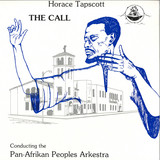
Available on vinyl for the first time in 40 years, Outernational Sounds is proud to present a masterpiece from the Los Angeles jazz underground - Horace Tapscott's burning, spiritualised 1978 set, The Call.
One of the unsung giants of jazz music, the composer, bandleader, arranger, pianist and community activist Horace Tapscott was the undisputed keystone in the grassroots Los Angeles jazz scene. Throughout the 1960s and 1970s, his radical community arts and music formations the UGMA (Underground Musicians Association, later changed to UGMAA - Union of God's Musicians and Artists Ascension), and his protean big band, the Pan Afrikan Peoples Arkestra, were at the epicentre of music, culture and politics in the Los Angeles area.
From their 1960s base at the Watt's Happening Coffee House on 103rd St, to their decade-plus- long 1970s residency at the Immanuel United Church of Christ on 85thE St and Holmes Ave, Tapscott's groups were the beating heart of underground music in LA. Hundreds of musicians passed through and played their part. Major figures in LA jazz such as Arthur Blythe, Azar Lawrence, Jimmy Woods, John Carter, Bobby Bradford, Sonny Criss, Ndugu Chancler and dozens of others all paid dues or just got down with Tapscott, not to mention the core Arkestra regulars who have since become celebrated names - Nate Morgan, Jesse Sharps, Adele Sebastian, Dadisi Komolafe, Gary Bias, to mention only a few.
Tapscott and the Arkestra were down on the ground - playing fundraisers in park and street, organising teach-ins and workshops for young and old, mixing it with radical theatre groups, firebrand poets, political radicals, Black separatists, community groups and churches. They lived communally, and built an ark for the Black arts in the heart of the city. But as a result of this grassroots community focus and Tapscott's antipathy to the music industry, the Arkestra didn't record for nearly two decades. That only changed when long-time jazz fan Tom Albach started Nimbus Records. The label was initiated specifically in order to document Tapscott and his circle, and the first three records showcased Horace and the Arkestra.
The Call was put together from two studio sessions in April 1978, one at Hollywood Sage and Sound, one at United Western - the latter session had the addition of a string section, who can be heard on the moody Cal Massey composition 'Nakatini Suite' and Jesse Sharps' swinging modal trip, 'Peyote Song No. III', with its swirling soprano solo. In keeping with the communal nature of the Arkestra, the other two compositions, 'The Call' and 'Quagmire Manor at Five A.M.' are also by Arkestra members. But at the centre of the music is the builder of the Ark, the visionary whose original call to action started a movement whose legacy continues to this day - Horace Tapscott.
Heed The Call!
- A1: Theme From The Conversation (3:33)
- A2: The End Of The Day (1:37)
- A3: No More Questions / Phoning The Director (2:18)
- A4: Blues For Harry (Combo) (2:39)
- A5: To The Office / The Elevator (2:40)
- A6: Whatever Was Arranged (2:09)
- A7: The Confessional (2:21)
- B1: Amy's Theme (2:51)
- B2: Dream Sequence (2:35)
- B3: Plumbing Problem (2:54)
- B4: Harry Carried (2:47)
- B5: The Girl In The Limo (2:25)
- B6: Finale And End Credits (3:54)
- B7: Theme From 'The Conversation' (Ensemble) (2:31)
THIS IS NOT A REISSUE. THIS IS THE FIRST TIME THIS AMAZING MINIMAL SCORE HAS BEEN ISSUED ON VINYL
This is the first time the complete score to The Conversation has been released on vinyl. The film itself was originally released in 1974 and a 7' demo of the theme was sent out as promotional material by Paramount (PAA-0305), but a USA stock edition was never issued. In Japan the same music was also issued on a 7' at about the same time (JET-2273), with a picture sleeve, but until now nothing else has ever been pressed on vinyl.
Jonny Trunk's little obsession with this music began after I'd caught the film, late night, sometime in the mid 1990s. Musically it's an exceptional example of the 'new minimalism' in film music of the period, marking a departure (for some) from big scores to smaller, more economic ensemble sounds.
The film was written, produced and directed by Francis Ford Coppola and is still a thrilling journey into sound, mind and murder. Heavily influenced by Antonioni's Blow-Up (and not, as some thought, by Watergate), Coppola wanted to fuse the concept of Blow-Up with 'the world of audio surveillance'. The story centres around Harry Caul (Gene Hackman), a mac-wearing professional wire-tapper and clandestine bugger who gets unusually consumed by a conversation he's been paid to record. Caul is a loner, an obsessive-compulsive character with numerous neuroses that play out brilliantly throughout the film. And as he slowly pieces together the conversation fragments and forms his own story around it, his world falls apart.
Sonically this movie - all about sound - is groundbreaking in many ways, with actual 'sound Design' Provided By The Legendary Walter Murch - The Man Who Actually Invented The Term In The First Place.
For The Music, Coppola Wisely Chose A Young David Shire, His Brother In Law. Shire's Deceptively Simple Piano Theme (composed Because Of No Budget For Big Orchestra) Is One Of Tragic Beauty, Brilliantly Capturing Caul's Loneliness, His Slightly Disturbed Nature And This Trip Into Darkness. The Melody Has Both Sweet And Sour Tones, Feeling A Little Like A Slow Ragtime, Which Both Develops And Retreats Throughout The Film; There Are Even Trips Into Avant-garde Territory With Electro-acoustic Flourishes And Concrète. The Solo, Agitated Figure Of Caul, Wearing His Distinctive Transparent Mac, Is Made All The More Raw And Poignant By The Score - The Sparse And Curiously Emotional Compositions Are Unlike Any Others I Can Think Of From The Period.
The Soundtrack For The Conversation Proved To Be A Major Break For Shire, His Career Really Taking Off From This Musical Point. His Next Score Was To Be The Underground Classic Taking Of Pelham 123, Followed Up Later Ironically By All The Presidents Men - A Thriller About The Watergate Scandal.
The Conversation Went On To Win Several Awards And Nominations, And Has Become A Classic Of The 'new Hollywood' Movement. Hopefully Now This Music May Become Part Of The Renewed Interest In Old Film Soundtracks.
- A1: Emad Youssef - Al Bareedo Ana (The One I Love)
- A2: Abdel El Aziz Al Mubarak - Ma Kunta Aarif Yarait (I Wish I Had Known)
- B1: Kamal Tarbas - Min Ozzalna Seebak Seeb (Forget Those That Divide Us)
- B2: Madjzoub Ounsa - Arraid Arraid Ya Ahal (Love, Love Family)
- B3: Khojali Osman - Malo Law Safeetna Inta (What If You Resolve What's Between Us)
- C1: Zaidan Ibrahim - Ma Hammak Azabna (You Don't Care About My Suffering) (Live)
- C2: Saied Khalifa - Igd Allooli (The Pearl Necklace)
- C3: Taj Makki - Ma Aarfeen Nagool Shino! (We Don't Know What To Say!)
- D1: Hanan Bulu Bulu - Alamy Wa Shagiya (My Pain And Suffering) (Live)
- D2: Abdelmoniem Ekhaldi - Droob A Shoag (Paths To Love)
- D3: Samira Dunia - Galbi La Tahwa Tani (My Heart, Don't Fall In Love Again)
- E1: Mohammed Wardi - Al Sourah (The Photo)
- E2: Abdullah Abdelkader - Al Zaman Zamanak (It's Your Time)
- F1: Mustafa Modawi & Ibrahim El Hassan - Al Wilaid Al Daif (The Youth Who Came As A Guest)
- F2: Ibrahim El Kashif - Elhabeeb Wain (Where Is My Sweetheart)
- F3: Mohammed Wardi - Al Mursal (The Messenger)
In Sudan, the political and cultural are inseparable. In 1989, a coup brought a hardline religious government to power. Music was violently condemned. Many musicians and artists were persecuted, tortured, forced to flee into exile — and even murdered, ending one of the most beloved music eras in all of Africa and largely denying Sudan's gifted instrumentalists, singers, and poets, from strutting their creative heritage on the global stage.
What came before in a special era that protected and promoted the arts was one of the richest music scenes anywhere in the world. Although Sudanese styles are endlessly diverse, this compilation celebrates the golden sound of the capital, Khartoum. Each chapter of the cosmopolitan city's tumultuous musical story is covered through 16 tracks: from the hypnotic violin and accordion-driven orchestral music of the 1970s that captured the ears and hearts of Africa and the Arabic-speaking world, to the synthesizer and drum machine music of the 1980s, and the music produced in exile in the 1990s. The deep kicks of tum tum and Nubian rhythms keep the sound infectious.
Sudan of old had music everywhere: roving sound systems and ubiquitous bands and orchestras kept Khartoum's sharply dressed youth on their feet. Live music was integral to cultural life, producing a catalog of concert recordings. In small arenas and large outdoor venues, musical royalty of the day built Khartoum's reputation as ground zero for innovation and technique that inspired a continent.
Musicians in Ethiopia and Somalia frequently point to Sudan's biggest golden era stars as idols. Mention Mohammed Wardi — a legendary Sudanese singer and activist akin to Fela Kuti in stature and impact in his music and politics — and they often look to the heavens. A popular story is of one man from Mali who walked for three months across the Sahel to Sudan because the father of the woman he wanted to marry would only allow it if he got him a signed cassette from Wardi himself. Saied Khalifa is said to be the one of the few singers to make Ethiopian emperor Haile Selassie smile.
Such is the stature of Sudanese singers and the reputation of Sudanese music, particularly in the "Sudanic Belt," a cultural zone that stretches from Djibouti all the way west to Mauritania, covering much of the Sahara and the Sahel, lands where Sudanese artists are household names and Sudanese poems are regularly used as lyrics until today to produce the latest hits. Sudanese cassettes often sold more in Cameroon and Nigeria than at home.
But years of anti-music sentiment have made recordings in Sudan difficult to source. Ostinato's team traveled to Ethiopia, Somalia, Djibouti, and Egypt in search of the timeless cultural artifacts that hold the story of one of Africa's most mesmerizing cultures. That these cassette tape and vinyl recordings were mainly found in Sudan's neighbors is a testament to Sudanese music's widespread appeal.
With our Sudanese partner and co-compiler Tamador Sheikh Eldin Gibreel, a once famous poet and actress in '70s Khartoum, Ostinato's fifth album, following our Grammy-nominated "Sweet As Broken Dates," revives the enchanting harmonies, haunting melodies, and relentless rhythms of Sudan's brightest years, fully restored, remastered and packaged luxuriously in a triple LP gatefold and double CD bookcase to match the regal repute of Sudanese music.
A 20,000-word liner note booklet gives voice to the singers silenced by an oppressive regime.
Take a sail down the Blue and White Nile as they pass through Khartoum, carrying with them an ancient history and a never-ending stream of poems and songs. It takes two Niles to sing a melody.
'It is now clear that humans are no longer the most important things in the universe, that their knowledge, creativity and intelligence are ultimately limited.'
The Posthuman realises that the ultimate questions about existence and being do not require answers and accepts that humans have a finite capacity to understand and control nature. Even just to know the ultimate nature of the universe would require knowing everything about the universe, everything that has happened and everything that will happen. If one thing were not known it would imply that all knowledge of the universe is partial, potentially incomplete and, therefore, not ultimate.
Humans privilege to order over disorder on the assumption that the essential laws of nature are gradually being discovered. This is a fundamental error; nature is neither essentially ordered or disordered. What we perceive as regular, patterned information we classify as order; what we perceive as irregular, unpatterned information we classify as disorder. The appearance of order and disorder implies more about the way in which we process information than the intrinsic presence of order or disorder in nature.
The humanist era was characterized by certainty about the operation of the universe and the place of humans within it. The Posthuman era is characterized by uncertainty about the operation of the universe and about what it is to be human.
What is a human Is there such a thing
No finite division can be drawn between the environment, the body and the brain. The human is identifiable, but not definable.
Consciousness, (the interaction body-brain) and the environment (reality) cannot be separated; they are continuous that defines the being.
All technological progress of human society is geared towards the transformation of the human species as we currently know it; the posthumans regard their own being as embodied in an extended technological world. In such 'synthetik' reality power no longer needs to impose physical regulations, as it is able to manipulate and shape up the minds directly, becoming part of it.
There won't be any resistance from the individual, as he will have embodied the needs of the system in his own being, and their ambition will serve the economy.
Currently the output of machines is predictable; the Posthuman era fully starts when the output of machines becomes unpredictable, so that complex machines, apparatus whose workings we do not fully understand or control, become an emerging form of life.
In the Posthuman era, the future never arrives.
..from ´The Posthuman Manifesto´, Robert Pepperel, 1995
Born in London, 1945, Labi Siffre's recording career has spanned over 30 years and produced a body of work that has attained anthemic status across the world. He has had two number one hits (directly and indirectly) and is considered by those in the know to be one of Britain's most important musicians of the past fifty years. So it's a strange modern quirk that his actual voice is rarely heard, as it is from covers and samples of his work that he is best known. You may recognise his genius being sampled by Eminen for 'My Name Is' or the Madness cover of his song 'It Must Be Love' that was a huge pop hit across the world.
For his release on Mr Bongo we have gone back to the original source - his classic 1975 release 'Remember My Song'. This is his fifth album and features 'The Vulture', 'Sadie and the Devil' and 'I Got The', sampled by Eminem, Jay-Z, Wu-tang Clan, Atmosphere, The Beatnuts and Frankenstein, amongst others. Co-produced by Derek Lawrence and Big Jim Sullivan - a prolific session musician, artist and producer - who also worked with artists such as David Bowie, Serge Gainsbourg (on 'Histoire De Melody Nelson') and Frank Zappa. Brian Bennett of The Shadows, Chas Hodges and Dave Peacock aka Chas 'n' Dave also feature on this funk masterpiece from 1975.
This LP is reissued in new and improved sleeves (made in Japan) and features label designs as per the original 1975 release.
The one and only Joey Beltram delivers a remix of Jungle Love with a techno electrifying spinoff complete with strong drum basslines and favoured by the industry's best.
Techno - Matt Sassari gets deeper and darker than ever in this classic techno must have.
Audio KoDe is a beast calling to the signatory sound of De-Noize with driving techno, heavy drums and bass, and raw heart-stopping beats that have appealed to Richie Hawtin and the likes.Additional PR info to follow.
All tracks promoted through Press N Play distribution and Strikeforce Media, along with RuntheScene PR (Brooklyn, NY) and radio play across Europe. Tracks also featured within DJ Charts on Beatport and Traxsource.
Joey Beltram's Remix reached Beatport's Top charts at #47 and stayed there for almost a month, boosting both Audio KoDe and De-Noize Records. Support from Joseph Capriati, Richie Hawtin, Marco Carola, Danny Tenaglia, Paco Osuna, MonkiDJ, DMC WorldMagazine and plenty more!!
Matt Sassari's track met with early success reaching #29 on Beatport's Top 100 in techno and climbed to #19 Traxsource's chart, staying there for over a month. Support From Richie Hawtin, Romanolito, Marco Carola, Paco Osuna, Joseph Capriati, Skober, Hollen, DFormation and more..
Richie Hawtin played this track on his livestream several times and at Space Ibiza Opening party during Hawtin's ENTER Event. This was followed by plays by notable DJS during the summer festivals and numerous related tweets to Richie Hawtin and tons of support by his followers.
Track fully supported by more including Skober, Hollen, DubFire, Dj Boris, Danny Tenaglia, Nicole Moudaber, Tocadisco, Mark Antonio, Meat Katie, Anderson Noise, Angy Kore, Tom Laws, Tiga and more.
Joining the Unknown Precept forces are C.G.I. Records' label head Matthew Wei- ner teaming up with Christopher Daresta as Pyramid Club. Being known for their T.W.I.N.S. and Anticipation solo activities, Cyclic Obsession comes as the debut re- lease of the four-handed formation taking its name from the eponymous venue which helped define the counterculture and queer sound of lower Manhattan in the late 70's. Recorded in their stronghold of Atlanta following a handful of tracks released via the jointly-operated D.K.A. Records, it shows the duo taking over primitive body music in its most physical and psychedelic dimension. Thick as a brick bass lines for the basement turmoil — reflecting the hazy vortex smoldering out of an ill-lighted nightclub. Think of spasmodic synth-driven tunes interspersed by convulsive vocals and throbbing snares, in which one could see the whites of the dancers' eyes right before the lights turn back on.
Digging deep into the annals of Gospel now, the name Pastor TL Barrett should be familiar to the eagle eyed crate diggers amongst you. An extremely "colourful" character from Chicago's Southside neighbourhood who found himself on the wrong side of the law for his involvement in some activities of a dubiously illegal nature, more importantly, besides this the pastor was widely known for his community activism and positive sermons preaching love and responsibility. Shady past aside, this fantastic 1976 LP entitled "Do Not Pass Me By" is a real Gospel beauty and features 8 tracks of resplendent hands in the air rejoicement. Having never been reissued before this rare as gem is finally back out in the open, complete with it's incredible untampered with sleeve artwork and design. Barrett's unique voice and message is timeless and instantly recognisable, you can't help but become one of the congregation whilst listening to these wonderfully rousing and positive paeans to the lord almighty. Saying that, even if you find yourself to be a non-believer, the soul, funk and jazz stylings (with the odd flourish of synth!) the good pastor is laying down will be equally as alluring to those of you who dig those particular sounds. "Do Not Pass Me By" was originally released on Miami's TK Disco offshoot Gospel Roots, it's the Pastor's second release on the label and is a beautiful snapshot of how things might have gone down at his "Mount Zion Baptist Church of Universal Awareness". A unique LP with with a somewhat lo-fi charm, the tracks contained run the gamut from slow, downtempo ballads to roof raising, danceable Disco-esque anthems.
This is the first time that "Do Not Pass Me By" has been reissued on vinyl, fully remastered from Gospel Roots/TK's original tapes, represented the way the the LP was issued in 1976 with all original cover and label artworks intact. Now, almost 40 years after it's original release the album has now been made available again for 2016, fully licensed in conjunction and with the full permission of Henry Stone music / TK Disco, Miami, FL.
'Yes Lawd!', the much anticipated debut album from NxWorries (pronounced 'no worries') is coming October 21 on Stones
Throw Records.On Yes Lawd!, Anderson .Paak plays a theatrically brash version of himself who raps and sings like a '70s superstar and talks shit like a stone cold player. The performance is seeded with details from his life, which has seen a fair share of
struggle and hard-won triumph. Meanwhile Knxwledge weaves a tapestry of sampled bits and live fragments —bass, brass
and violin — that smooths everything over, reminding us that despite whatever struggle it took to get here... well, you
already know the name: NxWorries.
The Organ Grinder, AKA Cayne Ramos, got it right first time. His first solo release 'Obsession/New Age People' was brought out on Cardiff's Catapult Records and gained him huge kudos points with an international DJ fraternity, gaining support from Move D, Ryan Elliot, Steffi and Jackmaster.
He got it equally right with his second release, the anthemic 'I Don't Love You', also on Catapult which featured the vocal talent of Jessy Allen. These releases put The Organ Grinder under the spotlight and he was soon invited to play his career highlight gig at Berlin's famous Panorama Bar. from there releases followed. A collaboration, with Chesus of Darkhouse Family and CRST fame, entitled Audio Porn on Addison Groove's newly Lost In Translation label. In 2012 The Organ Grinder caught the ears of Gerd and very soon came Enoonmai! on 4Lux supported by Laurent Garnier, Sebo k,Ben Westbeech,Boddika and Ryan Elliot.
In 2013 the Grinder kept on grinding with another CRST collaborative release, titled Monster Munch on the infamous Local Talk, and then with his second 4lux release "The Dancing Angel" getting him widespread support from just about everyone in the house scene, Kenny Dope of Masters of Work, Dennis Ferrer, Kerri Chandler, Steve Bug, Xpress 2, Dusky, Eats Everything, plus many more.
The production is one side of The Organ Grinder, he also makes us dance to his tunes, and he has played alongside an incredible international roster of artists to date including Darius Syrossian, Martinez Brothers, Phil Weeks, Huxley, DJ Wild, Steve Lawler and Kerri Chandler. During the summer of 2013 The Organ Grinder spent his summer in Ibiza playing at Kehakuma alongside Edu Imbernon, Steve Bug, Ryan Crosson, Robert James, Brawther and Gerd.
Beyond Time is the first album by acclaimed experimental group 23 Skidoo in fifteen years, released in a special double disc edition combining the soundtrack music to 2011 documentary film Beyond Time, and a DVD of the film itself.
Directed by Alex Turnbull and Pete Stern, Beyond Time is a journey into the life and work of artist William Turnbull, from his modest roots as the son of a Dundee shipyard engineer to his standing as one of the world's most highly regarded modern sculptors. Narration is by Jude Law. 'An insightful, irreverent documentary, yet with a palpable sense of purpose' said the Daily Telegraph, with the Guardian confirming that'William Turnbull helped change the way we see art today.'
The soundtrack music is performed by 23 Skidoo. Formed in 1979 as industrial, post-punk and funk genres coalesced, the group included Bill Turnbull's sons Alex and Jonny together with Fritz Catlin and Peter 'Sketch' Martin. As well as new music, the accomplished score features re-worked versions of older material. 'Johnny and I thought 23 Skidoo's anti-commercial tendencies came from a punk sensibility,' explains Alex. 'But it turns out we had a genetic predisposition to anti-establishment practices. Bill was a polymath at a time when that was a dirty word, shifting between sculpture and painting and putting both in a symbiotic relationship. Now crossing boundaries is everywhere: think of hip-hop. The name of the band referenced a William Burroughs short story. Burroughs used, as we did, cut-up techniques, collaging and sampling. We were oblivious to the fact that a lot of that aesthetic was in what Bill did until I made the film.'
Both the CD and vinyl versions of Beyond Time include a Region 0 NTSC format DVD of the documentary film (with bonus features), but feature different artwork. The CD/DVD package features a portrait of Bill by photographer Ida Carr, while the vinyl/DVD version features a detail from 05 by William Turnbull (oil on canvas, 1959) printed on matt reverse board.
The first time ever on vinyl for these 1964 Rudy Van Gelder recordings for Blue Note; and astral strides beyond the flat highlife cuts originally issued. With Donald Byrd, Hubert Laws and Elvin Jones stretching out breathtakingly amongst resplendent Nigerian drumming, and anticipating the vibes of classic Pharoah and Alice Coltrane. Around thirteen minutes each side.