Dark industrial edged Techno. A various artist EP with stomping 4 to the floor material and serious breakbeat chaos. Brace yourself and drop everything you are holding.
The vinyl comes with a sticker of the labels iconic logo.
Signum" was initially released more than twenty years ago on cd format and became a larger-than-life cornerstone of P.A.L's discography as well as a historical document in industrial music. recorded over a three year period from 1993- 95 this album displays the past & present face of this artist's sonic variety ranging from sweeping minimalistic soundscapes and powerloaded percussion-driven floorburners to heavily distorted harsh power noise attacks presented as a unified front. the industrial anthem 'Gelo¨bnis' is a truly fine example for the combination of crystal clear mastering and the selective, inspired implementation of samples which was always an important factor for p.a.l and became a trademark of his works.
ant-zen and aufnahme + wiedergabe are proud to present the extraordinary reissue of this long-deleted legendary release on coloured heavy double vinyl in a gatefold sleeve. a timeless opus for being re-discovered by adepts and recovered by novices.
recorded 1993-95 at Upper Meadow Field, Munich. Some overdubs were done at His Master's Studio, L.A.
mastered & co-produced in L.A. by rudy r. 1995.
cut by Christoph Grote-Beverborg at Dubplates & Mastering
Dich lieb ich, Erde! trauerst du doch mit mir! Und unsre Trauer wandelt wie Kinderschmerz In Schlummer sich und wie die Winde Flattern und flüstern im Saitenspiele
The third stanza of Friedrich Hölderlin’s poem ‘Dem sonnengott’ evokes a narrator who is tortured by Spleen until slumber makes his childlike gloom disappear with music. Although today’s readers might judge these nineteenth century musings of the Imagination as mere stylistic platitudes, they also still speak beyond the grave as universal truths. A mere two hundred years later similar anxieties and hopes are still channeled through various art forms, with changing success and reverberation. Brannten Schnüre are one of those neo-romantic music experimentalists who add to a long tradition of celebrating folk tale and exoticism. Their meticulously crafted loops, hesitant melodies and heavily nostalgic lyricism could easily be translated to what the late philosopher and music critic Mark Fisher called ‘hauntology’, a postmodern longing for a lost future. To describe the beauty of ‘Geträumt hab’ ich vom Martinszug’, however, the term seems somewhat dissatisfying. Romanticism is a hard nut to crack in the Anthropocene, and Brannten Schnüre’s realms of the cerebral are too deeply ingrained in a German tradition of story telling to define them within popular paradigm.
‘Geträumt hab’ ich vom Martinszug’ was recorded in 2014 in Würzburg and functions as the autumn part of the band’s seasonal cycle quadrilogy (the other segments being ‘Aprilnacht’ (SicSic), ‘Sommer im Pfirsichhain’ (Aguirre) and ‘Durch unser zugedecktes Tal’ (Youdonthavetocallitmusic)). It deals with the Saint Martin’s parade, a mostly European tradition to celebrate the medieval spirit of Saint Martin of Tours, friend of children and patron of the poor. Around 11 November children come out on the streets with lanterns and sing ancient songs in exchange for sweets. It’s a period of snugness and expectation, of yearning and dreaming, and therefore a consummate subject for the duo to scrutinize.
To the adult’s ear the dream of the Saint Martin’s parade isn’t all that consolatory. The dark and slow loops of Christian Schoppik rather sound like motifs for a welcome paralysis. Sometimes as a gentle backdrop for vocals by Katie Rich and Schoppik himself, the repetitive structures serve as tricksters that trade innocence for the uncanny. The dream becomes a fever dream which quickly absorbs the listener into a vacuum, an eternal post-panic attack semi-relief. Maybe that’s the amazing paradox of Brannten Schnüre. The space they occupy is never comforting – as if being locked up inside a Carl Grossberg painting – but it’s also a subliminal aural zone you do not want to leave. It’s music as being, as a stream, devoid of climax or catharsis. And because it is flux and being, and exists to be taken, it speaks in art’s purest form. ‘In place of a hermeneutics we need an erotics of art’ Susan Sontag famously concluded her essay ‘Against Interpretation’ with. Well, look no further …
Paul Pèrrim returns with Arati – a raw, expeditionary palindromic companion to his 2025 debut, Itara.
Exploring a rawer, harsher, and more rugged landscape than its predecessor, Arati pushes deeper into the wilderness. The anthropologist- musician continues to guide listeners down paths trodden by akaleidoscope of cultures, offering a sound that is profoundly singular, primal, and timeless.
The album’s surreal compositions weave together an eclectic arsenal of textures: mutant maqams, Africanist sound collages, acid Eastern free-folk improvisations, weird droney guitar, cosmic exotic ambient, and re-wired finger-picking. It is music engineered to forge an immediate, visceral connection.
Arati evokes place and memory—conjuring the scent of Persian leopard dung and Kurdistan saffron, dusty Afghan rugs, or the phantom sound of a camel being milked in the desert while a lone musician plays nearby. It stands proudly as an homage to timeless field recordings and visionary crossover albums reminiscent of the Deben Bhattacharya school. Arati is an unrushed journey— and with both albums, Paul Pèrrim establishes himself as a cultural wanderer crafting unorthodox traditional-futuristic soundscapes for contemporary, open-minded listeners.
Copenhagen-based DJ and producer Anastasia Kristensen presents her debut album Bestiarium Sombre, a vivid and cinematic techno work shaped by UK bleep, jungle and dubbed IDM influences. Known for headlining major clubs and festivals worldwide and for releases on Houndstooth, Turbo and Arcola, she now delivers a cohesive long-form statement on Intercept, home to artists such as Tsepo, Coloray, DJ Aya and Ineffekt. The album follows an anthropomorphic concept where each track embodies an animal, creating a distinctive narrative world with strong visual identity. This vinyl edition arrives as a limited transparent yellow marbled pressing housed in full-colour artwork. Designed for both peak-time DJs and collectors, it combines dancefloor impact with strong shelf presence.
DISPLACES represents Fabris' most personal musical journey to date, inspired by the concept of hyperobjects and cartographic practices. The album sculpts a high-dimensional phased time-space composed of concrete materials and digital archetypes in a state of constant displacement. It delves into the symbolic and philosophical realms of mapping as one of the greatest sense-making mechanisms for life, in dialogue with object-oriented environments, superimposition and non-locality applied to cosmic, temporal, and emotional memory.
The sonic ecosystem expands on the image of navigating a path through a set of places, from the microcosm of quanta to the macro force of dark matter, from underwater depths to overland terrains, encapsulating the cyclical flow between birth and death, both in ecological and anthropological sense. The intersection of these shifting states is explored through the extensive processing of the langspil, Iceland's only traditional instrument, intertwined with manipulated field recordings of biophonies and geophonies captured across Icelandic and Venetian territories. These recordings form the backdrop for a meditative process that relocate familiar objects into unfamiliar realms, reflecting on the transformative power of self-reflection while encapsulating the fragmentation and entanglement found in nature and the human state. The record plunges the listener into a disconcerting and physical soundscape, as a “ghostly spectrality that comes in and out of phase with normalized human spacetime,” evoking sensations of suffocation and release as each layer continuously unfolds the palimpsest of the enclosed labyrinth.
“Extraction of the I” embodies a subatomic reaction—erupting as a molecular force that rises, only to re-submerge with a solitary exhale underwater. In this mutated dark space, beluga whales breathe into "Xanadu Phasing," creating a pulsating tension that releases only to unveil a frozen landscape.
In “Barricading the Ice Sheets” the glacial material morphs into a liquid tunnel of digital artifacts, building a wall of noise that shatters into scattered fragments of ice, resembling bird calls from another world.
A moment of stasis is offered with the appearance of an asymmetrical loop in Monolith I, evoking a primitive rite before an unknown force emerges.
The physical intensity of subsonic material in "A Quake in Being" interrupts the hieratic tone, detuning into polluted sonic matter sourced from relics of the First World War in the Venetian Prealps. The geography of this place reconciles with the original homeland in "The Map is the Territory," blending negative space with anthropogenic elements and exploited sounds of the langspil.
The burning density of "Wolf-Rayet" projects into the void, echoing the residual sounds of a local church as relics of fossilized religions. Wolf tones are the remains in Monolith II, introducing the final track, "Topography of Extinction," where evolving psilocin textures invite the listener to uncover deeper layers of meaning and dislocation.
Daniele Baldelli and Jolly Mare come together for a record that feels less like a collaboration and more like a shared state of mind. Flusso Uno moves through Afro-cosmic kraut-inflected psychedelia and cinematic electronics with a natural, unforced flow, where rhythm, texture and narrative all pull in the same direction.
Rather than referencing the past, the EP treats it as a living language. The longform, ritualistic percussion of early cosmic dance culture meets the hypnotic motorik pulse of krautrock and the more structured, sample-driven tribalism that followed in later decades. What ties it all together is a deep sense of atmosphere and intention: music that feels physical, emotional and quietly transportive.
“We particularly focused on ritual percussions, hypnotic grooves and suspended atmospheres, trying to blend musical anthropology, auteur electronics and narrative instinct.”
Dhol Parade opens the journey like a slow-burning procession, drums circling and expanding as if guiding the listener into another space. With Icari the perspective lifts, melodic lines drifting and tilting, constantly searching for balance between gravity and flight. Huldufolk pulls everything back into a shadowy, nocturnal zone, where textures feel half-real, half-imagined.
Finally, Viaggio Tascabile loses the record in a quietly reflective way, a compact voyage that sums up the EP’s philosophy: small in scale, deep in meaning. Flusso Uno is not about nostalgia or revivalism. It is about taking the spirit of cosmic culture and letting it breathe in the present, where storytelling, dancefloor intuition and sonic exploration still meet. A record made for open ears, open minds and long nights.
LP vinyl only release + 4 page liner notes (comes with hype sticker)
The percussive new age soundtracks of '80s and early '90s Japanese TV, anime and manga built alternative worlds and pushed boundaries in the process.
When Japanese composer Yas-Kaz left Tokyo for Bali in the mid 1970s he had little idea of how influential his trip would become. In studying the storied art of gamelan, the jazz and avant-garde percussionist opened a door to a world of sound and rhythm left behind by the West. The music he and his contemporaries made would become known as new age. It also happened to soundtrack the golden era of anime.
Awash with money and with the prerogative to entertain the burgeoning middle classes, anime in the 1980s experienced a creative and commercial boom. Not constricted by generic expectations, production houses such as the now renowned Studio Ghibli were able to experiment liberally with both form and content. And with it came the space for composers to be similarly adventurous.
TV, Anime & Manga New Age Soundtracks 1984-1993 charts this moment across eight tracks spanning classics of the genre and previously unknown rarities. The collection brings together music that found kinship in electronic and acoustic instrumentation, often combining spiritual or environmental themes with percussive, varied and highly refined syncopations of non-Western musical traditions.
Among them is ‘Kaneda’ by Geinoh Yamashirogumi, the shape-shifting group of self-styled musicians, anthropologists and computer scientists that masterminded the soundtrack to game-changing dystopian anime Akira - and with whom the sound, tuning and breakneck speed of Balinese gamelan has become indelibly entwined.
Reflecting the desires of the era to reach beyond Japan’s borders, many of the soundtracks featured were commissioned for narratives set in distant lands or alternative worlds. There’s violinist and composer Norihiro Tsuru’s ‘Farsighted Person’, written for The Heroic Legend of Arslān, set in ancient Persia; Yas-Kaz’s own ‘Hei (Theme of Shikioni)’, for period sci-fi manga & anime series Peacock King - Spirit Warrior; and two tracks - Tassili N’Ajjer and Fiesta Del Fuego - from Yoichiro Yoshikawa’s soundtrack to NHK’s proto-Planet Earth series The Miracle Planet.
Such was the variety and quality of the music produced, if there is a guiding principle to the tracks collected here it is a sense of escapism and adventure that came with the confluence of modern electronic instruments and a fascination with percussive traditions.
Elsewhere, pioneering children’s TV composer Chumei Watanabe’s ‘Fushigi Song’ (performed by a vocal group Korogi ‘72) offers a trippy and infectious groove with sonic similarities to Don Cherry’s ‘Brown Rice’; little-known jazz-funk library group Columbia Orchestra showcase the best of Tokyo’s session musicians on ‘Hearts Beats - Theme for Andrew Glasgow’; before lawyer-turned-composer Kan Ogasawara closes out the compilation with a dramatic flourish on ‘Gishin Anki’.
Following on from Time Capsule’s acclaimed deep-dive into the world of manga & anime synth-pop in 2022, this vinyl only collection is set to broaden and diversify an understanding of how soundtracks shaped the sound of new age music in Japan for a generation.
Curators: Kay Suzuki, Rintaro Sekizuka (Vinyl Delivery Service)
Artwork: Tu-yang
The first contact is a common science fiction theme about the first meeting between humans and extraterrestrial life. The theme allows authors to explore a variety of philosophical concepts by adapting the anthropological topic of the first contact with extraterrestrial cultures. But then what are the Topics of a possible “Second Contact”? What would have happened to civilization if the extraterrestrial life force returns. Are they ready to greet it?
In this case, the second contact comes in the form of SEELEN. Label head and part-time intergalactic traveller Janein’s second full EP on the Imprint. And he hasn’t returned to take prisoners.
The Title track takes you for a wild ride from the second one. A warbling, acidic texture marks the foundation of what is an absolutely destructive and fiery cut. One of Janein’s heaviest percussion tracks to date takes the mood to an absolute frenzy while the acid-textures and metallic Chords can almost singe your eyebrows off if you get too close to the speaker.
In comparison, Gaja tones it down somewhat with mellower synths and an absolutely funky Bassline. But do not underestimate this track in comparison to Kobald M. This track will ensnare you into its hypnotic chokehold. It is the kind of cut you can play in any situation and not a single person will leave the dancefloor.
Meeting the Alien for a Parlay, translating its transmissions on this record are musical linguists Somewhen and Peryl.
While Somewhen has leaned into Kobald M’s destructive potential, adding a chaotic, out-for-madness kind of energy, that is sure to bring insanity to any warehouse, Peryl, known for his cathartic breakbeat excursions, has absolutely deconstructed Gaja making it into a track that sounds like the moment an unknown flying object enters the atmosphere of the earth.
“Songs to Make Love To” is the 10th studio album by The Dining Rooms (Stefano Ghittoni and Cesare Malfatti), extending the Milanese duo’s classic sound legacy among psychedelic folk, cinematic atmospheres and hip hop-inspired downtempo rhythms. As always divided into instrumental and vocal tracks, it is entirely played and produced by Stefano and Cesare and features guest appearances on vocals by Chiara Castello (I’m Not a Blonde), Egeeno (of the Roman collective Tropicantesimo) and labelmate Tomaz Di Cunto aka Toco. “Songs To Make Love To” talks about love and relationship dynamics in every aspect, but also explores anthropological and ethnomusicological themes by making use of field recordings. “Songs To Make Love To” talks about love and relationship dynamics in every aspect, but also explores anthropological and ethnomusicological themes by making use of field recordings. “Songs To Make Love To”, whose artwork was made with works by artist Tatjana Zonca, talks about love and the explicit act of loving each other, but also and especially about the construction of love, the dynamics of love relationships inside and outside the couple, free and liberated love, without constraints and outside the concept of possession. A further peculiarity that contributes to the uniqueness of “Songs To...” is the in-depth exploration of anthropological and ethnomusicological themes, particularly dear to Alan Lomax: the classic TDR sound therefore blends, especially in the instrumental tracks, with classic field recordings of sounds from the Genoese carruggi, the Milanese dockyard, the Spanish quarters of Naples and cities such as Istanbul and São Paulo.
Coral Morphologic and Nick León’s Projections of a Coral City marks a series of collisions between distant
worlds: the organic and the artificial, the Eocene and the Anthropocene, sea and cement—and even, perhaps, ambient music and activism.
Coral Morphologic are the Miami duo of marine biologist Colin Foord and musician J.D. McKay; since 2007, they have used a variety of multimedia projects to generate environmental awareness of marine biodiversity—most notably Coral City Camera, an underwater webcam streaming live from an urban reef ecosystem in PortMiami.
Their citymate Nick León is a linchpin of South Florida’s contemporary leftfield electronic scene, with releases for Tra Tra Trax, Future Times, and NAAFI, and credits on records by Rosalía, GAIKA, and Iceboy Violet, among others.
This collaborative project dates back to 2022, when Coral Morphologic mounted a monumental projection-
mapping installation on Biscayne Boulevard. For five nights in late November and early December, macroscopic films of corals played out across the exterior of Knight Concert Hall. The installation was, on the one hand, a glimpse into a possible future, imagining how the city’s skyline might appear if unchecked global warming and rising seas led coral reefs to colonize the built environment. But it also represented a look back into the deep past, a reminder that Miami is literally built from marine limestone mined from the Everglades. Its concrete foundations began life, eons ago, as a marine ecosystem—the same ecosystem that may one day reclaim them. As above, so below.
As an album, Projections of a Coral City is a suite of interconnected movements spread across two sides of vinyl. The tones are watery, the mood elegiac, the colors a washed-out pastel. Forms that appear static on the surface gradually open up to reveal hidden depths teeming with microscopic movement. You might detect resonances with other aquatically minded works—Jürgen Müller’s Science of the Sea, Harold Budd’s liquid piano compositions, even the slow-moving melancholy of Dr. Roger Payne’s Songs of the Humpback Whale. But ultimately Projections of a Coral City creates the impression of a world unto itself—a hauntingly beautiful space at the meeting point between sorrow and hope.
——-
Balmat is a label with a cloudy outline. Jointly shepherded by Albert Salinas and Philip Sherburne, two friends living in Cardedeu, Catalonia, and on the Balearic island of Menorca, Balmat grew out of Lapsus Radio, a weekly show born almost ten years ago. Balmat’s mission is simple: to foster new ideas, expand upon personal obsessions, and put enveloping sounds out into the world.
“Balmat” means “empty” or “void” in Catalan. But quite apart from any negative connotations, we prefer to think of it in terms of possibility: a space waiting to be filled.
Following a release on 3XL in the spring of 2023, k2dj, aka Ben Bondy, delivers an astoundingly diverse, gorgeously realized album with Por. Subliminal pop iterations, fever dreams of the anthropocene, love letters sketching the heat of bodies in motion; disparate sensations woven with care, delight, and total wonder.
Orchestral Manoeuvres In The Dark (OMD) return with their 14th studio album Bauhaus Staircase, over six years after the triumph of their Top 4-charting record The Punishment of Luxury. The album was born from the impetus to kickstart new explorations during lockdown when as Andy McCluskey admits: “I rediscovered the creative power of total boredom.”
The album’s first offering as a single is the title track which serves as a nod both to Andy McCluskey’s love of the Bauhaus era & the power of protest art. “I am a huge lover of visual arts especially mid 20th century movements” Andy comments. “The song is a metaphor for strength and artist passion in the face of criticism and adversity. When times are hard there is a tendency for Governments to look at cutting funding for creativity just at the moment when the arts are most needed to nourish our souls. It seems appropriate that the song and its eponymous album were created during Covid Lockdown.”
Ranging further from the beautiful film noir ballad of ‘Veruschka’ and the dance stylings of ‘Anthropocene’ - a term for the current epoch in Earth’s evolution to the sinister ‘Evolution Of Species’ and the hectic ‘Kleptocracy’ - OMD’s greatest straight-up protest song - the new album is a broad electronic sonic masterpiece that lyrically tackles the topics of the future. The record closes on ‘Healing’ - a moment of reflective calm.
By rights OMD should be in semi-retirement performing classics like Enola Gay and Maid Of Orleans on the nostalgia festival circuit like so many peers. Instead they’ve created a landmark album worthy of their finest work. Bauhaus Staircase remains unmistakably the work of a duo who are still perfectly in sync 45 years after their first gig at legendary Liverpool club Eric’s.
“I’m very happy with what we’ve done on this record" McCluskey summarises. “I’m comfortable if this is OMD’s last statement.”
Die deutsche Black-/Death-Metal-Kultband Ch’ahom opfert ihr zweites Album „Anthropic Rites of Sublimation“ auf dem Opferaltar – ein Konzeptalbum, das in einer fiktiven Welt spielt, die von den Ritualen, der Kunst und der Architektur vorspanischer Kulturen inspiriert ist. Anknüpfend an ihre EP „Ts’ono’ot“ entfaltet sich die Geschichte um eine Cenote von unvorstellbaren Ausmaßen, deren kosmischer Ruf die Verlorenen und Unsicheren zur Selbstaufopferung treibt. Vier Zivilisationen erheben sich an ihrem Rand, wobei jede ihre eigenen Riten, Hierarchien und Monumente entwickelt, um den tödlichen Ruf des Abgrunds in eine Grundlage für kollektives Dasein zu verwandeln.
Ch’ahom verleiht dieser imaginären Welt Gestalt durch höhlenartigen Death Metal, bestialische Ausbrüche und fieberhaft progressive Strukturen. Wilde Riffs winden sich durch erstickende Kammern rhythmischer Beschwörungen, während uralte Instrumentierung aus dem Tumult hervortritt wie Echos in einem verschütteten Tempel. „Anthropic ‚Rites of Sublimation‘“ bewegt sich wie die Cenote selbst und zieht den Hörer durch ein ekstatisches und sich immer weiter vertiefendes Gefühl des Unbekannten nach innen.
Inspiriert von einer bewusst wörtlichen Interpretation des Todestriebs und seiner Sublimierung untersucht Ch’ahom Kultur als Antwort auf ein unwiderstehliches Verlangen nach Selbstauslöschung. Verstümmelung, stellvertretendes Opfer, Versklavung und freiwillige Hingabe werden zu den Grundlagen konkurrierender Gesellschaften, die auf das regelmäßige Öffnen der Cenote warten. Ch’ahom verwandelt diese düstere Fiktion in ein gewaltiges Klangritual und porträtiert die Menschheit durch ihren erschreckenden Einfallsreichtum: Sie schafft Glauben, Schönheit und ganze Zivilisationen am Rande der Vernichtung.
Bitter Honey is the new album by Eric Silverman. Produced in collaboration with Damien Lewis, the album finds Silverman leaving behind the acid-fried desert rock of 2023’s Stay In It for something far more lush and expansive—a collection of ten psychedelic rock, pop, and folk tracks inspired by Peter Gabriel, John Cale, and Jeff Tweedy. Fittingly, the album is named after the “mad honey” of the rhododendron flower, a rare and potent hallucinogenic found high in the Himalayas.
The process of writing and recording the album started in early 2023, when Silverman and longtime collaborator Lewis retreated to a cabin near Nevada City, CA. Over the course of a week they sketched out the bones of nearly half the album, with Silverman recording the guitar solo for album opener “Anthropocene” live in one take during a particularly inspired moment. Meanwhile, “Get In Where You Fit In”, inspired by a bumper sticker Silverman saw heading up the mountain, was recorded on Jerry Garcia’s old 8-track tape machine and features pedal steel by Jake (Freeman) DeJongh. While at the cabin they also captured the field recordings that bookend the album, starting with the intro of “Anthropocene” and ending with the outro of “Bitter Honey” - an infinite loop.
Later on they decamped to Palomino Sound in LA for a round of sessions – tracking “Light Me Up” and “Trapped In Reverse” while making use of the prodigious assortment of vintage instruments at their disposal, including a 65’ Wurlitzer electric piano that became the centerpiece of a number of tracks. Eventually the pair ended up at 2200 Studios (formerly The Record Plant) in Sausalito, CA—a legendary studio where Prince, The Grateful Dead, and Fleetwood Mac made classic records. It was there that they tracked “New Light”, featuring strings by brothers Graham and Lewis Patzner; recorded all of Adam MacDougall’s (The Black Crowes, Circles Around the Sun) overdubs, including his synth leads on “Living the Dream”; and mixed the album in Studio A.
In a lot of ways Bitter Honey is Silverman’s first proper studio album. It’s also the first time Silverman has sat in the producer’s chair, this time around sharing the credit with Lewis. While his debut album was a product of its environment, all first takes and raw energy, Bitter Honey is thoughtful and focused, the best work Silverman has done and the culmination of his decade plus creative partnership with Lewis.
Highly anticipated sophomore album from Eric Silverman. Press coverage includes reviews and features in Raven Sings the Blues, and more.
“...threading the quicksilver needle of psych, AOR, and ‘70s Cocaine Cowboy territory.” - Raven Sings the Blues.
For nearly four decades, since its founding during the mid 1980s, the Belgian imprint, Sub Rosa, has continuously plumbed the depths of numerous, radical creative histories, assembling a catalog of releases that has almost no equivalent, while remaining nearly impossible to nail down. That said, for most of its run, Sub Rosa has been primarily recognized for its rigorous explorations of the lesser explored shadows of experimental sound practice (sound-art, sound-poetry, early electronic and electroacoustic music, free-improvisation, etc.), delivering a remarkable body of artifacts that have collectively helped to rewrite history in their wake. While it's always been impossible to anticipate where the label might take us next, threading their catalog are plenty of releases that throw further wrenches in the cogs, expanding our understanding of what they pursue, as in the case of a handful of titles, appearing as early as the 1980s, dedicated to ethnographic field-recordings from various parts of the world. Among the most striking and celebrated of these was 2017's Ethiopian Urban And Tribal Music: Mindanoo Mistiru / Gold From Wax, comprising an astounding body of recordings made by Ragnar Johnson and Ralph Harrisson in Ethiopia during 1971, reissuing material originally released by Lyrichord the following year. Now, Sub Rosa returns to the incredible work embarked upon by the pair and captured on that same trip with Ethiopian Musics 1971, comprising the recordings originally released by Ocora shortly after their completion, expanded in this edition to include an entire disc of never before released music. Widely regarded as some of the most important field-recordings ever made of indigenous Ethiopian folk music (as captivating and intoxicating as they are revelatory: providing insights into the roots of the country's singular traditions of popular music and jazz that have come to be celebrated the world over), this incredible collection is issued by Sub Rosa in a beautifully produced 2LP edition, complemented by a four page insert providing detailed descriptions of each song, as well as notes by the ethnomusicologists and recordists, as well as a 2CD edition, with a twelve page booklet. Insanely good and absolutely essential for any fan of field-recording, ethnomusicology, the music of Ethiopia, or the label's mission at large. Once again, Sub Rosa has defied our expectations and delivered a remarkably important intervention in the history of recorded sound.
Located in the Horn of Africa region of East Africa, few cultures are distinctly singular, while being so diverse (containing 80 distinct ethnic groups who speak 70 languages and 200 dialects) as that of Ethiopia. The home to some of the oldest surviving sects of Judaism, Christianity, and Islam (each contributing important aspects of its collective cultural body), particularly the country's culinary and musical traditions have become celebrated the world over, and (generally speaking) feel entirely independent of those of its neighbors. Given this, it's unsurprising that, during the summer of 1971, the young ethnographer, Ragnar Johnson, accompanied by Ralph Harrisson, traveled to Ethiopia to begin his brief career as a field recording ethnomusicologist, capturing material on reels of magnetic tape that would be subsequently released across three LPs for Lyrichord and Ocora, respectively, coming to form a cornerstone of documentation and study of the country's many indigenous musical traditions, as well as providing wide, global access to them for the first time. While Johnson's recording career was relatively brief, ending toward the end of the decade when he began to focus more on teaching in UK universities, with a focus on the anthropology of art and social anthropology, his impact on the field was lasting. Between 1971 and 1979, in addition to those he made in Ethiopia, he made hugely significant recordings in Yemen (also issued by Lyrichord before being reissued by Sub Rosa) and Papua New Guinea, which were originally released by David Toop's Quartz Publications to wide celebration, before being revisited by Ideologic Organ in 2023.
While it's worth noting that commercial releases of ethnomusicological recordings by labels like Folkways, Lyrichord, and Ocora were still in their relatively early days when he entered the field, Johnson's recordings quickly stood apart for their vivid qualities and clarity of space, allowing them to stand the test of time. As he later stated: "I used a Uher Report L stereo tape recorder, BASF quarter inch tapes at a recording speed of seven and a half inches per second with two directional microphones mounted to record an isosceles triangle of stereo sound," he reveals. "The location of the microphones and musicians was critical. The musicians were fully informed of all aspects of the recording process."
Johnson's recordings are extremely vivid, there is a clear sense of space and the cries of the flutes exist across the entire stereo field. It's a reflection of Johnson's skill as a field recordist that his recordings continue to be reissued over forty years later. "I used a Uher Report L stereo tape recorder, BASF quarter inch tapes at a recording speed of seven and a half inches per second with two directional microphones mounted to record an isosceles triangle of stereo sound," he reveals. "The location of the microphones and musicians was critical. The musicians were fully informed of all aspects of the recording process… I used to enjoy being in the moment and hearing something wonderful despite the stress of the vigilance required to ensure that the recordings were accomplished according to plan. The responsibility is to record and document the music as effectively as possible so that it has been preserved for posterity. It is better to actually record music than to sit in a seminar room debating the ethics of recording music." It is this very ethos and sense of clarity that can be encountered across the length of Ethiopian Musics 1971.
For the sake of clarity, the two LPs of material that comprise Ethiopian Musics 1971 should be regarded as a single body of recordings alongside those made in Ethiopia by Ragnar Johnson and Ralph Harrisson during the summer of 1971 (previously issued by Lyrichord and reissued by Sub Rosa), and as two that have, until now, remained historically distinct. The first LP gathers that material released by Ocora during the early 1970s on Musiques Ethiopiennes, while the second comprises (as far as we can tell) twelve never before issued recordings, expanding the journey and making this the definitive edition of the release with its incredible total of 23 recordings of songs, allowing it ever greater scope to achieve the recordists' modus operandi of capturing the broadest and most diverse cross section of Ethiopia's many musical cultures, ranging from different forms of urban music captured in Addis Ababa, documenting largely orally transmitted idioms within which lyrical content is given greater emphasis than the instrumental components (played on masenko fiddles, craar and bagana lyres, washint flutes and kabaro drums), to folk idioms hailing from the Danakil desert and the border regions with Sudan and Kenya. There are songs sung and played in bars, divination chants, laments, dances, Christian songs, and Amharic sung poetry, to only begin to scratch the surface.
Ethiopian Musics 1971 is one of those rare albums where each musical moment is pure, intoxicating gold, while also being greater through the sum of its parts. There are the many songs, forming a rich tapestry of remarkable range across the respective two LPs/CDs (moments that wondrously flirt with sonic abstraction; hypnotic rhythms; pulsing chant; melodies that, in structural arrangement and tonal combination, help us reframe how such a thing might be understood, and a great deal more), each imbued with a remarkable directness and emotive sensibility, and there is the stunning quality of these recordings themselves, transporting each sound to our ears as though we intimately share its creator's space, while being imbued with the pure heart and remarkable spirit with which they were made. As we said before, it's little wonder, once heard, why these recordings and this music feels as fresh and relevant (enduring more than 50 years) today as when they were made. Once again, Sub Rosa has raised the bar with this essential addition to the incredible work that Ragnar Johnson and Ralph Harrisson did back in Ethiopia during 1971, radically expanding our access to the sounds that they captured with these stunning, beautifully produced 2LP and 2CD editions. Absolutely engrossing from the first sounding to the last, this one can't be missed.
Gadea’s original soundtrack to In the Beginning, the new animated short film by director Ala Nunu, unfolds across three surreal, yet surprisingly real, stories about people and the world around them: a lunar probe’s tardigrade cargo, 16th-century myths surrounding birds of paradise, and Hong Kong’s pandemic-driven hamster cull. The film is a tonally absurd documentary-fiction essay on anthropocentrism and the human need to control narratives.
This is Gadea’s first musical accompaniment for animation. Collaborating with Marina Herlop on vocals, Gadea’s sonic palette sits somewhere between field-recording minimalism, chamber electro-acoustics, and the more fragile end of speculative composition.
Laurel Halo returns with an album of original soundtrack music, composed for the film Midnight Zone by visual artist Julian Charrière. Following the path of a drifting Fresnel lighthouse lens as it descends through the Clarion-Clipperton Fracture Zone — a remote abyssal plain in the Pacific Ocean, rich in rare metals and increasingly targeted for deep-sea mining — the film traces a descent into one of Earth’s last untouched ecosystems.
Charrière’s film reveals the deep not as void, but as a luminous biome teeming with fragile life: bioluminescent creatures, swirling schools of fish, and elusive predators. The suspended lens becomes an abyssal campfire, attracting species caught in the tides of uncertainty, their futures hanging in the balance.
Echoing this tension, Halo’s compositions evoke a sensory freefall, where gravity falters and light and sound flicker in uncertain rhythms. Midnight Zone is a sonic drift through the space between what we seek to extract, fail to understand, and must protect.
Halo’s score evokes the life that exists beyond our physical airbound capacity. The material features long, subtle passages of electro-acoustic ambient, drone and sound design, slowly flowing and unfolding with rich detail. The music, composed largely on a Montage 8 synthesizer and Yamaha TransAcoustic piano at the Yamaha studios in New York City, possesses an uncanny quality: that of synthetic waveforms being amplified and sung through the stringboard of the physical body of the TransAcoustic piano. Combined with stacks of violin and viol da gamba, the music on Midnight Zone possesses trace elements of a human hand in an otherwise sunken landscape. Patient, submerged, and alive. The album will be the third on Halo’s imprint, Awe.
The film is central to Charrière’s current solo exhibition Midnight Zone. The exhibition engages with underwater ecologies, exploring the complexity of water as an elemental medium affected by anthropogenic degradation. Reflecting upon its flow and materiality, profundity and politics, its mundane and sacral dimensions, the solo show acts as a kaleidoscope, inviting us to dive deep.
non in magazzino
Ultima consegna 5 mesi fa riordinabile senza garanzia
66 pages, 175 x 129mm paperback w/ litho printed cover & french flaps.
The second outing for our short run book publishing imprint, The End books, takes the form of a reprint of Spanish Cante Jondo and Its Origin in Sindhi Music, originally published in Spanish in 1955 under the name Cante Jondo: Su Origen y Evolución and later in this English translation.
Aziz Balouch here presents his theory on the roots of flamenco's 'deep song' in modern-day Pakistan, a cultural journey that mimics the routes of his own life, having been brought up among the Islamic mysticism and devotional songs of Sindh before travelling to Gibraltar in the early 1930s and becoming transfixed with the cante jondo across the border in southern Spain. Positing this concept through personal accounts rather than solid theoretical backing, this text provides a valuable account of an extraordinary existence that crossed remarkable geographical, musical, and spiritual boundaries. Issued here with a new introduction from anthropologist of sound, the senses and Islam, Stefan Williamson Fa.
"It would be easy to place Balouch on the fringes, as an eccentric footnote in flamenco history. But that misses the shape of his life and work. He was a figure who moved intuitively across boundaries that our present categories of nation, genre, discipline tend to fix in place. His work predates the founding of the academic discipline of ethnomusicology, the global circuits of world music, and the marketplace logic of fusion projects by decades. He was not an ethnographer or a proto–world musician, but someone for whom the deep song of Andalusia and the devotional song of the subcontinent resonated along the same fault lines of feeling, and who spent his life trying to trace them.
This book is one of the few surviving traces of that attempt. To read it now is to encounter a perspective that resists tidy narratives of influence or origin, despite its title and what he claims to do. It stands instead as evidence of an idiosyncratic musical imagination, one that relied less on proof than on listening, and on the belief that certain echoes carry farther than history can easily explain."
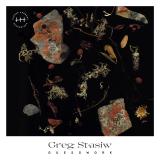
Experimental musician Greg Stasiw presents his debut album of radiant, free-flowing electronics ‘Guesswork’. Music for psychoactive exploration made over a four year period, incorporating ambient, minimalism, intricate sound design & Japanese environmental music. An exceptional listening experience of wonder, tranquility, melancholy & discovery, contemplating the relationship between sound & space.
Greg Stasiw is an experimental musician, visual artist and writer from New England, Northeastern USA. An itinerant polymath, Stasiw has spent time living, working and traveling in New York, Tokyo, Toronto, Paris, Boston, and Bratislava. As well as studying anthropology, animation and illustration, Stasiw has always had a close connection with music.
His earliest musical involvements started with ambient music on Sunday drives, microcassettes, the Windows 98 Sound Recorder and free play with Casio keyboards. Then came a formative procession of piano lessons, orchestras, choirs, taiko, metal, indie rock, tinnitus, and ultimately; the acquisition of music production software.
With his debut album ‘Guesswork’, the aural and visual inspirations that underpin Stasiw's creative life intersect, in a pure, radiant soundworld of space, depth and immaculate clarity. Futuristic, pellucid soundscapes incorporating ambient, minimalism, intricate sound design, and Japanese environmental music are deftly arranged with evanescent chimes, serene tone float, suspended organ notes and curious sci-fi resonances.
Like stepping into some space age meditation garden, if soundtracked by the likes of Hiroshi Yoshimura, Harold Budd, Norman McLaren, and Pauline Anna Strom, the thirteen tracks of ‘Guesswork’ create an exceptional listening experience of wide-eyed wonder, sleek tranquility, gentle melancholy, and singular discovery.
Overtoun is a Death/Thrash band based between Santiago, Chile, and Boston, MA, fusing the rich musical heritage of Latin America with the complexity and aggression of technical death metal. Founded by Agustín Lobo and Matías Bahamondes, the band solidified its lineup with Yoav Ruiz-Feingold (Atheist, Graviton) on vocals and Matías Salas on bass. Fused with Chilean rhythms, folk-inspired guitars, and memorable riffs, it features guest appearances by MAX PHELPS (CYNIC, DEATH TO ALL), ENRICO H. DI LORENZO (HIDEOUS DIVINITY), and SHANTANU VYAS (HAZING OVER). With virtuosic musicianship and a raw, organic sound that recalls the primal spirit of classic metal, Overtoun channels both precision and rage. Produced by renowned Argentinian producer MARTIN FURIA (DESTRUCTION, BARK) and released via Time To Kill Records, Overtoun asserts itself as one of the most exciting and promising Latin American Metal acts today.
2LP, 9mm spine gatefold sleeve with silver hot foil & metallic inks. Printed inner sleeves. Engraving on Side D, the vinyl here is of silvery colour. Pelagic reissued THE OCEAN's 2010 albums "Heliocentric" and "Anthropocentric" on vinyl! "Heliocentric" was the first album with current vocalist Loïc Rossetti, a game changer in the band's history. The album is characterized by his shimmering cleans alongside abrasive, powerful screams. "Heliocentric" sees the band venture into calmer territories as compared to its predecessors: the album is defined not solely by walls of guitars, but also by careful orchestrations of piano, upright bass, strings and textural electronics. Conceptually "Heliocentric" is a comprehensive critique of the legacy of christianity: the iconic opening track "Firmament", still a fan's favourite, starts off with original text from the bible; while "Ptolemy Was Wrong" and "Catharsis of A Heretic" tackle Gallilei's and Copernicus' discoveries that Earth is not at the center of the universe, for which Giordano Bruno was burnt at the stake. The album concludes with Charles Darwin's theory of evolution, and considerations by Richard Dawkins', the spearhead of modern day's aetheism, in the epic 14 minutes closing track duality "The Origin Of Species" and "The Origin Of God". For fans of BREACH TOOL THRICE NINE INCH NAILS CULT OF LUNA ISIS KARNIVOOL ROSETTA RUSSIAN CIRCLES MONO MASTODON OPETH BETWEEN THE BURIED AND ME PINK FLOYD
Reissued blue (!) vinyl! The "centrics"-albums saw the introduction of current vocalist Loïc Rossetti to the band's lineup, a game changer in their 17 years history. "Anthropocentric" is heavier than its same-year predecessor "Heliocentric", with the crushing 15-minutes openening track duality "The Grand Inquisitor" part I and II and following track "She Was The Universe", one of the most-streamed THE OCEAN tracks to date, setting the bar high for the rest of the album. Since 2001, the Berlin-based musician collective THE OCEAN have released 7 critically acclaimed studio albums, and a split EP with Japanese post-rock legends Mono. With an ever-changing lineup of various on- and off-stage musicians and visual artists, the relentlessly touring group have become well known for their immense, mind-expanding live shows, which they have carried into the most remote corners of the globe, from Siberian squats to colonial theatres in Ecuador. Over the course of their storied career, THE OCEAN have toured with Opeth, Mastodon, Mono,The Dillinger Escape Plan, Anathema, Between The Buried And Me and Devin Townsend, and have appeared on major festivals including Roskilde, Dour, Pukkelpop, Roadburn, Wacken, With Full Force, Summer Slaughter, Summer Breeze and Graspop. pn: this is coloured double vinyl, the stickersays Golden, but in fact it's Blue (Gold).
The Sludge Of The Land is the new album by digital folklore and post-exoticism Italian duo Babau. Their first full length since 2023’s Flatland Explorations Vol. 2, with The Sludge Of The Land Babau lands on Impatience with their signature audio-prestidigitation at it’s most disorientingly pungent and zonked, a uniquely contemporary approach described as the sound of a continent moving; animals, plants and minerals included.
As part of a residency at Casa degli Artisti, Milan, in 2022, Babau turned their atelier into a recording studio and performing venue thanks to Francesco Piro, who produced the entirety of the album. There, the duo improvised with different acoustic and digital instruments for several hours a day. Returning after ten years to a sound more akin to a band or small orchestra, Babau re-explores tropes and themes of exotica and jazz from their unique and off-kilter perspective of terminally-online diggers-dwellers of the internet flatland.
An homage to digital content consumption and dopamine-infused sensory overloads, The Sludge Of The Land imagines itself as an abstract sonic wunderkammer of online detritus. By diving into the world of ‘sludge content’: audiovisual chaos produced by mixing different content using split screens or dizzying patchworks of videos, Babau celebrates the formless, viscous goo, spam, chum and slop of out-of-context moving image, fast paced digital videos and lo-fi mp4 artifacts. By endlessly spiraling into the non-spaces of The Net, Babau explore the uncharted parageographies of lavacasts, mysterious Chinese anthropozoomorphic legendary beings, vampiric doomscrolling glides and doppelganger, ctrl+c & ctrl+v spiritualism. These ghosts of pointless microevents and traveling-without-moving bedroom boredom are stuffed by Babau with the epic tone and compositional approach of exotica and world music 2.0 reveries, resulting in an absurd, playful narrative of the dangers and allures of the web.
Bringing together the sound of Richard Hayman and Black Dice, Korla Pandit and Sun Araw, Tony Scott and Carl Stone, once again the duo crafts a compelling audio-textual hallucination of transglobal chimera. A multi-fi, extremely layered treasure of fifth world music.
RIYL - Sun Araw, the strangest corners of the internet, Senyawa, digital wind instruments, Nuke Watch, Black Dice, exotica, hallucinating.
Babau is the pantropical project of Artetetra founders Matteo Pennesi and Luigi Monteanni, where their fascination with exotica, world music 2.0, and field recordings merges with the compositional and improvisational techniques of computer music.
Their latest work, All the Gurls were at the Women’s Archo Ashinto, was recently released by Bamboo Shows, while the previous Stock Fantasy Zone and Flatland Explorations Vol.2, were released by Discrepant. They were selected as SHAPE+ artists in 2023, and the duo has performed at various festivals in Italy and beyond, including Fusion, Club to Club, Terraforma, Nextones, Outernational Days, Camp Cosmic, and Saturnalia. For years, they have been striving to synthesize what has been described as the sound of a continent in motion—people, animals, plants, and minerals included.
The Sludge Of The Land was produced and mixed by Francesco Piro at Casa degli Artisti, Milan, and co-produced by Babau
Drums by Giovanni Todisco, bass by Francesco Piro and piano on A4 by Vittorio Cosmo.
Master by Nick Foglia.
Art by Luca Schenardi.
The Soft Apocalypse ist ein Triumph der Selbstfindung. Das Debüt von Henry J. Star entstand aus einer Mischung aus Aufrichtigkeit, Absicht und einem breiten Spektrum an musikalischen und nicht-musikalischen Interessen, darunter Cloud Rap, japanische Abenteuerspiele und Literatur. Das Album wurde vollständig von dem Multi-Instrumentalisten Devin Badgett geschrieben, produziert und eingespielt, der bereits durch frühere Projekte als Performer und Songwriter bekannt ist. The Soft Apocalypse ist eine Geschichte vom Ende der Welt am Ende der Welt und eine Anerkennung der überwältigenden Schönheit und unerträglichen Gewalt, die das Anthropozän vorantreibt. Eine detaillierte Schilderung des Pessimisten und Optimisten, die auf eine katastrophale Evolution zusteuern. Jeder Song ist ein lebhafter Blick nach innen auf eine zerbrochene Psyche, die unter der unermüdlichen Belagerung einer zusammenbrechenden Welt versucht, sich wieder zu einem Ganzen zusammenzufügen. Mit tränenüberströmtem Gesicht lag ein junger Künstler auf den abgenutzten, mit Teppich ausgelegten Stufen seines Elternhauses und machte sich an seinen sisyphushaften Kampf, sich selbst zu entkommen. Als seine Mutter sich zu ihm hinunterbeugte, um ihn von den Stufen zu ziehen, die er so oft zuvor erklommen hatte, begann eine neue Reise und eine archetypische neue Persönlichkeit wurde geboren. Devin Javon Badgett ist ,Henry J. Star" und der Autor dieser Geschichte.
On his new album All Cylinders, Yves Jarvis expresses a brazen songcraft and pure musicianship. 11 tracks he played himself, without a single additional contributor, transforming his now four-time-Polaris-nominated vision into the stuff of verses and choruses, hooks and hits, vibrating like a cosmic anthropology. Whereas once he had fetishized analog tape, now Jarvis appreciated the value of working without any such preciousness: much of All Cylinders was recorded on bare-bones Audacity, sans plugins, channeling the spirit of Paul McCartney’s II.
Jarvis is an omnivore, and All Cylinders smashes together a stunning array of influences: Serge Gainsbourg, Judee Sill, Sheryl Crow, Captain Beefheart, Jackson Browne, Throbbing Gristle, Ray Charles, Brian Eno, Fleetwood Mac… All distilled into tunes that feel like taking sips from a cup, or drags from a cigarette. Vivid and self-contained songs that are just two or three minutes long. “I feel like this is the least contrived thing I’ve ever done,” Jarvis declares. Lyrics that matter. Vocals up front, where people will actually hear them. “If something’s true to you,” he explains, “it’s probably true to a million other people.”
The first run of All Cylinders on limited edition vinyl sold out, leading to this highly anticipated second pressing. This edition includes 4 bonus tracks from the forthcoming deluxe release, making it an essential piece for fans and collectors alike. Originally released via In Real Life to critical acclaim from Pitchfork, Financial Times, NPR, Aquarium Drunkard, Far Out Magazine, New Noise, Out Front, KCRW, RANGE, Atwood Magazine, The Luna Collective, Billboard Canada, The Fader, Blamo! Podcast, Stereogum, and Guitar World.
UK electro wizard Plant43 marks his 20th year in the game in the only way he knows how: with another wonderful album, his 10th overall. It comes on his own now five year strong Plant43 Recordings and as he continues to lay it down with his regular performances at Tresor. Feeding The Machines is full of signature excellence, from the lithe rhythms of 'Information Decay' to the jittery drums and introspective chords of 'Anthropomorphic Algorithms' via the dark, hurried urgency of the paranoid 'Absolute Inertia'. This is another long player that is as adventurous as it is emotive and cinematic.
non in magazzino
Ultima consegna 4 mesi fa riordinabile senza garanzia
Itara is the debut solo album by Paul Pèrrim—guitarist, composer, and anthropologist—featuring a set of guitar-driven compositions that blend hallucinatory acid folk, abstract blues, mutant Eastern jazz, surreal ambient, and free improvi-sation into a vivid and distinctive sonic tapestry.
With a background in ethnomusicology and a degree in Music Education, Pèrrim’s work bridges popular and experi-mental music. He contrasts the acoustic guitar’s austerity with the expansive possibilities of the electric guitar, drawing from late ’60s folk traditions, contemporary fingerstyle, sound collage, drone, psychedelia, and improvisation.
A key figure in the Canary Islands’ experimental scene, he released two albums in the 2010s under The Transistor Arkestra, a Catalan collective merging free jazz and psychedelia. As Transistor Eye, his solo project, he merges ana-log electronics with guitar, using vintage synths and effects.
In 2022, Pèrrim gained wider recognition through his appearance on Manos Ocultas (Philatelia Records) and the in-ternational tribute Solstice: A Tribute to Steffen Basho-Junghans (Obsolete Recordings). That same year, he founded GUITARRACO, a contemporary guitar festival in Tarragona, where he has shared the stage with Joseba Irazoki, Buck Curran, and Raphael Roginski.
Itara will be released in July 2025 via Keroxen. Recorded and produced by Pèrrim, the album features liner notes by critic Bill Meyer, who writes:
“While it’s common to call music cinematic these days, Pèrrim goes split-screen. One might say he composes econo, jamming scenes and sounds to psychedelic effect. But economy does not equate with poverty. Pèrrim draws upon a rich bank of musical notions, all of which he makes his own through the alchemy of recombination and transmutation.”
non in magazzino
Ultima consegna 13 mesi fa riordinabile senza garanzia
The duo Spill Gold blends drums, synths and vocals into a sonic journey that invites listeners to explore realms of energy exchange. Nina de Jong on drums and Rosa Ronsdorf on vocals and synths joined forces in a collaboration that transcends genres. The music of Spill Gold serves as a woven tapestry of (unheard) voices, inviting you to lean in. The result is a fusion of psychedelic echoes, danceable rhythms, and intricate percussive layers. Their newest album is a result of a need for hope that longs for an anti-anthropocentric and non-patriarchal world. The duo's compositions navigate through cyclical patterns, echoing snakes biting their own skin, volcano's starting to errupt, witches fingers that crumble towers and birds of steel and feather. They invite you into a world where the concept of 'the first' or 'the best' fades away and to join them on their musical journey with no clear beginning or end.
non in magazzino
Ultima consegna 14 mesi fa riordinabile senza garanzia
In what ways does human consciousness transcend time, crafting subconscious connections that unite humanity’s primordial past with a future yet to be defined? Fittingly, Memory Implant took shape by following the latent threads of this concept, emerging from dream theories and anthropological explorations organically into the realm of Fourth World Music.
Finding a middle ground between atmosphere and rhythm, moving forward while remaining grounded in space, the music progresses with subtle shifts in texture and energy.
The concept of genre re-invention is irrelevant when rhythm is a building block of collective consciousness. Instead, Glaesha brings a fresh perspective, using sound as a way of seeing.
When you think of Scandinavia, Slamming/brutality isn't the first thing to come to mind. That's until the slam crew of DEVINE DEFILEMENT spewed onto the Icelandic scene in late 2016.
Devine Defilement draw inspiration from a variety of death metal sub-genres they have concocted a brutal cocktail of groove, slams, blasts and ferocity that has made them a force to be reckoned with!
With several releases under their belt Devine Defilement has kept busy playing shows in their home country of Iceland, as well as heading on numerous European tours.
The band has played all the major metal festivals of Iceland like Eistnaflug, Satan, Reykjavik Deathfest & Noroanpaunk to name a few, and has also appeared on notable European death metal fests such as Deathfeast Open Air & Nice to Eat You and already have a more festival appearances lined up for 2025.
Devine Defilement's live show is highly energetic, heavy and brutal as hell and it's on stage that these maniacs are in their true element!
In 2025 the band is set to release their new full-length album "Ruthless" through Time To Kill Records, and it is their most savage offering yet!
New Environments & Rhythm Studies finds Andrew Pekler returning to the humid zones he explored on previous albums such as Sounds From Phantom Islands and Tristes Tropiques. Split between longer immersive compositions and shorter glimpse-like sketches, these 12 tracks feature new juxtapositions of Pekler's familiar palette of synthetic field recordings, warm, undulating electronic textures, shifting percussion patterns and serene melodies.
As with much of his recent work, Pekler's compositions here are structured around the beguiling effect of synthetic and non-synthetic sounds mirroring, mimicking and modulating one another. The teeming atmospheres within tracks such as Globestructures, Cymbals In The Mist or Globestructures: Option II are, despite their seemingly anthropogenic nature, entirely synthetic. Elsewhere, the lopsided grooves of Cumbia Para Los Grillos or Fabulation For K are derived from recordings of crickets and other insects which Pekler loops and uses to trigger electronic percussion – producing a pleasantly skewed rhythmic base for the fragments of melody which are layered on top. The six Rhythm Studies also follow the same principle – a playful interweaving of the organic and synthetic.
New Environments & Rhythm Studies is a further attempt to re-describe past tropes which laid claims to authentically represent music and sound from beyond the Western world (exotica, ethnomusicology, field recording) as undertakings of the imaginary.
Written and produced by Andrew Pekler, mastered by Giuseppe Ielasi, artwork by Morgan Cuinet, graphic design by Dmytro Nikolaienko.
non in magazzino
Ultima consegna 15 mesi fa riordinabile senza garanzia
After a collage tape collab with Bardo Todol back in 2022 (SUC52, Magnetic Road to Hell) Robert Millis finally gets his Discrepant debut proper, a much overdue entryin our random catalogue of lost musical oddities.
The not so self explanatory title Interior Music explores Millis obsession with hidden sounds and its anomalies. An hermetic rearrangement of emptiness could be another more big headed title. But I leave the man to talk about his thing:
‘’The phrase interior music occurred to me a few years ago as a way to describe some recent work. It’s about the resonances inside of hollow wooden chambers (and hollow heads) like gramophones and talking machines, music boxes, instruments, metal containers, and resonant rooms. It’s about exploring tiny audio fragments—single notes, vinyl and shellac surface noise, recording mishaps and anomalies—and arranging them into something meaningful. It is about my own interior mishaps and anomalies and attempts to arrange THEM into something meaningful. It also references “interior design” with the placement of sounds in specific locations, layers or in juxtapositions.
Inspirations include Steve Roden’s lowercase work, Toshiya Tsunoda’s field recordings, Eliane Radique’s slowly shifting ambiances, and the musique concrete of Pierre Schaeffer, as well as the dhrupad and kayal traditions of Indian classical music—especially Kesarbai Kerkar and the Dagar family who have a sublime way of stretching out individual notes and exploring their endless permutations, combinations and connotations.’’
Robert Millis is a sound artist known for his work with Climax Golden Twins, the Helen Scarsdale Agency, the soundtrack to cult horror film Session 9, the Victrola Favorites book and cassette series, and many releases on Sublime Frequencies including Indian Talking Machine, Paris to Calcutta: Men and Music on the Desert Road, compilations of the earliest music recorded in Korea, Japan and Myanmar, and the documentaries This World is Unreal Like a Snake in a Rope and Phi Ta Khon: Ghosts of Isan. Somehow he is a Fulbright scholar (to India 2012-13) and the recipient of a Guggenheim Fellowship (2020). He has or currently does play with AFCGT, Idol Ko Si, and/or Telescoping.
non in magazzino
Ultima consegna 16 mesi fa riordinabile senza garanzia
Orchid Mantis, by Michelle Helene Mackenzie and Stefan Maier, is a work that draws its inspiration from the history of the Sanzhi Pod City, in northern Taiwan. Sanzhi Pod City was built from 1978 onwards, made up of buildings constructed from assemblages of `pods' inspired by the futuro houses of Finnish architect Matti Suuronen. The project was abandoned in 1980, following a number of accidents during construction and persistent rumours that the site was haunted. However, this wasteland of a city has allowed insects to proliferate, in particular five species of orchid mantis. It is this strange environment, made up of utopian buildings, proliferating insects and vegetation reclaiming the site, that serves as the imaginary space for Michelle Helene Mackenzie and Stefan Maier's music, a music of carefully designed pace and progression, drawing, through resonance and stridulation, subtle sonic materials that guide and accompany us into multiple worlds with admirable ease and grace. Breach, by American composer Olivia Block, engages in a dialogue between field recordings and synthesised sounds, creating a vibrant plea for wild spaces that face an ever-growing threat to their survival from human activities. The work is based on recordings collected in the San Ignacio lagoon in the Mexican part of Southern California. This lagoon is known as a breeding ground for eastern Pacific grey whales. With the help of precise electronics, the music unfolds like a drift, depicting the subjective soundscape of whales caught up in the noise of the Anthropocene. The composer uses otoacoustic emissions in particular, representing the sound saturation caused by humans in the habitat of these large marine mammals. Going beyond a merely descriptive dimension, Olivia Block manages to transcend her subject to offer a fascinating musical form that engages the listener in a constantly renewed way.
Ear World, out February 24th on Brooklyn-based record label 29 Speedway, is a collection of sound collage works by experimental cellist Dorothy Carlos. Her debut album ranges from song-like to abstract, incorporating site-specific sound installation work originally premiered in both 16-channel and quadraphonic formats. Voice and cello are reconstructed through glitch techniques to take on a digital form that is flirtatious and fleeting. Carlos is an experimental cellist active in Chicago and New York. Her work utilizes extended techniques and digital manipulation, merging free improvisation and computer music. She is interested in digital techniques as an opportunity to construct imaginary realities and capture a sense of intimacy.
Solo performances have been presented internationally by Experimental Sound Studio Chicago, Big Ears Festival, default, Center for New Music and Associated Technologies (CNMAT) at UC Berkeley, Chicago Jazz String Summit, and Bemis Center. Her work has been featured in The Wire, New York Times, and The Quietus and released digitally with D.O.T. Audio Arts and American Dreams. Dorothy holds a Bachelor’s degree from NYU where she studied classical cello and anthropology and an MFA in sound from the School of the Art Institute of Chicago.
Tracks 2-4 “My Ideal is Windy” quadraphonic installation commissioned by Experimental Sound Studio and the Chicago Park District.
Track 8 “Alter, alter” 16-channel installation premiered at the Chicago Laboratory for Electro-Acoustic Theater (CLEAT).
Linea Aspera is the London duo of Ryan Ambridge (Synths/Programming) and Alison Lewis (Vocals/Synths). They began the project in November 2011, technically drawing inspiration from electronic music from the early 1980s. Within the duo, Alison writes and performs all vocal elements, while Ryan is responsible for the writing and performing of the electronics, as well as recording and mixing of the final recordings. For their debut album they utilized small, simple analog synthesizer set up: Roland SH-09, Roland Juno 6, Vermona DRM MKiii, Korg Poly 800 and Analogue Solutions Semblance. Linea Aspera's sound includes clear influences from early electronic body music, classic synth-pop and, in some instances, industrial and noise. Lyrically the band incorporates the sciences of osteology, neuroscience, and anthropology weaving a new medical language around themes of desire, despair and renewal. Linea Aspera serve up an icebox of dark doom riding on Alison's powerful vocals with a soft but sharp touch.
non in magazzino
Ultima consegna 19 mesi fa riordinabile senza garanzia
2025 feiert THE OCEAN das 15-jährige Jubiläum ihrer Alben ,Heliocentric" und ,Anthropocentric". Aus diesem Anlass werden die Instrumentalversionen dieser Alben zum ersten Mal überhaupt auf Vinyl veröffentlicht, mit neuem Artwork von Martin Kvamme. Konzeptionell sind ,Heliocentric" und ,Anthropocentric" eine umfassende Kritik am Erbe des Christentums: Während ,Heliocentric" sich dem Thema historisch-chronologisch nähert, liegt der Schwerpunkt von ,Anthropocentric" auf dem ,Großinquisitor"-Kapitel in Dostojewskis weltberühmtem Roman ,Die Brüder Karamasow", das sich über drei Tracks des Albums erstreckt. Andere Songs wie das heitere ,TheThe Almightiness Contradiction" greifen Ideen von Richard Dawkins auf, der Speerspitze des modernen Ästhetizismus. Seit 2001 hat das Berliner Musikerkollektiv THE OCEAN zehn von der Kritik hochgelobte Studioalben und eine Split-EP mit den japanischen Post-Rock-Legenden Mono veröffentlicht. Mit einer ständig wechselnden Besetzung aus verschiedenen Musikern und bildenden Künstlern auf und abseits der Bühne ist die unermüdlich tourende Gruppe für ihre gewaltigen, bewusstseinserweiternden Liveshows bekannt geworden, die sie in die entlegensten Winkel der Welt getragen haben, von sibirischen besetzten Häusern bis zu kolonialen Theatern in Ecuador. Schwarze oder farbige 2LP erhältlich, 9mm Rücken-Gatefold & Metallic-Farben, bedruckte Innenhüllen. Insert sowie Etching auf der D-Seite