Blue - also Antony Costa , Duncan James , Lee Ryan
und Simon Webbe -, das ist so ein Name, der einen
automatisch in die Boygroup-Ära transportiert: Sie waren
nicht nur einer der größten und erfolgreichsten Acts jener
Hochphase, sondern vor allem auch einer der besten. Auf
den drei Alben, die ihnen in den Nullerjahren
Spitzenplätze in den Charts (u.a. 3x #1 UK, 1x Top-10
DE) und reichlich Platin bescheren sollten, verschränkten
sie lässigen R&B mit hochauflösender Pop-Perfektion und
emotionalen Balladen, was der im Jahr 2000 gegründeten
Boygroup nicht nur 16 Millionen verkaufte Albumeinheiten
bescherte. Auch zwei BRITs räumten sie ab im
Königreich, wo sie gleich 11 Mal die Topregion der
UK-Singlecharts aufmischen konnten und davon gleich
noch drei Mal die #1 belegten.
Parallel zur Stadiontournee werden Blue im Herbst ihr
sechstes Album Heart & Soul veröffentlichen - ihr erstes
fürs neue Label Tag8 Music/BMG. Der neue Longplayer
unterstreicht und zelebriert all das, was die Band während
ihrer ersten Blütezeit ausmachte, denn er spielt immer
wieder auf die Vergangenheit an, bringt aber auch
kontinuierlich Neues ins Spiel. Ihr Trademark-Sound
schwingt im sorglos-ausgelassenen Titelsong, der von
MNEK (Beyoncé, Little Mix) mitkomponiert wurde,
genauso mit wie in der gefühlvollen Ballade "Magnetic",
bei der die Jungs mal wieder ihr ganzes umwerfendes
Stimmvolumen auspacken dürfen. Mit der Leadsingle
"Haven't Found You Yet" legen Blue einen Instant-Classic
vor, der klanglich eher in Richtung Justin Bieber oder
auch jüngere Coldplay-Hits geht. Man hört, dass sie
unbedingt alles geben wollten für Heart & Soul
Search:anto
Das erste Ströme Album “Ströme Nr. 2” ist ein charaktervolles, wunderbar warmsensitives und dennoch energetisches Werk. Ein Hauptohrenmerk ist der ultra rare und sagenumwobene Moog IIIp Modular Synthesizer Sound. (Näheres über den einzigartigen Moog IIIp ist weiter unten im Text zu entnehmen, inclusive Fotos in der 2x LP). Darüber hinaus spielt und featured Ströme noch andere analoge Synthesizer u.a. das Modular A100 System von Doepfer. Der A100 steht auch im Mittelpunkt bei den Live Auftritten von Ströme.
Das Album birgt Clubtracks („Trang & Flinky” / “Panta Rhei”), aber auch entspannend ruhige und spacige Nummern („Wasser” / ”Niki”). “Das Modul” oder “Isolde” (mit dem Schauspieler Anton Weil aka Anton Zucker), überzeugen mit einer Portion Pop. Hinzu kommen noch einige krautige, an die 60er / 70er angelehnte Songs, die Ströme (Mario Schönhofer and Tobias Weber) in sehr fruchtbarer Zusammenarbeit mit Nick McCarthy (Franz Ferdinand) aufgenommen haben - “Right Now”, “Das Modul” und das wunderschöne “Stadlberg”.
From Rafael Anton irisarri: It’s sometimes hard to go back and speak to work that was made in the past. Things change, but they also stay the same in some ways. I feel this strongly coming back to these pieces.
Agitas Al So was a companion suite of materials that was composed alongside my album Solastalgia. For those with a keen eye for wordplay, they might notice each title is an anagram of the other. In some respects this is actually a very fitting sonic analogy too for the pieces from the two records. They mirror each other in various ways, harmonically in the very least, but they also share the same deep sense of pressure that forged them so acutely.
To come back to these pieces I was struck by how much they expand on the ideas contained in Solastalgia. Where as Solastalgia might have been me breathing in, this set of pieces is a deep, deep exhale.
Remember to breath.
Anton Klint hails from Sweden and likes to make music at night. In his first release for Hivern he shows once again his knack for producing highly amusing electronic dancing sounds. Both of his tracks in 'Lyckliga Mnniskor' are twisted, playful and hard to pin down, which gives them a unique freshness. The title track is a schizoid take on tribalistic house, in which playful percussion layers and nervous synth sequences provide the background to its menacing vocal sample. 'Djembe Unchained' is, as its title suggests, still heavy on the percussion, but these are generously processed through delays to build a spaced-out and dizzy atmosphere. The track gets the remix treatment by our long-time favourite Black Merlin, who sharpens the beat to invoke mystic forces and push 'Djembe Unchained' into slo-mo cosmic techno territories. The artwork is by Barcelona-based artist Xavier Marin.
- A1: Migas 2000
- A2: I'm Dead
- A3: Je Ne Suis Pas Très Drogue
- A4: Down Underground
- A5: Je Suis Une Gogo Girl
- A6: La Fille De La Ligne 15
- B1: Je M'en Vais
- B2: Salvation
- B3: Votre Côté Yeye M'emmerde
- B4: Cold Was The Ground
- B5: My Black Sabbath
- B6: Carnival Of Souls (Feat. Pascal Comelade)
- C1: El Beach
- C2: Prisunic
- C3: Dahlia Rouge
- C4: Garden Of Love (Feat. Peter Hook)
- C5: Istanbul Is Sleepy (Feat. Anton Newcombe)
- C6: The Gift (Feat. Peter Hook)
- D1: Shadow People
- D2: Dimanche (Feat. Bertrand Belin)
- D3: One Blood Circle (Feat. Etienne Daho)
- D4: Calentita
- D5: Saul (Feat. Laurent Garnier)
Orange Vinyl[41,98 €]
The garage -psychedelic French duo The Liminanas straddles since 2009 the boundary between psychedelic ,shoegaze,garage & French yé-yé up to cool vocals . Quintessentially French but first known at the start in the US before hitting homeland France. 7 studio albums so far, 2 rare tracks compilations, many Eps,some OST, collabs such as L’Epée with Anton Newcombe & Emmanuelle Seigner : time for a first time Best of, and actually more than a Best of : Double Cd , Ltd Triple Vinyl& Digital editions offer 12 exclusive bonus tracks -new songs + rare songs when they called themselves les Bellas, before The Liminanas-.
“Electrified” also includes 23 classics songs , with featurings such as Peter Hook, Anton Newcombe and French pionners Laurent Garnier, Etienne Daho & Pascal Comelade.
Features liner notes written by Iggy Pop, Peter Hook & Keith Streng (Fleshtones) : because it’s only rock’n’roll.
Was wäre, wenn man sich für die nächste Veröffentlichung nicht nur alleine aufnehmen, sondern auch die Songs alleine schreiben würde? Je ein Song pro Bandmitglied. So entstand das Konzept zu Solitaer, was “einzeln lebend” bedeutet und somit das Antonym zu gregär darstellt. Social-Distancing als Songwriting-Konzept. Die Meinung der anderen Bandmitglieder war zwar erwünscht, brauchte aber keinen Einfluss auf das Schaffen der drei Musiker zu nehmen. So sind drei Songs entstanden, die zwar alle typische Merkmale erkennen lassen, die Teil der Hirsch Effekt-Rezeptur sind, sich aber doch vom typischen The Hirsch Effekt-Material unterscheiden. Das Ergebnis klingt nicht nur nach einem extrem spannenden Experiment, sondern eben auch sehr extrem. Abgerundet wird Die Solitaer EP von einer Bandversion des Songs “Gregaer”, der ursprünglich als Orchesterversion geschaffen wurde.
This mega-rare 1969 album pays tribute to the Bronx and Brooklyn neighborhoods where young Latinos had invented the boogaloo a few years earlier. This record highlights the quality of Peruvian boogaloo and the talent of musicians such as pianist Otto de Rojas and percussionist Coco Lagos. First time reissue. In the mid-sixties, when young Latino musicians in New York fused Afro-Cuban rhythms with rock, soul and jazz, they had no idea that their boogaloo bang bang would reverberate just as strong and loud in a distant South American country. From 1955, La Sonora Macedo, took Cuban music to every corner of Peru, backed the leading musicians of the Peruvian tropical universe, such as Ñiko Estrada, Joe di Roma, the double bass player Pepe Hernández, and the trumpet players Tito Chicoma and Charlie Palomares. All diehard fans of Cuban music, always alert to any new artist arriving from the island. In the early sixties, light rock, doo-wop, ballads, Italian songs and bossa nova paraded across Lima's stages, making performances by Cuban bands, previously so frequent, a thing of the past. Moreover, the unanimous success of the Beatles from 1964 onwards, gave the impression that music from the English-speaking world would dominate the rest of the decade. But this was not the case. In large part because of Manuel Guerrero's good relations with U.S Latino labels, such as Alegre Records, which released the initial recordings by Johnny Pacheco and Charlie Palmieri, allowing listeners in Lima to follow the development of the salsa movement almost from the beginning. MAG was undoubtedly the best representative of these new sounds. In 1969, the LP "Acabo con Lima, huyo pa' Nueva York" was released on this label, a project which brought together three figures from Lima's show business world: Manuel Antonio Guerrero, owner and founder of MAG, who wasn't shy of joining in on the chorus and percussion during recordings, Pablo Villanueva "Melcochita", a multifaceted artist from a talented musical family from the popular district of La Victoria, was responsible for the vocals and percussion on the album. And the third Lima show business figure in this project was the musician, singer and comedian Alberto Montroy Laostervened, who gained fame in the sixties while still in his twenties for his imitation of Cantinflas, the Mexican actor. Alberto bore a devilish resemblance to Cantinflas, not only in his gestures but also physically. Under the name of Pepe Moreno "Karamanduka" he also went on to record songs abroad such as "El boogaloo de Cantinflitas". "Acabo con Lima, huyo pa' Nueva York" was immediately re-released in other countries, highlighting the quality of Peruvian boogaloo and talent of musicians such as pianist Otto de Rojas and percussionist Coco Lagos, who feature prominently on the album. Songs such as 'Vuela mi descarga', 'Peruvian boogaloo' and 'Peruvian guajira', pay tribute to the Bronx and Brooklyn, neighborhoods where young Latinos had invented the boogaloo a few years earlier.
"Ésta sí es salsa!" is one of the most sought-after records in the impressive catalog of the Discos Fuentes tropical all-star group Los Corraleros de Majagual. The record is high on collectors' want lists for many reasons: excellent sound quality, diverse and highly danceable repertoire infusing its grooves, and the inclusion of the Cuban genres of descarga and charanga. The album includes outstanding cover versions of '60s New York salsa but featuring the unusual sound of the accordion and the heavy bass playing of Julio Estrada. First time reissue. "Ésta sí es salsa!" is one of the most sought-after records in the impressive catalog of the Discos Fuentes tropical all-star group Los Corraleros de Majagual. It was released in 1970, nine years after the band was first conceived by Alfredo Gutiérrez, Calixto Ochoa and label boss Don Antonio Fuentes as an orchestra to play mostly typical folkloric Colombian genres like porro, cumbia and paseo and the occasional guaracha or pachanga, but with a fully orchestrated big band sound that combined the accordion with a complete rhythm and brass section. The record is high on collectors' want lists for many reasons, not least of which is its excellent sound quality and the diverse repertoire infusing its grooves, ranging from expected coastal tropical Colombian rhythms like paseaíto, paseo and pasebol (all related to cumbia and vallenato), to more exotic modes like sonsonete, casatschok, and the Cuban genres of descarga and charanga. There was never any doubt with the label's intentions of introducing this "new" genre of salsa on this LP, albeit as seen through the lens of Colombian musicians only recently converted to the movement, and indeed, the title unequivocally proclaims: "¡Ésta sí es salsa!" ("This is definitely salsa!"). The proof is in the fascinating (and long) cover versions of Nuyorican artists from the burgeoning Big Apple salsa scene that are the centerpiece of the album. Two massive dance tracks on the record are 'Ocho días' and 'Amanací tomando', but neither was inspired by exposure to New York salsa, as they are very "typical" Colombian numbers. First time reissue.
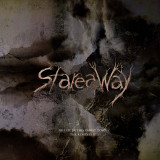
Back in 2011 Markus Guentner and Heiko Badje formed Stareaway to follow their vision of creating both enchanting and haunting music from melodies and drones. Combining Guentners complex Wall of Electronic Sound and Badjes ethereal androgyn voice and multifaceted guitar play, they indeed produced some epic works between Ambient, Pop and Shoegaze, strangely shimmering and profoundly mysterious.
Now Stareaways fantastic (and back then maybe a little overlooked) album No Life In This Ghost Town sees its rerelease and is, for celebrational purposes, accompanied by this EP of four stunning remixes by stunning artists Rafael Anton Irisarri (who also did the mastering), Simon Scott (Slowdive), Thomas Fehlmann and David Westlake (ex Sneaker Pimps). Rafael Anton Irisarris magical take on O Suomi sparkles bright, still with melancholia always present. David Westlake emphasizes the Pop-aspect of Appointments, adding lush synth melodies and light-filled grooves while Thomas Fehlmann lets All Over You spiral into Popambients most majestic heights. Finally Simon Scott builds a Kathedrale aus Klang on Dreams May Never. Amazing remixes of amazing originals.
New full length album of Franck Vigroux's uncompromising signature sound of colossal electronic music. Atotal gathers material from Franck's latest live A/V of the the same name. Working with his long time visual partner Antoine Schmitt, ATOTAL is an audiovisual performance aiming to reconstruct in order to better deconstruct the processes of imposition of will by repetition and absolute synchronism, to propose a breach to a potentially life-saving decoincidence. The total work of art, when pushed to its paroxysm of absolute coincidence of the perceptions of a captive spectator, is similar to the techniques of mental manipulation of totalitarian regimes, proceeding by annihilation of the critical mind, repetitive semantic pounding, subliminal messages. The ideal of a deterministic universe of Newton in which everything rationally stems from its causes, in which everything is predictable like a totality for Laplace’s daemon, where everything can be considered already written, has been undermined in the infinitely small of the uncertainties of Heisenberg which tell us that it is impossible to know everything about a particle, in the quantum mechanics of Schrödinger which reveals to us that the looker affects the looked-at, and in the infinitely abstract of Gödel’s incompleteness which explains to us that certain things are literally unexplainable. The show ATOTAL slips into these flaws and, like a clinamen of Lucretia, deviates the visual and audio atoms from their destiny. Mastering by Denis Blackham. Artwork by Mostafa Khaled
Drei Vinylpremieren und zwei Neuauflagen füllen als hochwertige 180g-Pallas-Pressungen Lücken in der LP-Sammlung.
VINYL-PREMIEREN / BISLANG NUR ALS CD ERHÄLTLICH / REMASTERT / DOPPEL-LPs:
Till Brönner “That Summer” (2004): sommerliche Jazz-Vocals und Instrumentals, smoother Funk- und
Brazil-Grooves, noch immer eines seiner beliebtesten Verve-Alben
Barbara Dennerlein “Take Off” (1995): groovende Hammond-B3-Tracks in klassischer Verve- und BlueNote-Tradition, aufgenommen in New York mit All-Star-Band aus Roy Hargrove, Mitch Watkins, Dennis
Chambers u.a., internationaler Durchbruch von Deutschlands “First Lady of Jazz” Rolf Joachim Kühn Quartett ”Lifeline” (2012): mit den Gästen John Patitucci und Brian Blade, Gipfeltreffen zweier deutscher und zweier amerikanischer Jazzlegenden, ausgezeichnet mit dem Deutschen Schallplattenpreis VERGRIFFENE KLASSIKER ENDLICH WIEDER AUF LP / REMASTERT / 1-LP:
Elis Regina und Toots Thielemans ”Elis & Toots” (1969): aufgenommen in Stockholm, klingt aber so fröhlich und heiß wie direkt unter dem Zuckerhut in Rio entstanden, ein mitreißender Klassiker des BrasilJazz “Joyce Live At The Mojo Club” (1995): brasilianische Kultmusikerin gab rares Deutschland-Konzert im
legendären Hamburger Club und begeisterte das Publikum mit heißer Samba, Bossa Nova und MPB, ein Klassiker des Rare-Groove
Belgian instrumentalists Glass Museum have found the perfect balance between piano and drums, where jazz and electronics collide, uniting the surgical precision of the best contemporary jazz, à la Gogo Penguin and Badbadnotgood, with the electronic influences of Jon Hopkins or Floating Points.
In motion since 2016, the duo consisting of keyboardist Antoine Flipo and drummer Martin Grégoire, have a rich history written around a powerful connection to duality. From the initial impact of the 'Deux' EP in 2018, to the synthetic and organic textures of the critically acclaimed 2020 album 'Reykjavik', Glass Museum has found its balance in symmetry.
Released 29th April via the groove-obsessed Sdban Ultra label, 'Reflet' was born out of a desire for freedom, a wish to innovate and travel differently. This new piece stands out as an artistic climax crafted at the crossroads of time and genres, an electronic proposition wrought by two brave hearts, tempered by the organic reflections delivered through computer free melodies. An album which places the human at the core of its compositions and in order to return to a more instinctive and instantaneous means of creation, the duo retreated to a secret location in one of the most remote parts of the Ardennes. It's there, in the shade of spruces, that the album was first born.
Extremely cinematographic, 'Reflet' delivers a panoramic view point: jazz, breakbeat, minimal techno and deep house, collide on neo classical grounds. From the dynamic instrumentation of album opener 'Caillebotis' to the absorbing oscillations of 'Shiitake' and grand gestures of the album title track, 'Reflet' is an odyssey running through troubled times, an ode to night time, to life, dreams and to all rhythms that convey emotions beyond words. Like its immersive creative process, the album offers a counterpoint and, above all, endless perspectives. Elsewhere, the pulsing, melodic 'Auburn' and entrancing electronic textures of 'Opal Sequences' continue the exploration before the strutting 'Kendama' showcases the electronic sensibilities that are buried within their productions.
Shining as a true instrumental tour de force, 'Reflet' also takes inspiration from the progress of the Ohme Collective. At the crossroads of art disciplines, science, new technologies and societal challenges, this creative community draws the future of visual arts and created the album artwork for this resolutely futuristic album.
Having initially won the opportunity to perform at the Dour Festival, Tournai back in 2016, Glass Museum have picked up a series of awards and distinctions back home in their homeland and they now find themselves dining at the top table of Europe's contemporary music scene. The international music scene opened itself to the band once again in 2019, with the duo performing at Elb Jazz in Hamburg, the legendary Ancienne Belgique in Brussels and the Iceland Airwaves Festival, Reykjavik.
In 2020, Glass Museum distinguished themselves by remixing a track for electronic artist, Rone. Having recently received a César Award for his soundtrack to the Jacques Audiard film, Les Olympiades, the French producer called on the Brussels duo's know-how - a mark of confidence which once again underlines the international reach of Glass Museum. Germany, Iceland, Turkey, Romania, Greece, France or Czech Republic have already approved Glass Museum's singular recipe.
- A1: Pale Blue Care Biobiopatata06 09
- A2: Crossing The Tamariver Maher Shalal Hash Baz 48
- A3: Bayern Mitamurakandadan? 02 39
- A4: Anton Popo 04 08
- A5: Tohonoko Kourakuen 03 03
- A6: People Have Called Them Flowers Various Sighhorns 03 32
- B1: A Sparkle To Your Eyes Zayaendo 04 58
- B2: Swamp Strada05 18
- B3: New Window (Onto A Collapsed House) Sekifu 01 41
- B4: Gone Astray Hose 04 44
- B5: Ghhgh Compostela02 40
- B6: Wippi Zayaendo 01 25
- C1: Just Watching Gratin Carnival 04 35
- C2: Apple Ringo Pascals 02 50
- C3: Way To The Seatail 02 59
- C4: Pensive Miss Noahlewis’ Mahlon Taits 03 33
- C5: Nagyon Szeretrek Mindenkinek K`dlokk 05 57
- D1: Kemuri Fuigo 04 28
- D2: Mado Petit Daon 05 53
- D3: Minato Nrq 02 35
- D4: The Ending Theme Tenniscoats 02 59
- D5: A Day With The Saints Satomi Endo 03 13
Alien Transistor present Alien Parade Japan, a joyous double-album compilation of groups from Japan’s indie-pop and avant-garde undergrounds, all of which feature brass or woodwind instruments as part of their line-up. Compiled by Markus Acher (Alien Transistor, The Notwist, Hochzeitskapelle) with plenty of support and help from his Spirit Fest bandmate, Saya (also of Tenniscoats), it features some familiar names – Tenniscoats, naturally, but also Zayaendo, Tori Kudo’s Maher Shalal Hash Baz – alongside lesser-known groups like Biobiopatata, Mitamurakandadan?, Kourakuen, sekifu, and Noah Lewis Mahlon’ Taits, amongst many others.
The collection of songs here rests upon a simple question, and an interesting parallel: Why do so many groups from Japan include brass and woodwind, and how closely does this echo the scene that Acher is involved with in Munich? The idea was formulated in Acher’s mind after one of his groups, Hochzeitskapelle, had been invited by Saya to Japan in 2019, to take part in the Alien Parade Japan tour. “Saya and her friends recommended a lot of music to me that I didn’t know of,” Acher recalls, “and I was surprised and excited to find so many Japanese bands who use brass and woodwind instruments.”
This approach was something Acher had been familiar with for a while, thanks to his experiences in Munich: “Until then I thought of the Munich scene, where Hochzeitskapelle come from, as being quite unique in having ex-punk and still-indie musicians form loud acoustic bands with many brass instruments and play a wild mixture of styles.” And indeed, that variety is reflected in the twenty-two songs on Alien Parade Japan, which flits from the pastoral melody of Maher Shalal Hash Baz’s “Crossin The Tama River”, through the tenderness of various sighhorns’s “people have called them flowers”, to the folksy lament of Gratin Carnival’s “Just Watching”.
Alien Parade Japan reaches further afield, too, drawing in some groups, like HOSE, Fuigo, and popo, that feature musicians like Toshihiro Koike, Masafumi Ezaki and Taku Unami, who may be better known for their experimental and improvised releases on labels like ftarri and Erstwhile. It also looks back to material recorded in the 1990s - the swinging slide guitars and sax/tuba duet of Strada’s “Swamp”, from 1998, and Compostela’s energetic, rousing “ghhgh”, from 1990. Both pieces were written by, and feature, saxophonist Kanji Nakao; Compostela’s membership also included late saxophonist Masami Shinoda, who was also part of such storied Japanese groups as Pungo, A-Musik, Orquestra Del Viento, Ché-SHIZU, and the fiery free jazz outfit, Seikatsu Kōjyō Iinkai.
Groups like Compostela help to draw some through-lines to the aesthetics of chindon’ya, a type of Japanese marching band made up of costumed street performers who advertise businesses; the music made by these bands is brash, spirited, and full of energy. Alien Parade Japan weaves all of this together – chindon’ya; jazz; indie-pop; psych-folk; big band – into one beautiful, big tapestry of gorgeous melody, sweetness, and melancholy, with plenty of creative fraying at its edges. “The collection is a very personal view of Japanese bands using brass and woodwind instruments,” Acher concludes: “it’s not a representative anthology, it’s mainly held together by my personal taste, experiences, and friendships.” But it’s also a wonderfully coherent collection of some of the most playful and elated music you’re likely to hear this year. As musician and writer David Grubbs says:
„Now it is confirmed: my favorite genre of music is Alien Parade Japan. Hopefully now people will know what I’m talking about when I gush about the unassailable brilliance of longtime favorites like Maher Shalal Hash Baz, Popo, Mitamurakandadan?, Hose, and Tenniscoats, presented here alongside others whose music I have only begun to search out. Please share in my gratitude and enjoyment of this lovingly assembled collection, one that I welcome into my home as I would a long-anticipated guest.“
LIMITED release (no repress) 300 units hand numbered, stamped copies with insert.
After the first Jam experiment back in 2019 here we have the second chapter of the Bosconi Gang Band session pressed on this limited white label hand stamped & numbered waxx.
This jam was recorded in front of an actual crowd in an event held at Manifattura tabacchi Florence on the 21st February 2020 just a couple weeks before the pandemic started and the first lockdown happened in Italy.
The concept is the same as the previous one with Fabio Della Torre on the mixer conducting the gang mysitc gulf this time with: from left to right Ennio Colaci from Minimono, Dukwa, Rufus, Andrea Giachetti & Antonio Pecori from "The Clover" and Dj Rou.
As it happened with the previous release, the actual jam follows the order of the live execution which naturally developed in a crescendo of speed and intensity.
The result is a collection of 5 of the best takes slightly mixed and revisited afterwards but very much faithful to those performed live.
This is another adventurous release that goes well off grid, plays with strange temps, original textures and moods.
Bosconi Gang Band aims to be an itinerant live improvisational project open to all artists who have released on Bosconi Records that sets the goal of always being unpredictable and special, naturally affected by the artists who perform always creating something unplanned new, and unexpected.
"A very exciting blueprint for the continued evolution of modern dance music!!"
Sunny Ozuna is a living legend and a man worthy of praise on many levels. In the Texas and Latin Music pantheon, few have been at it longer and are more revered by their fans and peers than Sunny is. He became a star right out of high school in the late `50s and hasn't looked back in the seven decades since. Among countless other honors and notable achievements, Sunny was the first Latino artist to appear on Dick Clark's "American Bandstand" (in 1963). He penned "Smile Now, Cry Later," a hit for him and The Sunliners, which along with the theater masks that grace the album's cover, became staples in the Chicano Soul and Lowrider Soul cultures. We have been fans of Sunny & The Sunliners' music for a long time. We first got in touch with Sunny to try to reissue some of his records in 2013 but we didn't sign a deal until 2015. It took a trip to San Antonio and then two years of steady phone calls before they decided "if you have been chasing us for this long, you must be serious." With Sunny's blessing we started getting everything mastered, scanned, and planned. First we released 2017's Mr Brown Eyed Soul Vol. 1 compilation that put rare 7" sides next to some of his biggest hits and mixed in some choice album cuts for good measure. In the wake of that, we released three of Sunny's full lengths with their original track lists and art: Smile Now, Cry Later, Little Brown Eyed Soul, and The Missing Link - all of which were Record Store Day releases that raised money for the victims of 2017's Hurricane Harvey. For the 7" collectors, we reissued 45s, making some very hard to come by sides widely available again and pressing some tunes on the format for the first time. In 2020, as an homage to Sunny, we released Dear Sunny... a compilation of Big Crown artists covering Sunny & The Sunliners songs. Through all of this we were able to do what we set out to do: get Sunny's music to a new audience of people and make it all accessible and available again to his existing fanbase. Sunny still keeps a busy schedule and loves performing as much as he did as a teenager. His music and the music that it directly influenced are seeing a resurgence in popularity in the last few years. With any luck at all, our efforts played some small part in that, and on that note, we present Mr Brown Eyed Soul Vol. 2 - another compilation curated by us, where we dig a little deeper into Sunny's catalog and pull some lesser known gems that hold court with his hits. Hats off again to Mr Brown Eyed Soul himself, San Antonio's own, Sunny Ozuna, we are sure you will enjoy the music.
- 1: Connais Tu L'animal Qui Inventa Le Calcul Integral?
- 2: Evariste Aux Fans
- 3: Les Pommes De Lune
- 4: La Chasse Au Boson Intermédiaire
- 5: Dans La Lune
- 6: La Faute À Nanterre
- 7: Ma Mie
- 8: Wo I Nee
- 9: Si J'ai Les Cheveux Longs C'est Pour Pas M'enrhumer, Atchoum!
- 10: La Révolution
- 11: Je Ne Pense Qu'a Ça
- 12: Je Chante Pour Vous Faire Marcher
- 13: Je Ne Suis Pas Simple
- 14: Si Les Étoiles Pouvaient Parler
Évariste is one of the rare specimens of artist-cum-scientists. Among his kind stand others like Pierre Schaeffer, a Polytechnique graduate (an engineer but also the father of musique concrète) and the eccentric Boby Lapointe (graduate of the École centrale and inventor of the Bibi-binaire system, patented in 1968). Évariste's songwriting, joyful and full of energy (albeit extremely critical), shrouds an original tragedy: born in 1943 among résistants, Joël Sternheimer (aka Évariste) grew up without a father, lost to Auschwitz. Although he makes little reference to Jewish culture in his music, his origins leave their mark: in 1974, he sings a Hebrew song on television. In 1966, the young Joël sports Princeton's colourful paraphernalia - that's because he's freshly returning from the US, where he was sent to pursue his research on "particle mass and the interpretation of observed regularities, such as the effects of a wave" (will understand who may). When he gets there the country's in the midst of the Vietnam War. With McNamara keen to find an alternative to the nuclear weapon and calling upon the country's biggest brains to undertake the task, there's a "fund shift" within the university - a diplomatic way to give notice to whoever may not be disposed to follow the government's scheme. Joël, who's under the supervision of a rebellious physician, is dismissed. He regardless keeps following the prestigious seminaries of the Institute for Advanced Study, chaired by Oppenheimer, inventor of the atomic bomb. Likely inspired by the hippie movement and music, Joël buys a guitar and starts playing in Washington Square - after all, Bob Dylan himself started there. He blithely skips Oppenheimer and receives a warm (though surprised) welcome from a crowd thoroughly unfamiliar with French. When the ageing physicist questions him about his decreasing attendance, Joël explains how drawn he is to music, and how he thinks it could help him in self-financing his research. Évariste recalls seeing the sickened man, his face torn by remorse, lighten up to his words and say: "What's keeping you - go for it! If I was still young that's exactly what I'd do." The student takes these words as a testimony from his professor - and it's enough to convince him . And so he takes the leap during the Christmas vacations he spends in Paris. A journalist friend he often sees around the Sorbonne introduces him to the artistic director of Disques AZ. The latter passes the tapes on to the label's boss, Lucien Morisse, also program manager on Europe N°1. Morisse is blown away - and signs him onto the label right away. Michel Colombier, arranger for Serge Gainsbourg and co-author of "Psyché Rock", with Pierre Henry, contributes some of his original ideas to the 7 inch "E=mc2": Évariste's preoccupation with the percussion sound on the track "Le calcul intégral" is that it goes "poom poom" and not "tock tock" - Colombier is aware of the issue and records Évariste's guitar like a percussion in an isolated booth. The organist Eddy Louis, who is to participate, in 1969, to the success of Claude Nougaro's "Paris mai", also appears on the record. It's 1966 and the Antoine phenomenon (signed on Vogue) storms through France. The two singers share similarities: Antoine is an engineer of the École centrale, gifted with a great originality in his song-writing. A godsend for the two labels who turn this resemblance into a commercial strategy, setting them out as rivals. To this day though, Évariste still denies what was little more than slushy tabloïd gossip. Success comes around swiftly and in 1967 Évariste launches into a second 7 inch, "Wo I nee", again arranged by Michel Colombier. Quantum mechanics fans finally get their anthem with "La Chasse Au Boson Intermédiaire" (or the "Intermediary Boson Pursuit"). To sum up what's a boson, say he's a close pal of the meson, photon and other gluons. A few months later, it's May 68 and everything's turned upside down. Évariste writes a series of songs inspired by the events, which he immediately submits to Lucien Morisse. When the man behind "Salut les copains", once married to Dalida, hears the song "La révolution" - a father and son dialogue - he can't take any more: AZ simply cannot release this. But there and then Lucien Morisse makes a gesture which will remain engraved in French music's history: sorry to be unable to officially stand by the singer, he encourages him to self-produce the record, but with his tacit support. He calls the pressing factory and asks they apply the same rate for Évariste as they would for AZ. The singer and his musicians use the same studio as for the previous record, all of them playing for free awaiting a return on investment. Évariste keeps singing at the Sorbonne with "Jussieu's gang" and "the young Renaud" he nicknames "le p'tit gavroche" (or "street urchin"). Renaud volunteers to type the lyrics of the song "La révolution" so that the chorus can be sung and recorded. A boy in the group is related to Wolinski and introduces them. The two get along so well that Wolinski ends up drawing the cover for the record "La révolution", for free. The self-released 7 inch "La révolution / La faute à Nanterre" is sold under the table and door-to-door for half the price of a standard record, on and around the boulevard Saint-Michel; and it runs out fast. In the end, there will be 6 releases of the record, and 25000 copies sold. When the theatre director Claude Confortès decides to adapt Wolinski's drawing series titled "Je ne veux pas mourir idiot" ("I don't want to die a fool"), he asks Évariste to write the original soundtrack. His friend, now cartoonist for Hara-Kiri Hebdo, often promotes him in accordance with a principle dear to him by virtue of which he gives a special place to his friends. Dominique Grange (writer of the song "Nous sommes les nouveaux partisans") soon joins the team. After 150 performances, Évariste leaves his place to Dominique Maurin (brother of Patrick Dewaere). Évariste composes the songs for Claude Confortès' next play, "Je ne pense qu'à ça" ("That's all I think about"), co-wrote with Wolinski in 1969. The comedians of the play record the songs on a 7 inch, with a cover signed, again, by Wolinski. In 1971, French television produces the documentary "Évariste et les 7 dimensions", but doesn't air it. Indeed, the scientific sub-comity of the programming comity (sic) censors the show. The given justification is that "Évariste dangerously mixed science with science-fiction, numerology and other non-scientific disciplines". The underlying motive might have been a will to censor the singer-mathematician's political discourse. In the documentary and among other things, Évariste discusses hierarchy, alienation and revolution. Half a century later the documentary remains invisible, though some excerpts resurfaced in 1992 in the cult show "L'oeil du cyclone", on Canal +. Though flourishing, Évariste's career is nearing its end. 1970 is the beginning of a decade in the course of which he is to make a decisive discovery in the musical and scientific domains. Following this breakthrough, he moves away from self-produced music and gaucho magazines to focus on science. He keeps Oppenheimer's encouraging words in mind, now freely pursuing his research thanks to the sales of his records. Joël realises that when decoding protein sequences, one finds musical sequences recognisable to humans. He names them "proteodies". If, when listening to a proteody, one responds by being so sensitive as to finding it beautiful, then it reveals a deficiency of the related protein - and this peculiar music may be the cure. We could trace back the music history in light of proteins lacking in a given artist, or within a public's majority. You always thought these hysterical groupies who'd throw their underwear with passion and faint in the pit had miraculously appeared because they had never heard anything as wonderful as the Beatles? Make no mistake! For Évariste, it all boils down to an intro's protein content. Indeed, the beginning of their first hit "Love Me Do" corresponds to dopamine, the neurotransmitter linked to compulsive buying. An intro like this could only unleash the fervour of groupies, victims of fashion and biology. Évariste's success is such that the income from his sales gives him the autonomy to which he had aspired when confiding to Oppenheimer. It made it possible for him to pursue his research without any institutional constraints. He now devotes himself to his proteodies, sat in the offices of the European University for Research, just around the corner from the Sorbonne he knew so well. Évariste is no more. Joël regained control of this strange and comical beast.
Sunny Ozuna is a living legend and a man worthy of praise on many levels. In the Texas and Latin Music pantheon, few have been at it longer and are more revered by their fans and peers than Sunny is. He became a star right out of high school in the late ‘50s and hasn’t looked back in the seven decades since. Among countless other honors and notable achievements, Sunny was the rst Latino artist to appear on Dick Clark’s “American Bandstand” (in 1963). He penned "Smile Now, Cry Later," a hit for him and The Sunliners, which along with the theater masks that grace the album's cover, became staples in the Chicano Soul and Lowrider Soul cultures. We have been fans of Sunny & The Sunliners' music for a long time. We first got in touch with Sunny to try to reissue some of his records in 2013 but we didn't sign a deal until 2015. It took a trip to San Antonio and then two years of steady phone calls before they decided "if you have been chasing us for this long, you must be serious." With Sunny's blessing we started getting everything mastered, scanned, and planned. First we released 2017's Mr Brown Eyed Soul Vol. 1 compilation that put rare 7" sides next to some of his biggest hits and mixed in some choice album cuts for good measure. In the wake of that, we released three of Sunny's full lengths with their original track lists and art: Smile Now, Cry Later, Little Brown Eyed Soul, and The Missing Link all of which were Record Store Day releases that raised money for the victims of 2017's Hurricane Harvey. For the 7" collectors, we reissued ve 45s, making some very hard to come by sides widely available again and pressing some tunes on the format for the rst time. In 2020, as an homage to Sunny, we released Dear Sunny... a compilation of Big Crown artists covering Sunny & The Sunliners songs. Through all of this we were able to do what we set out to do: get Sunny's music to a new audience of people and make it all accessible and available again to his existing fanbase. Sunny still keeps a busy schedule and loves performing as much as he did as a teenager. His music and the music that it directly in‑uenced are seeing a resurgence in popularity in the last few years. With any luck at all, our efforts played some small part in that, and on that note, we present Mr Brown Eyed Soul Vol. 2 – another compilation curated by us, where we dig a little deeper into Sunny's catalog and pull some lesser known gems that hold court with his hits. Hats off again to Mr Brown Eyed Soul himself, San Antonio's own, Sunny Ozuna, we are sure you will enjoy the music. Tracks: Side A 1 I Can Remember 2 Sitting In The Park 3 Give Me Time 4 Should I Take You Home (Keyloc Version) 5 If I Could See You Now 6 Come Back Baby 7 Viva Mi Triestesa Side B 1 Runaway 2 Sharing You 3 I’ve Never Found A Girl 4 Together 5 I’m No Stranger 6 Best Of Both Worlds 7 Baby, I Apologize