Suche:area 31

Styles
Alle
Braen / Raskovich - Alle Sorgenti Delle Civiltá Vol. 3

“Alle Sorgenti Delle Civiltà Vol. 3 - Africa, Australia, Nuova Zelanda” (1971) is the third and final chapter of a triptych of folk-based sound recordings released by Folkmusic. The album contains a total of fourteen tracks by Braen and Raskovich, i.e. the a formidable multi-instrumentalists Alessandro Alessandroni and Giuliano Sorgini, each grappling with seven different compositions characterised by a tribal mood. Among the grooves of this record, repressed on vinyl for the first time by Musica Per Immagini, it is possible to discern an in-depth study of one of those forms of popular culture referring to a specific geographic area, comprising the types of traditions often handed down orally and concerning knowledge, beliefs, fairy tales, legends, myths, narratives linked to the dimension of the fantastic, customs and traditions, namely music. Festivals and propitiatory rites, fights and dances, magical and sacred representations were all expressions of life whose sound and rhythm contributed to an appropriate description of the environment. Alessandro Alessandroni and Giuliano Sorgini have chosen some of the most significant musical characters that even belong to specific ethnic realities scattered across two distant continents, where the use of some of the typical instruments has favoured the realisation of sonorities of considerable interest.

vorbestellen24.04.2026

erscheint voraussichtlich am 24.04.2026

22,65
Braen / Raskovich - Alle Sorgenti Delle Civiltá Vol. 3

“Alle Sorgenti Delle Civiltà Vol. 3 - Africa, Australia, Nuova Zelanda” (1971) is the third and final chapter of a triptych of folk-based sound recordings released by Folkmusic. The album contains a total of fourteen tracks by Braen and Raskovich, i.e. the a formidable multi-instrumentalists Alessandro Alessandroni and Giuliano Sorgini, each grappling with seven different compositions characterised by a tribal mood. Among the grooves of this record, repressed on vinyl for the first time by Musica Per Immagini, it is possible to discern an in-depth study of one of those forms of popular culture referring to a specific geographic area, comprising the types of traditions often handed down orally and concerning knowledge, beliefs, fairy tales, legends, myths, narratives linked to the dimension of the fantastic, customs and traditions, namely music. Festivals and propitiatory rites, fights and dances, magical and sacred representations were all expressions of life whose sound and rhythm contributed to an appropriate description of the environment. Alessandro Alessandroni and Giuliano Sorgini have chosen some of the most significant musical characters that even belong to specific ethnic realities scattered across two distant continents, where the use of some of the typical instruments has favoured the realisation of sonorities of considerable interest.

Auf Lager

Bei uns am Lager und sofort versandfertig

23,74
Cass McCombs - Interior Live Oak LP 2x12"

Cass McCombs kehrt zu Domino zurück mit einem neuen Album "Interior Live Oak"!

Am 15. August erscheint Cass McCombs' neues Album Interior Live Oak bei Domino. Es ist sein persönlichstes Werk - und gleichzeitig eine Rückbesinnung: reduziert, konzentriert, aber mit dem ganzen Gewicht von über zwanzig Jahren musikalischer Entwicklung. Der Impuls kam durch die Rückkehr zu Domino und die Auseinandersetzung mit frühen Arbeiten im Rahmen der Reissue-Kampagne und des Archivalbums Seed Cake on Leap Year. McCombs arbeitete dafür erneut mit langjährigen Weggefährten wie Jason Quever (Papercuts) und Chris Cohen in der Bay Area, später kamen in New York Beiträge von u.a. Matt Sweeney und Mike Bones dazu. Interior Live Oak verbindet neue Klarheit mit vertrauter Tiefe. Trotz dunkler Themen bleibt der Grundton hoffnungsvoll - als würde McCombs nicht nur von Extremen singen, sondern als jemand, der sie durchlebt hat.

Auf Lager

Bei uns am Lager und sofort versandfertig

31,51
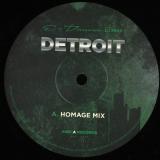
E-Dancer ft. DJ Minx - Detroit

E-Dancer ft. DJ Minx

Detroit

12inchKMS313
KMS
05.08.2025

Kevin Saunderson’s E-Dancer combine with DJ Minx to create an instant classic and am anthem for a long hot summer.

If is a triumphant colloboration between Techno godfather Kevin and his son Dantiez, who as well as being part of E-Dancer co-wrote and co-produced this latest gem from Detroit’s electronica lineage.

The result is an insanely catchy proud homage to the Motor City’s Techno roots propelled by one of by one of those unforgettable Reese bass lines.

The Electrifying Mojo, Juan Atkins, Carl Craig, Mayday, Stacey Pullen, UR, Ken Collier, MK, Moodyman, Jeff Mills, Terrence Parker and Octave One are amongst the Area Code 313 legends name checked in the lyrical romp.

DETROIT made its’ debut at the city’s recent Movement celebration of all things Techno and was acclimated as a gem by those who understand that you can’t tell the Motor City’s how to play its’ music. Kevin followed this up with a DJ trip to Ibiza where DETROIT created Detroit mayhem.

“WHATTUPDOE —WE’RE THE D”

Auf Lager

Bei uns am Lager und sofort versandfertig

14,08
Ortofon Stylus - Concorde MKII MIX

Ortofon Stylus

Concorde MKII MIX

ERSATZNADEL176240
Ortofon
26.08.2024

* ONLY FOR THE NEW CONCORDE GENERATION !!!

The DJ stylus features

Replacement stylus offers a tactile feedback when seating, indicating a snug and secure fit, while a cut-out area in the front allows for far more accurate needle drops.

• Larger, wider and more robust stylus body
• Easier to grip and handle
• Better fix by metal spring
• Tactile feedback of correct mount
• Large stylus viewing cut‐out
Stylus MIX Technical data

Output voltage at 1000Hz, 5cm/sec. - 6 mV
Channel balance at 1kHz - 1,5 dB
Channel separation at 1kHz - 20 dB
Channel separation at 15 kHz - 15 dB
Tracking ability at 315 Hz at recommended tracking force - 100 μm
Compliance, dynamic lateral - 14 μm/m N
Stylus type - Spherical R 18 μm

Tracking force range - 2 - 4 g
Tracking force recommended - 3 g
Concorde cartridge weight - 18.5 g
Recommended exclusively for Concorde MkII MIX

Auf Lager

Bei uns am Lager und sofort versandfertig

30,67
Ortofon Stylus - Concorde MKII Scratch

Ortofon Stylus

Concorde MKII Scratch

ERSATZNADEL176249
Ortofon
10.04.2024

* ONLY FOR THE NEW CONCORDE GENERATION !!!


The SCRATCH stylus features

Replacement stylus offers a tactile feedback when seating, indicating a snug and secure fit, while a cut-out area in the front allows for far more accurate needle drops.

• Larger, wider and more robust stylus body
• Easier to grip and handle
• Better fix by metal spring
• Tactile feedback of correct mount
• Large stylus viewing cut‐out


Stylus SCRATCH Technical data

Output voltage at 1000Hz, 5cm/sec. - 10 mV
Channel balance at 1kHz - 1 dB
Channel separation at 1kHz - 22 dB
Channel separation at 15 kHz - 15 dB
Tracking ability at 315 Hz at recommended tracking force - 120 μm
Compliance, dynamic lateral - 14 μm/m N
Stylus type - Spherical R 18 μm

Tracking force range - 3 - 5 g
Tracking force recommended - 4 g
Concorde cartridge weight - 18.5 g
Recommended exclusively for Concorde MkII SCRATCH

Auf Lager

Bei uns am Lager und sofort versandfertig

47,90
GGGG - Gaze LP 2x12"

Gggg

Gaze LP 2x12"

2x12inchFS031
FireScope Records
30.11.2022

Firescope are always on the lookout for new music, searching and sieving with headphones clamped over ears. GGGG, a recent discovery, unveils a stunning debut release. The co-founder of D.Ko Records may be a fresh face when it comes to releasing, but he has a wealth of both experience not to mention talent. His album, Gazé, is testament to this.

A spread of styles and influences coalesce to create GGGG’s unique sound. Ambient. Braindance. Electronica. Techno. All are melted and forged into the new. Processed percussion is the shifting sands from which a swooping melody takes flight, a melody that bends and soars as “K-Robot OG” ascends. Crystalline chords are shaven with fizzing drums in the frenzied elation of “Cas Contact.” And this is what lies at the heart of the collection, a rapturous joy that permeates the entire record. From the complexity and grandeur of “Chien Flûte 5.1” to the considered and subtle “Mudla 2”, the brightness of the audio palette chosen gives tracks an incandescence. This “joi de vivre” glistens and glows in the more playful tones of “Broutine Lamé” and “Cat Intro.” Textures are another area of interest for GGGG. Pieces like “Slowdry” and “Trip 2 Delinc” reshape and ruffle rhythms to bring a counterpoint to form and harmony. Beats are replaced by gentle waves of sound as the twelve-work collection culminates in “Sac Ala Blofel.”

Gazé tracks a course. From the energy and frenetic rhythms of first encounters to the atmospheric embrace of the latter part of the album, there is the sense that GGGG is celebrating the astounding of the ordinary, the amazing that is contained from the routine of dawn to dusk.

Auf Lager

Bei uns am Lager und sofort versandfertig

33,19
Demetrio Stratos - Box-set, includes LP, Book and Poster (Limited)
  • A1: Filastrocca (Nursery Rhyme) 1:11
  • A2: Scuola Di Retorica (School Of Rethorics) 2:08
  • A3: Retarius In Lotta (Retarius' Fight) 2:13
  • A4: Scena, Fiaba, Pantomima (Scene, Tale, Pantomime) 5:24
  • A5: Quartilla 0:31
  • A6: Quartiere Dei Bordelli (Brothels' Quarter) 2:26
  • A7: Mercato, Nebbia (Market, Fog) 1:02
  • A8: Orgia (Orgy) 2:34
  • B1: Bali 7:02
  • B2: Epitaffio (Epitaph) 1:09
  • B3: La Nave (The Ship) 1:34
  • B4: Inizio Tempesta (Storm Begins) 1:04
  • B5: Tempesta Violenta (Violent Storm) 1:30
  • B6: Succhiata (Sucking) 0:12
  • B7: Naufragio (Shipwreck) 1:33
  • B8: Giardino Di Circe (Circe's Garden) 0:43
  • B9: Proseleno 0:51
  • B10: La Maga (The Witch) 1:19
  • B11: Mangiando Il Cadavere + L'uccello (Eating The Corpse + The Bird) 2:27

Within the world of theatrical archives, there are the known, the unknown, the forgotten, and the lost. Demetrio Stratos' stage compositions for Teatro dell'Elfo's groundbreaking 1979 production Satyricon - directed by future Oscar winner Gabriele Salvatores - represents one such lost artifact now wondrously returned to life. This radical sonic work, integrating extended vocal techniques, Balinese instruments, and pioneering whale song recordings, stands as the final masterpiece of Italy's most visionary vocal experimenter, lost for over four decades until Die Schachtel's extraordinary recovery. As Stratos himself explained: "The musical operation performed on Satyricon is particular: the composer-musician here does not compose, but borrows ready-made music, vivisects it, melts it, intervenes and recomposes it on magnetic tape. The structure of the signifier, from a morphological point of view, presents itself as a conceptual collage." The music is obtained by utilizing compositions and musical elements from David Behrman, Joan La Barbara, Balinese Ketyak, Turkish Nay flute, Yugoslavian bagpipe, Pan flute, and whale song, with synthesizer interventions by Paolo Tofani. It began as part of something known - a wild, immersive theatrical event that inaugurated Teatro dell'Elfo's historic venue in 1979, was almost entirely forgotten, becoming lost and then unknown. The original production marked a radical departure for the company: no longer popular street theatre, but a dark, immersive, sophisticated spectacle that transformed their space into a rough wooden arena with a sand floor. Demetrio Stratos, working with Paolo Tofani (fellow Area member), created an entire sonic universe that subverted every conventional function of stage music. Their composition wasn't accompaniment, but autonomous sonic dramaturgy that integrated extended vocal techniques, archaic electronic elements, Nay flutes, Balinese instruments, and pioneering whale song recordings. The result was a three-dimensional soundscape that enveloped audiences, creating an otherworldly acoustic dimension. Stratos' score even intervened in the actors' vocal delivery, with the recordings capturing both the performance and his coaching sessions with the cast. The production featured young actors destined for fame - Elio De Capitani, Ferdinando Bruni, Cristina Crippa, Corinna Agustoni, Ida Marinelli - guided by Gabriele Salvatores in this adaptation of Petronius' ancient novel. Shortly after the Satyricon performances, Stratos was hospitalized for the condition that would lead to his death at just 33 years old. This work represents his final composition - a haunting farewell from one of Italy's most innovative sound artists. Die Schachtel presents this recovered work in collaboration with Teatro dell'Elfo, pulled from the original magnetic tape and carefully restored. Satyricon '79 is one of the great artifacts of 1970s Italian avant-garde - a wild, grinding sonic expose which sucks the ear into its depths, made in the spirit of collaboration and creative risk-taking. The edition includes critical apparatus with essays, testimonies from protagonists, and period photographic documentation, documenting an unrepeatable moment where theatre, vocal research and sonic experimentation converged. This release marks a poignant moment in experimental music history - Stratos' final work, now rescued from the archives and restored to its rightful place in the canon of Italian avant-garde masterpieces. A true wonder of towering historical importance. As essential as it gets for any fan of experimental music, or the history of the Italian avant-garde. Fully restored and newly mastered from the original analog tapes. Absolutely essential.

vorbestellen21.11.2025

erscheint voraussichtlich am 21.11.2025

98,28
Loose Articles, Nadir and The Beatmasters - Marseille, Manchester (In The Area)

An incredibly special project between decorated Manchester punks Loose
Articles and lauded Marseille rapper NADIR, the inviting clash of cultures
come together in a beautiful smash hit - penned as a love letter to
Manchester and Marseille, merging culture, camerarderie and football
You try genre defining this one??? The B Side remix by The Beatmasters is currently
bouncing across dancefloors across the UK and France.

vorbestellen07.11.2025

erscheint voraussichtlich am 07.11.2025

16,18
Ladytron - 604 2x12"

Ladytron

604 2x12"

2x12inch317221
Nettwerk Records
11.07.2025
  • A1: Mu-Tron
  • A2: Discotraxx
  • A3: Another Breakfast With You
  • A4: Cska Sofia
  • A5: The Way That I Found You
  • A6: Paco!
  • A7: Commodore Rock
  • A8: Zmeyka
  • B1: Playgirl
  • B2: I'm With The Pilots
  • B3: This Is Our Sound
  • B4: He Took Her To A Movie
  • B5: Laughing Cavalier
  • B6: Ladybird
  • B7: Jet Age
  • B8: Skools Out

Milky Clear Vinyl. Helen Marnie, Mira Aroyo, Daniel Hunt and Reuben Wu - formed in 1999 and sparked an entire movement in music pop culture powered by vintage synths and electro-rock engines. Originally released in 2001 by Emperor Norton Records in the US and Invicta Hi-Fi in the UK, ''604'' is the debut album from the Liverpool formed electronic outfit Ladytron. Named after the area code for British Columbia, the album features break-out tracks 'He Took Her to a Movie' (inspired by Kraftwerk's very own 'The Model'), 'Playgirl' and 'Discotraxx'.

vorbestellen11.07.2025

erscheint voraussichtlich am 11.07.2025

33,57
Combo Tezeta - La Danza del Camale?ó?n / La Reina Nocturna 7
  • La Reina Nocturna
  • La Danza Del Camaleón

Random Coloured Vinyl
Nu-Tone presents Combo Tezeta's debut 7" vinyl record! The A-side, "La Danza Del Camaleón" is an instrumental cumbia-salsera that takes you on a tropical trip with a touch of psychedelia. On the flip side, a dark mid-tempo bolero called, "La Reina Nocturna". Remastered from the original verion, released by Discos Más in 2020. Based out of the Bay Area, Combo Tezeta plays a highly danceable blend of instrumental Cumbias, Chichas, and Musica Tropical inspired by the late 60's and early 70's era of psychedelic Peru. Layering the reverb-fueled sounds of surf rock onto the foundations of Cumbia, the band's focus is to highlight the rich melodies and hypnotic rhythms birthed from the Afro-Latin diaspora. Along with its appreciation of world music and its diverse cultures, Combo Tezeta's mission is to deliver the sounds and musical echoes of the past to the present through a combination of traditional and original music. Combo Tezeta was featured in Noise Pop 2023 and has played Pacific Northwest tours with Satan’s Pilgrim and Thomas Lauderdale of Pink Martini 2023. The band has played famed Bay Area Venues the Chapel, Eli’s Mile High Club and the Ivy Room.  In Summer of 2024 they toured the Pacific Northwest and Southern California, including an appearance at The Hardly Strictly Bluegrass Festival in San Francisco's Golden Gate Park. The band was chosen by NPR’s Tiny Desk Concerts to be one of 20 finalists (out of 7000), and featured them in the Northern California showcase of finalists at Lagunitas Brewery in 2024. “Oakland seven-piece Combo Tezeta kicked off the baile with a garage-band take on ’60s and ’70s classics and originals, with distorted guitars and jangly synths layering psychedelic ooze onto timbales and güiras. The musician’s solos revealed hard-won skills, but the band members looked remarkably chill as they played together fluidly.” – KQED

vorbestellen30.06.2025

erscheint voraussichtlich am 30.06.2025

10,50
SPELLLING - THE TURNING WHEEL
  • Little Deer
  • Always
  • Turning Wheel
  • The Future
  • Awaken
  • Emperor With An Egg
  • Boys At School
  • Legacy
  • Queen Of Wands
  • Magic Act
  • Revolution
  • Sweet Talk

Silver Vinyl. SPELLLING, das Projekt der in der Bay Area lebenden kalifornischen Künstlerin Chrystia Cabral, veröffentlicht mit "The Turning Wheel" den Nachfolger von "Mazy Fly" aus dem Jahr 2019. Das neue Album dreht sich um Themen wie menschliche Einheit, die Zukunft, göttliche Liebe und die rätselhaften Höhen und Tiefen des Karnevals namens Leben. Auf "The Turning Wheel" stellt sich SPELLLING der ehrgeizigen Aufgabe, ein Album mit einem 31-köpfigen Ensemble aus Musikern zu orchestrieren und selbst zu produzieren. Das Ergebnis begeistert mit einer großen Bandbreite an akustischen Klängen, die ihre Arbeit in eine neue, lebendige Dimension überführen. Das Album ist in zwei Hälften, Above und Below, aufgeteilt. Der Above-Teil wird von opulenten Streichern, warmen Banjoklängen und dem Fagott dominiert. Im Verlauf kippt die eher jubilierende, verträumte Stimmung ins Schaurige und Gothic-hafte. Diese Entwicklung wird durch SPELLLINGs Gesangsstil verankert, der das theatralische und folkloristische Herz ihres Songwritings betont. Eröffnet wird der Above-Reigen von der Klavier untermalten Lead-Single "Little Deer", die mit bezaubernden Vocals und 17 verschiedenen Akustikinstrumenten aufwartet. Verzerrte Synthesizerklänge geben dem Track eine skurrile Note, der von dem Frida Kahlo-Gemälde Wounded Deer inspiriert wurde, auf dem sich die Künstlerin selbst als Mischwesen aus Tier und Mensch darstellt.

vorbestellen18.04.2025

erscheint voraussichtlich am 18.04.2025

31,05
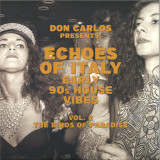
Various - ECHOES OF ITALY – THE BIRDS OF PARADISE – EARLY 90S HOUSE VIBES VOL.2 (2x12")

Googling “paradise house”, the first results to pop up are an endless list of European b&b’s with whitewashed lime façades, all of them promising “…an unmatched travel experience a few steps from the sea”. Next, a little further down, are the institutional websites of a few select semi-luxury retirement homes (no photos shown, but lots of stock images of smiling nurses with reassuring looks). To find the “paradise house” we’re after, we have to scroll even further down. Much further down.

It feels like yesterday, and at the same time it seems like a million years ago. The Eighties had just ended, and it was still unclear what to expect from the Nineties. Mobile phones that were not the size of a briefcase and did not cost as much as a car? A frightening economic crisis? The guitar-rock revival?! Certainly, the best place to observe that moment of transition was the dancefloor. Truly epochal transformations were happening there. From America, within a short distance one from the other, two revolutionary new musical styles had arrived: the first one sounded a bit like an “on a budget” version of the best Seventies disco-music – Philly sound made with a set of piano-bar keyboards! – the other was even more sparse, futuristic and extraterrestrial. It was a music with a quite distinct “physical” component, which at the same time, to be fully grasped, seemed to call for the knotty theories of certain French post-modern philosophers: Gilles Deleuze, Félix Guattari, Paul Virilio... Both those genres – we would learn shortly after – were born in the black communities of Chicago and Detroit, although listening to those vinyl 12” (often wrapped in generic white covers, and with little indication in the label) you could not easily guess whether behind them there was a black boy from somewhere in the Usa, or a girl from Berlin, or a pale kid from a Cornish coastal town.

Quickly, similar sounds began to show up from all corners of Europe. A thousand variations of the same intuition: leaner, less lean, happier, slightly less intoxicated, more broken, slower, faster, much faster... Boom! From the dancefloors – the London ones at least, whose chronicles we eagerly read every month in the pages of The Face and i-D – came tales of a new generation of clubbers who had completely stopped “dressing up” to go dancing; of hot tempered hooligans bursting into tears and hugging everyone under the strobe lights as the notes of Strings of Life rose up through the fumes of dry ice (certain “smiling” pills were also involved, sure). At this point, however, we must move on to Switzerland.

In Switzerland, in the quiet and diligent town of Lugano, between the 1980s and 1990s there was a club called “Morandi”. Its hot night was on Wednesdays, when the audience also came from Milan, Como, Varese and Zurich. Legend goes that, one night, none less than Prince and Sheila E were spotted hiding among the sofas, on a day-off of the Italian dates of the Nude Tour… The Wednesday resident and superstar was an Italian dj with an exotic name: Don Carlos. The soundtrack he devised was a mixture of Chicago, Detroit, the most progressive R&B and certain forgotten classics of old disco music: practically, what the Paradise Garage in New York might have sounded like had it not closed in 1987. In between, Don Carlos also managed to squeeze in some tracks he had worked on in his studio on Lago Maggiore. One in particular: a track that was rather slow compared to the BPM in fashion at the time, but which was a perfect bridge between house and R&B. The title was Alone: Don Carlos would explain years later that it had to be intended both in the English meaning of “by itself” and like the Italian word meaning “halo”. That wasn’t the only double entendre about the song, anyway. Its own very deep nature was, indeed, double. On the one hand, Alone was built around an angelic keyboard pattern and a romantic piano riff that took you straight to heaven; on the other, it showcased enough electronic squelches (plus a sax part that sounded like it had been dissolved by acid rain) to pigeonhole the tune into the “junk modernity” section, aka the hallmark of all the most innovative sounds of the time: music that sounded like it was hand-crafted from the scraps of glittering overground pop.

No one knows who was the first to call it “paradise house”, nor when it happened. Alternative definitions on the same topic one happened to hear included “ambient house”, “dream house”, “Mediterranean progressive”… but of course none were as good (and alluring) as “paradise house”. What is certain is that such inclination for sounds that were in equal measure angelic and neurotic, romantic and unaffective, quickly became the trademark of the second generation of Italian house. Music that seemed shyly equidistant from all the rhythmic and electronic revolutions that had happened up to that moment (“Music perfectly adept at going nowhere slowly” as noted by English journalist Craig McLean in a legendary field report for Blah Blah Blah magazine). Music that to a inattentive ear might have sounded as anonymous as a snapshot of a random group of passers-by at 10AM in the centre of any major city, but perfectly described the (slow) awakening in the real world after the universal love binge of the so-called Second Summer of Love.

For a brief but unforgettable season, in Italy “paradise house” was the official soundtrack of interminable weekends spent inside the car, darting from one club to another, cutting the peninsula from North to centre, from East to West coast in pursuit of the latest after-hours disco, trading kilometres per hour with beats per minute: practically, a new New Year’s Eve every Friday and Saturday night. This too was no small transformation, as well as a shock for an adult Italy that was encountering for the first time – thanks to its sons and daughters – the wild side of industrial modernity. The clubbers of the so-called “fuoriorario” scene were the balls gone mad in the pinball machine most feared by newspapers, magazines and TV pundits. What they did each and every weekend, apart from going crazy to the sound of the current white labels, was linking distant geographical points and non-places (thank you Marc Augé!) – old dance halls, farmhouses and business centres – transformed for one night into house music heaven. As Marco D’Eramo wrote in his 1995 essay on Chicago, Il maiale e il grattacielo: “Four-wheeled capitalism distorts our age-old image of the city, it allows the suburbs to be connected to each other, whereas before they were connected only by the centre (…) It makes possible a metropolitan area without a metropolis, without a city centre, without downtown. The periphery is no longer a periphery of any centre, but is self-centred”.

“Paradise house” perfectly understood all of this and turned it into a sort of cyber-blues that didn’t even need words, and unexpectedly brought back a drop of melancholic (post?)-humanity within a world that by then – as we would wholly realise in the decades to come – was fully inhuman and heartless. A world where we were all alone, and surrounded by a sinister yellowish halo, like a neon at the end of its life cycle. But, for one night at least, happy."


nicht am Lager

Bestelle jetzt und wir bestellen den Artikel für dich beim Lieferanten.

28,99

Last In: vor 6 Monaten
Various - Volcanic Tongue - Late 20th Century Underground (LP 2x12")

"Volcanic Tongue" war ein Plattenladen, der von 2005-2015 in Glasgow von David Keenan und Heather Leigh betrieben wurde und zeitgenössische DIY-Musik aus der ganzen Welt in kleinen selbstgemachten CD-R-Auflagen veröffentliche. Parallel versuchte man, vergessene Künstler aus der Vergangenheit ins Rampenlicht zu rücken, die ihre Musik oft als Privatpressung veröffentlicht hatten. Der Laden war für seine wöchentliche Mailingliste bekannt, in der Keenan enthusiastisch über Neuankömmlinge rappte, insbesondere über die Platte der Woche, die den Spitznamen "tip of the tongue" (Zungenspitze) erhielt. Dieser eklektische Sampler mit 20 "tips of the tongue" - von Outsider-Synth über Psych-Folk bis zu kaputtem Rock'n'Roll, aufgenommen zwischen 1968-2013 - ist eine Hommage an eine lebendige und vielseitige Underground-Avantgarde. Black Vinyl 2LP in PVC-Hülle, von Julian House designt, mit bedruckten Innentaschen samt Linernotes von David Keenan zu jedem Künstler.

PS: Gleichzeitig erscheint beim White Rabbit-Verlag eine Deluxe-Ausgabe des gleichnamigen Buches mit einer CD-Version des Samplers, limitiert auf 1.000 Exemplare, und signiert von Autor David Keenan und Designer Julian House.

nicht am Lager

Bestelle jetzt und wir bestellen den Artikel für dich beim Lieferanten.

35,25

Last In: vor 12 Monaten
BROOKLYN SOUNDS - LIBRE - FREE

Brooklyn Sounds

LIBRE - FREE

12inchVAMPI311
Vampisoul
24.01.2025

Brooklyn Sounds legendary second album from 1972, full of heavy Nuyorican underground salsa dura propelled by raw trombones, off-kilter piano and in-your-face percussion. A perfect blend of barrio attitude and Caribbean swing, the album proves Brooklyn has sabor y salsa! Pressed on 180 g vinyl, our reissue includes liner notes featuring never-before seen photos. “Libre – Free” is the now legendary second album by the short-lived Brooklyn Sounds and is arguably even better than their self-titled debut, displaying a more mature and practiced sound, no doubt honed by their experiences playing more gigs in support of their first record. Brooklyn Sounds were one of a handful of garage salsa bands from the independent scene that was gathering steam in the early 1970s in the New York boroughs, despite little support or exposure in the mainstream Latin music industry from more dominant labels like Fania, Mericana, Cotique and Alegre. As with many others, Brooklyn Sounds briefly fluoresced in a burst of creativity and defiance, yet flamed out shortly thereafter, dying like a flower among the ruins of burned-out apartment blocks in the barrios of its home city. Though the band only cut two LPs and a couple singles in their brief half-decade of existence, and never really broke out of the cuchifrito circuit in the tri-state area of New York, New Jersey and Connecticut, their music gradually spread far and wide, eventually becoming a sought-after global commodity by the late 1990s. In contrast to the first album “Libre – Free” is uptempo and ebullient, with fewer slow songs and more confident, creative arrangements, full of heavy Nuyorican underground salsa dura propelled by raw trombones, off-kilter piano and in-your-face percussion. Standout tracks include the uplifting, anthemic ‘Libre soy’, and ‘Ha llegado el momento’, with its minor key ‘Moliendo café’ quote at the
beginning—both of which have become dance floor anthems over the years. Another mid-tempo killer is ‘Guaguancó tropical’, a favorite in Colombia since the 1970s. A perfect blend of barrio attitude and Caribbean swing, the album proves Brooklyn has sabor y salsa!

vorbestellen24.01.2025

erscheint voraussichtlich am 24.01.2025

29,83
JOHNNY CLARKE - Don't Stay Out Late

2024 Repress


Johnny Clarke stands tall as one of the great vocalists that ruled the Jamaican reggae scene from the mid 1970's to the early 1980's Dancehall period. This re-issue of his 'Don't Stay Out Late' set shows his versatility to sing any song that was put in front of him and make it his own. Under producer Bunny 'Striker' Lee's guidance, Mr Clarke produced a run of singles and albums few could match.

Johnny Clarke (b 1955, Jamaica, West Indies) cut his first record 'God Made the See and Sun', after winning a local singing contest in the Bull Bay area of Jamaica. Although the single was not a hit, it led to two follow up tracks for producer Rupie Edwards, '
Everyday Wandering' and 'Julie' that fared much better, both on the island and overseas in England and Canada. These tracks also brought the singer to the attention of producer Bunny Lee and a working relationship that would go on to produce a prolific catalogue of music.
Johnny Clarke's Dread Conscious/ Love Song style were to grace many hits around this time in 1974. Such tunes as 'None Shall Escape The Judgement' , 'Move Out Of Babylon' , 'Rock With Me Baby' , 'Enter The Gates With Praise' to name but a few. All new songs added to a host of cover tunes, recommended by Bunny Lee, many taken from singer John Holt's catalogue, that suited Clarke's vocal style.
The rhythms were cut at various studios around the Island. Randy's Studio 17, Channel I, Treasure Isle, Dynamic Sounds and Harry J's by a group of musicians loosely called The Aggravators and voiced King Tubby's studio.

All great tracks backed by great rhythms, cut by Mr Johnny Clarke with a voice that few could equal.

nicht am Lager

Bestelle jetzt und wir bestellen den Artikel für dich beim Lieferanten.

13,40

Last In: vor 16 Monaten
Ortofon Stylus - Concorde MKII DJ

* ONLY FOR THE NEW CONCORDE GENERATION !!!

The DJ stylus features

Replacement stylus offers a tactile feedback when seating, indicating a snug and secure fit, while a cut-out area in the front allows for far more accurate needle drops.

• Larger, wider and more robust stylus body
• Easier to grip and handle
• Better fix by metal spring
• Tactile feedback of correct mount
• Large stylus viewing cut‐out

Stylus DJ Technical data

Output voltage at 1000Hz, 5cm/sec. - 6 mV
Channel balance at 1kHz - 1 dB
Channel separation at 1kHz - 22 dB
Channel separation at 15 kHz - 15 dB
Tracking ability at 315 Hz at recommended tracking force - 100 μm
Compliance, dynamic lateral - 14 μm/m N
Stylus type - Spherical R 18 μm

Tracking force range - 3 - 5 g
Tracking force recommended - 4 g
Concorde cartridge weight - 18.5 g
Recommended exclusively for Concorde MkII DJ

nicht am Lager

Bestelle jetzt und wir bestellen den Artikel für dich beim Lieferanten.

41,13

Last In: vor 4 Monaten
Ortofon Stylus - Concorde MKII Club

Ortofon Stylus

Concorde MKII Club

ERSATZNADEL176252
Ortofon
31.07.2024

* ONLY FOR THE NEW CONCORDE GENERATION !!!

The CLUB stylus features

Replacement stylus offers a tactile feedback when seating, indicating a snug and secure fit, while a cut-out area in the front allows for far more accurate needle drops.

• Larger, wider and more robust stylus body
• Easier to grip and handle
• Better fix by metal spring
• Tactile feedback of correct mount
• Large stylus viewing cut‐outStylus CLUB Technical data

Output voltage at 1000Hz, 5cm/sec. - 8 mV
Channel balance at 1kHz - 1 dB
Channel separation at 1kHz - 25 dB
Channel separation at 15 kHz - 15 dB
Tracking ability at 315 Hz at recommended tracking force - 100 μm
Compliance, dynamic lateral - 14 μm/m N
Stylus type - Special Elliptical r/R 13/25 μm

Tracking force range - 2 - 4 g
Tracking force recommended - 3 g
Concorde cartridge weight - 18.5 g
Recommended exclusively for Concorde MkII CLUB

nicht am Lager

Bestelle jetzt und wir bestellen den Artikel für dich beim Lieferanten.

54,62

Last In: vor 52 Tagen
THIRD EAR BAND - DRUID ONE (LIVE AT ESSEN POP & BLUES FESTIVAL 1970)

THIRD EAR BAND stammen aus Canterbury und begannen als psychedelische Band namens THE GIANT SUN TROLLEY, die in Südlondoner Clubs lange und improvisierte Sets spielte. Nach einem Auftritt wurde der Band fast die gesamte Ausrüstung gestohlen. So wurden sie aus purem Zufall und offensichtlicher Notwendigkeit eine Akustikband und nahmen den Namen THIRD EAR BAND an. Von 1969 bis 1972 veröffentlichte die Band drei Alben auf dem progressivem Harvest-Label, "Music From Macbeth" (1972) war davon das bekannteste und kommerziell erfolgreichste. Am 24. April 1970 traten die Third Ear Band beim 2. Essener Pop & Blues Festival. Aus welchen Gründen auch immer tauchten sie aber weder auf dem offiziellen Plakat zur Veranstaltung noch in den Programmheften zum Festival auf. Das Billing des Tages war mit Acts wie The Flock, Ekseption, Rhinocerous, The Groundhogs, It"s A Beautiful Day und den noch unbekannten Black Sabbath, die gerade ihr erstes Album veröffentlicht hatten, prall gefüllt. Das Essener Konzert in der Quartettbesetzung mit Sweeney am Schlagzeug, Minns an der Oboe, Coff an der Violine und Smith am Cello fand nur wenige Wochen vor der Veröffentlichung des zweiten Albums statt, das die Fans als "Elements" kennen, obwohl es schlicht "Third Ear Band" heißt und im Juni 1970 erschien. Von den vier Elementen spielte die Band an dem Abend "Earth" und "Water", aber in einer kürzeren Fassung im Vergleich zu den Albumversionen. Erst vor kurzem sind die professionellen Tonaufnahmen vom Festivalauftritt der Third Ear Band wieder aufgetaucht und jetzt restauriert, klanglich aufgearbeitet und gemastert worden.

vorbestellen31.05.2024

erscheint voraussichtlich am 31.05.2024

21,22
Artikel pro Seite:
N/ABPM
Vinyl