Barely heard in his lifetime (1961-2002) but hailed as an outsider hero of ur-punk since 2009’s ‘Cosmic Lightning’ compilation, J.T. IV strikes back!
15 unheard-of tracks found on an obscure cassette tape make the schizo split in his music - rabid rock & roll fantasy and cold-eyed acoustic introspection - an epic. ‘The Future’ is J.T. IV’s mad magnum opus.
The 2009 comp LP, ‘Cosmic Lightning’, cast his tragic silhouette up on the big screen
for all to see: the lost boy, alone in the world, standing before the mic and releasing
his inner star with glee and vengeance, his antisocial visions flying high atop a raging
funnel of distorted guitars and blunt rhythms. Or couched, childlike, within a heart
breaking billow of acoustic guitars - a schizophrenic split that only magnifies the
display of his deep emotions.
‘The Future’ goes even further, excavating fifteen recordings from a previously
unheard-of cassette entitled ‘The Best Of Johnny Zhivago Retrospective 1979–1993’,
and adding four more uncollected tracks from his slim (and impossible to find
anyway) discography.
Of these nineteen tracks, eight are covers - and J.T. IV’s picks, from Velvets to Mott
the Hoople, Roxy Music, Lee Hazlewood, The Kinks, Eno and Stephen Sondheim,
sharpen our image of the misfit adrift; on the outside looking in, but maybe just a few
steps away from his goal.
‘The Future’ unfolds like an epic, as both sides of J.T.’s persona - the street-smart,
damaged rocker and the heart struck poet of the scene - live on together in the best
performances of his short career.
A punk of the old order, John Henry Timmis IV was born in 1961 into a dysfunctional,
abusive and eventually broken family. By the mid-70s, he was desperate to get out,
running away from his mother’s home several times while still a teenager living in the
greater Chicagoland area. At wit’s end, she had him committed to the Menninger
Clinic for a year or so. Released on his own reconnaissance, he began his meteoric
ascent to the mythic level of self-aggrandizement in which he appears here. Inspired
by the underground, proto-punk sounds in the air (the likes of which any sharp-eyed
young thing might chance upon in the back pages of Creem, Crawdaddy, Trouser
Press, etc.) and desperate to be heard himself, J.T. presented like the scabby
younger brother of Bangs and Laughner: born only to rock, his musical conception a
rabid personality crisis of proselyte elitism and nihilist excess.
Now, 20 years on from his passing, ‘The Future’ is ever farther away from the world
in which he struggled so mightily - but his stinging iconoclasm, whether screamed
from Marshall amps or mic-ed up close, feels ever more powerfully infused with his
unique breadth of illness and essence.
These songs represent the two sides of J.T. - and while they emanate from the 80s,
they find themselves potently renewed in the polarized world of today, making ‘The
Future’ a worthwhile destination for everyone who ever had a heart touched by the
transgression and freedom promised by rock & roll.
Search:area music
Espen Friberg’s solo album debut. Sun Soon is Espen Friberg´s solo album debut, consisting of eleven compositions made up of synthesizer and field recordings. The album is formed as a collage, with compositions patched on a Serge modular synth and field recordings. The patches portray the mood and wandering in mountains and forests – while at the same time meditating on the area of the Norwegian valley Hallingdal´s local history. The collage technique is something Friberg uses in both his musical and visual art. The album is meditative and exploratory, and at the same time playful and immediate. Trucks, trash cans, flowing streams, lemon soda, horses and wandering mountains, find its place between slow melodies, scratching, sinus tones and bass lines. Dissonances and harmonies come together in gliding transitions and abrupt stops, while an electronic willow flute sings and the sun is rising. The recording is done at Leveld Kunstnartun in Ål in Hallingdal, later mixed and produced in collaboration with Jenny Berger Myhre. The project captures the ambiance in the valley around Leveld, through Espen´s experiences in nature, but also from the paintings of Marianne Røthe Arnesen and Gøsta Munsterhjelm. Espen Friberg is known as an artist, designer, illustrator, cartoon creator and musician, and has received numerous awards and stipends for his work. In the beginning of 2000 he was a part of establishing the design studio Yokoland, but later started his own studio. In addition to his visual practice he has built a sound studio consisting of complex synthesizer systems and a variety of obscure electronical instruments and effect processors. He has been a central person in experimental and electronic music in Norway. He started and runs the record company Take It Easy Policy in collaboration with Emil Høgset, and has been a curator for the concert series Rett Ned. Since 2005 he has participated in a long line of sample albums under different artist names, before releasing his first EP under his own name in 2015. After this he has released six different albums with Øivind Olsen, André Borgen and Marianne Røthe Arnesen. Friberg has been active on the concert stage, both as a solo artist and in different collaborations. 1.Lazy cobweb 2.Wandering mountain 3.Gøsta Munsterhjelm 4.Foggy glow 5.Pasture patch 6.Motor sunup 7.Thirteen paintings 8.Marianne Røthe Arnesen 9.Sinuous river (part one) 10.Sinuous river (part two) 11.Orange moss bridge
One of These Nights occupies an important, unique place in the Eagles' discography given it represents the final album the group made before releasing the bajillion-selling Their Greatest Hits (1971-1975) compilation. The timing is telling. A coming-out party for Glenn Frey and Don Henley's songwriting skills, the studio record – the band's fourth, and its first to hit #1 on the charts – signifies the group's ascent to superstar status. Home to three massive singles (the title track, "Lyin' Eyes," and "Take It to the Limit") and nominated for four Grammy Awards, the quadruple-platinum 1975 effort solidified the Eagles' Southern California-reared sound and made the band a household name.
Mastered from the original analog tapes, pressed on MoFi SuperVinyl, and limited to 10,000 copies, Mobile Fidelity's UltraDisc One-Step 180g 45RPM 2LP vinyl box set takes One of These Nights to the limit. And then some. Playing with reference sonics and a practically indiscernible noise floor thanks to MoFi SuperVinyl's special formula, it provides a rich, dynamic, transparent, and three-dimensional view into a release that moved country-rock ahead by leaps and bounds – and paved the way for the Eagles' ascendancy to global superstardom. The opportunity to zero in on the particulars of the Eagles' golden harmonies, distinct vocal timbres, and cohesive interplay has never been better.
Visually, the premium packaging and presentation of the UD1S One of These Nights pressing befit its esteemed status. Housed in a deluxe box, it features beautiful foil-stamped jackets and faithful-to-the-original graphics that illuminate the splendour of the recording. From every angle, this UD1S reissue exists as a curatorial artefact meant to be preserved, touched, and examined. It is made for discerning listeners that prize sound quality and production, and who desire to fully immerse themselves in the art – and everything involved with the album, from the renowned cover art to the meticulous finishes. As much as any Eagles LP, the connection between the imagery and the music and the band on One of These Nights runs deep. No wonder it led to a Grammy Nomination for Best Album Package.
Devised by West Texas artist Boyd Elder, the striking skull-and-feathers themed piece gracing the front of One of These Nights represents where the Eagles have been and where they were headed. Album art director Gary Burden explained: "The cow skull is pure cowboy, folk, the decorations are American Indian-inspired, and the future is represented by the more polished reflective glass beaded surfaces covering the skull." Moreover, Elder had met the group years earlier when Henley and company performed at one of his gallery openings in California. MoFi's UD1S box set allows Elder's vision (and Burden's debossed treatment of the image) to pop and appear as if it was a stand-alone object.
Of course, what's inside the sleeves, and in the grooves, proves equally compelling. Though One of These Nights marks the final appearance of band co-founder Bernie Leadon on an Eagles LP and contains three of his tunes, the record's tremendous success owes to Frey and Henley's timeless contributions. Taking the next step in their maturation and evolution, the pair crafted several songs while living together as roommates in a rented house in which they converted a music room into a recording studio.
The duo's bond and chemistry pulse throughout the record – particularly in the tight arrangements, tasteful instrumental flourishes, and seamless blending of the folk, country, and rock elements. The musical combinations and partnership not only produced the Eagles' first million-selling single (the slow-dancing "Take It to the Limit," co-written with bassist-vocalist Randy Meisner) and the Frey-led cheating classic "Lyin' Eyes," but the famed title track, which nods to the era's nascent disco scene as well as Kenneth Gamble and Leon Huff's Philly soul platters.
Frey named "One of These Nights" as his favorite Eagles composition of all-time; Meisner's high harmonies alone send the track into a galaxy of its own. Speaking of the latter, Leadon's instrumental "Journey of the Sorcerer" ventures into another universe and was soon used by Douglas Adams as the theme to his "The Hitch-hiker's Guide to the Galaxy" radio series. Inspiration and creative experimentation also dragged the Eagles into the blues. Another Frey-Henley gem, the self-probing "After the Thrill Is Gone" serves as a response song to B.B. King's signature track and more evidence the band was turning the lens inward for lyrical narratives. Like everything on One of These Nights, the song confirms the Eagles were breathing rare musical air.
More About Mobile Fidelity UltraDisc One-Step and Why It Is Superior
Instead of utilizing the industry-standard three-step lacquer process, Mobile Fidelity Sound Lab's new UltraDisc One-Step (UD1S) uses only one step, bypassing two processes of generational loss. While three-step processing is designed for optimum yield and efficiency, UD1S is created for the ultimate in sound quality. Just as Mobile Fidelity pioneered the UHQR (Ultra High-Quality Record) with JVC in the 1980s, UD1S again represents another state-of-the-art advance in the record-manufacturing process. MFSL engineers begin with the original master recordings, painstakingly transfer them to DSD 256, and meticulously cut a set of lacquers. These lacquers are used to create a very fragile, pristine UD1S stamper called a "convert." Delicate "converts" are then formed into the actual record stampers, producing a final product that literally and figuratively brings you closer to the music. By skipping the additional steps of pulling another positive and an additional negative, as done in the three-step process used in standard pressings, UD1S produces a final LP with the lowest noise floor possible today. The removal of the additional two steps of generational loss in the plating process reveals tremendous amounts of extra musical detail and dynamics, which are otherwise lost due to the standard copying process. Every conceivable aspect of vinyl production is optimized to produce the most perfect record album available today.
MoFi SuperVinyl
Developed by NEOTECH and RTI, MoFi SuperVinyl is the most exacting-to-specification vinyl compound ever devised. Analogue lovers have never seen (or heard) anything like it. Extraordinarily expensive and extremely painstaking to produce, the special proprietary compound addresses two specific areas of improvement: noise floor reduction and enhanced groove definition. The vinyl composition features a new carbonless dye (hold the disc up to the light and see) and produces the world's quietest surfaces. This high-definition formula also allows for the creation of cleaner grooves that are indistinguishable from the original lacquer. MoFi SuperVinyl provides the closest approximation of what the label's engineers hear in the mastering lab.
Guitar and drums duo GIRAFFES? GIRAFFES! have been making fiercely
unique music since their explosion into the San Francisco Bay area in
2005
Their mostly instrumental, odd-time compositions quickly grabbed the attention
of listeners worldwide and their second album More Skin With Milk- Mouth is a
quintessential math rock album. With every new release, they continually make
music that is both melodic and technical, experimental yet accessible "and the
result is a sound that is both transcendental and incredible fun. Spanning 37
"chapters" that seamlessly bleed into one another over six tracks, the duo have
created a monolith of an album in Memory Lame that builds from the erratic
melodicism their cult fanbase has come to know and love.
..."An alternate universe where Brian Eno produced "Rumours" and Alex Chilton wrote songs with Blondie..." San Francisco 5 piece LATITUDE sophomore album "Mystic Hotline" builds on the foundations of their acclaimed 2017 Debut with a triumphant foray into 21st century power pop. Centered around the dazzling vocal performance of Amy Fowler, tight band arrangements and accomplished delivery, the 10 tracks crackle with proficiency and elan. ..."Effervescent power pop bliss with infectious melodies, jangly guitars, sparkling synths, and more hooks than your local bait & tackle...." Although often drawing comparisons to such pop heavyweights as Blondie, The Nerves, Nick Lowe, and The Pretenders LATITUDE are far from revivalists, as this album testifies. "Mystic Hotline" reflects the present darker mood of the country, veering from carefree 60s/70s pop into more angsty 80s territory. That sentiment is evident in "Damage Control", a sonic bristling at a grotesque new Trump reality. "Rising" testifies to the senselessness of the Ghost Ship fire in Oakland, and the media blame game that followed. Vertical Highway is a deceptively happy ditty about death. Those are counterbalanced by songs like Thursday Is The New Sunday's praise for lazy love and I Love The Radio, a tribute to the many talented female musicians in the Bay Area.
Most audiophiles know Alan Parsons Project's I Robot by heart. Engineered by Parsons after he performed the same duties on Pink Floyd's Dark Side of the Moon, the 1977 record reigns as a disc whose taut bass, crisp highs, clean production, and seemingly limitless dynamic range are matched only by the sensational prog-rock fare helmed by the keyboardist and his creative partner, Eric Woolfson. Not surprisingly, it's been issued myriad times. Can it be improved? Relish Mobile Fidelity's stupendous UltraDisc One-Step 180g 33RPM box set and the question becomes moot.
Mastered from the original master tapes and pressed at RTI on MoFi SuperVinyl, I Robot comes to life with reference-setting realism on this numbered, limited-edition reissue. Boasting immaculate highs and lows, generous spaciousness, and see-through transparency that takes you into the studio with Parsons and Woolfson at Abbey Road, this definitive edition is designed to demonstrate the full-range capabilities of the world's best stereo systems while offering listeners the convenience of having all the music on one LP.
Featuring a nearly inaudible noise floor, this transcendent UD1S edition functions as a repeat invitation to savor reference-grade soundstages, immersive smoothness, sought-after instrumental separation, three-dimensional imaging, and consummate tonal balances. Able to be played back at high volumes without compromise or fatigue, it is a demonstration record for the ages – the likes of which are no longer being made. This is the very reason you own and invest in high-end audio gear.
The special characteristics of this UD1S version extend to the premium packaging. Housed in an elegant slipcase, the reissue features special foil-stamped jackets and faithful-to-the-original graphics. Aurally and visually, it is made for discerning listeners who prize sound quality and production, and who desire to fully immerse themselves in everything about this conceptual landmark. The Alan Parsons Project's most famous record deserves nothing less.
Inspired by and loosely based around the Isaac Asimov stories of the same name, I Robot delves into themes of artificial intelligence and technological dominance that make the record extremely relevant in the 21st century. Indeed, Parsons and Woolfson's pinnacle creation dovetailed with the ascendency of Star Wars, which itself is experiencing a rebirth in an age of self-driving cars, smart devices, and mindless automation. Lyrically, songs such as "The Voice" call into question human behavior – and their relationship to increasing robotic supremacy – in everyday life. Parsons and Woolfson reflect the associated paranoia, dichotomy, and transformation via shifting sci-fi arrangements steeped in drama and moodiness.
The absorbing tunes on I Robot also continue to fascinate due to their perfectionism and innovation. Borrowing from Pink Floyd's strategies, Parsons and Woolfson utilize a looped sequence on the title track to create new downbeats. "Some Other Time" employs two different lead vocalists and yet gives the illusion that only one is involved. Captivating strings, a piccolo trumpet, and bona fide pipe organ grace "Don't Let It Show." The origins of "Nucleus" stem from a unique analog keyboard concoction dubbed "the Projectron," devised by Parsons and electronic engineer Keith Johnson. Andrew Powell's orchestral and choral arrangements top it all off, with "Total Eclipse" arriving as a frightening track that presages the climactic "Genesis Ch. 1 V. 32."
Does man or machine win in the end? Decide as you get lost in Mobile Fidelity's UltraDisc 180g 33RPM LP pressing. Secure your numbered copy today!
More About Mobile Fidelity UltraDisc One-Step and Why It Is Superior
Mobile Fidelity Sound Lab's UltraDisc One-Step (UD1S) technique bypasses generational losses inherent to the traditional three-step plating process by removing two steps: the production of father and mother plates, which are created to yield numerous stampers from each lacquer that is cut. For UD1S plating, stampers (also called "converts") are made directly from the lacquers. Since each lacquer yields only one stamper, multiple lacquers need to be cut. Mobile Fidelity's UD1S process produces a final LP with the lowest-possible noise floor. The removal of two steps of the plating process also reveals musical details and dynamics that would otherwise be lost due to the standard multi-step process. With UD1S, every aspect of vinyl production is optimized to produce the best-sounding vinyl album available today.
MoFi SuperVinyl
Developed by NEOTECH and RTI, MoFi SuperVinyl is the most exacting-to-specification vinyl compound ever devised. Analogue lovers have never seen (or heard) anything like it. Extraordinarily expensive and extremely painstaking to produce, the special proprietary compound addresses two specific areas of improvement: noise floor reduction and enhanced groove definition. The vinyl composition features a new carbonless dye (hold the disc up to the light and see) and produces the world's quietest surfaces. This high-definition formula also allows for the creation of cleaner grooves that are indistinguishable from the original lacquer. MoFi SuperVinyl provides the closest approximation of what the label's engineers hear in the mastering lab.
This mini album was originally published on Semantica Records in 2010 as a extremely limited 100 copy only reference. 12 years later we recover this for the Drivecom’s catalogue and fans of the label. This is a re-press edition with a new mastering and cutting, focused in the audio quality more than trying to get a maximum volume or gain. So this is one of the reasons that the side A cutting is trying to keep the tracks in the outside area of the vinyl in the most possible way, trying to avoid distortions or other artifacts from the inner vinyl curvature.
This 12” contains the same tracks on vinyl as the original edition but a couple of bonuses as a digital download. Those tracks called "Axonal Destruction (1999 Rework)" and "Automatic Reconstruction" were never released.
Note: For the people who purchase a physical copy in the shops, please take a picture of your purchase and share it on social networks, then we’ll send you a special download code.
In the musical eld, this reference was introduced with minimal and repetitive mental synth lines, mainly triggered from TB303 sequenced lines as the vertebral spinae, slow and progressive cadence rhythms with a touch of experimental electro and vocoders on board, exception is the rst tittle “Ultralink” which gives the name to the reference and it’s also the most club-oriented track in the mini album. About the thematic is all surrounded of such as mental driving musical lines so all the tittles were focused in the neuroscience
Each realm moves its own time in the now. Our space in this realm moves in time with the greater mechanism, at our own pace. We focus less on the gears of the mechanism and more on the energy that turns motion. Our music is a reaction to falling; an instinctual jerk that breaks momentum. Our sounds are taken from the background of our environment. Conversations that blend, the rattling hydraulics of a bus, the ringing of your ears, the random bangs of a floundering stumble corralled into a rhythm and submerged in synth. Docile is a style that is gritty to smooth on an honest simple funk. It is a stripped down 4\4 minimalism with a backbone. We transmit the frequency of our time and space through the noise of the technosphere; determined to advance our movements into unknown areas.
Docile Recordings is owned and managed by Andy Garcia. Docile 31 was produced by Garcia in his laboratory located in downtown Detroit. Every Docile product is pressed by Garcia at Archer Records on an American made Lened press.
On December 2th Svart Records will release the slowly gestated second album by the mystical Finnish progressive rock group Getsemane, who describe themselves as performing music "molded from the jawbones of a pike", in reference to the Kalevala where Väinämöinen built his first kantele The group first got together in 2009 in the Tampere area to perform live music for a fire theatre. After the shows they decided to continue as a band finding ever more polyrythmic and progressive ideas still drawing from the Kalevala mythos and eccentric psychedelic visions. Getsemane self-released their eponymous debut album in 2015, and the follow-up Viimaa is due for release this December. Best known for their dynamic live shows, the group's new album is full of unusual time signatures, meandering melodic lines and ethereal landscapes, not forgetting hard rocking in the best 70s style. Those that are into classic prog rock in the lines of Haikara, Tabula Rasa or King Crimson will feel immediately at home. The first single off the album, Varma kuolema ("Certain death") is a good representative of the entire album. According to the band, the song gives "A gruesomely honest but a cradling, positive vibe of the meaninglessness of life."
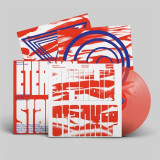
Each of the three hundred covers is different! All are numbered.
After two well-received albums of Normal Bias, the time has come for a solo debut in U Know Me of the half of this valued dub dub, i.e. Piotr Krupiński, better known as YAC.
The starting point for "We Have Much More In Common Than What Divides Us" was the rhythm, and on the one hand synthetic sounds of classic analog synthesizers with the legendary EMS VCS3 at the forefront, and on the other hand the organic hypnotic sound of Tibetan bowls and tubular bells. All together strongly processed and traditionally ground with dub techniques and marked by the tape's noise.
The amazing graphic design was created by Bartosz Szymkiewicz.
The cover design is the result of an attempt to graphically represent the album's minimalist but full of lively nuances music. Each of the forms on the cover corresponds with its surface area to the length of the work it depicts. The composition was procedurally generated by a computer program, resulting in 300 unique covers. Interestingly, the program definitely preferred to arrange the forms close together, which is an unforeseen reference to the title of the album.
- A1: Looking For Love (Intro)
- A2: I Need To Know This
- A3: Lonely City Cut 2
- B1: Lonely City Cut 4
- B2: Lonely City Cut 3
- B3: Lonely City Cut 1
- C1: Seven Smoking Areas
- C2: We Absolutely Love This Music
- C3: Lost In A Sea Of Rolling Eyes
- D1: Lonely City Interlude
- D2: They Held Each Other While The Ceiling Dripped
- D3: It Bothers Me Everyday
- D4: Then There Was Mass Chanting
Bristol don Nicky Soft Touch makes his eagerly awaited return with the follow up to his last TIN release, Lonely City Sampler. Set for release almost exactly one year on, Lonely City Cuts sees Soft Touch continue in his deft explorations of sampling, chopping and rearranging beats using cuts from helter skelter and sidewinder tapes. Much like his previous release, as well as the self-released projects he's shared in the meantime, the LP is centred around a DIY aesthetic, making intimacy and introspection two of its defining features.
Conceived during a stint living in London, the series is imbued with a sense of place. Delivered via raw production techniques, voice recordings and off-kilter, broken garage beats, this positions the release amongst the moody, urban landscapes which provide the backdrop for Burial and Actress' music. On Volume One, this sounds like narling basslines that ricochet around swung percussion, and plaintive ambience that immerses you in its shadowy worlds. On Volume Two, like hip hop interludes, deep house grooves and hyper referential skits.
From a young age, La Perla, Callao-born guitarist Oswaldo "Mita" Barreto was a fan of Cuban artists like Celina y Reutilio and Los Compadres, whose records were a staple in the port city homes. He soon learned to distinguish the sound of the Cuban tres on these records (the chordophone from rural areas of Cuba). At the age of 18, he had already mastered the instrument, although he had never seen a Cuban musician play one live until that point. At the beginning of 1969 (according to the record company's archives), his fame led him to record his first 45 RPM singles for the MAG label, which were compiled in an LP by the end of the year entitled "Arecibo", after a song dedicated to the Puerto Rican city of the same name. For these recordings he was accompanied by a group of musician friends, all linked to the tropical music scene in Callao, Peru. The album opens with two Cuban guarachas from the 1950s: 'Mango mangüé' by El Gran Fellove, whose compositions were popularized across the Americas thanks to the voice of Celia Cruz and the Sonora Matancera; and 'El yoyo' by Antonio Sánchez Reyes, another international hit performed by Cortijo y su Combo. Both songs were recorded by Mita in May 1969.
Strut present 3 separate reissues of the 1970s album trilogy from Idris Ackamoor & The Pyramids. As students at Antioch college, Ohio, alto saxophonist Idris Ackamoor, flautist Margaux Simmons and bass player Kimathi Asante created three lasting monuments in sound — Lalibela, King of Kings, and Birth / Speed / Merging, a trio of albums produced without any label backing or distribution between 1972 and 1976. Their music is unique among the varied canon of avant-garde and experimental music of 1970s America: high intensity African-styled percussion topped with songs, chants, and horns, laced with African instruments and arranged into long, flowing suites that surge and roll.
The debut album by the Pyramids was inspired by the group's visit to the Lalibela monastery in Egypt, and was recorded in Yellow Springs Ohio in early 1973. Drawing on the teachings of Cecil Taylor and the influence of John Coltrane, combined with a barrage of intense percussion, the album evolves over several long-form pieces, Initially only 500 copies were pressed and sold to friends and followers in the local area.
* The 7” A side, ‘My Homeland’, is a Sax/Hornz instrumental track and features top Jamaican Hornzman, Alvin Davis. The B side has a heavyweight Dub from Alien Dread.
Alvin is also well known ref Jazz and other musical areas, as well as Reggae and has worked with many Jazz, Soul and mainstream artists including: Andy Hamilton, Rose Royce, Prince, Edwin Starr, The Foundations, Neville Staples (Specials & Fun Boy Three), Jackie Graham, Nigel Kennedy and Reggae-wise, Alton Ellis, Macka B, Maxi Priest and David Hinds (Steel Pulse) and many others.
An alternate version of A side track will be featured on the forthcoming Alvin Davis & Alien Dread album: Dreadland (Iron Sound).
Gary Moore rocked the world of Blues and Rock with his virtuoso guitar playing and soulful voice. Having played in numerous legendary bands including Thin Lizzy and Skid Row, alongside his own solo career, Moore is regarded as one of the most influential Irish musicians of all time. Having been honoured by both Gibson and Fender with signature guitars, the Northern Irish star is still regarded as one of the best guitar players of all time.
A Different Beat, was Moore’s 12th solo album, where he explored new areas of blues and rock. This album has never previously been released on vinyl, and contains new liner notes written by Dave Everley. This release will be pressed onto transparent orange vinyl and includes bonus track ‘Can’t Help Myself (E-Z Rollers Remix)’.
1970s/80s San Francisco art-punk band 14-track collection includes
remixed tracks and previously unreleased recordings
It's hard to let go of a good thing
More than four decades after The Mutants first appeared on the San Francisco
underground music scene, four of the original members are still playing shows
together under that name in 2022. After all, mutants are known to mutate, and
that's what this colourful, energetic musical collective has been doing off and on
since 1977.
Perhaps even more surprisingly, the sessions for their lone album, 1982's ‘Fun
Terminal’, continue to bring forth lost nuggets. In punk and new wave lore, ‘Fun
Terminal’ is considered a troubled project. Prior to the album's appearance, The
Mutants had released only one 7-inch single -- 1980s' ‘The Mutants EP’ -- and the
band also had songs featured on two local compilations. Both the EP and one of
the compilations were issued by 415 Records, the legendary Bay Area indie that
made the jump from the new wave trenches to the majors when they signed a
deal with Columbia Records in 1981. Many scenesters felt that The Mutants
should have begun album sessions for 415 immediately after the EP, but that
didn't happen.
Each of the 14 tracks on the new collection, ‘Curse Of The Easily Amused’ has
either been remixed, or sourced from previously unreleased tapes. Eight songs
have never been officially released on vinyl or CD in any form. The versions of
'Think, Think, Think' and 'Tribute to Russ Meyer' feature radically different
approaches than what was heard on the ‘Fun Terminal’ reissue.<
Many Worlds Interpretation is a collection of cosmic Americana for electronics, guitar, and percussion culled from Jon Iverson’s extensive home-studio archive. 1984, Los Osos, California. In a small cinderblock cottage, hand-painted with bright psychedelic flora, Jon Iverson created vibrant new worlds. He spent long days and nights immersed in sound, perfecting home recording on his 8-track reel-to-reel, combining his love for kosmische and Berlin School electronics with an infatuation with ethnographic sounds and expansive guitar music. In a duo with fellow sonic traveler Thomas Walters, Iverson released missives from the studio on a self-titled LP released on country legend Guthrie Thomas’ Eagle Records. That release featured
three electro-acoustic compositions (“Naningo”, “River Fen”, and “Fox Tales”) as well as a gathering of guitar duo tapestries. Many Worlds Interpretation re-imagines those interplanetary works alongside several unreleased compositions that also feature synthesizer, guitar, and percussion, creating a re-visioned album which leans into Iverson’s electronic studio wizardry.
All songs have been carefully transferred from analog tape to high resolution digital, retaining their vintage studio warmth, but mixed and mastered for modern ears and audio systems. The album is pressed at 45rpm, further enhancing the audiophile experience.
Artist Statement
I worked in a Harley Davidson parts warehouse in the summer of 1976 in the San Francisco Bay Area. The goal was to save enough money to buy transportation for college and a Teac 4 track 1/4" reel to reel tape machine. By September there was a rusting monkey-vomit green car in the driveway and shiny new Teac with a Sony condenser microphone in the bedroom. At this point I had been playing guitar for a dozen years and like most children of the sixties, dreamed of joining
a band.
Went to college instead to study business.
But all was not lost. 1978-1979 was spent as Weird Al Yankovic's roommate and we recorded and created enough songs to play shows around San Luis Obispo, California, where we were attending college. Many of those recordings have yet to be heard by the public, including the first performances of My Bologna and many other parodies of pop songs of the day. We sent tapes to Dr. Demento, we auditioned for The Gong Show and were barred from playing at the local college after one memorable performance. Wild times.
I, however, was more intent on working on "serious" music, with albums from Vangelis, Tangerine Dream and Jean Michel Jarre providing inspiration. DJing at the local college radio station and then public radio outlet provided exposure to an endless stream of obscure albums (Sky Records from Germany was a particular favourite). Most of them would never make it to the air, but my buddies and I would pass them around like exotic treasure.
Fast forward a couple more years and I had picked up a Mini-Moog and eventually a Prophet V synthesizer as well as starting a collection of instruments from around the world. The Teac and synths formed the basis for a growing DIY studio that had taken over a modest-size garage (pictured on the cover) that had been converted into a two room cottage in Los Osos, California.
The Teac was eventually joined by a rented Otari 1/2" 8-track and then finally a vintage MCI JH-100 2" 16-track. The compositions on this album were recorded on these three machines between 1982 and 1989. At some point an Apple II computer with Alpha Syntauri sound card and keyboard were added and then later the first personal computer sampling hardware/software kit, the Decillionix DX-1. The DX-1 forms the rhythm track for “Fox Tales” and the Alpha Syntauri was programmed to create the pulsing synth for “Naningo”. “River Fen” was tracked with both the Alpha Syntauri and the Prophet V.
I knew this music wasn't commercial, but didn't care. It was inspiring working with the first computer-based synths and semi-pro gear. Home studios were still rare in the early 80s until the Tascam Portastudio blew the DIY door wide-open. But I was more interested in sound quality so stuck with reels of tape instead of lower fidelity cassettes.
During the time these songs were recorded, I was also collaborating with my good friend and mandolinist, Tom Walters. “River Fen”, “Naningo” and “Fox Tales”, were solo recordings that also ended up on the first Iverson & Walters album, First Collection. The other four pieces on this new LP were never fully finished or released until now.
— Jon Iverson, September 2022
Exclusive to INDIE STORES: Hiss and Shake Records to release ‘Logically Yours’ – a limited edition, 5 x LP boxset of 50 essential recordings from seminal post-punk icon Lora Logic including 2 classic Essential Logic albums, early single releases, EPs, B-sides, rarities, vinyl exclusives + first new Essential Logic studio album in 43 years! Includes the classic Rough Trade Records releases ‘Beat Rhythm News (Waddle Ya Play?) + ‘Pedigree Charm’ + 2 retrospective compilations of early single releases, EPs, B-sides, rarities + vinyl exclusives ‘Aerosol Burns & Other Misdemeanours’ + ‘No More Fiction’ + new studio album ‘Land of Kali’ (first in 43 years) + 20 page booklet with introduction from Celeste Bell + Lora Logic Q+A. Susan Whitby, aka Lora Logic was one of the most distinctive talents from the post-punk era known for her intoxicating, rough-around-the-edges, yet exhilarating sax playing and haywire vocal style. Her offbeat, occasionally arresting lyrics tackled alienation, sexism, poverty and urban isolation, and with a complete disregard for convention, she carved her own path not only in her short-lived music career but also personal life. She was still in her teens when she answered an ad in Melody Maker “Looking for young punks,” and in 1976, with her friend Marion Elliot (aka Poly Styrene), she formed the punk band X-Ray Spex and acquired the pseudonym, Lora Logic. The duo soon achieved notoriety with the irresistible feminist protest single, ‘Oh Bondage Up Yours’ (1977) – Logic arguably stealing the show with her thrilling punk sax. “X-Ray Spex was my first band, I happened to be accepted, It happened to work, I happened to get famous overnight. I’d been playing sax in a cupboard in my room; I thought I better do something.” However, just prior to recording 'Germ Free Adolescents' (1978), X-Ray Spex's debut album, she found herself unexpectedly ousted from the band. With abundant enthusiasm and encouragement from Geoff Travis, founding director of Rough Trade Records, she went on to form Essential Logic, creating some of the most liberating and exciting music of the early post-punk era, not only as Essential Logic, but also as a solo artist. Hiss and Shake Records are pleased to present a limited edition boxset of 50 essential recordings from the irresistibly engaging Lora Logic archive, allowing for a new generation to become aware of her incredible creative output. Across 5 LPs, ‘Logically Yours’ includes in their entirety, the classic Rough Trade Records releases ‘Beat Rhythm News (Waddle Ya Play?) (1979) – Essential Logic’s sole studio album, and Lora’s solo album, ‘Pedigree Charm’ (1982) – her last studio album before turning her back on the music business, sad and disillusioned and fighting drug addiction, which saw her turn to a Hare Krishna lifestyle, alongside Poly Styrene, embracing a fresh new chapter. This totally absorbing and definitive collection also includes two retrospective compilations; ‘Essential Logic – ‘Aerosol Burns & Other Misdemeanours’, which comprises early single releases, B-sides and oddities including the gloriously chaotic ‘Aerosol Burns’, the essential punk/disco ‘Music Is A Better Noise’, and ‘Fanfare In the Garden’, showcasing Lora at her most pop. In addition, ‘Essential Logic – ‘No More Fiction’; contains 10 vinyl exclusives, including ‘Do You Believe in Christmas?’, recorded with the Krishna Kids Choir in 1985, alongside tracks recorded circa 1997, with Martin Muscatt, Dave Farren (Bad Manners) and Gary Valentine (Blondie), forming the basis of what would have been Essential Logic’s third studio album, ‘No More Fiction’. Having recently returned to the studio refreshed and rejuvenated, ‘Logically Yours’ also includes ‘The Land of Kali’ (co-produced by Youth), the first new Essential Logic studio album in 43 years, and features the forthcoming new single ‘Prayer for Peace’, a re-imagining of the X-Ray Spex track from the tragically overlooked album, ‘Conscious Consumer’ (1995) on which Lora also played sax. “Poly Styrene and I were living in a Krishna community in Worcestershire in the early 80s. We came together for the first time musically after X-Ray Spex to record the original version of this song. In 2019, I decided to record my own take as a tribute to the special times we shared. I hope Poly likes this new version too.” Further tracks penned for release from the album include the dystopian, lockdown-inspired ‘Alien Boys’ and ‘Sky Rocket’, written with daughter Malini, about the fairground of life. Despite her short-lived career in the music business, Lora still managed to perform and appear on releases with many artists including US experimental rock band Red Crayola between 1978 and 1981, and also appeared on recordings by The Stranglers, The Raincoats, Kollaa Kestää, Dennis Bovell, Swell Maps and later, Boy George. Undoubtedly an iconic figure of the UK post-punk scene, Lora Logic’s boldness, adventurousness and sense of fun can be seen as an influence on numerous female artists today including Karen O from Yeah Yeah Yeahs, Peaches and St. Vincent among others. Tracklisting: Essential Logic ‘Beat Rhythm News (Waddle Ya Play?)’ (1979). A1 ‘Quality Crayon Wax OK’ A2 ‘The Order Form’ A3 ‘Shabby Abbott’ A4 ‘World Friction’ B1 ‘Wake Up’ B2 ‘Albert’ B3 ‘Alkaline Loaf in the Area’ B4 ‘Collecting Dust’ B5 ‘Pop Corn Boy (Waddle Ya Do?)’…… Lora Logic – ‘Pedigree Charm’ (1982). A1 ‘Brute Fury’ A2 ‘Horrible Party’ A3 ‘Stop Halt’ A4 ‘Wonderful Offer’ A5 ‘Martian Man’ B1 ‘Hiss and Shake’ B2 ‘Pedigree Charm’B3 ‘Rat Allé’ B4 ‘Crystal Gazing’…..Essential Logic – ‘Aerosol Burns & Other Misdemeanours’. A1 ‘Aerosol Burns’ (1978) – Debut single A2 ‘World Friction’ (1978) – ‘Aerosol Burns’ B-side A3 ‘Eugene’ (1981) – Single A4 ‘Tame the Neighbours’ (1981) – ‘Eugene’ B-side A5 ‘Music Is A Better Noise’ (1981) – Single A6 ‘Moontown’ (1981) – ‘Music Is A Better Noise’ B-side B1 ‘Fanfare In the Garden’ (1981) – Single B2 ‘Stereo’ (1982) – ‘Wonderful Offer’ single B-side B3 ‘Rather Than Repeat’ (1981) – ‘Wonderful Offer’ single B-side B4 ‘The Captain’ (1979) – ‘Fanfare In The Garden’ B-side B5 ‘Soul’ (1983) – Previously unreleased on vinyl B6 ‘Stay High’ – Previously unreleased on vinyl….. Essential Logic – ‘No More Fiction’. A1 ‘Essential Logic’ (1991) – Vinyl exclusive A2 ‘On The Internet’ (1998) – Vinyl exclusive A3 ‘Under The Great City’ (1997) – Vinyl exclusive A4 ‘No More Fiction’ (1998) – Vinyl exclusive A5 ‘Love Eternal’ (1997) – Vinyl exclusive B1 ‘Barbie Be Happy’ (1998) – Vinyl exclusive B2 ‘Not Me’ (1998) – Vinyl exclusive B3 ‘The Beautiful and the Damned’ (1997) – Vinyl exclusive B4 ‘Marika’ (1997) – Vinyl exclusive B5 ‘Do You Believe in Christmas?’ (1985) with the Krishna Kids Choir – Vinyl exclusive……Essential Logic – ‘Land of Kali’ (2022). A1 ‘Prayer For Peace’ A2 ‘Alien Boys’ A3 ‘Mother Earth’ A4 ‘Never Know’ A5 ‘Charming Every Cupid’ B1 ‘Sky Rocket’ B2 ‘Serious’ B3 ‘Fallible Soldiers’ B4 ‘Land of Kali’ B5 ‘Beyond’
This wildly acclaimed Istanbul-based artist, delivers an unforgettable 4th album Anadolu Ejderi (Anatolian Dragon). Building upon her mélange of Turkish psychedelia, empowered commentary and retro-futurist sonics, her vision is more personal and uncompromising than ever before. Courage. Bravery. Daring. Those are the watch words that guided Turkey"s Gaye Su Akyol when she was making Anadolu Ejderi, her first full-length release in four years. Already lauded for her startling, innovative mix of Turkish psychedelia and folk song, surf music and ʼ90s Western rock, a global sweet spot where Anatolian music heroine Selda Bagcan rubbed shoulders with Kurt Cobain, Akyol was ready to expand her vision after a relentless period on the road. "I was tired of touring," she says. "I really needed a break, some fresh air." The Covid pandemic gave her that, even if it was for the wrong reasons. "With everything closed, we all had to sit at home. The isolation gave me time to write. I ended up with over 100 songs. I tried to broaden the palette: to start with Anatolian folk and pop, then see how to add African and Middle Eastern sounds, the soul revolution, disco, and rock from other cultures. The music is still quite psychedelic, but it connects to different areas, all the pop genres I love so much. The hard part was picking the right songs and the correct order." Everything on Anadolu Ejderi - the title translates as "Anatolian Dragon" - breathes fire. It takes chances, the lyrics offer an exploration of politics in today"s Turkey. The personal is very much part of that. "In a political climate where a woman"s commitment to her passion, to falling in love, to her sexual identity is revolutionary enough, she is deeply passionate and able to express her love freely," Akyol notes. "It would have been easy to sit in the comfort zone of the past."
Goodbye, Asshole is the first studio album by San Francisco scuzz-wave merchants Fuckwolf—its a rat’s nest of deep grooves, lost ’70s rock riff intentions and art punk damage. These conundrums of time inform Goodbye, Asshole, but they are hardly romanticized in its music. The band, Eric Park (bass, vocals), Simon Phillips (drums) and Tomo Yasuda (guitar) sound blazing and scuzzy, a tight low-fi energy blasted onto tape at renowned Bay Area indie studios summarizing the last twenty years of San Francisco’s wild artistic soul – one that is now hard to find much evidence of in the city itself, but impossible to miss in the band’s sound. Fans of OSEES, Pink Fairies, late ’70s NYC, Emotional Rescue-era Stones, trashy post-punk dub and solvent-huffing rejoice!
nother all time DEAD MOON classic. The band really hit their stride on this one! The best rock band of the '90s and 2000s kicks out some of their finest rockers and ballads. Features all time greats like "Diamonds in the Rough," "Say It Isn't So," "Running out of Time," "Somewhere Far Away" and "Windows of Time." A must have for any fan of the band and rock music in general. A1 Diamonds In The Rough A2 Say It Isn't So A3 I Won't Be The One A4 Can't Let Go A5 Running Out Of Time B1 Psychodelic Nightmare B2 Area 51 B3 Somewhere Far Away B4 I'm Not Afraid B5 Windows Of Time
Dedicated to the dancefloor but completely untethered to traditional notions of genre, the music enthusiastically pulls from grime, jungle, techno, hardcore, footwork and other less-defined areas of the bass continuum, its chest-rattling thumps and fast-flying percussion offering a concentrated dose of instant energy.
- A1: Pendulum (Feat Lucy & Rrose)
- A2: Lost Conductor (Feat Lucy & Rrose)
- B1: Wishing Well (Feat Lucy & Rrose)
- B2: Tunnel (Feat Lucy & Rrose)
- B3: Intracluster (Feat Lucy & Rrose)
- C1: Stars (Feat Lucy & Rrose)
- C2: The End Of Words (Feat Lucy & Rrose)
- D1: Filament (Feat Lucy & Rrose)
- D2: Pray (Feat Lucy & Rrose)
Lotus Eater is a duo consisting of Luca Mortellaro (Lucy) and Seth Horvitz (Rrose), techno artists just as comfortable operating in the uncharted area of experimental music who have gained a cult following, both influencing and challenging the direction of contemporary electronic music.
Eschewing the typical instrumentation of techno but still inhabiting its archetypes, Lotus Eater uses synthesised sound and feedback as fundamental sources to generate both textural and percussive elements. A sense of tension and weight emerge from sources that cannot be easily pinpointed. Each release forms a complex narrative from a paradoxically simple and restrained set of sound sources.
Officially formed in 2017, Lotus Eater came to life through several collaborations over a number of years, and finally blossomed with the release of its critically acclaimed debut album "Desatura," which Lotus Eater toured live in 2018 - 2019.
2022 sees the release of the second Lotus Eater album "Plasma" and a new audiovisual live project to accompany it. "Plasma" unfolds with exacting precision by exhibiting a point of focus and expanding on it. It uses a single, throbbing pulse to generate a constellation of sounds and rhythms that form around it like a volcanic eruption in slow motion. Playing with our sense of time and weight, "Plasma" feels simultaneously slow and urgent, spacious and immense. Lotus Eater zooms into the infinite abyss and finds not just light, but fire at the end of the tunnel. Will we be saved, or will we burn?
- A1: Kush Clouds 03 03
- A2: Görlitzer Park 02 56
- A3: Palmistry 02 49
- A4: Fra – Chi 02 22
- A5: 44.20 Fm 03 19
- A6: Sekundenschlaf 02 51
- B1: Gästeliste (Skit) 00 25
- B2: A Dream In A Dream In A Dream 02 11
- B3: Room #421 01 55
- B4: Long Havel Beach 02 44
- B5: Good Bye 02 08
- B6: K-Hole (Skit) 00 21
- B7: You Got Me 02 28
- B8: Rip Txl 03 30
“A Dream In A Dream” is the debut LP by DJ Piper, also known as Felix Wagner of techno superstar duo FJAAK.
One might be surprised about this all hip-hop instrumental album looking at Felix’ all dance music focussed musical resumé. Nevertheless, he has been crafting rap beats ever since he started producing as a teen, but had his childhood friends freestyle over the tracks solely. It took until 2020 when he teamed up with Lukas and
Jonathan Nixdorff of Kommerz Records to release his first solo track “Iluminay”, which was part of “Kommerz Season 1: Anti-Virus” compilation and shared by B-Real of Cypress Hill right away.
Now, 2022, marks the right moment to share his debut album, a waltzing ode to hip-hop’s golden era. The Berlin- Spandau original merges the legacies of both Pete Rock and Dr. Dre, while funky breakbeats meet laid back SoCal “Chronic” vibes. 12 instrumental tracks and 2 skits strong, his album tells the story of a young man, who lives up to his wildest teenage dreams. Most of the track ideas came up while being on tour with FJAAK. Between international transit areas, making inspirational new friends and bizarre encounters all over the world, beat making became DJ Piper’s safe space to process all the positive madness around him. As a result, “A Dream In A Dream” breathes that raw, untamable creative energy around Felix’ extraordinary day-to-day life, while being heavily influenced by the sound of his childhood, 90s and 2000s rap.
To visualize “A Dream In A Dream” DJ Piper and Kommerz Records joined forces with Raman Djafari, a childhood friend of the artist, who illustrated music videos for Dua Lipa and Elton John (no joke!) and worked for New Release Information Adult Swim. Raman’s supernaturalistic aesthetics bring life to DJ Piper’s somewhat psychedelic, somewhat nostalgic fantasy, locating the album in an otherworldly version of Spandau, hometown to both of the artists.
As one half of FJAAK Felix became an icon of Berlin techno conquering major festival stages and mainstream audiences while heavily representing underground D.I.Y. mentality up to this very day. As an initiator of Spandau20 label and collective, Felix pushes his creative family and day 1’s regardless of commercial potentials.
The same ethos and love for culture fuels the DJ Piper project. No matter if it’s FJAAK or DJ Piper, techno or hiphop… Integrity is key!
Duper, the new release from Morgan Geist, is a not-so-subtle callback to his 2001 EP, Super. "I was working most days with Kelley Polar on our new vocal project, Au Suisse, which isn't really dance music at all," he explains. "I started fooling around with these instrumental tracks at night for fun. Each track was in a different style, but they seemed to work nicely as a group. By the time I asked Kelley to contribute strings to the A-side, the record really started feeling like the sequel to Super."
Super Duper - get it?
Indeed, the playful synth riffs and sweeping disco strings of "Twilight Express" echo the palette of Geist's cult classic "24K" and early Metro Area. "Black Test Car" is a unique collision of minimal, almost Krautrock-style drums, sound library textures and spacy electro percussion. Meanwhile, "Feeling Is Mutual" is a rare acid outing that pushes beyond the usual comfort zone, the 303 acting more as feather than hammer on top of major-key modulations. "I love a lot of Aphex Twin and I love sweet, "quiet storm"-style R&B," says Geist. "I figured, why not?"
new pressing on red & black swirl vinyl. RIYL: New Order, Drab Majesty, The KVB, Black Marble, The Soft Moon. Layering synths, guitars, electronic percussion and live drums, Houses of Heaven fuses early industrial and techno rhythms with the melodicism of shoegaze and a heavy dose of dub-influenced effects on their first full-length album titled 'Silent Places.' Written against the backdrop of the Northern California wildfires, ever-growing tent cities and the continued rise of empty luxury housing in the Bay Area, the album explores the intimate experiences that transpire within the chaotic confines of modern living. Opener "Sleep" basks in the tension surrounding the album's inception with blown-out kick drums, claustrophobic verses, and deteriorating vocal effects. Sharp arpeggiated synths and woozy strings neutralize the track's subterranean anxiety with texture and sensuality. Produced by Matia Simovich (Inhalt) and with engineering credits that include Monte Vallier (Weekend) and John McEntire (Tortoise), it's a potent introduction to the muscular sound design underpinning the album. Booming taiko drums sound the beginning of "Dissolve the Floor," the album's most club-ready track. A pulsing arpeggio gives the song its industrial heartbeat while disintegrating tape delay throws menace into the hazy atmosphere. The undulating techno beat breaks and repairs itself with seductive and satisfying timing. "In Soft Confusion" doesn't stray from the album's obsidian narrative as it envisions and ponders the aftermath of human extinction. Sonically speaking, though, it's the album's most uptempo offering with Tecon's supremely infectious chorus vocal hook and Beck's dizzying guitar riffs. The intricate electronic drum programming is elevated by Ott's live drumming, which lends a refreshingly human touch to the potentially icy, and often mechanical, sonic territory of synthdriven music. Adding density to the album's shadowy allure are the unusual sounds and vintage outboard effects that Tecon and Simovich impressively maneuver into the album's tonal palette. Great care has been taken to finesse familiar pop structures with an inventive edge. It's this mindfulness of past and present that is sure to secure Silent Places as a standout album in the new decade. Also Available From Houses Of Heaven: Remnant 12" EP
Eugene Lamont Johnson a.k.a E Lamont Johnson or Lamont Johnson holds the distinction of being the first internationally recognized fretless bassist in R&B music. Born April 20th 1955 in Highland Park, Michigan. Lamont rose to prominence as a session musician on Gloster Williams &The King Vision’s 1977 gospel album project “Together” (Gospel Roots -5005). In the same year Lamont featured as part of the celebrated Detroit based band Brainstorm their best-selling 1977 album “Stormin’” for Tabu Records. Brainstorm was initially formed during 1975 by bandleader and saxophonist Charles ‘Chuck’ Overton, and included lead vocalist Belita Woods, Lamont Johnson on Fretless bass, Renell Gonsalves on drums, Trenita ‘Treaty’ Womack on percussion, flute and backing vocals, Bob Ross (a.k.a Professor RJ Ross) on keyboards, Gerald ‘Jerry’ Kent on guitar, Jeryl Bright on trombone and ‘Leaping’ Larry Sims on trumpet and flugelhorn. The album was recorded during 1976 and released the following year. It contained the disco hit “Loving Is Really My Game” the popular “Wake Up And Be Somebody” and the radio hit “This Must Be Heaven” a beautifully crafted ballad featuring the lead vocals of Lamont which still receives continued airplay to this day. Lamont did not feature on the band’s two subsequent album projects “Journey To The Light” (Tabu 35327) in 1978 and “Funky Entertainment” (Tabu 35749) in 1979.
The year1978 was to prove to be one of the most prolific of Lamont’s recording career, playing bass on three studio albums. Firstly, on Hamilton Bohannon’s “On My Way” (Mercury SRM-i-3710), Jimmy McKee’s “First Time Out” (Champion- 8083N5) and Keith Barrows “Physical Attraction” (Columbia JC-35597) albums respectively. The final project of that year would be Lamont’s own album project “Music Of The Sun” (Tabu-35455) featuring Lamont on both bass guitar and vocals, the album also spawned two lead 45’s “Sister Fine/Yours Truly, Discreetly” and “Hey Girl/Differently”.
During 1979 Lamont would feature as a guest bassist on a further two studio album projects, firstly the self-titled debut album of fellow Detroit musicians Chapter 8 (Ariola 50056) followed by another self-titled album “Nightflyte” (Ariola 50060) who’s line-up included Howard Johnson prior to him embarking on a solo career. During 1980 Lamont began work on a second solo album for Tabu. Two lead 45 singles were recorded “Rock You Baby/Something More” (Tabu ZS9-5521) followed by the album’s title song “Rhumba” backed with the modern soul favourite “Masta Luva” (ZS9-5525) for whatever reason CBS/Tabu decided to shelve the remainder of the project. Later recording projects to feature Lamont instrumental talents were Was Not Was ‘s “Tell Me I’m Dreaming and Robert Lowe’s “Double Dip” jazz funk album. Later solo CD album projects from Lamont, “This Must Be Heaven” arrived in 2004 and “Amore’ Dance” in 2001 both on his own Allee Records Label. From the mid 70’s through to the present day, Lamont has been a notable electric bass instructor in the Detroit area and beyond. As well as the previously mentioned projects, Lamont and many of his prot’eg’es work can be found on many other world renown artists recording projects the most notable being, Earth Wind & Fire, The Dramatics, Anita Baker, Lady Gaga, Alicia Keys, Phyllis Hyman, Beyonce, Howard Johnson, David T. Walker, Aretha Franklyn, Stevie Wonder, Herbie Hancock, George Duke, The Temptations, The Winans amongst others.
Fast forward to the present and Soul Junction have licensed two previously unissued dance orientated Lamont Johnson produced compositions for this 45sinlge release with more to come. Under the project/artists name of “Lamont Johnson & Eugene” the recordings feature several different local Detroit musicians and vocalists. The a-side is a male vocally led early 90’s mid-tempo feel good dance number. While the b-side in contrast is a more synthesized bass driven 80’s female dancer which should appeal to the Boogie crowd,
Enjoy.
A meeting of the minds between two Israeli DJs and producers. Adam Ten & Mita Gami release a combined two-tracker in September on Crosstown Rebels, dipping into dark and hypnotising waters while maintaining a club-cut aesthetic.
The pair pen a slow-burning chugger on the title track, merging tones of tech house, progressive house and techno. A high-pitched vocal weave’s throughout, in tandem with a distorted synthline and oddball sound FX—one for a wavey dancefloor. On the flip, Night Shift glistens with emotion as tribal-tinged percussion collides with long, drawn-out piano notes. A cosmic creation that blurs the line between melancholia and warmth.
Adam Ten is a Tel Aviv-born producer and resident DJ of institutional club The Block, located in his home city. Ten is a key artist on the Israeli scene, recognised for his all-night sets that blend a myriad of moods in electronic music. He’s played worldwide, spanning stints in Miami, Cape Town and Mykonos, amongst several other regions, and he’s channelled his compelling sound on labels like Diynamic, Multinotes, Disco Halal and Selador. As a co-founder of the event series TERRA, Ten curates some of the finest nature-orientated parties in Israel. Mita Gami hails from Tel Aviv. A multi-instrumentalist from a young age, he goes beyond the trope of entertainer. Instead, Gami invites his audience into immersive and almost trippy journeys during his performances via a hybrid set-up and enticing energy on-stage. Releases on REALM Records and Diynamic display his metaphysical approach. Beyond producing, Gami co-runs the label Blue Shadow Records and the Sunrise Kingdom area in Midburn Festival, based in the Negev Desert in Israel.
Melody Tomb is the first album in a new collaboration between Tokyo artist Teruyuki Kurihara and London drone pop band The Leaf Library. The nine tracks here have in common a metallic hum and a minimal, austere kind of beauty that recalls Teru's work on his 2020 Frozen Dust album (Mille Plateaux). Machine tones mix with static, noise and warm drones, whilst in other places the lineage of classic mangled Warp hardware is visible. In March 2020 The Leaf Library sent their friend Teru a batch of synth drones to play with in the hope a new collaboration would be born. "From the first time we heard Teru's music we knew we wanted to make something with him," say the band. "It has been such a pleasure seeing him take our minimal synth parts and turn them into something really strange and beautiful." The track Kite Beach was the first to arrive, featuring on The Leaf Library-curated Object Ten compilation on Objects Forever in 2021, with the rest of the album slowly appearing over the last year. The artists hope to continue the collaboration with another album in the near future.
For fans of: Autechre, Biosphere, Ben Frost
Moody Blue Vinyl. RIYL: Codeine, Mazzy Star, Bedhead, Red House Painters, Low & American Music Club. Previously unreleased 16-track recordings that predates Spain’s 1995's landmark “The Blue Moods Of Spain". Includes original studio version of "World Of Blue" featuring Petra Haden on violin. Re-mixed and re-imagined by Kramer for Shimmy-Disc. The LP “World of Blue” features Merlo Podlewski on guitar. I first met Merlo in 1994. My sister Rachel Haden, who had been working with him at the Rhino Records store in Westwood, knew I was looking for a new guitarist for my band, and introduced us. Merlo is one of those guitarists whose playing is so smooth and effortless he makes anyone feel like they can play. He had an instinctual grasp of harmony and theory, which brought a great counterpoint to the technical knowledge and finesse of lead guitarist Ken. Spain played their first official L.A. gig with Merlo at a club called Pan, which shortly thereafter changed its name to Spaceland. We opened for Beck and That Dog. We played at Spaceland a lot and at other small clubs and coffee joints like the Troy Cafe (owned by Beck’s mom), Congo Square Coffee House in Santa Monica, Alligator Lounge, and others. At a certain point that year we were ready to record our first 7” single, and I reserved some time at Poop Alley. Poop Alley didn’t seem like the ideal recording setting. The walls and floors were made of concrete, and there was no soundproofing. The mixing board was in a loft up this steep staircase with no guard rails. But it worked somehow. On the particular day we recorded basics there was a rain storm which you can clearly hear in the background. The ceiling was so high there almost wasn’t a ceiling. A steep curving staircase with no guardrail led up to a loft area where the console was located, and next to it, on a custom-built, guardrail-less ledge, a queen-sized bed where Tom slept. I paid for the session with weed I grew in my closet. We set up and it started raining. Tom put a microphone outside. After tracking was finished, Petra came over and overdubbed violin. There was a cushioned area where I remember sitting during mixdown. We stayed good friends with Tom. We recorded a couple more songs with him the following year. Tom recorded lots of bands at Poop Alley. My sisters’ band That Dog, Beck, the Rentals, Rod Poole, Tom’s band Waldo the Dog Faced Boy, and many others. There were parties in the alley. There would be a keg of beer. Everyone was well-behaved. The most dangerous it got was when Kenny asked Beck if he was a Scientologist. I remember laughter and happiness the most from those parties. Not long afterwards Tom shut down the studio. Luckily for us, the tapes still exist. On those tapes are five songs, all of which are represented here. “I Lied” and “Her Used-To-Been” were released on the 7”, the remaining three have never been released before now. I can’t remember who I sent copies of the 7” to but shortly after it came out I got a call from an A&R executive at Geffen inviting me to their offices to talk. “I love your songs,” I remember him saying to me, “but my boss David Geffen won’t let me sign you because he doesn’t know how to market you.” Eventually a label that did want to sign us got in touch with me. Restless Records, they had decent distribution, so I said to myself, “Why not?”. This eventually led to the recording that produced our debut LP “Blue Moods of Spain”. Track listing: A1. Her Used-To-Been A2. Phone Machine A3. I Lied B1. Dreaming of Love B2. World of Blue
blue marbled vinyl
One of the most revered and respected artists to ascend in the immediate wake of the Autonomic wave - Sam KDC's innate understanding of depth and emotive layering has marked his path as one that leaves an indelible impression.
While his innovative adventures with Grey Area and the outer edges of Techno continue unabated, a collaboration with like-minded artist Flaminia has drawn Sam back to his original home in 170bpm.
Flaminia is a versatile and extremely skilled musician who has lent her talents to luscious dark ambient, and experimental Techno and continues to work on rediscovery and innovation. In our view, Flaminia is one of the more interesting artists currently rising in prominence in the electronic music scene.
Sam and Flaminia are an apt pairing and Grounding brings out a new side to both of them. Textures are applied with considered discernment, never overdone, and always embellishing the delectable grooves. Grounding has a truly ethereal, almost mystical overlay, while also brandishing dance-floor potency - a now inherent skill both artists have spent years assimilating into their construction processes.
Sasu Ripatti, now sporting the new "Ripatti Deluxe" moniker, presents his very own abstract take on early rave and happy hardcore. "Speed Demon" marks the first release on Ripatti's newly launched label "Rajaton".
The Finnish word ”raja” has multiple meanings. It could refer to a ”border”, ”limit”, ”boundary”, or even ”capacity” if understood broadly. It feels that ”border” is the first interpretation that comes to mind when the word is met in isolation of additional context. It often includes political energy of some sort. Or perhaps it’s just this particular point in time that leads the mind into such field of thought.
As the Dutch author Rutger Bregman notes in his book Human Kind – A Hopeful History, the real trouble with people began when the first person had the idea of drawing a line on sand and claiming ownership of the area on their side. The concept of physical borders was born.
Naturally, there are mental borders, as well. Think about all the things you shut out because they’re ”not for you”. They are numerous and we do it all the time. The issue is not to stop that, but to recognize when to let new things in, even if they’re not commonplace. Mental borders might often be easier to rewrite than physical ones, but the challenge remains a real one.
That’s where the derivative form ”rajaton” comes to play. By simply adding the ”-ton”, all borders, limits, boundaries and capacities are lifted in an instant. We have something ”borderless” instead, and are thus free to expand our thinking.
One could argue that the word ”rajaton” implies not the removal of borders but instead their very non-existence at large. How will our mind work when the concept of borders doesn’t even enter the conscious thought?
Mental borderlessness is a truly fascinating concept. A maximalist array of opportunities and potential ideas enters the picture – one which is also limitless, unlimited, sans boundaries, and also without a danger of being depleted. It’s an all-existence of multitudes where hierarchy also starts to deteriorate, giving way to a new form of full understanding without judgement.
Music is one fine place for such thinking, especially when thinking about the role of the listener. Occupying a much more active position than is generally recognized, the listener can greatly benefit from borderless thinking, and thus help to enhance the collective perceived significance of any given body of work. When there are no boundaries, the interpretation remains unchained and honest.
Basically it was all already said by the late revolutionary jazz pianist Burton Greene: ”Borders are boring!”
Sasu Ripatti, now sporting the new "Ripatti Deluxe" moniker, presents his very own abstract take on early rave and happy hardcore. "Speed Demon" marks the first release on Ripatti's newly launched label "Rajaton".
The Finnish word ”raja” has multiple meanings. It could refer to a ”border”, ”limit”, ”boundary”, or even ”capacity” if understood broadly. It feels that ”border” is the first interpretation that comes to mind when the word is met in isolation of additional context. It often includes political energy of some sort. Or perhaps it’s just this particular point in time that leads the mind into such field of thought.
As the Dutch author Rutger Bregman notes in his book Human Kind – A Hopeful History, the real trouble with people began when the first person had the idea of drawing a line on sand and claiming ownership of the area on their side. The concept of physical borders was born.
Naturally, there are mental borders, as well. Think about all the things you shut out because they’re ”not for you”. They are numerous and we do it all the time. The issue is not to stop that, but to recognize when to let new things in, even if they’re not commonplace. Mental borders might often be easier to rewrite than physical ones, but the challenge remains a real one.
That’s where the derivative form ”rajaton” comes to play. By simply adding the ”-ton”, all borders, limits, boundaries and capacities are lifted in an instant. We have something ”borderless” instead, and are thus free to expand our thinking.
One could argue that the word ”rajaton” implies not the removal of borders but instead their very non-existence at large. How will our mind work when the concept of borders doesn’t even enter the conscious thought?
Mental borderlessness is a truly fascinating concept. A maximalist array of opportunities and potential ideas enters the picture – one which is also limitless, unlimited, sans boundaries, and also without a danger of being depleted. It’s an all-existence of multitudes where hierarchy also starts to deteriorate, giving way to a new form of full understanding without judgement.
Music is one fine place for such thinking, especially when thinking about the role of the listener. Occupying a much more active position than is generally recognized, the listener can greatly benefit from borderless thinking, and thus help to enhance the collective perceived significance of any given body of work. When there are no boundaries, the interpretation remains unchained and honest.
Basically it was all already said by the late revolutionary jazz pianist Burton Greene: ”Borders are boring!”
Orange Vinyl[27,69 €]
Die 1985 gegründeten Thrasher Vio-Lence aus Oakland trugen zur Definition und Verfeinerung dessen bei, was als Bay Area-Sound bekannt wurde. Eternal Nightmare wurde ursprünglich am 27. Juni 1988 veröffentlicht und gilt in der Welt der Heavy Music als ein Meisterwerk des Thrash. Metal Blade Records ist stolz darauf, diesen bahnbrechenden Kracher am 28. Oktober auf Vinyl, CD und digital wiederzuveröffentlichen. Die Original-Trackliste wurde von Patrick Engel für alle Formate neu gemastert, die alle mit dem ikonischen Original-Cover von Edward J. Repka versehen sind. Sowohl die CD als auch die digitale Version enthalten die urspüngliche Tracklist sowie 12 zusätzliche Live-Tracks, die am 14. Dezember 2001 im Slims in San Francisco, CA, aufgenommen wurden, während die LP die Original-Trackliste enthalten. Das Vinyl wird mit einer Download-Karte geliefert, die alle Bonustracks enthält.
Black Vinyl[25,00 €]
Orange Vinyl
Die 1985 gegründeten Thrasher Vio-Lence aus Oakland trugen zur Definition und Verfeinerung dessen bei, was als Bay Area-Sound bekannt wurde. Eternal Nightmare wurde ursprünglich am 27. Juni 1988 veröffentlicht und gilt in der Welt der Heavy Music als ein Meisterwerk des Thrash. Metal Blade Records ist stolz darauf, diesen bahnbrechenden Kracher am 28. Oktober auf Vinyl, CD und digital wiederzuveröffentlichen. Die Original-Trackliste wurde von Patrick Engel für alle Formate neu gemastert, die alle mit dem ikonischen Original-Cover von Edward J. Repka versehen sind. Sowohl die CD als auch die digitale Version enthalten die urspüngliche Tracklist sowie 12 zusätzliche Live-Tracks, die am 14. Dezember 2001 im Slims in San Francisco, CA, aufgenommen wurden, während die LP die Original-Trackliste enthalten. Das Vinyl wird mit einer Download-Karte geliefert, die alle Bonustracks enthält.
OVERVIEW: Field Medic’s latest album doesn’t waste any time getting to what feels like a mission statement for the record with the first lines “I want to fall off the face of the earth and probably die” on opener “Always Emptiness.” The longtime songwriting project of Kevin Patrick Sullivan - Mr. Field himself, the bay-area native who finds himself living in LA these days - has always had moments of melodrama like this, but his latest album grow your hair long if you’re wanting to see something that you can change feels as emotionally charged and poetically devastating as anything he’s ever given us. Sullivan has been turning turmoil into beautiful music for almost 10 years as Field Medic. The project that had origins in busking San Francisco streets has blossomed into a full-time touring act with a few TikTok viral moments. 2018’s full-length Fade Into the Dawn and the pandemic-era mixtape/album hybrid Floral Prince both offered a glimpse into how Sullivan’s songwriting has evolved since his earliest songs
- A1: Rock This Mother
- A2: Talk To Me Girl
- A3: You Can Find Me
- A4: Check This Out
- A5: Jesus Going To Clean House
- A6: Hope You Understood
- A7: Is It What You Want
- A8: Love Is Everlasting
- A9: This Is Hip-Hop Art
- A10: Opposite Of Love
- A11: Do You Know What I Mean
- B1: Saving All My Love For You
- B2: Look Out Here I Come
- B3: Girl You Always Talking
- B4: Have A Great Day
- B5: Take My Hand
- B6: I Need Your Love
- B7: Your Town
- B8: Talk Around Town
- B9: Booty Head/Take A Little Walk
- B10: I Love My Mama
- B11: I Never Found Anyone Like You
Vinyl LP[23,49 €]
As the sun sets on a quaint East Nashville house, a young man bares a piece of his soul. Facing the camera, sporting a silky suit jacket/shirt/slacks/fingerless gloves ensemble that announces "singer" before he's even opened his mouth, Lee Tracy Johnson settles onto his stage, the front yard. He sways to the dirge-like drum machine pulse of a synth-soaked slow jam, extends his arms as if gaining his balance, and croons in affecting, fragile earnest, "I need your love… oh baby…"
Dogs in the yard next door begin barking. A mysterious cardboard robot figure, beamed in from galaxies unknown and affixed to a tree, is less vocal. Lee doesn't acknowledge either's presence. He's busy feeling it, arms and hands gesticulating. His voice rises in falsetto over the now-quiet dogs, over the ambient noise from the street that seeps into the handheld camcorder's microphone, over the recording of his own voice played back from a boombox off-camera. After six minutes the single, continuous shot ends. In this intimate creative universe there are no re-takes. There are many more music videos to shoot, and as Lee later puts it, "The first time you do it is actually the best. Because you can never get that again. You expressing yourself from within."
"I Need Your Love" dates from a lost heyday. From some time in the '80s or early '90s, when Lee Tracy (as he was known in performance) and his music partner/producer/manager Isaac Manning committed hours upon hours of their sonic and visual ideas to tape. Embracing drum machines and synthesizers – electronics that made their personal futurism palpable – they recorded exclusively at home, live in a room into a simple cassette deck. Soul, funk, electro and new wave informed their songs, yet Lee and Isaac eschewed the confinement of conventional categories and genres, preferring to let experimentation guide them.
"Anytime somebody put out a new record they had the same instruments or the same sound," explains Isaac. "So I basically wanted to find something that's really gonna stand out away from all of the rest of 'em." Their ethos meant that every idea they came up with was at least worth trying: echoed out half-rapped exhortations over frantic techno-style beats, gospel synth soul, modal electro-funk, oddball pop reinterpretations, emo AOR balladry, nods to Prince and the Fat Boys, or arrangements that might collapse mid-song into a mess of arcade game-ish blips before rallying to reach the finish line. All of it conjoined by consistent tape hiss, and most vitally, Lee's chameleonic voice, which managed to wildly shape shift and still evoke something sincere – whether toggling between falsetto and tenor exalting Jesus's return, or punctuating a melismatic romantic adlib with a succinct, "We all know how it feels to be alone."
"People think we went to a studio," says Isaac derisively. "We never went to no studio. We didn't have the money to go to no studio! We did this stuff at home. I shot videos in my front yard with whatever we could to get things together." Sometimes Isaac would just put on an instrumental record, be it "Planet Rock" or "Don't Cry For Me Argentina" (from Evita), press "record," and let Lee improvise over it, yielding peculiar love songs, would-be patriotic anthems, or Elvis Presley or Marilyn Monroe tributes. Technical limitations and a lack of professional polish never dissuaded them. They believed they were onto something.
"That struggle," Isaac says, "made that sound sound good to me."
In the parlance of modern music criticism Lee and Isaac's dizzying DIY efforts would inevitably be described as "outsider." But "outsider" carries the burden of untold additional layers of meaning if you're Black and from the South, creating on a budget, and trying to get someone, anyone within the country music capital of the world to take your vision seriously. "What category should we put it in?" Isaac asks rhetorically. "I don't know. All I know is feeling. I ain't gonna name it nothing. It's music. If it grabs your soul and touch your heart that's what it basically is supposed to do."
=
Born in 1963, the baby boy of nine siblings, Lee Tracy spent his earliest years living amidst the shotgun houses on Nashville's south side. "We was poor, man!" he says, recalling the outhouse his family used for a bathroom and the blocks of ice they kept in the kitchen to chill perishables. "But I actually don't think I really realized I was in poverty until I got grown and started thinking about it." Lee's mom worked at the Holiday Inn; his dad did whatever he had to do, from selling fruit from a horse drawn cart to bootlegging. "We didn't have much," Lee continues, "but my mother and my father got us the things we needed, the clothes on our back." By the end of the decade with the city's urban renewal programs razing entire neighborhoods to accommodate construction of the Interstate, the family moved to Edgehill Projects. Lee remembers music and art as a constant source of inspiration for he and his brothers and sisters – especially after seeing the Jackson 5 perform on Ed Sullivan. "As a small child I just knew that was what I wanted to do."
His older brother Don began musically mentoring him, introducing Lee to a variety of instruments and sounds. "He would never play one particular type of music, like R&B," says Lee. "I was surrounded by jazz, hard rock and roll, easy listening, gospel, reggae, country music; I mean I was a sponge absorbing all of that." Lee taught himself to play drums by beating on cardboard boxes, gaining a rep around the way for his timekeeping, and his singing voice. Emulating his favorites, Earth Wind & Fire and Cameo, he formed groups with other kids with era-evocative band names like Concept and TNT Connection, and emerged as the leader of disciplined rehearsals. "I made them practice," says Lee. "We practiced and practiced and practiced. Because I wanted that perfection." By high school the most accomplished of these bands would take top prize in a prominent local talent show. It was a big moment for Lee, and he felt ready to take things to the next level. But his band-mates had other ideas.
"I don't know what happened," he says, still miffed at the memory. "It must have blew they mind after we won and people started showing notice, because it's like everybody quit! I was like, where the hell did everybody go?" Lee had always made a point of interrogating prospective musicians about their intentions before joining his groups: were they really serious or just looking for a way to pick up girls? Now he understood even more the importance of finding a collaborator just as committed to the music as he was.
=
Isaac Manning had spent much of his life immersed in music and the arts – singing in the church choir with his family on Nashville's north side, writing, painting, dancing, and working various gigs within the entertainment industry. After serving in the armed forces, in the early '70s he ran The Teenage Place, a music and performance venue that catered to the local youth. But he was forced out of town when word of one of his recreational routines created a stir beyond the safe haven of his bohemian circles.
"I was growing marijuana," Isaac explains. "It wasn't no business, I was smoking it myself… I would put marijuana in scrambled eggs, cornbread and stuff." His weed use originated as a form of self-medication to combat severe tooth pain. But when he began sharing it with some of the other young people he hung out with, some of who just so happened to be the kids of Nashville politicians, the cops came calling. "When I got busted," he remembers, "they were talking about how they were gonna get rid of me because they didn't want me saying nothing about they children because of the politics and stuff. So I got my family, took two raggedy cars, and left Nashville and went to Vegas."
Out in the desert, Isaac happened to meet Chubby Checker of "The Twist" fame while the singer was gigging at The Flamingo. Impressed by Isaac's zeal, Checker invited him to go on the road with him as his tour manager/roadie/valet. The experience gave Isaac a window into a part of the entertainment world he'd never encountered – a glimpse of what a true pop act's audience looked like. "Chubby Checker, none of his shows were played for Black folks," he remembers. "All his gigs were done at high-class white people areas." Returning home after a few years with Chubby, Isaac was properly motivated to make it in Music City. He began writing songs and scouting around Nashville for local talent anywhere he could find it with an expressed goal: "Find someone who can deliver your songs the way you want 'em delivered and make people feel what you want them to feel."
One day while walking through Edgehill Projects Isaac heard someone playing the drums in a way that made him stop and take notice. "The music was so tight, just the drums made me feel like, oh I'm-a find this person," he recalls. "So I circled through the projects until I found who it was.
"That's how I met him – Lee Tracy. When I found him and he started singing and stuff, I said, ohhh, this is somebody different."
=
Theirs was a true complementary partnership: young Lee possessed the raw talent, the older Isaac the belief. "He's really the only one besides my brother and my family that really seen the potential in me," says Lee. "He made me see that I could do it."
Isaac long being a night owl, his house also made for a fertile collaborative environment – a space where there always seemed to be a new piece of his visual art on display: paintings, illustrations, and dolls and figures (including an enigmatic cardboard robot). Lee and Issac would hang out together and talk, listen to music, conjure ideas, and smoke the herb Isaac had resumed growing in his yard. "It got to where I could trust him, he could trust me," Isaac says of their bond. They also worked together for hours on drawings, spreading larges rolls of paper on the walls and sketching faces with abstract patterns and imagery: alien-like beings, tri-horned horse heads, inverted Janus-like characters where one visage blurred into the other.
Soon it became apparent that they didn't need other collaborators; self-sufficiency was the natural way forward. At Isaac's behest Lee, already fed up with dealing with band musicians, began playing around with a poly-sonic Yamaha keyboard at the local music store. "It had everything on it – trumpet, bass, drums, organ," remembers Lee. "And that's when I started recording my own stuff."
The technology afforded Lee the flexibility and independence he craved, setting him on a path other bedroom musicians and producers around the world were simultaneously following through the '80s into the early '90s. Saving up money from day jobs, he eventually supplemented the Yamaha Isaac had gotten him with Roland and Casio drum machines and a Moog. Lee was living in an apartment in Hillside at that point caring for his dad, who'd been partially paralyzed since early in life. In the evenings up in his second floor room, the music put him in a zone where he could tune out everything and lose himself in his ideas.
"Oh I loved it," he recalls. "I would really experiment with the instruments and use a lot of different sound effects. I was looking for something nobody else had. I wanted something totally different. And once I found the sound I was looking for, I would just smoke me a good joint and just let it go, hit the record button." More potent a creative stimulant than even Isaac's weed was the holistic flow and spontaneity of recording. Between sessions at Isaac's place and Lee's apartment, their volume of output quickly ballooned.
"We was always recording," says Lee. "That's why we have so much music. Even when I went to Isaac's and we start creating, I get home, my mind is racing, I gotta start creating, creating, creating. I remember there were times when I took a 90-minute tape from front to back and just filled it up."
"We never practiced," says Isaac. "See, that was just so odd about the whole thing. I could relate to him, and tell him about the songs I had ideas for and everything and stuff. And then he would bring it back or whatever, and we'd get together and put it down." Once the taskmaster hell bent on rehearsing, Lee had flipped a full 180. Perfection was no longer an aspiration, but the enemy of inspiration.
"I seen where practicing and practicing got me," says Lee. "A lot of musicians you get to playing and they gotta stop, they have to analyze the music. But while you analyzing you losing a lot of the greatness of what you creating. Stop analyzing what you play, just play! And it'll all take shape."
=
"I hope you understood the beginning of the record because this was invented from a dream I had today… (You tell me, I'll tell you, we'll figure it out together)" – Lee Tracy and Isaac Manning, "Hope You Understand"
Lee lets loose a maniacal cackle when he acknowledges that the material that he and Isaac recorded was by anyone's estimation pretty out there. It's the same laugh that commences "Hope You Understand" – a chaotic transmission that encapsulates the duality at the heart of their music: a stated desire to reach people and a compulsion to go as leftfield as they saw fit.
"We just did it," says Lee. "We cut the music on and cut loose. I don't sit around and write. I do it by listening, get a feeling, play the music, and the lyrics and stuff just come out of me."
The approach proved adaptable to interpreting other artists' material. While recording a cover of Whitney Houston's pop ballad "Saving All My Love For You," Lee played Whitney's version in his headphones as he laid down his own vocals – partially following the lyrics, partially using them as a departure point. The end result is barely recognizable compared with the original, Lee and Isaac having switched up the time signature and reinvented the melody along the way towards morphing a slick mainstream radio standard into something that sounds solely their own.
"I really used that song to get me started," says Lee. "Then I said, well I need something else, something is missing. Something just came over me. That's when I came up with 'Is It What You Want.'"
The song would become the centerpiece of Lee and Isaac's repertoire. Pushed along by a percolating metronomic Rhythm King style beat somewhere between a military march and a samba, "Is It What You Want" finds Lee pleading the sincerity of his commitment to a potential love interest embellished by vocal tics and hiccups subtlely reminiscent of his childhood hero MJ. Absent chord changes, only synth riffs gliding in and out like apparitions, the song achieves a lingering lo-fi power that leaves you feeling like it's still playing, somewhere, even after the fade out.
"I don't know, it's like a real spiritual song," Lee reflects. "But it's not just spiritual. To me the more I listen to it it's like about everything that you do in your everyday life, period. Is it what you want? Do you want a car or you don't want a car? Do you want Jesus or do you want the Devil? It's basically asking you the question. Can't nobody answer the question but you yourself."
In 1989 Lee won a lawsuit stemming from injuries sustained from a fight he'd gotten into. He took part of the settlement money and with Isaac pressed up "Saving All My Love For You" b/w "Is It What You Want" as a 45 single. Isaac christened the label One Chance Records. "Because that's all we wanted," he says with a laugh, "one chance."
Isaac sent the record out to radio stations and major labels, hoping for it to make enough noise to get picked up nationally. But the response he and Lee were hoping for never materialized. According to Isaac the closest the single got to getting played on the radio is when a disk jock from a local station made a highly unusual announcement on air: "The dude said on the radio, 107.5 – 'We are not gonna play 'Is It What You Want.' We cracked up! Wow, that's deep.
"It was a whole racist thing that was going on," he reflects. "So we just looked over and kept on going. That was it. That was about the way it goes… If you were Black and you were living in Nashville and stuff, that's the way you got treated." Isaac already knew as much from all the times he'd brought he and Lee's tapes (even their cache of country music tunes) over to Music Row to try to drum up interest to no avail.
"Isaac, he really worked his ass off," says Lee. "He probably been to every record place down on Music Row." Nashville's famed recording and music business corridor wasn't but a few blocks from where Lee grew up. Close enough, he remembers, for him to ride his bike along its back alleys and stumble upon the occasional random treasure, like a discarded box of harmonicas. Getting in through the front door, however, still felt a world away.
"I just don't think at the time our music fell into a category for them," he concedes. "It was before its time."
=
Lee stopped making music some time in the latter part of the '90s, around the time his mom passed away and life became increasingly tough to manage. "When my mother died I had a nervous breakdown," he says, "So I shut down for a long time. I was in such a sadness frame of mind. That's why nobody seen me. I had just disappeared off the map." He fell out of touch with Isaac, and in an indication of just how bad things had gotten for him, lost track of all the recordings they'd made together. Music became a distant memory.
Fortunately, Isaac kept the faith. In a self-published collection of his poetry – paeans to some of his favorite entertainment and public figures entitled Friends and Dick Clark – he'd written that he believed "music has a life of its own." But his prescience and presence of mind were truly manifested in the fact that he kept an archive of he and Lee's work. As perfectly imperfect as "Is It What You Want" now sounds in a post-Personal Space world, Lee and Isaac's lone official release was in fact just a taste. The bulk of the Is It What You Want album is culled from the pair's essentially unheard home recordings – complete songs, half-realized experiments, Isaac's blue monologues and pronouncements et al – compiled, mixed and programmed in the loose and impulsive creative spirit of their regular get-togethers from decades ago. The rest of us, it seems, may have finally caught up to them.
On the prospect of at long last reaching a wider audience, Isaac says simply, "I been trying for a long time, it feels good." Ever the survivor, he adds, "The only way I know how to make it to the top is to keep climbing. If one leg break on the ladder, hey, you gotta fix it and keep on going… That's where I be at. I'll kill death to make it out there."
For Lee it all feels akin to a personal resurrection: "It's like I was in a tomb and the tomb was opened and I'm back… Man, it feels so great. I feel like I'm gonna jump out of my skin." Success at this stage of his life, he realizes, probably means something different than what it did back when he was singing and dancing in Isaac's front yard. "What I really mean by 'making it,'" he explains isn't just the music being heard but, "the story being told."
Occasionally Lee will pull up "Is It What You Want" on YouTube on his phone, put on his headphones, and listen. He remembers the first time he heard his recorded voice. How surreal it was, how he thought to himself, "Is that really me?" What would he say to that younger version of himself now?
"I would probably tell myself, hang in there, don't give up. Keep striving for the goal. And everything will work out."
Despite what's printed on the record label, sometimes you do get more than one chance.
Active since 2013, Paisley Fields is a singer, songwriter, and bandleader
splitting time between Brooklyn, New York and Nashville, Tennessee.A
touring member of the newly reformed Lavender Country, Paisley also
played keyboard on their album "Blackberry Rose"
On his new album, "Limp Wrist", he draws inspiration from queer icon Andy
Warhol and the myriad drag artists with whom he's collaborated. His years of
experience in Manhattan piano bars did not diminish his love for country music,
and he released two albums that pay homage to the music of his youth.
"Limp Wrist" is an exploration of where rural queerness intersects religion.
Paisley's family were devout Catholics, and he served as the official church
pianist in his parish throughout his teens, playing every Sunday.
The songs on the album are deeply personal, and often touch on what it was like
to grow up closeted and queer in rural Iowa in the early 2000s. "Black Hawk
County Line" tells the story of Paisley being outed by a former friend his senior
year in high school, "Dial Up Lover" is about logging on to gay AOL chat rooms to
find other queers in the area, and "Plastic Rosary" recounts the experience of
being told he'll never get into heaven while praying the rosary.
The most personal and biographical moment comes during "Iowa", which
recounts the tragic murder of Matthew Shepard, and the visceral fear he had to
wrestle with since he was already aware of how different he was.
The album ends on an uplifting note, sharing a message of friendship and hope
with "Tomorrow Finds a Way".
The stories are his, but the feelings they convey - love, loneliness, lust, fear - are
still universal.
Pressed on Red color vinyl.
Folk Songs Of Black British Experience
PLEASE NOTE - LP RELEASE DATE IS 10th MARCH 2023
The Sorrow Songs: Folk Songs of Black British Experience is the
upcoming album by Cornwall-based folk singer, songwriter and multiinstrumentalist Angeline Morrison, her first record for the historic Topic
Records label
Produced by Eliza Carthy and featuring some of her beautiful, soaring
string arrangements, The Sorrow Songs was recorded in Cornwall at
Cube Studio and is a work of what she calls 're-storying'
"The traditional songs of the UK are rich with storytelling, and you can find songs
with examples of almost any kind of situation or person you can think of. But
whilst people of the African diaspora have been present in these islands since at
least Roman Times, their histories are little known - and they don't tend to appear
in the folk songs of these islands." Angeline Morrison began to wonder if she
could discover more about the lives of these ordinary and extraordinary Black
ancestors and create an album of songs in the sonic style of UK folk and
traditional music, in the hope that this silent space could then begin to be filled
with stories. With the help of Arts Council National Lottery funding, Angeline
began what became a year of research into this neglected area of Black British
history. The Sorrow Songs: Folk Songs of Black British Experience is the result.
Released to commemorate Black History Month in October, this powerful record
is intended to honour these Black ancestors who lived in these islands and to act
as a gift to the folk community.
The musicians on the album are: Cohen Braithwaite-Kilcoyne (anglo concertina,
melodeon, vocals), Clarke Camilleri (guitar, banjo, vocals), Hamilton Gross (violin,
vocals), Rosie Crow (piano, vocals), Alex Neilson (drums, vocals), Eliza Carthy
(violin, fiddlesticks, vocals), Martin Carthy (guitar) and Angeline Morrison (vocals,
autoharp, double bass).
In July 2022, Angeline Morrison became the fourth recipient of the prestigious
Christian Raphael Prize, which generously supports the development of emerging
talent in the folk genre.
3am Recordings brings you its debut album, from label boss Al Bradley. While it would be much easier to get some huge name in for this who is previously unrelated to 3am, it was never going to be like that here. Staying true to the ethos of the label, it was important that this milestone was a reection of the label and what it has always stood for. The move back to vinyl in 2015 has rmly planted the label back
in its place as one of the UK's most consistent for house music, retaining its value of working with artists who have been involved with the label over its 19-year history, or who have been rm supporters of 3am during its time. Over the 9 cuts there are a variety of vibes, 'Little Treasures' aims to cover a selection of sounds that represent Al's inuences & styles, having been buying records since the mid-80s &
playing vinyl as DJ since he got his decks in 1991. The past is important as it represents where we started, the future is equally important, as it's the area of the unknown & we have to embrace it...
Covering deep house, dub techno, broken beats, raw machine funk, beatless ambience & more, the album is one that is danceoor-aimed, but works beyond that area too. With support from the likes of Placid (We're Going Deep), Carlo Gambino (We_R_House), Lolu Menayed
(Rawtrax), Lars Behrenroth (Deeper Shades of House), Loz Goddard (Oath), James Reid (Sonet), Moodymanc (2020Vision) & many more, the album reaches right across the spectrum of electronic music.
Tropical Disco continue to rewrite the disco handbook as they clock up an impressive quarter century of vinyl releases with a sublime Volume 25 of their series.
Featuring four disco cuts laced with jazz, funk, touches of electro and lots of dancefloor swagger it perfectly continues to build and diversify the sound of the series. Getting in on the party are a trio of Italian disco lovers Musta, an artist whose releases regularly set the disco and house charts alight, alongside the highly rated Corrado Alunni and the mysterious Fun Kool both of whom also hail from Italy.
Opening proceedings, and in stellar form, is co-label boss Sartorial whose ‘Hootin N Tootin’ is a real jazz funk gem. Incessant piano riffs, a groove of a bassline which edges towards acidic in places, guitar licks aplenty and choppy drums all combine for a track which could be played anywhere from a jazz inspired pool party to the funkiest of clubs. ‘Hootin N Tootin’ is as musical as it is dance worthy, two very handy traits which will see it survive the ever onwards march of time.
Musta’s ‘El Matador’ meanwhile has a high energy, fun-filled approach to life. It’s a track which very much defies pigeon holing but which comes from the same effusive family of earworms as Samin’s ‘Heater’ and may well prove to be just as big a breakthrough hit if it lands in the right hands over the summer. It’s very much a track with a big mischievous smile on its sun worshiping face.
Corrado Alunni’s ‘Funk Decision (Dub Mix)’ falls very much into the early Soulfuric camp of Soulful house music, a sound which Tropical Disco has regularly flirted with recently with some fantastic results. Divine live sax, guitar loops and ass shakin’ bass all merge perfectly for a very classy six = minutes of shimmering dancefloor groove.
Fun Kool’s ‘Low Tow’ sees out the EP and takes us off on an 80’s inspired electro journey. Stabby synths, subtle cowbell and Vangelis-esque keys all combine for a track which brings Metro Area’s take on the genre immediately to mind. ‘Low Toe’ deserves all the plaudits which undoubtedly come its way, a future classic for sure.
That Tropical Disco keep conjuring up EP’s of this quality is a major cause for celebration in itself. Disco in 2022 is a progressively more and more interesting place to live given the multifarious avenues which it continues to open up and this EP is a perfect example of the depth, diversity and incredible quality of a genre overflowing with passion. We very much hope that the first 25 volumes are only the beginning.
From documentary film production to winemaking, Landon Lloyd Miller has left his unique mark in multiple areas, juggling a lifelong passion for music — including a long run as frontman of his Shreveport-based western band, The Wall Chargers — with an ever-present desire to create and collaborate. He's a Renaissance man for the modern age, as adept with an acoustic guitar as he is with a movie camera. "Light Shines Through," Landon's debut solo album, finds him turning a new corner, trading The Wall Chargers larger-than-life stomp for something more insular, introspective, and dynamic. The Wall Chargers shared the stage with Of Montreal, Glen Hansard, Dylan LeBlanc, Shawn James, Abram Shook, Seratones, Kyle Craft, Daniel Romano, The Lonesome Heroes, Big Cedar Fever, and The Octopus Project as well as festivals including SXSW, Valley of the Vapors, Mayfest, Secret Stages, Louisiana Music Prize, Red River Revel and Demon Fest. Miller's songs have appeared in films including Mr. Marvelous, Clowns & Robbers, The Fosters, Cut To The Chase, and The Paranormals.
Bay Area Thrash Metal legend Blind Illusion returns after 34 years with a follow-up to “The Sane Asylum”, featuring Doug Piercy (ex-Heathen) and Andy Gallon (ex-Death Angel)! Thrash as a primitive, earthy genre has given us many greats: Metallica, Slayer, Exodus, Death Angel, Heathen and the like. But the more calculated, technical, and ultimately colorful inventors of progressive Thrash, a genre that blossomed handsomely after Watchtower’s debut in 1985, are what truly push the limits of Thrash and test its creative bandwidth. Blind Illusion on their new album “Wrath of the Gods”, achieve this to a degree that has seldom been approached, let alone passed, in the rest of Thrash history, just as they did 34 years ago on “The Sane Asylum”. What is most impressive and revealing about this album, however, is not the technical ability of the musicians involved (although there is nothing wrong with their ability). It’s the pure brilliance that shapes every song, and the demonstration of how focusing on the art of songwriting will work wonders for a band. “Straight as the Crowbar Flies” introduces us first to the astral energy this album exudes, with catchy riffing and Marc Biedermann’s raspy, growling vocals. The screeching guitar solos and the abrupt rhythm changes keep the song fresh, but the band’s incorporation of technical Thrash elements crossed with extremely catchy riffing and drum arrangements proves to be the strong attributes of this album. There are numerous instances where the band finds its virtue in slowing down, letting a power chord ring out, and then letting the drums restart and propel the song once again. When the band decides to let their guard down and get cagey or manic with the rhythm, it’s done so with precision and doesn’t come at the expense of the song structure. When they get technical, the notes still vibrate with emotion, and the song doesn’t just become a vacuum for skills to be shown off. This message is most evident in every song, which all feature catchy guitar licks and great guitar riffs. What Blind Illusion does best on this new masterpiece is deliver cleverly-written and fun songs with catchy riffs. At the heart of Thrash, that’s really all you can ask for. The effects of how masterfully composed this album is has lend the production a unique ethos that makes it feel human. This is a group of guys who know what die-hard Thrash fans want to hear, and they know how to put it on their 2022 album “Wrath of the Gods”.
This is international pop underground vol. CXLIXI. Almond Joy Oh Henry! is a co-release between Perennial and K. West Coast Fog Pop USA. Almond Joy are the celestial comet heading the West Coast Fog Pop Revival. Featuring a cohort of Bay Area scene stars Jordan Almond (Rays, The World), as well as Muzzy Moskowitz (Froogie’s Groovies, Color Green), Tika Hall (Warp), Staizsh Rodriguez (Children Maybe Later), Britta Leijonflycht (Rays, Galore) , and Pat Thomas (Cool Ghouls). Recorded by Jordan Almond, mixed by Maxwell Mericer with additional mixing to 1/4” tape by Capt. Tripps Ballsington in Olympia WA. Mastered by Amy Dragon. This release continues the rich tradition of DIY bands crafting instant pop hits entirely on their own terms, which has long been the hallmark of the International Pop Underground series. Look for the video for singles “Candy”, “San Francisco”, and “Fosta/Sesta” And a show or two....Whatever happens it is quite assuring that whatever these times may bring bands can still put out music as good as this EP. 600 vinyl copies. 4 tracks 45RPM.
Tracklist 1. Oh Henry! 2. 100 Grand 3. San Francisco 4. Candy
San Francisco band touches upon black metal, blues, ambient and more. Of all things, it’s laughter that pervades Mamaleek’s Diner Coffee, the San Francisco metal deconstructionists’ sonically crushing ode to the humor found within catastrophe, American diners, and “the little things.” Featuring a mix of live performances, samples, and field recordings, Diner Coffee laughs through its harsh songs in an attempt to reflect the camaraderie found at the heart of global calamities and changing personal situations. It’s an homage to the quotidian set to the backdrop of the mythologized, sanctuary-like properties of a diner, reveling in irony-less nostalgia. Mamaleek embodies this ethos on and off the record. Originally two anonymous brothers, the past few years have seen Mamaleek adding members and venturing into live performance. Diner Coffee, following in the footsteps of 2020’s Come & See, features new, unfamiliar, unknown voices—including expanded experiments with horns, woodwinds, and strings and a Bay Area-local blues harmonica player who improvised recorded selections during practices. The resulting tracks touch on signifiers from black metal, blues, ambient, and more. Diner Coffee simultaneously represents the band’s artistic progression and the state of the world. Taking a surprisingly optimistic perspective, Mamaleek once again puts forward a project of left-field, wholly unique compositions, eluding easy categorization and furthering their abstraction of genre. “The group cloaks its music in the kind of warm, hypnotic distortion that defines shoegaze, and underneath that haze is a style that’s conceptually abrasive yet altogether beautiful.” Forbes //
Tracklist 1 Libations to Sacred Clowns 2 Boiler Room 3 Badtimers 4 Save Your Poor Wicked Soul 5 Grief and a Headhunter's Rage 6 Wharf Rats in the Moonlight 7 Diner Coffee
Joke Lanz and Sudden Infant once again return in their razor-sharp trio setting whereby the absurdist nature that Joke’s work is already cut with is reconfigured in a gnarled and beefy punk-fucked contorted rock setting. Short bursts of angular flex are heavily propelled by depth-charge rhythms, wry lyrical musings on modern living, and sensibilities hatched from years of experience in the worlds of sound art, abstract music, industrialised junk-noise and related areas have manifested in the perfect follow up to 2018’s Buddhist Nihilism album on Harbinger Sound. Aided by Christian Weber on bass and Alexandre Babel on drums, Joke lays on a battery of electronics, loops, field recordings and samples to complement mostly semi-spoken vocals that appear like they’ve been swept from the overflowing gutters of a shopping centre into a huge ball of malaise that can only be laughed at as world leaders look on perplexed. Exactly as the title suggests, 'Lunatic Asylum' depicts a world in absolute disarray as the seams binding it together slowly fall apart to reveal jesters whose best attempts to glue everything back in place are built on bigger lies more transparent than ever. Meanwhile, citizens of the developed world turn on each other for the stupidest of reasons or grow fatter with their descent into an ignorance nourished by half-baked cultural nuggets pre-packaged and sold as great and awe-inspiring work. And everything has to be recorded, photographed and shared as brain cells are decimated by false ideals, propaganda, exaggerated lifestyles and a huge tub of popcorn swimming in indiscernible yellow gloop. Such are the snapshots that resonate as Lunatic Asylum takes some well-aimed swipes at the human condition of the 21st Century. Featuring a fantastic guest appearance by Franz Treichler (The Young Gods) on ' Il y a des Enfants', each of the 12 songs that constitute Lunatic Asylum are bold, heavy, playful and rife with surprising twists and turns Joke’s mostly English splatter-poetry helps guide into a space that’s about as accessible as the outer reaches of rock can get. In a perfect world, this is the stuff even daytime airwaves should be pregnant with but, since the world is presently tripping over its own feet more so than ever, we will have to suffice with wherever this can nudge with the help of Fourth Dimension Records. One day, hopefully, more will catch up. The CD version of Lunatic Asylum features two exclusive bonus tracks. It was released in April 2022. TRACKLIST 1/Good Morning! 2/Head 3/I Ghore Es Gloeggli 4/Mood Swings 5/Damage Control 6/Happiness to Go 7/Pain is a Pain 8/Il y a des Enfants 9/The Lived Body 10/Ah-Ah-Ah 1921 11/Mika the Dog 12/Tuba Manifesto
- A1: Rock This Mother
- A2: Talk To Me Girl
- A3: You Can Find Me
- A4: Check This Out
- A5: Jesus Going To Clean House
- A6: Hope You Understood
- A7: Is It What You Want
- A8: Love Is Everlasting
- A9: This Is Hip-Hop Art
- A10: Opposite Of Love
- A11: Do You Know What I Mean
- B1: Saving All My Love For You
- B2: Look Out Here I Come
- B3: Girl You Always Talking
- B4: Have A Great Day
- B5: Take My Hand
- B6: I Need Your Love
- B7: Your Town
- B8: Talk Around Town
- B9: Booty Head/Take A Little Walk
- B10: I Love My Mama
- B11: I Never Found Anyone Like You
Cassette[11,72 €]
As the sun sets on a quaint East Nashville house, a young man bares a piece of his soul. Facing the camera, sporting a silky suit jacket/shirt/slacks/fingerless gloves ensemble that announces "singer" before he's even opened his mouth, Lee Tracy Johnson settles onto his stage, the front yard. He sways to the dirge-like drum machine pulse of a synth-soaked slow jam, extends his arms as if gaining his balance, and croons in affecting, fragile earnest, "I need your love… oh baby…"
Dogs in the yard next door begin barking. A mysterious cardboard robot figure, beamed in from galaxies unknown and affixed to a tree, is less vocal. Lee doesn't acknowledge either's presence. He's busy feeling it, arms and hands gesticulating. His voice rises in falsetto over the now-quiet dogs, over the ambient noise from the street that seeps into the handheld camcorder's microphone, over the recording of his own voice played back from a boombox off-camera. After six minutes the single, continuous shot ends. In this intimate creative universe there are no re-takes. There are many more music videos to shoot, and as Lee later puts it, "The first time you do it is actually the best. Because you can never get that again. You expressing yourself from within."
"I Need Your Love" dates from a lost heyday. From some time in the '80s or early '90s, when Lee Tracy (as he was known in performance) and his music partner/producer/manager Isaac Manning committed hours upon hours of their sonic and visual ideas to tape. Embracing drum machines and synthesizers – electronics that made their personal futurism palpable – they recorded exclusively at home, live in a room into a simple cassette deck. Soul, funk, electro and new wave informed their songs, yet Lee and Isaac eschewed the confinement of conventional categories and genres, preferring to let experimentation guide them.
"Anytime somebody put out a new record they had the same instruments or the same sound," explains Isaac. "So I basically wanted to find something that's really gonna stand out away from all of the rest of 'em." Their ethos meant that every idea they came up with was at least worth trying: echoed out half-rapped exhortations over frantic techno-style beats, gospel synth soul, modal electro-funk, oddball pop reinterpretations, emo AOR balladry, nods to Prince and the Fat Boys, or arrangements that might collapse mid-song into a mess of arcade game-ish blips before rallying to reach the finish line. All of it conjoined by consistent tape hiss, and most vitally, Lee's chameleonic voice, which managed to wildly shape shift and still evoke something sincere – whether toggling between falsetto and tenor exalting Jesus's return, or punctuating a melismatic romantic adlib with a succinct, "We all know how it feels to be alone."
"People think we went to a studio," says Isaac derisively. "We never went to no studio. We didn't have the money to go to no studio! We did this stuff at home. I shot videos in my front yard with whatever we could to get things together." Sometimes Isaac would just put on an instrumental record, be it "Planet Rock" or "Don't Cry For Me Argentina" (from Evita), press "record," and let Lee improvise over it, yielding peculiar love songs, would-be patriotic anthems, or Elvis Presley or Marilyn Monroe tributes. Technical limitations and a lack of professional polish never dissuaded them. They believed they were onto something.
"That struggle," Isaac says, "made that sound sound good to me."
In the parlance of modern music criticism Lee and Isaac's dizzying DIY efforts would inevitably be described as "outsider." But "outsider" carries the burden of untold additional layers of meaning if you're Black and from the South, creating on a budget, and trying to get someone, anyone within the country music capital of the world to take your vision seriously. "What category should we put it in?" Isaac asks rhetorically. "I don't know. All I know is feeling. I ain't gonna name it nothing. It's music. If it grabs your soul and touch your heart that's what it basically is supposed to do."
=
Born in 1963, the baby boy of nine siblings, Lee Tracy spent his earliest years living amidst the shotgun houses on Nashville's south side. "We was poor, man!" he says, recalling the outhouse his family used for a bathroom and the blocks of ice they kept in the kitchen to chill perishables. "But I actually don't think I really realized I was in poverty until I got grown and started thinking about it." Lee's mom worked at the Holiday Inn; his dad did whatever he had to do, from selling fruit from a horse drawn cart to bootlegging. "We didn't have much," Lee continues, "but my mother and my father got us the things we needed, the clothes on our back." By the end of the decade with the city's urban renewal programs razing entire neighborhoods to accommodate construction of the Interstate, the family moved to Edgehill Projects. Lee remembers music and art as a constant source of inspiration for he and his brothers and sisters – especially after seeing the Jackson 5 perform on Ed Sullivan. "As a small child I just knew that was what I wanted to do."
His older brother Don began musically mentoring him, introducing Lee to a variety of instruments and sounds. "He would never play one particular type of music, like R&B," says Lee. "I was surrounded by jazz, hard rock and roll, easy listening, gospel, reggae, country music; I mean I was a sponge absorbing all of that." Lee taught himself to play drums by beating on cardboard boxes, gaining a rep around the way for his timekeeping, and his singing voice. Emulating his favorites, Earth Wind & Fire and Cameo, he formed groups with other kids with era-evocative band names like Concept and TNT Connection, and emerged as the leader of disciplined rehearsals. "I made them practice," says Lee. "We practiced and practiced and practiced. Because I wanted that perfection." By high school the most accomplished of these bands would take top prize in a prominent local talent show. It was a big moment for Lee, and he felt ready to take things to the next level. But his band-mates had other ideas.
"I don't know what happened," he says, still miffed at the memory. "It must have blew they mind after we won and people started showing notice, because it's like everybody quit! I was like, where the hell did everybody go?" Lee had always made a point of interrogating prospective musicians about their intentions before joining his groups: were they really serious or just looking for a way to pick up girls? Now he understood even more the importance of finding a collaborator just as committed to the music as he was.
=
Isaac Manning had spent much of his life immersed in music and the arts – singing in the church choir with his family on Nashville's north side, writing, painting, dancing, and working various gigs within the entertainment industry. After serving in the armed forces, in the early '70s he ran The Teenage Place, a music and performance venue that catered to the local youth. But he was forced out of town when word of one of his recreational routines created a stir beyond the safe haven of his bohemian circles.
"I was growing marijuana," Isaac explains. "It wasn't no business, I was smoking it myself… I would put marijuana in scrambled eggs, cornbread and stuff." His weed use originated as a form of self-medication to combat severe tooth pain. But when he began sharing it with some of the other young people he hung out with, some of who just so happened to be the kids of Nashville politicians, the cops came calling. "When I got busted," he remembers, "they were talking about how they were gonna get rid of me because they didn't want me saying nothing about they children because of the politics and stuff. So I got my family, took two raggedy cars, and left Nashville and went to Vegas."
Out in the desert, Isaac happened to meet Chubby Checker of "The Twist" fame while the singer was gigging at The Flamingo. Impressed by Isaac's zeal, Checker invited him to go on the road with him as his tour manager/roadie/valet. The experience gave Isaac a window into a part of the entertainment world he'd never encountered – a glimpse of what a true pop act's audience looked like. "Chubby Checker, none of his shows were played for Black folks," he remembers. "All his gigs were done at high-class white people areas." Returning home after a few years with Chubby, Isaac was properly motivated to make it in Music City. He began writing songs and scouting around Nashville for local talent anywhere he could find it with an expressed goal: "Find someone who can deliver your songs the way you want 'em delivered and make people feel what you want them to feel."
One day while walking through Edgehill Projects Isaac heard someone playing the drums in a way that made him stop and take notice. "The music was so tight, just the drums made me feel like, oh I'm-a find this person," he recalls. "So I circled through the projects until I found who it was.
"That's how I met him – Lee Tracy. When I found him and he started singing and stuff, I said, ohhh, this is somebody different."
=
Theirs was a true complementary partnership: young Lee possessed the raw talent, the older Isaac the belief. "He's really the only one besides my brother and my family that really seen the potential in me," says Lee. "He made me see that I could do it."
Isaac long being a night owl, his house also made for a fertile collaborative environment – a space where there always seemed to be a new piece of his visual art on display: paintings, illustrations, and dolls and figures (including an enigmatic cardboard robot). Lee and Issac would hang out together and talk, listen to music, conjure ideas, and smoke the herb Isaac had resumed growing in his yard. "It got to where I could trust him, he could trust me," Isaac says of their bond. They also worked together for hours on drawings, spreading larges rolls of paper on the walls and sketching faces with abstract patterns and imagery: alien-like beings, tri-horned horse heads, inverted Janus-like characters where one visage blurred into the other.
Soon it became apparent that they didn't need other collaborators; self-sufficiency was the natural way forward. At Isaac's behest Lee, already fed up with dealing with band musicians, began playing around with a poly-sonic Yamaha keyboard at the local music store. "It had everything on it – trumpet, bass, drums, organ," remembers Lee. "And that's when I started recording my own stuff."
The technology afforded Lee the flexibility and independence he craved, setting him on a path other bedroom musicians and producers around the world were simultaneously following through the '80s into the early '90s. Saving up money from day jobs, he eventually supplemented the Yamaha Isaac had gotten him with Roland and Casio drum machines and a Moog. Lee was living in an apartment in Hillside at that point caring for his dad, who'd been partially paralyzed since early in life. In the evenings up in his second floor room, the music put him in a zone where he could tune out everything and lose himself in his ideas.
"Oh I loved it," he recalls. "I would really experiment with the instruments and use a lot of different sound effects. I was looking for something nobody else had. I wanted something totally different. And once I found the sound I was looking for, I would just smoke me a good joint and just let it go, hit the record button." More potent a creative stimulant than even Isaac's weed was the holistic flow and spontaneity of recording. Between sessions at Isaac's place and Lee's apartment, their volume of output quickly ballooned.
"We was always recording," says Lee. "That's why we have so much music. Even when I went to Isaac's and we start creating, I get home, my mind is racing, I gotta start creating, creating, creating. I remember there were times when I took a 90-minute tape from front to back and just filled it up."
"We never practiced," says Isaac. "See, that was just so odd about the whole thing. I could relate to him, and tell him about the songs I had ideas for and everything and stuff. And then he would bring it back or whatever, and we'd get together and put it down." Once the taskmaster hell bent on rehearsing, Lee had flipped a full 180. Perfection was no longer an aspiration, but the enemy of inspiration.
"I seen where practicing and practicing got me," says Lee. "A lot of musicians you get to playing and they gotta stop, they have to analyze the music. But while you analyzing you losing a lot of the greatness of what you creating. Stop analyzing what you play, just play! And it'll all take shape."
=
"I hope you understood the beginning of the record because this was invented from a dream I had today… (You tell me, I'll tell you, we'll figure it out together)" – Lee Tracy and Isaac Manning, "Hope You Understand"
Lee lets loose a maniacal cackle when he acknowledges that the material that he and Isaac recorded was by anyone's estimation pretty out there. It's the same laugh that commences "Hope You Understand" – a chaotic transmission that encapsulates the duality at the heart of their music: a stated desire to reach people and a compulsion to go as leftfield as they saw fit.
"We just did it," says Lee. "We cut the music on and cut loose. I don't sit around and write. I do it by listening, get a feeling, play the music, and the lyrics and stuff just come out of me."
The approach proved adaptable to interpreting other artists' material. While recording a cover of Whitney Houston's pop ballad "Saving All My Love For You," Lee played Whitney's version in his headphones as he laid down his own vocals – partially following the lyrics, partially using them as a departure point. The end result is barely recognizable compared with the original, Lee and Isaac having switched up the time signature and reinvented the melody along the way towards morphing a slick mainstream radio standard into something that sounds solely their own.
"I really used that song to get me started," says Lee. "Then I said, well I need something else, something is missing. Something just came over me. That's when I came up with 'Is It What You Want.'"
The song would become the centerpiece of Lee and Isaac's repertoire. Pushed along by a percolating metronomic Rhythm King style beat somewhere between a military march and a samba, "Is It What You Want" finds Lee pleading the sincerity of his commitment to a potential love interest embellished by vocal tics and hiccups subtlely reminiscent of his childhood hero MJ. Absent chord changes, only synth riffs gliding in and out like apparitions, the song achieves a lingering lo-fi power that leaves you feeling like it's still playing, somewhere, even after the fade out.
"I don't know, it's like a real spiritual song," Lee reflects. "But it's not just spiritual. To me the more I listen to it it's like about everything that you do in your everyday life, period. Is it what you want? Do you want a car or you don't want a car? Do you want Jesus or do you want the Devil? It's basically asking you the question. Can't nobody answer the question but you yourself."
In 1989 Lee won a lawsuit stemming from injuries sustained from a fight he'd gotten into. He took part of the settlement money and with Isaac pressed up "Saving All My Love For You" b/w "Is It What You Want" as a 45 single. Isaac christened the label One Chance Records. "Because that's all we wanted," he says with a laugh, "one chance."
Isaac sent the record out to radio stations and major labels, hoping for it to make enough noise to get picked up nationally. But the response he and Lee were hoping for never materialized. According to Isaac the closest the single got to getting played on the radio is when a disk jock from a local station made a highly unusual announcement on air: "The dude said on the radio, 107.5 – 'We are not gonna play 'Is It What You Want.' We cracked up! Wow, that's deep.
"It was a whole racist thing that was going on," he reflects. "So we just looked over and kept on going. That was it. That was about the way it goes… If you were Black and you were living in Nashville and stuff, that's the way you got treated." Isaac already knew as much from all the times he'd brought he and Lee's tapes (even their cache of country music tunes) over to Music Row to try to drum up interest to no avail.
"Isaac, he really worked his ass off," says Lee. "He probably been to every record place down on Music Row." Nashville's famed recording and music business corridor wasn't but a few blocks from where Lee grew up. Close enough, he remembers, for him to ride his bike along its back alleys and stumble upon the occasional random treasure, like a discarded box of harmonicas. Getting in through the front door, however, still felt a world away.
"I just don't think at the time our music fell into a category for them," he concedes. "It was before its time."
=
Lee stopped making music some time in the latter part of the '90s, around the time his mom passed away and life became increasingly tough to manage. "When my mother died I had a nervous breakdown," he says, "So I shut down for a long time. I was in such a sadness frame of mind. That's why nobody seen me. I had just disappeared off the map." He fell out of touch with Isaac, and in an indication of just how bad things had gotten for him, lost track of all the recordings they'd made together. Music became a distant memory.
Fortunately, Isaac kept the faith. In a self-published collection of his poetry – paeans to some of his favorite entertainment and public figures entitled Friends and Dick Clark – he'd written that he believed "music has a life of its own." But his prescience and presence of mind were truly manifested in the fact that he kept an archive of he and Lee's work. As perfectly imperfect as "Is It What You Want" now sounds in a post-Personal Space world, Lee and Isaac's lone official release was in fact just a taste. The bulk of the Is It What You Want album is culled from the pair's essentially unheard home recordings – complete songs, half-realized experiments, Isaac's blue monologues and pronouncements et al – compiled, mixed and programmed in the loose and impulsive creative spirit of their regular get-togethers from decades ago. The rest of us, it seems, may have finally caught up to them.
On the prospect of at long last reaching a wider audience, Isaac says simply, "I been trying for a long time, it feels good." Ever the survivor, he adds, "The only way I know how to make it to the top is to keep climbing. If one leg break on the ladder, hey, you gotta fix it and keep on going… That's where I be at. I'll kill death to make it out there."
For Lee it all feels akin to a personal resurrection: "It's like I was in a tomb and the tomb was opened and I'm back… Man, it feels so great. I feel like I'm gonna jump out of my skin." Success at this stage of his life, he realizes, probably means something different than what it did back when he was singing and dancing in Isaac's front yard. "What I really mean by 'making it,'" he explains isn't just the music being heard but, "the story being told."
Occasionally Lee will pull up "Is It What You Want" on YouTube on his phone, put on his headphones, and listen. He remembers the first time he heard his recorded voice. How surreal it was, how he thought to himself, "Is that really me?" What would he say to that younger version of himself now?
"I would probably tell myself, hang in there, don't give up. Keep striving for the goal. And everything will work out."
Despite what's printed on the record label, sometimes you do get more than one chance.

- A1: Santo Domingo (Feat Samuel Formell Alfonso)
- A2: Hanuman (Feat John Tempesta)
- B1: Ixtapa (Feat Anoushka Shankar)
- B2: 11 11 (Feat Carles Benavent & Teresa Carlota Polledo Noriega)
- C1: Master Maqui (Feat Le Trio Joubran)
- C2: Diablo Rojo
- D1: Logos
- D2: Juan Loco (Feat Carles Benavent)
- D3: Tamacun (Feat John Tempesta)
Previously only available on a limited pressing on the Music On Vinyl label in 2012. Rubyworks are pleased to present a newly remastered tenth anniversary pressing of 'Area 52' by Rodrigo y Gabriela. Recorded in Havana with some of the best Cuban musicians on the island, with a stellar guest line-up including John Tempesta on drums, Anoushka Shankar on sitar, Carles Benavent on bass guitar and Les Trio Joubran on ouds. Newly mastered for vinyl by John Webber at Air Studios in London, working with the original mixes supplied by Grammy award winning mixer Rafa Sardina. This new edition comes on 2 x sky-blue and red splattered 140gsm vinyl records in a spot-UV finish, gatefold sleeve with a 12" x 12" colour insert on 150g art paper. Long unavailable, 'Area 52' sells for upwards of $65.00 on Discogs.
Color Vinyl[22,23 €]
"Do you know SUCK?" "Yup, had to see them live!" That's about how the conversations go when you ask around in the punk-informed part of the circle of friends. At least in Berlin and the surrounding area, where for some the first musical contact took place in the Berghain Kantine in the support of Amyl and The Sniffers, for whose 2019 tour SUCK gave the support. No easy stand actually - and because they convinced there, the punk band from Kassel left a lasting impression. Which, in a text like this, inevitably leads to the question: Is it actually a curse or a blessing for the promotion of a debut album to be a fantastic live band? Instead of a far-reaching, finely chiseled, cultural journalistic answer, it is recommended at this point to simply turn up the opener "Rip It"
Black Vinyl[19,71 €]
"Do you know SUCK?" "Yup, had to see them live!" That's about how the conversations go when you ask around in the punk-informed part of the circle of friends. At least in Berlin and the surrounding area, where for some the first musical contact took place in the Berghain Kantine in the support of Amyl and The Sniffers, for whose 2019 tour SUCK gave the support. No easy stand actually - and because they convinced there, the punk band from Kassel left a lasting impression. Which, in a text like this, inevitably leads to the question: Is it actually a curse or a blessing for the promotion of a debut album to be a fantastic live band? Instead of a far-reaching, finely chiseled, cultural journalistic answer, it is recommended at this point to simply turn up the opener "Rip It"
David Lovato’s first outing as LOVA, the superb Gypsophilia EP, was one of NuNorthern Soul’s most lauded and cherished releases of 2021 – a gorgeous collection of emotive, sun-soaked sounds from the mind of a producer who got his chance on the imprint after handing a USB of tracks to Phil Cooper at Hostal La Torre in the summer of 2020.
Now, the EP returns for 2022 in expanded form, with a trio of fresh, mood-enhancing remixes joining the three original tracks featured on last year’s release. It’s those – ‘Cecilia’, Lovato’s glistening, emotionally resonant musical tribute to his baby daughter, mid-tempo nu-disco gem ‘Echoes of Memories’ and the stunning, sunset-inspired ‘Esperanza’ - that form the first half of the EP, with a trio of reworks following in hot pursuit.
Long-time friends of the label Leo Mas and Fabrice, an Italian duo famed for their brilliant Balearic reworks whose individual and collective histories stretch right back to the late 1980s (Mas, for example, was one of the resident DJs at legendary White Isle venue Amnesia at the back end of that decade). Given this shared Balearic history, it’s fitting that they step up first and give their spin on ‘Cecilia’. Making the most of Lovato’s stunning, reverb-drenched guitar licks, dreamy chords and atmospheric pads, the pair delivers a shuffling, club-ready interpretation underpinned by a locked-in dub disco groove. It’s a fine take on a track brimming with positivity and joy.
Hear & Now, an Italian duo best known for delivering a trio of brilliant albums on Claremont 56, give their interpretation of ‘Echoes of Memories’. Beginning with a mixture of quietly colourful chords, enveloping sonic textures and hazy guitar motifs, the mix gently builds as it progresses, with the pair introducing a pitched-down house groove, chiming electronic melodies and alluring elements from Lovato’s original version. Like much of Hear & Now’s work, it sits somewhere be-tween Balearica, slow-motion electronic disco and the Rimini-friendly dream house sound that marked out Italian club cuts at the turn of the ‘90s.
To close out the EP, rising star Danilo Braca – an Italian producer based in New York City who began DJing in his home country way back in 1996 – gently leads ‘Esperanza’ towards the dancefloor. Braca is a member of production duo Synth & Soda, whose 2020 remix of DJ Harvey presents Locussolus track ‘Berghain’ was selected by the man himself as the winner of an online competition. On this solo revision, Braca wraps a punchy, Latin-tinged house beat in cascading melodic motifs, bubbly synthesizer arpeggio lines, rising and falling electronics and pads so sumptuous you might want to marry them. Simultaneously morning fresh and sunset-ready, Braca has delivered a classic-sounding chunk of Balearic nu-disco/deep house fu-sion.
Gypsophilia Remixed is the latest volume in NuNorthern Soul’s Myths of Ibiza series of EPs, which all feature specially commissioned artwork from illustrator Emily McGuinness. This time round, McGuinness’s distinctive artwork depicts Tanit, the ‘protector goddess’ of Ibiza. A warrior deity of dance, fertility, creation and destruction, her spirit is said to watch over the island’s West Coast, particularly the area around Atlantic and the mysterious Es Vedra rock.
Finally it’s here! After many years, the repress arrived. This time how it was supposed to be. With new cover artwork and newly mixed songs. It's a rare but exhilarating occasion when you put on a new LP and are utterly blown away by what you hear. Every now and then, music makes you feel magically alive -- makes you want to jump around, pound your fist in the air, and shout "Oh, yeah!" Listening to Grand Fury, the second major release by Los Angeles quartet the Bellrays, is such an experience. Imagine the Funhouse-era Stooges fronted by a female R&B singer instead of Iggy Pop, and you'll have a vague understanding of what the Bellrays call "maximum rock 'n' soul". Although they've drawn comparisons to the Stooges or the MC5 fronted by Tina Turner, Etta James, or Aretha Franklin, the Bellrays rightly point out that soul was an important element in those Detroit-area punks' sounds. So, in some ways, the Bellrays are just bringing out an element of early punk music that was there all along. Nonetheless, the resulting sound is startlingly unique. Lead singer Lisa Kekaula has also sung jazz, and it's obvious she has technical skill, but she tears into these songs with a venom and passion that is pure rock 'n' roll. Bandmates Tony Fate, Bob Vennum, and Ray Chin provide a raw, blues-edged backing that is loose enough to allow Kekaula considerable room to go wild. And does she ever. With her raucous voice and the aggressive songs penned by guitarist Fate, Kekaula makes you believe she'd sooner spit in your face than look at you. "I'm stuck inside a moment / Can't find my way out / And time keeps draggin' on" she sings on "Fire on the Moon", but the confident way she spits out the words makes you believe she could claw her way out of anything. Likewise, Kekaula's indictment of "Stupid Fuckin' People" is so fierce it's almost scary. When she snarls, "Stupid fuckin' people always get in my way / Want to ruin my piece of the world" you know you'd better get out of her way. The only time this sonic assault slows down is on "Have a Little Faith in Me", a sexy soul number that Janis Joplin would have been proud to sing. While Kekaula's amazing voice and charisma are key to the Bellrays' sound, the rest of the band has to be commended for rocking so hard without drowning out that fierce set of pipes. With all the over-produced pap dominating the airwaves, hearing a band this raw and raucous is a dream come true.
Black Vinyl[25,00 €]
Morgan Geist and Kelley Polar present their debut album as Au Suisse which features contributions from Dan Snaith (a.k.a. Caribou / Daphni). A streamlined mixture of funk, synthpop and disco for fans of Hot Chip.
Born from the collective mind of producer Morgan Geist (Storm Queen, Metro Area) and songwriter/multi-instrumentalist Kelley Polar, AU SUISSE is a new project that promises to stake a milestone in both its members' already storied careers. Crafting immersive soundscapes using a patchwork of electro, synthpop, funk and disco, AU SUISSE's self-titled debut album evokes both a post-rave comedown on a tropical beach and a weekend alone icy chalet, ruminating on life and love. Guest players include friends and labelmates Dan Snaith (Caribou) and Jeremy Greenspan (Junior Boys).
Having met in college in the early '90s and continued to forge a close friendship throughout the years, AU SUISSE is the first time Geist and Polar have set out to gel their creative relationship into its own musical project. But this is no bashed-together collection of random tunes — this is a band, through and through, and Geist and Polar's shared expertise give the album its own indelible identity.
White Vinyl[25,63 €]
Ltd weiße 140G Vinyl mit bedruckter Innenhülle und Artwork/Design von Trevor JacksonMorgan Geist and Kelley Polar present their debut album as Au Suisse which features contributions from Dan Snaith (a.k.a. Caribou / Daphni). A streamlined mixture of funk, synthpop and disco for fans of Hot Chip.
Born from the collective mind of producer Morgan Geist (Storm Queen, Metro Area) and songwriter/multi-instrumentalist Kelley Polar, AU SUISSE is a new project that promises to stake a milestone in both its members' already storied careers. Crafting immersive soundscapes using a patchwork of electro, synthpop, funk and disco, AU SUISSE's self-titled debut album evokes both a post-rave comedown on a tropical beach and a weekend alone icy chalet, ruminating on life and love. Guest players include friends and labelmates Dan Snaith (Caribou) and Jeremy Greenspan (Junior Boys).
Having met in college in the early '90s and continued to forge a close friendship throughout the years, AU SUISSE is the first time Geist and Polar have set out to gel their creative relationship into its own musical project. But this is no bashed-together collection of random tunes — this is a band, through and through, and Geist and Polar's shared expertise give the album its own indelible identity.
"Matasuna Records" returns to Mexico for a third time to dig for rare treasures. They got their hands on a special gem - two obscure Latin/Jazzfunk tunes by a band called "Colorado" from "Mexico City". The songs were released in 1976 on the Mexican label Peerless and the super rare original 7inch is virtually unavailable. Fortunately, the release is finally available for the first time as an official reissue in a remastered edition. An unjustly under-the-radar Latin jazzfunk highlight!
The song "Colorado", named after the band, opens the "A-side" of the single. The hypnotic fender rhodes puts the listener in the right mood right from the start, before the drums and percussion set the rhythm. The horns also add depth and melodiousness before the song takes a turn and reveals its funky side with guitars, synths and bass. A nice guitar solo also reveals the affinity for rock music without losing sight of the vibe of the song or tipping it a different direction. Definitely a fabulous song that comes up with a lot of ideas and inspirations, offering an unexpected richness in the under 3-minute running time.
The "B-side" also continues musically energetic in the same way with "Para Ti". Here, too, you can feel and hear the playfulness and experimentation of these extraordinary musicians. Atmospherically dense passages alternate with quieter phases and solo parts, before the tension rises again and literally explodes. As in the song "Colorado", rhodes, brass, guitars & bass offer a great and varied interplay. The secret highlight, however, might be the drum and percussion parts in the middle of the track, which will surely enchant not only the B-Boys and B-Girls.
Artist info:
The internet, a source of almost endless knowledge, offers no information about the band Colorado. All the more fortunate that one of the band's founding members, "Emilio Espinosa Becerra", provides detailed info for the reissue.
In 1968 the three brothers "Luis", "Francisco" and "Emilio Espinosa Becerra" from Mexico City started to rehearse together to play wellknown rock & pop songs at friends or family parties. At first, they played on Japanese guitars and a Teisco bass borrowed from a school friend. They saved up money to then buy guitar & bass amps and a microphone, which they always had to rent until then. However, the budget was only enough for Mexican replicas of the legendary Fender Bassman and the Fender Super Reverb. Original equipment was simply unaffordable.
Shortly thereafter, more members joined the band. Three musicians from the school band "Tepeyac": "Marco Nieto Bermudez" (trumpet), "Raymundo Mier Garza" (tenor saxophone) and "Alfonso Romero" (trombone). Another classmate named "Carlos Mauricio Fernández Ordóñez", who studied piano, also joined the group. His father had a chemical factory in the United States and helped bring equipment (amplifiers and a Farfisa Fast 5 organ) - hidden in the back of a truck - to Mexico. In the time that followed, more instruments were acquired, including bass and guitars (from Gibson, Rickenbacher and Fender) and microphones (from Shure) for vocals and horns.
With a larger band and new equipment, they played many parties in their district of "Lindavista" in "Mexico City" and neighboring areas from 1970 to 1973, as well as gigs at various festivals and school events. The group's band name at the time was "Sound Core Brass". However, more and more often people with turntables and speakers showed up at parties, which were also able to heat up. The so-called "Sonideros", a sound system culture that was emerging in the 1960s, charged less than a multi-piece live band, so the band's performances declined.
During those years, three other "Espinosa Becerra" family members joined the band: "Jorge Rafael" (trombone), "Sergio Alejandro" (tenor saxophone) and "Felipe de Jesus" (drums and percussion).
A brother of the musicians, "Carlos Espinosa Becerra", studied electrical engineering at the University. Together with another fellow student, he designed and built a 10-channel console with a variety of functions and features that far surpassed the devices available at the time. They also went to the US again to buy JBL speakers & tweeters to build their own sound system. On another trip to Los Angeles, they bought Phase Linear amplifiers, which offered enormous power by the standards of the time and had an extremely low distortion factor. With this equipment they could turn up the volume really loud and noise-free.
This was also the time when they stopped playing music from English bands & youth groups and changed their repertoire completely. They played mambos, chachachas, pasodobles and tangos on special occasions in big ballrooms and halls. Also, every now and then they hired a string quartet of well-known Mexican violinists to provide the musical entertainment at dinner events.
During those years, classmate "Pablo Rached Diaz" joined the band, playing tenor saxophone. Pablo was very active and organized many parties. He was also the one who helped the band to record on the Mexican label "Peerless". So in 1975 they were asked by Peerles Records to record their own songs. They had recorded a total of 12 songs - six of these songs were released on three vinyl singles (45rpm). Most of the songs were composed by "Gustavo Ruiz de Chavez Sr.". The band was asked to adopt a more commercial name, and so they had chosen the band name "Colorado". In the course of the releases, the band made some promotional tours and appeared in shows on "Televisa", the most important television station in Mexico in those years.
Later, several members of "Colorado" graduated and began to pursue regular professions. They didn't stop playing at events, but priority was given to more formal duties and the band was no longer as active as it had been in its heyday.
About 8 years ago, the band got back together to play again. The next generation of musicians also joined the band: two sons, a nephew and a brother-in-law of the original band members. Currently, they are back playing at friends' parties and family gatherings in Mexico City.
After the 2021 Re-Release of “Schwingungen” (MG.ART612) and together with “Seven Up” (MG.ART613) we proudly announce “JOIN INN” as Part3 of the authorised 50th Anniversary “A.R.T.” Re-Edition Series.
“JOIN INN” is the fourth album by Ash Ra Tempel. It was recorded at Studio Dierks and originally released on LP by Ohr Musik-Produktion, catalogue number OMM 556032. Each side of the LP comprises one long track.
In 1972 ASH RA TEMPEL teamed up again with Klaus Schulze during the recording of Walter Wegmüller's Tarot album, and after one of the recording sessions, ASH RA TEMPEL members: Enke, Göttsching and Rosi, together with Klaus decided to "play it again" in a late night session. This recording led to the birth of the “JOIN INN” album, as well as two legendary last concerts in February 1973 in Paris and Cologne.
Manuel Göttsching recalls Hartmut Enke on bass and Klaus Schulze on drums being a dream-team rhythm section for him to play his guitar, especially here to hear on “Freak'n' Roll”, that was ingenious and not to replace ever since.
It was the last recording ever where Klaus Schulze (who sadly passed away this Year) played the Drums and also Hartmut (the Hawk) Enke soon after quit the Bass and music forever.
Join Inn marks the end of the collaboration with Klaus Schulze.
However, together with Ash Ra Tempel, their eponymous first album, which will be released in 2023 as the final edition of our Series, it is considered a highlight of the Krautrock movement.
As for the music itself we again refer to Julian Cope´s review from his book “Krautrocksampler” (published by Head Heritage, 1st ed. 1995):
""Freak’n’roll” fades in like it never started - just was always there from the beginning of time, a dry wah-guitar freerock riff-out unlike any of the other Ash Ra Tempel LPs, and not much like any other music. Yes, there are bluesy riff but none of them have a blues context. Manuel Gottsching’s guitar is so confident that he sometimes drops down to a simple major chord groove, whilst the Hawk pushes that round woody bass into strange overlapping rumbling melody. And ... it’s the return of Klaus Schulze on drums which propels “Freak’n’roll” to its height. No-one but Klaus has the ability to
transcend rock’n’roll in such an on-the-beat non-groove-y way and still send sparks of light into the cosmos as he does it.
-> continued on page 2“Freak’n’roll” is so egoless that it even works at a quiet volume as meditational music. Themes rise from the high tempo pulse beat, then are carried along the muscles of the song into the main area where the riff actually becomes real and expressionist for just long enough before slipping back into the musical fabric of the song.
As usual with Ash Ra Tempel, the other side is an enormous drift piece called “Jenseits (The Next World)”, a beautiful Klaus Schultze meditation of haunting synthesizer chords over which Rosi Muller tells the story of the Cosmic Couriers’ meeting with Timothy Leary. Gradually, the pulsing guitar becomes increasingly intense and turbulent, but Rosi never sounds less than freaked out. Essentially, “Jenseits” is a precursor to Klaus Schulze’s later spacey minor-key grooves.
Unfortunately, this was the last Ash Ra Tempel album in its particular ‘series.
(…) After “JOIN INN”, Manuel Gottsching took over the Ash Ra Tempel mantle alone.”
LP on Black Vinyl. First new album 2018’s Romance. Mastered by Alan Douches. Recommended If You Like: Can, Tortoise, OOIOO, Sonic Youth, Ty Segall, King Gizzard & the Lizard Wizard, Bitchin Bajas, The Cars, Liars. Experimental psych-punk institution Onedia returns with Success, the band’s most guitar-centric, rocking album in decades. Long straddling the gray area between the NYC punk/psych/rock community and the art/experimental world, the music of Oneida is celebrated for its mix of abstract, atmospheric sounds and pulsing, hammering anthems. Success finds the band getting to the core of what makes minimal rock music so good - songs pared back to beat and melody with a limited number of guitar chords. If a song or two gets ripped in half later by a corrosive guitar solo, well, what did you expect? This is Oneida. “Oneida are the rare experimentalists who can hammer away at a riff or idea incessantly and somehow make it really last.”
Eric Dolphy's final studio album is hailed as one of the finest examples of mid-'60s post bop. Its reputation is purely one of backwards significance. Dolphy, having recorded the album in February 1964, was in Europe less than six weeks later and his all-too-brief life ended less than two months after that. Though likely he never held a copy in his hands or heard any critical opinion of it, it marked his last flurry of original compositions and is considered his apex. It is fascinating to consider whether he would had moved past or away from the album in 1965, had he lived.
Though Dolphy should not be considered an avant-garde musician by the term's most common definitions, most interpretations of Out To Lunch have been done by players working squarely in that area. So it is with this album, the most ambitious in its recreation of the five-tune disc (with one original added to the final "Straight Up and Down, extending the piece to almost thirty minutes). All five compositions from the original quintet LP are revisited in the same order, the record sleeve even duplicates the old album jacket, down to the typeface and black-and-blue color scheme, although a photo taken by Daidō Moriyama inside Tokyo's massive (and massively busy) Shinjuku railway station replaces the Dolphy's album's enigmatic "Will Be Back" sign, whose clock hands indicated no conventional time of expected return.
Otomo Yoshihide first came to international prominence in the 1990s as the leader of the experimental rock group Ground Zero, and has since worked in a variety of contexts, ranging from free improvisation to noise, jazz, avant-garde and contemporary classical. The always surprising and sometimes confounding turntablist, sound artist, onkyo improviser and now avant jazzer heading up a 15-piece aggregation of Japanese and European experimentalists. Who better to grapple with Dolphy's legacy -- so idiosyncratic in its day and yet so influential to creative improvisers who followed -- than a musician with his own singular take on how sounds can be organized in the jazz realm over 40 years later and half a world away? In other words don't expect the conventional from Otomo any more than you would from Dolphy himself. That's not to say that recognizable themes ("Hat and Beard," "Out to Lunch," "Straight Up and Down") don't appear, or that individual players -- including Alfred Harth on bass clarinet bursting into the mix and leaping across the instrument's tonal range in a way that recalls the master himself -- don't carry forward echoes from the past in the spirit of a sincere and heartfelt homage.

However, a good deal of the time all bets are off; in addition to the usual brass, reeds, bass, and drums (and of course a bit of vibraphone, here played by Takara Kumiko in far less prominent role than that of Bobby Hutcherson) are such sonic paraphernalia as sine waves, contact mike, no-input mixing board, and, of course, "computer." (Otomo himself plays skronky electric guitar.) From composition to composition and even during episodes within compositions, the band takes radically different approaches. There are blasts of free jazz energy not too far removed from the Peter Brötzmann Tentet, an impression reinforced by the presence of spluttering wildman Mats Gustafsson on baritone sax. Not surprisingly and often in contrast with the Dolphy original, the music is dense and filled to overflowing with sounds -- sometimes due to fundamental reworkings in structure rather than just the larger size of the ensemble. The middle section of "Something Sweet, Something Tender" somewhat belies the original's title with elongated howls and cries from the horns over slo-mo bass, drums, and electronic noise poised somewhere between dirge and drone, and the sudden explosion of punk-ish rock energy in the following "Gazzelloni" is a startling contrast.
At times, the feeling is that of listening to the original Out To Lunch while a séance is going on to contact Dolphy's ghost, with supernatural sounds swirling around the stereo. The effect is disconcerting, as is the post-apocalyptic cloud hanging over the arrangements, but it makes the effort more than an unnecessary tribute album. Instead, Dolphy is transported into the 21st Century and allowed to romp through modern developments in music. An inspiring concept and an album that will stretch the boundaries of anyone who comes into contact with it.
Black Truffle is thrilled to announce Drumming Up Trouble, the first release of previously unissued music by Alvin Curran on the label. Collecting works recorded between 2018-2021 and a side-long epic dating back to the early 80s, as the title suggests, Drumming Up Trouble focuses on a hitherto almost unknown aspect of Curran’s encyclopaedic and omnivorous musical world: his experiments with sampled and synthesised percussion. As Curran’s wonderful, wildly sweeping liner notes make clear, his fascination with drumming belongs to the radical investigation of music’s fundamental elements that has marked his output since the beginnings of MEV, who aimed (as he says in a recent interview) to return ‘in some collective way to a non-existent start time in the history of human music’. Whatever kind of music our proto-human ancestors played, he writes, ‘drums were front and centre in the mix. Drums rule!’
In a paradox typical of Curran’s approach, Drumming Up Trouble interrogates this most ancient dimension of music with contemporary technology. On the first side, we hear recent pieces performed using the sampling software and full-size MIDI keyboard setup Curran has refined since the 1980s. Two of them are wild real-time improvisations, primarily utilising an enormous bank of hip-hop samples. Building from polyrhythmic layers of drum machine fragments to wild cacophonies of clashing vocal samples, scratching, and frantic pitch shifting, these energetic and at times hilarious pieces occupy a space somewhere between John Oswald’s Plunderphonics, Pat Thomas and Matt Wand in the Tony Oxley Quartet, and the propulsive Kudoro/Grime fusion of Lisbon’s Príncipe label. They are improvisations are accompanied by two austere, minimal compositions realised in collaboration with Angelo Maria Fallo: ‘End Zone’ for orchestral bass drum and high oscillator, and ‘Rollings’, where a snare roll is gradually stretched and filtered by digital means into ‘floating electronic gossamer’.
The incredible breadth of Curran’s output makes it pretty unlikely that a listener familiar with his work would be surprised to find it branching out in a new direction. But no degree of familiarity with his work can really prepare for side B’s epic and bizarre ‘Field it More’. It’s perhaps best to let the maestro describe this unhinged and infectious offering in his own words: ‘It features an 8 bar funky minimal riff à la James Brown, played on synth and an-out-of-tune piano, synced to a pre-paid patch on the Roland drum machine. Over this is laid a heavily processed track of the voices of dancer Yoshiko Chuma and movie-maker Jacob Burckhardt discussing an upcoming performance of theirs at the Venice film festival, capped by a track of my playing an increasingly out of control blues over the top of all of the above’. Only Pekka Airaksinen’s Buddhas of the Golden Light comes to mind as a reference point that might even vaguely compare to this wild home-brew of drum-machine funk, mad improvisation and squelching electronics, which eventually dissolved into a massive, layered cluster. Ancient and modern, synthetic and human, hysterical and rigorous, Drumming up Trouble is 100% Curran.
Danish Artist Troels Hammer has released 5 albums to date, with his sixth House of Memories due out later this year. As yet there has only been a sampler 12” on vinyl. Therefore ‘An introduction’ LP is a compilation of tracks exclusive to Vinyl for fans and new listeners to enjoy.
Troels was discovered by the Danish producer Kenneth Bager in 2012 and has already gained great recognition for his music on both the Danish and the international scene
The style is instrumental and moving in the area between nu-classical, lounge, dance, ambience and electronica. When Troels Hammer sits down at the piano, the music flows through him and brings the audience in a mood that is both relaxed and intense. He himself says that he creates music you can go in and out of –and get carried away by.
Markus Suckut returns with his second EP on 'made of Concrete'. Named after the Ruhr area, one of the densest regions in Germany, 'Ruhr' shows off the mesmerizing skillset and versatility of the producer. His hometown Düsseldorf is one of the three major cities on the Ruhr map and has brought up its very own Düsseldorf-sound within German electronic music, with local heroes Kraftwerk paving the way in the 1970s. The twists and turns of the Ruhr river and the musical paths that electronic music has taken all come together in this EP, which steers from techno to electronica with ease.
While 'Tunnel' is a rather straightforward minimal techno banger, the title track 'Ruhr' is almost melancholic. 'At The Park With Friends' ventures into the realms of ambient. The 5-tracker is accompanied by a technoid remix of 'Smoke' by Markus Suckut's longtime friend Thomas Hessler.
REPRESS
Acid bass, slow funk and cosmic energy make for a mind expanding trip in the Liquid Canoe.
Load up on edibles, make it a macro-dose and let the music lead the way.
Whether you’re hard at work on a Hamburg allotment, basking in the heat of a Balinese beach or enjoying the cool waters of the Salish Sea, remember that the same sky stretches over all of us.
And if you forget your finger for a minute and soak in the heavenly beauty instead, you might just catch the cosmic vibrations of Liquid Canoe, the latest members of the Growing Bin family.
A loose ensemble, Liquid Canoe is the brainchild of Wolfgang Matthes, a lost Angelino who’s swapped the rush and push of a mega city for the space of the Pacific Northwest - and listening to this eight track offering, you’ll realise that space is the place. Armed with an array of vintage synths and programmed rhythms, Wolfgang sketched out a slew of inter dimensional transmissions, inspired by the commune electronics and space rock of 70s Germany and inhabited by the spirit of the boogie. Inviting friends to drop by and lend their own instrumental skill, Wolfgang quickly turned Liquid Canoe into a true collaboration. Finalised in a converted stable on Galiano Island, the LP is a perfect marriage of the electronic and organic, shimmering arps and spheric synth bass intertwined with American primitive guitar, nuanced hand percussion and glassy chimes. As this mind expanding collection stretches out towards infinity, you’ll hear Floyd-ian funk, cosmic dub, tangerine daydreams and micro-dosed ambience, all imbued with the memories of New York lofts, Bay Area warehouses, skyscraping pines or the world wide web of fungi. Liquid Canoe taking you on an oarsome trip.
Sometimes a band grows so exponentially from one record to the next, it’s almost jarring. Hell Fire has already established themselves as the preeminent masters of a new hybrid breed of Bay Area thrash and NWOBHM in just a few short years, but their fourth album Reckoning is the type of ascendance that truly sets a band apart.
Reckoning is their Master of Puppets, their Number of The Beast, their Defenders Of The Faith. From the very first notes of the album opening title track, you can feel a vital new energy and inspiration to their music. To say Hell Fire used the recent global downtime to dig within and fully refine their sound would be an understatement. It truly is a reckoning.
“This album is every aspect of our band amplified to its maximum potential,” says singer/guitarist Jake Nunn. “This is the record we've always wanted to make, and it feels like we're just getting started,” guitarist Tony Campos adds. “We wanted to push ourselves musically and capture some of our frustrations, anger, loneliness, and rage over being locked inside and dealing with life during a global pandemic in the days when no one really knew how to navigate,” says drummer Mike Smith.
With no touring on the horizon in 2020, the band hunkered down and recorded nearly a full album in preproduction home demos. “I set up a little studio in my garage to record guitar, bass, and vocal tracks,” Campos says. “While Mike bought an electronic drum set and we demoed every song so we were more prepared going into the studio.” Each of them found themselves practicing more on their own and ironing out every last detail and nuance before finally being able to once again play in a room together.
The band’s heightened professionalism also brings in guest bassist Matt Freeman (of Rancid and Operation Ivy fame) on the album after original bassist Herman Bandala departed the band amicably during the initial writing process. New bassist Kai Sun joined Hell Fire in Fall 2021. Reckoning was recorded and mixed at Atomic Studios in Oakland, CA with Chris Dugan.
The title track kicks things off with a slight nod to the layered melodies of acoustic and harmonized guitars of Metallica’s “Battery” before the band rips into its signature galloping guitar picks, soaring harmonies and blistering rhythms. It’s an anthem and a gauntlet thrown down with Nunn’s shimmering screams and guttural howls while dueling guitar solos and Smith’s relentless double bass drum shuffle bring home the point that Hell Fire is born anew. “Medieval Cowboys” hearkens to the epic attack of Iron Maiden’s Powerslave with glistening melodies and complexly interwoven musical shifts that showcase exactly how tight and precise the band has become. “Addicted To Violence” is blistering thrash and “Thrill Of The Chase” soars with rich harmonies while both songs lyrically reflect hard truths the band faced in isolation. The lush acoustic based ballad “A Dying Moon” shows the band effortlessly stretching out in new directions. “It Ends Tonight” is an epic anthem served as a mission statement to the band’s return wherein arpeggiated riffs, squealing pinch harmonics, group chant vocals and Smith’s octopus-armed beats will have legions raising their fists in the air in salute.
“It’s somehow the heaviest and most melodic work we’ve done, and I’m proud of the discipline it took,” Nunn says. “It’s a wild thing.”
Runhild Gammelsæter and Lasse Marhaug are two Norwegian musicians/sound artists. Both started in the early 1990s music underground and have worked in many constellations with a wide range of collaborators.
Despite knowing each other for a long time, Gammelsæter and Marhaug’s first collaborative work was the “Quantum Entanglement” LP in 2014. The album ignited a collective spark that both wanted to pursue further. Still, other commitments got in the way, and the project lay dormant until Stephen O’Malley, and Greg Anderson invited them to open for Sunn O))) for a special gig in the St. James Church of Culture in Oslo in the autumn of 2019. The two gathered for a long series of rehearsals, and after the successful performance, it was clear that it was time to start working on new compositions and recordings. That process initiated in late 2019 and continued to early 2021, encompassing before and after the world went through the lockdown. The result of this long development to be heard accumulated upon their new album “Higgs Boson” on Ideologic Organ Music.
Throughout the profound process of creating “Higgs Boson”, Gammelsæter and Marhaug drew inspiration from various subjects and artists. For Marhaug, it was concepts informed by the structuralist experimental cinema of Japanese directors Takashi Ito and Toshio Matsumoto, futurist worlds of French comic book artists Philippe Druillet and Jean Moebius Giraud, landscape photography of Fay Godwin, Kåre Kivijärvi, and Tamiko Nishimura, amongst others.
It became a metaphysical juxtaposition involving Gammelsaeter’s research and lyrical ideas based on several seemingly unrelated principles. A process of association inspired by “the Glass Bead Game” by Herman Hesse. The discovery of the Higgs Boson as a confirmation of the physical universe. The work of Ernst Schrödinger on the uncertainty principle. The four forces of physics. The Force. Helplessness under armed forces - as the war sailors in World War II. The influence of magic as expressed in tarot.
Gammelsæter experiments with a boundary involving the thresholds amongst various states of focus and legibility by forensic experimentation with techniques such as exclusive expression of consonants, syllabic repetition, retrograde text vocalisations and multi-lingual layering. Her vocal inspirational sources include Sidsel Endresen, Diamanda Galas, Natacha Atlas, the choral works of Rachmaninov, and the bands Carcass and Grave.
Two worlds coming together, making the music special. Mixing hard facts with science fiction helps create a kaleidoscopic cross point between the complex realities of the past and a possible future.
“Quantum Entanglement” featured two long-form pieces centred around a prepared piano and layered voice, while “Higgs Boson” developed a much more elaborate and ambitious compositional work. Across eight parts, the two artists brought a broad palette of instrumentation and sound. Electronic and acoustic, objects and field recordings, and pipe organ define the structures of which the centre is Gammelsæter’s magnificent voice. She has become known for her legendary voice, with her vast and unique range of inflective techniques and affective colour through her 30 years creating music. In the mix, Lasse approached the instrumental elements like landscapes, then Runhild’s vocals as characters that inhabit those worlds. Often, Gammelsæter multiple characters fused with the landscape. Make them occupy space, sometimes blend into it, sometimes dominate it. Constructing and setting visual guidelines helps set focus and open possibilities.
As an album, “Higgs Boson” is direct and focused, drawing on song structures. Within these tracks are vast strata of sound, an immersive multi-dimensional depth of music. Creating a feeling of depth while working with a flat two-channel stereo format - and how dimensions of texture and distortion can help develop the illusion of a space. The album structure is a story-like arc, a malleable subjective path, set as the album traverses oblique and suggestive areas, opening the concepts for the listener to unpack as they like.
– exclusive consultation with Gammelsæter & Marhaug, edited by Stephen O’Malley, June 2022
Repressed !
Fuzzed out and psychedelic covers of rare and classic tracks performed by San Francisco's Monophonics.
Monophonics are back with a six-song EP that fuses the complimentary and explosive soul, rock and funk influences, proving themselves to be the rightful inheritors of the Bay Area’s impressive psychedelic soul sound. Mirrors is comprised entirely of cover tunes, except that I doubt you’ve ever heard of half the deeply funky and soulful originals that inspired these soulful, tastefully produced, and timeless Monophonics treatments. “We wanted to do a couple songs that were more familiar to people and then shine some light on groups we’re big into,” lead singer, keyboardist and co-producer Kelly Finnigan explains. It takes a lot of guts to cover your favorite songs, your van jams, that song you play as a shot of inspiration to break-up a marathon studio session. “Not only are these great songs, but these are artists that we listen to and are influenced by.”
“It’s not about making records that sound old, it’s about making records that sound cool,” Kelly says. Not that he and the other five members of Monophonics mind if you confuse their albums for classic-era recordings. Even musician friends regular mistake a sweaty and greasy Monophonics original for an unheard Bar-Kays’ side, or a deep soul cover tune might pass for an original to a novice ear, except that Kelly makes sure to give credit where credit is due, which is what they do explicitly on this EP, Mirrors.
Even the familiar tunes, iconic, better said, receive a fresh treatment as instrumentals, despite their ubiquity as vocal songs. The EP opens with a ‘tip of the cap’ to The Main Ingredient’s version of “Summer Breeze” before the band unfolds a hazy, mellow-funk opus worthy of inclusion on a Bob James CTI album. The next four songs, all featuring vocals, range from the lowrider soul ballad, a cover of the The Invicibles’ “My Heart Cries” with a pleading and plaintive vocal by Nicole Smith, to the psychedelic blues stomp, “Lying,” originally by the archetypical psychedelic soul band nearly signed to Motown, Black Merda. Add in Kelly’s monster vocal take on Frankie Valli and the Four Seasons Northern Soul classic, “Beggin” (to be released as a 7” single with an instrumental version on the b-side), and the deep-funk pop-soul of Nu People’s “I’d be Nowhere Without You” with back-up vocals by Jeanine Jones and Veronica Johnson, and you have a highly-entertaining, toe-tapping, backbone-slipping, masterclass in deep funk and soul.
The final tune is the band’s singular take on the Mamas and the Papas hippie standard, “California Dreaming,” as an explicit and heartfelt tribute to their fans in Greece. The discerning music lovers of Greece fell in love with Monophonics after their 2012 hit “Bang Bang” resulting in multiple tours of the Mediterranean, where these native Californians imbibed on the fine ouzo, good vibes, and Grecian hospitality. Gifted a prized bouzouki (a traditional Greek guitar) by a local fan, Monophonics’ guitarist Ian McDonald and band infused this classic pop song with a soulful cinematic air and Mediterranean flavor, evoking a tune from an imagined Fellini film with a soundtrack by David Axelrod.
Catch the band on the road this Spring to hear some of these songs, favorites and new tunes from their forthcoming LP.
Isoviha was recorded four years ago, inspired by ideas that Sasu Ripatti (aka Vladislav Delay) had been reflecting on for a long time. This album is a counterpart to his two Rakka albums which were a personal reflection on the nature and sound-world of the northern Arctic wilderness, 1000 kilometres north of where he lives on the Finnish island of Hailuoto. It's an area he loves to explore, trekking out alone to enjoy its rugged power. However the sound world of Isoviha is a return to man-made civilization. Musically Isoviha presents a more complicated world than Rakka; overloaded and unpredictable, audio archaeology that layers and juxtaposes everyday sounds into intense sculptures of noise and drone. As a musical observation internally and externally, it's influenced by the heightened anxious intensity Sasu feels when returning from the empty wilderness. The ratcheting up of urban noise on Isoviha is built with insistent loops that seem to malfunction the faster they spiral and the dangerous overwhelming potential of ordinary objects and events: shimmering, hammering, crowds, radio distortion, ancient backfiring engines. It's hypermodern musique concrète, married to a jazz drummer's intuitive sense of rhythm. Going back even further in time but still tethered to the local, Isoviha also means 'the great wrath' and refers to a time in Finland under Russian occupation in the 1700s. A time when all the Islanders of Hailuoto were killed, apart from a single couple who were left to bury the dead. As if time is non-linear, the response to toxicity and madness that drives the album feels even more appropriate now than when it was written four years ago and confirmation that the horrors of the past still darken the present.
As Spacemoth's Maryam Qudus was hard at work in her recording studio, synthesizers piled high, she found her mind in another place, hypnotized by the questions swirling inside her: “How could I ever face this world alone?” she wondered. “How long will I be able to stay in this place that I love?” Attempting to understand her position in the universe, the relationships that hold her together, and the climate crisis unfolding around her, she realized ruminating over these concerns was paradoxically taking her away from precious experiences. No Past No Future is the reckoning point between nostalgia and nihilism: the struggle to hang on to a moment as it warps in time.
Devotion to music has driven Qudus—a performer, composer, and producer based in the Bay Area—for as long as she can remember. At age twelve, she traded chores for guitar lessons; at sixteen, she took on after school jobs to pay for voice lessons. As a first-generation Afghan-American child of working-class immigrant parents, finding a place in music has been nothing short of a challenge for Qudus.
The bulk of performance on Spacemoth songs comes from Qudus herself, who favors vintage synths like the Yamaha CS-50 and Korg Polysix alongside fluttering tape manipulations; these create cosmic, lush soundbeds, drawing comparisons to beloved projects like Broadcast and Stereolab. On songs like “Waves Come Crashing,” a whirlwind of noise leads into darker, bass-heavy instrumentation as she confronts the inevitability of death: “These fears, they have taken our years,” she laments about the anxiety of mortality. On “Pipe and Pistol,” Qudus explores the experience of being an immigrant starting over in America. The song showcases punchy rhythms, reminiscent of Devo’s post-punk dynamism: “I see your face / my powers, they raise,” she sings with potency. Identifying cyclical habits inspired “Round In Loops,” which highlights patterns we endure in our lives and minds. “Boss is waiting / we run / love is fading / we run,” Qudus commands, encouraging escapism and a break to the cycle of mundanity.
Every track flows with Qudus’ low timbered vocals, in harmony with the watery, glowing synthesizers that anchor the album. The result is a record rich in intergalactic, avant-pop, radiating in astonishment at the vast, emotional landscape humans contain within ourselves, and in wonder at the preciousness of our time on earth.
If you thought the Erupt-ion was over and done with, think again. Another earful of heavy breaks and hardcore junglism have risen from the ashes to keep your residential area vibrating. This time, the ballistics are blasted out by the label's head man, Bullet S.
Bullet uses his EP to tell a story of growing up around urban decay, and claustrophobic city centres. He translates that angst into three tunes' worth of furious beats and staccato riff overload, with the moody aesthetic to boot. This is the first sign of trouble, you cannot ignore it.
Erupt Records was established in 2016 to cover tougher, faster styles of electronic dance music, with a view of openness towards introducing contemporary influences alongside the familiar; Hardcore that reflects today, not yesterday. The objective? Push the boundaries, keep the drums raw, compromise for noone.
Grab the vinyl while you can to get yourself an exclusive bonus track which won't be on any digital releases of this EP, "No Loss".
Frances Castle is the illustrator/owner behind the Clay Pipe record label and The Hardy Tree is her on- going musical project. Common Grounds was started during the first 2020 lock down - when time moved very slowly and travel away from home became impossible.
The album was recorded at home by Frances, then mixed to tape with Ed Deegan at Gizzard Analogue Studios in East London. Ed plays drums on three of the tracks.
“Like many others with nowhere else to go, I walked the streets of my neighbourhood for exercise and well-being. I rambled like I might in the country side; stopping every now and then to take in the view, or notice something I’d missed before. I took to looking up local streets in historical newspapers, and read reports of mysteries and crimes that had happened here in the past. I researched the names of the people who had lived in my flat before me, viewed old census returns from the surrounding area, and noted the birth places and livelihoods of past residents. I began to see the ghosts of these people on my walks, and notice the things that they had left behind; shapes of ancient tram tracks creeping under the tarmac, an old gas street lamp in an alleyway, a tiny metal sign indicating a culverted river. I spent my evenings writing and recording the music on this LP, and then the following day would listen to the rough mixes as I walked, the music began to soundtrack the walks, and the walks began influencing the type of music I was creating.” - Frances Castle, 2022
1. A Garden Square in the Snow 2. The Spire of St Mary's 3. St Saviour's Through the Railings 4. Shop Fronts and Parked Cars 5. The New River Path, August 6. Railway Tracks 7. Mist on the Playing Fields 8. Face at the Window, Seaforth Crescent 9. Up on the Hill
William Fields is an artist and musician from the Philadelphia area whose work explores algorithmic composition, improvisation, and audio-visual correspondence. Chirality consists of 6 algorithmic compositions, all of which are improvisations, each recorded live, in a single take, without overdubs or edits.
Written & Produced by William Fields
Mastered by Rupert Clervaux
Artwork & Design by Will Alfred & Liam Toon
King Tubby and Producer Bunny ‘Striker’ Lee are intertwined in the birth of Dub Music. After discovering a mistake that made a ‘serious joke’ (more of which later...) they went on to release the first pressings of this new musical genre namely ‘Dub Music’. Tubby’s vast knowledge of electronics and Bunny’s vast catalogue of rhythms would lay the foundations of what today is taken as a standard... the Remix / Version cuts to an existing vocal tune.
Osbourne ‘King Tubby’ Ruddock was born in Kingston, Jamaica on 28th January 1941 and grew up in the High Holborn Street area of downtown Kingston. He studied electronics at Kingston’s National Technical College and also on two correspondence courses from the U.S.A... When he had qualified Tubby began repairing radios and other electrical appliances in a shack in the back yard of his mother’s home. His work in the early days included winding transformers and building amplifiers for Kingston’s Sound Systems. Tubby built his first Sound System in 1957 playing jazz and Rhythm & Blues at local weddings and birthday parties. His reputation as a man who knew and understood both electronics and music grew steadily and as the sixties drew to a close. Tubby purchased his own basic two track equipment. He installed this alongside his dub cutting machine, a homemade mixing console and his impressive collection of Jazz albums in the back bedroom of his home at 18 Dromilly Avenue which he christened his music room.
Tubby and Striker were at Treasure Isle Studio’s one day while Ruddy from Spanish Town was working with the engineer Byron Smith....
“Tubby and myself was talking when Ruddy was cutting some dub but Smithy (engineer) made a mistake through we were talking and forgot to put in the voice. It was two track recording in those days. Ruddy said ‘No Man! Make it stay! and so they cut the rhythm. When I went over to Ruddy’s that Saturday night a dance was in progress and when they played the vocal to the tune... then he said we’re going to play ‘Part Two’. They never called it ‘Version’..and then he played the rhythm track. The song was a catchy song and everybody started to sing along and the deejay started to toast so everything went down well. On Monday morning I went up and I said ‘Tubbs the mistake we made was a serious joke. It mash up Spanish Town! The people went wild. So you have to start to do that now ‘cause when the man put on the ‘Part Two’ everyone start singing this song. It played about twenty times. I said you try Tubbs!’...Well the next Saturday night now when Tubby strung up down the farm U Roy said he’s going to play ‘Part Two’ but Tubby did it different now. He started with the voice then dropped it out and let the rhythm run and then he brought in the voice in the middle and from there Tubby started to get really popular.’’
Bunny ‘Striker’ Lee
Dynamic Sounds upgraded to sixteen track recording in 1972 and Tubby purchased, again with the help of a deal brokered by Bunny Lee. The old four track equipment and the MCI console from their Studio B. The four tracks now gave him far wider scope to work with and he began to create a new musical form where the bass and drum parts were brought up while the faders allowed Tubby to ease the vocal and rhythm in and out of the mix. It was only a matter of time before Tubby’s dub plate experiments began to make it on to vinyl and the first ever long-playing King Tubby releases would feature a collection of his mixes to a selection of Strikers rhythms. So please sit back and enjoy this historic set of sounds, mixed by King Tubby and Mr Prince Phillip Smart and another set of scorcher Bunny Lee rhythms.
NEW 45 BY DEEP-FUNK PIONEER LUCKY BROWN RECORDED DURING THE MYSTERY ROAD SESSIONS!
"Funk is a living, breathing, creative and generative entity and The New Lucky Seven celebrate its life with a mysterious and authentic sonic snapshot from the iconic Mystery Road sessions: WOODHEAD!"
Woodhead is a steady medium groover built around an acute chanky guitar part that Joel Ricci aka Lucky Brown composed while living in the "Woodhood" district of Bellingham Washington, USA in the fallout shadow of an industrial area on the outskirts of town. The Woodhood was so named because the streets were all named after different kinds of trees; Cottonwood, Alderwood, Birchwood, etc. Though members of the band had been performing Woodhead since as early as 2004, it had never been officially committed to tape. So during the 2013-2014 span of living room "Magik Carpet" sessions at drummer, Oliver Klomp's house in West Seattle, the combo dubbed by Lucky as "The New Lucky Seven" casually hit the head a couple times before calling it a night as Lucky rolled tape.
Opening with the now world-famous guitar player, Jabrille "Jimmy James" Williams dropping deftly into his rhythmic part, Lucky chants in the background the words "don't stop" as the tension builds up into the moment the whole band comes in. With Bob Heinemann on bass, Marc Hager on Rhodes and Oliver Klomp on drums, the thick but honest groove is instantly palpable. Trombone player Mars Lindgren and Sax player Thomas Deakin, along with Lucky on Trumpet lay down the 'head' to the tune right off the bat with everyone in the band giving that hard hit on the 4 count of the last bar of the repeated figure. This 'hit' returns again to form the breakpoint between soloists Jimmy James, Marc Hager, and on side B, Thomas Deakin, and Lucky Brown on the flute. The horn section microphone was situated on the dining room table and Lucky just had to lean over to reach it with his instrument! Michael Iris of Bell Creek Studio transferred and mixed these two tunes from Lucky Brown's cassette machine.
This tune was left off of the Mystery Road compilation album but comprises one of the last tracks created during those sessions therefore the concept, vibe, style, and intention should resonate and be interchangeable with the rest of the 45s from that epic Box Set TR-9043 released by Tramp Records on May 4, 2015.
As you spin and interact with the Mystery Road recordings, you are invited to allow Woodhead to take its rightful place specifically alongside the other "The New Lucky Seven" recordings and generally as a part of the suite of crude and naive living-room "Magik Carpet" funk of the rest of the Mystery Road.
As illuminated before in Lucky's artist statement regarding the Mystery Road sessions, the music contained therein was always intended to put emotion, vibe, feeling, and spirit before technical, spatial, or even performance constraints and to serve as a gift of discovery to lovers and aficionados of the deep funk idiom and the rare 45rpm format. Funk is a living, breathing, creative and generative entity and The New Lucky Seven celebrate its life with a mysterious and authentic sonic snapshot from the iconic Mystery Road sessions: WOODHEAD!
Originally released as an obscure private-press LP by the Florida trio of Ben Champion, Ken Burkhart and Danny Burger.
Special guest on this super rare funky jazz outing is Mike Longo who says a few words on behalf of the group on the back cover, and sure enough he contributes scorching Rhodes in the style of his early 70s Greasy Groove sides for Groove Merchant and Mainstream. Also on board are Kelton Champion on guitar, Gary Champion on Bass, Mickey McGann on keys and David Winters on Congas and Percussion: (Just what we love to see on these kind of grooves. Added Phat Funkiness!)
The 20 minute title number weaves, bobs, and scorches with a sound that has been described as a "Headhunters Headspace" the groove never dropping for an instant with a Fender Rhodes meets Hammond B3 Prestige Style Scene with an added flavouring of some chunky Moog Synthesizer.
This has gotten a lot of chatter on the underground Jazz Vibes lately, copies changing hands for $300 and more. The track "These Are My Friends " regularly sells for upwards of $500 and is one of the most hard to find singles on the Rare Soul circuit.
The band are from South Florida, a well known melting pot of culture and music.This area has produced an impressive number of Super Star Jazz Musicians.
Among them Cannonball Adderly, Blue Mitchell, Jaco Pastorius, and Mike Longo and a multitude of others.
Jazzberry Patch can now be added to that roster with this fantastic re-issue from Jazz Room Records.
Tartelet are proud to introduce the blissful, psychedelic electronic soul sound of ABUNAI on his sophomore album Chrysalis out May
20th. Across 11 songs the Oakland, CA-based multi- instrumentalist lays down a dreamlike style which should chimewith fans of Tame Impala, Khruangbin and James Blake alike. As well as the sun-soaked surrounding of his Californian home, ABUNAI’s family connection to Hawaii casts its influence over an album which has all the makings of a crossover success. Look no further than early support from the likes of Gilles Peterson, Don Letts, and Wayne Snow for further proof this album is set to blow up.
“My sound is definitely influenced by the live music I grew up with in the Bay Area,” says ABUNAI. “There's plenty of musical legacy here, including the '60s psychedelic and counterculture movements, the '90s rave scene, and the hyphy movement. "I'm always trying to connect the dots and blend all of my influences.
Chrysalis was, like so many recent albums, a project made largely in isolation during the pandemic, although ABUNAI did reach out to close collaborators Gravity and Raquel Marie to contribute some guest vocals, Kevin Farzad from Sure Sure for the acoustic drum parts and a few additional production touches from Tartelet regulars Glenn Astro and Max Graef. He bills the songs as an exercise in therapeutic self-care through lockdown as much as a balm for others. “It's music for healing,” ABUNAI explains, “for the listener to be able to marinate in the slow tempos, the dreamy textures, the swirling vocals, and the lush synthesizers. It’s very much about growth, re-emergence, and dreaming of a better future.”
As well as dealing in ear-catching pop melodies and sweet vocals, there’s an underlying theme of the ocean, which stems from his coastal surroundings and his family roots in the Pacific. “I think the album is aquatic,” he reflects, “and it feels like a voyage to me, or like a long shower, being reborn in the water. I played the album for my grandpa, who's a veteran sailor and pilot from Hawaii, and he said it was the perfect music to play when you're sailing on the open ocean at sunset.” Cast in nostalgic, soft-focus tones and endlessly soothing for the soul, Chrysalis is your new favourite record for tender moments, hazy days and starry-eyed reveries alike.
Repress back in soon, now on black vinyl. Genre: Rock-Alternative; Dreampop, Indiepop, Lo-fi. RIYL: Jesus and Mary Chain, Galaxie 500, Belle and Sebastian, Sarah Records.
The purest a band can aim for is to present their milieu as a time capsule from the morning of. April Magazine deals deep in the hypnagogic charm of their surroundings. Since the 2018 release of “Shirley Don’t” a sneaky classic that first turned ears outside their SF Bay Area home the band has stirred out a handful of cryptic indie pop recordings nestled in warm aerosol hiss and scrappy hand-drawn cover art. Music that glints in the far back of an urban daydream where guitars could be bells, bells could be voices, and voices hardly find use in words. If The Ceiling Were A Kite is a document of things losing definition and time gone slack. The songs on If The Ceiling Were A Kite were recorded over a span of about two years, after Peter, Mike and Kati started playing together around a four track cassette player in Peter’s bedroom. Other kindred spirits like Julia Waves, Ian Collins, Anthony Comstock OBC, Zach Vito, and eventually David Diaz joined in on some of the recordings and live shows adding to the collective ‘whatever works’ ethos of April Magazine. April Magazine is Peter Hurley, Katiana Mashikian, Mike Ramos, David Diaz.
»Sull’Accordo Mimetico (On the Mimetic Chord)« dates back to the end of the 80’s. It was commissioned by the artistic director of the ParcoScenico Festival, held in Treviso, Italy. Since the area where artists and the public gathered after the Festival was located to a very busy street, Marco asked me for a sound installation that could work as some sort of a defensive barrier for the street noise. I suggested that my work, rather than hiding the noise, should aim to harmonize the disturbances coming from the street within musical structures and forms, without burdening or saturating too much the acoustic spectrum of the place. In this way, I thought about sonic veils, consisting of repetitive – but also light and discreet – harmonic-rhythmic structures. Since the Festival took place in a beautiful centenary park, I also integrated the music with natural sounds and animal calls, always as an attempt to bridge these sound events and the other materials that made up the composition. The human voice constitutes a central element in this musique d'ameublement project, as a constant source of memory of places and times – here with many references to traditional music for children.
A pearl of ambient electro-acoustic mimimalism with field recordings components in which the nostalgia of Maestro Tiziano Popoli shines through in painting landscapes that slowly change to be seen with the ears. Nocturnal, emblematic, Lynchian.
MASTERED FROM THE ORIGINAL ANALOGUE MASTER TAPES AND PRESSED ON MOFI SUPERVINYL
· A Bold Celebration of Romantics, Escapists, and Dreamers: Electric Light Orchestra’s Eldorado Marries
Rock and Symphonic Elements, Includes the Aptly Titled Hit “Can’t Get It Out of My Head”
· Mastered from the Original Analog Master Tapes for Audiophile Quality: Mobile Fidelity 180g Vinyl LP and
· Melodic, Beatles-Inspired Tour de Force Features Full Orchestra and Choral Section: Arrangements and Lyrics
Transport the Listener to Faraway Horizons
Electric Light Orchestra leader Jeff Lynne did more than figuratively reach for the sky on Eldorado. Daring to be bold, and creating imaginative worlds that invite the listener to escape the mundane, the visionary composer-musician achieved a multidisciplinary fantasia and, in the process, a prog-rock landmark. Nearly 50 years later, the concept album's brilliance can be experienced like never before in cinematic fashion.
Mastered from the original analogue master tapes, pressed on MoFi SuperVinyl vinyl at RTI, and housed in a tip-on jacket, Mobile Fidelity's numbered-edition 180g LP of Eldorado allows the long-time audiophile staple to resonate with previously unheard dynamics, tones, and colours. Conjuring the feeling of journeying to different horizons, the record's songs teem with layer upon layer of details, which can now be heard as the producers intended.
Presenting the album with breath-taking clarity yet retaining the warmth, texture, and emotion that differentiate live music from reproduced sounds, this collectible reissue features reference-quality levels of in-the-moment presence, grand-scale sound-staging, and instrumental balance. Bursting with a veritable cornucopia of stimuli, MoFi's Eldorado LP also benefits from superb separation and immersive atmospherics that stem from the meticulous remastering process – as well as an ultra-low noise floor, industry-leading groove definition, and dead-quiet surfaces courtesy of the MoFi SuperVinyl properties.
An artistic breakthrough that established Electric Light Orchestra as a pioneering band (and confirmed Lynne as the leading practicing Beatles disciple), the 1974 effort remains notable for its involvement of a full orchestra and choral section, the range of which are captured with exquisite results on this LP. Eldorado distinguished itself from the band's first two works not only via Lynne's sharpened songwriting but due to the hiring of an orchestra that augmented the group's three string players. Co-arranged by Lynne and conductor Louis Clark, the symphonic movements bolster the contagious fare without ever drowning it. The accents also act as transports into the varied narrative universes.
Finished as a story before Lynne put notes down on paper, Eldorado ironically owes its inspiration to Lynne's father. In response to his dad's criticisms about the band, Lynne conceived a melodic tour de force that, like The Wizard of Oz, which informs the cover art, emphasizes the power of everyday dreams and everyman heroism. It's no coincidence that the sonic journey begins with an overture punctuated by the words of a cynic who condemns "the dreamer, the unwoken fool."
Beautiful yet fun, ambitious yet consistent, Eldorado proceeds to celebrate such romantics and escapists. A Technicolor escapade marked by lush melodies, fluid crescendos, and an intoxicating blend of energetic rock and sweeping orchestral elements, the album weds rich imagery and sweeping sounds in manners that make the two inseparable. In Lynne and company's hands, reality and fantasy collide, and dissolve any dividing lines. The proof is not just in the epic production, but in the timeless (and catchy) nature of songs such as the balladic "Boy Blue," power-pop packed "Illusions in G Major," and, of course, the aptly titled hit, "Can't Get It Out of My Head."
Decades later, Eldorado doubles as the equivalent of an out of body experience, an invitation to break away from monotony whether you're listening to your Mobile Fidelity reissue on a large system or an excellent pair of headphones.
MoFi SuperVinyl
Developed by NEOTECH and RTI, MoFi SuperVinyl is the most exacting-to-specification vinyl compound ever devised. Analog lovers have never seen (or heard) anything like it. Extraordinarily expensive and extremely painstaking to produce, the special proprietary compound addresses two specific areas of improvement: noise floor reduction and enhanced groove definition. The vinyl composition features a new carbonless dye (hold the disc up to the light and see) and produces the world's quietest surfaces. This high-definition formula also allows for the creation of cleaner grooves that are indistinguishable from the original lacquer. MoFi SuperVinyl provides the closest approximation of what the label's engineers hear in the mastering lab.
Paperback: 272 pages
• 70 hilarious, bizarre and harrowing stories from pro DJs across the globe.
• An anonymous cast featuring mystery superstars, underground legends and breakthrough talents from the superclubs of Ibiza to the London gay scene to the basement clubs of Berlin.
• An access all areas pass to what life’s really like behind the decks that you’ll not find on social media or in magazines: what goes on tour, goes in this book!
The Secret DJ’s first two books lifted the lid on what really happens behind the decks in the sometimes hilarious, sometimes harrowing world of the superstar DJ. Now they’ve reached out to dozens of DJs from around the world - and from every scene and genre - for their own true stories of the DJ life
Tales From the Booth raises the BPM, rounding up an all-star cast of Secret DJs to tell their anonymous stories of what it’s really like to rock dancefloors for a living. From strange encounters on tour, to side-splitting debauchery and afterparty excess, to the seamy and even dangerous side of the industry, this is your access-all-areas backstage pass. You’ll never look at a DJ quite the same again.
"I never read books about electronic music, why would I? But I guess The Secret DJ is more an anarchist handbook for shattered dreamers than a manual on how to make it big on the scene. Can’t wait for his new adventures."
Ivan Smagghe
"We all have war stories, us jobbing night-lifers. From having sets ended by soldiers with automatic weapons in Juarez to coming-round in Glasgow city centre suddenly best pals with a gangster who’s most affectionate nickname was ‘Wolf’. I’ve bagged a couple over the years. And yours are undoubtedly more vivid, funnier or more ludicrous than mine. The Secret DJ’s are better still."
Ewan Pearson
Kicking off proceedings on new label, Scene Unseen is Yorkshire’s finest, Jinjé a.k.a. Lee J Malcolm.
Scene Unseen will focus on exploring and showcasing scenes from around the world (some seen or some maybe unseen), as well as releasing music from artists who incorporate sounds from across the globe within a music style that's closer to home. This is where Jinjé steps in, delivering an EP of Afro-funk and Afro-tech. He draws upon his usual duties as a fine Techno, House and Electronica producer and combines them with rhythms inspired by African and Indian music, using instruments (played and recorded live by Jinjé) and field recordings from both regions.
Jinjé (Lee J Malcolm) has released on labels such as Messrs. Kicks & Drums, EPM Music, Mesh and Ostgut Ton. He was also a founding member and mainstay in the Leeds band, Vessels (Different Recordings), until leaving a couple of years ago to concentrate on solo projects.
The track names tell all, as Jinjé gives a clear nod to the Africanism is his music. First track, 'Ngoma' is a name used across Africa to describe certain drums and percussive instruments, which can be heard here, like Djembes from the Conga region, as well as live and acoustic components, blended with modular and other electronic sounds.
'Burkina Faso' takes us west and hits the ground running with a vocal sample of Tribal women from the area, singing praise and joy to engineers who have come to provide fresh water to the village: "Praise God for they have come to build us a well." The progression of the track is based around this joy and develops nicely alongside some intense bass and drums.
'Dusk' is inspired by thoughts of the Serengeti planes at night fall, all built around Jinjé's live M'bira plugged into a modular synth, grouped with live flute and field recordings from India which provide additional percussion.
'Ya Maji' is a collection of high energy rhythms from a Moroccan frame drum, congas, clapping, live bass, distorted marimba and the mighty Korg Ms20 playing the lead synth lines.
Last up is 'Jara', a nod to Steve Reich and his six marimbas, as well as drawing inspiration from Fela Kuti. Vocal samples bring in more of the field recordings Jinjé made in India, as well as the clapping elements. Acoustic and electronic sounds intertwine to great effect and sum up the EP as a whole.
Look out for more from Jinjé in this musical direction as he seeks to bring these tracks and future ones to a live band setup.
O’o share many of the musical characteristics of their ornithological namesake. The Kaua’i O’O produced the most exquisite birdsong before its extinction in Hawaii in the late 1980s. The beauty and character of its voice was delicate and mysterious, tuneful and surprising. You can experience it with just a cursory websearch, a haunting cri de coeur from the last century. If the poor O’O is consigned to history, then life is just beginning for this French duo, based in Spain, who’ve won plaudits and awards already in their short musical lifespan.
O’o are about to release their sublime debut album Touche. This is not an endling, it’s just the beginning: “I found the name on a website of weird English language words, and I loved the way the letters were arranged like a pair of glasses,” says O’o singer Victoria Suter. “Afterwards, I went onto YouTube and started listening to the last bird of its species, calling for a mate that would never come. I thought: ‘Oh my God, that’s so sad’. Then we talked about the name and we thought it could be a nice thing to honour it and keep it alive in some way.”
Suter met her musical partner Mathieu Daubigné at college in Agen, South West France, when the pair were studying music theory in their teens. Victoria moved to Barcelona in 2010; Mathieu followed six years later. Their debut EP, Spells, appeared in 2018 a beautifully crafted patchwork of vocals and samples that is redolent of the uncanny vocalese of Laurie Anderson. The bird makes an appearance at the beginning of the EP: “Sweet tooth beak. Soft melody peak / Oh O’o, go round and round in circles / Looking for a honeydrop, til you vanish, til you drop”.
That sense of profound longing for something lost is carried over to Touche, as well as the same heightened sensory awareness of the world around them. What has developed in spades is the creative process. O’o have blossomed organically, augmenting their pop sensibilities. Avant-garde techniques have been brought to heel as the pair create off-kilter pop music that warms the heart and nourishes the brain. The catalyst that enabled this bold pop transformation came with the song ‘Touche’ itself, a saucy chanson at the heart of the album. Suter’s wry narrative about a botanical femme fatale is inserted into a lithe and skittish song with reggaeton beats and an inviting, balmy atmosphere.
“The song is about a flower which attracts male insects, producing the very same smell as the female of the species,” explains Victoria. “The poor male is fooled by the sex-appeal of this botanical trap, and gets so excited that he exhausts himself and wastes all his other chances of ulterior mating and having any offspring. The flower entices the insect in in mermaid-like fashion, to come nearer and touch her. It’s the hot track!”
‘Touche’ reaches into hitherto unexplored areas of pop, while the rest of the album is accessible in the way that James Blake, Radiohead or Kate Bush are accessible, and it always challenges, in a way that pop isn’t supposed to. Suter writes playful, poignant, observational songs that tell stories as well as tell us something about ourselves. Songs like ‘Dorica Castra’ are built upon the voice as an instrument, centrifugal and layered from its core.
Complimentary to this method is Daubigné, who brings startling innovation with found sounds, samples and clever vocal manipulations—creating unique, otherworldly sonic flourishes. A guitar whirs like a musical spinning top on ‘Spin’, created in Ableton; an Ondes Martenot appears to make a guest appearance on the title track, though it’s the ingenuity of the Prophet 8 synthesiser. “I’ll often say to Mathieu, ‘what’s that?’” says Suter, He’ll reply, ‘that’s your voice’.”
O’o found their own voice when they won a competition held by the legendary festival organisers Primavera Sound. Victoria entered the band into a competition she saw on Instagram, sending off rough demos on the final day of entry, thinking little more about it other than the fact Mathieu might be annoyed. Soon they would have to build a live set from scratch and figure out how to present their music for the first time. At stake was seventy hours of recording time at Aclam studios, used by Rosalía and Kendrick Lamar, and for the winner a coveted spot at the festival. A pool of 350 acts were whittled down, and then O’o triumphed at a Battle of the Band style face off.
The O’O might be extinct, but O’o the band have learned how to fly. Just watch them go.
Known for her lengthy tenure touring and busking with beloved New
Orleans jazz band Tuba Skinny, prolific songwriter and singer Erika Lewis has been churning out American originals all her own for the past several years
From classic country to cosmic Americana to dreamy indie folk, Lewis continues to dip her toes more deeply into an ever- expanding pool of roots music styles. Her new record 'A Walk Around the Sun' is a testament to Lewis' songwriting prowess and exceptional vocal ability. Produced by John James Tourville (The Deslondes), 'A Walk Around the Sun' features 11 all-original songs exploring the gray areas between love and loss, joy and grief, longing and contentment. Though her songwriting shines brightly, it's never at the cost of melody or arrangement; complete with sweeping strings, pedal steel, and even the occasional fuzz of a psych-rock guitar solo, Lewis' voice soars with emotion and texture throughout. Beautifully balanced, adroitly performed, and masterfully produced, 'A Walk Around the Sun' brings Lewis' solo work out from the wings to center stage,
beneath a spotlight nearly impossible to ignore.
Rarely do two types of music meet on a level where they threaten to cancel each other out - let alone create something even more meaningful in their mutual vanishing. But the music created within the seminal Murder Ballads (Drift) by Martyn Bates (Eyeless in Gaza, & parallel solo career) and Mick Harris (Napalm Death, Lull, Painkiller, Scorn) creates just such a world. Murder Ballads (Drift) evolves Martyn Bates vocalisations / storytelling song-voices, by turns expressed as labyrinthine layers, calls and responses, muted and distant echoes, sung whispers and counter-melodies, ultimately resulting in a mesmeric conversation of musical inferences and correspondences. Murder Ballads (Drift) created the post-isolationist frame of reference, innovating and extemporising into a truly original dazzlingly unique form.
Mick Harris traffics in the isolationist ambience of Lull, while Martyn Bates is the emotive voice of literate cult-pop duo Eyeless in Gaza. The unlikely pair - one given to terminally frigid drone, the other to impassioned, bittersweet voicings - finds common ground in folk music's most macabre tradition, the murder ballad. These ghoulish parables are awash in blood and tears, the strands of love, hate, birth, death, sin, and salvation entwined within like the roots of an ancient tree. Mothers callously kill their children; suitors slay their maidens without remorse; and fate exacts its cruel price from all.
The archaic murder ballads that leak from Bates' vocal cords are intensely sad and carnal. They tend to leap off cliffs of hollow effects or drone darkly, offering neither a robust delivery nor an element of irony to take the edge off. The archetypal characters that live and die in them give life's full tragedy back to Harris' electronically numbed "post-isolationist" dreaming.
Drift (originally released in 1994) plays out an unbreakable and timeless cycle of bloody folklore (people) and hypnotic soundscapes (the god who watches). The effect is chilling yet engrossing. Where most ambient music has barely enough courage to ring the doorbell and run, Murder Ballads slips through the cracks of the unconscious and does its work with remarkable ease.
All the more reason to listen thoughtfully.
In 2021 - re-emerging nearly twenty years after its initial inception, and first time on vinyl - somewhat surprisingly, Murder Ballads (Drift) still remains/exists in an area overlooked by other artists, an area that truly still remains the sole province of M.J. Harris / Martyn Bates.
The music world is most fortunate that the past two decades have witnessed the rediscovery of mind-opening music that went under-recognized when originally released, and the wellspring of musical content produced by a generation of brilliant musicians. One such musician was the late great drummer Steve Reid, whose reissued eclectic recordings on his own Mustevic Sound label gave his career a second wind.
Though teased on a well-received compilation, one Mustevic release never saw reissue: New Life Trio’s Visions Of The Third Eye, a tremendous collaborative effort between Reid, guitarist Brandon Ross and bassist David Wertman.
Due to overwhelming demand, Early Future Records and Finders Keepers Records are proud to announce a second limited edition pressing of the classic and final Mustevic recording. The release also includes a 20-page written zine featuring an in-depth testimonial and interview with Brandon Ross, and an explorative essay by Finders Keepers’ Andy Votel, as well as a wealth of archival photos, scores and reviews.
Reid’s long and varied career began in his native New York City, where he was involved early on as a member of the Apollo Theater House Band and the R&B scene of the 1960s, including recordings with Martha Reeves and James Brown. In the late 1960s, Reid spent three years in West Africa absorbing musical traditions and experimenting with artists such as Fela Kuti, Guy Warren and Randy Weston. After a stint in prison for dodging the draft as a conscientious objector, the drummer came out swinging in the 1970s. He worked regularly as a session and Broadway musician even while immersing himself into the jazz world, from the straight-ahead styles of Freddie Hubbard and Horace Silver to the otherworldly sounds of Sun Ra and Charles Tyler.
The do-it-yourself ethos of the New York Loft Scene inspired Reid to create his own label, Mustevic Sound, on which he began releasing his own recordings and those of a couple of friends. One of these trusted friends was David Wertman, a young bassist from New York who released his own Kara Suite on Mustevic in 1976.
New Life Trio’s story began when Wertman moved from New York to the more sedate but creatively vibrant town of Northampton, Massachusetts. Here Wertman met Brandon Ross, a young guitarist from New Jersey who had relocated there with his brother to join a coterie of New York expats who had found a comfortable, collaborative environment amidst the liberal college towns in the area, including avant-garde legends Archie Shepp and Marion Brown. Wertman and Ross became friends and began to perform together regularly, both formally and informally.
A string trio of Wertman, Ross and violinist Terry Jenoure was set to record, but Jenoure dropped out just prior to the date. This led Wertman to call his friend Steve Reid to come join the two at the Tin Pan Hollow Studios in Vermont to record what would become Visions Of The Third Eye on December 6, 1978. Originally conceived as an all-acoustic date, the recording would morph slightly when Ross added electric guitar muscle on a number of pieces. Reid would then take the helm and release the recording in 1980, giving a very auspicious birth to what has now become a classic spiritual jazz recording.
Fast forward to 1995…..New Life Trio gets a belated second wind from Stuart Baker’s inclusion of the Ross-voiced “Empty Streets” on his Universal Sounds of America compilation. The brief, haunting lead track just hinted at what the full Visions Of The Third Eye album had to offer. Audience awareness resulted in the pursuit of out-of-print original LPs, thus the rarity of Visions Of The Third Eye led to it becoming a kind of “holy grail” record for collectors of jazz and creative music. The album’s cover image was even incorporated into the cover of Freedom, Rhythm & Sound (SJB, 2009), a wonderful coffee table book presenting album covers from those revolutionary decades in Black creative music. The recording’s legend was cemented.
New Life Trio’s legend continues to grow partly due to the brevity of its existence. The triumvirate of Reid, Ross and Wertman would never work together again. Each member would continue along his own path, finding success in numerous projects. Reid’s career was reinvigorated with the reissue of the bulk of his Mustevic Sound recordings in the early 2000s, which led him to a rewarding partnership with Four Tet’s Kieran Hebden until Reid’s untimely passing in 2010. Wertman balanced life between Florida and Massachusetts as a regular in the local jazz scene, recording numerous projects with his wife, Lynne Meryl, before passing away in 2013. The fantastically creative Ross has remained active in the New York creative music scene with a number of projects, most notably with Henry Threadgill, Cassandra Wilson and Harriet Tubman, a wildly eclectic co-led band with underpinnings of rock, dub and free jazz.
- A1: Signe" (Eric Clapton) - 3:13
- A2: Before You Accuse Me" (Ellas Mcdaniel) - 3:36
- A3: Hey Hey" (Big Bill Broonzy) - 3:24
- A4: Tears In Heaven" (Clapton, Will Jennings) - 4:34
- B1: Lonely Stranger" (Clapton) - 5:28
- B2: Nobody Knows You When You're Down And Out" (Jimmy Cox)
- B3: Layla" (Clapton, Jim Gordon) - 4:46
- B4: Running On Faith" (Jerry Lynn Williams) - 6:35
- C1: Walkin' Blues" (Robert Johnson) - 3:37
- C2: Alberta" (Traditional) - 3:42
- C3: San Francisco Bay Blues" (Jesse Fuller) - 3:23
- D1: Malted Milk" (Robert Johnson) - 3:36
- D2: Old Love" (Clapton, Robert Cray) - 7:53
- D3: Rollin' & Tumblin'" (Muddy Waters) - 4:10
Strictly limited to 10,000 numbered copies, pressed on MoFi SuperVinyl at RTI, and mastered from the original master tapes, Mobile Fidelity's ultra-hi-fi UltraDisc One-Step 180g 45RPM 2LP collector's edition enhances the blockbuster work for today – and the ages to come. Surpassing the sonics of any prior version, it peels away any remaining limitations to provide a transparent, lively, ultra-nuanced presentation of a record that won six Grammy Awards – including prizes for Album of the Year, Best Male Rock Vocal Performance, and Best Rock Song. The expanse and depth of the soundstage, fullness of tones, natural snap and extension of the guitar strings, realistic rise and decay of individual notes, and roll of Clapton's vocals all attain demonstration-grade levels.
Housed in a deluxe box, the UD1S Unplugged pressing features special foil-stamped jackets and faithful-to-the-original graphics that illuminate the splendor of the recording and the reissue's premium quality. No expense has been spared. Aurally and visually, this UD1S reissue exists as a curatorial artifact meant to be preserved, touched, and examined. It is made for discerning listeners that prize sound quality and production, and who desire to fully immerse themselves in the art – and everything involved with the album, from the images to the finishes.
Truly, everything about Unplugged matters. Having sold more than 10 million copies in the U.S. and more than 26 million copies worldwide, the 1992 work resonates with listeners of all generations and speaks a universal language. Recorded for MTV before a very small audience on January 16, 1992, the 14-track set became the signpost for future acoustic-based endeavours that witnessed artists of all stripes re-examining their catalogues and, in many instances, as Clapton does here, placing familiar originals in fresh contexts and unveiling spirited versions of cover material. Needless to say, Clapton's session turned MTV's series into can't-miss programming for which the likes of Rod Stewart, Tony Bennett, Nirvana, Pearl Jam, and more would soon participate.
Kicking off his performance with a spirited instrumental to establish the mood, Clapton immediately wades into the style that originally caught his attention as a British teenager in the early 1960s: American blues. Backed by a superb band that includes guitarist Andy Fairweather Low, pianist Chuck Leavell, bassist Nathan East, and drummer Steve Ferrone, Slowhand delivers a rhythmic, toe-tapping rendition of Bo Diddley's "Before You Accuse Me" that announces he's come to reconnect with his muse. What follows over the course of nearly the next hour stirs the heart, shakes the soul, moves the mind, and invigorates the senses.
Of course, there's no talking about Unplugged without keying in on "Tears in Heaven," the striking ballad Clapton penned about the death of his four-year-old son. More emotional, direct, spare, and healing than the studio version released a year prior, it crackles with an intimacy, maturity, poignancy, honesty, sweetness, and integrity that inform the entire concert. Indeed, how Clapton frames other favorites here – transforming "Layla" into a relaxed, comfortable stroll and ruminating on the seasoned ripples flowing throughout "Old Love," for example – indicate both a creative rebirth and gleeful acceptance of the next phase of his career.
And that very direction (two of Clapton's next three albums would be all-blues projects) is what really makes Unplugged so indispensable. Equivalent in mastery if not in volume to the output that earned him his "God" nickname, interpretations of Jesse Fuller's "San Francisco Bay Blues" (complete with kazoo!), Big Bill Broonzy's "Hey Hey," Robert Johnson's "Walkin' Blues" and "Malted Milk," and Muddy Waters' "Rollin' & Tumblin'" showcase a learned professor in his element and all the wheels turning.
In every regard, Clapton's Unplugged session was appointment listening when it came out in August 1992. With the arrival of MoFi's UD1S pressing, that sensation is more urgent than before.
More About Mobile Fidelity UltraDisc One-Step and Why It Is Superior
Instead of utilizing the industry-standard three-step lacquer process, Mobile Fidelity Sound Lab's new UltraDisc One-Step (UD1S) uses only one step, bypassing two processes of generational loss. While three-step processing is designed for optimum yield and efficiency, UD1S is created for the ultimate in sound quality. Just as Mobile Fidelity pioneered the UHQR (Ultra High-Quality Record) with JVC in the 1980s, UD1S again represents another state-of-the-art advance in the record-manufacturing process. MFSL engineers begin with the original master tapes and meticulously cut a set of lacquers. These lacquers are used to create a very fragile, pristine UD1S stamper called a "convert." Delicate "converts" are then formed into the actual record stampers, producing a final product that literally and figuratively brings you closer to the music. By skipping the additional steps of pulling another positive and an additional negative, as done in the three-step process used in standard pressings, UD1S produces a final LP with the lowest noise floor possible today. The removal of the additional two steps of generational loss in the plating process reveals tremendous amounts of extra musical detail and dynamics, which are otherwise lost due to the standard copying process. The exclusive nature of these very limited pressings guarantees that every UD1S pressing serves as an immaculate replica of the lacquer sourced directly from the original master tape. Every conceivable aspect of vinyl production is optimized to produce the most perfect record album available today.
MoFi SuperVinyl
Developed by NEOTECH and RTI, MoFi SuperVinyl is the most exacting-to-specification vinyl compound ever devised. Analog lovers have never seen (or heard) anything like it. Extraordinarily expensive and extremely painstaking to produce, the special proprietary compound addresses two specific areas of improvement: noise floor reduction and enhanced groove definition. The vinyl composition features a new carbonless dye (hold the disc up to the light and see) and produces the world's quietest surfaces. This high-definition formula also allows for the creation of cleaner grooves that are indistinguishable from the original lacquer. MoFi SuperVinyl provides the closest approximation of what the label's engineers hear in the mastering lab.
SACD
Mastered from the original master tapes, Mobile Fidelity's numbered hybrid SACD enhances the blockbuster work for today – and the ages to come. Peeling away remaining sonic limitations to provide a transparent, lively, ultra-nuanced presentation of a record that won six Grammy Awards (including prizes for Album of the Year, Best Male Rock Vocal Performance, and Best Rock Song), it places Clapton and company in your room. The expanse and depth of the soundstage, fullness of tones, natural snap and extension of the guitar strings, realistic rise and decay of individual notes, and roll of Clapton's vocals all attain demonstration-grade levels. A perennial audiophile favourite, Unplugged now tosses its hat into the ring as a demonstration disc.
- 1: Scroll
- 2: Montana (Main Theme)
- 3: Noise Destroys Something
- 4: Wonderful
- 5: Pesticides
- 6: Revenge
- 7: Comtech
- 8: Greyhound
- 9: Second Test
- 10: Desecration
- 11: Tell Me Your Heart
- 12: Dark Materials
- 13: Becky's Theme
- 14: Blue Tunnel
- 15: Manifesto
- 16: Ranger Gary
- 17: At Peace - Freedom Club
- 18: Prophecy
- 19: Skidders
- 20: Montana (Reprise)
Ted K. Kaczynski is notorious for both tragically murdering three people (and wounding an additional 23) via bombs sent in the mail and for his numerous writings on the evils of technology he composed during his primitive residency in the woods of Montana. Film director Tony Stone's choice to have the renowned electronic artist Blanck Mass score the film is somewhat ironic and creates an obvious tension perfect for the controversial and complex subject matter. 2020 saw the first Blanck Mass movie score, for the soundtrack to Nick Rowland's acclaimed cinematic debut Calm with Horses. This expansion into new areas of melodic composition and textural exploration won Blanck Mass many new fans, with the BBC's acknowledged number one film buff Mark Kermode proclaiming the work the soundtrack of the year. In 2021, Blanck Mass won the prestigious Ivor Novello Award for Best Original Film Score and has firmly established himself at the forefront of the latest wave of experimental soundscape wizards. Recording during lockdown at his studio in Edinburgh, Scotland, Blanck Mass's Ben Power was in the perfect setting for a musical piece intended to capture the isolation central to Kaczynski's story. Power was also working with a director in a time zone 10 hours behind and thus many sessions required working in the middle of the night, which added a fitting intensity to the composition process. He said of the project "I wanted it to feel like an `epic'" and drew on the legends Sergio Leone and Ennio Morricone for inspiration in encapsulating the energy of the perceived good vs. evil. The gentle madness of sound achieved is exquisite and slowly builds in intensity and desperation as the score moves along. Power is able to perfectly capture the complexity, the terror and the deep emotionality of the film while presenting an often breathtakingly beautiful and always masterful album that stands on its own as a work of art. For Fans of Tim Hecker, Oneohtrix Point Never, DJ Shadow, Coil, Arca, Andy Stott, Fuck Buttons.
- A1: Scroll
- A2: Montana (Main Theme)
- A3: Noise Destroys Something
- A4: Wonderful
- A5: Pesticides
- A6: Revenge
- A7: Comtech
- A8: Greyhound
- A9: Second Test
- A10: Desecration
- B1: Tell Me Your Heart
- B2: Dark Materials
- B3: Becky's Theme
- B4: Blue Tunnel
- B5: Manifesto
- B6: Ranger Gary
- B7: At Peace - Freedom Club
- B8: Prophecy
- B9: Skidders
- B10: Montana (Reprise)
Ted K. Kaczynski is notorious for both tragically murdering three people (and wounding an additional 23) via bombs sent in the mail and for his numerous writings on the evils of technology he composed during his primitive residency in the woods of Montana. Film director Tony Stone's choice to have the renowned electronic artist Blanck Mass score the film is somewhat ironic and creates an obvious tension perfect for the controversial and complex subject matter. 2020 saw the first Blanck Mass movie score, for the soundtrack to Nick Rowland's acclaimed cinematic debut Calm with Horses. This expansion into new areas of melodic composition and textural exploration won Blanck Mass many new fans, with the BBC's acknowledged number one film buff Mark Kermode proclaiming the work the soundtrack of the year. In 2021, Blanck Mass won the prestigious Ivor Novello Award for Best Original Film Score and has firmly established himself at the forefront of the latest wave of experimental soundscape wizards. Recording during lockdown at his studio in Edinburgh, Scotland, Blanck Mass's Ben Power was in the perfect setting for a musical piece intended to capture the isolation central to Kaczynski's story. Power was also working with a director in a time zone 10 hours behind and thus many sessions required working in the middle of the night, which added a fitting intensity to the composition process. He said of the project "I wanted it to feel like an `epic'" and drew on the legends Sergio Leone and Ennio Morricone for inspiration in encapsulating the energy of the perceived good vs. evil. The gentle madness of sound achieved is exquisite and slowly builds in intensity and desperation as the score moves along. Power is able to perfectly capture the complexity, the terror and the deep emotionality of the film while presenting an often breathtakingly beautiful and always masterful album that stands on its own as a work of art. For Fans of Tim Hecker, Oneohtrix Point Never, DJ Shadow, Coil, Arca, Andy Stott, Fuck Buttons.
Black Vinyl[25,17 €]
"Escapism" is the second album produced by Piotr Rajski also known as Pepe.. Once again, he offered us music that is hard to close in one genre and is best described by the artist himself:
At the time of creating this album, the world was absolutely dominated by the pandemic turning our lives upside down. Writing new music has became a way to escape from disturbing reality.
According to Paweł Bartnik who also mixed and mastered my first album "Afterimages", the second one is more colourful and vivid. I think he described well the idea I had in mind while recording the new tracks. I wanted them to stay in that dreamy tone which can't be referred to only one genre.
The record was pressed on 180g vinyl.
Limited version was made in 100 copies - each vinyl record has a different splatter color! "Very Limited Surprise Edition"
I found "Escapism" a great opportunity to combine my UK inspirations ("Vanity Fair", "WQRWY") and rap fascinations from Money Sex Records or Tartelet Records ("Realizm Magiczny"). While working on the album my biggest inspirations were i.a. Madlib, D'Angelo, Samiyam, Ras G, Jai Paul and Overmono.
I'm extremely happy I could create some of the songs with such talented people as Moo Latte, Kasia Siepka from Byty, Paulina Przybysz, Immortal Onion, Baasch and Wuja HZG. Everyone's unique personality enriched the sound and compositions on the album.
The cover was designed by Beata Śliwińska "Barrakuz" and it's based on the summer photo taken by Kuba Olachowski. It's worth mentioning that it was created using analog collage technique.
And where did the title come from?
The songs on the album are for me the way to escape from the pandemic and explore new musical areas. I just wanted to forget about all the laws, quarantines and restrictions. Imagination turned out to be the perfect cure for this.
On their first official collaboration, Japanese noise pioneer Masami Akita aka Merzbow and Australian sound sculptor Lawrence English present a harrowing, surrealist portrait of nocturnal industrial activity, spawned by field recordings made in a sprawling factory complex seven hours north of English's home in Brisbane. He characterizes the area as "uneasy and unsettling," awash in the sickly glow of smelters and refinement machinery, somehow not of this world - a liminal quality vividly captured in Andrei Tarkovsky's sprawling purgatorial opus, Stalker, to which the title alludes. Akita, too, described early drafts of Eternal Stalker as feeling "like the soundtrack to a dystopian science fiction opera." A mood of mechanical dread and ruined futures permeates each of the album's seven potent compositions. Opener "The Long Dream" sets the stage with steady rain on sheet metal, punctured by thunder and metallic echoes, reverberating to the rafters in a collapsing warehouse. Quickly the tempest rises. "A Gate Of Light" and "Magnetic Traps" both convulse in churning furies of electric demolition and rattling chains, roaring and relentless. "The Visit" and "Black Thicket" operate more at a distance, surveying the topography of steam, rust, and liquid metal from above, their flickers of violence swallowed by blankets of darkness. This is noise at its most elemental and unknowable: brooding, bristling, and opaque, stalking forbidden peripheries of chaos and creation. Discussing Akita's music, English refers to its "intense substrata that is purely psychedelic; it consumes and confounds." The seasick swells of friction and fracture subsume the listener, forcing an auditory surrender: "this saturation of the senses can be a euphoria." Proof comes halfway through "The Golden Sphere," when the howling mayhem subtly recedes, revealing an eerie siren drone hovering in the void, like the resonance of a dead star galaxies away. Slowly a seething, venomous wall of volume returns, shredding the signal until its frequencies fray, whipping away into the eye of the storm. The combined effect merges obliteration and liberation, rapture and ravagement; it's the sound of dissolution as resolution, uprooted and unmoored, finally freed from form.
A question popular among followers of Thrash Metal is undeniably this, “Which is considered the fastest Thrash Metal album of all time?”. There would be a high percentage of answers supporting “Reign In Blood”, Darkness Descends” or “Pleasure To Kill”. Now here’s a startling reality. Wehrmacht’s debut album makes those albums sound as if they were meant to be listed under progressive Metal. The sheer ferocity of these guys is enough to convince you why they were considered the fastest Heavy Metal band in the underground. So what is it that makes this record worthy of being called an underground classic? Right from production to musicianship, the concoction of several different ideas results into one colossal and inevitably unique style of their own. Many of you would probably wonder that there might just be a natural leaning towards sloppy playing especially considering my description of their astoundingly fast nature earlier. But the major surprise here is that all the musicians are extremely tight and precise with no single riff, solo or beat falling out of place. Tito Matos is one of the most versatile Thrash singers one has ever heard till date. His clarity of words and ability to keep up with the rest of the band with his lightning fast singing is simply commendable. The songs in here are all ridiculously speedy pieces of Thrash Metal with practically little or no remorse for the listener. The title track with that brilliant rendition of the famously eerie “Jaws” theme kicks off the onslaught with a tearing main riff that shreds away with speed and precision. Teutonic, Bay Area and a few east coast Thrash Metal bands have been instrumental in forging the whole genre altogether but taking the intensity a couple of notches higher was undoubtedly achieved by bands like Cryptic Slaughter, Soothsayer and finally Wehrmacht. For a year that was 1987, “Shark Attack” was way ahead of its time and has been highly regarded as the release that influenced many a band in the Grindcore and Black Metal genres. To testify this statement of mine, U.K Grindcore pioneers Napalm Death have covered Wehrmacht on one of their studio compilations, thus proving the exemplary effect this band had in the years to come. Yet the irony still stands out as to why only the most devoted of Thrash Metal/Crossover freaks know about this band. As for some of you guys, quit wasting your time listening to the senseless offshoots of Grindcore and shitty Black Metal and get a hold of this classic instead.
Gondwana Records sign LA bassist and composer Seth Ford-Young's Phi-Psonics project and announce a remastered deluxe-edition of The Cradle featuring bonus material
Phi-Psonics is a meditative, immersive instrumental group from Los Angeles, led by bassist Seth Ford-Young and featuring Sylvain Carton on woodwinds, Mitchell Yoshida on electric piano, and Josh Collazo on drums. Their deeply soulfulmusic draws on jazz and classical influences together with Ford-Young's own musical experiences, relationships, and his introduction to spirituality, yoga and philosophy at a young age, to create something uniquely its own. Phi-Psonics' name and ultimate aim is to find 'Phi' – the golden mean – in art, nature and self. Ford-Young explains:
"It's a bit of a cliché, but music saved my life many times and instilled in me a belief in the great power of healing through art. It is my hope and intention that this music provides healing to someone somewhere."
Originally from Washington DC area, Ford-Young moved to California in the early 90s and fell in love with the deep sounds of the upright bass and the music of Charles Mingus, John and Alice Coltrane, and Duke Ellington along with Bach, Chopin, Pärt, and Satie. He immersed himself deeply in music and keen to learn combinedintense personal study with collaborations, tours, and recordings with artists such as Tom Waits, Beats Antique, and John Vanderslice. In 2010 he moved from the San-Francisco Bay area to the Los Angeles hills and continued his explorations. But great music is rarely just about music and Ford-Young's meditative, soulful music draws on more than just the twin wellsprings of jazz and classical music:
"My mother was a yoga teacher from the early 70's until recently and taught me yoga and meditation at an early age, my stepfather is an Aikido instructor and student of the teachings of Gurdjieff. Those were all early areas of study that I came back to many times throughout my life. Phi-Psonics has been a project that unapologetically synthesizes some of these ideas into our music".
It's this mixture of influences, musical and extramusical, that gives the music of Phi-Psonics it's immersive quality and quiet power. Revealingly the music that would becomeThe Cradle, wasn't written specifically for an album, originally Ford-Young was just writing down what was coming through. As time went by and the album began to take shape, the world situation seemed to be getting darker and his compositions aim to offer hope as a response to the negative influences that abound today. Remarkably for such a beautiful sounding record, it was recorded at the composer's home, rather than in a studio, but the relaxed nature of this process gives the music an airy lightness that propels the music to some magical spaces.
Originally self-released on vinyl in a limited run just as the world went into lockdown, The Cradle reached Matthew Halsall (founder of Gondwana Records) when he aws looking for music for his Worldwide FM show and he was blown away, hearing a kindred spirit at work. Halsall explains:
"Phi-Psonics make beautiful, humble and honest music, it's not showy, but it has a deep vibe that will elevate your mind and soul if you let it. When we heard The Cradle we reached out and are really super delighted to welcome Seth and his band to our label". Whereas for Ford Young: "Connecting with Matthew and the Gondwana records family has been a light in the darkness of the last years - to have my music make connections even as we are more isolated."
Ford-Young is currently putting the finishing touches to the second Phi-Psonics record, but aware that only a select few had heard The Cradle, let alone had the chance to buy a copy, and entranced by its deceptive simplicity and elevating energy, Halsall suggested that Gondwana present the album as a remastered 'deluxe edition' with an extended running time featuring extra tracks and new artwork from Daniel Halsall.
The Cradle starts with First Step, perfectly setting the tone for the whole album, it is a beautiful, soulful slice of musical calm gently propelled by Ford-Young's resonant bass and elevated by sublime flute and Wurlitzer electric piano solos. The seductive title track The Cradle was written way back in 2011 during a time of great personal change that led the composer to a feeling of newness and nurture. The magical, winsome Desert Ride is inspired by many rides through the grandly cinematic Mojave Desert. You can experience how incredibly full of life it's harsh landscape is if you slow down to its tempo. The gentle, sublime Mama is a tribute to mothers of all kinds, beautiful and heroic. Drum Talk was largely improvised, Ford-Young and the band agreed on a topic and recorded their conversation. Choosing their notes based on how Josh's drums were tuned. Like Glass is named for the special properties of Glass. Like some music, glass is delicate, yet has structure. The first of the two bonus tracks Still Dancing was written during the early days of 2020 in response to the challenges we all were facing then. It's a reminder that the figurative dance continues and that real dancing is essential. And the second, The Searcher, also written as a response to 2020, is a gently hypnotic song about the introspection and growth that can spring from a difficult situation.
This then is The Cradle, a quiet self-contained masterpiece, life-affirming and elevating in equal measure and the first offering from a wonderful new voice in spiritual jazz and the latest members of the global Gondwana Records family.
Surprise Splatter Vinyl[33,15 €]
"Escapism" is the second album produced by Piotr Rajski also known as Pepe.. Once again, he offered us music that is hard to close in one genre and is best described by the artist himself:
At the time of creating this album, the world was absolutely dominated by the pandemic turning our lives upside down. Writing new music has became a way to escape from disturbing reality.
According to Paweł Bartnik who also mixed and mastered my first album "Afterimages", the second one is more colourful and vivid. I think he described well the idea I had in mind while recording the new tracks. I wanted them to stay in that dreamy tone which can't be referred to only one genre.
The record was pressed on 180g vinyl.
Limited version was made in 100 copies - each vinyl record has a different splatter color! "Very Limited Surprise Edition"
I found "Escapism" a great opportunity to combine my UK inspirations ("Vanity Fair", "WQRWY") and rap fascinations from Money Sex Records or Tartelet Records ("Realizm Magiczny"). While working on the album my biggest inspirations were i.a. Madlib, D'Angelo, Samiyam, Ras G, Jai Paul and Overmono.
I'm extremely happy I could create some of the songs with such talented people as Moo Latte, Kasia Siepka from Byty, Paulina Przybysz, Immortal Onion, Baasch and Wuja HZG. Everyone's unique personality enriched the sound and compositions on the album.
The cover was designed by Beata Śliwińska "Barrakuz" and it's based on the summer photo taken by Kuba Olachowski. It's worth mentioning that it was created using analog collage technique.
And where did the title come from?
The songs on the album are for me the way to escape from the pandemic and explore new musical areas. I just wanted to forget about all the laws, quarantines and restrictions. Imagination turned out to be the perfect cure for this.
Black Truffle is pleased to announce World in World, the latest solo offering from prolific Berlin-based guitarist-composer Julia Reidy. Where the recent trilogy of LP releases – brace, brace (Slip, 2019), In Real Life (Black Truffle, 2019), and Vanish (Editions Mego, 2020) – focussed on increasingly lush electronic settings for Reidy’s propulsive fingerpicking and auto-tuned vocals, arranged into wide-ranging side-long epics, World in World finds Reidy refocusing on the core elements of their approach while simultaneously pushing into challenging new areas. Comprising nine pieces ranging between two and seven minutes in length, the album’s opening title track promptly introduces the distinctive palette of just-intoned electric guitars, subtle electronic processing, and voice that is rigorously explored throughout. Where much of Reidy’s guitar work on previous recordings explored rapidly pulsed cycling figures, here notes often hang in the air in a more spacious, lyrical fashion. The elasticity of rhythm and non-linear repetition of pitches initially suggests improvisation until the listener becomes aware of the precise arrangements of spatialised lines. At times, World in World suggests classic bedroom electric guitar works of the 1990s such as Loren Connors’ Airs or Roy Montgomery’s Scenes from the South Island; like those works, Reidy’s possesses a wonderfully live ambience, with frequent pedal clicks adding to the music’s powerful sense of intimacy. In Reidy’s case, however, the yearning, melancholic mood of Connors or Montgomery is tempered by the unorthodox guitar tuning, which at points produces a unique and uncomfortable effect somewhere between the hyper-precision of Harry Partch or Lou Harrison and Jandek’s slack-stringed descent into the void. While World in World plots out its terrain with a bold single-mindedness that allows some pieces to appear almost as variations on a common theme, subtle changes in emphasis distinguish each track. Tactile percussive interjections skitter across the tremolo tones of ‘Paradise in Unrecognisable Colours’, while ‘Ajar’ ramps up the role played by the electronics, with glitching pitch-shifted and back-masked textures threaded through the guitars and thickly harmonised vocal layers. Ranging from autotuned melodic lines to buried murmurs, Reidy’s voice is a frequent presence throughout these nine pieces, at times creating the impression that a more conventional series of songs lurks underneath the chiming microtonal guitars. On the stunning ‘Poised’, whispers and distant, ghostly wails surround the layers of guitars, at times suggesting the foggiest outer reaches of Liz Harris’ Grouper. Both rigorously experimental and emotive, World in World is undoubtedly Julia Reidy’s finest work yet.
- A1: Sound Dimension - Real Rock
- A2: Marcia Griffiths - Feel Like Jumping
- A3: Freddie Mcgregor - Bobby Bobylon
- A4: Horace Andy - Skylarking
- B1: Lennie Hibbert - Village Soul
- B2: Brentford All Stars - Greedy G
- B3: Johnny Osbourne - Truth & Rights
- B4: Ernest Ranglin - Surfin
- C1: Michigan & Smiley - Eye Of Danger
- C2: Dawn Penn - No, No, No
- C3: The Skatalites - Phoenix City
- D1: Prince Jazzbo - Crabwalking
- D2: Jackie Mittoo - Hot Milk
- D3: Lone Ranger - Badder Dan Dem
- D4: Cedric Brooks - Ethiopia
Soul Jazz Records are releasing this 20th anniversary edition of their classic Studio One Rockers on unique Record Store Day EXCLUSIVE coloured vinyl + download code. This new edition is a one-off pressing exclusively for Record Store Day Owned and founded by Clement "Coxsone" Dodd, Studio One's output serves as a comprehensive guide to the history of Reggae music.
The music on Studio One Rockers covers all areas of Reggae such as Ska, Rocksteady, Roots and Dancehall, all areas in which Studio One led the field and has become the essential introduction to reggae fans throughout the world.
Included in this compilation are classic Ska tracks ("Phoenix City"), Rocksteady ("Feel Like Jumping"), Roots music ("Truth and Rights"), Dancehall (Freddy McGregor, Michigan and Smiley) and many more. Featured here are many of the classic tracks from Studio One. From Dawn Penn's legendary "No, No, No" to classics such as Horace Andy's "Skylarking" and Marcia Griffith's "Feel Like Jumping".
"Compilation of the year. 100% Essential” Time Out "Compilation of the year. A compilation of unbelievable quality. Awesome” DJ "A who's who of Jamaican music” The Times "An essential slice of musical history" Wire "The most credible compilation of reggae you can buy” - The Guardian.
AOW is a new collaborative project from Dan Ghenacia and Tolga Fidan emerging from a new period of creativity and inspiration for the Lisbon-based artists.
Long time friends and fellow lynchpins of the European house and techno scene, Ghenacia and Fidan started working closely together through 2020 and 2021 while sharing studio space at Boa Lab. They found themselves at the heart of an artistic community of musicians, designers and engineers, which took shape around Ghenacia’s experiments with alpha wave generation, inspired by Bryon Gysin’s Dream Machine.
Ghenacia and engineer Anine Kirsten developed a modern update on Gysin’s 1950s design, which has been installed at exhibitions in London, Lisbon and Paris. At its heart, the project explores the natural hallucinatory effects of alpha wave projections on the eyelids, and the therapeutic benefits of the experience. Out of this spirit of psychedelically-charged experimentation, Ghenacia and Fidan have been working beyond the confines of their typical club-oriented material, creating ambient soundtracks to artist exhibitions in Boa and auditory backdrops to Alpha Wave Experience installations.
AOW bridges the gap between this new period of creativity and Ghenacia and Fidan’s life-long passion for electronic dance music. Compared to the strictures of house and techno they’re best known for, the three tracks on Hear the Light explore a more open, inquisitive sound with roots in UK electronica and West Coast psychedelic breaks (a seminal scene when Ghenacia was in the Bay Area in the 90s). Crucially though, it’s not a pointedly retro sound, but rather a result of rich streams of inspiration meeting and passing through crisp, modernist production techniques to offer something
genuinely fresh on the ears.
Working outside of their comfort zones and guided by creative philosophies springing from research, shared experience and community, Hear the Light marks a new step forward for Ghenacia and Fidan, with many more developments promised for the future.
- A1: Showtime (Feat Sl8R)
- A2: All For Something (Feat L-Side)
- A3: Two Sides (Feat Roni Size)
- A4: Vices (Feat Whiney)
- B1: Little Things (Feat Technimatic)
- B2: Say No More (Feat Ben Soundscape & Visionobi)
- B3: Dance In The Shadows (Feat Bcee)
- B4: Surrender (Feat Phil Osophy & Tali)
- C1: Inside The Fire (Feat Monrroe)
- C2: Sliding Doors (Feat Visages)
- C3: Carnelian (Feat Koherent)
- D1: Stepping Stones (Feat Kyrist & Sofi Mari)
- D2: Yellow Roses (Feat Random Movement)
- D3: Whatever Comes (Feat Dogger & Mindstate)
Well-loved vocal starlets of the drum and bass scene, Riya and Collette Warren have teamed up to create the stunning vocalist lead LP, ‘Two Sides of Everything’. Both originally hailing from Birmingham the women have been friends for more decade, making this a powerfully personal project. This groundbreaking album is the first time two female vocalists have teamed up in the world of 170, and the release enlists some of the scenes best-known producers from all corners of DNB’s eclectic spectrum.
With tracks from seasoned veterans such as Technimatic and Mercury Prize Award Winner Roni Size and leaders of the new school like Whiney and Monrroe and the pair have ensured all musical areas of the scene are represented. Making sure to include some more female talent, the album also includes Kyrist, and vocal support from Sofi Mari and the legendary Tali who was a huge formative influence on this duo growing up. Separately both artists have carved out significant notches within drum and bass, with their vocals on tracks being heard on timeless classics such as the forever beautiful ‘Kismet’ by Hybrid Minds and the haunting ‘One Exception’ with DJ Marky and Tyler Daley.
Long overdue pressing of cult band’s most sought after release. Engineered and remastered by Jack Shirly (Deafheaven, Bosse-de-Nage, Oathbreaker). For fans of Have a Nice Life, Xasthur, and Planning For Burial. Entirely remastered and includes a never before heard bonus track!! Mamaleek’s Kurdaitcha is finally back in print! The San Francisco-based duo released their third album of weirdo black metal, Kurdaitcha, on the legendary cult label Enemies List Home Recordings (Have a Nice Life, Giles Corey), and it quickly sold out. For years the LP has been a hard to find collector’s item. Kurdaitcha finds the project in its initial period of creating music influenced by black metal, hip hop, jazz, and spirituals. Founded in 2008 in the Bay Area by two anonymous brothers, Mamaleek has explored a vast sonic territory on the edge of a genre renown for its aversion to change. Their expert utilization of left-field samples and unconventional instrumentation, and their insistent drive to experiment continues to set the band apart from their peers. This pressing of Kurdaitcha has been remastered and features a previously unreleased bonus track with a gold foil stamped jacket. “Mamaleek are the great destroyers.” — Invisible Oranges // “An incredibly rich and rewarding experience.” —Heavy Blog Is Heavy // “Is it good, though? It’s fucking mental. It’s amazing. It’s absolutely horrible. It’s barely listenable at times and yet you can’t turn it off. The music is perfect. Like broken glass is perfect.” —Echoes And Dust // “The group cloaks its music in the kind of warm, hypnotic distortion that defines shoegaze, and underneath that haze is a style that’s conceptually abrasive yet altogether beautiful.” — FORBES
Following Pre-Choreographed released in April 2020 where he mixed his classical pieces with electronic sounds and started developing the relationship between dance and music, Japanese pianist Koki Nakano is back with Oceanic Feeling. The music deals with his inability to fully live in this so-called oceanic feeling, capturing thus the composer's longing, frustration and ultimately search for harmony within his own limitations. He composed much of Oceanic Feeling while watching dancers move to what he played and the album's singles come accompanied by mesmerizing videos featuring renowned choreographers and performers such as Tess Voelker and Marion Motin. Musically speaking, Nakano is constantly moving through the grey area between intellect and instinct on Oceanic Feeling. Tracks oftentimes feel simple, and in that simplicity, genuinely touching. Yet behind every piano key is a complex, layered recording system developed by the artist himself that gives sounds a unique depth. Oceanic Feeling is an impressive avantgarde journey that moves and stirs without ever losing balance.
Ex RSD LP on transparent red vinyl, gatefold sleeve with lyric inner sleeve and DL card. Final copies now reduced to £7.99. The tracks on this album have never been officially released before now. The eight songs on this album were recorded in 1978 on a 2-track stereo Revox A77 tape recorder. The recordings are unashamedly analogue, using one microphone and guitars plugged directly into the tape recorder. Bouncing down tracks irreversibly as they went on, forced to make creative decisions that could not be undone. Some hard choices had to be made with the mix, but with no record company meant no record company agenda. TV Smith & Richard Strange could write and record whatever they wanted – and did! It has been an enormous pleasure to rediscover these recordings, the result of a friendship of two artists emerging from broken bands and each about to embark on a lifelong adventure in words and music. TV SMITH - I wasn’t having a lot of fun in 1978 when Richard asked me to collaborate on a song he was writing called “Summer Fun.” I was in the final stages of songwriting for the second Adverts album “Cast Of Thousands,” a project that already seemed doomed to failure given an unenthusiastic record company, a band in the throes of falling apart, and a dwindling audience - but my creative juices were in full flow and I was ready for something different. I already knew Richard, of course, from the Doctors Of Madness, who I’d followed in the years before punk when I was still living in Devon and they were one of the few bands to come and play in the area. I considered them a warped poetic glam band with gothic leanings, and was slightly surprised when the song I’d been invited to work on turned out to be a kind of California surf pastiche. But I was game to get involved, and after we’d finished it and ventured forward with regular writing and recording sessions over the following weeks it soon became clear that “Summer Fun” was just a gateway drug, and the songs that were emerging from our combined forces were going to quickly become much deeper and much darker // RICHARD STRANGE - Watching the remnants of a musical dream being swept away by the juggernaut of corporate punk rock in 1976, I felt a combination of jealousy and resentment towards many of the key players who had been responsible for our demise. The Sex Pistols had supported my band Doctors of Madness early in their career and nicked not only our future but £12.00 from a pair of trousers in our dressing room in Middlesbrough Town Hall! The Jam, who supported us over four shows at London’s fabled Marquee Club, were how I imagined The Who would be if they’d joined the Young Conservatives. Warsaw, our go-to support band in Manchester, had just changed their name to Joy Division, and Johnny and the Self-Abusers, our Scottish flag wavers, had become Simple Minds. All were being feted by the all-powerful music press, while we were being buried. But there was one punk band for whom I never had anything but the greatest affection…The Adverts.
Credited as one of the leaders of the Bay Area thrash metal scene, Heathen released four studio albums in total, including their Victims Of Deception. Originally released in 1991 on the Roadrunner label, the album includes their cover version of Rainbow’s “Kill The King”. In support of the album, the band toured Europe with Sepultura and Sacred Reich.
This is the first time Victims Of Deception is available as a 2LP- set. The track “Hypnotized” features snippets from a speech by the infamous cult leader Jim Jones. Victims Of Deception is available as a limited edition of 1500 individually numbered copies on translucent yellow coloured vinyl and includes an insert.
Ferocious JP / US free jazz bomb. A rare meeting between the NYC free jazz scene and the Japanese free music scene. Old-style Gatefold LP, with rare photographs & liner notes by Alan Cummings.
Following hot on the heels of the first, mid-sixties generation of Japanese free jazz players like Kaoru Abe, Masayuki Takayanagi, Yōsuke Yamashita, Motoharu Yoshizawa, etc., an exciting second wave of younger players began to emerge in the seventies. Two of its leading members were the saxophonist Kazutoki Umezu and multi-instrumentalist Yoriyuki Harada. Both were post-war babies and immigrants to the city, Umezu from Sendai in the north and Harada from Shimane in the west. They first met as students in the clarinet department at the Kunitachi College of Music, a well-known conservatory in western Tokyo. Harada was already securing sideman gigs on bass with professional jazz groups and was active in student politics, making good use of his connections to set up jazz concerts on campus. It was around this time that the two began to play together in an improvised duo, with Umezu on clarinet and bass clarinet and Harada on piano. They also experimented with graphic scores and prepared piano.
These experiments eventually led to the creation of a trio, with a high-school student called Tetsuya Morimura on drums, that they decided to name Seikatsu Kōjyō Iinkai (Lifestyle Improvement Committee) in joking reference to the Marxist discourse of the student radicals of the time. Around 1973, Umezu and Harada decided to call it a day and go their separate ways. Umezu began playing with the Toshinori Kondo Unit and Harada with the Tadashi Yoshida Quintet. In 1974 Harada formed his own trio and began to play at jazz coffeehouses across Japan.
Then, in September 1974 Umezu travelled alone to New York, where he set about building connections with the loft jazz scene in the city. It was a fortuitous moment to arrive in New York. Rents were cheap in the Lower East Side, possibilities for squatting existed, so many musicians and artists had moved to the area. Umezu soon became known on the scene as Kappo and he started to make connections with some of the young musicians like David Murray, Arthur Blythe, and Oliver Lake. He recalls making the rounds of the lofts every evening, checking out the performances, and getting the chance to sit in with many groups including Juma Sultan’s Aboriginal Music Society and trumpeter Ted Daniel’s orchestra.
Things were going so well that Umezu wrote to Harada and invited him to come to New York. He accepted and arrived in the city in July 1975. Harada and Umezu took the opportunity to resume their artistic collaboration. Their first concert together in over two years took place on July 20th at another loft, Sunrise Studios at 122 2nd Avenue. Umezu remembers Sunrise as an unusually sunny loft with the rarest of things, a grand piano. He invited along Ahmed Abdullah, a trumpeter he had got to know while playing with Ted Daniel. Abdullah led his own group and was a long-term Sun Ra sideman. William Parker, one of the key figures in the loft jazz scene of the period, was on bass. Abdullah also brought along Rashid Sinan on drums. Sinan drummed in Abdullah’s units throughout the seventies, but he had also played on Frank Lowe’s immortal Black Beings album and collaborated with Arthur Doyle, playing on Doyle’s Alabama Feeling album. By all accounts the evening was a huge success, with speed and dynamism of Harada’s piano playing gaining him lots of support.
Since they had managed to save some money from their day jobs, Umezu and Harada decided to set up a recording session with the same line-up on August 11 at Studio We, where there was a well-equipped studio on the third floor. Umezu recalls the session as follows, Of course, we recorded our performances in one take, with zero retakes as far as I remember. On all the tracks we recorded, we moved as one unit, sharp and fast. That was the nature of Lifestyle Improvement Committee, New York Branch.
Umezu and Harada would later become known for the elements of parody and entertainment that they brought to their music, a freewheeling blend of pastiche, humour and on-stage performativity that paralleled the approaches of the Art Ensemble, Sun Ra, and Holland’s ICP. But here, on their first recordings, the humour element is not yet present. Instead, there is a febrile sense of joy in creation and connection. On the Umezu-penned “Kim”, for example, Harada opens the piece with a speedy exploration of the full-range of the keyboard, hitting hard on the bass keys to create a rhythmic bed out of which patterns begin to emerge. Umezu enters at a much slower pace, longer held notes that at first float weightlessly over the urgency of the piano before they begin in splinter and accelerate. When Parker and Sinan kick in, it’s a rollicking tempo with Parker plucking deep and hard and the left-handed Sinan skittering hard across the topside of his kit. Abdullah kicks in a glorious solo twelve minutes in, bright and breathy at once. The piece slows and grows more spacious towards the end, giving Parker a chance to showcase some arco work that shades beautifully into the air against Abdullah’s trumpet.
In the past few years, Clarice Jensen has forged her own path. Recently, her focus has shifted to film scoring, successfully recording work for three feature films between 2020 and 2021. At the same time, Clarice continues to serve as artistic director of the American Contemporary Music Ensemble, while continually collaborating with an impressive array of musicians, such as Max Richter, Björk and Stars of the Lid, to name a few.
That being said, it was her 2019 tape release on Geographic North, »Drone Studies«, that initially caught the attention of a wider audience, with the work showcasing a compelling assembly of deeply immersive drones, and elegantly orchestrated compositions, in which neoclassical elements collide with electric density.
Three years later, the work has lost none of its innovative character and appeal. It also documents a turning point in Clarice's career, one where her classically trained background started to converged and overlap with her interests in improvisational electronics and drone music. As a result, the aptly titled »Drone Studies« shows Clarice at her most exploratory, introspective, and daring, channeling her areas of interest into a collage of richly textured timbers and cello movements of sublime tension.
Now for the first time, the original album can be experienced through an expanded vinyl reissue, mastered by Rafael Anton Irisarri, and carefully adjusted for vinyl by Ian Hawgood. The new reissue also features an additional track by Clarice called »Platonic Solids 2«, which was originally conceived around the same time as »Drone Studies«, and which has now been made available exclusively for the vinyl edition.
We hope that this new reissue will aid in introducing Clarice's groundbreaking »Drone Studies« to a new crowd of listeners through this expanded edition.
Milanese producer Nelson of the East sets out on a deeper exploration of percussive house/techno on Sub Erotic, the first release on Tartelet Record’s new dance floor-focused sub-label DANCEMPORIUM – out May 6th.
Following his 2021 album release of Kybele, Nelson of the East (Nicolas Meyer) is embarking on a new area of sonic exploration rooted in club music motifs. His forthcoming EP, Sub Erotic, builds on his accomplished artistic imprint, balancing the urgent pulse of dance music with the rhythmic sensibilities of non-Western cultures. “After the release of Kybele, it took me a while to figure out what would be a good sequel, and I found myself deconstructing tracks from the album,” says Nelson. “I came to the conclusion that the most important thing on the new EP would be the relationship between the different elements, while trying to use fewer layers.” While the lilt and sway of organic musicality remains at the heart of his sound, the Berlin-based producer applies these qualities in a variety of ways. On “Ellipsis”, for example, live percussive patterns were recorded and recreated using synthesis, which Nelson found to be more effective than the acoustic originals. The result is three tracks that pivot around danceable structures while moving well outside the established norms of house and techno. From the pinging textures and staggered beat impulses of “Ellipsis” to the Go Go-flavored funk of “Sub Erotic” and the trance-inducing acid incantation of “Memoria”; Nelson’s distinctive inspirations spill out of his music in intriguing formations.
Danish mainstay Kasper Marott rounds out the EP, applying a seductive pulse to push “Ellipsis” towards a psychoactive peak. The perfect brooding partner to the original, while reinforcing Nelson’s vision of an electronically minded album. Sub Erotic marks the first release on DANCEMPORIUM, Tartelet Records’ new home for dance floor-oriented music. Having grown to become a broad church of musical modes and expressions, the label is now breaking out into more focused sonic spheres. With his use of rich timbres and adventurous spirit, Nelson of the East is the perfect inaugural candidate.
I’m gonna love you from the soft spot
Where the fruit begins to rot
“This area of the throat,” says Chelsea Jade, resting three fingers roughly where her neck meets her chest. “It’s particularly soft, and it's connected ... it's halfway between the heart and the mouth. And that's an interesting place of vulnerability.”
Soft Spot, the Los Angeles-based New Zealand artist’s second album, dwells somewhere between feeling and expression, certainty and doubt. It ventures beyond the exploration of delusions of grandeur that formed the focus of the critically acclaimed Personal Best (2018), and simultaneously promotes and undermines romance, specifically, in a more solemn way.
“Less glib,” offers Jade, who has opened for Lorde and Cat Power among others. Still deliciously glib in places: “Give your worst my best,” she sings on the wryly antagonizing, bass-heavy “Tantrum in Duet.” Soft Spot’s big pop tracks go hard on the interpersonal, physical and amorous, inviting the listener to entertain flirtation, lust, sex, even the experience, rare during its recording in 2020, of being in a room with more than three other people.
With the reinforcement of composition and arrangement by Leroy James Clampitt (Justin Bieber) and production by Brad Hale (Now, Now), Jade conjures up atmospheres conducive to feelings of place and potential. Created during a once-in-a-century pandemic, the album is an evocative assembly of found parts: recordings of sentences and asides delivered by friends, the sound of rain in LA, or the distant voice of bureaucracy against a backdrop of hold music. Seeming choruses were produced to give that impression, layered submission by individual vocal submission. On “Best Behavior,” the record’s danciest track, this illusory energy reaches its euphoric height.
The record transports the listener from speaker-side at a club, to wandering a party, to sitting at an open window with a pianist nearby. It shifts effortlessly from expansive sold-out-show sound to ethereal, twinkling detail. The writing on Soft Spot outwits even its clever, resourceful production, the lyrics a testament to the multi award-winning songwriter’s belief in the pop format as a venue for prose.
- 01: Jon From Is Not Here
- 02: Obsolete Connections
- 03: Then Is Now
- 04: Capture A Sense Of Dissolution
- 05: Bus Stop In A Restricted Area
- 06: Intertwining With Another
- 07: Backstory To A Broadcast
- 08: Wandering Through A Chronology
- 09: Trip To A Parallel World
- 10: A Seed That Failed To Grow
- 11: Lost Future And Accidental Systems
German Army is a duo from the San Gabriel Valley. Born between Sydney Possuelo and Paulo Freire, this project is as prolific and productive as it is shrouded in mystery.
Characterised by a certain amount of experimentation aimed at sound collage, the most industrial plunderphonics and the darkest noises, the enigmatic Californian collective has accustomed us to a certain variability of musical genres, but also, without a doubt, to an unquestionably high level of quality and a perennial dark emotional component, which reveals itself in an exquisitely overbearing manner in their work.
Randomly packed vinyl in various colours.
Oxbow is a band that is legendary and notorious, and their rich musicianship and history precedes them. Originally started as a recording project in 1988 from the ashes of Bay-Area punk rock band Whipping Boy, their 30-plus year history has unlike any other in contemporary music, bar none.
A cast of characters that have no problem “making you a part of the show” if you cross them, their shows have been known to push the limits of comfort, crossing over into sometimes downright dangerous. Never gratuitous though, Oxbow has always done it with class.
In 1995, the band released their Steve Albini-recorded opus, “Let Me Be A Woman” on European indie label Brinkman Records. With cover art by the amazing Jim Blanchard, and a few rounds of reissues on CD and vinyl overseas, the album has not once seen the light of day as a US Release, ever.
Until now.
Having just joined forces with Mike Patton’s Ipecac Records for the release of their upcoming new album ‘Love’s Holiday” coming in 2022, we here at Blackhouse Ltd. are proud to present also what will be the first North American release EVER of “Let Me Be A Woman” on a limited vinyl run.
Completely remastered by none other than mastering legend John Golden, the album will see multiple colored vinyl variants and completely restored artwork.
Let’s Eat Grandma, the duo composed of songwriters,
multi-instrumentalists and vocalists Rosa Walton and
Jenny Hollingworth, release their third full-length
album, ‘Two Ribbons’.
Co-produced by David Wrench and Let’s Eat
Grandma, the album includes previously released
singles ‘Happy New Year’, a celebratory song about
friendship, plus the stunning, melancholic title track
‘Two Ribbons’, glistening pop song ‘Hall Of Mirrors’
and ‘Levitation’, a glimmering and expansive track
driven by soaring synths.
The band have also announced details of a UK tour,
their first in over three years, including a homecoming
headline appearance at the Sunrise Arena at Latitude
Festival, with further international shows to come.
Deluxe 140g vinyl LP in 300gsm gatefold sleeve with
matt UV varnish and embossed foiling area, with
150gsm matt UV varnished inner sleeve and digital
download card, also with matt UV varnish.
Deluxe LP includes exclusive 7” in spined sleeve disco
bag and 180gsm matt machine varnish inner sleeve.
Tourdates - April 30 & May 1 Stag and Dagger Festival
Glasgow, July 24 Latitude Festival Southwold, October 6
Clwb Ifor Bach Cardiff, 7 Yes (Pink Room) Manchester, 8
Belgrave Music Hall Leeds, 13 Cluny Newcastle, 14
Metronome Nottingham, 15 Space 54 Birmingham, 16
Mash Cambridge, 18 Thekla Bristol, 19 Koko London, 21
Patterns Brighton, 22 Epic Norwich.
Legendary privately pressed 1979 LP from Scotland. This illusive, super rare and sublimely wonderful percussion album is like no other. Hypnotic, celestial, even cosmic and ambient in parts and totally unique in all ways, it was played by a group of 11 girls with an average age of 14. The group included Evelyn Glennie, who was destined to become one of the world’s greatest percussionists. This is her first ever record.
The Cults Percussion Ensemble was a group formed by percussion teaching legend Ron Forbes in the mid 1970s. The ensemble must have one of the best group names of all time. To many it will immediately come across as something sinister, a touch spooky and possibly a bit dramatic too. They are certainly two of those but the use of the word “Cults” here is easily misinterpreted. Cults, in this case, is the suburb of Aberdeen.
The average age of the students was just 14. They came from a few of the schools in the area, including the Cults Academy, Ellon Academy, Aboyne Academy, Inverurie Academy and Powis.
My original copy of the album came from Spitalfields market in London. I loved the music the second it started, because it reminded me of Carl Orff and peculiar library. So I started to investigate it further, and eventually, thanks to the highly tuned world of percussion, was given the address of Ron Forbes. I got in touch with him and now we have this, a formal release of something quite lovely that was only previously available very briefly in 1979 at concerts when the young girls performed.
The music here is really quite unique, with a celestial swirling hypnotic quality. The blend of glockenspiels, xylophones, vibraphones, marimba and timpani drums is quite intoxicating and can recall the shimmering warmth of the desert sun one minute (“Baia”) or freezing glacial ice caps the next (“Circles”). The Ensemble perform with an effortless tightness and deftness of touch, building textured layers with recurring percussive motives which appear simultaneously dense and yet sparse, almost sounding like modern sampling. In fact, while struggling to find a musical comparison, during the pulsating introduction to "Percussion Suite" I found myself recalling "Gamma Player", a piece of soulful Detroit techno minimalism from Jeff Mills (Millsart - “Humana” EP 1995) with its rhythmic percussion layered with complex emotion. Weirdly enough, other tracks on that EP also prominently feature xylophone and tuned percussion, although obviously synthesised and programmed, a good 20 years after the CPE first recorded.
Sleevenotes also include a letter from Ron Forbes:
“I decided to form a percussion group to provide an outlet for my percussion pupils to play music specially written for them. The group soon became well known in the region and as a result of winning the outstanding award at the National Festival of Music for youth on three occasions, they were invited to play at other festivals within Europe, one being in Erlangen in Germany - hence the Erlangen Polka - and Autun in France - hence the Autun Carillon. During these visits we were often asked if we had any recordings and so it was decided to make an LP”.
Thanks to Ron Forbes and Trunk Records, more people can now enjoy the simple hypnotic musical charms of the Cults Percussion Ensemble
"Glodetrådar", the commissioned work for Vossajazz 2016, is a sort of "back to the roots" for Nils Okland. The area of Voss has been an important part of his musical development, in the 80's as a student and later as the musical leader at Ole Bull Akademiet (1989-95). His time at the academy gave him important impulses that inspired his characteristic, personal style: the mix between jazz, free improvisation, contemporary music and folk music. In this work Okland holds true to his unique style with simple melodies and a sincere tone that go straight to the heart. At one moment it's calm and meditative, the next we find ourselves in a rock universe with the distortion turned to max.
- A1: They All Run After The Carving Knife
- A2: Areas
- A3: Churches
- A4: This World Of Walter
- B1: Luxury
- B2: While You Wait
- B3: Changing Minds
- B4: Peace
- C1: Design
- C2: Traps
- C3: Division
- C4: Back To Room One
- D1: The Office (Bonus Track)
- D2: While You Wait (12” Mix) (Bonus Track)
- D3: From The Village (Bonus Track)
- D4: Guitars (Bonus Track)
The English synthpop, new wave group formed in 1977 in London and was led by Tony Mansfield, who later worked as a producer for furthermore Naked Eyes, a-ha and the B-52’s. Their success already kicked off with the first single, “Straight Lines” entered the UK Singles Chart within no-time.
Their second studio album Anywhere was originally released in
1981 and contained 12 tracks. The expanded edition contains 4
bonus tracks; “The Office”, “From The Village”, “Guitars” and the
12” version of “While You Wait”.
This expanded edition of Anywhere includes the corrected D-side and is available as a limited edition of 1500 individually numbered copies on blue marbled vinyl.
Tubby did three original dub albums, “Dub From The Roots, “The Roots Of Dub” and the third is “Brass Rockers” with Tommy McCook ’pon the flying cymbals. Where he mixed it with the horn going in and out in a dub way and one named “Shalom Dub” you can call Tubby’s too because he mixed the versions as they were off the forty fives.
King Tubby and Producer Bunny “Striker” Lee are intertwined in the birth of Dub Music. After discovering a mistake that made a “serious joke” (more of which later…) they went on to release the first pressings of this new musical genre namely “Dub Music”. Tubby’s vast knowledge of electronics and Bunny’s vast catalogue of rhythms would lay the foundations of what today is taken as a standard…. The Remix / Version cuts to an existing vocal tune.
Osborne “King Tubby” Ruddock was born in Kingston, Jamaican the 28th January 1941 and grew up in the High Holborn Street area of downtown Kingston. He studied electronics at Kingston’s National Technical College and also on two correspondence courses from the USA. When he had qualified, Tubby began repairing radios and other electrical appliances in a shack in the back yard of his mother’s home. His work in the early days included winding transformers and building amplifiers for Kingston’s Sound Systems. Tubby built his first Sound System in 1957 playing jazz and Rhythm and Blues at local weddings and birthday parties His reputation as a man who knew and understood both electronics and music grew steadily and as the sixties drew to a close. Tubby purchased his own basic two track equipment. He installed this alongside his dub cutting machine, a homemade mixing console and his impressive collection of Jazz albums in the back bedroom of his home at 18 Dromilly Avenue which he christened his music room.
Dynamic Sounds upgraded to sixteen track recording in 1972 and Tubby purchased, again with the help of a deal brokered by Bunny Lee. The old four track equipment and the MCI console from their Studio B. The four tracks now gave him far wider scope to work with and he began to create a new musical form where the bass and drum parts were brought up while the faders allowed Tubby to ease the vocal and rhythm in and out of the mix. It was only a matter of time before Tubby’s dub plate experiments began to make it on to vinyl and the first ever long playing King Tubby releases would feature a collection of his mixes to a selection of Striker’s rhythms. So please sit back and enjoy this historic set of sounds. Lovingly restored and with a few extra gems added to the CD editions. These releases were the first to carry the name of King Tubby and the first to credit the great musicians that contributed so much to the rhythms that made these albums possible.
Hope you enjoy the set……
"Satriani and his touring band, who all recorded remotely in separate areas of the world during lockdown, deliver an album-length journey that never dulls. The Elephants of Mars crackles with an exciting new energy, briskly traveling through stylistic roads that feel freshly updated, viewed through new eyes.
From the gripping, sci-fi madness of “Through A Mother’s Day Darkly,” to the isolation felt in a decaying urban landscape, as depicted in “Sahara,” to the general endorphin levels that peak as the elephants finally roar in the title track, The Elephants of Mars will stampede across your mind, leaving a sonic imprint that doesn’t fade.
Thanks to the pandemic removing all time constraints, The Elephants of Mars truly represents the album that Satriani himself hoped he could deliver with his band. “We did everything. We tried the craziest ideas. And we entertained every notion we had about turning something backwards, upside down, seeing what could happen.”"
"Satriani and his touring band, who all recorded remotely in separate areas of the world during lockdown, deliver an album-length journey that never dulls. The Elephants of Mars crackles with an exciting new energy, briskly traveling through stylistic roads that feel freshly updated, viewed through new eyes.
From the gripping, sci-fi madness of “Through A Mother’s Day Darkly,” to the isolation felt in a decaying urban landscape, as depicted in “Sahara,” to the general endorphin levels that peak as the elephants finally roar in the title track, The Elephants of Mars will stampede across your mind, leaving a sonic imprint that doesn’t fade.
Thanks to the pandemic removing all time constraints, The Elephants of Mars truly represents the album that Satriani himself hoped he could deliver with his band. “We did everything. We tried the craziest ideas. And we entertained every notion we had about turning something backwards, upside down, seeing what could happen.”"
Gondwana Records sign LA bassist and composer Seth Ford-Young's Phi-Psonics project and announce a remastered deluxe-edition of The Cradle featuring bonus material
Phi-Psonics is a meditative, immersive instrumental group from Los Angeles, led by bassist Seth Ford-Young and featuring Sylvain Carton on woodwinds, Mitchell Yoshida on electric piano, and Josh Collazo on drums. Their deeply soulfulmusic draws on jazz and classical influences together with Ford-Young's own musical experiences, relationships, and his introduction to spirituality, yoga and philosophy at a young age, to create something uniquely its own. Phi-Psonics' name and ultimate aim is to find 'Phi' – the golden mean – in art, nature and self. Ford-Young explains:
"It's a bit of a cliché, but music saved my life many times and instilled in me a belief in the great power of healing through art. It is my hope and intention that this music provides healing to someone somewhere."
Originally from Washington DC area, Ford-Young moved to California in the early 90s and fell in love with the deep sounds of the upright bass and the music of Charles Mingus, John and Alice Coltrane, and Duke Ellington along with Bach, Chopin, Pärt, and Satie. He immersed himself deeply in music and keen to learn combinedintense personal study with collaborations, tours, and recordings with artists such as Tom Waits, Beats Antique, and John Vanderslice. In 2010 he moved from the San-Francisco Bay area to the Los Angeles hills and continued his explorations. But great music is rarely just about music and Ford-Young's meditative, soulful music draws on more than just the twin wellsprings of jazz and classical music:
"My mother was a yoga teacher from the early 70's until recently and taught me yoga and meditation at an early age, my stepfather is an Aikido instructor and student of the teachings of Gurdjieff. Those were all early areas of study that I came back to many times throughout my life. Phi-Psonics has been a project that unapologetically synthesizes some of these ideas into our music".
It's this mixture of influences, musical and extramusical, that gives the music of Phi-Psonics it's immersive quality and quiet power. Revealingly the music that would becomeThe Cradle, wasn't written specifically for an album, originally Ford-Young was just writing down what was coming through. As time went by and the album began to take shape, the world situation seemed to be getting darker and his compositions aim to offer hope as a response to the negative influences that abound today. Remarkably for such a beautiful sounding record, it was recorded at the composer's home, rather than in a studio, but the relaxed nature of this process gives the music an airy lightness that propels the music to some magical spaces.
Originally self-released on vinyl in a limited run just as the world went into lockdown, The Cradle reached Matthew Halsall (founder of Gondwana Records) when he aws looking for music for his Worldwide FM show and he was blown away, hearing a kindred spirit at work. Halsall explains:
"Phi-Psonics make beautiful, humble and honest music, it's not showy, but it has a deep vibe that will elevate your mind and soul if you let it. When we heard The Cradle we reached out and are really super delighted to welcome Seth and his band to our label". Whereas for Ford Young: "Connecting with Matthew and the Gondwana records family has been a light in the darkness of the last years - to have my music make connections even as we are more isolated."
Ford-Young is currently putting the finishing touches to the second Phi-Psonics record, but aware that only a select few had heard The Cradle, let alone had the chance to buy a copy, and entranced by its deceptive simplicity and elevating energy, Halsall suggested that Gondwana present the album as a remastered 'deluxe edition' with an extended running time featuring extra tracks and new artwork from Daniel Halsall.
The Cradle starts with First Step, perfectly setting the tone for the whole album, it is a beautiful, soulful slice of musical calm gently propelled by Ford-Young's resonant bass and elevated by sublime flute and Wurlitzer electric piano solos. The seductive title track The Cradle was written way back in 2011 during a time of great personal change that led the composer to a feeling of newness and nurture. The magical, winsome Desert Ride is inspired by many rides through the grandly cinematic Mojave Desert. You can experience how incredibly full of life it's harsh landscape is if you slow down to its tempo. The gentle, sublime Mama is a tribute to mothers of all kinds, beautiful and heroic. Drum Talk was largely improvised, Ford-Young and the band agreed on a topic and recorded their conversation. Choosing their notes based on how Josh's drums were tuned. Like Glass is named for the special properties of Glass. Like some music, glass is delicate, yet has structure. The first of the two bonus tracks Still Dancing was written during the early days of 2020 in response to the challenges we all were facing then. It's a reminder that the figurative dance continues and that real dancing is essential. And the second, The Searcher, also written as a response to 2020, is a gently hypnotic song about the introspection and growth that can spring from a difficult situation.
This then is The Cradle, a quiet self-contained masterpiece, life-affirming and elevating in equal measure and the first offering from a wonderful new voice in spiritual jazz and the latest members of the global Gondwana Records family.
Lost somewhere between the mysterious alleys of 70s Istanbul and the scorching sun and crystal blue sea of Jaffa, Tel Aviv, Şatellites self-titled debut album is set to be released on Batov Records on April 1st.
The Şatellites’ sound shimmers between traditional Turkish folk and instrumentation, ethereal psychedelic guitar leads and groovy dance floor baselines. The resulting concoction of songs draws on cross continental influence yet at its core is a desire to illuminate the vivid qualities of classic Turkish music, honouring the Anatolian folk and psych artists from this golden era of music. From the funky disco beat of Disko Arabesque to the celestial lead guitar in Yağmur Yağar Taş Üstüne, the band add fire and flair to time-honoured pieces of Turkish music giving them new meanings. Covering important tracks such as female singer Kamuran Akkor’s track Olurmu Dersin, and musician and guitarist Zafer Dilek’s Yekte, the album covers an array of original pieces of different musical styles and sounds, that once have and continue to flow out of Turkey. The band boasts six members; Ariel Harrosh (Bass) Lotan Yaish (Drums), Yuli Shafriri (Vocals), Tsuf Mishali (Keys and Synths), Tal Eyal (Percussion) and Itamar Kluger (Diwan saz, both electric and acoustic, electric baglama, Greek 4 double string bouzouki). They came together some years after band leader Itamar Kluger discovered the saz whilst travelling the Kaçkar mountains in Turkey’s eastern region. The saz being a long necked, plucked stringed instrument native to the rural areas of the country, which remains an integral part of Şatellites’ union, and plays predominance throughout the bands’ album and music.
In the same way the guitar was electrified in the 1930s, the electrification of the saz in the 1960s led to an explosion of rock music dredged in middle eastern influence, a musical genre fittingly called “Anatolian Rock” and based on the principles of Anglo-American and psychedelic rock music, yet incorporating the style, rhythm, and scales of traditional Anatolian folk music.
As such, throughout the creation of the album, the band conceived the idea of intertwining differing elements such as the groove of funk, the rhythm of disco, and reverb of psychedelic, with traditional middle-eastern rhythm and structure, opening up the wealth of Turkish music to the western world, so that anyone and everyone can relate to something from the album. With that said, Şatellites emphasise that their music is not fundamentally Turkish music, on the contrary, they merely try to sound as close to the genre as possible. Their sole aim is to honour this amazing culture and to present it to the world in a more accessible and attainable form.
- A1: Triston Palma - Bad Boys
- A2: Tony Tuff - Never Trouble Trouble
- A3: Robert Ffrench - Single Life
- A4: Michael Palmer - String Up The Sound System
- A5: Puddy Roots - Champion Bubbler
- A6: Ashanti Waugh - Police Police
- A7: Triston Palma - Fancyness
- B1: Phillip Frazer - A Little Bit Of Love
- B2: Bill Blast - Barrel Mentality
- B3: Cutty Ranks & Triston Palma - Inner City Blues
- B4: Michael Forbes - Reggae Fever
- B5: Tony Carver - Ethiopia
- B6: Eddie Constantine - Strawberry
- B7: Rod Taylor - The Lord Is My Light
At the beginning of the eighties reggae music became increasingly in tune with what was happening in Kingston’s dance halls… probably more so than at any time since the sound system operators had started to make their own shuffle and boogie recordings in the late fifties. The international audience and the critics were too busy looking for a new Bob Marley to appreciate what was happening downtown and failed to acknowledge that this was a return to the real, raw roots of the music. Brash, confident, young record producers who were totally in tune with the youth audience stepped forward and seized the moment…
Oswald ‘Ossie’ Thomas began his apprenticeship in the music business at the age of fourteen and served his time as a record salesman for Bunny ‘Striker’ Lee and Winston ‘Niney The Observer’ Holness before moving on to Miss Sonia Pottinger’s Tip Top Records.
“I ended up working in three record stores on Orange Street from 1976 to 1981… Yeah man! Me deh ‘pon me bicycle till I buy my motorcycle! Them days records were coming out left, right and centre… every day!” Ossie Thomas
It was during his time with Miss Pottinger that Ossie began to produce records for himself and in 1979 Ossie and Phillip Morgan began the Black Solidarity label based deep in the Kingston ghetto on Delamere Avenue. Phillip initially inspired Ossie to start the label and soon Triston Palma, Phillip Frazer and “a youth named Gary Robertson” joined in although Gary later left for Canada.
The Soul Syndicate rehearsed in the Delamere Avenue area and Tony Chin gave Ossie a cut of a rhythm that he used for Triston Palma’s ‘A Class Girl’… the label’s inaugural release. The record was a sizeable success and paved the way for hit after hit after hit on Black Solidarity. Ossie worked with just about everybody who was anybody during this critical period of the music’s development including vocalists Robert Ffrench, Little John, Sugar Minott, Frankie Paul and most notably Triston Palma.
“But Delamere must be considered as a music street sheltering as it does such artists as Junior Byles, Don Angelo, Triston Palma, Phillip Frazer and producer Ossie of the Black Solidarity label…” Beth Lesser
And the man who had made his name in the business selling other people’s records now became one of the most important and influential record producers of the era.
With grateful thanks to: Paul Coote, Nick Hodgson & Hasse Huss
Gondwana Records sign LA bassist and composer Seth Ford-Young's Phi-Psonics project and announce a remastered deluxe-edition of The Cradle featuring bonus material
Phi-Psonics is a meditative, immersive instrumental group from Los Angeles, led by bassist Seth Ford-Young and featuring Sylvain Carton on woodwinds, Mitchell Yoshida on electric piano, and Josh Collazo on drums. Their deeply soulfulmusic draws on jazz and classical influences together with Ford-Young's own musical experiences, relationships, and his introduction to spirituality, yoga and philosophy at a young age, to create something uniquely its own. Phi-Psonics' name and ultimate aim is to find 'Phi' – the golden mean – in art, nature and self. Ford-Young explains:
"It's a bit of a cliché, but music saved my life many times and instilled in me a belief in the great power of healing through art. It is my hope and intention that this music provides healing to someone somewhere."
Originally from Washington DC area, Ford-Young moved to California in the early 90s and fell in love with the deep sounds of the upright bass and the music of Charles Mingus, John and Alice Coltrane, and Duke Ellington along with Bach, Chopin, Pärt, and Satie. He immersed himself deeply in music and keen to learn combinedintense personal study with collaborations, tours, and recordings with artists such as Tom Waits, Beats Antique, and John Vanderslice. In 2010 he moved from the San-Francisco Bay area to the Los Angeles hills and continued his explorations. But great music is rarely just about music and Ford-Young's meditative, soulful music draws on more than just the twin wellsprings of jazz and classical music:
"My mother was a yoga teacher from the early 70's until recently and taught me yoga and meditation at an early age, my stepfather is an Aikido instructor and student of the teachings of Gurdjieff. Those were all early areas of study that I came back to many times throughout my life. Phi-Psonics has been a project that unapologetically synthesizes some of these ideas into our music".
It's this mixture of influences, musical and extramusical, that gives the music of Phi-Psonics it's immersive quality and quiet power. Revealingly the music that would becomeThe Cradle, wasn't written specifically for an album, originally Ford-Young was just writing down what was coming through. As time went by and the album began to take shape, the world situation seemed to be getting darker and his compositions aim to offer hope as a response to the negative influences that abound today. Remarkably for such a beautiful sounding record, it was recorded at the composer's home, rather than in a studio, but the relaxed nature of this process gives the music an airy lightness that propels the music to some magical spaces.
Originally self-released on vinyl in a limited run just as the world went into lockdown, The Cradle reached Matthew Halsall (founder of Gondwana Records) when he aws looking for music for his Worldwide FM show and he was blown away, hearing a kindred spirit at work. Halsall explains:
"Phi-Psonics make beautiful, humble and honest music, it's not showy, but it has a deep vibe that will elevate your mind and soul if you let it. When we heard The Cradle we reached out and are really super delighted to welcome Seth and his band to our label". Whereas for Ford Young: "Connecting with Matthew and the Gondwana records family has been a light in the darkness of the last years - to have my music make connections even as we are more isolated."
Ford-Young is currently putting the finishing touches to the second Phi-Psonics record, but aware that only a select few had heard The Cradle, let alone had the chance to buy a copy, and entranced by its deceptive simplicity and elevating energy, Halsall suggested that Gondwana present the album as a remastered 'deluxe edition' with an extended running time featuring extra tracks and new artwork from Daniel Halsall.
The Cradle starts with First Step, perfectly setting the tone for the whole album, it is a beautiful, soulful slice of musical calm gently propelled by Ford-Young's resonant bass and elevated by sublime flute and Wurlitzer electric piano solos. The seductive title track The Cradle was written way back in 2011 during a time of great personal change that led the composer to a feeling of newness and nurture. The magical, winsome Desert Ride is inspired by many rides through the grandly cinematic Mojave Desert. You can experience how incredibly full of life it's harsh landscape is if you slow down to its tempo. The gentle, sublime Mama is a tribute to mothers of all kinds, beautiful and heroic. Drum Talk was largely improvised, Ford-Young and the band agreed on a topic and recorded their conversation. Choosing their notes based on how Josh's drums were tuned. Like Glass is named for the special properties of Glass. Like some music, glass is delicate, yet has structure. The first of the two bonus tracks Still Dancing was written during the early days of 2020 in response to the challenges we all were facing then. It's a reminder that the figurative dance continues and that real dancing is essential. And the second, The Searcher, also written as a response to 2020, is a gently hypnotic song about the introspection and growth that can spring from a difficult situation.
This then is The Cradle, a quiet self-contained masterpiece, life-affirming and elevating in equal measure and the first offering from a wonderful new voice in spiritual jazz and the latest members of the global Gondwana Records family.
- 01: Through The Timehole
- 02: Distant Reflections
- 03: Tribal Call
- 04: The Turning Point
- 05: Mutated Perception
- 06: Untrodden Pesonance
- 07: Elemental Waveshore
- 08: Glittering Embalming
- 09: Squirlich Stroll
- 10: Return Of The Mystic Channeler
- 11: Chosen Ones
- 12: The Field Of Draflinis
- 13: Forgotten Valley
- 14: Cavern Of Morphing Stones
- 15: Hovering Over The Magnetic Ground
- 16: New Dawn - Return
Following the release of Collision and Coalescence, Slovakian label mappa commits to the duo Grykë Pyje, releasing their third LP "Squirlich Stroll". Maintaining the fabled tone of their debut on the label, Jani Hirvonen (Uton) and Johannes Schebler (Baldruin) dig deeper into the sonic vein of myth and fabric of yonder. The music in "Squirlich Stroll" unravels as a yarn brought back from a wild voyage.
On uncharted areas of medieval maps where potential dangers were thought to exist, the inscription "Here be dragons" was used to warn as much as to tempt explorers willing to cross limits. Myth awaited them as a blank page of dormant territory, yet also to be proved unlike and reinvented. In such pliable borders, wonder had the favorable conditions to blend experience and imagination, crafting creatures with an eye instead of a bellybutton, arms instead of ears and ears instead of fingers, hypnotizing spirals where a mouth should have been. These chimeras, though fictitious, allowed explorers to express their delusions along with their fears. "Here be dreams", we hear nightmares. Here be mushrooms the size of pyramids that sing lullabies for mountains. Here be talking roads that lead to volcanoes throats and spit you back to flight. Here be art of bending trees into braided bridges like in Meghalaya, and the time gap between seed and living ruins.
Let that be the compass, the astrolabe. Yet, the music in Squirlich Stroll comes with these journeys already embraced, unraveling as a story told by wanderers visiting town, nourishing fantasy. The sonic language and diction employed here are crystal clear. Sounds are sharp and pure. Growls, howls, shrieks, tingles, rattles, moans, excretions and even hymns sung by landscape and creatures alike do not run over each other. There is no chaos, but ambience, cohabitation. The duo masters dramaturgy, providing every voice with focused turns and character, guarding their parley with caution and care, convoking them mainly through soothing synth melodies that enable an analgesic, sedative mood. Clusters of sounds gathered are articulated through the album with the inherent luminosity and required stability to accomplish what peaks in, as the title of the final track reads, a new dawn.
Formed in Oakland in the early 1970s, the Sons and Daughters of Lite recorded Let The Sun Shine In, their only LP, which has now achieved holy grail status among collectors. Let The Sun Shine In is a spiritual recording filled with soul, funk, jazz, and African percussion. The musical collective described themselves as a mix of African rhythms, Latin flavors, and Far Eastern textures. This album was virtually unknown to DJs and collectors until Michael McFadin's discovery in the late 80s. He then scoured the bay area and bought up multiple copies for his record store The Groove Merchant on Haight Street in San Francisco, many of which were bought from flea markets and the dollar bins of other shops. The outrageously funky title track became a jazz dance classic, courtesy of heavy radio and club play by top UK DJ and tastemaker Gilles Peterson.
Suzanne Santo has never been afraid to blur the lines. A tireless creator, she's built her sound in the grey area between Americana, Southern-gothic soul, and forward-thinking rock & roll. It's a sound that nods to her past — a childhood spent in the Rust Belt; a decade logged as a member of the L.A.-based duo HoneyHoney; the acclaimed solo album, Ruby Red, that launched a new phase of her career in 2017; and the world tour that took her from Greece to Glastonbury as a member of Hozier's band — while still exploring new territory. With Yard Sale, Santo boldly moves forward, staking her claim once again as an Americana innovator. It's an album inspired by the past, written by an artist who's only interested in the here-and-now. And for Suzanne Santo, the here-and-now sounds pretty good. Yard Sale, her second release as a solo artist, finds Santo in transition. She began writing the album while touring the globe with Hozier — a gig that utilized her strengths not only as a vocalist and multi-instrumentalist, but as a road warrior, too. "We never stopped," she says of the year-long trek, which often found her pulling double-duty as Hozier's opening act and bandmate. "Looking back, I can recognize how much of a game-changer it was. It raised my musicianship to a new level. It truly reshaped my career." “Defiant” - American Songwriter “a bluesy ripper that gets its sizzle not just from her dynamic vocals but from a dirty, undulating guitar line from Gary Clark Jr” - Buzzbands “On “Fall For That,” she digs deep to sing about the push and pull between needing human connection and solitude, chaos and calm” - Buzzbands “bold storytelling and introspective reflection” - CMT “Catchy-as-hell” - Glide “she digs deep” - KCRW “Suzanne Santo is one of those musicians that come along every once in a blue moon.” - National Rock Review “Santo takes ownership and power back with crass and candor, introducing shameless, self aware dialogue that opens the door for conversation that leads to real healing.” - Paste "spunky" - Premier Guitar “Southern-gothic soul” - Rolling Stone Country “vivid musical portraits” - San Diego Union-Tribune
10th anniversary reissue of this rhythmically churning one-man-band monster of an album, recorded in a single inspired studio session & originally released in 2012 on Editions Mego.
From the original Editions Mego press release:
“For anyone who still associates Oren Ambarchi exclusively with the clipped, bass-heavy tones of solo electric guitar works such as Suspension, this rhythmically churning one-man-band monster of an album-length piece might seem to come out of nowhere. However, listeners who have followed the breadth of his work for the last few years (solo and in projects with collaborators from Jim O’Rourke to Stephen O’Malley and Keith Rowe to Keiji Haino) will have noted how Ambarchi has allowed increasingly clear traces of his enthusiasms as a music listener (for classic rock, minimal techno and 70’s fusion, among other areas) to surface in his performances and recordings, all the time filtering them through his signature long-form structures and psychoacoustic sonics.
Recorded in a single inspired studio session, Sagittarian Domain displaces Ambarchi’s trademark guitar sound from the centre of the mix, its presence felt only as an occasional ghostly reverberated shimmer. Endlessly pulsating guitar and bass lines sit alongside electronic percussion and thundering motorik drumming (familiar from his work with Keiji Haino) at the core of the piece, locking into a voodoo groove like Faust covering a 70’s cop show theme. The work is founded on hypnotic almost-repetition, the accents of the drum hits and interlocking bass and guitar lines shifting almost imperceptibly back and forwards over the beat as they undergo gradual transformations of timbre. Cut-up and phase-shifted strings enter around the half-way mark like an abstracted memory of the eastern-tinged fusion of the Mahavishnu Orchestra’s classic Visions of the Emerald Beyond, before returning for an extended, stark yet affecting come-down coda, equal parts Gavin Bryars and Purple Rain.
While Sagittarian Domain contains traces of a diversity of influences, it mines all of them to uncover something that is clearly an extension of Ambarchi’s own investigations up to this point, exhibiting the same care for micro-detail and surrender to the physicality of sound that are present in all of his work, extending them in new ways to repetition, pulse and rhythm”.
Spaceship is Mark S. Williamson, a musician, sound artist and educator based in Todmorden, West Yorkshire. His work is often made in response to his environment, working on location, combining field recordings with electronic and acoustic instrumentation, usually recorded outside, amid the landscape and weather. Mark has recorded for wiaiwya, Apollolaan, the Dark Outside and his own Forged River Recordings. His work has been reviewed by The Wire, Electronic Sound, Shindig and The Quietus and he was recently one of the fourteen artists featured in Electronic Sound Magazine’s ‘field recording special’. His collaboration with Luke Turner on series of readings from Luke’s book ‘Out of the Woods’ has seen performances at Cecil Sharp House, Port Eliot Festival, The Trades Club in Hebden Bridge, Krankenhaus Festival and the Horse Hospital and he recently collaborated with the artist Michael Powell on his Calderfolk project. A direct sequel to 2019’s Outcrops (also on wiaiwya), Ravines moves its focus from the uplands above Todmorden to the narrow, steep sided ravines, known as cloughs, that contain the streams that flow down the valley sides to feed the River Calder. These valleys, formed over hundreds, if not thousands of years can be peaceful sanctuaries, their stepped pools and waterfalls a shelter from the windswept moors. In time of heavy rainfall though, they become the conduits for the rapidly descending overland flows which reach the Calder and, in extreme circumstances, cause the floods which remain a part of valley life. These cloughs also saw the beginnings of industry in the area. Colden Clough and Jumble Hole Clough contain the ruin of small water fed mills which would evolve into the much larger steam powered facilities in Todmorden and Hebden Bridge. Mostly recorded in the field using portable equipment, these pieces are intended to reflect all three of these aspects; the peace, the violence and the beginnings of humankind’s ultimate separation from the landscape brought on by the industrial revolution. The sleeve is by Maxim Peter Griffin, an artist, illustrator and writer based in Lincolnshire. A fine art graduate and former stonemason, over the past few years he has been building a body of work that echo his experiences on foot between the North Sea and the hills. "...a luminous soundtrack to the passage of geological time." Shindig // "Williamson is building desire tunnels, churning through the layers of rock and soil to find his conclusions." The Wire // "These rumbling synth drifts and ominous drones transport you to entirely different places-like being cast adrift in a cosmic void" Electronic Sound // "...the droning synthesizer waves conjure up something spectral and eerie, stretching out like the wide horizon..." The Quietus // "Beautiful." Hannah Peel
Athlete Whippet return to Toy Tonics with an EP showcasing emotionally layered dance tracks and their refusal to stick to genre conventions. The duo are synonymous with sublime cuts that are just as suited to late nights and early mornings on the dancefloor, as they are to home-listening, this perfectly exhibited on the "Noguiera" EP.
The four-tracker is named after a remote place in the mountains around Rio de Janeiro where it was made on a creatively fruitful getaway in 2021. It's sentimental, joyful, bouncy, and futuristic, and showcases the duo’s musicality combining bass guitar and piano, with hardware synths, loops and fragmented vocal samples.
Robin explains - "Spending time in Brazil in recent years was a blessing. The nature, culture and musical heritage over there is beautiful. Mostly in solitude, as I ended up spending most of my time in a remote place in the mountains around Rio, music became the only real emotional outlet for a while. So in a way this is a record of dance music created as far away as we’ve ever been from the dance floor!"
Both from a live performance background, Robin and Avi met studying at Goldsmiths London and found their way to the dance floor via playing in bands, Robin a guitarist, Avi classically trained in trumpet and later on picking up the keys. Absorbing the community of South London, they eventually set up artist collective and record label Squareglass - a proudly established home for new artists coming out of the area. They’ve remixed for the likes of Rhythm Section, collaborated with Olugbenga, and their releases have come with reworks from Ross from Friends, Cameo Blush, Baltra and Seb Wildblood. In 2021, their hybrid sound found a new home with tastemaker German label Toy Tonics who released their "Vesta" EP in May, followed by a run of European tour dates including Funkhaus Berlin, Phonox London and Amsterdam Dance Event.
Alex Cameron has always been a great storyteller,
finding his ways into the depths of the places where not
many others are looking, and ‘Oxy Music’ continues on
that trajectory. It’s filled with stories of people who fall
outside the system and exist in the grey areas of life.
And much like 2017’s ‘Forced Witness’, ‘Oxy Music’ is a
work of fiction. In its design - its music, lyrics and
tracklist - lies the journey a person can take, if the
circumstances present themselves - down the road of
heavy drug and alcohol abuse. Initially inspired by Nico
Walker’s ‘Cherry’, Cameron was spurred into yet another
commentary on American Life, this time about the opioid
crisis that has taken over the country.
Alex says about ‘Oxy Music’: “The album is a story, a
work of fiction, mostly from the perspective of a man.
Starved of meaningful purpose, confused about the state
of the world, and in dire need of a reason to live - a
person can, and according to the latest statistics,
increasingly will, turn to opioids. This is one of those
people.”
While ‘Oxy Music’ could be dark, it’s instead brighter and
more buoyant than much of Cameron’s previous work, a
shift in mood first seen across 2019’s ‘Miami Memory’.
It’s told from a place of optimism and through the lens of
Cameron, in the way that only he can tell it.
Co-mixed by Mount Kimbie’s Kai Campos.
Past collaborators include Angel Olsen, Brandon
Flowers (The Killers), Jason Williamson (Sleaford
Mods), Kirin J Callinan and Roan Yellowthorn.
In February of 1976 Eddie Carmichael left the group “The Voshays” after catching the bandleader/manager stealing from the band. Derry Shepherd and Duncan Bethel left at that time also. About a week later I asked Derry if he would be interested in starting another band and he said sure. At that point Duncan Bethel agreed to participate and he recruited his friend Flynn Emanuel to play trombone. Derry was the manager of the cafeteria at Sears Department Stores in The Pompano Fashion Square Mall and he met Sandy Ficca who was the manager at Chess King Men’s Clothing Store in the same mall. Sandy also agreed to join the group and we auditioned bass players and chose Dave Segal and only one keyboard player auditioned and that was Bob Groszer. We now had all of the personnel for the group and we commenced rehearsing in the recreation center in Pompano Beach, FL at Westside Park. We did a few “Chitlin’ Circuit“ gigs to fine tune the band and music and then moved over to the beach circuit. While there we would perform spring and summer months at “The Ocean Mist” on the Strip in Fort Lauderdale, FL and for the fall and winter months the Big Daddy’s 8600 Club on Miami Beach. After 18 months of constant gigging I suggested that the band go into the studio and record some original music. Now all we needed was some serious financial support and songs. I met a man by the name of Jerry Bullard and convinced him to back the project. We formed our own independent label “Get Off Records” and publishing company “Situated Music”. At that point Dave Segal and Sandy Ficca left the group and Bruce Saddler who was the drummer for The Voshays joined us on the drums for the first two recordings. Sandy Ficca returned as drummer and brought in his old friend and bandmate Daryl Walker to play Bass on five of the six remaining songs. We recorded the entire album in five days at SRS Studios and Triad Studios both in Fort Lauderdale, FL in August of 1977. The first single “Give It Up (Let Yo Funk Fly Free) was a winner released only in the New York tri state area where in two weeks it reached number 16 in the top 100 and was poised to go number one nationwide on the R&B charts in the next two weeks. Henry Stone, owner of TK Records in Hialeah, FL wanted to sign the group as did many other major record labels including Maurice White of Earth, Wind & Fire. But the usual problems of the music business reared its ugly head and the record was pulled from all radio airplay and the group who became disenfranchised with the business of the industry decided to call it quits. Derry Shephard went into Gospel Music production, Sandy Ficca went on to become the drummer for the Pop/Rock recording artists “Firefall”. Daryl Walker is a session player and music teacher, I did studio sessions and played in several cover bands and toured internationally. Bob Groszer toured with Sly Stone and other legendary recording artists. Dave Segal went on to start New York Bass Works in New York. Flynn Manuel became a music teacher in The Broward County School District and Bruce Saddler and Duncan Bethel left the Music industry completely. We were young and not good business people at that time and did not understand the rules of do’s and don’ts of the music industry. But we had three talented songwriters, a great arranger, a killer band and all the financial support that we needed. Looking back if we only had an experienced manager I truly believe Mirror would have gone on to create some great music over the years that followed.
Peace and love all the time,
The Equations Collective is an experimental sound project formed by a multi-disciplinary group of artists, active in the fields of music, photography, sound design & software development.
In 2018, the collective set up a temporary outdoor recording studio, 1130 meters above sea level, on the slopes of Mount Helicon in Greece, with the ambition of recording their work in a natural environment. A 'mobile and modular' construction, fully powered by solar panels, the design of the studio showcases the possibilities of a progressive, environmentally sustainable future through renewable energy.
Embodying ecological incentives, and representing an immersive engagement with the landscape, the 'Helicon Sessions' document this extraordinary residency, capturing a profound dialogue with the eponymous mountain region.
Situated in Boeotia, Central Greece, Mount Helicon has a prominent archaic significance. A historic location where stories of sacred springs and the epic origins of the Muses and Narcissus converge. Steeped in the heritage of ancient narratives, Helicon is seen as a principal symbol of poetic inspiration.
On the 'Helicon Sessions' the collective draw upon the inspiring topography and fabled mythological resonances of the area, unfurling an expansive, hypnotic suite of abstract electronics. Liberated by an open-ended, improvisational dynamic, the collective move through a mysterious, elemental cycle that mirrors the imposing scale and dramatic atmospheres of the setting.
Across an entrancing, fluid sequence of five designated 'cuts', the collective traverse the borderlands of drone, techno, dub, and acid, amplifying the acoustic traces of Helicon by integrating field recordings collected at the site into this arresting body of work. With these recordings, the collective delineate an odyssey of subverted 303s, sputtering drum machines and formidable, oscillating low end that drifts and coalesces like an amorphous mirage; a spellbinding sound world of clarity and shadow.
The 'Helicon Sessions' signify a symbiosis (between the terrestrial and the engineered, between wildlife and futurism, between the intrinsic and the synthetic, between the innate and the manmade) And with their conception of a portable, eco-friendly studio The Equations Collective focalize valuable ideas centred on ingenuity and evolution. The outcome of this project illustrates a unique collaborative exchange which acknowledges the deep nuances of environment and the enduring echoes of history.
The Equations Collective is a collaboration between Artefakt, Aroma Pitch, Aphelion and Sphera De Noumenon across Berlin, Amsterdam, Cologne and Hamburg. Together they have established an all night long live event in Berlin, starting at Sameheads and Acud Macht Neu, which eventually lead to their residency at OHM (Tresor).
For this format they have collaborated with the following artists: Alex The Fairy, Anna Z, D-IX, Eliad Wagner, Jón Friđgeir Sigurđsson, Orson Wells, Phillip Jondo, Philipp Matalla, PRSMC, Rabih Beaini, Sabrina Gricourt, Sébastien Robert, and Vida Vojić.
The respective members of The Equations Collective have released a range of output on the likes of Field Records, Delsin, Semantica Records, De Stijl, & Soul People Music.
Since 2018 their visual identity has been shaped by Elias Hanzer.
The 'Helicon Sessions' is their debut release.
A homage to the wildlife and mountain people of Benedicte Maurseth’s home area in Hardanger. The acclaimed and innovative visionary musician Benedicte Maurseth is coming forth with the wonderful all-consuming album Hárr. The sound of her magic Hardanger fiddle is woven seamlessly together with that of birds and the other musicians’ musical impressions. Always moving forward with a steely calm disposition, the record draws you into a world where one feels to be one with nature, wandering over a mountain plateau. Benedicte was raised in Maurset in Eidfjord – near Hardangervidda National Park – and has hiked through the mountains her whole life, clearly laying the foundation for this musical expedition. As traditional folk musicians have always been, Maurseth is open to contemporary influences from interactive art and music styles. The work Hárr oscillates between Norwegian folk tunes, free improvised music, American minimalism, and extensive use of musique concrète. In the tracks you will also hear natural soundscapes via the shufflings of reindeer, reindeer herders, birds and insects all recorded in Hardangervidda. Benedicte Maurseth: Hardanger fiddle Mats Eilertsen: contrabass, electronics Håkon Stene: vibraphone, percussion, electronics Guests: Jørgen Træen: electronics Rolf-Erik Nystrøm: saxophone Stein Urheim: langeleik, harmonica, electronics, samples, percussion
Noon Garden is an exotic psych-pop odyssey from one of the founding members of Flamingods. Drawing on worldly sounds from the likes of Francis Bebey and Dur Dur Band to Shintaro Sakamoto, tearing up the sonic rule book and conjuring up a distant land where you find yourself cutting loose to grooves that meander their way through a wide spectrum of African disco, funk, exotica and psychedelia. Noon Garden has received support from the likes of Clash and The Line Of Best Fit and recent single Decca Divine was playlisted on Amazing Radio. The track also picked up love at DSP playlists including Spotify’s ‘Fresh Finds: Indie’ and Apple’s ‘New in Alternative’. British born with Nigerian & Jamaican heritage, Prest spent his childhood living in Bahrain surrounded by people, like himself, who were all living on an island away from their homeland. Seeing the world from a young age and the experience of 10 years of globe-trotting touring with Flamingods are imprinted on his new project and have been a huge influence on shaping Noon Garden’s tropical adventurism. As a talented multi-instrumentalist Charles has written, self-produced and played all the parts on the single himself. Noon Garden says of the album: "This debut was an experiment to get to know myself better. Taken from the name of an area not too far from my family home in Norwood south London, the literal words ‘Beulah Spa’ conjured up imagery of being a place to contemplate in warmth and complete tranquility. Writing music is a therapeutic process for me and it’s taken about eight years on and off to finish this album by myself, to try understand what it was exactly that I wanted to say lyrically and explore sonically. The album’s lyrics have shape-shifted so much with time but they take a curious look at the human experience; in my case growing up and soaking up a lot of cultures from an early age in the Middle East, the UK and briefly in Singapore. It’s a reflection on what’s past and what’s yet to come, my connection with others over the years and how that inevitably shapes your outlook on what’s around you. All of this told through the lens of psychedelia which has always given me a sense of possibility. Beulah Spa is the first marker of where I’ve gotten to so far in my life, channeling it all into a musical odyssey that lays the foundation for a lot more to come.”
San Francisco Moog: 1968-72 documents a missing link in the history of electronic music, as well as the little-known moment when psychedelic music went electronic.
In 1968, Bay Area native Doug McKechnie got hold of one the very first modular Moog synthesizers ever made and began finding his own way to play it. Soon, he was hauling the finicky instrument around to perform improvised concerts at colleges and ballrooms, as well as an ill-fated appearance on the bill at Altamont. Many of the performances were recorded, and the surviving tapes—never before released—capture a free- flowing, transportive sound that fills in the gap between the austere mid-century academic avant garde and the expansive cosmic suites of Tangerine Dream and the rest of the Berlin School in the ‘70s.
This is not another corny old Moog record. San Francisco Moog sounds as fresh as anything by today’s analog-synth heads while bringing to life a lost moment in the development of the music.
All pieces were created improvisationally in an atmosphere of exploration and discovery on a Moog Modular Series III synthesizer and recorded live with no overdubbing to Ampex PR-10, Nagra 3, or TEAC four-channel recorders.
Produced by Doug McKechnie, Lee Gardner, and PJ Dorsey
Mastered by A.F Jones at Laminal Audio
Art direction by Frank Hamilton and Nolen Strals
Mandala art by Richard Winn Taylor
- 1: Summer's Children
- 2: Joyous Lake
- 3: Treetops
- 4: The Big Deep
- 5: Mumbly-Peg
- 6: Slow Fawns
- 7: Camp Sunfrost
- 8: Overlook Mountain House
- 9: Saw Teeth
- 10: Witch Water
- 11: Magic Meadow
- 12: Summer's End
A Letter from TreeTops is the debut album from Pneumatic Tubes, the solo project of multi-instrumentalist Jesse Chandler. Grounded here in his own bucolic makings, Chandler opens his imagination to the world with this very personal and contemplative album. It’s a kind of American Kosmiche Music, a paean to the wild landscapes of the Adirondacks and Catskills of Upstate New York where he grew up. (TreeTops is the name of a summer camp, fondly remembered by several generations of the Chandler family.)
The album came to Chandler almost as an automatic transmission. Shortly after the death of his father, he holed up alone in the old family home with a few synths, a couple of vintage keyboards, percussion instruments and of course his beloved flutes and clarinets - the “pneumatic tubes” of his nom de plume. Channelling raw memory and landscape, Chandler laid down most of the material for this mystical and elegiac suite of music in just a few days. He later called on some talented friends to flesh out the final recordings; Paul Alexander on bass, Bill Campbell on drums, Marissa Nadler backing vocals and Robert Gomez on electric guitar.
The result is a series of beautifully faded musical photographs. Gentle melodies are propelled along by synth arpeggiators or laidback sidestick and felt beater drums. Chandler’s wind instruments are woven throughout like wild vines binding the elements together. Towards the end of the album an underlying note of melancholy swells into grief during the very moving Witch Water, which is subtly underpinned with Marissa Nadler’s haunting voice. The clouds soon clear, the mountains reappear, and the wheel of the year and of the generations turns again as A Letter from TreeTops signs off with the same lilting melody on which it began.
Originally hailing from Woodstock, New York and now living in Denton, Texas, Jesse Chandler is the keyboard and woodwinds player for the bands Midlake and Mercury Rev. His particular warmth as a composer and improviser is informed by a childhood ensconced in the mystical Catskill mountains, where he absorbed the area’s rich musical history and developed a fascination with keyboard and woodwind instruments.
A Letter from TreeTops is not his first appearance on Ghost Box, he also contributed organ and flute on the Soundcarriers’ incredible Entropicalia album.
Evocative liner notes are provided by Justin Hopper, author of Old Weird Albion and writer of the Ghost Box spoken word album Chanctonbury Rings. By happy coincidence Hopper also grew up in New York State and has his own deep connection to the landscapes there.
Finally the debut full length LP from Aeon Seven is upon us!
After a production career going back to the year 2000, this French maestro has been a creative force in all areas of production, DJing and animation.
First gaining some serious attention from the funk/breaks community worldwide with his exceptional Funky Furious EP (2005), he has gone on to produce a clutch of incredible mix tapes that beautifully reveal his deft touch on the turntables and in the studio, he's written a couple of singles for 45 Live Records and produced some slick DJ tools with the Thundercuts series on both 7" and 12".
Throughout all this time Aeon Seven has been honing his craft both musically and visually. His love of the instrumental, and obvious love of soundtracks, psyche and jazz come through in all of his productions. From the downbeat and wonderfully eerie and atmospheric themes of "The Hidden Hand", the cosmic harp led soundscape of the opening track "Outer Space Illusion" to the uptempo and funky blaxploitation vibes of "Mankind Hunt", Aeon Seven's grasp of songwriting is mature and expertly executed.
Kapingbdi came together in Liberia, West Africa, during the late 1970’s and had their own unique style. This six to seven-piece band played original compositions in a vibrant mix of African Rhythms, Soul, Spiritual Jazz, Funk and Rock. Led by Kojo Samuels on sax, flute and vocals “Born in The Night” presents the essential tracks from their rare studio LPs produced between 1978-1981. The work has been carefully edited and remastered in 2019 for vinyl LP and a 6-Page Digipack CD, which includes two additional recordings. Kapingbdi toured through Europe and the U.S. and were the only Afro funk band to ever come out of Liberia.
Kapingbdi hail from Liberia, West Africa and have their own imitable style. They effortlessly combine traditional African music in a modern mix of Jazz, Funk, Soul and Rock. The band is a fusion of the old and the new.
The word "Kapingbdi" is taken from the Sierra Leone language Mende and means "born in the night". Kojo Samuels was given the name by his Latin teacher whilst attending high school in Freetown, They often meet and debate at night in the city and soon after Kojo is called Kapingbdi. The name serves as a description of his origin. Born In Lagos, Nigeria in 1943. The son of slave children. His mother from Nigeria and father from Sierra Leone who moved the family to Liberia, during the 1950’s.
Kojo has played music for as long as he can remember. He starts with the harmonica and later becomes a drummer and percussionist in his first band at school. During his art studies 1965-1972, he tours Germany and works as an art teacher in the USA. His band Kapingbdi is reorganized five times and consists of up to seven musicians. In a VW-Bulli he drives the group from concert to concert and if the drummer fails, he jumps in himself. Between 1978 and 1981 three Kapingbdi LPs are produced for the independent label Trikont, recorded in Hamburg and Munich. During this creative period, the band plays at festivals in Africa and Europe. In 1984, the band tours the United States and shortly after, they came to an end.
At their best, Kapingbdi would rouse the audience with original compositions like "Human Rights", justice for all, especially for South Africans, and "You Go Go You Go Come". The officials and employees in the government departments have no time for the common man, for any questions such as job search, scholarship or similar, he receives the answer "go, come back tomorrow" and the same thing the following day. Or "Now Is The Time For Cry For Love." Now it is time to scream for love and finally, time for humanity and justice. Despite immense difficulties, the musicians consciously live and work in Africa and are at home in Liberia.
On April 12, 1980, ordinary soldiers and non-commissioned officers organize a coup against the government. This is an attempt to put an end to a policy of exploitation of the Liberian people. Whilst efforts to eradicate poverty, lawlessness and illiteracy are obvious throughout the country, Liberia is still Americanized to a high degree. This is evident, as the radio programs of that time almost exclusively played American disco music. Under these conditions, the people seek a reconnection to their folk music, and Kapingbdi were aware of this. Kojo tried many times to come together with traditional Liberian musicians. This passion takes him north of the country. Meeting and playing with the old hornblowers and playing music on traditional instruments, such as the elephant tusk.
Kapingbdi make high quality tape copies of their own vinyl LPs and patiently try to displace all unauthorized tapes from the domestic "market". Nevertheless, it is hard to make a living through music in Liberia. Kapingbdi, is now celebrated. The radio plays are in abundance, but royalties are not forthcoming. Their musical link is the feeling of Afrobeat and Highlife, which is found in each of the many Kapingbdi pieces. They embody Jazz, which is understood to be the most refined example of black music outside of Africa. In Liberia, Jazz is virtually impossible to hear. Bright shining names such as John Coltrane, Charlie Parker or Miles Davis were widely unknown. Thus, the Black Jazz, including its Back-To-Africa movement of the 60’s and 70‘s, passes by without leaving a trace in Africa itself.
Kojo's claim at the time, was to make African music with the depth, sensitivity and the freedom of the technical level of Jazz. This makes Kapingbdi the torchbeares. The underpaid prophets in small Liberia. It is the passion with which the founder of the band continues to work on their music for years. Tirelessly, stimulating and encouraging his fellow musicians. This is ultimately responsible for the success of Kapingbdi in Liberia itself. The local audience seems to listen to the band in fascinated astonishment. One wonders about the ability to develop as demonstrated by Kapingbdi on the basis of their music. It is African and unusually jazzy, danceable and better than the American disco music heard on the radio.
Rather than chase the money and the job opportunities in Europe, Kapingbdi are firmly rooted in Africa. The musicians live in Monrovia, the capital of Liberia, at the Kabingbdi workshop, located in the Congotown area on the eastern edge of the sprawling city. Kojo works here as a sculptor, painter, batik artist and musician. The sales revenue that his activities generate, gives him the opportunity to support the development of African Jazz music. The highest percentage of funds are from Germany and Kojo’s work ethic is “to work on your own thing“. The stance taken aims to support the welfare of Liberians and Africans. The other musicians of the group live in a second house that is nearby.
For the sake of consistency, Kapingbdi is a full-time band. However, the revenue, from all of the sources, could not keep them afloat. Equally, as important to the group are Kojos's knowledge of traditional African music and his sculpting skills. His knowledge is shared with others at the afternoon workshops. It is here that they discuss new lyrics, engage in political debate and the self-imposed task of improving conditions in Africa. At times the debate became heated, especially during rehearsals. This was regarded as good and integrative, sowing the seeds of innitiative to keep the band together.
From 1980 to 1985 Kojo also opened and ran the club "Panjebota", located on the grounds of the U.S. Consulate in Monrovia. Almost every evening Kapingbdi perform the song "Wrong Curfew Walk", whose lyrics lament the killing of citizens during the curfew imposed by the Liberian government. When the head of state Samuel Doe hears the song, he behaves agressively and forces Kojo to close the "Panjebota". Kojo had already moved on. Soonafter he meets Fela Kuti at the Africa-Festival and plays concerts in Germany with Cecil Taylor's workshop band.
Kapingbdi is for thinking, dreaming, dancing. What they sing about is what they have experienced. Kojo Samuels is 76 years old today and still follows his vocation as a critical musician, artist and activist.
Ekkehart Fleischhammer / Sonorama 2019 (with the help of original press sheets and the memories of Kojo Samuels)
The Flower-Corsano Duo, the world’s best and only drums / Japan banjo duo return to VHF for their first album since 2009’s monumental The Four Aims. Mick Flower (Vibracathedral Orchestra) and Chris Corsano (frequently seen with Bill Orcutt, Joe McPhee, and other luminaries) work an area that’s not really jazz, not really anything—a stream of endlessly mutating free sound, a unique mind-merge between Corsano’s nimble drums and percussion and Flower’s amplified Japan banjo (also known as a Shahi Baaja, a type of electric Indian zither with both fretted / keyed and drone strings).
Flower cuts a highly original line, playing neither “leads” nor making drone-music. Less amplified here than on the more “heavy” The Four Aims, the strings ring out with distinct clarity in short snippets of melody and a canvas of pleasing electric sound. Corsano’s bag is to charm out a flow of thoughtful percussion engagement, rolling around on his kit, continually varying his attack and approach in conversational free-jazz style. The Halcyon is a precious addition to a tiny discography, a fortunate event even in today’s world of small press overabundance. Thanks guys!
- A1: Intro
- A2: Keep On
- A3: Distraction
- A4: Piece Of Mind
- A5: Undercover
- B1: Crzy
- B2: Personal
- B3: Not Used To It
- B4: Everything Is Yours
- B5: Advice
- C1: Do U Dirty
- C2: Escape
- C3: Too Much
- C4: Get Like
- C5: In My Feelings
- D1: Hold Me By The Heart
- D2: Thank You
- D3: I Wanna Be (Bonus Track)
- D4: Gangsta (From Suicide Squad The Album - Bonus Track)
SweetSexySavage, the certified gold 2017 debut album from the Bay Area-born two-time GRAMMY Award-nominated multiplatinum songstress Kehlani, is out on vinyl on November 26th.
The 17-track, full-length debut, now available as a physical vinyl, includes the hugely popular tracks “Crzy”, “Distraction” and “Keep On”. It bowed at #3 on the Billboard Top 200 and closed out the year on Pitchfork’s “The 50 Best Albums of 2017” and Rolling Stone’s “20 Best R&B Albums of 2017” before eventually going gold, accompanied by sold out dates on the SweetSexySavage World Tour.
Critically acclaimed R&B pop songstress Kehlani embodies the title of her 2017 full-length debut album, SweetSexySavage and is praised by Complex as “a special talent, making the kind of personal music that speaks to her fans as much as it functions as a therapeutic release for her”. It doesn’t really need an explanation – you know exactly what Kehlani means when she sings. Without sugarcoating or softening a word, she will drop a hard truth in one breath and flip a middle finger in the next. She may extend a seductive invitation or an empathetic plea before leaving you in your thoughts and feelings. Either way, she finds a way to consistently relate without filter and with each move she strengthens this connection to listeners everywhere.
While We Wait, the chart-topping 2019 mixtape from the Bay Area-born two-time GRAMMY Award-nominated multiplatinum songstress Kehlani, is out on vinyl on November 26th.
The 9-track mixtape, available as a physical vinyl, includes the hugely popular tracks “Nights Like These, “Nunya” and “Feels”, with appearances on the album from Ty Dolla $ign, Dom Kennedy, 6lack and Musiq Soulchild.
Critically acclaimed R&B pop songstress Kehlani is praised by Complex as “a special talent, making the kind of personal music that speaks to her fans as much as it functions as a therapeutic release for her”. It doesn’t really need an explanation – you know exactly what Kehlani means when she sings. Without sugarcoating or softening a word, she will drop a hard truth in one breath and flip a middle finger in the next. She may extend a seductive invitation or an empathetic plea before leaving you in your thoughts and feelings. Either way, she finds a way to consistently relate without filter and with each move she strengthens this connection to listeners everywhere.
- A1: Jessy Lanza - Guess What
- A2: Jessy Lanza - Seven 55 (Feat Loraine James)
- A3: Jessy Lanza - Wet X3 (Feat Taraval)
- A4: Oyubi - 140Yaku
- B1: Jim C Nedd - Maleka
- B2: Jessy Lanza - Heaving (Feat Taraval)
- B3: Dee Jay Nehpets - Na Na Na
- B4: Dj Swisha - If The Shoe Fits
- C1: Cn - Anubis
- C2: Lolina - A Path Of Weeds & Flowers
- C3: Mafia Boyz - Teaspoon La Qoh
- C4: The Raining Heart - Raining Heart
- D1: Michael J Blood - Lip Biter
- D2: Markus Mann - I'm Losing
- D3: Mr Ho - Bail-E
- D4: Golden Donna - Foaming
Jessy Lanza has always made music that perfectly suits the mood - whether it's the heads-down trance of the dancefloor or that hazy, post-club bliss. It's no surprise for an artist that takes electronic music's most intoxicating sensibilities and effortlessly reimagines them as experimental pop and R&B. The Canadian singer, producer and DJ from Hamilton, Ontario, has trodden an inspiring path which led to 2013's boldly minimalist debut Pull My Hair Back, released on revered UK label Hyperdub. Gorgeously complex follow-ups Oh No - shortlisted for Canada's prestigious Polaris Prize - and 2020's All the Time crowned her as a singular talent in the left-of-pop sphere. It's with this genre-bending approach that Jessy Lanza presents her entry for the DJ-Kicks series - a sprawling, club-indebted odyssey that draws you in closer and closer with each listen. Recorded this summer, the mix is an incisive snapshot of her emotional landscape during the past 18 months. In 2020, with nothing but a van, a few personal belongings and her musical gear, Lanza and her partner relocated from New York City to the Bay Area to ride out the pandemic. A change of scenery, buoyed by the slower pace of their new home, gave her a fresh perspective during a worldwide screeching halt. Jessy Lanza's DJ-Kicks mix also arrives as a divine stroke of timing. As the world slowly starts to re-open, it's a portal into the ecstatic energy of the dancefloor; an emblem of genuine healing - both personal and communal - that transports listeners to a state of pure euphoria.
Ellise is a singer, songwriter, and producer based in Los Angeles. Born and raised in the Bay Area, Ellise grew up on her dad’s classic rock and her Iranian mom’s traditional Arabic music while her own taste skewed poppier, influenced by the sounds and sights of the Y2K era. After graduating high school early to pursue music full time, she moved to Los Angeles, where she spent several years honing her craft in the studio before beginning to work in earnest on her debut album, Chaotic, alongside regular collaborator Micah Gordon.
Written almost entirely by Ellise herself, the record has a distinctive point of view wrapped in some of pop’s sleekest and most thrilling sounds, inspired by the music she’s surrounded herself with over the past two years (think Ariana Grande, Lorde, Dominic Fike, Lana Del Ray, Amy Winehouse, and Fat Joe). Standout songs like “Bubblegum Brain,” “Princess,” and “Zipper Lips!” present Ellise’s blueprint as both expertly produced pop and highly intelligent ruminations on love, loss, and what it’s like to feel flawed in a world that often demands perfection. Chaotic is certainly a product of a confident young artist steeped in pop’s richest stock, but also a singer and songwriter whose clear-cut vision is imprinted on each of the album’s songs.
- A1: Gary Moore - Sea Lapping (Harbour & Estuary)
- D5: Gary Moore - Swifts & Swallows
- D6: Ame - Doldrums
- A2: Natural Calamity - Have You Seen The Sun Today
- A3: Gary Moore - Ships Horn
- A4: Paqua - Escondidio (Instrumental)
- A5: Gary Moore - Avocets
- A6: Coyote - The Fade
- A7: Gary Moore - Cormorants
- A8: Greymatter & Goldslang - Black Turns To Blue
- B1: Gary Moore - Nightjar (Heathland & Moorland)
- B2: Crack'd Man - Between The Midst & The Sun
- B3: Gary Moore - Wood Ants
- B4: Kirk Degiorgio Presents As One - Orwell Rising
- B5: Gary Moore - Stonechat
- B6: Turtle - Heathland Haze
- B7: Gary Moore - Natterjack Toads
- B8: Brainchild - Beyond Because
- C1: Gary Moore - Woodland Canopy (Woodland & Forest)
- C2: Richard Norris - Warm Hunger
- C3: Gary Moore - Great Spotted Woodpecker
- C4: Fug - From Little Seeds We Grow
- C5: Gary Moore - Tawny Owls
- C6: Bobby Lee & Mia Doi Todd - Walking With Trees
- D1: Gary Moore - Cliff Top (Beach & Cliffs)
- D2: World Of Apples - Bluemill Sound
- D3: Gary Moore - Puffins
- D4: Pablo Color & Hove - Licht
Warm presents a brand new compilation called 'Home'; a soundtrack for when we pause, take a breath, and use our senses to explore the magic of the world on our doorsteps. Morning to evening, dawn to dusk, our lives continue moving but sometimes the need to step back and reset is essential to create a balance in our lives. As we open our eyes and ears to our surroundings, our senses become stimulated by small details. Whether it be the sound of the sea lapping on the sand, the wind blowing through the canopy of trees or a robin heralding a new day; nothing is the same but all are unique.
'Home' has been pieced together over the last year by Warm’s Ali Tillett. With the majority of Warm - booking agents for Colleen ‘Cosmo’ Murphy, Gerd Janson, Horse Meat Disco, Hot Chip DJs, Lou Hayter, Luke Una - on pause, Ali took the chance to immerse himself in bringing together his passion for music, nature and art.
The 14 tracks, the majority exclusive and specially made for the compilation, includes contributions by Âme, Bobby Lee & Mia Doi Todd, Coyote, Crack’d Man (aka Crooked Man who produced Roisin Murphy's last album), Fug (with their first material for over ten years), Kirk Degiorgio presents As One, Turtle, and Ewan Pearson's World of Apples project (with their first material for nearly 20 years!). The tracks align with specific habitats in the local Dorset area, where Ali is situated, such as Harbour/Estuary, Heathland/Moorland, Woodland/Forest, and Beach/Cliffs.
To immerse the listener even further into the soundscape, critically acclaimed sound and field recording artist Gary Moore, of Springwatch/Autumnwatch fame, has been involved to help bring nature even further to the ears. Intertwined between the music are field recordings specific to area and habitat; whether it be the sound of a ship's horn in Poole harbour, avocets on the scrape, the tawny owl in the woodland or Puffins on the ledges of cliffs.
Gareth Fuller, a fabulous artist who previously lived in Dorset, has kindly allowed one of his artworks to become the centrepiece for the compilation. Titled 'Purbeck', it's a truly wonderful piece of art that encapsulates everything about the area and enables an added dimension to the immersive experience for the listener.
Feel-good funk and hip-hop duo, The Allergies, offer up one last ray of audio sunshine from their smash hit album, Promised Land.
Featuring the unmistakable voice of Bay Area luminary, Lyrics Born, 'Going to The Party' is the ultimate celebration of good times, good friends, and good music. Throwback raps weave wickedly with infectious grooves and a sing-a-long chorus, making this the perfect soundtrack for all your get-togethers and funky affairs. And now, the limited edition vinyl release offers up an extended version, with extra house-party warming verses from L.B!
And, that's not all. As, taking B-Side Banger status on the 45 is 'Utility Man', featuring the dynamite mic prowess of L.A rap hero, Andy Cooper. Riding a super slick double bass groove and neck snapping drums, the L.A. hip-hop legend flips fearsome rap styles, pitching his case as the ultimate go-to gun-for-hire M.C.
And who are we to argue? It's two serious sides of funky rap goodness. Or, as Andy puts it, "The beats bang and the music's timeless". Indeed.
a a1: Going to the Party (Extended Mix) feat. Lyrics Born
- A1: Move D / Dman - Badboy (Remix For Mc Uproar)
- A2: Sinoesin - Demiconductor
- A3: Robi - Two Spheres
- B1: Dogpatrol - South Side Pool Hall
- B2: Retrogott - Suckerdeejayz
- B3: Форм - Dve Gory
- C1: Ron Trent - 25 Strings (Remix For Dve)
- C2: Am Kinem - 4 Ava
- C3: Paradise Grey - 873
- D1: Lowtec - Roaming The Street
- D2: Jürgen Ratan - Display
- D3: U-I - Noon At Lagoon
- E1: Lauer - Pioneer Housing Area
- E2: Andy Hart - Water
- E3: Tito Wun - Thewayo
- F1: Paingel - Blind Backen
- F2: Will Saul - Avalon
- F3: Jus-Ed - Cachupa (Original Mix)
- G1: Axel Boman - Don’t Breathe Yet
- G2: Damiano Von Erckert - Desert Scorpion
- H1: Cinthie - Ibiza Rave Tune 3000
- H2: Wolfey - Optimism Bias
AVA. Records celebrates its 10th anniversary with 52 artists. “10 Yahre” is a 4LP compilation housing 22 tracks, a printed 30 pages magazin and a mixed CD. All wrapped in a custom made silkscreen sleeve, also including a textile keychain and stickers. Sonically spanning from ambient to techno, 10 Yahre carries new and exclusive material, all woven around the label’s decade focus on dance floor culture, started 2011 in Cologne, Germany.
The 4LP vinyl includes music by: Am Kinem, Andy Hart, Axel Boman, Cinthie, Damiano von Erckert, Dman, Dogpatrol, форм, Jürgen Ratan, Jus-Ed, Lauer, Lowtec, Move D, Paingel, Paradise Grey, Retrogott, Robi, Ron Trent, Sinoesin, Tito Wun, U-I, Will Saul and Wolfey.
The mixed version of the entire compilation is contributed by Sally C.
The full color magazin and video includes works by: Alina Bader, Andy Kassier, Angel, Anna Beil, Ata Macias, Bailey Keogh, Damiano von Erckert, Dirk Jeans & Lou de Bètoly, Funkycan, Guido, Jana Marei, Jana Maria Dohmann, Joana Pratschke, Johannes Wohnseifer, Juri Bader, Kuchenbaum, Manuel Fischer, Maria Sécio, Martin Fengel & Public Possession, Mathias Schmitt, Maximilian Schweizer, Michael Satter, Naum Hirsl, Nicolas Wenz, Peter Wolff, Rein Vollenga, Rucksack Leer, Stelan Mergenthaler, Suzanne Caroline de Carrasco, Twit One and Yves Taron Harouche.
Compiled by Juri Bader and Damiano von Erckert, mastered by Enyang Urbiks. Design and concept by DVE 1989.
Home Stories is Hainbach’s fourth release on Seil Records. It displays an uncompromising approach to sonic world building and explorative ambient music.
The majority of Home Stories was recorded in the Black Forest, the artist’s old home, but the album is far from a reflection on the past. It is about the changes this area has seen and more importantly, about transformation in general. As humans have always been changing the landscapes - for better or worse - Hainbach takes a tentative listen to what can be found in taking the well-known and changing it to the uncanny.
Thus the piano, that often serves as a compositional root sound and familiar element changes over the course of the tracks, is abstracted, re-synthesized, shaped into abstract forms and relocated to physically impossible places. The premise of this album is that transformation is possible. It frees the known to dare into the unknown.
Based out of Berlin, Germany, electro-acoustic music composer and performer Hainbach creates shifting audio landscapes, using esoteric synthesizers, nuclear test equipment, magnetic tape and a collection of idiophones. Hainbach has become known for his immersive live shows and an unique sound that is both abstract yet very much a corporal experience. Otherworldly and intimate, raw and heartfelt. On his wildly popular YouTube channel, Hainbach shares his love for experimental music techniques and his passion for forgotten machines with a wide audience. Inspiring over one hundred thousand each week to explore synthesis, electronics - and to leave beaten paths.
Tape
Home Stories is Hainbach’s fourth release on Seil Records. It displays an uncompromising approach to sonic world building and explorative ambient music.
The majority of Home Stories was recorded in the Black Forest, the artist’s old home, but the album is far from a reflection on the past. It is about the changes this area has seen and more importantly, about transformation in general. As humans have always been changing the landscapes - for better or worse - Hainbach takes a tentative listen to what can be found in taking the well-known and changing it to the uncanny.
Thus the piano, that often serves as a compositional root sound and familiar element changes over the course of the tracks, is abstracted, re-synthesized, shaped into abstract forms and relocated to physically impossible places. The premise of this album is that transformation is possible. It frees the known to dare into the unknown.
Based out of Berlin, Germany, electro-acoustic music composer and performer Hainbach creates shifting audio landscapes, using esoteric synthesizers, nuclear test equipment, magnetic tape and a collection of idiophones. Hainbach has become known for his immersive live shows and an unique sound that is both abstract yet very much a corporal experience. Otherworldly and intimate, raw and heartfelt. On his wildly popular YouTube channel, Hainbach shares his love for experimental music techniques and his passion for forgotten machines with a wide audience. Inspiring over one hundred thousand each week to explore synthesis, electronics - and to leave beaten paths.
- A1: Earthen Sea - Gleaming Beach
- A2: John Beltran – Elevate It
- A3: Jeremy Wentworth – Relaxed
- B1: Arthur Robert – Remember Me
- B2: Kmru - In A Distance
- C1: The Album Leaf - Md 10
- C2: Len Faki – Flew Away
- D1: Wata Igarashi – Our Place
- D2: Laraaji – Beloved
- E1: Can Love Be Synth – Marzipan
- E2: Biri - Neverending Celestial Dance
- F1: Exos - Shifting In The East
- F2: Future Beat Alliance – Memory Sketch
- F3: Max Cooper – Contour
A year after its first edition, the Open Space series returns in order to keep exploring what ambient music might mean nowadays.
A breadth of fresh artists, some new to the label and others renowned for their more dance-centric works, the compilation aims to give each individual artist their creative freedom to explore the space.
Techno producers such as Arthur Robert or label head Len Faki himself keep the beats present but this time focus on evoking states of introspection rather than the shuffle of dancefloors.
On the other end of the spectrum, we find seasoned multi-instrumentalist Laraaji, who has been crafting deeply meditative soundscapes since the 80’s. Using the special opportunity, the label reaches outside its usual sphere, inviting artists like the modular synth expert Jeremy Wentorth or Jimmy LaValle’s band project The Album Leaf. All while still featuring some well known veteran producers the likes of John Beltran or Exos.
No matter their respective scene or background, all artists are using their unique approach to display something deeply emotive. Be it the warm, expansive electro of Future Beat Alliance or a bubbly cosmic arpride by Hamburg Duo Can Love Be Synth.
Truly living up to its name, the Open Space series aims to open up possibilities for artists to freely pursue their creativity in a completely undefined area, a space for exploration and connection.
Sudi Wachspress returns to Tartelet Records with Dance Planet, a third LP of emotionally-charged house music to welcome us back to the dancefloor. The spirit of true house runs deep in the sound of Space Ghost. Oakland native Sudi Wachspress is intuitively plugged into the romantic, mystical energy of 4/4 club music as a unifying force of empowerment and liberation, carrying the torch from vital forebears like Larry Heard, Alton Miller, and Blaze.
His new album, Dance Planet, carries a greater responsibility to spread spiritual affirmations. As the global dancefloor community emerges from a mentally-taxing recess and confronts their social self like it’s the first day of school, Space Ghost’s message couldn’t be more supportive.
“Don’t be afraid to be yourself, don’t be afraid to let go,” he intones on “Be Yourself.” More than just a beat and a hook, his music is pointedly created to heal and energize. “I’m a big fan of old-school house vocals that have a positive message,” says Space Ghost, “tracks that can perhaps enhance your mood or strengthen your confidence in yourself.”
Wachspress has always represented a beacon of musical uplift, both on his previous Endless Light and Aquarium Nightclub LPs for Tartelet and on his swathes of self-released music and last year’s Free 2 B on Apron. Compared to most house-oriented artists, he places emphasis on the long-player format to create an encircling experience for the listener, smoothing out psychic wrinkles and massaging areas of tension for a fully holistic hit.
The ambient / cross-genres label Concentric Records launches its first solo release as a special edition LP written and composed by the celebrated and influential techno / experimental producer Tobias. It is the first strictly-ambient solo album of Berlin's Tobias. aka Tobias Freund.
Entitled Hall Ov Fame, the 42min. full length album is a rare ambient journey into a sonic world that is full of narrative and cinematic imagination, blurring boundaries between perceived and staged reality, past and future memory.
“I have movies in my head” describes Tobias Freund the source that inspired his new album to fill it with a fantastic life of its very own. Consequently, each of the eight tracks represents a scene out of a fictitious short film, some of them with a claustrophobic and tense atmosphere while others appear light and hopeful on the screen of imagination. What they have in common is an adventurous spirit that is inherent in and played out by three main characters: repetitive electronic and acoustic patterns, voices from far away and field recordings of obscured origin. All the episodes combined introduce this “Hall Ov Fame” as a psyche-cinematic event which resonates with “ambience in its natural shades” to evoke the whole range of sensations that make a proper, suspenseful mind movie.
Tobias. (Freund) is long established as an influential artist and has - since the early 1990s - been working as a professional producer, sound engineer, label owner and strictly live musician. The Berghain resident constantly keeps exploring the vast synth-driven Techno, Experimental and Ambient territories on journeys in-between genres, both as a live act and on his countless releases.
Besides his early solo projects (such as Pink Elln, Metazone or Phobia) he’s also been collaborating with Dandy Jack (as Sieg Über Die Sonne), Ricardo Villalobos (as Odd Machine), Max Loderbauer (as NSI.), Valentina Berthelon (as Recent Arts) and AtomTM to only name a few. With his vast experience, diverse output and interests, Tobias. doesn’t tire to actively push against existing boundaries and explore new areas of electronic music. By this he stands in a long tradition of electronic music, scrutinizing the self while reaching out towards the unknown, approaching sound with an appetite for the new, in the tradition of true innovators.
Hall Ov Fame follows a compilation in three parts that introduced Concentric Records’ roster and exploratory sonic realm over the past year and half, featuring unique and wide-ranging works by (in order of appearance) Pole, Daniela Huerta feat. Cornelia Thonhauser, Samuel Rohrer, Vladislav Delay, Jake Muir, Hotel Neon, Soundwalk Collective, Etapp Kyle, Tragic Selector (Daisuke Tadokoro & Terre Thaemlitz), Kareem Lotfy, Christina Vantzou, Jana Winderen, Echium, Max Loderbauer, William Selman, Petre Inspirescu, Supply, The Waves, HOLOVR, ASWA.
Written and Produced by Tobias Freund at Non Standard Studios, Berlin. Mastered by Tobias Freund. Lacquer Cut by Mike Grinser. Cover Image: TV Caption of Marcello Mastroianni in 'La Città delle Donne' by Federico Fellini, 1980. Artwork by Blackbirds Inc.
For a number of years now, A Guy Called Gerald has largely made music only for himself. But this special EP is borne from Gerald’s unique and long-lasting friendship with Analog Room founders Mehdi Ansari, Siamak Amidi and Salar Ansari. They first met in 2013 when Siamak booked Gerald to play his Analog Room party in Dubai – a leading underground light in the UAE’s then emergent scene. Away from the glossy VIP hotels and expensive bottle service parties
typically associated with Dubai, Analog Room only deals with quality bookings of the caliber of Move D, Roman Flügel, Moritz Von Oswald and the likes. Gerald immediately fell in love with the party. Its strict music-first, no-nonsense policy appealed to him and he’s returned many times over the years.
By then, of course, A Guy Called Gerald’s musical legacy was already assured. The Manchester icon is best known for his 1988 hit single Voodoo Ray – the touchstone of his hometown’s dawning acid house scene. As well as being an early member of 808 State, Gerald embraced breakbeat and jungle, ran his own Juice Box Records label and worked with the likes of Columbia, Perlon, K7! and many other vital labels. His skills on everything from synths to keys, samplers to
drum machines stood him apart then – and still do today.
“This release is based on a real friendship,” Gerald explains. “I feel part of the Analog Room family. Back in the early days, that’s how it was. These days, it’s like, ‘Oh, you’re famous, let’s do something.’ I’m not interested in that. I’m not interested in being a celebrity or living that life. I’m the same as I was 30 years ago, all I care about is the music. With Mehdi, we have spent hours jamming in private in Dubai, we have partied together. We’ve vibed together for so long and he’s shown me new parts of the world I should be making and playing music in, away from the trendy scenes in other places. So this is an exclusive just for him.
I’m not looking at doing anything else with anyone, and the music is just about celebrating individuality rather than trying to fit in anywhere.”
When Iranian-born Mehdi decided to start Moozikeh Analog Room – which translates from Farsi as “the music of the Analog Room” – Gerald was one of the first artists he asked to release on the label. It might have taken some time for Britain’s Dirty Little Secret to materialize, but boy it’s been worth the wait.
Says Mehdi, “The magic comes through proper relationships and friendships.
That’s why Analog Room worked. It was a great room, an amazing sound system, with amazing artists doing their thing. Bookings were so on-point because we had agents around the world, on the dancefloors, spying up artists who were killing it,
and Gerald was one of them. He was a perfect fit from the first gig and our friendship grew from there. He’s always been very kind to me. We have this common language of music without any bullshit, and that is where this EP comes from.”
The EP is a mixture of different things. Some of it is unreleased material from the vaults revisited, some of it is brand new. It opens up with the devastating Old Skool – a writhing, physical track with naughty bass. The drums hark back to Gerald’s early days of making jungle but reimagined through a modern perspective. As the synths spray about the mix and the percussion bounces atop the jostling drums, muttered vocals draw you in deeper. Sugoi is an experimental
track that fuses ambient synth design with the spacious and eerie atmospheres of jungle. Nimble drums get you on your toes as the spangled synths twist and turn in all directions. It is a thrillingly original, impossible to define track.
Flash Fight is built on a captivating rhythm that sits in the area where house, techno and jungle intersect. It is warm and cavernous, physical yet elegant as it bounces on rubbery kicks and lithe synths roam in and out of earshot. Perfect for those sweaty, cozy back rooms, it’s another masterclass from Gerald. Closing out the EP is False Religion, a deep-rooted house track with elastic drums and
haunting, wispy pads. As a subtle acid bassline rises and falls way down below,
Gerald’s own mystic whispers leave listeners hypnotized.
Following on from Analog Room co-founder Salar Ansari’s debut release on the label, this EP is a statement of intent. More releases will follow from some of Analog Room’s most frequent international guests, but only when the time is right. Moozikeh Analog Room is a label of love, one that is focused on putting out the best possible music at all times rather than chasing hype.
A timely reminder of why A Guy Called Gerald is one of the world’s most enduring electronic artists.
A trademark feature of Fontän is their ability to sound far out into cosmos but still earth-bound. The spacious vibrations in the music seem to come from somewhere hidden deep beneath the moss, a sound travelling through thousand miles of mycelia from tree to tree covering vast areas of forest landscape before shooting out from the leaves through the atmosphere, straight into space.
Fontän pays justice to the term neo psychedelia. It´s easy to grasp the term “psychedelic” but harder to actually produce relevant psychedelic music. This band does just that; the respect for the for the past masters of psychedelia is obvious but Fontän doesn’t make sentimental music – they keep pushing the envelope of what this genre is.
In a parallel universe with the Kosmiche Musik being born in Sweden, this is how the Norse equivalent of Tangerine Dream might have sounded like.
- A1: Wildcat
- A2: Elevator Shaft
- A3: Salal Harvest Chant
- A4: Broken (Everything Is Broken) (Everything Is Broken)
- A5: My Nest
- A6: I'm Crowded
- A7: Blue Ears
- A8: Baked Potato
- A9: Lucifer Peacock Raven
- B1: Oyster Mushrooms
- B10: Chase The Badger
- B11: Polecat That
- B2: Tukwila Joe
- B3: That Big Thing
- B4: Orange Peel
- B5: High Falutin' Blue Rasputin
- B6: Silver Moon Duck
- B7: Bobcat & Turkey
- B8: Ocean Trip (Ocean Shores) (Ocean Shores)
- B9: Railroad Maypole
Originally released on cassette in 1993 and now for the first time on vinyl, this is an incredible document from a teenage Arrington de Dionyso. All the seeds of his 30+ career are engrained on these fully formed Tascam recordings. "Bobcatflamethroat" was originally released as "Pine Cone Alley Cassette #9" in August of 1993. The songs were recorded on a Tascam Porta-One 4 Track cassette studio inside a secret area in the basement of the College Activities Building at the Evergreen State College, known as "Happyland". This album has never before seen a digital release of any kind, however there is one song "Everything is Broken" which later became part of the original "canon" of Old Time Relijun after that band was formed in 1995. That song was re-recorded on the first Old Time Relijun album "Songbook Vol. I" released in 1997. I still dig most of the tunes on this one- these were all written and recorded while preparing to welcome a new young life into the world (my daughter Lucinda, born August 22, 1993). So while not specifically "Children's Music" per se, the tunes are wild, hopeful, optimistic yawps of playful abandon for all ages. There are a number of "inside jokes" that only would have made sense to the very tight knit inner circle hat I considered my "core" group of friends at that point in my life. I also think there are more than a few "hits" on here. I was 18 years old! Anyone who has followed the last thirty years of my musical career should find something of interest and delight on this album. For some reason I chose to record most of the guitar and bass parts "direct" without an amplifier- I'm not sure why I did that but it's a unique sound in retrospect. There's a decent dose of throatsinging and other odd vocal techniques, proving that I dove deep into this territory of vocal exploration at a very young age. Also plenty of mouth harps, flutes, kazoos, and clarinet, although this was just BEFORE I bought my first bass clarinet. The song "Kite Dragon Hypnosis" showcases the very first time I EVER recorded anything with a saxophone! The lyrics are reflective of my interests in the theories of "Ethnopoetics" as put forth by Jerome Rothenberg in many of his books such as "Shaking the Pumpkin" and "Technicians of the Sacred", as pathways to understanding the universality of myth and shamanism as connective threads through human poetic expression. And yes, if you know something about the Evergreen State College, I did indeed receive 16 credits for working on this album.
Scuba begins a new project with London vocalist and producer DOMiNii, who makes his debut with ‘Diivorce’.
Paul Rose (aka Scuba) has long since explored cross-genre sounds, blending disparate elements and mining nostalgia to create cool moods and moments of pure escapism. Over four critically acclaimed albums and mix CDs for DJ Kicks, fabric, and Ostgut Ton, he’s established himself as one of the industry’s most respected artists and tastemakers. He’s continued to evade musical pigeonholing over the course of his career, never hesitating to challenge himself with new creative endeavours. The fresh sonic direction expressed on ‘Diivorce’ is one he’s been developing since 2018, when he took an indefinite break from the full-time DJ circuit.
‘Diivorce’ is a collaboration with debut artist DOMiNii, a vocalist and producer who takes influence from the likes of Wang Chung, David Newman, Arthur Russell, and The Blue Nile. Although he appeared uncredited with backing vocals on Scuba’s ‘Forgive Me’, which initially came out last summer, ‘Diivorce’ marks his first official release.
Covering areas as varied as power pop, indietronica, exuberant house, and classic rock, the project seemingly touches as many points as it can think of, something Rose acknowledged in a recent interview where he stated that “we made so many tracks, with no real set direction, so with this record I just wanted to pick a limited number that kind of showed where we’d been. We are working on something now that I’d call a ‘proper album’, which I think will come out in 2022, Diivorce is something I see as a documentation of a period of time.”
The project includes illustrations by French artist Virginie Kypriotis who tells the story of ‘Diivorce’ through the eyes of DOMiNii, detailing a world of abandonment and separation against a backdrop of a faded paradise. Rose was first acquainted with Kypriotis’ work through her iconic illustration ‘A Night at Berghain’, which was later used by the club as their official flyer artwork in December 2017.
The vinyl edition of ‘Diivorce’ includes previously unreleased (and vinyl-exclusive) track ‘Tricks’, and is packaged in a limited edition, numbered, screen-printed sleeve.
Third time’s a charm. Or a chant in this case.“Antologia De Música Atípica Portuguesa” is back.Following two sold out volumes, the unplanned trilogy comes to a close with chants and hymns whilst continuing to merge music genres and presenting them as a world building concept.
If the first two volumes were dedicated to work (“O Trabalho”) and regions (“Regiões”), it only made sense to close the trilogy with ceremonial music, connecting the real – each musicians’ creation – with a fantasied celebration of Portuguese folk, traditions, and ghost methods within these unusual anthems.
If you’ve listened to Niagara before, you probably felt this whole ceremonial thing going on. A perfect opener then, for this volume with Niagara’s deep dive into proto religious-ambient music with “Paulo, Apolo e Pedro”. It sets the tone for the next 35-minutes of ethereal like songs. Either you listen to musicians working within their natural habitat (João Pais Filipe or Filipe Felizardo) or feel them exploring new areas in their realm (Niagara, Joana Guerra or Serpente), this third volume manages to combine eight of the best underrated visionaries working in current day Portugal.
In the past, “Antologia da Música Atípica Portuguesa” created an imaginary folktale where current day creations could live with the idea of archive or fake-folk. This volume forgets the world building and actually lives in it. Because this is the real Portugal. This is our folk. These are our chants. Embrace the otherworldly.
DJ Spinna’s imprint Wonderwax returns in 2021 with a brand new installment from Paris-based producer Hugo LX – four new cuts for the club and beyond, showcasing a wide palette of silky textures, smoky synth patches and his signature drum samples. Ranging from house beats to future boogie, detouring through the broken beat path and other high tempo areas, transcenDance is a new step in the beatsmith discography, and a very personal homage to original dance music legacies.
Truly adventurous and life enhancing music that invigorates your soul. TIP!
Press Release:
Gordan join traditional Serbian singing with abstraction, energy and minimalism. Their music is marked by radical reduction, seemingly endless ascension and a passion for experiments.
The Serbian singer Svetlana Spajić is an internationally recognized and acclaimed artist. She, like almost no other contemporary singer, is a master of all the complex local stylistic variations of singing from Balkan music. Guido Möbius plays bass and various electronic sound generators. Additionally he uses guitar amps, microphones and effects to provoke feedback which either harmonize or are juxtaposed with the song. It is a dialogue between sound and noise which is accentuated or fragmented by means of Andi Stecher’s expressive drumming. With a rich pool of ideas the percussionist drives the sound forward breathlessly and grounds it. Together the trio form a dynamic body of sound.
Gordan recorded their debut during the first wave of the Covid19 pandemic in Europe in March 2020. Due to the lockdown in Berlin at that time the city didn’t have many distractions to offer, so the trio just concentrated on work. The atmosphere of being isolated in a recording studio had a big impact on the musical results. All three band members came up with ideas for new pieces, which were immediately tested, worked out and recorded. On abstract instrumentals provided by Stecher and Möbius, Svetlana Spajic sometimes reacted with personal interpretations of serbian traditionals, and the other way around. Most of the time it was as if the music just happend to the band; playing together felt natural from the first moment on.
Some of the old serbian traditional songs that Spajic sang are extinct forms with a specific local melodic mode. The skillful improvisation of their lyrics and ornaments was of great importance and very estimated among village singers. The title song Down In The Meadow for instance originally is a love song from the village of Odevce in eastern Kosovo, Serbia. The singing manner is of a great intensity and sonority, with lots of specific local ornaments. It disappeared along with the village communities from the area. Oh, my Rose flowers is from the region of Kopaonik mountain (southwest Serbia) and the mode, scale is known as ”kopaonički glas” (Kopaonik mountain air). Svetlana adopted the style from the late singer Veličko Veličković from the village of Ostraće. It is an old mountain solo chant, rich in fast ornamentation movements and microtonal intervals. Don’t ask how I live is Svetlana’s homage to the new popular folk music movement from the 80ies known as Južni Vetar (Southern Wind) led by a musician and composer Mile Ilić, known as Mile Bas (“Mile the Bass”) which revolutionized popular music introducing tabooed oriental music and original arrangements.
All music by Spajic Stecher Möbius except ‘Don’t Ask How I Live’ by Miodrag M. Ilić, original title Što me pitaš
All lyrics are traditional, except ‘Don’t Ask How I Live’
Svetlana Spajic — vocals
Andi Stecher — drums & percussion
Guido Möbius — bass, feedback, electronics
Recorded by Alberto Lucendo at UFO sound studios Berlin in March 2020 mixed by Morphosis
Mastering by Neel at Enisslab, Rome
Artwork by Lorenzo Mason Studio
Hedvig Mollestad must surely be one of the hardest working musicians on the Norwegian music scene at the moment, with “Tempest Revisited” being her third album in a mere 18 months, all at a consistently high artistic level. Her first solo album, “Ekhidna” (2020), received a Spellemannpris (Norwegian Grammy), appeared on several jazz and rock best of the year lists and got her into Downbeat´s “25 for the future” selection. “Tempest Revisited” draws lines back to 1998 and the very beginning of Rune Grammofon. This was the year we released “Electric”, the collected electronic works of Arne Nordheim, one of Norway´s greatest composers. It was also the year when parts of “The Tempest”, possibly his most cherished and well-known work, was chosen to be performed at the opening of Parken, the new cultural house in Ålesund, birthplace of Hedvig Mollestad. To celebrate 20 years, the culture house was ready for a new storm, and the first name that came to them was Hedvig, a local artist that was already making waves on the international scene with her power-trio. Hedvig took inspiration from the front of the house, adorned with Nordheim´s score for “The Tempest”, at the same time making a direct connection to the sometime heavy weather conditions of this coastal area in the northwest part of Norway. One could say it´s a big paradox that over all this might be Hedvig´s most lyrical and less aggressive collection of music. On the other hand it´s quite a dynamic record, lots of light and shade and enough sonic parts at work to evoke the elements, the mighty Gran Cassa drum only one of them. The music included here was adapted from the initial performance in 2018 and produced by Hedvig in the studio the following year for this album release. The musicians included are old friends Marte Eberson from the Ekhidna band, Ivar Loe Bjørnstad from her trio and Trond Frønes (Red Kite) on bass as well as three sax players. Yet another triumph in a more than impressive discography.
- A1: The Oath In Felghana ~ Omen = Styx =
- A2: Trading Town Of Redmont
- A3: Quiet Moments
- A4: Prelude To The Adventure
- A5: The Boy's Got Wings
- A6: Be Careful
- A7: Raven Beast
- B1: Illburns Ruins
- B2: A Searing Struggle
- B3: Snare Of Darkness
- B4: Lightning Of The Grim Reaper
- B5: Quickening Dream
- B6: Steeling The Will To Fight
- C1: Tearful Twilight
- C2: Valestein Castle
- C3: Sealed Time
- C4: Believe In My Heart
- C5: The Beat Of Destruction
- D1: Tower Of Destiny
- D2: The Strongest Ennemy
- D3: Farewell ~Dear My Brother~
- D4: Morning Of Departure
- D5: Wanderers From Ys
- D6: Key Of The Light
- E2: Omen =Styx= (Opening)
- E3: Trading Town Of Redmont (Town)
- E4: Quiet Moments (Private House/Inn)
- E5: Prelude To Adventure (Map Select)
- 6: The Boy's Got Wings (Stage Entrance)
- E7: Be Careful (Tigray Quarry)
- E8: Raven Beast (Medium Boss)
- E9: Illburns Ruins (Ruins - Above Ground)
- E10: A Searing Struggle (Ruins - Lava Area)
- E11: Snare Of Darkness (Tigray Quarry)
- E12: Steeling The Will To Fight (Eldern Mountain)
- E13: Lightning Of The Grim Reaper (Stage Boss)
- F1: Valestein Castle (Valestein Castle)
- F2: Key Of The Light (Valestein Castle - Place Of Worship)
- F3: Sealed Time (Valestein Castle - Clock Tower)
- F4: The Beat Of Destruction (Galvaran Island)
- F5: Tower Of Destiny (Galbalan Island - Top Floor)
- F6: Behold!! (Galvaran's Threat)
- F7: Morning Of Departure (Town - Ending)
- F8: Wanderers From Ys (Ending)
- D7: Dancing On The Road (Unused Music)
- E1: Dancing On The Road (User Disc Creation)
This is the Soundtrack of Ys: the Oath in Felghana, the gorgeous A-RPG by Nihon Falcom! Composed & arranged by the Falcom Sound Team jdk, Ys: The Oath in Felghana is the acclaimed remake of Ys III: Wanderers from Ys. which soundtrack is also included in this release!
By now you’re probably familiar with our wildly popular Brown Acid series of rare, lost and unreleased proto-metal and stoner rock singles from the 60s-70s. In the endless pursuit of those glorious gems, we often uncover equally brilliant rarities from the late-70s to late-80s Golden Age of Heavy Metal that also just must be heard, but they don’t fit the series’ aesthetic. Scrap Metal, Volume 1 collects some of the greatest unknown and lost Heavy Metal tracks, long buried beneath the avalanche of the era’s classic output.
We all know the old adage that history is told by the winners. But sometimes the losers tell the best stories. And while none of these bands found fame and fortune, this artifact and the volumes to come are testament to the enduring power of heavy music. You can hear the blood, sweat and beers that went into each of these singles. The recordings may be low budget, but the inspiration and talent is immutable. Not only are the amps turned up to 11, the boyish sexual innuendo is cranked to 69. You can hear the convergence of influences — NWOBHM, thrash, glam metal, doom, etc — colliding at once as the era birthed a wellspring of subgenres.
Many of these singles are self-released and were thus limited to a small run of copies. Those that remain are hoarded by collectors and sold for exorbitant amounts. We’ve collected the best of the best for you here. As with Brown Acid, all of these tracks are licensed legitimately and the artists all get paid. Because it’s the right thing to do.
LINER NOTES:
Rapid Tears launch this series with the perfect christening. The Toronto, ON quintet’s 1981 single “Headbang” is such the pinnacle of heavy metal madness that it almost sounds like a spoof. There’s also enough of the rapid-fire sputum that inspired Metallica to bang the head that doesn’t, as such, engage in said practice, to be found on the band’s sole full length Honestly. But “Headbang” is a straightforward glammy anthem for the ages.
Air Raid’s “69 In A 55” may be lyrically so sophomoric that it’s actually pretty clever, but this 1983 Bay Area power metal single is loaded with sleek Judas Priest riffs and interwoven melodies that are downright sublime. The band’s sole release, the 2-song Rock Force 7” features a curious band photo in which 3 band members — dolled up in Crüe makeup and leather — are sexually menacing the lead singer/guitarist tied to a bed. Another low budget highlight is when singer/guitarist Tommy “Thrasher” Merry imitates a delay effect on his vocals as he sings, “tonight!...tonight...night.”
Hades’ “Girls Will Be Girls” has a real demo cassette feel to its vastly uneven mix, but the energy to the performance makes this an undeniable keeper. The long running Paramus, NJ quintet’s 1982 2- song debut 7” titled Deliver Us From Evil features this blistering thrasher dominated by shimmering leads and confident vocals that show why the band went on to near-fame on Metal Blade Records.
Resless don’t need no T to prove that they’ve got “The Power” with this 1984 driving mid-tempo rocker in the vein of Mötley Crüe and Ratt. The River Vale, NJ quartet’s tight crunch wails all over Bon Jovi posers but it’s the band’s unique and subtle deployment of background vocals that gives this rager its staying power.
Pittsburgh, the Steel City, is home to Don Cappa, a band that pays tribute to the burgh, the metal, and the awesomeness of both with “Steel City Metal.” Their lone single, issued in 1987 with only 300 copies released, sounds like the work of some serious steel driving men, with a drummer who might’ve forgotten to wear a hard hat one too many times on the construction site.
The Beast has more of a punk feel to their aggressive “Enemy Ace” track from the 4-song Power Metal EP from 1983 — something like Dr. Know meets D.O.A. But their look, artwork and lyrics all prove that Heavy Metal is where their hearts lie. And this hook filled monster delivers repeated lines like, “I command them all in my lofty realm,” with commendable conviction.
Dead Silence from Denver, Colorado, debuting in 1984 is not to be confused with Dead Silence from Denver, Colorado, who also debuted in 1984. The former a workman’s hard rock bar band, the latter a political peace punk band and neither knowing of the other’s existence throughout their tenure. The pre-internet days were a marvel, indeed.This Dead Silence spits out a slick, Nugent tinged rocker called “Can’t Stop” about life on the road.
The Danger Zone is, by all accounts, not the place to be. And, Hazardous Waste of Boston, MA saw fit to add their two cents on the matter with this 1986 single that combines Van Halen’s flashy musicianship with NWOBHM aggression that sounds so awesome it teeters on itself entering the “Danger Zone.”
Czar’s heavy, doomy “Iron Curtain” single from 1982 hearkens to the sleazy sounds of Saint Vitus and Pentagram with its cranked up DOD Distortion pedal in a Peavey combo amp guitar tone and meaty, barking vocals. The upstate NY quintet only issued this 2-song single, but its driving rhythm, nosedive whammy-bar guitar solos and comparatively mature Cold War subject matter show they had real potential.
Not much is known about Real Steel’s majestic “Viking Queen” from 1987, other than it rocks hard and the 7” 45 sells for upwards of a grand on the collectors market. The Flint, Michigan band recorded at the home studio of local radio personality Bill Lamb, who primarily released Christian Gospel recordings. So, perhaps the band was struck down by a bolt of lightning shortly after this rare single’s release. Whatever the case may be, it’s a must have for fans of classic metal mayhem.
You Should Be Here, the 2015 follow-up to debut mixtape Cloud 19 from Bay Area-born two-time GRAMMY Award-nominated multiplatinum songstress Kehlani, is out on vinyl on November 26th.
The 15-track mixtape, available as a physical vinyl, includes the hugely popular tracks “The Way”, “You Should Be Here” and “Jealous”, with appearances on the album from Chance the Rapper, BJ The Chicago Kid, Lexii Alijai & Coucheron. After bowing at #5 on the Billboard’s Top R&B/Hip-Hop Albums Chart and at #1 on the iTunes Top R&B Albums Chart, the mixtape garnered a 2016 Grammy Award nod for “Best Urban Contemporary Album”. Upon release, Pitchfork praised how, “You Should Be Here’s dynamism and generosity is something to be amazed by,” while Billboard proclaimed it, “The year’s first great R&B album.” It landed on Complex’s “Best Albums of 2015,” Noisey’s “50 Best Albums of 2015,” and Rolling Stone’s “20 Best R&B Albums of 2015.”
Critically acclaimed R&B pop songstress Kehlani is praised by Complex as “a special talent, making the kind of personal music that speaks to her fans as much as it functions as a therapeutic release for her”. It doesn’t really need an explanation – you know exactly what Kehlani means when she sings. Without sugarcoating or softening a word, she will drop a hard truth in one breath and flip a middle finger in the next. She may extend a seductive invitation or an empathetic plea before leaving you in your thoughts and feelings. Either way, she finds a way to consistently relate without filter and with each move she strengthens this connection to listeners everywhere.
Tape
SectorSept’s ‘954’ is a boldly original record, one which announces the arrival of a singular musical mind. Its creator states that he crafted this EP by trying to make tracks that were ‘a representation of how I believe music would sound in some distant land in the future’. On ‘954’ this vision takes flight in the form of eight multifaceted, genre-defying electronic productions.
To unpack this record one must first understand the myriad influences which feed into SectorSept’s style. The producer grew up between the UK and Florida - indeed, the record’s title references the area code he had while in the USA. His formative years were spent soaking in the dancehall sounds he heard around him in his Jamaican household as well as techno, jazz, Miami bass and the city’s ‘Love 94 Smooth Jazz’ radio station.
All of this and more can be heard in the fabric of ‘954’. The drum programming alone reveals SectorSept to be someone with extremely wide-ranging musical tastes. Cuts such as ‘Get Ready For The Programme’ and ‘Be There’ are powered by deft beats that have Miami bass, Jersey Club, juke and more in their make-up. Drexciya-adjacent machine-funk creeps into the mix in ‘954’s mid-section, ‘Golden Third Eye’ touches on trap, and closing duo ‘Tropic Universe’ and ‘Prize’ bring dancehall dembows to the fore.
The productions of ‘954’ are simultaneously driving and chilled, coasting nicely yet still plumbed with enough bite to do damage on the dancefloor. It’s a feeling which is heightened by SectorSept’s gorgeous textural work. Several of the tracks here soften up collages of vocal clips with wistful, dreamy synths - see the way that club-caller snippets orbit Boards Of Canada-esque keys on ‘Get Ready For The Programme’ or how closing cut ‘Prize’ works both the classic Warp/Planet Mu sound and the pitched-down stylings of DJ Screw. It’s a rich and fully-formed artistic aesthetic, something which is all the more impressive when you consider that ‘954’ is SectorSept’s first official release.
That said, while the overall flavour of ‘954’ is SectorSept’s and SectorSept’s alone, one also finds links to Gobstopper’s previous output here. Those dancehall influences on ‘Tropic Universe’ and ‘Prize’ line the record up with Gobstopper drops like Otik’s ‘Thousand Year Stare’ while the emotive, soulful synth work that has long been a Gobstopper calling card is also in evidence here. Perhaps the thing about ‘954’ which makes it feel most at home on Mr. Mitch’s label is SectorSept’s imaginative futurism. SectorSept is a keen scholar of anime composers Kenji Kawai and Joe Hisaishi, and as such it is no surprise that there is a slightly fantastical quality to ‘954’. This is most boldly expressed on ‘Intuition Segment’, a magic-realist vignette which looks to Oneohtrix Point Never.
Blending ethereal textures with hybrid electronic grooves, SectorSept’s ‘954’ EP uses the sounds, influences and cultural experiences that have shaped its creator in order to build a vibrant vision of the future.
Restlessly awakening from the depths of a feverish slumber, doomed heavy metal masters KHEMMIS return to reveal their fourth full length studio album, DECEIVER, arriving via Nuclear Blast Records in November 2021. Six tracks of desolate, soul-awakening heaviness encapsulate a project that has been nearly three years in the making. With a title that reflects the internal struggles that many of us battle in our daily lives, DECEIVER is a ferociously honest and appetizingly raw piece of musical artistry.
The first single LIVING PYRE signifies far more than just the beginning of another musical endeavour for the band; it is a substantial benchmark for emotional struggle and growth. “When it comes to my own mental health, when I’m in a bad place, I can’t access the part of me that creates art. After reaching that understanding of myself, the bulk of this song came out in one sitting. I was feeling stable. I was feeling hopeful–even though so much outside in the world was not exactly inspiring. All of us needed a reason to feel a glimmer of hope,” recounts Hutcherson. With a big, quintessentially KHEMMIS chorus embellished by a swampy sorrow, this song incorporates familiar elements of the band’s sound with a touch of Swedish death metal in its latter half. “The reason that this was the song that came first lyrically was because I was juggling all the things that were happening with the inside and outside world intersecting. All the lyrics for me feel very ‘of the time.’ So much was happening in this world, and they were just my efforts to contend with it,” explains Pendergast. “Like Ben, this was a breakthrough moment for me. Once I got the song out, it allowed me to write other songs for the album. It’s less about the fire metaphor implied by the title than about the fact that in order to escape fire you have to find water. You find the deepest, darkest cavern…you just want to stay there forever. It slowly fills up and you eventually drown.”
HOUSE OF CADMUS was another deeply collaborative writing effort between all three members of KHEMMIS. “I thought the opening riff had this cool almost-swing to it...but evil,” recalls drummer Zach Coleman. “I was drawn to the atmosphere of that first riff, and it felt like it needed to be a song that was dark the whole way through. Ben and I discussed getting some New Orleans-style sounds somewhere on the album, and I think this is where we were able to sneak some in to tie together other aspects of the song.”
“I knew that I wanted the lead guitar line in the second half of the song to tie two very different parts together,” explains Hutcherson, “but the idea was all really abstract until we were in a room together. It wasn't until we jammed out that big funeral/death doom bridge and the slow, sad coda that we found out what we wanted that lead line to be: memorable and emotive. It was a very honest musical moment together.” The writing and recording processes of HOUSE OF CADMUS were so emotionally driven that even producer Dave Otero of Flatline Audio (Cephalic Carnage, Cattle Decapitation, Act Of Defiance) encountered his own deeply personal and intense connection with the song. “With the lyric turn at the end, I was inspired by Dave’s imagery,” says Pendergast. “This idea of a person leaving some important part of themselves behind as they float away and leave the thing they love on the shore. The sound of this song is like a lighthouse beam cutting through the fog in a dark night on the ocean.”
While the lyrical themes of DECEIVER;sorrow, pain, longing for hope, will no doubt be familiar to longtime fans, these six songs display a broader collection of musical influences than on any other KHEMMIS record to date. “It being our 4th album, especially after the transition between the last two albums, it felt really freeing. We felt that we could really do anything on this record,” explains Coleman. “There’s a lot here that we’ve never done before,” adds Pendergast. “In some areas it gets darkly psychedelic. I think we found a cool way to mutate things using transitions that feel really natural. There is a subtle symmetry between the first and last songs which is one of the things that makes listening to the full album a satisfying holistic experience. It builds from almost nothing, becomes very dark, and then you slowly crawl out of that lowest circle of hell.” KHEMMIS’s DECEIVER is a beautiful, musically ambitious journey from beginning to end drenched in impassioned melody and complex, unrestrained variations of sonic savagery adorned with chilling, intensely tragic cover art by frequent collaborator Sam Turner.
Restlessly awakening from the depths of a feverish slumber, doomed heavy metal masters KHEMMIS return to reveal their fourth full length studio album, DECEIVER, arriving via Nuclear Blast Records in November 2021. Six tracks of desolate, soul-awakening heaviness encapsulate a project that has been nearly three years in the making. With a title that reflects the internal struggles that many of us battle in our daily lives, DECEIVER is a ferociously honest and appetizingly raw piece of musical artistry.
The first single LIVING PYRE signifies far more than just the beginning of another musical endeavour for the band; it is a substantial benchmark for emotional struggle and growth. “When it comes to my own mental health, when I’m in a bad place, I can’t access the part of me that creates art. After reaching that understanding of myself, the bulk of this song came out in one sitting. I was feeling stable. I was feeling hopeful–even though so much outside in the world was not exactly inspiring. All of us needed a reason to feel a glimmer of hope,” recounts Hutcherson. With a big, quintessentially KHEMMIS chorus embellished by a swampy sorrow, this song incorporates familiar elements of the band’s sound with a touch of Swedish death metal in its latter half. “The reason that this was the song that came first lyrically was because I was juggling all the things that were happening with the inside and outside world intersecting. All the lyrics for me feel very ‘of the time.’ So much was happening in this world, and they were just my efforts to contend with it,” explains Pendergast. “Like Ben, this was a breakthrough moment for me. Once I got the song out, it allowed me to write other songs for the album. It’s less about the fire metaphor implied by the title than about the fact that in order to escape fire you have to find water. You find the deepest, darkest cavern…you just want to stay there forever. It slowly fills up and you eventually drown.”
HOUSE OF CADMUS was another deeply collaborative writing effort between all three members of KHEMMIS. “I thought the opening riff had this cool almost-swing to it...but evil,” recalls drummer Zach Coleman. “I was drawn to the atmosphere of that first riff, and it felt like it needed to be a song that was dark the whole way through. Ben and I discussed getting some New Orleans-style sounds somewhere on the album, and I think this is where we were able to sneak some in to tie together other aspects of the song.”
“I knew that I wanted the lead guitar line in the second half of the song to tie two very different parts together,” explains Hutcherson, “but the idea was all really abstract until we were in a room together. It wasn't until we jammed out that big funeral/death doom bridge and the slow, sad coda that we found out what we wanted that lead line to be: memorable and emotive. It was a very honest musical moment together.” The writing and recording processes of HOUSE OF CADMUS were so emotionally driven that even producer Dave Otero of Flatline Audio (Cephalic Carnage, Cattle Decapitation, Act Of Defiance) encountered his own deeply personal and intense connection with the song. “With the lyric turn at the end, I was inspired by Dave’s imagery,” says Pendergast. “This idea of a person leaving some important part of themselves behind as they float away and leave the thing they love on the shore. The sound of this song is like a lighthouse beam cutting through the fog in a dark night on the ocean.”
While the lyrical themes of DECEIVER;sorrow, pain, longing for hope, will no doubt be familiar to longtime fans, these six songs display a broader collection of musical influences than on any other KHEMMIS record to date. “It being our 4th album, especially after the transition between the last two albums, it felt really freeing. We felt that we could really do anything on this record,” explains Coleman. “There’s a lot here that we’ve never done before,” adds Pendergast. “In some areas it gets darkly psychedelic. I think we found a cool way to mutate things using transitions that feel really natural. There is a subtle symmetry between the first and last songs which is one of the things that makes listening to the full album a satisfying holistic experience. It builds from almost nothing, becomes very dark, and then you slowly crawl out of that lowest circle of hell.” KHEMMIS’s DECEIVER is a beautiful, musically ambitious journey from beginning to end drenched in impassioned melody and complex, unrestrained variations of sonic savagery adorned with chilling, intensely tragic cover art by frequent collaborator Sam Turner.


![Mick Harris / Martyn Bates - Murder Ballads [Drift] 2x12"](https://www.deejay.de/images/l/3/1/978331.jpg)