Buscar:arjuna
- 1
Rising star Arjuna Oakes and renowned composer John Psathas return for a new collaborative project ‘Sierra’ after their underground hit ‘Future Lullaby’. Fusing Greek folk instrumentation with modern Jazz and recorded live in Athens’ iconic Sierra Studios, this EP brings together electrifying musicians from New Zealand and Greece to experiment and express themselves through the lens of Oakes and Psathas’ compositions.
The ‘Sierra’ EP is a unique capture, a snapshot in time for all those involved in its creation. For Arjuna and Sam, the EP marked their departure from New Zealand to live in London to pursue their respective music careers. For everyone else involved the EP offered a chance to create something different from their usual work, and express themselves in a different musical landscape. The excitement and creative freedom is an essential ingredient in what makes this EP work, and you can hear it all bubbling to the surface throughout the record.
- A1: So I Don’t Forget (Intro)
- A2: Nothing’s Gonna Fill You Up
- A3: No Joke
- A4: Catch Me
- B1: Pocketful Of Paranoia
- B2: Lay Low
- B3: Before It’s All Over
- B4: The Love That I Feel
- C1: Motel
- C2: Sell My Memories (Interlude)
- C3: Get Me Some Grief
- C4: I’m Alive
- C5: Caught (Catch Me Reprise)
- D1: Won’t Let This World Break My Heart
- D2: No One
- D3: Mallet Groove
DJ Support: Jamie Cullum (BBC Radio 2), Huey Morgan (BBC Radio 6), Gilles Peterson (BBC Radio 6), Deb Grant (New Music Fix, BBC Radio 6)
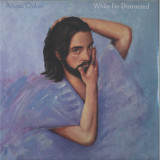
On debut album ‘While I'm Distracted’, London-based New Zealander Arjuna Oakes draws inspiration from contemporary soul and jazz, touches of global folk, electronica, modern classical, and post-rock, with dynamic arrangements and production. ‘While I'm Distracted’ is an album about fighting for your innocence and right to be a vulnerable and honest human. Arjuna’s songwriting explores themes of identity, depression, existentialism, social media, loss of innocence, and finding hope for the future through artistic expression.
'I'm obsessed with albums,' says Arjuna. 'I've made seven EPs, but needed time to tackle a full length record. I was using the EPs to learn the craft of how to make a great album, much like a director will make short films before they make a feature. I wanted to take the listener on a journey and spark their imagination. Hopefully the album expresses complex emotions, rather than having an intellectual concept. I'd rather ask questions than answer them'.
Across the album, Arjuna performs vocals, piano, keyboards, synths, production, and wrote the string arrangements. He’s joined by Harrison Scholes on bass, Jo Jenkins and Andre Smith on guitar, Sam Notman on drums, Louisa Williamson on saxophone, Nathan Haines on flute, Kate King on french horn, Leah Thomas on clarinet, Hilary Hayes and Emma Colligan on violin, Chris Van Der Zee on viola, Charley Davenport on cello, Zane Hawkins on percussion, James Macewan on trumpet, and additional production by Callum Mower.
An incredible, uplifting joint from New Zealand soul artist Arjuna Oakes. His second release on the Albert’s Favourites imprint overflows with the clear enjoyment of the band featuring legendary Nathan Haines. We’d say there’s a reasonable nod to D'Angelo’s essential Spanish Joint within these grooves.
The b-side delivers a vinyl exclusive – a downtempo, moody little number with an emotional drive that is deeply compelling – one to get lost inside.
DJ Feedback:
Gilles Peterson (BBC Radio 6 Music) - 'Watch out for a great singer from New Zealand called Arjuna Oakes' Gilles Peterson (BBC Radio 6 Music)
Limited
Mit Goldene Ratio liefert CR7Z sein fünftes Studioalbum – eine kraftvolle Symbiose aus Tiefgang, Technik und künstlerischer Reife. Der Ausnahme-Rapper bleibt seinem einzigartigen Stil treu und setzt neue Maßstäbe in Sachen Conscious Rap und lyrischer Präzision.
Ob als limitierte Fanbox, auf CD oder als edle Vinyl-Version – Goldene Ratio ist mehr als nur ein Album: Es ist ein Statement.
Ab September geht CR7Z mit dem neuen Werk auf große Tour und bringt die Goldene Ratio direkt zu seinen Fans auf die Bühne.
Jetzt vorbestellen und ein Stück musikalischer Evolution sichern.
21-year-old New Zealand musician Arjuna Oakes's debut EP,
The Watcher, is a showcase of his ability as a singer-songwriter, instrumentalist and producer, and a testament to his depth of engagement with music. The first two tracks on the EP fit neatly
within the jazz-infused soul music landscape he is quickly becoming part of, but the latter half of the EP is far harder to categorise.
Featuring instrumentation from some of New Zealand’s most exciting young jazz musicians, The Watcher explores a wide variety of themes and musical ideas, with Arjuna’s charismatic soul vocals and robust sonic palette serving as a connective thread. From big social issues to personal relationships and internal self-discoveries, across The Watcher, Arjuna takes his cue from the title track and exploration of mass surveillance, and it’s relevance within our everyday lives.
This watcher theme continues throughout the rest of the EP, with the stories told rendered as if being observed by an outside force. Decorated by cinematic soundscapes, hypnotic grooves, creative improvisation and catchy melodies, Arjuna's debut is a test palette for his future projects, one that makes his enthusiasm to develop and explore themes and style in song abundantly clear.
Finale Sessions is really pleased to launch new series Finale Sessions Limited with Berlin up and coming act Arcarsenal. Duo comprised of Alan Mathias and Etienne Dauta, both founders of Bass Cadet Records and its dedicated vinyl store located in the heart of the german capital, they are also active members of the large Underground Quality family. Arcarsenal have already started to establish themselves as proponent of a crossover sound, mixing many influences from jazz, house, ambient to dub and techno. They are always giving a prominence to jam, improvisation and textures work in their studio routine. This EP called « Dark Skies & Wetlands », even if slightly grittier than usual, is no stranger to the rules of the duo. The opening track « Different Planet » is an epic dark deep house cut which develops itself over a course of 8:40. Starting with a stamping ground bassline and hazy atmosphere, the track opens up with synth attacks, dub echoes and slowly brings in a blissful melody that ends up linking all the elements. « Substance Of Arjuna », the following track on the A-side, is a-contrario a short but intense ambient work. Shot in one take, this subtle cut showcases the kind experimentations that Mathias and Dauta can end up doing late at night in front of their machines. The b-side of the EP leaves all the space to « Racoons », one of the weirdest and yet most powerful work of the duo to date. Tribal techno could be a short try to define what they achieved here, but the track goes far more than this. Built on a gritty mental acidic bass and a huge drum kick, the frenchmen bring over aggressive synth work that could sound like an orchestra on rehearsal, pachydermic screams or an overdriven guitar larsen. Underlined by a complex percussion pattern recorded live in their nest and chopped up to the best effect, the track ends up in a looping transe from which the listener might not leave in a normal state.
After establishing the Serebii project with several albums’ worth of trancing neo-soul, much of it done in collaboration with fellow New Zealander Arjuna Oakes, Callum Mower had no lack of confidence in his musical abilities. But much of Mower’s focus in the past was on instruments and production—swirling, cinematic instrumentals under his own name or funky art-pop jams with others on vocals. On Dime, however, Mower knew he wanted to push forward with his own singing placed center stage.
“Music for Lovers” is the new solo outing of multi-instrumentalist Samuel Rohrer (playing a combination of percussion, modular synthesizer and keyboard-based instruments on this recording).
The album’s title, which has been used for other albums in unrelated musical genres, might be deceiving: those who expect overly sentimental, fluffy pieces full of levity from start to finish, or sarcastic and cynical attempts at rejecting such “easy” listening, will be surprised by the emotional and tonal complexity on display here. In Rohrer’s own words, it is dedicated to “those brave lovers, who are ready to not only find, but eventually become truth,” and as such is an exploration of an evolving process rather than an idealized state.
Producer Tom Thiel has worked in the medium of electronic music since the 1980s, been active in the musical epicenter of Berlin since 1987 and with the Sun Electric duo, he was already at the forefront of live / “real time” electronica since the 1990s.
Incidentally, Sun Electric are set to release an archival live set from this period on Arjunamusic later this year.
Though not everyone becomes exceptional on the basis of “veteran” status alone, Thiel’s latest work shows that he has made good on one of the main promises held out by electronic music and sound synthesis: namely, that it would also provide unexpected, novel, highly individualized syntheses of different attitudes, atmospheres, and affects. This is happily the case with Thiel’s new Arjunamusic release (his first full solo outing since his eponymous 2011 album): it’s a series of colorful, self-contained vignettes that are perceptibly drawn from an eclectic pool of personal
The trio Amiira of Klaus Gesing, Björn Meyer and Samuel Rohrer has returned after a layoff of six years since their debut LP. It would be unwise to expect for them to pick up exactly where they left off, given all the turbulent change that the world has encountered since this time, and indeed the new Album Curious Objects reflects a clear expansion of the players’ abilities. The fundamentals that guided the
debut album – spatiality, refined coolness, the non-verbal “narrative” quality - are still very much present, but are this time reinforced with an even more pronounced feeling of communicating across wide
physical and conceptual spaces. Altogether, Curious Objects is a potent antidote for spiritual and musical fatigue; especially
recommended for those who have already left behind the limitations posed by genres. It is more than the sum of its parts, and its crossing of numerous different boundaries never feels like the goal in and of
itself: instead, all this activity feels like a tool for unlocking and decoding even more supposedly irreconcilable qualities and ideas.
Samuel Rohrer - drums, percussion, electronics, keys, modular synths Music produced, recorded and mixed by Samuel Rohrer
Samuel Rohrer’s newest solo album, Codes of Nature, shows the artist making yet more refinements and additions to an already rich catalog of musical ideas. Though he has excelled in collaborative projects with Ambiq, Ricardo Villalobos, Max Loderbauer, Tobias Freund, Dark Star Safari, Nils Petter Molvaer, Oren Ambarchi and
many others, it is fascinating to experience him also working in a field completely his own, yet managing to still give the impression of being fully integrated or connected with a larger musical universe.
A strange, intriguing ambiguity between the specific and the universal is indeed what makes Rohrer’s music worth playing on a loop – the cool, downtempo, yet energized constructions on Codes are powered by subtle atmospheric and tonal changes, and work like a camouflage adaptable to any environment. This is a record whose strength derives from its versatility. It’s clear that this versatility of sounds has been inspired by a commitment to positive differentiation that is not just a musical one, and that’s where this work will inspire others in turn.
— Total playing time: 50:04
With his Arjunamusic label and a growing catalog of category-defying releases, Samuel Rohrer
continues to quietly, yet confidently, make a name for himself as a genuinely unique figure within
the European electronic music realm. Over the past decade he has assembled a repertoire of
music that fills a sadly neglected gap in the modern musical landscape. That is to say, he has
made a number of “electronically”-aided works that never seem to make “electronic-ism” the main
selling point or raison d'être. Rohrer understands that we inhabit a networked media landscape
that no longer sees a novelty value in every synthetic or technological sound, and by realizing
this, he makes a music that fully engages with the present without completely disregarding the
exciting speculative sensibility that has allowed electronic music to solidify into a tradition. His
latest solo album, Hungry Ghosts, again shows the high quality of sonic design that can be
achieved by conceptualizing musical passages as living, breathing entities rather than as
signposts to some still distant reality.
Maybe more so than any of Rohrer’s solo records to date, Hungry Ghosts is the one that
most unambiguously displays the artist as a kind of inspired sound “cultivator” or landscaper
rather than just a straightforward “producer”. The emphasis here seems to be biological growth
processes rendered in musical form, and in fact some track titles namechecking the biodiversity
of the external world (“Slow Fox”, “Ctenophora”) and neurochemistry (“Serotonin”) lend some
additional credence to this interpretation.
As with previous outings, Rohrer starts with his skills as a genre-resistant percussionist
and builds from there, with dense clusters of drum hits and icy cymbal exclamations leading the
way into a wide-open atmosphere full of fragmented phrases, marked with strange reversals or
compressions of time. The percussive portions and other ambiences merge together in such a
way that the latter seems like a kind of shifting, holographic camouflage for the former; an effect
which makes for a greater than usual number of shifts in mood. Rohrer’s already established
ambiguity and mystery are the moods that permeate throughout, to be sure, but there are also
surprising moments of humorous whimsy (the flourishes of cartoon mischief and teasing silences
on the tracks “Human Regression” and “Bodylanguage”), reverence (the optimistic organ swells
and steady sequencer guiding “Ceremonism”), and meditative focus (the slow-motion spectral
waltz of “Treehouse”). Also notable here are very brief etudes, such as “Window Pain,” whose
dark, lush ebb and flow actually seem tailored to repeated or looped listening.
It’s particularly remarkable that almost all of this material is recorded solo and in a “live /
no overdubs” mode, given how much it feels like well-rehearsed ensemble playing, and given the
impeccable timing involved in continually exchanging the sounds at the very forefront of the mix.
And here we come full circle to the idea of “electronic music” mentioned at the beginning here:
instead of making us feel that we are in the presence of some fully-realized form brought back
from “the future,” Rohrer invites us instead to witness fascinating processes of transition and
mutation, and to value them for what they are now as much as for where they are headed.
Pachakuti is a musician and producer with family roots in Colombia. He plays keys, tenor saxophone and clarinet. While living and working in Berlin, he draws inspiration from the natural world, investigative travels, and ancestral traditions of Latin America and beyond. His expressive and rhythmical playing and his instantaneous compositions are directed at the human core, arousing subtle experiences. While not being conformed to one style, it always invokes a sense of liveliness and depth to be delved in. young.vishnu is a producer and DJ. He has studied philosophy and music in Hildesheim, Germany, which heavily influenced his views on meaning and mythology in music. In his DJ sets he selects and plays classic and contemporary Funk, Soul and Afrobeat. His practice as a DJ informs his work behind the boards directly, adding also more organic grooves and broader spectrum of musical styles to his in Hip-Hop based production. If you had to put one single tag on their forthcoming album Dédalo, the best choice would be Jazz. That being said, Pachakuti and young.vishnu's sound worlds might be better described in their own words: "We just make music and try to incorporate what we love about it". They are musical freethinkers with shared interests in eastern philosophy and botany who interweave Hip-Hop, Latin and Funk with musical storytelling and world mythology. Undoubtedly, their most ambitious work to date, Dédalo (Spanish synonym for labyrinth), recorded and produced over the course of a year, shows Pachakuti & young.vishnu's ambitions and growth. Where their debut work Semilla (2020) centered around the image of the seed, Dédalo takes on the entire garden. Besides playing multiple instruments by themselves, Pachakuti & young.vishnu invited a growing group of befriended musicians into the studio, including percussionist maestro Eric Owusu (Pat Thomas, Ebo Taylor, Jembaa Groove) and drummer Leon Raum (Bokoya, Wyl), as well as Brazilian newcomer vocalist Laíz, and members of their former band project Soularkestra. The 16 recorded songs, ranging from 1:19 to 14:58 minutes, take you on an emotionally honest, metaphoric journey through the maze of human existence, of modern society and mythic poetry. The mostly instrumental tracks build on expressive melodies, layered rhythms, and a wide range of musical instruments, merging the sounds of Jazz with the classical word of orchestras and choirs, and urban soundscapes with traditional instruments such as the Andean Kena and Charango, the Colombian Gaita and Marimba de Chonta, and an Indian harmonium. The Album thus weaves together past and future, and diverse cultural threads, sounds and ideas in an act of cultural appreciation and global conscience. Mixed and mastered by Roe Beardie at The Brewery Studios, Berlin. The album artwork itself merges the visionary art of Mexican painter Sergio Chávez Hollar with an original artwork-inlay of Brazilian artist Laíz and the work of Carsten Pölking of the Nima Compositions Archive.
Dédalo will be available digitally and on double-vinyl with inside-out print cover and colored inlay with credits and painting by Laís De Mello Barbero.
The Ricardo Villalobos / Samuel Rohrer partnership has yielded increasingly interesting results over the past few years, with the former’s remixes of the latter’s trio Ambiq being supplemented by further reinterpretations of Rohrer’s solo work and live meetings at select events like Berlin’s Funkhaus and Radialsystem V. As should be the case with any strong collaboration, this partnership has been based on mutual challenge rather than compromise,
seeing each participant shuttle key technical and emotive aspects of the other’s work to previously unexpected places.
Those who have been closely following this relationship will notice a definite sense of continuity between previous outings and the new collaborative release entitled MICROGESTURES. As with those earlier Villalobos / Rohrer pairings, these four new pieces are defined by a special quality of being many things that once: that is to say, depending on the listener’s own level of focus, these can feel very tightly constructed and disciplined, or playful and freely wandering. That the tracks are equally engaging regardless of one’s chosen listening “mode” is a testament to the level of thought put into them; you could almost imagining the creators poring over some elaborate sketched set of architectural blueprints rather than coolly monitoring the usual multi-track editing software.
Altogether the music here is firmly a-melodic and percussive, but within these deliberate limitations there is still a greater variety of individual sounds than most would bother with. Each track is its own observatory of microgestures clustering together into a dense communicative fog or a sort of robotic sound swarm. Yet while all
these tracks are variations on that theme, each one has its own character and, consequently, its own rewards in terms of the exact sectors of the imagination that it activates.
Take for example “Cochlea” and its twin “Helix,” on which the magnetizing, busy layers of percussion are tempered with mischievously disruptive blossomings of digital noise, as well as sampled radio communications (which again bring us back to the idea of listeners’ attentiveness changing the meaning of this music - these
curious transmissions can either be taken as a purely aesthetic element or as something to be actively decoded).
Club-oriented elements are also not absent from this suite, particularly on “Incus” with its traditional sequenced baseline, crisp synthetic trap and hats, and dizzily sliding set of bell-like tones laid on top.?
Yet this track, too, is powered as much by its restless desire to deviate as by its rhythmic consistency: throughout the eleven-minute running time, a mass of ambiguous and restless machine sounds build a parallel narrative, and will maybe prompt the occasional glance over the shoulder as they seem to be taking on their own life. “Lobule” rounds out the program with the most rhythmically eventful sound set off the five.
What this all adds up to is a confident music which builds that quality from its faith in possibilities rather than firm conclusions: it’s an inspiring addition to both the musical landscape and reality in general
Dark Star Safari is a musical entity comprised of Jan Bang, Erik Honoré, Eivind Aarset, Samuel Rohrer and John Derek Bishop. Their second fulllength offering Walk Through Lightly is the first to feature all five musicians together in the studio from the outset, making for a more organic refinement upon their already established methodology: gradually sculpting distinct songs out of collective improvisations, or using the raw material from initial recordings as the basis for more carefully articulated compositions. The final mix is one that invites few stylistic comparisons to other musical peers, and in fact few comparisons to existing genres. Though this second offering from the project is frosted over with a Scandinavian sense of spatiality and
melancholy, it’s best listened to without considering any origin points, geographic or otherwise: from the opening moments of “Walk Through Lightly,” listeners will feel as if teleported directly into the middle of an enigmatic film-in-progress.
The album opener immediately and successfully sets the table for what is to follow. The electronic and acoustic instrumentation is pensive, but not passive, with restrained scrapes and stridulations in the background combining with backwards-looped passages and perlescent or granulated sound effects to better emphasize the carefully arranged latticework of guitar, percussion, strings, and bass. In some places, such as on “Father’s Day” and “Measured Response,” the silences or breaths between passages are pronounced enough to be an instrument in their own right (and an elegant confirmation of the fact that silence is also a conveyor of information). This nuanced production, which wisely opts for intimacy instead of relying on overdone "instant atmosphere generators" like lengthy reverb, provides just enough tension to contrast with the sense of elevation provided by Bang’s vocal contributions: smoky, evanescent, and impressionistic recitations offering not snapshots of specific events, but rather complete emotional environments for the listener to hover through and explore.
Within these environments, the lyrical imagery focuses upon coming to grips with sudden transformations on both micro and macro levels (the opening “this was a perfect place / till we lost our way” from “Patria” or the foreboding “Poems that explore / Their silence / Crush their violence / Now their time ends” from “Measured Response.”) It focuses as well upon coming to thresholds or crossings, be they physical crossroads or internal states of mind, or both (see especially the striking turns of phrase from “Murmuration.”) With such things in mind, it’s only natural that there would be consideration of dreaming as well, and indeed four different titles on the LP make different reference to a dream or dream state, seemingly valuing dreams as part of the continuum of consciousness rather than something totally cut off from waking experience.
Given the sense of foreboding, anticipation, and even unease that these kinds of subjects often bring with them, the spare and un-hurried music is all the more intriguing, especially when the eponymous finale arrives and the percolating sound bed seems to hint at a coming resolution, but then leaves the listener with more questions than answers. By competently fusing a mature, economical approach to sincerely romantic lyrical themes, Walk Through Lightly is a rare accomplishment.
new quartet by Samuel Rohrer, Max Loderbauer, Stian Westerhus & Tobias Freund In the present era of media saturation, the artist's dilemma has shifted away from the question whether to fuse disparate stylistic elements, towards the decision of which energies to draw upon: a situation most rewarding for those who listen to musicians navigating this limitless terrain. One such journey, the captivating full-length release from Samuel Rohrer's new Kave quartet coming out this May, is bringing together players who are equally well-versed in the quick-thinking mechanics of free group improvisation and the compositional strategies of contemplative / ‘ambient’ electronic music. With Rohrer acting as creative director and most of the quartet sharing synthesizer duties, there’s a strong sense of unified purpose to this set, and a narrative flow that never causes the listener to focus on one constituent part at the expense of the whole. At the same time, the players know all well that cohesion counts for little without those constituent parts being compelling in their own right. Rohrer and Loderbauer, for example, have previously crafted a unique techno-organic approach with the Ambiq trio, and the lessons learned from that partnership are put to inspired use within this new configuration. Stian Westerhus’ contributions on guitar and vocals, along with Tobias Freund’s electronic reinforcements - Freund also has worked since many years with Max Loderbauer as NSI - all conspire to make something that Rohrer aptly compares as “forest”-like. It’s a descriptor that will have vastly different meanings for each listener. For Rohrer, it refers to music that is confident in the “deep-rootedness” of its foundations and defined by a density and mystery easily confused with darkness, while nevertheless proving its bright vitRight away, on the introductory odyssey 'Cambium' the quartet sets out to make good on this metaphor, creating a hypnotic foundation for what is about to unfold during the next 42 minutes, with brooding, slow, 'searchlight in a fog,' synth washes and percussive stridulation. The twin 'Hibernation' tracks show all the unique elements beginning to coalesce: the emotional tenor is one of vulnerability that melts into the determination of 'staring into the void', a temperamental state challenging to represent authentically in music. The atmosphere of psychic challenge effort lessly gives way to the faintly nostalgic glimmers of 'Giant Peach' - a literary reference to the macabre whimsy of Roald Dahl. The ultimate dissolution of barriers between organicism and synthesis is accomplished on the majestic 'Divided We Fall', a title referring to Westerhus’ smoky vocalization that winds into a double helix formed from electronic surges. Again, the ease with which it all comes together is mesmerizing, and while there’s an aura of risk accompanying this walk through the woods, there’s a much more enduring impression of carefully orchestrated growth and change.
Samuel Rohrer CONTINUAL DECENTERING With his Arjunamusic label and a growing catalog of categorydefying releases, Samuel Rohrer continues to quietly, yet confidently, make a name for himself as a genuinely unique Gigure within the European electronic music realm. In the current era, talk of blurring boundaries between musical genres and attitudes is more the rule than the exception, but not always something done with any degree of success. Rohrer is one of those rare alchemical explorers to have truly created a hybrid which is all his own, one that does not just exist to melt distinctions for its own sake, but is a natural result of years of experimentation with both the determination of electronic music and the ludic spirit of ‘free improvisation.’ On his newest offering, Continual Decentering, this vision is applied to a set of mostly in real time (live) performed explorations. In keeping with his many years’ worth of fruitful collaborations, the tonal palette on this new record is one that is expectedly rich for those familiar with his work, yet still surprising in terms of how exactly the differing tonal colors come together. Representative tracks like Spondee and The Fringe are brimming with dub pulses, noir shivers and blooming timbral variations that are in many places carefully isolated / focused and in other places blended together in vivid fusions. In terms of the emotional atmosphere created here, the pensive and questioning tone hearkens back to the ‘wide open’ state of electronic music in the mid-late 1990s, yet with a greater clarity and maturity of vision that makes this music feel like a possible answer to aesthetic questions being raised at that time. As with Rohrer’s most recent solo work, like the Range of Regularity LP, Continual Decentering showcases the artist’s skill in turning the drum kit into a lead instrument. While the term “lead instrument” denotes a kind of exuberant “Glash,” or a clear separation from the rest of the voices in an ensemble, we can take the term to mean something different throughout this listening program of 13 short vignettes: that is to say, everything else within the audible environment exists to complement the character of the percussive playing rather than to stand apart from it. It helps that Rohrer has, in fact, developed a unique and complex hybrid system in which drum hits trigger modular synthesizer processes, the use of which makes for an incredibly fluid response time between distinct sonic events. In contrast to the previous Range... LP, this new offering is propelled less by interlacing threads of intensity and more by a shared sense of deep listening. As displayed on pieces like All Too Human, there is a profound sense of attention to silences or thoughtful pauses that maybe hints at another crucial aspect of Rohrer’s style: over the course of this program, we tend to hear the player not only playing but listening, an activity which makes perfect sense given the sense of instrumental dialogue already mentioned. All of the above come together to give Continual Decentering a “live”-ness that will easily translate from recorded document to dynamic performance.
Dark Star Safari, a newly formed group featuring Samuel Rohrer, Jan Bang, Erik Honoré and Eivind Aarset, present its eponymous recording debut, an evocative song-driven album. These songs conjure shadows of memory, clouds of dreaming and silhouettes of foreboding through the album’s layered, many-textured fabrics and Jan Bang's silken delivery of Erik Honoré's acute lyrics. Dark Star Safari is the work of four kindred spirits, their open modus operandi, and a remarkably interconnected creative nerve system. Key to their collaboration is an organic freedom that enables the music “to fill itself in", to be self-actualizing via the musicians as medium. The music of the 10 songs resulted from a two-stage process: an initial phase of free flowing open improvi- sation, and a subsequent exploratory phase where hidden potenti- als were discovered and nurtured. The groundwork of the album’s music originates from a session initiated by Samuel Rohrer, who invited Jan Bang and Eivind Aarset to the renowned Candy Bomber studio in Berlin. The ses- sion was run under the imaginative craftsmanship of sound engi- neer Ingo Krauss, who worked in the famous Conny Plank stu- dio, and its recording and mixing employed sophisticated use of vintage analogue equipment alongside cutting edge digital pro- cesses. This meeting opened the door for something larger to emerge. The group did not settle for just the outcome of the initi- al open improvisation. They were driven to dig deeper, to atten- tively examine and manipulate the material, in order to discover what it had to offer. This caused a creational chain reaction, forcefully spreading across the group. During this second phase, Jan Bang, while meditating upon the possibilities and reach of the improvised material, felt a strong urge to give additional shape and colour to it by singing. Thus, he organically stepped into the role of vocalist, a role he had not pursued since the early days of his musical career. He sent the results to Erik Honoré, who immediately was inspired by its po- tential, quickly penning lyrics and providing the project with its name. Honoré composed two additional songs, Mordechai and Fault Line, and thus rounded the project out towards a fully reali- zed opus. The group continued this back and forth process, with Samuel Rohrer and Eivind Aarset bringing in fine-tuning and e nrichment to the song structures and textures.
Max Loderbauer, who has so far made consistently engaging contributions to the Arjunamusic family, is back to lend his unique interpretive skills to the master recordings for the Brightbird album by João Paulo Esteves da Silva, Mário Franco and Samuel Rohrer. Loderbauer has set himself up for a chal- lenge, since the original album's completely improvised flow of small-ensemble, conversational jazz feels complete enough without outside intervention. However, Loderbauer's role as electronics operator in the similarly attuned Ambiq trio has already shown that, through his mastery of tone color, he has a talent for teasing out the additional hidden details within an apparently 'complete' sonic environment. It's a task he mana- ges to accomplish without ever overriding or contradicting the cohesive message provided by his collaborators.
Adding to the challenge here, Loderbauer chooses to re- mix using only sounds from the original recordings. By doing so, it might seem he is willfully denying himself the chance to use his own signature tools and turn Brightbird's source materi- al into stunningly new electro-acoustic hybrid blooms. Yet Loderbauer succeeds here by becoming something more like a translator than an augmenter - he finds a way to make mea- ningful syntactical changes to the trio's rich and versatile vo- cabulary, and once again unveils a verdant world of hidden details in the process.
The A-side 'Trusting Heart/Cosmos' has an anxious tone introduced by a set of Doppler-effected piano notes that seem to melt in the sun, and is soon complemented by a va- riegated, chattering rhythm line. Here Loderbauer builds up a tactile tension between rhythmic certainty and sharp-angled, de-tuned, and occasionally scrambled instrumentation, framing a disorienting (yet engaging) virtual space where ob- jects' bright hues rapidly change as they contract and expand along multiple dimensions. For the b-side 'Noontide', Lo- derbauer switches to a more focused and streamlined idiom with an uncanny ease, riding along steady waves of sequencer patterning and silvery, resonant shiverings. Reverberating, ho- lographic piano again provides the tonal center here, and the notes ring with a forward-thinking optimism not far removed from classics of the 'Krautrock' era.
Current supporters of all the artists involved will find this to be an invigorating synopsis of their work to date, while newcomers will be treated to a soundworld where skillful fu- sion (the act itself, rather than the music genre with the same name) is constantly on display.
The second EP of Samuel Rohrer's Range of Regularity album presents two more striking reinterprations. These new remixes provide an intriguing parallax view of the original tracks, using the percussive eclecticism of the parent LP as a starting point from which to journey into sonically vibrant, feature-rich territories. The production specialists on hand for this project include Burnt Friedman and Ricardo Villalobos. Villalobos, has already formed a strong working relationship with Rohrer's AMBIQ trio, lends his talents to both of the EPs. (RoR REMIXES I - AMEL-EP716). Nonplace label boss Friedman, as well, has carved out a unique space for himself within the electronic world, logging several decades' worth of releases that with dub-wise production sensibility, skewed humor, and riots of tone color. Though each individual remix has its own character, they are all united in their ability to provide a quick cure for fatigue with the common 'loop': though not improvised, they are strung together from fleeting phrases that evolve as if they are taking on a life independent of their creators.
Burnt Friedman's own dramatic interpretation of 'Microcosmoism' pairs up his consciousness of deep bass and analog inventiveness with Rohrer's continually transforming sound objects, making for a flowing and wordless narrative that simply dares listeners to stop paying attention. Feeling more like a collaboration in 'real time' than a remix proper, Friedman brings his characteristic 'mad scientist' wit to the proceedings and delivers an energetic piece that simply glows in the dark.
This is complemented nicely by Villalobos' remix of 'Microcosmoism'. It carries the energy level of the 1st EP over to a new disk, while heavily experimenting with feelings of emotional ambiguity. At some points aggressive and at other points merely curious, this mischievous collage of attitudes feels as inspired by the questing jazz of Sun Ra as it is by continental techno. Contemplative keyboard runs, enthusiastic spring-like percussion and malfunctioning machine chatter all coalesce to make this a most fascinating piece of multi-purpose electronic music.
Coming hot on the heels of Samuel Rohrer'sRange of Regularity album are two EPs of striking reinterpreta- tions. These new remixes provide an intriguing parallax view of the original tracks, using the percussive eclecticism of the parent LP as a starting point from which to journey into soni- cally vibrant, feature-rich territories. The production specia- lists on the first EP include Ricardo Villalobos and Vilod, the collaborative duo with Max Loderbauer. Villalobos, has alrea- dy formed a strong working relationship with Rohrer's AM- BIQ trio, lends his talents to both of these new EPs. The se- cond one will be completed by a remix of Burnt Friedman. Each individual remix has its own character, they are all united in their ability to provide a quick cure for fatigue with the common loop': they are strung together from fleeting phra- ses that evolve as if they are taking on a life independent of their creators.Villalobos' compelling take on Lenina' pulsates from start to finish with a kind of voluntary anxiety, a commitment to painting every corner of the sonic surface with clearly defined pointillist touches. While this kind of approach would cause less confident producers to collapse at their editing worksta- tion, Villalobos takes to the task with gusto - leaving see- mingly no corner un-animated by sound, he pieces together something surprisingly funky and hyper-real from a catalog of distinct percussive hits, time-reversed ephemera, and playful kitchen sink' ambience. Vilod's Uncertain Grace' remix, though marginally more laidback than the flipside, is no less engaging. A buzzing beehive of activity powered by an organ- like refrain, this is one of those pieces that will induce a fee- ling of perpetual movement into even the most still of physi- cal surroundings. This is especially true when, after four and a half minutes of flotation, a straight-ahead techno rhythm ta- kes over and all the disparate hovering elements fall into place.
- 1