3rd album of kaleidoscopic 60s psych pop from Glasgow quartet, feat. members of The Wharves, Nightshift and Current Affairs. Now in their 5th year of existence, Order of the Toad forge onwards with 12 frenetic new compositions, pulled together throughout windows of opportunity during the covid era. Recently a four piece (new guitarist Fionnan joining the Order just before the lockdowns began), Gemma Fleet (Current Affairs/ ex- The Wharves/Kasms) remains the spiritual lynchpin and main energy conductor from which Chris Taylor (Personality Toilet/Open Face), Andrew Doig (Robert Sotelo/Nightshift) and of course now Fionnan (Open Face) are powered. With added twin guitar dimensionality, the band flirt with an 80s new wave sound at times on Spirit Man, garnishing their regular sound with new hues of blue and purple atop the amphibious green of previous efforts. ‘Subterranean’ which opens the set is evidence of a B52s style composite, Doig’s now familiar faux organ guitar franken-sound holding steady beneath the wild and youthful six string movement that Fionnan brings to the toadstool. Elsewhere Taylor takes the lead Vox on ‘Salt of the Earth’, ‘Upstairs Downstairs’ and ‘The Dumbening’, all further progressions of the ensemble’s sound. Song structure and chord elements subtly mutate away from the 60’s nucleus of yore, Taylor bringing a Kevin Ayers meets Bill Callahan vocal approach to his cleverly assembled lyrical narratives, the band weaving about tempos with eccentric colour around him. Of course Fleet’s voice is central throughout, always simultaneous with her precise elasticity on the 4 string bass guitar, providing the likes of ‘Golden Rod’ with a sweeping Grace Slick meets Dolly Parton wail, a hollering Kate Bush style octave leap during the kinetic ‘Fog Horn’ and the fast paced crescendo of hollers at the back end of ‘Beyond the Pale’, a breathless 4 chord slammer. Her graceful and acute vocalisms paint the world of Order of the Toad and never before as vibrantly.
Finally it’s here! After many years, the repress arrived. This time how it was supposed to be. With new cover artwork and newly mixed songs. It's a rare but exhilarating occasion when you put on a new LP and are utterly blown away by what you hear. Every now and then, music makes you feel magically alive -- makes you want to jump around, pound your fist in the air, and shout "Oh, yeah!" Listening to Grand Fury, the second major release by Los Angeles quartet the Bellrays, is such an experience. Imagine the Funhouse-era Stooges fronted by a female R&B singer instead of Iggy Pop, and you'll have a vague understanding of what the Bellrays call "maximum rock 'n' soul". Although they've drawn comparisons to the Stooges or the MC5 fronted by Tina Turner, Etta James, or Aretha Franklin, the Bellrays rightly point out that soul was an important element in those Detroit-area punks' sounds. So, in some ways, the Bellrays are just bringing out an element of early punk music that was there all along. Nonetheless, the resulting sound is startlingly unique. Lead singer Lisa Kekaula has also sung jazz, and it's obvious she has technical skill, but she tears into these songs with a venom and passion that is pure rock 'n' roll. Bandmates Tony Fate, Bob Vennum, and Ray Chin provide a raw, blues-edged backing that is loose enough to allow Kekaula considerable room to go wild. And does she ever. With her raucous voice and the aggressive songs penned by guitarist Fate, Kekaula makes you believe she'd sooner spit in your face than look at you. "I'm stuck inside a moment / Can't find my way out / And time keeps draggin' on" she sings on "Fire on the Moon", but the confident way she spits out the words makes you believe she could claw her way out of anything. Likewise, Kekaula's indictment of "Stupid Fuckin' People" is so fierce it's almost scary. When she snarls, "Stupid fuckin' people always get in my way / Want to ruin my piece of the world" you know you'd better get out of her way. The only time this sonic assault slows down is on "Have a Little Faith in Me", a sexy soul number that Janis Joplin would have been proud to sing. While Kekaula's amazing voice and charisma are key to the Bellrays' sound, the rest of the band has to be commended for rocking so hard without drowning out that fierce set of pipes. With all the over-produced pap dominating the airwaves, hearing a band this raw and raucous is a dream come true.
2022 sees Turin Brakes release their ninth studio album - Wide-Eyed Nowhere. Of Wide-Eyed Nowhere the band say "We surprised ourselves with what came out; a sweeter, groovier set of songs in no hurry to be anything but themselves. The South London 4-Piece comprising Olly Knights, Gale Paridjanian, Rob Allum and Eddie Myer recorded this new set of songs at Twin Palms - Olly"s garden studio - over the summer of 2021, choosing to let time infuse into the music and mature in a way it couldn"t in a pressurised commercial studio setting. "Friends would visit, kids would add a voice or two, bees would buzz and we"d get to sit in the South London sun while the music poured out of the speakers and floated across the lawn. Sometimes we decided it"s okay to just let it happen naturally, not to try too hard - just get out of the way let the songs take shape, and that maybe you don"t have to be in a bad place to make the deeper cuts." Turin Brakes released Mercury Prize shortlisted the Optimist Lp in March 2001 (achieving gold status in the UK), followed up by 2003"s Ether Song which featured the top 5 hit single Pain Killer (Summer Rain). The band has since moved on to rack up seven top 40 singles, seven top 40 albums and over a million record sales worldwide.
2022 sees Turin Brakes release their ninth studio album - Wide-Eyed Nowhere. Of Wide-Eyed Nowhere the band say "We surprised ourselves with what came out; a sweeter, groovier set of songs in no hurry to be anything but themselves. The South London 4-Piece comprising Olly Knights, Gale Paridjanian, Rob Allum and Eddie Myer recorded this new set of songs at Twin Palms - Olly"s garden studio - over the summer of 2021, choosing to let time infuse into the music and mature in a way it couldn"t in a pressurised commercial studio setting. "Friends would visit, kids would add a voice or two, bees would buzz and we"d get to sit in the South London sun while the music poured out of the speakers and floated across the lawn. Sometimes we decided it"s okay to just let it happen naturally, not to try too hard - just get out of the way let the songs take shape, and that maybe you don"t have to be in a bad place to make the deeper cuts." Turin Brakes released Mercury Prize shortlisted the Optimist Lp in March 2001 (achieving gold status in the UK), followed up by 2003"s Ether Song which featured the top 5 hit single Pain Killer (Summer Rain). The band has since moved on to rack up seven top 40 singles, seven top 40 albums and over a million record sales worldwide.
“Enta Omri” is Om Kalsoum’s most famous song, composed by Mo-hamed Abdel Wahab, who is still rightly regarded as a prominent mu-sician and composer in Egypt. The creation of this song was the first long expected collaboration of two musical giants, which came at the repeated urging of Egyptian President Gamal Abdul Nasser. There was talk in Egypt on the streets and in the media about what was believed to be a cold relationship between the two legends. Finally, after years of estrangement, Mohamed Abdel Wahab took the initiative and of-fered Om Kalsoum a song by poet Ahmed Shafiq Kamel, for which he had just composed a musical score. To his surprise, she responded pos-itively and started to like the theme upon hearing it a few times. After a month of rehearsals, “Enta Omri” was released in February 1964 to critical acclaim and packed performances. The event was so grand it was labeled “The Cloud Meeting”. With “Enta Omri”, Abdel Wahab opened up the traditional repertoire of the diva to a more innovative style, for which the composer was known for. The use of the electric guitar and a long instrumental intro, fusing oriental themes with Western musical elements, made the song particularly special, securing its place in Egyptian musical history. De-spite some criticism from other Egyptian composers from that era, the song was soon recognised as a milestone and opened a path to modern-ise Arabic music for many other musicians and singers. “Enta Omri” is loved by Arab and non-Arab audiences alike. Paying respect to the great diva, dozens of artists around the world have reinterpreted the song, adopting the intro's catchy guitar melody in their compositions. Souma Records thought it was time to re-release this monumental piece of music on a high-quality vinyl format, together with a repress of “Laylet Hob”, another classic song by Souma.
out of Stock
Last delivered 6 years ago available to reorder, subject to availability
"Kontakt Audio and Infinite Fog Productions proudly present the 25-th anniversary reissue of the one of most unique albums on avantgarde/neoclassic music – Ihor Tsymbrovsky – Come, Angel.
Recorded in 1995 in Ukraine and released in 1996 just as a small run on cassette on Polish label Koka Records, the album without any promotion little by little became legendary and madly wanted by many fans all around the world. And from the first seconds, you can hear why it is so. Pretty hard to explain what songs play Ihor, moreover that would be senseless. “Come, Angel” is one of those albums which are so unique that takes you in a vacuum of verbal forms in an attempt to describe the record. In a few words, this is definitely very intimate and deeply emotional music with an absolutely incredible voice. The first associations could forward you to Antony Hegarty from Antony And The Johnsons, Marc Almond, Arthur Russell, Baby Dee, Bjork. Experienced listener familiar with these great artist knows that all of them are inimitable and Ihor Tsymbrovsky is totally inimitable as well.
In 2016 well-known German label Offen Music published 3 tracks from the album “Come, Angel” which brought a lot of attention to Ihor’s music. This time we’re excited to announce the first full album reissue on CD, Double vinyl, and tapes. Beside the full version of the album, you’ll find an exclusive bonus song from the cult compilation “Music The World Does Not See” – Nefryt Records 2000.
~
“For me, music is a certain way of cultural survival. Here I do not set myself theoretical problems or experiments.
The connotations of life are important: rhythms, melodies, their connection with language, poetry, real life, virtual or imaginary space. It is very important to me how the recitation of work sounds, how consonant and vowel sounds dissolve in singing, how they combine musically. I understand sound space as a field of my interpretations, preferences, priorities, and I do not use direct imitation. If I hear a melody or a musical phrase, and it is fixed in my memory, later I extract it in my own interpretation, as already formed by this field. In art, the goal is in the work itself, not outside it. For me, the expression “To be is to create a new reality” is another winged reality.” – Ihor Tsymbrovsky
~~
“Tsymbrovsky – an architect, musician, a poet, an artist; one of the most underestimated musicians in Ukraine’s artistic world. Many critics pulled their hair out trying to get to the bottom of Tsymbrovsky’s music. It has been inspired by jazz, minimal, modern, ethnic, and meditation music. Tsymbrovsky is not a virtuoso, however, he creates whole worlds with his astonishing falsetto. Although Cymbrovsky’s music is simple it is made of many elements. Filled with magic and unusual sensitivity and warmth it can be therapeutic for the listener. This is that kind of music, which can be listened to many times – in a different way each time.” – Koka Records.
~~~
“Igor Tsymbrovsky’s only album “Come Angel” (1995) still remains perhaps the most bizarre phenomenon in Ukrainian music since independence. The story of its author is a vivid example of cultural amnesia. In the pre-Internet era, Tsymbrovsky was a prominent figure in the Ukrainian underground, performed on the “Red Route”, went on tour in Germany. However, he left a minimum of evidence of his activity and became a silent legend for a few. We talked to Igor to find out where he came from and where he was going.
The album “Come Angel” is eight compositions performed with a falsetto to the accompaniment of a piano. (Tsymbrovsky’s falsetto is a legacy of the Lviv Dudaryk choir, where he sang as a child.) It would seem that it could be easier. But, despite such ascetic tools, Tsymbrovsky managed to create a phenomenon unique to Ukrainian culture. Some people compare him to Benjamin Clementine and Anthony Hegarty, but no comparison will be exhaustive. The lyrics of the songs attract special attention: two of them were written by Tsymbrovsky himself, the others demonstrate his remarkable literary knowledge. Here and Guillaume Apollinaire, and Mikhaijl Semenko, and even less obvious poets, such as Mykola Vorobyov or Jozsef Attila.
The young performer’s first performance took place in 1987 in the club of the Forestry Institute. It is quite symbolic that this room used to be a Jesuit church because such a chamber environment suits his songs about angels much better than the noise of big festivals. However, there were also many festivals in Tsymbrovsky’s career: in 1989, Chorna Rada and Chervona Ruta, in 1991, Kharkiv’s Nova Scena and Ukrainian Nights in Gdansk, Alternativa in Lviv. Ihor calls his first performances musical performances and notes that they sounded completely different. Unfortunately, we will never know exactly how.” – Amnesia
~~~~
“The magicians at Dusseldorf’s Offen Music pluck a madly beguiling pearl of late-night songcraft by Ukraine’s Ihor Tsymbrovsky to follow their vital releases by Toresch and Rex Ilusivii. Come Angel was first recorded in Lviv, Ukraine, in 1995, and issued on cassette by Poland’s Koka Records in 1996. There appears to be no prior mention of the release or artist on the internet and quite how it came into of Offen Music possession is not disclosed, and that only ratchets the record’s enigma to astonishing degrees once you’ve heard the music. In a quivering, high register, androgynous trill, Ihor Tsymbrovsky beckons heavenly beings in the remarkable A-side Come, Angel against a swirling backdrop of phasing, subtly delayed organ. It was recorded in one take (this is the 2nd version), and, if we’re not mistaken, you can hear the keys being pressed rhythmically in the background, which seems to be the song’s only tangible connection to this mortal world as Ihor vaults octaves high and close-in-the-mix with the sort of alien, dreamlike vocal that requires pinching oneself to make sure you’re awake. Spellbinding is definitely the word. On the other side he (we’re assured it is a ‘he’ in the promo text) sets two poems by Mykola Vorobyov and Mykhal Semenko, respectively, to emphatic piano keys, this time more shy of FX save for some delay, placing that willowing, avian vocal at a dreamy arms reach in Roses for the Poet, and with a sort of liturgical dark jazz feel, sorta like Lewis repenting his sins as a castrato monk, in the spare atmosphere in By the Sea. This is gold-seal business, we tell ya. Clock the clips and clear some swooning room.” – Boomkat
"Honestly, this album from Sam Redmore is having it" - Craig Charles
"Very clever. Very Nice." – Fatboy Slim
"Totally loving this. It's been on repeat since I heard it." – Nemone
"Amazing. Where can I get all your stuff?" - Jazzy Jeff
Having established himself first as a DJ and then as a remixer, Sam Redmore is now very much making himself known as an original producer of quality global grooves that can light up any dancefloor, carnival or party.
After garnering early support for his remixes from the likes of Gilles Peterson, Quantic, Nightmares On Wax, The Nextmen, Lauren Laverne, Danny Krivit and Craig Charles, Sam has built a name for crafting soul-drenched remixes of the classics, with his army of fans eagerly awaiting every new re-work.
Signing to Jalapeno Records for his debut album of original material, Sam has kept the eclectic tastes of all his fans satisfied with a series of very different singles showcasing the wide range of styles he is known for - all picking up rave reviews and a very wide spread of radio support including Radio 1 / 6 Music / Radio 2 / Jazz FM / Worldwide FM in the UK as well as hitting Number 1 most added on US college radio charts (world).
The single Nagu in particular has become a mainstay on daytime 6 Music but each successive release has been finding new fans. From his killer cumbia covers (Tears / Just Be Good To Me) through to the afro-house exuberance of One More Time and leading neatly up to Just Can't Wait, an extremely soulful disco house floorfiller, this is an album with broad appeal both in the UK and overseas.
In the meantime, Sam has been honing his live shows throughout 2022, with festival bookers keen for a piece of the action. Boomtown, Wilderness, Green Man, Kendal Calling and a whole host of others have seen what the punters at Mostly Jazz, Funk & Soul Festival saw last summer, when Sam debuted his live show on the main stage of a key festival on the Saturday afternoon. Anyone who was there and saw the audacious 12-piece live ensemble playing their first show knew they were seeing something special.
out of Stock
Last delivered 3 years ago available to reorder, subject to availability
Under The Sun is the follow-up to the astonishing Roots and contains yet more absolutely essential Nucleus material. Originally released on Vertigo in 1974, Under The Sun was never re-pressed and of course those original copies are now very tricky to score. Like all the Nucleus records, it’s aged ridiculously well and this Be With re-issue, re-mastered from the original analogue tapes, shows off just why this deserves to be back in press.
Genius trumpeter and visionary composer Ian Carr was one of the most respected British musicians of his era. He was a true pioneer and saw the potential in fusing the worlds of jazz with rock, just as Miles Davis and The Tony Williams Lifetime did in the US. In late 1969, following the demise of the Rendell-Carr quintet, and tiring of British jazz, Carr assembled the legendary Nucleus. Regarding music as a continuous process, Nucleus refused to “recognise rigid boundaries” and worked on delivering what they saw as a “total musical experience”. We can get behind that.
Under bandleader Carr, Nucleus existed as a fluid line-up of inventive, skilled musicians. This constant evolution and revolution was all part of the continuous musical exploration and discovery that took jazz to new levels. And the music has stayed relevant. To steal a line from a recent review of our re-issue of Roots, when it comes to anything Nucleus “it’s basically already hip-hop”.
Under The Sun opens with the crisp, medium tempo “In Procession”. It’s a typically inventive Carr track with layers of dramatic, riff-led themes and repeating brass blasts. Bryan Spring’s “The Addison Trip” is a moody funk piece, with Kieran White guesting on wordless vocals. Roger Sutton contributes some fine bass guitar on this track, particularly the great solo at around the two minute mark. The excellently-named cool, jazzy ballad “Pastoral Graffiti” paints bucolic pictures with its mellow sonics, plaintive horns and Bob Bertles’ flute.
Sutton’s superb, bass-driven “New Life” brings a different dynamic. Horns, guitar and electric piano swirl over the head-nod bass motif and a killer Ken Shaw guitar solo. A false fade out halfway through brings in a new bass riff that’s picked up by the whole ensemble as Carr wah-wah noodles over the top. It’s full-on. The gorgeous, laidback “A Taste of Sarsaparilla” is exactly that - closing out the first side with a cute blast of what is to come over on the killer flip.
The whole of Under The Sun’s second side is a suite of three “Themes” written by Ian Carr. The uptempo first theme “Sarsaparilla” is comfortably one of Nucleus’ best. What would’ve been a cluttered mess in the hands of most is instead an effortless lesson in clarity and zing. Between Geoff Castle’s electric piano solo, the relentless funky drumming and more wild wah-wah trumpet from Carr, Nucleus show you how it’s done.
The languid groove of second theme “Feast Alfresco” is much more typical of “classic” Nucleus and sounds like something that might’ve been on Roots. A Bertles baritone solo and a guitar solo from Shaw weave around the core, serpentine brass theme.
The darker “Rites of Man”, the third and final theme, is a slow build to a solid bass and electric piano riff, shored up by some tricky brass. Carr takes the theme even further and there’s still plenty of room for soloing from all corners of the Nucleus. As usual, the dynamic Sutton/Spring, bass/drums duo is holding down the rhythm for the rest to jam around.
This Be With edition of Under The Sun has been re-mastered from the original Vertigo master tapes, Simon Francis’ mastering working together with Pete Norman’s cut to weave their usual magic with these wonderful recordings. The bleak, rain-dappled cover matches the melancholic vibe of the record and has been restored as the finishing touch to this long overdue re-issue.
out of Stock
Last delivered 4 years ago available to reorder, subject to availability
For the first time Nicolas Repac's album Swing-Swing, originally out in 2004, is released on vinyl LP!
He has a reputation as a musician's musician, a talented Jack-of-all-Trades as much at ease playing the guitar alongside his old accomplice, French songwriter Arthur H, as he is when tinkering with all kinds of machines by instinct, and creating made-to-measure contexts for instrumentalists like Michel Portal. Everyone knew he had a secret garden, the song' world of a composer and performer who was difficult to categorize, a world not only lyrical but also dark and full of tender melancholy, not to mention easily surrealist (his first record of songs, La vile', which was released on the Indigo label in 1997, has a sequel in preparation in the form of a new opus, Lovni'.) But, once again,
Nicolas Repac had a surprise in store, because he has turned up where no one was expecting him: Swing Swing is a record as magnificent as it is difficult to place, with electro ramblings around jazz (its subjects and virtues, its spirit and memory), wanderings that are playful, light, fluid in gesture and crammed with ideas, discoveries and intuition, they are at once naive and instinctive (Repac is an erudite amateur, the Ferdinand Cheval of the already-established world of electronic music), and extremely elaborate in their crushed samples, hallucinatory, rhythmic whirls and sensual, dreamlike atmospheres.
out of Stock
Last delivered 4 years ago available to reorder, subject to availability
Chicago-born composer, producer and arranger Charles Stepney is known to some for his work with Earth, Wind & Fire, Deniece Williams, and Ramsey Lewis, or for his work with Chess Records in the 1960s, where he was an essential creative force behind seminal recordings by Rotary Connection, Minnie Riperton, Marlena Shaw, Muddy Waters, Howlin Wolf, Terry Callier, The Dells, The Emotions, and many many more. In the decades since his untimely death in 1976, the presence of his name in liner notes and on vinyl labels has become a seal of quality for record collectors, music historians, and aficionados, while his sound has been used by countless samplers in the hip-hop world including Kanye West, A Tribe Called Quest, The Fugees, MF Doom, and Madlib. But in comparison to the post-mortem renown of his sound, or the music he created and the artists he supported while he was alive, Stepney is a greatly under-appreciated figure... a genius relegated to the shadows.
out of Stock
Last delivered 3 years ago available to reorder, subject to availability
Opening with the buzz of a smartphone on vibrate, First Hate’s sophomore album Cotton Candy launches to life with “Someone New,” a synth-driven statement of intent. The Danish duo’s charged songs are rooted in a recognizable universe, but traverse a wide array of genre experiments and pop detours. Cotton Candy follows the quest of its protagonist stumbling through a crumbling world, winning and losing lovers, swinging from extreme highs to hopeless lows. The title alludes to transience and ecstasy, the surge of a sugar rush before nausea sets in, the way cotton candy dissolves into nothingness leaving only sticky fingers. Throughout, the productions glitter with synthetic detail and hypermodern finesse, effervescent but elusive. “Life is a rollercoaster and we’ve ridden the ups and downs.” During the recording sessions, a collage of Copenhagen musicians flowed through the studio. First Hate is a fixture of the city’s creative community, but ultimately exists in their own sphere, carving a niche as parallel universe pop stars, embracing sweet and bitter, risk and reward: “Sometimes the ones who love you most are the ones who hold you back.” Anton and Joakim grew up in Copenhagen and met when they were 15 through common friends on the street where they lived. “I didn’t enjoy being home so I used to stay at my friend Jakob's basement in an old church on Willemoesgade street,” says Wei. “His mom was the priest. She baptized Anton at age eight during his Jesus phase when he demanded a late baptism from his atheist parents. Jakob was friends with Elias who lived up in Anton’s end and they introduced us to each other. One summer my parents finally married after 20 years of dating. Joakim moved in for two weeks and we accidentally trashed the apartment while they were on their honeymoon. Later on Jakob, Elias, and two other friends, Dan and Johan, formed the band Iceage. Watching our friends’ growing success was a catalyst in creating our own project. At that point everybody in our friend group was making punk music, so the most punk thing we could think to do was start a pop duo.” The First Hate catalog comprises more than nine years of work, including their 2017 cult classic, A Prayer For The Unemployed, a collaborative album Dittes Bog, two EPs and several singles. All of the recordings are self-produced, until they are ready to be finished in the studio. “We have sort of a twin alliance. Like couples finishing each other’s spaghetti at restaurants, we finish each other’s music. Having people enter this sacred mix has been such a pleasure.” On stage Anton and Joakim embody the contrasting yet complimentary energies of yin and yang: Joakim pushing buttons, steering the ship, working synths and samplers with harmonious calm, while Anton’s body bullets around the stage, pounding out his kinetic dance moves. The name Anton means fragile flower, an apt metaphor for his stage presence. A fragile flower shooting through concrete. To behold a performer who consistently delivers such intense live performances is a rare pleasure. “Live means love. When everything is right. When we meet the audience heart to heart. Then the planet spins even faster.” First Hate has performed over a hundred shows across Europe, Asia, the U.S., and Russia, both as headliners and alongside fellow Copenhagen acts Iceage, Lust For Youth, Communions, Soho Rezanejad, Trentemøller and Grand Prix. “We are on a quest of love, yes it’s as cheesy as that.”
As pockets of new jazz scenes emerge around the world, it's apparent that New Zealand's bubbling microcosm in Wellington interprets the genre through a unique lens. Clear Path Ensemble bottles the energy of that burgeoning movement and distils it into moody morsels of differing styles. From electric jazz to ambient, experimental, house and funk - it's a DIY, jam-session attitude towards composition, as the band members freely cherry-pick from a vast orchard of influences. Citing inspiration from 70s ECM catalogue, the ensemble channels the "expansive and astral" elements of electric jazz, with an introspective dynamic. At times it's fused with catchy synth hooks, smooth basslines and shuffling beats, while other tracks morph into moody electronic soundscapes, and even Sun Ra-esque free jazz. Led by percussionist Cory Champion, the band released their debut self-titled album in 2020, followed by a headline performance at the 2021 Wellington Jazz Festival. Champion has played drums alongside some of New Zealand's most revered contemporary musicians (Lord Echo, Lucien Johnson and Mara TK to name a few), and also produces leftfield deep house and techno under the name Borrowed cs, which partly informs the ensemble's electronic production.
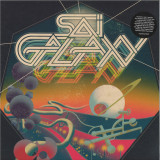
As the name suggests, Sai Galaxy represents a star-studded
cluster of artists from around the world – their varied styles
colliding to form a refreshing fusion of classic Afrobeat, disco
and West African funk.
Drawing from the influence of 70s and 80s Nigerian artists
such as Nkono Teles, Jake Sollo and Mike Umoh, the Sai
Galaxy collective is on a mission to reproduce the analogue
warmth and groove from those decades. Consequently, they
lean heavily on 70s production techniques - free from the
predictable rigidity of digital sequencing.
Spearheaded by Australian multi-instrumentalist Simon
Durrington (from Digital Afrika), the members include
Olugbade Okunade - former trumpet player from Seun Kuti’s
Egypt 80 - as well as guests Gabriel Otu, Ray Lédon and
Vanessa Baker.
While the EP seeks to reflect 70s production, glimpses of
contemporary elements can be found in the arrangements
and harmonies, at times reminiscent of modern artists such as
Lord Echo, Bosq and Voilaaa.
As Durrington believes: “dance is vital to health and
community”. And with an EP that urges you to dance from
start to finish, consider Sai Galaxy a cosmic tonic for the
modern lifestyle.
out of Stock
Last delivered 3 years ago available to reorder, subject to availability
Sympathetic Magic is an ecstatic, delirious, and deeply touching piece of music; a towering new work in Kim Myhr’s increasingly substantial output as an artist and composer. Sympathetic Magic is the follow-up to Kim Myhr’s 2017 album You | me, which was widely praised and received an honorary mention at the 2018 Nordic Music Prize. While the immersive warmth of You | me is still present, Sympathetic Magic is more expansive than its predecessor. A band of eight musicians playing a wide variety of instruments including electric 12-string guitars, drum machines, vocals, synthesizers, organs and lots of drums and percussion, has created a work of a grander scale. The shimmering, oceanic waves of You | me has been traded for cosmic currents in Sympathetic Magic. Put simply, Sympathetic Magic is a collection of song-like structures that has expanded into symphonic proportions. “With You | me, I wanted to create an ocean of sound, where the listener is surrounded by a myriad of elements that has equal importance in the music. I wanted to challenge this a bit, to push certain elements forward. The result is a more song-like kind of music than what I’ve done before.” – Kim Myhr Just before starting working on Sympathetic Magic, Kim bought an old 70s Yamaha organ (the YC45d), after falling in love with the sound of it on different recordings. At first, he thought the organ would be a subtle element on the new record, but it ended up becoming a focal point: “It’s a brilliant in-your-face sound that brought an ecstatic quality to the music. Playing around with this instrument, along with an 80s Roland Juno synth and a new drum machine took the music in new directions.” – Kim Myhr. Thematically, Sympathetic Magic circles around a longing for collectivity and togetherness. While the world was locked down in 2021, thanks to a commission from Oslo Jazz Festival, Kim had the opportunity to delve deeply into this project, working with the members of the band, one at a time: “The music created a situation of unexpected positivity. It felt like a social project even if I spent most of the time on it alone. And all this positive, joyful energy felt quite magical, arriving like out of thin air in this otherwise grim situation. It all felt like a hallucination, which fed back into the music. Sympathetic Magic is like a dream within a dream.” – Kim Myhr The title of the record is a term coined by James Frazer in The Golden Bough. He writes: “things which have once been in contact with each other continue to act on each other at a distance after the physical contact has been severed”. “In a closed down world where all our connections with the outside suddenly are remote or absent, the line between the real and imaginary is blurred. I felt that the term perfectly summed up the thoughts, processes and sentiments that went into the making of this record”, says Myhr. “Kim Myhr is a master of slow-morphing rhythms and sun-dappled textures that seem to glow from the inside”. The Guardian 1/And I Thought These Are My People 2/Gifting Senselessly In Endless Lavishness 3/Move The Rolling Sky 4/Iridescent 5/Up To The Sun Shall Go Your Heartache 6/I Wonder If I Shall Fall Right Through The Earth 7/Heart Streams
Aidan Baker is a classically-trained multi-instrumentalist using the electric guitar as his primary instrument. Using prepared and alternate methods of playing the guitar, along with various electronic effects, Baker creates music which generally falls within the ambient/experimental genre but draws on influences from rock, electronic, classical, and jazz. A highly prolific artist, Baker has released numerous recorded works, both solo and with various group projects - most notably the duo Nadja - on such independent labels as Karlrecords, Important Records, Southern Lord, and his own imprint, Broken Spine Productions. Baker is also the author of several books of poetry. A regular live performer, Baker has toured extensively around the world, including appearances at such international festivals as FIMAV, SXSW, Incubate, Unsound, and Mutek, among others. Originally from Toronto, Canada, Baker currently resides in Berlin, Germany. Recorded mid-pandemic, Songs of Undoing cannot help but have a sort of mid- or post-apocalyptic overlying concept, lyrically dealing with themes of exodus and travel / wandering, self-reliance, the weight of history...with pointed references to two post-apocalyptic, societal / environmental collapse novels, Octavia Butler's "Parables of The Sower" and Kate Wilhelm's "Where Late The Sweet Birds Sang." Musically, the songs move between minimal slowcore and a sort of textural noise-rock or what might be called deconstructed grunge, taking influence from artists like Lungfish, American Analog Set, PJ Harvey, and Stina Nordenstam.
823 is a multifaceted Perth-based record label, fashion brand, and artistic community, founded by Australian producer and all-around creative, Ta-ku (846k monthly listeners on Spotify). With an ethos of attention to detail and appreciation for the everyday things in life, 823 doesn’t stick to any particular genre. 823’s releases include Cabu’s (800k Monthly Listeners on Spotify) “So Far To Go” EP, Ta-ku and matt mcwaters’s duo project “Black and White,” which featured Masego collaboration “Flight 99” (14 million streams on Spotify), their debut release with Australian producer and instrumentalist Kuzich, and multiple sold out clothing capsules. “All Things Considered Vol. 1” set off a collaborative series of curated compilations, featuring both budding and well-established artists around the world including Idealism, Wun Two, pastels, SwuM, Jinsang, Saltyyyy V, and more. “All Things Considered Vol. 2” sees the continuation of this project, this time in partnership with fellow Perth-based powerhouse, Butter Goods.
Butter Goods is a Perth clothing brand rooted in skating culture and style, but drawing inspiration from hip-hop, jazz, and music at large. Butter Goods has been featured in major publications, including GQ, Complex, and HYPEBEAST. They’ve collaborated on releases with Peanuts and Puma, and have reached international levels of popularity. Butter Goods co-founder Garth Mariano’s deep love for and eclectic tastes in music drive his creativity, and are front and center in his partnership with Ta-ku and 823 on “All Things Considered Vol 2,” where the two team up to curate a wide-ranging compilation.
Arriving on September 2nd, 2022, “All Things Considered Vol. 2” is an exploration of Ta-ku’s and Mariano’s extensive and often overlapping musical palettes in two parts. The record pays homage to the love of instrumental music and hidden gems of new school jazz and funk that act as a source of inspiration and nostalgia for the both of them. The collaboration brings together over a dozen producers and instrumentalists from Sydney to Chicago, including Jadu Jadu, Gnarly, Tenderlonius, silentjay, and more. Side A is curated by Ta-ku and 823. It’s as much a love letter to the past as it is a nod to the future of beat-making. Featuring sample heavy, drum looped beats, sprinkled with the occasional ear candy for the attentive listener, it presents cruisy soundscapes & easy listening. Side B is curated by Garth and Butter Goods. It’s a raw and eclectic companion to Side A, leaning heavily into the texture and grit of multi-layered jazz and funk-driven beats.
As with any 823 release, the project is as visual as it is sonic. The artwork and visualizers are a celebration of Garth’s love of thrift culture and old nature documentaries, fused with 823’s design aesthetic of bringing everyday inspirations to the forefront. CRT style visuals are paired with 90’s spin, slide and fade away transitions. When partnered with the music, each visualizer could easily work as the intro for an episode of a VHS series of nature docos.
1st single, “senzu bean,” arrives on July 7th and kicks off Side A, showcasing Ta-ku’s hip-hop-centric tastes. Sydney producer Jadu Jadu teams up with UK-based TAMBALA, apltn, and Makzo for a vibrant instrumental. From a head-nodding bassline beneath fuzzy synths, to soft horn licks sprinkled over electronic drums, “senzu bean” is sonically rich and multilayered.
2nd single, “Too Much” by UK producer saaaz arrives July 20th. It’s a moody and low-tempo beat that builds itself up over time, complete with cryptic vocal samples and syrupy drums and bass. Also off of 823’s Side A, “Too Much” maintains a laid-back hip-hop theme but with saaaz’s signature and definitive lo-fi twist.
3rd single, “Goodmorning” from Baro Sura and silentjay of Melbourne arrives August 3rd, kicking off Butter Good’s Side B. The track is bright from start to finish and is a sun-filled track perfect for closing out the summer with. Final single, “Fool’s Gold” by Los Angeles producer L.Dre arrives August 17th. The infinitely creative beatmaker layers soft hums and the sounds of crashing waves over crisp drums and an infectious bassline. Together, it makes for a beat that sounds like it was made outside, under the sun, and is best enjoyed in the same way.
Focus track, “Seventh Wonder” by Tenderlonius, comes off of Side B, and is a window into the ideas and palettes on both sides of the compilation. The beat slowly fades in, one sound at a time, until it reaches a full-fledged groove, soaked in synths, bass, and horns, that’s impossible not to move to.
On the whole, “All Things Considered Vol. 2” is a forward-focused, sonic journey into the minds behind two of today’s great creative brands, and is as artistically eclectic and varied as those minds are, and a proud follow-up to its first volume.
LP contains A2 poster on uncoated stock.
out of Stock
Last delivered 4 years ago available to reorder, subject to availability
Berlin’s Pure Hate drop their 5th release ‘Chrome Horse Diplomat EP’ by Mickey Nox. Having previously remixed MDD on PH003, this time he takes both sides of the record and delivers 4 heavy hitting original signature hammer tracks. Mickey spawned out of the cracks of the Melbourne club scene in 2007. Which led to several residencies & festivals around Australia. In 2013 he launched his label & brand ‘Green Fetish Records’ which has since gone from strength to strength cementing its position in the Techno scene worldwide. Outside of Australia & GFR he has played clubs such as Tresor, Moog, Basis, Jaded to name a few and has released music on labels such as Perc Trax, Mind Cut Music & South London Analog Material, having been remixed by the likes of Ansome, Ayarcana, Myler & Manni Dee along the way. Mastering by Joe Farr. Artwork by Slave To Society.
out of Stock
Last delivered 2 years ago available to reorder, subject to availability
Eric Dolphy's final studio album is hailed as one of the finest examples of mid-'60s post bop. Its reputation is purely one of backwards significance. Dolphy, having recorded the album in February 1964, was in Europe less than six weeks later and his all-too-brief life ended less than two months after that. Though likely he never held a copy in his hands or heard any critical opinion of it, it marked his last flurry of original compositions and is considered his apex. It is fascinating to consider whether he would had moved past or away from the album in 1965, had he lived.
Though Dolphy should not be considered an avant-garde musician by the term's most common definitions, most interpretations of Out To Lunch have been done by players working squarely in that area. So it is with this album, the most ambitious in its recreation of the five-tune disc (with one original added to the final "Straight Up and Down, extending the piece to almost thirty minutes). All five compositions from the original quintet LP are revisited in the same order, the record sleeve even duplicates the old album jacket, down to the typeface and black-and-blue color scheme, although a photo taken by Daidō Moriyama inside Tokyo's massive (and massively busy) Shinjuku railway station replaces the Dolphy's album's enigmatic "Will Be Back" sign, whose clock hands indicated no conventional time of expected return.
Otomo Yoshihide first came to international prominence in the 1990s as the leader of the experimental rock group Ground Zero, and has since worked in a variety of contexts, ranging from free improvisation to noise, jazz, avant-garde and contemporary classical. The always surprising and sometimes confounding turntablist, sound artist, onkyo improviser and now avant jazzer heading up a 15-piece aggregation of Japanese and European experimentalists. Who better to grapple with Dolphy's legacy -- so idiosyncratic in its day and yet so influential to creative improvisers who followed -- than a musician with his own singular take on how sounds can be organized in the jazz realm over 40 years later and half a world away? In other words don't expect the conventional from Otomo any more than you would from Dolphy himself. That's not to say that recognizable themes ("Hat and Beard," "Out to Lunch," "Straight Up and Down") don't appear, or that individual players -- including Alfred Harth on bass clarinet bursting into the mix and leaping across the instrument's tonal range in a way that recalls the master himself -- don't carry forward echoes from the past in the spirit of a sincere and heartfelt homage.
However, a good deal of the time all bets are off; in addition to the usual brass, reeds, bass, and drums (and of course a bit of vibraphone, here played by Takara Kumiko in far less prominent role than that of Bobby Hutcherson) are such sonic paraphernalia as sine waves, contact mike, no-input mixing board, and, of course, "computer." (Otomo himself plays skronky electric guitar.) From composition to composition and even during episodes within compositions, the band takes radically different approaches. There are blasts of free jazz energy not too far removed from the Peter Brötzmann Tentet, an impression reinforced by the presence of spluttering wildman Mats Gustafsson on baritone sax. Not surprisingly and often in contrast with the Dolphy original, the music is dense and filled to overflowing with sounds -- sometimes due to fundamental reworkings in structure rather than just the larger size of the ensemble. The middle section of "Something Sweet, Something Tender" somewhat belies the original's title with elongated howls and cries from the horns over slo-mo bass, drums, and electronic noise poised somewhere between dirge and drone, and the sudden explosion of punk-ish rock energy in the following "Gazzelloni" is a startling contrast.
At times, the feeling is that of listening to the original Out To Lunch while a séance is going on to contact Dolphy's ghost, with supernatural sounds swirling around the stereo. The effect is disconcerting, as is the post-apocalyptic cloud hanging over the arrangements, but it makes the effort more than an unnecessary tribute album. Instead, Dolphy is transported into the 21st Century and allowed to romp through modern developments in music. An inspiring concept and an album that will stretch the boundaries of anyone who comes into contact with it.
out of Stock
Last delivered 3 months ago available to reorder, subject to availability
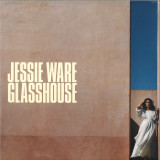
It's been three years since Jessie Ware released her second album Tough Love. Described by Pitchfork as an album that moves into the territory of real, messy love' Tough Love was the critically-embraced follow up to Jessie's landmark debut Devotion in 2012. Signed to the influential London label PMR, Jessie's deep roots into UK music saw collaborations with SBTRKT and Disclosure bear fruit before her acclaim reached international levels. With both albums now gold-certified in the UK, a million albums sold worldwide and her influence undeniable, Jessie has spent the last three years working on her third album Glasshouse. The album includes multiple Radio 1 & 2 playlist singles and Jessie is confirmed for Sunday Brunch and Later with Jools around album release.
out of Stock
Last delivered 4 years ago available to reorder, subject to availability
Note price increase and cat number change from last time around. In 1968, Don Cherry had already established himself as one of the leading voices of the avant-garde. Having pioneered free jazz as a member of Ornette Coleman's classic quartet, and with a high profile collaboration with John Coltrane under his belt, the globetrotting jazz trumpeter settled in Sweden with his partner Moki and her daughter Neneh. There, he assembled a group of Swedish musicians and led a series of weekly workshops at the ABF, or Workers' Educational Association, from February to April of 1968, with lessons on extended forms of improvisation including breathing, drones, Turkish rhythms, overtones, silence, natural voices, and Indian scales. That summer, saxophonist and recording engineer Göran Freese who later recorded Don's classic Organic Music Society and Eternal Now LPs invited Don, members of his two working bands, and a Turkish drummer to his summer house in Kummelnäs, just outside of Stockholm, for a series of rehearsals and jam sessions that put the prior months' workshops into practice. Long relegated to the status of a mysterious footnote in Don's sessionography, tapes from this session, as well as one professionally mixed tape intended for release, were recently found in the vaults of the Swedish Jazz Archive, and the lost Summer House Sessions are finally available over fifty years after they were recorded. On July 20, the musicians gathered at Freese's summer house included Bernt Rosengren (tenor saxophone, flutes, clarinet), Tommy Koverhult (tenor saxophone, flutes), Leif Wennerström (drums), and Torbjörn Hultcrantz (bass) from Don's Swedish group; Jacques Thollot (drums) and Kent Carter (bass) from his newly formed international band New York Total Music Company; Bülent Ates (hand drum, drums), who was visiting from Turkey; and Don (pocket trumpet, flutes, percussion) himself. Lacking a common language, the players used music as their common means of communication. In this way, these frenetic and freewheeling sessions anticipate Don's turn to more explicitly pan-ethnic expression, preceding his epochal Eternal Rhythm dates by four months. The octet, comprising musicians from America, France, Sweden, and Turkey, was a perfect vehicle for Don's budding pursuit of "collage music," a concept inspired in part by the shortwave radio on which Don listened to sounds from around the world. Using the collage metaphor, Don eliminated solos and the introduction of tunes, transforming a wealth of melodies, sounds, and rhythms into poetic suites of different moods and changing forms. The Summer House Sessions ensemble joyously layers manifold cultural idioms, traversing the airy peaks and serene valleys of Cherry's earthly vision. In the Swedish Jazz Archive quite a few other recordings from the same day were to be found. Some of the highlights are heard as bonus material on the CD edition of this album. The octet is augmented by producer and saxophone player Gunnar Lindqvist, who led the Swedish free jazz orchestra G.L. Unit on the album Orangutang, and drummer Sune Spångberg, who recorded with Albert Ayler in 1962. The bonus CD also includes a track without Cherry featuring Jacques Thollot joined by five Swedes including Lindqvist, Tommy Koverhult, Sune Spångberg, and others. With liner notes by Magnus Nygren and album art featuring a cover painting by Moki Cherry: Untitled, ca. 1967-68. Track list: 1. Summer House Sessions 2. Summer House Sessions.
For Fans Of: Delvon Lamarr Organ Trio, The Sure Fire Soul Ensemble, New Mastersounds, Soulive, Jimmy Smith, Khruangbin. First reissue since it's original pressing in 2018! The iconic debut LP from the Scone Cash Players. Hammond Organ Stylings By Organ Master Adam Scone. The Hammond Organ is lead singer on this soulful and orchestral journey about industrial decay and the death of the steel town. Deep from the rusted steel mills of Youngstown Ohio, we bring you the much-anticipated reissue of the melting debut from the Scone Cash Players. It's the same organist that brought you the screaming organ on all those Daptone favorites from The Sugarman Three. Scone was behind that organ bench on the modern classics as follows. "Sugar's Boogaloo”, “Soul Donkey”, “Pure Cane Sugar", and "What the World Needs Now." Adam Scone entered the studio on Dunham Street in Brooklyn. He was wearing a blue Adidas jump suit. The studio had just opened. At the helm were his old compadres from The Dap-Kings. Namely Thomas Brenneck, Eric Kalb, Homer Steinweiss and lan Hendrickson-Smith. They make up the "Bliss Machine" behind Scones's groove. It was a truly rare moment to catch these masters of music and taste in between tours of Sharon Jones and Charles Bradley. Tommy put the mics around. Scone powered up the organ. The analog tape machine turned and turned until they couldn't turn any more. These songs were recorded. We worked all day and all night. Tears were shed. Espresso was made. There was beer on tap. 3 days of life were taken to make this album. We will never get them back. They were distilled to 40 minutes of pure emotion. It's a tale of woe. It's a tale of leaving art for responsibility. It's a farewell to an era. It's a journey that the Hammond B3 organ wasn't accustomed to. You can't compare this album to any other organ record. Don't expect to hear what you want. Free your mind. Be open. Your world is going to feel the heat of the BLAST FURNACE! It never quite feels how you want it to. Don't get burned... Tracks: 1. 1% Crown 2. Bliss Machine 3. The Slitter 4. Heavy Gauge 5. Necking 6. Blast Furnace 7. Jet Cool 8 Call & Receive No Call Back 9. Grinding Wheel 10. Structural Failure
King Gizzard & The Lizard Wizard are repressing their sixteenth album, K.G. n 2010. In the wake of a global pandemic, it’s a collection of songs that saw the six members of the band retreating to their own homes scattered around Melbourne, Australia to compose and record remotely. But have no fear! Not a drop of that unnamed alchemical something that makes this band so special is missing. This is the Gizz firing on all sonic cylinders, for if ever a band were built to swiftly adapt to adverse circumstance then it is them. Hell, on paper Covid-19, with its monstrous yet unseen face, ecological implications and new language, even sounds like an abandoned concept for a King Gizzard & the Lizard Wizard album.
Truth be told, the practicalities of the creation of K.G. is a side-issue. It is the contents and the sheer visceral power of music that matters. Music that will live on long after a virus has passed. Back in 2017 the band released Flying Microtonal Banana, now one of their most highly regarded albums. That it was the first of five released by the band that year and was only part the story – a story made all the remarkable by the fact it was recorded using a microtonal musical scale that requires quarter tone tunings, on instruments custom-made for the occasion. It spawned a plethora of live favourites such as ‘Rattlesnake’, ‘Sleep Drifter’, ‘Nuclear Fusion’ and ‘Billabong Valley’ and showed the wider world that the Gizz paint from a palette that extends far beyond the musical colours of western rock. Here were songs in tunings more common in traditional Turkish or Arabic music.
“FMB was one of the purest and most enjoyable recording experiences we’ve had, and the ideas just kept coming” explains de facto band leader and multi-instrumentalist Stu Mackenzie. “But we didn’t think we would play it live as the music dictated a new medium that requires different instruments, new flight cases and so. It was a liberating studio-based experiment which surprisingly translated seamlessly and spawned some of favourite songs to play live.”
So now they return to the microtonal tunings on K.G., an album best described as a pure distillation of the King Gizzard sound, one that cherry picks the best aspects of previous albums and contorts them into new shapes and via defiantly non-Western rock scales. There’s walk-on theme song ‘K.G.L.W’, the celestial disco-funk of ‘Intrasport’, the righteous life-giving staccato rock of ‘Ontology’, epic stoner-sludge closer ‘The Hungry Wolf Of Fate’, which ends the album in abrupt burst of white noise. All come together to represent the next-level of the expanding Gizz sound.
K.G. is both a stand-alone work and also part of a bigger musical picture. More news on that shall be forthcoming – fans of the band know by now that King Gizzard don’t do things by halves. If music were organic matter, then their albums are ever-changing entities: initial highlights are often superseded on further exploration, favourite tracks replaced by less obvious moments, while riffs or bursts of noise from four or five albums back might suddenly rear their heads again.
Following the »Minna Miteru« compilation, released in 2020, Morr Music announces a sequel, dedicated to Japanese indie music, overflowing with surprises and welcome discoveries. Like its predecessor, »Minna Miteru 2« is compiled by Saya of Tenniscoats, with the support of Markus Acher (The Notwist). It’s also another part of the Minna Miteru universe, alongside retrospective albums by The Andersens (»There Is A Sound«, 2020) and yumbo (»The Fruit Of Errata«, 2021). Taken together, these albums suggest a scene in rude health, sharing a unique vibration.
If its predecessor circled around Tenniscoats and their close friends, the second volume, though featuring a collaboration between Tenniscoats and Deerhoof as oneone, reaches far further afield, drawing from music old and new, far and wide. Consistent across »Minna Miteru 2« is a sense of wonder and a cheerful unpredictability: you never quite know what you’ll hear next. There are some gorgeous indie pop songs here, like Yuko Kono’s »Ginger« or HOSE’s »Baseball«, but there are other sounds too, like Kariu Kenji’s blue-hued electro-pop, or the wheezing pipe-organ ambient of FUJI||||||||||TA: »Minna Miteru 2« hints at new kinds of beauty.
Some of the more widely known names here contribute typically gorgeous melodies – Kama Aina’s »Wedding Song«, from 2005’s »Hawaii Hawaii« CD, is a reflective tune that combines a country-ish lilt with hints of slack-key guitar. Shugo Tokumaru’s »5 A.M.« is a delirious psychedelic pop mantra, drawn from his excellent 2005 album, »L.S.T.«. Many of the revelations, though, come from artists and groups relatively unknown outside Japan. The lovely, disorienting glitch-folk of Wasurerogusa features Aki Tsuyuko, perhaps best known for her albums on Thrill Jockey and Jim O’Rourke’s Moikai label, collaborating with psych-folk legends Eddie Marcon.
There’s also the delightful synth-pop of Jonathan Conditioner; the electronic dreamscape of Chaplin, whose opening »Out Cont« runs along several parallel paths at once; the twinkling, acoustic jangle at the heart of mmm’s luscious »Blue«; and a curious collection of miniatures, from acts like tenshinkun, Daisuke Tanabe and NNMIE, that embrace a childlike curiosity, essaying a kind of toytown pop-tronica.
The twenty-six songs on »Minna Miteru 2« repeatedly catch you unawares, upending your expectations and signaling both the breadth and depth of the Japanese indie underground. It’s a compilation of play and pleasure, but also of bold experiment smuggled into the everyday through pop music’s welcoming moods, magically creating a new world for the listener, spun out of the air and woven in between your ears.
Big Crown Records is proud to present another strong 7" offering from the legendary Sunny & The Sunliners. Pulling two very in demand tunes from Sunny's Keyloc Records catalog and making one unstoppable reissue 45 that will put these tunes back in the mix around the globe. Since we released the first Mr Brown Eyed Soul compilation in 2017 the price of Sunny's records have skyrocketed. We are sure a lot of people will be happy to be able to get their hands on these tunes and it will be great to see them getting spins in a whole world of new circles. The A side, "If I Could See You Now" is a classic dance floor burner from Mr Brown Eyed Soul. From the first note of the organ intro those in the know will be grinning ear to ear, as soon as the beat drops and Sunny starts singing anyone who never heard this tune before will be hooked. "Give Me Time" is a bit of a sleeper in Sunny's catalog. Not one of the flagship tunes that everyone knows but absolutely worthy of reissue and becoming one of the classics alongside "Should I Take You Home", "Smile Now, Cry Later", etc. The band is as sharp as the man himself on this one, running through the beautiful arrangement while Sunny pleads for time to get over his lost love.
The Hammond Organ is lead singer on this soulful and orchestral journey about industrial decay and the death of the steel town. Deep from the rusted steel mills of Youngstown Ohio, we bring you the much-anticipated reissue of the melting debut from the Scone Cash Players. It's the same organist that brought you the screaming organ on all those Daptone favorites from The Sugarman Three. Scone was behind that organ bench on the modern classics as follows. "Sugar's Boogaloo", "Soul Donkey", "Pure Cane Sugar", and "What the World Needs Now." Adam Scone entered the studio on Dunham Street in Brooklyn. He was wearing a blue Adidas jump suit. The studio had just opened. At the helm were his old compadres from The Dap-Kings. Namely Thomas Brenneck, Eric Kalb, Homer Steinweiss and lan Hendrickson-Smith. They make up the "Bliss Machine" behind Scones's groove. It was a truly rare moment to catch these masters of music and taste in between tours of Sharon Jones and Charles Bradley. Tommy put the mics around. Scone powered up the organ. The analog tape machine turned and turned until they couldn't turn any more. These songs were recorded. We worked all day and all night. Tears were shed. Espresso was made. There was beer on tap. 3 days of life were taken to make this album. We will never get them back. They were distilled to 40 minutes of pure emotion. It's a tale of woe. It's a tale of leaving art for responsibility. It's a farewell to an era. It's a journey that the Hammond B3 organ wasn't accustomed to. You can't compare this album to any other organ record. Don't expect to hear what you want. Free your mind. Be open. Your world is going to feel the heat of the BLAST FURNACE! It never quite feels how you want it to. Don't get burned... FOR FANS OF: Delvon Lamarr Organ Trio, The Sure Fire Soul Ensemble, New Mastersounds, Soulive, Jimmy Smith, Khruangbin
Since his introduction in the 60’s, Roger Damawuzan has lit stages on fire, whether it be with The Rickers Orchestra or with The Melo-Togo Orchestra (taking home 2nd place for the first National Festival of Tologese Music). His first 7" vinyl Wait For Me is a holy grail for diggers all around the world. It was such a hit that Togolese music is and will forever be stamped by Roger Damawuzan. He was principal in introducing Gazo, Akpesse and Kamou rhythms to modern day soul music. Relentless and unstoppable, Roger Damawuzan is now making a comeback with a heavy funk 7 inch!
This release contains an unreleased single from the album Seda , which will be available on October 14th 2022. Such a force of nature, this album could have been only captured, if not mastered, by one studio. Such mission was accomplished by the legendary studio OTODI (Office Togolese of Disks) by utilizing solely analog equipment to translate and to breath all of Damawuzan’s soul into this album. Roger Damawuzan could have been supported by only one group. Led by Peter Solo, the members of the Vaudou Game and Lomé’s most talented musicians are at Damawuzan’s disposal for this new soul DJ friendly vinyl.
out of Stock
Last delivered 3 years ago available to reorder, subject to availability
Mid-summer, 2021, Waleed quietly released his debut single 'Se Rompen'. The response was anything but, with the track immediately taking hold as a sleeper hit that summer, being played out by the likes of Four Tet, Floating Points, Daphni, DJ Boring, DJ Seinfeld, Tourist and more. With word already spreading, an inclusion in Ben UFO's winter Essential Mix solidified the desire for more from this surprising new producer.
Last month, Waleed announced his signing to City Slang (Caribou, Gold Panda) with a re-release of 'Se Rompen', offering the track on ultra-rare test pressings (50 / sold out already) for the first time.
Today, we announce the pre-order of a white label 12” with “Se Rompen” and his new single “SuenÞos”, limited to 300 units worldwide.
Born in Washington DC to Iraqi/Puerto Rican parents, Waleed works in coding by day. Built around ready-made for the dancefloor kick and chopped vocals, 'Se Rompen' is an ambitious debut that showcases his focus on sound design. Waleed’s meshing of cultures and references gives 'Se Rompen' a unique perspective on dance music. At once melancholic and high energy.
“A beautiful euphoric/melancholy fusion of cut-up vocals, soft electronics and two-step beats.” The Guardian
“Highly refreshing, 'Se Rompen' has a rare immediacy, a feeling that it has always been a part of your life." Clash
out of Stock
Last delivered 4 years ago available to reorder, subject to availability
Somewhere in the middle of the first track, “Torres e Baldios”, there’s a sudden change of pace with percussion rhythms interfering with the trance-like sound of the first six minutes. It sounds like steps, people running away on a corridor bashing their feet. It dazzles you because of how unexpected it is, how unpredictable those sounds sound like and, most of all, how it makes perfect sense. It is a monstrous piece. And the beginning of a new age for Ondness, in the same year he defied his Serpente moniker to create an absolute classic, “Dias da Aranha”.
What makes “Oeste A.D.” so remarkable is the intangible idea of nostalgia. “Aqua Matrix Alternative Nation” recreates with a slowed down mentality the theme of one of the main events of the Expo 98 in Lisbon. It’s nowhere similar to the original, what it does is to mess around with the global ideas that were such a big part of that event. The Portuguese musicians that were invited to collaborate with Expo 98 were mesmerized by the ideas of union and globalization, creating overpriced music that sounds like shit today. “Aqua Matrix Alternative Nation” messes around with that vibe in a positive way. Think Mark Leckey playing around with his rave memories. Same thing, but in Portugal we had Expo 98.
Jokes aside, B Side is more futuristic with “Torres e Baldios II” and “Endless Domingo”, a nod to “Endless Summer”, by Fennesz, and “Endless Happiness” (from “Beaches And Canyons”), by Black Dice, mashing up – freely - both covers and reminding of how great 2001/2002 was for experimental music. Both tracks are full of sci-fi drama and this sickness of the future that has been travelling with Ondness since its early days. But the approach here is somehow different. Before “Oeste A.D.” the Ondness sound was fragmented, sparse and intensively reflexive. There was this uncertainty to it that made the previously releases so good. But “Oeste A.D.” is full of clarity, the phrases are straightforward, and the music moves in one direction, continuously. Before, there were loads of unanswered questions. The only doubt is when will the world start to care and listen to Bruno’s brilliant music. Now sounds like a good time.
The newest psychedelic space ranger Cumbia band from Bogotá's infamous DIY scene have been sent to earth to save the party! Los Cotopla Boyz make the walls sweat, they set fire to your feet on the dance floor. It all started in Bogotá, which you might say is the tropicanibal venue par excellence, a place that has brought life to acts like Frente Cumbiero, Los Meridian Brothers, Romperayo, Chúpame el dedo, Dub de Gaita, Los Pirañas, Onda trópica and León Pardo, among other eccentricities that have taken the world and stand out not only for their virtuosity but also the connection that lives between that salvaging of traditional folklore and lysergic futurism that expands hypnotically around the world. From this musical hotbed that emerged in the second decade of the new millennium, there is now a new generation to continue the tropicanibal scene, with groups such as La Sonora Mazurén, La Tromba Bacalao, Los Yoryis, El Conjunto Media Luna and, of course, Los Cotopla Boyz, a five-piece that formed in Bogotá in 2018 but inhabit a post-pandemic dystopian multiverse where their mission is to save the party. So their live performances have that illusion of frantic Power Rangers singing about their adventures, as if these were epic chants, except instead of heroic feats they sing with humor about their everyday lives. Mamarron, Vol. 1 consists of seven millennial cannon shots inspired by Los Mirlos, Los Hechizeros Band, Anan, Wendy Sulca, La Sonora Cordobesa, Bad Bunny, Yandel and Los Corraleros de Majagual. The tracks were laid down on their debut record that saw the light in 2020 in the middle of the pandemic and are now re-released in 2022 by ZZK Records imprint AYA records and being pressed on vinyl. The vinyl album also will include the bonus track "El Peruanito" remixed by Colombian producer Santiago Navas. Los Cotopla Boyz are a sweaty, schizophrenic cumbia experience that has been witnessed by emerging Bogotá clubs like Matik-Matik, Boogaloop, El Chamán, Tejo Turmequé, Videoclub and the festival Hermoso Ruido, providing nights of wild abandon to the beat of an outrageous big cumbia sound, a ritual of release giving those present a maximum catharsis that has no compare, not even the most animalistic moves of any metaller shaking his powerful mane. Los Cotopla make the walls sweat, they set fire to your feet on the dancefloor, drawing amorphous moves from their fans on exquisite nights.
"Art is awe, art is mystery expressed," writes Kaitlyn Aurelia Smith. "Art is somatic, even if it is experienced cerebrally. It is felt." The central mysteries of Smith's ninth studio album, Let's Turn it Into Sound, have to do with perception, expression, and communication: How can we communicate when spoken language is inadequate? How do we understand what it is we're feeling? How do we translate our experience of the world into something that someone else can understand? For Smith, a self-described "feeler," the answers are inspired by compound words in non-English languages, translation, sculptural fashion, dance, butoh, wushu shaolin, and other forms of sensory and somatic experience. Just like fashion uses lines, shapes, colors, textures, and silhouettes to communicate on a sensual level separate from the conscious mind, Let's Turn it Into Sound strives to use sound to communicate what words alone cannot. "The album is a puzzle," Smith says. "It is a symbol of receiving a compound of a ton of feelings from going out into a situation, and the song titles are instructions to breaking apart the feelings and understanding them." The energized "Is it Me or is it You" comes from traversing the gaps between how you see yourself and how another might see you, through a filter of their own projections. The hushed sense of revelation that brackets "There is Something" refers to the feeling of walking into a room and being subconsciously aware of the dynamic present. All the while, Smith interprets these feelings through sound. This auditory interpretation process, driven by earnest curiosity, led Smith to record some thoughts and questions that popped up along the journey in Somatic Hearing_a booklet which accompanies the album. Over three frenzied months, recording alone in her home studio, Smith allowed herself to pursue new experiments to accompany her usual toolkit of modular, analogue, and rare synthesizers (including her signature Buchla), orchestral sounds, and the voice. She created a new vocal processing technique, and gave herself permission to pursue a pacing that felt intuitive, rather one that followed typical song structures. She walked around in the windiest season with a subwoofer backpack and an umbrella, listening to the low end of the album amidst 60mph gusts. She listened to herself, and, in doing so, to an inner community which suddenly opened to her. Underlying the album is a dynamic relationship between what Smith describes as six distinct voices, each a multifaceted storyteller. By acknowledging these characters, she was acknowledging her whole being: the woven plurality of self, the complex process of noticing and resolving inner conflicts, and the joy of finding harmony in flux. "I started to feel so embodied by all of these characters. This is all the felt, unsaid stuff my inner community wants to communicate but it doesn't have the English language as its form of communication, and so this album was a form of giving space to let it talk and not judge it and just let it play." By not adhering to expected song structures, each song feels even more like a conversation, with each character getting to express themselves in full.
"Art is awe, art is mystery expressed," writes Kaitlyn Aurelia Smith. "Art is somatic, even if it is experienced cerebrally. It is felt." The central mysteries of Smith's ninth studio album, Let's Turn it Into Sound, have to do with perception, expression, and communication: How can we communicate when spoken language is inadequate? How do we understand what it is we're feeling? How do we translate our experience of the world into something that someone else can understand? For Smith, a self-described "feeler," the answers are inspired by compound words in non-English languages, translation, sculptural fashion, dance, butoh, wushu shaolin, and other forms of sensory and somatic experience. Just like fashion uses lines, shapes, colors, textures, and silhouettes to communicate on a sensual level separate from the conscious mind, Let's Turn it Into Sound strives to use sound to communicate what words alone cannot. "The album is a puzzle," Smith says. "It is a symbol of receiving a compound of a ton of feelings from going out into a situation, and the song titles are instructions to breaking apart the feelings and understanding them." The energized "Is it Me or is it You" comes from traversing the gaps between how you see yourself and how another might see you, through a filter of their own projections. The hushed sense of revelation that brackets "There is Something" refers to the feeling of walking into a room and being subconsciously aware of the dynamic present. All the while, Smith interprets these feelings through sound. This auditory interpretation process, driven by earnest curiosity, led Smith to record some thoughts and questions that popped up along the journey in Somatic Hearing_a booklet which accompanies the album. Over three frenzied months, recording alone in her home studio, Smith allowed herself to pursue new experiments to accompany her usual toolkit of modular, analogue, and rare synthesizers (including her signature Buchla), orchestral sounds, and the voice. She created a new vocal processing technique, and gave herself permission to pursue a pacing that felt intuitive, rather one that followed typical song structures. She walked around in the windiest season with a subwoofer backpack and an umbrella, listening to the low end of the album amidst 60mph gusts. She listened to herself, and, in doing so, to an inner community which suddenly opened to her. Underlying the album is a dynamic relationship between what Smith describes as six distinct voices, each a multifaceted storyteller. By acknowledging these characters, she was acknowledging her whole being: the woven plurality of self, the complex process of noticing and resolving inner conflicts, and the joy of finding harmony in flux. "I started to feel so embodied by all of these characters. This is all the felt, unsaid stuff my inner community wants to communicate but it doesn't have the English language as its form of communication, and so this album was a form of giving space to let it talk and not judge it and just let it play." By not adhering to expected song structures, each song feels even more like a conversation, with each character getting to express themselves in full.
1972-1985 KATEBEGIAK - Prog-Rock, Psych-Folk & Jazz-Rock Music from the BASQUE COUNTRY. The album KATEBEGIAK, now published by ELKAR, contains 13 tunes on double LP gatefold edition from Haizea, Izukaitz, William S. Fischer, Magdalena, Enbor, Itoiz, Koska, Itziar, Errobi, Lisker, Amaia Zubiria & Pascal Gaigne, Gontzal Mendibil & Taldea and Urria, and the CD-Book edition adds an extra bonus track by the great unknown artist Juan Arkotxa. Complied by Mikel Unzurrunzaga Schmitz aka DJ Makala. Music produced in the 70's in the Basque Country got trapped between two earth shattering artistic currents; Ez Dok Amairu in the 60s and Basque Radical Rock in the 80's, and unfortunately, most of the lovely discs and tunes created at that magical time have been pushed to a remote (and sometimes even despised) corner of our collective memory. 60's and 80's music currents are almost opposite, and both work as magnetic poles with a very strong power of attraction, and maybe also as a burden for any of the later artistic currents. 60's generation of artists searched within their rich and ancient cultural roots to acknowledge and update them, in proud, hopeful and unforgettable folk songs. The 80's one on the other hand, worked in a flammable environment in constant social and political conflict and found in punk the perfect way to express their anger and weariness for so many unfulfilled promises and the lack of opportunities into short, noisy, direct and corrosive songs, technically sparse but full of energy and expressive power. Most of the "classic" names engraved in our memory come from one or the other like Benito Lertxundi, Mikel Laboa, Lourdes Iriondo and Xabier Lete or Kortatu, Hertzainak, Zarama, Las vulpes, Eskorbuto or Cicatriz. 70's generation and their music work somehow as the "missing link" ("katebegia" in Basque) between the two. They loved folky tunes and don't forget their ancient roots, but they also look outside for inspiration and experimentation. Just as the 80's boys and girls found punk the 70's guys found a completely different sonic and aesthetic landscape in the works of Grateful Dead, Fairport Convention, King Crimson, Soft Machine, Gong_ and worked closely with keen souls in other neighboring regions such as Maquina!, Pau Riba or Sisa in Catalonia or Smash and Triana in Andalusia. This resulted in more abstract and poetic lyrical content, much longer psych-folk-prog-jazz tunes, full of complex instrumental passages and mesmerizing structures of sheer ambition and masterful execution in many cases. But, most important of all, they found a voice of their own, rich, unique, and fascinating, and that's what makes them so valuable to us. Not only to us, but also to lots of vinyl collectors and crate-diggers around the world, who have in many cases paid fortunes for some of the original editions of LPs that are the source of tunes in this compilation. Mikel Unzurrunzaga Schmitz aka DJ Makala, DJ and producer of worldwide scope and wisdom, noticed this fact first and decided to pay homage to these wonderful tunes through this masterful and dedicated selection for your pleasure and as an open invitation to dig deeper into your adventures in the dark and hidden side of Basque popular music.
In the late 1950s, Tina Turner (née Anna Mae Bullock) caught a performance of Ike Turner’s Kings of Rhythm at St. Louis nightclub and practically begged Ike to let her sing with the band. Ike refused, as only men were allowed to sing in his group at the time, but she persisted, and once he heard Tina sing he wouldn’t let her stop. Since that fateful meeting, the world of R&B has never been the same. Ike & Tina Turner’s Kings of Rhythm Dance is their second long player, originally released in 1961, and it is full of stompers, rippers, and all around rocking R&B magic. Ike’s guitar tone and style are the perfect complement to Tina’s unmistakable voice. Now nearly impossible to find an original LP at a reasonable price, Destination Moon once again saves the party by putting another R&B classic back in print. Features the original hit version of “It’s Gonna Work Out Fine”.
Brain Feelings is the debut EP from South London band moa moa. With glitchy synths, pulsing drums and catchy choruses, moa moa are proving that pop can be weird and accessible at the same time; the perfect psychedelic soundtrack to the comfortable tedium of life.
2021 saw moa moa ramp up the excitement around them with a pair of exquisite singles including the kaleidoscopic pop of ‘Drive’ – which features on forthcoming EP ‘Brain Feelings’ – and their Speedy Wunderground single ‘Coltan Candy’ which came out to rapturous acclaim from 6 Music’s Steve Lamacq, Huw Stephens, Don Letts, and Shaun Keaveny, and publications including NME, DIY, Paste Magazine, and Brooklyn Vegan.
The band’s debut EP ‘Brain Feelings’ explores states of emotional suppression and emotional unintelligence. James says, “I often feel that, when balancing every aspect of my life, I don’t have time left to process and express my emotions. The feelings just get stuck in my brain, making me feel insular, disconnected and less able to participate in the world.
Als Oasis 1997 ihr drittes Album "Be Here Now" veröffentlichten, waren sie nicht weniger als die größte
Rockband der Welt. Bereits im Vorjahr hatten sie einzelne Songs live gespielt und auf verschiedenen Singles
veröffentlicht. Dennoch waren seit den Beatles die Erwartungen an ein neues Album nicht mehr so hoch
gewesen. Die Reaktionen waren seinerzeit gespalten, aus heutiger Sicht muss man sagen: Das war
Jammern auf hohem Niveau. Vielleicht war aber auch die Zeit einfach noch nicht reif für das, was vor allem
Noel Gallagher über Monate austüftelte, ausprobierte, wieder verwarf und neu erfand. Jetzt ist das OasisMastermind in seine Archive gegangen und hat das "verflixte" dritte Album noch einmal runderneuert. Neben
dem knackigen, entschlackten Remaster auf CD und Doppel-LP hat er aber für die Deluxe-Fassung sage und
schreibe 28 zusätzliche Tracks ausgegraben: bis heute nie veröffentlichte Songs, Single-B-Seiten, LiveAufnahmen und Demos, darunter die legendären ersten Skizzen von 14 Songs, die 1996 auf der Karibikinsel
Mustique entstanden.
out of Stock
Last delivered 3 years ago available to reorder, subject to availability
• 180 GRAM AUDIOPHILE VINYL
• DELUXE LIFT-OFF BOX SET
• INCLUDES 20-PAGE PHOTO ALBUM
• 4LP SET FEATURING “HEARTBREAK HOTEL”, “HOUND DOG”, “IN THE GHETTO”, “WOODEN HEART” & “VIVA LAS VEGAS”
• LIMITED EDITION OF 2500 INDIVIDUALLY NUMBERED COPIES ON GOLD & BLACK MARBLED VINYL
Worldwide 50 Gold Award Hits Vol. 1 is a compilation box set by the King of Rock and Roll Elvis Presley. This four-album set was originally released in 1970, as his 38th album. The set peaked at #45 on the Billboard 200 and was certified double Platinum not long after its release. Of the 51 tracks that are featured, four made their album debut in this collection back when it was originally released: “Viva Las Vegas”, “Suspicious Minds”, “Don’t Cry Daddy” and “Kentucky Rain”.
Worldwide 50 Gold Award Hits Vol. 1 is available as a deluxe lift-off box set containing 4LP’s and a 20-page photo album. It is available as a limited edition of 2500 individually numbered copies on gold & black marbled vinyl.
out of Stock
Last delivered 4 years ago available to reorder, subject to availability
Mice Parade returns from a decade of silence to release lapapọ, an album that spans the many styles of their storied career,and features guest singer appearances by Angel Deradoorian (Dirty Projectors) and Arone Dyer (Buke & Gase). The rock is louder; the West-African-inspired highlife breaks are chubbier; the dueling drumkits are more complex, the instrumental passages more serene. What started as a home recording project in the late 90s soon morphed into a formidable and completely unique live band of incredible musicians from around the globe, all live-mixed and effected by legendary UK engineer Brandon Knights (aka Dub Warrior), the longtime sound engineer for Lee Scratch Perry, Soul II Soul, Gladiators and others. After 9 albums and nearly 15 years years of worldwide touring, including festivals across the UK, Iceland, mainland Europe, Turkey and Japan, and supporting Stereolab across the US, Mice Parade fans can finally hear some new music, and the live band hopes to safely reunite later this year. Throughout it all, Adam has mostly recorded with same ethos: allowing only one take for each track, forcing him to either leave in mistakes or address them with mutes or distractions, and embracing the Bob Ross concept of 'happy accidents.' This was a strict rule for the first several albums, and while he eventually became less strict about it, it's still a goal that is achieved more often than not. Perfection is not the goal - indeed, there should be no such thing in music. Most songs are not even written before pressing the record button, but instead are built piece by piece in improvised fashion. lapapọ is a Yoruba word meaning something akin to "totally" or "altogether."
out of Stock
Last delivered 4 years ago available to reorder, subject to availability
Johnny Clarke ruled the Dancehall in the mid 1970’s, using the cleaver 'Flyers Rhythms' that gave some of his tunes an edge with the Sound Systems. But his voice was always.
bigger than this and his versatility to sing a wide range of vocal styles, has seen him cut through the decades as one of Reggae’s best voices.
Johnny Clarke (b.1955.Jamaica) cut his musical teeth at the age of seventeen, recording his first song ‘God made the sea and sun’ for Producer Clancy Eccles. A low-key release but one that led to Johnny catching Producer Rupie Edwards eye, when he appeared at a talent contest at Bull Bay. Impressed by his voice both live and on disc, Rupie cut a few tunes with Johnny, ’Don’t Go Julie’ and ‘Everyday Wondering’ the latter of which had success not only in Jamaica, but also in the UK reggae market. The back bones of ‘Everyday Wandering’ now voiced by Rupie himself would lead onto an even bigger hit in the 70’s with the classic ‘Irie Feelings’.
Johnny Clarke’s decision to move on around this time coincided with producer Bunny ‘Striker’ Lee looking for a new singer to compete in the ever-moving Dancehall arena. Johnnie’s break came in a strange way, having provided backing vocals initially to a Bunny Lee produced cut, Earl Zero’s ‘None Shall Escape the Judgment’. The very same session the drummer on the track, Carlton ‘Santa’ Davis, when asked by Bunny to come up with some new sound and while working the High - Hat cymbals, hitting it when open, then when shut (based on the Philadelphia Disco Sound known as the Phili - Sound) gave what the reggae world would call a ‘Flyers Sound’. On transferring the tune to four tracks to mix down at King Tubby’s studio, Earl Zero’s vocal was mistakenly left off. Johnny Clarke being present at King Tubby’s and knowing the track already inside out, then sang the lead vocal. The track became a smash Sound System favourite and the rest as they say is history.
Johnny Clarke became one of Bunny’s main vocalists during the heyday that was the 1970’s. It’s from this vast cannon that we have selected some of the singer’s finest cuts. His soulful voice worked the musical field from Dread to Rockers to Lovers Rock.A great gift that on playing this album we hope you’ll agree carries through with the tests of time.
out of Stock
Last delivered 4 years ago available to reorder, subject to availability
Runhild Gammelsæter and Lasse Marhaug are two Norwegian musicians/sound artists. Both started in the early 1990s music underground and have worked in many constellations with a wide range of collaborators.
Despite knowing each other for a long time, Gammelsæter and Marhaug’s first collaborative work was the “Quantum Entanglement” LP in 2014. The album ignited a collective spark that both wanted to pursue further. Still, other commitments got in the way, and the project lay dormant until Stephen O’Malley, and Greg Anderson invited them to open for Sunn O))) for a special gig in the St. James Church of Culture in Oslo in the autumn of 2019. The two gathered for a long series of rehearsals, and after the successful performance, it was clear that it was time to start working on new compositions and recordings. That process initiated in late 2019 and continued to early 2021, encompassing before and after the world went through the lockdown. The result of this long development to be heard accumulated upon their new album “Higgs Boson” on Ideologic Organ Music.
Throughout the profound process of creating “Higgs Boson”, Gammelsæter and Marhaug drew inspiration from various subjects and artists. For Marhaug, it was concepts informed by the structuralist experimental cinema of Japanese directors Takashi Ito and Toshio Matsumoto, futurist worlds of French comic book artists Philippe Druillet and Jean Moebius Giraud, landscape photography of Fay Godwin, Kåre Kivijärvi, and Tamiko Nishimura, amongst others.
It became a metaphysical juxtaposition involving Gammelsaeter’s research and lyrical ideas based on several seemingly unrelated principles. A process of association inspired by “the Glass Bead Game” by Herman Hesse. The discovery of the Higgs Boson as a confirmation of the physical universe. The work of Ernst Schrödinger on the uncertainty principle. The four forces of physics. The Force. Helplessness under armed forces - as the war sailors in World War II. The influence of magic as expressed in tarot.
Gammelsæter experiments with a boundary involving the thresholds amongst various states of focus and legibility by forensic experimentation with techniques such as exclusive expression of consonants, syllabic repetition, retrograde text vocalisations and multi-lingual layering. Her vocal inspirational sources include Sidsel Endresen, Diamanda Galas, Natacha Atlas, the choral works of Rachmaninov, and the bands Carcass and Grave.
Two worlds coming together, making the music special. Mixing hard facts with science fiction helps create a kaleidoscopic cross point between the complex realities of the past and a possible future.
“Quantum Entanglement” featured two long-form pieces centred around a prepared piano and layered voice, while “Higgs Boson” developed a much more elaborate and ambitious compositional work. Across eight parts, the two artists brought a broad palette of instrumentation and sound. Electronic and acoustic, objects and field recordings, and pipe organ define the structures of which the centre is Gammelsæter’s magnificent voice. She has become known for her legendary voice, with her vast and unique range of inflective techniques and affective colour through her 30 years creating music. In the mix, Lasse approached the instrumental elements like landscapes, then Runhild’s vocals as characters that inhabit those worlds. Often, Gammelsæter multiple characters fused with the landscape. Make them occupy space, sometimes blend into it, sometimes dominate it. Constructing and setting visual guidelines helps set focus and open possibilities.
As an album, “Higgs Boson” is direct and focused, drawing on song structures. Within these tracks are vast strata of sound, an immersive multi-dimensional depth of music. Creating a feeling of depth while working with a flat two-channel stereo format - and how dimensions of texture and distortion can help develop the illusion of a space. The album structure is a story-like arc, a malleable subjective path, set as the album traverses oblique and suggestive areas, opening the concepts for the listener to unpack as they like.
– exclusive consultation with Gammelsæter & Marhaug, edited by Stephen O’Malley, June 2022
Like meeting an old friend again, Dalmata Daniel welcomes DJ Overdose back to their catalog. Six years ago the infamous Dutchman's '05 Poly 800 Loop' EP was released, which served as a powerful launch to Dalmata Daniel, opening the first chapter in their story. Later in 2019, a split release with Sematic4 was also a highlight in the life of the label; and now, 3 years later, DJ Overdose checks in with the 'Powers of Ten EP' with a J. Mono remix, available both in digital and vinyl format, the latter having 2 bonus tracks.
The distinct, crunchy sound of DJ Overdose, bearing aspects of old school hip-hop-infused sampling and contemporary analog vibes creates the perfect blend of both worlds. 'Garden of Lust' opens up the adventure with a combo of warm basslines and solid drum-programming. This initial track feeds us these cardinal elements as the bread and butter they are: subtle variations and fine spices do appear here and there as the track goes along, but the key, beating pulse in 'Garden of Lust' brings massive hits stable as a sledgehammer in the hands of a blacksmith.
'Feed The Beats' elevates the game to cinematic territories: its majestic string-like central melody makes me alert and ablaze, making me feel like I'm in a late 80s L.A. setting facing malevolent zombie-aliens in my Wayfarer shades. Blasting beats and Carpenterian coolness all over the place, while the spooky bassline just keeps sneaking up on me endlessly.
If you are wondering when's the best time of the year to bring out your boombox at last, then this is your lucky day: with 'BOB', the first bonus track on the vinyl, we can experience some roarin' bassdrums, snappy snares, MCs with the speed of light and all that jazz. The low-bit sampling and vinyl scratching come and kick you right in the face so hard that it becomes pretty obvious you'll can't help but start some serious beatbox battles in your bathtub with your rubber duck.
A feverish groove in the prime time of a funky bash, in the haze of a sensual rave-up: that's all one really wants when going for a Saturday night out. We definitely get this and much more from 'Room 714', another vinyl-only bonus track. A berserk voice and ethereal chords guide us through this mysterious track, but while we are busy trying to impress our crushes on the dance floor, things around us are slowly getting very, very freaky, maybe a bit way too freaky.
As wobbly and jolly as it gets, our Dutch friend ends his session with 'Ðr ¡v€ M€ ¢r@z¥', a vocoder-heavy disco banger, full of merry vocal FX and smart rhythmic glitches as he completes his flight. To close the EP, our local hero, J. Mono delivers an insane remix of 'Ðr ¡v€ M€ ¢r@z¥': one can clearly imagine how he grabs and turns the BPM knob all the way up, fires up some arpeggios on his mighty synths and casts a complete reimagination of the original track.
out of Stock
Last delivered 8 months ago available to reorder, subject to availability