Anlässlich des 20-jährigen Jubiläums des bahnbrechenden Opeth-Albums "Damnation" aus dem Jahr 2003 wurde ein spezielles Vinyl-Re-Issue-Projekt zusammengestellt, um einen entscheidenden und bahnbrechenden Moment in der illustren Geschichte der Band zu würdigen. Ursprünglich in der Stille von Åkerfelts Heimat Schweden aufgenommen und von Porcupine Tree's Steven Wilson produziert, wird das Album von Fans und Kritikern gleichermaßen gefeiert. - Damnation" ist ein Album, das einen Paradigmenwechsel in der Herangehensweise der Band an die Komposition darstellt, da sie ihre Metal-Wurzeln aus dem Vordergrund ihres Arsenals verbannt hat. Stattdessen wird es durch einen zusätzlichen Einblick in Ambiente, Atmosphäre und progressiven Rock ersetzt, was zusammen mit Åkerfeldts charakteristischer Lyrik und Musikalität ein einzigartiges Album von ätherischer Schönheit und Sehnsucht schafft, das vielen Opeth-Fans in Erinnerung bleibt
Buscar:arsenal
LP reissue of Collective Calls, the first duo LP from Evan Parker and percussionist Paul Lytton. Mythically alluded to as ‘An Improvised Urban Psychodrama In Eight Parts”, Collective Calls utilises electronics, pre-records and homemade instruments to wryly in/act self investigation. Having just recorded the cliff jumping Music Improvisation Company with Derek Bailey, Christine Jeffrey, Hugh Davies and Jamie Muir, Parker was at the point where he was thinking, ‘what’s the next thing?’ On Collective Calls, only the 5th release to appear on the newly minted Incus label, percussionist Paul Lytton arrives with an arsenal of sound making sources to push Parker into ever new territory. Recorded in the loft of The Standard Essenco Co on Southwark Street by Bob Woolford (Topography of the Lungs, AMM The Crypt), Collective Calls has more in common with noise or music concrete than with jazz; sitting comfortably alongside Italian messrs Gruppo di Improvvisazione Nuova Consonanza or the husband-wife duo of Anima Sound. According to Martin Davidson, it was a Folkways record that Lytton was obsessed with around the time of this release - Sounds of the Junkyard - its track titles like “Steel Saw Cutting Channel Iron in Two Places” working to give you a good idea of the atmosphere of Collective Calls. Paul Lytton had encountered the use of electronics in music in 1968 when he was invited to play drums on the recording of An Electric Storm by White Noise (along with David Vorhaus, Delia Derbyshire and Brian Hodgson). He had seen Hugh Davies using contact mics in the Music Improvisation Company, and soon set about assembling a Dexion frame akin to drummer John Stevens’, except that his own was armed with several single-coil electric guitar pickups, long wires and strings with connected foot-pedals to modulate pitch. Influenced as much by Stockhausen, Cage and David Tudor as he was by Max Roach and Milford Graves, Lytton’s percussion is abstract, expressionist and at times totally mutant. Sometimes rolling extremely fast, then screeching almost backwards over feedback, Lytton gives Parker room to play some of his weirdest work. Parker is listed as performing both saxophones, but also his own home made assemblages, including one dubbed the ‘Dopplerphone’ - a length of soft rubber tubing (activated by a saxophone mouthpiece and manipulated to alter the rate of airflow) attached to a longer length of clear plastic tubing (whirled around the head whilst being played) ending in a plastic funnel. Thickening the brew even more, Parker would also add a cassette recorder, on which he would play back collected sounds and previous recordings of the duo. Imagining the set up in a 70s loft, it’s an assemblage more akin to what today's free ears might see at a Sholto Dobie show, spread out on the floor of the Hundred Years Gallery, the shadow of Penultimate Press lurking in the corner. It’s a testament to Parker’s shape shifting sound - the ever present link to birdsong being at its most warped here - terrifically free and unfussy, wild and loose from any of the dogma that might come in later Brit-prov years
- A1: You Laugh At My Face
- B1: Facelaugh.heaven.forgive.nonetheless (Bass Clef Remix)
Hey Colossus's mammoth, nearly album-length cover of 'You Laugh At My Face' from Catholic by Patrick Cowley and Jorge Socarras, was initially commissioned by The Quietus for Sound + Vision subscribers before being released as part of state51's ongoing Singularity series. Here it's presented in marbled red vinyl with a stunning Bass Clef remix on side B.
"I think the mixing and the choice of sounds in anything that Patrick Cowley did is flawless," says Chris Summerlin of Hey Colossus. "Especially the instrumentals on School Daze – you can imagine the places they're in, the planets they're on, and I think that's a good approach to mixing any type of music."
The result is the group's latest high-water mark. Over its almost 22-minute runtime, Hey Colossus make the song their own by utilising an expansive arsenal of dub-like tactics. Excepting a rough-and-ready surprise near the track's conclusion, their 'You Laugh At My Face' is a genuinely gorgeous, psychedelic exploration of the Cowley and Socarras original.
Fifth volume of "The Encyclopedia of Civilizations", Abstrakce's collection of split LPs where selected artists offer their own insight into fascinating ancient cultures. This time the focus is on the enigmatic Babylon, visited by two of the label's favourite electronic bands currently active.
Berlin-based duo Driftmachine take us on a journey between the ancient cities of Akkad, Uruk and Ashur. Astonishing electronics with a superb and precise sound, floating somewhere between modular ambient, leftfield, abstract dub... Every detail has been carefully crafted in this complex architecture. Unconventional tribal rhythms recall obscure rituals, meanwhile warm, dynamic pulses contract and expand, interacting on their journey along the sandy roads of the Mesopotamian basin and leading you into a deep trance.
Glasgow-based project Komodo Kolektif delves into the Babylonian vision of magic through the figures of the Kassaptu (witches and wizards) and the use of Mandragora. A blend of both tribal primitivism and a futuristic vision is provided by their vast arsenal of vintage synths and effects units, eastern metallophones and traditional hand percussion. Deep, psychedelic electronics that capture the spirit of ancient Babylonian sacred ceremonies and their vision of the cosmos.
This deluxe edition includes an extensive booklet with notes and images about Babylon, to help you to immerse yourself in this fascinating civilization while you listen to the music. The sleeve is printed in the old way: letterpressed with metal movable type, as Gutenberg used to do it, on high-quality recycled papers.
- 01: This Is What It Is (To Be Free) (With Bobby Gillespie)
- 02: Los Angeles (With James Murphy)
- 03: Uh Oh (With Arrow De Wilde And Mark Bowen)
- 04: Ghosted At Home (With Bobby Gillespie)
- 05: Train With No Station (With The Edge)
- 06: Bodies (With Lonnie Holley And Mary Lattimore)
- 07: Everything And Nothing
- 08: Travel Channel (With Pan Amsterdam)
- 09: Country Of The Blind (With Bobby Gillespie)
- 10: The Past (Being Eaten)
- 11: We Got To Move (With Isaac Brock)
- 12: Noche Oscura (With The Edge)
- 13: Skins (With James Murphy)
Zwei der berühmtesten und einfallsreichsten Schlagzeuger der Post-Punk-Ära, Lol Tolhurst von The Cure und Budgie von Siouxsie & The Banshees und The Creatures, sowie der herausragende Produzent und Multiinstrumentalist Garret 'Jacknife' Lee, haben eine der unwahrscheinlichsten Alternative-Supergroups gegründet und die letzten vier Jahre damit verbracht, eines der außergewöhnlichsten Alben für das Jahr 2023 aufzunehmen.
Wenn man die Tracklist mit Gastauftritten von unter anderem James Murphy von LCD Soundsystem, Bobby Gillespie, IDLES Gitarrist Mark Bowen und The Edge von U2 durchstöbert, fragt man sich vielleicht zu Recht, was der 13-Track-Longplayer bereithält. Die Antwort: Eine knallharte und zwanghaft forschende 55-minütige elektronische Gehirnwäsche, die auf unvergleichlicher rhythmischer Kompetenz basiert, mit einem Arsenal an Synthesizern, Gitarren, oft überlagert von Streichern und Bläsern der Spitzenklasse, und dann von Lee universell verdreht, manipuliert und meisterhaft geformt.
Unzählige wollten Thomas Rainer aufhalten, ihn stürzen und haben alles getan, um ihn Dreck fressen zu sehen. Sie belächelten ihn für seine Vision, für seinen grenzenlosen Willen, seinen Herrschaftsanspruch erbauen, zu untermauern und zu mehren. Doch das ist Vergangenheit. Längst pflastern sie als besiegte Gegner seinen Weg, hängen als Trophäen an den Wänden seines Hauptquartiers. Er kam, sah, siegte - und führt nun seinen endgültigen Triumphzug durch die Straßen der gefallenen Städte. "Veni Vidi Vici" lautet der Name des Kreuzzugs, mit dem Thomas Rainer Mauern einreißen, Armeen auslöschen und ganze Reiche zu Fall bringen wird. Mit ihm oder gegen ihn - etwas anderes lässt dieser Tanzdiktator nicht gelten. Überlege dir gut, ob du an seiner Seite durch ein Meer aus willigen Gespielinnen und rauschender Sünde waten und dich selbst so fühlen willst wie der berüchtigte Caligula - oder ob du als Verlierer von der Geschichte vergessen werden willst.
NACHTMAHR haben ihre "Kriegserklärung" propagiert - und liefern mit dem gleichnamigen Song nur einen von vielen Beweisen für die Überlegenheit dieses Club-Kolosses. Doch das ist erst der Anfang: "Tradition" wird mit seinem infernalischen Maschinen-Beats gleich hinterhergejagt, "Mütterchen Russland" ist voller marschierender Wucht und russischer Epik, das langsame, wogende "Die letzten Dämme" oder die allumfassende Industrial-Vernichtungswaffe "Hoffnung" als zertrümmernder Schlusspunkt erweisen sich als übermächtige Attacken zeitgemäßer Clubkultur. Geschmierter denn je läuft seine Industrial Infanterie, unter der stolz in die Höhe gereckten Standarte des Austrian Imperial Industrial versammelt der Trümmergeneral ein einschüchterndes Arsenal schwerer Waffen, die jeden Club in seine Einzelteile zerlegen werden und die Konkurrenz aus der Geschichte fegen werden wie eine lästige Fliege.
Die Welt wird brennen. Entzündet an den Überresten der untergegangenen Gegner, spiegelt sich im Widerschein dieses Triumphs der musikalischen und körperlichen Exzesse eine neue Weltordnung des Industrial, ein in Stein gemeißelter Beweis für die Überlegenheit von NACHTMAHR. Dabei ist es bedeutungslos, ob der Herr der übermächtigen Beat-Brigade flirrende Industrial-Exzesse, donnernde EBM-Rammböcke, schleppende Rhythmen oder noisigen Terror in die Schlacht schickt: Das Ende wird stets dasselbe sein, NACHTMAHR werden das Schlachtfeld stets als Sieger verlassen. Den Gegnern schallt es in den Ohren, die Frauen flüstern es andächtig: "Veni vidi vici" - bis in alle Ewigkeit.
Nantes-based Tom Ferreira (Fasme) joins AF with his first and highly anticipated album titled 'Bloom'. Well known in underground circles for an impressive live PA, Tom delivery 9-tracks (recorded live) where he deploys his entire arsenal of analog synths. 'Bloom' immerses us in a 303-powered world, crunchy machine drums with big emotive melodies, rushing piano motifs and swirling chords. This album will make you understand why Bicep (Ninja Tune) put Fasme on the exit ramp two years ago. Design comes by Acid Hazel (Berlin). You already know what to do.
The debut recording by Setting, a trio comprising Nathan Bowles (solo/trio, Pelt, Black Twig Pickers); Jaime Fennelly (Mind Over Mirrors, Peeesseye); and Joe Westerlund (solo, Califone, Sylvan Esso, Jake Xerxes Fussell). Deluxe LP edition features 140g black virgin vinyl and a reverse board jacket with art by Timothy Breen. Deluxe CD edition features a gatefold jacket with art by Timothy Breen. RIYL: Popol Vuh, Brian Eno’s Ambient 4, Harmonia, The Necks. Setting, befitting its name which can be read as noun or verb, and simultaneously suggests the sun, or any star in the firmament from our earthbound perspective; a story and its surroundings, its scenic context or mise en scène; or a psychedelic experience, as in the prescription to mind one’s “set and setting” arose outdoors, uncontained and unconstrained by architecture. The group’s debut recording Shone a Rainbow Light On traverses textural, phosphorescent topography with a certified organic folk-engine. Kosmische correspondences are inevitable and valid, but also somewhat deceptive, given this meditative music’s terrestrial rootedness in the familiar natural world, more in native humus and humidity than in outer space. Fuelled by a vibratory hybrid of acoustic and electronic instrumentation, these four stately longform pieces sound like a UFO slowly sinking into a peat bog (or, as we call it in North Carolina, a pocosin). An instrumental trio comprising Nathan Bowles (solo/trio, Pelt, Black Twig Pickers) on strings, keys, and percussion; Jaime Fennelly (Mind Over Mirrors, Peeesseye) on harmoniums, synthesizers, and piano zither; and Joe Westerlund (solo, Califone, Sylvan Esso, Jake Xerxes Fussell) on drums, percussion, and metallophones, Setting established its own setting and found its footing in regularly scheduled improvisational sessions outside Westerlund’s home in Durham, North Carolina, beginning in 2021. The three players began as two, in the context of occasional Bowles and Westerlund percussion duo performances dating back to 2018. Fennelly provided the initial impetus to gather and play together with intentionality and discipline, as well as an harmonic adhesive and thickening agent in the grain and gravity of his harmonium and synthesizer. As always, Bowles’s background as a pianist and drummer informs his approach to banjo, imparting a woodiness, a piney verticality and resinous tang. Westerlund’s training with Milford Graves is apparent in his polyrhythmic flow and its correspondences to human circulatory and corporeal rhythms. They recorded their collective discoveries with engineer Nick Broste in the spring of 2022.The record begins, like the group’s name, and like the language of its unique instrumental interplay, with ambiguous grammar: “We Center,” the first and longest track at thirteen and a half minutes, builds patiently to a percolating climax of tidal heaving, with ceremonial connotations. “Zoetropics,” the shortest piece, follows, offering a more diaphanous counterpoint to the density of its predecessor. The zithery, shivering “A Sun Harp,” its title redolent of Sun Ra, showcases Westerlund’s unfettered drumming, which skitters restlessly until anchored, at its conclusion, by a minor bass progression. Finally, “Fog Glossaries” exhales through the maritime and meteorological evocations of its title, distant buoys clanging. Although certainly elements and strategies of so-called ambient and drone musical traditions are invoked and deployed, those diffuse terms feel inadequate to describe everything else happening here: the devotional valences, the minimalist rigor, and even submarine jazz inclinations perceptible beneath the surface. Throughout this four-movement program, which invites deep listening, it is often difficult to differentiate individual instruments from the massed choir of the group’s unified sonic presence. At times what sound like field recordings cicadas, birds, wind, water splash out of this slow but powerful current, only to be revealed as overtones produced by harmonium, banjo, or cymbals. Setting’s sound is fundamentally synthetic in the sense of synthesis, not artifice—in a manner remarkable for its almost entirely acoustic arsenal of instrumentation, often registering as the product of a single alien technology, perhaps the rainbow lights of that bog-marooned UFO. (“Setting,” of course, can also refer to a machine’s variable operational amplitude its temperature, volume, speed, elevation, etc.) Sometimes the most seemingly extraterrestrial lifeforms are in fact our unfamiliar earthbound neighbors. Despite the destruction of many such habitats, the coastal plains of eastern, tidewater North Carolina is home to more pocosins freshwater, evergreen wetlands with deep, acidic, sandy, peat soils than anywhere else in the world. These threatened peat-bog ecosystems are the only native environment to sustain the carnivorous Venus flytrap, among other oddities. The sonic ecosystem of Setting similarly deep, acidic, and boggy contains equivalent wonders, savage and delicate, for listeners willing to take the time to sink.
Northern California psychedelic sorcerers Carlton Melton are brain surfers, mind trippers, … “psychlists,” if you prefer. The band will take your head for a ride, occasionally rushing at superluminal speeds through a wormhole or gliding softly on a gentle breeze in a leafy glade. Sometimes your brain needs to rage, and sometimes it needs to repose. For a decade and a half, the band has yo-yo’ed, almost schizophrenically, between these two modes: walloping space jams with furious guitar solos in one hemisphere of the brain and ethereal, feather-light splashdowns in the other. Not to mention a track here and there that builds from the latter into the former. But with two new releases in 2023, the band has evolved. Whether psych rock or ambient trance, their sound remains driving, organic, and flowing. With the addition of Anthony Taibi (White Manna, DDT), however, the group’s metal freak-outs are Hawkwindier and their droning kraut trances are Spacemen 3-er. In January, the quartet released the playfully spacey Resemble Ensemble, recorded in Taibi’s home studio 3D Light. October now sees the band Turn To Earth, a work with scents of Autumn, a season of death and transition. The cover art evokes a vine-covered, electric crucifix. The sound is, well, earthy but also gritty and striving towards change. The album was recorded in Fall 2022 and now harvested in Fall 2023. Phil Becker (Terry Gross, Pins Of Light) contributed drums and percussion to a few tracks on Turn To Earth, recording the album at El Studio in San Francisco.
With Becker at the helm, the synths have become more prominent (“Cosmicity,” “Roboflow,” “Migration”) and the tone heavier on the doom (“Cloudstorming,” “Unlock The Land,” title track): several moments could even serve as background music for epic dark fantasy films like Conan the Barbarian, Fire and Ice, or Heavy Metal. As exquisite as Turn To Earth is, Melton are best appreciated as a live act: their recordings as well as their gigs are largely improvised – not so much composed as birthed. And yet their most recent tour ended abruptly and perilously. The group had to cancel its final three shows once members were admitted to Arnhem hospital in the Netherlands. Five years later, reinforcements have strengthened the band and restocked its arsenal of great tracks. After the rockus interruptus of that 2018 tour and the tantric tease of the intervening Covid lockdown, Melton have some unfinished business. An October 2023 tour is poised to set the freshly minted quartet back onto the stages of Europe and within the cerebral folds of its fans. Turn To Earth, sure … but keep your head in outer space. Carlton Melton is: andy duvall – drums/gtr; clint golden – bass; rich millman – gtr/synth; and anthony taibi – synth/gtr.
Glacial Domination, das zweite Album von FROZEN SOUL, lässt das Death-Metal-Quintett aus Dallas in noch tiefere Abgründe eintauchen als es ihr Century Media-Debüt Crypt of Ice aus dem Jahr 2021 andeutete. Tracks wie 'Invisible Enemy' (unter Mitwirkung von Mitgliedern von Power Trip und Creeping Death), 'Abominable' oder der Titeltrack des Albums sind eine Lawine von Riffs und unvergesslichen Hooks, die an eiskalte Klassiker des Death Metal erinnern und FROZEN SOUL zu einem Spitzenprädatoren des modernen Extrem-Metal machen. Glacial Domination, das von Matthew K. Heafy (Trivium) mitproduziert wurde, markiert eine Verschiebung hin zu brutaler Zugänglichkeit, ohne FROZEN SOULs Markenzeichen - die Düsternis und Grausamkeit - aufzutauen. Mit dem 2-Song-Zyklus des Albums, 'Frozen Soul' / 'Assimilator', inspiriert von John Carpenters antarktischem Sci-Fi/Horror-Klassiker 'Das Ding aus einer anderen Welt', verfeinern Frontmann Chad Green und seine kalte Crew den unverwechselbaren Sound und die Vision der Band weiter. Der ewige Winter ist da. Die Eiszeit von FROZEN SOUL ist angebrochen. Glacial Domination ist als Standard CD Jewelcase, Ltd. black LP (in schwerem 180g-Vinyl und mit einer speziellen Matt/Glanz-Beschichtung der Cover-Hülle)
Long festering on the West Coast, Frankie and the Witch Fingers have carved out a niche that’s equal parts molten tar pit teardown and end-stage anxious careen. As they wind out of the stoned-ape psychedelics of their 2020 opus Monsters Eating People Eating Monsters… their sound, over a series of singles, has begun to thicken and throb. It’s coalesced into a darker strain that ingests the explosive impulses of R&B, the rhythmic insistence of 70’s German Progressives, and the elasticity of funk fusionists alike. They weld their arsenal of influences to a chassis of nail-bitten bombast. On the upcoming Data Doom the band hurtles the listener head first into the wood-chipper of technological dystopia, systemic rot, creeping fascism, the military-industrial profit mill, and a near-constant erosion of humanity that peels away the soul bit by bit. With a fuse lit by these modern-day monstrosities the band seeks to find salvation through a thousand watt wake-up of rock n’ roll exfoliation.
Alaska Reid hails from a frontier city in Southwestern Montana whose population lingers around 8,000 residents, and while Reid now works in Los Angeles, she can’t give up her hometown. Her career began here, where she sang in basements, churches, and gyms before starting her first band, Alyeska. Soon talent, and her parents’ minivan, drove her to tour further west. Now, Reid splits her time between the coastlines and the mountainous West, splitting what time she can between the two and working in both cities. Due out summer 2023 via Luminelle, Disenchanter,is as much a collection ofstories as it is a collection of songs. Though Reid’s principle instrument is guitar, she worked on Disenchanter with A. G. Cook, whose synths and the duo’s combined array of pedals allowed Reid to explore her pop inclinations after she recorded each track live at home in both Montana and California. “I have my road dog arsenal from playing tons of live shows, so most of the songs have at least one guitar with my personal chain in homage to my live set up,” she says. “We’d then layer combinations of A. G.’s pedals onto the track, and the contrast between them mirrors our respective musical approaches.” THEMES: Friendship, Touring, Storytelling, Vulnerability GENRE: Indie / Indie Folk / Indie Rock
- A1: Portrait Robot D'une Poupée Gonflée (2'00)
- A2: Kim, Programmée Pour Le Désir, Équipée Pour Le Plaisir (1'59)
- A3: Le Programme Mateur Dans L'amatrice (2'21)
- A4: Les Bacchanales Horizontales De Marie-Chantal (1'39)
- A5: Rodéo Romantique Pour Angélique (1'55)
- A6: Eros, Thanatos Et Mykonos (2'14)
- A7: Olga Et L'attachée De Fesses (4'15)
- A8: Kim Et Olga Dézipent Les Gigabits (4'40)
- A9: Energie Cinetique Pour Surtension Erotique (1'31)
- A10: Kim, Prise Femelle Pour Mâle En Panne (3'19)
- B1: Rencontre Du Troisième Sexe (4'03)
- B2: Laura, La Dernière Mise À Jouir (7'06)
- B3: Supernaturiste (3'55)
- B4: Robot À Tout Faire Pour Parties De Jambes En L'air (2'23)
- B5: Amour Mélancolique Et Plaisirs Mécaniques (1'56)
- IB6: Nterlude Interlope (0'48)
- B7: Lucille Préfère Les Disques Durs (1'32)
- B8: Sécrétaire Intérimaire (5'50)
- B9: Olga, Lucille, Kim Et Les Autres (2'05)
2023 Repress
Les Disques de culte are back with a new exploration of the original soundtracks of the golden age of French X-rated films, the cult movie La Femme-objet, which has never been released before (neither on LP or any other format). A tribute to pleasure, composed by Jean-Claude Nachon, who at the dawn of the eighties was using without any restrains all the arsenal of the pioneers of the "electro-porn" to enhance the prodigious performance of Marilyn Jess. Languorous and effective beats, between psychedelic reggae, synth-pop and electro-orgasmics take-offs, gathered in this intimate selection to listen alone or accompanied…
Fully restored the audio tracks from original material. Inside, in a gatefold, you'll find a copy of a rare vintage italian X-rated comics (translated in english) starring Marilyn Jess and la Cicciolina, so that you can get busy with your hands while listening to your LP.
Egyptian-Australian DJ/producer moktar announces his second boundary-pushing five track EP, ‘Immigrant’. An expressive and considered journey that combines his Middle Eastern heritage and influential club sounds in one.
‘Immigrant’ sees moktar continue to bring traditional Arabic instrumentation into the club by weaving samples like polyrhythmic drumming and the Arabic Oud into experimental club music which has captured the attention of many tastemakers. Giant Swan, Anz, Tash LC, Raji Rags, Jamie XX, Bonobo, Groove Armada, Hudson Mohawke, Mary Anne Hobbs and Jamz Supernova all championed his highly favoured self-titled EP in 2021, which topped the Australian community radio charts as a number #1 most played alongside the global support it received. The release represented re-learning the value of his Egyptian heritage following racism and stereotyping growing up. ‘Immigrant’ expands on the story.
Debut single ‘Immigrant’ was released in September and served as a backdrop for moktar to air the stories of many as well as his own, told through a chopped vocal sample of Arsenal Football Club’s host and hype man, Frimpon. ‘North Africa’ and ‘Al-Duqqi’ are a homage to moktar’s roots. ‘Crossroads’ represents his need to push himself and grow in life and music, and ‘Send it’ (a term in Australia that means you're about to do something wild) also aims to represent Middle Eastern communities in Bankstown, Sydney.
moktar explains - “Through Immigrant I wanted to highlight the struggle many people all over the world go through to be accepted, while representing the community in Egypt, North Africa and Australia. Fusing Middle Eastern sounds into sounds into my music has been a big part of helping me become proud of who I am. I feel passionate about bringing these sounds to a wider audience in the hope it helps others in the identity struggle feel a sense of pride too”
The EP falls just as moktar’s highly anticipated debut EU tour comes to a close, playing b2b with DJ Plead at Phonox for Yung Singh, Adaptations Festival, Repercussions Festival, Werkhaus Festival, b2b with Mr Scruff at Field Day, Lost Village, Amsterdam for ADE with Kode 9, Rex Club in Paris, and Takseer festival Berlin.
- A1: Aqua Contact - La Sirena (Yves Deruyter Remix)
- A2: Techno Junkies - Entropy Step (Remastered Original Mix)
- B1: 3Xxx - Disable (Remastered Original Mix)
- B2: Dialectrum - Pitchfall (Remastered Hard Trance Mix)
- B3: Jones & Stephenson - The Second Rebirth (Remastered Original Mix)
- C1: Airplay - Arctic Trance (Remastered Original Mix)
- C2: B.w.p. Experiments - Triad (Remastered Original Mix)
- D1: Techno Junkies - Trip To E-Land (Remastered Fly Out Mix)
- D2: Dj Jones & Dj Bountyhunter - Speed Area (Remastered Megarave Mix)
- D3: Yves Deruyter - Trance City (Remastered Original Mix)
Red vinyl[30,67 €]
We continue to dig into the archives to unleash the Bonzai sound on to a new generation of fans and stir up cherished memories for those that know. Bonzai Compilation III – Rave Nation first saw the light of day in 1994 on CD and showcased the talents of a fine roster of in-house artists who were churning out hit after hit. Despite only being two years old at the time, Bonzai Records had already taken the electronic dance music world by storm with previous comps proving hugely popular across Europe and continues to do so with enthusiasm to this day. For the vinyl collectors, we’ve selected and remastered 9 tracks off the original release from Aqua Contact, Techno Junkies, 3XXX, Dialectrum, Jones & Stephenson, Airplay, Bountyhunter, Yves Deruyter and B.W.P. Experiments along with a first-time-on-vinyl appearance for Yves Deruyter’s remix of La Sirena by Aqua Contact. This limited 2x12” presented in a gatefold sleeve with original artwork is the perfect curation, providing you with a mighty arsenal of weapons to unleash on the dance floor.
- A1: Aqua Contact - La Sirena (Yves Deruyter Remix)
- A2: Techno Junkies - Entropy Step (Remastered Original Mix)
- B1: 3Xxx - Disable (Remastered Original Mix)
- B2: Dialectrum - Pitchfall (Remastered Hard Trance Mix)
- B3: Jones & Stephenson - The Second Rebirth (Remastered Original Mix)
- C1: Airplay - Arctic Trance (Remastered Original Mix)
- C2: B.w.p. Experiments - Triad (Remastered Original Mix)
- D1: Techno Junkies - Trip To E-Land (Remastered Fly Out Mix)
- D2: Dj Jones & Dj Bountyhunter - Speed Area (Remastered Megarave Mix)
- D3: Yves Deruyter - Trance City (Remastered Original Mix)
blue vinyl[30,67 €]
We continue to dig into the archives to unleash the Bonzai sound on to a new generation of fans and stir up cherished memories for those that know. Bonzai Compilation III – Rave Nation first saw the light of day in 1994 on CD and showcased the talents of a fine roster of in-house artists who were churning out hit after hit. Despite only being two years old at the time, Bonzai Records had already taken the electronic dance music world by storm with previous comps proving hugely popular across Europe and continues to do so with enthusiasm to this day. For the vinyl collectors, we’ve selected and remastered 9 tracks off the original release from Aqua Contact, Techno Junkies, 3XXX, Dialectrum, Jones & Stephenson, Airplay, Bountyhunter, Yves Deruyter and B.W.P. Experiments along with a first-time-on-vinyl appearance for Yves Deruyter’s remix of La Sirena by Aqua Contact. This limited 2x12” presented in a gatefold sleeve with original artwork is the perfect curation, providing you with a mighty arsenal of weapons to unleash on the dance floor.
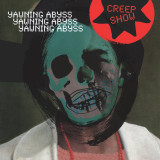
In the five years since Creep Show’s acclaimed Mr Dynamite album was released it’s fair to say that we’ve all been through a fair bit. Sitting here, in 2023, things don’t seem to be getting any better. There’s the cost of living crisis and political meltdowns; we're in deep water with global warming and to top it all there’s a war on our doorstep.
Back in 2018 everything seemed less complicated. Sure, there was stuff to get riled about, but we knew nothing about what was to come. Mr Dynamite was a fairground ride into the dark corners of a world that was on the brink of being blitzed in a blender. It was a record teetering on the edge. Five years down the line you’d expect the follow-up, Yawning Abyss, would double-down and bring the white-knuckled, teeth-gritted fury of the last five years to the boil. And yet….
A quick recap? No problem. Wrangler + John Grant = Creep Show. And Creep Show? “A band of musical misfits who have found a voice or two”, says Wrangler’s Ben “Benge” Edwards, whose Bond villain studio on the edge of a moorland is Creep Show Grand Central as well as home to an analogue synth arsenal that could sink ships.
Wrangler have known each other for a while. Tunng’s electronics wizard Phil Winter and Cabaret Voltaire’s trailblazing, pioneering frontman Stephen Mallinder go way back, while Phil and Benge crossed paths in the 21st century when they seemed to be increasingly in the same venues at the same times. Meanwhile, Mal had been living in Australia since the mid-90s and when, in 2007, he returned to the UK his old pal Phil suggested he meet Benge and the three of them immediately began working together.
Wrangler collectively bumped into Grant at their soundcheck for Sheffield’s Sensoria Festival in 2014 where they were playing with Carter Tutti. A friendship blossomed and when they were invited to perform together for Rough Trade’s 40th anniversary show at London’s Barbican in 2016, well, they jumped at the chance... and Creep Show was born.
Let’s talk about the new album... What is the ‘Yawning Abyss’? You might well ask. According to Mal, it’s “a cosmic event horizon that I can see from my attic window when stand on a chair”. Yeah. Thanks.
“On this album”, offers Benge, feet firmly on the floor, “Wrangler wrangled some vintage synths, mostly Roland, Moog, and the ‘Crystal Machine’ - then John Grant joined in the fun at Memetune Studios where lots of musical experiments were carried out. Then Mal and John ran off to Iceland with the master tapes and recorded a load of madcap vocals. Back at Memetune, me and Phil were left to try and make sense of it all. Which wasn’t hard because what they did in Iceland was totally magnificent.”
Which kind of brings us back to where we began. You’d imagine ‘Yawning Abyss’ would be blowing steam out of its furious ears. Mr Dynamite but kicking a wasps nest. Repeatedly. And yet…
Opener ‘The Bellows’ comes on like a modular ‘Radio Ga Ga’, the singalong ‘Moneyback’ (“You want your money back? / I didn’t think so”) sounds like Godley & Creme’s ‘Snack Attack’ meets Prince Charles And The City Beat Band (“Pennies, pounds, dollar bills, signed agreements, death wills”). ‘Yahtzee!’ is an unhinged electro breakdance party in four minutes and nine seconds.
Where Mr Dynamite was menace, a mélange of mangled voices, with Grant and Mallinder being heavily treated, pitched up or down, rendering their contributions largely indistinguishable, Yawning Abyss takes a more direct approach. You hesitate to say feelgood, but there’s a skip in the step here for sure.
The title track plays John Grant’s vocal straight. Completely. It’s good, so very good. Like ‘Axel F’ covered by Vangelis. The delicious shimmering synths of ‘Bungalow’ also plays those Grant pipes with a straight bat. ‘Matinee’ delves into darker, very funky territory. With Mal upfront it comes on like ‘The Crackdown’. Choice lyric: “You are starting to breakdown / And it’s so fun for me to see / You should have thought of that / You should have come prepared / You can see what’s happening and you look a little scared”.
So, you know, not all feelgood. But it does feel good. It’s probably best to draw your own conclusions... This is Creep Show after all.
Z Lovecraft AKA Rhythm Section International's Mali Baden-Powell, offers up four originals on the Utopia Club Tracks label that showcase the disco/house end of his varied output. 'Exotic Passage' coasts along serenely with gently slapped bongos and warm electric piano, definitely a weapon to have in one's warm up arsenal. 'Release (The Tension)' ups the heat a little with a busier bassline, filters and disco licks, before B-side opener 'Lust In Denial' comes with more jazz-slanted piano riffs and 'People Get Too Deep' closes proceedings with the most spacious and dubby arrangement of the quartet. Musically refreshing and understated but lively enough to move feet onto dancefloors, this is the business.
After her debut on Mannequin in 2019, Dissemblance now arrives on L.I.E.S. with her second full length of sombre, cold wave and emotional bedroom pop infused songs. This time around we hear the Parisen artist add a new arsenal of instrumentation to her repertoire, incorporating live drumming and a wide array of synthetic instrumentation on top of her drum computers providing a backdrop to showcase her stark vocal performances throughout the album.
Meticulously constructed, this record displays the full range of Dissemblance's musical dynamics as she pulls the listener into her universe where dreams and reality tread a thin line, one blurring into the next with no beginning nor end. From the plodding opener "Mercure" where tortured voices rise from a bed of pulsing synth tones, to the tribal drumming dreamscape conjuring rhythms of "Centauresse" or heart wrenching album closer "Bon Voyage" with its ghostly 1950s oldies arrangement and pop feel, Dissemblance expertly brings together a diverse group of styles and sounds from different areas of the electronic spectrum making them her own.
An extremely unique and strong display of modern minimal synth pop that pulls equally from the past whilst propelling towards the future. Limited to 300 copies worldwide.
A lot can happen in a decade: children, national self-harm, mid-life crisis and a side order of pestilence to boot.
At Misericord this is all grist for the mill and for Al Usher - returning to our so-occasional-it's-taking-the-piss label for the third time after his Gnanfou and Hilversum EPs - the impetus for two inspired pieces of chamber disco-not-disco 'The Evenings' and 'The Visitors'.
Adding an off-kilter pop sensibility to his musical arsenal, Al has written his first songs, grappling with parenthood, ageing and post-Brexit identity with self-deprecation and poignancy.
Vocals are provided by partner Jeanette whose immaculate diction conjures Sarah Cracknell, Jane Weaver or Would-Be-Goods by way of Neil Tennant.
These songs haven't left our heads since we first heard them in demo form, and label founder and Al's Partial Arts partner-in-crime Ewan Pearson is on duties for additional production and mix, alongside a Sleeping Bag-ish disco re-rub of 'The Evenings' on the B-side for club use.
This is a strictly limited vinyl release ahead of a full Al Usher LP due on Prins Thomas' Internasjonal in the coming year - we're honoured to be kicking off Al's return to discerning listeners and dancefloors with this stunning 12â€.
Swing Family's Music Force is dramatic mid-80s synth-funk. From the maverick mind of Sauveur Mallia, it's a thrilling and uniquely brilliant album from start to finish. It's undoubtedly known and revered for its unbelievable standout track, "Mission Africa". Those that know, know. And if you don't know, get to know. It's the reason this record has been hugely sought-after for the best part of two decades. Originally released on Tele Music in France in 1985 but now tear-inducingly rare, this is the definition of "a welcome reissue."
Swing Family is basically a supergroup of French Funk royalty. Led by French disco lord and Arpadys maestro Sauveur Mallia, they were augmented by trombonist Alex Perdigon from legendary French funk rock collective Godchild, trumpeter Kako Bessot from funky fusion group Synthesis and saxophonist Pierre Holassian, a member of Giant, Janko Nilovic's French jazz orchestra. So, about as heavyweight as it gets for funky French goodness. Mallia handles, of course, bass duties throughout, as well as utilising his arsenal of synths including his E-mu, Yamaha Dx7, Roland MSQ 700, Mini Moog and Oberheimm.
The maximalist disco fusion of "Exorcistor" is perhaps a bit too 80s French cheese for most tastes, so either linger on its singular style or head straight to the soundtracky typo-funk of "Greewich Boulevard". A deep, swaggering powerhouse, it comes on like mid-80s Chic jamming on the set of Beverly Hills Cop with Kashif. Yes, *that* good. It's followed by the vital "Music Force", a synthy, sleazy instrumental full of sax and flute and those 80s drum fills. Just the right side of acceptable.
OR! You can even choose to forget all the rest and just stick "Mission Africa" straight on. A rumbling, strutting, afro-cosmic low-profile banger. The slick drums hit hard, the synth strings warm things up, overlapping horns add swagger whilst electric guitar flourishes and a chanted refrain sit in the mix quite perfectly. A track that's almost impossible to describe and do justice to. You just need to hear it. Preferably as you saunter into your favourite after-hours club, after spotting all your friends at once, as you cut a swathe to the bubbling dance floor. A track quite like no other, it makes you sit up within its first bars and, to us at least, sound like something you'd have heard on a Print Thomas mix from the mid 00s. Basically, it's cosmo-galactic.
The B Side opens with "Musical Stars", an oh-so-80s funk-lite track which, at times, sounds like something Daft Punk may have left on the cutting room floor during their Discovery sessions. Another unimpeachable favourite of ours is the druggy brilliance of "Gentleman & Musician". You can almost hear the white powder through the speakers, as soaring, acidy synths, slick, heavy beats and the irresistible interplay of the primo horn players create a real sleazy wonder. "Film Action" follows, a galloping horn-heavy synth romp with moments of extreme bass breakdown brilliance before the drama-synths of "Episode Double" take things up another notch as it oscillates between gorgeous funky horns and urgent bleepy magic. Super tense, super funky and super stylish. Just ace. The elctro-tinged horn workout "Fatal Lady" closes things out majestically.
The audio for Music Force has been remastered by Be With regular Simon Francis, ensuring the punch of Sauveur's bass and those sick drums come through to the fullest. Pete Norman’s expert skills has made sure nothing is lost in the cut whilst the original and iconic sleeve - complete with perky Liberty Belle - has been restored here at Be With HQ as the finishing touch to this long overdue re-issue.
Following in the footsteps of "Mind Palace" and "Lost Spirits", respectively issued in 2018 and 2021, Hidden Empire return to Stil vor Talent with their eagerly anticipated third studio full-length, "Momentum". Going the same route that came to define their sound throughout the years, Branko Novakovic and Niklas Schäfers cook a savvy mix of deep electroid flavours and prog techno magnitude which flourishes in the long-playing format. Orbiting the frontier between proper no-nonsense, floor-focussed effectiveness and a trademark exploratory take on electronics, Hidden Empire here delivers one of their most accomplished slices to date, which not only spans the largest span of their many-faceted influences, from tribal anchorage to hypermodern escapology, but breathes a truly epic wind into it.
Draped in luscious, silken envelopes and easternmost ambiences, "Dawn" gets the ball rolling on a mystique-imbued note, halfway meditation-friendly material and square-shouldered club busting wares. Moving into Afro-infused house grounds, "Modesty" finds Branko and Niklas heading for the deeper end of the spectrum, as they pull out a clinically precise blender of rattling percussions, opaque incantations, lush synth swashes and verbed-out machine talk, tailored for nightly boogie rituals in the forest. "Avalanche" opts for a more brooding, deadlier approach. Cutting its path away from prying eyes, this one finds Hidden Empire pulling the stealth weaponry to absolute hypnotic effect - perfect for serious in-between peak time business with its thick, thriller-like tension, mist-shrouded atmosphere and surgical focus. Featuring Felix Raphael on vocals, "Who We Are", is a pop-influenced chugger that perhaps best defines Hidden Empire's ambivalent style, both hi-NRG and innervated with a melancholy that infuses down to the bass and most functional elements. Geared up for big-room traction with its seesawing synths and clinical drumwork, Raphael's moving timbre does more than offer a sensible counterpoint to the track's overall sturdy backbone, it takes it to a whole other dimension completely.
"Repeat The Good" ft. Wolfson balances out a fast-ticking groove with those subtle melodic lines Hidden Empire champion to astounding vibrancy, offering a particularly satisfying glimpse into their vortical imaginarium, whereas "Last Call" has us journeying to straight out Moroder-esque territories, flush with the aptly configured palette of fuzzy space disco bass, fast-paced Italo churn and vocodized talk for good measure. All in breaks and chopped-up euphoria, "Vivid" runs the hoodoo down in muscular fashion and with impressive levels of energy throughout, all set at cranking up the heat one notch further, while "Rebel" provides us with the kind of rough-around-the-edges EBM horsepower and neon-clad synth engineering that'll get the basement in a state of alert. Encompassing all of the pair's idiosyncratic merger of styles - from pop-laced Italo to spaced-out techno wares, through jagged motorik and heavily mecched-out jacking house, "Alright" shows off Hidden Empire's wide arsenal of pyrotechnics under the most compelling of lights. A more openly jagged and quirky weapon that hatches into a full-fledged solar number around the half, "Momentum" roars up the club's highway at full throttle, proving a formidable asset when it comes to plunging dancers into a state of weird, left-of-centre euphoria.
A stroboscopic eclipse is predicted as "Dark Sun" enters the room, deploying its obscure wingspan over the ravers, not quite a bad omen as it lets more light in with every bar, its brittle piano lines and heart-wrenching vocals cutting a path into the crowd's pulsating hearts. Graceful as Hidden Empire's music can be, a moment of utter exhilarating beauty. "Savasana" wraps up the voyage with a pure slab of cyphered 4x4 seduction, as an ASMR-like voice guides us across the soul-questioning haze that blankets our pathway onto a luminous finale. A piece of elusive nature, clearly designed for the club and yet telling a tale of off-piste initiation through twelve fascinating movements, "Momentum" will undoubtedly etch on the listeners' mind as one of the German pair's most strikingly powerful emanations.
Download:
1. Hidden Empire - Dawn Interlude
2. Hidden Empire - Modesty
3. Hidden Empire - Avalanche
4. Hidden Empire & Felix Raphael - Who We Are
5. Hidden Empire & Wolfson - Repeat the Good
6. Hidden Empire - Last Call
7. Hidden Empire - Vivid
8. Hidden Empire - Rebel
9. Hidden Empire - Alright
10. Hidden Empire - Momentum
11. Hidden Empire - Dark Sun
12. Hidden Empire - Savasana
13. Hidden Empire & Felix Raphael - Who We Are (Instrumental)
Let's get it straight: "This is" is THE album by Ghia. It catches the band at its peak and features 10 songs, including not only their impeccable hit, "What's Your Voodoo?" but a full arsenal of yet unheard, timeless, and soulful music without equal. The songs on the album, which were recorded between 1988 and 1991, could be considered forerunners of the downtempo genre, with one foot in the late 1980s street soul direction but sparkling with touches of synth pop and contemporary jazz-funk. Genre limitations aside, all that Ghia ever wanted to do was create music-good music-and you will hear this in the depth of the compositions.

The album starts with "Keep Your House In Disorder," which has yet again become another classic song from the band's catalog since it was featured as the B-side of the "What's Your Voodoo?" reissue. The song is about a relationship in which the woman has trouble adapting to her boyfriend's turn in life. He tells her to "keep your house in disorder," meaning don't take things too seriously, don't stand still, and you will do better to take the sideroads in life.
"This Is" continues with the downtempo numbers "Crystal Silence" and "Close to You." Both are deep, one-of-a-kind, and previously unissued street soul ballads. On these two tracks, you can still hear the band's roots in jazz-funk. Hence, as a follower of the band's output may have yet recognized, instrumentals of these two tracks can be found on their first LP, "Curaçao Blue." In fact, "Close to You" was one of the band's first compositions. Earlier recordings of the song exist with different singers and different vocals, but it wasn't perfect until Lisa laid down the final version and a choir was added. It's difficult for us to recall any late-80s soul tune as beautiful and intriguing as this one. The final section, which begins with "so much baby we can say," sounds ahead of its time, reminiscent of mid-90s contemporary R&B.
Next up is "Eskimo," an equally brilliant and soulful downtempo composition, but with more focus on synth sounds than the previous tracks. Once more, it showcases the creative lyricism of the song writers, Boberg and Simon, imagining a train ride during a rainy and cold night: "feeling like an Eskimo in an igloo in New York."
Eskimo leads to the aforementioned classic, "What's Your Voodoo?" Originally released in 1991 on the small Mikado label, it was reissued on our label in 2019. We already called this "one of the most wonderful and mystic slow motion synth pop tunes ever recorded"-and we still mean it! Let's face it: this was done before British bands like Massive Attack, Tricky, and Portishead laid the foundation of trip-hop. Dare we call Ghia's music "proto trip-hop"? As a special bonus, the digital version of the LP features a previously unreleased mix of the song, which includes added samples; this should clarify how close Ghia actually was to the sound of the mid-'90s.
"Angel On Your Shoulder" and "L O M E" are two more completely unissued and great tracks from the band's shelved works. Being a bit more uptempo than the rest of the album, they fall between contemporary soul/R&B and synthesized pop music. And of course, another downtempo hit needed to be featured on the album: "You Won't Sleep on My Pillow." It was the original A-side of their single release in 1991, and since then it has been featured on various compilations.
The album concludes with a really strong ballad entitled "I Haven't Got The Power." Here we hear only pianist and keyboardist Lutz Boberg with Lisa Ohm, without further instrumentation. Basically recorded in a live session, this showcases once more the talent and ingenuity within the Ghia project.
Whether you agree or not, "This is" may easily be considered one of the best German late 80s/early 90s soul pop and downtempo albums ever recorded. Cautiously, it may even be submitted as the missing link between mid/late 80s soul by bands such as Sade, and later trip-hop groups like Massive Attack. Let us celebrate Ghia and their music, which had been shelved for more than 30 years but has now finally been released on The Outer Edge.
"Void+1" is officially starting to unleash its arsenal of 12 releases that have already been scheduled for 2023, and the journey starts with Scalameriya's "Nullification EP". On board are 4 tracks in different styles, specifically designed to showcase the variety of techno-branches that will be explored on the label in the future. From minimalistic structures to metallic stompers, hommages to 90's roots and electric breaks."
'I Don't Know Why' is Kraak & Smaak's debut single from their legendary album 'Juicy Fruit', and it's an outstanding collaboration with Grammy-nominated soul royalty - Mayer Hawthorne.
It's a true meeting of minds which is exactly what you'd expect from these two class acts. Kraak & Smaak throw down the gauntlet in a popping boogie track with the Tuxedo frontman delivering his signature sweet and catchy soul melodies over the top. Sublime!
The flip sees another jewel in the K&S arsenal. The album version of their hit single 'My Mind's Made Up', which features live band member and regular collaborator Berenice van Leer, is a more funked up spin on the original. Nonetheless it brings more fire to play with on this one-off 7" release.
b B: My Mind's Made Up (Album Version) feat. Berenice van Leer
Featuring what may be his only recordings on the Prophet keyboard,
these once lost performances expand the omniverse of Ra across a
stellar set of lengthy cuts! All recorded in a single day and finally making
their terrestrial debut, pressed on colored vinyl and packaged with a
Prophet keyboard brochure plus notes from Ranthropologist Brother
Cleve!What happens when a Prophet meets a Prophet? The answer lies
within these grooves
Amongst the hundreds of recordings issued by Sun Ra and his Arkestra, under
their various guises, the majority were recorded in concert or in makeshift studios
such as their early 1960s set- up at NYC's Choreographer's Workshop. Beyond
those, roughly 22 albums were recorded at Variety Recording Studio in New
York's Times Square. However, on August 25, 1986, Sun Ra and cohorts entered
Mission Control, a state- of- the- art 24- track studio north of Boston, which was
teeming with electronic keyboards and otherworldly sound generators. Nestled
within that arsenal was a brand- new digital ultra keyboard — the Prophet VS
("Vector Synthesizer").Of all the keyboards Ra played throughout his half-century
career, the Prophet was one of the most sophisticated. There's no evidence that
he had played either of the instrument's earlier incarnations, the Sequential
Circuits Prophet-5 and Prophet-10. Created using microprocessors, a then- new
technological advance, under the auspices of engineer Dave Smith in 1978, the
Prophet-5 revolutionized electronic music as the first polyphonic and, most
importantly, programmable synthesizer.Ra was intrigued by the Prophet (surely by
the instrument as well as by the name). Recorded during a single day, it's about
time that these once lost performances have now been found.It was a joy and a
thrill to be sitting at the console hearing this music for the first time, especially
with my fingers on the faders and knobs of the mixing desk. We watched the
oxide fly off the 2" tapes during playback, making this our one chance to digitize
before they metamorphosed into dust. Welcome to the new Sun Ra album….35+
years after it was recorded. The Omniverse has expanded once again.— Brother
Cleve (1955 - 2022)
- A1: Affirmative Action Feat Az, Foxy Brown & Cormega
- A2: You Can Hate Me Now Feat Puff Daddy
- A3: Nastradamus
- A4: Can´t Forget About You Feat Chrisette Michele
- B1: Life´s A Bitch Feat Az
- B2: Hero Feat Keri Hilson
- B3: Hustlers Feat The Game
- B4: Life´s A Bitch Arsenal Remix
- C1: One Love
- C2: Halftime
- C3: The World Is Yours
- C4: Bridging The Gap Feat Olu Dara
- D1: Memory Lane
- D2: It Aint Hard To Tell
- D3: Nas Is Like
- D4: Thief´s Theme
- D5: Phone Tap Feat Az, Foxy Brown & Cormega
Flaminia’s first solo release on 47 features four mesmerizing techno rollers. London-based artist Flaminia makes her solo 47 debut with four sophisticated techno tracks that perfectly balance brooding intensity with dreamlike atmospherics. A producer with EPs on Samurai Music, VSK Series and her own label, Metempsychosis Records, Flaminia builds on her canon of previous work with 47033, adding to the label roster’s growing arsenal of expertly honed dance floor releases. On the A-side, two four-to-the floor heavyweights—”Pure” and “Burn Loudly”—offset bone-shaking kicks with plangent melodies that make these tracks uplifting despite their ferocity. The B-side takes a darker turn; “Back To Zero” is an icy broken beat that shines in its stuttering rhythmic complexity, while the closer, “Dissolved,” is just as foreboding: synths scrape and shatter like shards of glass against a spare and crunchy kick while Flaminia’s voice reverberates in the background. The entire package will be
Staging an attempt to gloss their music, Gentle Stranger
say it recalls “throwing a bouncy ball into a hall of mirrors.”
It’s telling that normal routes of describing music - your
typical band boilerplate of “such and such meets such and
such” or “we just play guitar, us, and leave the writing up to
you” - doesn’t suffice for the London collective; instead a
more arcane, more potent image is fired back, a wonky
and poetic idea that’s instantly more arresting, more
substantial.
For the newly initiated, Gentle Stranger are a selfdescribed “post-clown” outfit that oscillate between musical
forms, achieving a bewildering, almost Joycean
experimental sweep; pastiche, parody, burlesque, earnest
composition, genre interrogation and progression - they
cover it all. Their renowned live performances see the trio
cycle through an arsenal of musical instruments,
apparatus, tackle, and stuff. The set (part of the reason for
their now cult-like following) hangs together intricately, a
fractal clockwork machine that relies on movement and
spatial-awareness as much as it does timing and
musicality.
Upon witnessing the Gentle Stranger live show (‘show’
here is most certainly in the theatrical, carnivalesque,
extravaganza sense of the word), it’s tempting to question
whether they could reiterate, reshape, and condense this
uniquely visual and visceral spectacle into recorded music
- and the answer is yes. The latest update of the Gentle
Stranger sound lands in the form of ‘Upon Return’, their
barnstorming third album.
Gentle Stranger reportedly enjoy “revelling in the
disarray” of ‘Upon Return’, this ornate and finely wrought
mind palace - it’s a riveting and often joyous experience
soundtracked by strange, strange, and stranger music.
Available on black vinyl LP.
Punk pioneers Crass continue their vinyl reissue series, re-pressing their limited releases by adjacent artists through Crass Records, in association with One Little Independent. The series, including over twenty bands and solo artists recorded at the legendary Southern Studios and produced by Penny Rimbaud, continues with two more historic pieces from the Crass Records catalogue; The "Grey" EP by North London post-punks Lack of Knowledge, and "Beware" by US anarchists Sleeping Dogs. Sleeping Dogs were one of only two American bands to release on Crass Records and in 1982 their sardonic and sludgy, but politically sharp, hardcore made up the "Beware" EP. They were first formed under the moniker Arsenal by the late artist, and designer of the iconic Crass logo, David King. "Beware" showed the originality and potential of Sleeping Dogs, even as Rimbaud and Crass guitarist Phil Free augmented the band"s sound for the studio session. The front cover of the single featured its own striking image, courtesy of King. Sleeping Dogs disbanded shortly after, re-emerging briefly under the new guise of Brain Rust a few years later. Distorted, biting, and beat-driven, the collection is a well-researched and poignant expose of Western imperialism. First released on 7" vinyl, limiting the sound, the new series has been remastered for 12" by Alex Gordon at Abbey Road Studios, allowing them to be heard as never before. This, plus enlarged replicas of the original covers, brings new gusto to their already radical sound. Penny Rimbaud notes that "Our (Crass") interest was never in personalities, profits or power, and neither did we have time for reformist liberals. Our position was solidly revolutionary; we took no prisoners. Talking the talk was never enough for us, no, we demanded that we also walk the walk. Ours wasn"t a show, it was a battle, not a living, but a lifestyle, a lifestyle with a difference - rather than looking only to ourselves, we sought to share our gains. I feel that this willingness added great strength to the form of anarchism that we practiced both on stage and out on the street."
Revered bossman Nonentity takes the Source Material back to its roots with this firing new EP on hand-stamped and numbered 10". 'Denzel' is the visceral opener and one that sounds as if its synths have been fired by the hadron collider they are so fierce and fast. The drums too are hefty and the squelchy bass rounds out this instant electro classic. 'Equilibrium' on the flip takes a deeper tact, with moody chords hinting at unease as the slapping drum funk powers onwards. It's a two-tracker that is well worth adding to your aural assault arsenal.
It’s almost four years since their last opus - two years since the most-recent run
of live shows. Now, Bitchin Bajas return from whatever kind of rare ether they
occupy when they’re at home, bearing the riches of the whole cosmos in their
hands. And strictly OG as well - on cassette only.
‘Switched On Ra’ is the outcome of a typical Bajas exercise: pouring some out
for the pioneers that came before (as they’ve done with Bitchitronics and their
participation in the annual Chicago performance of ‘In C’ over the years). It’s a
nice way to get a flow - they play a little of themselves, then some for the
pioneers, then a little more for the band. Before long, they’re playing with the
inspirations twined, as they can only come from within.
For ‘Switched On Ra’, this meant a deep delve into the song-book of one of their
soul-predecessors, Sun Ra, whose music is literally written in the Bajas DNA.
Digging into this music sounded wild on paper: the drone synth group taking on
the Arkestra harmonies and Ra’s loose grooves? The trick was to get that sense
of rhythm to translate across the spectrum from Ra to Bajas, in a way that
worked for them both.
Their rearrangements of the tunes went good - up and down the EQ band, they
were finding the round sounds and jagged edges that brought Ra’s music into
their own thing. Then at the last minute, there was another twist - why not pay
tribute to the Queen herself, and think of the arrangements with a Wendy Carlos
vibe? A little side homage? After all, ‘Switched on Bach’ was visionary, bringing
analogue synths from the outside all the way into the mainstream in the late 60s -
and this take on Ra is meant to take him to new ears everywhere.
Sun Ra of course was his own kind of original keyboard visionary, using electric
keyboards in the late 40s and 50s to fill a role in jazz that had traditionally been
played on acoustic piano only. Once he’d done so, he took his writing in
directions inspired by the electricity, places no one had thought to go before
then.
Bitchin Bajas have been content to dominate in a microtonal world, usually
without a single chord to be found anywhere. But here, they step up righteously,
their vibe triangulated as they bring Ra’s music forward with some Wendy C
style, making an unexpected space for all to thrive. There’s a real feeling of joy
as these collected signals bounce off the tape and through the speakers into
your space.
To get this unique colloid exactly right, Bitchin Bajas used nineteen different
keyboards. They abstained from deploying their arsenal of reed and woodwind
instruments: everything had to be on the keys. This meant Yamahas, Rolands,
Korgs, Casios, a MicroMoog and of course their trusty Ace Tone organ. They
even broke out the Crumar DS-2, to have some of Ra’s chosen tone in the mix.
Then Jayve Montgomery added an EWI as a solo voice on a few tunes, just to
get some air-blown signal (and a natural shout out to EWI master Marshall Allen)
in there, after all. It felt like somewhere in the universe, Ra was decreeing it.
- A1: Two 6’S Upside Down Feat. Woody Guthrie
- A2: Talking Jukebox
- A3: Ten Times More Feat. Woody Guthrie
- A4: Never Git Drunk No More Feat. Nikki Lane
- A5: All You Fonies
- B1: The Last One Feat. Evan Felker Of Turnpike Troubadours
- B2: Cadillac, Cadillac
- B3: Waters Are A’risin
- B4: Where Trouble Is At
- B5: Dig A Hole
- B6: Never Git Drunk No More Feat. Nikki Lane (Alternate Version)*
Crystal Clear Vinyl[36,51 €]
Dropkick Murphys veröffentlichen ein Album, das anders sein wird, als alles, für das die Bostoner Punkband bisher bekannt ist: Sie vertonen Woody Guthries Worte auf 'This Machine Still Kills Fascists'. Das Album wird am 30. September über PIAS/Dummy Luck Music (das bandeigene Label) auf CD erscheinen und am 11. November auf Vinyl.
In den 10 Songs auf 'This Machine Still Kills Fascists' übersetzen Dropkick Murphys Woody Guthries ewige Sticheleien gegen das Leben - viele davon aus den 1940er und 50er Jahren - in die Gegenwart, wobei die daraus resultierende Musik unheimlich relevant für die heutige Welt ist. Und das alles ohne ihr übliches Arsenal an E-Gitarren. Tatsächlich wurde kein einziger Verstärker verwendet, sondern DKM nutzten ihre ganze Kraft, um Woodys Texte zum Leben zu erwecken.
- A1: Two 6’S Upside Down Feat. Woody Guthrie
- A2: Talking Jukebox
- A3: Ten Times More Feat. Woody Guthrie
- A4: Never Git Drunk No More Feat. Nikki Lane
- A5: All You Fonies
- B1: The Last One Feat. Evan Felker Of Turnpike Troubadours
- B2: Cadillac, Cadillac
- B3: Waters Are A’risin
- B4: Where Trouble Is At
- B5: Dig A Hole
- B6: Never Git Drunk No More Feat. Nikki Lane (Alternate Version)*
Black Vinyl[32,56 €]
Dropkick Murphys veröffentlichen ein Album, das anders sein wird, als alles, für das die Bostoner Punkband bisher bekannt ist: Sie vertonen Woody Guthries Worte auf 'This Machine Still Kills Fascists'. Das Album wird am 30. September über PIAS/Dummy Luck Music (das bandeigene Label) auf CD erscheinen und am 11. November auf Vinyl.
In den 10 Songs auf 'This Machine Still Kills Fascists' übersetzen Dropkick Murphys Woody Guthries ewige Sticheleien gegen das Leben - viele davon aus den 1940er und 50er Jahren - in die Gegenwart, wobei die daraus resultierende Musik unheimlich relevant für die heutige Welt ist. Und das alles ohne ihr übliches Arsenal an E-Gitarren. Tatsächlich wurde kein einziger Verstärker verwendet, sondern DKM nutzten ihre ganze Kraft, um Woodys Texte zum Leben zu erwecken.
6 face-melting gurners for the 21st Century’s, wilted and jilted generation.
Glasgow’s Lady Neptune follows her New Gorbals Gabber cassette E.P. with her debut vinyl release NOZ. Over the course of 23 bloody fisted minutes, Lady Neptune’s – aka Moema Meade - hyper destructed take on Gabber and Happy Hardcore breaks down the genre tropes before rebuilding them as a new pop music. If 2020’s New Gorbals Gabber showed an artist building their own language from fragments of different genres, 2022’s NOZ goes harder into the cyberpunk-ass future and takes no prisoners. Recorded and mixed at Glasgow’s legendary Green Door Studios and mastered by Rashad Becker, here Lady Neptune evolves into a monster.
With the classic weapons of Dutch Gabber – distorted 909 kick drums, bursts of noise and world-eating Rave-O- Matic hoovering synth riffs, Lady Neptune’s 6 tracks constantly threaten to careen off the speaker into the sweatiest, most gibbering, messy corners of the club. The two years since her debut has seen Meade destroying festival dancefloors, training for the full assault that is NOZ. Live performances have seen foam guns, tequila-pistols, neon stage dancers and a full, maxed-out orgy of fast-as-hell BPM, rave music burning up the cones. The experience reaps rewards from the outset on recorded form here. APOCOLYPS begins with monstrous vocals and the all-consuming kick, pulled back and taut for launch. The arsenal builds; warbling synths and high-pitched synth-strings before dropping into Bald Terror-sized hoovers and stuttering 4/4s. It quickly bleeds into MASTERER, with a looped, pitched up vocal intersecting with the synth riff. The aesthetics might be Happy Hardcore but the dynamic feels like a synthetic, evil Nu Metal-influenced Industrial music. Constantly evolving and twisting with its own natural drama, the drop at 2:15 is pure ecstatic release. fusing Meade’s inclination for pop hooks with the first out-and-out 180BPM (ish, who’s counting?) anthemic melter of the E.P., TELL ME has THE big catchy chorus, used sparingly and sung by Meade with angelic devilishness, coming at you in waves of XTC. It’s a repeater.
It’s then massive fists in the air for the ruthless Side B opener WIT. In the Welsh-Brazilian artist’s adopted home of Glasgow it translates directly as WHAT!? Itt makes sense. g. Sharp, weaponised, rhythmic punishment abounds before OH responds. Pitched up vocals and another mid-frequency synth hook wipes the slate clean. Like the best Gabber, the tension and release dynamic is used to full effect by Meade, with the thunderous low end kick -expertly tweaked in the mastering by Rashad Becker – slipping into the ghostly cavern. Industrialized 4/4 and noise-snares propel onwards to be utterly squashed by that bloody synth, stinging and horribly brilliant. Proving her genius for a ridiculous A-N-T-H-E-M, TIME 2 MAKE U FEEL GOOD closes the 23 minutes of ragged, drugged glory with a festival-slamming chorus built from the wreckage. It’s a song that does that thing we all know and love but can’t put our finger on. Sad, happy, tragedy, ecstasy, joy, horror...There’s big, minor chord changes (yes there’s some CHORDS on this slammer), the kick is submerged in layers of pads and Meade’s actual secret weapon: her vocal and knack for writing a chorus line. In the listener’s mind it’s over before it’s begun, a track destined for the big rewind.
NOZ is a breathless, E-number riddled eternal ecstasy.
Freedom is both an integral and multi-layered topic for improvised music, describing its mechanics, aesthetics, and values and often an underlying political dimension as well. In the case of free jazz specifically, the word carries additional weight given the music's deep connection to the black liberation movement of the 1960's and 70's.
The passionate and unclassifiable work of Calgary-based improviser Jairus Sharif embraces each of these definitions of freedom and others, albeit strictly on its own personal and idiosyncratic terms. Since early 2020, the 34 year-old autodidact has been generating a steady stream of homespun solo recordings that forge unprecedented connections between hip-hop abstraction, cosmic skronk, outsider jazz, and staunch post-punk DIY ethos.
Leading up to the pandemic, Sharif's immersion in spiritual and exploratory jazz had culminated in him deciding to purchase an alto saxophone. Unbeknownst to him this instrument would be a catalyst for him to discover his own ardently individualistic artistic voice.
Prior to that point, he had always been somewhat of a solitary musical traveler. In 2002, he acquired his first instrument—a pair of Technics 1200s — but struggled to find local collaborators that had equal investment in hip hop culture. Ultimately, Sharif picked up the guitar, turning to the resilient local punk community, that had also nurtured both of his mothers some time earlier.
As Black Lives Matter gained momentum in the wake of George Floyd's murder, Sharif was suddenly flooded with an acute awareness of his own identity. It compelled him to zealously plunge headlong into open-ended spontaneous solo creation. Water & Tools, his strange and stirring debut for Toronto's Telephone Explosion Records (home to full-lengths from the likes of Brodie West's Eucalyptus, Mas Aya, and Joseph Shabason), offers a glimpse into this ongoing hermetic journey.
As Sharif dedicated himself to uncovering his own deeper musical truths, he assembled a home studio in his basement, cobbling together a drum kit from bits his bandmate had left at his house pre-pandemic, chaining effects together and outfitting the entire space with microphones. Somewhere between the chaos of child's treehouse and the tidy import of a shrine, this space (pictured on the album's back cover) consecrated his own imagination. He laid it out to maximize access to any and every tool in his arsenal, providing him a freedom to explore that he had never permitted himself to consummate before.
Within this cozy private universe, his recent purchase—the saxophone—assumed new meaning. It furnished a tangible connection to the black radicalism that mobilized free jazz, but also something far more personal. From a technical standpoint, the instrument was completely unfamiliar to him, yet rather than this being a hindrance to Sharif, his inexperience opened fruitful path forward, unencumbered by preconceptions. Resolving to shirk formal training, convention, and build his own understanding of it from scratch, allowed him to access his most raw, fundamental creative impulses. The Saxophone's inseverable bond with breath compounded this effect, echoing revelatory discoveries he had been making about breathing through yoga, research, and psychotherapy. Of course, the parallels with BLM's harrowing rallying cry—“I can't breathe”—were not lost on him either.
Water & Tools is a dense, contradictory statement with a blustery surface that shelters a soulful heart. It's generous music, exuding profound vulnerability—grappling with the loss of one his mothers, Lisa—all the while brimming with electric wide-eyed wonder. Almost every one of the nine pieces seems to carry some semblance of a groove, while remaining completely untethered from pulse. For Sharif, this collection is an expression of newfound lucidity, however for the listener his sonic concoctions act as powerful psychotropics. At points, there's a timelessness that's conveyed through the music's processional, ritualistic tenor, and yet there's an endless amount of wild, futuristic detail waiting to unspool at any given moment. Similarly, while this recording emerges from Sharif's private pilgrimage and personal emancipation, he also leaves room for collaboration. Woven throughout Sharif's one-man-ensemble textures, one finds Maxmilian Turnbull (of Badge Epoque, U.S. Girls, and Cosmic Range infamy) providing sundry keyboards and treatments, as well as his mixing skills.
Whether conjuring effusive psychedelia or plumbing introspective depths, the music that Jairus Sharif produces is singular, visceral, and wondrously unpredictable. Water & Tools sketches a raw, firsthand account of his nascent explorations within his own unbridled imagination.
Talkbox is multidisciplinary artist Michael O’Mahony’s third album and his first for 33-33. It’s his most complete and cohesive music project to date, a culmination of ideas, happy accidents and compositions that have been cut up and re-arranged over many years. The album’s sonic signature is the Vocaloid software synthesizer – the titular ‘talkbox’ – famously by Japanese cartoon Hatsune Miku. O’Mahony became aware of Vocaloid in 2015 through the popular Nyan Cat meme, which em marketed ploys the software. Excited by the emotive potential and realism of Vocaloid’s voice synthesis, he began to imagine an album that combined its capabilities with italo disco- and UK garage-inflected sounds. As the version of Vocaloid O’Mahony had access to sang only in Japanese, O’Mahony relied on Google Translate to obtain the required characters to enter into the software. In early experiments with the software, the north Londoner translated BBC match reports from his beloved Arsenal FC. Eventually, he amassed a library of syllables and phonetic sounds, from which he created the melodies crystallised on the record. As far as we know, these vocal lines have no meaning in lyrical terms. O’Mahony works largely in an iterative way; song ideas are reworked over and over in different styles, sometimes over a period of years. Multiple versions of a song might appear on an album, each one with its own particular nuances in feeling. Music perhaps does not always flow out of O’Mahony, but emerges over time. O’Mahony’s album forms part of his wider project: an analysis of his subjectivity through art and psychotherapy. The music complements his writing and video work, which feature in his performances. He writes in chains of association, speculating on topics such as family dynamics, or the meaning of recurring dreams about a childhood game console. His video practice features footage of objects found in his parents’ house, such as his sister’s childhood My Little Pony toy and his retired psychiatrist father’s lecture tapes. The music, at once synthetic and heartfelt, imbues the writing and video work with a strange tenderness. Taken together, these various aspects of O’Mahony’s work form a meditation on the emotional attachments we make to consumer objects and the role of early life in character formation. Tracklist 1/Talkbox 2/More Succinct 3/Electricity 4/Not Giving Up 5/Dinosaur 6/Trumpet 7/Electricity (Rock Version) 8/Aliss 9/Be Good 10/Not Giving Up (Slow Version)
+ 10 Tracks for download
Preceded by the successive releases of lead singles "Sandcastles" and "My Mind", here comes the versatile debut full-length offering from Tel-Aviv-based producer Kadosh on Stil vor Talent, "Unanimously". Bridging the club universe with that of deeper, further immersive off-floor narratives, Kadosh entices us down a compelling path of rhythmic enlightenment and all-embracing togetherness. Casting mutable strains of EBM, house, pop and exotica entangled in one dizzying polyphony throughout the album, the Israeli vibist has us surfing our way across his musical headspace effortlessly.
From the stealth, neo-noir-like opening sequence of "Interstellar" feat. Marc Piñol to the epic Luso-Italo vibrations of "Sandcastles" feat. vocal hoodooist Abra~o, via the exquisite Afro-informed piano house and all-round atmospheric luxuriance of "My Mind" feat. Floyd Lavine and Erika Krall's supremely smooth yet characterful timbre, Kadosh swings the pendulum with constant surprise and bravura. Aside from his compositions' obvious hooking nature, there's also great lots of textural back funk to dive in at every corner. Hauntingly transporting, "From Jaffa to Frederichshain" feat. Upon You's Marco Resmann works a more jagged programming, flush with big-room reverbs and muted drums, while the slo-evolving "Pronto" feat. Emanuel Satie morphs from a low-key DJ tool into a full-fledged, melancholy-charged peak-time burner.
Bearing both Kadosh and David Mayer's signature, "1999" lets the 80s-inherited arsenal of iridescent Casio synths and lashing percussions talk in unhindered fashion, whereas "Volantage" feat. Murat Uncuoglu goes all in on the trampling kicks, sooty claps and prismatic keyboard stabs. Sensual to the fullest, "Moran" in collaboration with Rodriguez Jr. is certainly one of the album's highlights with its impeccably laid-down melange of bassy thunder and shapely Latin rhythmic backbone ushering us down an irresistibly poignant and hypnotic tunnel of sound. A joint effort with Locked Groove, "Far Too Close" is a further loopy discoid affair reminiscent of the French filtered-house scene's heyday, while the album's closer "Think it Over" feat. Stereo MC's is that perfect pop-indebted electro chugger that'll rev up any tired engine with reinvigorated, ecstasy-inducing horsepower.
DJ Steve's third EP for Klasse Wrecks delves deeper into the sonic universe of the Sheffield producer's arsenal, a slow but deliberate progression can be traced from the previous EPs. Whereas 'Secret Touch' and 'Mainline' ploughed a path made more by the lighthearted genres of UK Hardcore and Yorkshire Bleep, 'Reality' sinks lower into heady vibrations of psychedelia and heavy acid hallucinations. The producer again shows off his musical flair and control of his machine kingdom, every sound perfectly placed on the sound canvas. Classic 303 lines writhe under 101 basslines whilst 808 hihats shuffle over recognisable breakbeats, proving some things never go out of style.
Hailing from Los Angeles with an arsenal of songs as varied as the
American landscape itself, PJ Western creates music of contradictions
His tripped out pop- rock psychedelia evokes a haze of 60’s AM radio as heard
emanating from someone else’s car window.
Here I Go, Western’s debut album, recorded during the lockdown we all endured,
was written in dreams. In visions. Wild but refined, classic but modern. The album
is a lot like the man who wrote it: complex, celebratory, grateful. Recorded in LA
with the help of some of the finest musicians the city has to offer, Here I Go
offers a perspective of the city as heard through the ears of a precocious outsider
– someone who may call the city home, but also can’t quite shake the suspicion
he might not belong in the Hollywood Hills surrounding him.
Packaging:CD Digiwallet, 16-page booklet, marketing sticker