Working with Bat For Lashes producer David Kosten (aka Faultline), the recording of Man Alive was completed mainly in a chapel in North Wales. The album sounded unique. Nothing dates like the future, yet Man Alive sounds dateless, placeless, and as a result, stands up perfectly many years later.
Man Alive was only the beginning of the group's adventures in – to use their words – 'Mismatched styles of music mashed together.' The result is often exhilarating; there are Brazilian drums and a prog guitar breakdown in Schoolin', classical influences, as well. Its subject matter is often way outside the realms of conventional songwriting; MY KZ, UR BF explored the different Americas: the cosy self-centred domesticity of programmes such as Friends versus a foreign policy
based on killing; Qwerty Finger examines imperialism. Anglo Saxon guilt is also present.
The album's artwork was striking – a photograph of a fox by Swiss photographer, Laurent Geslin, reflecting the track Tin (The Manhole) which deals with the theme of depression, through, as the band said in 2010, "the story of an urban fox that ingests all our pollution and grows massively in a sort of dream sequence. We chose photos of an urban fox for this reason, but we partly attacked the code of the digital image to create a glitch distortion . . . a reference to digital manipulation and chaos as well as our modern lives online".
Released in August 2010, Man Alive made the UK Top 20 and was well reviewed.
For example, BBC Music commented that the group "know more than most how to craft a song, how to make an album. They know how to give it depth, light and dark, and they - crucially - know when to stop." Man Alive was shortlisted for the 20th Mercury Music Prize in 2011.
The original LP edition of the album is super- scarce, released before the 'vinyl revival' kicked in, hence the original pressing now selling in the high three figures.
This re-issue is presented with scrupulous attention to the detail of the original UK first pressing, complete with gatefold sleeve, poster and 8 page booklet. It is pressed on 140gm vinyl.
Buscar:art book
- 1: Hello
- 2: A Love From Outer Space
- 3: Crack Up
- 4: Timewind
- 5: What's All This Then?
- 6: Snow Joke
- 7: Off Into Space
- 8: And I Say
- 9: Yeti
- 10: Conundrum
- 11: Honeysuckleswallow
- 12: Long Body
- 13: In A Circle
- 14: Fast Ka
- 15: Miles Apart
- 16: Pop
- 17: Mars
- 18: Spook
- 19: Sugarwings
- 20: Back Home
- 21: Down
- 22: Supervixens
- 23: Insect Love
- 24: Sorry
- 25: Catch My Drift
- 26: Challenge
A.R. Kive collates the three most astonishing works from that most miraculous of duos - A.R. Kane - comprising the ‘Up Home’ EP from 1988 that signified the band’s dawning realisation of their own powers and possibilities, their legendary debut LP ‘sixty nine’ (1988) and its kaleidoscopic, prophetic double-LP follow up ‘i’ (1989).
In founder-member Rudy Tambala’s new remastering, the music on these pivotal transmissions from the birth of dream pop, have been reinvigorated and re-infused with a new power, a new depth and intimacy, a new height and immensity. Vivid, timeless and yet always timely whenever they’re recalled, these records still force any listener to realise that despite the habits of retrospective myth-making and the
safe neutering effects of ‘genre’, thirty years have in no way dimmed how resistant and dissident to critical habits of categorisation A.R. Kane always were. Never quite ‘avant-pop’ or ‘shoegaze’ or ‘post-rock’ or any of those sobriquets designed to file and categorise, A.R. Kive is a reminder that those genres had to be coined, had to be invented precisely to contain the astonishing sound of A.R. Kane, because
previous formulations couldn’t come close to their sui generis sound and suggestiveness. This is music that pointed towards futures which a whole generation of artists and sonic explorers would map out. Now beautifully repackaged, remastered and fleshed out with extensive sleeve notes and accompanying materials, ‘A.R. Kive’ reveals that 35 years on it’s still a struggle to defuse the revolutionary and inspirational possibility of A.R. Kane’s music.
A.R. Kane were formed in 1986 by Rudy Tambala and Alex Ayuli, two second-generation immigrants who grew up together in Stratford, East London. From the off the pair were outsiders in the culturally mixed (cockney/Irish/West Indian/Asian) milieu of the East End, with Alex and Rudy’s folks first generation immigrants from Nigeria and Malawi, respectively. The two of them quickly developed and fostered an innate and near-telepathic mutual understanding forged in musical, literary and artistic exploration. Like a lot of second-generation immigrants, they were ferocious autodidacts in all kinds of areas, especially around music and literature. Diving deep into the music of afro-futurist luminaries such as Sun Ra, Miles Davis, Lee Perry and
Hendrix, as well as devouring the explorations of lysergic noise and feedback from contemporaries like Sonic Youth and Butthole Surfers, they also thoroughly immersed themselves in the alternate literary realities of sci-fi and ancient history (the fascination with the arcane that gave the band their name), all to feed their voracious cultural thirsts and intellectual curiosity.
It was seeing the Cocteau Twins performing on Channel 4 show the Tube that spurred A.R. Kane into being - “They had no drummer. They used tapes and technology and Liz Fraser looked completely otherworldly with those big eyes. And the noise coming out of Robin’s guitar! That was the ‘Fuck! We could do that! We could express ourselves like that!’ moment”, recalls Tambala - and through a mix of
confidence, chutzpah, ad hoc almost-mythical live shows and sheer innocent will the duo debuted with the astonishing ‘When You’re Sad’ single for One Little Indian in 1986. Immediately dubbed a ‘black Jesus & Mary Chain’ by a press unsure of WHERE to put a black band clearly immersed in feedback and noise, what was immediately apparent for listeners was just how much more was going on here - a
tapping of dub’s stealth and guile, a resonant umbilicus back to fusion and jazz, the music less a conjuration of past highs than a re-summoning of lost spirits.
The run of singles and EPs that followed picked up increasingly rapt reviews in the press, but it was the ‘Up Home EP’ released in 1988 on their new home, Rough Trade that really suggested something immense was about to break. Simon Reynolds noted the EP was: Their most concentrated slab of iridescent awesomeness and a true pinnacle of an era that abounded with astounding landmarks of guitar-reinvention, A.R. Kane at their most elixir-like.
If anything, the remastered ‘Up Home’ that forms the first part of ‘A.R. Kive’ is even more dazzling, even more startling than it was when it first emerged, and listening now you again wonder not just about how many bands christened ‘shoegaze’ tried to emulate it, but how all of them fell so far short of its lambent, pellucid wonder. This remains intrinsically experimental music but with none of the frowning orthodoxy those words imply. A.R. Kane, thanks to that second generation auto-didacticism were always supremely aware about the interstices of music and magic, but at the same time gloriously free in the way they explored that connection within their own sound, fascinated always with the creation of ‘perfect mistakes’ and the possibilities inherent in informed play.
‘sixty nine’ the group’s debut LP that emerged in 1988 had
critics and listeners struggling to fit language around A.R. Kane’s sound. As a title it was telling - the year of ‘Bitches Brew’, the year of ‘In A Silent Way’, the erotic möbius between two lovers - and as originally coined by the band themselves, ‘dream pop’ (before it became a free-floating signifier of vague import) was entirely apposite for the music A.R. Kane were making. Crafted in a dark small basement studio in which Tambala recalls the duo had “complete freedom - We wanted to go as far out as we could, and in doing so we discovered the point where it stops being music”. There was an irresistibly dreamy, somnambulant, sensual and almost surreal flow to ‘sixty nine’s sound, but also real darkness/dankness, the ruptures of the primordial and the reverberations of the subconscious, within the grooves of remarkable songs like ‘Dizzy’ and ‘Crazy Blue’. Alex’s plangent vocals floated and surged amidst exquisite peals of refracted feedback but crucially there was BASS here, lugubrious and funky and full of dread, sonic pleasure and sonic disturbance crushed together to make music with a center so deep it felt subcutaneous, music constructed from both the accidental and the deliberate, generous enough to dance with both serendipity and chaos. ‘sixty nine’ remains - especially in this remastered iteration - ravishing, revolutionary.
The final part of this ‘A.R. Kive’ contains 1989’s astonishing double-LP ‘i’ which followed up on ‘sixty nine’s promise and saw the duo fully unleash their experimental pop sensibilities over 26 tracks, plunging the A.R. Kane sound into a dazzlingly kaleidoscopic vision of pop experiment and play. Suffused with new digital technologies and combining searingly sweet and danceable pop with perhaps the duo’s strangest and boundary-pushing compositions, the album did exactly what a great double-set should do - indulge the artists sprawling pursuit of their own imaginations but always with a concision and an ear for those moments where pop both transcends and toys with the listeners expectations. Jason Ankeny has noted that “In retrospect, ‘i’ now seems like a crystal ball prophesying virtually every major musical development of the 1990s; from the shimmering techno of ‘A Love from Outer Space’ to the liquid dub of ‘What’s All This Then?’, from the alien drone-pop of ‘Conundrum’ to the sinister shoegazer miasma of ‘Supervixens’ — it’s all here, an underground road map for countless bands to follow.” Perhaps the most overwhelmingly all-encompassing transmission from A.R. Kane, ‘i’ bookended a three year period in which the duo had made some of the most prophetic and revelatory music of the entire decade.
After ‘i’ the duo’s output became more sporadic with Tambala and Ayuli moving in different directions both geographically and musically, with only 1994’s ‘New Clear Child’ a crystalline re-fraction of future and past echoes of jazz, folk and soul, before the duo went their separate ways. Since then, A.R. Kane’s music has endured, not thanks to the usual sepia’d false memories that seem to maintain interest in so much of the musical past, but because those who hear A.R. Kane music and are changed irrevocably, have to share that universe which A.R. Kane opened up, with anyone else who will listen. Far more than other lauded documents of the late 80s it still sounds astonishingly fresh, astonishingly livid and vivid and necessary and NOW.
Vinyl includes lyric booklet with hand-written lyrics and exclusive photos and download card. Has collaborated with MF Doom, Czarface, Ghostface Killah, Dennis Coffey, and more. Kendra Morris, the Brooklyn-based Artist is back with her fifth LP, entitled I Am What I’m Waiting For, on Colemine/Karma Chief Records. Co-Written and Produced by Torbitt Schwartz (Run The Jewels, Killer Mike, Rubble Kings, Chin Chin), this collection is Kendra’s most personal album to date. It was spring of 2022 and Kendra had just released Nine Lives, her first new album in almost a decade and her first release on Colemine Records. She felt an urgency to get back into the studio, but something felt different this time. Returning to her usual ways, places, and people that she had been creating with felt like dragging herself back to a familiar and comfortable place - but that wasn’t what she was looking for. “I had to step into a new, unknown process because I knew it was the only way that I’d continue to grow,” she explained. She took a small batch of songs to Torbitt’s studio and the two began to write. “He challenged me to find the best version of every lyric,” she shared. “When I listen back, I’m so proud of the time we spent, because every single line is deliberate. I challenged myself to write just to write. No love songs this time around. Torbitt and I wanted to create a record that felt like you cracked open the ooze in my head. There are a lot of layers to me but I only recently through age and experience have fully accepted the weird little nuances that I’m made of. I’m a messy introvert that pretends to be an extrovert so I can feel like I fit in.” From top to bottom, I Am What I’m Waiting For is sincere. It’s a fresh take on a timeless sound, and Kendra exudes power. “My heart has always been in soul music,” she shared. “On this record, you’ll hear my influences and then some. You’ll hear all the bits of me….the vulnerable bits, the silly bits, all of it.This record is my melting pot.” Whether you’re a longtime listener or just now beginning to explore the whimsical world of Kendra Morris, the relatable lyrics and modern soul sounds on I Am What I’m Waiting For are sure to turn you into a fan
In 1972, a foursome of design students set out to make a record. This was, in many ways, a strictly creative endeavor. The quartet — composed of Dave Pescod, Alan Lewis, Phil Rawle, and Ted Rockley — were all trained, not as musicians, but as creatives. Art school heavyweights, the four were well-versed in the methodology of intentional experimentation, in the delicate balance of pushing the limits without completely unmooring oneself from a guiding creative intention. Emboldened by a high-brow familiarity with thoughtful experimentation and all the non-conviction of non-musicians, Bowes Road Band’s stint in the world of popular music yielded a record that is as much mind-melting as it is a direct product of its time. Their sprawling LP “Back in the HCA” embodies the exigence “art for art’s sake,” but it is for art’s sake that this record, however off the deep end it seems to travel (hear: “Doctor, Doctor”), remains a unified, and stunning, body of work. The LP’s do-ityourself garage rock noisemaking meets highfalutin creative processes. “Back in the HCA” is warbling psychedelic freakout (“Two Fingers,” “Doctor, Doctor”), Donovan-esque English countryside folk stylings (“Inside My Head,” “Goodbye to Rosie”), and avant-garde jazz improvisions (“Grass is Grass,” “Tomorrow’s Truth”) in one luminous release.
Originally an 9-track LP, Jakarta, Uno Loop, and Bowes Road Band decided to mine the six most cohesive tracks for the reissue, though the extras may be released somewhere down the line. Cohesion efforts aside, “Back in the HCA” stands alone in its singular conception of a genre-bending continuum — it evades definition. That said, the LP can easily be situated in the sonic environment in which it was conceived. By the end of the 60s, England was crawling with blues-based rock outfits that were starting to venture into prog rock territory. You can hear this popular dint cast over the folkier side of the LP. But Bowes Road Band was armed with their non-musicianship: they existed completely liberated from the motivating yet ultimately paralyzing lust for stardom. Enjoying this liberation, Bowes Road Band was utterly free to make noise. This freedom meant drawn out sax interludes amidst sweetly folk stylings (“Grass is Grass”) and Shaggs-like fuzzed-out freakouts that spiral into a void (Doctor, Doctor). This freedom also meant straight-forward tuneful cuts like “Goodbye Rosie” that conspicuously introduce heavily distorted auto-organ accompaniment mid-track amidst poignant lyricism. Bowes Road Band crafts a unified sound and then cracks it open.
With a completely off-the-radar status, Bowes Road Band could only press 50 copies of the record — 10 for each of them and 10 for the school. The band’s lifespan was to end there, or so they thought. “Back in the HCA” was the accidental fruit of a Berlin flea market treasure hunt by Jannis Stürtz, DJ and co-founder of Habibi Funk and Jakarta Records. After finding and sharing the LP with a few colleagues, Stürtz managed to get in touch with the band, get ahold of the master tapes collecting dust in Ted Rockley’s attic, and start the reissuing process. The record is still adorned with its original cover art designed by Alan Pescod, both reminiscent of bygone school days and the Zoom calls of yesterday — in short, reunion. Its re-discovery was happenstance and ought to be listened to as such. That is, “Back in the HCA” was not made to be listened to on a broad scale, or, at least, was not made with this goal in mind; it is neither in its time nor of its time. Of course, the group explicitly cites the folk tunes of the English countryside, the distorted rock groups that reigned during the record’s conception, and the fringes of psychedelic music that only the uber-underground might recognize (e.g., “Dreaming of Alice”). Yet still with these obvious influences, “Back in the HCA” always existed beyond the domain of both traditional musicianship and conventional commodification. Bowes Road Band’s DIY musicality beams through in technicolor across “Back in the HCA.” The vinyl includes an 8-page booklet detailing the albums creation and interviews with the band.
Lead single “Grass is Grass,” out July 14 along with album pre-order, encapsulates the record’s range: the track unfurls into a sprawling sax-driven trip following a sundrenched, Donovan-esque intro w/ lyrics “naively about parks and gardens, not marijuana!” The keyed-down folk cut “Goodbye to Rosie” is single 2 and elevates stripped-down acoustics with golden tinges, out August 4th. Focus track “Tomorrow’s Truth” constructs the fuzzed-out underbelly of acid folk. Listen for echoes of late Beatles, Mark Fry, and Donovan (if they were armed by an unshakabele willful naiveté). Like Sgt. Pepper’s on a shoestring budget—take a trip to the underground with LP “Back in the HCA,” available everywhere physically and digitally on September 1st via Jakarta Records and Uno Loop.
Besides online promotion from label profiles, the album will be further promoted by external agencies within the UK and US.
The ‘imaginary’ soundtrack to the adventures Of Kindaichi Kosuke, the cult detective book series by writer Seishi Yokomizo is on many DJ want-lists. Arranged by soundtrack master Kentaro Haneda and featuring a mysterious group of the best 70s Japanese Funk musicians, the album is pure undiluted Disco Funk. This reissue is the album's first official release outside of Japan. Remastered from the original tapes, it features artwork by renowned illustrator Ichibun Sugimoto, OBI strip and a 4 page insert with a new introduction by British journalist Anton Spice.
We’ve had a quieter start to 2021 than previous years, but that doesn’t mean we’ve not been busy. In fact, our next physical release marks the first in a run of 9 or more we’ve got booked and ready for the rest of the year... To kick off the first FKOFv release of 2021, we welcome an artist back to the roster we first worked with as FKOF Records in 2013. It’s been great watching Subreachers develop his sound and material over the last ~10yrs, and it’s wicked to have him on a record – with some incredible tunes as well! FKOFv005 also welcomes Congi to the label for the first time, with a sumptuous remix that we know you’ll love as much as we do...
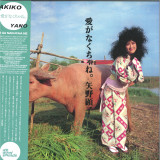
Wewantsounds continues its Akiko Yano series with the reissue of her cult classic 'Ai Ga Nakucha Ne' recorded in 1982 and co-produced by Ryuichi Sakamoto. Featuring Japan, the album includes additional recording in Tokyo with YMO and is mixed by Steve Nye and Shinichi Tanaka. It is the first time the album is released outside of Japan and the deluxe LP features the original artwork with gatefold sleeve and a lavish 24-page colour booklet with sessions photos by Pennie Smith (famous for The Clash's London Calling photo). The reissue also includes a new introduction by Mac DeMarco and a dual interview with Akiko Yano and Steve Jansen by journalist Paul Bowler. The audio remastered from the Original tapes by Mitsuo Koike.
'Ai Ga Nakucha Ne' ('there must be love' in Japanese) is Akiko Yano’s 6th studio album and follows 'Tadaima' in 1981. It continues exploring the electro-pop sound of its predecessor, hot on the heels of her touring with Yellow Magic Orchestra between 1979 and 1980. For this album, Akiko decided to try something new; she enrolled English fellow musicians Mick Karn, Steve Jansen and David Sylvian from Japan and booked the Air Studios in London under the supervision of engineer Steve Nye. Over a couple of weeks, the musicians created a fascinating soundscape full of catchy pop tunes, sung in both Japanese and English. Reminiscing about the studio sessions, Steve Jansen notes "Our music’s different but we maybe had a similar process of working. It was a great environment because the studio was a great place to work. It was very insular. There were four studios and there were always groups working in there 24/7."
The eleven tracks featured on "Ai Ga Nakucha Ne," mostly composed by Akiko - are a great collection of catchy tunes featuring her distinctive vocals and accompanied by the Japan musicians. As Akiko explains about the creative process, "I didn’t think to imitate or to make another Tin Drum. But I had Steve Jansen and Mick Karn, these excellent musicians. They were eager to understand the songs, then they put in everything they had. I knew the material was different from what they usually played in Japan. But it was a great experience working with them.
There are many highlights on the album, from the pop edge of "Aisuru Hito Yo" to the avant groove of "Another Wedding Song", each song is memorable and the album ends with the superb “Good Night” sung by Akiko and David Sylvian.
The original 1982 LP release included a 24 page booklet featuring many photos by Pennie Smith and Japanese photographer Bishin Jumonji. The booklet is reproduced in its entirety here and the album on top of contributions by Mac DeMarco, a longtime fan of the album, Akiko and Steve Jansen making this release of 'Ai Ga Nakucha Ne' a unique testament to Akiko Yano's greatness.
Wewantsounds is delighted to announce a special edition of the legendary 1979 Masahiko Togashi album "Song of Soil," recorded in Paris with Don Cherry and Charlie Haden and released on Japanese label Paddle Wheel. Supervised by Parisian producer Martin Meissonnier - then Don Cherry"s right hand man - "Song of Soil" reaches heights of spirituality mixing Eastern influences with jazz and deep ambient soundscapes. The album is reissued here with its original artwork and remastered by King Records in Japan. It includes the original Japanese 2-p insert plus a deluxe 8-page booklet featuring new notes (Eng/Fr) by Martin Meissonnier in conversation with Jacques Denis and also an Togashi Biography by Paul Bowler and never-seen photos by cult French photographer philippe gras who witnessed this unique session.
"One Sunday afternoon in 1990, I had a phone call from Keith saying that Sarah Records had received the demo cassette the two of us had recorded on a 4-track in a friend's shed and were interested in putting out two of the songs as a single. T
hey were Clearer and Alison. Delighted by this news, we booked some recording time with a studio we'd regularly used in our previous incarnation as Feverfew, the White House in Weston-super-Mare.
This was the first time we'd ever played a note of music that was using someone else's money, so the pressure was being felt. We recorded Clearer, Fearon and Chelsea Guitar, with Clearer becoming Sarah 55, the first of eight singles for the band across two labels. At that time, we were still toying with a name for ourselves and had settled with the Art Bunnies.
While driving us back home from Weston, though, I declared that I really couldn't see how people would take us seriously with a name like that. Disappointed, Keith (Girdler) then got out a piece of paper upon which he'd written several other contenders. These included Opal Trumpet, the Smiling Monarchs and (thankfully) Blueboy."
A Colourful Storm presents Blueboy's singles collection and the band's final retrospective release. Beautiful gatefold sleeve designed by Sarah Records' own Matt Haynes with original artwork insert, postcard and liner notes by Paul Stewart.
A pioneer of bebop, Max Roach went on to work on many other styles of music and is generally considered alongside the most important drummers in history having worked with such musicians as Coleman Hawkins, Dizzy Gillespie, Miles Davis, Duke Ellington, Charlie Parker, Stan Getz and more! A seminal set, stretching out towards the directions Max would explore fully on the Candid, Impulse, and Fantasy labels in the 60s. Group members include Booker Little on trumpet, George Coleman on tenor, Ray Draper on tuba, and Art Davis on bass – and the lack of a piano makes for a very exciting sound!
Welchem 60s-Fan klingen die Songs nicht in den Ohren: 'Painter Man', 'Making Time', 'Cool Jerk', 'Tom Tom', 'Biff Bang Pow', ihre ultra-coolen Versionen von 'Like A Rolling Stone' oder 'Hey Joe' und einige mehr. Speziell in Deutschland hatte die 1966 formierte Beat-Band um Gitarrist Eddie Phillips eine treue Fan-Gemeinde.. Stilistisch nah bei The Who und den Kinks wurde The Creation von deren Produzenten Shel Talmy produziert. Bis sich die Band 1968 erstmalig auflöste, entstand kein reines Studioalbum, aber jede Menge Single-Hits. Später wurde das legendäre Label von Alan McGee nach ihnen benannt. Das luxuriöse 2CD-Set im 7inch Format hält nochmal alle Klassiker bereit, die die Band in den 1960er Jahren aufgenommen hat. Die im Tracklisting reduzierte Halfspeed-Master-LP kommt mit dem dänischen Artwork , OBI-Strip, 4-Seiten-Booklet und natürlich auf 180Gr. Black Vinyl.
Es ist 5 Jahre her, aber das Warten hat sich gelohnt! "Memento Mori", das Nachfolgealbum von "Viktoria" ist MARDUK pur, von Anfang bis Ende! Zehn Tracks unerbittlicher, kompromissloser, düsterer und harter schwedischer Black Metal! "Memento Mori" ist erhältlich als Deluxe Gatefold LP (mit alternativem Cover-Artwork, transparent-schwarzem extra dickem Splatter-Vinyl, 8-seitigem Booklet in DIN A4 Format, DIN A2 Poster, Kunstdruck - limitiert auf 2000 Einheiten weltweit und nicht in jedem Land erhältlich), sowie als reguläre Gatefold LP (180g Vinyl, Lyric Sheet), Ltd. CD Mediabook und digitales Album.
- 1: The Big Bad Wolf
- 2: Meet The Bad Guys
- 3: Let’s Bounce
- 4: Push Pop
- 5: Step 3
- 6: Security Surprise
- 7: The Dolphin Heist
- 1: Going To Go Good
- 2: Turn On The Charm
- 3: Marmalade
- 4: A Heist For Good
- 5: The Sharing Laboratory
- 6: Save The Cat
- 7: Good Tonight - Ft. Anthony Ramos
- 8: So Long Suckers
- 9: The Lair Of Loot
- 1: Loot Loops
- 2: Bedtime Story
- 3: Double Crossed
- 4: Tricky Fox
- 5: The Crimson Paw
- 6: Secret Hideout
- 7: Evil Masterplan
- 8: The Sad Guys
- 9: One Last Push Pop
- 10: Finish Them
- 11: Huff + Puff
- 1: Just Robbing This Place
- 2: Freeway Escape
- 3: Who Said It Was The End?
- 4: Redemption
- 5: The Old Switcheroo
- 6: Feelin’ Alright - Elle King
- 7: Brand New Day
- The Heavy
The Bad Guys is a 2022 animation feature film by DreamWorks Animation. Directed by Pierre Perifel, the film stars Sam Rockwell, Richard Ayoade, Zazie Beetz, Alex Borstein and Awkwafina amongst others. The story follows a notorious fun-loving criminal animal crew. After a heist has gone wrong, the pack agree to become model citizens - or at least try to.
The score was composed by Daniel Pemberton who is known for composing the score to Spider-Man: Into the Spider-Verse (2018) and its sequel Spider-Man: Across the Spider-Verse (2023). He has also composed the soundtrack for King Arthur: Legend of the Sword (2017) and The Man From U.N.C.L.E. (2015). Besides the original score, this soundtrack also features the songs "Good Tonight" feat. Anthony Ramos, "Feelin' Alright" by Elle King and "Brand New Day" by The Heavy.
The Bad Guys is available as a limited edition of 500 individually numbered copies on yellow & orange marbled vinyl and includes a 4-page booklet with liner notes by Daniel Pemberton and Pierre Perifel.
Los Angeles rapper Earl Sweatshirt releases his new project SICK!, out now via Tan Cressida / Warner Records. The new 10-track project includes previously released singles "2010," "Tabula Rasa (feat. Armand Hammer)," and "Titanic" and features collaborative contributions from artists and producers Zelooperz, Nak-el Smith, Armand Hammer, Black Noi$e, and The Alchemist.
Speaking about the new project, Earl says:
"SICK! is my humble offering of 10 songs recorded in the wake of the worldwide coronavirus pandemic and its subsequent lockdowns. Before the virus I had been working on an album I named after a book I used to read with my mother ('The People Could Fly'). Once the lockdowns hit, people couldn't fly anymore. A wise man said art imitates life.
People were sick. The People were angry and isolated and restless. I leaned into the
chaos cause it was apparent that it wasn't going anywhere. these songs are what happened when I would come up for air. Peace and love to Zelooperz the enigma, The Armand Hammer, and my good friends Alchemist and Black Noi$e. Peace and love to u."
Following the project's release, Earl Sweatshirt will embark on his North American 2022 NBA Leather Tour later this month with Action Bronson, and The Alchemist with Boldy James. The 19-date run will see stops in Los Angeles, Chicago, and New York City before wrapping up in Austin in February. Tickets are available here.
Listen to SICK! above and find full album details and upcoming live dates below. Stay tuned for more from Earl Sweatshirt coming soon.
Rare Jazz-Funk album from 1978 by Headhunters founder.
Featuring an all-star line-up including Herbie Hancock.
Originally released in 1978 on Tobisha EMI Japan.
First vinyl reissue outside of Japan released in collab w/Totown Records. Comes with double side insert.
Paul Jackson (born in Oakland, California in 1947) needs little introduction. Paul began playing bass at the age of nine and was considered by many of his teachers to be a musical prodigy. Jackson was known as a “Musician’s Musician” and shaped a sound that launched a new direction in contemporary music: the so-called ‘Pulse Playing’, a trademark sound of close-meshed funk grooves combined with sensational rhythms. With this innovative approach, he influenced entire generations of jazz and funk musicians to come. Paul’s compositions were sampled by big acts from the likes of Prince, TLC, Mobb Deep and NWA…just to name a few.
Paul Jackson was a founding member of the Headhunters under Herbie Hancock (THE group responsible for their ground-breaking fusion and jazz-funk compositions that took the world by storm in the 70’s). The solid union between Hancock and Jackson has been especially evident in the many international tours they have made together…not to mention that he participated on most of the Headhunters albums and Herbie’s solo albums.
Paul has also worked as a producer and as a studio/live musician alongside acts such as Santana, Sonny Rollins and The Pointer Sisters. He was a frequent guest performer at renowned international festivals such as the Montreux and Newport events. Jackson’s composing has not gone without recognition and was nominated for Grammy Awards in 1974, 1975 and 1976. Like other highly talented, creatively motivated engineers of music, Paul has expanded his career to other mediums such as playing on blockbuster movie soundtracks such as “Death wish” and “Dirty Harry”.
Paul Jackson also wrote five solo albums worth listening to – including the monster of an album that is known as “Black Octopus” which is considered to be a kind of lost Headhunters album.
His debut album “Black Octopus” saw the light of day in 1978 and is a total piece of art filled with abstract sticky funky grooves, floating electric piano playing, strong thumping bass lines, raw heavy drums and amazing vocal acrobatics (Jackson himself takes vocals in 3 out of 5 songs, and his soulful singing voice strikes an emotional chord that does not go unnoticed).
On “Black Octopus” you’ll also find some of the best all-star musicians from the likes of Alphonse Mouzon (Roy Ayers, Betty Davis, Azar Lawrence)…and last but not least fellow Headhunters Bennie Maupin and Herbie Hancock himself.
With “Black Octopus” Paul Jackson wrote the book on how a jazz-funk-fusion album should sound like. The fact that the album was only distributed in Japan at the time (Jackson resided in Tokyo since the late 70’s, where he passed away in 2021) continues to increase its reputation as an album that is VERY hard to find. This is a must-have gem…not only for fans of jazz, funk and rare grooves, but also for DJs and collectors around the globe.
Vinyl includes lyric booklet with hand-written lyrics and exclusive photos and download card. Has collaborated with MF Doom, Czarface, Ghostface Killah, Dennis Coffey, and more. Kendra Morris, the Brooklyn-based Artist is back with her fifth LP, entitled I Am What I’m Waiting For, on Colemine/Karma Chief Records. Co-Written and Produced by Torbitt Schwartz (Run The Jewels, Killer Mike, Rubble Kings, Chin Chin), this collection is Kendra’s most personal album to date. It was spring of 2022 and Kendra had just released Nine Lives, her first new album in almost a decade and her first release on Colemine Records. She felt an urgency to get back into the studio, but something felt different this time. Returning to her usual ways, places, and people that she had been creating with felt like dragging herself back to a familiar and comfortable place - but that wasn’t what she was looking for. “I had to step into a new, unknown process because I knew it was the only way that I’d continue to grow,” she explained. She took a small batch of songs to Torbitt’s studio and the two began to write. “He challenged me to find the best version of every lyric,” she shared. “When I listen back, I’m so proud of the time we spent, because every single line is deliberate. I challenged myself to write just to write. No love songs this time around. Torbitt and I wanted to create a record that felt like you cracked open the ooze in my head. There are a lot of layers to me but I only recently through age and experience have fully accepted the weird little nuances that I’m made of. I’m a messy introvert that pretends to be an extrovert so I can feel like I fit in.” From top to bottom, I Am What I’m Waiting For is sincere. It’s a fresh take on a timeless sound, and Kendra exudes power. “My heart has always been in soul music,” she shared. “On this record, you’ll hear my influences and then some. You’ll hear all the bits of me….the vulnerable bits, the silly bits, all of it.This record is my melting pot.” Whether you’re a longtime listener or just now beginning to explore the whimsical world of Kendra Morris, the relatable lyrics and modern soul sounds on I Am What I’m Waiting For are sure to turn you into a fan
Moonstone Blue Vinyl[36,56 €]
Mahogany Marbled Vinyl[32,73 €]
Blood Moon Marbled Vinyl[36,56 €]
Lavender Marbled Vinyl[38,24 €]
Taylor Swift’s new studio album Midnights is available everywhere on October 21st. It’s a collection of music written in the middle of the night, a journey through terrors and sweet dreams. The floors we pace and the demons we face - the stories of 13 sleepless nights scattered throughout Taylor’s life.
Each Vinyl Album Includes:
- Unique marbled color vinyl disc
- 13 Songs
- Collectible album jacket with unique front and back cover art
- Unique marbled color vinyl disc
- Collectible album sleeve (each side features a different full-size photo of Taylor)
- Full-size gatefold photo
- A collectible 8-page lyric booklet with never-before-seen photos
Gatefold single vinyl LP with an 8 page 12" size bookelt in the other side of the gatefold.
We're thrilled to announce the return of Tobor Experiment, the visionary musical project led by the enigmatic Giorgio Sancristoforo, to the Bearfunk fold. After a twelve-year hiatus, Tobor Experiment emerges from the shadows with their second LP, "Available Forms". Picture the ethereal ambiance of a dimly lit jazz club colliding with the futuristic vibrations of a 1970s sci-fi TV show, and you'll begin to grasp the sonic experience that awaits. Giorgio draws on a whole host of musical inspirations, from the name checked Tim Gane & Letitia Sadier to the moog pioneers Claude Denjean & Jean Jaques Perrey. With the moogsploration of contemporary jazz Tobor Experiment invites listeners on an extraordinary musical odyssey where jazz meets electronica meets nu-disco.
Prepare to be captivated from the very first note of the infectious opener, "Lowpass Risotto" as Tobor Experiment masterfully combines familiar elements with their unique artistic vision. Resonating with undertones reminiscent of the timeless classic "Take Five" the track immediately grabs your attention. While the familiar drum shuffle sets a comforting foundation, Tobor Experiment takes an unexpected twist by infusing the composition with squelchy Moog lines and captivating hollow body guitar solos. The result is a harmonious blend of nostalgia and innovation that transports you to an entirely new sonic realm.
Continuing the journey, the mesmerizing 6/8 rhythm of "Up!" pays homage to the iconic sounds of Stereolab while showcasing Tobor Experiment's innovative spirit. As enchanting synth pads weave through the air, you find yourself immersed in a dream-like state, carried away by the hypnotic shifting patterns of the bass and drums.
With "Astounding Stories" Tobor Experiment returns to the energetic vibes of the album opener, inviting you to surrender to a sonic tapestry rich with musical exchanges. In traditional jazz style we receive solo's from all parties. Each instrument adding its unique voice to the narrative, creating a dynamic and engaging musical conversation.
As the album progresses, "Moonscape Dust" emerges, drawing inspiration from the atmospheric brilliance of "Low." This track serves as a portal to an otherworldly sonic landscape where time and space lose their hold. Here, organic drums step aside, making way for a low-fi drum pattern that lays the foundation for ethereal synth pads. The composition invites you to explore the depths of your imagination, transcending earthly boundaries and allowing you to float in an immersive soundscape.
The album's closing track, "Monsters" has an air of "Air" about it... the ethereal synths beckon you to surrender to the weightlessness of space, just allow yourself to be carried away by the infectious rhythms, intricate melodies, and atmospheric textures that shape this extraordinary musical journey.
Each track on "Available Forms" showcases Tobor Experiment's exceptional ability to transcend musical boundaries, creating a genre-bending album that defies all expectations. From start to finish, the soundscape presented is a testament to Tobor's relentless pursuit of musical innovation. Each composition is a fusion of diverse elements, seamlessly blending organic instruments and electronic textures in a way that challenges traditional genre classifications.
The AI-generated artwork serves as a portal to an alternate dimension. Paying homage to the retro-futuristic aesthetic of 1970s science fiction TV shows, it captures the essence of the album's fusion between organic and electronic realms.
A vinyl-only label out of NYC, Brooklyn Sway is back with their fourth release, this time varying slightly from their usual Various Artists format and enlisting two artists to fill out each side of the vinyl. The A-side features Montreal transplant, frequent collaborator, and minimal jazz master Ohm Hourani, who puts forth a tripped out, extended jam using classic Kim Cooper vocals and hypnotic beats. The B-side enlists live band N/UM for two improvised tracks, The Way and Any Time. N/UM is a 3-piece electronic band that uses classic analog instruments, vocals, modular synths, and guitar to create fully improvised live performances. In typical BK Sway fashion, interludes book end both sides of the record to tie the package together.