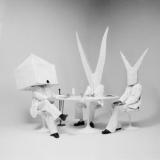
Arthur Mine is a keyboardist and electronic musician from Kyiv, Ukraine. An ex-member of several live bands from punk to indie and experimental. In 2017 Nikolaienko's collaborator on the Nostalgia Por Mesozoica 7” single.
For the collectors of New Age cassettes to put somewhere between Sven Grünberg and Vangelis.
Buscar:arthur mine
- 1
Arthur Alexander’s mid-60s releases for Monument and Sound Stage 7 under the supervision of Fred Foster in Nashville failed to register on the charts but are highly regarded, none more so than these sides cut on his first session for the company. The released tracks from the session, ‘(Baby) For You’ and ‘The Other Woman (In My Life)’, were more country-sounding.
These two wonderful soul songs remained in the vaults until an Ace CD in 2001 and have picked up admirers ever since. To own them on vinyl will be a vintage soul lover’s thrill.
- Home Safe (Feat. Yamê, Tora)
- Procrastination (Feat. Zefire)
- Strange People (Feat. Rhye)
- Kill Your Idols (Feat. Lossapardo)
- Feelings Don't Rest (Feat. Anaiis)
- &Fly
- Diamond Miner (Feat. Fkj, Eliza)
- Midnight Blues (Feat. Zefire)
- Cristaux Liquides (Feat. Swing)
- Arthur Et Le Cristal (Feat. Arthur Teboul)
- Exposed (Feat. Lossapardo)
Mit Home Safe veröffentlicht der Pariser Produzent und Songwriter Crayon am 24. Oktober sein lang erwartetes Debütalbum auf Erased Tapes. Nach Jahren als gefragter Produzent für französische Rap-Größen wie Josman und Dinos tritt Crayon nun selbst ins Rampenlicht - mit einem Werk, das Soul, Folk, Jazz, Hip-Hop und Elektronik zu einem warmen, vielschichtigen Klangkosmos vereint. Die Entstehung des Albums begann in einer Pariser WG, wo Crayon und Jazzpianist Bastien Brison intime Jam-Sessions veranstalteten. Aus dieser kreativen Gemeinschaft entstand ein Sound, der orchestrale Größe mit der Intimität von Bedroom-Produktionen verbindet. Nach einer persönlichen Rückzugsphase in seinem Elternhaus verfeinerte Crayon über drei Jahre die Klangästhetik des Albums - inspiriert von Erinnerungen an das Zuhause und der Frage: Was bedeutet Heimat für dich? Das Ergebnis ist ein zutiefst persönliches, visuell geprägtes Album mit Gästen wie FKJ, ELIZA, Rhye, anaiis, Yamê und Arthur Teboul. Tracks wie Home Safe und Diamond Miner laden ein in eine Welt, in der Sound, Bild und Emotion verschmelzen.
2024 Repress
“Nostalgia Por Mesozo´ica” is an exploration of "experimental exotica" consisted of synthesized tropical attributes — an artificial landscape isolated behind the glass frame. Reminiscent of recording techniques and sonorities ubiquitous in the 60’s and 70’s, it could conceivably have been intended as a soundtrack for the Mesozoic Era exhibition at your favorite Natural History museum.
- A1: India
- A2: Child Of Nature
- A3: Anna Was Mine (Demo Version)
- A4: Nature Boy (Mantovani Orchestra)
- A5: Land Of Love (Come My Love And Live With Me)
- A6: Hey Jacque (Hey Jacque)
- A7: Palm Springs (The Ray Anthony Orchestra)
- A8: Umgowah
- B1: Wild Boy ( With Mort Wise & The Wisemen And Rocky Holman)
- B2: Surfer John (Nature Boy & Friends)
- B3: Eden’s Island (Arthur Lyman)
- B4: Monterey (With John Harris And Paul Horn)
- B5: Overcomers Of The World (With John Harris)
- B6: The Clam Man
Black Vinyl[26,85 €]
“Wild Boy …” is a reissue of the well-known 2016 release curated by Brian Chidester, renowned researcher and biographer of Eden Ahbez. Especially for this album, Brian wrote an interesting text about Abi’s life, which definitely became the decoration of the release.
With the new 2020 re-release, we went a little further and kept what is commonly referred to as studio cuts. It’s a few more minutes in the studio with ahbez himself, full of emotion and life. In addition, to the delight of fans, the edition includes an additional composition Nature Boy (Mantovani Orchestra).
Especially, it is worth noting the outstanding mastering prepared from practically decomposed tapes by the Grammy-nominated Jessica Thompson, which guarantees the deepest and warmth possible sound. Jessica a huge ahbez fan and we’re highly appreciated for what she has done to save his music for the future.
Eden Ahbez is definitely at the origin of psychedelic music and this release can be taken as further proof. Over the past twenty years, the iconic figure of the world’s first hippie Eden ahbez has become famous primarily for his 1948 song “Nature Boy”, praising universal love, and his amazingly solo album from the 1960s called “Eden’s Island” – one from the first concept albums in the history of music and probably the first psychedelic music album. “Wild Boy: The Lost Songs Of Eden Ahbez” deepens understanding of the origins of the psychedelic movement in the 1950s.
The disc contains a musical selection of works by Eden ahbez himself, written by him in the period after Nature Boy. The inclusion of songs such as “Palm Springs” – Ray Anthony Orchestra and “Hey Jacques” by Erta Kitt gives the listener the chance to discover for the first time the little-known recordings of world-famous artists composed by Eden ahbez. Through “Wild Boy” and “Surfer John” you can hear the author’s handling of absurd rock and exotic experimentation, as well as sweet psychedelic pop like Monterey (with Paul Horn on flute). Overall, Wild Boy: The Lost Songs Of Eden Ahbez offers an overview of the lost works of 1949-1971 with seven unpublished recordings and eight rare singles.
If in 2020 you are missing the hallucinogenic content in Eden Ahbez, it amazingly makes up for that deficiency with simple chords, expansive arrangements, and lyrics about travel, relaxation, free love, and spirituality. Thus creating the standard of psychedelic music. Eden Ahbez’s songs weren’t only fantasy and his personal philosophy was the real thing that he lived.
reviews:
“This carefully and extensively researched compilation culls covers by top notch mainstream artists juxtaposed with unreleased Eden recordings. What might sound like a mixed bag is actually more like a chronological, musical non-fiction novel about Eden Ahbez. While Eden was writing hundreds of songs and performing live and making recordings in various styles, his songs were also being picked up by popular artists like Nat King Cole and Eartha Kitt who recorded with a more polished mainstream style. There are also some early rock n roll style recordings here. Eden’s professionally recordings often end up as Novelty Pop records such as “Child of Nature” and “The Clam Man” but if you read between the lines and listen to the lyrics it is pretty eye-opening that he is singing about Eastern-religion-style and pre-hippie philosophies about being at one with the planet Earth.
All of this is explained in the lengthy liner notes inside the lp along with a few choice photos that establish Eden as a founding father of Southern California mystic/psychedelic music.” – Tiki_News
“Eden Ahbez’s life philosophy was summed up in the lyrics of his most famous song, “Nature Boy,” a 1948 hit for Nat King Cole: the song describes a “strange enchanted boy” who wanders the world in search of truth. “The greatest thing you’ll ever learn,” he concludes, “is to love and be loved in return.” Ahbez was a pre-cursor of California’s beatniks and hippies, and an exalted icon of ex-otica via his rare 1960 album Eden’s Island. Beyond “Nature Boy” and Eden’s Island, though, there were nu-merous lesser-known Ahbez record-ings. Ahbez biographer Brian Chidester has been doing an exemplary job of archiving and documenting that catalog of work. The Exotic World of Eden Ahbez (reviewed in UT#38) appeared a few years ago, gathering together 14 Ahbez-related rarities” – Ugly Things
- A1: Otis Rush - I Can't Quit You Baby
- A2: Muddy Waters - You Shook Me
- A3: B B King - Sugar Mama
- A4: John Lee Hooker - Boogie Chillun
- A5: Sonny Boy Williamson Ii - Nine Below Zero
- A6: Mississippi Fred Mcdowell - Shake 'Em On Down
- A7: Howlin' Wolf - Going Down Slow
- B1: Little Richard - Keep A Knockin
- B2: Elvis Presley - A Mess Of Blues
- B3: Eddie Cochran - Somethin' Else
- B4: Wynonie Harris - I Get A Thrill
- B5: Roy Brown & His Mighty-Mighty Men - Rockin' At Midnight
- B6: Ruth Brown - Sea Of Love
- B7: Amos Milburn - (Let's Have A) Party
- C1: Bob Dylan - In My Time Of Dyin
- C2: Joan Baez - Babe, I'm Gonna Leave You
- C3: Odetta - The Gallows Pole
- C4: Blind Snooks Eaglin - That's All Right
- C5: Sam Cooke & Bumps Blackwell Orchestra - Mary, Mary Lou
- C6: Muddy Waters - You Need Love
- C7: Arthur "Big Boy" Crudup - My Mama Don't Allow Me
- D1: Blind Willie Johnson - It's Nobody's Fault But Mine
- D2: Sonny Boy Williamson – I Got The Bottle Up And Gone
- D3: Robert Johnson - Traveling Riverside Blues
- D4: Big Bill Broonzy - Truckin' Little Woman
- D5: Bukka White - Fixin' To Die Blues
- D6: Sleepy John Estes - The Girl I Love, She Got Long Curly Hair
- D7: Memphis Minnie & Kansas Joe - When The Levee Breaks
Find all the titles that influenced one of the greatest rock band of all times, on a double vinyl. With: B.B. King, John Lee Hooker, Elvis Presley, Little Richard, Bob Dylan, Joan Baez, Muddy Waters, Sonny By Williamson I... The tracklist was made up by the journalist Lionel Eskenazi, who is a true specialist of the what many consider as the best rock band ever
Album, auf dem die Künstlerin aus Bristol sich die Welt ganz nach ihren Vorstellungen formt.
Nach 'Return' (2020) und 'Sound of the Morning' (2022) ist 'Someday, Now' die Fortsetzung von Pearsons akustisch geprägter Singer-Songwriter-Kost, die sie mit Hilfe des Elektronik-Produzenten Nathan Jenkins alias Bullion (u.a. Carly Rae Jepsen, Ben Howard, Nilüfer Yanya, Avalon Emerson) gestaltet hat. Nach einer Zeit des Burnouts, des selbst erzwungenen Exils vom Musikmachen und des Alleinreisens kehrte die Künstlerin aus Bristol mit klarem Verstand und einer Vision zurück. “I knew exactly who I wanted to work with, I knew exactly who my session band were going to be, I knew where I wanted to record. It felt like I was finally calling the shots for myself, and that was so empowering.”
Eine breite und interessante Palette von Inspirationen hat dabei die Platte beeinflusst: Beck, Neneh Cherry, Charlotte Gainsbourg, Kate Bush, Tears For Fears, Arthur Russell. 'Someday, Now' zeigt das natürliche Talent der Songwriterin für Ohrwürmer und präsentiert zehn Pop-Tracks, die mit Bullions leichter, aber anspruchsvoller Note verfeinert werden. Während frühere Platten von Katy J Pearson langsamer und stückweise entstanden, wurde 'Someday, Now' in den Rockfield Studios in Wales innerhalb weniger Wochen mit einer Band aus den Heavenly-Labelkollegen Huw Evans (H. Hawkline, Aldous Harding), Davey Newington (Boy Azooga sowie Joel Burton (Broadside Hacks) geformt.
Bruno Berle, the young songwriter and poet originally hailing from Maceió, the capital of Brazil’s Alagoas state, crafts songs that are simple, direct, and full of tender nuance. With his first album No Reino Dos Afetos (which translates to "In the Realm of Affections” and was released in 2022), Berle firmly established himself as a unique and important voice in the burgeoning scene of new Brazilian artists making a global impact, including peers like Ana Frango Elétrico, Tim Bernardes, Bala Desejo, Sessa and more. Now back with his second album, No Reino Dos Afetos 2, he stretches that further.
Bruno Berle’s music lives between two worlds – a traditional Brazilian folk talent steeped in history, and a contemporary, dreamy electronic pop; the result is songwriting that’s genre-bending, intentional, iconoclastic and consuming, spacious and sinewy and singular, a striking reflection of its composer while leaving space for the listener to settle in. The album follows Bruno’s relocation to São Paulo, and the songs are a reflection of his past and present. A rebuke of former categorizations of his work in Brazilian music scenes, and an idea of where his music can move, unfettered.
Berle’s music is purposeful in being a true portrait of himself, and a reflection of the music, art, and fashion scenes he personally moves through. Berle aims to provide an entrypoint for Black queer joy in his music, in his storytelling, in his presence and vision as a creative. For him, it feels subversive to be playing MPB laced with dubstep and lo-fi, a sort of intentional sacrilege, capturing a dialogue of modernity in traditional music.
Berle wrote most of the arrangements and co-produced his new album, Reino Dos Afetos 2 with longtime friend and musical partner Batata Boy, who is also from Maceió; the album was recorded in Rio de Janeiro, Maceió, and São Paulo, his new home, and picks up the conversation begun in 2022 on Berle’s debut album No Reino dos Afetos. Both records are the result of a nonlinear but coherent seven-year music creation process culminating in these albums, holding hands across space and time.
“Tirolirole,” the first single from the record, was released at the end of 2023; sun-soaked rhythms and soft voice coat the song, the lilting refrain of “Tirolirole” throughout – hushed, gentle, but somehow almost tactile, a golden-hour moment unlocked in the mind. “Tirolirole” is a triumphant future classic about the temporality of a blossoming love, with Bruno’s stunning vocal soaring over melodies which ebb and flow like the waters on the Atlantic shore. Of the track, Berle explains: “Despite ‘Tirolirole’ being an expression that evokes my childhood, just like the light words about nature, the harmony, and the poetry are epic, carrying a great hope for love.”
In fact, the guiding theme of No Reino dos Afetos 2 is a relationship, unfolding in the arc of a weekend. It traverses the innocence of an early young love, how that can be formative, can stretch on to take new shapes, or shape you. The album happens at the genesis of meeting someone and falling for them, before the relationship is thrown into overdrive – set in a big city, against a backdrop of major life changes, rising energy, the sound of São Paulo.
Something transcendental emerges in “Dizer Adeus,” with an arrangement that echoes a gospel atmosphere (evangelical and Catholic environments were pivotal to Berle’s upbringing). On “É Só Você Chegar,” piano and flute gracefully intertwine, a dance, while “Quando Penso” skews sparser, the voice-and-guitar minimalism somehow cultivating an entirely different shape – somehow both cozy and melancholy, with the background sound of a rainy day. Coupled with the lo-fi aspects that shape much of the album’s personality in the vocals and the production, No Reino Dos Afetos 2 is meticulously elaborated by Berle’s sonic alchemy, like on the mid-album instrumental “Sonho,” which feels like floating. “It’s the apex. It’s when lovers are sleeping together,” Berle explains of the feeling he wanted to encapsulate in the song.
On “Love Comes Back” Berle interprets Arthur Russell, the late Iowa musician who only reached greater visibility after he died in 1992. “His way of making music is similar to mine,” Berle explains. “He sings in a more fragile way, has more of an experimental way of recording, letting ‘chance’ appear in the final work.”
Even so, Berle doesn’t want his music to be buried in sentimentality – and the purposefulness of his craft serves as a sort of north star. The production, the arrangements, his restraint and intentionality in crafting his songs feel just as vital as their emotional cores. His songwriting is amorphous, fluid, an encompassing genre-bending movement in-and-of-itself, quietly daring. The songs are often in conversation with other works – drinking in fountains as diverse as the filmmaking of Ingmar Bergman, the poetry of Walt Whitman, the rhythm of Djavan, and the painting of Maxwell Alexandre. Musically he weaves together a rich tapestry of Brazilian folk, UK 2-step garage/dub, trip hop and sun soaked west coast songwriters; something akin to the worlds of Milton Nascimento, Arthur Russell, James Blake, Feist, and Sade colliding into one. But even then No Reino Dos Afetos 2 floats separately, a romanticism driven by a simplicity and intimacy, an open-ended possibility, Berle’s singularity as an artist at the helm of the ship.
Bruno Berle, the young songwriter and poet originally hailing from Maceió, the capital of Brazil’s Alagoas state, crafts songs that are simple, direct, and full of tender nuance. With his first album No Reino Dos Afetos (which translates to "In the Realm of Affections” and was released in 2022), Berle firmly established himself as a unique and important voice in the burgeoning scene of new Brazilian artists making a global impact, including peers like Ana Frango Elétrico, Tim Bernardes, Bala Desejo, Sessa and more. Now back with his second album, No Reino Dos Afetos 2, he stretches that further.
Bruno Berle’s music lives between two worlds – a traditional Brazilian folk talent steeped in history, and a contemporary, dreamy electronic pop; the result is songwriting that’s genre-bending, intentional, iconoclastic and consuming, spacious and sinewy and singular, a striking reflection of its composer while leaving space for the listener to settle in. The album follows Bruno’s relocation to São Paulo, and the songs are a reflection of his past and present. A rebuke of former categorizations of his work in Brazilian music scenes, and an idea of where his music can move, unfettered.
Berle’s music is purposeful in being a true portrait of himself, and a reflection of the music, art, and fashion scenes he personally moves through. Berle aims to provide an entrypoint for Black queer joy in his music, in his storytelling, in his presence and vision as a creative. For him, it feels subversive to be playing MPB laced with dubstep and lo-fi, a sort of intentional sacrilege, capturing a dialogue of modernity in traditional music.
Berle wrote most of the arrangements and co-produced his new album, Reino Dos Afetos 2 with longtime friend and musical partner Batata Boy, who is also from Maceió; the album was recorded in Rio de Janeiro, Maceió, and São Paulo, his new home, and picks up the conversation begun in 2022 on Berle’s debut album No Reino dos Afetos. Both records are the result of a nonlinear but coherent seven-year music creation process culminating in these albums, holding hands across space and time.
“Tirolirole,” the first single from the record, was released at the end of 2023; sun-soaked rhythms and soft voice coat the song, the lilting refrain of “Tirolirole” throughout – hushed, gentle, but somehow almost tactile, a golden-hour moment unlocked in the mind. “Tirolirole” is a triumphant future classic about the temporality of a blossoming love, with Bruno’s stunning vocal soaring over melodies which ebb and flow like the waters on the Atlantic shore. Of the track, Berle explains: “Despite ‘Tirolirole’ being an expression that evokes my childhood, just like the light words about nature, the harmony, and the poetry are epic, carrying a great hope for love.”
In fact, the guiding theme of No Reino dos Afetos 2 is a relationship, unfolding in the arc of a weekend. It traverses the innocence of an early young love, how that can be formative, can stretch on to take new shapes, or shape you. The album happens at the genesis of meeting someone and falling for them, before the relationship is thrown into overdrive – set in a big city, against a backdrop of major life changes, rising energy, the sound of São Paulo.
Something transcendental emerges in “Dizer Adeus,” with an arrangement that echoes a gospel atmosphere (evangelical and Catholic environments were pivotal to Berle’s upbringing). On “É Só Você Chegar,” piano and flute gracefully intertwine, a dance, while “Quando Penso” skews sparser, the voice-and-guitar minimalism somehow cultivating an entirely different shape – somehow both cozy and melancholy, with the background sound of a rainy day. Coupled with the lo-fi aspects that shape much of the album’s personality in the vocals and the production, No Reino Dos Afetos 2 is meticulously elaborated by Berle’s sonic alchemy, like on the mid-album instrumental “Sonho,” which feels like floating. “It’s the apex. It’s when lovers are sleeping together,” Berle explains of the feeling he wanted to encapsulate in the song.
On “Love Comes Back” Berle interprets Arthur Russell, the late Iowa musician who only reached greater visibility after he died in 1992. “His way of making music is similar to mine,” Berle explains. “He sings in a more fragile way, has more of an experimental way of recording, letting ‘chance’ appear in the final work.”
Even so, Berle doesn’t want his music to be buried in sentimentality – and the purposefulness of his craft serves as a sort of north star. The production, the arrangements, his restraint and intentionality in crafting his songs feel just as vital as their emotional cores. His songwriting is amorphous, fluid, an encompassing genre-bending movement in-and-of-itself, quietly daring. The songs are often in conversation with other works – drinking in fountains as diverse as the filmmaking of Ingmar Bergman, the poetry of Walt Whitman, the rhythm of Djavan, and the painting of Maxwell Alexandre. Musically he weaves together a rich tapestry of Brazilian folk, UK 2-step garage/dub, trip hop and sun soaked west coast songwriters; something akin to the worlds of Milton Nascimento, Arthur Russell, James Blake, Feist, and Sade colliding into one. But even then No Reino Dos Afetos 2 floats separately, a romanticism driven by a simplicity and intimacy, an open-ended possibility, Berle’s singularity as an artist at the helm of the ship.
- A1: India
- A2: Child Of Nature
- A3: Anna Was Mine (Demo Version)
- A4: Nature Boy (Mantovani Orchestra)
- A5: Land Of Love (Come My Love And Live With Me)
- A6: Hey Jacque (Hey Jacque)
- A7: Palm Springs (The Ray Anthony Orchestra)
- A8: Umgowah
- B1: Wild Boy ( With Mort Wise & The Wisemen And Rocky Holman)
- B2: Surfer John (Nature Boy & Friends)
- B3: Eden’s Island (Arthur Lyman)
- B4: Monterey (With John Harris And Paul Horn)
- B5: Overcomers Of The World (With John Harris)
- B6: The Clam Man
- B7: Nature Boy (The Talbot Brothers)
Colour Vinyl[31,89 €]
“Wild Boy …” is a reissue of the well-known 2016 release curated by Brian Chidester, renowned researcher and biographer of Eden Ahbez. Especially for this album, Brian wrote an interesting text about Abi’s life, which definitely became the decoration of the release.
With the new 2020 re-release, we went a little further and kept what is commonly referred to as studio cuts. It’s a few more minutes in the studio with ahbez himself, full of emotion and life. In addition, to the delight of fans, the edition includes an additional composition Nature Boy (Mantovani Orchestra).
Especially, it is worth noting the outstanding mastering prepared from practically decomposed tapes by the Grammy-nominated Jessica Thompson, which guarantees the deepest and warmth possible sound. Jessica a huge ahbez fan and we’re highly appreciated for what she has done to save his music for the future.
Eden Ahbez is definitely at the origin of psychedelic music and this release can be taken as further proof. Over the past twenty years, the iconic figure of the world’s first hippie Eden ahbez has become famous primarily for his 1948 song “Nature Boy”, praising universal love, and his amazingly solo album from the 1960s called “Eden’s Island” – one from the first concept albums in the history of music and probably the first psychedelic music album. “Wild Boy: The Lost Songs Of Eden Ahbez” deepens understanding of the origins of the psychedelic movement in the 1950s.
The disc contains a musical selection of works by Eden ahbez himself, written by him in the period after Nature Boy. The inclusion of songs such as “Palm Springs” – Ray Anthony Orchestra and “Hey Jacques” by Erta Kitt gives the listener the chance to discover for the first time the little-known recordings of world-famous artists composed by Eden ahbez. Through “Wild Boy” and “Surfer John” you can hear the author’s handling of absurd rock and exotic experimentation, as well as sweet psychedelic pop like Monterey (with Paul Horn on flute). Overall, Wild Boy: The Lost Songs Of Eden Ahbez offers an overview of the lost works of 1949-1971 with seven unpublished recordings and eight rare singles.
If in 2020 you are missing the hallucinogenic content in Eden Ahbez, it amazingly makes up for that deficiency with simple chords, expansive arrangements, and lyrics about travel, relaxation, free love, and spirituality. Thus creating the standard of psychedelic music. Eden Ahbez’s songs weren’t only fantasy and his personal philosophy was the real thing that he lived.
reviews:
“This carefully and extensively researched compilation culls covers by top notch mainstream artists juxtaposed with unreleased Eden recordings. What might sound like a mixed bag is actually more like a chronological, musical non-fiction novel about Eden Ahbez. While Eden was writing hundreds of songs and performing live and making recordings in various styles, his songs were also being picked up by popular artists like Nat King Cole and Eartha Kitt who recorded with a more polished mainstream style. There are also some early rock n roll style recordings here. Eden’s professionally recordings often end up as Novelty Pop records such as “Child of Nature” and “The Clam Man” but if you read between the lines and listen to the lyrics it is pretty eye-opening that he is singing about Eastern-religion-style and pre-hippie philosophies about being at one with the planet Earth.
All of this is explained in the lengthy liner notes inside the lp along with a few choice photos that establish Eden as a founding father of Southern California mystic/psychedelic music.” – Tiki_News
“Eden Ahbez’s life philosophy was summed up in the lyrics of his most famous song, “Nature Boy,” a 1948 hit for Nat King Cole: the song describes a “strange enchanted boy” who wanders the world in search of truth. “The greatest thing you’ll ever learn,” he concludes, “is to love and be loved in return.” Ahbez was a pre-cursor of California’s beatniks and hippies, and an exalted icon of ex-otica via his rare 1960 album Eden’s Island. Beyond “Nature Boy” and Eden’s Island, though, there were nu-merous lesser-known Ahbez record-ings. Ahbez biographer Brian Chidester has been doing an exemplary job of archiving and documenting that catalog of work. The Exotic World of Eden Ahbez (reviewed in UT#38) appeared a few years ago, gathering together 14 Ahbez-related rarities” – Ugly Things
12" LP (300) 'Nostalgia Por Mesozoica' is an exploration of "experimental exotica" consisted of synthesized tropical attributes — an artificial landscape isolated behind the glass frame.Reminiscent of recording techniques and sonorities ubiquitous in the 60’s and 70’s, it could conceivably have been intended as a soundtrack for the Mesozoic Era exhibition at your favorite Natural History museum.
- A1: Muddy Waters - Rollin' Stone
- A2: Chuck Berry - Come On
- A3: Howlin' Wolf - The Red Rooster
- A4: Bo Diddley - Mona
- A5: John Lee Hooker - Dimples
- A6: Jimmy Reed - Honest I Do
- A7: Little Walter - Confessin' The Blues
- A8: Slim Harpo - I'm A King Bee
- A9: Robert Johnson - Love In Vain Blues
- A10: Elvis Presley - My Baby Left Me
- A11: Buddy Holly & The Crickets - Not Fade Away
- A12: Cliff Richard & The Shadows - You Don't Know
- A13: Eddie Cochran - 20 Flight Rock
- A14: Jerry Lee Lewis - Money (That's What I Want)
- A15: The Everly Brothers - Wake Up Little Susie
- A16: Dale Hawkins - Susie-Q
- A17: Johnny Kidd & The Pirates - I Can Tell
- A18: Alexis Korner's Blues Incorporated - I Got My Mojo Working
- B1: Ray Charles - I'm Movin' On
- B2: Marvin Gaye - Hitch Hike
- B3: The Temptations - Oh Mother Of Mine
- B4: Smokey Robinson & The Miracles - Mighty Good Lovin
- B5: The Coasters - Poison Ivy
- B6: Larry Williams - She Said Yeah
- B9: Buster Brown - Fannie Mae
- B10: Otis Redding - These Arms Of Mine
- B11: Solomon Burke -Cry To Me
- B12: The Drifters - Save The Last Dance For Me
- B13: Don Covay - I'm Coming Down With The Blues
- B14: Benny Spellman - Fortune Teller
- B15: Arthur Alexander - You Better Move On
- B16: Bob & Earl - Oh Baby Doll
- B17: Alvin Robinson - Oh Red
- B18: Gene Allison - You Can Make It If You Try
- B7: Irma Thomas - Don't Mess With My Man
- B8: Amos Milburn - Down The Road Apiece
Arthur Satan from French garage psych rock band J.C. Satan’s debut solo album on Born Bad.
The distinctive backing choirs on “Free” are reminiscent of an encounter between the Pole Krzysztof Komeda (“Fearless Vampire Killers”, the soundtrack of
“Rosemary’s Baby”) and the American collective Elephant 6 (the Apples in Stereo, Elf Power, Neutral Milk Hotel, of Montreal, The Olivia Tremor Control etc.)
“The Nap” is teatime: Arthur’s the host, John Fahey the guest.
“Summer” starts off like a lullaby on the metallophone and evolves into something of a Donovan song, minus the unexpected crankshaft solo.
“Love bleeds from you neck” is somewhere between acid folk song and medieval lament.
“Time Is Mine” might be the track most evocative of J.C. Satàn… Though actually all the tracks on ‘So Far So Good’ hover between tradition and modernity,
obscure sunshine pop, good old classics and weird experiments.
“She’s Long Gone” evokes Brian Wilson’s Beach Boys roaming through the English countryside looking for the perfect cottage
Aufgewachsen in den sanften Hügeln von North Yorkshire mit Künstlern wie Nick Drake, Joni Mitchell, Joan Armatrading und Kate Bush, wurde Martens von der Kritik hochgelobtes Debütalbum ”Writing of Blues and Yellows” im Jahr 2016 veröffentlicht, als sie gerade mal 17 Jahre alt war, und auch der Nachfolger ”Feeding Seahorses By Hand” (2019) wurde ähnlich gelobt. Nun ist Billie Marten mit ihrem dritten Studioalbum ”Flora Fauna” zurück, das gemeinsam mit Rich Cooper in London aufgenommen wurde. Martens
neues Material verbindet die für sie charakteristische, gedämpfte und resonante Stimme mit einem schnellen Puls und einer reichhaltigen Instrumentierung, wobei ihre Inspirationen nun von den Krautrockern Can bis hin zu Broadcast, Arthur Russell und Fiona Apple reichen.
Basierend auf dem minimalistischen akustischen Folk-Fundament, mit dem sie sich einen Namen gemacht hat, ist ”Flora Fauna” ein reiferes, gefühlvolleres Album, das um ein starkes Rückgrat aus Bass und Rhythmus herum aufgebaut ist. Die Songs markieren eine Periode persönlicher Unabhängigkeit für Marten, in der sie gelernt hat, sich selbst zu nähren und sich von giftigen Beziehungen zu lösen - und ein großer Teil davon war die Rückkehr zur Natur: “The name Flora Fauna is like a green bath for my eyes. If the album was a painting, it would look like flora and fauna -it encompasses every organism, every corner of Earth, and a feeling of total abundance.”
RIYL HIDDEN CAMERAS/ARTHUR RUSSELL
Since his recording debut as Choir Boy in 2016, Adam Klopp mined a sound swirls 1980s synth noir with captivating, cinematic songs sweeping with pensive sorrow and glowing hope. As a former member of the Mormon faith, Klopp spent his youth both in the pews of his place of worship, but also churning through DIY punk venues, before leaving the sect in the thick of a mission in Tahiti.
The duality of faith and fiction are central to the lush explorations on his debut album Passive With Desire. Recorded at Studio Studio Dada, the album's tracks permuted as bedroom sketches, awash with camp, the sting of loss, and allusions to halcyon days of nocturnal, electronic driven pop. Retaining elements of Klopp's original demos, Passive With Desire was recorded with a full band and polished with trumpet, strings, as well as archival samples calling back to Klopp's hazy youth.
Engineered by Klopp, Bret Meisenbach, and Stephen Cope, Passive With Desire is the entry point to Choir Boy's world of emotive wit, novella kissed lyricism, and bouncy, synth-forward takes on traditional song writing bound by the universal themes of loss, desire, evolution, and exploration.
Now available for the first time in wide release, Passive With Desire is a proper introduction to Klopp's unique storytelling, orated by his full, rangeful vocals. The expanded CD version comes with a 12-page lyric booklet, and combines the album with seven bonus tracks, including the Sunday Light EP and tracks from the limited Part Time Punks cassette. The repackaged LP edition comes in a sturdy matte jacket with matte Eurosleeve insert with lyrics. The first pressing comes in limited editions of 100 on Clear/Black/Red Splatter, 400 on Metallic Red, and standard black vinyl.
Key Selling Points:
- Expanded CD version comes with a 12-page lyric booklet, and combines the album with seven bonus tracks, including the Sunday Light EP and tracks from the limited Part Time Punks cassette.- LP edition comes in a sturdy matte jacket with matte Eurosleeve insert with lyrics. - LP comes with download- Reissue of debut album
Mint Condition - A brand new record label focussed on excavating the outer fringes of classic House and Techno. Unreleased mixes, classics and overlooked gems mined from the last 20+ of contemporary dance music are the order of the day. From Chicago, Detroit and New York to London and beyond, Mint Condition have got their expert digging hats on to bring you exclusive heat and those rarer than rare jams that have been on your wants list for years! Dig in....
Arthur Forests name should be more widely known in the world of dance music, the man lent his expert to touch to more than one classic record emanating from Detroit during his time and has quietly left an indelible fingerprint on House and Techno history. Here at Mint Condition and for our third release we are extremely proud to present one of Art Forest's (in our opinion) finest moments - The majestic, futuristic 'Expectations' EP. Released in 1992, this 4 track EP has always been sought after by Detroit lovers worldwide. Often very difficult to track down and commanding high prices on the second hand market, this 12" is a real rarity. Showcasing a style that stands out from a lot of records released around the same period "Expectations" still sounds so killer today. Listen to "Flow with me" on the b-side, an insanely deep, melancholic piece of Detroit house, steeped in motor city futurism (those synth pads!) and with an otherworldly vocal performance from Dan Carter it ticks all the boxes, absolutely sublime and worth the admission fee here alone. Stunning.
If you're up to your neck in the history of Detroit dance music, or if you've literally just stumbled upon this entire world of amazing music (Welcome!) you'll want a piece of this. Beautifully crafted deepness from a quiet master of the artform, what's not to dig MC003 has been reissued with the permission and involvement of Arthur Forest and remastered by London's very own Curvepusher. 100% legit, licensed and released. Dug, remastered, repackaged and brought to you by the caring folks at your new favourite reissue label - Mint Condition!
'Mint Condition - We're out there'
- 1