Suche:artists unknown

Styles
Alle
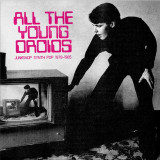
VARIOUS - ALL THE YOUNG DROIDS: JUNKSHOP SYNTH POP 1978-1985 (LP 2x12")
 
24
auch erhältlich

Black Vinyl[27,69 €]

MB Crystal Vinyl[32,73 €]

LTD Trans Pink Vinyl[32,82 €]


2025 REPRESS ON TRANSPARENT GREEN VINYL


Compiled by Philip King “And then came the rise of synth pop : blokes with dodgy haircuts hunched over keyboard-operated machines stuffed with wires and do-it-yourself tone oscillators making sounds like a brood of geese passing gas in a wind tunnel. Whoopee! This is the way the ‘70s ended : not with a blood-curdling bang bang but with a cheap, synthesized, emasculating whimper.” NICK KENT, NME. All The Young Droids: Junkshop Synth Pop 1978-1985 is a new compilation that charts the underbelly of the epoch-defining sound of the synthesiser in 80s popular music. Compiled by Philip King (previously seen compiling All The Young Droogs, Glitterbest and Boobs - The Junkshop Glam Discotheque), the music here connects the dots between DIY synth enthusiasts grappling with new, cheap synthesisers at the tail-end of punk and wannabe, jobbing songwriters enthral to the new music pioneered by Gary Numan, Depeche Mode and Daniel Miller’s Mute Records. Featuring rare tracks of auto-didactic progressive pop music, proto-techno punk, shoot-for-the-stars-land-in-the-gutter chart flops and heralded, underground synth classics, School Daze paints a picture of beautiful failure. Complete with extensive sleeve notes written by King and never before seen imagery, all 24 tracks were remastered by RPM in-house engineer Simon Murphy, many from vinyl copies due to lost master tapes. The story told on All The Young Droids is one of the dawning opportunity presented by both the emergence to the market of cheaper analog synthesisers and the distribution networks plus indie labels that exploded with the advent of punk music in 1976. While the music that sprouted out all over the globe in the wake of these factors was decried as fake, plastic, a refutation of punk’s guitar-led revolution, it’s telling that much of the music on All The Young Droids.. was created in bedrooms, ramshackle studios and home-made set ups with often borrowed equipment. In the era of record labels jumping to capitalise on the success of The Sex Pistols, The Clash (both on major labels, of course) these artists struggled to stand out from a new gold-rush with next to no budget or PR team. With radio and labels desperate for the new Yazoo, what resulted was a testament to necessity being the mother of invention. At the time, the synthesiser was the music of the future, a shiny new machine that could paint like an orchestra with a single finger and a 4-track. In the hands of Manchester avant-pranksters Gerry & The Holograms it’s a pulsing, sardonic weapon.. the only instrument on the Messthetics classic lampooning of New Wave fashion. In Hamburg, a 16 year old Andreas Dorau used it to write and record (with his female classmates on vocals) a global smash in Fred Vom Jupiter (later licensed to Mute Records). The hard-to-find English version (Fred From Jupiter, natch) is included here. Many artists with alreadystoried careers caught the bug and recorded synthesiser-fuelled peons to space, computers, the future and, of course, love-interests. Harry Kakoulli, late of Squeeze, recorded a solo album in 1979 that included the incredible power-synth-pop smash-that-never-smashed I’m On A Rocket. Similarly, Ian North of Neo and American Power Pop stalwarts Milk ’n’ Cookies bought a Korg MS20 and used a tape machine to record We’re Not Lonely, an absolute lost-classic of minimal synth pop. We’re Not Lonely also features on the Junkshop Synth Pop sampler 7” twinned with John Howard unreleased track You Will See, released April 12th 2025. There are plenty of compilation debuts in evidence. Sole Sister were a mysterious trio who were featured on the Scaling Triangles compilation of female-fronted, queer-adjacent post-punk / underground music that also featured The Petticoats. Selwin Image were from San Francisco and featured members of the recently defunct power pop/punk group The Pushups. Their stupidly catchy The Unknown fizzes with New Wave energy - think XTC to Sparks but remains unreleased until now. Dream Unit’s A Drop In The Ocean is an early synth wave cut, positively teaming with Joy Division instrumentation, previously only released on a long-forgotten and super rare, self-released EP. Incandescent Luminaire’s Famous Names belies an archetypal struggle of a small-town trying to make it in a cruel industry but is a thrilling New Romantic-Synth Wave cross over with a OMD gloominess that’s a joy to hear. Feminist Minimal Wave track I Am A Time Bomb by performance artist Peta Lilly and Michael Chance is a revelation destined for new found cult status. It was released on 7” and lost until now. The flipside to the subterranean, never-made-it synth pop mentioned above are the ambitious, even fruity attempts at success that have a perennial elegance to their confidence. New Jersey-ite Billy London (real name Ed Barth) tried to cash in on the synth boom with Woman, released by a major label, a lurching new wave track built on the Louie Louie rhythm and a wonderfully camp Lou Reedstyle sleazy vocal before exploding in the synthesised chorus. The song bombed but with a chorus like this, you have to wonder why? Ex-Glitter Band member John Springate’s My Life is truly epic, with doomed chord progressions and massive sounding drums turning into at least 3 different songs in the course of the track. Before you wonder what’s going on the song resolves with a glorious return to the main refrain. The dry-ice-dressed dance floor is well catered for too. Design’s Premonition and Vision’s Lucifer’s Friend are stone-cold minimal synth bangers, well loved but given a new lease of life here. The Warlord’s The Ultimate Warlord was released in 1978, a homespun proto Hi NRG banger that was later re-recorded by The Immortals in Canada who had a club hit with it. One-man- band Disco Volante’s No Motion was re-issued by Synth wave label Medical in 2012 but makes its first vinyl compilation appearance here. Close your eyes and you can imagine what Lawrence of Felt would have sounded like with some cheap Korgs a little earlier in his career. Gibraltar-based trio The Microbes imagined a computer programming people to dance - how prescient - and ended up with a propulsive, robo-funk track with splendid rubbery bass playing over a tectonic drum machine. Previously picked up by Belgian label Stroom TV, Dee Jay Bert & Eagle’s heavily Euro-accented I Am Your Master demands the listener to “come to paradise!” In a frankly terrifying manner. All The Young Droids is the first compilation to peel away from the narrative that dour, Minimal Synth and Cold Wave were the only musical children of the first rush of synth pop. Philip King and School Daze Records describe a much more complicated world: along with the austere, Brutalist children of Daniel Miller (who produced Alan Burnham’s Bowie-Low-influenced Science Fiction here) was a plethora of desperate cash-ins, accidental mainstream hits, ambitious pop dramas and major label punts that went nowhere. Crucially, the compilation blurs the line between junk and treasure. What if the two things are interchangeable. What if it’s all science fiction?

Auf Lager

Bei uns am Lager und sofort versandfertig

27,69
Shungu - Faith in the Unknown (TAPE)

“I've always dreamed of making an album where I could bring together artists I deeply admire, curating voices, energies, and sensibilities that have inspired me,” says Brussels-born producer and multidisciplinary artist ShunGu of his new record, Faith in the Unknown. “It took time, and it grew into something very human, rooted in trust, patience, and creative risk. These songs are conversations, not just between me and the artists, but between worlds, eras, and ways of feeling.”
That spirit of dialogue and discovery is what defines Faith in the Unknown. Emerging from years of steady, meticulous work in the underground, the album is both a bold statement of identity and an invitation into Shungu’s world. Across 14 tracks, each a self-contained vignette, ShunGu guides the listener through shifting moods and perspectives- moments of intimacy, defiance, reflection and release, coalescing into a much larger story.
His distinct touch threads through the surefire cast of collaborators - Pink Siifu, Liv.e, Fly Anakin, Chester Watson, Fatima, Maxo, Navy Blue, Dreamcastmoe, Ruqqiyah, Zekeultra and Goya Gumbani — each track unfolding as a new dimension in the same universe.
ShunGu has long been a boundary-pusher, known for weaving jazz-inflected samples, skilfully constructed textures, and MPC-driven grooves into production that feels timeless yet untethered. With Faith in the Unknown he pushes further still: a project as much about collective energy as it is about personal vision. It’s a leap into uncertainty, carried by trust in the process and the people involved.
From the lo-fi beat tapes that first won him a cult following, to collaborations that span the globe, Shungu has forged a body of work rooted in exploration and community. Faith in the Unknown crystallises those qualities into his most ambitious statement yet; a record that doesn’t just blur boundaries between genres, but asks what happens when vulnerability and experimentation are treated as shared ground.
The result is a record that trades in subtlety. Each artistic contribution adds its own shade to the larger mosaic, pulling the listener deeper into an expanding narrative. If Faith in the Unknown has a message, it’s that art can thrive in uncertainty - that in the spaces where trust, risk, and vulnerability intersect, something entirely new can emerge.

Auf Lager

Bei uns am Lager und sofort versandfertig

16,39
Shungu - Faith in the Unknown

Shungu

Faith in the Unknown

12inchLEX198LP
LEX RECORDS
15.01.2026

“I've always dreamed of making an album where I could bring together artists I deeply admire, curating voices, energies, and sensibilities that have inspired me,” says Brussels-born producer and multidisciplinary artist ShunGu of his new record, Faith in the Unknown. “It took time, and it grew into something very human, rooted in trust, patience, and creative risk. These songs are conversations, not just between me and the artists, but between worlds, eras, and ways of feeling.”
That spirit of dialogue and discovery is what defines Faith in the Unknown. Emerging from years of steady, meticulous work in the underground, the album is both a bold statement of identity and an invitation into Shungu’s world. Across 14 tracks, each a self-contained vignette, ShunGu guides the listener through shifting moods and perspectives- moments of intimacy, defiance, reflection and release, coalescing into a much larger story.
His distinct touch threads through the surefire cast of collaborators - Pink Siifu, Liv.e, Fly Anakin, Chester Watson, Fatima, Maxo, Navy Blue, Dreamcastmoe, Ruqqiyah, Zekeultra and Goya Gumbani — each track unfolding as a new dimension in the same universe.
ShunGu has long been a boundary-pusher, known for weaving jazz-inflected samples, skilfully constructed textures, and MPC-driven grooves into production that feels timeless yet untethered. With Faith in the Unknown he pushes further still: a project as much about collective energy as it is about personal vision. It’s a leap into uncertainty, carried by trust in the process and the people involved.
From the lo-fi beat tapes that first won him a cult following, to collaborations that span the globe, Shungu has forged a body of work rooted in exploration and community. Faith in the Unknown crystallises those qualities into his most ambitious statement yet; a record that doesn’t just blur boundaries between genres, but asks what happens when vulnerability and experimentation are treated as shared ground.
The result is a record that trades in subtlety. Each artistic contribution adds its own shade to the larger mosaic, pulling the listener deeper into an expanding narrative. If Faith in the Unknown has a message, it’s that art can thrive in uncertainty - that in the spaces where trust, risk, and vulnerability intersect, something entirely new can emerge.

Auf Lager

Bei uns am Lager und sofort versandfertig

28,36
House on the Strand - Unrest MC

Welcoming London-based artist House on the Strand to the Eastern Nurseries fold following his impressive 2024 debut, "Heroine", Ruben Elbrond-Palmer channels a sombre, cinematic sense of sound with "Unrest".

Interpolating the visual sensibilities of some of his favourite artists, filmmakers, and photographers into the sonic field, Elbrond-Palmer’s palette cuts loose from the percussive elements of his previous work, blending analogue synthesis with repurposed guitars, haunting melodies, and field recordings that call to mind the hazy delirium of a dusty summer’s day. Sitting at its core, "Unrest" places harmony front and centre, with each sombre movement rising and falling as electric fences hum, helicopters hover overhead, and unknown events are set in motion.

Deceptively simple, the resultant album is gestalt—an elegy of melancholic moments, lost to the world.

Mastered by Ike Zwanniken of Hysterical Love Project - mainstay mastering engineer behind majority of INDEX, Co:Clear & Theory Therapy Releases

Established in 2019, Eastern Nurseries is a platform for deeply emotional contemporary electronic music based between Porto and Newcastle upon Tyne. Curated by Rui P. Andrade (aka Canadian Rifles) and Christopher Macarthur Owen (aka Burning Pyre).

The label has released a steady yet considered magna of records from Hasfeldt, Emma Acs, innerinnerlife and VAs encompassing the likes of Conna Harraway, Severin Black & Slowfoam.

Eastern Nurseries no. 41

Written & produced by Ruben Elbrond-Palmer

Recorded in London, Kobaek & Aude, 2019-2024

Mastered by Ike Zwanikken

Cover photo by Andrew Weathers

Auf Lager

Bei uns am Lager und sofort versandfertig

16,18
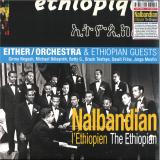
NALBANDIAN THE ETHIOPIAN & EITHER/ORCHESTRA - NALBANDIAN THE ETHIOPIAN (ETHIOPIQUES)

The Éthiopiques series returns! Essential archive recordings from an extremely fruitful period in Ethiopian music.

Before “Swinging Addis” took over the world, there was Moussié Nerses Nalbandian — the Armenian-born composer who shaped modern Ethiopian music. Mentor, arranger, and pioneer, he laid the foundations of Ethio-jazz.

This Éthiopiques volume revives his forgotten legacy, recorded live by Either/ Orchestra First issue ever with new exclusive photos and in depth liner 8-page insert.

“Ethiopian jazzmen are the best musicians that we have seen so far in Africa.
They really are promising handlers of jazz instruments.”

Wilbur De Paris
(1959, after a concert in Addis Ababa)

አዲስ፡ዘመን። *Addis zèmèn* **A new era.**
The time is the mid-1950s and early 1960s, just before "Swinging Addis" bloomed – or rather boomed – onto the scene. Brass instruments are still dominant, but the advent of the electric guitar, and the very first electronic organs, are just around the corner. Rock’n'Roll, R’n’B, Soul and the Twist have not yet barged their way in. Addis Ababa is steeped in the big band atmosphere of the post-war era, with Glenn Miller's *In the* *Mood* as its world-wide theme song, neck and neck with the Latin craze that was in vogue at the same period. Life has become enjoyable once again, with the return of peace after the terrible Italian Fascist invasion of Ethiopia (1935-1941). The redeployment of modern music is part and parcel of the postwar reconstruction. *Addis zèmèn* – a new era – is the watchword of the postwar period, just as it was all across war-torn Europe.
The generation who were the young parents of baby boomers** were the first to enjoy this musical renaissance, before the baby boomers themselves took over and forever super-charged the soundtrack of the final days of imperial reign. Music is Ethiopia's most popular art form, and very often serves as the best barometer for the upsurge of energy that is critical for reconstruction. Whether it be jazz in Saint-Germain-des-Prés or the *zazous* who revolutionised both jazz and French *chanson* after the *Libération*, be it Madrid's post-Franco Movida, or Dada, the Surrealists and *les années folles* that followed World War I, the periods just after mourning and hardship always give rise to brighter and more tuneful tomorrows. Addis Ababa, as the country's capital, and the epicentre of change, was no exception to this vital rule.

**Two generations of Nalbandian musicians**
Nersès Nalbandian belonged to a family of Armenian exiles, who had moved to Ethiopia in the mid-1920s. The uncle Kevork arrived along with the fabled "*Arba Lidjotch*", the** "*40 Kids*", young Armenian orphans and musicians that the Ras Tafari had recruited when he visited Jerusalem in 1924, intending to turn their brass band into the official imperial band. If Kevork Nalbandian was the one who first opened the way of modernism, pushing innovation so far as to invent musical theatre, it was his nephew Nersès who would go on to become, from the 1940s and until his death in 1977, a pivotal figure of modern Ethiopian music and of the heights it. Going all the way back to the 1950s. Nothing less. And it is Nersès who is largely to thank for the brassy colours that so greatly contributed to the international renown of Ethiopian groove. While the younger generations today venture timidly into the genealogy of their country's modern music, often losing their way amidst a distinctly xenophobic historiographical complacency, many survivors of the imperial period are still around to bear witness and pay tribute to the essential role that "Moussié Nersès" played in the rise of Abyssinia's musical modernity.
Given the year of his birth (15 March 1915), no one knows for sure if Nersès Nalbandian was born in Aintab, today Gaziantep (Turkiye/former Ottoman Empire) or on the other side of the border in Alep, Syria... What is certain is that his family, like the entire Armenian community, was amongst the victims of the genocide perpetrated by the Turks. Alep, the place of safety – today in ruins.
Before Nersès then, there was uncle Kevork (1887-1963). For a quarter of a century, he was a whirlwind of activity in music teaching and theatrical innovation. *Guèbrè Mariam le Gondaré* (የጎንደሬ ገብረ ማርያም አጥቶ ማግኘት, 1926 EC=1934) is his most famous creation. This play included "ten Ethiopian songs" — a totally innovative approach. According to his autobiographical notes, preserved by the Nalbandian family, Kevork indicates that he composed some 50 such pieces over the course of his career. This shows just how much he understood, very early on, the critical importance of song as Ethiopia's crowning artistic form. Indeed, for Ethiopian listeners, the most important thing is the lyrics, with all their multifarious mischief, far more than a strong melody, sophisticated arrangements or even an exceptional voice. (This is also why Ethiopians by and large, and beginning with the artists and producers themselves, believed for a long time — and wrongly — that their music could not possibly be exported, and could never win over audiences abroad, who did not speak the country's languages).

Last but not least, one of Kevork's major contributions remains composing Ethiopia's first national anthem – with lyrics by Yoftahé Negussié.
Nersès Nalbandian moved to Ethiopia at the end of the 1930s, at the behest of his ground-breaking uncle. Proficient in many instruments (pretty much everything but the drums), conductor, choir director, composer, arranger, adapter, creator, piano tuner, purveyor of rented pianos,... he was above all an energetic and influential teacher. From 1946 onwards, thanks to Kevork's connexion, Nersès was appointed musical director of the Addis Ababa Municipality Band. In just a few years, Nersès transformed it into the first truly modern ensemble, thanks to the quality of his teaching, his choice of repertoire, and the sophistication of his arrangements. It was this group that would go on to become the orchestra of the Haile Selassie Theatre shortly after its inauguration in 1955, which was a major celebration of the Emperor's jubilee, marking the 25th anniversary of his on-again-off-again reign.

At some point or other in his long career, Nersès Nalbandian had a hand in the creation of just about every institutional band (Municipality Band, Police Orchestra, Imperial Bodyguard Band, Army Band, Yared Music School…), but it was with the Haile Selassie Theatre – today the National Theatre – that his abilities were most on display, up until his death in 1977. To this must be added the development of choral singing in Ethiopia, hitherto unknown, and a sort of secret garden dedicated to the memory of Armenian sacred music, and brought together in two thick, unpublished volumes. Shortly before his death (November 13, 1977), he was appointed to lead the impressive Ethiopian delegation at Festac in Lagos, Nigeria (January-February 1977).

His status as a stateless foreigner regularly excluded him from the most senior positions, in spite of the respect he commanded (and commands to this day) from the musicians of his era. Naturally gifted and largely self-taught, Nerses was tirelessly curious about new musical developments, drawing inspiration from the very first imported records, and especially from listening intensely to the musical programmes broadcast over short-wave radio – BBC *First*. A prolific composer and arranger, he was constantly mindful of formalising and integrating Ethiopian parameters (specific “musical modes”, pentatonic scale, and the dominance of ternary rhythms) into his “modernisation” of the musical culture, rather than trying to over-westernise it. It even seems very probable that *Moussié* Nerses made a decisive contribution to the development of tighter music-teaching methods, in order to revitalise musical education during this period of prodigious cultural ferment. Flying in the face of all the historiographical and musicological evidence, it is taken as sacrosanct dogma that the four musical modes or chords officially recognised today, the *qǝñǝt* or *qiñit* (ቅኝት), are every bit as millennial as Ethiopia itself. It would appear however that some streamlining of these chords actually took place in around 1960. It was only from this time onward that music teaching was structured around these four fundamental musical modes and chords: *Ambassel*, *Bati*, *Tezeta* and *Antchi Hoyé*. A historical and musical “details” that is, apparently, difficult to swallow, especially if that should honour a *foreigner*. Modern Ethiopian music has Nersès to thank for many of its standards and, to this day, it is not unusual for the National Radio to broadcast thunderous oldies that bear unmistakable traces of his outrageously groovy touch.

Auf Lager

Bei uns am Lager und sofort versandfertig

22,06
Armand Hammer & The Alchemist - Haram

Looking back more than four years later at Haram, it is easier to see the forest for the trees. At the time, much of the attention fell on how this outsider duo would fare under the bright lights- which was fair, Armand Hammer had never done a single producer record before- and here they were working with a living legend. Now, with a little distance, it’s easier to see how Alchemist stepped out of his comfort zone to meet them where they were, and how all three artists then absconded for parts unknown. The flashbulb energy of “Bring The Stars Out”, asymmetric drone of “Chicharrones”, fugue-bounce of “God’s Feet”, and good luck finding analogues for “Peppertree” or “Stonefruit”. Haram doesn’t sound like anything else in the ALC discography, nor in Armand Hammer’s, for that matter. Haram was a one-shot kill that somehow contained some of the most accessible work ELUCID and billy woods had ever done, as well as some of their most experimental, and it all sounded cohesive.
Needless to say, they didn’t do this alone; KAYANA’s golden voice upps the wattage on “Black Sunlight,” while Fielded’s sultry alto gets chopped and screwed on “Aubergine”. Earl Sweatshirt’s cameo on the sun-soaked “Falling Out the Sky” is already a classic. Curly Castro, Amani, and Quelle Chris all turn up the heat when called upon.
But since we are talking about retrospect here, the thing about Haram isn’t that it still sounds as good as it did when it came out. The amazing thing is that it actually sounds even better than it did then. You don’t have to take our word for it either, run it up one time, with the lights low and something on ice, see if it doesn’t take you somewhere new, again.

Auf Lager

Bei uns am Lager und sofort versandfertig

38,87
Various - Zbroyi Compilation - ONE

VARIOUS ZBROYI COMPILATION ONE, opens with Orlesko’s break mix—offering a fleeting glimpse into the untamed world we are all part of. The journey deepens with a hypnotic remix by Polish underground heavyweight Gathaspar, pulling us further into its immersive pulse. The B-side shifts the atmosphere. Here, Montreal-based Maurice Giovannini delivers a crisp, clean cut that locks the dancefloor. Closing the release is a beautiful, introspective segment from Mexico’s experimental deep-sound explorer Never Alone In A Dark Room, wrapping the compilation in emotive nuance.

Thanks to the artists and everyone involved in bringing this series to life.

Auf Lager

Bei uns am Lager und sofort versandfertig

11,72
Ida Urd & Ingri Høyland - Duvet LP

Ida Urd & Ingri Høyland

Duvet LP

12inchBALMAT18
Balmat
13.10.2025

The Danish/Norwegian duo of Ida Urd and Ingri Høyland believe that music is an extension of one’s immediate sensory environment. Duvet, their collaborative full-length debut, explores the way that creating sounds together is intertwined with various quotidian actions: establishing surroundings, rearranging furniture, moving towards the light, collecting flowers or other objects for aesthetic and sensuous impulses. Through a quiet and attentive process, music becomes a way of nurturing space: a soft architecture for play, writing, care, or simply rest.

Sonically, Duvet feels like an extension of Høyland’s last album, 2023’s Ode to Stone, which also featured Urd along with ambient musician Sofie Birch and visual artist Lea Guldditte Hestelund. But where that album, created in response to an open call for work themed around Denmark’s national parks, suggested rolling landscapes and endless horizons, Duvet turns inward, countering chill winds with glowing warmth. Its eight tracks seek a balance between abstraction and melody, intention and happenstance.

“We had a truly inspiring and rewarding process working with Birk Gjerlufsen Nielsen from Vanessa Amara, who co-produced and mixed the album with us,” Ingri adds. “He approached the material with great care and sensitivity, while also bringing his own distinct presence and creativity into the sound.”

Høyland and Urd both studied at the Rhythmic Music Conservatory in Copenhagen, which has turned out many acclaimed artists over the past few years, including Erica de Casier, Astrid Sonne, and Smerz. Over many years, the two composers have developed a collaborative method based on connection and trust. A practice, they write, “where composing, or rather suggesting, sounds and melodies for one another is a way of carefully talking, mending emotions and obstacles. Saying yes to one another. The compositional space becomes a nest for entangling whatever emotions, thoughts, or barriers one of the composers brings to the given day or moment.”

Quiet and contemplative, Duvet is simple on the surface but rich in timbral, textural, and emotional complexity. Høyland and Urd sourced their sounds from an array of instruments and techniques—electronic devices, modules, pedals, and also electroacoustic treatments of various wind instruments.

Mixing primarily through analog tape units added further mystery and depth, weaving together wordless voices and unknown sounds—breathing, rustling, perhaps the coppery gleam of Urd’s electric bass—into a dynamic matrix. Like a nest, pull one twig and the whole thing unravels.

In the winter of 2023, Ingri Høyland and Ida Urd retreated to a summer house along the coast to create the album. Picture the scene: an abiding quiet all around. Gardens carpeted by snow; beach grass silvery against the silvery sky; a tendril of smoke rising from the chimney. Not another soul in earshot. This sanctuary was the perfect setting to yield this meditation on shelter, trust, and communication. The two composers hope the album can be a similar space for others—a temporary space of residence, it can represent a summerhouse, a cabin in the woods, your favorite bench or wherever you need to go. “The album also works really well when picking out apples in the supermarket” Urd laughs.

Auf Lager

Bei uns am Lager und sofort versandfertig

25,17
Various - SEVEN Various Artists 02 (2x12")

SEVEN is proud to release their second Various Artists compilation on double 12" Clear Vinyl and Cassette. Again the label introduces 7 new artists to the label including a production debut by Carmen Electro who releases her first ever track plus music from Berghain / Panorama bar DJ's Zombies in Miami, Byron Yeates and Pink Concrete.

Auf Lager

Bei uns am Lager und sofort versandfertig

21,81
Various - SEVEN Various Artists 02 (TAPE)

Various

SEVEN Various Artists 02 (TAPE)

CassetteSEVENVA02CAS
Seven
05.09.2025

SEVEN is proud to release their second Various Artists compilation on double 12" Clear Vinyl and Cassette. Again the label introduces 7 new artists to the label including a production debut by Carmen Electro who releases her first ever track plus music from Berghain / Panorama bar DJ's Zombies in Miami, Byron Yeates and Pink Concrete.

Auf Lager

Bei uns am Lager und sofort versandfertig

10,88
Various - Somewhere Soul: Rituals Vol 1 (LP 2x12")

RE:WARM Records are very pleased to announce their next release 'Rituals', a new compilation series from the curator and DJ, Josh Mason-Quinn, aka Somewhere Soul.

For Volume 1 Josh takes us on a journey through the various shades of his ritualistic listening habits across twenty-four hours. From rising first thing in the morning, radiating positive energy throughout the day, retreating into the evening before finally releasing your inhibitions on the dancefloor.

The compilation spans four sides of vinyl and is presented in a double gatefold sleeve. The release will also be available on CD and digital formats.

The album is a celebration of new and emerging talent from the underground Jazz, Soul, World and House Music spheres, sitting neatly alongside artists already carving their way into the collective conscience of those who have been curious enough to dig deep.

The record is due for release on 25th July 2025 with the pre-order available 23rd April 2025 via the Warm Agency Bandcamp and selected record stores.

Auf Lager

Bei uns am Lager und sofort versandfertig

40,76
Various - French Disco Boogie Sounds Vol. 3 (2x12")

Repress

They say that good things come in threes... it must be true and Favorite Recordings also proudly presents the third edition of its acclaimed French Disco Boogie Sounds compilation series.

Like on prior volumes, the complete tracklist is selected by label head honcho, Charles Maurice (aka Pascal Rioux), who's unearthed 13 more forgotten and hidden tracks, all produced whether in France, in French, or by French artists between 1977 and 1987.

With most of these titles now very hard to find in their original edition and unknown by many, this compilation should be a must have for any Disco-Boogie-Funk music lover and collector.

Fully remastered from originals at The Carvery Cut (UK), French Disco Boogie Sounds Vol.3 (1977-1987, selected by Charles Maurice) is presented by Favorite Recordings in a gatefold vinyl double LP and as CD.

Auf Lager

Bei uns am Lager und sofort versandfertig

21,81
Various - A Cellarful Of Motown!… A Northern Soul Love Affair LP
 
16

The title says it all - A Cellarful Of Motown! ..A Northern Soul Love Affair.

West Grand has been set up to mine the deep vaults of mighty Motown courtesy of a licence deal with Universal Music.

The first West Grand LP fuses two musical religions, Motown and Northern Soul.

In some ways they are unlikely bedfellows. Motown became known as Hitsville by churning out hit after hit, while Northern Soul passion is fired by a constant search for the unknown and the obscure.
The 16 tracks here - on incredibly the first Motown various artists vinyl album released worldwide for 40 years - join the dots. All of them were recorded in the 1960s. None of them were released at the time, despite being prime examples of the sublime magic conjured up by Berry Gordy’s genius-like team of singers, writers, producers, arrangers and musicians at that tiny little snakepit of a recording studio on West Grand Boulevard in Detroit.

Motown authority Adam White’s album sleeve notes confirm just how productive that studio was. It often ran 24 hours a day, 7 days a week.
As a result, lots of the most sublime music ever made was somehow rejected for release. It would have stayed unknown and unloved in tape boxes if it had not been for detective work by Soul aficionados turned detectives. That’s Northern Soul power. Many were DJs and collectors tracking down cassette copies or acetates (some of them found in rubbish skips and about to be destroyed). Others, notably Paul Nixon, the founder of the CD series A Cellarful Of Motown! which inspired this album, badgered the Motown gatekeepers so much they were eventually granted access to the forbidden kingdom.

Over recent years all the tracks contained here have been released—some bootlegged, some on legitimate seven-inch issues, some on CD, one download-only. The album proudly boasts debut vinyl release for some in the collection. All have been remastered and have never sounded better.

As a homage to Motown music makers + Rare Soul fanaticism, WEST GRAND believe we have come up with a classic.

Auf Lager

Bei uns am Lager und sofort versandfertig

23,49
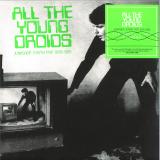
VARIOUS - ALL THE YOUNG DROIDS: JUNKSHOP SYNTH POP 1978-1985 (LP 2x12")
 
24
auch erhältlich

MB Crystal Vinyl[32,73 €]

LTD Trans Pink Vinyl[32,82 €]

LTD Trans Pink Vinyl[27,69 €]


Compiled by Philip King
“And then came the rise of synth pop : blokes with dodgy haircuts hunched over keyboard-operated
machines stuffed with wires and do-it-yourself tone oscillators making sounds like a brood of geese
passing gas in a wind tunnel. Whoopee! This is the way the ‘70s ended : not with a blood-curdling bang
bang but with a cheap, synthesized, emasculating whimper.”
NICK KENT, NME.

All The Young Droids: Junkshop Synth Pop 1978-1985 is a new compilation that charts the
underbelly of the epoch-defining sound of the synthesiser in 80s popular music. Compiled by Philip
King (previously seen compiling All The Young Droogs, Glitterbest and Boobs - The Junkshop
Glam Discotheque), the music here connects the dots between DIY synth enthusiasts grappling with
new, cheap synthesisers at the tail-end of punk and wannabe, jobbing songwriters enthral to the new
music pioneered by Gary Numan, Depeche Mode and Daniel Miller’s Mute Records. Featuring rare
tracks of auto-didactic progressive pop music, proto-techno punk, shoot-for-the-stars-land-in-the-gutter
chart flops and heralded, underground synth classics, School Daze paints a picture of beautiful failure.
Complete with extensive sleeve notes written by King and never before seen imagery, all 24 tracks
were remastered by RPM in-house engineer Simon Murphy, many from vinyl copies due to lost master
tapes. The story told on All The Young Droids is one of the dawning opportunity presented by both the
emergence to the market of cheaper analog synthesisers and the distribution networks plus indie labels
that exploded with the advent of punk music in 1976. While the music that sprouted out all over the
globe in the wake of these factors was decried as fake, plastic, a refutation of punk’s guitar-led
revolution, it’s telling that much of the music on All The Young Droids.. was created in bedrooms,
ramshackle studios and home-made set ups with often borrowed equipment. In the era of record labels
jumping to capitalise on the success of The Sex Pistols, The Clash (both on major labels, of course)
these artists struggled to stand out from a new gold-rush with next to no budget or PR team. With radio
and labels desperate for the new Yazoo, what resulted was a testament to necessity being the mother
of invention.

At the time, the synthesiser was the music of the future, a shiny new machine that could paint like an
orchestra with a single finger and a 4-track. In the hands of Manchester avant-pranksters Gerry & The
Holograms it’s a pulsing, sardonic weapon.. the only instrument on the Messthetics classic lampooning
of New Wave fashion. In Hamburg, a 16 year old Andreas Dorau used it to write and record (with his
female classmates on vocals) a global smash in Fred Vom Jupiter (later licensed to Mute Records).
The hard-to-find English version (Fred From Jupiter, natch) is included here. Many artists with alreadystoried careers caught the bug and recorded synthesiser-fuelled peons to space, computers, the future
and, of course, love-interests. Harry Kakoulli, late of Squeeze, recorded a solo album in 1979 that
included the incredible power-synth-pop smash-that-never-smashed I’m On A Rocket. Similarly, Ian
North of Neo and American Power Pop stalwarts Milk ’n’ Cookies bought a Korg MS20 and used a
tape machine to record We’re Not Lonely, an absolute lost-classic of minimal synth pop. We’re Not
Lonely also features on the Junkshop Synth Pop sampler 7” twinned with John Howard unreleased
track You Will See, released April 12th 2025.

There are plenty of compilation debuts in evidence. Sole Sister were a mysterious trio who were
featured on the Scaling Triangles compilation of female-fronted, queer-adjacent post-punk /
underground music that also featured The Petticoats. Selwin Image were from San Francisco and
featured members of the recently defunct power pop/punk group The Pushups. Their stupidly catchy
The Unknown fizzes with New Wave energy - think XTC to Sparks but remains unreleased until now.
Dream Unit’s A Drop In The Ocean is an early synth wave cut, positively teaming with Joy Division
instrumentation, previously only released on a long-forgotten and super rare, self-released EP.
Incandescent Luminaire’s Famous Names belies an archetypal struggle of a small-town trying to
make it in a cruel industry but is a thrilling New Romantic-Synth Wave cross over with a OMD
gloominess that’s a joy to hear. Feminist Minimal Wave track I Am A Time Bomb by performance artist
Peta Lilly and Michael Chance is a revelation destined for new found cult status. It was released on 7”
and lost until now.

The flipside to the subterranean, never-made-it synth pop mentioned above are the ambitious, even
fruity attempts at success that have a perennial elegance to their confidence. New Jersey-ite Billy
London (real name Ed Barth) tried to cash in on the synth boom with Woman, released by a major
label, a lurching new wave track built on the Louie Louie rhythm and a wonderfully camp Lou Reedstyle sleazy vocal before exploding in the synthesised chorus. The song bombed but with a chorus like
this, you have to wonder why? Ex-Glitter Band member John Springate’s My Life is truly epic, with
doomed chord progressions and massive sounding drums turning into at least 3 different songs in the
course of the track. Before you wonder what’s going on the song resolves with a glorious return to the
main refrain.

The dry-ice-dressed dance floor is well catered for too. Design’s Premonition and Vision’s Lucifer’s
Friend are stone-cold minimal synth bangers, well loved but given a new lease of life here. The
Warlord’s The Ultimate Warlord was released in 1978, a homespun proto Hi NRG banger that was
later re-recorded by The Immortals in Canada who had a club hit with it. One-man- band Disco
Volante’s No Motion was re-issued by Synth wave label Medical in 2012 but makes its first vinyl
compilation appearance here. Close your eyes and you can imagine what Lawrence of Felt would have
sounded like with some cheap Korgs a little earlier in his career. Gibraltar-based trio The Microbes
imagined a computer programming people to dance - how prescient - and ended up with a propulsive,
robo-funk track with splendid rubbery bass playing over a tectonic drum machine. Previously picked up
by Belgian label Stroom TV, Dee Jay Bert & Eagle’s heavily Euro-accented I Am Your Master
demands the listener to “come to paradise!” In a frankly terrifying manner.
All The Young Droids is the first compilation to peel away from the narrative that dour, Minimal Synth
and Cold Wave were the only musical children of the first rush of synth pop. Philip King and School
Daze Records describe a much more complicated world: along with the austere, Brutalist children of
Daniel Miller (who produced Alan Burnham’s Bowie-Low-influenced Science Fiction here) was a
plethora of desperate cash-ins, accidental mainstream hits, ambitious pop dramas and major label
punts that went nowhere. Crucially, the compilation blurs the line between junk and treasure. What if the
two things are interchangeable. What if it’s all science fiction?

Auf Lager

Bei uns am Lager und sofort versandfertig

27,69
Various - Losh Label 001

Various

Losh Label 001

exclLOSH001
LOSH Label
12.06.2025

Losh is a series of parties held at the magical Chapala lake in Ajijic, Mexico, aimed at preserving the essence of underground sound and its culture. The event has hosted performances by artists such as Satoshi Tomiie, Shonky, Priku, Arapu, Markus Nikolai and more. Now, Losh is exploring new horizons with the launch of its own vinyl label. The music for this first release features tracks by Michael James, Tijn, DJ Unknown 1900, and Mike.D.

collecting

Bestelle jetzt. Wir sammeln aktuell Bestellungen für eine Nachpressung.

11,72

Last In: vor 11 Monaten
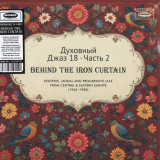
Various - Spiritual Jazz 18: Behind the Iron Curtain PART 2 2x12"

One of the most politically charged terms of the 20th century, the Iron Curtain was a metaphor for political and cultural division. In a post-war telegram Winston Churchill referred to the fault line that ran through Europe between East and West as "an Iron Curtain is drawn down upon their front. We do not know what is going on behind".


In this two-part album, as far as jazz is concerned, we will showcase, describe and celebrate exactly what was 'going on behind'. We see that music is the power supreme, with the ability to transcend all barriers, be they physical, political or metaphorical.


Our liner notes illustrate the complex and contradictory history of Soviet jazz, and the tracks we've chosen cover the key period of the early 1960s to the 1980s. It was during these dark years of the Cold War that the Soviet Union and its satellite states produced a number of outstanding artists playing in a variety of styles. The impact of modernism, from hard bop and Latin to modal and cool jazz, had found its way through cracks in the curtain. The deeply-felt ancestral strains of traditional European folk music were combined with the exciting new and progressive sounds of the West, and a radical, intoxicating brew was created that no amount of guns, tanks or polonium tea could overcome.


We chronicle the triumph of jazz at a time of extreme geopolitical conflict. What went on behind the Iron Curtain in these countries was once mysterious and unknown to the West, but the perseverance of their artists provided sound and light amid the secretive, dark days of the communist-capitalist standoff. There was no end of life-affirming spiritual jazz behind the Iron Curtain.


"Whether it's by improvisation in the African-American jazz tradition, or by a village kobza player standing on top of a damn hill - he feels connected to the stars."

Auf Lager

Bei uns am Lager und sofort versandfertig

28,53
Artikel pro Seite:
N/ABPM
Vinyl