Search:as far as i know

Styles
All
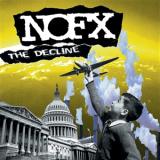
NOFX - THE DECLINE EP

NOFX

THE DECLINE EP

12inchFAT1305
Fat Wreck Chords
22.05.2026
 
2
also available

Black Vinyl[24,33 €]


GER NOFX waren sauer (sind es möglicherweise immer noch) und wollten uns das wissen lassen! Ursprünglich 1999 veröffentlicht, war "The Decline" ein mutiges Werk und markierte einen großen Wendepunkt für NOFX. Der Song, der weithin als eines ihrer Meisterwerke gilt, ist ein 18-minütiges Punkrock-Spektakel, das die Entertainmentqualitäten, den lyrischen Witz und die Musikalität der besten Punkrockband aller Zeiten richtig zur Geltung bringt. Der Song, der den Zustand Amerikas satirisch darstellt und die gleichgültigen Massen und Politiker gleichermaßen aufs Korn nimmt, ist auch im Jahr 2026 natürlich leider noch aktuell und kritisiert somit weiterhin die Mächtigen auf eine Weise, zu der nur wenige Künstler den Mut haben. Die Vinyl-Single enthält auf der B-Seite die erste Version von "Clams Have Feelings Too" (das später auf dem Album "Pump Up The Valuum" wieder auftauchte) und ist ein Muss für jeden NOFX-Fan. Erneut auf schwarzem Vinyl wieder da und und limitiert in neuem farbigem Vinyl. Inklusive Beilage mit Texten und Bildern. NOFX were pissed off (possibly still are) and they wanted to let us know! Originally released in 1999,The Decline, was a brave release and marked a huge turning point for NOFX. Widely regarded as their magnum opus, the song is an 18-minute punk rock spectacle that showcases the showmanship, lyrical wit, and musicality of the best punk rock band of all time. Satirizing the state of America and skewering the indifferent masses & politicians alike, the song is eerily relevant in 2026 and continues to critique the powers that be in a way few artists have the courage to do. The vinyl adds first version of "Clams Have Feelings Too" (later resurfacing on the Pump Up The Valuum album) on the flip, the 12" is an essential release for any NOFX fan. Back on black and colored vinyl (ltd), includes insert with lyrics and pics.

pre-order now22.05.2026

expected to be published on 22.05.2026

25,42 €
CHARLIE CHIMI - DISCO CHIMI

CHARLIE CHIMI

DISCO CHIMI

12inchCC002
CLUB COCO
18.05.2026

"Disco Chimi" by Dominican-raised Cuban artist Charles is the second release on Coco Maria's newly found Club Coco label. Comes with 4 paged insert with liner notes and art.

Charlie Chimi — the alter ego of Charles Garmendia — is a globe-trotting, kaleidoscopic creator best known for La China de la Gasolina. A percussionist for legendary Zamrock band WITCH, L’Eclair, and other international acts, Charlie moves fluidly between roles as a live performer, studio musician, and visual artist.

Like the iconic Dominican street burger it’s named after, the Charlie Chimi project is a spicy mélange of Afro-Cuban rhythms, funk-driven basslines, and playful, inventive wordplay — touching on everyday rituals like making lunch, as well as the trickier themes of illusion, hustle, and deception in the animal (and human) world.

Charlie has assembled an international crew of “Chimis” to help him run the numbers, delivering a dizzying, theatrical live show that feels like peeking into the hazy back room of a bodega: old men slamming dominoes, bachata blasting, and a cosmic sandwich opening a wormhole to somewhere far stranger.

out of Stock

Order now and we will order the item for you at our supplier.

Last In: 4 months ago
22,90 €
Adam Ross - Bring On The Apathy LP
  • A1: ) Berkeley Street
  • A2: ) I Never Thought You Couldn’t Not
  • A3: ) Unrequited
  • A4: ) Crisis
  • A5: ) How Do You Know?
  • B1: ) Bring On The Apathy
  • B2: ) Lost In The Daylight
  • B3: ) Horizon
  • B4: ) Kites
  • B5: ) Time

Fika Recordings are pleased to present Bring On The Apathy, the third solo record from Scottish songwriter Adam Ross. Adam Ross is an indie-folk songwriter based in north-east Scotland. He is a solo artist and has also led the cult indie band Randolph's Leap for over a decade, releasing music with legendary Fence Records and Lost Map as well as Olive Grove Records and Fika Recordings. He is known for his unique brand of articulate lyricism which blends humour, poignancy, wordplay and offbeat stories.. “Bring On The Apathy” was recorded onto tape, using traditional analogue techniques at Glasgow’s Green Door Studio with Samuel J. Smith. It showcases some of the most emotionally open, lyrically deft and characterful songwriting so far from one of Scotland’s most accomplished writers. The vintage recording approach brings a warmth and intimacy to a record which is in equal parts raw and organic while also beautifully arranged and performed as Adam is joined by a raft of excellent collaborators. The album itself is a reaction. Whether it be in the title, the lyrical content or the method in which the sounds were captured. “I was feeling fairly down and uninspired about the musical landscape” Adam explains. “The risk with digital recording where every instrument is overdubbed separately is that it can end up sounding metronomic, sterile and lacking personality.

I also started to get a bit freaked out by the topic of AI-generated music and the insidious, creeping impact it’s already having. I therefore decided that, as a bit of a protest, I wanted to make something that sounded extra-specially human and hand-crafted, where you could hopefully hear the interplay between musicians.” For this reason, Adam decided to record the majority of the album live, as a band, playing together in the same room without a click track. “I’d put a band together to tour my last album, Littoral Zone, and I really enjoyed the way we all worked together. Green Door Studio was chosen as the destination as it specialises in analogue sound production but it had an extra significance for Adam. “Green Door was the first studio I ever recorded in, back in 2009. This time around, the “unforgiving” nature of tape recording became an inspiration. “The musicians on the record are such great players that they rarely make mistakes, so there was a confidence there that we wouldn’t need to rely on copious amounts of editing or post-production, which isn’t always possible with tape anyway. The core band consisted of Owen Curtis-Williams on drums, Cameron Maxwell on bass, Pedro Cameron on violin, Gillian Fleetwood on harp and (long-time collaborator with Randolph’s Leap) Pete MacDonald on piano. Mercury Prize-nominated artist C Duncan was drafted in to write and perform backing vocal arrangements along with Amanda Nizich and Gillian Fleetwood. Adam says “I’d been listening to a lot of Bob Dylan, Karen Dalton and Bill Callahan records and I thought it might be interesting to apply those sorts of influences to my brand of Scottish quirk-pop”.

pre-order now15.05.2026

expected to be published on 15.05.2026

22,65 €
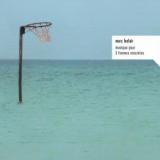
MARC LECLAIR - MUSIQUE POUR 3 FEMMES ENCEINTES LP 2x12"

In Sheep’s Clothing announces the long-awaited vinyl pressing of Marc Leclair’s beloved 2005 album Musique pour 3 femmes enceintes. The album will also be available on streaming for the first time via Community Music Group.

For years after Marc Leclair released Musique pour 3 femmes enceintes, he heard from listeners who had lived with the record in an unusually intimate way. Many described how the music became part of the emotional landscape of the months leading to birth. “I never expected that,” Leclair says. “Many women told me they listened to the record throughout their pregnancies. They said it made a real difference, that it helped them. It became more than just a record.”

First issued on CD in the early 2000s, Musique pour 3 femmes enceintes (Music for Three Pregnant Women) now returns in a new edition from In Sheep’s Clothing Hi-Fi, appearing on vinyl for the first time as a double LP. The record is being pressed in Detroit at Archer Record Pressing, the historic plant behind deep-groove classics by Juan Atkins, Kevin Saunderson, Underground Resistance, UR’s Jeff Mills, and J Dilla.

Listeners who know the Montreal-based Leclair through his better-known work as Akufen might be surprised by the tone here. During the same years he was shaping the intricate micro-sampling tracks that made Akufen a cult figure on labels including Perlon, Force Inc. and Trapez, Leclair was quietly developing this far more personal project. The meticulous craftsmanship remained the same, though the focus shifted from the hyper-detailed cut-up rhythms of his dance records toward something slower and more atmospheric. “I always compare my work to a jeweler,” Leclair says. “It’s really very precise. I’m a bit of a detail freak. I can spend hours or days on just one phrase in one song. Everything has to be perfectly put together.”

The project began almost accidentally. A few members of Leclair’s circle became pregnant nearly simultaneously, including one who had long believed she couldn’t conceive. The first track he recorded for the project wasn’t meant to advance a larger concept, he says. “It was meant to highlight the fact that three of my closest friends became pregnant at exactly the same time.”

Leclair was already a father with a three-year-old daughter, so the emotional terrain of early parenthood was familiar. Gradually the idea expanded. “I began thinking, why not make a whole album that celebrates this and also follows the entire pregnancy, the nine months,” he says. The music developed piece by piece, including a track originally commissioned by the Berlin experimental duo Rechenzentrum that would later become the album’s opening movement.

Nearly seven years passed between the first composition and the finished album, and the music mirrors the strange arithmetic of pregnancy itself. What begins as a single idea multiplies outward, sounds layering and branching until the album feels less like a sequence of compositions than a living process unfolding in time. “I work very slowly,” Leclair says. “Everything has to be something I’m completely behind. I never want to rush anything. I want things to come naturally.” Across its 72 minutes, the album blossoms with the patience of a long meditation on time, growth and emergence.

When Musique pour 3 femmes enceintes first appeared via Mutek, it circulated quietly but steadily. Critics who discovered it later recognized its unusual scope. In a 2006 Pitchfork review, Mark Richardson gave the record an 8.1, calling “150e Jour” “an unfailingly gorgeous and tightly sequenced quilt of guitar and piano samples reminiscent of Tangerine Dream,” and describing “85e Jour” as infused with “viscous pop ambient drift, the gauzy synth pads ebbing and flowing with rhythm.” Boomkat described the album as “a majestic opus from a producer that's always promised so much — here delving into a panoramic construction of almost visibly radiant music that works so beautifully through each and every second of its 72 minute lifespan.”

The new In Sheep’s Clothing Hi-Fi edition finally presents the record in the format Leclair long imagined. “I always thought that record deserved a vinyl edition,” he says. Spread across two LPs, the music now has room to unfold at its natural pace. More than twenty years after it first appeared, Musique pour 3 femmes enceintes remains what it was from the start: a carefully shaped meditation on transformation and the quiet miracle of life beginning.

pre-order now

This item has not yet been released. You can pre-order the product now.

33,19 €
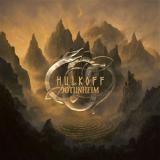
HULKOFF - JOTUNHEIM LP 2x12"
  • 1: TILL JOTUNHEIM
  • 2: DET GAMLA BLODET
  • 3: THRYM
  • 4: LOKE
  • 5: BLóDUGHADDA
  • 6: JÄTTARNA
  • 7: SURTR
  • 8: UR GINNUNGAGAP
  • 9: SIGURD
  • 10: NORDSTJÄRNAN
  • 1: TO JOTUNHEIM
  • 2: THE OLD BLOOD
  • 3: THRYM
  • 4: LOKE
  • 5: BLóDUGHADDA
  • 6: THE GIANTS
  • 7: SURTR
  • 8: OUT OF GINNUNGAGAP
  • 9: SIGURD
  • 10: NORTHSTAR

On May 15, HULKOFF returns with his fifth studio album; Jotunheim - a towering new chapter that bends space and time, and throws you back to the very darkest void where the nordic sagas began - Etunaheimar. The first spiritual landscape known in the blood-memory of Fennoscandia, today referred to as Jotunheim - the realm of Giants. Founded by the former frontman of Raubtier, HULKOFF has dominated Swedish charts with multiple #1 releases, including Pansarfolk (2020), Ragnarök (2021), and Hersir (2023). As with some of the previous releases, HULKOFF once again drops a double album. With 20 tracks split across two discs -one in Swedish, one in English- the album invites the world into the frostbitten heart of the North, expanding the saga without loosing its roots. With Jotunheim, HULKOFF delivers what has become his hallmark: iron-hard riffs over folky melodies and thunderous drums. Often described as "Music for the Viking hearted", Jotunheim once again presents the established HULKOFF sound - Metal refined and enhanced by the primal organic sound from Talharpa and violin - wood, horsehair and steel. A symbiosis that is adding an earthy, ritualistic texture to the otherwise dark and heavy sonic landscape.

pre-order now15.05.2026

expected to be published on 15.05.2026

32,98 €
FATHER JOHN MISTY - PURE COMEDY LP 2x12"

Schwarzes Vinyl! Doppel-LP im Klappcover. Ursprünglich 2017 rausgebracht und jetzt zum ersten Mal in Europa über Sub Pop erhältlich! Pure Comedy, das dritte Album von Father John Misty, ist eine komplexe, oft sarkastische und ebenso oft berührende Reflexion über die verwirrende Torheit der modernen Menschheit. Father John Misty ist das Projekt von Singer-Songwriter Josh Tillman. Wir könnten viel über Pure Comedy sagen, zum Beispiel, dass es ein mutiges, wichtiges Album in der Tradition amerikanischer Songwriting-Größen wie Harry Nilsson, Randy Newman und Leonard Cohen ist, aber wir denken, es ist am besten, wenn sein Schöpfer es selbst beschreibt. Los geht's, Mr. Tillman: Pure Comedy ist die Geschichte einer Spezies, die mit einem unvollständig entwickelten Gehirn geboren wurde. Die einzige Überlebenschance dieser Spezies, die sich auf einem grausamen, unberechenbaren Felsen wiederfindet, umgeben von anderen Spezies, die in dieser ganzen Sache viel geschickter zu sein scheinen (und für die sie eine Delikatesse sind), besteht darin, sich auf andere, etwas ältere, halb ausgebildete Gehirne zu verlassen. Diese Abhängigkeit bekommt im Laufe der Geschichte verschiedene Namen, wie ,Liebe", ,Kultur", ,Familie" usw. Mit der Zeit und da sich ihre Gehirne als bemerkenswert gut darin erweisen, Bedeutung zu erfinden, wo keine ist, wird die Spezies zum Lieferanten immer bizarrerer und raffinierterer Ironien. Diese Ironien sollen helfen, mit der abscheulichen Verletzlichkeit der Spezies fertig zu werden und zu versuchen, ihre Fantasie mit der Monotonie ihrer Existenz in Einklang zu bringen. So in etwa. Pure Comedy wurde 2016 in den legendären United Studios (Frank Sinatra, Ray Charles, Beck) in Hollywood, Kalifornien, aufgenommen. Produziert wurde es von Father John Misty und Jonathan Wilson, die Tonarbeit übernahm Mistys langjähriger Tontechniker Trevor Spencer und die Orchesterarrangements stammen vom bekannten Komponisten und Kontrabassisten Gavin Bryars (bekannt für seine umfangreichen Soloarbeiten und seine Zusammenarbeit mit Brian Eno, Tom Waits und Derek Bailey). Black Vinyl. Originally released in 2017 & now available for the first time in Europe via Sub Pop! Pure Comedy, Father John Misty's third album, is a complex, often-sardonic, and, equally often, touching meditation on the confounding folly of modern humanity. Father John Misty is the brainchild of singer-songwriter Josh Tillman. While we could say a lot about Pure Comedy including that it is a bold, important album in the tradition of American songwriting greats like Harry Nilsson, Randy Newman, and Leonard Cohen we think it's best to let its creator describe it himself. Take it away, Mr. Tillman: Pure Comedy is the story of a species born with a half-formed brain. The species' only hope for survival, nding itself on a cruel, unpredictable rock surrounded by other species who seem far more adept at this whole thing (and to whom they are delicious), is the reliance on other, slightly older, half-formed brains. This reliance takes on a few different names as their story unfolds, like "love," "culture," "family," etc. Over time, and as their brains prove to be remarkably good at inventing meaning where there is none, the species becomes the purveyor of increasingly bizarre and sophisticated ironies. These ironies are designed to help cope with the species' loathsome vulnerability and to try and reconcile how disproportionate their imagination is to the monotony of their existence. Something like that. Pure Comedy was recorded in 2016 at the legendary United Studios (Frank Sinatra, Ray Charles, Beck) in Hollywood, CA. It was produced by Father John Misty and Jonathan Wilson, with engineering by Misty's longtime sound-person Trevor Spencer and orchestral arrangements by renowned composer/double-bassist Gavin Bryars (known for extensive solo work, and work with Brian Eno, Tom Waits, Derek Bailey).

pre-order now15.05.2026

expected to be published on 15.05.2026

34,87 €
VARIOUS - BROWN ACID: THE TWENTY-SECOND TRIP LP

Just as you were getting your head straight coming off the 21st Trip … Brown Acid dose # 22 drops, continuing to fry your mind in a revolving trap-door Twilight Zone alternate world of early hard rock… populated by real life characters so far out they can look like a cheesy wedding band but sound like Blue Cheer! Uncanny! This music comes at you from many angles. Teens in a garage colliding with booze, drugs and girls for the first time, lounge lizard hustlers with snazzy stage clothes and fuzz boxes… gnarly backwoods troublemakers meet blow dried glam rock wannabes here, seamlessly clobbering your head with sound rather than each other! An electric post-psychedelic bar brawl for your mind awaits, unfasten your seat belt, crank it up and fly! Sounds Synonymous "Babylon" out of Flint, Michigan 1969 rip the devastating Blue Cheer classic a new one, immediately swarming you with organ swells and distortion before collapsing into a tuff funk groove, a psychedelic James Brown vibe shot through with dirty howling fuzz guitar, vocals nailing the messed up but confident relaxed sneering attitude of the original Cheer eruption. The Bumps "Shining" from Seattle 1969 resides right at the transition of ‘60s psych into early prog, well constructed, no diluting things artsy fartsy style, a compelling heavy riff, spacious vocal harmony hook floating above a turbulent take on getting your shit together and shining like a star. Fat chance, but you can dream, the band did and their dreams kick ass across time to right now or you wouldn’t be here.

Coulda been a hit back then, definitely a hit now. Riverside "Farmer" explodes out of Austin, Texas 1974, economical but brilliantly structured riffs and power chords, intense dynamic tension/release, fantastic screaming leads over shifting angles of attack during the middle break… it’s all here with a detached confidence in the vocal that swaggers back in time to the late ‘60s in its proto-heavy psych adjacent assault. Cincinnati Joe & Mad Lydia "Get It Together" for real in Cincinnati, Ohio 1970. The song says everything you need to know: “You may think that you’re the very best, miles and miles ahead of the rest, but be sure when you’re put to the test you get it together!” These words are deployed in a manner similar to Peter Green’s “Oh Well”, intermittently stated between killer gnarly guitar and gushy organ attacks. Bar band heaven and hell rolled up into one big ball, the vocals get all the way out there! Straight Up "Fire" takes the monster 1968 Crazy World Of Arthur Brown hit into faithfully executed but surreally minimalist territory, Minneapolis, Minnesota 1974. Genius version of a key song that presciently cuts to the chase regarding Brown Acid’s incinerations of psychedelic idealism, you’re gonna burn, burn, burn… as that moment climaxes you can gawk at their preposterous flashy lounge band stage outfits and realize side one must end because everything is totally scorched into eternity. Scrap Iron "Poopsie" is a primitive two chord stomper with spiraling fuzz and organ riffs, singer marking his territory caveman style. “Poopsie, you’re my woman” he commands, but gets weirdly insecure she’ll blow him off at the altar by the end of each verse. Snarly wah-wah ices this toxic cake out of Carteret, New Jersey 1973. Focused delivery so single-mindedly crude it creates an inescapable instant brain-worm. Lady "Live Show Tigers" is amongst the most potently life affirming trash rockers you’ll ever hear, one outrageously triumphant but fiercely sloppy anthem about living it up like a star, strutting the stage glammed up New York Dolls drag style but with a Dictators sense of humor. Tasty slightly off kilter guitar leads all through, going serendipitously berserk on the fade. Picture disc single out of L.A. 1980. Fantastic fun rock star rock at a very raw local street level where any time is party time.

Killer Frog "Hard Times" on Masochist Records from Chicago, Illinois 1972 takes less than two minutes, an action packed James Gang style bar band rocker with a bit of punky sneer in the face of misfortune. These guys never even heard of flower power. They are killer frogs. Good Humore "Killer" does kill in stripped down hard rock trio style, Warren, Michigan 1976. No frills guitar, bass and drums groove tight, snaky primordial riff, snarly licks. “She’s a killer of a woman, knows just what she’s doing…” The singer knows she’s a femme-fatale roadhouse predator but she’s so hot the inevitable wreckage seems a bargain. Ride it out like the extended jam on the fade knowing she’ll be back for more! Sarawest "Space Rider" winds up the 22nd Trip lost in a twisted two chord space adventure from the point of view of an alien visiting our planet seeking knowledge but finding out we are stupidly destroying ourselves, so he gotta split sneering back at us like we wasted his time “I got no time for loving… I wanna be a space rider, space rider”. Toronto, Canada 1974, a vibe lurking in some strange but funny void between late ‘60s outsider garage psychedelic rock complete with reverb-y acid guitar leads and late ‘70s retro-futuristic D.I.Y wisecracking from inner space… taking the piss out of outer space!

pre-order now12.05.2026

expected to be published on 12.05.2026

30,67 €
VARIOUS - BROWN ACID: THE TWENTY-SECOND TRIP LP
  • A1: Sounds Synonymous ? Babylon
  • A2: Flint, Michigan ? 1969
  • A3: The Bumps ? Shining
  • A4: Seattle, Washington ? 1969
  • A5: Riverside ? Farmer
  • A6: Austin, Texas ? 1974
  • A7: Cincinnati Joe and Mad Lydia ? Get It Together
  • A8: Cincinnati, Ohio ? 1970
  • A9: Straight Up ? Fire
  • A10: Minneapolis, Minnesota ? 1974
  • B1: Scrap Iron ? Poopsie
  • B2: Carteret, New Jersey ? 1973
  • B3: Lady ? Live Show Tigers
  • B4: Los Angeles, California ? 1980
  • B5: Killer Frog ? Hard Times
  • B6: Chicago, Illinois ? 1972
  • B7: Good Humore ? Killer
  • B8: Warren, Michigan ? 1976
  • B9: Sarawest ? Space Rider
  • B10: Toronto, Ontario ? 1974
also available

RANDOM COLOUR VINYL[30,67 €]


Just as you were getting your head straight coming off the 21st Trip … Brown Acid dose # 22 drops, continuing to fry your mind in a revolving trap-door Twilight Zone alternate world of early hard rock… populated by real life characters so far out they can look like a cheesy wedding band but sound like Blue Cheer! Uncanny! This music comes at you from many angles. Teens in a garage colliding with booze, drugs and girls for the first time, lounge lizard hustlers with snazzy stage clothes and fuzz boxes… gnarly backwoods troublemakers meet blow dried glam rock wannabes here, seamlessly clobbering your head with sound rather than each other! An electric post-psychedelic bar brawl for your mind awaits, unfasten your seat belt, crank it up and fly! Sounds Synonymous "Babylon" out of Flint, Michigan 1969 rip the devastating Blue Cheer classic a new one, immediately swarming you with organ swells and distortion before collapsing into a tuff funk groove, a psychedelic James Brown vibe shot through with dirty howling fuzz guitar, vocals nailing the messed up but confident relaxed sneering attitude of the original Cheer eruption. The Bumps "Shining" from Seattle 1969 resides right at the transition of ‘60s psych into early prog, well constructed, no diluting things artsy fartsy style, a compelling heavy riff, spacious vocal harmony hook floating above a turbulent take on getting your shit together and shining like a star. Fat chance, but you can dream, the band did and their dreams kick ass across time to right now or you wouldn’t be here.

Coulda been a hit back then, definitely a hit now. Riverside "Farmer" explodes out of Austin, Texas 1974, economical but brilliantly structured riffs and power chords, intense dynamic tension/release, fantastic screaming leads over shifting angles of attack during the middle break… it’s all here with a detached confidence in the vocal that swaggers back in time to the late ‘60s in its proto-heavy psych adjacent assault. Cincinnati Joe & Mad Lydia "Get It Together" for real in Cincinnati, Ohio 1970. The song says everything you need to know: “You may think that you’re the very best, miles and miles ahead of the rest, but be sure when you’re put to the test you get it together!” These words are deployed in a manner similar to Peter Green’s “Oh Well”, intermittently stated between killer gnarly guitar and gushy organ attacks. Bar band heaven and hell rolled up into one big ball, the vocals get all the way out there! Straight Up "Fire" takes the monster 1968 Crazy World Of Arthur Brown hit into faithfully executed but surreally minimalist territory, Minneapolis, Minnesota 1974. Genius version of a key song that presciently cuts to the chase regarding Brown Acid’s incinerations of psychedelic idealism, you’re gonna burn, burn, burn… as that moment climaxes you can gawk at their preposterous flashy lounge band stage outfits and realize side one must end because everything is totally scorched into eternity. Scrap Iron "Poopsie" is a primitive two chord stomper with spiraling fuzz and organ riffs, singer marking his territory caveman style. “Poopsie, you’re my woman” he commands, but gets weirdly insecure she’ll blow him off at the altar by the end of each verse. Snarly wah-wah ices this toxic cake out of Carteret, New Jersey 1973. Focused delivery so single-mindedly crude it creates an inescapable instant brain-worm. Lady "Live Show Tigers" is amongst the most potently life affirming trash rockers you’ll ever hear, one outrageously triumphant but fiercely sloppy anthem about living it up like a star, strutting the stage glammed up New York Dolls drag style but with a Dictators sense of humor. Tasty slightly off kilter guitar leads all through, going serendipitously berserk on the fade. Picture disc single out of L.A. 1980. Fantastic fun rock star rock at a very raw local street level where any time is party time.

Killer Frog "Hard Times" on Masochist Records from Chicago, Illinois 1972 takes less than two minutes, an action packed James Gang style bar band rocker with a bit of punky sneer in the face of misfortune. These guys never even heard of flower power. They are killer frogs. Good Humore "Killer" does kill in stripped down hard rock trio style, Warren, Michigan 1976. No frills guitar, bass and drums groove tight, snaky primordial riff, snarly licks. “She’s a killer of a woman, knows just what she’s doing…” The singer knows she’s a femme-fatale roadhouse predator but she’s so hot the inevitable wreckage seems a bargain. Ride it out like the extended jam on the fade knowing she’ll be back for more! Sarawest "Space Rider" winds up the 22nd Trip lost in a twisted two chord space adventure from the point of view of an alien visiting our planet seeking knowledge but finding out we are stupidly destroying ourselves, so he gotta split sneering back at us like we wasted his time “I got no time for loving… I wanna be a space rider, space rider”. Toronto, Canada 1974, a vibe lurking in some strange but funny void between late ‘60s outsider garage psychedelic rock complete with reverb-y acid guitar leads and late ‘70s retro-futuristic D.I.Y wisecracking from inner space… taking the piss out of outer space!

pre-order now12.05.2026

expected to be published on 12.05.2026

30,67 €
Conic Rose - wedding  LP

Conic Rose

wedding LP

12inchCONICROSELP03
Conic Rose
11.05.2026

A guitar stands alone in Wedding, that metropolitan biotope in the western center of Berlin, caught in constant transformation between idyll and abyss. It lets its gaze wander, unsettled, almost shy, until it encounters a trumpet, with which it begins a cautious, then ever more intimate pas de deux.
Welcome to the second studio album by the Berlin-based band Conic Rose.
The album title Wedding is no coincidence. The story of Conic Rose is closely intertwined with the Berlin neighborhood that gives the record its name. The band's studio is located here, and both studio albums were created in the immediate vicinity of the small river Panke. This place settles over the music like a warming patina. The album feels as though the musicians and the neighborhood have invited one another to get to know each other. Not least because Wedding also means marriage. These marriages between a band and an urban landscape, a fading past and an emerging future, fear and hope - unfold in every single song on Wedding.
For their second album, Conic Rose repositioned themselves completely. Not in terms of personnel, but in the question of how to move forward. Conic Rose still sound like Conic Rose; their distinctive blend of cinematic jazz, ambient textures and guitar-led contemporary music remains untouched. And yet Wedding is, in many ways, the conceptual counterpart to their debut album Heller Tag. Where the debut documented movement within an urban setting, Wedding describes a state of being. Behind every piece seems to hover a large question mark.The group opens up its palette, allowing more influences, becoming at once more subtle, more profound, more filigree. It is less about definition than about the spaces in between. The most immediately striking difference from the previous album is the strong presence of the guitar. In Bertram Burkert's playing, many voices seem to converge. His yearning openness forms an equal counterpoint to Döben's trumpet and flugelhorn. Blurred and layered sounds occasionally make the ground seem to slip away beneath one's feet, while Döben's gliding lines create both closeness and distance. Together, the band express in a deeply subtle way a sense of life that corresponds precisely to our time. Something lurks in the background, omnipresent yet still unnameable. Conic Rose need no words to convey this feeling of uncertainty with remarkable eloquence. Perhaps this has something to do with Wedding being a place of confrontational introspection, but Conic Rose confront the escape from escape itself. With the recording and release of Wedding, this process is far from complete. The seed only begins to grow in the listener's ear. With every listen and the echo it leaves behind in memory, the studio bud continues to bloom. The album is merely the point of departure. What ultimately matters is what it sets in motion within those who encounter it.

out of Stock

Order now and we will order the item for you at our supplier.

Last In: 5 months ago
19,96 €
VLMV - THERE WILL COME SOFT RAIN
  • 1: TRIBAL (A HEART, SELF-TAUGHT)
  • 2: WE ARE ALL EXPLORERS NOW
  • 3: THE PILOT
  • 4: BODIES GROWN, PT.1
  • 5: IN ABSENTIA
  • 6: I AM AN OFFICER
  • 7: PHILISTINE! (RECLAIM THE SKY!)
  • 8: BODIES GROWN, PT.2
  • 9: SOMNOLENCE IN REVERSE
also available

RAINY DAY ED.[24,79 €]


Pete Lambrou, the visionary composer and multi-instrumentalist behind VLMV (pronounced "Alma"), is one of the most singular voices emerging from the ambient, post-rock, and experimental scenes in the UK. With a career that spans atmospheric solo work, film and television scoring, and evocative live performance, Lambrou has carved out a distinctive sonic universe he describes as "ambient-ish post-something" (Pete Lambrou) a playful yet accurate summation of a sound that is at once genre-fluid and deeply immersive. The album takes its title from Sara Teasdale's 1918 poem and Ray Bradbury's later short story, both of which imagine a world continuing quietly after humanity's disappearance. This idea became the gravitational centre around which the record formed. Written during a period of deep engagement with climate fiction and ecological thought, `There Will Come Soft Rains` reflects on humanity's legacy, its technological ambition, and its uneasy relationship with the natural world. A century on from Teasdale's poem, the balance of power feels less certain, and Lambrou's music inhabits that tension with remarkable subtlety. "The initial ideas stem mostly from chaos, randomness or sound exploration and then get shaped as I go. Typically, and certainly for this album. It's evolved since album 1, which was more song / chord based. It's a fun process of finding the sound and then working out whether it's speaking to me - or merely just a cool noise. That's fun, but it sometimes can't evolve or progress, so then begins the long journey of shaping it into some sort of song format - which doesn't have to be a-typica,l but whatever feels right to me. The subject matter and overall theme is important too - it's got to all make sense within itself. There's no point having a slowly creeping theme and then rush the music." (Pete Lambrou) VLMV embody an emotional honesty that works with patience and nuance. Whether you're encountering his music for the first time or returning to its quiet depths, VLMV offers an aural space that resonates long after the final note fades. Lambrou's singular sonic language sits at the intersection of ambient, post-rock, modern classical, and experimental electronic music, while remaining unmistakably human at its core. "Instrumentally it's far more synth based - as soon as I had the concept, I wanted to make sure technology clash and marry with traditional instruments (at different times) in a sort of slow-moving dance I suppose. One is nature, one is human development and technology. Sometimes working together and sometimes in opposition. On my previous albums I'd say that at least half of the tracks started life as songs, whereas with `There Will Come Soft Rains` I think the majority (if not all) started as experiments in sound." (Pete Lambrou) Sonically, the album is VLMV at its most cinematic and textural. Warm, intimate piano figures and elegiac string arrangements are set against unstable modular synthesis, fractured rhythms, and evolving sound design. The organic and the artificial are locked in a slow, shifting dialogue, mirroring the album's central themes. At times the music feels tender and nostalgic, at others unpredictable and mournful, yet it never tips into despair. Instead, a quiet resilience runs throughout the record. "The album is slightly unusual in that it was mixed in Dolby Atmos before being mixed down to stereo. Most, if not all, do it the other way round. That's because I got to work with a superb mix engineer who just happens to live opposite. It was extremely random and lucky, moving to a tiny hamlet in the South of England and there being a Dolby Atmos studio opposite with a genius of an engineer. We had in mind that we would do it this way round and enjoy the mix process and give everything its own space - it still had issues when folding down to stereo, but overall a more pleasurable mix!" (Pete Lambrou) There Will Come Soft Rains has a geological sense of time: themes creep, expand, erode, and reform, resisting conventional structures in favour of something more patient and immersive. Each sound exists because it needs to; they move, recede, and emerge with a three-dimensional clarity that enhances the music's cinematic quality, giving each element room to breathe while maintaining an enveloping sense of cohesion. Lambrou's unique voice is Intimate and fragile, his vocals hover above the instrumentation, a guiding thread through the expansive soundscapes, drawing listeners closer into the emotional core of each piece. "Long time vocal collaborator Anja Madhvani did lots of harmonies on the album - I wanted to include her voice as much as possible on this album. In terms of string players - 3/4 have been long term collaborators with me. Marie Schreer actually recorded all strings on my first album ALMA, and Fraser & Clodagh have worked on every album (and occasional live shows) since Stranded Not Lost. In terms of art - Joel Cammarata designed the cover, and accompanying art - he designed Sing With Abandon and I absolutely adore his work, but also - he's so great at understanding and developing and capturing the concept." (Pete Lambrou) Layered harmonies drift through the music like distant signals or half-remembered voices. Madhvani's presence adds a human fragility to the album's vast soundscapes, reinforcing the sense of memory and longing that runs beneath the surface. The strings, performed by a close circle of trusted collaborators, further ground the record in warmth and physicality, acting as a counterweight to the synthetic elements that threaten to unravel it. "Despite the heavy subject matter, I wanted to create an album that imparts hope and optimism, marrying traditional instrumentation as nostalgia, with technological innovation through the randomness of modular synths." (Pete Lambrou) The partnership with Pelagic Records feels both organic and significant. Known for championing artists who value emotional weight, sonic ambition, and artistic integrity, the label provides a natural home for VLMV's work. Lambrou's music shares Pelagic's ethos: immersive, patient, and unafraid of scale whether intimate or vast. With There Will Come Soft Rains, Pete Lambrou has crafted a work that feels timely without being didactic, expansive without being overwhelming. It stands as a quiet, but powerful statement that lingers long after the final notes fade. FOR FANS OF Sigur Ros * Olafur Arnalds * Radiohead * Keaton Henson * This Will Destroy You
pre-order now08.05.2026

expected to be published on 08.05.2026

22,65 €
VLMV - THERE WILL COME SOFT RAIN

Pete Lambrou, the visionary composer and multi-instrumentalist behind VLMV (pronounced "Alma"), is one of the most singular voices emerging from the ambient, post-rock, and experimental scenes in the UK. With a career that spans atmospheric solo work, film and television scoring, and evocative live performance, Lambrou has carved out a distinctive sonic universe he describes as "ambient-ish post-something" (Pete Lambrou) a playful yet accurate summation of a sound that is at once genre-fluid and deeply immersive. The album takes its title from Sara Teasdale's 1918 poem and Ray Bradbury's later short story, both of which imagine a world continuing quietly after humanity's disappearance. This idea became the gravitational centre around which the record formed. Written during a period of deep engagement with climate fiction and ecological thought, `There Will Come Soft Rains` reflects on humanity's legacy, its technological ambition, and its uneasy relationship with the natural world. A century on from Teasdale's poem, the balance of power feels less certain, and Lambrou's music inhabits that tension with remarkable subtlety. "The initial ideas stem mostly from chaos, randomness or sound exploration and then get shaped as I go. Typically, and certainly for this album. It's evolved since album 1, which was more song / chord based. It's a fun process of finding the sound and then working out whether it's speaking to me - or merely just a cool noise. That's fun, but it sometimes can't evolve or progress, so then begins the long journey of shaping it into some sort of song format - which doesn't have to be a-typica,l but whatever feels right to me. The subject matter and overall theme is important too - it's got to all make sense within itself. There's no point having a slowly creeping theme and then rush the music." (Pete Lambrou) VLMV embody an emotional honesty that works with patience and nuance. Whether you're encountering his music for the first time or returning to its quiet depths, VLMV offers an aural space that resonates long after the final note fades. Lambrou's singular sonic language sits at the intersection of ambient, post-rock, modern classical, and experimental electronic music, while remaining unmistakably human at its core. "Instrumentally it's far more synth based - as soon as I had the concept, I wanted to make sure technology clash and marry with traditional instruments (at different times) in a sort of slow-moving dance I suppose. One is nature, one is human development and technology. Sometimes working together and sometimes in opposition. On my previous albums I'd say that at least half of the tracks started life as songs, whereas with `There Will Come Soft Rains` I think the majority (if not all) started as experiments in sound." (Pete Lambrou) Sonically, the album is VLMV at its most cinematic and textural. Warm, intimate piano figures and elegiac string arrangements are set against unstable modular synthesis, fractured rhythms, and evolving sound design. The organic and the artificial are locked in a slow, shifting dialogue, mirroring the album's central themes. At times the music feels tender and nostalgic, at others unpredictable and mournful, yet it never tips into despair. Instead, a quiet resilience runs throughout the record. "The album is slightly unusual in that it was mixed in Dolby Atmos before being mixed down to stereo. Most, if not all, do it the other way round. That's because I got to work with a superb mix engineer who just happens to live opposite. It was extremely random and lucky, moving to a tiny hamlet in the South of England and there being a Dolby Atmos studio opposite with a genius of an engineer. We had in mind that we would do it this way round and enjoy the mix process and give everything its own space - it still had issues when folding down to stereo, but overall a more pleasurable mix!" (Pete Lambrou) There Will Come Soft Rains has a geological sense of time: themes creep, expand, erode, and reform, resisting conventional structures in favour of something more patient and immersive. Each sound exists because it needs to; they move, recede, and emerge with a three-dimensional clarity that enhances the music's cinematic quality, giving each element room to breathe while maintaining an enveloping sense of cohesion. Lambrou's unique voice is Intimate and fragile, his vocals hover above the instrumentation, a guiding thread through the expansive soundscapes, drawing listeners closer into the emotional core of each piece. "Long time vocal collaborator Anja Madhvani did lots of harmonies on the album - I wanted to include her voice as much as possible on this album. In terms of string players - 3/4 have been long term collaborators with me. Marie Schreer actually recorded all strings on my first album ALMA, and Fraser & Clodagh have worked on every album (and occasional live shows) since Stranded Not Lost. In terms of art - Joel Cammarata designed the cover, and accompanying art - he designed Sing With Abandon and I absolutely adore his work, but also - he's so great at understanding and developing and capturing the concept." (Pete Lambrou) Layered harmonies drift through the music like distant signals or half-remembered voices. Madhvani's presence adds a human fragility to the album's vast soundscapes, reinforcing the sense of memory and longing that runs beneath the surface. The strings, performed by a close circle of trusted collaborators, further ground the record in warmth and physicality, acting as a counterweight to the synthetic elements that threaten to unravel it. "Despite the heavy subject matter, I wanted to create an album that imparts hope and optimism, marrying traditional instrumentation as nostalgia, with technological innovation through the randomness of modular synths." (Pete Lambrou) The partnership with Pelagic Records feels both organic and significant. Known for championing artists who value emotional weight, sonic ambition, and artistic integrity, the label provides a natural home for VLMV's work. Lambrou's music shares Pelagic's ethos: immersive, patient, and unafraid of scale whether intimate or vast. With There Will Come Soft Rains, Pete Lambrou has crafted a work that feels timely without being didactic, expansive without being overwhelming. It stands as a quiet, but powerful statement that lingers long after the final notes fade. FOR FANS OF Sigur Ros * Olafur Arnalds * Radiohead * Keaton Henson * This Will Destroy You

pre-order now08.05.2026

expected to be published on 08.05.2026

24,79 €
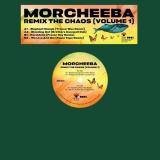
MORCHEEBA - REMIX THE CHAOS VOL 1 (RECORD STORE DAY 2026)
  • A1: Elephant Clouds (Trance Wax Remix)
  • A2: Bleeding Out (Brothers Counsell Dub)
  • B1: Pareidolia (Frazer Ray Remix)
  • B2: We Live And Die (Paula Tape Remix)
also available

VOL 2[23,32 €]


Morcheeba unveil Remix The Chaos: Volume 1, the first instalment in a three-part remix series drawn from their 11th studio album, Escape The Chaos (2025).

Spanning four tracks per volume, the project brings together an eclectic, global roster of electronic producers, each offering a distinct reimagining of Morcheeba’s unmistakable sound. Multi-genre and far-reaching, the series expands further into the rich sonic world the band have built over the past few decades, pushing their music into bold, contemporary electronic territory. Volume 1 features remixes from Paula Tape, the Chilean superstar producer, recent Mixmag cover star and one of electronic music’s most exciting names heading into 2026; Trance Wax (a.k.a. Ejeca), the prolific Belfast producer specialising in high-energy breakbeat and trance-leaning remixes; Frazer Ray, the London-based underground force known for UK bass, breaks and garage; and Brothers Counsell, a side project from the formidable Joy Anonymous.

Together, the tracks form a journey of dancefloor-ready hard hitters, powered by Morcheeba’s iconic vocals and signature guitar lines. Pressed on limited edition traffic light red vinyl, Remix The Chaos: Volume 1 comes with deep-cut grooves designed to hit just as hard on a club sound system as they do from the comfort of your living room.

pre-order now06.05.2026

expected to be published on 06.05.2026

25,17 €
Faze Action - Distant Dreams LP 2x12"

While brothers Simon and Robin Lee have kept themselves busy, both with EPs as Faze Action and numerous offshoot and solo projects, it's been almost 12 years since we last heard a fresh, full-length excursion from the long-serving duo - at least under their most famous moniker. Predictably, Distant Dreams was worth the wait, with the Lee siblings continuing their richly organic approach - think live bass, guitars, strings, keys, flute and percussion alongside synth sounds and drum machine beats. Musically, it draws on their now well-known influences - warming disco, jazz-funk and Balearica with nods to other musical cultures - and delivers eight impeccable tracks that undoubtedly sit amongst their classiest work to date. It's good to have them back.

out of Stock

Order now and we will order the item for you at our supplier.

Last In: 4 months ago
30,21 €
Steve Kuhn - Steve Kuhn LP
  • A1: Pearlie's Swine
  • A2: Silver
  • A3: Time To Go
  • A4: The Heat Of The Moment
  • B1: The Baby
  • B2: Hold Out Your Hand
  • B3: The Meaning Of Love
  • B4: Ulla

180g Vinyl

The album features the group playing Gary McFarland arrangements of Kuhn's compositions, accompanied by a string section on several tracks, with Kuhn delivering stream of consciousness lyrics in an unplanned and largely improvised fashion in the studio. However, that wasn't the only surprising aspect to the session. Airto Moreira's appearance was more by chance than design, he having just popped by the studio, again, unplanned. The 'Steve Kuhn' album is all the stronger for these extemporaneous and serendipitous elements and showcases a band at the top of their game; tight and funky yet relaxed and flowing like molten gold, with stabs and washes of keyboard from Kuhn. Splashes of free playing enter the session, but the band never stray too far from a melodic and harmonious centre of gravity. Kuhn's deft keyboard skills provide melodic embroidery to the impressive rhythmic textures and tonal colours of Carter, Cobham and Moreira. As if the music wasn't enough, the album is given extra significance by the fact that, within a few months of the recording, McFarland would die after being mysteriously poisoned by methadone in a New York bar. In a sense, it is a valedictory album from McFarland, channeled by Kuhn and the band. It's among the hardest of Kuhn's albums to find so this reissue is most welcome. Luxuriate in the glow of Kuhn's Fender Rhodes and the pliant funky bass of Ron Carter; immerse yourself in the percussive interplay of Moreira and Cobham, a pairing that has rarely sounded so good. This is such an exquisite album; you will lose yourself in its delicate power and find yourself coming back to it again and again. "It's a beautiful picture, and it helped me to comprehend things, life a bit, you know. And as I'm thinking about it, I hope it does that for whoever listens to it too." - Thundercat, Musician Details: Heavyweight Vinyl 45 RPM Cut / Original glued prints on Thick Cardboard 700 gram / 2 Separated parts hand-glued / Glossy lamination / PVC outer / 30x60 cm insert printed on 300 gram DNS paper with interview to Steve Kuhn by Tony Higgins.

pre-order now24.04.2026

expected to be published on 24.04.2026

48,11 €
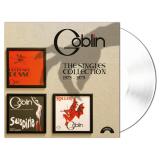
GOBLIN - The Singles Collection 1975-1979 LP
  • Profondo Rosso
  • Death Dies
  • Roller
  • Chi? - Parte Uno
  • Chi? - Parte Due
  • Suspiria
  • Blind Concert
  • Un Ragazzo D’Argento
  • Opera Magnifica
  • Yell
  • Amo Non Amo
  • Funky Top

FOLLOWING THE SUCCESS OF “THE OTHER HELL”, GOBLIN ARE BACK FOR RECORD STORE DAY 2026 WITH AN EXCLUSIVE COMPILATION OF SINGLES RELEASED BETWEEN 1975 AND 1979!

For the very first time on vinyl, this compilation gathers together all the singles released by Goblin during their golden era between 1975 and 1979, a journey that begins with the explosive, legendary debut Profondo Rosso, a true chart phenomenon of its time, and reaches the rare Amo Non Amo, passing through unforgettable milestones of Italian film music and progressive rock.

The collection opens with Profondo Rosso and Death Dies, taken from the soundtrack of Dario Argento’s masterpiece that catapulted Goblin to fame, blending dark atmospheres, virtuosity, and a unique sense of cinematic tension. It continues with Roller and Snip Snap, drawn from the instrumental album Roller (1976), a record not tied to any film, yet considered a cult cornerstone of Italian progressive music for its intricate structures and expressive power.

Chi? and Chi? - Parte Seconda follow; two tracks originally composed as the theme for a 1976 RAI television show, which saw Goblin bring their unmistakable sound to a different medium, experimenting within a shorter, punchier format.

Next comes Suspiria with its haunting counterpart Blind Concert, from the soundtrack of Argento’s 1977 horror classic. This remains one of Goblin’s most iconic and unsettling works, where music becomes an active narrative force: hypnotic, percussive, and filled with eerie vocal layers that made it a cornerstone of horror soundtracks worldwide.

From Il Fantastico Viaggio del Bagarozzo Mark (1978) come Un Ragazzo d’Argento and Opera Magnifica, two tracks that highlight the band’s more conceptual and visionary side, a move away from cinema toward a self-contained narrative and progressive experimentation.

The single Yell stands as another late-decade gem. Originally composed as the opening theme for the RAI television series “Sette storie per non dormire” (1978), it captures Goblin’s ability to merge rock energy with electronic pulse, proving their versatility far beyond the horror realm.

The compilation closes with Amo Non Amo and Funky Top, taken from the soundtrack of the 1979 film Amo Non Amo, one of the group’s lesser-known but fascinating cinematic works.

Far more than a simple anthology, The Singles Collection 1975–1979 maps the evolution of Goblin’s sound, from the worldwide success of Profondo Rosso to their most mature and experimental phase. It finally restores to vinyl a body of work that had long been scattered across rare 45 rpm releases, offering fans and collectors a complete, vivid portrait of one of Italy’s most inventive and influential musical ensembles.

pre-order now18.04.2026

expected to be published on 18.04.2026

36,93 €
Australian Chamber Orchestra - John Luther Adams: Horizon
  • 1: Horizon: II. True Horizon
  • 2: Horizon: I. Visible Horizon

Pulitzer Prize-winning American composer John Luther Adams wrote this piece for the Australian Chamber Orchestra. Inspired by his recent relocation to Australia and his travels across the continent - from the Northern Territory and the Red Centre all the way to Tasmania - 'Horizon' is an immersive audio experience exploring the relationship between the visible horizon, with its trees, its mountains and its human structures, and the true horizon: the enveloping circle where the sky meets the earth. How long might it take us to traverse that distance, from where we are to as far as we can see? And what lies beyond that edge of the known? The Australian Chamber Orchestra brings its passion, its virtuosity and its vibrant energy to this exquisitely unique musical experience.

pre-order now17.04.2026

expected to be published on 17.04.2026

40,29 €
Flaer - Translations

Flaer

Translations

12inchODA06M
ODDA Recordings
16.04.2026

Artist and multi-instrumentalist Flaer embraces the search for quiet miracles on first full-length LP Translations.

In 2023, Realf Heygate - who makes music as Flaer - released his debut mini-album Preludes, composed on his mother’s piano and his childhood cello.Returning to ODDA for his debut full-length album, Heygate is now looking in another direction. A record that embraces transition and movement, Translations is in many ways more internal, less rooted to a single place and reflective of the process of laying new foundations in Cornwall.

Like Preludes, Translations is coloured with found sounds and field recordings, from the starlings which can be heard singing through the open window of his studio, to the brittle recordings of his mother, who was a linguist, learning Spanish on a set of language tapes. In both cases, Heygate embraced the translations and memories inherent to the sounds.

“When I digitised my mother’s tapes, they warped and stuttered in a very similar way to the starling’s song,” he explains. “They had this uncanny rhythm and pulse that I couldn’t quite decode, but was saying something." These decayed transmissions hint at loss, resisting clarity in favour of the ineffable.

Translations is also a record of ambiguities and in-betweens, suggested by the double meaning of the album’s opening track ‘Entre’. At once intricate and expansive, threaded with birdsong and acoustic guitar motifs, this and ‘Starling Descends’ (a reference to Vaughan Williams’ ‘The Lark Ascending’) act as a bridge away from the pastoral themes of Preludes towards a more assertive sound. At times intimate in its textured instrumentation and at others more overtly grand in orchestration, reflecting awider palette of influences.

“Flaer began in many ways when I picked up my mother’s instruments, seeking a form of reconnection. Where words evaded me, they became the tools through which I found a language for grief – and above all, for love.”

Recorded between 2023 and 2025 – what Heygate calls “A gradual process of sowing and harvesting ideas rather than a single intense creative period” - each track follows a rhythm similar to the small maquettes and sculptures he has been working on in his visual practice, whereby structures and melodies form intuitively in moments that are as rare as they are fleeting.

“It's that feeling of searching that I really enjoy,” Heygate continues. “I never know what the destination of the composition is going to be, and I never really find what it is."

Translations is released on limited edition off-white vinyl LP (500 copies worldwide) with one of five signed and numbered handmade risograph prints. It's also available as standard black vinyl LP and digitally.

out of Stock

Order now and we will order the item for you at our supplier.

Last In: 5 months ago
22,65 €
DOODSESKADER - THE CHANGE IS ME
  • 01: Glass Mask On
  • 02: Celebrity Culture Simp Farm
  • 03: Please Just Make It Stop
  • 04: No Laughter Left In Me
  • 05: Weaponizing My Failures
  • 06: Unthinking My Every Thought
  • 07: Insignificant Other
  • 08: It Keeps On Stinging
  • 09: I Took A Pill In Vilvoorde
  • 10: Suffering In Technicolor

DOODSESKADER clearly haven’t had enough of redefining boundaries – they’ve only just gotten started. Tim De Gieter and Sigfried Burroughs return on April 3rd, 2026 with their third full-length album, The Change Is Me, a rollercoaster that can only be described as the unstable lovechild between witch house, hip-hop, industrial dream pop, and stadium rock that can’t decide if it wants to watch the world burn or shout from the rooftops that we need to save it. Their combination of grungy 90s melodies with distorted synths, sludgy bass, hard tuned vocals, rapping, singing, and explosions of undiluted rage at the current state of the world leave you wondering just exactly what it was you smoked last night, and if it was too much or not enough. The Change Is Me is an album that grabs you by the arm and asks if you’re ready to go on a grand adventure, then pulls you into its chaos before you can say “yes” or “no.”

Tim and Sigfried aren’t just breaking the boundaries between genres; they’re breaking out of their own Year cycle, a path they had laid out for themselves at the band’s inception in 2020. Up until now, the duo had set out to document their “journey to getting better” through writing one album each year: Year Zero (2020), Year One (2022), and most recently Year Two (2024). After spending eight months throughout 2024 and 2025 writing, recording, producing and mixing Year Three, the band scrapped the finished record entirely. Playing shows while simultaneously navigating the process of mixing Year Three created a sort of disconnect – the people that they were when they wrote that record and the people that playing shows made them become were no longer one and the same. “We’re people with faults and strengths, and we realized we needed to accept it. That’s equal parts bleak and liberating. If you’re so focused on self-improvement, you can’t even applaud yourself for how far you’ve come,” the band explains. “This project is meant to be a document of us and of the human condition, not a self-improvement handbook designed to keep us all stuck on what may or may not have happened to us or because of us in the past.”

DOODSESKADER chose instead to embark anew on a week-long creative journey in Tim’s own Much Luv Studio with one goal in mind: to make an album that captures who they are right now. Finally writing everything together in the same room for the first time in years, the process of bringing "The Change Is Me" to life was captured by Diana Lungu in their latest documentary, "Now I Know You See Me", out December 2nd, 2025.

"The Change Is Me" marks the beginning of DOODSESKADER’s shift into a more positive era, both musically and conceptually. Over the course of the 40-minute record we hear the two friends unite in a fight against a world that grows more and more disappointing, a concept made crystal clear in tracks like “Celebrity Culture Simp Farm,” “It Keeps On Stinging,” and of course the album’s epic closer “Suffering In Technicolor.” While their previous albums saw them trying to outrun their pasts and arrive at a better version of themselves, here the search for some external or internal revelation that will “make them better” is no more. It’s been replaced by the realization that change isn’t something we force: it’s gradual, and more importantly, it’s something that’s already there – we just need to reach out and accept it.

The band’s live appearances over the last several years have been instrumental in shaping their ideology. On stage is where the duo find connection; not only with the audience, but also with each other. Their sold-out release shows at Ancienne Belgique (2022) and VierNulVier (2024) have proven that they are one of Belgium’s must-see acts. Abroad, their energy has translated into a month-long EU/UK tour with French band Alcest in 2024, as well as appearances at festivals such as Roadburn Festival (NL), Eurosonic (NL), Hellfest (FR), Mystic Fest (PL), Jera On Air (NL), ArcTanGent (UK), Fluff Fest (CZ) and more.

"The Change Is Me" is out April 3rd, 2026 on DOODSESKADER’s own label, 45 Records.

pre-order now03.04.2026

expected to be published on 03.04.2026

25,17 €
Nils Berg, Norrbotten Big Band - Paid To Cry LP

“I wanted to explore how a big band can cry — not only through sorrow, but through joy, tenderness, and release. Music can hold grief and celebration at the same time, and Paid To Cry lives in that space.”
Nils Berg has been a cornerstone of the Swedish jazz scene since the turn of the millennium. Known internationally as an innovative bandleader and collaborator, this release places the spotlight — for the first time — on Berg’s work as a composer for large ensemble.
Paid To Cry is the result of an intensive collaboration with the Norrbotten Big Band, one of Scandinavia’s most acclaimed jazz orchestras. Drawing melodic clarity and emotional directness from composers such as Burt Bacharach and Kurt Weill, while embracing the raw courage of Björk and Sun Ra, and the pulsating minimalism of Steve Reich, the music forms a sound world that feels both familiar and entirely its own.
This is contemporary big band music without nostalgia: physical, vulnerable, and expansive. Written with deep trust in the individual voices of the ensemble, the compositions allow space for both collective force and intimate expression. And what an ensemble to breathe life — and tears — into this music.
With fifteen musicians moving as one organism, Paid To Cry carries enough air, rhythm, and resonance to lift the listener far beyond genre boundaries. It is music that dares to be emotional without explanation, and powerful without grandstanding — inviting the listener to feel first, and understand later.

pre-order now03.04.2026

expected to be published on 03.04.2026

25,17 €
Bear McCreary - God of War LP 2x12"
  • God of War
  • Memories of Mother
  • Witch of the Woods
  • Lullaby of the Giants
  • Ashes
  • Peaks Pass
  • A Giant's Prayer
  • The Dragon
  • Mimir
  • Magni and Modi
  • Echoes of an Old Life
  • Helheim
  • The Healing
  • The Reach of Your Godhood
  • Stone Mason
  • Valkyries
  • Deliverance
  • Salvation
  • The Ninth Realm
  • The Summit
  • Epilogue

"The multiple award-winning action-adventure game God of War was first released in 2005, but became such an instant hit, that Santa Monica Studio created seven more versions of the game. The most recent one, released in 2018 for the PlayStation 4, focusses on main character Kratos' journey in the Greek world together with his son Atreus, following a path of vengeance as a result of being tricked into killing his family by Olympian gods. God of War received universal acclaim for its story, design, graphics, combat system, characters, and music. It was awarded 'Game of the Year' by numerous media outlets and award shows. God of War (2018) performed well commercially, selling over five million copies within a month of its release. It became one of the best-selling PlayStation 4 games. The official soundtrack won a BAFTA Award and is composed by Bear McCreary. It is set up around themes he created around primary characters in the game. Inspired by Viking folk music, McCreary used exotic instrumentation and languages from various Northern European folk traditions. It resulted in a score featuring deep choirs, pounding drums, shrieking brass and features Faroese singer-songwriter Eivør (Pálsdóttir). The American composer Bear McCreary is best known for his work on TV shows like Battlestar Galactica, Outlander, The Walking Dead and won an Emmy Award for the main title of Da Vinci's Demons. God of War is available on black vinyl. This package contains a 4-page booklet with liner notes by Bear McCreary."

God Of War by Bear Mccreary, released 15 March 2024, includes the following tracks: "Witch of The Woods", "Ashes", "A Giant's Prayer", "Mimir" and more.

This version of God Of War comes as a 2xLP in a(n) Gatefold Sleeve packaging. This release comes with (a) Booklet.

pre-order now03.04.2026

expected to be published on 03.04.2026

48,32 €
Iivana Mišukka & Arja Kastinen - Iivana Mišukka (Tape)
  • 01: Maanitus & Tšiižik
  • 02: Markka
  • 03: Melkutus
  • 04: Letška
  • 05: Kuuen parin hoirola
  • 06: Brišatka
  • 07: Tšiižik
  • 08: Kirkonkellot
  • 09: Kirkonkellot korkea
  • 10: Hoirola, 3 parin
  • 11: Lippa
  • 12: Kyngäkiža
  • 13: Ristakondra
  • 14: Vanha polkka
  • 15: Viistoista
  • 16: Vanha valssi
  • 17: Kiberä
  • 18: Maanitus Kuokan kanteleella
  • 19: Tuuti lasta nukkumahe
also available

Vinyl[22,65 €]


Death Is Not The End present a further volume of Arja Kastinen's eerie amalgamations of 110 year old wax cylinders with her own meticulously transcribed takes, this time focussing in on Armas Otto Väisänen's field recordings of kantele player Iivana Mišukka (b. 1861 d.1919).

"Ivana Mišukka (1861–1919) was one of the Karelian kantele players recorded by the folk music researcher Armas Otto Väisänen on wax cylinders in 1916 and 1917. In the early 20th century, the remote areas of Border Karelia were undergoing the final phase of a transformation in musical culture, with the ancient runo song tradition giving way to newer forms of music. This transition is reflected in Mišukka's repertoire and choice of instrument. The ancient small kantele, hollowed out of a single piece of wood, was already rare at the turn of the century. Mišukka's kantele was a new type of instrument with 26 strings, constructed of several parts, but he played it using the traditional plucking technique. Like other Border Karelian kantele players, his repertoire consisted of music rooted in runosong culture, as well as newer dances and songs from the east and west. Most of the recorded material falls into the latter category.

Ivan Bogdanov Mišukka was born out of wedlock in Suursara village, Suistamo, on 1 May 1861. He began playing the kantele at the age of five or six, quickly mastering the instrument. In adulthood, he was considered one of the area's best master players. Mišukka was landless for most of his life and lived in different parts of the Suistamo parish. His first wife, Tekla Markintytär, died in 1897 at the age of 40, and his second wife, Jevdokia Filipintytär Jeminen, died in 1907 at the age of 50. Seven children were born from the first marriage, two of whom died young. The third wife, Maria Ignatintytär Gurnan (Kuurnanen), was a well-known master of lamentations. Together with Maria, Iivana Mišukka worked as a tenant farmer in the village of Suursara. Mišukka suffered from rheumatism, which prevented him from participating in physical work like Maria. This was apparently partly the reason why Iivana Mišukka went to earn extra money by playing the kantele on gig trips. He often had other traditional artists from Suistamo as his travelling companions, such as the runosingers Konstantin Kuokka and Iivana Onoila. Iivana Mišukka died in Leppäsyrjä village, Suistamo, on 18 May 1919 at the age of 58, and his kantele was donated to Teppana Jänis.

Mišukka only used 14 of the 26 strings on his kantele, playing the same tunes either a fourth higher or lower. He tuned his kantele to the major scale using fifths, except for a low seventh scale degree on the upper strings, but not below the fundamental. Since he did not use the seventh note of the scale on the upper strings at all, he could use the major scale both lower and a fourth higher with this tuning. According to Mišukka, the sound of higher, or 'finer', strings is 'more beautiful', while that of lower ones is 'greater'. Among runosingers, the size of the thirds varied, ranging from major to minor to neutral. A similar phenomenon can be observed in kantele tunings, where the third, sixth and seventh scale degrees vary in a comparable way.

During a meeting, Väisänen suggested that Mišukka play the smaller kantele belonging to Konstantin Kuokka. The idea was to bring it closer to the horn to improve the recording quality. However, the kantele was completely out of tune, and now Mišukka tuned it to the Lydian scale (track 18).

Using the old plucking technique, Mišukka placed his right middle finger on the fundamental tone, his right index finger on the second scale degree, his left middle finger on the third scale degree and his left index finger on the fourth scale degree, and his right thumb on the fifth. The thumb also played the notes above the fifth note of the scale. As Mišukka remarked to Väisänen: 'Peigaloll' tuloo enemb ruadoa' (the thumb has to do more work). However, he did not use the seventh note of the scale on the upper strings at all. Below the fundamental note, he played the seventh and sixth notes of the scale with his right middle finger of and the fifth note of the scale with his right ring finger. This fifth scale degree below the fundamental is almost always used as a drone. Sometimes, when the melody required it, Mišukka, like other players, also varied the fingering. He would also occasionally strike the same string with the side of his fingernail after plucking it.

The wax cylinder recordings of Karelian kantele players are kept in the archives of the Finnish Literature Society in Helsinki, Finland. Copies were made of them onto reel-to-reel tapes in both the 1960s and 1980s. The 1960s copies are mono and the 1980s copies are stereo. However, not all kantele recordings from these decades have survived.

The sound of the kantele is difficult to hear in wax cylinder recordings due to its low volume, and it occasionally becomes completely obscured by noise. During the copying process, the cylinder sometimes rotates unevenly, resulting in breaks or jumps in the music. Additionally, the rotation speed of the cylinder in the copies does not correspond to the performance speed of the original music, which alters the pitch. However, since Väisänen's precise notes are available in the archive, it is possible to deduce the melodies, their speed, and the tuning level of the kantele in the recordings. Of the copies of the original recordings from the 1960s and 1980s, I have selected the one that best met the requirements of this publication and adjusted the speed of the recording to align with Väisänen's notes. To enhance the listening experience, I have replayed the songs, which now partly overlap the old recordings on this release."

— Arja Kastinen

pre-order now27.03.2026

expected to be published on 27.03.2026

16,39 €
Iivana Mišukka & Arja Kastinen - Iivana Mišukka LP

Death Is Not The End present a further volume of Arja Kastinen's eerie amalgamations of 110 year old wax cylinders with her own meticulously transcribed takes, this time focussing in on Armas Otto Väisänen's field recordings of kantele player Iivana Mišukka (b. 1861 d.1919).

"Ivana Mišukka (1861–1919) was one of the Karelian kantele players recorded by the folk music researcher Armas Otto Väisänen on wax cylinders in 1916 and 1917. In the early 20th century, the remote areas of Border Karelia were undergoing the final phase of a transformation in musical culture, with the ancient runo song tradition giving way to newer forms of music. This transition is reflected in Mišukka's repertoire and choice of instrument. The ancient small kantele, hollowed out of a single piece of wood, was already rare at the turn of the century. Mišukka's kantele was a new type of instrument with 26 strings, constructed of several parts, but he played it using the traditional plucking technique. Like other Border Karelian kantele players, his repertoire consisted of music rooted in runosong culture, as well as newer dances and songs from the east and west. Most of the recorded material falls into the latter category.

Ivan Bogdanov Mišukka was born out of wedlock in Suursara village, Suistamo, on 1 May 1861. He began playing the kantele at the age of five or six, quickly mastering the instrument. In adulthood, he was considered one of the area's best master players. Mišukka was landless for most of his life and lived in different parts of the Suistamo parish. His first wife, Tekla Markintytär, died in 1897 at the age of 40, and his second wife, Jevdokia Filipintytär Jeminen, died in 1907 at the age of 50. Seven children were born from the first marriage, two of whom died young. The third wife, Maria Ignatintytär Gurnan (Kuurnanen), was a well-known master of lamentations. Together with Maria, Iivana Mišukka worked as a tenant farmer in the village of Suursara. Mišukka suffered from rheumatism, which prevented him from participating in physical work like Maria. This was apparently partly the reason why Iivana Mišukka went to earn extra money by playing the kantele on gig trips. He often had other traditional artists from Suistamo as his travelling companions, such as the runosingers Konstantin Kuokka and Iivana Onoila. Iivana Mišukka died in Leppäsyrjä village, Suistamo, on 18 May 1919 at the age of 58, and his kantele was donated to Teppana Jänis.

Mišukka only used 14 of the 26 strings on his kantele, playing the same tunes either a fourth higher or lower. He tuned his kantele to the major scale using fifths, except for a low seventh scale degree on the upper strings, but not below the fundamental. Since he did not use the seventh note of the scale on the upper strings at all, he could use the major scale both lower and a fourth higher with this tuning. According to Mišukka, the sound of higher, or 'finer', strings is 'more beautiful', while that of lower ones is 'greater'. Among runosingers, the size of the thirds varied, ranging from major to minor to neutral. A similar phenomenon can be observed in kantele tunings, where the third, sixth and seventh scale degrees vary in a comparable way.

During a meeting, Väisänen suggested that Mišukka play the smaller kantele belonging to Konstantin Kuokka. The idea was to bring it closer to the horn to improve the recording quality. However, the kantele was completely out of tune, and now Mišukka tuned it to the Lydian scale (track 18).

Using the old plucking technique, Mišukka placed his right middle finger on the fundamental tone, his right index finger on the second scale degree, his left middle finger on the third scale degree and his left index finger on the fourth scale degree, and his right thumb on the fifth. The thumb also played the notes above the fifth note of the scale. As Mišukka remarked to Väisänen: 'Peigaloll' tuloo enemb ruadoa' (the thumb has to do more work). However, he did not use the seventh note of the scale on the upper strings at all. Below the fundamental note, he played the seventh and sixth notes of the scale with his right middle finger of and the fifth note of the scale with his right ring finger. This fifth scale degree below the fundamental is almost always used as a drone. Sometimes, when the melody required it, Mišukka, like other players, also varied the fingering. He would also occasionally strike the same string with the side of his fingernail after plucking it.

The wax cylinder recordings of Karelian kantele players are kept in the archives of the Finnish Literature Society in Helsinki, Finland. Copies were made of them onto reel-to-reel tapes in both the 1960s and 1980s. The 1960s copies are mono and the 1980s copies are stereo. However, not all kantele recordings from these decades have survived.

The sound of the kantele is difficult to hear in wax cylinder recordings due to its low volume, and it occasionally becomes completely obscured by noise. During the copying process, the cylinder sometimes rotates unevenly, resulting in breaks or jumps in the music. Additionally, the rotation speed of the cylinder in the copies does not correspond to the performance speed of the original music, which alters the pitch. However, since Väisänen's precise notes are available in the archive, it is possible to deduce the melodies, their speed, and the tuning level of the kantele in the recordings. Of the copies of the original recordings from the 1960s and 1980s, I have selected the one that best met the requirements of this publication and adjusted the speed of the recording to align with Väisänen's notes. To enhance the listening experience, I have replayed the songs, which now partly overlap the old recordings on this release."

— Arja Kastinen

pre-order now27.03.2026

expected to be published on 27.03.2026

22,65 €
Abdou El Omari - Lost Tape - 1980
  • A1: Ali ou Hayani
  • A2: Ana Sahraoui
  • A3: Nihayat Hob
  • A4: Angham Chaabia
  • A5: Dikrayat
  • A6: Alach Yayouni
  • B1: Layali Fass
  • B2: Lobna
  • B3: Tanger l'été
  • B4: Taksim Abdou
  • B5: Hanan
  • B6: Interlude

Abdou El Omari was born in 1945 in Tafraout, south of Agadir -- a village suspended between the pink granite peaks of the Anti-Atlas and the waves of the Atlantic. A landscape already musical in itself. He grew up in the dry mountain light, surrounded by the rhythms of nature and Berber's culture. Very little is known about the man -- a veil of mystery still surrounds his life, only deepening the fascination. In the 1970s, as Morocco was transforming, Abdou El Omari shaped a sound of his own -- a visionary blend of spiritual jazz, psychedelic funk, Moroccan traditions, and early electronic experimentation. Today, his work is resurfacing, rediscovered by a new generation of listeners in search of lost horizons. This record stands among its rarest and most precious fragments. At twenty-two, he founded his first group, Les Fugitifs, which gained him local fame. Soon after, he released records and cassettes on labels such as Cléopâtre, Hassania, Boussiphone, Hilali, and his own, Al Awtar, while performing on RTM (national radio and television). He also composed for artists like Naima Samih, Laila Ghofran, and Aicha El Waad. In 1976, through the label Gam, he released his only vinyl album, Nuits d'été -- a record that would become cult decades later, reissued in 2017 by Radio Martiko. In the 1980s, his music grew quieter, more secret. He tried to recover his old tapes from the studios he had recorded in, but gradually withdrew from the scene and returned to hairdressing. A pioneer of musical fusion, he opened paths that would remain unexplored for years. He passed away in 2010, never witnessing the rediscovery of his music by diggers, bloggers, and collectors online. One day, his close friend and poet Aziz Essamadi, rescued a cardboard box from the trash -- a box containing Abdou El Omari's personal archives. It was later entrusted to Casablanca based collector Ahmed Khalil, founder of the label Dikraphone. Inside were treasures preserved by chance: demos, rehearsals, private recordings, unseen photographs -- and a stunning, almost forgotten cassette. Here, El Omari sounds bolder than ever, exploring territories where pop, cosmic disco, electric blues, and Moroccan tradition merge without boundaries. Armed with his ARP Odyssey synthesizer, hypnotic grooves, and the celestial layers of his Farfisa, he expanded the dialogue between deep roots and electronic exploration. This album is the continuation of a vision -- a music of the Moroccan future: rooted, but reaching for the unknown. Colorful, magnetic and timeless, here is music for dancing as much as for dreaming.

pre-order now13.03.2026

expected to be published on 13.03.2026

23,11 €
Martin Dupont - You Smile When It Hurts LP
  • You Smile When It Hurts
  • Dreamin
  • Time
  • Blue Draginfly
  • Arabian Night
  • Reality
  • Walking Alone
  • Dar Tunnel
  • I Try Alone
  • Open My Head
  • Tired To Follow
  • Happy Birthday

Far from being a nostalgic exercise, the record reasserts their daring artistry, merging legacy and rebirth. Known for melodic minimalism, elegant melancholy, and pulsing electronics, the band has often been compared to Depeche Mode, New Order, or Joy Division, yet their singular identity has always set them apart. On this new album, they reinvent their sonic language, blending vintage synths with classical textures and luminous modern production. The result is a sensory journey where light and shadow converse, where poetry meets pulse, reaffirming their timeless relevance. Their influence extends across genres: sampled by Madlib, reinterpreted by Tricky, reimagined by Theophilus London, and remixed by DJs such as Marcel Dettmann. Tributes, reissues, and appearances in cinema and fashion underscore their resonance, from Lucie Borleteau's Chanson Douce movie to catwalks by Chloe.

Born in Marseille in the early 1980s and led by Alain Seghir alongside Catherine Loy , Brigitte Balian , and Beverley Jane Crew , Martin Dupont left a mythic legacy with tracks like ' Inside Ou't and 'Just Because...' before dissolving in 1987. Rediscovered through Minimal Wave reissues, their music captivated a new generation of underground and electronic enthusiasts. Today, Martin Dupont are reborn. Seghir and Crew, joined by Sandy Casado, Thierry Sintoni, and Olivier Leroy, embark on a world tour that affirms their unique ability to move and inspire. You Smile When It Hurts proves that their visionary sound has never been more alive

pre-order now13.03.2026

expected to be published on 13.03.2026

25,17 €
JOYCE MANOR - I USED TO GO TO THIS BAR

JOYCE MANOR

I USED TO GO TO THIS BAR

12inch280573
Epitaph Europe
11.03.2026

Joyce Manor are California pop-punk legends and I Used To Go To This Bar is this epochal band operating at the top of their game. They continue to deliver relentlessly satisfying rock music in a manner that makes it look simply effortless. The Torrance, California-hailing trio of Barry Johnson, Chase Knobbe, and Matt Ebert are at a point in their career where their position as one of the most beloved rock bands is a foregone conclusion. Their seventh album finds the group continuing to find rich new veins to tap in their short-and sweet songcraft without losing an ounce of bite that gained them such repute in the first place. I Used To Go To This Bar further situates Joyce Manor in the rich lineage of their influences and inspirations. Think AFI"s rapid-fire burn, Weezer"s indelible power-pop acumen, and the dusky emotionalism of The Smiths while further establishing them as leading lights in the current rock landscape. The fresh burst of inspiration that fuels I Used To Go To This Bar proves that Joyce Manor are far from content to rest on such laurels, moving forward with their sound and style in a way that reminds you of how they got to this point in the first place. Catch them live at Coachella 2026.

out of Stock

Order now and we will order the item for you at our supplier.

Last In: 7 months ago
23,49 €
KYOZO NISHIOKA - Gypsy Song / Never Land 7"
  • Side A. GYPSY SONG
  • Side B. NEVER LAND

After traveling through Mexico, Miami, the Bahamas, and New Orleans, Nishioka recorded his fourth album South American Journey in Los Angeles,
released in 1979. From this album, two of his most celebrated tracks—“GYPSY SONG”, a fan favorite with numerous cover versions, and “NEVER LAND”,
featuring the distinctive sound of steel pans and a Japanese reggae vibe are now being pressed on 7-inch vinyl for the first time in a limited edition!

The recording features members of the So What Review band, including Junshi Yamagishi (guitar) and Osamu Ishida (guitar), along with renowned steel pan
player Robert Greenidge, known for collaborations with Van Dyke Parks and Taj Mahal.
(FLATT THE LAIDBACK)

Kyozo Nishioka Profile
(Born May 7, 1948 – Died April 3, 1999)
Singer songwriter from the Shima Peninsula in Mie Prefecture, affectionately nicknamed “Zo-san”.
After enrolling at Kinki University and moving to Osaka, Nishioka became a regular at the folk cafe Dylan in Namba, opened in August 1969 by Masaji Otsuka
and Yoko Ishimura. Dylan was a gathering spot for folk music enthusiasts from all over Japan.
Nishioka formed the folk group The Dylan with Masaji Otsuka and You Nagai, performing at folk camps and the Nakatsugawa Folk Jamboree. In 1971, Nishioka
left the group, and Otsuka and Nagai continued as The Dylan II. Nishioka wrote and composed the song “Puka Puka” under the pen name Zokyozo, which became
one of his signature works. The song was first released in July 1971 as the B-side of The Dylan II’s single “Otoko rashii tte Wakarukai” on URC Records.
Nishioka began his solo career, releasing his debut album “Dylan nite” in July 1972, produced by Kinji Yoshino on Bellwood Records, which included his own
version of “Puka Puka”. In September 1973, he appeared at the farewell concert of Happy End titled CITY – LAST TIME AROUND at Bunkyo Public Hall in Tokyo.
His 1974 album “Machiyuki Murayuki” was produced by Haruomi Hosono, and his 1975 album “Rokka My Baby” featured support from Shigeru Suzuki’s band
HUCKLE BACK. Nishioka recorded three albums under Hosono’s production, deepening their friendship.
Together with his wife and lyricist KURO, Nishioka wrote songs for artists such as Eikichi Yazawa. The couple traveled the world, recording overseas albums such
as “Nanbei Ryoko” (1977), “Yoh-Sollo” (1979), and “New York to Jamaica” (1981), incorporating reggae, calypso, and other global sounds. In the 1980s, he released
works under the duo name KYOZO & BUN with Yoshifumi Okajima, and in the 1990s returned to solo projects with albums like “START” (1993) and “Farewell
Song” (1997).
After KURO’s passing in 1997, Nishioka continued his musical activities until his own death in 1999 at the age of 50. His music transcended the boundaries of folk,
blending jazz and tropical elements to create a unique world view, leaving an indelible mark on Japanese music history.

pre-order now06.03.2026

expected to be published on 06.03.2026

31,89 €
Michel Houellebecq & Frédéric Lo - SOUVENEZ-VOUS DE L'HOMME LP
  • 01: Le bleu du ciel central
  • 02: Ils chevauchaient le vent
  • 03: La mémoire de la mer
  • 04: Fin de partie
  • 05: Le dialogue des machines
  • 06: Autoroute B
  • 07: Le lendemain de l'explosion
  • 08: Perdus dans des rêves inutiles
  • 09: En attendant l'envahisseur
  • 10: Les contrées solitaires
  • 11: L'ancienne voie romaine
  • 12: L'ultime archipel

Michel Houellebecq is, of course, well-known for his novels, translated into more than 40 languages, and his Goncourt Prize (The Map and the Territory, 2010), but perhaps less so for his debut album, released exactly a quarter of a century ago on Tricatel label. One can sense the influence of Serge Gainsbourg's L'Homme à la Tête de Chou, a disillusioned Procol Harum and a world-weary Burt Bacharach hovering over Houellebecq's poems in Présence Humaine, a now cult classic album orchestrated by Bertrand Burgalat and the musicians of Eiffel. Twelve thousand copies sold and a few concerts later, the writer decided (or so we thought) to bid farewell to the stage, only to generate more media attention though his literary success. Frédéric Lo is, of course, known as an exceptional lyricist, composer, arranger, and producer, author of a sublime fourth solo album (L'Outrebleu, released last March) and a master of collaborative work, notably with Bill Pritchard, Peter Doherty and Daniel Darc. Initially, Michel Houellebecq and Frédéric Lo met for the tribute album that the latter was planning for the tenth anniversary of Daniel Darc's death, but their recording of "Psalm XXIII" was, to their great disappointment, rejected by the label and therefore did not appear on the final version of Cœur Sacré (2023). Fortunately, every cloud has a silver lining, and the two men decided to take their collaboration a step further. Lo decided to set the writer's words to music, in his studio in Pantin. Raw, stripped-down music draped in electronica, adorned with piano and antediluvian drum machines, often minimalist, sometimes repetitive, provides the perfect backdrop for twelve tracks that question and reflect on humanity's past and future (if indeed there is one). Reflections on the human condition, 21st-century style, a work of speculative fiction conceived by two eternally modern "young lads," Souvenez-Vous de l'Homme (Remember Man) is an album that might occasionally evoke The Stranglers' La Folie, and, given the title, that's probably no coincidence. But above all, it's a hypnotic and melancholic album, uncompromising and captivating. Most importantly, it's an album like no other.

pre-order now06.03.2026

expected to be published on 06.03.2026

28,53 €
Hot Mulligan - You'll Be Fine LP

Farbige Neuauflage des zweiten Albums 'You'll Be Fine' (2020) von Hot Mulligan, eine der vielseitigsten und zutiefst bewegenden Bands des US-Emo-Undergrounds, deren Musik ein kathartischer Aufschrei nach Wachstum einer Generation zukunftsorientierter Mittelwestler ist, die - in den Getrieben eines verrosteten Systems gefangen - verzweifelt nach Hoffnung suchen.

pre-order now06.03.2026

expected to be published on 06.03.2026

28,53 €
Arthur Russell - Another Thought 2x12"

2026 Repress


Another Thought was the first collection of Arthur Russell’s music to be released after his death in 1992. Released in 1993 on Point Music it marked the beginning of nearly 30 years of work to let the world hear the enormous archive of unreleased recordings Arthur left behind. Be With revisits this first compilation for a new gatefold double vinyl version and a triple-fold digipak CD reissue.

Both versions of Be With’s 2021 reissue of Another Thought have been mastered by Simon Francis and the vinyl cut by Pete Norman. The original artwork has been restored and tweaked at Be With HQ for the gatefold sleeve and the triple-fold digipak, with the essential help of Janette Beckman. Each version comes with an insert reproducing the liner notes and lyrics from the original CD release.

Together with Calling Out Of Context, Soul Jazz’s World of Arthur Russell, and much of the ongoing work of Audika, Another Thought is absolutely essential for even the most casual Arthur Russell collection. In fact we’d argue it’s essential for any fan of non-obvious pop music. This is the only place where you can hear some of Arthur’s most recognisable tunes and it’s an album that absolutely deserves to be kept in press.


We’ll assume that by now you’re all at least a little familiar with the story of Arthur Russell, the farm boy from Iowa who moved to 1970s New York. Arthur Russell the genuine musical genius who died just 40 years old, leaving behind a wealth of music that dwarfed the few 12"s and LPs that were released during his short life.

Although Arthur had been working on an album for Rough Trade during his last years, with the label no-longer operating it was Point Music (Philip Glass and Michael Riesman’s label set up together with Philips) who stepped in to help Arthur’s partner Tom Lee start working out exactly what Arthur had left behind.

Tom suggested that Arthur’s friend Mikel Rouse was the right person to make the first catalogue. Working in Tom and Arthur’s apartment he had only two weeks to go through what turned out to be around 800 tapes.

As Tom explained “at the end of each day he would generally wait for me to come home and I would, to the best of my knowledge, name and identify pieces in question from that day’s work. As he worked Mikel compiled about a dozen cassettes that he thought would present the most finished sounding songs for Don/Point to use. As Don listened he would then suggest and ask me and thus we collaborated on the choices.”

Don is Don Christensen, Another Thought’s producer. With a final selection of songs from recordings made between 1982 and 1990, including sessions with some of Arthur’s regular collaborators Peter Zummo, Steven Hall, Mustafa Ahmed, Elodie Lauten, Julius Eastman, Jennifer Warnes and Joyce Bowden, it was then Don’s job to turn these into a finished album.

Another Thought is a little different from the compilations of Arthur’s music that came out since. In our conversations with Steve Knutson (who founded Audika Records and who manages Arthur’s estate together with Tom), he explained that “more than any project released by Arthur during his lifetime or posthumously by Audika, ‘Another Thought’ is the most worked over. The material was significantly edited and rearranged from the original source tapes”.

If the aim was to release a comprehensive exploration of every facet of Arthur’s music, from the most avant-garde of his avant-garde compositions through to the most disco-not-disco of his disco-not-disco tunes then the project was a spectacular failure. But as a coherent album of non-obvious pop music Another Thought is wonderful.

Starting with the sparse voice-and-cello of the title track, A Little Lost adds some guitar along with the sneaking suspicion that we’re listening to something nowhere near as simple as it first sounds. By the time we get to This Is How We Walk On The Moon - it could be the moment you notice the congas, or the percussion that’s been building behind them, or maybe it’s that blast of trumpet and trombone - we realise we’ve gone from splashing around to being completely submerged in the musical world of Arthur Russell.

From here the album heads off on its journey around the sounds of the left-field contemporary classical music of the time, re-directed towards pop ears, with minor detours through the swirling woozy disco of the half-remembered night before on In The Light Of The Miracle and My Tiger, My Timing. Whether it’s just Arthur, his cello and some bleeps on Just A Blip, or whether he has some vocal help as he does on the bounding Keeping Up, this is difficult music made so, so easy. And through it all is Arthur’s voice and cello. Sometimes drowned in distortion and sometimes clear as a bell, but always there somewhere.

A Sudden Chill finally returns us to the calmer waters we started in and this last track closes the album with a melancholy that’s not surprising given how soon after Arthur’s death the album was put together.

Whilst Another Thought holds together with the consistency of a proper album, there’s still no getting away from the fact that this was put together from audio recorded in different ways, in different places, with different people at different times. Those with keen ears will hear traces of tape hiss, the occasional blown-out note and some digital fuzz, all fingerprints of those original recordings as well as of the 1990s digital equipment that was used to piece Another Thought together.

Add to this Arthur’s obvious pleasure in making music from the sort of sounds that can make microphones, speakers and ears uncomfortable, it’s no surprise that Another Thought isn’t glossy and pristine. Don Christensen’s productions have been careful to not scrub up those original recordings so much that they lose their original vibe, understandable given that Arthur wasn’t around as a guide. We’ve applied a similarly light touch with the mastering for these Be With versions, just working to make sure they sound like they should on both the vinyl and the CD.

Despite the Discogs rumours, Another Thought was never originally released as an LP. So when it came to the sleeve for this Be With vinyl version we took the original CD artwork as a starting point to come up with something that looks like it could have been in the record racks back in 1993.

We have to thank Janette Beckman for helping us reproduce her iconic photograph of Arthur in his newspaper boat hat. One of many photographs she took of Arthur, Janette shot this in her New York studio back in 1986 for a short article in the January ’87 issue of The Face Magazine. Those with eagle-eyes will notice we’ve used an ever-so-slightly different shot from the one that appeared in The Face and then again on the original cover of Another Thought. The original has long since been lost so we’ve worked with what is left in Janette’s archives. And we also have to thank Tom Lee for giving us permission to reproduce his liner notes from the original CD booklet, together with Arthur’s lyrics.

out of Stock

Order now and we will order the item for you at our supplier.

Last In: 4 years ago
28,19 €
FABIANO DO NASCIMENTO & VITTOR SANTOS ORCHESTRA - VILA

Hidden away amidst the bustle of Rio de Janeiro’s Catete neighbourhood is a small alleyway behind a cast iron gate. At its end is Bairro Saavedra, the courtyard surrounded by Neo-colonial houses where Brazilian guitar virtuoso Fabiano do Nascimento spent much of his childhood. Built in 1928, this secluded neighbourhood with its wooden shutters, tiled floors and tranquil benches, provides the inspiration for the title of Do Nascimento’s new album VILA, a collaborative project with a sixteen piece orchestra led by trombonist and arranger Vittor Santos.

Recorded between Rio de Janeiro and Los Angeles, VILA is grand, tender, warm, playful and nostalgic. On this stunningly ambitious work, the delicate compositions led by Nascimento's guitar, which sits central in the mix, are surrounded by Santos’ breathtaking orchestral arrangements which swirl in all directions: complimenting, questioning, responding; in constant conversation.

Like the eclecticism of the architecture Do Nascimento grew up surrounded by, his music straddles many worlds at once. He is known as a Brazilian acoustic guitar master and as such has collaborated with Arthur Verocai, Airto Moreira and Itibere Zwarg. But equally at home in Los Angeles's jazz and experimental music scenes, Do Nascimento is also known for his work with artists like Sam Gendel and Carlos Nino.

Vittor Santos is an arranger and Trombonist who has worked extensively with many of the greats of Brazilian music, including João Donato, Marcos Valle, Toninho Horta, and Elza Soares.

=====================================
Credits:

Fabiano do Nascimento – 6, 7 and soprano guitars.
All orchestral arrangements and production by Vitor Santos.
Recorded at Electro-Sound studio, Los Angeles and Estúdio Fibra, Rio de Janeiro
Engineered by Jason Hiller and Garbiel Lucchini
Mastered by Mike Bozzi

Oboe – Francisco Gonçalves
Contrabaixo – Rodrigo Villa
Drums – Márcio Bahia
Violino - Ricardo Amado
Violino – Thiago Teixeira
Violin – Daniel Albuquerque
Violin – Márcio Sanches
Viola – Ivan Zandonade
Viola – Dhyan Toffolo
Cello - Hugo Pilger
Cello – Janaína Salles
Double Bass – Rômulo Gomes
Clarinet – José Batista
French Horn – Philip Doyle
Trombones - Vittor Santos
Violin – Daniel Guedes

out of Stock

Order now and we will order the item for you at our supplier.

Last In: 3 months ago
23,11 €
Ben Kweller - Cover The Mirrors LP
  • A1: Going Insane
  • A2: Dollar Store (feat. Waxahatchee)
  • A3: Trapped
  • A4: Park Harvey Fire Drill
  • A5: Depression (feat. Coconut Records)
  • A6: Don't Cave
  • B1: Optimystic
  • B2: Brakes
  • B3: Killer Bee (feat. The Flaming Lips)
  • B4: Letter To Agony
  • B5: Save Yourself
  • B6: Oh Dorian (feat. MJ Lenderman)

San Francisco–born singer-songwriter Ben Kweller returns with Cover The Mirrors, his seventh studio album — and perhaps his most personal work to date. Known in the late ’90s as a member of post-grunge outfit Radish, who were signed to Mercury Records and even counted Nils Lofgren among their fans, Kweller has since carved out a long and prolific solo career rooted in melodic indie rock and unfiltered emotion. Cover The Mirrors is a deeply poignant record, written in honour of what would have been Kweller’s late son Dorian Zev’s 19th birthday. It also marks Kweller’s first release since Dorian’s tragic passing in 2023 — an event that reshaped both his life and his music. Far from retreating into silence, Kweller channels his grief into a collection of songs that explore loss, love, and renewal with raw honesty. “This is the most personal, emotionally raw project I've ever worked on,” he reflects, and every track bears that truth. The album features an impressive roster of collaborators from across the indie landscape: Waxahatchee joins on “Dollar Store,” a sparse and arresting song built on two vocals and a guitar that eventually erupts into a distorted, soaring finale; MJ Lenderman lends his touch to “Oh Dorian,” a tender tribute steeped in warmth and melancholy; Jason Schwartzman resurrects his mid-aughts project Coconut Records for the haunting “Depression”; and psych-rock icons The Flaming Lips appear on the shimmering, otherworldly “Killer Bee.” Musically, Kweller’s craft is as sharp and sincere as ever — intimate yet expansive, stripped-down yet powerful. Cover The Mirrors captures an artist walking through grief with purpose, turning heartbreak into something both fragile and transcendent. It’s the sound of Ben Kweller looking loss directly in the eye — and finding beauty, courage, and connection reflected back. - “One of the great American songwriters” – Jack Antonoff TRACKLIST: A1. Going Insane A2. Dollar Store (feat. Waxahatchee) A3. Trapped A4. Park Harvey Fire Drill A5. Depression (feat. Coconut Records) A6. Don't Cave B1. Optimystic B2. Brakes B3. Killer Bee (feat. The Flaming Lips) B4. Letter To Agony B5. Save Yourself B6. Oh Dorian (feat. MJ Lenderman) Clear Vinyl LP

pre-order now27.02.2026

expected to be published on 27.02.2026

28,53 €
Mark Fry - Not On The Radar (The Demos) LP
  • Only Love
  • Big Red Sun
  • Stormy Sunday
  • Where The Water Meets The Land
  • Not On The Radar
  • Daybreak
  • Where Would I Be
  • Jamais A L'Heure
  • Rainbow Days
  • If I Could

Includes demos of every track from the original album, stripped back to (mainly) guitar and voice. Originally a Norman Records exclusive, these are the last few copies available from a limited pressing of just 300. Mark Fry is a France- based, English singer- songwriter/ artist whose debut album, 'Dreaming With Alice,' released in Italy in 1971, became a much-bootlegged "acid-folk" classic three decades later. Fry returned to recording in 2008 and has since released 4 more acclaimed studio albums. These days, far less "acid" than in his youth, Fry still knows his way around a beautiful melody. This album of sketches is resplendent with love songs, the beauty of nature and the passing of time Fry is certainly no stranger to the preparatory sketch. An artist in the truest sense of the word, renowned equally for his decades- long career as a painter of vibrant abstracts and as a cult psychedelic minstrel turned intimate, evocative singersongwriter, his atelier, housed in a converted stable building at his Normandy home, literally doubles as his music studio. It was in this space that Mark's fifth solo album, 'Not On The Radar,' released back in May, was recorded in the summer of 2024, with the singer pushing back his easels to accommodate a four-piece live band and vanloads of miscellaneous accompanying paraphernalia.

Before that, the studio had been a considerably emptier space in which working versions of the album's ten languidly bucolic compositions were first demoed by the solitary songwriter (although some emergent tracks were also captured at Balintore - the home studio of Mark's regular guitarist, Iain Ross, housed on the latter's London-moored canal barge). With those sketches presented here in the same running order as on the mothership longplayer, this new album stands as a document of process - offering the opportunity for track- by- track comparison for those already familiar with Not On The Radar. Crucially, it also makes for a very fine standalone album in its own right, which, if nothing else, bears testament to the inherent robustness of Mark Fry's songwriting.

pre-order now20.02.2026

expected to be published on 20.02.2026

25,00 €
King Tubby - The Roots Of Dub

“Tubby did three original dub albums, ‘Dub From The Roots’. ‘The Roots of Dub’ and the third is ‘Brass Rockers’ with Tommy McCook ‘pon the flying cymbals. Where he mixed it with the horn going in and out in a dub way and one named ‘Shalom Dub’ you can call Tubby’s too because he mixed the versions as they were off forty fives’’

Bunny ‘Striker’ Lee

King Tubby and Producer Bunny ‘Striker’ Lee are intertwined in the birth of Dub Music. After discovering a mistake that made a ‘serious joke’ (more of which later...) they went on to release the first pressings of this new musical genre namely ‘Dub Music’. Tubby’s vast knowledge of electronics and Bunny’s vast catalogue of rhythms would lay the foundations of what today is taken as a standard... the Remix / Version cuts to an existing vocal tune.

Osbourne ‘King Tubby’ Ruddock was born in Kingston, Jamaica on 28th January 1941 and grew up in the High Holborn Street area of downtown Kingston. He studied electronics at Kingston’s National Technical College and also on two correspondence courses from the U.S.A... When he had qualified Tubby began repairing radios and other electrical appliances in a shack in the back yard of his mother’s home. His work in the early days included winding transformers and building amplifiers for Kingston’s Sound Systems. Tubby built his first Sound System in 1957 playing jazz and Rhythm & Blues at local weddings and birthday parties. His reputation as a man who knew and understood both electronics and music grew steadily and as the sixties drew to a close. Tubby
purchased his own basic two track equipment. He installed this alongside his dub cutting machine, a home-made mixing console, and his impressive collection of jazz albums in the back bedroom of his home at 18 Dromilly Avenue which he christened his music room.

Tubby and Striker were at Treasure Isle Studio’s one day while Ruddy from Spanish Town was working with the engineer Byron Smith....

“Tubby and myself was talking when Ruddy was cutting some dub but Smithy (engineer) made a mistake through we were talking and forgot to put in the voice. It was two track recording in those days. Ruddy said ‘No Man! Make it stay! and so they cut the rhythm. When I went over to Ruddy’s that Saturday night a dance was in progress and when they played the vocal to the tune... then he said we’re going to play ‘Part Two’. They never called it ‘Version’..and then he played the rhythm track. The song was a catchy song and everybody started to sing along and the deejay started to toast so everything went down well. On Monday morning I went up and I said ‘Tubbs the mistake we made was a serious joke.It mash up Spanish Town! The people went wild. So you have to start to do that now ‘cause when the man put on the ‘Part Two’ everyone start singing this song. It played about twenty times. I said you try Tubbs!’...Well the next Saturday night now when Tubby strung up down the farm U Roy said he’s going to play ‘Part Two’ but Tubby did it different now. He started with the voice then dropped it out and let the rhythm run and then he brought in the voice in the middle and from there Tubby started to get really popular.’’
Bunny ‘Striker’ Lee

Dynamic Sounds upgraded to sixteen track recording in 1972 and Tubby purchased, again with the help of a deal brokered by Bunny Lee. The old four track equipment and the MCI console from their Studio B. The four tracks now gave him far wider scope to work with and he began to create a new musical form where the bass and drum parts were brought up while the faders allowed Tubby to ease the vocal and rhythm in and out of the mix. It was only a matter of time before Tubby’s dub plate experiments began to make it on to vinyl and the first ever long-playing King Tubby releases would feature a collection of his mixes to a selection of Strikers rhythms. So please sit back and enjoy this historic set of sounds. Lovingly restored and with a few extra gems added to the CD Editions. These releases were the first to carry the name of King Tubby and the first to credit the great musicians that contributed so much to the rhythms that made these albums possible.

out of Stock

Order now and we will order the item for you at our supplier.

Last In: 24 days ago
13,24 €
múm - Smilewound

Múm

Smilewound

12inchMORR124LP
Morr Music
18.02.2026

You don’t need to be Freud to regard teeth as a delicate issue. They can make joy look joyous and pain look painful, and on the cover of the new múm album they do both at the same time. As »Yesterday Was Dramatic – Today Is Okay« (2001), »Finally We Are No One« (2002) and »Sing Along To Songs You Don’t Know« (2009) »Smilewound« is another example of the band’s art of juxtaposing two conflicting meanings and taking advantage of the energy created through the tension between both.

Sparser in sound than many of its predecessors, »Smilewound« is an airy, relaxed record. The múm-core-duo of Örvar and Gunni doesn’t make you laugh out loud (except maybe for the quirky vintage Arcade-sound-start of »When Girls Collide«), but it will make you smile often - despite the heavenly voices singing about violence in one form or another in most songs. Musically, múm’s capability to build playful electronic sound-ornaments around simple melodies is in full bloom. And these days they know that trimming the ornamentation can strengthen the melody. Take »The Colorful Stabwound«: an aguish drum’n’bass piece and »Smilewound« gets close to a straight pop-song. Even that isn’t very close, but it combines its rhythmic strength with a simple yet effective piano-line and the soothing lushness of a female voice to something compelling that follows you like the smell of a delicate eau de toilette. Or »Candlestick« which started out as a little ditty strummed on an acoustic guitar many years ago and has grown into this bouncy piece of synth-pop that changes its musical colours every couple of beats until you feel comfortably dizzy. Perfect pop in very fancy clothes. No wonder that antipodean pop-princess Kylie Minogue wanted to collaborate with múm on the »Whistle«, the main song in 2012-movie »Jack & Diane«.

Recorded in, among other places, the band’s practice-space, an old baltic farmhouse and on the kitchen-table after dinner, the album was produced by múm themselves. And being the revolving collective they are, it comes as no surprise that we see the return of former member Gyda. Defining satellites as part of the core fits nicely with the band’s penchant for ambivalence - in fact that's part of the album's charm.

out of Stock

Order now and we will order the item for you at our supplier.

Last In: 7 months ago
21,64 €
Goldie B - Who Says Night’s For Sleeping? EP

A rising and genre-defying figure in the French electronic scene, Goldie B continues her ascent with Who Says Night’s For Sleeping?, a five-track EP that asserts her distinctive signature: an instinctive blend of club energy, cinematic storytelling and UK rave influences. Conceived as the soundtrack to a night lived in full intensity, the record moves through the fire of the dancefloor, the collective trance, and those suspended moments where one floats between dream and wakefulness.

“I imagined this EP as the soundtrack to a night experienced in its entirety. From the first rush of adrenaline on the dancefloor to that floating walk home, still carried by the music. My influences range from Moby and Air to Floating Points and Joy Orbison, artists who know how to combine power and emotion. I love connecting the raw energy of the club with more dreamlike textures, because you can absolutely dream while dancing. Each track is an instinctive snapshot of my inner world.” Goldie B The EP’s opening act, “The Space Between” blends ethereal pads, organic strings and a steady crescendo, recalling the elegance of Air or Moby. It opens a suspended space, equally suited to inner drift or physical release. “I wanted it to feel like a threshold, a gentle hand pulling you into a trance state.”

On “U Make Me Feel So Good”, a sensual and narrative breakbeat track, a flowing bassline gradually tightens into trancier energy. Seductive female vocals weave through broken rhythms, creating a piece that is as tactile as it is hypnotic. “It’s about contrast, the softness and caress at the start, then a tension that rises and electrifies.”
Instagram | Youtube | TikTok | SoundCloudAt the heart of the project, “Rêve de Rave” channels 90’s breakbeat spirit with old-school samples, an euphoric central break and voices urging to move your feet. Urgent and liberating, it embodies the dreamlike essence of the rave. “It’s how I imagine the rave: a lucid dream where joy and collective energy feel almost unreal.”

Next comes the most incisive cut of the EP, “Purple FX”, driven by a grating central bassline that evolves relentlessly until its explosive drop. Minimalist yet implacable, it captures the sheer force of a peak-time track. “I wanted a track purely designed for the club, where the tension just keeps rising until it explodes.”

Closing in chiaroscuro, “Snake Waves” shifts from breakbeat into a half-house, half-techno 4/4 groove, carried by a sinuous, hypnotic bassline. The track plays on tension and release, with a rich harmonic break before fading like a suspended farewell, where the party recedes but the energy lingers. “It’s a farewell piece that keeps the intoxication alive, like a final vertigo before slipping back into the night.”

Goldie B is a multifaceted force on the French electronic scene. A producer, multi-instrumentalist, singer, MC, DJ, and co-founder of the label Omakase Recordings, her sets blend bass, jungle, UKG, and breakbeat, captivating audiences with their contagious energy. Based in Marseille, she has released music on renowned labels such as D.KO, Banoffee Pies, and YUKU, and has performed on some of the biggest French stages and festivals: Peacock Society, Astropolis, NDK, Marsatac, Delta, Le Bon Air, and even the Festival d’Avignon. In 2024, she was selected by Apple Music for its Women In Electronic series. Her new Who Says Night’s For Sleeping? EP confirms her status as an instinctive and distinctive artist to watch on the French electronic scene.

out of Stock

Order now and we will order the item for you at our supplier.

Last In: 7 months ago
15,92 €
Mess Esque - Mess Esque

Mess Esque

Mess Esque

12inchDC833
DRAG CITY
13.02.2026

Mess Esque are a duo featuring music and instruments by Mick Turner
and words and voice by Helen Franzmann. Their self-titled album is a
beguiling travelogue of restless, somnambulant wanderings.
Perhaps best known as one of the Dirty Three, Mick’s been playing
guitar and making music with many collaborators for forty years. He’s
loved his paintings too but revered especially for his solo music - since
1997, Drag City have released four of his albums, plus an EP and an
album of the Tren Brothers (Mick with percussionist and fellow Dirty
Three-ite, Jim White) and two EPs featuring Mick as the Marquis de Tren
with Bonnie ‘Prince’ Billy.
Mick’s last record was 2013’s ‘Don’t Tell the Driver’, a work that found
him departing from his traditional hermetic instrumental template by
employing a rhythm section and brass charts and even collaborating with
a vocalist. After all the purely instrumental music he’s made with Dirty
Three and solo, a singer is now part of the sound he’s hearing in his
head these days; while demoing new material, he realized that he was
again writing music that needed lyrics - and for that matter, someone
other than himself to sing them. But who? In 2019, he was introduced to
Helen through a mutual friend who’d produced her last album. Under the
name Mckisko, Helen has released three albums over the past 12 years,
working and touring with a range of Australian musicians along the way.
Her music has been described as numinous and transformative. Her
most recent album, ‘Southerly’, saw her moving into a more expansive
sound which led to an openness and excitement around further
collaboration.
Helen’s words are carefully observed, her phrasing responding intuitively
to Mick’s looping guitar figures with vocal repetitions of her own. Starting
with a feeling or a voicing, there are often no words - both players are
searching on their own paths. Then suddenly they have arrived and are
passing the emerging meaning back and forth, the rising intensity
forming a kind of undertow that pulls the listener deeper into their world.
Often, Helen would record her vocals in the middle of the night, seeking
that 2am flow, a moment of greatest isolation through which to trace her
melodie with fragility and strength. This crystallizes Mess Esque’s
intention: riding the sleepy drift through the blurred edges of the day…
time-traveling to that moment beyond stasis where sense and no sense
coincide and share space and time and energy. Viewing from afar the
immense peace of this planet when its ghost world of spirits below - the
madness of crowds, people sliding past each other faraway in the night -
are quieted at last.

pre-order now13.02.2026

expected to be published on 13.02.2026

26,26 €
Black Swan - Paralyzed LP 2x12"
  • 1: When The Cold Wind Blows
  • 2: The Death Of Me
  • 3: Different Kinda Woman
  • 4: If I Was King
  • 5: Shakedown
  • 6: Fire And The Flame
  • 7: I'm Ready
  • 8: Paralyzed
  • 9: Carry On
  • 10: Battered And Bruised
  • 11: What The Future Holds

BLACK SWAN Return with Third Album “Paralyzed” — A Masterclass in Melodic Hard Rock Robin McAuley (McAuley Schenker Group), Reb Beach (Winger, Whitesnake), Jeff Pilson (Foreigner, The End Machine, ex-Dokken), and Matt Starr (Ace Frehley, Mr. Big) — collectively known as BLACK SWAN — are back with their explosive third album, Paralyzed. Following the critical acclaim of their previous releases, the supergroup once again delivers a powerful statement in modern hard rock. With all songs written and composed by McAuley, Pilson, and Beach, and expertly produced by Pilson, Paralyzed showcases Black Swan at their peak performance — offering a dynamic mix of towering vocals, razor-sharp riffs, and hook-laden melodies. The band’s chemistry continues to shine, elevating their songwriting and musical delivery to new heights.

Tracked at Pilson’s Los Angeles studio, the album reflects the tight-knit synergy among its members. McAuley’s commanding vocals remain as ageless, while the instrumentalists deliver with precision and fire. Much like its predecessors, the new record is a testament to the individual and collective talents of these seasoned musicians. Far from being a patchwork of their previous bands, BLACK SWAN has firmly carved out its own identity. Paralyzed is fresh, heavy, and melodically rich — a cohesive and compelling album that feels both classic and contemporary. Building upon the blueprint laid by their debut, Shake the World, the band expands their sonic universe. The result is a record that not only meets but surpasses expectations, cementing BLACK SWAN as a formidable force in the modern hard rock scene. Whether you’ve followed these legendary musicians since the heyday of '80s rock or you’re just now discovering their magic, Paralyzed is essential listening — a masterclass in melodic hard rock delivered by artists who continue to defy time and expectations.

pre-order now13.02.2026

expected to be published on 13.02.2026

27,10 €
Força Maior - Morte Lilás LP

Força Maior

Morte Lilás LP

12inchPERF004
Perf
09.02.2026

Força Maior combines the vital saxophone explorations of Pedro Alves Sousa with the infinitely subtle electronic processing of Pedro Tavares. Sousa (aka Má Estrela) is known for manipulating his woodwind through guitar pedalboards & amplifiers, creating far-from-ordinary sonics rooted in unceasing curiosity. For his part, Tavares (aka funcionário) conjoins video & sound work to create space for the pensive wanderings where memory and imagination interlace.

The album Morte Lilás was recorded over a week in June 2023 in Pedro Alves Sousa's family farm, located in the village of Ferreirim, near Lamego, in Portugal. The partly abandoned farm served as the residency, studio, and inspiration for the album: it is a 400-year-old granite farm that belonged to a member of the "40 conspirators"—a group that led the revolution for Portugal's independence from Spain in the 17th century.

Morte Lilás is a remarkable album of committed meditation. Each day on the farm was a recording day for the two Pedros: Sousa on sax & electronics, Tavares on sampler & processing. Apart from slight sonic incursions from the surrounds—the birds on 'Quinta à tarde'—and the sporadic use of sine tones, the source sounds all start from the saxophone. It is then processed both by Sousa & Tavares. The album unfolds as a saxophonic tapestry that breathes with quiet intensity. Each piece invites close listening, revealing fine gestures and tonal shifts that shape a contemplative, ambient space. Força Maior move with calm precision.

The album opens with the unhurried overture 'Quinta à Tarde' a Portuguese pun on Eno's Thursday Afternoon that announces the textures at play. Sousa's breathy entrance is paired with a soft, delicately shifting, backdrop. As the track progresses, time seems to stretch. The arrangement resists urgency, favouring subtle evolution over dramatic turns. Pensive layers shift & drift, creating a sense of suspended motion that brings the listener into the environs of Morte Lilás. 'Quinta à Tarde' is a long-form fade, shifting emphasis from Sousa to Tavares.

'Cubos' continues the gauzy feel, but with a more up-tempo tilt. Rhythmic clicks & pings setup a swung time for the sax to interpose melodic lines that are fed back & bent with cascading delays. Força Maior in distilled form.

Força Maior is in top form on the title track 'Morte Lilás', a sprawling centrepiece that showcases their command of atmosphere & emotional pacing. By turning up the reverberation & leaning into a continuous format, they dissolve the gap between hypnotic trance & articulate reverie. Then, a moment of stillness. The track pauses, not abruptly but like a tide pulling back, revealing the contours beneath. What follows is a return to the album's more relaxed architecture: understated rhythms, softened textures, and a sense of spaciousness that opens space for reflection. It is a transition that feels organic, as if the song itself needed to exhale before settling back into its contemplative groove.

'Menta' is another short-form miniature of the band's signature contours: beautiful loops of air pressure gradients that carry an emotive weight & light.

The album closes with 'Cascata do Inferno'. The title suggests violence, but the music whispers instead—an atmospheric cascade of breath & tone that emerges in slow, deliberate waves. Short melodic cycles are matched by shimmering electronic chords. It's a piece that rewards patience, draws the listener in to drift downstream, eyes closed, into the serene turbulence of its current.

pre-order now09.02.2026

expected to be published on 09.02.2026

22,65 €
Mind Over Mirrors - Particles, Peds & Pores

Jaime Fennelly, as Mind Over Mirrors, makes music that pushes the known to the lip of the unknown, where it rocks precariously and in exhilaration. He scrambles the familiar and tweaks the comfortable, not through aggression, but a throbbing estrangement. When placed at a distance, these require longer reaches to grasp. The reward for this effort is an enlarged field of perspective, experience, and also of feeling. This is deeply feeling music to feel deeply.

In all of Jaime’s records—and, arguably, especially in Particles, Peds, & Pores—there’s a seed of the pastoral, some ancient shepherd’s song ringing through nearby hills and groves, but one also yearning to plumb the uncanny and the creative possibilities of disintegration. “Farewell to woods,” the grieving Damon sings in Virgil’s eighth Eclogue. “Let all be ocean now.” Fennelly sounds vast, enveloping wildernesses and the thrilling disquiet of their echoless grandeur. (Maybe Burroughs speaks to the borders of these zones: “Pulsing mineral silence as word dust falls from demagnetized patterns.”) There’s something of the heroic at work here, too, although the hero’s instinct has been suitably tempered—or awed—to know not to fly too close to the sun.

pre-order now06.02.2026

expected to be published on 06.02.2026

23,95 €
Items per Page:

Language