Search:as if

Styles
All
Syd Barrett - ‘AN INTRODUCTION TO SYD BARRETT’

An Introduction To Syd Barrett, is a reissue of the 2010 collection that brought together for the first time the tracks of Pink Floyd and Syd Barrett on one compilation.

David Gilmour, who originally worked on Syd Barrett's two solo albums, as co-producer of The Madcap Laughs and as producer of Barrett, was the executive producer for the album. Damon Iddins and Andy Jackson at Astoria Studios remixed five tracks including ‘Octopus’, ‘She Took A Long Cool Look’, ‘Dominoes’ and ‘Here I Go’, with David Gilmour adding bass guitar to the last track. Pink Floyd's ‘Matilda Mother’ also received a fresh 2010 Mix.

The album features the original 24-page booklet and graphics plus all lyrics, and was designed including the cover art by long time Pink Floyd associate the late Storm Thorgerson and his estimable studio.

Born in Cambridge in 1946, Roger Keith 'Syd' Barrett was the primary songwriter, guitarist and original lead vocalist in the first incarnation of Pink Floyd. He formed the band in the mid-1960s with drummer Nick Mason, bassist Roger Waters and keyboard-player Richard Wright. With their groundbreaking, semi-improvised sets at the legendary UFO Club in London's Tottenham Court Road, they became the prime movers of British psychedelia.

Barrett wrote the warped pop vignettes ‘Arnold Layne’ and ‘See Emily Play’, the group's two hit singles from 1967, as well as 'Apples And Oranges', and the lion's share of the material – the dreamy ‘Matilda Mother’, ‘Chapter 24’ and the whimsical ‘Bike’ – on their debut album The Piper At The Gates Of Dawn. Recorded at EMI's famed Abbey Road Studios while the Beatles were making Sgt Pepper's Lonely Hearts Club Band, Pink Floyd's first album has proved an enduring classic, referenced by everyone from David Bowie to Spiritualized via The Damned.

Barrett contributed ‘Jugband Blues’ to A Saucerful Of Secrets, the band's follow-up, but his behaviour became increasingly erratic and he left in April 1968, a few months after the addition to the group of his Cambridge friend David Gilmour on guitar and vocals.

Syd Barrett's first solo album, The Madcap Laughs, was a long time coming but made the Top 40 on its release in January 1970. Barrett followed in November that year, and contains tracks such as ‘Baby Lemonade’ and ‘Gigolo Aunt’ that provided the names for two cult US groups in the 80s and 90s.

Over the last four decades, Syd Barrett has become the ultimate rock enigma. In 1975, he paid an eerie visit to his former band mates at Abbey Road while they were recording ‘Shine On You Crazy Diamond’, the centrepiece of the Wish You Were Here album he had inspired. He never entered a studio again. In 2001, he was the subject of a BBC Omnibus documentary.

He died in July 2006 but his legacy lives on in the music of R.E.M., Robyn Hitchcock, Julian Cope, Spiritualized, Blur and countless other groups. Earlier this year, Faber and Faber published Syd Barrett: A Very Irregular Head, an exhaustive biography by long-time fan Rob Chapman.

An Introduction To Syd Barrett provides a handy overview of this visionary talent, this madcap genius whose star shone brightly yet burnt out all too quickly.

out of Stock

Order now and we will order the item for you at our supplier.

39,45

Last In: 12 months ago
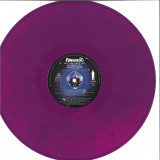
Funkadelic Feat. Louie Vega - Ain't That Funkin' Kind Of Hard On You? (Louie Vega Remixes) (Purple Vinyl Repress)

Purple Vinyl

House music, nightlife entertainment and DJ/Producer virtuoso Louie Vega has proven over and over again that he's a master chemist in the studio. His latest release is an uptempo and speaker-knocking remix of Funkadelic's 'Ain't That Funkin' Kind of Hard on You' (produced by George Clinton and & G Koop) from the album 'First Ya Gotta Shake the Gate'.
The original version is nothing short of a classic, but it's as if the song had never been invited to a Louie Vega post-midnight global extravaganza. Was the song not aware that spellbound dancing and high BPMs were the standard for House Music Normally, such a blaring disregard for nightlife decorum would relegate a song to the pits of sonic hell, but we're talking about George Clinton here!The original opens up with a G-funk groove that screams Westside and lowriders. The listener is then blessed with Clinton as he adds his sage, soulful and pimpadelic vocals, complemented by Funkadelic singers asking him about the pains of the funk. The semblance of a beat that could drive the dancefloor into the morning hours is there, but in no way has it blossomed into its full glory. Enter Louie Vega.
His remix immediately greets listeners with a decadent spread of instrumentation and chutzpah. The original song's DNA populates the first thirty seconds of the remix but then an explosion takes place and the song assumes a new identity. The transcendent experience is akin to taking the elevator to a rooftop party and once the doors open- boom! The remix begs you to dance, the G-funk groove is now in your face instead of being laidback and percussion takes a front seat to take you away. The song is alive, there's no other way to describe it.
Be sure to buy your vinyl at an outlet near you! the Louie Vega remix of Funkadelic's 'Ain't That Funkin' Kind of Hard on You' on Vega Records!

out of Stock

Order now and we will order the item for you at our supplier.

11,72

Last In: 10 months ago
Narciss & Gerd Janson - No Maze Like Heaven

Running Back is delighted to introduce RB Studio Sessions, a new sub-imprint of music envisioned, recorded and fully realised at Running Back’s in-house studio.
Built on the promise of unfettered creative freedom and aided by agreeable local autobahn connections in the Hesse region, the RB Studio Sessions project is christened with the work of Running Back’s founder, chief dreamer, and Geschäftsführer, Gerd Janson.
For this debut edition, he is joined for a momentous jam by the new-school hero of the house, good friend and kindred spirit, Narciss.
Just as Running Back’s earliest releases dropped a stylus to preserve timeless ideals of club culture, the four tracks on ‘No Maze Like Heaven’ further this continuum by turning back the sonic clock just a decade or so. Picture, if you will, a nascent Narciss, youthfully club
hopping and deeply inspired by the selections of Gerd himself, alongside a selection of DJs coaxing the Panorama Bar blinds open with exquisite, mid-tempo precision.
As such, new light immediately floods in for ‘Chicco’s Chips’, which captures many of those irresistible elements—Italo-tinted synths, hooky vocals, and perfect percussion— regenerated with the wide-eyed, high energy of Narciss’s own solo productions. ‘Elka,
meanwhile, is a richer, deeper dish, masterfully interlocking multiple heavenly melodies under layers of optimistic analogue fuzz.
Narciss and Gerd then look to the Netherlands for further collaboration with one of electronic music’s best-loved vocalists and another fine producer, Coloray, who fills ‘Look For You’ with a yearning performance in the vulnerable, synth-pop tradition. Finally, ‘No
Maze Like Heaven’ builds on this mood and melody for a finale that hits the sweet spot between machine power and oh-so-human emotion.
Featuring labyrinthian artwork from the mighty Gasius., via a sleeve that appears to blend M.C. Escher with MC Hammer, ‘No Maze Like Heaven’ proves to be a divine foundation of RB Studio Sessions. For Narciss, “a memory they will cherish forever.”
For Gerd, a taxdeductible working lunch. For DJs and dancers? Four ebullient hits-in-waiting, sounding great and meaning more.

out of Stock

Order now and we will order the item for you at our supplier.

11,72
Ibex Band - Stereo Instrumental Music LP 2x12"

The Ibex Band, with Giovanni Rico and Selam Woldemariam at the creative helm, provided the musical backbone for legends like Aster Aweke, Girma Beyene, Tilahun Gessesse, Mulatu Astatke, and Mahmoud Ahmed, including the iconic album Ere Mela Mela, shaping modern Ethiopian music as we know it today. This 1976 album (Ge’ez Year 1968) played a pivotal role in that legacy and has now resurfaced to set the record straight.

There’s a tendency to talk about the seventies as a golden age of Ethiopian music. There are good reasons for that, and just as good reasons against it. However, the notion of a golden past privileges the role of Western explorers and suggests that the pinnacle of Ethiopia’s musical culture is something only a foreigner can appreciate and unearth. It downplays the complexities of Ethiopia’s culture and history, creating an artificial divide between then and now. And it underestimates the constantly evolving sound that has followed.

The legendary musical outfit The Ibex Band, later metamorphosed into The Roha Band, has played a central role in defining the sound of many of the greatest stars on the music scene of Ethiopia from the mid-seventies onwards–but their golden output has never really waned. The story of the origins of the band that provided the musical backbone for greats such as Aster Aweke, Girma Beyene, Tilahun Gessesse, backing the solo career of group member Mahmoud Ahmed as well as backing Mulatu Astatke and many others has yet to be properly told.

Two misconceptions plague the image of Ethiopian music, one is that the music is pure because it is, by some notion, unexploited, the other is that it is all traditional. To begin with, a combination of political changes between the late sixties and the mid-nineties created an environment where only the most dedicated and skilled musicians struggled on and pursued a musical career against fierce odds. The whole Ibex Band, with Giovanni Rico and Selam “Selamino” Seyoum Woldermarian at the creative helm, are arguably the origo of the vibrant scene in the mid-seventies, and the said pair are foremost responsible for not only navigating the band through troubled times, but also modernizing the 6/8 chickchicka rhythm to a contemporary form. Giovanni laid the rhythmic foundation with heavy looped basslines that reinvented traditional melodies as dance music, and with Selamino’s innovative guitar work they influenced scores of musicians from Abegaz Kibrework Shiota to Henock Temesgen. Even Giovanni’s Fender bass and Selamino’s Gibson guitar inspired younger musicians in their choice of instruments. Not only in choice of instruments but also in sound–even as the digital revolution hit Ethiopian music, a lot of popular music still took its cue from the masters from Ibex and Roha.

Ibex emerged out of the ashes of the sixties group the Soul Echos band, adding Giovanni and Selamino to their ranks and taking their cues from a slew of influences, such as Motown and The Beatles, fused with traditional music. A tighter-knit unit than most bands at the time – Ibex has remained six to seven members throughout their whole career, compared to many bands that were as large as fifteen or sixteen men strong when Ibex set out. Their playing has been viciously focused, economical yet heavy. Just a year before the recording sessions of the album in your hands, Giovanni and Selamino made a contribution to the popular musical lexicon of Ethiopia that was simply defining the popular sound: their arrangement and recording of bandmate Mahmoud Ahmed’s solo effort and real commercial breakthrough tune and eponymous album, Ere Mela Mela, from 1975.

Selamino has never limited himself to being an adroit lead guitarist, but has always been a scholar of history, and as such he has probably contributed as much to modern Ethiopian music with his guitar playing and compositions as with a deepened understanding of modern or contemporary – Zemenawi – Ethiopian music. Selamino’s contributions serve as a metaphor for those of the whole band, at one and the same time creating and defining a new, danceable and updated sound anchored in Giovanni’s bass, whilst also elevating the broader scene through their support for others on the scene and on top of that, increasing the understanding of the music.

There is an understandable desire to romanticize the musical heyday Ibex and Roha were at the forefront of, because so much of the output is sorrowfully hard to come by. Ibex creativity was nothing short of ridiculously fierce compared to many of their Western contemporaries. Based on their sheer recorded output alone they could have usurped the title “hardest working in show business” from James Brown, recording more than 250 albums or 2500 songs in the seventies and eighties. Some only surface as cassettes today, others were never given full LP release, and some are simply impossible to find today. In the light of that, it’s nothing short of a miracle that the recording Stereo Instrumental Music from 1976 (Ge’ez Year 1968) has resurfaced. Unearthed in perfect condition on a chrome cassette, this is musical history comes alive–to set the future straight. Stereo Instrumental Music was recorded in collaboration with Karl-Gustav Lundgren, a Swedish national working for the Radio Voice of the Gospel. It took two sessions at the Ras Hotel ballroom in Addis Ababa. The Ibex Band was the first band in Ethiopia to employ a four-track recorder for their recording (the first available in the country, lent by Karl-Gustav). Later the same week, Giovanni and Selamino realized that, lengthwise, the recorded material fell short of what they wished for, so they recorded four more tracks in one more session on a single-track recorder. The Ras Hotel and Ghion Hotel, where the Ibex Band held musical residencies were to Ethiopia in general and Addis Ababa in particular what Motown was to the USA and Detroit a few years earlier – a hotbed of musical creativity and showmanship.

The most astonishing thing about Ethiopian music of the last half century is how tradition and modernity are intertwined. Because of this feature, it’s kind of hard to tell when there ever was or when we are in a “golden age”. So much of music from the past has been criminally neglected, but because of the hardships in the past, it would be an oversimplification to say that said past was a golden age. Probably, the golden age is what we are approaching, because for the first time both the past and future are accessible, and the monumental contributions from before can lay a firm foundation for a thriving music scene today. The Ibex Band stands firmly in the past, present and the future. That, if anything, is golden.

The detailed history of Stereo Instrumental Music is in many ways unique. To begin with, it couldn’t have been recorded earlier (there were no four-track recorders available) and it really couldn’t have been recorded afterwards either, at least not in the years directly following, because of the toll the musical scene took from the unfavorable political climate that followed when the nascent Derg regime and rival groups tried to assert themselves, the musical equipment lent from The Voice of Gospel Radio simply disappeared from Ethiopia when the radio station folded in 1977. Karl-Gustav Lundgren,
the Swedish foreign national who assisted during the recording, worked with the Ethiopian Evangelical Church Mekane Yesus at the time, recalls how they only had about fifteen minutes to get the microphones in place for the recording as to not alert neither the management at Ras Hotel nor the authorities and most importantly, to complete the recording before the curfew came into effect at midnight. In leaping to the opportunity to use previously unavailable equipment to push their sound forward and improvising to meet the logistical challenges, the Ibex Band displayed the very avant-gardism and adaptability that explains their longevity as a band through the years. The recording of Stereo Instrumental Music is from a given time in history, but it sounds as beyond time.
Much of the energy that burst out of the scene that Stereo Instrumental Music came out of dissipated or got sidetracked during the societal changes Ethiopia went through in the 1970s and 80s. Whilst leaders might have professed to be revolutionary, the work ethic of the Ibex Band can truly be described as that. They never called it quits, but adapted, toured extensively abroad in Africa, Europe, and the Middle East, and found ways to work even in the face of the curfew that curtailed a lot of musical life. They even played major arenas in the nineteen eighties, despite said curfew and restrictions. The whole extent of their legacy has never been told, but their music speaks louder than words, so therefore… tune in to the Ibex Band’s Stereo Instrumental Music.

out of Stock

Order now and we will order the item for you at our supplier.

24,33

Last In: 10 months ago
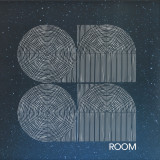
ANAN - Room LP

Anan

Room LP

12inchSELP815
Space Echo Recordings
22.04.2025

ANAN is a project born from the musical inspiration of DJs Roberto Agosta and Massimo Napoli (Galathea). The name ANAN comes simply from the repetition of the initials of their surnames. Room, their new album, refers to the space in Catania, Sicily, where the two artists create their music.
Room is a mature and intense album that draws inspiration from the two composers' favourite musical genres: jazz, 70s psychedelia, afrobeat, cumbia and soul. The ethereal sound of the album draws the listener into a melting pot of these musical styles that blend perfectly together, making the album versatile and innovative. Valuable arranger and performer Salvo Bruno ‘Dub’ masterfully colours and enriches the deep melodies of the recordings, as if it were a live session coordinated and directed by the two DJs on a super cinematic journey.

out of Stock

Order now and we will order the item for you at our supplier.

21,81

Last In: 11 months ago
Zethson Alex & Johan Jutterstrom - It Could - If I

A collaboration between US label Astral Spirits and Sweden’s Thanatosis Produktion, It could / If I marks the debut album from Stockholm-based duo Johan Jutterström (saxophone) and Alex Zethson (piano). Together, they reinterpret jazz standards and explore an eclectic mix of compositions by Leonard Cohen, Pet Shop Boys, John Lurie, and 19th-century composer Alexander Fesca.

Jutterström and Zethson’s musical partnership dates back to their teenage years, when they bonded over a love for jazz and the struggle to find their own voice within it. Their duo work has always been about navigating that tension—trying to capture jazz, failing, and finding another way forward. This album continues that pursuit, emphasizing not just what is played, but how it is played.

The record’s title reflects their approach: a process of reaching for something just out of grasp. Songs are deconstructed, rearranged, and treated like palimpsests—scrubbed clean and rewritten while allowing traces of the original to shine through. The result is a dynamic and deeply personal exploration of sound, filled with both reverence and reinvention.

Both musicians have extensive backgrounds in jazz, improvisation, and experimental music. Zethson, a prolific pianist and composer, has worked with ensembles like Fire! Orchestra and Trondheim Jazz Orchestra, and plays keyboards in ensembles such as Vilhelm Bromander Unfolding Orchestra, Goran Kajfes Tropiques, Vathres, and Angles (current with the jazzopera The Death of Kalypso). Jutterström, a saxophonist with an artistic PhD, has performed internationally and runs the ensemble STHLM svaga, a band who have performed commissioned pieces by jazz legends such as Ron Carter, Archie Shepp and Roscoe Mitchell.

With It could / If I, the duo crafts an intricate, ever-shifting dialogue—an ongoing attempt to "stick jazz music," as they put it, constantly approaching, never quite arriving, and finding beauty in the pursuit.

pre-order now18.04.2025

expected to be published on 18.04.2025

30,88
Life Of Agony - Ugly

Life Of Agony

Ugly

12inchMOVLPT2003
Music On Vinyl
18.04.2025

Ugly is the second album released by the New York alternative metal band Life of Agony. Produced by Steve Thompson, the album signalled a considerable shift from the hardcore and groove metal sounds which defined their 1993 debut album. The band ditched the gang vocals and instead let Keith (now Mina) display his newly developed crooning. Keith's new expressive style sounds more emotive and is perhaps more at heart with the era's alternative bands and it suits UGLY perfectly.

Musically, this album is a pretty interesting hybrid. The first half of the album opener "Seasons" shows Keith's vocals glide quietly over the top, only to break into higher notes more frequently as the song progresses into the soaring second half. This opening track is a strong introduction to the bands new sound.

The album also features the band's trademark pulverizing riffs as heard in "I Regret", "Damned If I Do" and "Fears", the gang vocals and double-kick drumming has been completely omitted. Songs like "Lost At 22," and "How It Would Be" all feel profound. "Drained" shows the serious hooks and "Let's Pretend" is a ballad written to Keith's mother who died shortly after his birth. The album ends with a rendition of Simple Minds' "Don't You Forget About Me" that arguably kicked off the trend of Roadrunner bands doing novelty covers.

It unquestionably belongs in the collection of anyone who has a love for quality 90s-era alternative rock music. The uglier the better!

pre-order now18.04.2025

expected to be published on 18.04.2025

31,51
Various - orn in the City of Tanta: Lower Egyptian Urban Folklore and Bedouin Shaabi from Libya's Bourini Reco
  • A1: Basis Rahouma - بسيس رحومة,- Yana Alla Nafsa Masouda يانا اللي نفسي مسدوده (Blocked From What I Want)
  • A2: Sheikh Amin Abde -L Qader الشيخ أمين عبد القادر, Mould Fi Madina Tanta مولد في مدينة طنطا (Born In The City Of Tanta)
  • A3: Samah سماح, - Shawish Aldawriat شاويش الدورية, (Patrol Sargeant)
  • A4: Mahmoud Al-Sandidi محمود الصنديدي, - Ana Mish Hafwatak (Part 2) انا مش حفوتك, (I Don’t Miss Your Love)
  • B1: Abu Bakr Abdel Aziz (Aka Abu Abab) أبو بكر عبد العزيز,- Al Bint Al Libya أل بينت أل ليبيا (The Girl From Libya)
  • B2: Sheikh Amin Abdel Qader الشيخ أمين عبد القادر, - Mawal Al Layl Kolo Makasib موال الليل كله مكاسب (Mawaal: The Spoils Of An All-Nighter)
  • B3: Abu Saber أبو صابر, - Ya Allah Ank Zinat يا الله انك زينة (Oh, God, You Are Beautiful)
  • B4: Reem Kamal ريم كمال, - Baed Al Yas Yjini بعد اليأس يجيني (After Hopelessness, He Comes To Me)

“Egypt’s “official” popular music throughout much of the 20th Century was a complex form of art song steeped in tradition, well-loved by the middle and upper classes, and even accommodating to certain non-Arabic influences. It was highly structured by professional musicians working an established industry centered in the capitol, Cairo. However, far from the bustling cosmopolitan center of Cairo, north and northwest, in towns like Tanta and Alexandria and extending across the Saharan Desert to the Libyan border, dozens of fully marginalized artists were developing a raw, hybrid shaabi/al-musiqa al-shabiya style of music, supported by smaller upstart, independent labels, including the short-lived but deeply resonant Bourini Records. Launched in the late 1960s in Benghazi, Libya, Astuanat al-Bourini اسطوانات البوريني (Bourini Records) published some 40 to 50 titles from 1968 to 1975. Bourini released 7-inch 45 RPM singles by 15 artists, all but one of them Egyptian, igniting brief careers for Alexandrian singer Sheikh Amin Abdel Qader and the blind Bedouin legend Abu Bakr Abdel Aziz (aka Abu Abab). The tracks compiled here comprise a full range of styles covered by the label, while highlighting some of its most gobsmacking moments, from Basis Rahouma’s beastly transformation into a growling and barking man-lion by the end of “Yana Alla Nafsa Masouda,” to Reem Kamal’s hopeful-if-bitter handclapping party pivot “Baed Al Yas Yjini,” which descends into an almost Velvet Underground outro-groove of nihilistic dissonance. All the tracks on this compilation were laid down in stark divergence from the mainstream Egyptian popular music topography of heightened emotions buoyed by lush arrangements. The contrast is most evident in Mahmoud al-Sandidi’s “Ana Mish Hafwatak,” wherein his voice weaves heavily but deftly through a constant accordion drone, and Abu Abab’s “Al Bint al Libya,” a sparse, slow-burning lament with minimal percussion, violin, and Abab’s nephew Hamed Abdel Muna'im Mursi on lyre. Whereas the Egyptian mainstream was aspirational, attempting to reflect Egyptian culture at its most refined, the performances captured by Bourini were manifestations of everyday life lived by the mostly otherwise ignored masses. More than half century old, this music has lost none of its urgency, presence, or relevance. We hear these artists as if they’d just joined us in our living room, and not on a stage decades ago surrounded by tens of thousands of long-forgotten acolytes.

pre-order now18.04.2025

expected to be published on 18.04.2025

28,36
SCROUNGE - ALMOST LIKE YOU COULD
  • 1: Higher
  • 2: Pageant Queen
  • 3: Utg
  • 4: Waste
  • 5: Dreaming
  • 6: Corner Cutting Boredom
  • 7: Melt
  • 8: Buzz/Cut
  • 9: Rat
  • 10: Nothing Personal

Almost Like You Could ignites its art punk fire with Lucy Alexander proclaiming, “Everyone wants something to talk about / But not a minute to spare, so be brief.” Not surprising from a song that’s 1:54 (‘Higher’), but the raw honesty in her lyrics ring far after the music ends. Alexander, along with bandmate Luke Cartledge, place the propulsive power of their beliefs at the core of their debut full-length album, and their guiding motivation towards social justice is as fierce as it is welcoming. “Living as part of the queer community, and being queer myself, leads me towards supporting every person’s truth,” Alexander says. Scrounge’s songs skip to a fast beat, electrifying the entire album with a sense of empowerment. Their approach is OG punk: they make music for their peers and themselves. Only now, with a world of connections possible, they’re able to open arms wide for a far-reaching embrace. Alexander’s rich vocals give their sound its central force, anchoring the songs with confessional lines (“If this is the pinnacle, then I need a miracle/ Cause everyone’s laughing at me,” “There’s not much left/ this corpse I have to keep/ Above board.”). They sing about economic inequality, political corruption, environmental destruction, and collective change. “We’re inspired by those around us, and we write about what we care about. Art has always existed for us as a means of catharsis, a way of expressing something we might not be able to otherwise, and we hope our music can be that for other people too,” says Alexander. “I think I’ve actually written a filthy banger,” she states while re-listening to “Buzz/Cut”, a grunge-honoring hammer of a song that takes a journey from disappointment, to self-realization, to release. Alexander and Cartledge’s gratification in making an album they’re proud of mirrors the empowerment conveyed in their lyrics. A follow-up to debut mini-album Sugar, Daddy (Fierce Panda, 2022), Almost Like You Could came together over 18 months, in between “teaching, touring, graduation, and a wedding”, as Lucy explains, for the band always has a handful of shows coming up. It’s a strange outcome for a duo who first bonded over their mutual love of SOPHIE. “She radicalized the structure of sound, and revealed herself through it,” Cartledge explains. “That was a massive inspiration when we started playing together, stripping everything away to open up new possibilities as artists and as people." Having already toured Europe and the States, Scrounge is preparing to be on the road throughout 2025. In a world where the idea of true community is ephemeral, Lucy and Luke seek to foster it everywhere they play. And their belief in change is ultimately buoyed by hope. “I know that it’s never been this good,” they sing.

pre-order now18.04.2025

expected to be published on 18.04.2025

23,74
John M. Bennett - BLANKSMANSHIP

The first ever reissue of 1994 sound poetry masterpiece »BLANKSMANSHIP«, a high point in the work of legendary avant-garde poet and artist John M. Bennett. Editions Basilic and Luna Bisonte Prods previously collaborated on »A Flattened Face Fogs Through: Selected Sound Poetry (1986-1994)«, an anthology of Bennett’s sound poetry released in 2022 to widespread acclaim.

John M. Bennett’s »BLANKSMANSHIP« is a totemic representation of something impossible: a linguistic object containing a totality. Written and recorded in the early 1990s and released as a sound poetry cassette and chapbook, »BLANKSMANSHIP« begins and ends with a ten word mantra, distilling the poem’s ten cantos that act as phases of an extended meditation. Performed by the author accompanied only by minimalist shakuhachi flute and bell, a narrative emerges from a mythic place, spoken by a single voice that eventually multiplies into a horde of selves. The author states that »BLANKSMANSHIP« refers to a state of mind, the "empty yet swarming void from which the poem’s voice arises, as if it were the voice of completeness itself".

RIYL: Robert Ashley, Akio Suzuki, William S. Burroughs, Steve Dalachinsky, Max Headroom, Japanese Shakuhachi Flute Music

pre-order now18.04.2025

expected to be published on 18.04.2025

26,68
THEE BABY CUFFS & COLD DIAMOND & MINK - THERE AIN'T ENOUGH ROSES
  • There Ain't Enough Roses
  • There Ain't Enough Roses (Instrumental)
also available

Black Vinyl[10,04 €]


If there's a group in this age that faithfully carries the torch of real group soul harmony, it must be these three cats from the US west coast by the name of Thee Baby Cuffs. Currently composed of Joe Narvaez and Reality Jonez, the trio prances on the stage with their new song "There Ain't Enough Roses". Produced together with the Timmion house band Cold Diamond & Mink, these gentlemen lay down pure soulful romantics enough to fill a jacuzzi. Even though they seem to be walking out from the candy and flower shop empty handed to meet their lover, they are equipped with lyrics and falsetto flows that can melt any heart. Continuing with their tried and tested downtempo ballad style, Thee Baby Cuffs deliver a soul boulder just as potent as their previous Timmion releases "My My Baby" and "You're My Reason", not to forget the brilliant work that they have put out on the Raza Del Soul label from California. So hop on in the passenger's seat and let Thee Baby Cuffs serenade you all the way to the sunset. In case you're more for the instrumentals, flip the single over to reveal the flute-led version that'll send you to that sweet Steve Parks lowrider territory in no time.

pre-order now18.04.2025

expected to be published on 18.04.2025

10,71
THEE BABY CUFFS & COLD DIAMOND & MINK - THERE AIN'T ENOUGH ROSES

If there's a group in this age that faithfully carries the torch of real group soul harmony, it must be these three cats from the US west coast by the name of Thee Baby Cuffs. Currently composed of Joe Narvaez and Reality Jonez, the trio prances on the stage with their new song "There Ain't Enough Roses". Produced together with the Timmion house band Cold Diamond & Mink, these gentlemen lay down pure soulful romantics enough to fill a jacuzzi. Even though they seem to be walking out from the candy and flower shop empty handed to meet their lover, they are equipped with lyrics and falsetto flows that can melt any heart. Continuing with their tried and tested downtempo ballad style, Thee Baby Cuffs deliver a soul boulder just as potent as their previous Timmion releases "My My Baby" and "You're My Reason", not to forget the brilliant work that they have put out on the Raza Del Soul label from California. So hop on in the passenger's seat and let Thee Baby Cuffs serenade you all the way to the sunset. In case you're more for the instrumentals, flip the single over to reveal the flute-led version that'll send you to that sweet Steve Parks lowrider territory in no time.

pre-order now18.04.2025

expected to be published on 18.04.2025

10,04
Charif Megarbane - Hawalat LP

If Hawalat sounds like a world tour that’s because it essentially is. “As much as Marzipan is a picture of Lebanon from the inside, Hawalat kind of picks up from where Marzipan finished but more looking to the outside, the diaspora, to the notion of exile.” Megarbane says he is interested in the connections between the global and the domestic, the mundane and the cosmic, and wanted to create space for non-linear progression.

Hawalat is based on the idea of hawala, informal money transfers that you can make to certain countries impacted by a lack of currency or unstable political and economic contexts. His use of the term on this album is not a financial one, Megarbane explains, but a nod to notions of creative exchange between “places, persons, generations.” It is the first time Megarbane called on other musicians in this way to inform his sound, including a collaboration with Sven Wunder on the song Helia featuring strings by the Stockholm Studio Orchestra.

The album opens with first single Hanadi, a punchy Somali-inspired track with warm non-lexical vocals and saxophone. It immediately pivots to the Dreams of an Insomniac, which balances soft, effortless vocals and keys with urgent violin intrusions. Al Dollarji feels like Megarbane’s bread and butter, that is Mediterranean sounds with intricate strings, while Al Bahriye takes this staple and introduces hip hop inflections. The result is a rich 17 track album that effortlessly blends genres and styles.

Including 8 page, 12" sized booklet with unseen photos and liner notes by Armani Syed.

out of Stock

Order now and we will order the item for you at our supplier.

22,48

Last In: 5 months ago
Thee Baby Cuffs & Cold Diamond & Mink - There Ain't Enough Roses
  • A1: There Ain’t Enough Roses
  • B2: Instrumental
also available

Black Vinyl[10,04 €]


Authentic group soul harmony that is guaranteed to appeal to fans of downtempo soul ballads. Accompanied with an instrumental version, where the flute plays the lead vocal melody. A recognizable continuation to the previous collaboration between the singers and the Cold Diamond & Mink band. If there’s a group in this age that faithfully carries the torch of real group soul harmony, it must be these three cats from the US west coast by the name of Thee Baby Cuffs. Currently composed of Joe Narvaez and Reality Jonez, the trio prances on the stage with their new song “There Ain’t Enough Roses”. Produced together with the Timmion house band Cold Diamond & Mink, these gentlemen lay down pure soulful romantics enough to fill a jacuzzi. Even though they seem to be walking out from the candy and flower shop empty handed to meet their lover, they are equipped with lyrics and falsetto flows that can melt any heart. Continuing with their tried and tested downtempo ballad style, Thee Baby Cuffs deliver a soul boulder just as potent as their previous Timmion releases “My My Baby” and “You’re My Reason”, not to forget the brilliant work that they have put out on the Raza Del Soul label from California. So hop on in the passenger’s seat and let Thee Baby Cuffs serenade you all the way to the sunset. In case you’re more for the instrumentals, flip the single over to reveal the flute-led version that’ll send you to that sweet Steve Parks lowrider territory in no time.

pre-order now18.04.2025

expected to be published on 18.04.2025

10,88
Thee Baby Cuffs & Cold Diamond & Mink - There Ain't Enough Roses

Authentic group soul harmony that is guaranteed to appeal to fans of downtempo soul ballads. Accompanied with an instrumental version, where the flute plays the lead vocal melody. A recognizable continuation to the previous collaboration between the singers and the Cold Diamond & Mink band. If there’s a group in this age that faithfully carries the torch of real group soul harmony, it must be these three cats from the US west coast by the name of Thee Baby Cuffs. Currently composed of Joe Narvaez and Reality Jonez, the trio prances on the stage with their new song “There Ain’t Enough Roses”. Produced together with the Timmion house band Cold Diamond & Mink, these gentlemen lay down pure soulful romantics enough to fill a jacuzzi. Even though they seem to be walking out from the candy and flower shop empty handed to meet their lover, they are equipped with lyrics and falsetto flows that can melt any heart. Continuing with their tried and tested downtempo ballad style, Thee Baby Cuffs deliver a soul boulder just as potent as their previous Timmion releases “My My Baby” and “You’re My Reason”, not to forget the brilliant work that they have put out on the Raza Del Soul label from California. So hop on in the passenger’s seat and let Thee Baby Cuffs serenade you all the way to the sunset. In case you’re more for the instrumentals, flip the single over to reveal the flute-led version that’ll send you to that sweet Steve Parks lowrider territory in no time.

pre-order now18.04.2025

expected to be published on 18.04.2025

10,04
BENZO QUEEN - NO GODS, NO MASTERS, NO SLEEVES LP

What happens when Bristol's noisiest export BENZO QUEEN decides to fight themselves? You get this split record - a double-headed beast of post-hardcore fury and experimental noise. Side A delivers "NO GODS NO MASTERS NO SLEEVES" - BENZO QUEEN's sophomore album captured raw and bleeding after months of destroying stages with Mclusky and Whores. Twelve tracks of controlled chaos recorded live on New Year's Eve in Bristol - because why not start the year by breaking something? Side B introduces BENZO AND THE QUEENS - this iteration emerged like a bad rash at Bristol's annual Dean Lane Hardcore Funday. Nobody asked for more, so naturally they recorded an EP. Think of it as BENZO QUEEN's evil twin, if evil twins were actually more evil than their evil siblings.

pre-order now18.04.2025

expected to be published on 18.04.2025

31,72
LDS - power of 2

Lds

power of 2

12inchTRESOR374
Tresor
18.04.2025

To speak to Luca Daniel Schwarz aka LDS about his music is to be enthusiastically guided into a complex world of his own creation: clean and powerful techno which pulses with life from the textured patterns and drum sequences that have fills and accents that would make anyone who’s picked up a set of drumsticks envious. Yet this ecosystem of noise is deceptive; Schwarz’s process for making music is very different to how a live drummer would create the same subtlety of performance. Forever researching new technology, Luca got deeply interested in different programming languages, and created a series of probability-based music tools for manoeuvring sounds and sequencing.
Manipulating those probabilities takes a skilful alchemy, needing understanding of both musical structure and how the tools he devised work. To return to the drummer analogy, if the drummer is focussed and intentional in the moment of playing, then the method used in LDS tracks is almost diametrically opposed, with all of the intention coming in the assembly of the instruments, potential paths, and gateways; once play is pressed the music flows, following all the rules that were set in advance, not unlike a domino run or Rube Goldberg machine. And like a domino run, the results are fascinating and, ultimately, fun: staccato vocals pop in and out in ‘zipp prompt’; laser-like synths pulse; background noises sweep across the aural plane of the dub techno of ‘diff, blockmix’ and ‘pow’ adding texture that brings vitality all-too-easily missed out when complex mathematical
processes become entwined with music creation. The high sensitivity to texture and rhythmic detail in Stadion Progg is multiplied further on Jean Redondo's remix - whose track, Hypersonic, was the backbone of 2023’s ‘yet’ compilation on Tresor.
The balance between technology and a sense of fun might also come from the maker; it’s not easy to overstate Schwarz’s passion for what is now his favourite way to make music, “it never gets boring. There’s always a moment of anticipation to see what actually emerges.” And the true “power of 2” comes into play when the resulting music can be fed back through the system again and again, potentiating the music in exponential ways.

out of Stock

Order now and we will order the item for you at our supplier.

11,72

Last In: 4 months ago
Yumiko Morioka - Resonance

Yumiko Morioka

Resonance

12inchMTR005-25
Métron Records
17.04.2025

Japanese pianist Yumiko Morioka initially released Resonance, her first and only solo recording, on Akira Ito's ‘Green & Water’ imprint in 1987. Whilst by no means a commercial failure, the album was mostly found in the background of Japanese TV documentaries, maternity clinics and healing shops before drifting into relative obscurity.

By 1994, Morioka had relocated to America and her solo music career had given way to the joys of starting a family and her new life in California. It was, and still is, a shock for her to learn that Resonance had gained the attention of a new audience outside of Japan through blog posts and YouTube album uploads.

After hearing Resonance for the first time ourselves back in early 2017, we tried for months to track Morioka down about a reissue. This news reached her at a particularly trying time in her life following the devastating loss of her home in the 2017 California wildfires.

Her home had recently been razed, destroying all of her possessions, musical equipment, scores and recordings. Morioka was lucky to escape with her life; her quick thinking neighbour raised the alarm in the middle of the night giving her just enough time to escape safely before then tragically watching her home burn to the ground.

In the aftermath, Morioka returned to Japan in an attempt to rebuild her life. She found work writing music for commercial projects and pop acts before recently opening her own chocolate shop in the Jiyugaoka neighbourhood of Tokyo - back where it all began.

‘’Space and time moved at a different speed than now’’ – Yumiko Morioka

A lifelong student of the piano, Morioka was born in Tokyo in 1956. A child prodigy, she took up the instrument under her mother’s tutelage at just three years old and by her teens she had won multiple piano scholarships. Her talent was so obvious that she was invited to train in America, eventually graduating from the San Francisco Conservatory of Music with a piano major during John Adams’ reign as head of composition.

After graduation, Morioka returned to Japan but struggled to find her place musically, working mostly on commercial songwriting assignments. Frustrated, and at times embarrassed by her musical output, she turned to the works of Brian Eno and the surroundings of her coastal home in the Izu Peninsula south of Tokyo for inspiration. It was here that she began to work on the compositions that would eventually become Resonance.

Recorded on a Bösendorfer grand piano, much of Resonance was made in an attempt to soothe her creative soul. Constructed from unwritten improvisations with additional instrumentation added later, Resonance explores the space between notes. As such, it's a record that feels open and inviting, permeated throughout with a sense of confident serenity.

The sparse, delicately played notes are allowed to reverberate and echo through the spaces between themselves, giving each track a feeling of both grandeur and intimacy. Like the great pioneers of classical and ambient music, there's a timelessness to Resonance - a comforting, familiar feeling, as if these melodies have always existed.

Resonance drew influence from the popular environmental music culture prevalent in Japan during the late 80s, but it was also heavily inspired by Western musicians such as the avant-garde Parisian composer Erik Satie. Listening today, it still feels fresh and pertinent; a warm, contemplative reflection of a travelled woman.

Resonance has been lovingly remastered by Séance Centre's Brandon Hocura and given new artwork by Métron Records’ label head Jack Hardwicke.

out of Stock

Order now and we will order the item for you at our supplier.

23,11

Last In: 9 months ago
DJ Narciso - Diferenciado

Dj Narciso

Diferenciado

12inchP056LP
Príncipe
11.04.2025

Narciso has been running parallel to most of his contemporaries, staying close to the main lane but researching in his own distinctive way. He takes pride in "being free from limitations and conventions. To me, music doesn't follow fixed rules; it is a field for experimentation, where any sound can be transformed into something pleasing to the ear". Depending on what one considers "pleasing", this is a pretty challenging set of tracks. The artist never loses the balance, though, mindful of a certain "dance" context in which this music thrives, but it is also that same context that is being constantly twisted and reshaped into other forms. Some of those provide fresh ground for others to follow; some are of such individuality that no one else dares disturbance; some quickly return to a safer way of communication.

"Diferenciado" does communicate, but like words can be changed to sound different and still mean the same, such are music and sound with Narciso. It's not about alienation of the listener nor alienation of the self from the surrounding areas. "I believe music is present in everything around us." And if anyone can say her/his/their music "reflects vision, experience and perception", you know the end result is not often surprising or even that different from previous examples. Well, we stand by "Diferenciado" in its obvious distinctiveness, and if all the blurb so far may read like a nervous justification it's just because of the excitement in helping put this out into the world.

As a founding element of RS Produções, where Nuno Beats, DJ Lima, DJ Nulo and Farucox are also found, Narciso has been contributing to a spiritual and creative atmosphere that permeates the environs of Lisbon where that golden, inspired air has to fight for space with many kinds of instability. The beauty and drama of opening tracks "Ziu Ziu" and "Cabelinho" (this one with mate Farucox) should be able to touch any sensitive soul that appreciates the quirkiness often attached to pure expression. As in "Pipipi" too, for example, where melody and rhythm gently and moodily lead you into a brief but sudden interruption feeling like a change into another state of being. Do not shy away. Narciso steps up as himself, not as representative of whatever or whoever.

pre-order now11.04.2025

expected to be published on 11.04.2025

25,17
Triola - Triola Im Fünftonraum (Remastered 2025)  (LP)

Originally released on CD only – those were the days – “Triola im Fünftonraum“ counts as one of the most iconic albums of the early Kompakt era. Experience this timeless masterpiece of lush electronica lovingly restored and remastered for the first time on vinyl – 21 years after its inception.

We found this review from back in the days that perfectly sums up what “Triola im Fünftonraum” is all about:

The press material for “Triola im Fünftonraum” made allusions to home listening, when the album is mostly about movement… in a car …preferably a fast one … on a muggy spring day.

This might catch followers of producer Jörg Burger off guard. Up until this point, the producer’s Triola tracks – limited to three consecutive appearances on Kompakt’s yearly Pop Ambient series and a spot on “Leichtes Hören Teil 1” – were free-floating ambient washouts (albeit wondrous free-floating ambient washouts) with no pulse. The album, on the other hand, is beat-driven. Though still resolutely ambient – more an update of Burger’s lushest Bionaut tracks, only fully engaging instead of mildly diverting.

The soft, synthetic hand drums and tranquil vapors of “Leuchtturm” from Pop Ambient 2003, remain untouched and begin the album. Two other tracks that might sound familiar receive dynamic overhauls, now supported with quick dance rhythms and additional layers of synth gauze; the whispy flute trills and lightly flickering keys of “AG Penthouse”, for instance, are melted into a churning rhythm and some singing keyboard vamps that resemble a relaxed take on Tangerine Dream’s suspenseful soundtrack work for “Thief” (minus the crazy guitars).

What really makes the whole thing glow is the manner in which the tracks are attached, flowing in and out of another, rising and cresting and receding, with supreme poise – even if its title provides no indication, the album is as much a travelogue as Carl Craig’s “Landcruising”, Morgan Geist’s “Driving Memoirs” and Model 500’s “Deep Space”.

These are some of Burger’s most inventive productions, a remarkable feat since he’s been doing this so long. Catch yourself in the right frame of mind and you’ll wonder if everything he has released has been one extended ramp-up to this. In this age, it’s also refreshing to have a purely ambient techno album with absolutely no connection to “Boards of Canada”.

In other words, it’s a landmark for both its label and its genre.

Andy Kellman

Copyright 2025 TiVo Corporation
Ursprünglich nur auf CD veröffentlicht – das waren noch Zeiten – zählt „Triola im Fünftonraum“ zu den ikonischsten Alben der frühen Kompakt-Ära. Dieses zeitlose Meisterwerk schwelgerischer Electronica erscheint nun 21 Jahre nach seiner Entstehung erstmals liebevoll restauriert und remastered auf Vinyl.

Wir haben diese zeitgenössische Rezension gefunden, die perfekt zusammenfasst, worum es bei „Triola im Fünftonraum“ geht:

Das Pressematerial für „Triola im Fünftonraum“ spielt auf das Zuhören zu Hause an, obwohl es in dem Album hauptsächlich um Bewegung geht … in einem Auto … vorzugsweise einem schnellen … an einem schwülen Frühlingstag.

Das könnte die Fans des Produzenten Jörg Burger überraschen. Bis zu diesem Zeitpunkt waren die Triola-Tracks des Produzenten – beschränkt auf drei aufeinanderfolgende Auftritte in der jährlichen Pop-Ambient-Reihe von Kompakt und einen Platz auf „Leichtes Hören Teil 1“ – frei schwebende Ambient-Auswaschungen (wenn auch wundersame frei schwebende Ambient-Auswaschungen) ohne Puls. Das Album hingegen ist beatgetrieben, obwohl es immer noch entschieden Ambient ist – eher eine Aktualisierung von Burgers üppigsten Bionaut-Tracks, nur dass es voll und ganz fesselt, statt nur leicht abzulenken.

Die sanften, synthetischen Handtrommeln und die ruhigen Dämpfe von „Leuchtturm“ aus Pop Ambient 2003 bleiben unangetastet und bilden den Auftakt des Albums. Zwei weitere Stücke, die einem bekannt vorkommen könnten, erhalten eine dynamische Überarbeitung, die nun von schnellen Tanzrhythmen und zusätzlichen Schichten von Synthesizer-Gaze unterstützt wird; die flüsternden Flötentöne und leicht flackernden Tasten von „AG Penthouse“ zum Beispiel verschmelzen zu einem aufgewühlten Rhythmus und einigen singenden Keyboard-Vamps, die an eine entspannte Version des spannenden Soundtracks von Tangerine Dream erinnern, der für „Thief“ (ohne die verrückten Gitarren) verwendet wird.

Was das Ganze wirklich zum Leuchten bringt, ist die Art und Weise, wie die Tracks miteinander verbunden sind, wie sie ineinander fließen, ansteigen und ihren Höhepunkt erreichen und wieder abklingen, und das mit höchster Gelassenheit – auch wenn der Titel nichts darauf hindeutet, ist das Album ebenso ein Reisebericht wie Carl Craigs „Landcruising“, Morgan Geists „Driving Memoirs“ und Model 500s „Deep Space“.

Dies sind einige von Burgers einfallsreichsten Produktionen, eine bemerkenswerte Leistung, wenn man bedenkt, wie lange er schon dabei ist. Wenn man sich in die richtige Stimmung versetzt, fragt man sich, ob alles, was er bisher veröffentlicht hat, eine einzige Vorbereitung auf dieses Album war. In der heutigen Zeit ist es auch erfrischend, ein reines Ambient-Techno-Album zu hören, das absolut nichts mit „Boards of Canada“ zu tun hat.

Mit anderen Worten: Es ist ein Meilenstein für das Label und das Genre.

Andy Kellman

Copyright 2025 TiVo Corporation

out of Stock

Order now and we will order the item for you at our supplier.

21,81

Last In: 12 months ago
Items per Page:
N/ABPM
Vinyl