ASA 808's new album Boy, crush is a very personal inner journey as well as a call to fight and free ourselves from toxic masculinity. In eight tracks that subtly merge electronica, ambient, breakbeat and house, the Berlin-based artist process their own quest for gender identity. Out on vinyl and digital via the TOYS Berlin imprint, the album proposes new, softer and more diverse forms of gender fluidity.
ASA 808 invites listeners to expand their views of the gender spectrum. The title Boy, crush plays with the term "boy crush" and is meant as an encouragement for all men to "collectively crush manhood" with all its toxic traits and consequences:
"Toxic masculinity has kept our grandmothers and mothers small and brought deviant boys into line. It took me a long time to unlearn so much sexism and queerphobia and find my inner queer child again to let it grow, bloom and shine. I dream of a world in which men emasculate themselves. In which masculinity (if we feel it's still needed) will embrace softness, weakness, vulnerability, solidarity, consideration, mindfulness, self-reflectiveness and nonviolence", explains the non-binary producer and DJ who discovered their gender-nonconforming side already at an early age.
Suche:asa 808
- 1
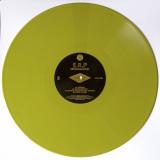
Heavyweight groove from ERP — deep electro pressure with Microcentric on the flip, plus a killer Convextion remix. Pure machine soul for late-night heads.
DJ Feedbacks :
Pariah : amazing
Erol Alkan (Phantasy Sound) : Downloading Thanks!
Ben Sims : Now downloading... will check asap!
Luke Slater : Thanks!
Dave Clarke (white noise radio) : Seismic and well crafted, full support
Peverelist (Livity Sound) : Awesome, thanks!
Tensal (Tensal, Falling Ethicss) : great, Gerard always on point, thx
Call Super (Houndstooth) : thxxxx
Confidential Recipe (Rekids Special Projects) : great ep!
DJ Bone (FURTHER) : The Convextion remix is fire.
Monty Luke (Rekids / Black Catalogue) : solid ep
GiGi FM : <3
Jon Hester (Rekids, EDEC, Les Enfants Terribles, L.A.G.) : Fantastic EP across the board, amazing stuff!!
Jako Jako (BPitch Control, Tresor) : Schön!
Dan Beaumont (Chapter 10 / NTS) : Brilliant! love the Convextion mix
Satoshi Tomiie (Abstract Architecture) : Next level production and quality. Hats off
MoMa Ready (RAVE UNIT, HAUS of ALTR, Method 808) : great remix
Josh Wink (Ovum) : Usually good and sensual Electro from E.R.P.
Carista : love the remix of convextion
DVS1 : Thanks!
Inland : Ace! the remix is so lush! Thanks
Laurent Garnier : Ohhh whaouuuu - THIS IS SUPERB Full support
Radio Slave (Rekids) : I'm sold... This is great and I really love all the tracks.
Marcel Dettmann : thx
2562 / A Made Up Sound (Delsin, Clone) : The Convextion version is fire! Thanks :)
Bake (All Caps/Rinse FM) : love! <3
Interstellar Funk (Rush Hour) : Sounds great! Thank you
Efdemin (Dial) : Insanely good ep from the master!
Darko Esser / Tripeo (Balans / Clone) : Always good in my book, fantastic record!
Bailey Ibbs (Metafloor Records / Habits / Dansu Discs) : Make Electro Great Again!!
Nathan Jonson (Hrdvision) : rad!!!!
Uncertain (RSPX, WRKTRX, Suara) : convextion remix for me
Dj Deep (Deeply Rooted) : super nice release!
ROD / Benny Rodrigues : !!!!!
Surgeon (Dynamic Tension Records) : Great work. Love all tracks. Will play Convexion remix in my DJ sets for sure.
Steffi (Dolly) : simply grea!!!!!!
Kr!z (Token Records) : absolutely fantastic, as always
Phase Fatale (Ostgut Ton, BITE, Hospital Productions, Jealous God) : awesome!
Theo Nasa (Rekids) : WICKED!!!
Kosh (Syncrophone) : Lovely release
Subradeon (Subradeon Records) : interesting stuff! thanks for sending. Convextion rmx is my fav!
Gramrcy (Peach Discs/FTD) : Convextion remix is sick
Stephanie Sykes (Vent) : All tracks are sounding Super nice!!! TY!!! especially feeling Four Alone, so beautifully nostalgic. Cant wait to play!
Tal Fussman (Survival Tactics / Innervisions / Cod3QR / Drumpoet / Rekids) : oh yes
Richie Hawtin (M_Nus) : downloaded for r hawtin
Alan Oldham (DJ T-1000) : Super high quality electro, but the Convextion remix is the one I'm more likely to play out. Will support!
Ben UFO (Hessle Audio / Rinse FM) : convextion remix!
Truncate : Dope cuts thanks
Jonas Kopp : Excellent stuff, but this more of the pre-existent material.
The Advent : amazing stuff, digging all the tracks.. 2 - E.R.P - Microsentric my Fav..
Ste Roberts : Absolutely out of order! Anything Gerard touches turns to gold. 10/10
Joris Voorn (Spectrum) : Downloaded, thanx.
Roberto / R.M.K / Fossil Archive (Fossil Archive) : Love this!
Raffaele Attanasio (Axis) : nicee1!!!
DJ Assassin (Recode Records / Cross Section / Connaisseur) : wicked
The Tenets of Forgetting is the long-awaited follow-up to MSYLMA’s lauded 2019 debut, Dhil-un Taht Shajarat Al-Zaqum. This time he’s joined by fellow musician and producer ISMAEL for seven tracks, built around a lush palette of synths and MSYLMA’s singular voice.
Written and produced in Cairo between 2015 and 2020, The Tenets of Forgetting is the first collaboration between MSYLMA and ISMAEL. Like his first record, The Tenets of Forgetting finds MSYLMA singing in classical Arabic, and the musicians have enlisted Nariman Youssef to provide translations of the lyrics. This gesture of openness runs parallel to the themes of the record; romance and vulnerability; growth and change; pathos and passion. Listeners who aren’t familiar with pre-Islamic poetry or classical Arabic will find the lyrics just as rich and beautiful as the vocal melodies imply, telling a story of love, loss, self-doubt, and grave introspection.
Musically, the album moves in broad, painterly sweeps of 808 kicks, rich synthesizer chords, and MYSLMA’s soaring, plaintive voice. The English translations reveal a second world of mathematically sound rhythmic structures and poetry in the lyrics. The music pushes and pulls in both tempo and timbre, swirling both around and underneath MSYLMA’s voice but never losing a sense of self-contained narrative.
The album is rounded out by Jesse Osborne-Lanthier and Omar El-Sadek’s immersive, esoteric art, and features additional production on track 7 by Osborne-Lanthier, Pierre Guerineau, and Asaël Robitaille.
Limited run of 300. Includes insert + DL code.
- A1: Magic Momentum
- A2: Rockets To Mars
- A3: The News These Days
- A4: Life (Skit)
- A5: Love Vibration
- B1: Original Flow
- B2: Hold On
- B3: Surviver (Skit)
- B4: Tatamaka Pt.1
- B5: Tatamaka Pt.2
- C1: Time (Skit)
- C2: Time
- C3: Jinja (Skit)
- C4: Kochirakoso
- C5: Our Tactus
- C6: Nah Personal
- D1: No Chains
- D2: Push Comes To Shove
- D3: We No Let Y'all In
- D4: Mexico (Skit)
- D5: Future For Our Children
We Release JAZZ is very happy to announce an exciting new body of work by Joseph Deenmamode aka Mo Kolours. The singular musical spirit’s new 21-track album Original Flow is available as a double LP housed in a heavy 350gsm sleeve with original artwork by Mo Kolours himself and the classic WRJ obi strip, as well as in digipack CD and digital formats.
A catalog of critically acclaimed records, including his self-titled debut (2014), ‘Texture Like Like Sun’ (2015), 2018 album ‘Inner Symbols’ and three companion EPs, established Deenmamode as a prodigious musician and vocalist. Pitchfork extolled his “hypnotic, tribal-infused dance grooves”, DJ Mag appreciated the “colourful celebration of soundsystem culture”, and Resident Advisor advocated that “no one sounds quite like Mo Kolours”. Musical analogies were drawn by The Guardian as “The best album Curtis Mayfield never made with A Tribe Called Quest and Lee Perry” and Mojo as “like Marvin Gaye produced by J Dilla”.
Five years ago, Deenmamode moved to the Japanese countryside. Far away from familiarity, he contemplated his place and further questioned his identity. “I had none of my ‘own’ people around. I had time to really find what makes me tick musically. Japan has helped me go back to those subconscious leanings, really go deep, and reflect the aspects that make up my story”.
The tracks on ‘Original Flow’ have been constructed from sessions, improvisations and soundbites captured around the world during this time; collecting contributions from musicians including Deenamode’s brothers Reginald Omas Mamode and Jeen Bassa plus Andrew Ashong, Charles Bullen, Dwaye Kilvington, Eddie Hick, Stefan Asanovic, Myele Manzanza, Ross Hughes, and Tom Dreissler. Deenamode says “I’m proud of this album’s creative process. Coming from a tradition of scouring through hours of records, I wanted to create my own samples, to find that perfect loop that no other producer could put their hands on. I decided to invite a group of friends and acquaintances, who also happen to be incredible musicians, to a studio in Crystal Palace to improvise based on some loose ideas I had. We spent all day, and recorded everything”.
‘Original Flow’ is an album of UK street-soul nouveau, future indigenous jazz fusion, Rasta Segga, Nyahbinghi jazz, Malagasy Hebrew hip hop. While retaining a spirit of exploration and improvisation, it sees Deenmamode grow and flex beyond beat tape brevity, expanding composition and stretching his musical muscle to play live with other musicians. Themes of empowerment, overcoming adversity, and mental liberation coexist with notes from ancient history, futurism, and science, as well as musings on family and togetherness.
‘Magik Momentum’ springs from a discussion that features at the start of the song, an inspiring mentor answering a question from Deenmamode about improvisation and what role it plays in life when planning and manifesting the future. ‘Rockets to Mars’ questions the lack of care for the billions of people with nothing, while governments plan to explore space. “This sparked a comparison in my mind to a Sonny Okuson song that I would reference when performing. Okuson’s song talked of the lack of resources in many communities in the world, while governments go to the moon”.
He says the music behind ‘The News These Days’ is “possibly my favourite on the album”. Looped like he would a late sixty jazz-fusion sample, there was nothing added and the track was complete within a matter of minutes. “It was the first and best moment from the entire Crystal Palace session”, he adds. The album’s contrasting title track with minimal instrumentation played solo by Deenamode. While frustratingly searching for gems in past recordings, he thought in a burst of ego, “I don’t need no-one else to make a dope beat!” picked up his ravanne, (the traditional frame drum of his fathers home-land of Mauritius), pressed record, and started to play. He says, “In my thoughts were the rhythms of the Nubians in Upper-Egypt and Sudan, the swing of the huge drums played by Mauritanian women, of-course the Sega beat of Mauritius, and the ever inspiring beat of James Yancey”.
Driven by UK broken beat, Cuban congas, Nigerian and Mauritian inflections, ‘Love Vibration’ follows the concept that all emotions carry a vibratory frequency and pays homage to the frequency of creation and the power of love. The two part ‘Tatamaka’ tells of the history of Deenmamode’s ancestors, the maroons of Mauritius. “We are people who managed to run from our oppressors and find refuge in a corner of the island called ‘Le Morne’ where they could not reach us. One bloody day they came in numbers to re-capture, to revenge. Many of us chose to jump to our deaths, rather than be taken back into subjugation. The poem by Creole Richard Sedley Assonne says; “there were hundreds of them, but my people, the maroons chose the kiss of death over the chains of slavery”. Tatamaka was the name of a famed maroon leader who was murdered for claiming his, and our people’s freedom. The song is the imagined journey of escape and freedom by an ancestor of the maroons of Le Morne”.
Born in the west midlands and raised on the traditional sega music of his father’s Indian Ocean homeland of Mauritius alongside records by the likes of Jimi Hendrix, Santana and Michael Jackson; his influences expanded with late 90s jungle and drum and bass nights in Bristol, experiments at art college in Camberwell, and the rich culture of Peckham, “at the time we called it the Afro Quarters of London” says Deenmamode, adding hip hop, dub, soul and soundsystem styles to his individual sound.
He explains, “I love drum music, from hand-drums to 808s. I love music from the ancient past, heritage music, indigenous music, traditional music passed down from the beginning of time. Music from the body, hand claps, grunts and foot stomps. Music with audible depth, busy, bustling, highly charged. Music from the soul, the music from beyond. I love music from the islands and the mountains. The music of the streets, hustle music, alleyway beats. Club music”.
He describes the creative process as thinking in images. “The visual world and the world of sound seem to intermingle in my thought process. When I play the drum with my eyes closed, a world of imagery dances and moves with beat. Improvised drumming feels like I am listening to what I want to hear, rather than trying to play what I want to hear. Following the rhythm and finding new pathways to walk within the patterns is what I experience. In this way I often feel I am just a listener, instead of the player”.
Original Flow is pressed on biovinyl, a sustainable alternative to traditional vinyl. Biovinyl replaces petroleum in S-PVC by recycling used cooking oil or industrial waste gases, resulting in 100% CO2 savings in bio-based S-PVC production. Furthermore, it is 100% recyclable and reusable, embracing the circular economy ideology.
- A1: Spiritual
- A2: Painted Houses (Feat. Conway The Machine)
- A3: Zelle Transfers
- A4: Drug Trade (Feat. Black Thought)
- A5: Harlem World 97 (Feat. Estelle)
- B1: Spiritual (Instrumental)
- B2: Painted Houses (Instrumental)
- B3: Zelle Transfers (Instrumental)
- B4: Drug Trade (Instrumental)
- B5: Harlem World 97 (Instrumental)
Flying Objects is the new collaborative project from indie heavyweights Smoke DZA and Flying Lotus - featuring Black Thought (The Roots/Jimmy Fallon), Estelle, Conway The Machine, and more. Smoke DZA is a popular independent rapper from New York City who has worked with Big K.R.I.T., Wiz Khalifa, Action Bronson and ASAP Rocky among others, and is a founding member of the Smokers Club. His album, Rolling Stoned was awarded the High Times Doobie Award for Hip Hop album of the year for 2011. Other popular album releases include Rugby Thompson (produced by Harry Fraud), Dream.Zone.Achieve (features from Cam'ron, Joey Bada$$, Ab-Soul, Wiz Khalifa, Curren$y), and Don't Smoke Rock (produced by Pete Rock). Flying Lotus is a producer, DJ, filmmaker and rapper from Los Angeles who has worked with Kendrick Lamar, Danny Brown, Mac Miller, Chance The Rapper, Blu and more. He is also the founder of the record label Brainfeeder. He has released seven studio albums. His debut project 1983 dropped in 2006 on Stones Throw Records and his next six projects all came out on Warp Records - to critical acclaim.
Altın Gün return with a masterful album that widens their critically acclaimed exploration of Anatolian rock and Turkish psychedelic stylings to include dreamy 80’s synth-pop and dancefloor excursions. Yol (Road) brings together all vectors of the AltınGün experience and delivers their most compelling and individual album to date.
Amsterdam’s Altın Gün have built a strong reputation for melding past and present to make brilliantly catchy, psychedelic pop music, as seen with their Grammy-nominated second album, Gece. They are also a renowned live band with strings of sold-out shows on three continents, who have consistently brought a muscular groove to their recordings. Yol, their third album in as many years, excitedly continues these trends; while also digging in deep to unveil a new palette of sonic surprises.
Though it draws from the rich and incredibly diverse traditions of Anatolian and Turkish folk music, Yol is not just a record that reframes traditional sounds for a contemporary audience. The album often presents a textured, avant-pop sound as evidenced by the debut single "Ordunun Dereleri.” Mysterious and atmospheric, the track is a thrilling evolution for the band. It patiently coaxes the listener into a resonant soundworld of down-tempo electro beats, majestic synths and Erdinç Ecevit's yearning vocal of unrequited love.
The album also signals a very different approach in making and recording for the band. Singer Merve Dasdemir takes up the story: “We were basically stuck at home for three months making home demos, with everybody adding their parts. The transnational feeling maybe comes from that process of swapping demos over the internet, some of the music we did in the studio, but lockdown meant we had to follow a different approach.”
Yol displays a noticeable dreaminess, maybe born from this enforced time to reflect. And select elements of late 1970s or early 1980s “Euro” synth pop also shines through. This new musical landscape was nurtured by certain instrument choices; namely the Omnichord, heard on ‘Arda Boylari’, ‘Kara Toprak’ and ‘Sevda Olmasaydi’, and the drum-machine, an instrument that is key to the gorgeous closing number, ‘Esmerim Güzelim’. Dasdemir once more: “bass player Jasper Verhulst loved the song. He said, ‘it doesn’t sound like Altın Gün, this sounds like a Turkish kindergarten music teacher from the 1980s using an 808!”
As ever, the tracks are the result of a true group effort, with ideas on Omnichord, 808 and other elements - such as field recordings and new age-esque ideas - continually kicked about between the six band members. At a safe distance of course. The record also owes something special to its production team, the band working this time with Asa Moto (the Ghent-based producer-crew, Oliver Geerts and Gilles Noë) who mixed the record. Before this Altın Gün always recorded on tape with their own sound engineer.
It would be wrong to say that what made Altın Gün such a loved and successful band has been left to one side. The pressure-cookers ‘Sevda Olmasaydı’ and ‘Maçka Yolları’ are classic cuts from the band. And their signature employment of a dizzying array of ideas and approaches can be heard with the marked Brazilian feel of ‘Kara Toprak’ and ‘Yekte’. Cosmic reggae filters through the grooves of ‘Yüce Dağ Başında’, and there is a steaming version of ‘Hey Nari’ which gives the traditional composition by Ali Ekber Çiçek a kick onto the dancefloor.
But with Yol, Altın Gün have maybe patented their own magical process of reimagining and sonic path-finding, one probably not heard since the late 1960s and early 1970s British folkrock boom. Less of a reworking than a seduction, their recordings transport the listener to a world where the original songs never previously inhabited. Merve Dasdemir again: “After we worked on them, they got a whole new life of their own. Maybe we went a little bit too far (laughs).”
'Little Drummer Girl' is a stunningly rich, diverse and futuristic 4-track EP from the Brooklyn duo Tiger Fingers. A collaboration between Jordan Lieb (also known as Black Light Smoke) and Asako Kujimoto. The cheekily-named pair have assembled three unique remixes of their title track - each as bold and refreshing as the other. The A side kicks off with the original - all bubbling synths, arps and effects, and a subtle yet disturbing vocal from Asako. Beats and thunderous synth riffs combine with speak 'n' spell samples to produce a mesmerizing brand of 22nd century electro pop. Next up is the 'Night Plane Club Mix' - one of two remixes the Texan William Rauscher provides for this release. The club mix straightens out the groove and develops the track into a crisp house groover, finding plenty of space for old school sub bass, chiming 808 percussion and washed out, ethereal vocals - huge vibes for the floor. 'The Night Plane Remix' sees Rauscher explore more glitchy, post-everything, acid-flecked waters - an atmospheric, twisted stormer. Last but by no means least is the Hotflush man-of-the-moment, Jimmy Edgar. His take on 'Little Drummer Girl' uses the original as a springboard, from which he constructs a slamming electro-boogie-space-jam. Deeply funky, highly charged, and immensely inventive club music. 'Little Drummer Girl' is taken from Tiger Fingers debut minialbum which is due for release on hafendisko in December. About Tiger Fingers: The upcoming self-titled debut album by Tiger Fingers, the duo of Jordan Lieb and Asako Fujimoto, almost never saw the light of day. Recorded in the aftermath of their first collaboration, the aggressive electro-rock band Dead Radar (2005-2007), Tiger Fingers yielded six decidedly more dance and pop inspired tunes filled
- 1