"Everything's been fucked since David Bowie died or they started up the Hadron Collider" say The Janitors. This feeling is epitomised in the title of their riveting new album: An Error Has Occurred. Marking over two decades of activity for the Swedish psych-rockers, the recording is informed by heartbreak and loss as well as the dismal state of the entire planet. For The Janitors, these two polarities intertwine constantly: "What's personal is political and vice versa." To channel their frustration and anger, the band revived certain songs they'd shelved during the pandemic when working on the acclaimed Noisolation Sessions. They added others, written since, that suited the mood of sticking a middle finger up to the oppressive world around us. Whereas previous recordings were often layered up gradually, this time the full band (Henric Herlenius, Jonas Eriksson, Anders Thorell and Wilhelm Tengdahl) rehearsed intensely together before laying down everything live, over two days and nights, in a converted missionary church. The songs on Side A have the menace of Melvins, the swagger of The Stooges and the cosmic heft of The Heads. These are the more simply constructed and poppier pieces... or so the band believe. (One friend of theirs did consider this "delusional".) 'In A Bliss' acts as the album's radiant centrepiece. A palette-cleansing love song which recalls The Jesus And Mary Chain at their most starry eyed, it finds The Janitors searching for solace and strength in straightforward companionship. After this come the dronier numbers, drawn out with soundscapes and textures influenced by The Velvet Underground's sonic experiments and the equally immersive atmospheres of electronic acts like Massive Attack. Hence, 'Operator' swings threateningly like a space-rock Swans, while the approach on 'Farewell Spacegirl' is jazzier and more meditative. "It can be hard to muster up some, or even any, positive energy at this point in time," says Henric. "We are eternally grateful to have the creative output that this constellation gives us. Neither me or Jonas would probably be here, or be the same people we are, if it wasn't for The Janitors. We'll leave you with a quote from an old anarchist: 'Every society gets the criminals it deserves.'"
Cerca:at jazz
2024 Repress!
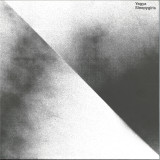
Limited 10 year anniversary repress. In May 2014, Icelandic producer Yagya released his fifth album, Sleepygirls, across three slabs of vinyl on Dutch label Delsin. It's a deep, spacious and dubbed out affair that stays locked at a pleasingly sedentary tempo throughout. Since 2002 the definitive member of the Thule Musik collective has been crafting lush electronic albums under his Yagya alias and always manages to find pure bliss and beauty and his simple, nature inspired soundscapes. "I wanted to create an album that's atmospheric, repetitive, and easy to listen to over and over again," says the man himself. "Something that works well in the background (e.g. when concentrating on work), as well as up close in a big sound system. I also wanted to learn how to make my music sound better than before, since I'm a huge sound-nerd, so that was a part of the goal for me personally." The album is a fine fusion of tropes from Yagya's earlier albums, features jazz instrumentalists that improvise beautiful melodies over monotonic, almost drone-like, techno beats and also uses live recordings of Japanese vocals, saxophone and guitar to counter the repetitiveness of the rhythms. Right from the rolling bliss of the opener, you're suspended in a womb like pillow of sound that is soft, warm and serenely beautiful. As tracks roll on, the pace stays the same but themes vary from upright and summery to more elongated and insular. This is natural, organic dub that is a delight and a pleasure to listen to. The vinyl versions of each track have been specially mixed with random LFOs, sonic quirks and unique fingerprints making them the subtly different to the CD version, but overall this is a brain soothing and mind melting album that can soundtrack lazy days, long summer afternoons and warm winter evenings in equal style.
A deeper dive into the mind of the mysterious man who gave us Niggajazz at the top of the pandemic. Although only a six song ep, the title song gained traction for its jazz bop, house appeal. The follow up, New World Order is the first full length from the artist and displays a wider scope of that exact sound. Written and produced in 2021 NWO comprises tunes for the floor as well as the ride. With lush ballad Black Apple, The Common Suicides latin flare, The Torus’ obscurity and Ota Benga with its tribute to the worlds most renown human zoo attraction, this release is complete and advanced from the introduction received prior. We are pleased to present New World Order in a time when most needed to reflect and absorb carefully. We hope you enjoy it as much as we do!
- A1: Soul Bossa Nova
- A2: Boogie Bossa Nova
- A3: Desafinado (Slightly Out Of Tune) (Slightly Out Of Tune)
- A4: Black Orpheus (Manha De Carnaval) (Manha De Carnaval)
- A5: Se E Tarde Me Pardoa (Forgive Me If I'm Late) (Forgive Me If I'm Late)
- B1: On The Street Where You Live
- B2: Samba De Uma Nota So (One Note Samba) (One Note Samba)
- B3: Lalo Bossa Nova
- B4: Serenata
- B5: Chega De Saudade (No More Blues) (No More Blues)
First exposed to the sounds of Samba and Bossa Nova while
touring South America with Dizzie Gillespie in 1956, Jones recalls
hearing Gillespie sitting-in with a Samba combo at Rio's Gloria
Hotel and how he was fascinated by the thrilling fusion of Jazz and
Samba. Some years later in 1962, he took a stellar big band into
NYC's A&R Studios to record the Big Band Bossa Nova album. It
was the culmination of a dream for Jones, who had never
forgotten the musical experiences he had encountered in Brazil.
- A1: Al Muqademah 1 (Introduction 1)
- A2: La`lan (Advertisement)
- A3: Mashad Al Fahes (Examination)
- A4: Tango
- A5: Break
- A6: Al Muqademah 2 (Introduction 2) - Inst
- A7: Al Muqademah (Introduction) - Inst
- A8: Tagheer Awal (First Change)
- A9: Oghniyat El Shahadeen
- B1: Tagheer Thani (Second Change)
- B2: Al Piano
- B3: Tagheer Thaleth (Third Change)
- B4: Al Jeel (The Generation)
- B5: Hake Ad Ma Baddak Fee
- B6: Oghniyat El Gharam
- B7: Mashhad Al Hob
- B8: End Of Chapter 1
- B9: Kabbaret Dancing
- B10: Kbareah Wa Mhajjaren
- B11: Slow
- B12: Mashhad Al Serk
- B13: Final - Al Adala
Wewantsounds is delighted to announce the reissue of Ziad Rahbani's cult album "Amrak Seedna & Abtal Wa Harameyah," one of his praised albums from the 80s, released on the sought-after Lebanese label Relax-in in 1987. This release is an event as the album, recorded at Rahbani's By-Pass studio, was only released in Lebanon at the time. Mixing Arabic music with Funk and Fusion Jazz and hints of Boogie, it's a bonified Rahbani classic, sought after by Arabic groove DJs and collectors around the world. The reissue features audio remastered by Colorsound Studio in Paris and a 2 page insert with a new introduction by Mario Choueiry from Institut du Monde Arabe in Paris (English/French).
The latest release on Jai Alai follows the format of forgotten vinyl tracks never before released on 7” format, or previously CD only album tracks, and will raise some eyebrows in artist selection and pairing.
Donaldson Toussaint L’Ouverture Byrd II was one of the most significant jazz artists of all time having joined Art Blakey’s Jazz Messengers in the mid-50s and establishing himself as one of the best hard bop trumpeter/flugelhorn players. His progression was continuous through the 50s/60s working with John Coltrane, Gigi Gryce, Pepper Adams, Thelonius Monk, Sonny Rollins as sideman, and became one of Blue Note Records leading artists.
By the end of the 60s Byrd decided to move away from that idiom, experimenting with jazz fusion, African music and Rhythm & Blues. He worked hard to make jazz and its history part of the curriculum in US music colleges and he taught at many including Rutgers, Hampton, Howard, and Columbia, the latter from who he received his PhD in music.
Byrd took a great interest in how Miles Davis’ experimentation was resonating with a younger audience, and despite being castigated by his musical peers, his development of jazz fusion changed the jazz scene forever. His work with the Blackbyrds was a cornerstone for the progression of jazz funk in the UK.
The effect of his hook-up with brothers Larry & Fonce Mizell was immediate and his Blue Notes albums “Black Byrd” (1973), “Street Lady”, “Stepping Into Tomorrow” (1974), “Places & Spaces” (1975) and “Caricatures” (1976) became legendary on the newly evolving jazz funk scene with certain tracks such as “Change (Makes You Wanna Hustle)” normalising dance jazz on the disco floors, not to mention being a rich source for many hip-hop samples.
A slightly leaner period followed when he moved to Elektra Records and of the three albums with his new incarnation 125th Street NYC, a group of musicians he taught at North Carolina Central University, two were produced by Isaac Hayes including “Words”, “Sounds, Colors & Shapes” (1982) from which “Everyday”, a fabulous forgotten piece of mellow jazz funk derives.
By the end of the 80s he had returned to his harder straight-ahead jazz roots, but his place in history and the evolving of jazz as a dance culture in our clubs should never be forgotten.
- A1: Jackie Opel – You're Too Bad
- A2: Johnny Osbourne – Murderer
- A3: John Holt – Hooligan
- A4: Keith Mccarthy – Everybody Rude Now
- A5: Owen Gray – Ballistic Affair
- B1: Roy Richards – Get Smart
- B2: Dillinger – Stop The War
- B3: Jim Brown – Love In The Dance
- B4: Desmond Baker And The Clarendonians – Rude Boy Gone A Jail
- B5: The Wailers – Good Good Rudie
- C1: Dennis Brown – Make It Easy On Yourself
- C2: Wailing Souls – Don't Fight It
- C3: Dub Specialist – Peace Theme
- C4: Mr Foundation – See Them A Come
- D1: Dudley Sibley – Run Boy Run
- D2: Dennis Brown – Johnny Too Bad
- D3: Bob Andy – Crime Don?T Pay
- D4: Soul Brothers – Mr Kiss A Bang Bang
Rude Boys are synonymous with Jamaican Dancehall culture from the present day going back to the very early days of Sir Coxsone Dodd and Duke Reid’s first sound-clashes in Kingston. Studio One Rude Boy features artists and songs about rude boys and rude boy culture from all periods of Studio One’s history.
The album features Ska, Rocksteady, DJs, Roots and Dub The album features classic tracks from Jamaica’s finest singers and groups such as The Wailers, John Holt, the Wailing Souls, Dennis Brown alongside super-rare tracks from artists such as Mr Foundation, Dudley Sibbley and The Soul Brothers all recorded under Clement ‘Sir Coxsone’ Dodd’s supervision at the legendary recording studio and record label. Musical backing comes from the legendary in house bands – The Skatalites, The Sound Dimension, Soul Vendors and Soul Defenders – who provide the classic Studio One rhythms so influential in the history of Reggae.
With her third Gondwana album, "Constellation", Manchester"s Caoilfhionn Rose has come of age as an artist, digging deep to find experimental new ways of expressing her wonder at nature"s beauty, her love of music in all its diversity, and her belief in the restorative powers that both afford in the troubled post-COVID world. The ten tracks on "Constellation" feel rooted in a knowledge of folk, jazz and all the twentieth century"s classic tunesmiths, and yet they seem to create a magical, otherworldly space of her own imagining, blending Caoilfhionn"s core piano with synths, and pitting a live rhythm section and saxophone embellishments against ambient samples and future-facing production techniques.
FIRST OFFICIAL REISSUE OF ONE OF THE MOST SAMPLED TURKISH RECORDS IN 45 YEARS! SAMPLED BY RAP LEGENDS LIKE SCARFACE OF THE GETO BOYS. TURKISH PSYCHEDELIC MASTERPIECE FROM 1980
Licensed from "Warner Records Sweden" and remastered from original material in Warner Record's vaults by Shawn Joseph at Optimum Mastering Bristol. 180 gr heavyweight vinyl Manufactured in Optimal Berlin.
Recorded between Istanbul and Stockholm, it captures the era between Okay Temiz's Don Cherry Trio touring and his own band Oriental Wind's sensational debut.
Mentioned distinctive elements have elevated the record to 'cult' status among record collectors, sample enthusiasts, and diggers around the world.
By 1980, Okay Temiz had already embarked on a series of dynamic collaborations and sound experiences with Don Cherry as a member of the Don Cherry Trio. This period included a noteworthy summer in the early '70s at Dartmouth College in New Hampshire, hosted by Jon Appleton, a notable American composer and visionary in electro-acoustic music.
"During that summer, Jon asked me, 'What kind of sound do you have in mind?' I had already given this considerable thought, using a tape recorder to capture sound frequencies influenced by the moon's position. Jon Appleton's question made me think about the extension of 'Organic Music Theory,' which we were exploring with Don Cherry at the time."
In 1982, Okay Temiz recorded the most comprehensive answer to 'What is Turkish Jazz?' at the Montreux Jazz Festival (CAZLP 004) with his band Oriental Wind, featuring Bobo Stenson (of the Jan Garbarek - Bobo Stenson Quartet), Palle Danielsson (of the Peter Erskine European Trio), and Lennart Åberg (of the Scandinavia New Jazz Group).
In 1980, without fully realizing he was navigating between these two worlds, Okay Temiz entered Stockholm's renowned Metronome studios to record the 'sound in his mind' as a solo artist.
`Drummer of Two Worlds` is a star map of Okay Temiz's musical worlds. Blending elements from the grand piano to his handmade drums, and from the amplified Berimbau to his cowbell array, weaving Turkish rhythms like 9/8 and 7/8 with the universality of 4/4, it presents a unique sound narrative that resonates with the dimensions of a well-traveled mind."
Haluk Damar
The Selenites Band returns with a Live album ahead of their 3 Studio album, due for release in late 2024. 8 tracks of psychedelic jazz influenced by Ethio-groove, Swinging Addis and pentatonic grooves, recorded in analog on tape recorders during two concerts between 2021 and 2023.
These recordings are an opportunity to discover 5 previously unreleased tracks, as well as live versions from the previous album "Behind The Mask". The Selenites Band are first and foremost a live band, and we've seen them at the New Morning, in Paris, in Belgium, as well as opening for the prestigious group GONG, on their only date in France, and at many other festivals. The Selenites Band's lively style takes us into a world of traditional music, Shamarnic grooves, spicy jazz and bewitching rhythms. A melodic universe, a music of heady modal trance, a cinematic space of energetic jazz punk! . All compositions are by Antoine "Obi Riddim" Laloux, with the exception of two tracks by Seyoum Gèbrèyès and Tlahoun Gèssèssè.
All sleeves are hand-silk-screened and numbered / limited edition
Transcendental outernational funk and psychedelic jazz from mystery L.A.- based collective Sun Atlas
Little is known about Sun Atlas. The group members are hidden behind masks and costumes to keep their identities secret and to put the focus entirely on the music and oneness. A sense of community and universal spirit as an alternative to idolization and individualism is heavily reflected in their eclectic musical style.
The sound of Sun Atlas is mystical and cosmopolitan, combining afrobeat, cinematic soul, spiritual & ethio jazz with space sounds, hiphop-breaks and a garage funk vibe.
Their cryptic first 45 single "The Mystic Parade" b/w "Grand Theft" sold out immediately after release and has often been mistaken for either "lost" hiphop samples, 70s habibi funk or another project in disguise from the inner circles of the Mocambo, Big Crown or Daptonefamilies (which it is not).
Return To The Spirit picks up where Sun Atlas' first single leftoff, with everyone wondering where the journey might lead. With the door to a colourful universe opened, the full-length format gives time & space for further exploration.
The ltd.first vinyl edition comes in black vinyl in a deluxe handmade tip-on sleeve.
Late Night Load Out is the debut LP from Dublin five piece band Papa Romeo.
The release is a collection of work which catalogues their first two years of rehearsing and gigging together around Ireland, a process which has forged their sound. The tracks journey through sound palettes which variously touch on dreamy spaced out indie rock, moments of ambient contemporary jazz, and rougher post-punk influenced sounds.
The ‘Late Night Load Out’, became the term to describe loading gear out of venues late at night after a show, which is a moment to both dread and cherish, the (sometimes) hard work which follows elation.
Now primarily based in London, Papa Romeo’s music has connected with London based DJs and broadcasters. Their debut single ‘Yellow Magic Orchestra’ was supported by Flo on NTS, as well as Avalon Emerson, and appeared as the A1 on a vinyl compilation from All City Records Dublin. Singles from ‘Late Night Load Out’ have also gained early support on BBC 6 Music and from Ross Allen on NTS.
In the meantime the band have been busy on the Irish circuit with appearances at Cork Jazz Festival, Other Voices, All Together Now and Another Love Story, as well as repeat sold out shows at Dublin’s Sugar Club. They have built a reputation as a versatile band who can bring the energy to a packed room, and were named an Artist to Watch for 2024 by Hot Press Magazine.
‘Late Night Load Out’ will be released on digital and vinyl in May 2024.
Papa Romeo is Paddy Rogers, Mark Rogers, Dan Coyne, Rob de Boer and Chris Wong.
Radio Support:
Ross Allen - Soup to Nuts NTS
Colleen Cosmo Murphy - NTS
Lauren Laverne - BBC 6 Music
Esk - Rinse FM
District Magazine (Ireland)
Peter Curtin - RTE
New Music Fix on BBC 6Music
Bill Brewster
Warehouse Find!
Vienna-based producer Sam Irl popped up on our radar a couple of years ago following stellar releases on Jazz & Milk, but honestly we should have been paying far closer attention as this guy has been making the best crunchy, MPC-driven jazz-infused House music dating right back to 2006. EP's for S3A's Sampling As An Art and collaborative projects with Patrick Pulsinger and Dusty have won him fans including Gilles Peterson (leading to a release on Brownswood), Mr Scruff and Session Victim amongst many others. His live sets have also seen him perform at the hallowed grounds of Panorama Bar and Sonar Festival.
For his debut EP here on Freerange Sam has delivered four tracks which perfectly showcase his production skills and knowledge of what makes a dance floor tick, kicking off with title track Rain Technique. Quirky keys and a playful groove help build a warm and charming vibe, light and bouncy yet deep and driving enough to get your dance on to.
Trust follows with loping, lopsided percussion forming the basis of the groove, sparse Rhodes pads punctuating the beat and adding just the right musical element to the mix without cluttering the beats or compromising the sense of space.
Flipping over we have All That's Left which sees Sam utilising his trusted TR606 for some lovely snappy snares and sizzling hihats. Chiming arpeggios join the repeating chord riff creating another simple yet uplifting and playful mood which can't fail to get under your skin. Closing the EP we have a wonky, shuffling house track which once again shows Sam proving less is more, sampling his key elements into the MPC and jamming out the arrangement in a live and improvised way which brings a fresh, somewhat naive appeal to the production.
"Return Of The Super Ape" was the final revelation from Lee Perry’s Black Ark Studio, a psychedelicized dub journey into uncharted sonic territories. The longplayer is now state-of-the-art remastered by Pete Norman (Finyl Tweek) and restored with original press artwork complete with inner disco sleeve!
The album from 1978 is the final chapter in the trilogy of albums in the period from 1976 - 1978 following "Scratch The Super Ape" (aka "Super Ape") and "Roast Fish & Cornbread". Produced, mixed and arranged by Lee Perry at the Black Ark Studio featuring on all tracks the skills of The Upsetters and additional vocals by The Full Experience on "Dyon-Anasaw" and "Tell Me Something Good". The frontsleeve artwork image was created by Lloyd Robinson (also known as the singer of the Studio One classic "Cuss Cuss").
Reggae expert Jeremy Collingwood says: "The Return Of The Super Ape that surfaced later in the year 1978 saw Perry way off the mainstream with a set that owed much to jazz with its loose structure and horn breaks. The title track took an early production from Perry, U-Roy's " OK Corral", and reshaped it into another futuristic outing - just like the original that had been a decade earlier. At the time few knew what to make of it and over the years its lack of proper re issue had meant it's remained a hidden Perry gem. It also marked the end of a hugely creative period at the Black Ark."
Tracklisting / side-split
Side One
A1 Dyon-Anasaw
A2 Return Of The Super Ape
A3 Tell Me Something Good
A4 Bird In Hand
A5 Crab Yars
Side Two
B1 Jah Jah Ah Natty Dread
B2 Psyche & Trim
B3 The Lion
B4 Huzza A Hana
B5 High Rankin Sammy
• Follow-up to the highly acclaimed dub album Super Ape, the album like its predecessor, was produced by Lee ‘Scratch’ Perry. This was the last album recorded by The Upsetters before Perry closed down his Black Ark Studio.
• The remastered album showcases the production skills of undisputed dub master with insanely layered textures and technical wizardry. With musical backing The Upsetters – Boris Gardiner, Mikey Richards, Sly Dunbar, Benbow Creary, Earl ‘Chinna’ Smith, Winston Wright, and Keith Sterling.
• Remastered by Pete Norman at Finyl Tweek
• Coloured Inner Bag
2024 repress
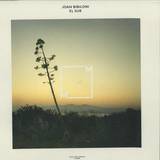
Staying on the Mediterranean coast for their third release, Music From Memory this time shift their attention to the work of Mallorcan musician Joan Bibiloni. TIP!
Primarily a guitarist, Bibiloni was creating music at an early age, releasing his first single at the tender age of 15. In his twenties he formed Spanish progrock outfits Zebra and Euterpe where he would meet Pepe Milan, the two of them becoming the bluesy folk duo 'Milan & Bibiloni'. Bibiloni himself would later go on to play with a number of luminary musicians such as Larry Coryell, Daevid Allen and John Cage to name but a few.
In 1982 Bibiloni set up his own label Blau in order to highlight the muchoverlooked work of musicians not only on his home island of Mallorca but across the Balearic Islands. In doing so he created a platform not only for
local talent but also for his own music to breathe a new life, much influenced by the landscape and life that surrounds the islands.
Whilst Bibiloni's first solo releases on his Blau imprint have stronger echoes of contemporary Jazz fusion of the time, it is on the album known as 'Una Vida Llarga I Tranquila' where Bibiloni really began to experiment with new sounds
and technologies; fusing tape loops, drum computers and synthesizers.
Taking these more electronic infused works as a departure point for the compilation and drawing on material from across his following five albums, 'El Sur' sets out to highlight Joan Bibiloni's unique ambient fusion and sun-drenched Mediterranean beach boogie.
This 7” single features two outstanding cumbias published on MAG in the 60s that have never been available on a 45 release before.
Dance floor oriented tropical music at its best!
MAG has been, since its foundation in 1953, a pivotal label in Peruvian music, allowing the development of the careers of both tropical artists and musicians of other genres such as rock, pop and jazz. At the head was Don Manuel Antonio Guerrero, its founder, and the name of the record company is nothing more than an acronym formed from its own name. (M.A.G.).
This 7” single features two outstanding cumbias published on MAG in the 60s that have never been available on a 45 release before.
Carlos Pickling was a legendary MAG artist who led the orchestra that accompanied Benny del Solar, Lita Branda and Melcochita in the tropicalized version of Spanish rumba, when the beats of Iberian rumba were still exotic in South America, and he also played countless cumbias, mambos and guarachas. The distinctive sound of his Hammond organ can be heard on this recording, ‘Cumbia Morena’, as it became his signature sound.
Los Demonios de Corocochay were one of the first Andean cumbia bands in Peru and sported an unique sound spiced up with the textures of a playful organ, as can be heard on this superb ‘Cumbia en Dominante’.
Kater's captivating songs celebrate the power of oppressed people and act as an antidote to centuries of exploitation, fear, and greed. This collection of ten songs, featuring appearances by today's finest roots musicians such as Allison Russell, Aoife O'Donovan, and Taj Mahal, showcases Kater's biting topical songwriting and deft arranging chops. 'Strange Medicine's' intricate orchestrations were inspired by diverse sources: composer Steve Reich's propulsive minimalism, the frenetic jazz drumming of Brian Blade, the unsettling orchestral scores of film composer Jonny Greenwood, and the spiraling rhythms of the West African kora.
Furthermore, Kater's delicate yet robust banjo playing charts new territory well beyond what's expected of the instrument. With 'Strange Medicine', Kater taps into the full kaleidoscope of her artistry, creating an outlet for our collective grief and celebration and inviting the ancestors to a place of honor at the table.
Composed by Jim O’Rourke and pieced together by Jim together with longtime collaborator and trumpeter Eivind Lønning at Jim and Eiko Ishibashi’s home in the Japanese mountains, this engrossing new album blows brass wails and tense fanfares across O'Rourke's manipulated Kyma tapestries for a deep, captivating trip into the aether.
Eivind Lønning has been sharing ideas with O'Rourke for several years: the duo collaborated on music for the Whitney's 'Calder: Hypermobility' exhibition, and Lønning played trumpet on O'Rourke's brilliant 2020 album 'Shutting Down Here'. For this new work, Lønning headed to O'Rourke and EIko Ishibashi's home studio in the Japanese mountains, where he teased unfamiliar, alien textures from his trumpet to open the labyrinthine three-part composition. O'Rourke took the material and subsequently funnelled it through his Kyma system, transforming it into a swirl of sound that hums alongside Lønning's original takes. The album was composed, mixed and mastered by O'Rourke, with everything's based on Lønning's virtuosic performance.
The album begins by cautiously introducing us to its sonic palette: wavering, bird-like horn wails that O'Rourke contorts around quiet synth oscillations and computerised swarms. Lønning's spittle-drenched blasts are given the spotlight, but O'Rourke's manipulations - often gentle and illusory, and sometimes utterly lacerating - lift the sounds into completely new territory. When Lønning begins to turn rhythmic cycles using the trumpet keys, popping with his mouth to compliment its leathery timbre, O'Rourke replies with dense, hallucinatory drones, juxtaposing unstable electronics with Lønning's breathy, sustained notes. All these sounds coalesce into a dizzy vortex, but O'Rourke is careful not to overwhelm the senses, dropping to near silence as the first act transitions into the second. O'Rourke pelts Lønning's vertiginous wails, steadily mutating them into Xenakis-like stabs until they sound like cybernetic strings and icy tones that extract the tension from Lønning's brassy harmonics.
The third act is more screwed, with O'Rourke allowing Lønning's improvisations wail into cathedral-strength reverb, accompanying the sound with glassy penetrations and throbbing subs. Here, Lønning sounds as if he's heralding the arrival of a celestial being, piercing the atmosphere with bright, sustained tones and muted, jazzy flourishes. O'Rourke hangs back, carefully spinning the notes into naturalistic fibres and orchestral drapery, before he allows the electronics to subside completely and the trumpet to echo into the imposing negative space.
'Most, but Potentially All' is a dumbfounding piece that shifts the dial on contemporary experimental music; dizzyingly complex but never showy, it's the kind of record you can spin repeatedly and hear something different each time. As an exploration of the trumpet, it's a unique expression, and as a progression of electro-acoustic compositional techniques, it draws a deep trench in the sand, setting a new standard.
Donny McCaslin is an artist consistently at the forefront of musical innovation. Building on the foundation laid by his critically acclaimed 2023 album "I Want More," described by Mojo Magazine as an "emotive electro-jazz" masterpiece and celebrated for its adventurous spirit by De Volkskrant, Donny McCaslin continues to chart new territories in sound with his latest 7in vinyl and digital release, "Kid." This new project, encompassing the tracks "Kid" and "Maxine," which not only encapsulates the direct, bold, and charismatic essence of McCaslin's sound but also signals his relentless pursuit of artistic growth, refusing to rest on the laurels of past achievements.
"Kid" is a testament to the fruitful collaboration between McCaslin and Tim Lefebvre, reflecting a deepening of their artistic development as collaborators, writers, and bandmates. This instrumental track, enriched by David Fridmann's visionary production, explores the complexities of musical narrative through its intricate harmony and dynamic saxophone lines. The bass subs introducing an electronic vibe into the track signify the duo's forward-thinking approach, blending genres and sounds into a cohesive whole. The saxophone, treated with effects of delays and reverb, veers away from traditional jazz solos, creating textures that support an overarching sound world, inviting listeners to immerse themselves in the music rather than focusing on individual performances. "Maxine", on the other hand, presents a more introspective journey. Originating from a track sent by Colby Keyz, McCaslin develops this piece into a poignant love song, layered with saxophone melodies and solos that evoke a deep sense of longing and emotional depth.
The production, handled masterfully by Steve Wall, enhances the track's unique sounds, demonstrating McCaslin's ability to create profound musical experiences even in the absence of live band interaction. Together, "Kid" and "Maxine" highlight McCaslin's virtuosity and innovation as a musician. His commitment to evolving his sound and the depth of his collaborations exemplify why he remains a progressive force in the music world. With "Kid", Donny McCaslin reaffirms his position as an artist unafraid to explore, develop, and redefine the boundaries of contemporary music, making this release an essential addition to the collections of aficionados and newcomers alike.