In 1972, a foursome of design students set out to make a record. This was, in many ways, a strictly creative endeavor. The quartet — composed of Dave Pescod, Alan Lewis, Phil Rawle, and Ted Rockley — were all trained, not as musicians, but as creatives. Art school heavyweights, the four were well-versed in the methodology of intentional experimentation, in the delicate balance of pushing the limits without completely unmooring oneself from a guiding creative intention. Emboldened by a high-brow familiarity with thoughtful experimentation and all the non-conviction of non-musicians, Bowes Road Band’s stint in the world of popular music yielded a record that is as much mind-melting as it is a direct product of its time. Their sprawling LP “Back in the HCA” embodies the exigence “art for art’s sake,” but it is for art’s sake that this record, however off the deep end it seems to travel (hear: “Doctor, Doctor”), remains a unified, and stunning, body of work. The LP’s do-ityourself garage rock noisemaking meets highfalutin creative processes. “Back in the HCA” is warbling psychedelic freakout (“Two Fingers,” “Doctor, Doctor”), Donovan-esque English countryside folk stylings (“Inside My Head,” “Goodbye to Rosie”), and avant-garde jazz improvisions (“Grass is Grass,” “Tomorrow’s Truth”) in one luminous release.
Originally an 9-track LP, Jakarta, Uno Loop, and Bowes Road Band decided to mine the six most cohesive tracks for the reissue, though the extras may be released somewhere down the line. Cohesion efforts aside, “Back in the HCA” stands alone in its singular conception of a genre-bending continuum — it evades definition. That said, the LP can easily be situated in the sonic environment in which it was conceived. By the end of the 60s, England was crawling with blues-based rock outfits that were starting to venture into prog rock territory. You can hear this popular dint cast over the folkier side of the LP. But Bowes Road Band was armed with their non-musicianship: they existed completely liberated from the motivating yet ultimately paralyzing lust for stardom. Enjoying this liberation, Bowes Road Band was utterly free to make noise. This freedom meant drawn out sax interludes amidst sweetly folk stylings (“Grass is Grass”) and Shaggs-like fuzzed-out freakouts that spiral into a void (Doctor, Doctor). This freedom also meant straight-forward tuneful cuts like “Goodbye Rosie” that conspicuously introduce heavily distorted auto-organ accompaniment mid-track amidst poignant lyricism. Bowes Road Band crafts a unified sound and then cracks it open.
With a completely off-the-radar status, Bowes Road Band could only press 50 copies of the record — 10 for each of them and 10 for the school. The band’s lifespan was to end there, or so they thought. “Back in the HCA” was the accidental fruit of a Berlin flea market treasure hunt by Jannis Stürtz, DJ and co-founder of Habibi Funk and Jakarta Records. After finding and sharing the LP with a few colleagues, Stürtz managed to get in touch with the band, get ahold of the master tapes collecting dust in Ted Rockley’s attic, and start the reissuing process. The record is still adorned with its original cover art designed by Alan Pescod, both reminiscent of bygone school days and the Zoom calls of yesterday — in short, reunion. Its re-discovery was happenstance and ought to be listened to as such. That is, “Back in the HCA” was not made to be listened to on a broad scale, or, at least, was not made with this goal in mind; it is neither in its time nor of its time. Of course, the group explicitly cites the folk tunes of the English countryside, the distorted rock groups that reigned during the record’s conception, and the fringes of psychedelic music that only the uber-underground might recognize (e.g., “Dreaming of Alice”). Yet still with these obvious influences, “Back in the HCA” always existed beyond the domain of both traditional musicianship and conventional commodification. Bowes Road Band’s DIY musicality beams through in technicolor across “Back in the HCA.” The vinyl includes an 8-page booklet detailing the albums creation and interviews with the band.
Lead single “Grass is Grass,” out July 14 along with album pre-order, encapsulates the record’s range: the track unfurls into a sprawling sax-driven trip following a sundrenched, Donovan-esque intro w/ lyrics “naively about parks and gardens, not marijuana!” The keyed-down folk cut “Goodbye to Rosie” is single 2 and elevates stripped-down acoustics with golden tinges, out August 4th. Focus track “Tomorrow’s Truth” constructs the fuzzed-out underbelly of acid folk. Listen for echoes of late Beatles, Mark Fry, and Donovan (if they were armed by an unshakabele willful naiveté). Like Sgt. Pepper’s on a shoestring budget—take a trip to the underground with LP “Back in the HCA,” available everywhere physically and digitally on September 1st via Jakarta Records and Uno Loop.
Besides online promotion from label profiles, the album will be further promoted by external agencies within the UK and US.

Search:at jazz
Kansas City born Hammond B3 organ dynamo Big John Patton made a stellar run of soul jazz albums for Blue Note thru the 1960s but Let ‘Em Roll stands among the finest with Patton adding vibraphonist Bobby Hutcherson to a standard organ trio line-up with guitarist Grant Green and drummer Otis Finch.
This stereo Tone Poet Vinyl Edition was produced by Joe Harley, mastered by Kevin Gray from the original analog master tapes, pressed on 180g vinyl at RTI, and packaged in a deluxe gatefold tip-on jacket.
- A1: The Shadows Dance
- A2: Mojave
- A3: Fields Of Green
- A4: Colorado-Red Sky
- B1: Wet Dreams
- B2: It All Comes Around
- B3: Be With Me
- C1: Playin' Your Game
- C2: Mystery Man
- C3: Storm In The Sky
- D1: Autumn
- D2: Von Aspen Shaden
- D3: Over & Over
- E1: Surfer Girl
- E2: In-Passing
- E3: She Misses You (Children Of The Sun Version)
- F1: Nur Gitarre
- F2: Don't Ever Say Never (Instrumental)
- F3: Aranha
- F4: The Light
Paul Hillery's third compilation in this series of rare and hard to find grooves is as much a geographical journey as it is a musical one. With acts, artists and tracks linked to London, Florida, Atlanta, the Netherlands, Switzerland, California, India and Germany and more this compilation is very much proof of the global language that is music. With many of the recordings only previously existing on sold out and obscure private pressings and small runs on indie labels this collection of tracks really is a must have. Complementing the previous two albums curated by Paul Hillery we really do get to see and hear the history of studio recordings from a plethora of touring and travelling troubadours, jobbing composers and song-writers, session musicians, producers and engineers. Again, as with the previous two volumes in the 'Children of the Sun' series, this is an eclectic gathering of styles and genres that have been curated into an accessible fusion of Jazz, Rock, AOR and Folk tinged grooves that all have soul. With many tracks getting a first time digital release this 3 LP album sits nicely alongside the previous albums in the series and rates as an essential compilation for any serious lover and collector of music. In Paul Hillery's words: "Let us gather one more time on another journey through the rhythmic sands of time, traversing continents and genres one track at a time. Taking in joyful places and wide-open spaces while dropping out to the musical pulse that unites us all An album to remind us that we are all made of stardust with more to connect than drive us apart, for . . . We Are The Children of the Setting Sun"
"Featuring Nate Morgan on piano, Jesse Sharps on reeds, Danny Cortez on trumpet, Rickey Kelly on vibes, Joel Ector on bass and Derek Roberts on drums. This music was recorded in Santa Barbara in July of 1987. Since the passing of the great pianist /composer / bandleader Horace Tapscott, the Nimbus West label has continued to document the underground L.A. jazz scene that Mr. Tapscott was once at the center of. A number of great musicians who once collaborated
with Tapscott, like Jesse Sharps & Nate Morgan, have recorded albums as leaders on Nimbus West. The short liner notes state that "trying to play serious music in an area as shallow & fad-driven as Los Angeles, were too much for this band to deal with..." so they didn't last too long. No doubt. This LP is proof that this collective's music was strong, spirited, original and had a great deal to offer. I
can't say that I've heard of any of the rhythm section players but all six members of the collective are excellent musicians nonetheless.
Nate Morgan's "Retribution, Reparation" is first and it has one of those McCoy Tyner-like 70's ensemble vibes with spirited piano and Trane-ish tenor sax sailing on top. The entire sextet is in great form with impressive solos from trumpeter Danny Cortez, vibist Rickey Kelly and pianist Nate Morgan. How musicians as incredible as this escaped notice, I will never understand. The sextet is ultra-tight and swings furiously throughout. Bassist John Ector's "Big Spliff" has a most memorable theme that had me smiling all the way through. The long & inspired soprano solo by Jesse Sharps and that great piano interplay & solo makes this piece even more special. The only cover on this LP is Monk's "Well You Needn't" and it too is done exuberantly. There are over 100 minutes of outstanding music on this wonderful release. Another buried treasure to add to your collection of great gifts from the gods." - Bruce Lee Gallanter, Downtown Music Gallery
Der Titel von Wayne Shorters elftem Blue-Note-Album kam nicht von ungefähr. Denn auf “Schizophrenia” begab sich der Saxofonist 1967 mit einem All-Star-Sextett auf eine atemberaubende Gratwandlung. “Diese Musik bewegt sich an der Grenze zwischen Post-Bop und Free-Jazz”, meinte Stephen Thomas Erlewine auf AllMusic, “sie wurzelt im Post-Bop, weiß aber, was auf der anderen Seite der Grenze vor sich geht.
Ein paar Jahre später sollte Shorter diese Grenze überschreiten, aber ‘Schizophrenia’ knistert vor Spannung, weil er und seine Kollegen versuchen, die beiden Extreme auszubalancieren.”
Rare Jazz-Funk album from 1978 by Headhunters founder.
Featuring an all-star line-up including Herbie Hancock.
Originally released in 1978 on Tobisha EMI Japan.
First vinyl reissue outside of Japan released in collab w/Totown Records. Comes with double side insert.
Paul Jackson (born in Oakland, California in 1947) needs little introduction. Paul began playing bass at the age of nine and was considered by many of his teachers to be a musical prodigy. Jackson was known as a “Musician’s Musician” and shaped a sound that launched a new direction in contemporary music: the so-called ‘Pulse Playing’, a trademark sound of close-meshed funk grooves combined with sensational rhythms. With this innovative approach, he influenced entire generations of jazz and funk musicians to come. Paul’s compositions were sampled by big acts from the likes of Prince, TLC, Mobb Deep and NWA…just to name a few.
Paul Jackson was a founding member of the Headhunters under Herbie Hancock (THE group responsible for their ground-breaking fusion and jazz-funk compositions that took the world by storm in the 70’s). The solid union between Hancock and Jackson has been especially evident in the many international tours they have made together…not to mention that he participated on most of the Headhunters albums and Herbie’s solo albums.
Paul has also worked as a producer and as a studio/live musician alongside acts such as Santana, Sonny Rollins and The Pointer Sisters. He was a frequent guest performer at renowned international festivals such as the Montreux and Newport events. Jackson’s composing has not gone without recognition and was nominated for Grammy Awards in 1974, 1975 and 1976. Like other highly talented, creatively motivated engineers of music, Paul has expanded his career to other mediums such as playing on blockbuster movie soundtracks such as “Death wish” and “Dirty Harry”.
Paul Jackson also wrote five solo albums worth listening to – including the monster of an album that is known as “Black Octopus” which is considered to be a kind of lost Headhunters album.
His debut album “Black Octopus” saw the light of day in 1978 and is a total piece of art filled with abstract sticky funky grooves, floating electric piano playing, strong thumping bass lines, raw heavy drums and amazing vocal acrobatics (Jackson himself takes vocals in 3 out of 5 songs, and his soulful singing voice strikes an emotional chord that does not go unnoticed).
On “Black Octopus” you’ll also find some of the best all-star musicians from the likes of Alphonse Mouzon (Roy Ayers, Betty Davis, Azar Lawrence)…and last but not least fellow Headhunters Bennie Maupin and Herbie Hancock himself.
With “Black Octopus” Paul Jackson wrote the book on how a jazz-funk-fusion album should sound like. The fact that the album was only distributed in Japan at the time (Jackson resided in Tokyo since the late 70’s, where he passed away in 2021) continues to increase its reputation as an album that is VERY hard to find. This is a must-have gem…not only for fans of jazz, funk and rare grooves, but also for DJs and collectors around the globe.
Audiophile reviews rave about saxophone master John Coltrane's immortal Impulse! records, A Love Supreme (1964) and Ballads (1963). In fact, jazz critics have lauded A Love Supreme as Coltrane's most important recording. The rave reviews which appeared in the magazines Downbeat, Jazz Hot, Jazz Podium and Swing-journal reflected this: critics all over the world, in America, Europe and Japan recognized that Coltrane's deep religious belief had influenced both his approach to life and his music-making.
You're about to experience A Love Supreme at its peak of vinyl perfection — in UHQR format on Clarity Vinyl, with the added bonus of a double 45 RPM cut by Ryan K. Smith at Sterling Sound. Ryan's cut has his characteristic clarity and transparency all set against Quality Record Pressing's usual noiseless backgrounds on 200-gram flawless records. Each UHQR will be packaged in a deluxe box and will include a booklet detailing the entire process of making a UHQR along with a hand-signed certificate of inspection. This will be a truly deluxe, collectible product.
For this 45 RPM 2LP edition you'll also receive a 12" x 12" 12-page booklet featuring liner notes by Ashley Kahn and images from the Coltrane home.
The original master tape is available but it's not in the best shape. This LP was cut from a flat tape copy made by Rudy Van Gelder and used for cutting in the UK in April of 1965. Of course, the original recording was in December '64, so only a handful of months later. This tape was discovered at Abbey Road and had been untouched between 1965 and 2002. So while the original tape is available and while we would always opt for the original whenever we can, in this case this copy was the better choice as the tape has incurred less overall wear and sounds much better than the original.
A Love Supreme was Coltrane's pinnacle studio outing that at once compiled all of his innovations from his past, spoke of his current deep spirituality, and also gave a glimpse into the next two and a half years (sadly, those would be his last). Recorded at the end of 1964, Trane's classic quartet of Elvin Jones, McCoy Tyner, and Jimmy Garrison stepped in and created one of the most thought-provoking albums of their relationship.
The album not only enabled Coltrane to express himself with great intensity but also lent him the necessary inner peace to conceive a work of almost 40 minutes in length and to lead his quartet along the same path as himself.
While stationed in Germany in the RAF during the late 1950s and early 1960s, York-born alto and soprano saxophonist Trevor Watts met the drummer John Stevens, with whom he would form the Spontaneous Music Ensemble upon returning to the UK in 1965, which became an important vehicle for British free improvisation. Watts’ spin-off project Amalgam came two years later with Stevens and bassist Jeff Clyne, previously in the Jazz Couriers with Ronnie Scott; their debut LP Prayer For Peace is jazz improv at its most melodic, an unpredictable album of varying shades, with three unique takes of the song ‘Judy’s Smile.’
For our latest project, on side A you'll find 3 tracks, here Ian Ash's cover of I Want to Thank You, originally sung by Ms Alicia Myers and here performed by Ella May. Surrounded by fantastic musicians such as Mathieu Karcher, Olivier Magarotto and Jérôme Billeter, I was able to give my all to offer my vision of this track! No samples, everything is played from A to Z! Welcome to Ian Ash's "Boogievision"
The remix of my cover of I Want to Thank You, originally sung by Ms Alicia Myers, by the offensive combo of Mr Doris and D-Funk. I've always loved the energy Mr Doris puts into his dj sets, his science of the dance floor and his always positive attitude. I've also always been a fan of D-Funk's productions & the instrumental version
On the B-side, originally created by Fostin with Jessie Wagner, I was able to get permission to do my own Acid-Jazz version. Jessica needs no introduction, thanks to her enormous vocal prowess. She has toured the world with the Famous "Chic" , Lenny Kravitz , Kid Rock and Duran Duran. To name but a few & the instrumental version
First time the full version of the Jazz-Funk classic LP track 'Too Soon Your Old' has been cut to 45, essential.
Penny Goodwin grew up in Milwaukee, Wisconsin singing in church with Al Jarreau, doing weddings, talent competitions and bar mitzvahs. When she left school she started singing in popular mob run clubs such as Alfie's, Sardino's, and King's Four graduating to clubs in Chicago and Caesar's Palace in Vegas.
Despite her huge talent only this one studio LP exists, a mix of covers by Marvin Gaye, Gill Scott Heron plus original songs by herself and manager Sy Lefco. The LP also featuring strings by members of the Chicago Symphony Orchestra and jazz guitar legend Phil Upchurch.
It's one of the great american jazz vocal LP's by Milwaukee's unsung Queen of jazz.
The first encounters of Chassol with Indian music date from his teenage years where, thanks to John Mc Laughlin and his band Shakti, he could hear ragas, rhythm structures and Indian instruments mixed with jazz.
Then came Ravi Shankar, Hariprasad Chaurasia and the devotional songs.
More recently, the documentaries by Louis Malle (Phantom India) and by Johan van der Keuken (The Eye Above The Well) left their marks on him and after having harmonized New-Orleans in "Nola Cherie", the choice to attempt at an harmonization of life, sounds, motifs, noises and traffic from Northern India quite naturally grew on him.
In Calcutta and Varanasi, India's most ancient city, he went to shoot sitarists, percussionists, singers, dancers, the kids, the Ganga, the city and the apparent chaos of the traffic.
Indiamore spreads over four movements, one same tonal harmonic suite of warm and real pop chords that marries the modal Indian music usually resting on a sole continuous bass line played by the tampura.
In repeating these images, in treating their sound as a music material and in harmonizing the actors' speech with his own harmonic obsessions, he achieves to blend a documentary approach into a
On its’ release in November 2022, Daniel Stenger’s debut mini-album as Flashbaxx, Take Care My Friend, won plenty of plaudits for its’ enticing blend of jazz-funk instrumentation, audible warmth, effortless musicality, and memorable, sun-soaked songs. Now the set returns in remixed and reworked form, with a sextet of artists taking it in turns to put a new spin on the German producer’s carefully crafted and immaculately executed tracks.
The six-cut vinyl version boasts two revisions that have already made waves on digital download: a genuinely life-affirming hip-hop-soul take on ‘Strangers’ courtesy of East Midlands’ maestro Atjazz, where Katherine Kempf’s smouldering lead vocals rise above head-nodding beats, woozy electric piano chords, yearning horn arrangements and smooth bass guitar, and a sublime Moods mix of ‘Love Boat’ that re-frames the track as a languid, groove-fired shuffle through Balearic jazz-funk territory.
The other four reworks, which are exclusive to this EP, are similarly inspired. Chris Pookah collaboration ‘City Lights’ is given the remix treatment not once, but twice. First NuNorthern Soul regulars Mike Salta and Mortale re-imagine the track as a gently breezy, dusk-ready blend of bouncy, samba-influenced grooves and colourful Balearic nu-disco, before BJ Smith – the first artist to release music on Phil Cooper’s imprint way back in 2012 – takes the track into semi-acoustic, blue-eyed-soul-meets-Balearic jazz-funk territory. Gentle, tactile, and vibrant, it’s a stunning, soul-stirring revision.
To round off the EP, two producers renowned for creating atmospheric, sunrise-ready soundscapes deliver their versions of Stenger’s kaleidoscopic, musically rich aural visions. Marshall Watson handles ‘Alright’, smothering a languid, slow-motion drum machine beat in jazzy double bass, delay-laden electric piano motifs, lazy jazz guitars, rising synth strings and the dreamiest of pads.
Then, to round things off in considerable style, Tambores En Benirras reworks title track ‘Take Care My Friend’, teasing out the track’s inherent musical colour and warmth whilst adding his own distinctive spin. Pleasingly hard to pigeonhole, his remix makes extensive use of deep, dubby bass, Latin-style percussion, leisurely beats, blossoming synth sounds and all manner of effects-laden instrumental flourishes – including guitar solos that recall some of Dave Gilmour’s most laidback, eyes-closed moments. It provides a genuinely brilliant conclusion to an effortlessly impressive set of remixes.
Monsieur Dimitri from Paris works his magic on Casbah 73's organic disco grooves with a remix treatment that surpasses all expectations.
'To Be Free' and 'Doing Our Own Thing' had a fantastic response when released on 12", at the end of 2019. It received wide support from people in the know like Red Greg, Danny Krivit, Folamour, Soul Clap, Kenny Dope and many others. The first pressing quickly sold out and the tracks were sounding strong on discerning dancefloors until, well, "The Thing" hit and everything stopped.
Despite this, the record has continued to grow by word of mouth, and so we thought it would be wonderful to have a 7" version with an edit or even a remix of the jazzy funky disco banger 'Doing Our Own Thing'. No one better than Dimitri from Paris for the job, one of the DJs who happened to tell us he loved the track. His two-part edit of 'Doing Our Own Thing' is a bomb that will make people dance for years to come.
Mysteries Of The World is the stunning final studio album from legendary Philly supergroup MFSB. Expertly co-written and produced with the mighty Dexter Wansel, it features the untouchable, sparkling masterpiece "Mysteries Of The World". The whole album is truly exquisite; a stylish, classy collection of pure Philly soul and orchestral jazz-funk.
MFSB, an acronym for Mother, Father, Sister, Brother, was formed by producers Gamble & Huff of Philadelphia International Records. The band's roots can be traced back to the house band at the legendary Sigma Sound Studios, where they played on numerous hit records by artists like The O'Jays, Harold Melvin & The Blue Notes and The Stylistics. Mysteries Of The World comprises slick jazz-funk grooves, mostly penned by Wansel, who produced a fair chunk of the album in a similar style to his space-funk records. MFSB's smooth sound is retained but it receives a fresh, elegant and jazzy upgrade. While this album is as mellow as the rest of the latter-period MFSB recordings, it never forgets the group's soul music underpinnings.
Swaggering, well-timed horn blasts, sweeping strings and a percolating, hard thumping slap-bassline combine to devastating effect on amazing opener "Manhattan Skyline". It's a sexy mid-tempo instrumental which sets us up nicely for what follows. Essays could be written analysing the perfection of title track. Arguably the finest jazz-funk instrumental ever made, it's absolutely magnificent. Featuring musicianship of the highest calibre, the band play with their trademark tight discipline, cooking up a syncopating rhythm with an array of exploratory keyboard riffs wrapped around a punchy bassline sent from heaven. It sounds like house music, it's that ahead of its time. The string intro is sumptuous, hypnotic and divine and that's all before the beat hits. The track fuses classical, jazz and funk into a musical journey that you never want to end. Absolutely flawless, it's a dramatic disco dancefloor killer.
Says Dexter Wansel himself: "You know, of all the songs I wrote/produced/arranged for MFSB, this is for me the most different. I think it's an experiment in rhythmic, soft sonic synth and live string and harp combinations. I composed it in an effort to blend a funky groove, along with synthesis, and orchestral sounds. There are 3 synthesizers: Oberheim 4 voice, Polymoog, and of course Arp 2600v. And, as I remember, I recorded the track with the rhythm section, string, harp and flute players first. Then I added synthesis."
The profound elegance remains in abundance on the slinky, harp-laced "Tell Me Why"; Carla Benson's beautiful voice truly shines on this sophisticated cut. The side closes out in dramatic style with the string-drenched "Metamorphosis". It's a staccato, Blaxploitation groove workout featuring wah-wah guitar, creeping basslines, rich horn solos and soulful vocals drifting in and out of the mix. The bouncy, irrepressible "Fortune Teller" opens the B side in the bass-heavy orchestral funk style before the beautiful "Old San Juan" glides in, a Balearic-adjacent track with intricate arrangements, building its mellow soul groove around an atypical flamenco guitar hook. Melancholy, guitar-led instrumental "Thank You Miss Scott" is a real highlight, with gorgeous flute, string and percussive elements whilst closer "In the Shadow" works an otherworldly synth line into its bossa nova groove.
An essential record for fans of Philly soul and groovy jazz-funk, Mysteries Of The World was mastered for vinyl by Simon Francis and cut by Cicely Ralston for Alchemy at AIR Studios. The stunning artwork, the work of renowned illustrator Robert Giusti, was restored at Be With HQ to round out this beautiful reissue.
The free folk/jazz sound of modern Los Angeles. Featuring a heavy bunch of musicians and vocalists including Moor Mother.
"Fearlessly Accessing the Divine Spirit From Here on Out" is the vinyl debut from pianist, composer, and producer Diego Gaeta. He has previously released projects as Club Diego and with the trio Human Error Club (whose members Mekala Session and Jesse Justice helped produce this record). He has quickly become a fixture in a number of Los Angeles musical environments, working with Lionmilk, The Pan Afrikan Peoples Arkestra, Carlos Niño, Black Nile among others. This album is a synthesis of these many LA environments, and carries chamber, jazz, ambient, and folk influences, ultimately giving it an uncategorizable feel similar to works by Arthur Verocai or David Axelrod.
Gaeta recorded the initial ideas for the album by himself after experiencing a burst of creativity during the lockdown of 2020, in the aftermath of a season of protests in Los Angeles, on a piano at his home in El Sereno. "I was constantly not in tune with myself, always awaiting outrage and tragedy in a very unstable world. However, hitting the streets in support of various ongoing pandemic community actions felt necessary and it marked a point in time that ushered in large societal changes. The weight of that era made me feel allergic to making art at the time. All of these ideas came after that period, expressing my reflections subconsciously. I remember that the ideas came in a short amount of time, and then they developed."
Once he had created the tracks as Ableton sessions, he realized the gravity and context of how he was processing his ideas so he, as he puts it, "felt like taking them outside the hands of midi and into the hands of friends." Gaeta was able to assemble his dream band, which ended up being a 9-piece ensemble, or a nonet. "I felt that at some point I was channeling the geometrical balance of that nonet...it's almost as if I had a sextet and then the three of the sextet that's not the rhythm section were doubled. It's a really dense sextet, that's how I see it."
The recording process began the following summer in June 2021 as the musicians were all adjusting to the newfound dynamic of getting tested for COVID, waiting a few days, and then meeting up to record. "We were eating Indian food, some of us were smoking, it was a nice memory, but I felt a little stressed, because I was the bandleader, and I felt the emotional weight of my music."
The title track and single, featuring vocals by Jimetta Rose, begins with a speech by Gaeta delivered when playing with Black Nile in 2019 at the Levitt Amphitheatre in MacArthur park. Gaeta provides the following account: "Even though it was in 2019, socio-political tensions and issues were at the forefront for me at that time. I wrote a speech that was intended to be critical of the US but it ended up becoming a collage inspired by different women that had messages of freedom that spoke to me the most. I quoted Nina Simone and Georgia Anne Muldrow, it wasn't something that I read but something that she said "kicking it with consciousness and style" that phrase stuck with me, so I used it in that speech. Although critical, the speech had a positive feeling to it, and it was hopeful. I gave that speech while fireworks were going off."
Moor Mother & Zeroh are found on their respective tracks, Memory Screen & Eccolo - both delivering a distinct, commanding vocal performance. Low Leaf colors the track Soft Spot with harp, a beautiful ballad nestled in the center of the album. Other players include Gregory Uhlmann on guitar, Jon Kaye on violin, Devin Daniels on alto saxophone, Caleb Buchanan on bass, Dante Luna on vibraphone, Patrick Behnke on viola, Bryan Baker on tenor saxophone/flute, and Mekala Session on drums.
"I’d like for us tonight to embody a freedom oriented life. Freedom isn’t just a dream, it’s a place we must all arrive at together, as one by one the people of the Earth help each other to be Free of power, hate, and insecurities. Let’s kick it with consciousness and style. Can y’all dig that? YEAH. I can too. So now we’d like to present to you a spiritual transmission I like to call: 'Fearlessly Accessing the Divine Spirit of Freedom From Here On Out.' YEAH" - Diego Gaeta
Pianist and composer Harold López-Nussa has been steadily building a global following in jazz and beyond over the past two decades since winning the prestigious Montreux Jazz Piano Competition in 2005. López-Nussa has released nine acclaimed albums and captivated audiences across the world with his thrilling performances at esteemed venues and jazz festivals. Born into a musical family in Havana, Cuba, his music reflects the full range and richness of the Cuban musical tradition with its distinctive combination of classical, folkloric, and popular elements, as well as its embrace of improvisation. With the forthcoming release of his Blue Note Records debut Timba a la Americana, López-Nussa reaches a career milestone with a vibrant album teeming with joy and pathos that was inspired by the pianist’s recent decision to leave his Cuban homeland and begin a new life in France. Produced by Michael League (Snarky Puppy), Timba a la Americana presents 10 dynamic new compositions and features the harmonica virtuoso Grégoire Maret, Luques Curtis on bass, Bárbaro “Machito” Crespo on congas, and Harold’s brother Ruy Adrián López-Nussa on drums.
Sam Records and Saga present:
A never-before released Billy Harper 1975 live recordings.
First official release with the full permission and cooperation of the Billy Harper & INA (Institut National de l’Audiovisuel).
Billy Harper Quintet – Antibes ‘75
Two days after recording the first album ever issued on the Black Saint label, Billy Harper and his quintet were onstage at the Antibes Juan-Les-Pins jazz festival. Though Black Saint is a phenomenal album and is rightfully considered as one of the finest jazz releases of the period, Antibes ’75 shows that Billy and his men gathered momentum to push the boundaries of their studio effort even further.
That night, surrounded by stars, pine woods and a captivated audience, the quintet delivered a powerful and inspired performance. Never had Harper’s signature tunes “Cry of Hunger” and “Croquet Ballet” reached such a soulful expression, and we only wish that this moment of truth would have lasted a little longer.
We are honored to present to you this concert for the first time on record, a 180g LP including a 6-page insert with previously unseen photos by Gérard Rouy and Thierry Trombert and an essay by Bernard Loupias.
Virgil Jones (Trumpet)
Billy Harper (Tenor saxophone)
Joe Bonner (Piano, arranger)
David Friesen (Double Bass)
Malcolm Pinson (Drums)
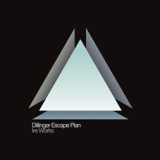
After Miss Machine, Dillinger Escape Plan fans were divided. Many of the folks who were attached to the screaming mathematical metal of Calculating Infinity bailed on the band, disapproving of the experimental musical direction and the meathead appearance of new singer/screamer Greg Puciato. Open-minded listeners were excited about the progressive journey they were taking and many critics hailed the group as a true innovator of metalcore. Ire Works succeeds in many of the same ways that their previous album did, while branching out creatively. They continue to toy with technical metal, blistering hardcore, jazz breaks, and post-punk, but here they evolve again by adding more twists and turns with additional electronic elements. While the merging of too many styles in hardcore can make for a convoluted result (see Avenged Sevenfold's self-titled release), the added instruments and genre changeups enhance the result rather than acting as ornamental distractions. Edgy Aphex Twin-style drill'n'bass drum breaks and stretched and squeezed electro blips feel strangely at home next to the psychotic time-signature changes and manic riffs, especially on the tracks "Sick on Sunday," "Dead as History," and "When Acting as a Wave." Violins, pianos, and trumpets sit nicely in the mix, and the group's willingness to take chances leads to stunning artistic endeavors rather than stale attempts at crossing genres just for the sake of being clever. Original vocalist Dimitri Minakakis makes an appearance, as does Mastodon guitarist Brent Hinds, but the most notable inclusion is drummer Gil Sharone, who proves himself an expert at picking up the slack after the departure of founding member Chris Pennie to play in Coheed and Cambria. Undoubtedly, this act added anger to fuel the fire of their heavier numbers. "82588," "Fix Your Face," and "Party Smasher" are as wicked and manic as their most difficult earlier stuff; conversely, the melodic hooks and falsetto of "Black Bubblegum" and the watery ambience of "Mouth of Ghosts" balance out the album nicely. It can be inaccessible and terrifying all at once, but in a genre overly saturated with formulaic groups, Ire Works is a true standout. If DEP aren't careful and continue down this innovative path, they could easily be labeled the Radiohead of metalcore
• This is an unusual album in the catalogue of Ornette Coleman, and one that passes by most critics. It is however a unique insight into the ‘free jazz’ pioneer’s way of working in the early 70s. Recorded at his large loft space in downtown New York which inspired a whole scene of experimental musicians who were locked out of playing established venues.
• The music is a romp showing Ornette playing trumpet as well as saxophone. His quartet which featured second saxophonist Dewey Redman alongside long term cohorts Ed Blackwell and Charlie Haden prove to be the perfect foil for this legendary set.
• This is the first vinyl reissue in nearly 20 years and utilises a fresh 24/96 transfer from the original production master.
'Farewell to Faraway Friends' finds Lauvdal at her Wurlitzer, captured by two mics in the room, with no additional overdubs or edits. Her set of hushed, jazzy flourishes and pregnant pauses is so well realised that it’s hard to believe they were improvised, while the “kitchen feel” of the room recording (as Marhaug describes it) enhances a sense of brittle intimacy. Much in the same way that Dominique Lawalrée imbued his ostensibly naive music with glimpses into a multifaceted inner life, Lauvdal explores an ocean of feeling through the most humble components, transporting us through some alchemical act of emotional teleportation.
Lauvdal avoids meandering flights of fancy, instead exposing a filigree level of detail and beauty through the cracks of her spartan recordings. There are no arbitrary found sounds, no sound design or overdubs, just Lauvdal and her Wurlitzer, occasionally singing at a barely perceptible volume in the background. If there's melancholy, it's not self absorbed or effacing, but trapped behind sunny rays and poetic, romantic phrases.
One of those effortlessly impactful records we’ve not been able to stop listening to for a while now, ‘Farewell to Faraway Friends’ is apparently the first in an ongoing series. Here’s hoping.