Far Out Recordings proudly presents the self-titled debut album by Rio de Janeiro born multi-instrumentalist, composer and arranger Tunico. Honing Brazilian roots rhythms like maracatu, xanadu, and samba, to combine with a global contemporary jazz outlook, the newcomer adds a modern classic to the ever rich vein of Brazilian instrumental music.
Consider it a natural evolution from the legacies of greats like Quarteto Novo, Hermeto Pascoal, Banda Black Rio, Tamba Trio, and Dom Um Romão, Tunico’s debut brings together an eye catching ensemble of talents from the Rio jazz community, with whom he performs on a weekly basis at celebrated live sessions and jam’s at venues like Macuna and Comuna Lapa, which often go on all night.
Released in 2022, the album’s rip-roaring lead single “Galope” features the effervescent vocals of Katerina Assef, as well as consummate solos from all over the band, as Sounds & Colours put it “…it exudes distinction and promise”. “Sambola” calls on the signature swagger of Far Out favourite Antonio Neves, indulging us in irresistible swinging samba-funk, undeniably reminiscent of the aforementioned Banda Black Rio in their late 70s heyday.
Born and raised in an artistic Rio household, Antonio Secchin aka Tunico’s father was the painter Guilherme Secchin, whose original work is lovingly repurposed to create the album’s cover. Antonio learned his trade on guitar from a young age, which remains his primary method for composition, but at the age of eighteen he started to gravitate towards the saxophone, and in particular the soprano sax, from which he now leads bands despite being entirely self taught. He would develop his skills busking on curbsides and metro stations before becoming a mainstay player in venues and clubs around the city.
When the pandemic struck, Antonio retreated to his family home in the Rio countryside. With time and space to breathe and reflect in a natural environment, he set to work at fleshing out the compositions he’d written throughout his musical life into full bodied works. His affinity with his rural surroundings is reflected in the luscious, blossoming feel of this groovy, mystical and poignant instrumental debut album.
Tunico will be released on vinyl, CD and digital platf
quête:at jazz
Since the release of the highly acclaimed album Mamari (2021), the Muito Kaballa project has continued to develop.
The new album Little Child (2022) starts with a cracker called Inside Outside. The song addresses the hypocrisy and double standards of the European Union when it comes to refugee policy. The group works together with the renowned German/Nigerian musician Ade Bantu and the Angolan guitarist Juresse Amie Tieti Ndombasi and picks up their listeners where they were parked with Mamari. Fat grooves with clearly recognizable Afrobeat influences.
However, the musical journey leads step by step away from the usual sounds of the band. Already the second track Dansez! Dansez! shows that. The sound leads to Angola, Congo and a bit of Mali. The band stacks so many rhythms on top of each other that the word poly appears in a whole new light. It becomes clear that the nine deal intensively with the music that is the source of their inspiration. The gifted guitarist Juresse Amie Tieti Ndombasi puts the icing on the cake with his sound.
Let's continue with No = No. Here at last it becomes clear: Muito Kaballa has escaped from his drawer and is now in free flight, somewhere between jazz, fusion, afrobeat and whatever. But who cares? The sound is convincing, the feet shake to the beat and cannot be calmed down even with great effort and the message "Don't protect your daughter, educate your son" can't be said often enough.
The next song, Memories, reveals completely different sides of the band. While the sound is suddenly much more relaxed and, let's call it jazzy, the lyrics also become much more intimate and poetic. "Keep in mind, it makes you blind, starring in the sun". We don't find out what memories Niklas Mündemann, composer of the song, has in mind here but that shouldn't bother us. We just put on our sunglasses and let ourselves be carried away by the almost epic track, which with its ten minutes of playing time leaves nothing to be desired in terms of diversity. Sophisticated listeners will wonder if Niklas Mündemann listened to a bit of Kamasi Washington while composing. Maybe even a lot? Be that as it may - a special treat in the piece: the trombonist Saskia-Marleen Dahms, who makes a guest appearance on this song, rounds off the sound of the brass section again.
Last but not least, we come to the namesake of the album: the song Little Child builds on the mood of the previous track and rounds off the musical odyssey with a good portion of goosebumps. But the song doesn't just leave its mark on the surface, no, it also gets under your skin. While the melody has considerable catchy tune potential, it is above all the lyrics and the message that grab you here. Niklas Mündemann wrote the song during a phase of mental depression. Above all, psychotherapy helped him to think more positively again and to comfort his own inner child. We've all heard about that child in us. But when was the last time we hugged it? The song Little Child is the perfect accompaniment for this, because when you hear it, you immediately feel hugged, pressed and safe. Another highlight are the incredibly beautiful solos, played by Benjamin Schneider on guitar and Saskia-Marleen Dahms on trombone.
That's the end of the album and, to be perfectly honest, you don't feel left out in the rain, but you do feel left out in a (warm) shower. Time flies when you hear Muito Kaballa's new album and in the end you want more. 4 remixes for the dancefloor are delivered by French producer Kuna Maze, Polish/Angolan duo Lua Preta, French producer La Dame and Brazilian producer Badsista, tipping the remix balance into more female input.
12" + 7" !
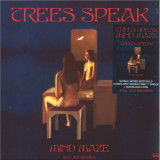
Mind Maze is, amazingly, Trees Speak’s fifth album to be released on Soul Jazz Records in the space of little over two years– an output matched only by the intensity of their music created during this short time.
The first pressing only of the album comes with a bonus seven-inch single containing two tracks that are not available on vinyl anywhere else.
As with all their previous releases, ‘Mind Maze’ is a mind-boggling tightrope walk across an array of musical influences that seamlessly create the unique present-day world of Trees Speak.
The band’s sound is characterized by a combination of German krautrock motoric-beat rhythms, angular New York post-punk attitude, 60s spy soundtracks, psych, rock, jazz, and 70s synthesizers and vocoders. There is also a cosmic spatial awareness to their sound; both personal inner space and galactic outer space, as well as a wilful pushing of sonic boundaries.
Trees Speak are a musical duo based in Tucson, Arizona, composed of Daniel Martin Diaz and Damian Diaz. Their music is heavily influenced by the cosmic magic of the natural desert landscapes of Arizona, creating a unique and captivating sound that is both experimental and innovative.
Here you will find the myriad sounds of 1970s German electronic music (everything from Can to Cluster, Popul Vuh to Tangerine Dream); 1980s New York post-punk and synthcore (from No Wave to Suicide); John Barry’s 1960s movies, John Carpenter’s 1970s horror. You will also hear the influences of French and Italian progressive rock (Magma, Goblin) as well as cosmic, new age and experimental space soundscapes …. an almost endless list of diverse influences that ebb and flow like an ocean of sound, in the process creating a truly unique soundscape that Trees Speak have made wholly their own.
The name Trees Speak reflects their interest in the concept of using future technologies to store information and data in trees and plants, with the idea that trees communicate collectively. This interest in nature and technology, combined with their passion for experimentation, has led Trees Speak to create a truly one-of-a-kind listening experience that is both unique and engaging.
If you ever wanted to hear Can, Neu!, Destroy All Monsters, Pere Ubu, electric eels, John Cage, Liquid Liquid, Tangerine Dream, Suicide, Laurie Spiegel, Art Ensemble of Chicago, John Barry, Mother Mallard’s Portable Masterpiece Company, Sun Ra, Stockhausen, John Carpenter, Electro-Acoustic and Musique Concrete and Mars in one band - then this is it! Trees Speak are a band that defies categorization and offer an eclectic listening experience, both exciting and memorable.
The two bonus tracks (‘Seraphim’ and ‘Orpheus’) included with the album give us a further window into the complex mind maze of the group - two stunning acoustic tracks that explore a distinct early 70s sound of Yes, Argent and other progressive rock accolytes.
- A1: Dreams (Feat Xênia França&Zé Leônidas)
- A2: Kismeti (Feat Matthias Schriefl)
- A3: Asase (Feat Eric Owusu)
- A4: Sábado (Feat Zé Leônidas)
- A5: Carrossel (Feat Zé Leônidas)
- B1: Caio & Eric (Feat Eduardo Camargo)
- B2: Ndiyakhangela (Feat Bongani Givethanks &Amp; Mpho Nkuzo)
- B3: Agôra (Feat Matthias Schriefl)
- B4: Oblique Sunshine (Feat Rebekka Ziegler)
Global pointing Brazilian jazz trio releases their new album Agôra, that sparkles with electric funk and Herbie-esque eclecticism. It features a myriad of guest vocalists and musicians including Brazilians Xênia França and Zé Leônidas, Jembaa Groove's Ghanaian singer Eric Owusu and South African artists Bongani Givethanks & Mpho Nkuzo
Re-wiring the concept of 'fusion' for 2023, Agôra is Brazilian trio Caixa Cubo's resurgent new record with the title referring to 'now', based upon the intuitive and fluid nature of the trio's method, and this inspired recording. With shoots to black music culture, from Brazil to Brooklyn, Ghana and South Africa, Agôra is the group's ninth album yet is their first where they've invited guests, mainly singers, onto each track and follows their last, Angela from 2020, released on Heavenly Records, which won a BBC 6 Music Album of the Year (Huey Morgan's selection) granting them much deserved international recognition.
The core musical elements of Caixa Cubo are Henrique Gomide (keys), João Fideles (drums) and Noa Stroeter (bass), all from São Paulo, Brazil and where they met as teenagers and would continue their friendship and musical bond at the Royal Conservatory in The Hague, Netherlands. Now all in their mid thirties, João and Noa live back in the city where it all started but Henrique has settled in Cologne, Germany where the recording of Agôra took place, over the course of 3 days, at the home cum studio of Chris 'Dusty' Doepke, their friend and owner of the label they signed to, Jazz & Milk.
In line with all their creations where flow and energy provide the magic, allowing what the moment provides, the album shines not only for its virtuosity but for its minimalism, the depth of space, and for the first time, the ability to figure in and outside of the jazz fold, as the trio decided, for the first time, to bring in singers and add a new aesthetic to their sound.
"Agôra is a wake-up call to reality, a reminder that the infinite possibilities of technological progress should not disconnect us from the earth, from eye-to-eye relationships, and from moments lived in person" the band are keen to point out. "And that we must not be consumed by greed, for all we truly possess.... is the NOW."
Turning hope and metaphor into music, the debut single Sábado, an electrified future- jazz-fizz reflects perfectly the spontaneity that permeated the entire recording of the album. "When we got to the studio, we had no idea what we were going to record. We started playing a groove, kind of inspired by Gilberto Gil's 80s albums, and our drummer João started singing this funny song 'Sábado Barrigudão' (Big Belly Saturday) alongside the bass groove and that was that". Inspired by their city of birth, São Paulo, it features long time collaborator and vocalist Zé Leônidas, with cuicas, tamborim, agogo and shakers providing the most obvious Brazilian affect from the album.
Dreams is the band's first foray into R'n'B melding the group's simple and sporadic instrumentation of drums, keys and bass into a Jill Scott inspired song that could have been born in Brooklyn yet sung by Brazilian singer and Grammy nominated Xênia França and Zé Leônidas in both English and Portuguese. Xênia recently performed online for hip-to-it website Colors and it's her latest collaboration with Caixa Cubo, having first met in 2009 for a series of live performances.
South African artists Bongani Givethanks & Mpho Nkuzo come to the record with a wholly different approach on Ndiyakhangela, providing spoken word and vocal refrains on top of an Afro-Brazilian percussion jam with a delivery and verse in Xhosa, Zula and Ndebele. Asase is the album opener and features vocals of Eric Owusu who is part of highlife pioneer Pat Thomas's live band and most recently, co-leader of Jembaa Groove, an Afro-soul band from Berlin. It's a synth wig out with djembe grooves and offers a brand new take on Afro-soul-jazz.
Other contributions come from Cologne based jazz singer Rebekka Ziegler (Oblique Sunshine), São Paulo based guitarist Eduardo Camargo (Caio & Eric) and trumpet player Matthias Schriefl on Kismeti, a gorgeous and rolling number that ebbs and flows, exemplifying the group's effortless ability to craft a sound energised by a belief in one-self and the idea of having faith without the need to look at each other for verification.
As drummer and percussionist João Fideles perfectly surmised upon arriving for the recording session, "What drums do you have? Whatever you have, I'll use it". Agôra is testament to nearly 20 years of camaraderie, friendship and most importantly, trust.
A lost MPB gem from rural Finland! We Jazz presents the first ever reissue of this rare 1990 local release by Brazilian duo Rosanna & Zelia. 7" EP with inside out 3mm spine sleeve. RIYL: Gilberto Gil, Joyce, Musica Popular Brasileira, bossa nova, bossa jazz
Liner notes by Mikko Mattlar:
"Rosanna & Zélia were a Brazilian duo of singers and musicians Rosanna Guimarães Tavares and Zélia Nogueira da Fonseca. They moved from Minas Gerais, Brazil to Europe in 1988, released five albums in Germany between 1993–2004 and featured vocals on an Ian Pooley house track Coração Tambor before Rosanna died of cancer in 2006. Zélia still continues her career in Germany, touring actively and releasing new music.
The duo's journey from Brazil to Germany also included two brief visits to Finland. In the years 1989–1990, they spent time in the small town of Seinäjoki in Ostrobothnia. Rosanna & Zélia performed Brazilian music in Finnish clubs and festivals and recorded a 7" EP for local label Maumau Music. The record was distributed mostly in the Seinäjoki area, but the three songs are well-performed and authentic Brazilian MPB, so the largely unknown record now gets its first reissue for a wider audience on We Jazz Records.
But how did two Brazilian women find their way to a small Finnish town to record an EP? The main reason for this was music journalist and promoter Risto Vuorinen, who was on a holiday in Albufeira, Portugal, where a friend of his lived. The streets were almost empty that evening, but Vuorinen and his friend heard fine guitar playing and singing from a bar. There were Rosanna and Zélia performing on a small stage, and the two Finnish men happened to be the only customers. When the artists ended their performance, Vuorinen's friend, who spoke Portuguese, went to talk to them. Rosanna and Zélia told him they had recently come from Brazil and are trying to gain ground in Europe with their music.
Because Rosanna and Zélia didn't know where they would head next, and because Vuorinen liked their music, he thought of bringing the duo to his hometown, Seinäjoki. They immediately liked the idea, and in the autumn of 1989 they arrived in Finland. The national Finnish jazz festival was held in Seinäjoki, and Vuorinen thought Rosanna & Zélia's Brazilian music would fit right in. They performed at the festival and in November 1989, also made recordings in a local studio with backing musicians from Seinäjoki.
Music enthusiast Pertti Hakala had a record shop and label Maumau Music in Seinäjoki releasing music from local artists. He released a three-track EP from the sessions. with two tracks written by Rosanna & Zelia themselves and their cover version of Extra (Brazilian Reggae), written and originally performed by Gilberto Gil in 1983. A small pressing was made for the Finnish market, and Hakala also sent a box of records to Brazil, but for some reason it was sent back.
After their first visit to Finland, Rosanna & Zélia headed back to central Europe, but Vuorinen decided to organize more performances for them for the next summer. Maybe he also wanted to show them the beautiful Finnish summer, as Rosanna and Zélia had so far seen the country only during the darkest autumn. The duo came back to Finland for the summer of 1990 and performed at the Womad world music festival organized as a part of local Provinssirock. They also played in Nummirock and Puistoblues, both respected music festivals, and performed on TV in Helsinki.
Rosanna and Zélia lived in a small apartment in Seinäjoki and played two to three gigs per week all summer. Because there were only two of them, even small pubs could afford to book them, and in 1990 the economic situation in Finland was good. It was before a major economic depression hit the country. The duo travelled by bus or train, and because they were an acoustic duo, they could easily carry their instruments in public transport. Vuorinen got excellent feedback from organizers. Rosanna and Zélia were good performers, but also really nice people.
With the income from their summer gigs, Rosanna and Zélia could buy a PA mixer and other musical equipment. When the summer 1990 turned to autumn, they continued their journey from Seinäjoki to Germany where they settled down."
Very few electronic music artists can boast of spanning a wide musical spectrum as the UK producer Calum Lee aka Paleman / Fresnel Lens.Always emphasizing the percussive side (advantage of being a jazz drummer), and always with an innovative spirit, the releases of this authenticsound designer oscillate between the most abstract / experimental electronica and minimalist club focused techno, from atmospheric andintrospective works to the sickest dubstep / bass music.
As at 30D we declare ourselves absolute fans of Calum's music, we had a clear obligation to ask him to join our catalogue, specifically for the EyesHave It sub-label (we had especial interest in his interpretation of broken, dark and industrial techno). His answer was direct and unmistakable:"I've sent you a lot of pieces that fit with your label vision and the imagery that we love.. I've been studying existentialism a lot recently, so thesetunes are a reflection of my headspace at the moment!".
A true declaration of intent!And here it is, five perfect examples of obsessive tribal madness, overexciting synthetic broken beats and a lot of rawness. A pure musical gem.
Emotional Rescue dives back in the world of post punk experiments and early synthesised electronics to present another of the labels iconoclastic 7" 'collectors specials', with a look at Stockholm's Staalfagel.
Born in 1977, Erik Fritjofsson and Petter Brundell merged and formed Staalfagel out of the suburbs of Jakobsberg. Like so many at the time, the duo was tired of Prog, Jazz and Symphonic Rock and formulated something new and against at the same moment; a time where drummers were jettisoned in place of drum machines and the inspirations of artists like Creedence Clearwater Revival, Devo and Pere Ubu were thrown in the mix to fervent results.
With Micke Kjell soon joining on bass, they toured Sweden constantly, the manic machine beat, beating guitars and strange synth sounds defeated the throng and led to a considerable following. Recorded live to tape with no overdubs or mixing, the faithful CR 78 drum machine, the results radiate energy.
Release just 4 records in 2 years (1980 - 1982), Utan Rymddrakt Pa Uranus appeared as their last ever release. Jettisoning the punky-funk vocals of previous releases, the single is a pure electronic groove. Funk bass and guitar atop, its short form simplicity is perfection distilled in 2 parts of less than 3 minutes, conjoined like some reggae dream, with 'Uranus II' acting the dub 'version' counterpoint.
Discovered and shared by long-time friend, DJ and collector, Gary The Tall steps out from behind the decks and microphone of his long running NTS show to present an exemplary "Reversion". Teaming up with master producer and label affiliate, Timothy J Fairplay on engineering duties, they keep the originals' straightforward charm, deceptively editing, looping and reversing with aplomb, for a killer flip side.
repressed !
From samba and bossa nova through to baile funk, with carioca expressions of jazz, rock and hip hop in between, the sound of Rio de Janeiro, while continually evolving, has always held an unnameable quality which reflects the magic and mystique of the city itself. Multi-instrumentalist and arranger Antonio Neves is the city’s newest trailblazer: the enfant-terrible of Rio’s music scene, leading a vital and diverse constellation of both emerging and well-known artists advancing the city’s musical legacy.
“It all started one sleepless night, after watching a Quincy Jones documentary”. Inspired by the legendary music magnate, Neves began writing a list of artists residing in Rio de Janeiro “people that I admire, that I consider geniuses of their instruments, who share with me affinities, anxieties and projects.” The list included some of Brazil’s most revered living musicians who Neves has worked with in recent years: Hamilton de Holanda, Leo Gandelman and Dorival Caymmi. Neves also called on some of Brazil's most exciting emerging talents including Alice Cayymii and Ana Frango Eletrico.
A Pegada Agora É Essa (The Sway Now) is Neves’ second album: a vibrant portrait of the current Brazilian music scene. From the regional to universal, popular to erudite, samba to rap, Latin rhythms to jazz, MPB and pop to good old rock'n'roll, Neves walks with fluency and mastery amongst all the musical genres that Brazil has to offer.
“My offer to the musicians was complete freedom to express themselves through the songs I proposed – classics like “Summertime”, “Luz Negra” and “Noite de Temporal”, and compositions of my own – creating a space of authorship for the band and the guests. A space for inventions, purges, delusions, laughter. The idea was to bring the freedom of jazz crossed by Brazilian rhythms, such as the traditionals Partido Alto (A Pegada Agora É Essa) and Jongo (Jongo no Feudo and Luz Negra); rhythms of African-Brazilian religions like Candomblé (Noite de Temporal) and Umbanda (Forte Apache); and a tribute to newest Rio de Janeiro’s contribution to Brazilian music, the Funk Carioca (Simba)”.
Coming from a musical family, Antonio’s father, Eduardo Neves, was a renowned conductor and a professor at Juilliard School of Music and the California Jazz Conservatory. In the bohemian neighbourhood of Lapa, aged 14, Antonio began his career as a drummer, before experimenting with brass. He would soon become a skilled trombonist and arranger achieving the recognition of his teachers and peers. It wasn’t long before he would be playing with some of the biggest names in Brazilian music, such as Hamilton de Holanda, Leo Gandelman, Moreno Veloso, Kassin and Elza Soares.
His debut album as a trombonist was PA7 (2017, Rock It), released at the same time he was travelling the world playing with artists like Moreno Veloso, Kassin and Leo Gandelman, and recording the albums Jobim, Orquestra e Convidados (2017, Biscoito Fino), with Mário Adnet and Paulo Jobim; and Elza Soares Canta e Chora Lupi (2017, Coqueiro Verde Records). More recently, Neves was the arranger for the acclaimed Little Electric Chicken Heart album, by Ana Frango Elétrico, which has been nominated for a Latin Grammy and voted 2019’s ‘Brazilian Music Revelation’ by The Art Critics Association of São Paulo.
In 1975, under the oppressive air of military dictatorship in Brazil, brothers Lelo and Zé Eduardo Nazario invited bassist Zeca Assumpção to join their musical experiments in a basement under Sao Paulo’s Teodoro Sampaio Street. As teenagers, the trio had already been playing together in Hermeto Pascoal’s Grupo, alongside guitarist Toninho Horta and saxophonist Nivaldo Ornelas, and it was while working together under Hermeto’s direction that the Paulista rhythm section (as they were then known) began to realise their own potential.
With many nightclubs and venues closed in the mid-70s and government censors dictating the output of radio, TV and art galleries, many Brazilian artists fled during the years of dictatorship. But underground, Grupo Um were fusing avant garde ideals with contemporary jazz and Afro Brazilian rhythm; making phenomenally free and expressive music - in stark contrast to the sterile, conservative conditions being imposed above ground.
Just like Hermeto Pascoal’s Viajando Com O Som from the following year, Starting Point was recorded over two days at Vice-Versa Studios, by revered engineer Renato Viola. The studio was one of the best in Sao Paulo and musicians communicated with engineers through cameras and a monitor, allowing the group complete immersion in the process. They also made use of the studio’s hemispherical tiled room, which served as an acoustic reverberation chamber.
The album begins with Zé Eduardo Nazario’s thunderous drum solo on “Porão da Teodoro”, before clearing the clouds with the lone Berimbau which opens “Onze Por Oito”. Built around a hypnotic electric bass line, heady Fender Rhodes improvisations, and more rip-roaring drums, it’s a rapturous, electrifying freak-jam in 11/8.
Like some invertebrate deep-sea curiosity, the free-form “Organica” is made up of Lelo Nazario’s playfully eerie prepared piano, with Zé Eduardo’s percussion flurries darting around Assumpçao’s double bass. The equally non-conformist, percussion-only piece “Jardim Candida” features many of Zé Eduardo’s home-made instruments, including a long saw blade played with vibraphone sticks and violin bow. While working with Hermeto, Zé Eduardo famously built his own all-in-one percussion set-up known as the “Barraca de Percussão” (Percussion Tent) - the first of its kind in Brazil, which he would also use on Hermeto Pascoal’s Viajando Com O Som and throughout his career.
“Suite Orquidea Negra'' (Black Orchid Suite) was written by Lelo Nazario as the score for an imaginary movie - the story of a rare, black orchid which produced a substance meant to cure all diseases, but which had mysteriously disappeared from the laboratory… “As a screenplay it’s not very good” reflects Lelo in jest, “but the music ended up being very interesting, the way its parts are chained to one another carries a little of the mystery I imagined for the movie.”
The album closes with the triumphant “Cortejo dos Reis Negros” (Procession of Black Kings) - a groovy variation on the Maracatu rhythm, with a two-note bassline underpinning piano improvisations, exultant wordless vocals, cuicas, slide-whistles and a very special guest appearance from Zé’s dog Bolinha.
Starting Point was to mark the inception of one of Brazil’s most daring instrumental groups. Their debut now sits in the lofty echelon of otherworldly 70s Brazilian music, alongside the likes of Marcos Resende & Index’s self-titled debut, Cesar Mariano & Cia’s Sao Paulo Brasil, Azymuth’s debut and indeed Hermeto Pascoal’s Viajando Com O Som. But just like all of those titles, which were either shelved or largely ignored at the time, Grupo Um - so radically ahead of their time - struggled to find a label to release their debut album. So Lelo kept the tapes safe in his archives, which is where they sat for almost half a century. Finally, almost fifty years later, this mesmerising piece of history is here, and it was only the beginning...
Grupo Um’s Starting Point will be released by Far Out Recordings, on vinyl LP, with an insert featuring unseen photos and liner notes by the Nazario brothers, as well as a CD on 17th February 2023.
- A1: Beyond The Dream - Kenny Cox
- B1: Tune For L.n. - Larry Nozero
- B2: Face At My Window - Sam Sanders
- B3: People We Got To Do Better - The Soulmates
- C1: Noh Word - The Contemporary Jazz Quintet
- C2: Joy Road - The Lyman Woodard Organization
- C3: Time Is Wasting - Tj
- C4: Root In 7/4 Plus - Maulawi
- D1: Salsa Pt. 1 - Fito Foster2. Maiden Voyage - Ursula Walker
- D3: You're The One - Tj
- D4: Where Is The Place? - Maulawi
- E1: Saturday Night Special - The Lyman Woodard Organization
- E2: Inner City Player - Sam Sanders
- F1: Island Song - Kenny Cox
- F2: All But Blind - Mixed Bag Feat. Ursula Walker
Italian DJ and producer Francis De Simone debuts on Lee Foss and Jamie Jones' label Hot Creations with London Bass. Having built a solid back catalogue in recent years, his first Hot Creations release embodies the dynamic sound of the Palermo-born artist, channelling chunky tech house and disco-flavoured melodies.
De Simone explains his creative thinking behind the EP. "These tracks fully express my devotion to music. I ranged a lot, trying to remember an 80's sound up to a more raw and synthetic groove with Latin vocals to embrace the different ethnic groups." Reflecting his thoughts to a tee, the title track rumbles with a massive bassline and chopped-up vocals that add an instant burst of energy. Things get weird on Saludos A Todos, as thumping kickdrums collide with a trippy melody and even trippier vocals, creating a wavey atmosphere. The ideal club curveball. On Off White, De Simone delivers a pacey number packed with burbling beats and clicky percussion, complemented by dreamy vocals. The hint is in the name on closing track, This Is Undergound. A big room delight, De Simone drops a stripped-back banger, where the lyrics do the talking in tandem with a driving bassline. An excellent addition to the Hot Creations discography.
Based in Palermo, Italy, Francis De Simone stems from a family of musicians. Having played the drums from age two, the versatile artist can make anything from rock, pop and jazz, but these days, De Simone pens electronic music. His father worked as a bouncer for various local discos and exposed De Simone to dance music from a young age, later inspiring him to produce house and techno with an uplifting tint. Releases on Glasgow Underground, LW Recordings and REALM Records have helped shape the profile of this flourishing artist, with plenty more to come further down the line.
British musician, multi-instrumentalist, producer and DJ cktrl returns with the release of his new EP ‘Yield’. Born from a desire to change the narrative around contemporary Black British music, the boundary-pushing musician aims with this project to prioritise the art of bonafide musicianship. A stark departure from cktrl’s previous work, ‘Yield’ is a celestial and palpably more inward body of work that harkens back to the pre-electric age of modal jazz while simultaneously pulling in elements from the disciplines of classical and baroque music. Speaking on the project’s sonic identity, cktrl says: “I want to be able to show that you can make things from scratch again that have that feeling and beauty without having to sample an old record. Even though that’s an art-form within itself, I want to show raw orchestration and instrumentation can be the sole source” The origins of the title came from a period where cktrl was looking to find solace in himself after an introspective period of grief and heartbreak. As an intentionally instrumental project with minimal vocals, cktrl wants prospective listeners to see these new songs as guided meditations where they can wholly insert themselves in it. Eliciting and reaping whatever feelings come to the fore. Speaking on what ‘Yield’ means to him as a concept, cktrl explains: “Some people who I've asked to define the word ‘yield’ have looked at it from a harvest point of view, whereas others have seen it as something to submit to, to render, like you're giving up yourself. I see it as a barometer for how you feel - no matter if you're at your lowest or your highest vibration, you still need to show up for yourself. You still have to be present. It’s about getting the best from yourself no matter where you are in life” The new project is the follow up to last year’s ‘Zero’ which featured collaborations with esteemed contemporaries like the GRAMMY-nominated Mereba and anaiis. Upon the project’s release, it was met with a plethora of critical acclaim from highly regarded publications and platform such as British Vogue, Dazed, CRACK Magazine, Resident Advisor, NOTION, Harper's Bazaar and ES Magazine for its sprawling and experimental scope, spanning avant-garde jazz, classical music, alternative R&B and electronica. cktrl has a tune for every occasion: as content making beats by himself at home in Lewisham as he is amongst this generation’s fashion and cultural vanguards. Music has been a part of his life for as long as he can remember: from clarinet lessons throughout his school life to fond memories from his NTS days. Moulded by a unique blend of his West Indian heritage, years of classical training in both the clarinet and saxophone, cktrl strives to do what hasn’t been done before. His approach to creation is decidedly wide-ranging and broad. In fact, where sonic descriptions might fail to encompass the breadth of cktrl’s scope, three words surface when he unpacks his musical aims: freedom, range and feeling. Elsewhere, throughout his career, cktrl has been recognised and heralded by fashion and film VIPs as he firmly embeds himself within the black cultural renaissance emerging here in Britain. Acquiring a global network of creatives that include the late Virgil Abloh, Bianca Saunders, Tremaine Emory, Saul Nash, Maximilian Davis, Ahluwalia, Stephen Isaac Wilson, Sean Frank, Campbell Addy, Ib Kamara and Jenn Nkiru who secured him a cameo in Beyoncé’s ground-breaking film ‘Black Is King’.
KingUnderground presents a stunning collection of 8 releases pressed onto 7” vinyl from the Cavendish Music catalogue. Paying homage to the genre of Library Music, furthering its exposure to a new generation of listeners.
Library Music experienced its heyday in the 60s and 70s, as thousands of instrumental tracks were produced by musicians and composers for the purpose of placements in Radio, Television, and Film. This rich piece of European music history would go on to inform genres to come and speak heavily to the Jazz, Funk, and Hip Hop communities of the future.
This was often a musician's first opportunity to become a composer, or what most would commonly know now as producer of music. These composers would work with a stable of musicians to record 100’s of tracks that would go into a publishing Library. The pieces of music were recorded quickly and deliberately. The composers, musicians, and engineers understood their role in the process, it was an act of discipline amongst all involved. Often the composer was given a brief on what the end goal was for the client. The specifics would include tempo to lock into, song ending time, ect.
Never before have these tracks from the Cavendish Music Library been pressed on 7” vinyl at 45RPM. In all there will be 8 individual 45s, licensed from Boosey & Hawkes & Cavendish Music Library. The collection includes compositions by Tony Kinsey, John Scott, Sam Fonteyn, Ray Davies, and more.
There’s a boldness to Library music. It's in the forward nature of where the drums sit in the mix and the percussive playing of the keys that gives you something to grab hold of, it feels grounded yet exciting. It’s music beamed in from a different galaxy!
Long lost and much sought after Private Press from Western Massachusetts band Forest. A distinctive Acid-Jazz / crossover AOR / Soul sound, think Mother Earth jamming with Tim Buckley. This re-issue comes with 6 previously unreleased tracks. Forest was a rarity at the time in a band that consisted of two drummers, Gary Stevens and Bob "Rox" Girouard . The band was a well seasoned touring band who shared the bill with the likes of The Fabulous Rhinestones, The James Montgomery Band, Zonkaraz to name a few. The album covered various styles from blues to acid-jazz with the aim of securing a major record deal. Many of Forest’s alumni have gone on to highly successful careers in music: Jim Kimball relocated to Nashville to work alongside Faith Hill and Reba McIntyre, Bill Holloman with Danny Gatton, The Gatlin Brothers, Nile Rodgers and Chic, The Fab Faux and Bruce Springsteen, and Wes Talbot founded a music production library called The FRESH Music Library.
In October 1974, the first number of “L'Indépendant du Jazz”, a small self-produced magazine DIY -before punk supposedly invented the concept- was launched by Jef Gilson, Gérard Terronès, Jean-Jacques Pussiau and a few other specialists of a different kind of jazz in France, it looked at the already long career of Jef Gilson and in detail at the album with saxophonist Philippe Maté:
“The ‘Workshop’ is, with Philippe Maté (alto-sax), an undeniable success. Maté is genuinely ‘the’ most inventive French saxophonist since Michel Portal burst onto the jazz scene (who has also worked with Jef Gilson on both “Enfin” and “Gaveau”).”
Even though the author of the article is a mysterious I.H. Dubiniou, and it is difficult to know if it is a real person or a pseudonym used by one of the merry bunch, it is also tempting to hear it as what Jef Gilson really thought about his new discovery. Even more so as the two men would work together over a long period, as Maté became one of the key figures of Gilson’s Europamerica orchestra up until the 1980s.
Philippe Maté had started to make a name for himself with the Acting Trio when they released an album on the BYG label in 1969, and he was also one of the regular sidemen for the Saravah studios (he can notably be heard on albums by Higelin, Fontaine or his cult duo album with Daniel Vallancien).
The album was recorded on 4 February 1972, at the Foyer de Montorgueuil, where Gilson had set up his studio, with more or less the same team found on “La Marche Dans Le Désert” by Sahib Shihab + Gilson Unit (recorded ten days later). This was drummer Jean-Claude Pourtier and pianist Pierre Moret (regular Gilson accomplices since “Le Massacre Du Printemps”), alongside Maurice Bouhana and Bruno Di Gioa on various percussions and/or wind instruments. On bass is Didier Levallet, of the now mythical Perception, (Jean-François Catoire would replace him with Shihab) and Philippe Maté who took top billing, rather than the American saxophonist afterwards. The two albums are however quite different. This “Workshop” is more abrasive, more free. Made up of two long improvisations each of over 22mn, “L'Œil” on side A and “Vision” on side B (Gilson specialists would recognise the nod to one of his albums from the 60s), the album plunges you into the depths, attempting to drown you in electronic waves, dragging you back to the surface by the collar, giving you a good shakedown, before showing you the light, leaving you breathless on the shore after 46mn of the most intense music French has to offer. “An undeniable success”, they said. (by Jérôme "Kalcha" Simonneau)
Mystical, minimal house offering hailing from South Africa in the mid-2000s courtesy of Cape Town indie labels Sharp-Flat and Roastin' Records.
RockArt was a hybrid-electro performance art project that emerged during a golden age for electronic music in the Cape, the post-Y2K scene spurred by the maverick African Dope record label that marked the rise of cult outsiders Felix Laband and Tudor Watkins Jones. Harnessing the combined powers of seasoned jazz musicians Hilton Schilder and Alex van Heerden, RockArt cooked up a signature futurist formula laced with musical bows and voice samples that was unmistakably indigenous. Intended as a companion to the group's Future Cape album of 2006, House was conceived as a long-form soundscape of tribal electronica that could stand alone on its own merits but also provide a backdrop for live instrumental improvisation. The project was shelved following the untimely death of Alex van Heerden in 2009 but emerges from Hilton Schilder's archive as a reminder of the duo's profound collaborative alchemy.
Running at 28 minutes over two sides of 12-inch maxi cut at 45RPM, House is available as a boutique vinyl offering with a psychedelic art sleeve pressed in a first edition of 300 copies.
'Intensely textured, interlocking guitar riffs weave together on New Bright Object, the debut album from Berlin and Edinburgh-based duo I’m Not You.
Working under the name I’m Not You, artist Alex Gibbs (bass & vocals) and sound designer Niall McCallum (guitar & drums) have honed a sound that draws in equal measure from jazz funk of Weather Report and the math rock of Don Caballero. Their debut album, New Bright Object is their most developed statement to date, an intricate, robust and unique collection of songs born from serpentine jam sessions in rural idylls.
The duo make no secret of their admiration for bands like Battles and Tortoise. They reference Jim O’Rourke’s lounge numbers and the droll lyricism of Modern Lovers’ Jonathan Richman. There’s a touch of Vini Reilly in their sparse and serpentine guitar lines. A hint perhaps of Mogwai. All these names place New Bright Object within a constellation of albums made with bigger budgets for wider audiences.
New Bright Object opens In a flash of light, comet-like, with the sound of ‘Mr. Wind- Up Bird’. The threads they weave are full with intent, as moments of density rise like hills from the track’s quieter valleys. It’s easy to imagine the pair looking out over the rolling fields of the garden studio in East Lothian where they recorded the album, as they assiduously try and draw their own landscapes in sound.
Similarly, there is a crispness to ‘A Certain Arrangement Of Atoms’ - every clipped hat, rim-shot snare and tightly wound tom a fine-tipped mark on the score. It is intricate and precise, a result perhaps of Niall’s attention to detail. Then there is the piano, Alex’s grandmother’s, slightly out of tune, which adds a few expressionist strokes to this pointillist composition. The piece loosens, until all we’re left with is the bass.
Although the album orbits around the pendulum sway of ‘The Older I Get’, it is ‘What Cats Think About’ that stands out most. That it does is by design – a nod to the Sun City Girls and albums that like to throw their listeners a curveball every now and then. Pleasantly ramshackle, confusingly domestic, agreeably strange.
All this speaks to the spirit of the album and the creative relationship between two best friends whose differences seem to have been the only things they could agree on.'
As luck would have it, this seventh exclusive Deep Site Vinylized edition sees the pure class of Tojami Sessions (Dessous Recordings/Plastic City) with two stand out original tracks each offering remixes that contrast and compliment the full atmosphere of this release.
Falling (Original Mix) takes you on a late afternoon cruise filled with soft seductive whispers and a surprise percussion during the break. Falling (Manuel Sahagun Remix) adds more of a jazzy element, focus on inspiring words, and the laid back improvisation keep the groove flowing non-stop. Falling (Kessidis Remix) takes on a more mystical and minimal approach amidst modulating synths and the spoken words declaring what is to unfold. What Is Love (Original Mix) The extended intro and groovy bassline start this track off, bathing you in sunlight while the vocal samples splash over and refresh you creating a radiant joy. What Is Love (Deep Spelle Remix) layers some harder beats and an 808 bassline producing that contagious dancing feeling impossible to resist.
What Is Love (Funtom Remix) sends the track to high emotional levels with use of melody and dynamics making it a true anthem bound to leave its touch.
In the wake of a 2020 edition of Movement in the City's second album Black Teardrops (1981), Sharp-Flat Records returns with a prequel by way of a reissue of the band's self-titled debut from 1979.
As the 1970s were drawing to a close, the epic Black Disco studio project with its signature pairing of drum machine and organ had run it course. After delivering a killer trilogy of cosmic lounge outings dating back to 1975, the group yearned for funkier grooves and the core trio of composer Pops Mohamed on organ with Basil Coetzee on tenor sax and Sipho Gumede on bass decided to hire a drummer and rebrand as Movement in the City. In contrast with the New Age detachment of Black Disco, Movement in the City was conceptually grounded in the bleak social realism depicted on its photographic album covers and leaned into the vivid sensibilities of library music from the era. Blending Cape jazz with funk and soul, the group's output evokes a soundtrack for South African city life at the outset of the 1980s while nodding allegorically to the subterranean movements that were in the course of shaking the cage for political change.
With its cast of jazz fusion all-stars, Movement in the City is the manifesto of a band in transition - a bold and slick first offering that delivers a modern South African sound capable of both the funky exuberances of "Mister Lucky" as well as the down-home pathos of "Blue Sunday." Restored from its original tape masters and released in partnership with As-Shams Archive and Pops Mohamed, this rare artefact of South African jazz history is back in print for the very first time since its original 1979 release.
The train hurtled forward, rocking side to side as field after field rushed by under an unmoving sky. Her gaze was transfixed on the blurred landscape that passed her by. Behind her, she had left a city with lifelong memories, and as her mind cast back to thoughts of home, a salty tear welled in her eye. It did not fall. She yearned to go back, but her heart knew that this would never again be possible. Inhaling, she held her breath for a moment, almost unexpectedly. A nostalgia was within her, but she knew she must continue, direct her own life and maintain this motion before it dwindled into inertia. She exhaled and the tear rolled down. Looking out toward the horizon she dabbed her cheek, then gently sat upright. Her journey was only just beginning.
Tübingen born, then Frankfurt raised Berlin artist - Johannes Klingebiel, unleashes a potent and untiringly emotive work for the fourth imprint on Amsterdam’s Bloomer Records. A man of many disciplines, he combines his background in jazz drumming with an insatiable appetite for all varieties of electronic music.
Beginning with fond nostalgia that is juxtaposed by the driving motion of organic breakbeats, one is immediately engulfed. Rich synth leads play on minor chord variations to begin and work towards complex and richly cinematic compositions. After the first four tracks, ‘Break Something’ stutters in with a club-ready feel. Capable of both at-home and party environments, this thought-provoking release cannot be boxed into clear-cut categories.
Johannes Klingebiel uses delicate percussion skills to speak to his electronic orchestra. His lust for crisp, clean breaks results in an often inexorable motion that punctuates pensive chords and crescendos. Beginning with breakbeat variations the release ebbs towards half-time drum structures, IDM and experimental expressions later on. Among these quirky and often nostalgic gems, one can find a few driving and noticeably danceable numbers, offering glimpse of familiarity amidst emotive and inquisitive soundscapes.