Originally from Florence, Italy, Elio made an impression in the Seattle underground through his deejaying at DAZED parties alongside his evolution as a producer. On his first vinyl EP, two original productions channel an early 2000s melodic minimalism with a touch for evocative composition paired with memorable grooves. A remix of each completes the record.
The title track “Still Love” opens the EP with a series of contemplative notes. As the bass stirs, the track expands, adding energy alongside the breakbeat. The synth unfurls in a melodic crescendo before pads add emotive accents.
Kurilo steps into the lab to reconstruct “Still Love” into an afterhours potion. The Ukrainian producer showcases the psychedelic and sumptuous grooves that established him as one of the finest purveyors of hypnotic tech house at Trance Pandemic. The influence of cinematic acid house washes over the driving groove.
“Vegas Jam” opens side-b and again emphasizes Elio's sense for musical composition and progression. Adding swing and jazz techniques to the synth melody, variations of the piano hook improvise blissfully above the rolling bass.
A warm yet powerful kick sets the tone for the final track of the EP. China's electro and techno wiz B.AI remixes “Vegas Jam” into a mind melting sensory stimulus. The remix gathers intensity and drive, an irresistible late night brain worm.
Search:at jazz
Call it soulful dream pop, proto-trip hop or downtempo jazz - "Tender Rain" is the follow-up LP to the successful "This Is" album and continues to deliver Ghia's unmistakable sonic magic. On this release, the band shares a selection of previously unreleased vocal songs alongside instrumental pieces, all carried by their trademark chilled and almost meditative atmosphere. Most of the recordings date from the early 1990s, while early demo versions of "New Love" and "Teardrops in Your Eyes" may reach back as far as the late 1980s.
The album opens with the title track "Tender Rain," where smooth vocal jazz harmonies merge effortlessly with soulful pop elements. The track originally appeared only on CD in 1993 on the small Mikado label run by renowned German guitarist Ulli Bögershausen. The band recalls that the piece was first pre-recorded using MIDI equipment and a Tascam 16-track recorder before being completed in the studio with drums by legendary drummer Mickie Stickdorn (Carsten Bohn's Bandstand, Cyklus, Elephant, Lake), percussion by Corinna Ludzuweit, and the final touch-Lisa Ohm's remarkable vocals.
At the time, Mikado was also looking for instrumental material for radio and synchronization use. They selected the track "Tropfstein" for a sampler CD and requested more pieces. In response, "und recken ihre schlanken Glieder" (roughly translated as "and stretching their slender limbs") was composed especially for the project, as Frank Simon remembers. Both tracks appeared on the now rare Mikado sampler CD under the alias z. Zt., short for "zur Zeit" ("at present" or "these days").
Several further pieces in a similar vein were created during this period, including the previously unissued "Auf unserm grünen Sofa," "Reise bei Nacht," and "Was ich Dir noch sagen wollte." These tracks are beautifully crafted downtempo pieces featuring smooth, jazzy piano lines combined with touches of ambient and New Age aesthetics. "Auf unserm grünen Sofa" stands out in particular and will likely resonate with all downtempo enthusiasts. Lutz Boberg recalls that many of these recordings were captured during a single afternoon in the studio, fueled by spontaneous ideas and creative momentum.
On tracks such as "Teardrops in Your Eyes," "New Love," and the haunting Dark Spirits Mix of Ghia's song "What's Your Voodoo?", singer Lisa Ohm delivers soulful pop performances with her clear and captivating voice. "Change Your Sex," the third track previously featured on the Mikado sampler, leans more toward late-1980s funk and was aimed at radio and DJs at the time. Its subject matter was relatively daring for the period, telling the story of someone contemplating a change of sex "to get rid of the troubles."
Together with "This Is" and "Curacao Blue", "Tender Rain" forms another essential chapter in the rediscovery of the band's work. More than thirty years after their creation, these recordings still sound strikingly fresh, reflecting a unique style that in many ways anticipated the rise of trip-hop in the early to mid-1990s.
'Matsuli Music is proud to announce the first vinyl reissue of Philip Tabane’s Sangoma ("Spiritual Healer") since its 1978 release. Remastered from the original tapes with lacquers cut by Frank Merrit and pressed on 180g heavyweight vinyl at Pallas in Germany, this definitive edition re-asserts the power of one of South Africa’s landmark recordings. Featuring new liner notes by cultural critic Kwanele Sosibo and artwork restoration by Siemon Allen, Sangoma returns in full force through an extended Malombo line-up, fronted by Tabane's spellbinding guitar - ancestral, timeless, and unbound.
'Philip Tabane (1934–2018), the mercurial guitar genius of South African music, forged a sound that was as rooted in the spirit world as it was in daily life. With the Malombo Jazzmen of the 1960s, Tabane disrupted Western notions of “jazz,” bringing the resonant rhythm of cowhide malombo drums into the foreground. While outsiders and the uninitiated often reached for labels like “primitive yet sophisticated,” Tabane and his collaborators named it more truthfully: “music of the spirit.”
'By the time of Sangoma, Tabane stood at a crossroads. Fresh from a period of three years’ touring in the United States where he graced the Newport Jazz Festival, and played alongside Miles Davis, Herbie Hancock, Pharoah Sanders and others, he brushed off comparisons with characteristic self-assurance: “No, I don’t play like Miles. Miles plays like me.” Back home in South Africa, and with a newly signed international distribution deal with WEA Records, he harnessed this momentum into a larger band setting, capturing a rare intensity.
'The result was Sangoma—an album that bridges contradictions: expansive yet intimate, celebratory yet haunted by exile and return. Tracks such as “Sangoma,” “Hi Congo,” and “Keya Bereka” are not simply performances but living testaments, songs that would remain in his repertoire for decades. Unlike the moody, immersive character of much of his work, here Tabane is on the move—urgent, restless, uncontainable. As he announces on the second track, “Maskanta wa tsamaya” (“something that kicks ass”).
More than four decades on, Sangoma is both an historical document and a timeless invocation. From his home in Mamelodi to the world and back again, Tabane’s spiritual healing endures—raw, electric, and unbowed.'
For Metro Beirut’s latest release, Cem Mo steps forward with his debut vinyl EP, a record that bridges the roots of Chicago and Detroit house with his own deep and textured approach to groove.
Born in Ankara and having taken piano lessons at an early age, Cem drifted from classical into jazz, re-teaching himself harmony and improvisation before finding his way into production. After moving to Amsterdam in 2016, the city’s community and music scene expanded his horizon, shaping a sound that treats producing like improvising, with curiosity for grain, color, and repetition, where subtle shifts make all the difference. Along the way, Cem has released on Handy Records and Rhythm Section, while his project Nowhere People has appeared on Artisjok Records.
This EP brings together a tight circle of artists who deepen its character. Saxophonist Moritz Schuster, known for his work across electronic music and past work with Cem and Malik Kassim, formerly known as Retromigration, delivers a striking, free-flowing performance charged with raw intensity. On “The Hard Way”, Franco Corica joins Cem for a deep, soulful, jazz-leaning moment that feels both reflective and quietly defiant. Finally, longtime friend Malik pulls up with a dancefloor remix that preserves Cem’s melodic sensibility while adding his own loose, resulting in a circular dialogue between two artists who’ve grown side by side.
Artwork: Shahd Issa
'We Fell In Turn' is the solo debut from Brooklyn-based trombonist, composer, and quartet leader Kalia Vandever. Vandever, who plays with Harry Styles and Japanese Breakfast, “sculpts her trombone’s golden tones into dazzling compositions” (Pitchfork), writing music that tends to “dip you into a feeling or a pattern or a breathing speed, and keep you there” (The New York Times). In 2022, Vandever released Regrowth, an album that “features the ecstatic, brilliant melodies that have become Vandever’s signature sound” (Bandcamp). This spring, Vandever brings contemplative reflection to We Fell in Turn, a brave and understated work from an ascending voice in American jazz.
Recorded over three days in upstate New York, 'We Fell In Turn' is improvisational — a stark palate of solo trombone, voice, effects, and little more. “My solo process has always been heavily rooted in improvisation,” says Vandever. “I wanted the process to feel similar to the way I perform. Lee Meadvin, who engineered and produced the album, had a heavy hand in the creative process as well. He would dictate prompts before I started improvising and those pieces ended up shaping a lot of the imagery that comes up throughout the record.”
Connecting the dots between Jeff Parker’s 'Forfolks', and early releases from Grouper, 'We Fell In Turn' is a study of space and patience, embracing vulnerability in its sparse adornment. At times, the album is reminiscent of Patrick Shiroishi’s 'Hidemi', both in its familial inspiration and solo instrument study, while sharing the ineffable feel of William Basinski’s 'The Disintegration Loops' — the traces of her trombone folding in on themselves in an organic loop. Emotionally generous throughout, Vandever acts as a torchbearer for jazz’s historical yearning for connection.
On 'We Fell in Turn' Vandever draws inspiration from childhood memories — events that shaped her approach to love, community, and partnership, and her maternal homeland of Hawaii. “We were exploring childhood memories, earliest experiences with disappointment and pain, and my Hawaiian roots,” says Vandever. “We Fell In Turn came after I titled the track "We Wept In Turn". Both come from the intangible feeling of waking up from vivid dreams, particularly the experience of falling right before waking up or waking up in tears.”
Through this exploration into her heritage, Vandever also found guidance. “In Hawaiian mythology, ‘aumākua are known as ancestral spiritual guides that manifest in different forms, whether physical or intangible,” says Vandever. “My ‘aumākua visits me in my dreams, usually with a reassuring hug or a reminder of my past. Memories and early experiences seem to escape me, but find their way back in dreams.” And now they’ve found their way into 'We Fell in Turn', Kalia Vandever’s stunning solo debut.
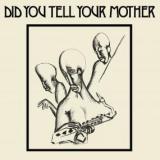
Released in 1979, Tete Mbambisa's Did You Tell Your Mother delivers the ultimate blend of African groove with American modal grace, making it one of the all-time classic albums of South African jazz. With Mbambisa presenting original compositions at the piano alongside Basil "Mannenberg" Coetzee on tenor sax and flute, the acoustic quartet featured here is rounded out by Zulu Bidi from the band Batsumi on bass locking in with Dollar Brand drummer Monty Weber. This 2026 reissue presents a flat transfer of the master tapes with album artwork restored using illustrator Hargreaves Ntukwana's original ink drawing.
A self-taught musician, it was as leader of the vocal group The Four Yanks in the early 1960s that Tete Mbambisa’s music career took off. With encouragement from Abdullah Ibrahim, he dedicated himself to the piano and went on to record with The Soul Jazzmen in 1969. Mbambisa's solo recordings from the 1970s, produced by Rashid Vally for the independent As-Shams/The Sun record label, document his creative peak as a recording artist and have contributed to earning him an honorary doctorate and a place among the figureheads of South African jazz history.
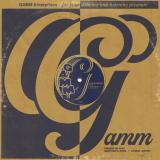
California's finest producer Coflo is back on GAMM with his second EP with edits and reworks of his favourite tunes.
All tracks hover around 4/4 rhythms but beyond that the music goes in all directions. First is 'Yo No Bailo' which is a deep Afro-Cuban House jam with chanting vocals and driving percussion.
Second is 'Sealion', a bumpy house refix of the classic cover of 'See Line Woman'.
On the flip side Coflo goes deep down south for a blues session with an electronic twist, a great marriage of musical styles if you ask us.
We end strong with 'Rare Silk' a vocal Jazz-Afro-House jam that is both deep and uplifting at the same time...
As one of the foundational artists of Flipsight, it is only fitting that ColorJaxx gives the first major 2 x 12" gatefold statement on the label. The debut album 'In Between' of the Belgian producer gives a full overview of his trademark deep grooves with a re-invention of his club sound.
The first record is your invitation to the beach. The A-side kicks off with the ambient "Playamer", setting a scene of salt air and warm breeze. The shoreline waves combine with an electric piano groove to "Out The Door". This is where a slick trumpet gets the parole and cuts through the atmosphere, signalling to the dancefloor. "Never Enough" serves as a spiritual successor of his first EP on the label "Tales of never": shimmering guitar samples, a warm, everlasting groove, and that unmistakable "ColorJaxx" swing that we fell in love with initially.
The B-side is where Jordy catches the first hints of Spring with "Just Around" by blending uplifting trumpets and sax melodies with a fresh forward-moving baseline. "Higher" elevates the mood further with smooth rhodes keys and a jazzy piano lead. As the evening chill sets in, the first disc concludes with the literal end of the day: "The Beach Is Closed".
Time to grab the second wax out of your gatefold: leave the sand behind for the strobe light as this is where the maestro gets in club mode. "Back Then" serves as the bridge into "Discotheques," a heavy-hitting wink to the old-school Belgian club scene that shaped the underground of the early 2000's. This vibe created "Moving On," a sophisticated French-like house tune with Chris Farmer where the vocalist enters into a constant conversation with rhythmic elements, creating a versatile track that fits in any part of a DJ set.
The finale is reserved for heavy hitters: "This This" and "Disco Trouble" are pure, pumpy club rollers. Peak-time bangers designed for maximum impact, before the album dissolves into the hazy, cinematic outro of "Blurred Lines."
Music From Memory presents 'Spacious Heart', the debut solo album from Los Angeles-based musician Anthony Calonico. Known for his work as part of the trio Total Blue, Calonico steps forward here with a collection of songs and instrumentals that invite the listener into his lush, expansive yet intimate world.
Written and recorded gradually between 2020 and 2024, 'Spacious Heart' emerged through a slow and open process, allowing the music to develop without rigid expectations. The album’s sonic landscape sits in a somewhat similar zone to Total Blue, with warm keys, synthesizers and rich production creating spacious environments where melodies and textures unfold naturally. Drawing together influences that move fluidly between spiritual jazz, synthesizer-driven explorations and ambient textures, the record balances harmonic richness with a gentle sense of openness. Where it diverges from Total Blue is through the presence of Calonico’s voice, the emotional anchor of the record. Smooth, luminous and quietly expressive, his singing carries a sense of earnestness and vulnerability while remaining delicately restrained.
‘Spacious Heart’ unfolds as a gentle conversation between song and atmosphere, where vocal pieces drift in and out of focus, intimate and reflective. The surrounding instrumentals open up space for these emotions to breathe, settle and expand, creating a quiet, reflective world where feeling, texture and restraint move softly together.
Sleeve art and design by Michael Willis.
Gap Mangione's monumentally influential Diana In The Autumn Wind. AKA BEWITH200LP. And, without question, Be With's White Whale.
They said it could never be done. And with good reason.
We've spent the past 12 years trying to license this legendary 1968 recording from Gap and, after much work, it's finally here. Remarkably, this is the first ever vinyl reissue of Gap Mangione's Diana In The Autumn Wind, produced with the full and extensive participation of Gap. An exceedingly rare album, it's been coveted by funk, soul, jazz and hip-hop sample fiends for decades.
It's unarguably *the* most sought after album for J Dilla / Madlib sample collectors. It has also been brilliantly sampled by A Tribe Called Quest, Large Professor, Ghostface Killah, Kendrick Lamar and Talib Kweli.
But this record is so much more than a sample-spotters curio. It's solid gold throughout. Bursting with killer funky-jazz grooves and tracks adorned with warm electric piano, the release is notable for featuring some extremely significant players at the very outset of their careers; Tony Levin, at 21, whose superb playing on both acoustic and electric bass was the harmonic mainstay of the trio and Steve Gadd, at 23, one of the greatest drummers of his generation.
With acceptable copies of this holy grail changing hands for $400, to call this reissue "much-needed" underplays just how vital it is. Gap's story is told in his words alongside rare photos across a sumptuously designed 2-page insert and, to augment this deluxe edition further, its all wrapped up in a beautiful, no-expense-spared luxury tip-on sleeve, as per the original hens-teeth release. And, while we're talking packaging, just take a look at that cover - a work of art in and of itself.
The tracks are short but complex, with that extraordinary rhythm section backing the beautiful piano, organ and electric piano work of Gap. It's like the best ever library funk breaks record you never heard - but all your favourite golden age rap producers were all over it, long ago. It's a stunning blend of the vibrant, driving music of the Gap Mangione Trio coupled with the sensitive composition and superb orchestration of Gap's legendary brother, Chuck Mangione, who helmed an amalgam of seemingly disparate elements – rock, big band jazz, solo improvisation and "classical" music - into a spectacularly cohesive whole that has aged wonderfully well. As Gap himself notes in the liners, "with this group I was able to explore and add new and exciting elements from rock, Brazilian and then-current pop music."
Opener "Boy With Toys" triumphantly swaggers out the gate, all big band horns, flutes and dextrous organ work. The synthesis of everything going on is nothing short of stunning. When one wise YouTube commentator called this tune "old school superhero music", Gap agreed. Rap luminaries did, too, amongst them Talib Kweli, who rapped over DJ Scratch's chopped up intro for "Shock Body" on his Quality album back in 2002.
You've barely recovered from that incredibly affecting opener when you get hit over the head with the exquisite title-track. And now you see how two of the greatest beats of all time emerged from one single track produced nearly 50 years earlier. Unforgettably utilised by Dilla for Slum Village's heartbreakingly good "Fall In Love" and then Madlib for his "Official" beat for Dilla to rap over, on the Jaylib record. Regardless of the records it went on to spawn, this is just a staggering tune in its own right. Be beguiled by the flutes and the flutter tonguing, the counter-melody from the trombones, the soprano sax solo. All of it. Simply beautiful.
The questing organ and horn workout "Long Hair Soulful" deserves a lot more attention, overshadowed somewhat by the opening two monsters but no less fantastic. It swings, it grooves and Gadd and Levin truly cook. Up next, Gap's wonderfully percussive, mellifluously piano-heavy cover of "Yesterday" by some fellas called The Beatles. It's a subtly arresting gem. "The XIth Commandment" is damn fine, with thick, gorgeous electric piano and snappy drum work underpinning chaotic soundtracky horns. To close out the side, "St. Thomas" showcases the "fourth" member of the Gap Mangione Trio, conga drummer Dhui Mandingo. Having performed with the Trio since 1965, Dhui‘s African-based and jazz-latin-influenced style amazed listeners and its way to hear why.
Opening the B-Side, standard "You're Nobody Till Somebody Loves You" breezes along in the late-night jazz club fashion before things get super deep with the outstanding and - up to now - un-sampled "Pond With Swans". It's simply heavenly, and how its moody, melancholic intro has yet to be pilfered is anybody's guess. It oscillates between gentle, sombre movements and bombastic grooves, equally hypnotic and joyous. The rendition of "You Are My Sunshine" is yet another showcase for Gap's virtuoso playing and Gadd's mastery of the pocket. Indeed Gadd's drumming on "Free Again" is nothing short of neck-SNAPPING! Ghostface took it for not one but two "Iron's Theme" tracks across his seminal Supreme Clientele. It's got that Galt MacDermot "Coffee Cold" feel. Suuuuuper cool. The frantic "Dream On Little Dreamer" hurtles along and must've surely had the whole room absolutely swinging from the chandeliers back in Rochester in the late 60s. The album closes with the magnificent Graduate Medley, featuring memorable renditions of "Scarborough Fair", "The Sounds of Silence" and "Mrs. Robinson". The warm electric piano lines of the former were sampled by The Ummah (Dilla again!) for Tribe's "Pad & Pen" from their reappraised final album, The Love Movement, as well as by Large Professor on his much-loved "The LP (For My People)".
Under the watchful eye - and extremely attentive ears - of Gap Mangione himself, the audio for Diana In The Autumn Wind has been carefully remastered by Be With regular Simon Francis, with a few much needed tweaks here and there, according to the artist's wishes. At the prestigious Abbey Road Studios, Cicely Balston's expert skills have made sure nothing is lost in the cut whilst the records have been pressed to the highest possible standard at the always stellar Record Industry in Holland. The artwork restoration has taken place here at Be With HQ and has that drop-dead gorgeous cover artwork popping like new. Buy on sight!
Glenn Underground is the founding member of the Strictly Jaz Unit. He was raised on disco classics and freeform jazz in Chicago's Southside, the place where house music was born. Taking inspiration from Chicago's original pioneers, Larry Heard, Ron Hardy, Lil' Louis, and the like, Glenn has produced many sought after house gems for some of the most well respected deep house labels such as Prescription and Guidance.
‘Atmosfear’ Glenn Underground’s debut album was originally released in 1996 and set the standard for sophisticated dance music. Dreamy melodies, heavy bass lines and acid grooves blend beautifully with jazz vibes and Detroit techno. Essential!
- A1: Dissociated
- A2: For Wayne
- A3: Sweet Stuff
- A4: It's About Love
- A5: The Kid From Bondy
- B1: Trees Utopia
- B2: Brazilian Wobble
- B3: At The Mehul Fest
- B4: Myself Again
- B5: Dissociated Pt 2
Serge Hirsch / LeSerge is a multi-instrumentalist based in Paris.
He plays the violin and keyboards, and composes and produces his own music.
His music blends jazz improvisation, a rhythmic approach drawn from hip-hop, and the sonic experimentation of contemporary bedroom music.
His main band, a trio featuring Noé Bénita on drums and Yungccos on electric bass, aims to create music that is social, joyful and musically demanding, yet never becomes esoteric.
His debut album is set to be released in partnership with Roche Musique in early 2026.
As well as composing and performing his own music, he has collaborated with numerous artists, either as a string arranger or as a producer and pianist. (Bonnie Banane, Shygirl, Lossapardo, Lablue, Swing, Madone...)
He notably made a name for himself during FKJ’s 2020 European tour, where he performed all the support slots alongside electronic music producer CRAYON.
As a bandleader, he has built a solid reputation by performing at numerous venues and residencies at Le Silencio des Près in 2024, at Soho House and at Le Serpent à Plume. He also served as deputy musical director at Le Serpent à Plume during the venue’s early years from 2019 to 2025.
Translated with (free version)
A central figure in Belgian techno, Border One's work has also been an international reference for consistency and direction since his early releases. An artist for artists with true commitment to his sound, Steven Petit's impact in the studio and behind the decks is admired by anyone who has done their homework. His music describes tight pressure under curious, modular-like sequences that stretch through the timeline of each track. The scale of minimalism remains key here, and the Belgian wastes no time when tunneling through his erratic tracks. Jazz-like dissonance drives his tension and although each element is carefully measured, the records truly command dancefloors. 'Inner Radiance' is no different. The Fuse resident takes his game one step further, pushing harmony to hysteria at every turn.
The EP skips foreplay and dives straight into the extremities of Border One's sound. In 'Reducing Valve', sustain is the key ingredient to this chaos. Slowly ripping the synth sequence into chords, Border one maintains a firm hold on the track's tension while remaining playful with the main theme. 'Sensory Reset' is more of a lurker with its shifting pad that spreads across the stereo image. This track is characterized by a grim urgency as opposed to its predecessor's progressive spiral. Keeping things low to the groove, the A2 swings about satisfyingly while Border One tinkers at his 909 constructions. Continuing his work on resonance, 'Transfigured' balances obscurity and surrealism. With a sequencer on the loose and a drum machine to emphasize it, the Fuse resident guides his audience into twists and turns at a constant pace. Here, we explore the dichotomy between the warmth and cold of a modular sound in techno, something frequently done but rarely mastered. Border One puts his years of experience to work to provide a combination of flair and balance to his tracks, something that is clearly translated in this EP. Of course, the final track - the title track - 'Inner Radiance' brings something very special to the table. The power of simplicity can never be underestimated and Petit knows just how to use it. With a strong core to an already sturdy track, the conclusion is spectacular. Emphasizing the electrifying nature of the record, Border One adds vintage chord stabs that fit right in with the sharp lead to create a powerful and memorable dancefloor experience. Not as much of a wind-down more than it is a gripping cliff hanger for his future releases, Border One provides once more an EP that underlines the true ethos of techno music.
- A1: Bluebell
- A2: Japan Greatly (Feat. Reek0 And S.i)
- A3: Turn Me On
- A4: Dinero (Feat. P Wavey)
- A5: Down 4 (Feat. Osquello)
- A6: Strike A Pose (Feat. Camille Munn)
- B1: Longest Road (Feat. Pk)
- B2: Komodo
- B3: Somebody Jump (Feat. Reek0)
- B4: Wonderluv
- B5: Tek Control (Feat. Liam Bailey)
- B6: Guiding Star (Feat. Reek0)
East London producer and DJ IZCO announces his debut solo studio album ‘POWERSCROFT’, set for release on 1st May via Brownswood Recordings. The album’s first single, ‘Strike a Pose’ featuring the vocals of Camille Munn offers an early glimpse into the project. To celebrate the release, he will go on a run of UK dates from March to May, culminating at London’s Jazz Cafe.
Named after the road where he grew up, ‘POWERSCROFT’ marks a defining new chapter for an artist who has spent the past decade shaping the sound of UK dance music. Drawing from jungle, broken beat, grime, garage, soul and dub, the album channels the energy of the dancefloor while remaining deeply rooted in memory, instinct and identity. It captures what it feels like to be inside IZCO’s world, where thoughts, memories and influences collide.
Hailing from East London, IZCO is a producer and DJ spearheading a new generation that is bringing soul back to the dancefloor. Shaped by the rich musical heritage of his hometown, he has developed a sound that feels familiar yet forward-looking, diverse yet distinctly his own. That sound has taken him across the globe, from New York to Tokyo, alongside standout sets at We Out Here, Outlook and Glastonbury.
IZCO began his journey making grime beats for local rappers including Capo Lee, Novelist and Reek0, before becoming a key figure in the UK’s evolving garage and dance music landscape. In 2018, he launched his long-running Rinse FM show and released his debut EP Tek 5, earning early underground acclaim. His production credits include PinkPantheress’ breakout track ‘Passion’, created alongside Jkarri, as well as collaborations and remixes for artists such as Katy B and Greentea Peng.
Beyond his solo work, IZCO is a label head, promoter and co-founder of the Brighter Days Family, a collective built on community, craft and cooperation. With ‘POWERSCROFT’, he steps fully into the spotlight, presenting his most personal and fully realised body of work to date. “This album is about channeling my true musical personality and character,” he says. “I’m marking a new chapter by paying tribute to my foundations.”
DJ Support: Kerri Chandler, Folamour, Louie Vega, Jazzy Jeff, Dimitri From Paris, David Morales, Dave Lee, The Shapeshifters, Brian Tappert, Quentin Harris, Michael Gray, Terry Hunter, Hector Romero, Tedd Patterson, Dr. Packer, Marcel Vogel, Dj Pippi and many others
Groove Culture main men Micky More and Andy Tee are once again at the controls as the label presents its' Third collection of “Groove Is In The Heart”. As with the popular imprint's various EPs, the focus is on joining the dots between organic house, revivalist disco, uplifting dancefloor soul and colourful jazz-funk. There's much to admire from start to finish, a very strong bunch including MM & AT,Gianni Bini and Angela Johnson celebratory cover of EWF swirling disco-funk ‘In The Stone', a wonderfully rolling and funky-House joint titled ‘Let The Rhythm’ from Ralph Session & Djfudge, Memi P. And Gisele Jackson tasty Feel Good Classic-house Tune “Make It On My Own” and the soulful-house warmth of Audiowhores ‘Touch The Ground' Feat. Angela Johnson.
2026 Repress
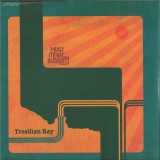
Producer and bassist Huw Marc Bennett presents ‘Tresilian Bay’, a new project that draws from artists such as Tim Maia, Augustus Pablo and Idris Muhammed as much as the jazz scene and community he has found in south-east London. The languid, sultry sound fuses both modern and vintage, travelling from South London electronica, to Brazillian groove, Nigerian Afrobeat and Ghanaian Highlife along with a streak of Welsh psychedelia.
‘Tresilian Bay’ is a nod to hedonistic summer nights, whether spent on the Glamorgan coast or the hot Lewisham streets. The album is titled in honour of the bay near where Huw grew up, an area steeped in stories of ancient Welsh royalty, smugglers and pirates.
The album started out as a lost live session recorded at the Total Refreshment Centre studios, featuring Chelsea Carmichael (sax), Rosie Turton (trombone), Shirley Tetteh (guitar) and Jake Long (drums) with Huw at the helm on bass and compositions. With glorious vocal contributions from Miryam Solomon; Huw utilised his human style of production and multi instrumentality heard in his Susso project (Soundway Records, 2016) to mold these recordings into this mature and emotional debut.
The album was mixed and mastered by Albert's Favourites co-founder Adam Scrimshire with artwork by Jonny Drop.
- 1: Urn Burial
- 2: The Redness In The West
- 3: The Third Migration
- 4: They Came Like Swallows
- 5: The Living Theater
- 6: The Oceans Are Crying
- 7: Insight
Black Vinyl[30,67 €]
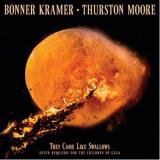
They Came Like Swallows is the first album-length collaboration between Thurston Moore and Kramer (now officially Bonner Kramer), two giants of alternative/ experimental music. The accomplishments and influence of these two artists in the world of independent music cannot be overstated and the result of their artistic union is a startlingly cohesive statement that burns through landscapes of primitive outsider rock, avant-garde composition, progressive ambient and further locales boldly and beautifully unnamable. “Kramer and I reconnected in Miami, Florida, a few years back, many many years after each of us had departed NYC on separate life adventures. It was only a matter of time before Kramer and I started making plans to record together and with his irrepressible due diligence he quickly set up a mobile recording contraption in the pad I was decamped in, the Florida sunshine flowing through the palm leaves, lithe lizards skittering across the windowsills, and we just went for it.
Kramer had the idea to cover a Joy Division tune, a left turn from the improvisations we had been tracking, though wholly in keeping with both our sensibilities of light and dark unifying in transcendent songwriting, both of us devotees of 'the song' as well as 'the freedom.’ What transpired is They Came Like Swallows, a session we immediately felt should exist as a prayer to the war-torn souls of the families of Palestine continually decimated by the brutality of genocide. We agreed beyond words to offer our music as a sonic activism and as a beneficent energy. This album is our duo exchange for human dignity, it is our soul music for any semblance of a peaceful planet.” ~ Thurston Moore “For the first time in our nearly 45 years of friendship, we had identical time windows open to make a record together,” recounts Kramer. After all this time not a moment is wasted as the duo immediately taps into the heightened core of improvisational tension across these seven offerings. Volcanic opener “Urn Burial” notches a similar historic union (John Cale and Terry Riley) to meet the circumstances of the moment, with swirling mists of organ and pounding toms over guitar that thickens the atmosphere with jagged, grimy dissonance.
Solemn strings open the second track, “The Redness In The West,” with Kramer’s cello and viola in dueling bow beneath the high tension drive and sustain of Thurston’s electric guitar, tapping out a Morse code of tension that mounts endlessly into a fog of inevitable war by the end. Moore and Kramer’s sense of experimentalism is in free and full grandeur throughout They Came Like Swallows, though the duo keep a strong and constant sideways eye on melody, composition and architecture, to the ends that any strict lines between song and improvisation are blurred beyond qualification.
As if to punctuate this point, Swallows closes with a nightwork cover of Joy Division’s “Insight,” a doleful coda that breathes out with a solemn inner grace under Thurston’s instantly stylistically recognizable guitar melodies as they weave into he and Kramer’s unison voices. As the lone vocal piece and only traditional ‘song’ form on the album, “Insight” is unique to this set and as a closing statement draws connective lines back to the kind of dynamic, electrified melodicism that wove deep, melancholy patterns into the untamed fire of Sonic Youth’s Sister and Daydream Nation. In the album’s final moments, the two voices repeat the lyric “I’m not afraid anymore” as mantra, underscoring the heavy, unsettled themes and methods that preceded it. Kramer describes the creative process of They Came Like Swallows: “I had composed and recorded a few pieces at my home studio over the course of a couple weeks. Thurston was spending the winter in South Florida, so I flew down and spent a few days recording his guitar parts in his home there. Watching him spontaneously compose his parts was pretty astonishing, to say the least. Once we'd finished working on those pieces, we began improvising and following wherever the music pointed us, and another few pieces were born. We got straight to it, without anything driving us other than the joy of finally working together.
My personal goal was to remain present and catch as many surprises as I could from Thurston's guitar work, and there were plenty during those few days. We had a fucking blast.” Thurston’s contributions here will be readily familiar to any acolytes of his other works, the through-line between his inspired playing, cradled in Kramer’s meticulous, solid arrangements. “If I had to make this record again, I'd do it all exactly the same way,” Kramer says. “It’s like jazz, you don't think about it. You just do it. It was miraculous, and you don't fuck with a miracle.”
They Came Like Swallows is the first album-length collaboration between Thurston Moore and Kramer (now officially Bonner Kramer), two giants of alternative/ experimental music. The accomplishments and influence of these two artists in the world of independent music cannot be overstated and the result of their artistic union is a startlingly cohesive statement that burns through landscapes of primitive outsider rock, avant-garde composition, progressive ambient and further locales boldly and beautifully unnamable. “Kramer and I reconnected in Miami, Florida, a few years back, many many years after each of us had departed NYC on separate life adventures. It was only a matter of time before Kramer and I started making plans to record together and with his irrepressible due diligence he quickly set up a mobile recording contraption in the pad I was decamped in, the Florida sunshine flowing through the palm leaves, lithe lizards skittering across the windowsills, and we just went for it.
Kramer had the idea to cover a Joy Division tune, a left turn from the improvisations we had been tracking, though wholly in keeping with both our sensibilities of light and dark unifying in transcendent songwriting, both of us devotees of 'the song' as well as 'the freedom.’ What transpired is They Came Like Swallows, a session we immediately felt should exist as a prayer to the war-torn souls of the families of Palestine continually decimated by the brutality of genocide. We agreed beyond words to offer our music as a sonic activism and as a beneficent energy. This album is our duo exchange for human dignity, it is our soul music for any semblance of a peaceful planet.” ~ Thurston Moore “For the first time in our nearly 45 years of friendship, we had identical time windows open to make a record together,” recounts Kramer. After all this time not a moment is wasted as the duo immediately taps into the heightened core of improvisational tension across these seven offerings. Volcanic opener “Urn Burial” notches a similar historic union (John Cale and Terry Riley) to meet the circumstances of the moment, with swirling mists of organ and pounding toms over guitar that thickens the atmosphere with jagged, grimy dissonance.
Solemn strings open the second track, “The Redness In The West,” with Kramer’s cello and viola in dueling bow beneath the high tension drive and sustain of Thurston’s electric guitar, tapping out a Morse code of tension that mounts endlessly into a fog of inevitable war by the end. Moore and Kramer’s sense of experimentalism is in free and full grandeur throughout They Came Like Swallows, though the duo keep a strong and constant sideways eye on melody, composition and architecture, to the ends that any strict lines between song and improvisation are blurred beyond qualification.
As if to punctuate this point, Swallows closes with a nightwork cover of Joy Division’s “Insight,” a doleful coda that breathes out with a solemn inner grace under Thurston’s instantly stylistically recognizable guitar melodies as they weave into he and Kramer’s unison voices. As the lone vocal piece and only traditional ‘song’ form on the album, “Insight” is unique to this set and as a closing statement draws connective lines back to the kind of dynamic, electrified melodicism that wove deep, melancholy patterns into the untamed fire of Sonic Youth’s Sister and Daydream Nation. In the album’s final moments, the two voices repeat the lyric “I’m not afraid anymore” as mantra, underscoring the heavy, unsettled themes and methods that preceded it. Kramer describes the creative process of They Came Like Swallows: “I had composed and recorded a few pieces at my home studio over the course of a couple weeks. Thurston was spending the winter in South Florida, so I flew down and spent a few days recording his guitar parts in his home there. Watching him spontaneously compose his parts was pretty astonishing, to say the least. Once we'd finished working on those pieces, we began improvising and following wherever the music pointed us, and another few pieces were born. We got straight to it, without anything driving us other than the joy of finally working together.
My personal goal was to remain present and catch as many surprises as I could from Thurston's guitar work, and there were plenty during those few days. We had a fucking blast.” Thurston’s contributions here will be readily familiar to any acolytes of his other works, the through-line between his inspired playing, cradled in Kramer’s meticulous, solid arrangements. “If I had to make this record again, I'd do it all exactly the same way,” Kramer says. “It’s like jazz, you don't think about it. You just do it. It was miraculous, and you don't fuck with a miracle.”
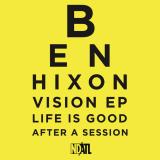
Increasingly essential US artist Ben Hixon drops sublime deep house EP on Kai Alce's faultless NDATL Muzik. The six classy tracks will appeal to those who appreciate the subtleties of the classic Midwestern sound.
Ben is a Texas-born, but Brooklyn-based artist who has become a firm favourite of true deep house heads in the last year or so. He has put out several EPs on Dolfin, all of which find a perfect sweet spot between immersive atmospheres and late-night drive. Dusty analogue textures and frayed edges define his drums, while the subtle details are intelligent and add effortless emotion. He is a perfect fit for NDATL Muzik, the Atlanta label that has long been a flagbearer for well-crafted house grooves like these.
'Taping' kicks off with heavy kicks that swing under gentle chords that are perfect for after dark. There's a persuasive bump in the beats that will get early evening dancers primed and ready for more. Next up we have 'Y Do U Get So Nervous' - a mastery of sampling with nagging vocal hooks, cascading piano keys and wet finger clicks all adding soul to another low-key but all-consuming groove. 'Area Code 336 Phone Rings' is a higgledy-piggledy tapestry of toms and stuttering kicks with vocal fragments to match - the thrill is the looseness of it all. The smouldering and meandering 'December Blackout' is for gazing off it into the distance at the busy yet muted jazz keys that twinkle like faraway stars. 'It's Like A Vision' picks up the pace with more closely stacked kicks but still oodles of cuddly warmth and smudged synth work, before '0823' ends with a decidedly heavy feel - spare, lump drums unfurl beneath forlorn synths that feel utterly bruised and heartbroken.
Ben Hixon's deft artistry makes these quiet, texture tunes irresistibly danceable yet emotionally profound.