You could call Wishy's story a lucky one. After prior monikers and iterations, Wishy was born as a kaleidoscope of alternative music's semi-recent history, with traces of shoegaze, grunge and power-pop swirling together. On Triple Seven, Indiana songwriters Kevin Krauter and Nina Pitchkites' musical synergy proves itself to be a rare one-the kind that sounds like someone striking gold. Part sly wink and part warm gratitude, it's only fitting their much anticipated full length debut is titled Triple Seven, where Wishy's penchant for indelible hooks is couched equally in pillowy atmospherics and scathing distortion. By day Krauter works as a music teacher, giving drum and guitar lessons to students, while Pitchkites is a seamstress by trade and often makes embroidered merch for the band. Coming up in a scene defined by hardcore and emo, Krauter and Pitchkites instead found themselves writing melodies in their heads while driving to work, pulling music from the air and arriving at a blearier, more ethereal interpretation of Midwest expanse. Initially, their music oscillated between hazy dream-pop and heavier alt-rock. The subject of their songs create a loose web of vignettes and snapshots, capturing Krauter and Pitchkites in a whirlwind couple of years _ exiting the pandemic, embarking on an embryonic project, making sense of their musical pasts while forging a musical future alongside one another, each of them on a journey of self-acceptance and self-understanding. Sometimes gorgeous, sometimes festering, and always cathartic, Triple Seven is a vibrant and exhilarating document of self-discovery with the scope and heft of the bygone big-budget rock albums that inspired it.
Buscar:at project
You could call Wishy's story a lucky one. After prior monikers and iterations, Wishy was born as a kaleidoscope of alternative music's semi-recent history, with traces of shoegaze, grunge and power-pop swirling together. On Triple Seven, Indiana songwriters Kevin Krauter and Nina Pitchkites' musical synergy proves itself to be a rare one-the kind that sounds like someone striking gold. Part sly wink and part warm gratitude, it's only fitting their much anticipated full length debut is titled Triple Seven, where Wishy's penchant for indelible hooks is couched equally in pillowy atmospherics and scathing distortion. By day Krauter works as a music teacher, giving drum and guitar lessons to students, while Pitchkites is a seamstress by trade and often makes embroidered merch for the band. Coming up in a scene defined by hardcore and emo, Krauter and Pitchkites instead found themselves writing melodies in their heads while driving to work, pulling music from the air and arriving at a blearier, more ethereal interpretation of Midwest expanse. Initially, their music oscillated between hazy dream-pop and heavier alt-rock. The subject of their songs create a loose web of vignettes and snapshots, capturing Krauter and Pitchkites in a whirlwind couple of years _ exiting the pandemic, embarking on an embryonic project, making sense of their musical pasts while forging a musical future alongside one another, each of them on a journey of self-acceptance and self-understanding. Sometimes gorgeous, sometimes festering, and always cathartic, Triple Seven is a vibrant and exhilarating document of self-discovery with the scope and heft of the bygone big-budget rock albums that inspired it.
Coke Bottle Green vinyl. Who were the first punks? Do The Damned have more of a shout than The Sex Pistols? The Stooges or Ramones? Gregg Deal, the acclaimed visual and performance artist behind his new project Dead Pioneers, is making a claim that Indigenous Americans were the first real punks. Deal suggests that the overarching theme of the album is "an introduction to the band itself". Created with a DIY disposition and the "love of a scene that saves lives", they reel off a roll call of marginalised groups and protected characteristics: "Indigenous rights, Black rights, Brown rights, Asian rights, Gay rights, Trans rights, Workers rights and beyond_". This is central to their identity and focus, saying that "with a North American Indigenous person as the vocalist, being unapologetically upfront on the social, political and cultural side of things doesn't seem necessary, but paramount to the overall tone of the band." This self-titled debut, coming in at a lithe 22 minutes with only one of the twelve tracks exceeding three minutes, is almost over before it begins, but covers a huge amount of ground in that time. Blistering opener 'Tired' sets out their stall; as with the whole album, it is passionate, but never preaching. Capitalised 'Political Music' can be hard to land without coming across as hectoring or earnest, but Deal's literary, humorous lyrics effortlessly cut through complex issues of marginalisation and colonialism.
Hear the brutal anguish and aural suffering! LG Records has gathered out-of-print and unreleased recordings by two of San Diego’s more infamous and obscure punk bands from the very early 1990’s onto one blistering split LP. Often remembered merely as side-projects of Heroin and End of the Line, Sloog (aka Slug) and Brain Tourniquet were standalone outfits that were beloved locally but barely made any impact outside of the local San Diego scene. Sloog were heavy, tortuous, and disturbing. Fronted by mysterious and odiferous local character “Justinman”, Sloog sounded like they could have been the lovechild of Savage Republic and United Mutation. Brain Tourniquet were a younger thrash band who were noticeably inspired by contemporaries like Born Against and Crossed Out. Primitive and sublime, members went on to bigger things, but this was the not-so-humble beginning. The first release for each band was the 1991 Slug/Brain Tourniquet split cassette, released as Gravity Records #0. Copies of this tape were sold at local shows and during Brain Tourniquet’s west coast tour with Heroin. Sloog would record multiple demos in 1990 and 1991, and in the end they recorded what became their only vinyl release, 1992’s Pigs 7”. The material on this LP was pulled together from all of these recordings. Punish yourself with the Slug / Brain Tourniquet / Sloog vinyl LP out now on LG Records. Caution: this record may emit visible stink-lines into the air of your household. Open a window while enjoying the soothing sounds of Slow Death, circa 1991. 180-gram black vinyl only, 500 pressed, 28 pt tip-on jackets with printed inner sleeve.
2024 Repress
Der isländische Multiinstrumentalist und Komponist Ólafur Arnalds hat bereits mit seinen früheren Alben
„For Now I Am Winter“, „The Chopin Project“ und „Island Songs“ große Erfolge gefeiert.
Doch mit dem Soundtrack zur dritten und letzten Staffel der britischen Krimiserie Broadchurch“ beweist
Ólafur Arnalds einmal mehr, dass er noch viel mehr kann. Das Erfolgsdrama mit David Tennant und Olivia
Coleman in den Hauptrollen erreichte mit rund 10 Millionen Zuschauern den Status der meistgesehenen
Serie auf den britischen Inseln.
Die Euphorie, die die Serie ausgelöst hat, spiegelt sich auch in den 13 Millionen Streams des Soundtracks
wider. Die Musik von Ólafur Arnalds haucht der Serie Leben ein und kann als ihr künstlerisches Fundament
betrachtet werden. Arnalds ist es gelungen, einen bedeutungsvollen, bewegenden und atmosphärischen
Soundtrack zu komponieren, der sowohl mystisch als auch melancholisch ist.
- A1: What Have We Done (Intro)
- A2: Mind Made
- A3: Quiet As A Library
- A4: Eddie Farah
- A5: Make History
- A6: Cannonball W/ Grand Puba
- A7: Banana Peels
- A8: Accolades Reef The Lo
- A9: Wakin' Up Hungry Headkrack
- B1: Goin' Viral
- B2: Ready On The Left W/ Kool Keith
- B3: What Are We Doing (Interlude)
- B4: Watercolors W/ Quelle Chris
- B5: Speak Easy
- B6: Isiah Thomas
- B7: Rock Bottom
- B8: Yoga Flame
-3rd album from veteran rap duo Dillon & Batsauce. Dillon on the raps & scratches, Batsauce on the beats. ('On Their Way' - 2018, 'Self Medicated' - 2020).
-Produced entirely by Batsauce, guest features include Grand Puba, Kool Keith, Quelle Chris, Reef the Lost Cauze, Headkrack and Jay Myztroh of Stono Echo.
-Atlanta, GA + Jacksonville, FL album release parties booked for end of July + Northeast Tour Run scheduled for August.
-Batsauce has been producing hip hop and soul for 20+ years with multiple albums on labels BBE (Barely Breaking Even) producing for his wife, soul-singer, Lady Daisey + Galapagos4 where he produced multiple projects for Qwazaar of Typical Cats. He is 1/3 of the group, 'The Smile Rays' (which includes Lady Daisey and Paten Locke). He's also done extensive work with Akrobatik, Mr. Lif and even has multiple songs with George Clinton!
-Dillon is an Atlanta, GA based MC/DJ who has been releasing records for 20 years, 10 of those years was running FULL PLATE, the label he started in 2013 with Paten Locke (RIP). Dillon has worked with many of Hip-Hop's elite from the old school to the true school such as Chuck D, Diamond D, Count Bass D, Kool Keith, Greg Nice, Grand Puba, Homeboy Sandman, J-Live, Quelle Chris, Sadat X, Ras Kass, Stacy Epps, Planet Asia, eLZhi, Slimkid3 of The Pharcyde - and the list goes on!
-Classic black, standard weight vinyl in full-color jacket w/ matte finish. Includes Download Card.
Underground hip-hop veterans, Dillon and Batsauce have been making unorthodox rap music together for nearly 20 years with a simple formula: Batsauce makes the beats, Dillon writes the songs, and whatever happens, happens. After carving out their own lane with a catalog of EPs and LPs over the past 2 decades, the duo has finally slowed down enough to ask themselves, 'What Have We Done'?
Is the title of their latest effort rhetorical or meant to be an actual question? If so, Dillon and Batsauce probably don't want to know the answer. They probably don't want you, the listener, to think too much about it either. Instead, 'What Have We Done' is an invitation to experience the trials and tribulations, the small wins and the big losses of being aging independent artists in an increasingly cut-throat world for music makers.
But Dillon & Batsauce aren't the only ones on this joyride, we also hear from a well-curated crew of characters they've befriended along the way, from bonafide legends like Grand Puba and Kool Keith to modern day rap heroes, Quelle Chris & Reef the Lost Cauze. The end result is a collection of songs that runs the gamut from personal to aspirational to...delusional. Whether it's 'too much' or 'not enough', the answer to the question, 'What Have We Done' remains open to interpretation. Perhaps it’s not a question at all, but merely the naturally visceral reaction when career creators look back at a life lived on the edge.
Track Listing: 1. What Have We Done (Intro) 2. Mind Made 3. Quiet as a Library 4. Eddie Farah 5. Make History 6. Cannonball feat. Grand Puba 7. Banana Peels 8. Accolades feat. Reef the Lost Cauze & Jay Myztroh 9. Wakin' up Hungry feat. Headkrack 10. Goin' Viral 11. Ready on the Left feat. Kool Keith 12. What Are We Doing (Interlude) 13. Watercolors feat. Quelle Chris 14. Speak Easy 15. Isiah Thomas 16. Rock Bottom 17. Yoga Flame
repressed !
Oxia's classic 'Domino' gets reworked for it's ten year anniversary - in 2 vinyl parts. A decade after initially seeing the light, Oxia's now classic 'Domino' get's reworked to celebrate it's anniversary. The new release features a new cut by Oxia himself as well as several remixes by none other than Frankey & Sandrino, Robag Wruhme and Matador. The EP will be released through Agoria's newly found record label Sapiens on February 24th.
Ten years ago the track made waves in the international dance music circuit, striking up chords with techno, trance and house DJs alike to quickly become an all-time classic. Having never expected the track to reach the status that it his, it's a very dear project to Oxia and he needed quite some persuading to give in and let Agoria and his team create something that was worthy of the original.
The set of tracks are the first officially commissioned remixes by Oxia ever. "Finding remixers took some time, the amazing Frankey & Sandrino who's track 'Acamar' is my absolute favourite of 2015, Matador that just launched his Rukus label as well is the multi-talented ex label mate at Kompakt Robag Wruhme. They are all incredibly gifted and fortunately patient enough to wait for this EP" - OXIA
"Jordan Hamilton's ""Project Freedom"" revolves around the non-traditional ways Jordan applies the Cello to play chords, layer melodies, and create songs. This is a record about breaking limitations and boundaries - a fusion of RnB, Soul, Hip-Hop, Electronic, and Jazz.
Located halfway between Detroit and Chicago, Project Freedom was written in Kalamazoo, Michigan where cellist Jordan Hamilton began his journey as a songwriter, producer, and artist. This is Cello-Beats and Folk-Soul Rhythms.
This introspective journey is narrated by Jordan's lyricism that expresses the wisdom gained through life's lessons at home, chasing dreams, living with loss, and falling in love. These are the lessons that earned him the ability to move through this world all the more free.
This is an album made to accompany you through all of life's changes."
- A1: You Were My Star
- A2: Death Wish
- A3: Get High, Breathe Underwater (#3)
- A4: Unwanted Houseguest
- A5: Groceries
- A6: I Will Always Be In Love With You (Final)
- A7: New Strategies For Telemarketing Through Precognitive Dreams
- A8: Violence Violence
- A9: Coyote (2015-2021)
- B1: Every Time I Hear Your Name Called
- B2: You Cant Blame Me
- B3: It Was Probably Nothing But For A Moment There I Lost All Sense Of Feeling
- B4: All Of Us Steady Dying
- B5: Complaining In Dreams
- B6: How To Disappear In America Without A Trace
- B7: Another Life (Bootleg)
Mustard Yellow[28,15 €]
Citrus Swirl Vinyl. honeybee table at the butterfly feast is the first album from the elusive Baltimore's band Teen Suicide in years. For over a decade, guitarist, vocalist and project runner Sam Ray has been sometimes quietly and sometimes very noisily setting standards in the indie scene by changing genres, live lineups and even band names, but the one constant has been an undeniable gift for songwriting. honeybee table sits at an interesting point in the teen suicide timeline, following years of relative quiet following the releases a whole fucking lifetime of this (2018) and fucking bliss (2019), both released under the short-lived alias American Pleasure Club. Lockdown times saw a viral moment for the song "haunt me (x3)", a cult-classic catalog track featured on the 2015 Run For Cover reissue of the band's two beloved EPs dc snuff film and waste yrself. Now the band returns with what could be their next classic record, 16 songs that oscillate between noisy garage-rock, intimate acoustic songs and even blistering powerviolence in the vein of 2016's ambitious double album it's the big joyous celebration, let's stir the honeypot. The album is as varied and captivating as the cover art of the record - a painting by Ray's mother - and is held together by his unique artistic vision, captured not only in the genius of his songwriting but the power of lyrics that turn his lived experience of the past few years into harrowing poetry.
2024 Reissue
EQ is a legend in the game of hardcore and rave. The former in-house engineer for Formation Records and DJ SS and the head honcho at F-Project Records, this guy has been involved in so much of the scene’s history. But around 1994 he stopped producing under the name EQ and moved onto other things. That is until now. He is back once again and reinvigorated by the popularity of the rave repress culture and has started to write new material… but in the style of the early 90’s, using lots of old skool hardware to produce his music to keep that authentic UK sound.
His first EP for nearly 30 years takes us right back to the raves of the Midlands, the music of an era. Creative sample usage, rolling breaks, kick drums… melodies and rave stabs! This EP has something for all. Not only that, he has completed his follow up EP already which is due out in 2023 and is as equally impressive.
Back again, the renegade master!
So You Like Slippers? is the debut record from Slippers, the new project from Madeline B.B. from Los Angeles, California. Madeline is an illustrator and animator currently studying at Cal Arts, has directed music videos for Of Montreal, and also plays in the band Le Pain and was formerly in NYC's Yucky Duster.
- A1: 100Lbs Of Summer Feat Greentea Peng
- A2: Evil Generation
- A3: Midnight Blues Feat Fifi Rong
- A4: King Of The Animals
- A5: Green Banana Feat Shaun Ryder
- A6: Jesus Life
- B1: I Am A Dubby Feat Marta
- B2: No Illusion
- B3: The Person I Am Feat Rose Waite
- B4: Jah People In Blue Sky Feat Greentea Peng
- B5: Future Of My Music Feat Tricky & Marta
- B6: Goodbye
Record producer, composer, singer, and pioneer of the dub music genre Lee Scratch Perry passed away in August 2021. His influence over popular music since the 1970s is hugely significant, with artists including Bob Marley & The Wailers, The Clash, Beastie Boys, Max Romeo, Junior Murvin and The Orb all enriched by Perry’s legendary touch, innovative studio techniques and production style.
Conceived, written and recorded during the COVID pandemic, ‘King Perry’ was produced by Daniel Boyle, and features guest performances from Greentea Peng, Shaun Ryder, Tricky, Marta, Rose Waite and Fifi Rong. Two tracks were also co-produced with Tricky, who releases Perry’s last recorded performances on his False Idols label.
Over a career spanning six decades, Lee Scratch Perry left the music world with a huge catalogue of albums, productions and appearances that cannot be underestimated. Releases for Island Records, Trojan, Adrian Sherwood’s On-U Sound, Mad Professor’s Ariwa...the list goes on. It was in 2014 that Perry teamed up with UK producer Daniel Boyle, and from this collaboration came the Grammy nominated album ‘Back At The Controls’ and was followed up five years later with the ‘Black Album’.
The ‘King Perry’ album was born out of a request from Perry that he “wanted to do something new, something different but still with a dub framework”. And so, armed with influences as diverse as synthwave, big beat, drum & bass and electronica, Boyle and Perry traded ideas, beats and lyrics in a project that continued to grow as its various guest performers were added, resulting in a kaleidoscopic and engaging melting pot of rhythms, melodies, and voices. Poignantly, closing track ‘Goodbye’ was Perry’s last ever recorded vocal performance.
Marking sixty years of Bossa Nova, and twenty years since Marcos Valle’s first release for Far Out Recordings, what better time to bring back this era-defining classic from the Brazilian master composer?
Throughout his astounding six-decade career, infiltrating pop, bossa nova, samba, delicate psychedelia, jazz and funk, Marcos Valle has consistently shown a dogged determination to transcend the traditions and structures of bossa nova, whilst never veering away from the movement’s inherent, fundamental spirit. To some extent, his epithet ‘the original Rio beach boy’ is a handy one: it reflects the origin and character of his often sun-soaked sound, but expounding his importance in the lineage of Brazilian music, he is more discerningly known as ‘the renaissance man of Brazilian pop’. He is indeed one the very greatest and most important composers, arrangers, writers and performers in Brazil.
Up until Nova Bossa Nova, Marcos Valle hadn’t released an album for well over a decade. After 1983, he resented the way the music industry had changed with commercialisation and new demands curtailing his creative freedom. This was until 1994 when Marcos met Far Out boss Joe Davis and they recorded a track for Far Out’s first Friends From Rio album. This new collaborative partnership resulted in a new solo album, which commenced recording in 1996.
Nova Bossa Nova brought Marcos bouncing back into the 90s, slotting nicely in place alongside the acid jazz movement as well as a voracious new demand for Brazilian music on dancefloors from London to Tokyo. It was witnessing the London club scene’s growing appetite for Brazilian music, as well as a lack of new sounds coming out of Brazil at the time, that a young Joe Davis put in a proposal to record a new album with one of his musical idols. Joe wanted to facilitate an album which would combine the latest technologies and production techniques, with live to analogue tape recording: a Marcos Valle album tailor-made for London’s clubs. Always open to modern influences and possibilities, Marcos agreed to the project, and Joe and his production partner Roc Hunter flew to Rio in ‘96. The record wasn’t released until ’98, as the original ½ inch tapes were stolen from Far Out’s London studio, meaning parts of the album had to be re-recorded.
Nova Bossa Nova was unveiled at the peak of the of the Brazilian movement, the record would also prove to be something of a revolution, inspiring a new generation of artists like Bebel Gilberto, Sabrina Malheiros, Da Lata and Bossacucanova, who continued to fuse Brazilian influences with modern electronic sounds.
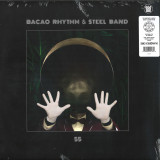
Shrouded in mystery, hailing from Hamburg, Germany, Bacao Rhythm & Steel Band (BRSB) releases their long awaited debut “55” on Brooklyn’s own Big Crown Records. Long time multi-instrumentalist and band leader Bjorn Wagner spent a few months in Trinidad & Tobago where he became fascinated with Steel Drums. His initial intrigue with local steel pan music culture led him to learning the instrument both through help of local players and on his own. After he became proficient on the pans Bjorn had his own instrument built from a used oil barrel by legendary pan man Louis C. Smith. Upon returning home to Germany, Bjorn set out to blend the Tropical Steel into his already sharply honed Funk, Soul, and Hip-Hop sensibilities. The outcome is an updated take on a classic format, a truly unique sound. Their first two recordings were covers of The Meters “Look A-Py-Py” & “Ease Back” which they self-released on a 45. Looking back on these two sides you can tell they were just getting their chops up for what was to come next. This is evidenced by how all hell broke loose when they went on to cover 50 Cent’s hit PIMP taking the DJ and vinyl collecting communities by storm. Many people thought the recording was the original sample and probably still do to this day when it is played. The original Mocambo pressing sold out quickly and is now a collector’s item fetching heavy prices when it changes hands. It was this tune that made the introduction between Bjorn and Danny Akalepse of Big Crown. They immediately hit it off and started making plans to do a full length project with the band. Keeping in the tradition of Steel Drum records, 55 is a journey through re-interpolations and covers with an updated approach, pushing Steel Pan music to uncharted territory. Flawlessly bringing previously untouched genres into the steel pan cannon ranging from Underground Hip Hop tunes to staple Funk tracks and some of all that falls in between. BRSB’s 55 is reinvigorating tunes both well-known and helping to shed some light on tunes still largely undiscovered. However, some of the strongest tunes on the album are original compositions, from spaced out Disco vibes on “Beetham Highway Ride” and “Port Of Spain Hustle” to the ugly face inspiring drums of “Laventille Road March”. Recorded to analog 8 track tape at The Mocambo Studios in Hamburg, 55 is a gritty, punchy journey in sound drawing on music from around the world, using production aesthetics from across both eras and genres, all coming together seamlessly. If the 45s that have already come out on Mocambo, Plane Jane, and Truth & Soul are an indication, this full length is going to be a staple to both casual listeners and Disc Jockeys alik
To experience Justin R. Cruz Gallego's pulverizing Sub Pop debut is to get burned down to ashes and burst forth, born anew. Grim Iconic...(Sadistic Mantra), the Tacoma-based artist's second album, is driven by opposing forces: noisy abstractions and tightly structured beats, anguish and dissolution at the outside world and empowerment within, apathy and catharsis. Grim Iconic...(Sadistic Mantra) weds scouring electronics to hooky songs and Gallego's powerful drumming in a way that feels visceral and new. It's his most personal statement to date, at once playful and intent, driven and combustible, total fucking chaos mixed into glints of broken-glass beauty. Born in Tucson, Arizona, Gallego experienced culture shock as a child after relocating to the frigid climes of the Pacific Northwest. He found solace in the Seattle punk scene centered around Iron Lung Records and has since remained a fixture in the underground community. "I see this record as first and foremost a musical statement," Gallego says. "I grew up in punk and DIY subcultures, but before that I had Latin music playing in the background through my childhood and every phase of adolescence. It was surprisingly natural to incorporate. I realized I wanted to go deeper into these rhythms. I wanted to make a record that felt as experimental as much as it felt from the perspective of a Latino. When I got a glimmer of that possibility, it felt exciting." Lead single "Dogear" is a face-melting party starter that sounds like someone forced Talking Heads and Rudimentary Peni to share a practice space. "I wanted a song that felt playful in the way it attempted to be dissonant without taking itself too seriously," Gallego says. "Cholla Beat" is even more ambitious, an anthemic mix of WAR and Wire led by unruly synthesizers spiraling down a labyrinth of production. Gallego's influences for the album are vast, ranging from British documentary filmmaker Adam Curtis to electric Miles Davis to audio miscreants like Demdike Stare and Oneohtrix Point Never. But it's Gallego's assured sonic vision that resounds the loudest. And, while J.R.C.G. is a solo project, conceived and executed primarily in Gallego's home studio, he found strength in opening the project to others, starting with Seth Manchester as co-producer. Manchester's penchant for bone-rattling frequencies, as seen in his production work with The Body, Battles, and Mdou Moctar, made him a natural fit for Gallego. Together, they retained the intimacy of Gallego's home recordings while taking advantage of the hi-fi stylings of his Machines With Magnets Studio in Rhode Island. The closing song, "World i," offers a glimpse into the live experience of Grim Iconic...(Sadistic Mantra), with upwards of seven band members blasting off. The album features a fascinating mix of supporting players, many of whom cycle through J.R.C.G.'s live lineup: Morgan Henderson (The Blood Brothers, Fleet Foxes), Jason Clackley (Dreamdecay, The Exquisites), Jon Scheid (Dreamdecay, U Sco), Erica Miller (Casual Hex, Big Bite), Veronica Dye (Terminator) Phil Cleary (U Sco), and Alex Gaziano (Dreamdecay, Kidcrash, Science Amplification). Taken as a whole, G.I.S.M. is a whirlwind of sound, pummeling, and cleansing. It's a sweaty, thrilling aural adventure and, like a great basement show, it'll leave you breathless, exhausted, and wanting to repeat it all over again. As any good mantra should.
2024 Repress
Finders Keepers invite you to witness the incredible first ever Buchla synthesiser concerts/demonstrations providing a distinctive feminine alternative to The Silver Apples Of The Moon if they had ever been presented in phonographic form. This is history in the remaking.
This spring Finders Keepers Records are proud to release an archival project that not only redefines musical history but boasts genuine claim to the overused buzzwords such as pioneering, maverick, experimental, groundbreaking and esoteric, while questioning social politics and the evolution of music technology as we've come to understand it. To describe this records as a game-changer is an understatement. This record represents a musical revolution, a scientific benchmark and a trophy in the cabinet of counter culture creativity. This record is a triumphant yardstick in the synthesiser space race and the untold story of the first woman on the proverbial moon. While pondering the early accolades of this record it's daunting to learn that this record was in fact not a record at all... It was a manifesto and a gateway to a new world, that somehow never quite opened. If the unfamiliar, modernistic, melodic, pulses, tones and harmonics found on this 1975 live presentation/grant application/educational demonstration had been placed in a phonographic context alongside the promoted work of Morton Subotnick, Walter Carlos or Tomita then the name Suzanne Ciani and her influence would have already radically changed the shape, sound and gender of our record collections. Hopefully there is still chance.
In short, Suzanne was a self-imposed twenty-year-old employee of the Buchla modular synthesiser company, San Francisco's neck and neck contender to New York's Moog. Buchla was run by a community of festival freaks and academic acid eaters whose roots in new age lifestyles and the reinvention of art and music replaced the business acumen enjoyed by its likeminded East Coasters. In the eyes of the consumer the creative refusal to adopt rudimentary facets like a piano keyboard controller rendered the Buchla synthesiser the more obscure stubborn sister of the synth marathon, steering these incredible units away from the mainstream into the homes and studios of free music aficionados, art house composers and die-hard revolutionaries. Championed and semi-showcased by composer Morton Subotnick on his albums The Bull and Silver Apples Of The Moon, Buchla's versatility began to open the minds of a new generation, but the high-end design features and no-compromise modus operandi was often confused with incompatibility and, in the pulsating shadow of Moog's marketing, the revolution would not be televised nor patronised. Suzanne Ciani, as one of the very few female composers on the frontline (and also providing the back line) did not lose faith.
These concerts' are the epitome of rare music technology historic documents, performed by a real musician whose skills and academic education in classical composition already outweighed her male synthesiser contemporaries of twice her age. At the very start of her fragile career these recordings are nothing short of sacrificial ode to her mentor and machine, sonic pickets of the revolution and love letters to an absolutely genuine vision of and 'alternative' musical future. In denouncing her own precocious polymathmatic past in a bid to persuade the world to sing from a new hymn sheet, Suzanne Ciani created a bi-product of never before heard music that would render the pigeon holes ambient' and futuristic' utterly inadequate. Providing nothing short of an entirely different feminine take on the experimental records' of Morton Subotnick and proving to a small, judgmental audience and jury the true versatility of one of the most radical and idiosyncratic musical instruments of the 20th century. These recordings have not been heard since then.
The importance of these genuinely lost pieces of electronic musics puzzle almost eclipses the glaring detail of Suzanne's gender as a distinct minority in an almost exclusively male dominated, faceless, coldly scientific landscape. Those familiar with Suzanne's work, a vast vault of previously unpublished non-records', will already know how the creative politics in her art of being' simultaneously reshaped the worlds of synth design, advertising and film composition before anyone had even dropped a stylus in her groove. Needless to say this record, finally commanding the archival format of choice, courtesy of the Ciani and Finders Keepers longstanding unison, was not the last first' with which this hugely important composer would gift society, and the future of a wide range of exciting evolving creative disciplines.
You have found a holy grail of electronic music and a female musical pioneer who was too proactive to take the trophies. With the light of Buchla and Ciani's initial flame Finders Keepers continues to take a torch through the vaults of this lesser-celebrated music legacy shining a beam on these non-records' that evaded the limelight for almost half a century. You can't write history when you are too busy making it. With fresh ink in the bottomless well, let's start at the beginning. Again. You, are invited!
2024 Repress
Dauw welcomes Berlin based musician Midori Hirano to the label with her new album Soniscope. Award winning composer Robot Koch provided a rework of the track Patterns under his recently announced new ambient project Foam and Sand.
With releases on acclaimed labels such as Longform Editions, Sonic Pieces and Alien Transistor, Midori Hirano is no stranger within the field of electro-acoustic piano music. While she is more known for her studio-work, it is often forgotten that she also has a long tradition of writing for films and theatre productions. This forms an important part in her work and a constant inspiration for her autonomous work. Soniscope is no exception in that regard. While working on the film Mizuko (Kira Dane, Katelyn Rebelo, 2019), a still of many little Jizo statutes got her attention and came to be the first steps of her new album.
“I was fascinated by the combination of the image and sound which well emphasized the stillness with a slight of emotion.” (Midori Hirano)
With the Jizo statutes on her mind, Midori Hirano wanted to make an album and started envisioning several personal narratives. Soniscope can be considered as the soundtrack of her own personal stories related to these statues of which Mizuko Jizo was the starting point. With Soniscope, Hirano continues in the same vein as her previous albums in which piano and electronic arrangements hold a central place. However, on this record she specifically explored new possibilities in terms of techniques and instruments.
Midori Hirano is a Japanese musician, composer and producer, born in Kyoto and living in Berlin since 2008. She started learning the piano as a child, and this triggered what was to later see her study classical piano at university. Therefore her productions are based on the use of acoustic instruments such as the piano, strings or guitars, but yet experimental and an eclectic mixture of modern digital sounds with subtle electronic processing and field recordings.
Her first two albums were released on noble records, and her second, “klo:yuri”(2008), saw her further develop of her sound, garnering critical acclaim from various media including TIME magazine , BBC radio and FACT Magazine. Over the following years Midori has performed in venues and festivals as diverse as Club Transmediale, Heroines of Sound Festival, Erased Tapes Sound Gallery, L.E.V. Festival, Boiler Room Berlin, and Wonderfruit Festival.
The nine solo albums and numerous single track releases to date include the works of her other moniker MimiCof, in which she explores the realm of experimental music and detailed rhythmic patterns, combined with an idea of drawing melodic shapes and harmonies. Her recent works have been released by labels such as Sonic Pieces, Daisart, Alien Transistor, raster-media, 7k! Music and Longform Editions.
Besides producing her own works, she composes music for films, video installations and dance performances. The films that have commissioned works by Midori have been screened at Berlin International Film Festival, SXSW Film Festival, International Documentary Film Festival Amsterdam and among others.
Comes with insert and download coupon.
Imagine a Latin remake of Back to the Future. The mad scientist is Arsenio Rodriguez (the godfather of salsa) and the young student who travels through time with him is Eblis Alvarez (Meridian Brothers). This album can only be described as the perfect soundtrack for that movie that never was.
After the massive buzz generated by his first solo album, Mentallogenic, Alex Figueira got back in the studio to work in a more collective fashion this time, carefully assembling the second album of his largest project to date, Conjunto Papa Upa; a team of 6 musicians, spanning 3 generations of some of the best talent in the Latin and avant-garde scenes.
In an era where tropical music is dominated by purely electronic and rhythmically uniform sounds, the ten songs encompassed in “Fruta Madura” (“Ripe Fruit”) wander through the most diverse tempos, rhythms, and motifs effortlessly. A real breath of fresh air that gracefully incorporates soul, funk, jazz, psychedelia, and electronics into a solid tropical, irresistibly polyrhythmic foundation, without ever succumbing to the many genre clichés.
The distinctive production and catchy songwriting of Figueira shine in a very distinctive light on this second full-length. Living up to his reputation (Miles Cleret, founder of Soundway Records, called him “one of the scene's truly authentic and eccentric producers”), he takes the opportunity to show he’s not afraid to keep walking his own path.
Taking the band for a wild ride through the traditions of Africa, America, and the Caribbean; contrasting them with a ridiculously wide plethora of vintage, contemporary, and futuristic sounds, and pivoting on the exuberant musicality displayed by his musicians; the result leaves no doubt: this album is destined to be considered a future classic of the exciting tropical psychedelic music of the 21st century.
Addressing the most diverse themes in this new collection of songs, things take on a much more mature tone, as the title clearly suggests.
The opening track “El segundo es más sabroso” (“The second one is tastier”) sets the tone in the most assertive way imaginable, with the band boldly declaring, through multiple metaphorical references (laid upon a crazy mix of Dominican merengue, Detroit techno, classic and free jazz, dub, and electro), that the bar will be set higher with this second album.
The remaining compositions touch upon the most diverse subjects, with a fair dose of humor, sarcasm, and postmodern “magic realism”. “El Algoritmo” (The Algorithm) is a parranda-cumbia hybrid (for lack of a specific term) about the omnipresence of technology in our lives. The sophisticated Latin soul of the titling track “Fruta Madura” makes a case for the beauty of the maturity process. Some key philosophical teachings of Marcus Aurelius (the role of causality, the impositions of “the logos” and the importance of self-control) get a twisted cumbia treatment on “Reos del Deseo” (Prisoners of Desire). “No le pongas Coca-Cola” (“Don’t put Coca Cola in it”) shows us the most satirical side of the band, accusing those who mix Coca Cola with Rum of committing "sacrilege", on a powerful base of Dem Bow (the grandfather of Reggaeton), intertwined with touches of soul, salsa, and Cuban comparsa.
"Háblame Claro" (“Talk to me clearly”) is a story of heartbreak that evokes in its first part the spirit of the erotic salsa of the 80s (a subgenre deeply despised by purists), and after an unexpected samba interlude, leads to the hardest salsa of the 70s (a subgenre adored by purists), to end up in the surprising form of pure Afro-Cuban ceremonial music.
“Tu mamá tenía razón” ("Your Mom Was Right") is an attempt to exalt the spirit of the Latin American soap opera in the key of “acid bachata”, to recount a real-life case, witnessed by the band on countless occasions: the partying woman who arrives at the show accompanied by her bitter husband, who obviously does not like to dance. A very cheeky song to talk about the very serious and pertinent topic of female empowerment.
“La misma vaina” (“The same thing”) with its indescribable blend of bantú, candomblé, and Mozambique rhythms with abstract synthesizers, is an ode to adventure in favor of the aversion to taking risks and seeking predictability.
“Amigas picadas” (“Salty friends”) is another humorous song recounting another real-life case witnessed by the band on countless occasions: a love encounter sabotaged by the girlfriend's friends, who all happen to fancy the same guy. A jazzy take on the ancient Dominican rhythm of pambiche (grandfather of merengue), with generous psychedelic touches, resembling the classy late 60s releases of Guadeloupe's legendary producer / label owner Henri Debs.
“Vinimos a hablar” (“We came to talk”) takes sarcasm to the highest level, to ridicule the absurdity (also experienced by the band firsthand) seen in live music venues where people pay a ticket to go and have conversations that could be carried out much better on any bar, where no band is playing. The music alternates between a delicate melody with loose, sparse percussion and a full-on, pumping Angolan semba, with a techno kick drum included; bringing things to an apotheotic grooving finale, where the peculiar swing of Venezuelan calypso from the Callao region is thrown on top of all the precedent elements; closing the album in the most uplifting, “end of the carnival parade” feel.
The artwork is a delicate and impactful oil painting by Colombian artist Kevin Simón Mancera, who has collaborated many times with the label before (“Maracas, tambourines and other hellish things” tape and the Lola’s Dice LP).
What the experts are saying:
“Alex (Figueira) dove into this work with a brutal cohesion between lyrics and synths. Timbre poetry, sound poetry (you name it). And that, superimposed on his always impeccable percussive base, confirms the title of “avant-garde visionary of our beautiful Latin music”".
EBLIS ALVAREZ (MERIDIAN BROTHERS)
“Papa Upa's infectious quirkiness is a balm against boredom. A mature album, but without an expiration date”.
GLADYS PALMERA
“Here there is a lot of strength, drum, cadence and psychedelia, lost dance rhythms, united in an intercontinental Latin/African/and Caribbean journey, a unique winning combination that we could consider the new “Ritmo Figueira”.
DISCODELIC
Conjunto Papa Upa are:
Alex Figueira - Timbales, percussion, vocals.
Gerardo Rosales - Congas, percussion, vocals.
Ramón Mendeville - Bongos, percussion, vocals.
Randy Winterdal - Bass.
Andrew Moreno - Guitar.
Nico Chientarolli - Organ, piano, synths.
All songs written by Alex Figueira.
Arranged and performed by Conjunto Papa Upa.
Recorded, produced, mixed and mastered by Alex Figueira at Heat Too Hot, Amsterdam.
Sumer Is Icumen In is Quentin Thirionet's (Dhavali Giri, Pairi Daeza) debut album. Still, his musical escapades are vast and varied, based almost entirely on improvisation and live recordings, of which he occasionally distributes tapes without further information. Elusive to categorization and identification, unwilling to fix his musical activity under a stable pseudonym, his projects have ranged from gypsy jazz guitar swings, French traditional songs from Auvergne, and various experimental collaborations. Increasingly closer to electronic instrumentation, he crafted what Belgian label KRAAK presents here as Maibaum, his first ever solo output. As the title goes, this may be a maypole on which his multicolored sonic visions spring about.
Former rope access worker and currently a farmer of organic greens, Thirionet lives up to these lines of work as a musician. He assembles precisely what seems like a subtle balance between high manmade structures and soft fertilized soils; a high voltage pylon placed in a biotic landscape. It's all an even blend, spontaneous and steady, but this contraption comes from profound considerations. "I chose these tracks among many others," says Quentin, "because I heard the melodies all the time in my mind, and because I cried while playing them without really understanding why."
Armed with nothing more than a blackbox, a sequencer, a freeze pedal, and a tape player, Thirionet orchestrates a vivid rite of polished futures. At times reminiscent of Hans-Joachim Roedelius' enveloping arrangements, Maibaum's ambiances rely on mild repetitive patterns subsequently textured by prickling sprouts, mechanic dislocations and revamps that stoke and brighten the stirring motions. Jim O'Rourke's I'm Happy and I'm Singing comes to mind in terms of its detailed and prismatic nature, but Sumer Is Incumen In has its particular narrative. It's a tale of regeneration, of spring's delicate procedures and allure, a celebration of gracious and fortunate junctions between nature and machinery.
The album unfolds like a massive engine being made flesh to drift along the ether of a sultry land. The terrain turns pleasant and fertile in the title track; the colors and melodies of May start to unravel. Chromatic columns rise and define the scenery's depth of field breeding a synesthetic stream between crystal lights and warbling organisms. Grande Albero Buono Magico Uoma's brisk kaleidoscopic arpeggios sound like scanning a tree's litmus foliage. Then Ciguri takes us back to the foggy swamp of the beginning but is suddenly lit by an insect’s labyrinthine roundabout. The Jeweled Grid is a poem Quanta Qualia's lustrous metallic voice recites as a report of the album's phenomena. "Shiny revelations jump out. Pearls of thought flicker about." Images from within that distill to swirl around among us. The thicket dissolves as the album concludes calmly in Le Concept De Chien N'aboie Pas. Swaying under sieved solar light, leaves and branches tingle until the winds grow weak. All the warm creatures gathered along the way, and all those who danced around the maypole's splendid equilibrium now withdraw, folding up small to foster rebirth once again.
José Badía Berner
- A1: Prayer (From Xabo: Father Boniecki)
- A2: In Between (From Xabo: Father Boniecki)
- A3: Journey (From Xabo: Father Boniecki)
- A4: Trip To Ireland (From I Never Cry)
- A5: The Beach (From I Never Cry)
- A6: The Locker Room (From I Never Cry)
- A7: At The Hospital (From I Never Cry)
- B1: Waiting (From At Home)
- B2: Wildfires (From Truth In Fire)
- B3: Ghosts (From Pradziady)
- B4: Soleil Pâle
- B5: Nora (From Nora)
Writing music for film and theatre has always been a big part of Hania Rani's musical world. It is also a part of the creative process that can be tantalisingly out of reach for listeners, either the project doesn't come to fruition or the music simply isn't available away from the film or play. From early collaborations with friends, to last year's two scores for full length films (xAbo: Father Boniecki directed by Aleksandra Potoczek and I Never Cry directed by Piotr Domalewski') Rani has been involved in many such projects, each representing an important step in her artistic development and life as a composer and artist:
"Composing for motion picture or theatre is for me a very different kind of work than writing for my own projects. Firstly, I need to collaborate with somebody else who sees the world through the lense of their own art and craft. That's why these kinds of encounters can be so exciting - they are a promise of creating something very new, as a result of creative work of so many people from all walks of life. Secondly, I feel that music in film is an invisible character, a missing emotion that creates a special atmosphere and sensation. It doesn't illustrate, it completes the work of art. I think it is an extremely sensitive matter that rejects banal associations and easy solutions. I feel like composing for film works like an exercise for my imagination."
It is the nature of these collaborations though, that sometimes the composers own preferred compositions don't make the final cut. This is where Music for Film and Theatre comes in as it allows Rani to present a selection of her own personal favourite pieces composed for film and plays. Pieces that made it to the final cut and pieces that were rejected by the director or the producer. Bringing the music together as an album offers a chance for Rani to share her music with her listeners on her own terms and a chance for her fans to hear a different side of her art.
"I put them in one place, as a collection of precious objects that were kept for years in a drawer. Some of them were composed a couple years ago, some are the result of recent research. I am very happy to finally be able to present them as a separate project."
Rani is of course grateful to all of the directors who have entrusted her to create music for their projects, but she professes especially warm feelings for the pieces composed for her first 'real' theatre play, Pradziady, directed by Michał Zdunik. The title comes from 'Dziady' a term in Slavic folklore for the spirits of the ancestors and a collection of pre-Christian rites, rituals and customs that were dedicated to them. The essence of these rituals was the 'communion of the living with the dead', namely, the establishment of relationships with the souls of the ancestors. "I felt this story needed extremely dark and fragile music, and at the same time a sound that could express the mixture of the two worlds - the living and the dead. I decided to compose part of the soundtrack with a string quartet but including two cellos, viola and only one violin. We recorded in a little house, completely built from wood, mostly from Finnish pine. I always felt this space has a very special, warm and natural acoustics - especially when it is combined with string instruments. The track composed for this theatre play is called Ghosts but actually didn't finally make it to the performance, although I like it so much that I thought it would perfectly fit
this compilation". Other highlights include the enchanting Soleil Pâle written for a collaboration with director Neels Castillon, and improvising dancers Alt Take, the beautiful melancholy of In Between (from the film score for xAbo: Father Boniecki) and the magical bliss of The Beach (from I Never Cry) and together they create a beautiful offering from an artist whose every note is worth hearing, but for whom the journey is just beginning:
"I am very happy to see that many artists consider my music as the right soundtrack for their works, because film music was always a huge inspiration for any of my compositions. I find there a lot of life and real emotions, but also a feeling of freedom. Freedom from my own thinking patterns and prejudices. I also believe strongly in collaboration between people, I always feel this is the way to create something really new, based on a mixture of different ways of thinking, feeling, expressing."
This then is Hania Rani, Music for Film and Theatre – enjoy!