100 copies only
Apron Records has been instrumental in shaping the current landscape of contemporary electronic music coming out of the U.K. since 2014. After almost a decade of pushing their unique vision has made the Apron Records imprint one of the most in-demand labels in most independent record stores. Now more than 45 releases deep in their journey, Apron Records have teamed up with Patta Soundsystem to work on their first various artists release and to celebrate this monumental milestone, both camps have collaborated to create a clothing capsule to accompany this release. After working with the artist formerly known as Funkineven on ‘The Wave’ late last year, it was only right to showcase the diverse talents behind this movement.
Sharing a drawing board with Patta for the first time with Apron Records, together they have created a Trucker Cap and a Graphic T-Shirt that echo the racing theme of the whole project. Better Together is the slogan that runs throughout the entire collaboration, stressing how unity makes us stronger as individuals. Artwork for the record has been provided by Amsterdam based artist Jim Klok. His unique Acetone printing technique has now been immortalised on this LP, juxtaposing vintage cars with checkered racing flags to create a dynamic cover that would be right at home in a picture frame as well as a record bin.
System Olympia’s ‘Passi Mai’ is a beautiful 80’s inspired driving riddim layered with her own vocals that wouldn’t be out of place in an arcade or a sticky nightclub floor. Followed up by ‘Leven’ by Brassfoot, we get a wobbler from the NTS regular. Layed with Jamaican vocal samples and audacious arpeggiated bleeps, Leven is a soulful approach to techno tropes that have been bouncing around Brassfoot’s head. Shamos’ 737363 is a cryptic masterpiece. With dreamy pads as a backdrop for shuffling drum beats, euphoric sweeps and dynamically designed synthesis, this closes off the themes explored in the first half of the record.
Side B kicks off with J M S Khosah’s contribution to the record titled ‘Lessons’ which is a dancefloor filler, adorned with glamorous percussion, vocal samples and syncopated stabs ontop of a driving 4x4 kick pattern. Kicking things into 6th gear is a club-ready production from London's most soulful selector Shy One. Groovy basslines and a 2-step riddim make ‘Candy Floss’ an ode to the grimey and the glittery sides of London nightlife. This project champions one of the people that have been pivotal in the success of the label, Steven Julien whose track E46 is an emotional journey through his synth-laden East London studio. Bookending the project are two compositions from Compton’s-own AshTreJinkins. Showcasing his abilities to approach the project from both an ambient and a pure beat-making perspective in order to hold the whole project together.
Cerca:at project
Clear vinyl LP edition of 500 copies. Vacant Gardens is Glenn Donaldson (of The Reds, Pinks and Purples and a hundred others) and Jem Fanvu, collaborating on music and with the latter responsible for vocals and lyrics. The project began with the idea of combining heavy fuzz and slow-mo drum machine beats with Fanvu's gentle almost trad-folk style vocals. Almost all of Donaldson's otherworldly sounds are achieved through layers of guitar fuzz and copious delay, while Fanvu offers an ideal counterpoint, taking the listener on a celestial melancholy trip with her opaque poetry and melodies. So inspired were the duo by this blend of styles, they immediately recorded at least two albums of material, Under the Bloom and Obscene, released in quick succession in 2020 and 2021 in swiftly-disappearing micro editions on the secretive Tall Texan label. With those records close-to-impossible to find at an affordable price, Tough Love are now reissuing both LPs. From Reds Pinks and Purples' Glenn Donaldson, Vacant Gardens is an interstellar recording project that combines celestial, shimmering guitar on the verge of breaking like a massive, emotive wave and an ethereal vocal style from Jem Fanvu (visual artist, Minor Ghost Band also, plus collaborating with Tune-Yards, Cavity Fangs and many more) recalling Hope Sandoval or Liz Fraser that sails in its wake. Simply put, this is some of biggest, heart-tugging guitar music you'll hear in recent times. Sold out at once debut Under The Bloom, is followed now a continuation and development of the group's sound on Obscene: a frayed tapestry of Slowdiving, Flying Saucer Attack guitar noise wall married with an angelic vocal from Fanvu that glitters in counterpoint to the stringed distortion like Hope Sandoval or, in the way it shines bright in the fog, like Jonsi's surfing the surging waves of emotion in early Sigur Ros. Originally released in February on digital formats, Obscene gets a vinyl press and is sounding massive. Vacant Gardens' music suggests oceanic feelings, a hazy intergalactic consicousness that burbles beneath the surface of everything while also touching the visceral points in the human heart that makes groups like Galaxie 500, Yo La Tengo so timeless.
Felicia Atkinson’s music always puts the listener somewhere in particular. There are two categories of place that are important to »Image Langage«: the house and the landscape. Inside and outside, different ways of orienting a body towards the world. They are in dialogue, insofar as in the places Atkinson made this record—Leman Lake, during a residency at La Becque in Switzerland, and at her home on the wild coast of Normandy—the landscape is what is waiting for you when you leave the house, and vice-versa. Each threatens—or is it offers, kindly, even promises? —to dissolve the other. Recognizing the normalization of home studios these days, she revisited twentieth-century women artists who variously chose, and were chosen by, their homes as a place to work: the desert retreats of Agnes Martin and Georgia O’Keefe, the life and death of Sylvia Plath. Building a record is like building a house: a structure in which one can encounter oneself, each room a song with its own function in the project of everyday life.
At times listening to »Image Langage« is immediate, something like visiting a house by the sea, sharing the same ground, being invited to witness Atkinson’s acts of seeing, hearing, and reading in a sonic double of the places they occurred. In an aching moment of clarity in »The Lake is Speaking,« a pair of voices emerge out of the primordial murk of piano and organ, accompanying the listener to the edge of a reflective pool that makes a mirror of the cosmos. "I open my feet to fresh dirt, and the wet grass. I hold your hand. You hold his hand. In the distance without any distance. The comets, the stars." At other times, listening to »Image Langage« is more like being in a theatre, the composition a tangle of flickering forms and media that illuminate as best they can the darkness from which we experience it. On »Pieces of Sylvia,« a noirish orchestra drones and clatters beneath and around a montage of vocal images, stretching the listener across time, space, subjectivities. Atkinson says that "Image Langage" is like the fake title of a fake Godard film. There is indeed something cinematic about Atkinson’s work—not cinematic in the sense that it sounds like the score for someone else’s film, but cinematic in the sense that it produces its own images and langage and narratives, a kind of deliberate, dimensional world-building in sound.
»Image Langage« is built from instruments recorded as if field recordings, sound-images of instruments conjured from a keyboard, instruments Atkinson treats like characters, what she calls “a fantasy of an orchestra that doesn’t exist.” And then, speaking of Godard, there are the monologues, operating as both experimental-cinematic device and a literary style of narration. Voice can be a writerly anchor or a wisp of a textural presence. Atkinson’s capacious and slippery speech plunges into and out of the compositional depths, shifting shapes, channelling the voices of any number of beings, subjectivities, or elements of her surroundings—not unlike her midi keyboard, able to speak as a vast array of instruments.
»Image Langage« is an environmental record, in the vastest sense of the world. It is about getting lost in places imagined and real; it registers, too, the dizzying feeling of moving between such sites. It puts forth a concept of self that is hopelessly entangled with the rest of the world, born of both the ache of distance and the warmth of proximity.
For Félicia Atkinson, human voices inhabit an ecology alongside and within many other things that don’t speak, in the conventional sense: landscapes, images, books, memories, ideas. The French electro-acoustic composer and visual artist makes music that animates these other possible voices in conversation with her own, collaging field recording, MIDI instrumentation, and snippets of essayistic langage in both French and English. Her own voice, always shifting to make space, might whisper from the corner or assume another character’s tone. Atkinson uses composing as a way to process imaginative and creative life, frequently engaging with the work of visual artists, filmmakers, and novelists. Her layered compositions tell stories that alternately stretch and fold time and place, stories in which she is the narrator but not the protagonist.
Joe Rainey is a Pow Wow singer. On his debut album Niineta he demonstrates his command of the Pow Wow style, descending from Indigenous singing that's been heard across the waters of what is now called Minnesota for centuries. Depending on the song, his voice can celebrate or console, welcome or intimidate, wake you up or lull your babies to sleep. Each note conveys a clear message, no matter the inflection: We're still here. We were here before you were, and we never left. On Niineta, Rainey finds himself in between cultures, collaborating with producer Andrew Broder, who brought his turntablist sensibility to the project. The two of them met backstage at Justin Vernon's hometown Eaux Claires music festival before crossing paths more through the 37d03d collective, and both contributed to the last Bon Iver album before partnering up. "At first I didn't know what I could add," Broder says. "I came to understand everything is rooted in the drum-even the songs on our record that have no drum." Each song started with Broder's beats, the two of them experimenting with various sounds and tempos before orchestrating and recontextualizing the ancient sounds in strange, new in-between places, also pulling from Rainey's vast sample folder of pow wow recordings, layering in slices of his life. Niineta is a short version of the Ojibwe term meaning, "just me," and Rainey is using the term only in the sense that he's taking sole responsibility for the music. He is protective of Pow Wow culture-once outlawed by the US government and maintained in secret-while trying to figure out where he fits and how he can be creative with it. "These are my creations, but they're pow wow songs, and our language is sacred," he says. Rainey suggests conceptualizing the album as him working the door at a Pow Wow after party. "If I'm answering that door, I want to say, hey, yeah, come on in. But there's fucking tons of us in here. It ain't just me."
House Of Lucy is a special project by three friends and music producers from Warsaw, Poland (TAMTEN, Ivan Bayor & FOPA) who also happen to organize a mysterious event called “Lucyna” on Half Year’s Eve (sunny New Year’s Eve in summer). It is a local thing with lineups consisting of DJ’s and bands with very different musical backgrounds. This genre bending and melting situation, together with an utterly open-minded audience, creates some of the most unexpected encounters. This is the place where dub meets new wave, post punk meets house, electro meets jazz… This is the place where House Of Lucy comes from. Following the lyrics on the opening track:
“…welcome to house of Lucy
you can do anything at house of Lucy
anything at all
the only limit is yourself…”
Dark 80-ish synths, guitar riffs, dubby basslines, aggressive percussion, haunting vocals, and some soft cozy spots seem a bit much for one record? This is House Of Lucy after all, the only limit is yourself.
Dana Kelley, aka DKMA, is a much revered writer, producer, remixer, performer and creative force whose releases have become timeless classics and Holy Grails amongst DJs, music heads and collectors alike. A true artist and innovator, his productions possess the unique ability to engage, transport, challenge and enthral as only next level musicians can.
Grounded in the deep, soulful US House sound of the mid '90's, his earliest releases can be found on Strictly Rhythm, before moving on to produce under his DKMA alias as well as releasing music as Callisto on Guidance. Although Dana sadly passed away in 2013, he left us with a remarkable body of work that has remained both exciting and relevant throughout the last 2 decades and beyond.
Boston Boy Vol.2 is the 2nd in a series of compilations that focuses on Dana's visionary work as DKMA, during his most compelling and creative phase between 1997 and 2002. The compilations themselves are collated from an incredible & far reaching archive of over 20 of Dana's original DATs that have been generously shared with us by the Kelley Family. In the archive, some of Dana's most sought after & cherished works were uncovered, restored and meticulously assembled alongside previously unheard archival material.
The tracks themselves are bold, clever and inventive, characterised by a need for innovation. Passages of deep soulful house underpin more forward thinking electronics without ever losing dance floor appeal. Jazz solos sit imaginatively on top of gritty swinging rhythms, deep infectious b-lines, eerie textures and chord sequences are warm and effortlessly soulful yet with a sound design, sonic range, dynamism and a technical prowess that most could only dream of.
These compilations celebrate the life, vision and art of one of house music's most hallowed producers. Unique and essential, these collections pull together DKMA's most coveted works. Respectfully sourced, restored and compiled from all audio sources courtesy of the Kelley family and Above Board Projects.
Mastered by Frank Merritt at The Carvery, London, with special artwork by Atelier Surplus featuring a special unseen image of Dana from his family's photo albums.
Relentless techno powerhouses Octave One stride in 2022 with a brand new release that re-affirms their status across two essential tracks. 2021 was another busy year for the Burden Brothers, who re-introduced the world to their Never On Sunday alias. The project first started in the 90s as an outlet for deeper, more introspective sounds and was fittingly brought back last year to great acclaim. The Detroit duo’s Locus of Control series also hit volume number three and the iconic Octave One live show continued to light up clubs everywhere from Barcelona, Paris and Geneva to LA and New York. Despite that, they still had time to cook up more of their famously soulful techno in the studio, the first two tracks of which are presented here.Opener ‘The Blue Drift’ surges ahead on waves of rattling metallic synths. Well swung claps bring that irresistible sense of groove, while twisted melodies add raw dynamics. Add in the heavy underlying bass and you have a classic Octave One track that is both physical yet emotional. On the flip side is ‘It-Just-Is’ a powerful statement of intent. It’s a stripped back track where house and techno meet - there is a seductive slide to the drums and potency in the turbulent synths which bring the energy. The melody is melancholic and as the emotive pads ring out they lodge deep in your brain to make for another standout cut. This vital new release proves Octave One remains right at the forefront of underground music more than 30 years after they started out.
WRWTFWW Records and MEG Museum (Geneva) are honored to present the first new solo album by renowned Japanese percussionist Midori Takada (Through The Looking Glass) in 23 years, Cutting Branches From A Temporary Shelter, available on vinyl LP, housed in a 350gsm sleeve, with OBI, and liner notes, as well as on digipack CD.
Recorded in a live setting and played with instruments conserved in the collections of the MEG Museum, Cutting Branches For A Temporary Shelter is Midori Takada’s very own rendition of "Nhemamusasa", a traditional work emblematic of the musical repertoire for mbira of the Shona of Zimbabwe, well known worldwide, thanks notably to its version by Paul F. Berliner included on the famed 1973 album The Soul of Mbira.
The choice of this title by Midori Takada evokes the links between traditional African and contemporary music which are the foundation of this work, and it also translates the resolutely multicultural vision of the artist.
Midori Takada explains: "African music is remarkable for its polyrhythms. Not only are there simultaneously several rhythmic motifs, sometimes as many as ten, but furthermore it may be that the part played by each musician has its own starting point and its own pace, all combining to form a cycle. All the cycles progress at the same time according to a single metrical structure which functions as a reference point, but which is not played by any one person from beginning to end. The structure emerges out of the multi-level parts, all different. With the Shona, the musical system is based on the polymelody: one performs simultaneously several melodic lines which are superimposed, each having its own rhythmic organization. It is truly captivating. In Western classical music, one four-beat rhythm induces some precise temporal framework and regular reference points, which come on the strong beats 1 and 3. But in the logic of the Shona musical system, and in other African music, the melody can begin in the very middle of the cycle and be continued up to some other place in an autonomous manner, as if it had its own personality. It’s very rich."
The album comes with in-depth liner notes that include an interview by Midori Takada, a point of view by Zimbabwean scholar, musician and activist Forward Mazuruse, and background information on the project by Isabel Garcia Gomez and Madeleine Leclair from MEG Museum.
The sleeve features an artwork by celebrated Zimbabwean painter Portia Zvavahera.
Part of the budget for the album was donated to Forward Mazuruse’s Music For Development Foundation whose aim is to identify, nurture, and record young but underprivileged musicians in Zimbabwe.
The album is released in conjunction with Midori Takada and Shomyo of Koya-san's You Who Are Leaving To Nirvana, also available on LP and CD on WRWTFWW Records.
"Animist Pools" was released July 1, 2016 in a cassette limited edition on Human Pitch records. Originally released as "Hippies Wearing Muzzles", pseudonym of Lee Evans. "A shifting center in a stream of rippling analog tones, the music of Hippies Wearing Muzzles is orchestrated to transfix, echoing sounds heard in nature with modular synthesizers and the powerful element of chance. Evoking the Fourth World Music of Jon Hassel or the kosmische innovations of Cluster, Animist Pools marks its composer, Lee Evans’ first full-length release for Human Pitch. Accompanied its popping, glyphic art design and video, the project’s hypnotic aptitude is heightened to full-effect. Citing his background in painting as a chief influence on his musical approach and thought process, Evans composes with a strong sense of space––each sound an event in a slowly expanding landscape, zooming out to reveal a world of scale in which depth and contrast take precedent over rhythm and melody. Embracing the generative compositional nature of working with the modular synthesizer, Evans himself is the final filter through which all sounds pass. The boundary between programmed repetition and human choice is subtle, but detectable, highlighting Evans’ careful, nuanced guidance of his auto-compositions. The result is ultimately an improvised structure––a living, breathing, musical creature, acting on a mixture of impulse and memory. Animist Pools is a functional body of music for everyday human applications, with the implied invitation to tune out and back in at one’s discretion. The cleanly organized musical space of Animist Pools encourages a tidying up of the mind. On a psychoacoustic level it is one, breathing life into the dusty corners of one’s headspace. Animist Pools is an immersive, meditative, and therapeutic experience."
Kari Faux is a multi-faceted artist - rapper, singer, producer, DJ and
clothing designer - from Little Rock, AR - She is known for her bold
fashion and genre-bending music, fusing elements of southern hip-hop,
funk, and alternative soundscapes
Her unique style of rhyming, dashes of sultry vocal harmonizing and confidence
have helped garner a cult following and make her a force amongst the new
generation of hip-hop's most fearless and outspoken female voices. At the start
of her career, Kari's hit 'No Small Talk' was remixed by Childish Gambino and
featured on HBO's Insecure. Since then, she has made an imprint on the music
industry as an independent artist who has released four projects, headlined tours,
opened for acts such as Steve Lacy and Mick Jenkins, and has written or
produced on tracks for artists such as The Internet. Kari Faux's forthcoming
album, Lowkey Superstar Deluxe, drops September 24 and features fellow heavyhitters Smino, J.I.D, Yung Baby Tate, Jazz Cartier and Deante' Hitchcock. Lowkey
Superstar represents a new chapter along Kari Faux's creative journey. What
started as a phrase has turned into two independent albums, a record label,
clothing line and identity representative of Kari's innate superstar qualities mixed
with her lowkey demeanor. The Lowkey Superstar Deluxe album is a sonic
conglomeration of Kari's longtime influences, including funk, alternative, and
southern rap soundscapes and covers a range of topics from self-preservation to
dating to braggadocious raps.
It's hard to believe it's taken this long for a proper retrospective of legendary Los Angeles collective CVE. "We Represent Billions" is a crucial portrait of one of the West Coast's most low-key influential crews - a hydra-like collective of rappers, producers, designers and engineers who were key members of the Good Life Cafe's open mic scene, going on to inspire artists like Jurassic 5, Kendrick Lamar amongst many other. Initially called Chillin Villain Posse before morphing into Chillin Villain Empire in the late 1980s, they eventually centered around the core trio of Riddlore, NgaFsh and Tray-Loc. The crew were years ahead of their time, self-producing music without samples and pioneering a stream of consciousness lyrics that still sound fresh and innovative. CVE were self-sufficient and motivated from the beginning, named "Chillin Villains" because that's how they were perceived by white America. This social motivation was channeled into their groundbreaking performances at Good Life Cafe, the South Central session that evolved into Project Blowed and later on came to influence LA club night 'Low End Theory'. It was chronicled by Ava Duvernay, herself an MC in short-lived duo Figures of Speech, in her "This is the Life" documentary, where she interviewed CVE alongside Jurassic 5, Freestyle Fellowship, Abstract Rude and Busdriver. On "We Represent Billions", we're treated to a snapshot of the CVE sound from 1993-2003, their most prolific era. The retrospective collects music from the handful of albums the crew released on their own Afterlife Recordz label (mostly as limited edition CD-R's) plus many previously unreleased tracks and highlights their untethered eccentric creativity and sheer breadth of influence. Whether twisting twitchy West Coast electro on 'All Over Da Globe' or free associating over horror synths and foley sounds on 'Made in Chillz Ville' there's a sense that their music was just too future for its time. Assembled from heaving industrial samples and graced by back-and-forth tongue twisting flows, 'Thugs and Clips' is as eerie and hard-hitting as anything 2Pac's "The Don Killuminati: The 7 Day Theory" full-length. Fuzzed-out and unsettling, 'Calistylics' welds an ambient synth loop and bone-rattling percussion to Tricky-esque percussion, while the flickering closer 'Unicycle' is a cross between Dr. Dre's icy G-gunk pressure and Three 6 Mafia's pitch black lo-fi funk. In many ways, 2022 is the perfect time to rediscover this music: an urgent, creative fusion of spine-tingling pre-grime electronic minimalism and mind bending wordplay that still sounds completely idiosyncratic and utterly alien. Tracks: 1 All Over Da Globe 2 Thugs and Clips 3 C.V. Vault 4 Made in Chillz Ville 5 Bring It On 6 Calistylics 7 No Feelins 8 Let's Get It On 9 Today Was A Fucked Up Day 10 Untitled (Freestyle) 11 Unicycle
It started with a night out at New York’s Sound Factory - and turned into an obsession, Inner City main man Kevin “Reese” Saunderson and his then manager, Neil Rushton, were at the NY uber house club when The Pressure by The Sounds Of Blackness got its’ debut World play, with the ecstatic response from the crowd meaning it was spun three times in a row.
Nobody was more knocked out than Kevin who vowed there and then to come up with a Detroit answer, much to the delight of Soul mad Rushton, co-owner of the Network label.
The idea of The Reese Project was quickly turned into House Heaven reality as Kevin recruited Detroit vocalist diva Rachel Kapp to record the anthemic Direct Me & The Colour Of Love as the first two singles.
Network made the group a main priority, coming with a whole slew of remixes to complement the original USA mixes on the subsequent album. Three of the most loved Network remixes are on this wonderful timeless 12.
The Dave Lee Joey Negro mix from 1991 is rated by many as one of Network’s finest moments, and maybe Lee’s finest ever “remixed with extra production” epics.
Rushton remembers meeting Lee to collect the remix, and instantly phoning Saunderson proclaiming “you won’t believe this”.
Underground Resistance’s Mike Banks added his magic to the 1991 original mixes of “The Colour Of Love” and the results were so overwhelming great that the idea of subsequent remixes was daunting.but the classic 1994 Network remix by The Playboys flew the flag for U.K. House.
C.J, Mackintosh set the production standards for U.K. Soul filled House and his 1993 remix of “So Deep” - sung by La’Trece - is a gem to be cherished forever and a day.
Network’s passionate crusade to crossover The Reese Project from House Music superstars to Pop success came tantalising close but never quite happened. But the Network remixes are a glorious legacy of House Music’s golden age and three of the very finest are remastered here and presented on one glorious 12.
Reese Project - Songs Not Slogans.
Air, Nico, St Etienne, Kid Loco, Young Marble Giants, Sandy Denny, Vashti Bunyan, Andrew Weatherall, Robert Wyatt and Serge Gainsbourg. Limited edition first pressing of 500 copies on "Mock Turtle" Blue. International collaboration between artists in Glasgow, London, Paris & New York. Mastered by Shimmy-Disc founder Kramer. Accompanying visual art work by Film and art director Tim Saccenti. Inspired by the intensity of lockdown, the self-titled debut album by electro-pop project Gates of Light, is the result of a collaboration between five artists across four cities, three time zones and two continents. Hailing from Glasgow, singer-songwriter Louise Quinn and producer Bal Cooke teamed up with London-based DJ and producer Scott Fraser; Parisian musician, DJ and producer Kid Loco; and film director and photographer, New York’s Tim Saccenti - who has previously worked with Run The Jewels and Pharell- to create a sublime, electro-pop reflection on the grief, insularity and peculiar highs of lockdown. Immediately after hearing the album, revered post-punk musician and producer Kramer offered to release the vinyl edition on his iconic cult label Shimmy-Disc, which boasts an impressive back catalogue of artists including Daniel Johnson, Low and Galaxie 500. A project grounded on collaboration - born from a period of disconnect - Gates Of Light perfectly amplifies the longing, confusion, lucid dreams and appreciation of the outdoors that the pandemic ignited in so many over the last couple of years. Originally written and recorded by Louise and Bal from their bedroom studio in Glasgow whilst their one-year-old twins slept, the tracks were then sent to Scott and Kid Loco who remixed the tracks from home studios in London and Paris before Tim created the artwork and a video for the track ‘When The Leaf Falls’. Gates Of Light is the latest project from Louise and Bal who have released music in the past as A Band Called Quinn and DAWNINGS. Louise and Scott Fraser have also previously collaborated following a chance encounter at a nightclub in Glasgow. Their single ‘Together More’ was released on Andrew Weatherall’s renowned Birdscarer vinyl imprint in 2019 and featured a remix by the Guv’nor himself who described the track as “sublime magik”.
"Insane and heavy beats by the og don Pixelord featuring great remixes by an all-star line-up comprising Dj Ride, Dj Pound, Starkey and Dranq!
Like a lightning bolt in the middle of a dark sea, PIXELORD has returned once again from the frozen lands to shock and disquiet the tides of Futuristic Bass Music. Perhaps the best thing about Russian electronic music godfather Alexey Devyanin's PIXELORD project returning to SATURATE! for this "Demonslayer" release is not simply the exciting and hard-hitting beats contained within, but the simple fact that it shall be offered on delicious, glorious VINYL. An artifact for all time, perhaps to be found in future wastelands by those who would consider this "Demonslayer" to be the VanHelsing (or perhaps Trevor Belmont) of the 21st century bass music scene.
The last decade has seen PIXELORD riding the wave of forward-thinking bass music, and always staying at the crest, and 2020 is no different. "Doomguy" comes tearing straight in with menacing, distorted synth weaponry, assaulting with ballistic beats (even some nods to Junglism) until finally bestowing some glittering melody atop the fray, showing that not only is Alexey an elder-statesman of the genre, he's still the eager bass monster that explores his own depths. The depths are again evident in "Pain Elemental" where the vibe is established immediately, and only delves deeper into the slightly-detuned bass signals and ominous creeping atmosphere. The melodic elements are no longer here to sooth, they are newly charged laser beams that sear the flesh, scorching the eardrums.
This foreboding, demon-dispatching vibe is indeed present throughout this entire release, as you enter the "Bonus Stage" of this deadly game, where the aggression does not abate, and the bass plays backseat to the synth bell sonic geometry on display. The drums especially feel the wrath of PIXELORD on this track, where some impossibly tortured tambourines take a beating, and the chopping and relentless reorganization of the rhythm keeps you churning with intensity. The title track brings the "wild style", even though the drums are less frantic, the bass frequencies and laser blasts from our protagonist, the ever-ready "Demonslayer", are sure to dismantle any submissive subwoofer in range.
"BFG" rounds out this collection in a disheveled fashion, dishing out low frequency divebombs and squelches, whilst otherworldly transmissions from synth realms afar come leaping in trying to assert their dominance, only to be eaten alive by daemonic bass and telluric currents of seismic drum activity. An utterly destructive end to this tale… BUT WAIT, IT GETS WORSE! We have here on hand SATURATE! stalwarts DJ Ride, DJ Pound, DRANQ and big daddy STARKEY on remix duty, who all take the tracks down their own rabbit holes to parts unknown, with equal aplomb. The result is equal in intensity and aggression, but the textures by which this is conveyed are wholly transformed and re-imagined skillfully.
All this on one slab of gorgeous VINYL. No demon shall stand a chance against PIXELORD's battalion of beats and bass."
»Sull’Accordo Mimetico (On the Mimetic Chord)« dates back to the end of the 80’s. It was commissioned by the artistic director of the ParcoScenico Festival, held in Treviso, Italy. Since the area where artists and the public gathered after the Festival was located to a very busy street, Marco asked me for a sound installation that could work as some sort of a defensive barrier for the street noise. I suggested that my work, rather than hiding the noise, should aim to harmonize the disturbances coming from the street within musical structures and forms, without burdening or saturating too much the acoustic spectrum of the place. In this way, I thought about sonic veils, consisting of repetitive – but also light and discreet – harmonic-rhythmic structures. Since the Festival took place in a beautiful centenary park, I also integrated the music with natural sounds and animal calls, always as an attempt to bridge these sound events and the other materials that made up the composition. The human voice constitutes a central element in this musique d'ameublement project, as a constant source of memory of places and times – here with many references to traditional music for children.
A pearl of ambient electro-acoustic mimimalism with field recordings components in which the nostalgia of Maestro Tiziano Popoli shines through in painting landscapes that slowly change to be seen with the ears. Nocturnal, emblematic, Lynchian.
Like the MIMIKOTO project’s previous albums, also “Blackbird’s Philosophy” can be described as a symbiosis of jazz with electronic music and other styles of groovy stuff.
On this album the electronic elements melt into the acoustic sounds and rhythms on a quite subtle way, while the acoustic patterns partially adopt styles of electronic music reminding of deep house, ambient and Detroit house.
Jazzy Rhodes, bass, drums and sax solos performed by jazz-rooted musicians like Darius Blair, Uli Schiffelholz, Johannes Schwarting and Justin Zitt, play a more important role than on former releases and bring nuances of funk, modal jazz, free jazz and bebop to this album.
With Fabio Kumori’s string orchestral sound created with upright bass, effects and looper in the track “Notes from Kirishima”, even elements reminding of classical music and atmospheres from soundtracks become a part of this album. These elements merge with rhythmic sound arpeggios of analog synths and vibraphone, which create a maybe unknown style of new music.
On the last track of the album, namely on the track “Blackbird’s Philosophy (Part II)”, you hear the soulful and expressive voice of Noomi Mae Coleman, who joined the MIMIKOTO crew in 2020.
The MIMIKOTO project was founded in 2019 as a collective of musicians related to jazz, funk, soul and electronic music, after a certain period of composing and playing as duo, trio and quartet
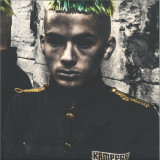
Poltergeist has that strange power of attraction that these personalities with their icy, mysterious aura hold. As soon as Ari Girard (aka Poltergeist) appears, something happens, he catches the light and strikes the spirits.
Kämpfer LP is a ghost story where Poltergeist invites Joy Division, New Order, Talking Heads, The Cure, Can, Kraftwerk, Nine Inch Nails or Jeff Mills for its first album. At the Poltergeist banquet, the crows of cold wave and the barbarians of krautrock, the metallers of indus rock and the freaks of techno meet.
The epicentre is Berlin, the Wall, Lou Reed's Gotham, the Bowie/Eno trilogy and the toxic nights of underground clubs...
Kämpfer LP, Poltergeist's first album, reveals its dark and disturbing universe. Marked by a heavy, deep and majestic atmosphere, this project evokes, without ever saying it openly, the climatic urgency, the ineluctable destiny, the human obsession to be first, to leave a trace of its passage and the nightmares which agitate the nocturnal spirits.
Between frenetic synths, bewitching waves and marked foot, this implacable album marks the beginning of the Poltergeist era.
Scratching synths, a dark and heavy universe: we can understand Vitalic's crush, who decided to sign the project at the first listening on his label Clivage Music.