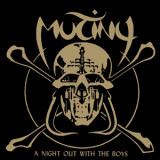
- Rare P-Funk album from 1983 - Funkadelic/Parliament All-Star Line-Up - First ever vinyl reissue - Comes with a repro of the original insert - 180g Black Vinyl Edition - Limited to 500 copies, comes with obi strip // Jerome "Bigfoot" Brailey is an American drummer who started performing in the early 1970s with several R&B groups from the likes of The Unifics, The Chambers Brothers and The Five Stairsteps where he developed his unique style and finesse on drums. Later in 1975 he joined George Clinton's P-Funk collective and has appeared on many of Parliament & Funkadelic's most popular recordings (some of which he also co-wrote). Brailey played on classic albums like `Mothership Connection' and `One Nation Under A Groove'. Samples from that body of work (and his drum arrangements) have since then appeared on hundreds of hip hop and contemporary R&B songs by renowned artists such as Kendrick Lamar and Childish Gambino. Jerome Brailey is a member of the Rock and Roll Hall of Fame (inducted in 1997) and part of their `50 greatest drummers in the Hall' list (stating that his drum style kept Parliament-Funkadelic rooted in the old-school `James Brown-style funk')_next to this achievement, he was proclaimed by Rolling Stone as one of the `100 Greatest Drummers of All Time' for his steady kick drum, shifty hi-hat action and intricately unpredictable snare patterns. Brailey earned numerous Gold and Platinum records with the P-Funk Organization and has worked as a session drummer for many talented artists such as Herbie Hancock, Buddy Miles, Snoop Dogg and Pharoah Sanders. George Clinton's funk empire was not without its disagreements and Jerome Brailey's `Mutiny' project was a direct result of just such a disagreement (as well as one of the more notable offshoots of the P-Funk axis). Mutiny performed in a style not far removed from the classic P-Funk style and with a lot of emphasis on the dual lead guitar work, but what makes them unique compared to their contemporaries is that at times their recordings also emit a darker, more sinister feeling. Besides Brailey on drums (and on most of the lead vocals) Mutiny featured a funk-alumni line-up and released three amazing and collectible albums: `Mutiny On The Mammaship' (CBS, 1979), `Funk Plus The One' (Columbia, 1980) and `A Night Out With the Boys' (J. Romeo, 1983)_these were followed by two comeback albums: `Aftershock' (Rykodisc 1995) and `Funk Road' (Catbone, 2013). The `Mutiny' album we are proudly presenting you today (A Night Out With The Boys) is an underrated gem made by musicians who defined the funk scene of the '70s and '80s! Featuring an all-star line-up that includes Rodney Curtis (Fred Wesley, Maceo Parker), Michael Hampton (Funkadelic-Parliament, Deee-Lite), Kenni Hairston (Cameo) and Maceo Bond of Osiris/Afrika Bambaataa fame! `A Night Out With The Boys' has it all: Jerome's trademark drumbeats, funky bass grooves, driving riffs accented by stinging synth parts, slow spacey (and prominently featured) guitars, top-notch lead vocals and chants that recall Sly Stone's "Loose Booty". The whole album is a hot dance jam with crisp percussion_an extremely infectious, locked-in-the-pocket bass-heavy monster-funk-bomb that any serious self-respecting funk fanatic must have in his/her collection!
Search:at project
M.S.W. brings together key components from his work in solo projects HELL and CLOUD to come to terms with topics of intense personal struggle.
Here in his first album under his given name, we hear the familiar melodic atmosphere of Cloud coupled with intense, somber doom of Hell for a new sonic experience that is familiar but altogether its own entity of great despair.
Among the heroes and innovators of 70s spiritual/progressive/funk/jazz, Doug Carn has always flown a little under the radar. He has long plied his trade with patience and dedication, releasing absolutely stunning albums that are cherished by cognoscenti but lesser known even to the jazz mainstream, even as his influence can be detected among his colleagues. Carn"s newest project, his entry in the Jazz Is Dead album series helmed by Adrian Younge and Ali Shaheed Muhammad, takes his unique and timeless art and places it within the context of a musical culture that has always taken cues from his "70s classics. There"s no mistaking the musical mind that created legendary albums like Infant Eyes and Adam"s Apple, but the encounter of that with the distinctive jazz-hip hop-funk-noir that is the Younge/Muhammad/JID trademark creates something worthy of comparison to Carn"s past work but which could only have been made right now.
Following the stellar trip through Woo’s Arcturian Corridor , Quindi Records continues to explore intimate, inviting sounds with an experimental bent by facilitating the return of overlooked Italian duo Cabaret du Ciel.
Initially formed in 1986, Cabaret du Ciel’s debut album Skies In The Mirror was a low-key and extremely rare cassette release of spellbinding electro-acoustic ambient music created by Gian Luigi Morosin and Andrea Desiderà. A reissue on Hybride Sentimento in 2018 brought renewed attention to the startling music contained within this unique project.
The Breath Of Infinity is an album comprised of new works recorded over the past year, either as new pieces or reworked from old ideas with the assistance of Giorgio Ricci. Morosin and Desiderà’s natural instincts as multi-instrumentalists shine through across the record as they did on Skies in the Mirror , although these tracks were in fact composed as raw live takes using electronic workstations (with a little additional fretless bass provided by a close friend Giampaolo Diacci on “Different Suns” and “Climatic Variations”).
There is a crisp, digital timbre to the worlds Cabaret du Ciel shape out on The Breath Of Infinity – utopian pastureswith an air of optimism similarly expressed in the first waves of ambient electronica. Folk traditions exert a guiding influence on the sparkling, ethereal melodies and full-frequency harmonisation, but this is music enamoured with timeless plateaus rather than hackneyed interpretations of the past, present or future.
It’s also an album of variety. “Different Suns” tumbles with a pastoral, elemental earthiness thanks to the interwoven rhythmic murmuring of percussion and live bass, while “Lakota” pivots in sharply rendered bio-mechanical formations.
There’s a widescreen bombast to “Theatre Azure” which calls to mind mid-90s US electronica, while “Meredith” reclines in a blissful bath of plush 80s FM synthesis. “Sunset Parade March” has a distinct sense of propulsion thanks to its overdriven, broken techno rhythm and “Highlands” skips with an infectious energy despite not using any formal
kind of percussion, but even in these more kinetic moments a preference for mellow musicality maintains the dreamlike mood.
Consider The Breath of Infinity like an archipelago, where each track functions as its own distinct island of ideas while being intrinsically interconnected to the others. In a similar fashion to acts such as Ultramarine (who appeared as remixers on Quindi 001), Cabaret du Ciel emphasise the musicality in their electronic music, shaping out an
evocative, imaginative environment to idly glide through or attentively explore.
While on lockdown, Senbeï exchanged a lot with his fans on social networks, offering them a collaborative project. From these discussions a dedicated Facebook group has been created on which his fans proposed ideas, arrangements and instrumental interpretations.
So many possible inspirations that allowed Senbeï to then play the conductor, composing new titles based on these exchanges.
The fans were also invited to propose titles for the album and graphic proposals ... TOITSU - unification in Japanese - as well as the work of Adrien Waterlot (a fan) were chosen by the members, to represent this work common.
SENBEÏ talks about it:
This project was launched during the 2020 lockdown. Like a lot of people, I found myself stuck at home, no more work, no more touring. I wanted to take the opportunity to launch a collaborative project by appealing to my fans via social networks. At first, I just imagined doing a song, picking from their ideas, a sample here, a guitar take there. I didn't think it would take on this magnitude. We quickly reached more than 500 people on a dedicated discussion group. And then it all got wrapped up. 4 months later, Toitsu was complete.
It wasn't just music, but also incredible general goodwill, good mood, lots of support, sharing, dedication and humor. All of that helped me orchestrate this happy mess in record time.
"Toitsu" means "Unification". Without those who participated, this album would not exist.
ACCEPT ARE BACK! The German kingpins of heavy metal will release their new, eagerly-awaited studio album via Nu- clear Blast on January 15th 2021. The ingenious title of the masterpiece is “Too Mean To Die”.
Speaking of heavy metal kingpins, when ACCEPT first launched at the end of the 70s, the metal genre didn’t even exist - at first the band could only be labelled with the (quality) seal “crazy loud and crazy wild”. Today we know that this was (and is) metal par excellence. And we also know that ACCEPT opened the door to thrash metal, inspiring giants such as Metallica. Guitarist Kirk Hammett recently stated in the German magazine “Gitarre & Bass”: “Wolf Hoffmann has a huge influence on me.“
ACCEPT, who once had their origins in the city of Solingen, a city of sound, have been a worldwide music phenomenon for more than 40 years. They still impress with razor-sharp guitar licks and a steel-hard sound. The band created all-time metal classics like “Balls To The Wall”, “Metal Heart” and many more.
Countless world tours and headline slots at the biggest, cutting-edge festivals cemented the band’s reputation as one of the best, hottest and loudest live acts ever. In addition, the band has sold millions of records, has achieved gold status in the USA, top 10 chart positions worldwide and a number 1 album (Germany, Finland) for “Blind Rage” (2014).
Now with “Too Mean To Die” their 16th studio album is in the starting blocks - it is the fifth album that US vocalist and front man Mark Tornillo has put his incomparable vocal stamp on.Recorded in the world music capital of Nashville (USA), ACCEPT’s music was once again produced by British master producer Andy Sneap, who is responsible for the mix. Sneap, who works for Judas Priest and Megadeth among others, has also been responsible for all ACCEPT productions since 2010.
Special circumstances often lead to very special albums. This is certainly true for “Too Mean To Die”, which of course alludes to the Corona period, although in a different way than one might assume. Hoffmann says: “Its to be expected that many musicians will address the Corona situation in their songs. There will certainly be slogans for cohesion, through which positive vibes should be spread, which is also good. But we have decided to not let ourselves be influenced by it. The fans will get a hard, direct and uncompromising metal album, but of course accompanied with a wink: We are too mean to die! Weeds do not go away! ACCEPT do not let themselves get down!”
Wolf isn’t wrong - the title track is a classic Accept cracker: dynamic and unwavering, turned up to eleven!
Zombie Apocalypse’, also relentless and hard, strikes the same note in the band’s signature style.
The first single - which will be released on October 2nd 2020 together with a remarkable video - is different. Titled ‘The Undertaker’, its a terrific midtempo number with great vocals and a built-in character that chugs along – certain to deliver some mermorable live moments! According to Wolf Hoffmann its one of the most catchy, pleasing pieces of the album.
New to the band, and thus to be heard for the first time on an ACCEPT album, is Philip Shouse (Gene Simmons Band, among others). The US guitarist fights hot duels with Hoffmann, while Uwe Lulis makes the guitar trio perfect and pro- vides the right rhythm. “Phil was part of our orchestra project and was also completely convincing live. We recognised his great talent immediately and simply didn’t let him go,” explains Hoffmann.
Just how varied the ACCEPT guitar trio performs on the new album is proven by one of the secret highlights: ‘The Best Is Yet To Come’ – a beguiling ballad in which Mark Tornillo is at his best. The metal world knows that Mark can scream like no other, but here it shows once again that the frontman can also sing magnificently. “Mark sang this, for us rather unusual song stunningly well. The fantastic thing about Mark is that he not only masters the typical metal screams, but can also sing melodically and beautifully. He proves this impressively in this song”, chief guitarist Hoffmann raves.
In addition, ACCEPT have strengthened their team even further with newcomers Martin Motnik (bass) and Philip Shouse (guitar), thus forming an unbeatable team together with “Drum God” Christopher Williams and “Rhythm Mas- ter” Uwe Lulis.
There’s no doubt that with “Too Mean To Die” Accept are once again playing at the top of the Champions League of the genre. Wolf Hoffmann & Co. present the (music) world eleven masterpieces at the beginning of 2021 - eleven songs for eternity!
Darker Than Wax's first release of 2021 brings us back to the world of UK dance music with Dampé - the solo project of Joe Munday, a musician, producer and DJ from South London. Joe's foundation in dance music stems from becoming a regular on the floor at influential parties like FWD>> and You're A Melody. Dampé brings together these London sounds with worldwide influences and nuanced, ethereal production to create something entirely his own. With a string of releases on Berlin's Dirt Crew Records, and a monthly show on the venerable Rinse FM, Dampé has carved out a space for his sonic brand of introspective, deep UK dance music. Spurred by a chance meeting with the Darker Than Wax crew in London in 2018, an instant relationship between artist and label flourished through our shared sonic ethos. After numerous setbacks from the chaos of 2020, we are proud to finally share Dampé's label debut with the world - Oil.
INDIE EXCLUSIVE, LTD PURPLE VINYL! Among the heroes and innovators of 70s spiritual/progressive/funk/jazz, Doug Carn has always flown a little under the radar. He has long plied his trade with patience and dedication, releasing absolutely stunning albums that are cherished by cognoscenti but lesser known even to the jazz mainstream, even as his influence can be detected among his colleagues. Carn's newest project, his entry in the Jazz Is Dead album series helmed by Adrian Younge and Ali Shaheed Muhammad, takes his unique and timeless art and places it within the context of a musical culture that has always taken cues from his '70s classics. There's no mistaking the musical mind that created legendary albums like Infant Eyes and Adam's Apple, but the encounter of that with the distinctive jazz-hip hop-funk-noir that is the Younge/Muhammad/JID trademark creates something worthy of comparison to Carn's past work but which could only have been made right now.
- A1: Ainie - Swoosh
- A2: Georgia Anne Muldrow - Babyhoneybee
- A3: Josi Miller - Drunk Text
- A4: Lisa Vazquez - Do Right
- A5: Saltyyyy V - York Blvd
- A6: Aygyul - I'm Alright (Instrumental)
- A7: Usagi - Bloom
- B1: Da Chick - Flow For Miles
- B2: Gnarly - Karapincha
- B3: Jillesque - Hit That Bongo
- B4: Sadiva - I Don't Wanna Leave You
- B5: Julie Schatz - She Sauce
- B6: Courtney Hawkins - Lost In Paris
- B7: Sowall - Hummingbird
Clear Vinyl
It is the year 2020, a year that addresses our awareness of diversity, tolerance and sustainability in an assorted, socio-cultural way. We translate this demand into music. "Nuthin' But A She Thang" focuses on a marginalised view of instrumental beat music.
This sampler, reflects a cross-section of the international female producer scene: 14 female artists, 8 countries, 4 continents, one language - music! The 14 instrumentals take the listener on a musical journey, which creates a tension between classic sample sound and modern current productions.
The many facets of female beat producing are presented by exclusive contributions by Ainie (DE) o Aygyul (AT) o Courtney Hawkins (US) o Da Chick (PT) o Georgia Anne Muldrow (US) o Gnarly (UK) o Jillesque (US) o Josi Miller (DE) o Julie Schatz (US) o Lisa Vazquez (US) o Sadiva (AUS) o Saltyyyy V (DE) o SOWALL (KOR) o USAGI (JP). Together with Stylefile as a cooperation-partner, we were able to persuade none other than HERA (DE). She implanted an even more artistic approach and added an exclusive artprint to this piece of music.
Our latest Release DDCT003 is in the end not only a musical project, it is a statement, it is an attitude.
Casper Clausen, frontman of Efterklang and adjacent project Liima, has today announced details of his first ever solo record. ‘Better Way’ will be released on January 9th via City Slang and today he shares a first taste with the juddering, krautrock-tinged, 9-minute opening jam “Used To Think”.
“Used to Think” was one of the first songs I wrote for “Better Way” a couple of years ago” Clausen comments. “I had a run of some small shows around Portugal testing the new songs I was working on at the time, and this one became one of my favourites, I really like the energy of it. It was also the song that made me reach out to the producer Sonic Boom. He ended up mixing / co-producing the entire album. There is some inspiration from his band Spacemen 3 luring around in there and he lives in Sintra, very close to Lisbon where I’ve been the past couple of years, so it all made sense.”
Dexta and Crypticz are delighted to announce their long awaited 12" single, 'Together', featuring two remixes from Munich-based Danny Scrilla. Two years in the making, the project will finally see the light of day on 10th November 2017 via Diffrent Music.
A fusion of Drum & Bass, Jungle, House and Garage, 'Together' is built for the dancefloor. The track borrows vocals and breaks from the early '90s, while blending drum machines, bass samples and vintage effect processes crafted by Dexta & Crypticz.
Danny Scrilla debuts on the label with a pair of remixes. The 'Reslice', is a great example of signature Scrilla, manipulating the original parts into an exploration of dubby, half time soundsystem music. His 'Reflop', meanwhile, is a 140bpm re-think, splicing chopped up breaks and bass stabs from the original along with strong percussion lines and weird vocal edits.
Since his outing on Hospital Records in 2015, and his debut 'SE4 EP' on Diffrent Music last year, Dexta - otherwise known as Londoner Chris Royle - has released the third part in an ongoing series for None60 Recordings, honing tracks for dancefloors and stereos alike.
Somerset's Crypticz (aka Jordan Parsons) has had quite an eventful 12 months, with his 'Echo Sound EP' on Doc Scott's 31 Recordings, and more recently the 'Forever EP' Om Unit's Cosmic Bridge imprint, while evolving his club performance from a DJ set to a custom live show consisting solely of his own music and explorations in sound design. This single comes two weeks after his latest release, the 'Access You EP', also on Diffrent Music, which set a new benchmark for Jordan, refining his sound to its highest quality.
Danny Scrilla (born Daniel Pirkl) has gone from strength to strength this year, dropping a cassette tape project on Cosmic Bridge, compiled of 16 synth and hardware-led experiments. Last month Dan also released a collaborative 12" with Sam Binga called 'Weird In Munich' - a superb effort, pushing boundaries from both their usual styles - before putting out an EP for Amit's AMAR imprint in early September.
'Together' will be available as a limited 300 run of 180gsm coloured 12" vinyl, and will be officially released on 10th November 2017. An exclusive small batch will be available at the Clashmouth D&B Label Market on 28th October 2017 at Cafe 1001 on London s Brick Lane.
Without warning, a group of young girls from a remote region of Benin is shaking up the world of garage rock with breathtaking freshness, ingenuity and energy, playing spot-on, loud and clear.
A musician named André Baleguemon decided to form an exclusively female band rooted in the concerns of its time. He puts the spotlight on the guitar, drums and keyboard, instruments he has admired since his childhood, symbols of modernity in this remote region. His observation is simple: “In the North, girls have no room to advance and women are put aside. I simply wanted to show the importance of women in the societies of North Benin by forming a female orchestra “.
On July 25th, 2016, with the support of the city of Natitingou, André launched a press release on Nanto FM offering to help train girls in music for free. A few days later, dozens of aspiring musicians showed up at the Youth Center. “The girls who came didn’t know anything about music. We selected seven girls of the Waama and Nabo ethnic groups from the surrounding villages, some had never even seen these types of instruments before. “
The girls quickly became passionate about their new musical activities, learning how to play drums, guitar, piano and sing vocal harmonies. Their progress was astounding. An intense work of musical training took place, starting with drum workshops, their favorite instrument. Angelique and Urrice on drums and vocals, assisted by Marguerite, the third drummer. Sandrine is on keyboards, as is Grace, who also sings vocals. Julienne is on bass and Anne on guitar.
André’s determination is one of the key elements of this human and artistic success. The girls have already performed dozens of concerts in the region, forging and expanding an already solid repertoire, while attracting an ever-increasing local audience. In addition to musical progress, he has been personally involved with each family, showing them the importance of his project, both musically and humanly and in particular the fact that each girl must remain in school and not be forced into marriage.
At the end of 2018, their encounter with the young French sound engineer Jérémie Verdier accelerated the course of things. On a mission in the region, he called on his Spanish friends Juan Toran and Juan Serra who showed up with their recording equipment in order to record the band’s first songs in the annex of the local museum. Random encounters and fate led Jean-Baptiste Guillot to hear the tapes. He decided to go meet them at the end of 2019. This short but memorable journey sealed the fate of the record you are now holding in your hands.
Italian composer Gadi Sassoon debuts on A Strangely Isolated Place with an experimental exploration of impossible physics; an intricate soundtrack based on newly created sounds and abstract atmospheres. In 2015 Gadi was invited to Edinburgh by The NESS Project to check out their groundbreaking sound synthesis work. With the help of a supercomputer, the NESS group had created new digital systems capable of creating sounds so complex, rich and realistic they were indistinguishable from acoustic instruments. Better yet, the code could be hacked to create completely imaginary sonic worlds with bizarre physical properties. Gadi fell in love with this idea and became resident composer at NESS for the following years, collaborating with the researchers to create impossible instruments: mile-long trumpets blown by dragon fire in Black Hole Fanfare, needle fingers brushing eternally vibrating strings in Pi (p), giant resonating lattices of bound masses and springs in the Moto Perpetuo suite and Collision Suite, marbles sliding on thousand-string fretboards in Young's Modulus, morphing bouncing objects in Chaos & Order, an orchestra of giant bowed basses in Life On A Tidally Locked Planet. Multiverse was designed and created by bending the laws of physics in subtle ways, effectively creating acoustic simulations from parallel universes. Gadi combined the NESS sessions with analogue synths and live instruments in his Milan studio, with the intent of creating a space for the listener to get lost in - blurring the lines between organic and synthetic, loud and quiet, the abstract and the familiar.
Nèg Ginen is a song composed by Jean Claude Dorvil on a traditional Nago rhythm (from Benin). Nèg in Haitian creole means “the dude“, “the guy“. It is about pride of being Haitians with solid African roots. As a matter of fact, when we mention Ginen, we talk about Africa. Like the majority of Chouk Bwa’s songs, this one is full of references mentioning Haitian voodoo rituals and spiritual /igures. For instance, Simbi Ganga is a lwa (voodoo spirit) from the Lakou Soukri Danach (voodoo temple) that lives in the water. Wild and brutal when he is chained up, he faithfully represents the Iwa Kongos, notorious for being real party-starters! Kebyesou is an Iwa who lives in the Lakou Souvnans (another temple). He is a royal /igure, like the Dahomey Iwas in general. The voodoo families are, so to speak, all present in this project!
Biography
After a /irst European performance in 2015 at Roskilde Festival leading to many other performances all around Europe, including WOMEX and WOMAD, Haitian traditionnal vodou band Chouk Bwa met the Brussels based duo The Ångströmers in 2016. Their new project combines a renewed dub sensitivity and Haitian rhythm science and spirituality. The ensemble has performed in Haiti and in European festivals including Trans Musicales de Rennes before releasing their /irst album Vodou Alé via Bongo Joe in 2020.
Modular synths and other vintage electronic instruments bring another dimension to Chouk Bwa’s music, although obviously it is always the band’s groove and /luent tempo that leads the energy of the ensemble: no laptops, no drum machines. There are certain freedoms that cannot be coerced. Even more, the electronic instruments are wired directly to the drums that feed them with impacts and caresses. All the Vodou families are there with their many rhythms and songs. Radical Vodou roots for urban audiences.
- A Intro (My Single Isn't Finished Yet)
- Deep Blue Monday
- In The Game
- Chance Encounter (Jungle Theme)
- Call Of Beauty
- Welcome To Soma
- Unreal
- Superstar
- One Nation
- Beware Your Fans, Diva
- Call Of Beauty (Esports Reprise)
- Followers (Diva's Theme )
- Farsight's Greatest Star
- In My Prime (Bonus Track)
- Apocalypse (End Credits)
500 COPY LIMITED EDITION ~ INCLUDES 4 INDIVIDUAL FULL SIZE ARTWORK INSERTS. Hyperdub are excited to present our first soundtrack release, Lawrence Lek's score for his debut feature film `AIDOL', which premiered at Sadie Coles HQ in 2019 and has been shown at numerous virtual and physical festivals and exhibitions worldwide. Lawrence Lek is a simulation artist who uses computer-generated animation and video game engines to create films and virtual worlds that play with the language of science fiction, music videos and corporate world building. He has released soundtracks to five of his previous projects, most recently `Temple' OST (Vinyl Factory, 2020). `AIDOL' continues his on-going 'Sinofuturist' cinematic universe, which posits the creative theory that China's technological rise is an emergent form of Artificial Intelligence. `AIDOL' is a CGI fantasy that tells the story of a fading superstar, Diva, who enlists an aspiring AI songwriter to mount a comeback performance at the 2065 eSports Olympic finale. Set in a realm of spectacular architecture, sentient drones and snow-deluged jungles, `AIDOL' revolves around the long and evolving struggle between humanity and Artificial Intelligence; a shifting and seductive virtual reality, punctuated by Diva's songs and the voice of Kode9 as the unforgiving label boss. The soundtrack is a delicate lattice - complex, opaque and entirely synthetic. Diva's yearning vocals - created with a Vocaloid voice synthesiser, sung in English and Mandarin - cast classical melodies over billowing, intricate arrangements. The instrumental tracks, produced with composer Seth Scott, are elegiac and beautiful, hybridising the film score archetype, folding in patterns from game soundtracks, vaporwave, and ambient fourth world music.
Type “Was Joan of Arc” into Google and the suggested endings for this statement give you an accurate gauge of her place in pop culture: “Catholic” / “a nun” / “canonised” / “a prophet” / “French” / “a witch” and so on. Related questions to “What were Joan of Arc’s last words” on the info-sharing site Quora include “Was Joan of Arc bisexual” and “Was Joan of Arc simply crazy?” Everyone seems to agree this person was burned at the stake in 1431, but beyond that, Joan’s narrative is an enigma. It is this lack of definition that the production duo Pillow Queen harnessed for their second release, Burn Me Up. Inverting the image of the devout Christian girl, the Joan who stands as this record’s heroine was a heretic, a transvestite, most definitely a dyke and a hot femme-top at that.
Opening up the A-side, the title track is a call— a battle cry, but also a summoning. In a time of need one calls upon their patrons and elders from history; a DJ beckons and gathers dancers to the floor; prayer and sweat go hand and hand. A traditional Irish bodhrán drum beats out the first rhythms, joined by a steamy vocal sample that gets caught, chopped, and soon “Burns Me Up” is pumping along with organ chords and distorted keys. Pivoting away from the 4/4 format, “Submission” is a textured, downtempo slow-burner, with close-mic’d vocals from Vani-T and the D. Tiffany’s deft drum programming. When the choral pads come in, there’s an echo of the 1990s German worldbeat project Enigma, with its Gregorian chants and flutes laid on top of lounge beats—here, though, the chorus is stripped of kitsch, only driving the track deeper into a mood.
If Burn Me Up’s sequence of tracks is read as a kind of narrative, they seem to tell the story of Joan’s last moments. “Burn Me Up” is, frankly, heat—aggressive, the high-end crackles and the bass puts a pyre under one’s feet. “Submission” is like an exhale, a giving-in to death’s grip; there is, along with the sensuous tread, a melancholy. It only makes sense that one flips the record to “Resurrection”, which rolls in a tremolo’d wail of pitched vocals for 30 seconds before a kick drum begins the 141-BPM march. The percussion is central here, as the track shifts between polyrhythms like a range of resuscitations, varied heartbeats. “Salvation” closes the record, again dialling back the tempo to the deep nod of dub. To no surprise, the scene of redemption here is not one of sunlit cherubs—the church bell sample tolls one strike every few measures of bass-throb and shadow, while Vani-T intones, “Then he lay down and died”. Death can be salvation to some; living as many selves, living in contradiction, is a saving grace to many more.
Limited Gold Vinyl Pressing!
Out of the ashes of Raceway Recordings and Racetrax, rises the new label from Sterling Moss - Rebeltek. With well over 100 tracks out on vinyl, Sterling decided it was time to start his own 12inch project again, so 2014 sees rise to the Rebeltek Alliance - an infusion of stomping 303 inspired Techno beats, soon to hit the streets.
Having played in every continent on earth and with releases on over 50 different record labels, Sterling is using his vast musical knowledge gained through his travels and productions to harness an energy for Rebeltek that is both unique and compelling, whilst retaining an counter-culture attitude direct from London town that will drive the label forward.
The debut track 'Don't Fuck Around' has been road tested at the massive UK Techno event 'London Underground United' and subsequently received extremely positive attention. This special first release will be available on limited edition gold vinyl and will be sure to be a collector's item for years to come.
REBELS FOR LIFE
Azumah was the coming together of a group of talented young dancer-musicians from Soweto (South Africa) with musician and instrument-maker Smiles Mandla Makama of eSwatini (formerly Swaziland). Long Time Ago is the surprising and enticing, resultant album from 1985, recorded in the house of theatre stalwarts Des and Dawn Lindberg in Johannesburg.
Produced by David Marks (3rd Ear Music, Hidden Years Music Archive Project), Des Lindberg and Smiles Makama, this album takes us back to a priceless musical moment in the dark and wild eighties of apartheid South Africa. Smiles Makama is a gifted and visionary music-maker. He was born in South Africa but grew up in eSwatini, the small kingdom enveloped by South Africa and Mozambique on each side. He tells the story of the process leading to the recording of this remarkable album: “I was invited from Swaziland by a Soweto-based group, Azumah. … One of the members knew that there was a wizard in the mountains in Swaziland, building instruments. As I was in the mountains in my hut and then I saw people arrive. They found me. It all started there.”
Instead of simplistic images of a generic ‘Africanness’ or ‘South Africanness’ and pictures of constructed and exotic ethnic identity, a contemporary, fresh listen to this album encourages an appreciation of the composition and musical skill at play in this music. Few people speak about the individual innovation and experimentation involved in the creation of this music (or the music of Amampondo for instance). “Woza Moya” sticks out as a dark and melancholy creation, different tonally to what has come before, evoking the work of Naná Vasconelos or Don Cherry. One thing that remains the same decades later is that encouraging deeper listening to the sounds of the mbira, the nyunga-nyunga, the uhadi or makhoyane bows is still challenging. Discouraging the superficial, short-lived acknowledgement of this ‘unchanging’, ‘African cultural expression’ is the everlasting hurdle. This is made so much easier by albums like Long Time Ago: when artists create music to be loved and entangled with, to be challenged by, derived from the musical roots and structures of these instruments and then expanded upon with creative freedom, risk, humour and funk.
Azumah did this in 1985 and we have this album again today, newly released, to remind us of that moment and the moments since when musicians have urned inward and done similar. As Smiles has it: “Indigenous music doesn’t fade out. It’s just waiting to be discovered, all the time.”
Utter presents the debut album ‘Taiyō’ by Vādin, a new collaborative project from Lucie Štěpánková (Avsluta) and Christian Duka.
They describe the record:
“Vādin is a shapeshifter formed through sound, a seismic energy. ‘Taiyō’ is Vādin’s first word. It was improvised and recorded in the Welsh wilderness over three days within a makeshift yurt studio using analogue and digital synthesizers, voice, location field recordings and amplified objects. ‘Taiyō’ is an entity emerging from the process of opening up, inviting, curiously exploring and being vulnerable; it is inspired by the flow of life in all its finite magic, intangibility and imperfection.
The album opens with the drizzling drone scenery interweaved with shivering whispers of ‘The Seven Laws’ followed by the disintegrated rhythms and warm ripples of ‘First Contact’. ‘Merging’ is a multi-layered organism of spiralling undulations, astral droplets and hypnotic pulsations while ‘The Forest’ narrates a sensuous connection with the world where the suggestive monologue and extra-terrestrial pearls float atop galloping liquid rhythms. ‘Sufi Trance’ is a slow-burning cyclone, an ecstatic rite, a hypnotic pilgrimage into the centre of the Sun - ‘Taiyō’ - which brings the journey to a stirring climax with its morphing drops and electrifying trills.”
Joshua Abrams’ first album Natural Information from 2010, superb avant-jazz, newly remastered at Dubplates & Mastering.
In his book Powershift, published in 1990, writer and businessman Alvin Toffler predicted that the century ahead would be defined by speed and that time itself is destined to become our most valuable commodity. When Joshua Abrams recorded Natural Information, originally released by Eremite in 2010, he was reacting against such commodification of time and the diminishing attention span that accompanies it by offering music with an irresistible groove, rooted in the sinuous rhythms of the human body and the full play of our senses.
At the heart of this music is the sound of the guimbri, a North African three-stringed bass lute, which Abrams started to play following a visit to Morocco during the late 90s. Traditionally the instrument has a key role in mystical healing ceremonies. Abrams, already a well-established figure in Chicago’s vibrant musical communities, had no desire to repackage tradition. He recognized however that the involving, springy and percussive sound of the guimbri was just the right voice to communicate vital data, to relay the natural information we all need in order to get back in touch with the pulsating continuities of a world we all share.
With Natural Information Abrams entered a new phase of his musical life, extending an invitation to the trance, where time intersects with timelessness. He carried with him a wealth of playing and listening experience. As a bass player he had worked with a host of notable musicians including guitarist Jeff Parker and percussionist Hamid Drake, and had been a member of back porch minimalism outfit Town And Country and the improvising trio Sticks And Stones.
The guimbri is a shaping presence on this remarkable recording, but Abrams also plays bass, bells, kora, sampler and synthesizer. Sympathetic friends including guitarist Emmett Kelly, vibraphonist Jason Adasiewicz and drummers Frank Rosaly and Nori Tanaka join him for the project. They set out not to contrive some neat hybrid but to enable coordinated energies and enriching influences to pulse and flow through living, breathing music. Ten years further into a century seemingly dedicated, as Toffler foresaw, to the survival of the fastest, the deep involving groove of Natural Information seems still more relevant, more illuminating, more vital.
Joshua Abrams: guimbri, mpc, percussion, harmonium, bass, bells, dulcimer, donso ngoni, ms20
Jason Adasiewicz: vibraphone
Emmett Kelly: guitar
Frank Rosaly & Noritaka Tanaka: drums


