
pas en stock
Commandez maintenant et nous commanderons l'article pour vous chez notre fournisseur.
30,46 €
Last In: 8 years ago
Commandez maintenant et nous commanderons l'article pour vous chez notre fournisseur.

In 2015 beging Ostgut Ton das zehnjährige Label-Jubiläum, gefeiert wurde mit einer 30 Stücke starken Compilation, Ostgut Ton-Zehn betitelt, verteilt über zehn 12' Vinyl in einem limitierten Boxset. Dieser Sampler war ruckzuck ausverkauft, weshalb diese zehn 12"es nun in 2016 von Ostgut Ton einzeln wiederaufgelegt werden.
Es sei gesagt, dass Ostgut Ton stets mehr als nur ein House- und Techno-Label war - Zehn-Sechs ist eine Reflektion der musikalischen Vielfalt. Der Titel der Barker & Baumecker A-Seite 'Love Is A Battlefield' ist eine schöne Anspielung auf Pat Benatar und Pop einerseits, während musikalisch eher abstrakte UK Breakbeats und arpeggiertes Terrain über die Länge dieses verspielten Zehnminüters abgeschritten werden.
Die B-Seite beginnt mit Uwe Schmidt als Atom™. - Stromlinien' ist natürlich eine tolle Klammer seines reduzierten aber sich clever entfaltenden und pumpenden Analogsynth-Dub Techno-Stücks. Anthony Parasoles - Heartbeat' schert sich herzlich wenig um unsere menschliche, lahme BPM-Herzschlagrate und widmet sich lieber einer schnellen, muskulösen Kick um die 132 BPM, umkreist von tribalistischen und verdrahteten Elementen um den Groove zu komplementieren.
Commandez maintenant et nous commanderons l'article pour vous chez notre fournisseur.

Commandez maintenant et nous commanderons l'article pour vous chez notre fournisseur.

Commandez maintenant et nous commanderons l'article pour vous chez notre fournisseur.

Neutron orange vinyl[26,68 €]
il devrait être publié sur 12.06.2026
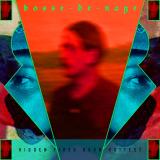
There's a tendency in metal to mistake aggression for honesty, volume for depth. To confuse the performance of darkness with its actual weight. Hidden Fires Burn Hottest, the new album from San Francisco-based post-black metal band Bosse-de-Nage, sidesteps this entirely. It’s the group’s most fully realized work yet, precisely because it refuses to be pinned down.
Bosse-de-Nage have been working with The Flenser for over fifteen years. They were one of the first bands the label ever partnered with and have the longest active relationship in the label's history. But unlike most bands who build momentum through constant touring and visibility, Bosse-de-Nage has largely existed apart from the music world's usual machinery. They've evolved on their own terms, in relative isolation, allowing the work to develop without outside pressure or influence. What began rooted in black metal anonymity has mutated into something that actively defies categorization. The aggression is still there, but it's no longer the point. Hidden Fires Burn Hottest finds the band treating emotions like physical objects, feelings with spatial properties. “No Such Place"" describes a space that can't exist but does anyway, somewhere between thought and location. ""Immortality Project"" examines infinite possibility not as promise but as problem, endless options collapsing under their own weight. These songs don't use metaphor to describe emotion. They make emotion into something you could theoretically touch.
Tracked by Jack Shirley (Deafheaven, Oathbreaker) at Atomic Garden East and mixed and mastered by Richard Chowenhill of Agriculture, Hidden Fires Burn Hottest was years in development, with some tracks beginning in 2018.
The long writing process offered time that most records don't get. Time to live with ideas, revise endlessly, to let structures settle. For the first time, lyricist Bryan Manning wrote everything in advance, creating a surplus to pull from rather than working under deadline pressure. The difference shows.
Coming off Further Still, an album built on constraint and economy, Bosse-de-Nage sought the opposite: sprawl, strangeness, fewer rules. Space for ideas to develop without rushing them. Dynamics that move through quiet as much as noise. Presence earned through atmosphere instead of volume. The record even includes ""Mementos,"" which might be considered the first love song the band has ever written.
Nothing here coheres into a theme. These are pieces pulled from low moments and private feelings made public through sound. The band has never been interested in positivity, in music that resolves cleanly or offers comfort. But bleakness doesn't mean humorlessness. There's something darkly funny running through much of it, even when it shouldn't be.
Hidden Fires Burn Hottest doesn't explain itself. It just insists: what you feel is as real as what you can see."
il devrait être publié sur 15.06.2026
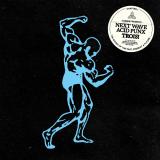
Starting in 2021 the critically acclaimed Next Wave Acid Punx series has seen Luca Venezia, aka Curses, celebrate the music that has shaped both his life and career. Across the first two compilations Luca took usfrom the industrial and post-punk sounds of the late 70s, through the emergence of EBM, new beat and freestyle in the 1980s and onto the music he both makes and plays himself in clubs today. Bringing the series to a close Next Wave Acid Punx TROIS sees the Berlin-based musician and DJ return full circle, this time exploring the sounds that first initiated him into Brooklyn's rave scene and the music that, in some way, continues to embody its eclectic spirit today.
Spread across three 2LPs and 3CDs Next Wave Acid Punx TROIS captures a moment whose influence can still be heard reverberating around clubland today. With the nascent rave scene obliterating boundaries, this was a moment where the darker, harder industrial electronic sounds of the mid 1980s were crashing headfirst into the ecstatic wave that was washing over clubland creating thrilling juxtapositions. Whether in the clubs and warehouses of New York, London, Frankfurt, Valencia and beyond, electronic music would never be the same again as countless new genres we take for granted today were born from the chaos and energy that had been unleashed.
Featuring 46 hard-to-find, new and exclusive tracks, Next Wave Acid Punx TROIS both documents that fertile period and shows how, despite rumours to the contrary, that early anarchic spirit can still be found today. From the Detroit Techno of Model 500 to Nitzer Ebb's EBM and the proto-Trance of Age of Love and onto brand new tracks from some of today's best producers such as Zaatar, Italo Deviance and Leona Jacewska, this compilation closes out a series that has to date revelled in exploring the darker corners of clubland in uplifting style.
This is Chapter 1.
Disponible en stock et prêt pour l'expédition

A significant force in the development of British electronic music, Fluke return to the culture and reinvigorate their forward-thinking library of material on an unexpected and powerful new album, The Second Bite.
Due for release internationally via Surface Records in association with !K7 Music, The Second Bite arrives on limited-edition, double-vinyl gatefold LP.
Driven by principal band members Jon Fugler, Mike Tournier and Julian Nugent, The Second Bite boldly yet subtly reimagines twelve Fluke tracks from different eras of the band, including crossover hits Atom Bomb, Groovy Feeling and Absurd. Retaining their peerless groove and cinematic atmosphere, the band rework each with contemporary production touches and arrangements that invite these ambitiousrecordings into a digital future.
Making a significant contribution to both rave and chillout sound systems throughout the nineties and deep into the new millennium, Fluke’s progressive sonic philosophy saw the band invited to remix boundary-pushing artists including Bjork, New Order, Talk Talk and even The Rolling Stones, while their original productions were integral to the cult soundtracks of blockbusters The Matrix Reloaded and Sin City.
Their music remains instantly recognisable to renewed generations of gamers, having featured on the multi-million selling console series’ Need For Speed: Underground as well as seminal racing game Wipeout 2097, for which the band recorded original music to feature alongside The Chemical Brothers, Daft Punk, The Prodigy and Underworld.
Regaining control of their original compositions, Fluke approached The Second Bite with the same sense of creative community and futurist philosophy that has been fundamental to the band since their earliest recordings. Formed on the experimental fringes of London’s nascent acid house culture, informed by a shared love of progressive electronic sounds, Fluke have remained deeply invested in the possibilities of recording technology. Decades later, reunited in a profoundly altered musical landscape, The Second Bite serves as a typically ambitious reintroduction to one of electronic music’s most essential back catalogues.
il devrait être publié sur 26.06.2026
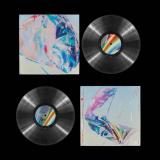
Budakid releases Dreams Stretched Beyond, his debut album, on July 3. The Dutch, Berlin based producer, DJ, singer, and multi instrumentalist continues to construct his music from the ground up. With Flores, he has established a platform to fully realize that vision. Following releases on labels associated with Guy J, Solomun, and Sasha, he has built a strong reputation in the industry over the years. This LP consolidates that trajectory into a lush, vivid body of work, balancing his roots in dance music with his own voice and signature productions.
il devrait être publié sur 03.07.2026

The Bug and Ghost Dubs relentlessly probe and atomize original material culled from Kevin Richard Martin's critically acclaimed 'Sub Zero' album. ("Monolithic and unforgiving, even by the Bug’s standards, representing his most suffocating take on ambient dub yet." Pitchfork)
Remixed to punish sound systems and freeze up the dance, both Fiedler and Martin trade fresh, contrasting blows, after their recent IMPLOSION face off album on PRESSURE last year. (Dub/Reggae album of the year, 2025, in 'The Wire')
The resulting 4 remixes are every bit as hypnotic and persuasive as you would hope for from productions fresh out the soundlabs of Michael Fiedler aka GHOST DUBS and Kevin Richard Martin under his dancefloor destroying Bug alias. Both producers intensify the desolate mood of the originals but introduce demolition inducing beats which provide the literally irresistible momentum. Echoes of the originals are respected and heard throughout, but the extra gear shifts pay off brilliantly.
Guaranteed to push serious air, and test the most powerful of sub woofers, these 4 remixes vary from heavy to superheavyweight. i.e. GHOST DUBS outputs a deliriously stoned headnod with his zonal refix of 'When I'm Gone', which miraculously sounds both subtley mysterious, but monolithically huge, whilst The Bug prowls ice cold, on the noirish, narcotic, instrumental hip hop of 'Too Human', which sounds like prime Mobb Deep mixed by Rhythm & Sound' at 16 bpm.
Essential remixes of an already very special album, the original atmosphere is not only captured expertly, it is categorically amplified. LARGE.
il devrait être publié sur 03.07.2026
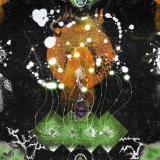
Drawing from traditions of musique concrète and ambient synthesis, The Vertical Luminous creates a world of textural depth and microscopic wonder. Across its tracks, bubbling tones, processed field recordings, and shifting electronic layers intertwine, evoking the sensation of listening in on the hidden rhythms of atoms, molecules, and micro-organisms.
'While grounded in experimental technique, The Vertical Luminous avoids the academic or austere, instead embracing a mischievous sense of melody and curiosity - a reminder that exploration and joy can coexist in sound.
'The result is a record that is both meditative and playful, equally suited to deep listening or casual drift.'
Disponible en stock et prêt pour l'expédition

To celebrate the launch of the 4th and last DLC of Atomic Heart, Kid Katana Records teamed up with Mundfish to bring you this high quality album for the first time on an exclusive double vinyl.
With over 10 million players since its release, and a nomination at the 14th Hollywood Music in Media Awards, Atomic Heart has kept on bringing new content in the game, enriching the players’ experience with new Stories, Threats and Music to pursue the fight for freedom and progress.
The physical edition is a premium 2LP designed in close relationship with the game's creative team: Track selection handpicked by Atomic Heart team, including tracks from Mick Gordon, GeoffPlaysGuitar and Boogrov, and 1 new track (DLC #4 trailer exclusive) 2-colored vinyls with unique red and black “corona” effect: handmade vinyl effect melting red and black colors to shape a unique vinyl color on each product, mirroring the cover art.
Exclusive cover art with mat finishing and glossy effect on the Twin and motorcycle
il devrait être publié sur 10.08.2026
After delivering a killer track on our Diffraction EP compilation and a series of highlighted projects on Hiver Discs, Iro Aka returns to Polychrome Audio with club-ready 4-tracker Dimensions. We are really proud to release the music of friends who create such quality electronic music. On the A side, Dimensions and Direction 0 original mixes bring a driving and bleepy techno sound shaped by the duo’s characteristic psychedelic design. The B side is a strictly remix affair: Human Space Machine turns Dimensions into deeper techno territory while French duo Atomic Moog presents a slow-burning downtempo take on Direction 0 for early or late into the night. We hope you enjoy this record as much as we do!
Disponible en stock et prêt pour l'expédition

Disponible en stock et prêt pour l'expédition
- 2026 repress -
Released under the January full moon, 2025.
Early support from Abstract Division, Albert van Abbe, Brando Lupi, Iori, Lewis Fautzi, Samuli Kemppi, Svreca, Takaaki Itoh, Tommy Four Seven, Atomic Moog, Blazej Malinowski, Cassegrain, D-Leria, Forest on Stasys, Joachim Spieth, Ness and Yuka.
Disponible en stock et prêt pour l'expédition

Aquaregia celebrates its tenth anniversary with '10', a five-track compilation bringing together artists who have each shaped the imprint's sound over the past decade.
The release sees Troma & PERS1, Blazej Malinowski, Teo Drean, Nicola Dal Sacco, and 747 return to the label with new work, each interpreting acid through their own lens. Across the EP, Aquaregia's distinct blend of emotional, hypnotic, and musically rich acid techno is assembled in a nod to the label's foundation.
The record opens with Troma & PERS1's Atomic, a deep and dreamlike cut filled with metallic textures and drifting movement, followed by Blazej Malinowski's Brudnopis, sliding into a low-slung, seductive groove. On the flipside, Teo Drean's Honeymoon Phase injects orchestral euphoria and cinematic tension, while Nicola Dal Sacco channels vintage '90s hypnosis on Papaia. To close, 747's Decades offers a reflective, bittersweet finale - a fitting coda to Aquaregia's first ten years.
Disponible en stock et prêt pour l'expédition

Disponible en stock et prêt pour l'expédition

Disponible en stock et prêt pour l'expédition
SPHERART Records returns with its ART series and a brand new Various Artists release "A TODO RITMO 002" a true piece of art featuring six atomic bombs designed to accompany every selector on their hypnotic journey.
ART002 brings together an exceptional lineup of talents including Andy Somoza, Aka Juanjo, Shkedul, JPG, Ffrvnco and Marino. Each track carries a pure essence, guiding you through a hypnotic and progressive voyage across electro Dracula, acid grooves, and 90s inspired techno percussion.
Disponible en stock et prêt pour l'expédition

Since 2004, This Will Destroy You has been forging some of the world's most brutal, dynamic, and precariously visceral instrumental rock. In addition to a vigorous tour schedule, their celebrated discography and critically renowned soundtrack work for feature films and documentaries have earned them a sizable and fervent international following. Another Language, TWDY's fourth full length LP, marks their euphonious return from a prolonged vacuous dark period that threatened to break both the band and the members themselves. Rather than be stifled by their experience TWDY were atomized and subsequently made anew, emerging with a revived energy and reinforced sense of solidarity. As a result, Another Language captures the band at its most potent, honed, and utterly powerful form yet, displaying an edified unity and graduated sense of song-writing, tonal complexity, and studio prowess.Wallet CD printed on uncoated stock w/ copper foil and printed inner sleeve. 2xLP Gatefold jacket printed on uncoated stock w/ copper foil and printed inner sleeves. The 2xLP is available in a limited second pressing of 1,000 copies on 180g black vinyl and includes a download card for MP3s.
Disponible en stock et prêt pour l'expédition
