A multi-platform production that explores the overlap between the digital and the organic through field recordings of Inuit throat singing may sound, on surface level, to be something that is a rather niche. However, Zoe Mc Pherson's exploration of this world on String Figures is a deeply rhythmic, immersive and forward-thinking piece of electronic- leaning music that remains just as danceable as it does experimental.
The album is fundamentally one of duality, exploring the traditional and the contemporary, organic and electronic, audio and visual, history and the future. Rooted in this duality is also a core theme around string being one of the most ancient and playful art forms and the seemingly infinite possibilities it offers in terms of shapes, structures and figures lines up with this as a trans-global art project. One that over time will involve video art, choreography, 3D motion design, macro film, instrumental and electronic sound. Although for now is being presented through an AV performance, films and a record with Mc Pherson collaborating with director Alessandra Leone.!
Over the seven tracks (which are laid out as chapters) the record explores glitchy electronics, dub-tinged grooves, polyrhythms, and a huge array of instruments that takes in quiet blasts of atonal sax alongside wonky synths. This of course cross-pollinates with the throat singing and experimental field recordings to create an utterly inimitable sonic sphere. For Mc Pherson it's about mixing worlds, histories and timeframes and she uses a 1991 quote from Laurie Spiegel to hit home how she has elaborated upon this original thought of history and future overlapping. 'Folk music is considered anonymous common property in a culture and that's what a lot of computer music and other kinds of music data may end up becoming.' However, there's also a purer reason for the exploration of these worlds and colliding them together. 'Basically I thought that electronic music that is only digital is a bit boring and as I'm connected to jazz music for many reasons, I wanted it to sound organic: real instrumentation, field recordings.'
Suche:atonal
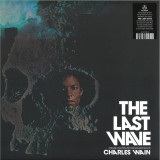
The premiere soundtrack release to Peter Weir's 1977 Australian New Wave classic.
Lost electronic score from the enigmatic composer Charles Wain.
12-track LP sourced from the original stereo master tapes.t.
180g vinyl and deluxe packaging including archival film stills and original press material
The Last Wave (also known as Black Rain in the US) was the final chapter in a trilogy of films scripted and directed by the leading auteur of the Australian New Wave, Peter Weir.
Beginning in 1974 with the absurdist black comedy-horror The Cars That Ate Paris, and followed a year later by the lush gothic mystery Picnic At Hanging Rock, The Last Wave was a landmark in existential horror. Sitting alongside other Australian eco-terror films (e.g. Long Weekend) the film featured a haunting electronic soundtrack that is as mysterious and beguiling as the spiritual themes of the film itself.
With no LP issued after the films premiere in 1977, and together with the mystery surrounding the true identity of its enigmatic composer 'Charles Wain', the score is a largely unheard recording of pioneering experimental film electronics, easily compared to the music that contemporaries Klaus Schulze and Tangerine Dream were composing for Australian films during the same period or the electronic soundtracks of John Carpenter.
Tense atonal electronics, synthesizer drones and manipulated Didjeridu all perfectly capture the film's ominous atmosphere, punctuating the slow hypnotic pace of this brooding supernatural thriller. The Last Wave soundtrack is released in conjunction with the lost film music to Nicolas Roeg's 1971 New Wave masterpiece Walkabout composed by John Barry.
Following some ear-catching manoeuvres across releases like last year's self-released 'Only' and 'Lagata', which gained her early fans like Bjork and Dev Hynes (who she supported in the USA), 'Tommy' marks Klein's deepest plunge yet into the deep, dark ocean' of her musical imagination on her Hyperdub debut. On 'Tommy' her vocals play with Fifties-esque melodies before switching to familiar tones akin to Brandy and Rodney Jerkins, her live voice and live piano playing filtered through hyper-glitchy and looped production with a loose, internal logic, cutting from angular atonality to pockets of skewered harmony. 'Tommy' also steps things up in conceptual terms. Its eight tracks are broken down into acts that are rooted in themes of vulnerability, sisterhood and death, threading the chaotic sonics with modern operatic undertones and a Shakespearean sense of tragedy. There's a lot of bluster about originality in contemporary UK music and what rises from the noise here is a creative voice who, by her very nature, plays with the construct of what pop is. This is Klein's world ... it's on us to get with it.
Another amazing exercise by Thee J Johanz! In R U There In R U There he's exploring the capabilities of the Russian/DDR Vermona synth for a massive brutal lead on a rocking 808 beat, with driving italoesque arpeggio's from the Jupiter 6. Having it's special moment in an unanswered synthesized ring tone, enhancing the haunting suspense. In K Clap West he lets the Moog modular sing like Kanye West, supported by the ancient Roland CR 8000 drummachine. Sleazy analogue goodness, slapping asses with the nasty clap. Sex with machines. More Cowbell! is just what the title promises. An orgy of live tuned cowbells, recorded in one take with his beloved modded CR 8000, it's a perfect atonal mixtool to add some uplifting madness and excitement. Sleeve art by David Homan and Thee J Johanz himself.
Early support from DJ Hell, Prins Thomas, Simeon Mobile Disco, Audio Soul Project, Severino Panzetta, Tensnake and more...
3xLP+CD Artbook
(en) - Nearly two decades after the last official GAS album release, Wolfgang Voigt returns to his iconic Ambient project with a brandnew full-length.
- NARKOPOP continues the classic GAS aesthetic of symphonic scope and subtle variation, taking the listener on an otherworldly journey to the depths of rapture and reverie.
- Available as luxurious hardcover CD incl. 24 pages booklet.
In the body of work of Cologne artist Wolfgang Voigt - who, like few others, has informed, shaped and influenced the world of electronic music with countless different projects since the early 1990s -, GAS stands out in particular as a saturnine sound cosmos based on heavily condensed classic sequences. Even after nearly 20 years, the sound of GAS doesn't seem to have lost any of its luster, as shown by the commanding success of Kompakt's fall 2016 re-release of the essential back catalogue as a 10xLP/4xCD box set.
The overwhelming feedback from a loyal international fan community and worldwide media outlets attests once again to the sheer timelessness of GAS. Which is why it will feel like hardly a day has passed since the release of the last official album 'Pop' nearly two decades ago, when Wolfgang Voigt resumes this specific creative path with the upcoming new full-length NARKOPOP.
Even in the here and now, the unmistakable vibe of GAS immediately hits home, taking the listener on an otherworldly journey with the very first sounds, drawing him or her into an impervious sonic thicket, down to the depths of rapture and reverie. From wafts of dense symphonic mist emerges a floating and whirling feeling of weightlessness, before the listener steps into an eerily beautiful forest of fantasy, pulled in by the allure of a narcotic bass drum.
While earlier GAS tracks were often based on the hypnotic effects of looping techniques, the 10 new pieces on NARKOPOP unfold their magic in a more entwined manner, sometimes with the sonic might of an entire philharmonic orchestra, sometimes as subtle and fragile as the most delicate branch of a tree with many. A main characteristic of Voigt's oeuvre, the coalescence of seemingly contradictory stylistic aspects such as harmonious and atonal, concrete and abstract, light and heavy, near and far is also a decisive feature of NARKOPOP.
In accordance with the transgressive spirit of his collective work, Voigt carries the aesthetic conceptions of his music over to the realm of the visual. Based on his abstract forest pictures, the GAS artwork addresses Voigt's artistic affinity to romanticism and the forest as a place of yearning. For the first time, a closer look at the cover of NARKOPOP reveals signs of architectural fragments which hint at another, maybe parallel world behind Voigt's forest. Truth is the prettiest illusion.
(de) - Fast zwei Jahrzehnte nach dem letzten offiziellen GAS-Albumrelease kehrt Wolfgang Voigt mit einem brandneuen Langspieler zu seinem legendären Ambientprojekt zurück.
- NARKOPOP setzt die klassische GAS-Ästhetik zwischen symphonischer Grösse und subtiler Variation fort, eine Reise zu den Untiefen von Rausch und Entrücktheit.
- Erhältlich als luxuriöse Hardcover CD- Erhältlich als luxuriöse Hardcover CD inkl. 24-seitigem Booklet.
Aus dem Gesamtwerk des Kölner Künstlers Wolfgang Voigt, der mit seinen unzähligen unterschiedlichen musikalischen Projekten seit den frühen 1990er Jahren wie kaum ein Zweiter die elektronische Musikwelt geprägt, gestaltet und beinflusst hat, ragt sein Projekt GAS, ein auf stark verdichteten Klassiksequenzen basierendes, düsteres Klangkunstwerk, in ganz besonderem Maße heraus. Dass der Sound von GAS auch nach fast 20 Jahren scheinbar nichts von seinem Zauber und seiner Kraft verloren hat, zeigte eindrucksvoll der große Erfolg des im Herbst 2016 als 10xVinyl/4xCD Box auf Kompakt wieder veröffentlichten Backkatalogs.
Die überwältigende Resonanz, sowohl seitens der treuen internationalen Fangemeinde als auch der weltweiten Presse, bezeugte einmal mehr die schiere Zeitlosigkeit von GAS. Daher fühlt es sich auch an, als sei kaum ein Tag vergangen, wenn Wolfgang Voigt nun mit NARKOPOP genau da den künstlerischen Faden wieder aufnimmt, wo das letzte offizielle Album »Pop« ihn vor fast zwei Jahrzehnten hat fallen lassen.
Auch hier und heute verfängt der unverwechselbare Geist von GAS unmittelbar und nimmt den Hörer bereits mit den ersten Tönen mit in eine andere Welt, zieht ihn hinein in ein undurchdringliches Dickicht aus Klang, hinunter in die Untiefen von Rausch und Entrücktheit.
Aus dichten sinfonischen Nebelschwaden entsteht ein Schweben und Taumeln, ein Gefühl der Schwerelosigkeit, bevor der Zuhörer von der Anziehungskraft einer narkotischen Bassdrum wieder hinunter in den schaurig-schönen Fantasie-Wald gelockt wird.
Während frühere GAS Tracks oft auf der hypnotischen Wirkung des Loops basierten, entfalten die 10 neuen Stücke auf NARKOPOP ihre Magie auf verschlungeneren Pfaden, mal mit der klanglichen Wucht eines ganzen Philharmonieorchesters, dann wieder so zart und zerbrechlich wie der feinste Ast eines weit verzweigten Baumes. Das für Voigts Arbeiten so typische Ineinanderfließen scheinbar widersprüchlicher stilistischer Aspekte wie harmonisch und atonal, konkret und abstrakt, leicht und schwer, nah und fern ist auch auf NARKOPOP essenziell.
Im Sinne seines grenzüberschreitenden Schaffens, überträgt Voigt die ästhetischen Konzeptionen seiner Musik auch auf die Ebene des Visuellen. Das auf seinen abstrakten Waldbildern basierende GAS Artwork thematisiert Voigts künstlerischen Nähe zur Romantik und dem Wald als Sehnsuchtsort. Wer einen genaueren Blick auf das Cover von NARKOPOP wirft, der wird erstmalig Andeutungen architektonischer Fragmente entdecken, die eine andere, vielleicht parallele Welt hinter dem voigt'schen Wald erahnen lassen. Wahrheit ist der schönste Schein.
Brand new Transatlantyk release contains elusive synth works of Sasha Zakrevska aka Poly Chain.
She likes to call herself a 'Ukrainian ambient chavette' and the title of her debut album is a tongue-in-cheek spin on Eno's classic. 'Music For Candy Shops' is much more sticky and syrupy than its famous predecessor though. In every track on this record Poly Chain's rich and warm synth textures are glazed with another layer of radioactive sweeting.
From atonal melodies on top to occasional spicing in form of odd reverbs, delays and drum sounds - it's all there.
Let me tell you straight up: this candy shop serves some weird sort of sweets, inducing hallucinations, anxious feelings of omniscience and transcendency. Use with caution!
Available as a 200 copies only vinyl LP
An object resists changing its state of motion with inertia. What pushes back must then be even more vigorous in order to create a uid movement. An example of the force that embodies this dynamic can be found clearly on the appropriately titled Inertia, Aiken's much anticipated return to Chronicle. The Spanish artist has been spending years honing his craft, focusing on sharp, distinct sounds that create a pure sense of kinetic energy. The title track of
the EP bolsters a erce disarray of carefully (de)constructed atonal synthwork and a rhythm section that is set to detonate. It is then followed by 'Axial', a track that stays as true to modular miscalculations as it does to stripped down techno, combining both in a subliminal cessation of sanity. However Aiken isn't done there. He continues with 'Magnetism', which throws a brick in the glass of conventionality with its earth-shaking layers of textured momentum. Phased pads then wash over 'Soul Drama', bringing the entire experience
to an emotionally laced denouement. After the potency of his last record on Chronicle as well as his releases on imprints such as his own label Timeline and the Spanish powerhouse Semantica, Inertia marks a de nitive step forward for an already exceptionally de ned artist.
Not Waving takes 2017 by the scruff with his Populist EP, consolidating the myriad stripes of his acclaimed Animals album in four extended peaktime hammers forged for darkrooms, basements and warehouses alike.
If last year's LP saw you thru from day-into-night, or vice-versa, this one is aimed squarely at the gurny hours of abandon in between, with ferocious acid lines and jabbing drums stripped down and strapped up to prompt reckless behaviour on the 'floor.
Containing his first material written in the wake of Animals, the Populist EP is Alessio Natalizia a.k.a. Not Waving's strongest dancefloor statement since the one-sided Get Serious (2015) bullet.
It finds him taking the opportunity to make straight-up bangers, rather than 'songs', which were thoroughly tried and tested over successive tours of the USA and ountless shows in Europe too in
the last 9 months.
Too Many Freaks is an anthem in waiting, harnessing a barely-hinged sense of chaos between its careening synth lead, acid squabble and velvet-clad kicks, before the dry-rutting jag and plaintive vox of Vibe Killer takes a dog-grip like This Heat meeting Tuning Circuits.
Top marks go to the check-your-stylus intro for Control Myself on the B-side, which holds its fizzy line into a fetid crevice of what sounds Russell Haswell ramping with Powell, whereas the
crooked clampjaw groove of Ur Lucky Ur Still Alive pivots around a sample a lone raver at Atonal, Berlin 'who had no idea how she got there and what she did the night before'. A ruddy good night
all-round, then
Not Waving co-owns the Ecstatic label alongside Sam Willis. Not Waving is widely regarded a connoisseur of Italian new wave and post-punk music - he compiled the Mutazione (Italian
Electronic & New Wave Underground 1980-1988) set for Strut - and has issued a series of acclaimed, sought-after, playfully anachronistic twists on that sound since 2013.
Diseño Corbusier is the avant-garde electronics duo of Javier G. Marín and Ani Zinc, formed in Granada, Spain 1981. Like Sheffield's relation to London during the punk explosion in the UK, Granada developed an experimental music scene 400 kilometers south of Madrid. As a child, there were no records in Ani's house, so she grew up listening to the radio and was hypnotized after hearing 'Remember Love', by Yoko Ono. While attending university in Granada she responded to an ad in a music magazine by Javier, If you're into bands like Cabaret Voltaire or Flying Lizards, call me'.
The duo recorded their debut album Stadia' in 1982 and self-released as a limited edition cassette on their label Auxilio de Cientos. They drew influences from contemporaries like SPK, Throbbing Gristle, Esplendor Geométrico and DAF. They employed the 'cut-up' technique William Burroughs used to write his books to splicing their magnetic tape loops. Instruments used included a Korg Lambda, Boss DR-55 drum machine, Roland SH 101, and MFB 501 drum machine. The lack of money to buy more expensive instruments forced the duo to be more creative. Everything was recorded directly to a cassette player that was plugged into a Revox B77 reel to reel tape machine to add echo. Ani manipulated and treated her naive, menacing vocals to match Javier's processed rhythms. These early sketches contain atonal, arhythmic, thick shifting curtains of synth, loops and radio samples. For this reissue we've added 7 bonus tracks taken from various cassette compilations, as well as three previously unreleased songs. Elements of industrial music, primitivistic techno and vocal manipulation are fused with a Dadaist approach utilizing modern technology.
All songs were remastered for vinyl by George Horn at Fantasy Studios in Berkeley. The front cover is an exact replica of the band's original design, restored by Eloise Leigh. Each copy includes a 4 page xeroxed booklet with photos, press clippings and liner notes from Javier. Powerful and evocative, soundtrack music for a rising storm or revolt.' Sound of Pig magazine 1985
After These Hidden Hands re-surfaced earlier this year with the collaborative single These Moments Dismantled featuring Lucrecia Dalt, Tommy Four Seven and Alain Paul a.k.a. Shards are set to release Vicarious Memories, their second full length LP, on August 8th 2016. Vicarious Memories builds substantially upon the sound forged with their debut album and brings a considerable new level of detail, complexity, and musicality, which ranges from flowing mellifluous grooves, somber drones, to the outright bizarre and unexpected. Although loosely an instrumental electronic album, the album makes extensive use of guitar and vocals and features prominent guest vocal contributions from underground Berlin based musicians Julia Kotowski and Ale Hop. The album's preceding single, SZ31X71, a track which features on the LP is out July 11th, featuring a remix by revered Tri Angle artist, Roly Porter. Vicarious Memories will be released via the group's own imprint, Hidden Hundred available both digitally and as a 12 vinyl LP featuring gatefold cover art by Norwegian illustrator Anders Røkkum. Vital Sales Points: - Upcoming press: The Quietus, Thump, I-D Magazine, XLR8R, Future Music, Boiler Room, Mixmag, Resident Advisor, Ransom Note, Tsugi, Rockerilla & more - These Hidden Hands play Berlin Atonal, August 2016
- A1: Less Of Me
- B14: The Closet
- A2: My Eyes
- A3: Popularity Is So Boring
- A4: Orphans
- A5: Eliminate By Night
- A6: Freud In Flop
- A7: Burning Rubber
- A8: I Woke Up Dreaming
- A9: Crown Of Thorns
- A10: Baby Doll
- A11: Race Mixing
- A12: Don't Talk About Love
- A13: No Morality
- B1: Instrumental
- B2: Baby Doll
- B3: Freud In Flop
- B4: Race Mixing
- B5: Crown Of Thorns
- B6: Red Alert
- B7: The Closet
- B8: Instrumental
- B9: Freud In Flop
- B10: Burning Rubber
- B11: Red Alert
- B12: Orphans
- B13: Eliminate By Night
Teenage Jesus and the Jerks began to formulate their visionary brand of aural catharsis sometime during the first half of 1977, amidst the sordid ruins of a then fully down-and-out Lower Manhattan. The mastermind behind this juggernaut of sonic libertinage was a barely pubescent but world-weary runaway who called herself Lydia Lunch. Influenced strongly by the Marquis de Sade and Henry Miller, Lunch shrewdly decided to graft the existential horror of her own writing onto harsh, atonal music after being exposed to the room-clearing live output of other contemporary rock-music deconstructionists like Suicide and Mars. With an agenda of conjuring nightmarish intensity in lieu of technical instrumental ability, Teenage Jesus instantly made the supposedly nihilistic' and raw' current wave of so-called Punk acts sound like slick, good-timey pop music by comparison. Teenage Jesus and the Jerks were The Texas Chainsaw Massacre, lisa, She Wolf of the SS, and Salò, or the 120 Days of Sodom, transliterated into a blatant mockery of the increasingly tired, basic rock-band format. Posthumously, there have been numerous reissues of the primary Teenage Jesus corpus, namely the first side of the Lydia Lunch double compilation album Hysterie (CD Presents, 1986), a very incomplete anthology titled Everything (Atavistic, 1995) and Shut Up and Bleed (Cherry Red/Atavistic, 2008), which also featured Beirut Slump tracks. These less-than-fastidious documents contained reverb-laden transcriptions of the studio cuts directly from vinyl copies, as well as random live tracks of mediocre fidelity. This particular collection about to be released on Other-People is meticulously edited and mastered from rare bootlegs taped during the initial 1977-1979 period of classic band, and only one title (Crown of Thorns from January 17,1979) has been legitimately released to date, albeit in a completely different sound quality.
2024 Repress
Hurray! PROFAN is back from the future to complicate things again. But let's have a look back in the past: in the mid-1990s, Wolfgang Voigt, under his innumerable aliases (M:I:5, Digital, Grungerman, Wasserman …), unsettled the minimal world and its straight grooves with his right-at-the-threshold-of-pain abstract techno. As a DJ, you sometimes even thought that the vinyl was scratched. "Distort the listening habits until they break up" has always been the leitmotiv of this exceptional artist from Cologne. In 2000 however, after having created another promising trademark: WASSERMANN - W.I.R. that - in spite of or because of its unconventional structure (abstract beat, German vocals) - ranked among the number one hits in any important club and DJ charts and which was even remixed by Sven Väth, Wolfgang Voigt decided to discontinue the label for a while. PROFAN produced two sublabels each devoted to the refinement of specific minimal variants: STUDIO 1 and FREILAND. FREILAND in particular was and still is one of Voigt's projects that manifests his artistic and deconstrucivist approach to the aesthetics of techno beats. FREILAND's concept is radical: the only reference to techno is the bass drum and a sound reduced to the utmost that is moving around it. No wonder that now, eight years after the last PROFAN release, Wolfgang Voigt is back under his alias FREILAND. With KLAVIERMUSIK (piano music), Voigt continues his way towards atonality and electronic art music. The straight bass drum still is the only pulsatile instrument and sometimes it is not even that. WOLFGANG VOIGT / FREILAND - KLAVIERMUSIK is radical, puristic, uncompromising, elegiac, difficult, defiant, true and absolutely necessary. The record, including artcover designed by Wolfgang Voigt is strictly limited.. Greed sucks.