"Do you feel what I feel too?" Brijean Murphy floats the question at the start of Feelings, the full-length Ghostly International debut from Brijean, her collaborative project with Doug Stuart. Guided by a lush mix of charismatic keyboard chords, grooving bass lines, and radiant bongo-driven rhythms, the "Day Dreaming" lyric doubles as an invitation and a statement of intention. Brijean want you to move, physically, mentally, dimensionally; this is dance music for the mind, body, and soul. With Feelings, they've manifested a gentle collective space for respite, for self-reflection, for self-care, for uninhibited imagination and new possibilities. The album cultivates a specific vibe, a softness Murphy has come to call "romancing the psyche." Growing up in a family immersed in jazz, Latin and soul music, Murphy would become an accomplished DJ, session and live player in Oakland's diverse music scene and one of indie's most in-demand percussionists (Poolside, Toro Y Moi, U.S. Girls). In 2018, she began recording songs with multi-instrumentalist and producer Doug Stuart, who shares a background in jazz and pop in bands such as Bells Atlas, Meernaa, and Luke Temple. Following their first sessions, which resulted in the mini-album Walkie Talkie (released in 2019 on Native Cat Recordings), the duo continued freeform hangs in Oakland, inviting friends Chaz Bear, Tony Peppers, and Hamir Atwal. "We improvised on different feels for hours," says Murphy. "Nothing quite developed at first but we had seeds. We re-opened the sessions a couple months later, after returning from tours, and spent a month developing the songs in a little 400 square foot cottage." Aforementioned album opener "Day Dreaming" is a dynamic celebration of newness: the excitement in finding deeper understandings of yourself as you get to know someone, something, or somewhere new. "Wifi Beach" drops a pin in pure psych-pop exotica. With Atwal on drums, Stuart on bass, Peppers on keys, and Bear engineering, the group improvised the track's intro sequence based on the vision of a lavish 1970s pool party. Establishing the scene is a mid-frequency drum kit disco shuffle augmented by tight congas and timbale effect, as Murphy sings in spurts: "I want to be / Deep in love / I want to be / Say you love me too / I want to be / Honey." The stanzas cut between "reflective moments of wants and being overwhelmed by feelings of the present," she explains. "A lot of the `love songs' I write are to my psyche, self-reflections on how to encourage tender perspectives and make more time for the sweet stuff." Though there is a loose, dance-oriented motif throughout, the material gives way to somnolent turns. On "Ocean," Brijean's anodyne lyrics, reminiscent of Astrud Gilberto's airy croon, float atop a brushed drum pattern, sparkling rhodes lines, and pittering and softly funky woodblock bops. The opening line sets up the rest, "In this gentle space we lay" _ among the album's propensity for movement, tracks like "Ocean" stand out by leaning back for momentary sways of blissful introspection. Murphy calls the charming "Hey Boy" a "psychedelic guide _ the exploration of finding what feels good _ through sorrow, anxiety, apathy." This mentality applies to Feelings on the whole: in these nebulous and verdant worlds of hazy melodies, feathery hooks, and percussive details, the songs simply want us to feel alive. They radiate in wonderful abandon and with a sense of devotion to the self. RIYL: Stereolab, Astrud Gilberto, Air, Little Dragon, Broadcast, Khruangbin, Poolside.
Suche:atop
LTD. BLUE & PINK SWIRL VINYL
"Do you feel what I feel too?" Brijean Murphy floats the question at the start of Feelings, the full-length Ghostly International debut from Brijean, her collaborative project with Doug Stuart. Guided by a lush mix of charismatic keyboard chords, grooving bass lines, and radiant bongo-driven rhythms, the "Day Dreaming" lyric doubles as an invitation and a statement of intention. Brijean want you to move, physically, mentally, dimensionally; this is dance music for the mind, body, and soul. With Feelings, they've manifested a gentle collective space for respite, for self-reflection, for self-care, for uninhibited imagination and new possibilities. The album cultivates a specific vibe, a softness Murphy has come to call "romancing the psyche." Growing up in a family immersed in jazz, Latin and soul music, Murphy would become an accomplished DJ, session and live player in Oakland's diverse music scene and one of indie's most in-demand percussionists (Poolside, Toro Y Moi, U.S. Girls). In 2018, she began recording songs with multi-instrumentalist and producer Doug Stuart, who shares a background in jazz and pop in bands such as Bells Atlas, Meernaa, and Luke Temple. Following their first sessions, which resulted in the mini-album Walkie Talkie (released in 2019 on Native Cat Recordings), the duo continued freeform hangs in Oakland, inviting friends Chaz Bear, Tony Peppers, and Hamir Atwal. "We improvised on different feels for hours," says Murphy. "Nothing quite developed at first but we had seeds. We re-opened the sessions a couple months later, after returning from tours, and spent a month developing the songs in a little 400 square foot cottage." Aforementioned album opener "Day Dreaming" is a dynamic celebration of newness: the excitement in finding deeper understandings of yourself as you get to know someone, something, or somewhere new. "Wifi Beach" drops a pin in pure psych-pop exotica. With Atwal on drums, Stuart on bass, Peppers on keys, and Bear engineering, the group improvised the track's intro sequence based on the vision of a lavish 1970s pool party. Establishing the scene is a mid-frequency drum kit disco shuffle augmented by tight congas and timbale effect, as Murphy sings in spurts: "I want to be / Deep in love / I want to be / Say you love me too / I want to be / Honey." The stanzas cut between "reflective moments of wants and being overwhelmed by feelings of the present," she explains. "A lot of the `love songs' I write are to my psyche, self-reflections on how to encourage tender perspectives and make more time for the sweet stuff." Though there is a loose, dance-oriented motif throughout, the material gives way to somnolent turns. On "Ocean," Brijean's anodyne lyrics, reminiscent of Astrud Gilberto's airy croon, float atop a brushed drum pattern, sparkling rhodes lines, and pittering and softly funky woodblock bops. The opening line sets up the rest, "In this gentle space we lay" _ among the album's propensity for movement, tracks like "Ocean" stand out by leaning back for momentary sways of blissful introspection. Murphy calls the charming "Hey Boy" a "psychedelic guide _ the exploration of finding what feels good _ through sorrow, anxiety, apathy." This mentality applies to Feelings on the whole: in these nebulous and verdant worlds of hazy melodies, feathery hooks, and percussive details, the songs simply want us to feel alive. They radiate in wonderful abandon and with a sense of devotion to the self. RIYL: Stereolab, Astrud Gilberto, Air, Little Dragon, Broadcast, Khruangbin, Poolside.
Digging deep through old and new, Basso captures arcane woodland fusion, serene electronic suites and wide eyed Balearic bliss on this first Growing Bin compilation.
This collection celebrates those precious records which land in your life on their own terms. Even the most advanced digger will admit that chance is the secret ingredient in any successful haul. Sure, it helps if you know where to look, but if you arrive a day early at that secluded second hand shop, or an hour late at the convention, you might miss out on a rare sight of sound. But there are still ways to skew the odds in your favour. Even in the most crowded urban environment, a solitary tree soon becomes a nest, and Basso's fostered an abundant garden in his Hamburg hometown. A decade on and the Growing Bin is a safe haven for those exquisite sounds crowded out of the mainstream, the rare birds with the most striking song.
'Coffee' comes right after cocoa in the bin's headquarter, though start your morning with One Tongue and be prepared for a different kind of day. A witch's brew spiced with a hint of Durian and the early bird, this 1990 composition could be the blueprint for the Teutonic trance dancers beloved by the Salon set. A more meditative magic flows through the A2, a smooth blend of fusion guitar, softly syncopated drums and counterpoint keys from one time art-rockers Inandout. This Growing Bin favourite from their '93-95' LP sounds right at home beside the majestic melodies and spheric bass of Matthias Raue's 'Brücke am schwarzen Fluss 2'. Taken from the soundtrack to a TV drama filmed in Mali, this digital homage to African rhythm shimmies in step with New Age dancers from Mkwaju Ensemble and Louis Crelier. The A-side ends with the unbridled optimism of Kosmische maverick Hardy Kukuk. The synthesist hit the studio with friends Karsten Raecke and Andreas Schneider in 86, coalescing crystalline electronics and gentle guitar into tender chord progressions suited for sun bathing beside the Sea of Tranquility.
The second side slinks into motion with the deep beauty and sincere spoken word of Frank Suchland's 'Schnee', a subtle body in a cocoon of reverb which takes Sade's 'I Never Thought I'd See The Day' to another level of placidness. Melancholic Germans Die Fische met in Cairo for the first time, and 'Conversation Of Everyday Lovers' could be the theme for that great city. Underpinned by primal percussion and a restrained groove, the track twists and turns between a trio of ineffable motifs, eternal combinations to the catacombs of Abusir. From there we go sublime, soaring skywards with a ten minute triumph from Hugh Mane. Balancing concentric sequences and space age synth riffs atop an irresistible breakbeat and bubbling bassline, the British producer finds a sensuous sweet-spot between fellow Growing Bin affiliates Krakatau and Singu.
Lucky are we who hear the Bin's sounds.
Patrick Ryder
The 1st Album is the gigantic debut studio album by German duo Modern Talking. The album peaked at number one in Germany, spending four weeks atop the chart and 18 weeks within the top 10. It sold more than eight million copies worldwide; it was certified platinum in Germany and Austria and gold in Poland and Spain. The album spawned two singles, with “You’re My Heart, You’re My Soul” topping the charts in Germany (where it spent four weeks at the top), Austria, Switzerland and Belgium, while charting inside the top five in France, Norway and Sweden. This song has about half a billion views on YouTube.
The sleeve contains gold-spot varnish on the Modern Talking logo on the front cover and the package includes an insert.
Though any and all vocals on De Sidera are wordless, language is central to the album. ‘I try to make my vocalisms sound like words,’ she explains, ‘but it is a kind of invented language.
Somehow the form, the signifier, is enough to express meaning, sense, emotion.’ Burelli notes that this concept has resonance with her practice in Greek and Turkish music, in which wordless vocals and instrumental improvisations are common.
This is front and center on a song like the title track ‘De Sidera,’ where Burelli’s rising and falling vocals dance atop an undulating, contemplative bassline - close your eyes, and the clear tides of the Mediterranean lap at the sand - her wordless intonations guiding you to a tranquil state.
Burelli surrenders to the natural world and the ineffability of words - on De Sidera she shares the gem of universality she discovered while doing so.
Wisconsin musician Jon Mueller is inquisitive. Open to pushing his
experience and his limits, he’s demonstrated the many sides of himself both as a solo performer and as a key member in mind-bending projects like Mind Over Mirrors, Volcano Choir, and Death Blues, or by running his shop of curiosities Within Things.
On his new four-piece collection Family Secret, the experimental musician maintains a meticulous, sustained tension, re-engaging with a technique he developed as an adolescent - reframing the environs of creation, and naturally altering his perception, through changes in light and space - while also considering the role of family and divorce.
Gentle, metallic bellows fade in and shifting timbres immerse the listener, each wave of sound folding atop the previous. Mueller has created a room, or at least an enclosure.
After much anticipation, UK-talent Ben Westbeech returns under his Breach moniker next February. Serving up the long-awaited Sun Salutations on André Hommen’s These Eyes imprint, the EP marks his first release under the alias since 2018, and features Dekmantel mainstay Cinnaman on the second track. The ethereal sound of Sun Salutations sets the feel of the release, as progressive synths reside atop a distinctive kick-hat backbone. We’re soon graced with an enchanting mid-track breakdown, paving the way for a tribal-leaning bassline and dreamy, flute-like chords. New Horizons feat. Cinnaman brings things to a gentle close, as warm keys converge on reverberating vocals to form a soothing, slow-building cut that’s perfect for sunrise, sunset or anywhere in between. Ben Westbeech AKA Breach is no stranger to the scene. Cutting his teeth on Gilles Peterson’s Brownswood Recordings, it was in 2013 that Claude Von Stroke picked up Breach’s Jack EP for a release on his iconic Dirtybird imprint, the likes of which charted at number nine in the Official UK Top 40 Chart. Since then, the UK-talent has refocused his attention on the underground, launching his Naked Naked label as well as producing standout productions for the likes of Crosstown Rebels, Ninja Tune, Aus music and many more besides. André Hommen's These Eyes has cemented its standing as one of Germany’s leading labels, with the likes of Tlak (Denis Horvat), Marc Romboy and Jonathan Kaspar finding a home on the imprint in recent times. Refusing to be pigeon-holed by genre or style, Breach’s debut highlights the eclectic sound through which the label has become best known, a testament to the vision of label-founder Andr é Hommen.
Elzhi, the “Syllable Sensei,” is back again with a highly anticipated release titled “Seven Times Down Eight Times Up,” This 12-track LP is a collage of memories and metaphors layered atop beats crafted by up-and-coming producer JR Swiftz. With collabs from Detroit artists, Monica Blaire and Fes Rock on two of the album's stand-out tracks, Elzhi’s new masterpiece showcases his ability to create meaningful concepts while Detroit’s own comedian and “Real Hip Hop Advocate” Foolish provides commentary throughout the album.
As one of Elzhi’s most cohesive releases to date, his wordsmithing abilities paint images of royalty, excellence, and zombies wearing Gucci, all with an underlying message of resilience. “Seven times Down Eight Times Up” is the mantra for a year that has seen lots of “downs,” and reminds us that no matter what we're faced with, we will remain undefeated, and get back up after being knocked down by this machete-wielding maniac we call “life.”
Utter presents the debut album ‘Taiyō’ by Vādin, a new collaborative project from Lucie Štěpánková (Avsluta) and Christian Duka.
They describe the record:
“Vādin is a shapeshifter formed through sound, a seismic energy. ‘Taiyō’ is Vādin’s first word. It was improvised and recorded in the Welsh wilderness over three days within a makeshift yurt studio using analogue and digital synthesizers, voice, location field recordings and amplified objects. ‘Taiyō’ is an entity emerging from the process of opening up, inviting, curiously exploring and being vulnerable; it is inspired by the flow of life in all its finite magic, intangibility and imperfection.
The album opens with the drizzling drone scenery interweaved with shivering whispers of ‘The Seven Laws’ followed by the disintegrated rhythms and warm ripples of ‘First Contact’. ‘Merging’ is a multi-layered organism of spiralling undulations, astral droplets and hypnotic pulsations while ‘The Forest’ narrates a sensuous connection with the world where the suggestive monologue and extra-terrestrial pearls float atop galloping liquid rhythms. ‘Sufi Trance’ is a slow-burning cyclone, an ecstatic rite, a hypnotic pilgrimage into the centre of the Sun - ‘Taiyō’ - which brings the journey to a stirring climax with its morphing drops and electrifying trills.”
Rising London-based talent Casey Spillman debuts on LOCUS with his latest four-track EP, ‘Bit More Raggo’.
A hotly-tipped name within the UK house and minimal scene, London’s Casey Spillman continues to impress as one of the city’s key emerging DJs, producers and label owners. Founder of his own blossoming imprint Temperature, his releases and remixes via the likes of e1ven records, Sukhumvit and Infuse have gained support from a long list of the scene’s key players - solidifying his growing profile as one of FUSE’s key up-and-coming talents, whilst featuring across a string of their infamous events within the UK capital. Next up, Spillman’s latest outing welcomes a debut on recently launched FUSE imprint LOCUS, delivering four typically impressive cuts in the form of his ‘Bit More Raggo’ EP.
Opening cut ‘What I Say’ delivers a moody, up-front production armed with metallic percussion licks, resonant chords and driving low-ends, whilst the skipping hats and sweeping key leads of the slick ‘Gambling Man’ reveal a classy yet warping journey to close out the A-side. On the flip, ‘Humidity Meter’ introduces a hypnotic combination of shuffling percussion atop of escalating electronics and squelching bass patterns, before closing proceedings via the tripped-out vocals, crisp, raw drum shots and menacing bassline of final track, ‘Commands’.
Hungarian “minimalist” instrumentalist/composer Tibor Szemző is considered a genius by many, although his accomplishments as an artist are sometimes overshadowed by the likes of superstars, Steve Reich and Philip Glass. Snapshot From The Island was originally released by Leo Records in 1987 and now 33 years later the album gets the proper reissue on his own label.
Snapshot From The Island is a wonderful excursion into ambient-electronic-acoustic dreamscapes which could also be considered an offshoot of what many call the “minimalist movement” The title track, “Snapshot From The Island” is a 24-minute tone poem featuring Szemző performing on computer drums and flutes of various pitch. Here, Szemző provides a soft rhythmic undercurrent to balance the somewhat ethereal and delightfully hypnotic motif as he also electronically emulates bird and animal sounds which magnifies the mood or imagery of a far away “Island” paradise.
Szemző is a true artist, a painter with a fertile imagination, as he invites the listener into his introspective world of thoughts and dreams. Szemző’s lush, yet subtle flute work evokes a surreal landscape on ”Water-Wonder”. On this piece, Szemző pursues circular passages while also intelligently utilizing a dash of echo to enhance the aura of a magical or mystical place, which for all intents and purposes seems timeless or otherworldly. “Let’s Go Out And Dance” is a dream-laden piece, featuring Szemző’s “cosmic” flute performances atop a soft pulse and László Hortobágyi’s synthesizer backwashes which conveys a sense of fulfillment or perhaps a scenario of – peaceful celebration. Again, Szemző offers up more visions of paradisen, which could very well have been a subtitle to this beautiful recording. The overall organic nature of Tibor Szemző’s music makes it all seem so real or something that our imaginations can easily grasp. There are no hidden clues or underlying mysteries behind all of this as Szemző’s artistry speaks for itself. A museum piece for the ears.
Tibor Szemző - flutes, voice, drum computer, sound installation
László Hortobágyi - synth. on "Let's go out and dance”
Mixed by László Hortobágyi and Tibor Szemző
Remastered by István Szelényi 2020
The King & City label is the subject of three 12" reissues, starting with One Blood's classic Lovers Rock take of William DeVaughn's soul anthem, Be Thankful.
Taking the influence of reggae from the Caribbean diaspora within the cultural melting pot of 70s London, the birth of Lovers Rock, often-dubbed 'romantic reggae', is a uniquely black British sound, developed against a backdrop of riots, racial tension and sound systems.
A style suited to the London scene, it represents an apolitical counterpoint to the then dominant conscious Rastafarian sound and continued the soulful and commonly love-themed rocksteady style.
Active during the scene's peak, King & City was launched by Neville King and Lee Laing to champion the sound and alongside other producers like Dennis Bovell, created genre-defining hits.
Formed in 1979 One Blood was made up of the 5 Robinson brothers - Errol, Jerry, Lloyd, Trevor and Paul - and recording at the legendary TMC studios, went on to release two albums and countless singles.
Be Thankful pays homage to DeVaughn's original, with smooth vocals gliding atop tight drum and bass, vocal jumping up dub pom acapella to summer perfection. The tapes here passed to cohort Lexx, crafting a wonderful discodub that is all groove, expertly cutting back and forth...diamonds in the back, sunroof top.
On August 21st rising DJ/producer Haider presents the ‘Endless Clouds’ EP on his own label Breaker Breaker, where pristine future electro meets high tech funk and raw, jacking house. This new release follows praise from a wide selection of world-class DJs and media for his past 12”s, not to mention achievements as label owner, party promoter, canny early spotter of talent and general proactive instigator. Now based in Berlin but originally from Sheffield via a stint in London, there’s a commonality throughout all of Haider Masroor’s music that links both thematically and geographically. His
productions recall both Steel City bleep and its distant younger cousin bassline, using only sparse elements, with beats and bass at the fore, to deadly effect. London is audible too via
the spiky energy of grime and the swinging shuffle of UK funky, and so is Berlin, evident in the sleek sheen and efficient precision.
On ‘Maracuja’ lush pads, pitched-up vocal snippets, bleeps and proper electro beats ride atop a deep, purring bassline that unfurls like giant waves, with sub bass punctuation adding further hefty depth.
The bouncy, punchy beats and pristine gleam of ‘I Came To Destroy’ are somewhere between celestial Miami bass and the aquatic grooves of Drexciya, again propelled by gigantic slo-mo bass tones.
A modern take on the cut-up samples of 90s house, on ‘Grove Street’ Haider mixes elements of classic French touch, Chicago rawness and low fi outsider grit, to create something very enticing indeed.
Recumbent Speech, Ezra Feinberg’s second album, opens with a lament. Named for the Robert Frost poem, “Acquainted with the Night” was written during one of the many devastating spectacles of injustice under our current regime. Repeating flutes and synths beam out of a low-end darkness, reflecting a collective sense of loss and alienation. Rising slowly, thickening with guitars and strings, “Acquainted with the Night” lifts off, and so too does the album from there. The second track, “Letter to my Mind,'' features the dynamic interplay of Feinberg's guitar with the loose and playful drumming of Tortoise's John McEntire, both pushing and pulling atop a looping bass figure. "Palms Up" begins with a lockstep pulse recalling early Terry Riley before jumping into an Ashra-like jam with Afrobeat accents. Side B opens with "Ovation," a tryptic with McEntire on drums which sets a wide lens onto a sweeping landscape, with soaring flutes, wordless vocals, and a hypnotic bassline played on a humming fretless that recalls classic ECM jazz-fusion. The piece plunges into an ambient, interior space before reemerging with a guitar solo fried through an old Space Echo effects processor, conjuring lidded Pompeii-era Pink Floyd. The album's title-track finale, "Recumbent Speech," features the magical pedal steel of Chuck Johnson. Unwinding atop a Balearic analog synth pattern, Feinberg stretches textures of Fender Rhodes and acoustic guitar around Johnson’s lyrical steel, with nods to Japanese ambient legend Hiroshi Yoshimura, as well as Cluster & Eno. Recumbent Speech refers to the possibilities, pleasures, fears, and fantasies that occur the moment the noise dies down, when we are recumbent, in repose but still awake, still speaking, and still aware of ourselves as part of the maddening world. Ezra Feinberg is a guitarist, composer, and psychoanalyst living in Jackson Heights, NY. Feinberg was the founding member of the San Francisco psychedelic rock collective Citay, releasing albums on Important Records and Dead Oceans throughout the 2000s. After relocating to NYC, he issued his first solo record, Pentimento and Others, on his imprint Related States and on cassette on Stimulus Progression in 2018. The release, his first since Citay folded in 2012, earned praise from numerous music outlets including Paste Magazine, The Wire, Stereogum, Vice, and Aquarium Drunkard. In recent years, Feinberg has performed and toured near and far with Jefre Cantu-Ledesma, Steve Gunn, Alexander Turnquist, Cruel Diagonals, Daniel Carter, Jonas Reinhardt, Christopher Tignor, Kath Bloom, Robbie Lee, High Aura’d, Glasser, Ava Mendoza, Buck Curran, Real Estate, and many others, and has ongoing studio collaborations with Jefre Cantu-Ledesma and Arp, contributing both guitar and songwriting to the last Arp album Zebra.
Tokyo-based producer Omar Santis returns for his 3rd Karakul EP following on from releases on Dionysian Mysteries and Envelope Audio.
'Thursday Night Funktion' is the 6th release on the imprint and really embodies the ethos of Karakul, soulful deep house workouts designed for the dance floor.
The EP is dedicated to his Tokyo club night 'Funktion'; a cultural party that's held every Thursday at one of the world's top ten small clubs, Oath in Shibuya.
Their events have caught the attention of Tokyo's local community and their international guests by its unique branding and "mature but wild" party atmosphere.
The EP starts on a high with the groovy sample heavy disco/house jam 'Nira'. Vocal chops and guitar licks build and culminate until a massive string section releases a second rush of energy taking the track to even higher ground.
The follow up 'Sakura Blossom' is the deepest cut of the release with washed out pads and bleeps cascading while a hypnotic bass keeps the track grooving.
Iron Curtis adds his personal touch and ups the energy on his remix of 'Cameo Appearance', adding a breakbeat, ethereal melodies and vocal snippets floating atop a plucky bass line.
Ending the release on a blissful note 'SpaceColorPalette' is a flurry of melodic synths and muffled percussion that swirl around over the top of a solid kick and bass groove.
Djebali and Jorge Savoretti combine to deliver their ‘Fraires’ EP on Infuse, accompanied by a remix from Stephan Bazbaz.
Two producers at the heart of today’s modern house and minimal scenes, Paris favourite Djebali and Argentinian DJ and producer Jorge Savoretti have grown to become two of the most consistent and impressive talents active within the scene today. With over thirty years of experience between them, releasing material via the likes of Freak’n’Chic, Raum…musik and Cadenza plus Djebali’s own self-titled imprint, the pairing now turn their attention to new ground as they make their collaborative debut on FUSE sister imprint Infuse this summer, offering up three fresh productions via their ‘Fraires’ EP alongside a remix from Tel Aviv’s Stephan Bazbaz.
The slow-blooming and hypnotic sonics of ‘101’ open the EP in style as the two talents merge sweeping synth lines atop of warped electronics and slick percussion shots, whilst Stephan Bazbaz’s remix ups the tempo and builds on the original with a combination of energetic builds and icy hats. On the flip, ‘Pigalle’ delves into a deep journey guided by a resonant lead line and hazy background murmurs, before closing with the classy ‘Devote Ville’ – a smooth and well measured production which oozes sophistication and quality from the opening minute.
ALBUM: I came up with the album title after watching a YouTube video by the channel "Watch Mojo" entitled "The Top Ten Dead Music Genres". In this video, they claimed that Synthpop is dead. Since everybody said I was a Synthpop artist, I was astonished to discover that the genre I play is considered "dead". It's relatively tongue in cheek because I don't believe any musical genre is dead and everything can be revisited and everything evolves. That being said, this is an album in which, at least musically, I am working within the boundaries of this genre, while at the same time starting to experiment with other, more modern sounds and concepts. Thematically, I tackle various topics: dysfunctional childhoods (Shortcut), heroic love in a dystopian nightmare (Billions of Years), self-destructive behaviour (Drink and Drive), unrequited, criminal love (House Arrest) and many others.
BIOGRAPHY: Glitter, glam and good vibes from the heart of Berlin! Stephen Paul Taylor (SPT) is a Canadian artist who went viral in David Bowie's old stomping grounds and has played hundreds of concerts, festivals and weddings all over Europe. He makes Synthpop-Art-Punk with undertones of New Order and Talking Heads.
Taylor was in Post-Art Synth-Folk duo, Trike, for five years before branching off into his solo project in 2014. Trike won a $20K award from "The Gong Show" (in Vancouver) in 2011, toured 22 countries, recorded an album in Denmark and Belgium and played hundreds of shows. Taylor then went solo and began playing all over Europe, from Denmark rooftops to weddings in East Germany. He gained a name for himself after achieving viral status and has continued to play all over Europe ever since. Well known for being a street musician, he essentially quit playing in the street in 2018 and focused exclusively on playing on the stage
His music is a blend of both old and new. A strong beat pulses beneath the catchy melodies and captivating lyrics float atop the whole ensemble. His bittersweet words often contrast the happy melodies within the music. He tackles unique subjects that reflect the 'ennui' our our current cultural climate. His newest album "Synthpop is Dead" is an ironic interpretation of the notion of musical genres actually "dying". Did Synthpop actually die or did it evolve? His new album also touches on other themes, from our dependance on fossil fuels to our addiction to self-destructive activities, like drinking and driving. The album uses healthy doses of humour to hammer down its themes
A year after going solo, SPT went viral with his song "Shi*t's F*cked" (His channel has 7.5 million views on YouTube) and appeared on many TV shows and well-known media outlets, from RBB to Arte to Comedy Central. He was also featured on Germany's "Das Supertalent" in 2016. He has 1.5 million listens on Spotify. He's been on the radio in Italy, Latvia, Canada and Australia, to name a few. He was also signed with Budde publishing and his racord label, "SPT Records" is a subsidiary of "Shitkatapult Records"
Dieter Bolle said his "80's influenced" music was "sehr geile" (very beautiful). Electric Six frontman, Dick Valentine, said he's "a firecracker".
Who put the dance into Factory Records?”
Be With would like to refer you to FAC 59.
Working with founding member Tony Henry, we’re honoured to present the reissue of 52nd Street’s crucial debut single “Look Into My Eyes”, backed with “Express”. Originally released on Factory Records in Summer 1982, this ultra-rare 12" is a double-sider in the truest sense. Unrivalled Manchester jazz-funk-boogie-soul.
Both “Look Into My Eyes” and “Express” came out of a five day recording session in the spring of 1982 at Revolution Studios in Cheadle Hulme, just outside Manchester. Rob Gretton had just signed the band to Factory, snatching them from under the noses of RCA and WEA Records who had been sniffing around and seemingly ignoring Tony Wilson’s concerns that Factory might not be the right home for a black soul act. Rob clearly thought different.
The band of Tony Henry on guitar and vocals, bass player Derek Johnson, drummer Tony Thompson, lead vocalist Beverley McDonald and John Dennison on keyboards were put in the studio with A Certain Ratio’s drummer Donald Johnson producing the sessions. The band also found themselves with an interesting new member.
The back cover of the finished record credits synth F/X to a mysterious “Be Music”. Turns out that’s Bernard Sumner. Yes, that one. Tony Henry explains that bringing Bernard in was another part of Rob Gretton’s plan, “Barney was a real soul boy at heart and had always wanted to produce and work with black artists… with 52nd Street, he was an honorary member”. The results suggest he fit right in.
“Look Into My Eyes” squeezes so much aural pleasure into one side of a 12" single. A strutting, rich, soul-gliding funk with bass and guitar high in the mix above twisted, bubbling synths. Like Nile and Barney drenched outside the Haçienda that first summer. How can something be this liquid loose whilst sounding so, so tight? The hypnotic, naïve-cum-insouciant vocals from McDonald, backed by her fellas, only add to the track’s charm. Put simply, it sounds like nothing else.
On the flip, “Express” is sheer drama on wax. Tony’s opening lesson in good manners (“Excuse me miss, is this seat taken?”) sees us strapped in for a wild, chaotic, rhythmic ride. All bold keys, synth brass blasts, insistent bells and a galloping groove giving *that rush* atop a bassline to die for. No surprise it was a Frankie Knuckles favourite. Blistering heat.
The 12" was Paul Morley’s single of the week in the NME but his approval did little to get daytime radio play or to sell the record when it was released. It probably didn’t help that, in Tony Henry’s words, Factory were a label “notorious for not promoting their bands, not wanting any communications with the written press and not answering their office phones.” It came and went with none of the fuss that music this good deserved.
But in the near-40 years since they were released, these two tracks have gone on to become cult underground hits for those in the know. Of course that means those original 12"s have gotten rare and pricey. So here’s your chance to own this particular piece of post punk Factory Records funk.
But this record isn’t just a vital slice of Manchester soul history. Tony’s not shy about just how important he thinks the collaboration between 52nd Street and Bernard Sumner was: “this worked out quite well for us in the band but even better for New Order and Factory Records as Sumner studied grooves, rhythms and how to write and construct funk and dance music from 52nd Street and producer Donald Johnson”. You just have to listen to Blue Monday to hear what Bernard did when he started putting what he’d learnt into practice.
“Look Into My Eyes” and “Express” come from a chapter of the history of Factory Records that no-one seems to have gotten around to writing. Working with Tony to reissue the original 12" is the start of putting that right. The story of 52nd Street is more than just a footnote.
Planetary Notions boss Joe Rolét debuts on Infuse to open April with his ‘Maximum Width’ EP, backed by a remix from Rich NxT.
A rising name within his home city of London, Joe Rolét is a DJ and producer whose passion for subbed out club music with a cosmic twist has seen him become one of the scenes hotly tipped talents – a sound that’s also reflected in full via his bubbling label, Planetary Notions. Releasing music from artists such as Per Hammar, Lopaski, stevn.aint.leavn and Desert Sound Colony whilst welcoming the likes of Vlad Caia and more to join as guests on the imprint’s Rinse FM show, 2020 now sees Rolét follow up releases via Beeyou, Courtesy Of Balance and his own Planetary Notions imprint as he makes a debut label appearance on Infuse with ‘Maximum Width’ EP this April, accompanied by a remix of the title cut provided from FUSE resident Rich NxT.
Lead cut ‘Maximum Width’ sees Rolét introduce his blend of slinking, reduced grooves atop of bumping low-ends whilst working an infectious vocal throughout, whilst ‘Rounding’ sees warped synths, off-kilter melodies and further tripped out vocal snippets come to the fore. On the flip, FUSE favourite Rich NxT puts his stamp on the title track in impressive fashion as he raises the tempo and introduces sizzling bass stabs and rolling hats, before rounding out proceedings with the hypnotic ‘Amber Road’ – a paired back cut that harnesses soaring sci-fi leads and wriggling percussion arrangements to great effect to shape up an impressive debut offering.
In October 2018 DJ Rocca and Almunia member Leo Ceccanti joined forces to deliver “Rhythm Collision”, a three-track EP of jangling, sun-kissed grooves, psychedelic dub disco and Afro-Cosmic flavours on Really Swing. 18 months on, one of that set’s standout cuts has been given a new lease of life courtesy of fellow Italian producer Alessandro Pasini AKA Deep 88. Since making his debut a decade ago, Pasini has earned a reputation as one of house music’s understated heroes – an artist whose hardware driven, retro-futurist take on deep house tends towards the timeless, melodic and atmospheric. With a deep love of turn-of-the-90s dream house, Larry Heard productions and sun-baked chords, his dancefloor-focused productions have often been called Balearic.
It’s perhaps fitting then that his reworks of Rocca and Cecanti’s “Ever Changing Bubbles” are as Balearic as they come. His “Balearic Mix” sets the tone, with Pasini layering trippy, dubbed-out and ear-catching elements – Ceccanti’s eyes-closed electric guitar solos, jangling acoustic guitar chords, warm dub disco bass, echoing spoken word samples, fluttering flute solos, drowsy organ motifs and the pair’s delay-heavy vocals – atop a crunchy, head-nodding, live style beat. While it deviates from the duo’s original version, it inhabits a similar sonic space – albeit in a more dancefloor-friendly way. Pasini excels himself on the accompanying “Balearic Dub”, stripping the cut back to its raw essentials – drums, metronomic bass –while toughening up the percussion and adding delay-laden instrumental snippets. It’s warm, woozy and otherworldly, with echoing voices, tactile musical motifs and restless delay trails combining to create a suitably hazy and intoxicating mood. By the time the touchy-feely flute and acoustic guitars begin to dance across the sound space, you’ll be lost in the groove and too happy to notice.
Following on from Myele Manzanza's acclaimed 2019 jazz album, 'A Love Requited', we have a 2020 addendum to that project; an EP of remixes by a set of diverse musicians from all corners of the globe.
Detroit legend Theo Parrish starts off the proceedings. Theo & Myele have previously worked together on various projects over the years, such as with live outfit, The Unit, whilst Myele's 'Surgery Session' of Theo's track 'Moonlight' was picked up by The Vinyl Factory last Summer as well. On his remix of 'Itaru's Phone Booth', Theo maintains the tempo & structure of the original track, whilst tempering the horns and adding some spaced-out keys & a little low end theory to the equation, making this a flip seasoned with Theo's unique flavour.
Mark de Clive-Lowe follows with the most uptempo track on the EP, a delightful bruk refix of 'Big Deal'. Fellow New Zealander, regular collaborator (notably on Manzanza's sophomore album 'OnePointOne') and hugely respected musician in his own right, MdCL delivers a hefty groove direct for the clubs; heavy drums & sci-fi synths lead the way atop of the original's powerhouse horns, switching up with some MAW-esque 4/4 tribal business to close out.
Cardiff's finest, Earl Jeffers & Don Leisure, aka First Word label-mates Darkhouse Family, kick off the flipside with their take on the appropriately titled 'Family Dynamics'. Fresh from their solo & combined projects (producing for Kamaal Williams, running house label Melange, and creating beat-tapes like Halal Cool J & Shaboo), the duo turn out some punchy boom-bap vibes which pulsate throughout the track, accompanied by some sweet vocal hooks, transposing the original into a plucky heads-down neo-soul tinged stomper.
Borrowed CS is another New Zealand artist that's been bubbling away in the underground NZ electronic scene for several years now, as a DJ and a musician. He ends this selection of remixes, taking the original jazz components of 'Pencarrow' and transforming it into a synth-boogie lead piece of brooding broken beat - a 'Clear Path Depiction' even.
Released on Worldwide Award-winning UK label, First Word Records, the original album was also co-produced by another antipodean label-mate, Ross McHenry, who released a new album recently.
The son of a Congolese master percussionist, Myele Manzanza's roots in jazz and African rhythm are well established. Adding his long-time influences of hip hop and dance music into the mix, this EP exemplifies his approach to fusion, and his persona as an ever-evolving artist, drummer & composer. Since his days as part of Electric Wire Hustle, he had his debut release on BBE, has released three solo albums, and done tours & collabs with folks like Jordan Rakei, Miguel Atwood-Ferguson, Recloose & Amp Fiddler. Since moving to London from New Zealand late last year, he has already shared stages with Hiatus Kaiyote, The Bad Plus & Alfa Mist, rocked The Jazz Cafe & Ronnie Scott's, and ably demonstrated his DJ side-hustle chops at stations like Soho Radio, Worldwide FM & NTS, as well as behind the decks in a few danceries across the capital, and behind his drum kit daily.
Already hard at work on brand new material, expect to catch Myele Manzanza live at various shows & festivals across the UK & Europe this coming Summer.
'A Love Requited - The Remixes' is available on 12" vinyl & all digital outlets from March 6th 2020.
Calum Gunn has spent the past few years becoming a key figure in the European electronic avant-garde. As well as releasing his own music through labels like Entr'acte, FLUF and Tsuku Boshi, the Berlin-based Gunn also helms Conditional Records, one of the most forward-thinking computer-music imprints to emerge in recent times.
Gunn's Addenda EP, his debut drop for Central Processing Unit, contains some of his most dynamic work to date. While his commitment to experimentalism remains, these four tracks represent a clear shift in focus for Gunn - namely that, for perhaps the first time in his career, he is making music that is club-friendly. A whole host of dancefloor innovators are recalled when listening to Addenda - particularly Autechre, Analord-era AFX and several of Mark Pritchard's projects as well as Gunn's contemporaries Rian Treanor and Renick Bell.
These tracks never sit still, their rhythms constantly evolving and turning themselves over. Addenda's first two cuts use metronomic hi-hats to keep these ever-changing grooves in check. With its thwacking kicks and snares, opener 'Esephony' enters the fray with the heft of an early Wiley riddim. Atop these drums we find squeaky half-melodies interlocking and breaking apart, meaning that the overall effect is not dissimilar to the tweaking beats that Pritchard came up with as part of Africa Hitech. 'Esephony' is followed by 'Moebu', another track that harks to grime through its fluttering lead synth. The way that this single-note line snakes above a slow, steady drum pulse pitches 'Moebu' halfway between Last Japan and rRoxymore.
Gunn increases the tempo in Addenda's second half. 'Ternenmarz' introduces itself with more blarts of bass, but whereas these were steady on 'Esephony' they now jump around unexpectedly. Gunn holds the erratic kicks in place with twittering hats and snares - indeed, when you factor in its gnarly synth lines, 'Ternenmarz' steers closer than any other cut here to the high-grade electro drops that CPU has made its name with. Closer 'Pins' supercharges the snap of 'Esephony' to 145 bpm before Gunn softens up the track with reverb-drenched synths that nod to the sombre post-grime of Mr. Mitch's Gobstopper Records.
With the Addenda EP, Calum Gunn has achieved something that proves elusive to so many producers - making club tracks that are at once innovative and immediate, their experimental tendencies serving to elevate their dancefloor impact.
RIYL: Rian Treanor, Africa Hitech, Autechre, Renick Bell, Brainwaltzera
Ecke Records returns with its fourth release this November, the four-track ‘Grit’ EP coming courtesy of Xantrax with a remix from Addison Groove.
Taking the lead is ‘Tekline’, a murky, unfurling cut fuelled by off-kilter tribal drum work, bubbling bass delays and modulating synth flutters. Addison Groove steps up next on remix duties, reshaping ‘Tekline’ with choppy vocal cuts, dubbed out chord stabs and organic percussion floating atop the originals hypnotic groove.
‘Linetek’ opens the flip, as the name would suggest acting as a counterpart to the lead track, taking a 4/4 approach rhythmically while introducing a similar modulating bass line alongside chanting vocals.
‘0121’ then rounds out the package, an angsty, dynamically unfolding composition laid out over four and a half minutes with droplet synth delays, heady bass swells, spoken word vocals and crunchy broken drums.
As we head towards the end of 2019, the CoOp Presents crew unleash a heater for the cold months, and a very warm welcome to the label for Danvers, with an EP entitled 'Light Movements'.
Joe Danvers has been building a diverse catalogue of dance music over the past several years, including releases on FINA Records, Boogie Cafe and Wotnot (his debut release also featured mixes from the likes of Joe Armon-Jones & Warren Xcince). Aside from his solo efforts, Danvers makes up 50% of Kassian, who in turn have dropped releases on Phonica White & Heist Recordings, as well as a series of highly-acclaimed remixes. Their debut track 'The Premise' was nominated as "Track of the Year" at Gilles Peterson's Worldwide Awards.
These various projects have been shown support far and wide from selectors such as Bradley Zero and Detroit Swindle, whilst Danvers & Kassian have been booked for parties across Europe this past Summer. Danvers is also co-founder of Curve Records, along with Luke Campion & Mike Wilkin of Fact / Vinyl Factory.
So to the EP - 4-tracks demonstrating Danvers' flair for eclectic bruk boogie. 'Devotional' kicks off the set, featuring the soulful vocals of Natalie May atop a rhode-laden bubbler. The EP's title track 'Light Movements' follows and is a more stripped-down affair, with big kicks and synth stabs. Next comes 'The Flex', inspired by Selectors Assemble runnings - a tasty stepper with a huuuuge b-line. Finally closing out the EP on a deeper jazzy vibe we have 'Calmer' featuring the don T. Williams.
Expect more big things from Danvers and from the CoOp Presents crew in 2020. In the meantime, get this one on your speakers and watch for the movements. Standardly essential business.
Funky soul-jazz organist Caesar Frazier crafted superior Hammond funk. 75, his second LP, is a rare gem. It’s comfortably his greatest artistic statement.
The follow-up to Hail Ceasar!, it’s a taut, grooving set that expands his sound and, put simply, it’s got better songs. The key elements of his debut album are all there – production from maestro Bob Porter, accompaniment from hip players (Bernard “Pretty” Purdie, Cornell Dupree, John Tropea) and arrangement from Horace Ott - but the overall sound is elevated. The tightly jamming, expressive jazz-funk makes for a richer, fuller, more satisfying experience.
75 is a mixture of hard-driving originals, deeply beautiful slower numbers to vary the tempo and a couple of classy covers. The crazy bombastic “Mighty Mouse” - a riot of horns, organ and in the pocket drums - became an acid jazz classic at Dingwalls and it’s easy to see (hear?) how. A blissed out, lushly instrumental take on Seals and Crofts’s “Summer Breeze” follows, perfect for those sunshine sets.
Side A closes with the heavenly “Sweet Children”. A loping, funky jazz masterpiece famously sampled by Kanye West for Common’s “Real People” from Be. It opens beautifully, with soaring sax and a funky horn section combining with weightless keyboard tones atop snapping drums. Unsurprisingly, the excellence endures right through to the end.
The B side opens with perhaps the album’s most famous track. "Funk It Down” contains the familiar “I can feel the funk” vocal refrain throughout. But it’s the gorgeous, insouciant bridge that you should all know and love, having been used as the hook for Gang Starr’s “Ex-Girl To Next Girl”. A great cover of Stevie Wonder's “Living for the City” comes next, with an unforgettable bass-line which anchors the entire heavy rhythm section workout. Dizzying organ, triumphant horns and sun-dappled guitar grooves combine to create “Walking On The Side”, rounding out a pretty smoking set.
This is one of those rare 70s funk-soul-jazz LPs on which a bad track cannot be found. It’s all essential. So of course finding original copies on vinyl at affordable prices has been tough for years.
Mastered brilliantly by Simon Francis, cut by Pete Norman and with painstakingly reproduced artwork by the Be With team, this fresh Be With reissue ensures this legendary LP now sounds, looks and feels as sensational as it should.
Neurot Recordings are proud to reissue the landmark collaboration Neurosis & Jarboe, which was originally released in 2003. This latest version is fully remastered and with entirely new artwork from Aaron Turner.
Very limited silver metallic and black swirl 2LP - Non-Returnable
Steve Von Till explains the idea behind the remastering; "Bob Weston (Chicago Mastering Service, and member of Shellac) worked closely with Noah on making these new versions sound as good as the possibly can. Noah has the most trained critical ear for fidelity out of all of us being an engineer himself. We recorded this ourselves with consumer level Pro Tools back then, in order to be able to experiment at home in getting different sounds and writing spontaneously. The technology has come a long way since then and we thought we could run it through better digital to analog conversion and trusted Bob Weston to be able to bring out the best in it....This new mastered version is a bit more open, with a better stereo image, and better final eq treatment."
He continues about the original artwork..."Aaron felt he could create something that would unify the energy of both Jarboe and Neurosis in an elegant manner. We let him do his thing and I think it definitely adds to mystery of the album and sets it apart from the rest of our catalog."
When two independent and distinct spheres overlap, the resulting ellipse tends to emphasise the most striking and powerful characteristics of each body. Such is the case with this particular collaboration between heavy music pioneers Neurosis and the multi-faceted performer Jarboe (who performed in Swans and who has collaborated with an array of people from Blixa Bargeld, J.G. Thirlwell, Attila Csihar, Bill Laswell, Merzbow, Justin K. Broadrick, Helen Money, Father Murphy, the list goes on...) The musicians pull from one another some of the most harrowing and unusual sounds ever heard from either artist at the time - a sentiment which also rings true to some 15 years later.
Neurosis & Jarboe opens with a high-pitched whirring sound winding up as Jason Roeder's ominous tom-drum beat and Noah Landis' slinking synth line writhe in unison until Jarboe drops in, drawling in her characteristic, corrupted Southern belle voice, "I tell ya, if God wants to take me, He will." From there on in, the album is a series of abrupt shifts and cleverly juxtaposed themes that flows in a rhythm of its own. The sinister and ethereal sounds, vocal coos and electro-pulses of "His Last Words" seem like the perfect soundtrack to a David Lynch film. On "Erase," song parts are dissected and grafted one atop the other, continually building tension as Jarboe wails and yelps with Banshee fervor.
The project began with the artists working in seclusion, recording the elements that would best highlight their own characteristic integrity and personality, rather than either attempting to mimic one another's familiar elements. As recorded ideas were passed back and forth, the collaboration proved to bring out the most unhinged and urgent talents of all those involved.
Throughout the album, that signature "Neurosis note" - the sound of something simultaneously recoiling and erupting, the apocalyptic tone announcing the birth of a new world - reaches its apex and becomes evermore icy and eviscerating. Guitarists Steve Von Till and Scott Kelly trim their tones for cleaner, chorus-drenched effects layered between the thunderous distortion blasts of bassist Dave Edwardson. Likewise, Jarboe's operatic wail and other vocal contortions sound perfectly suited to the eruptive emotional fray of the music.
The collaboration is a deeply textured mosaic that is a culmination of merged aesthetics from two major influences on free-thinking sounds. It unlocked the hidden potential of electronic music as a new force in heavy rock. At a time when groups like Oneida, Wolf Eyes and Black Dice were beginning to experiment with technology in making mind-numbing leaden electro-drone freed from any essence of "dance music," Neurosis & Jarboe redefined all notions of their past - and outlined the course of heavy music to come. It's interesting to look back through the lens of this release, and think about these ideas and concepts in the present.
Neurosis & Jarboe remains the meeting point of all art that takes us beyond ourselves.
- Nothing Is Safe
- He Dead (Feat. Ed Balloon)
- La Mala Ordina (With The Rita) (Feat. Elcamino & Benny The Butcher)
- Club Down (With Sarah Bernat)
- Run For Your Life (Feat. La Chat)
- The Show
- All In Your Head (Feat. Counterfeit Madison & Robyn Hood)
- Blood Of The Fang
- Story 7
- Attunement (With Pedestrian Deposit)
- Piano Burning
There Existed An Addiction To Blood" ist das insgesamt vierte Album von Clipping und ihr drittes für Sub Pop. Es ist der Nachfolger des von Kritikern und Publikum gleichermaßen gefeiertes Album ,Splendor And Misery" aus dem Jahr 2016. ,There Existed An Addiction To Blood" enthält die Singles ,Nothing Is Safe", ,Blood Of The Fang" und ,La Mala Ordina" (Feat. Benny The Butcher, Elcamino, The Rita), die von Clipping produziert, von Steve Kaplan gemischt und von Dave Cooley bei Elysium Masters in Los Angeles gemastert wurden. Das Album enthält auch Gastbeiträge von Ed Balloon, La Chat, Counterfeit Madison und Pedestrian Deposit. ,There Existed An Addiction To Blood" ist Clippings Interpretation eines neuen Rap-Splitter-Genres unter Zuhilfenahme ihrer einzigartigen Lupe. Clipping wenden sich auf dem neuen Werk intensiv dem Horrorcore zu, eines bewusst absurden und kreativ bedeutsamen Subgenres, das Mitte der 90er Jahre blühte. Einige der bemerkenswertesten Pioniere hießen Brotha Lynch Hung und Gravediggaz, aber es umfasst auch bahnbrechende Werke der Geto Boys, Bone Thugs-N-Harmony und die nahezu vollständigen Veröffentlichungen des klassischen ,Memphis cassette tape rap". Der wahrscheinlich subversivste und experimentellste Rap hat sich oft als ,Alternative" zu konventionellen Sounds präsentiert, aber Clipping verzerren das Ganze respektvoll in neue Konstellationen. ,There Existed An Addiction To Blood" absorbiert die hyper-gewaltigen Horror-Symboliken der Murder Dog-Ära, stellt sie aber in einem neuen Licht dar: immer noch dunkel getönt und düster, aber in einem seltsameren und lebendigeren Farbton. Wenn der traditionelle Horrorcore mit ,Blacula", dem populären Blaxploitationsfilm-Klassiker aus den frühen 70er Jahren, verwandt war, so ist das neue Output von Clipping analog zu ,Ganja & Hess", dem blutrünstigen Kultklassiker von 1973, der als unbesungenes Wahrzeichen des schwarzen Independent-Kinos gilt, dessen Score von Sam Waymon, Clipping als Inspiration zum Titel des Albums diente und auch Samples auf dem Track ,Blood Of The Fang" lieferte.ENG The science-fiction visionary Octavia Butler once declared that "there is nothing new under the sun, but there are new suns." The aphorism could apply to any art form where the basic contours are fixed, but the appetite for innovation remains infinite. Enter Clipping, flash fiction genre masters in a hip-hop world firmly rooted in memoir. If first person confessionals historically reign, the mid-city Los Angeles trio of rapper Daveed Diggs and producers William Hutson and Jonathan Snipes have spent the last half-decade terraforming their own patch of soil, replete with conceptual labyrinths and industrial chaos. They have conjured a mutant emanation of the future, built at odd angles atop the hallowed foundation of the past. Their third album for Sub Pop, There Existed an Addiction to Blood, finds them interpreting another rap splinter sect through their singular lens. This is Clipping's transmutation of horrorcore, a purposefully absurdist sub-genre that flourished in the mid-90s. If some of its most notable pioneers included Brotha Lynch Hung and Gravediggaz, it also encompasses seminal works from the Geto Boys, Bone Thugs-N-Harmony, and the near-entirety of classic Memphis cassette tape rap. The most subversive and experimental rap has often presented itself as an "alternative" to conventional sounds, but Clipping respectfully warp them into new constellations. There Existed an Addiction to Blood absorbs the hyper-violent horror tropes of the Murder Dog era, but re-imagines them in a new light: still darkly-tinted and somber, but in a weirder and more vivid hue. The album contains interludes with hissing recordings of demonic invasions, and guest appearances from Griselda Gang's Benny the Butcher and Hypnotize Minds horror queen La Chat. Other tracks feature contributions from noise music legends The Rita and Pedestrian Deposit. It all ends with "Piano Burning," a performance of a piece written by the avant-garde composer Annea Lockwood. Yes, it is the sound of a piano burning. There Existed an Addiction to Blood fits neatly into the broader scope of the band's career, which has seen them expand from insular experimentalists into globally recognized artists. Since the release of their first album in 2013, Diggs has won a Tony and a Grammy (both for his acting/rapping work as Thomas Jefferson and Marquis de Lafayette in Hamilton), as well as co-written and starred in 2018's critically hailed Blindspotting, while Snipes and Hutson have scored numerous films and television shows. Clipping's last album, the 2016 afro-futurist dystopian space opus Splendor & Misery was recently named one of Pitchfork's Best Industrial Albums of All-Time. Commissioned for an episode of This American Life, their 2017 single "The Deep" became the inspiration for a novel of the same name, written by Rivers Solomon and published by Saga Press. But their latest masterwork embodies what the band had been building towards - a work that finds them without peer. This is experimental hip-hop built to bang in a post-apocalyptic club bursting with radiation. It's horrorcore that soaks up past blood and replants it into a different organism, undead but dangerously alive. It is a new sun, blindingly bright and built to burn your retinas.
Especial is delighted to welcome Alphonse back to the label for a third EP to again show his deep knowledge of the past to make a future. After the debut dub-breaks-poem of Same For Me and success of his warrior afro-dance Smokey 12", Alphonse made new friends with acclaimed releases for Klasse Wrecks, Hypercolour and Black Orpheus, before here returning like a chosen one with four sun kissed blessings.
Before the fields of Letchlade, hills of Castlemorton or beaches of Skegness had witnessed Alphonse exploring the sounds of many a free party sunrise, summers were misspent travelling the "disco" buses of Europe, tripping the light fantastic from Spook to Amnesia, Disco Piu to Euritimia.
The music, shared experiences and inclusion all led to an acute understanding apparent in his production skills. Ambient dreamscapes, warm bass lines, 808 breaks, 909 kick, piano, flute and horn melodies atop all lift to the heavens. In Moan Up and White Pepper Alphonse takes, reshapes, rebuilds and rewrites to create anew, expanding minds and hearts like never before.
Long stories, short stores, a nod and wink, at its heart Stolen Sunrise is an EP of wonderful expression, a producer peaking, providing a soundtrack to share for those that look to the future horizons with love.
Autre left the lab and brought his science to the people. This is his second offering for the ESP Institute. On side A we have a silky slice of electro aimed straight for our hearts, LA Funk, incorporating stanzas of jazz chords and Autre’s signature meandering string lines, all thickly layered atop an up-tempo more-bounce-to-the-ounce bassline that will receive the nod of approval from even the most serious funk heads. On the flip side, the artist uses a similar broad brush of synthetic strings, but ventures into an emotional sweet-spot built on glorious chord changes and cascading arpeggios, sprinkling delicate percussion throughout like a flurry of phosphorescent dust particles. Wig Teleportation is a complicated looping narrative that ebbs and flows, snaring the soul with melancholy yet keeping your interest piqued with intricate layers of rhythm. These two songs will heal through the power of bodywork.
After S3A's "Pages" double album earlier this year we asked some of our friends to re-interpret and re-construct their favorite original track off the album and deliver these fine remixes. We aimed to have a nice variety in styles on this record and hope you enjoy these tunes as much as we do!
Starting off with the live disco funk of "Lorenz Rhode" who sets the tone for a class dance floor EP and followed by the soulful deep house vibes of French master "Art Of Tones" aka "Llorca" who delivered 3 different mixes to this release. The main mix is on the vinyl and there are two bonus mixes added to the digital release, a "Beats" and a "Dub" version. Ending this brilliant first side is London's newcomer "Dampé" with that deep and jazzy electronica approach we got to love him for on his first debut Dirt Crew Recordings release.
On the flip we pick up the pace and present you the faster dancefloor tracks of Amsterdam's "Nachtbraker" with his freaky hallucinating sounds placed atop of one of these irresistible bass lines only he can come up with and leading towards an "end with a bang" in best Detroit ghetto house style by our own Icelandic fire "Felix Leifur".
Each artist perfectly transported his own unique styles into these tracks and we hope this release with its broad approach will serve any dance floor to its best!
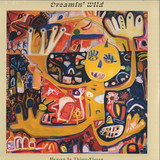
Dreamin' Wild's second album Heaven in Thirty Eleven owes a lot to Footscray. The inner-western suburb of Melbourne features not only in the album title (its postcode is 3011) but goes deeper to form a central part of the record's narrative and reflection.
For all six members - Chris Jennings (Swazi Gold, Sagamore, Sledgehammer), Sam Cooper (Crepes, Swazi Gold, Sagamore, Sledgehammer), Tim Karmouche (Crepes, Swazi Gold, The Murlocs), Sarah Quirk, Monty Hartnett (Sleep Decade, Miris, Sagamore) and James Guida (Laguna, Environments) - Footscray buoyed periods of music exploration and discovery. After more than six year of writing, rehearsing and recording in the suburb, there's no doubt that Footscray is home for the band.
Jennings adds that the album is, "a bit of a recap of the last three years for Dreamin' Wild," drawing attention to the change and growth many of the eight songs have undergone since creation.
"I Don't Disagree" is an album highlight; an almost seven-minute track that struts along calmly, taking life as it is. Quirk's soulful refrain soars atop Jennings' laconic vocals, carrying the song to its end. "Dynon Life" is another album gem, reminiscent of summer in the city, and happy seeking excess.
Heaven in Thirty Eleven is an ode to a Melbourne suburb brimming with culture and stories, made by artists who are proud to call it home.
Ahead of his second artist album on his own Millionhands label in July, Tee Mango teases with a fantastic first EP taken from it. The album finds the UK artist stretch himself with a dazzling array of soul drenched, fully fledged songs featuring his own singing and that of Detroit legend (and Moodymann collaborator) Amp Fiddler.
The sound, very much influenced by early Prince and even a little Bon Iver, combines effortlessly with that loose sampled MPC-house feel that you would associate with a Tee Mango production. It also comes with a seal of approval from Radio 6 Music legend Gilles Peterson and after EPs on the likes of Aus, Clone and Local Talk in recent years.
Opening up the EP, Amp Fiddler features on ‘Feels Like Whatever’. Dancing Rhodes keys, ooze jazz charm and float atop a simple house beat, while the Detroit legend’s emotive raw soulful vocal directs proceedings.
The heart breaking ‘No More Tears’ is an introspective sad soul song that shows another side to Mango’s skills. Tender chords, downbeat drums and vocal hums and coos all melt your very being. Last of all comes the dazzling ‘Lay Down (Disco Mix)’ with its slapped funk bassline, finger clicks and squelch synth work all topped off by an effortless
falsetto. This is a fantastic introduction to the full length to come.
It’s electro, but definitely not as we know it. Sorrowbot arrives with a new perspective of the classic sound. Traditional frosted sounds are picked apart and injected with some new found energy. C64 chiptune chicanery is crumbled across thick bass lines, acid squirms atop biting beats as this newcomer offers something different to the ears of the machine funk faithful. A frigid style that skates on a shimmering surface of subtle shifts and warming currents. Braindance with a touch brainfreeze to it.
Legendary artist Mick Harris (Napalm Death, Painkiller, Scorn…) kicks off his 2019 with this EP of tar-black, bass heavy sonic violence. This EP features 4 reworks of “Salford Priors”, one of the heaviest tracks from his return-to-form album “Over Depth”, the first by Mick Harris himself, and 3 more by his longtime collaborators in the production guises of Fausten, Stormfield, and Monster X. The EP begins with an apocalyptic, dubbed out violent rework by the man himself, creeping in with a cold, calm eerie drone that quickly goes from zero to 100%, blasting into a full force attack of artillery percussion and strafing, shrapnel textures atop the landmine subs and characteristic Harris snarling mono-bass.
Julien Caraz has caused much distress over the years with the sheer rage and precision sonic assaults of his Monster X project. Here he eschews his usual frenetic tempos for a solid 130BPM, a sleek techno destroyer built for giant spaces and huge soundsystems in mind. The Combat Recordings boss has worked audiovisually with Mick since the Scorn AV at Bangface Weekend in 2011, touring with Fret AV in 2018. Here he switches back into audio mode to rework Salford Priors into a hard electro assault for the Stormfield remix.
Fausten is the shadowy, twisted collaboration between Monster X and Stormfield.
Having released a staggeringly twisted album on the legendary Ad Noiseam, Fausten
went into hibernation as the pair pursued their own projects, with only a few sporadic tracks surfacing over the years. The pair have been putting together an album’s worth of new material for 2019, beginning with a powerful remix of Salford Priors. Taking Fret back into it’s aquatic, fathoms-deep sonic territory, this remix is a behemoth work that moves at quarter-step tempo, allowing for more physicality and dynamics, the profound pulse of each profoundly deep bassdrum like an underwater volcanic explosion, with skittering percussion the resonates in the stillness.
2023 Repress
A heaven-made match is now complete with Gerry Read's debut EP for Pampa Records. The British producer's distinctively twisted, lo-fi sound, combined with Pampa's deep-vein instinct for quality quirks, ushers in a new phase for two of house music's most celebrated names. The opening bars of 'It'll All Be Over' are immediately evocative, hinting at the patchwork style to come. Twangy banjo strings and a foot-stomp beat seem to herald a folksy arrangement, but that isn't to be. Soft floaty pads rise up to form an unlikely partnership, softening sharp edges and adding sophisticated melodic expression. Once a compressed vocal sample is introduced, the entire structure reveals itself and begins to spin and loop in the style of iconic French house productions. Propelled further along by the endearing drama of flooded bass drum kicks, falsetto voices and xylophone pings, 'It'll All Be Over' is immediately memorable and expertly architectured. Read's second cut, 'Satyricon,' is woven in the spirit of micro-house. Sharp waveform cuts, timely pauses, loops of noodling keys and hints of percussion shakers combine for a low-slung psychedelic effect. With the sunniness of a vintage folk-pop sample and sultry snatches of Spanish dialogue added atop a deep mid-tempo shuffle, Read secures his place alongside the Bradocks and Leclairs who came before him. On the flipside, Pampa's figurehead takes an expert turn at the controls of 'It'll All Be Over (DJ Koze remix).' The original's jagged edges are buffed out, and shined up into a gleaming disco house anthem. With its artfully timed strumming breakdowns and cowbell accents, it is an appetising teaser of the forthcoming summer.
Honey...rich And Flavorful, Hitting The Deepest Sweet Spot.
Drivetrain (detroit, Usa) - Inside You
Label Founder, Derrick Thompson Sets It Off With A Primetime Floor Filler.
The Gravitational Pull Of The Bass Riff Encapsulates The Vocal Hook As The Keyboard Refrain Perfectly Aligns With An Aggressive Percussion Track.
Rennie Foster (vancouver, Canada) - Detroit City
Demonstrating A Much Deeper Persona, The Sultry Piano Sets A Moody Atmosphere. Luxuriant Strings And Expressive Bell Tones Conjugate As The Vocal Signature Pays Homage To The City Of Inspiration.
Melodymann (ghent, Belgium) - Nobody Else
Explicitly Designed For Maximum Body Movement, A Solid Percussion Theme Is Immediately Established. Soon An Animated Chord Progression Is Introduced,
Then Showered With Kinetic Vocal Samples For Amalgamated Electricity.
Mark Ryal (sitges, Spain) - Imperfect Perfection
This Elegantly Fluid Soiree Debut Parades A Sphere Of Warm Pads Throughout.
Articulated Harmonies, Elastically Weave A Blissful Sonic Terrain Atop An Unyielding Groove Framework.
With Recent Appearances On Boiler Room And The Groove Magazine Podcast Plus Sets Across Asia And Europe, Jamaica Suk's Fearsome Techno Sounds Are Winning Fans Far And Wide. A Year On From Her Debut Release On Her Own Gradient Label Comes This Stunning Second Volume.
A1 Stinger Ray Kicks Off The Ep With Zingy Modular-style Synth Sounds Pulsing Over A Bubbling, Murky Bassline. Sheet Metal Snares Punctuate The Beat, With A Switch-up Halfway Through Into Gnarled, Distorted Synth Crunches Catching You Unaware. These Brutalised Rhythms Morph In And Out Of Hypnotic Arpeggiated Pulses To Make For A Hallucinatory Ride With Ample Dashes Of Psychedelia Throughout.
A2 Fallen Sets It Outs Stall Immediately, With Filtered Down Acidic Bass Playing Out A Jagged Groove. A Manic Counterpart Mimics Its Rhythm But Dizzyingly Delayed Off The Beat To Create A Rugged, Funk-fuelled Feel. Cymbal Rides Pitch Up And Down, Unidentified Snarls Of Fx Mutate Around The Edges, All The While The Sharp Hi-hats Keep The Metronomic Heartbeat Going.
B1 Whispers Ups The Intensity. Delicate, Arpeggiated Chime Sounds Set A Crystalline Mood Before Swathes Of Intense, Darkly-tinged Synths Swell In And Out Of Focus Atop The Throbbing Kick Drums. The Effect Is That Of A Factory Full Of Machines Growing A Mind Of Their Own, Malfunctioning In A Pleasing Harmonic Dissonance.
B2 Twilight Rain (vinyl Only) Completes The Set With Infectious Triple Kick Drum Patterns Underpinning Dramatic Drum Hits And Warped Atmospheric Shivers That Create A Spooky Feel As Droning Bass Tones Carve A Path Through Your Speakers.
Dark Entries is honored to release a 4-track EP by Swiss musician Carlos Perón, founding member of Yello. Carlos was born in 1952 in Zurich and began collecting music at a young age. Inspired after attending a concert of Karlheinz Stockhausen in the 1960s, he began to compose Musique Concrete pieces using a 4-track reel to reel and found sounds. In 1979 Perón founded the trio Yello with musician Boris Blank and vocalist Dieter Meier. Yello released their first album in 1980 and the following year Carlos released his first solo album 'Impersonator'. In 1983 Carlos left Yello in order to pursue a solo career and released the soundtrack to Die Schwarze Spinne" and 1984 his second solo album Nothing Is True, Everything Is Permitted'. In 1988, Belgian label LD Records released a 4-song EP of instrumental tracks from 1984 that predated, influenced and became staples in the New Beat scene.
Dirty Songs' is a collection of songs from Carlos Perón recorded between 1980 and 1986. The recordings were made with the core set up of an ARP 2600, Roland's Drumatix, TB-303 and TR-808. Nothing Is True, Everything Is Permitted (Instrumental)' recorded in 1984 is a slow burner with dark, gloomy atmospherics, presented here in an extended version with a bonus intro. The song was inspired by William S. Borroughs' Naked Lunch' and paints a bleak futuristic landscape. Breaking In (Instrumental)', from 1984, is a crossover of electronic body music and pitched down Chicago acid house featuring overplayed snares by hand though an Ovomaltine Box. Originally featured on the soundtrack for Die Schwarze Spinne', the song is about breaking into a large pharmaceutical company to steal drugs. On the B-side is A Dirty Song (Instrumental)', originally recorded in 1986 and released by Play It Again Sam in 1988. The song uses one of the earliest Roland SH synthesizers, the SH-1 A, as a solo instrument and is strikingly aggressive with percussive rhythms. Et' was recorded in 1980 on a 4-track and later and remixed to 8-tracks in 1984 for the Frigorex' EP, which is where this extended version comes from. Featuring eerie, cut up vocals and Dadaist lyrics by Isa Nogara atop a proto-Techno beat.
All songs have been remastered for vinyl by George Horn at Fantasy Studios in Berkeley. The jacket features a never before seen black and white photo of Carlos taken in 1988. Each album includes an double-sided postcard featuring the cover art from the Frigorex' EP. Prepare to make your own movie to the Swiss John Carpenter soundtrack vibes of Carlos Perón.
Following on from Comfy Bella's Konkahs EP earlier this year, Released's second vinyl instalment comes courtesy of the Berlin-based production duo Horsemen, who mark their debut into the world of wax with the aptly titled 'Unknown EP'. Freshly faced and full of vigour, Horsemen deliver two unique cuts of engaging electronic music which are accompanied by a remix from Released's very own Jorgie.
The title track 'Unknown', features the delicate vocals of close friend Nomoko, atop a robust combination of thick kick drums, energetic percussion and a pulsating bass line. 'Motor Jungle' harks back to the early sounds of Detroit, assuming a 4/4 drum pattern which is laden with a rowdy bass arrangement accompanied by Hip Hop-esque vocal snippets. The EP is rounded off, and mellowed out, with Jorgie's hazy interpretation of the title track - a 110bpm ethereal excursion that takes the listener deeper into the unknown...
Emotional Rescue returns to the music of Elaine Kibaro with a special 7" single to accompany the Pour L'Amour album collection (ERC066). Here then are two bonus versions of songs from the LP with a unique Arabic recording of her "hit" Aurore and also, the previously unreleased on vinyl instrumental version of her balearic / boogie jam, Ne Doute Pas.
Having moved from Tunisia to France at the age of 13, Kibaro's duel sensibility has long been apparent in her music and performance. The early success of her debut 7" De L'autre Cote Du Miroir in 1977, was soon followed by her most 'successful' song in Aurore, first released as a 7" in 1978, before appearing again as 9 minute extended version on the 1979 Miroirs LP.
In the same year she recorded a special 7" single on the little known World Music label. Singing the lyrics in Arabic - renamed here to its true translation - much else remained the same. The music of the original, the spoken intro soon gives way to what is essentially a leftfield disco groove, with building strings, funky bass and some late archetypal 70s Euro drumming. Atop this the vocals are delivered in Kibaro's ubiquitous chanson delivery, her heartfelt singing, the congos breakdown and then chorus, as the songs builds, all lead to head-nodding smiles all round.
With this is Ne Doute Pas. A stand out from Pour L'Amour, the vocal version appeared in 1989 as a single and on the now sought after, Kiroel album. This instrumental simply let's the music shine. A Linn rise and fall bassline, soft, layered keys and mode horns are run and rerun in a catchy, incessant flow like a PWL demo. The 10 years between the 2 tracks is apparent in the instrumentation but the link between the two - Kibaro herself - is clear and worth enjoying for that.