Leo Ceccanti should be a familiar name to all followers of the Claremont 56 label. Alongside sometime studio partner Gianluca Salvadori, he was responsible for two delightfully distinctive Almunia albums released on the label, 2011’s New Moon and 2013’s Pulsar. Both sets were filled with golden, sun-kissed sounds, psychedelic grooves and immersive, life-affirming soundscapes.
Now he’s decided to go it alone as Leo Almunia, delivering a debut album for Claremont 56 that’s every bit as alluring, wide-eyed and evocative as those he made with Salvadori. In keeping with his previous work, the album blends layered acoustic and electric guitars with toasty bass, dreamy synthesizers and grooves that variously touch on hypnotic house, chugging mid-tempo disco, sunset-ready Balearic beats and, on the glistening, life-affirming album highlight ‘Wishing Star’, loose-limbed jazz breaks.
What’s most significant about Ceccanti’s personal musical style is not the blend of stylistic influences he draws on – think psychedelic rock, progressive rock, jazz-rock, new age ambient and slow-motion disco – but rather the way he uses it to paint vivid aural images that genuinely linger long in the memory.
After opening with the duelling guitars and chunky dub disco grooves of ‘Sinking Fields’, Ceccanti sashays between magical moments of rush-inducing positivity, heart-tugging poignance and heady nostalgia.
Along the way, you’ll find numerous sonic highlights. On the intoxicating 21st century psychedelia of ‘Panerea’, jangling chords and eyes-closed psych-rock guitar solos ride a chugging, thickset electronic bassline, while ‘Il Cormorano’ is a metronomic, flash-fried workout rich in fuzz-tone guitar motifs, bluesy riffs and echoing instrumental touches.
He cannily joins the dots between Mid-West Americana and throbbing, psychedelic disco-chug on ‘Loveblind’, while ‘Minor Circle’ sits somewhere between Santana, the Pat Metheny Band and sunrise-ready Balearic blues. Arguably even better is the saucer-eyed brilliance of ‘Brillo De Luna’, where a dubbed-out electronic beat becomes enveloped in life-affirming acoustic guitar chords, exotic slide guitar motifs and string-bending solos. If John Lennon had ingested MDMA rather than LSD before writing ‘Across The Universe’, it would probably sound like this.
Then there’s the album’s crowning moment, closer ‘Can’t Hold a Lover’. A heart-aching, largely ambient instrumental that channels the loneliness and anguish felt by many of those separated from their nearest and dearest during the pandemic, it sees Ceccanti brilliantly wrap a variety of sun-bright guitar textures and solos around some of the loveliest synthesizer chords you’re every likely to hear. On an album packed with effervescent, mood-enhancing musical highs, it’s a rare moment of bittersweet bliss.
out of Stock
Last delivered 4 years ago available to reorder, subject to availability
The group Magizter formed in Malmö, Sweden in the early 90s, and mainly consisted of former members of the Hungarian industrial band Das Kapital, of which some managed to flee to Sweden from the communist regime before the fall of the Soviet Union.
Gyula Szilagyi, who was the first to make his escape via train through Berlin in 1987, recalls: “it was a few weeks before mandatory military service would begin, and our passports should have been turned over to the authorities”. Risking deportation and prison, he was granted asylum in Sweden after some months in Stockholm.
Szilagyi and the rest of the band were all part of the underground scene in Budapest, of which some had been under surveillance by the secret police since their teens. It was a tight knit community where anti-communist and illegal literature was distributed, and many bands shared mutual members.
The track “Das Kapital” was produced in Malmö in 1993 by Szilagyi and fellow Magizter member Zoltan Lengyel, in a home studio overlooking the Möllevång Square, were Szilagyi had moved after some years working at the glass factory in Orrefors. He had managed to save a few performances by Das Kapital recorded on cassette, of which one served as sample material for the Magizter track; an homage of sorts to a group involuntarily disbanded.
The cassette sampled here was recorded in 1986 during a live concert at the university-affiliated venue Ráday Klub, where Das Kapital performed alongside the British industrial act Left Hand Right Hand (who had formed from the Sheffield band Zahgurim).
On the eve in question, Szilagyi remarks: “we used a guitar that we had made ourselves to resemble a Kalachnikov rifle. During the concert at Ráday Klub the guitar was destroyed using a drill machine. It made a powerful sound effect”
A remix of the remix is offered by Vienna-based Heap, who with his own productions as well as his work with the Neubau label is building a bridge towards the new era of European industrial music.
out of Stock
Last delivered 5 years ago available to reorder, subject to availability
Brand new Barcelona imprint Balearic Ensemble hit the ground running with their premier plastic disc drop, BE001. We’re over (and under, and around) the moon to present the Painting Of The Day EP, the first i n a series of extended plays l ined up from the baddest crew of balearic samurais for your aural i ndulgence. Leading the charge i s the one and only Max Essa, a man some may know as botanist-in-chief at the sublime Jardin Jansen l abel, others as the shadow behind a string of l ush productions sounded out by the l ikes of the Guv’nor Andrew Weatherall or a one David Mancuso. Painting Of The Day i s the l atest i n Max’s deeply inventive output, with Joe Morris, Lukkas and Ibicenco duo Reisdentes Balearicos serving up three wondrously lush revamps for the heads . First up i s ‘ Matinee’, which takes that l aid-back 80s sound and washes i t through reverb racks and cascading arpeggiatic tones. Soft, subtle and brilliant, the result i s an emotional Essa performance, akin to a soft caress of the waves, or a brush stroke on a canvas i n the afternoon sun. ‘Tempo Babadoh’ i s another massive balearic number, promenading and pirouetting i ts way across a vista of club congas, wah guitar and deluxe synth sounds. Sliding nylon strings evoke memories of a l ate-night Mandy Smith anthem as agogo bells i nterweave among the flora and fauna of Max Essa’s balearic vision. A l ofty, virtuosic affair that’s sure to be a staple when the good times come. On the flip we have Joe Morris’s ‘ Paraiso’ version of Tempo Badaboh. It’s a(n) NY hymn, a dusty psalm, a stellar reimagining of the original which brings an 80s Chicago feel with all the savoir faire and finesse that the Clandestino man has come to be revered for. Sizzling b l ines, crickets at dusk and time-tested balearic motifs presented i n a new, slightly angular l ight. Over on B2 (?) we get Lukkas’ Club Mix of Matinee, a dangerous dance weapon with a dose of l ow frequencies bubbling through the sp
out of Stock
Last delivered 5 years ago available to reorder, subject to availability
It’s a given that timing is everything in music – most obviously in terms of composition and production but often just as much in regard to conception and release – the latter two doubly poignantly so in the case of this massive DOOM vs The Sugarcubes mash-up LP from turntablist and producer Krash Slaughta.
Which is why the tale of this project’s gestation is perhaps what should be told about it before anything else.
Begun last August and finished on 25 October, the album started life as an idea born from a casual listen to final Sugarcubes album Stick Around For Joy that Krash had bought a copy of years before in a charity shop. Contemplating the cover art while listening to the LP and the track Hit in particular, it came to him that here might be the musical basis for a concept LP in the grand tradition of the hip-hop mash-up album. Thus the project was born, becoming something of an obsession as lockdown restrictions recommenced through a sanity-testing autumn. As it developed, the provisional title of Stick Around For DOOM morphed into Sugar Coated DOOM and Brighton artists Leigh Pearce and Rob Crespo were roped in to create the artwork. So pleased was Krash with the results that he decided to self-finance the pressing of the LP to vinyl which in turn would allow him to send a copy to DOOM in the most fitting format. On that basis, along with his dad’s advice that if you want something done properly; do it yourself’, he initiated the process for a limited press run as soon as the project wrapped and telephoned his dad (who’d been shielding and who he hadn’t seen for months) to say he’d done precisely that. In a tragic twist, this turned out to be their last ever conversation, for Krash’s dad died suddenly the next day. Two months later of course, while waiting for the Covid-slowed vinyl pressing process to complete, came a further tragic twist as the world received the delayed news that DOOM himself had also passed away back in October – in the event, only five days after Krash’s father. So it’s no understatement to say that Sugar Coated DOOM carries significant emotional resonance for its maker, forever linked as it will be to the deaths of two of his personal heroes.
Which brings us to the content. The album contains seven vocal tracks, with an alternate version of one and instrumental versions of five of the seven across two sides of an album with the music, track names, LP title and cover art mashing up musical, lyrical/ textual and visual elements of The Sugar Cubes’ Stick Around For Joy with DOOM acapellas, track names and references. Listeners won’t need long to appreciate that Krash Slaughta was right to be proud of his creation, almost certainly correct in thinking DOOM would dig it and no doubt The Sugarcubes too. Also, who would have thought The Sugarcubes had so much potential for beat-mining? But then seeing potential in the unexpected was always a vital skill from the golden era of sampling in hip-hop and those who follow in the tradition. The first track proper, for example, swipes Madlib’s lo-fi beat from underneath the vocals for Figaro and replaces it with the looped and beefed-up opening bars of the Cubes’ I’m Hungry. The result is a natural fit. But then the blending of elements in every track on this release provides evidence of the effort and love put into its creation, reinvigorating DOOM’s classic vocals while re-purposing The Sugarcubes in a manner that will delight. Indeed, if you’d didn’t know the work of Bjork’s former band, you’d be unlikely to pin an early 90s alt-rock LP as the sample source. I imagine listeners will have a hard time picking a favourite too. Perhaps Hit It (based on the track which triggered the project idea in the first) which splices the Bond-theme-ish Hit with My Favourite Ladies might prove the most popular, or the monkey’s favourite, Nurse Chong, which blends Happy Nurse with Raedawn (named for Tommy Chong’s daughter) from Viktor Vaughn LP Vaudeville Villain. Whichever one punters pick though, anyone who hears anything off this will know it’s one to rank alongside your other favourite hip-hop mash-up albums. And who knows – perhaps even Mr Daniel Dumile himself might have considered it a not unfitting epitaph.
The Boy With No Name - angelehnt an den kurzzeitigen Spitznamen des Sohnes von Travis’ Frontmann
Fran Healy - wird zum ersten Mal in seiner ursprünglichen Form auf Vinyl wiederveröffentlicht.
2007, zehn Jahre nach der Veröffentlichung ihres Debütalbums hatten sich Travis auf ihrem 5. Studioalbum
der Welt der Beziehungen zugewandt, wobei sich insbesondere ”My Eyes” auf Fran Healy’s neugeborenen
Sohn bezog. Das von Nigel Godrich (Radiohead, Beck, Paul McCartney) und Brian Eno produzierte Album
bezeichnete Fran später als ”our most eclectic album”. Es enthielt den UK Top 10 Hit ”Closer” und schaffte
es in die Top 5 der UK-Charts. Von der BBC wurde es als das Werk einer Band gelobt, die es sich leisten
kann, Risiken einzugehen”.
Das Album erscheint als 2LP mit Gatefold-Hülle, bedruckter Innenhülle und Bonus 7”.
“Vax!” – Reminiscent of all the slippery vinyl that glitched under so many sweaty wet fingers in a steamy basement before time – a picture that seems highly illegal in our current antiseptic climate of hopefully germ free adolescents. Vax-inate! Give them the needle! It’s time.
Deti Vechnosti – Pered Rassvetom opens the gates to plug into the socket of our collective deranged consciousness, generating frisky and flamboyant specks to brightening darkness that confines our lives. Offering glimpses of the great unknown we also carry within. The Track introduces Chikiss & Mustelide’s new group “Deti Vechnosti”.
Alexander Arpeggio & OhLandy’s “Der Anruf”, wich originally appeared as a French language version on a previous Sameheads / Diapason tape release tells those tales of hot and hotter heat. Karmic payback for the sweaty and long nights enveloped in the halo of resonating frequencies of silly and high-spirited mischief.
Rouge Mécanique – Down the Line – follows suite in the odyssey that is a demented night out, sitting in front of a club, realising that the leatherjacket you picked up a few streets ago from the ground doesn’t smell like adventure but like spew.
The B-Side opens with Automatenfall – a hardware electronic 3 piece, previously appearing live at Sameheads during a “My Friend calls it K-Jazz” event. A yearning that eventually gets us on a spiritual path and headed toward enlightenment through the meandering melange of chimes, that little sounds that usually overcome us in the weirdest of times.
Das Kinn – the new project from Toben Piel, who’s part of Frankfurt’s MMODEM family, and one half of Les Trucs evokes memories of better days, black leatherpants – think Falco meets DAF – Überpop for the Untergrund.
Stopping for a final coup d’œil is Alessandro Adriani’s – Preserved Data Space. A persuasive case of brutally but lovingly worked machines serenading sawtooth waves of an infinite Weiter, a dissolving timeframe – the longest after hour I’ve been to, it lasts more than a year now already and counting.
Written by Michael Aniser.
out of Stock
Last delivered 2 years ago available to reorder, subject to availability
Following the success of the limited edition of 700 copies for the Record Store Day, we're offering you the chance to pre-order a new unnumbered edition of this unique project. Hot release alert! An unpublished version of Amsterdam, discovered in the archives of French radio. Recorded in front of an audience at «La Maison de la radio» for the show «Jam Sessions» in July 1965, this version offers a new arrangement: without accordion, only accompanied by Gérard Jouannest (piano) and Pierre Sim (double bass), Jacques Brel interprets Amsterdam with deep emotion.
Notice to collectors!
Also on the program that night: Ne me quitte pas, Au suivant and Le Plat Pays.
Music in Exile announce their forthcoming remix EP, featuring reworkings of Music Yared by Melbourne cult hero, Mikey Young (Total Control, Eddy Current Suppression Ring, The Green Child). SINDAYO - MIKEY YOUNG REMIXES features remixes of an original track from Music Yared’s self titled debut EP, released last year through Music in Exile. In addition to today’s announcement, we’re delighted to also share the first single, Sindayo (Mikey Young’s Masinko Remix - Radio Edit), out March 26 via Music in Exile.
Mikey Young’s legacy is well known throughout the Australian music scene, most notably as part of garage punk band Eddy Current Suppression Ring, and synth-driven outfit, Total Control. However, the talents of Young extend well beyond the performance setting to the world of engineering and mastering with his name appearing in the liner notes of an incredible number of releases, becoming something of a trademark of quality. In this release, Young showcases his skill and nuance, creating a remix where tradition and sonic exploration co-exist.
Anbessa Gebrehiwot and Haftu Reda are masterful players of krar and masinko, traditional string instruments from Eritrea and Ethiopia. Now based in Melbourne, Australia, the pair collaborate with multi-instrumentalist Dale Gorfinkel to create an innovative ensemble sound that celebrates their East African culture. The band's seemingly endless repertoire ranges from modern takes on folk songs to new, original compositions with Anbessa’s strong vocal presence a perfect match to Haftu’s sweet lyrical modesty.
Music Yared’s compositions are inspired by traditional Etheopian and Eritrean folk songs and they sing about love, distance, separation and culture. Their songs also feature virtuosic mastery of traditional instruments - the krar, (a 5 string lyre style instrument), and the masinko (a single string violin-like instrument that is played using a bow.) Although inspired by tradition, Music Yared’s compositions embrace the notion that music is always developing and changing with the times. Taking influence from traditional folk songs, Music Yared finds newness and originality through their personal approach to their lyrics, their treatment of rhythm, and the creation of new beats. This change and openness to new sounds is also apparent in their instrumentation, as they pair their traditional instruments with drums, as well as samples of bass lines and percussion.
Given their openness to new musical approaches and experimentation, it only seems fitting for the songs of Music Yared to be remixed, allowing further exploration of their inherent musical attitudes towards change and development. The first single from the EP, Sindayo (Mikey Young’s Masinko Remix - Radio Edit) traverses new sonic territory, pairing the traditional character of Music Yared with contrasting ideas from different sonic landscapes. Beginning with a musical acknowledgement to the original song, Young’s remix then changes direction into a new sonic world; synth pads and melodies swell and intertwine, samples interject, whilst grooving electronic beats underpin a new approach to texture and song structure.
Recorded by Dale Gorfinkel in Thornbury. Mixed and mastered by John Lee at Phaedra Studios.
Remixed & additional production by Mikey Young in Rye.
out of Stock
Last delivered 5 years ago available to reorder, subject to availability
Sinéad O’Connor marks a long-awaited return with a stunning version
of ‘Trouble Of The World’, a traditional song made famous by exalted gospel singer Mahalia Jackson, available as a 7” single backed with an a cappella version on Heavenly Recordings.
It follows somewhat belatedly the-ever-more pertinent ‘Trouble Soon Be Over’, her contribution to 2015’s ‘Tribute To Blind Willie Johnson’ compilation and once more exudes the heart and soul of this extraordinary performer.
Sympathetic to its origins, the heartfelt, evocative tones propel this impassioned rendition to the present its poignancy highlighted by a remarkable artist who leaves her own indelible mark on this topical realisation whilst realigning with a positive viewpoint.
In her own words, she explains; “for me the song isn’t about death or dying. More akin, a message of certainty that the human race is on a journey toward making this world paradise and that we will get there.”
The inspirational lyrical narrative that underpins ‘Trouble Of The World’ bears more relevance than ever today in the context of the death of George Floyd and the highlighting of the persistent racist undercurrents that trouble mixed societies across the globe.
The song sees Sinead joining forces with renowned producer David Holmes and, recorded in Belfast, Northern Ireland at the easing of the lockdown, it shares an uncanny albeit eerie symmetry with our new trouble of the world backdrop and once again Sinéad awakes our souls to the ironies and similarities of our collective past and present. The pair have created a sonic tonic and shout out to the powers that be as a voice of the people still questioning all-toofrequent events such as witnessed over the past few months that ensue decades since the nascent birth of the civil rights movement in the United States.
Embodying a voice with beauty and innocence, a spirit part punk, part mystic with a combined fearlessness and gentle authenticity - unique, uncompromising, a pioneer, a visionary, just some of the descriptions that perhaps merely touch the surface of Sinéad O’Connor.
out of Stock
Last delivered 5 years ago available to reorder, subject to availability
Toronto’s Ducks Ltd. will release their debut EP, Get Bleak on May 21, 2021 via Carpark Records. Composed of friends Evan Lewis, on lead guitar, and Tom Mcgreevy, on vocals and rhythm guitar, the band built a reputation in their hometown for their bright, sinewy, guitar sound while sharing bills with artists like Rolling Blackouts Coastal Fever, Weyes Blood, The Goon Sax and Juan Wauters. They have earned accolades from Pitchfork who praised the band’s “lilting, throwback jangle pop,” and acclaim from outlets like NPR, Paste, NME, Apple Music 1, and more.
The opening track, “Get Bleak” sets a thematic tone for the EP, one of cultural self-awareness and satiric critiques of society’s pressures and the often ridiculous demands – and prices we pay – to exist. Chiming with breezy indie guitar sounds akin to those of Flying Nun and Sarah Records acts, the track, that features a contribution from Laura Hermiston of Twist, pokes fun at the idea that moving from city to city will fix the problems in your life. Following suit is “Gleaming Spires”, a track that zeroes in on the cities we live in and the push-pull relationships that we so often share with them. “Anhedonia”, via it’s tightly-wound rhythm and nostalgia-inked guitars, shifts focus to the times when one is unable to wring any joy out of the things that they find important in life.
Bringing the band’s characteristic restless bounce, thoughtful lyricism and penchant for orchestration, the tracks explore topics like troubled friendships (“It’s Easy”), self-destructive desires (“Oblivion”), and living with decline (“As Big As All Outside”) while maintaining the balance of earnest self-reflection and humor that endeared audiences to the original release.
Full of the unbridled radiance of jangle-pop, the debut EP from Ducks Ltd.’s Get Bleak celebrates their strengths while expanding their thematic and compositional horizons, and providing an intriguing glimpse of what’s to come.
Vinyl LP comes with a limited edition magazine, featuring drawings by Williamz himself, as well as lyrics.
‘SoundKilla Mindset’ is a Reggae & Dancehall opus which takes Mr. Williamz back to his roots as a sound system native and draws on inspiration from the OG Nicodemus. A respected statesman of the Portobello dancehall-soaked streets, Mr. Williamz uses modernity combined with elements of styles from the Reggae greats to create a record only someone as proficient and knowledgeable in the scene as he could.
Born in London, UK - when Mr Williamz was 6 years old, his father moved home to Jamaica bringing both him and his younger with him. By the age of 10 he was already a local favourite winning local clashes and competition and at 15 he returned to London. Fast-forward to today and he is a soundsystem icon who is recognised for his authenticity, Mr Williamz 20 year career has seen notable collaborations with: Major Lazer, Shy FX, Mungo's Hi-fi, Green Lion Crew and Big Zeeks. He has recorded and performed with the likes of: Chronixx, Damian Marley, Gappy Ranks, Hollow Point, Jah Mason, Junior Demus, Mikey General, Pinchers, Spragga Benz, Stephen Marley, Supercat and Topcat.
He also recently made his acting debut in the feature length film “Yardie”, directed by Idris Elba. With recent radio support from David Rodigan, Ras Kwame, Rodigan, Toddla T, Robbo Ranx, Daddy Ernie & Allan, press support from Clash Magazine and Reggaeville, Mr Williamz is undoubtedly continuing building his lasting impact on the genre and wider UK music scene.
Der amerikanische Pianist Vijay Iyer präsentiert auf UnEasy ein kraftvolles neues Trio, in dem er von zwei
Schlüsselfiguren der kreativen Musik, Tyshawn Sorey und Linda May Han Oh, begleitet wird. ”Wir haben
eine gemeinsame Energie, die sehr ausgeprägt ist. Sie hat eine andere Art von Antrieb, einen anderen
Impuls und ein anderes Spektrum an Farben”. Das Repertoire auf UnEasy, das im Dezember 2019 im
Oktaven Audio Studio in Mount Vernon, New York, aufgenommen wurde, umfasst Eigenkompositionen
Iyers, die über einen Zeitraum von 20 Jahren geschrieben wurden, sowie Gerri Allens ”Drummer’s Song”
und eine radikale Neufassung von Cole Porters ”Night and Day”.
HIDE are an electronic duo based in Chicago. The pair create dark and heavy sample - based compositions using a combination of self - sourced field recordings and various pop culture and media references. Their music is textured, minimal, and powerful, giving raw vulnerability an opportunity to unfurl. Their work is honest, confrontational, powerful and thought - provoking.
HIDE's third album, Interior Terror further abandons traditional concepts of song structure in favor of splintered rhythms and fevered, immediate release. Expanding on previous themes of autonomy and empowerment, Interior Terror addresses and questions the corporeal and immaterial body in a physical and metaphysical sense. Turning to the dread inside, reflecting on the world around us,
HIDE gives voice to the power of destruction as a c atalyst for hope, and to the collective experiences of those who've come before us as a wellspring of our own power. Raw vocal delivery of mantra - like prose issued forth yields a raging, plaintive wail that lulls, mocks, questions, proclaims and decries. A dearth of collected field recordings give way to more fluid arrangements while retaining a scathing urgency. The result is minimal, spacious, and jarring; a distant knocking grown into the pulse of a hypnotic dirge, drones emerge from shards of decomposed sound, bending, seething their way through your body.
"Do Not Bow down" is a self - directed spell for fire and regeneration. “Nightmare” explodes, unrelenting; conflating time and space to the beat of repeated blows to the head. A reflection on perpetual suffering, generational traumas and the transformative action of release. Title track “Interior Terror” belies a new brand of body horror informed by the systemic enforcement of a contemporary Western gender binary, touching on experiences of dysphoria and disassociation . “Fear” answers the question 'Where do cops come from
Divided into two worlds Life? A long narrow path. Anything else? Yes: people and music. That's it, but still. It couldn't get any more narrow than for Ozan Ata Canani.
I've been asking myself all these years: what has he done to deserve that his art is so ignored? The young Ata was a prodigy on the bağlama, the Anatolian long- necked lute. So good that the great Aşik Mahzuni Şerif took him on tour. At that time Ata was just thirteen. Ata's father was suspicious and forbade him to play music.
In the late seventies, the young adult Ata wrote the first song cycle of Anatolian music in German. He wanted to arrive, live in Germany and communicate with the majority society. He wanted to make audible what was going wrong. The lament was only eclipsed by Ata's infectious optimism. His music is a journey that takes its listeners along. He was obviously ahead of his time, because no one wanted to publish these songs. They found no lobby. Not even the utopias of the German counterculture of the sixties did include the so-called guest workers and their art and culture - which is why Ata's parents' generation did not find a connection in the country. Most of them wanted to return home after their work was done. So what was the point of building bridges to the land of the oral cavity surveyors and the screaming foremen? The Anatolian people of Germany had created their own great structure of music dissemination. They were not dependent on the radio and the department stores. They had their own shops, everywhere. Unnoticed by the German music industry and the local media, companies like Türküola in Cologne or Uzelli in Frankfurt turned over millions of records every year. Türküola is the most successful independent label in post-war history. The records and cassettes, later CDs, went over the counters in their own shops, in greengrocers' markets and at electronics hawkers near railway stations.
HIDE are an electronic duo based in Chicago. The pair create dark and heavy sample - based compositions using a combination of self - sourced field recordings and various pop culture and media references. Their music is textured, minimal, and powerful, giving raw vulnerability an opportunity to unfurl. Their work is honest, confrontational, powerful and thought - provoking.
HIDE's third album, Interior Terror further abandons traditional concepts of song structure in favor of splintered rhythms and fevered, immediate release. Expanding on previous themes of autonomy and empowerment, Interior Terror addresses and questions the corporeal and immaterial body in a physical and metaphysical sense. Turning to the dread inside, reflecting on the world around us,
HIDE gives voice to the power of destruction as a c atalyst for hope, and to the collective experiences of those who've come before us as a wellspring of our own power. Raw vocal delivery of mantra - like prose issued forth yields a raging, plaintive wail that lulls, mocks, questions, proclaims and decries. A dearth of collected field recordings give way to more fluid arrangements while retaining a scathing urgency. The result is minimal, spacious, and jarring; a distant knocking grown into the pulse of a hypnotic dirge, drones emerge from shards of decomposed sound, bending, seething their way through your body.
"Do Not Bow down" is a self - directed spell for fire and regeneration. “Nightmare” explodes, unrelenting; conflating time and space to the beat of repeated blows to the head. A reflection on perpetual suffering, generational traumas and the transformative action of release. Title track “Interior Terror” belies a new brand of body horror informed by the systemic enforcement of a contemporary Western gender binary, touching on experiences of dysphoria and disassociation . “Fear” answers the question 'Where do cops come from
Spindle Ensemble’s highly anticipated sophomore album is scheduled for a release on Thursday 27th May 2021 on vinyl, CD and digital download via Hidden Notes Records. The vinyl version will be accompanied by a special 12 page booklet which also includes liner notes written by celebrated DJ and Broadcaster Nick Luscombe (BBC3’s Late Junction/Musicity/Flomotion Radio).
In conjunction with the announcement a brand new single Caligo - with B side Menilmontant - was released via Bandcamp on Friday 5th February 2021 together with a unique music video that combines super 8 footage and scratched 16mm film visual artist Narna Hue (watch the video below).
A special socially distanced album launch concert is due to take place at St George’s Bristol on Thursday 27th May depending on COVID guidelines and restrictions at that time.
Since their formation in Bristol in 2016 contemporary chamber quartet Spindle Ensemble led by composer and pianist Daniel Inzani (Yola, Alabaster dePlume, Tezeta) which also features tuned percussionist Harriet Riley (Charles Hazelwood’s Paraorchestra, Bristol Symphony Orchestra), cellist Jo Silverston (Mesadorm) and violinist Caelia Lunniss (Edward Penfold) have garnered much praise for their innovative take on contemporary classical music, rooted in spontaneity and improvisation performed with deft musicianship and unique instrumental pairing all resulting in truly captivating sonic soundscapes.
Equally at home performing in concert halls such as the Union Chapel, Southbank Centre, Bristol Beacon, St George’s Bristol and festivals including Shambala and Hidden Notes to churches, art centres, record shops and independent venues across the UK they continue to bring their music to a diverse and ever growing audience.
Listeners may hear influences from composers such as Satie, Pärt, Ravel, Reich, Glass and Moondog in their music but might also find the soundtracks of Morricone and the minimalist aesthetics of the Penguin Cafe Orchestra nestled alongside the more experimental leanings of groups such as Rachel’s, Esmerine, Bell Orchestre and Amiina.
The quartet’s forthcoming album Inkling was recorded at various venues across Bristol, capturing their performances as unique 3D sound images enabling the listener to hear each instruments position mimicking the audible experience as a live audience member. Unlike their debut BEA, some of the compositions on Inkling also features a collection of guest musicians expanding their sound to an orchestral scale, featuring the addition of brass and percussion instruments.
In September 2019 the group released a double A-side single of Chase and Okemah Sundown from the album with accompanying videos by acclaimed Director/Cinematographer Fred Reed and stop-motion animator Marie Lechevallier.
Sub Rosa presents in their Early Electronic series, the final chapter of music by Beglian key composer of early electronic experiments, André Stordeur (1941-2020). Side A features a previously unreleased, stark and poignant composition from 1979; while the B side is vibrant and almost playful of pieces from the 2000s.
André Stordeur His musical career started in 1973 with a tape composition for the soundtrack to a film on Gordon Matta-Clark titled Office Baroque. Later in the 1970s, he participated to avantgarde music ensemble Studio voor Experimentele Muziek, founded in Antwerp, Flanders, by Joris De Laet. Since 1980, Stordeur composes exclusively on Serge synthesizer, either a Serge series 79 and a Serge prototype 1980, which was especially built for him by Serge Tcherepnin himself. In 1981, Stordeur composed the music of Belgian film director Christian Mesnil's documentary Du Zaïre au Congo. He studied at IRCAM in 1981 with David Wessel and then flew to the US to study with Morton Subotnick. Stordeur became an influential sound synthesis teacher and, in 1997, completed his Art of Analog Modular Synthesis by Voltage Control,4 a guide to everything modular.
Oberheim While 'Oberheim' is the centerpiece of this LP, we pressed for the first time on vinyl three pieces from the session André called 'Synthesis Studies,' previously featuring on Complete Analog and Digital Electronic Music, 1978-2000. 'I was helped in my studies by a must-have book: The Techniques of Electronic Music, by Thomas Wells and Eric Vogel (University Stores, 1974). That book aside, I learned synthesis on my own. After a trip to India in 1968, I discovered Indian music and took tabla and sitar classes in New Delhi; my teachers were students of Chatur Lal and Ravi Shankar. Later, in the 2000s, while living in the US, I tried to recreate through synthesis all the Indian musical instruments I loved so much.' 'Drone' is one of his most spectacular works.
The venerable composer and keyboardist Stale Storlokken follows up his previous Hubro release (and solo debut recording), The Haze of
Sleeplessness, with a second solo album performed entirely on pipe organ and recorded at Steinkjer Church by Stian Westerhus.
He describes the album as “a cavernous cathedral of sound”. While the Norwegian Grammy-nominated ‘The Haze of Sleeplessness’ used a whole keyboardmuseum’s worth of antique synths and contemporary digital software to create
its vast array of sounds, everything on ‘Ghost Caravan’ is the product of one organ’s pedals, pipes and sonic plumbing.
“There’s not so much of a relationship to ‘Haze’, says Stale Storlokken of the new album. “That album was more based on improvised ideas that were tweaked and arranged , while this one is all improvised with almost no editing at all. Everything you hear is from the church organ, with no additional instruments.
The basic concept of the record, and the arrangement of the titles and pieces, is done in such a way that they alternate between a fluent, “on the move”, abstract mood and a more recognisable, concrete and grounded mood. At the same time it should be so open that listeners will hopefully have their own unique experience. The organ at Steinkjer is not a big organ but it has some really nice sounds, with a number of quirks and mechanical eccentricities that suit my music.”
The organ is partly a reconstruction based on a Wagner organ in Nidarosdomen built originally in 1741, the organ is housed in the strikingly modernistic Steinkjer kirke, designed by Olav S. Platou in 1965, and featuring glass panels by the artist Annar Millidahl. What Ghost Caravan does share with its predecessor is a seemingly limitless acoustic space for the listener’s imagination to roam in, with Storlokken creating a cavernous cathedral of sound.
The audio dynamics span an enormous range, capable of stretching from the quietest breathy whisper to a basso profundo squawk or scream, sometimes within seconds of each other. Similarly, the incredible variety of sounds that Storlokken coaxes from the organ can defy rational analysis, with the resolutely analogue instrument appearing to echo the industrial, found-sounds of clanking machinery or buzzing electronics that one might expect to encounter through digital sampling or the tape-based experiments of musique concrete.
Over ten separate improvised pieces which connect into an informal suite through the repetition of key elements and sequential titles (with four ‘Spheres’ and four ‘Cloudlands’, plus ‘Ghost Caravan’ and ‘Drifting on Wasteland Ocean’), Storlokken has made a strikingly unified, self-referential aesthetic world that can stand as a true work of art.
Toronto’s Ducks Ltd. will release their debut EP, Get Bleak on May 21, 2021 via Carpark Records. Composed of friends Evan Lewis, on lead guitar, and Tom Mcgreevy, on vocals and rhythm guitar, the band built a reputation in their hometown for their bright, sinewy, guitar sound while sharing bills with artists like Rolling Blackouts Coastal Fever, Weyes Blood, The Goon Sax and Juan Wauters. They have earned accolades from Pitchfork who praised the band’s “lilting, throwback jangle pop,” and acclaim from outlets like NPR, Paste, NME, Apple Music 1, and more.
The opening track, “Get Bleak” sets a thematic tone for the EP, one of cultural self-awareness and satiric critiques of society’s pressures and the often ridiculous demands – and prices we pay – to exist. Chiming with breezy indie guitar sounds akin to those of Flying Nun and Sarah Records acts, the track, that features a contribution from Laura Hermiston of Twist, pokes fun at the idea that moving from city to city will fix the problems in your life. Following suit is “Gleaming Spires”, a track that zeroes in on the cities we live in and the push-pull relationships that we so often share with them. “Anhedonia”, via it’s tightly-wound rhythm and nostalgia-inked guitars, shifts focus to the times when one is unable to wring any joy out of the things that they find important in life.
Bringing the band’s characteristic restless bounce, thoughtful lyricism and penchant for orchestration, the tracks explore topics like troubled friendships (“It’s Easy”), self-destructive desires (“Oblivion”), and living with decline (“As Big As All Outside”) while maintaining the balance of earnest self-reflection and humor that endeared audiences to the original release.
Full of the unbridled radiance of jangle-pop, the debut EP from Ducks Ltd.’s Get Bleak celebrates their strengths while expanding their thematic and compositional horizons, and providing an intriguing glimpse of what’s to come.
Der gebürtige Stuttgarter und international renommierte DJ und Produzent Danilo Plessow (Motor City Drum Ensemble) deckt auf seiner Fabric-Ausgabe mit seinem feinen Gespür für Soulfulness und perfekte Instrumentierung mehrere Jahrzehnte, Locations und Genres ab. Raritäten von den 70ern bis heute, die teils bis heute digital nicht erhältlich sind, schmücken das 28-Track-Mixset, von denen 11 Highlights als Full-Length-Tracks den Weg auf die Gatefold-2LP (samt Download-Code) fanden, darunter Plessows exklusiver Kollabo-Beitrag mit den beiden Jazz-Instrumentalisten Francesco Geminiani und Peter Schlamb, sowie Cabaret Voltaires "Taxi Mutant", das hier erstmals auf Vinyl erscheint.
out of Stock
Last delivered 3 years ago available to reorder, subject to availability
A reputed classical violinist and music teacher on the one hand, a curious jazz cat on the other. A business man and control freak, but an artist and free spirit as well.
Still, rather little is known about René Costy. Small wonder: the Belgian musician and composer was in many, if not all, respects a singular man. The lure of international show business was wasted on him and consequently, his name has remained a well-kept secret.
But cream always rises to the top. Some twenty years after his passing, his work - finally - goes global.
Moreover, this being a selection out of more than 400 tracks from a virtuoso, versatile and insatiable artist, it's hard to underestimate the importance of this compilation, which focuses on Costy's library music production from the 70's.
Soft-spoken with the look of a slightly disaffected 1950s matinee idol, Aaron Frazer possesses a unique voice that's both contemporary and timeless. On Introducing... -- his debut solo album produced by The Black Keys' Dan Auerbach, co-released on Easy Eye Sound and Dead Oceans -- Aaron melds mid-`60s soul with Auerbach's particular sensibilities (`Over You'), songs with a message in the key of Gil Scott-Heron (`Bad News'), and uplifting tales of love told through a blend of disco, gospel, and doo-wop (`Have Mercy'). The Brooklyn-based, Baltimore-raised songwriter first came into the international spotlight as multi-instrumentalist and colead singer of Durand Jones & The Indications, but he's more than a revivalist act. "I didn't want Introducing... to be an exact recreation of an era or a style," Frazer says. "I'm excited to keep breaking some of the expectations around what exactly I'm supposed to be artistically and musically, or what this scene as a whole can be." On Introducing..., Aaron expertly calibrates consciousness-raising and the desire to be enveloped by love. Where previous records were written in a partial state of turmoil, Aaron's debut LP shows maturation and range. Introducing... is both loving and gracious, critical without losing hope, and a showcase of a young artist on a seriously soulful ascent.
out of Stock
Last delivered 3 years ago available to reorder, subject to availability
Als Matthew E. White an dem Nachfolger seines zweiten Studioalbums arbeitete, wollte er seine Herangehensweise an das Songwriting neu erfinden, zumindest für eine Session. White versammelte eine vertrauenswürdige Truppe von sieben Musikern in Richmond, Virginia. Er dirigierte das Septett durch eine Reihe von lockeren, größtenteils gestischen Kompositionen. Die Klänge waren gewaltig, eine Reihe von Keyboards und Gitarren untermalten den Schwung einer ineinandergreifenden vierköpfigen Rhythmusgruppe. Aber die Ergebnisse passten nicht ganz zu der in Arbeit befindlichen Platte, so dass White die Jams auf Eis legte, bis die richtige Muse kam. Das war, wie sich herausstellte, Lonnie Holley, dessen wunderschön verwelkte Stimme bald eine Art kosmische Weisheit über Whites wartende Arbeit ergoss. Das Ergebnis - Broken Mirror: A Selfie Reflection - ist explosiver und eindringlicher als alles, was die beiden Künstler je gemacht haben. Aggressiv, aber ekstatisch, spielerisch, aber pointiert, ist Broken Mirror eine pointierte, aber einfühlsame Sozialkritik, unterlegt mit einem mächtigen Groove. Holley nahm seine Vocals über Whites Aufnahmen in nur vier Stunden auf. Als Visionär und intuitiver Texter hörte sich Holley 20 Sekunden an und proklamierte die Bilder, die die Klänge hervorriefen. Wenn ihm etwas gefiel, zog er ein Notizbuch zu Rate, das voller lyrischer Einfälle war, und sang dann komplette erste Takes zu Musik, die er noch nie gehört hatte. Abzüglich bescheidener Bearbeitungen und leichter Overdubs wurde Broken Mirror: A Selfie Reflection an Ort und Stelle fertiggestellt, ein Blitz, der einen Platz zum Einschlagen suchte. Holley und White mögen als unwahrscheinliche Kollaborateure erscheinen, da sie durch Jahrzehnte und Disziplinen getrennt sind, aber die beiden teilen tiefe Alabama-Wurzeln. Und was noch wichtiger ist: Holley und White betrachten Musik als ein unheimliches Gefäß für sonst undurchdringliche Vorstellungen von Trauer, Leid und Solidarität. Broken Mirror: A Selfie Reflection ist ein zeitgemäßer Appell an die Kraft der Zusammenarbeit, an verwandte Geister, die sich auch in überfüllten Räumen zusammenfinden.
out of Stock
Last delivered 5 years ago available to reorder, subject to availability
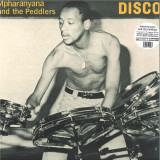
Kalita are proud to announce the first ever official re-release of Mpharanyana & The Peddler's 1979 South African disco and funk recordings 'Disco' and 'Freak Out With Botsotso', backed by a devastating extended edit of 'Disco' courtesy of Amsterdam-based DJ and producer Jamie 3:26. Cut on a loud 12" single and accompanied by an extended edit of 'Disco' courtesy of Jamie 3:26, this truly is another no-brainer from the Kalita camp.
Born on 15th November 1949 in Kattlehong, South Africa, Jacob ‘Mpharanyana’ Radebe was one of South Africa’s greatest ever musicians, releasing a canon of legendary soul, jazz and disco albums before his untimely death in August 1979 at the age of just twenty-nine.
Here, Kalita select his highly sought-after disco and funk recordings ‘Disco’ and ‘Freak Out With Botsotso’, both selected from his 1979 invisible final album, ‘Hela Ngwanana’, re-releasing them for the first time in forty years. Including Paul Simon and Herbie Hancock session musician Bakithi Kumalo on bass and Themba Mokena of Dick Khoza ‘Chapita’ fame on lead guitar, the recordings feature some of the country’s top contemporary musicians joining forces to glorious effect.
With the original album currently fetching eye-watering prices on the rare occasion that they turn up for sale, the time is now ripe to share this masterpiece with the world once more.
out of Stock
Last delivered 6 months ago available to reorder, subject to availability
Songs zu schreiben ist für Toby Whyle eine Selbstverständlichkeit, im Musikkosmos ist er seit langer Zeit ein bekanntes Gesicht. Neu ist die Erkenntnis, dass Songwriting für ihn einer der wenigen Wege ist, die grelle, schnelllebige Außenwelt auszublenden. "A Mood Of Its Own" ist der Anfang eines neuen Abenteuers, auf das sich Toby erstmals alleine begibt. Vorbehaltlos setzt er sich den Anziehungskräften von elektronischer Musik und Gitarrenpop aus, umkreist beide immer wieder knapp, lässt sich aber nie ganz fangen. Jeder Song folgt dabei einer eigenen Umlaufbahn, gewährt neue Einblicke in Tobys Gedankenwelten.
Der Titel "A Mood Of Its Own" entstammt einer Textzeile der ersten Single "No One Moves", mit der Toby gleich mal auf dem ersten Platz der Radio FM4 Charts landete. Der Song beschreibt eine Schreibblockade, die zweite Single "Quiet The Silence" begleitet das Auseinanderdriften zweier Menschen, "Pity" erzählt von Stolpersteinen und einem Neubeginn und "How It Feels" von der Suche nach Konstanten in einer schnelllebigen Welt. Auf seiner ersten Solo-EP zeigt Toby Whyle die volle Bandbreite seines Songwritings, lässt einen oft energiegeladen aber nachdenklich zurück. Gemeinsam mit Produzent Maximilian Walch hat Toby unterschiedliche Stimmungen eingefangen, auf das Wesentliche reduziert und eine verbindende Ästhetik geschaffen.
out of Stock
Last delivered 5 years ago available to reorder, subject to availability
Chronos is the new album by Rostock´s composer Johann Pätzold aka Secret of Elements - a heartfelt, richly visual journey through which the German composer channels personal struggles alongside the social upheavals to which he has dedicated himself as a 'music activist'.
Textextext - (add your write up)
Chronos charts an eventful period during which Pätzold learned to deal with mental illness, travelled to the Mediterranean to save lives during the refugee crisis, fell in love and lost love - ten years is a long time. The album tells of people, moments or phases from the musician's life. It opens with the ominous melodies and immersive choral ambience of 'Grace', which reflects on a friend's suicide attempt, before riding the euphoria of Pätzold's wedding and the birth of his children in 'A Last Waltz.'
Third track 'Memento' narrates the epic journey of a refugee Syrian mother whom Pätzold accompanied from Greece to Germany, its emotive swells and subtle crescendo evoking simultaneously the dawning of a new world and the melancholy of what has been left behind. 'Vinculum', built around an Indian mantra, also dates from the same period and was written as a last tribute to a small child who drowned in the Mediterranean. The piece combines church organ - renown as part of Christian music, and indeed recorded in the Marienkirche in Gnoien on an original 18th century Lütkemüller organ - with a mantra, seeking to unite various religious symbols in an attempt at reconciliation in the face of unimaginable tragedy.
Propelled by mechanical percussion, 'Rage' uses the Shepard scale, a musical phenomenon in which two cyclically rising octaves are played on top of each other in a staggered fashion to create the illusion of an infinitely swelling scale, perfectly mirroring the image of blind spiralling, hysterical anger. When we arrive at 'Aurora, we feel Pätzold musing about the end of the world, but also the end of the self. What remains when humanity is wiped out by a pandemic or something similar? In Johann Pätzold's case, what remains is, among other things, a monumental album, a musical chronicle of his life: Chronos.
out of Stock
Last delivered 5 years ago available to reorder, subject to availability
With a fundamental emphasis on the encouragement of genre hybridization, Evar Records, the Los Angeles-based imprint co-founded by Trickfinger (John Frusciante) and Aura T-09 (Marcia Pinna), continues its momentum with an expansive 9-track collection from Netherlands-based luminary, Limewax.
After making a strong first impression with its 2020 debut offerings, Evar Records has recruited Limewax to carry forward its mission of blurring boundaries and challenging conventions in electronic music. The Ukranian hard drum and bass hero happily obliged, referring to signing with Evar as a breaking point which allowed him, finally, to take full stock of his background in classical and electronic music simultaneously. Although Maxim Anokhin is widely known for his hard-edged breakbeats, releasing on labels such as Tech Itch Recordings, Position Chrome, Freak Recordings, and PRSPCT, the full scope of his artistry shines through on Untitled.
The opening cut, "Porcelaineworm," is a futuristic electro cut recalling IDM classics like AFX's "XMD5A." Of course, the virtuosic drum programming and hectic D&B sound which Limewax has built his reputation upon is here in spades on tracks like "Stay Lackey. Cuts like "Ushio" and "Whay1" are fascinating studies in contrasts—the former balances bludgeoning techno of the Ansome and Perc variety with a resolve that recalls Fennesz's pastoral glitch abstractions. "Whay1," meanwhile, is sub-rattling drum and bass nuanced by cinematic string themes. "Getupa" is an experimental beat track that truly bangs, its layers of texture and field recordings placing Limewax in the company of bleeding-edge acts like SVBKVLT's breakout star Hyph11E. The very next track, "19NB," is a subtle update to the original minimal technical template established by Detroit icons Robert Hood & Jeff Mills.
While most of the album hurtles forward at hard techno and D&B tempos, "Maleisae" is a sensual 70 BPM track mixing ghostly R&B and acid. That spectacular cut heralds Untitled's intricate denouement. The brief "Wernmqbram" effortlessly reconciles a baroque minor-key piano theme with the renegade snares of classic jungle. "Hasan" is a true "closing credits" master stroke, half-time acid giving way to gorgeous IDM-meets-Blade Runner synth leads.
Far from a genre-jumping hodgepodge, Untitled is a remarkably coherent full-length by a virtuosic artist free to explore the entirety of their creative influences. The Tilburg-based artist cites the poets Marina Tsvetaeva and David Whyte as influential on Untitled and also listened to works by 1771-1862 works by organ builders when crafting the album. The end result reveals Limewax as a masterful, diverse artist, capable of any style he pursues. It's a clear indicator of the boundless promise of Evar's core principle—a staunch refusal to put artists in boxes.
out of Stock
Last delivered 28 days ago available to reorder, subject to availability
Am 21. Mai veröffentlicht Allison Russell ihr Solodebüt ”Outside Child” (produziert von Dan Knobler) auf Fantasy Records. Russell, Dichterin, Sängerin, Songwriterin, Multi-Instrumentalistin und Mitbegründerin der Bands Our Native Daughters und Birds of Chicago, offenbart auf dem Album ihre Jugend in allen Einzelheiten. Zur ersten Single Nightflyer gibt es ein unterstützendes Musikvideo, bei dem Silvia Grav Regie führte.
Die Platte enthält Beiträge von vielen der künstlerischen Familienmitglieder, die sie dort gefunden hat, darunter Yola, Erin Rae, The McCrary Sisters, Ruth Moody, Produzent Dan Knobler, Jamie Dick, Joe Pisapia und ihr Partner JT Nero. ”Es ging einfach darum, diese Songs auf die ehrlichste Art und Weise zum Leben und Atmen zu bringen”, sagt Russell. ”Wir haben gelacht, wir haben geweint. Und die Verbundenheit zwischen den Musikern, ich hoffe, die Leute können das auf der Platte hören. Es fühlte sich wie Magie an.”
‘Sharecropper’s Son’ is a soulful masterpiece and career-defining album
from Robert Finley, “the greatest living soul singer”, written by Finley and
co-written and produced by Dan Auerbach.
With songwriting by Finley, Auerbach, Bobby Wood, and contributions from respected country songwriter Pat McLaughlin, ‘Sharecropper’s Son’ also features
an all-star band, who have worked with everyone from Elvis to Wilson Pickett,
including guitar expertise from Auerbach himself.
Recorded at Easy Eye Sound studio in Nashville, Finley’s formidable vocals and
lyrical stylings take centre stage, sharing personal stories inspired by his Louisiana country childhood during the Jim Crow era south. His tales of pain and joy
uplift as Finley reflects on his belief that you are never too young to dream and
never too old to live.
The fire behind the conflagrant performances on ‘Sharecropper’s Son’ is ignited by 67 year old Finley, who has cited a range of vocal influences, including
Al Green, Jimi Hendrix, Ray Charles, Elvis, James Brown and The Beatles, all
inspiring his genre diverse approach. Finley stated, “I want people to understand that I can’t be kept in a box. I like to do all kinds of music - everything that
means anything to me, from gospel to blues to soul to country to rock ‘n’ roll.”
“A blind carpenter and army vet is revealed, belatedly, to be a herculean soulman.” – UNCUT
Raised in Corsica, Stephanie made a name for herself as a dj in Paris but more recently focused on producing her own sound. The roots of her musical style are deeply entrenched in Pop, House and Ambient music, all genres that to her reflect our human desire to express our feelings. Her heartfelt debut, AUTEL, released on new label Lake Of Confidence, is an invitation to be fully present in the moment and listen to ourselves with awareness. The track "Disarm" is an uplifting tonic for the soul and could not have come at a more fitting time, encouraging the letting go of fear. Stephanie's grounded voice and the tender tones of the music take us on a liberating journey and reminds us of what is important in life - to move beyond ourselves and embrace joy. The captivating "Unchain" and the Superpitcher remix of the track, are both powerful guides for deep contemplation. Each beat is a metaphor of the breath of life, space and the impressive vastness of this extraordinary mystery we live in.
out of Stock
Last delivered 5 years ago available to reorder, subject to availability
It took German metalcore vets, CALIBAN recording a cover of Rammstein’s “Sonne” to realize that their native tongue was a seamless fit with their time tempered collision of punishing riffs and Andreas Dörner’s urgent vocals. With fans hungry for the Essen-borne quintet to record an album exclusively in German, the band simply said: “Why not?” and “Zeitgeister” was born. 11 genre-defining LPs deep into their career, the band’s vision for the album came naturally – a career retrospective and deep-dive into CALIBAN favorites that haven’t had a live airing in some time. “It wasn’t an easy decision, but once we allowed us to make them as different from the originals as we felt it was needed it came fairly naturally”, explains guitarist and main songwriter Marc Görtz. Of course, some updating was necessary when it came to translating the songs to German. “It turned out to be surprisingly tricky,” says Dörner. “While I feel more at home with my native German it made it a lot more complicated, as I had more options to phrase something.” Formed in 1997, CALIBAN’s legacy has been a tireless one, touring the globe and sharing stages with the likes of Slayer, Kreator, Killswitch Engage and many more, “Zeitgeister” was a welcome homecoming. With the help of long-running producer Benjamin Richter (Moonspell, Emil Bulls and more) CALIBAN hand-picked seven tracks to bring new life to: “Trauma“ (feat. Matthi from Nasty, “Arena Of Concealment”), “Herz” (“I Will Never Let You Down”), “Ausbruch nach Innen“ (“Tyranny Of Small Misery”), “Feuer, zieh mit mir“ (“Between The Worlds”), “Nichts ist für immer“ (“All I Gave”), “Intoleranz“ (“Intolerance”). “Mein Inferno” (“My Little Secret”). “Zeitgeister” also boasts a new track, “nICHts”. “It’s a song about feeling disoriented and hopeless, about depression and feeling powerless. Feelings that many of us can probably relate to during these days”, says Dörner.
Innerhalb der letzten Jahre hat ein ganzer Pit an schlagkräftigen Bands, wie exemplarisch Whitechapel,
die Flamme des progressiven, modernen metal neu entfacht: die Leerstelle aus roher Brutalität und einem
gewissen Maß an urbaner Attitude blieb jedoch bisher unbesetzt. Die britische Kombo VEXED aus Hertfordshire sind eine der wohl spannendsten Neuentdeckungen und präsentieren auf ihrem lang erwarteten
Debüt Culling Culture eine Mischung aus aggressivem Groove und brodelnder Atmosphäre.
VEXED Front-Dame Megan Targett verbindet stechend-scharfe, tiefe Growls, cleane Vocals und rapnuancierte Texte (siehe ”Fake” und ”Weaponize”) mit schlagfertiger Leichtigkeit und wird von den technisch versierten Bandmitgliedern Willem Mason-Geraghty (Schlagzeug), Jay Bacon (Gitarre) und Al Harper
(Bass) unterstützt.
Starke Riffs à la Genre-Größen wie Meshuggah, Periphery und Vildhjarta, kombiniert mit stratosphärischen
Soli und Leads beweisen, dass VEXED die größten Open-Air-Bühnen ebenso souverän beherrschen, wie
klassische Hardcore-Shows.
Mit sehr persönlichen Erfahrungen gespickt, ist Culling Culture eine Hommage an Hass, Verrat und Wut,
während es gleichzeitig die postmoderne Gesellschaft mit auffallend ehrlichem Songwriting und schwerem
Groove reflektiert. Hass kann entweder zerstören oder echte Stärke verleihen, und auf diesem 11-Tracks
starken Album beweisen VEXED das Letztere.
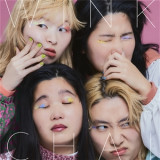
Erstpressung auf "Red, White & Blue hi-melt on clear" Vinyl! Das japanische Quartett CHAI veröffentlicht mit "Wink" ihr drittes Album und ihr erstes für Sub Pop. Es enthält CHAIs sanfteste und minimalistischste Musik, aber auch ihr mit Abstand bewegendstes und aufregendstes Songwriting. "Wink" ist zudem ein extrem passender Titel: eine subtile, aber kühne Geste. Ein Zwinkern ist ein unbefangener Akt der Überzeugung. CHAI besteht aus den eineiigen Zwillingen Mana (Gesang und Keyboard) und Kana (Gitarre), Schlagzeugerin Yuna und Yuuki. Nach der Veröffentlichung von "Punk" im Jahr 2019 führten CHAIs Abenteuer sie rund um die Welt, sie spielten ihre hochenergetischen und beschwingten Shows auf Musikfestivals wie Primavera Sound und Pitchfork Music Festival und tourten mit Indie-Rock-Größen wie Whitney und Mac Demarco. Wie alle Musiker waren CHAI im Jahr 2020 gezwungen, die Struktur ihrer Arbeit und ihres Lebens zu überdenken. CHAI nahmen dies als Gelegenheit, ihren Arbeits-Prozess durchzuschütteln und ihre Musik an einen aufregend neuen Ort zu bringen. Hatten CHAI zuvor ihre maximalistischen Aufnahmen genutzt, um die Ausgelassenheit ihrer Liveshows einzufangen und die Reaktionen des Publikums im Auge zu behalten, konzentrierten sie sich nun darauf, die etwas subtileren und introspektiveren Arten von Songs zu entwickeln, die sie gerne zu Hause hören - wo sie zum ersten Mal die gesamte Musik aufgenommen haben. Inmitten des globalen Shutdowns arbeiteten CHAI quasi als Garage-Band und tauschten ihre Songideen - für die sie mehr Zeit als je zuvor hatten - über Zoom und Telefonanrufe aus, wobei sie ihre Einschränkungen in eine Stärke verwandelten. Während sich die Band an einen persönlicheren Sound anlehnte, ist "Wink" auch das erste CHAI-Album mit Beiträgen von externen Produzenten (Mndsgn, YMCK) sowie einem Feature des Chicagoer Rappers und Sängers Ric Wilson. CHAI ziehen R&B und HipHop in ihre Mischung aus Dance-Punk und Pop-Rock, während sie unbestreitbar CHAI bleiben. Ob in Bezug auf diesen neu entdeckten Sinn für Offenheit oder ihre Art, zu Hause zu komponieren, das Thema von "Wink" ist, sich selbst herauszufordern.
In 1970 Barney Wilen assembled a team of filmmakers, technicians and musicians to travel to Africa for the purpose of recordi ng the music of the native pygmy tribes. Upon returning to Paris two years later, he created Moshi, a dark, eccentric effort fusing avantjazz sensibilities with African rhythms, ambient sound effects and melodies rootedin American blues traditions. Cut withFrench and African players including guitarist Pierre Chaze, pianist Michel Graillier and percussionist Didier Leon , this is music with few precedents or followers, spanning from extraterrestrial dissonance to earthbound, streetlegal funk. Wilen pays little heed to conventional structure, assembling tracks like "Afrika Freak Out" and "Zombizar" from spare parts of inde terminate origins. (Jason Ankeny, AMG)
Revelatory reissue of Barney Wilen’s ambitious jazz-fusion journey, Moshi (1972), presenting the legendary French jazzman and Miles Davis-sideman’s wildly ambitious effort fusing recordings of Pygmy tribes with African rhythms and stellar avantjazz leanings, sounding little like anything before or since its release. (boomkat)
Super rare and long out of print, the ground-breaking 1972 album from saxophonist Barney Wilen receives a reissue treatment of the highest order. Complete with a 20-page booklet and a never before seen DVD chronicling Wilen’s trip to Africa, this one is sure to be a delight for fans old and new. The deepest spiritual jazz grooves meet field recordings from the Upper Volta and b eyond, whilst psych rock influences collide with hypnotic and shamanistic percussion work. Truly one of the most out -there jazz records we’ve stocked for a long time! (bleep)
Originally issued by the seminal imprint Saravah in 1972, and among the most uncategorizable and sought after artefacts of the French avant-garde, Barney Wilen’s Moshi is nothing short of a masterpiece - long holding a coveted spot in the hearts of adventurous listeners and record collectors alike. A wild unkept cultural collage. A series of sonic experiments. A spiritual, psychedelic pilgrimage into the unknown - darting from one continent to the next, each of its tangents building toward a more optimist world view through ordered sound. Its scope remains as difficult to understand today as it was when it was released. Now brought back into the light by Souffle Continu, this is a moment to be celebrated far and wide. (Soundohm)
Deluxe reissue with additional artwork & remastered audio. 20-page booklet including rare pictures, sheet music & original liner notes. Bonus DVD with exclusive artwork of Caroline de Bendern’s movie « à l’intention de Mlle Issoufou à Bilma » documenting this incredible african journey.
Debut solo album by the Red River Dialect songwriter. Recorded at the Hotel2Tango, Montreal, by Howard Bilerman. Featuring Thor Harris (Swans, Thor & Friends, Shearwater) on drums and Thierry Amar (GYBE!, ASMZ) on bass, with guest appearances from Tom Relleen (RIP) (Tomaga, Melos Kalpa), Catrin Vincent (Another Sky) and Coral Rose (The Silver Field, Red River Dialect).
David has written five critically acclaimed collections of songs under the Red River Dialect name. The last two albums (released by Paradise of Bachelors) achieved a glowing Pitchfork review and a Folk Album of the Month award from the Guardian. Selected press below.
“Folk Album of the Month. Alert, anti-colonialist folk. Songwriter David Morris brings alternate seduction and disquiet on this worldly album steeped in the British landscape... a wide-eyed, curious creature, willingly alert to the world.” – 4/5 The Guardian
“Animated with a new intensity, the Cornwall band’s fifth album may be its most ingenious and immersive mix of folk and rock yet. It’s also Morris’ most compelling set of songs. He invests small sensations with outsize power, finding joy in sensory pleasures as well as in the mystical inquests that music allows. Even as the record is steeped in the long history of British folk music, that balance of the tactile and the spiritual anchors these songs in the present moment.” – Pitchfork
“The most underrated folk-rock band in Britain. The idea of them as a Cornish-born, Buddhist-inclined Waterboys is more potent than ever. Their fifth album of elementally-battered, rueful and rousing folk-rock ... is as stirringly anthemic as they've managed thus far.” – MOJO
“A beguilingly atmospheric record… imagine Steve Gunn transplanted to Kernow.” – Clash
“Gorgeous and moving, anchored by the heft of the physical but reaching for more. The epic spareness, the way it manages to be both still and an enveloping swirl, reminds me most of Talk Talk. There’s a prayerful intensity to the quiet bits, a listening, wondering awe, that makes the rock payoffs more powerful. The album works as a restless, searching, gorgeous whole. Morris and his band have never been better.” – Dusted
“It’s not often that a band comes along and over the course of nine songs both plays to the tradition and stands it on its ear. RRD has taken the challenge of playing with reckless abandon to heart, generating an album that stands on the shoulder of giants showing no fear.” Folk Radio
Monastic Love Songs continues the tradition that David has established over the course of five albums with Red River Dialect: using a song cycle to articulate a relationship with inner and outer landscapes, inspired by the Taoist approach of observing the movement of the heavens in order to understand the cosmos within, and vice versa. The joyful closing track Inner Smile was initially written as a poem of thanks to his Tai Chi teacher Hollis and takes its name from a Taoist practice.
The songs were written during the final weeks of a nine-month retreat at Gampo Abbey, a Buddhist monastery in Nova Scotia where David took ordination as Buddhist monk. The album title is sincere, with a little tongue-in-cheek. The songs mostly explore human relationships within the community, with outliers: Gone Beyond shimmers with cosmic devotion, in Rhododendron a reverie grows from the shadow of a flower. Steadfast concerns the love to be found beyond the urge to like and be liked, when you can’t avoid that difficult person. Leonard Cohen, on his six years living in a monastery:
“You know, there’s a Zen saying: ‘Like pebbles in a bag, the monks polish one another.’
David considers this album to be a follow up to 2015’s Tender Gold and Gentle Blue. The cover of that lp featured an image of him on top of Skellig Michael, in the years before the island was made famous as the home of the Jedi. He considers the visit to that abandoned Celtic monastic site to be one of the influences that stirred up his motivation. Skeleton Key speaks of what was given up to go, and what he was giving up to leave, referencing the Tibetan concept of the ‘bardo of becoming’.
The album came about through a series of fortunate encounters. David’s friend Tom Relleen visited him at the Abbey in May 2019, mentioning a postponed plan to visit the Hotel2Tango. A spark was sown: this studio had long figured in David’s imagination. Many of the releases on Constellation Records, which he had become a die-hard fan of in his teens, were recorded there. Tom contributed some Buchla synthesizer to the opener New Safe, which concerns healing in emptiness and light.
In May David was given permission by the senior monastics to acquire a guitar, which was swiftly baptised as “Malibu Barbie”. Having let the identity of being a songwriter loosen up, not playing an instrument in six months, he was unsure what would happen. In the single hour he was permitted to practice each day, songs began to cascade. The first, Purple Gold, concerns a reacquaintance with first love. David wrote to the Hotel2Tango asking if they had any days available in mid-July?
Engineer and studio co-owner Howard Bilerman replied that they did, and a date was set. Did Howard know any local drummers or bass players who might do a session? He did, too many to choose from, what kind of style? David decided to ask for his ideal: did Thierry from Godspeed ever do sessions? Howard sent him the demos. Thierry was up for it. On the day he went deep into the cover of traditional song Rosemary Lane, his double bass singing on this and on Circus Wagon.
David asked if there were any local drummers he would recommend? Thierry said “many, what style?” David tried his luck again, “two of my favourite drummers are Thor Harris and Jim White.” Thierry said let’s invite them. Thor, having met David a decade earlier, flew from Austin to Montreal for that July day in the studio. Nine months of watching thoughts come and go in meditation helped David recognise this as an opportunity to practice enjoying the day without expectations.
He is, however, grateful that this album came out the way it did, channelling some of what it was like to live those nine months in a monastery overlooking the Gulf of St Lawrence, frozen and flowing.
Mixed by Jimmy Robertson at SNAFU, London, mastered by DenisBlackham.
No one album could ever capture the claustrophobia-to-catharsis of an Eyehategod show, but this compilation of live tracks and demos comes as close as it gets. Giving you an idea of Eyehategod’s uncompromising, single minded purity of expression and exertion of raw nerve, “10 Year Of Abuse” is a monumental document all the way from the demo era to their later, legendary relentless live tour set. Many other bands have tried unsuccessfully to emulate Eyehategod and have never quite captured their dynamic. Formed in 1988 in New Orleans they have become one of the most well known bands to emerge from the NOLA metal scene. Eyehategod note bands like Melvins, The Obsessed, Discharge, Black Flag, Black Sabbath and Saint Vitus as major influences, but are often mentioned in the same breath as any of these legendary bands. Drawing comparisons to Grindcore, Crust Punk and Sludge Metal, their heavy bluesy, detuned rock and roll has been a lynchpin for the misanthropic and disenfranchised. Eyehategod has released five studio albums to date with a sixth in the works and have toured all over the world in a career spanning over thirty years. Though the band has never released a live album, we are left with “10 Years” as the only official witnessing document to decades of decimating live sonic abuse. Released on May 29, 2001, “10 Years” spans seven live tracks from their European tour in 2000, a live radio show from August 1994 and four songs from an early 1990 demo. The result is a feedback-laced window into that wonderful, brutal Eyehategod “sound”, that addictive, lower-than-low note that nestles somewhere in the pit of your burning, alcohol-soaked, nauseated stomach. The booklet alone is a delight for anyone who worships at the altar of Eyehategod’s oppressively heavy, crushing riffs.
Nashville underground trio YAUTJA make their Relapse Records debut with their highly anticipated new album, "The Lurch". YAUTJA's new album amalgamates metal, punk and noise rock into a ferocious hybrid that has propelled them from the obscurity of the American South onto the international stage. Recorded by Scott Evans at the legendary Steve Albini's Electrical Audio studio in Chicago, "The Lurch" marks another step forward for the innovative band. From the opening roar of “A Killing Joke” and the ominous noise waves of “Undesirables” to the churning cannonade of “Before the Foal,” "The Lurch" conveys the personal frustrations and sociopolitical observations of its creators. “We’ve got our bubble of friends and artists and businesses, but you drive 30 minutes out of town and you see rebel flags or people wearing t-shirts that say, ‘Redneck Lives Matter,’” bassist/vocalist Kayhan Vaziri explains. “So there’s a lot of frustration there, and the lyrics pertain to that.” Elsewhere on the album, tracks such as "Tethered" and "Wired Depths," discuss the various technologies and systems in place befalling the great populace. Rampant displacement of local communities fuels Vaziri's opening screams in the track aptly titled “Catastrophic” - “Forced under society!” Featuring members of several other musical projects including Thou, Coliseum, Mutilation Rites and more, YAUTJA's collective experiences across the underground and experimental subgenres drive their unique sound. The band's palpable malaise, malcontent, and sharpened edges are matched by the album's production - the attack of noisy, whirring guitars constantly veering on dissonance are met with a destructive, mangled low end, as they march on to some of the most creative drumming in the genre. "The Lurch" showcases a band that is daring, experimental, and unrelenting.