States of Fugue SF02 is the adventurous & uncompromising new record from Zoë Mc Pherson. It follows the success of her critically acclaimed 2018 album String Figures SF01, an audiovisual project that earned her invitations to perform around the world.
States of Fugue SF02 also inaugurates her new hybrid label SFX, a collaborative project with fellow multimedia artist Alessandra Leone. The label presents an opportunity for the pair to fully embody their creative vision whilst building bridges between, and for practitioners working at the intersection of different creative fields.
Zoë Mc Pherson's recent recorded work includes collaborations with Rupert Clervaux and Christina Vantzou, and a remix for Contagious, which was released on Rabih Beaini's Morphine imprint. SoF features collaborations with Elvin Brandi and dutch free improv scene singer Greetje Bijma, a cast which reveals Zoë's punkish & deviant taste and who's vocal work provides moments of both ballistic & mystic power.
Brandi features on Learn Ur Language with a rabid diatribe, somehow flowing through Zoë's staccato barricades. On album closer Bug, Greetje's alien annunciations are neatly vaporised into the year 3000.
The album relentlessly toys with typical dance music meter, creating complex organic structures that activate forgotten muscles in those exposed at sufficient volume, puppeteering the obedient dancer into new patterns of movement. Tenace is the prime example, where wormhole rhythms pull you in with the gravity of an unknown planet.
The album within it's singular feeling for electro-naturalism is rich in humanity and personality, aided throughout by the diverse terrain of Zoë's voice - a tool she uses for full spectrum expression, from whispers to screams. With the launch of SFX and a clutch of multimedia collaborations alongside, we are witnessing her evolve in all directions.
SFX is a new hybrid label from Zoë Mc Pherson and Alessandra Leone. After collaborating for three years on their multimedia String Figures project, the label will build on this foundation, continuing to develop and release objects and experiences across various mediums.
The labels first release will be Zoë Mc Pherson's sophomore LP
States of Fugue, released February 20th 2020.
Search:aud
In der Pause' (During the Pause) was the title of the last track on the b-side of , the first album by Die Tödliche Doris. In der Pause' was pause music, as well as the announcement of the interval between their debut album, released in 1982, and the box format project 'Chöre und Soli' that followed in 1983. The original sounds of In der Pause' survived on a single audio tape dating from 1981.Now, about 35 years later, Chris Dreier and Wolfgang Müller have used the material recorded on the audio tape as the source for five new tracks of pause music. The material on the original audio tape has was reworked using Moog analogue effect modules and Ableton Live. It has been supplemented with archived announcement interludes from radio and television stations, including German stations WDR, NDR and HR, Radio Italy IBF and Radio Kamerun.Sprechpause' was recorded in 1981 — 1982 by Chris Dreier, Nikolaus Utermöhlen and Wolfgang Müller and reworked by Wolfgang Müller and Chris Dreier in 2017.
The long standing and hugely respected label and events company Astropolis welcome Blutch for a new single that comes ahead of his debut album on this same label later in 2020, and includes a remix from Michael Mayer.
Blutch has had numerous releases on the likes Nowadays, Dance Around 88 and Délicieuse Musique, has collaborated with heavyweights like Terrence Parker and Red Rack’em and has received support from NTS and Radio 1. He is a respected talent in France and deals in classy electronica that blurs the lines between dream states and reality, and the forthcoming album will be presented as a gripping audiovisual tale with the help of video maker Romain Navier.
First up here is expressive techno masterpiece ‘Beau Rivage’ which soars on supple synth lines and elastic drum programming. It’s elegant stuff awash with melodic beauty and emotion. Single, ‘Compétition’ which gets an early release on December 18th is another excellently mature and musical track with symphonic synths reaching to the heavens and colourful arps lighting up the uplifting grooves. ‘2014’ is driven by vast, pounding and cavernous drums, with distant vocal harmonies bring an angelic feel to the celestial synths and chords. The final vinyl-only original is the brilliant ‘La Cité Des Etoiles’, which is layered up with pixelated leads, soft chords and found sound percussion samples that fire your every synapse.
Remixing is Kompakt label boss and one of the most revered names in electronic music, Michael Mayer. He flips ‘La Cité Des Etoiles’ into deeply rooted techno that is riddled with claps and synth lines that bright real light. Buy the digital version and we’ll also get the added bonus of ‘Vorlen’, which again brims with fantastic synths, chords and sorting grooves.
This is a fantastic package that more that whets the appetite for the forthcoming album.
“Media Burn” is the debut EP by TOTEM – 4 succinct slabs of industrial electronics and rhythmic noise forged in the spirit of hardcore punk. The project is loosely based on themes of media consumption, symbolism, illusions, and control. The artist embraces an austere process born of limited means: samples mangled beyond recognition and rearranged according to some obscure logic.
The results are self-described as “industrial skronk” – sculptures made entirely from audio debris that had another life, now twisted and repurposed by an unseen hand into something new and unfamiliar.
- A1: Gregorio Garcia Segura - Harlem Pop
- A2: Los Brandis Con Maria Nevada - Life's Song
- A3: Lin Barto - Sax Pop
- A4: Blas & His Friends - Supermarket
- A5: Jorge Enrique - Go Go
- A6: Roberto Serrano - Retorno
- A7: Rafael Martinez - Funny Comics
- A8: Orquesta A Latorre - Hotel Don Felipe
- A9: Orquesta Miramar - Pop Song
- A10: Conjunto Nueva Onda - A Su Aire
- A11: Ramon Gil - Mercurio
- A12: Mesie Bato - Violeta
- A13: Red-Key - Morning
- A14: Unidades - Caballo Salvaje
· This compilation features the rarest and unknown instrumental tracks of that Funky Groove early sound.
· Light music along with wind section and keyboard ready to hit the dance-floor, that we call Spanish-Grooves.
· Composers, musicians & arrangers like Gregorio García Segura, Rafael Martínez, Antonio Barco, Antonio Latorre, Jaime Botey, etc.
During the 70's, an important number of orchestras and dance bands popped up in our country but not many of them released their own songs or covers on vinyl, so we can’t say that our music library has bulky volumes, rather it’s just the opposite.
You have to dig deep in the catalogue of obscure record labels to find some quality pieces, which we will usually attribute to Tinglado 13, Conjunto Nueva Onda, The Matches, Conjunto Don Pelegrin, Rafael Martínez, Carlos de Ros, Salgado y su Grupo, Mesié Bató, Pedro González, Jorge Enrique.
Most orchestras played bossa nova, soul, some lounge and easy listening, and a usual mix of light music with wind section and keyboards, something like “spanish-soul” or “rhythm'n'blues-pasodoble”.
It was a time when the bands survived playing shows with a repertoire based, mostly, on Spanish popular songs and international hits.
Many artists recorded with nicknames, many others used licensed songs paying rights to the original authors and some orchestras changed their names when they pressed their records, in an attempt to appear modern or simply for pure commercial purposes, that's why it is difficult to trace accurately the musical path of many of these artists. This scene was especially intense in Aragon and Catalonia, where a bunch of labels emerged, often simply as platforms for bands to promote their own music.
This compilation aims to discover to a wider audience some of the most sought-after instrumental gems by discjokeys and disco music collectors, eager for soul, groove and hot sounds.
- A1: Red-Key - While New
- A2: Ray Martin - Supergama
- A3: J Tenafly - You
- A4: Nick Wilson - Sugestion
- A5: Blas & His Friends - Todo Tu
- A6: Conjunto Olivino - Cataluna Rag
- A7: El Conjunto De Rafael Martinez - Ritual Song
- B1: Conjunto Nueva Onda - Chacal Blues
- B2: Greg Segura Y Su Orquesta - Safari
- B3: Jorge Enrique - Siero Pop
- B4: Orquesta Miramar - Sagitario
- B5: Dany Roy & His Band - Intermision Pop
- B6: Sarr Incony - Afro Special
- B7: Mesie Bato - Amanecer
· This compilation features the rarest and unknown instrumental tracks of that Funky Groove early sound.
· Light music along with wind section and keyboard ready to hit the dance-floor, that we call Spanish-Grooves.
· Composers, musicians & arrangers like Gregorio García Segura, Rafael Martínez, Antonio Barco, Antonio Latorre, Jaime Botey, etc.
During the 70's, an important number of orchestras and dance bands popped up in our country but not many of them released their own songs or covers on vinyl, so we can’t say that our music library has bulky volumes, rather it’s just the opposite.
You have to dig deep in the catalogue of obscure record labels to find some quality pieces, which we will usually attribute to Tinglado 13, Conjunto Nueva Onda, The Matches, Conjunto Don Pelegrin, Rafael Martínez, Carlos de Ros, Salgado y su Grupo, Mesié Bató, Pedro González, Jorge Enrique. Most orchestras played bossa nova, soul, some lounge and easy listening, and a usual mix of light music with wind section and keyboards, something like “spanish-soul” or “rhythm'n'blues-pasodoble”.
It was a time when the bands survived playing shows with a repertoire based, mostly, on Spanish popular songs and international hits.
Many artists recorded with nicknames, many others used licensed songs paying rights to the original authors and some orchestras changed their names when they pressed their records, in an attempt to appear modern or simply for pure commercial purposes, that's why it is difficult to trace accurately the musical path of many of these artists. This scene was especially intense in Aragon and Catalonia, where a bunch of labels emerged, often simply as platforms for bands to promote their own music.
This compilation aims to discover to a wider audience some of the most sought-after instrumental gems by discjokeys and disco music collectors, eager for soul, groove and hot sounds.
- A1: Big Michael
- A2: Audacity (Feat Headie One)
- A3: Crown
- A4: Rainfall (Feat Tiana Major9)
- A5: Rachael's Little Brother
- A6: Handsome
- A7: Do Better
- A8: Don't Forget To Breathe (Feat Yebba - Interlude)
- A9: One Second (Feat Her)
- A10: Pop Boy (Feat Aitch)
- A11: Own It (Feat Ed Sheeran & Burna Boy)
- A12: Wiley Flow
- A13: Bronze
- A14: Superheroes
- A15: Lessons
- A16: Vossi Bop
The hugely anticipated second full length album from the incredible Stormzy.
Following the release of Gang Signs and Prayer, his award-winning, platinum-selling debut album, Stormzy may no longer be stepping between the street and the sermon, but he’s still walking between two worlds: that of the celebrity and of the Everyman. His desire to stay grounded is evident; as his career continues to soar, he seems more and more determined to help others reach new heights of their own.
ISAN’s Robin Saville reveals an ambient album, which merges the Electronica aesthetics of his main project with field recordings, drones and acoustic instrumentation.
A lot of things have been written about what happens to the mind when the body starts moving. Instead of reciting poems of the inevitable self-help books, let’s get straight to the point: For many, taking walks on a regular basis is both liberating and empowering. It is not necessarily so much about the exercise, but rather finding one’s own rhythm in life. Robin Saville – of ISAN fame – is such an ambler His walks inspired him to base his third solo album – his first one for Morr Music – on the out of the way places he came to see and experience while being out and about.
Clocking in at just under 40 minutes in total, "Build A Diorama" is both a subtle culmination and a poignant antipode to what Saville has achieved together with Antony Ryan as ISAN. While the aesthetics might seem similar in places, Saville opts for a decisively different pace when it comes to writing and producing. Progress is steady, and change, however, is slow – like looking at a diorama for a long period of time in the ever so slightly changing light or as a flaneur focussing on one particular spot, a found object so-to-speak, waiting for the mind to orchestrate it appropriately, giving it sense and meaning.
Built around quiet field recordings, Saville’s six compositions transform this highly personal and, therefore, difficult-to-convey experience into a comprehensible exploration of beauty. Where ISAN almost exclusively uses electronics, Saville deliberately expands this well-established palette with acoustic instruments like bass guitar, chimes and glockenspiel, aiming for an even more suitable musical manifestation of what the walker sees and feels once he fully engages in his passion. Ranging from blissfully pulsing pads allowing for complete associative freedom ("The Deepdale Halophyte Economy") to the playful minimalism of an orchestra dominated by busy bells ("Bosky"), Saville’s "Build A Diorama" is not just a valuable addition to his musical output, but an essential audio guide for those striving to explore, learn and understand.
Zenit is a jazz ensemble from Krems in Lower Austria, founded in 1976 by Hannes Treiber and Willi Langer. Their music was celebrated locally, but to reduce them to their local fame would be a shame: After all, their first two LPs, Stimmungswechsel (Change of Moods) and Früchte (Fruits), quickly gained them a much wider audience of discerning listeners. Arguably, however, Zenit’s third and final LP Straight Ahead is the most special of their records. It initially came out in 1986 on the producer’s label Spray Records, and is today one of the hardest-to-find Austrian jazz records. Its centrepiece is the infectious slow-motion disco piece “Waiting,” with vocals by American jazz singer Linda Sharrock. Effortlessly bringing together pop, soul and new age vibes, this is a record that is as unique as it is difficult to date. Does it sound like from the 80s? We’re not sure. To our minds at least, it could also be from the future.
This is the long-awaited second installment of the layer series by Eqwel and Jeff Thompson is to soon come. The fifirst release amd all releases that are part of this series is always minimally processed, using less compression with higher sample rates. The primary side has been cut with Eqwel’s original version, which carries on his style of artistic creativity. The track is layed with hard rhythm’d kicks with illustrious soundscapes incorporating sticky basslines. On the flflipside, track one is Eqwel’s answer to a club banging version of the original creation. This track starts strong and ends strong and the events that happen in between is beautiful and uplifting! This is defifinitely a banger for the clubs, that can be incorporated at the peakest of your sets. The fifinal track has been taken from Eqwel’s ” Audio Telemetry EP “. As always, these tracks are recommended to test and push your sound system!
- A1: Girls Of Iskandariah
- A2: Night Entertainer (Azef El Layl) (Azef El Layl)
- A3: The Joy Of Lina (Farha) (Farha)
- B1: Dance Of Tenderness
- B2: Jamileh
- C1: A New Candle
- C2: Once A Year (Zourouni) (Zourouni)
- D1: A Flower Of My Imagination (Ya Zahraren) (Ya Zahraren)
- D2: A Night At The Station (Leylet Al Mahatta) (Leylet Al Mahatta)
- D3: Love Of Laura (Ya Laure Houbbouki) (Ya Laure Houbbouki)
The first release in Ernesto Chahoud’s ‘Middle Eastern Heavens’ reissue series for BBE Music, we are delighted to present Lebanese maestro Ihsan Al-Munzer’s 1979 album ‘Belly Dance Disco’.
In late 70's and early 80's Beirut, Lebanese organist, composer and arranger Ihsan Al-Munzer made a series of pioneering synth-driven fusion albums that reimagined Middle Eastern music. The records came at a pivotal time in Lebanon’s musical history of avant garde experimentation that was blossoming, just as the country’s 15-year civil war took hold.
Ihsan Al-Munzer’s first release as a solo artist, ‘Belly Dance Disco’ aimed to fuse ‘Western’ modern music and bellydance to make it more accessible to the local audience in the late 1970s. “I wanted to put a mixture of European beat with Arabic percussion, but I made the European rhythm and harmony very easy to listen to for the Arabic ear – soft and understandable” says Al- Munzer.
Today, the composer’s music has made the return journey back to the West; with tracks on the album featured by hip hop artists such as Mos Def, who sampled Al-Munzer’s composition ‘Joy of Lina’ on his 2009 song ‘The Embassy’.
The 10-track album was released in 1979 on the legendary Voix De L’Orient label, which was also home to pioneering Lebanese composers The Rahbani Brothers. One of the earliest artists to introduce the synthesizer to Middle Eastern music, Al-Munzer leads the band, playing the main melody lines on the Kawai Organ and Solina String Synthesizer. Three of his original compositions feature on the album, alongside creative re-imaginings of Turkish and Arabic folklore and modern classics, pushing the boundaries of bellydance music to chime with the international scene.
Al-Munzer’s five titles from the 1970's and 1980's are part of BBE’s ‘Middle Eastern Heavens’ reissue series, a collection of groundbreaking productions from Lebanon, curated by Lebanese DJ, compiler and music researcher Ernesto Chahoud.
Notes by Natalie Shooter, a music journalist and researcher based in Beirut, edited by Will Sumsuch.
As the world turns the page towards yet another decade the Two Swedes from SpaceTM in MLU embraces new beginnings and paves the way for their very first, and very own musical outlet. MLU Private Press is their new label-not-label and the result of years of joint music making. “We looked ourselves in the mirror and all we saw was us” - it’s a vanity label in the truest sense. An audial outlet candidly and simply releasing streams of future and past sounds flowing through a crack from their Stockholmian mountain and out into the world.
The first release features three tracks of MLU-matic electronics, spanning in making over the last decade. From the energetic rave-sentimentality of “Blue...” eloquently dreaming of approaching future skylines to the sound of breakbeats, to the nostalgic arpeggios of “Astro Travelling Pt. 2”. A track which got lost but recently resurfaced in the MLU lost-and-found bin, recorded almost 10 years ago and sound-wise very reminiscent of their earliest work. The aptly named “Madame of the Magic Mushroom” with it’s mix of acoustic drums and shroomy synthesis ends the 12” in weightless psychedelia recollecting memoria of ecstatic driven 70’s loft-rock.
Caroline True Records are very happy, by public demand (honestly!) to release, on limited wax, a true dancefloor gem-a track that has been described as a “Sax-Banger” of the very highest order.
A remix that’s hard to pigeonhole-but one that has been featured heavily by DJ luminaries such Ben UFO (Hessle Audio) & Job Jobse at Dekmantel where the track ruled the evening back in 2017 & again this year. It’s grown in popularity totally organically across Europe’s more discerning dancefloors & has many admirers..
Houndstooth present ‘S.L.F. Versions’, a set of cutting-edge radical reworks from Aïsha Devi’s widely-praised EP ‘S.L.F.’.
Hotly-tipped Chinese scene stalwart 33EMYBW delivers a thunderous percussion-heavy take on ‘Two Serpents’ and rising Indonesian duo Gabber Modus Operandi overhaul ‘Uupar Theory’ with pummelling kick drums encircling frenzied, swirling synths.
Nordic maverick Varg adds jungle breaks and pitched- down crunch to Devi’s pitched-up ethereal voice, whilst lauded JA collective Equiknoxx Music‘s vibey avant-dancehall version gives shout-outs to Devi from vocalists Gavsborg and Shanique Marie.
In addition to acclaim gained for ’S.L.F.’, over the summer Devi toured extensively, performing at some of the world’s most prestigious and forward-thinking events. At Dark Mofo x Atonal in Hobart, Australia she premiered her new AV show ‘∞E=TRv’, an innovative collaboration with visual artist MFO using light in space and reflective surfaces. Centred around Devi’s transcendence/continuum energy formula and inspired by Planck’s Constant in physics, these special shows have wowed and inspired, as have AV events staged with Emile Barret and Devi’s solo shows, where audio takes centre stage.
'Control Voltage Project' is a long running project of Alper Maral & Mert Topel; Alper Maral is one of the most significant sound discoverers around Turkey through auditory and academical researches he has made about experimental electronic music.
Mert Topel is a versatile musician, one of the most important keyboardist for many artists in popular music in Turkey. He has released his first solo album “Serendipity” in 2017.
Control Voltage Project is named after the electric signals which are used for the interactions between various physical sound layers. Recordings of CVP -first album from the duo- was finished in 2005, and released in 2015 on “Müzik Hayvanı” as free download on web.
The album is making its roots through an endless sound pool that created by synthesizers, vocoders and tape recorders such as KORG MS 20, YAMAHA Motif 8, PROPHET 5 and TASCAM MS 16 which have characterized by different styles and times.
The duo’s 12 track album is a complete adventure from abstract
and fragile moments to groovy but spooky sounds.
Control Voltage Project is finally released on vinyl via Müstesna Records.
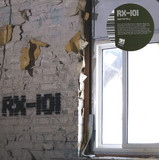
RX-101 has quietly been making waves in the IDM/electronic music underground for the past few years, through a series of archival releases — material recorded in the late-90s, but previously unreleased until Suction Records began compiling and releasing these records in 2016. What’s truly mind-boggling about RX-101’s output is the sheer quantity of stunning, top-drawer material that Dutch producer Erik Jong recorded over the period of just 3 years, 1997-1999. Many have suggested that the whole thing is a publicity stunt — some insisting that this is all new material masquerading as vintage, while others have proposed that the material may in fact be a secret alias for Aphex Twin to release gems from his own legendary ’90s audio archive. RX-101 has absolutely nailed the sound, and quality, of early-90s AFX/Rephlex, that much is true. “Serenity,” this latest full-length RX-101 release, is no exception.
Just as RX-101’s last album, 2019’s Dopamine, concentrated on one hallmark of Aphex Twin’s sound — the smooth melodic techno of his Selected Ambient Works 1985-1992 LP — so too does Serenity reference another classic early-Aphex era, but this time it’s a completely different beast. Don't let the title fool you - Suction Records' latest dive into RX-101's 1997-1999 tape archives is not all lush, serene melodies. On Serenity, scorched, crunchy jackhammer beats combine with emotional, plaintive pads, delivering a classic set of vintage-Rephlex-style bliss, à la AFX, Caustic Window, and Cylob. It was Cylob who coined the term Industrial Folk Songs for his classic 1995 LP, and that release is clearly a blueprint for RX-101’s latest collection.
Standout cut Hearts Utd., featuring a stunning music video by Aidan Fantinatto and I Dream Of Wires’ director Robert Fantinatto, not only nails the magic of AFX’s trademark, irresistible jackhammer-beats-meets-plaintive-melody device, it arguably rivals the master at his own sound. As a whole, what could be a harsh and monotonous collection is lifted by RX-101’s subtle diversity and skill, particularly in his ability to create eerie, evocative moods, with gorgeous melodies that speak volumes of emotion.
At home, in the islands of Cabo Verde, there was grog, or grogu, a strong sugarcane moonshine not dissimilar to Colombian aguardiente, copiously consumed at Funaná parties. In the diaspora, in Europe, there was leite quente (hot milk). "I can still remember the taste of the first leite quente I drank in Lisbon," says Antonino Furtado Gomes, Pilon's drummer and current band leader.
Synthesize the Soul, Ostinato Records' second compilation, revealed chapter one of the Cabo Verde cultural story in Europe, zooming in on visionaries like Paulino Vieira who made Lisbon the headquarters spearheading the musical revolution taking place within Cape Verdean emigre communities across Europe in the 1980's. Musicians from across the diaspora would eagerly travel to the Portuguese capital to record.
Grupo Pilon represents the second chapter of the Krioulu diaspora story. In smaller pockets, second generation musicians were independently contributing to one of the most lush periods of cultural innovation by immigrants in Europe. In Luxembourg, in 1986, a group of teenagers formed the largely unknown (outside of Cape Verdean circles) but consistently brilliant band named after the blunt instrument used in the islands to pound corn for Cabo Verde's national dish, cachupa.
With only five members, Pilon combined searing estilo Krioulu drumming and the hybrid ColaZouk style with blissful synth work and rugged guitar licks, creating a stripped-down, addictive sound that masterfully straddled two worlds, a seductive electro-Funaná carnival born from the first few sips of hot milk.
The band drew from the inspiring political changes of the day: the release of Nelson Mandela in South Africa and the fall of the Berlin Wall. The right to democracy became a constant theme in Pilon's songs.
With access to better opportunities than their parents' generation, Pilon's roster were part time musicians. Music was not part of their academic upbringing nor a full-time gig. Their rhythm and style were wonderfully imperfect, made out of rawer skills and inexperience. Pilon did not follow the templates established by revered Cabo Verde bands. Keyboard player Emilio Borges played off beat and the band preferred arranging their songs to start from the beat normally heard in the middle of a composition rather than the beginning.
These two elements made Pilon's music simple, unique, and inimitable. From 1997-2015, a lack of concerts and professional musicians proved near fatal. Today, Antonino and what remain of the original quintet are slowly piecing back together the puzzle of their once mighty outfit from an unlikely pocket of Europe. In it's heyday in the 90's, Pilon serenaded audiences in Paris, Lyon, Marseille, Lisbon, Rotterdam and Frankfurt, securing their reputation as a respected and unifying cultural force.
This LP, drawing from the six most powerful songs from Pilon's three-album catalog, is the serving of still fresh leite quente to spice the summer and maybe even fuel the next generation of musicians in the Krioulu corners of Europe.
Auf "Small Favours" - der 6–Songs Vinyl–Auskopplung des Albums "Favours", verbündet sich Elektronikmusik–Zauberer Wolff Parkinson White mit verschiedenen SängerInnen, unter anderem Norah Jones, Natalie Beridze und Pascal Leboeuf.
Wolff Parkinson White's typisches Maschinengewehr–Feuer aus manipulierten Audio–Splittern steht hier in krassem Kontrast zu der Wärme der menschlichen Stimme. Seine erste EP–Veröffentlichung auf Nonplace bedient sich an vergleichsweise bekannten Liedstrukturen und beantwortet die Frage, wie ein Projekt von Björk und Venetian Snares klingen würde, wären sich beide jeweils der Nachteile diatonischer Monotonie und der endlosen harmonischen Wüste bewusst.
Die 6 Tracks der EP wurden von Labelchef Burnt Friedman persönlich von den 13 Album–Tracks ausgewählt. Der Schlagzeuger Jochen Rückert, der hinter dem Spitznamen "Wolff Parkinson White" steht, spielt auf "Heaps Dub" (nonplace20) von Root 70 und "Coptic Dub" (nonplace27) von Hayden Chisholm's Projekt The Embassadors.
Banging acidcore for the start with ITO, a 160 BPM dancefloor destroyer.... The second tune from 3Sans3 and L1Sekt tribe-drive mental and clear 170 BPM. Second side strats with a Kebrat 173 BPM kick and a long mental break... Records finishes with Radikal 715 at 162 BPM, dark and mental tune. Well done !