Priest=Aura is the eighth studio album by Australian alternative rock band The Church. The album was named after front man Steve Kilbey’s misreading of a Spanish fan’s English vocabulary notes (since ‘priest’ is translated as ‘cura’ in Spanish). It is the first record they recorded with drummer Jay Dee Daugherty, famous for his work with Patti Smith. His addition to the band brought a fresh, almost jazz-like sound to their music. The album was heavily influenced by psychedelic rock and dream pop, and features the songs “Dome”, “Ripple” and “Feel”. Both the band as well as their fans consider Priest=Aura to be an artistic high point for The Church.
This 2-LP set is available as a limited edition of 1500 individually numbered copies on white & black swirled vinyl.
quête:aus music
Melbourne born-and-raised musician, Jordan Brando, lands on Shall Not Fade's Killer Cuts imprint for his debut on the label, seven tracks that show impressive variety in his
production and include two vocalist features. "Moment in Time" is a versatile release with fully-fledged radio playable songs and a host of dancefloor heaters.
After hitting big with "Rockin'" in 2019 and touring Australia supporting the likes of Fisher, Brando now demonstrates the depth and breadth of his musical style in this full-length EP, opening out with the title track - a unique song featuring fellow Melbourne local Vincent Sole. From the glitchy intro the song hits a house beat to get you tapping along but then contrasts this with Sole's silky smooth vocals and disco guitar trills. Following on from this are two more classic dance tracks - "Elsewhere" chops up rnb vocals across a swirling bassline - day party gear - while "Broken Dub" shows Brando's abilities to draw from a range of genres, a pacey breaksy number that tempts a reload.
The record's B-side also contrasts club tracks with vocal features; "Conflict" is the most headsy track on the record, a harder beat and snarling bass for sweaty clubs. Brando returns to his house roots with "Let Me Be The Reason", centering on an earworm diva vocal sample. Sandwiching the record with two vocal features, "You Might Be Surprised" ft. China takes her enticing wordless vocalisations and lays them over a driving electro bassline, an adventurous pairing that fits perfectly. Digital bonus track "Breaking You" is a pure adrenaline floorfiller of deep techy inflections.
The collaborative debut of American minimal techno pioneer Troy Pierce and Colombian audiovisual artist Natalia Escobar aka Poison Arrow was conceived in reverse: first they created a collection of shadowy surrealist videos, then wrote music inspired by them. This inverted process proved remarkably fruitful. Shatter is a simmering, slow-burn noir odyssey inspired by the Greek myth of Echo and Narcissus, traversing subtle shades of sleepwalker dub, metallic lament, broken beats, and erotic negative space. It's an effectively unsettling evocation of the legend's core theme: "There is nothing more complex than a shattered heart, or a heart that can't love." Considering their shared background trafficking in darkened dance floor modes, what's most striking about Pierce with Arrow's partnership is its rhythmic restraint. The album's 10 tracks seethe and shudder between glamor and gloom, with only occasional dread-steeped metronomes mapping the malaise to a grid. They speak of pursuing a "spatial approach" with this project, which manifests in the music's immersive design and patient execution, each mangled clang and rippling pool of bass allowed to reverberate its full flickering waveform. Guest appearances by austere techno producer Konrad Black ("Obsidian Glass") and drum n bass institution dBridge ("It's A Love Story, After All") flow seamlessly into the whole, subtle sculptural accents on a dimly lit descent through purgatories of longing and lust. But the shadows recede for the record's closing cut, "Narcissus," which swells elegiacally in a mass of devotional drones over a muted heartbeat, like Narcissus gazing upon his reflection in holy awe: elusive true beauty, finally beheld, by itself.
CLEAR VINYL
DAS LEGENDÄRE MINI-ORCHESTER AUS MONTREAL MELDET SICH NACH ÜBER 10 JAHREN MIT NEUER MUSIK ZURÜCK. House Music unfolds as one long piece, a recorded-then-sculpted improvisation that vastly expands their work, coalescing classical and electronic instrumentation in the creation of genre-defying musical worlds. With help from engineer Hans Bernhard, the band wired every corner of Sarah Neufeld's (Violin, vocals) multi-story rural Vermont house. She and the mini orchestra's other five members - Pietro Amato: French horn, keyboards, electronics; Michael Feuerstack: Pedal steel guitar, keyboards, vocals; Kaveh Nabatian: Trumpet, gongoma, keyboards, vocals; Richard Reed Parry: Bass, vocals; and Stefan Schneider: Drums - assigned themselves to different rooms. They spent two weeks together in camaraderie, creation, and focused isolation to record their improvised sessions every day, but ultimately structured a 45-minute album out of a one hour-and-a-half long improvisation.
Peter Hook and The Light are an English rock band, formed in May 2010 by bass guitarist/vocalist Peter Hook, formerly of the influential post-punk bands Joy Division and New Order.
The band is noted for performing the Joy Division and New Order albums live.Their setlists primarily feature the two Joy Division albums, Unknown Pleasures and Closer or the first two New Order albums, Movement and Power, Corruption & Lies, depending on the respective tour.
The very concept is bound to stir up conflicted feelings -- bafflement, interest, cynicism, anger -- in any Joy Division fan. Here’s that band’s Peter Hook, singing lead and playing bass, supported by a guitarist, drummer, keyboard player, and additional bassist. In front of a Melbourne crowd, the band roars through the entirety of Joy Division's Unknown Pleasures, book-ending the album with six additional reinterpretations. The musicians play their hearts out, and Hook is absolutely locked into the material. One can’t deny the man’s conviction. The moments of aggression are far more suited for his gruff, seething vocals than the likes of “Candidate” and “I Remember Nothing,” where he has some trouble dialing it down. As an in-the-flesh experience, this was probably quite thrilling. As a home listening experience, it seems unnecessary -- at best, a curiosity -- especially when the source material is a couple clicks away.
Melbourne’s Cool Sounds return with their fourth full-length album Bystander, out February 12. Warm and deftly balanced, Bystander moves through indie rock and alt-country with an alert effortlessness.
Cool Sounds’ signature lead guitar lines are in dialogue with lead singer and songwriter Dainis Lacey’s lyrics, which are at turns introspective, self-aware, irreverent and unflinchingly observant. Bystander was written during a European summer and recorded in three weeks over the following Australian one, produced by Lacey alongside Dylan Young (Way Dynamic). While it can sound serene, Bystander isn’t always as laid back as the warm weather might suggest: this album sees Cool Sounds more attuned to their surroundings than ever. While Lacey has always been interested in storytelling, these songs bring lyrics into sharp focus – for the first time the words were all written before the music, and he took notes in the band’s cramped tour van on the autobahn and while wandering through small towns in France and Italy, reflecting on his home while away from it.
Bystander sees Cool Sounds explore the contemporary moment and the everyday with nuance and dexterity, never losing sight of the intimacy and charm that characterises their work. An exercise in observation and reflection, Bystander takes snapshots and zooms in, underlines phrases, and asks its listener to continue paying close attention.
Cool Sounds are Dainis Lacey, Nick Kearton, Ambrin Hasnain, Steve Foulkes, Jack Nichols, Pierce Morton
Produced by Dainis Lacey and Dylan Young
Engineered by Dylan Young
Next up on MOM is another exploration of the link between art and music. This time it is dance performance. The musical artist is Okkre (Uge Pañeda) producer of the Spanish duo LCC, who have released two albums on the celebrated Austrian imprint, Editions Mego. Okkre is a composer of soundtracks, DJ and she is currently immersed in researching her "landscapes series" project, connecting countries and cultures that are seemingly unconnected to each other through field recordings... MOM 012 is the soundtrack to a very special performance named ÉPICA. Directed by Barcelona based choreographer Aimar Pérez Galí, it was premiered at Sonar 2017. EPICA brings clubbing culture inside the theatre, to deliver a highly energetic performance, joining bodies, sound and voices of historic and political dissidence. It is about communication between bodies (without language) and the liberty of being on the dancefloor. Freedom of movement, expression and happiness through music! Okkre has provided a startling soundtrack. This soundtrack complements the performance of the dancers beautifully but also deserves to be listened on its own. It is both powerful and dramatic, fitting the title. The music of the soundtrack has been adapted for its imminent release on vinyl. The piece begins with the rhythmic movement of beats, which provides a structured backdrop. They are complemented by a swirling bassline. Overlayed percussion of differing styles comes in and out. Harsh almost metallic synths enter after a few minutes, which also have the sensation of breathing. Later on, powerful synths battle sturdy cymbal assisted percussion. In the latter stages, everything gets even more intense techno feel and the A Side ends with dense dark synths. The music is alive! While the other side gently mixes a melodic bassline that moves like the wind with intertwined chorus and voices, which appeal to the spirit of the artistic work, evoking space for feeling and touching. At the same time, insistent beats offer a club feeling. Scary yet empowering strings create a hypnotic atmosphere alongside falling keys and vocal impressions. The final few minutes provides a strong climax to the record. This features hammering beats, a circling bass and powerful keys. A mighty performance! ÉPICA is indeed epic.
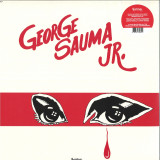
Favorite Recordings proudly presents an exclusive eponymous LP by Brazilian singer and composer George Sauma Jr., originally produced in 1985. Imagine a never-marketed release on which you’d hear not only the beautiful and genuine George’s songs but also the work from two figures of the Brazilian Music Golden Age: Arthur Verocai and Junior Mendes! A much-needed album for all Brazilian connoisseurs.
Back in the days, George Sauma Jr. was a young artist from Rio de Janeiro, learning on his side how to play chords and compose songs since he was 10. Still at the university, he’s influenced by Brazilian artists like Cassiano or Tim Maia, deeply fascinated by the arrangements and the “levada” (the groove) of all these new Brazilian songs. Simple and romantic music that resonated to his soul and creativity.
Around 1985, the story took an unexpected turn. George tells: “Dna Deyse Lucidy, the mother of Junior Mendes was a candidate for deputy and went to my father’s company to advertise. When I saw her, I shouted, “I’m a big fan of your son!” ” Of course, she could not praise more the work of her son. On her advises, George went to his studio on Rua Siqueria Campos at Copacabana. Junior loved the project and sent him to Arthur Verocai to improve the arrangements. Without money, the decision was taken to record everything at Junior Mendes’ studio on an 8-channel mixer. It was a small set-up but the emotions were there! George surely had other plans for some of his songs but without the budget, they ended up doing everything the best they could. And they did very fine with a top-notch team of musicians: Paulo Black on Drums, Arthur Verocai on Guitar, Ricardo Do Canto on Bass and Helvius Vilela on Keyboards.
Leaving the studio with the tapes, George tried to knock doors of international labels, but none did even dare to give him an answer. With less than 1000 copies pressed back in the days and without any distributor or label behind him, he went with proud to record stores, but received nothing than a strong reality check regarding the difficulties for a young Brazilian artist to achieve something on the saturated market of the 80s. Even for free, record stores didn’t want it. In the end, he ended up giving copies to friends and families, knowing deep inside that the songs were good! George tells: “I decided to leave, calm and conscious. I’ve still made three more albums, however on tapes, as it was more affordable. This time, just for my pleasure…”.
Thirty-five years after, it’s with great emotion that this first album by George Sauma Jr. is now made available as Vinyl LP with its original offset printed innersleeve & CD
The music on Dance Nos. 1-5 was originally conceived as a three-way collaboration between composer Philip Glass, choreographer Lucinda Childs and artist Sol LeWitt. Dance received its world premiere in Amsterdam on October 19, 1979 and its New York premiere at the Brooklyn Academy of Music on November 29, 1979.
Post-dating Einstein on the Beach - Glass’s 1975-76 collaboration with director Robert Wilson - Dance was another Glass collaboration, this time with choreographer Lucinda Childs, known for her austere, athematically exact dances, and artist Sol LeWitt, who provided a ghostly, gigantic black- and-white film for several of the piece’s five sections.
RELEASE: 5-3-2021
• 180 GRAM AUDIOPHILE VINYL
• DELUXE HEAVYWEIGHT SLEEVE WITH GLOSS LAMINATE
• PVC JACKET
• THE COMPLETE ALBUM, AVAILABLE ON VINYL FOR THE FIRST TIME IN ITS ENTIRETY ON A 3LP-SET
WITH FIVE SIDES OF MUSIC
• INCLUDES PHILIP GLASS CATALOGUE WITH INFO ON THE PHILIP GLASS SERIES ON MOV
SIDE A
Dance has an abstract purity that easily earned it the label “minimalist,” a term that Glass himself disavows but that seems appropriate, at least in this case. After Dance, Glass’s music took several turns, not so much in style as in the various new contexts in which it was presented: major opera commissions and film scores led him to write for forces other than those of the Philip Glass Ensemble. At the same time, an attempt to reach a wide audience resulted in some shorter, perhaps more accessible, narrative pieces. Dance marked the blossoming of the composer’s experimental work. Here, though, the music - particularly Dance Nos. “1”, “3” and “5”, all written for the Ensemble— has an unforgettable exuberance that somehow speaks all at once of joyful innocence, intense erotic desire, tenderness, regret and, finally, acceptance. On the other hand, Dance Nos. “2” and “4” see Glass composing several large-scale works for solo organ; for instance, Dance No. 2 originated as a 1978 work entitled Fourth Series Part Two. This piece, later incorporated into Dance, and Dance No. “4” as well, have a more subdued, more darkly romantic quality than the work’s other sections and are quite unlike anything Glass had previously written. Still, they too, with their mysterious tilts of time and key signatures, continue the exploration of polyrhythms and harmonic complexities within the context of Glass’s repetitive, “minimalist” style.
The complete Dance Nos. 1-5 album is now available on vinyl for the first time in its entirety on a 3LP-set with five sides of music. The 3 LP’s are housed in a heavyweight sleeve.
- A1: Various Artists - I Remember All My Lovers
- A2: Aeox - Gruft
- A3: Rouage - Rush Hour
- A4: Aeox - Fragile
- B1: Aeox - Kesseltreiben
- B2: Aeox - Bekifft
- B3: Various Artists - Dreierlei Fickblick
- B4: Cnm - Deform (Rmx)
- C1: Aeox - Guitarmad
- C2: Aeox - Culture Houze
- C3: Rouage - Fierce
- C4: Aeox - Ficken
- D1: Rouage - Touch It (Stellwerk Rmx)
- D2: Aeox - Denksport
- D3: Rouage - Syrinx (In Öl)
First released by Cazzo Film in 2001, ebo hill’s Bonking Berlin Bastards has long achieved the status of an underground punk porn classic. Like the Cazzo productions of director Bruce LaBruce, hill’s vision was both ahead of its time and a playful distillation of 90s and early-2000s Berlin Zeitgeist: queer, industrial, hypersexual, exhibitionist and fueled by electronic music. The story is told in large part by the soundtrack, to be released for the first time on Ostgut Ton sublabel A-TON. The music follows a group of squatters, punks and drag queens as they fuck, party and stumble their way through an empty city at the turn of the millennium. Approaching these themes more through location than plot, the film’s narrative freedom is also a narrative of freedom; between chance encounters and sex in public, atop the maze of roofs in the city’s former East, bent over bridges and moaning in ecstasy at oncoming traffic, pants down in telephone booths, packed into sex clubs, in the shadows of abandoned factories and techno clubs lost in time. Composed by improvisational techno trio AeoX and noise / industrial producer Rouage aka CNM (respectively), the music spans a broad range of appropriately pounding industrial, weird techno, noise, ultra-stoned ambient, improvised dub and electro. It’s a sonic spectrum that connects Berlin’s queer hardcore techno and squatter party scenes from which AeoX and Rouage emerged, drawing a direct line between the likes of Berghain-forerunner OstGut (a primary meeting point for the film’s cast & crew) to the more industrial, breakcore and noise- oriented independent party collectives and locations who provided multiple settings for the film, including Grüne Hölle and Stellwerk.
*Artists:* CNM / Rouage (Kathinka): Born in 1975 and raised in East Berlin. Co-organization of subcultural events since 1998 in Berlin, Potsdam, Leipzig and Barcelona. Experimental music, collaborations, exhibitions and audiovisual shows since 2000.
AeoX: Active between 2001 and 2007. Originally a quartet, then a trio, the group eventually shrank to two permanent members: Alex.E and Hanno Hinkelbein. The latter founded Null Records, where AeoX released two album and numerous EPs. They also released on Mental.Ind.Records founded by former OstGut resident Cora S. Musically, the group experimented with combining improvisational hardware techno, breaks, traditional instruments (guitar, clarinet, piano) industrial and metal.
Ursprünglich 2001 von Cazzo Film veröffentlicht, hat Bonking Berlin Bastards von ebo hill längst den Status eines Underground-Punk-Pornoklassikers erreicht. Wie die Cazzo- Produktionen von Regisseur Bruce LaBruce, war auch hills Vision seiner Zeit voraus und ein spielerisches Destillat des 90er- und Anfang-2000er Berlin-Zeitgeists: queer, industriell, hypersexuell, exhibitionistisch, angetrieben von elektronischer Musik. Die Geschichte wird größtenteils über den Soundtrack erzählt, der auf Ostgut Tons Sublabel A-TON zum ersten Mal veröffentlicht wird. Die Musik folgt einer Gruppe von Hausbesetzern, Punks und Drags, die ficken, feiern und durch die leere Stadt um die Jahrtausendwende streifen. Bonking Berlin Bastards erzählt diese Themen mehr über die Drehorte als über die Handlung. Die erzählerische Freiheit des filmischen Narrativs ist gleichzeitig eine Erzählung von Freiheit: Von zufälligen Begegnungen bis hin zu Sex in der Öffentlichkeit, auf Dächern im früheren Osten Berlins, sich über die Brüstungen von Straßenbrücken beugen, trotz und wegen des Verkehrs stöhnen, mit heruntergelassenen Hosen in Telefonzellen, in überfüllten Sexclubs, im Schatten aufgegebener Fabriken, zeitverloren in Technoclubs. Der Soundtrack wurde sowohl vom Improvisationstechnotrio AeoX als auch von Noise-/Industrial-Producer Rouage aka CNM komponiert und spannt einen weiten Bogen von explizit pumpendem Industrial, schräg klingendem Techno, Noise, ultra-stoned Ambient, improvisiertem Dub und Electro. Das musikalische Spektrum verbindet Berlins queere Hardcore-, Techno- und Hausbesetzer-Party-Szenen, aus denen AeoX und Rouage selbst hervorgingen und zieht dabei eine direkte Linie zwischen dem Berghain- Vorgängerclub OstGut (ein wichtiger Treffpunkt für die Darsteller und Crew des Films) und den eher Industrial-, Breakcore- und Noise-orientierten Independent-Partykollektiven und -Locations wie Grüne Hölle und Stellwerk, welche mehrfach als Drehort und Kulisse des Films auftauchen.
CNM / Rouage (Kathinka): 1975 geboren nd aufgewachsen in Ost- Berlin. Co-Organisation subkultureller Events seit 1998 in Berlin, Potsdam, Leipzig und Barcelona. Experimentelle Musik, Kollaborationen, Ausstellungen und audiovisuelle Shows seit 2000.
AeoX: Aktiv zwischen 2001 und 2007. Ursprünglich ein Quartett, dann ein Trio, dann verkleinerte sich die Gruppe auf zwei permanente Mitglieder: Alex.E und Hanno Hinkelbein. Letzterer gründete Null Records, auf dem AeoX zwei Alben und zahlreiche EPs veröffentlichte. Ebenfalls Veröffentlichungen auf Mental.Ind.Records, welches von der ehemaligen OstGut resident Cora S. gegründet wurde. Musikalisch kombiniert die Gruppe improvisierten Hardware- Techno mit Breaks, traditionellen Instrumenten (Gitarre, Klarinette, Klavier), Industrial und Metal.
Standard Light Rose LP! 'Flock' is the record that Jane Weaver always wanted to make, the most genuine version of herself, complete with unpretentious Day-Glo pop sensibilities, wit, kindness, humour and glamour. A consciously positive vision for negative times, a brooding and ethereal creation. The album features an untested new fusion of seemingly unrelated compounds fused into an eco-friendly hum; pop music for post-new-normal times. Created from elements that should never date, its pop music reinvented. Still prevalent are the cosmic sounds, but 'Flock' is a natural rebellion to the recent releases which sees her decidedly move away from conceptual roots in favour of writing pop music. Produced on a complicated diet of bygone Lebanese torch songs, 1980's Russian Aerobics records and Australian Punk. Amongst this broadcast of glistening sounds is 'The Revolution Of Super Visions', an untelevised Mothership connection, with Prince floating by as he plays scratchy guitar; it also features a funky whack-a-mole bass line and synth worms. It underlines the discordant pop vibe that permeates 'Flock' and concludes on 'Solarised', a super-catchy, totally infectious apocalypse, a radio-friendly groove for last dance lovers clinging together in an effort to save themselves before the end of the night. The musician's exposure to an abundance of lost records served as a reminder that you still feel like an outsider in this world and that by overcoming fears you can achieve artistic freedom. Jane Weaver continues to metamorphise_ "A mind-expanding delight, devoid of retro posturing." The Guardian "Ominous and luminous, expansively spacious and sonically imploding, scientific, ephemeral and eternal" The Quietus
- A1: Amazing Grace, Prelude
- A2: Ol’ Man River
- A3: Shenandoah
- A4: Goin’ Home
- A5: Jewish Song
- B1: Zdes’ Khorosho, Op. 21, No. 7
- B2: Moscow Nights
- B3: Over The Rainbow
- B4: Rain Falling From The Roof
- B5: Song Without Words, Op. 109
- C1: Fantasia On Waltzing Matilda
- C2: Scarborough Fair
- C3: Solveig’s Song
- C4: Les Chemins De L’amour
- C5: Marietta’s Lied
- D1: Thula Baba
- D2: The Last Rose Of Summ Er
- D3: Londonderry Air (Danny Boy)
- D4: Gracias A La Vida
- D5: We’ll Meet Again
- D6: Amazing Grace, Postlude
Songs of Comfort & Hope is inspired by the series of recorded-at-home musical offerings that Yo-Yo Ma began sharing in the first days of the COVID-19 lockdown in the United States. Throughout the spring and summer, Ma’s #SongsofComfort grew from a self-shot video of Antonín Dvořák’s “Goin’ Home” into a worldwide effort that has reached more than 20 million people.
Ma and longtime collaborator Kathryn Stott mark the next chapter in the project with this brand new album, offering consolation and connection in the face of fear and isolation. The album includes 21 new recordings, which span modern arrangements of traditional folk tunes, canonical pop songs, jazz standards, and mainstays from the western classical repertoire. Among the new takes on old favorites are Pulitzer Prize® winner Caroline Shaw’s artful and eloquently arranged “Shenandoah”; Australian composer Harry Sdraulig’s “Fantasia on Waltzing Matilda”; pianist Stephen Hough’s lush arrangement of “Scarborough Fair”, and two-time Academy® Award-nominated icon Jorge Calandrelli’s re-imagining of a pair of songbook treasures: “We’ll Meet Again” by Ross Parker and Hughie Charles, and Violeta Parra’s “Gracias a la Vida.”
Yo-Yo Ma and Kathryn Stott share the warmth of decades of music making again with Songs of Comfort & Hope, offering audiences new paths into treasured musical memories and a few notes of hope for a better future.
One of the bands that helped build the great Austin, TX music scene (the 'live music capital of the world'), Demian was actually Bubble Puppy with a new name and sound. While Bubble Puppy was classic psychedelia, Demian was hard rock in the vein of bands like Atomic Rooster. Recorded live-in-studio at L.A.s legendary 'Record Plant' studio in 1970, Demain was also one of the first bands to feature dueling lead guitars. Despite the high quality of the songs and the local buzz this album generated at the time, due to mismanagement, Demian soon faded into the record collecting beyond.
Driving anywhere in Texas can cost you half a day, easy. For example, it’ll take you over four hours just to get from R&B singer Leon Bridges’ hometown of Fort Worth down to Houston, where the psychedelic wanderers in Khruangbin hail from. The state is vast, crisscrossed with rugged expanses of road flanked by limestone cliffs and granite mountains, forests of pine and mesquite, miles of desert or acres of sprawling grassland, all depending on what part you’re in. And it’s all baking under the Texas Sun that lends its name to Bridges and Khruangbin’s new collaborative release. “Big sky country, that’s what they call Texas,” Khruangbin bassist Laura Lee says. “The horizon line goes all the way from one side to another without interruption. There’s something really comforting about that.” On ‘Texas Sun’, these two members of the state’s musical vanguard meet up somewhere in the middle of that scene, in the mythical nexus of Texas’ past, present, and future - a dreamy badlands where genres blur as seamlessly as the terrain. It calls equally to the cowboys bootscooting at Billy Bob’s in Fort Worth, the chopped-andscrewed hip hop fans rattling slabs on the southside of Houston, the art-school kids dropping acid in Austin, the cross-cultural progeny who grew up on listening to both mariachi and post-hardcore out on the Mexican borders of El Paso. All of these things, overlapping in a multi-coloured melange, purple hues as vivid and unpredictable as one of the state’s rightfully celebrated sunsets. A journey through homesick reminiscences, backseat romances and late night contemplations, the kind of record made for listening with the windows down and the road humming softly beneath you. Like the highways that inspired it, ‘Texas Sun’ is guaranteed to get you where you’re going - especially if you’re in no particular hurry to get there. Khruangbin and Leon Bridges are critically acclaimed artists with extensive coverage in print and online, including the New York Times, NPR, FADER, four Grammy nominations (Leon Bridges), The New Yorker, Washington Post and Pitchfork, among many others.
Breaks 'N' Pieces returns with another cut of bass driven dance music from rising producer DJ Sunroof.
Australian DJ // producer DJ Sunroof has had a killer year with notable dance discs on imprints such as Nerang, 3 Feet Deep and contributing to the recent Breaks 'N' Pieces Vol.3 various artists release to top. His debut full vinyl EP via rising UK label Breaks 'N' Pieces hits the stop, weighty breaks meet chest rattling bass on this 2-step laden cut.
With his new album, Year Of The Living Dead, Vienna-born and LA-based producer John Tejada finds a blissful extended moment of balance between the new and the familiar. Anyone who’s followed his career to date, which has included four previous albums for Kompakt, outings for storied labels like Plug Research, Playhouse and Cocoon, and numerous remixes and collaborations – most recently, his Wajatta duo with actor and musician Reggie Watts – will immediately sense the warmth and eloquence that Tejada brings to his gilded, pliant techno and electro hybrids. But there’s more here, too; an explorer’s glimmer in the producer’s eye, as he gets to grips with new ways of working and being, while offering a reflective opening for the listener, something echoed in artwork by graphic designer and ‘contemplative artist’ David Grey.
“The album was started using tools I was unfamiliar with, which became an interesting exploratory process,” Tejada says. “Staying away from the obvious and having to re-learn simple things was a fun challenge.” You can hear these new creative pulsions pushing the eight tracks on Year Of The Living Dead ever-forward; the album has an unique cast, and though there are trace elements of the genres Tejada has indulged previously, he’s never quite put them together this way before. There’s the dubwise glitter sprinkled across the moody opener “The Haunting Of Earth”, the kind caresses found amongst the deftly woven textures of “Sheltered”, and the churchy melancholy, all hymnal and golden, of “Echoes Of Life”.
Year Of The Living Dead also speaks obliquely to its moment, though Tejada works this implicitly, allowing the strange circumstances of 2020 to cast their inevitable shadow without being obvious or didactic. “The production process began right before lockdown and continued through what felt like a very serious time for all of us,” he recalls. “Not being able to see or touch our loved ones made me feel we are all like ghosts. We can observe from a distance but cannot really be there. We are isolated and alone.” And yet, Year Of The Living Dead’s tenderness offers an out for that anxiety and loneliness, its intimate immensities gifting the album a redemptive and compassionate core. Compact and glistening, Year Of The Living Dead sculpts unassuming beauty.
Mit seinem neuen Album “Year Of The Living Dead“ findet der in Wien geborene und in Los Angeles lebende Produzent John Tejada die richtige Balance zwischen Neuem und Vertrautem. Wer seine bisherige Karriere verfolgt hat, seine vier Alben für Kompakt, Beiträge für Labels wie Plug Research, Playhouse und Cocoon, zahlreiche Remixe und Kollaborationen wie zuletzt das Projekt Wajatta zusammen mit dem Schauspieler und Musiker Reggie Watts, spürt sofort wieder die Wärme und Eloquenz, die Tejada in seine geschmeidigen Techno-Elektro-Hybride einbringt. Doch es geht auch noch einen Schritt weiter. Da ist dieses Aufblitzen des Entdeckers im Auge eines Produzenten, der sich mit neuen Arbeits- und Seinsweisen auseinandersetzt und dem Zuhörer gleichzeitig etwas sehr Offenes und Nachdenkliches anbietet, etwas, das im Artwork des Grafikdesigners und "kontemplativen Künstlers" David Grey nachklingt.
"Ich hatte angefangen, das Album mit mir noch unbekannten Tools zu produzieren, was sich zu einem interessanten Forschungsprozess für mich entwickelte", sagt Tejada. "Sich vom allzu Offensichtlichen zu trennen und einfache mal Dinge neu lernen zu müssen, war eine recht spaßige Herausforderung.“ Man kann diese neuen kreativen Impulse hören, die “Year Of The Living Dead“ auf einer Länge von 8 Tracks nach vorne treiben; das Album hat einen einzigartigen Ansatz, denn obwohl es Elemente der Genres gibt, denen Tejada zuvor gefrönt hat, hatte er sie doch noch nie zuvor so zusammengefügt wie hier. Da ist dieses dubbige Glitzern im atmosphärischen Opener "The Haunting Of Earth", die freundlichen Zärtlichkeiten, die man in den Texturen von "Sheltered" findet, und schließlich die heilige Melancholie im hymnischen "Echoes Of Life".
Auch “Year Of The Living Dead“ enthält Andeutungen auf die momentane Situation und erlaubt es, den seltsamen Umständen des Jahres 2020, ihren unvermeidlichen Schatten zu werfen, ohne dabei zu offensichtlich oder gar belehrend zu sein. "Der Produktionsprozess begann kurz vor dem (ersten) Lockdown und setzte sich in einer Zeit fort, die sich für uns alle als eine sehr ernste Zeit anfühlte", erinnert er sich. "Da wir nicht in der Lage waren, unsere Lieben zu sehen oder zu berühren, hatte ich das Gefühl, dass wir alle wie Geister sind. Wir können nur distanzierte Beobachter sein, aber wir können nicht wirklich anwesend sein. Wir sind isoliert und allein." Und doch scheint die Zärtlichkeit von "Year Of The Living Dead" einen Ausweg aus dieser Angst und Einsamkeit anzubieten, die grenzenlose Intimität des Albums enthält einen erlösenden und mitfühlenden Kern. Derart konsistent und schillernd formt "Year Of The Living Dead" eine unprätentiöse Schönheit.
Valley Maker is the music project of Austin Crane. When the Day Leaves is his 4th album and 2nd for Frenchkiss Records. The album is all about Austin's transition from Seattle to his home state South Carolina.
Hunter And The Dog Star is the band’s fifth studio album and their first since 2018’s Rocket—a record that marked a major return for the group following a twelve-year hiatus and was released to widespread critical acclaim. Of the album, Associated Press declared, “a triumphant return…their joy in recording together again is clear on Rocket, a record that touches on a variety of musical styles with ease,” while NPR’s World Café proclaimed, “explosively joyful” and the Austin American Statesman praised, “a beautiful, inspiring, sensational album.” Since forming in Dallas in the mid-1980s, the band has toured extensively across the country and had their music featured in several hit shows including Miami Vice, Girls, Cold Case, Ugly Betty, Wet Hot American Summer: Ten Years Later, American Dad! and more. Since the release of their 1988 debut, the 2x platinum-certified, Shooting Rubberbands at the Stars, the band has continued to earn their reputation as an unclassifiable, genre-blending force. Returning to Arlyn Studios in Austin, TX to record with producer Kyle Crusham, Brickell and the New Bohemians—Brandon Aly (drums), John Bush (drums, percussion), Brad Houser (bass, synthesizer) and Kenny Withrow (bass, guitars, synthesizer)—once again put forth a collection of diverse musical ideas and styles on Hunter And The Dog Star, as they have continuously done for the past three decades. Reflecting on the album, Brickell shares, “Hunter And The Dog Star is a collection of songs reflecting the mystery of self-expression, loyalty, companionship and love in the darkest sky just before dawn.” In addition to Brickell (vocals, guitars), Crusham (background vocals, mellotron, piano, Rhodes, synthesizer) and the New Bohemians, the album also features Matt Hubbard (background vocals, organ, piano, synthesizer, wurlitzer), Burton Lee (pedal steel) and background vocals from Kelly Micwee and Alice Spencer.
The 1st Album is the gigantic debut studio album by German duo Modern Talking. The album peaked at number one in Germany, spending four weeks atop the chart and 18 weeks within the top 10. It sold more than eight million copies worldwide; it was certified platinum in Germany and Austria and gold in Poland and Spain. The album spawned two singles, with “You’re My Heart, You’re My Soul” topping the charts in Germany (where it spent four weeks at the top), Austria, Switzerland and Belgium, while charting inside the top five in France, Norway and Sweden. This song has about half a billion views on YouTube.
The sleeve contains gold-spot varnish on the Modern Talking logo on the front cover and the package includes an insert.
‘Stay Sane’ is the hotly-anticipated new album from London based artist Ocean Wisdom out now on his own label Beyond Measure Records.
Widely considered to be one the most technical rappers alive, his first release from the album campaign ‘Drilly Rucksack’ is a stellar offering, showcasing Ocean’s rapid-fire flow as he takes on political themes relevant in Britain today. Speaking on the track Ocean said “‘Drilly Rucksack’ is a fictional tale of a magical rucksack that protects its owner from evil Tories whilst also offering consolation and reassurance to the daughters whose lives they have presumably made miserable.”
Given the name Ocean Wisdom at birth, Ocean grew up immersed in hop-hop and reggae and began beatboxing aged seven. His homelife was what he describes as ‘hectic’, as his mum worked as an emergency foster carer. Years of writing lyrics and practicing followed and his uncompromising work ethic drove him to leave home at 17 and start working on his craft daily, never missing a single day. He used his passion for music as a way of channeling his anger and controlling his mental health, in addition to avoiding the fate of some of his friends. His meticulous attention to detail and hardwork paid off and over the past 5 years has seen Ocean’s meteoric rise lead to a quarter billion streams across all platforms and collaborations with legendary artists including Method Man, Dizzee Rascal, Fatboy Slim, Akala, Roots Manuva, Ghetts and Foreign Beggars.
Famed for his technical abilities, Ocean broke numerous records at a young age, including beating the standing Guinness World Record for most words per minute in a hit song, dethroning Eminem’s "Rap God". He remains one of the few UK rappers that can tour worldwide, headlining arenas across Europe, New Zealand, Australia, Russia and the Middle East. Since then he has gone on to set up his own label to release his music as well as building his own studio and creating a platform for future artist to thrive.