
out of Stock
Order now and we will order the item for you at our supplier.
Last In: 18 months ago
26,68 €
Order now and we will order the item for you at our supplier.

Its sound veers away from raw black metal intensity, opting for expansive, dreamy
atmospheres. Damian Anton Ojeda's signature approach tempers the harshness of
black metal's usual bleakness with a delicate sense of beauty and melancholy. The
album builds around shimmering guitars and lush soundscapes, creating a sense of
longing rather than the frostbitten aggression typically associated with the genre.
A key characteristic of "I Want to Be There" is how the screamed vocals--reminiscent
of depressive black metal--are mixed to blend seamlessly with the instrumental layers.
This intentional obscuring of vocals, pushed toward the back, transforms the vocals
into another textural element rather than a dominant force. This aesthetic decision
diffuses the emotional weight usually carried by extreme metal vocals, steering the
listener away from despair and toward introspection.
The balance between black metal's darker elements and post-rock's ethereal qualities
gives this record its emotional depth. The opening and closing tracks, "In the Distant
Travels" and the title track, lean more heavily on black metal structures but never fully
embrace the genre's typical harshness. Instead, the fuzzy guitars and crashing
cymbals are imbued with hope and uplifting energy. The post-rock influence becomes
more pronounced in tracks like "I Want to Be With You," which forgoes black metal
vocals entirely in favor of a choral atmosphere, evoking a serene and heavenly quality.
Ojeda also demonstrates his talent for creating immersive soundscapes, drawing
comparisons to *Sigur Ros*. Both artists employ sweeping melodies that evoke
feelings of transcendence. Still, where *Sigur Ros* tends to embrace more overtly
uplifting and sentimental tones, Sadness anchors these grand moments in
melancholy, avoiding overindulgence. The album is a delicate dance between light and
shadow, making the listening experience emotionally rich and layered.
While it may not have the raw emotional punch of *Deafheaven* or the nostalgic
charm of *Alcest*, *I Want to Be There* stands as a polished and thoughtfully
composed entry into the post-blackgaze genre. Ojeda's ability to fuse the weightless
hypnosis of black metal with the airy beauty of post- rock results in a sound that is
both familiar and new. Sadness offers a captivating and often beautiful exploration of
blackgaze, making the album a worthwhile listen for fans of atmospheric and
introspective metal.
expected to be published on 14.03.2025

After a near-total silence of twenty years, Edith Frost is back again, and in full bloom with In Space. Her first new record since 2005"s It"s a Game is just in time - the world needs Edith"s voice back in the conversation. And her ineffable way with a tune . . . It seems Edith needed something, too: from the notebooks of her long hiatus, a line like "I say too much/I wait too long/I wait forever/And notice that it"s gone" speaks volumes about feelings of lack. Overwhelmed by the demands of day-to-day living and the details and anxieties that always come, Edith squirreled herself away for as long as she could - only to find herself isolated, spun even farther into the doldrums. In Space isn"t simply a song-cum-album title so much as a very real exploration of the remote place she"d found herself, with her songs registering this recognition and measuring the vast distances between herself, the life that is and the life that was. It was the only way back in! Over the years away, Edith was immersed in music everyday, and spent lots of time learning - in addition to new lyric perspectives, her reinvention of herself as a keyboard player is one of the waves lifting the album In Space. The keys suggested different places within Edith"s harmonic palette; for us listening, this attenuation seems to create a deep focus on emotional life within the songs and a breathtakingly visceral presence in the performances. Her voice as well, in all its iterations, sounds quite fine and vital. The songs, as ever, are low-key brilliance elevated by the vitality of Edith"s voice. Mark Greenberg, alongside longtime Frost A&R man Rian Murphy, brought fresh arrangement ideas to complement the strange-new-world vibe of Edith"s songs. Recorded at The Loft in Chicago, with invaluable contributions from Jim Becker (Califone, Air Blue Gowns), Sima Cunningham (Finom, formerly OHMME), Bill MacKay and Jeff Ragsdale, In Space feels like the most Edith Frost record yet made, pulled from deep inside with great feeling, awash in harmonized voices and - more often than ever before - featuring her own playing. Alternatively approaching and avowing connection, Edith"s crafty songwriting orbits the human exchange with an increasing sense of possibility. It"s what the world needs the most of today.
Order now and we will order the item for you at our supplier.

“BLADE N” is the long-awaited new album from Japanese rapper Karavi Roushi, who appeared on the Japanese hip-hop scene with his debut solo album “Kiyosumi Kurokawa”. This, his second solo album, is a collaborative release with Aquadab, the Japanese track maker/sound designer who co-produced “Kiyosumi Kurokawa”. The album showcases the preternatural mind-meld between rapper and track maker.
Karavi Roushi came before the public as a member of Nagoya hip-hop collective Hydro Brain Gang on Nero Imai's album “Return Of Acid King” (2017). He then launched the label Super Lights with Aquadab and released his first solo album “Kiyosumi Kurokawa” in 2019 with graphic design by Takara Ohashi. Although an unknown newcomer, the album reached #15 on the iTunes Hip Hop Japan album chart and received plaudits not only for its music but also for the artwork by Ohashi. After the album, Karavi Roushi dropped his first collaboration tune with Aquadab on “S.D.S =Zero=” (2020), a compilation of Generation Z Japanese underground artists produced during the Covid pandemic. That tune, “Tokyoite”, became a favorite of the participating artists.
"BLADE N” was created by the three-person team of Karavi Roushi, Aquadab & Ohashi. Consciously developing their musical methodology, they intentionally use instrumental tracks to interrupt the rappers' voices and flows, something which has traditionally been avoided, and explore the possibility of creating a style that puts the rapper and track maker on equal footing in complex, woven tracks. On the album, Karavi Roushi's paranormal voice, which sometimes sounds like a mutant synthesizer, adds incisiveness, and in the artwork Ohashi visually extracts the story world hidden in “BLADE N”, giving the cover art the same impact as that of “Kiyosumi Kurokawa”
expected to be published on 28.02.2025

With an intrigue for a particular niche of old UK hardcore which takes cues from Sheffield bleep ambience, heady rave futurism and soft, almost new age synth pads, Blank Mind presents ‘Lost Paradise: Blissed Out Hardcore 91-94’. Though the records gathered for the compilation span a short three-year period and bridge the gap between scenes, the collection manages to find a sweet spot where the influence of Warp’s Artificial Intelligence, back room chill out sonics and the nascent jungle boom meet with elements of Italian piano house and slower breakbeat cuts.
Opting to focus on atmosphere to highlight shared connections; in this case the duality of often serene and calming soundscapes with frenzied breaks and bass (see Hedgehog Affair’s ‘Parameters’ and Luxury’s ‘Twirl’ respectively); Lost Paradise is a formidable collection of tracks plucked from a thriving time for British dance music experimentation. The general themes of ascension and escapism channelled through digital samplers are also inescapably linked to a turbulent time in politics, beginning in the post-Thatcher years and culminating in the year the harshest anti-rave Criminal Justice Act came into force.
Initially building the compilation around DJ Mayhem’s track ‘Inesse’, Blank Mind label founder Sam Purcell and Amsterdam based producer Tammo Hesselink began a process of swapping favourites and deep cuts to spread across this 2x12” doublepack. The compilation avoids any obvious centrepieces through masterful sequencing, allowing for moments of refrain and tempo changes in a way that helps add to their overall vision of what this music is and can be; “We wanted to frame hardcore in a different light, looking at this idea of ecstasy through the traditional meaning of the word and exploring that symbolism”. By drawing from what some might consider the softer edges of the movement, the pair offer a look into the relevance of these tracks in the contemporary era, where the past years have seen both an explosion in popularity of old ambient/new-age music and a certified jungle revival.
Order now and we will order the item for you at our supplier.

Sunny War, also known as Sydney Ward, found inspiration for her latest album Armageddon In A Summer Dress while living in her late father's 100-year-old house in Chattanooga, TN. She initially thought the house was haunted. Eerie sounds and visions led her to write the song "Ghosts." However, she later discovered that hallucinations were caused by gas leaks, shifting her understanding of those experiences but not her artistic focus. Armageddon In A Summer Dress explores themes of memory, loss, and the ghosts of past selves. After the success of her 2022 album, Anarchist Gospel, Sunny spent more time touring with artists like Bonnie Raitt and Mitski. To avoid falling back into past struggles with alcohol, she channeled her energy into music, crafting intricate demos and experimenting with sound. This process involved shifting from acoustic to electric guitar, aiming for a fuller band sound. Tracks like "One Way Train" and "No One Calls Me Baby" highlight her blend of punk and roots influences, emphasizing the rebellious spirit shared by both genres. A notable collaboration on the album is with Steve Ignorant from Crass, whose participation in "Walking Contradiction" reflects Sunny's admiration for the band and its critique of modern society. Armageddon in a Summer Dress serves as a reflection on identity and choices, balancing heavy themes with empowerment. Sunny War encourages listeners to live authentically and resist societal pressures. Committed to continual growth, she sees every performance and song as an opportunity for exploration. Through her music, Sunny War captures the complexities of life, loss, and the transformative power of creativity.
expected to be published on 21.02.2025

Black Vinyl[39,08 €]
Exploring late-night, after-hours meditations on sound; ‘Everything Above The Sky (Astral Travelling with Luke Una)’ is a new compilation by the titular DJ, promoter and enigmatic cultural curator. Off the back of the E Soul Cultura phenomena, this compilation comes at a timely point in Luke’s rich career as he soars the heights of playing all over the world. Avoiding any chance of his sound being pigeonholed, Luke has put together a tracklist of songs and music that have a transcendental feel, after coming off the grid, going back to source, outside the city walls .
Music has long been believed to aid out of body experiences and many of us have searched long and hard for a combination of those elusive ingredients that might alleviate some of the monotony of everyday life, our daily routines and obligations, and those things that seem to block us from the spirit of the universe. In this collection, Luke selects music with all the right ingredients in just the right quantities, allowing the listener to engage in an esoteric journey of enlightenment through sound. Being a prolific collector of music, Luke initially delivered enough tracks to compile several compilations, making the licensing process the biggest effort to date for the label. The music moves softly and slowly, never becoming too intrusive, exemplifying the wonderful elevating properties of simple songs played from the heart.
Luke’s Everything Above The Sky manifesto reads, “Astral Travelling in the meadowlands with acid folk, spiritual jazz, around midnight hocus pocus, cosmic psychedelic soul, magical spellbound whirling swirling love songs, Brazilian ballads of light into machine soul gospel utopia dreaming, Balearic bossa, Outer Space ancient African drum, the breath of trees, escaping the big bad modern world, gathering round winter fires, walking amongst the bracken in Padley Gorge in late summer twilight, overlooking the Hope Valley, escaping ego, detaching and finally letting go amongst the stars with the slowly floating people. It’s beautiful beyond. Everything above the Sky”.
Beginning his career as an original Sheffield house young blood in the mid 1980s, Luke’s move to Manchester and partnership with Justin Crawford saw the birth of Electric Chair, a cornerstone cult night in the UK underground club scene. Then came Electric Elephant, a Croatian festival paying homage to their wild eclecticism from Balearic to Brazilian to É Soul, house, disco and techno. Luke’s much loved, long-running Homoelectric night and more recently Homobloc sell out festival for 10,000 souls has been at the forefront of Manchester’s LGBTQ+ cultural landscape. Luke’s Friday evening show on Worldwide FM captured imaginations and became a cult four-hour must-listen monthly journey for fans all over the world. Today, Luke remains, as ever, at the forefront of a changing milieu, pairing the momentous legacy of Manchester’s 80s and 90s scene with the delivery of what today’s club communities need to get down.
expected to be published on 21.02.2025

First vinyl edition of Carme López’ debut album of entrancing bagpipe arrangements. Unravelling forms of early music and funereal, queered droneworks full of strange tonalities, phased harmonics and curious subversions.
Carme López is a researcher and teacher of traditional Galician oral music, and ‘Quintela’ features her debut recordings for the Galician bagpipe, split into four longform movements totalling 40 minutes of supremely engrossing drone flourishes. Misunderstood by many, the bagpipe is here brought into the experimental realm as a form of decontextualisation, fashioning the instrument’s naturally peculiar timbres into soft, wavering tones.
Despite its unusual resonance, in López's hands the bagpipe almost becomes a pipe organ, producing long, swaying, sustained tones that highlight the instrument's complex timbral qualities. López plays with its breathy overtones, placing microphones on the bag itself to pick up residual sounds while she sculpts its squeals into cavernous siren calls, and then extracting half-rhythms from its reeds on the elegiac closer 'iv: CACHELOS. a César De Farbán'.
The instrument’s inherent wheezing and anomalous timbre lend the recordings a wavering foundation that feels designed to unsettle, but somehow becomes nothing short of entrancing through almost imperceptible harmonic shifts and odd tunings. It’s meditative music that requires active participation, focussed listening - so as to make sense of all the infinitesimal shifts and faults - in a way that feels unique to this most maligned, misunderstood, almost mystical instrument.
Order now and we will order the item for you at our supplier.

Blue Valentine Vinyl. Sometime in 2005, a lone box of master tapes escaped an estate sale and made its way through a network of collectors, record dealers, and "junkers" into the hands of leading Ohio soul expert Dante Carfagna, who linked them to Columbus, Ohio's mysterious Prix label (See: Eccentric Soul: The Prix Label). A bit of research turned up Prix proprietor George Beter, who identified most of the unlabeled material. All it took was an endless series of phone calls and letters and two fields trips in Columbus. But one complete mystery wended its way onto our final Prix compilation. "You and Me," a simple but irrepressible demo credited only to Penny & the Quarters, was found tacked onto a mixed studio reel. Our survey of every willing lifer left on the Columbus soul scene, including retired DJs, producers, and important local artists, produced not so much as a glimmer of recognition at the name Penny & the Quarters. Though we loved the song from the first play, it may've ended up a bit buried on our original compilation, as #18 of 19 tracks.Four years later, Eccentric Soul: The Prix Label hadn't exactly become a huge seller, although listeners had repeatedly told us that the unfiltered studio demos that fill out the record's back half were true diamonds in the rough. But neither Penny nor her Quarters had appeared to claim credit for their efforts. Then, completely out of left field, we heard from respected screen actor and avowed Numero fan Ryan Gosling that Penny's piercing bit of stripped down doo-wop was being considered for inclusion in Derek Cianfrance's indie-weeper film Blue Valentine. What we didn't know was that "You and Me" had won a major role in what became an indie circuit hit, and that Penny & the Quarters would instantly assume the role of world's most famous unknown doo-wop group.Every week is a slow news week in Columbus, Ohio, and early January 2011 found the city recovering from the thrill of elevating Ted Williams_the formerly homeless guy with the awesome voice for radio_into a national news sensation. But both major daily newspapers in town, as well as the city's alternative weekly, also ran stories about how a lost and unknown Columbus soul group had become the musical centerpiece of a film already garnering Oscar buzz. That mainstream spotlight aimed at Blue Valentine and Penny & the Quarters did the trick: we finally made contact with the widow of Jay Robinson, lead Quarters' singer and songwriter. Robinson, it turned out, had also been the leader of Columbus doo-wop pioneers The Supremes (later known as "The Columbus Supremes," for reasons which should be obvious). Jay Robinson never did give up on the dream of writing a hit record; even so, the posthumous realization of his dream is cold comfort for his widow and daughter. With their blessings, we returned to those estate sale masters and pulled down another neglected track ("You Are Giving Me Some Other Love") from the still-unknown Penny and her now-partly-known Quarters. "You and Me" is a song that could not be suppressed: not when Prix failed to release it; not when Penny & the Quarters were forgotten; not when Numero stuck it at the bitter end of a much overlooked compilation. Its evolution from estate sale trash to silver-screen gold has finally returned it to big-hole 45, where it probably should have lived all along.
expected to be published on 14.02.2025

Free jazz poetry by a spry, 85 year old Joe McPhee, adapting his renowned improvised practice to words - juxtaposed with Mats Gustafson’s sparing brass and electric gestures. It’s an utterly timeless and transfixing salvo, another shiny notch for Smalltown Supersound’s Le Jazz Non Series.
As a common ligature to the OG free jazz scene of ‘60s NYC, with formative binds to its European offshoots and the experimental avant garde, Joe McPhee is a true force of nature who has represented jazz at its freest over a remarkable lifetime. In duo with Swedish free jazz and noise standard bearer Mats Gustafson, he upends expectations with an astonishingly vivid and upfront example of his enduring contribution to freely improvised music. In 11 parts he variously reflects on everything from the neon sleaze and scuzz of NYC to contemporary US politicians and laugh out loud imitations of his previous sparring partners such as Peter Brötzmann, with a head-slapping immediacy that leaves you reeling, spellbound.
McPhee’s flow of rare, organic cadence, ranging from urgent to contemplative and dreamlike, is blessed with a unique turn-of-phrase that surely mirrors his decades of instrumental work. Gustafsson, meanwhile, dextrously takes up the mantle with a multi-instrumental spectrum of sounds, leaving McPhee unbound and able to float and sting on the mic. There’s obvious wisdom in his perceptively penetrative observations, as derived from a rich cultural life well spent, but also a playful naivety and levity in his ability to veer from almost melodic speech to explosive aggression and a knowing, bathetic wit. It’s perhaps hard to believe that McPhee only started incorporating and performing spoken word in his work in the past ten years, a half century since his declaration of “What Time Is It‽” announced his arrival on a legendary debut ‘Nation Time’ (1971), ushering in one of free jazz’s most singular characters in the process.
Oscillating between discordant reflections on life as a touring musician, set to Gustafsson’s skronk and culminating in a snort-worthy imitation of Peter Brötzmann’s gruff German accent, on ‘Short Pieces’ or the glowering growl and noise exhortations of ‘Guitar’, he evokes a more sweetly consonant calm in ‘When I Grow Up’ and eerie threat of ‘The Dreams Book’, and viscerality of ‘Disco Death’, where Gustafson’s tonal versatility comes into hugely mutable play, whilst McPhee’s extraordinary, unaffected voice is a constant. It’s perhaps McPhee’s balance of cool measuredness and wellspring of barbed energies that allows us, at least, to get the most out of this one; not stifling with mannered or manicured enunciation that can trigger certain icks; keeping close to the nature of spoken word in a way that avoids cliche and becomes inherently critical of it within his purposeful, non-hesitant clarity and unflinching approach.
expected to be published on 14.02.2025

Order now and we will order the item for you at our supplier.

III[29,37 €]
Reissue of the 2nd full length by Thomas Bücker aka Bersarin Quartett.
“It's rare that I'm able to give an album my fullest recommendation without trepidation. (...) Bersarin Quartett is one such album. There's nary a misstep, every potential danger has been avoided and smoothed out to present the optimal audio experience for your dollar. (...) Something this good can't possibly be real." The Silent Ballet (8.5/ 10)
Almost all reviews concerning Bersarin Quartett’s self titled debut album from 2008 chorused this paean. In 2012 he returned with his long awaited 2nd album called “II”. After turning Bersarin Quartett with two befriended guest musicians into a band project in 2011 and some successful and interesting live experiences in several countries it was time to bring the fragments of songwriting of the past years together to a new 13 tracks journey. Someone mentioned “This music could be written on a lonely island or onboard of a spaceship looking on our planet. Time becomes a new unit and feelings become more weight.” That’s exactly the feeling Bersarin Quartett "II" delivered. References to Stars Of The Lid, Ulver's Perdition City, Bohren & Der Club Of Gore and Cinematic Orchestra are fully justified.
Order now and we will order the item for you at our supplier.

The new project of the pianist & composer Alex MONFORT delivers beautiful contemporary soul-jazz songs influenced by rap, hip-hop, alt R’n’B’ and neo soul.
Tight beats, unique Rhodes sound and soothing harmonies propel the splendid vocals of Franco-Cameroonian singer Nina Tonji.
Order now and we will order the item for you at our supplier.

War Head Constriction, a trio that defined an uncompromising afro psych-rock sound, began by playing shows that combined dark proto-metal influences from Black Sabbath and Deep Purple with afro-rhythmic elements. Their raw energy caught the attention of Afrodisia, a progressive record label, which signed them to release a single in 1973: "Graceful Bird" b/w "Shower of Stone." Unfortunately, the record was too experimental for mainstream audiences and quickly faded, leading to the band's breakup. Despite this, they played their biggest show opening for Fela & the Afrika 70 at the National Stadium in Lagos before disbanding. However, the members quickly moved on, continuing to form new groups.
Amenechi recalls jamming with Soga Benson, his cousin Skid, and Ben Bruce at St. Gregory’s, where they wrote and performed together. Benson, who had previously been in rival groups, became close with Amenechi once he joined Greg’s. Benson, a talented guitarist, joined Ofege for their second and third albums in 1975 and 1977. Despite this, his main group, Grotto, had yet to record. That changed when EMI Records, the leading afro-rock label, took interest in Grotto in 1977.
Odion Iruoje, A&R manager at EMI Nigeria, recalls his first encounter with Grotto, noting their cocky attitude and raw material. He sought to help them find an authentic sound, avoiding the typical influences of British rock or groups like Ofege. Iruoje was passionate about youth bands, seeing them as a fresh opportunity to experiment and create something unique. Despite skepticism from EMI Nigeria about the youth market, Iruoje felt confident that Grotto’s originality would shine through.
Order now and we will order the item for you at our supplier.

Repress!
Compilation of 80s Turkish-Swiss band Café Türk, featuring selected works from their discography as well as previously unreleased recordings!
Café Türk's unrestrained sonic palette explores new wave, psych, disco and reggae with influences from Anatolia and Azerbaijan.2xLP includes a 4-page booklet with extensive liner notes and photos.
Café Türk are an inimitable Turkish-Swiss band formed in the 1980s, whose genre-bending sonic palette draws from Anatolia, the Caucasus and Western Europe. The group’s frantic trajectory connects Switzerland and the Turkish city of Kars with a background story as rich and unexpected as their sound. After three decades since they disbanded, Zel Zele Records have collaborated with Turkish crate-digger Grup Ses to give the music of Café Türk a new lease of life. This eponym compilation features original album tracks, singles and previously unreleased takes that trace the outline of the group’s history. From the rolling disco of the group’s debut recording “Haydi Yallah”; to the previously unreleased kosmiche of “Yıldızlar”, “Ali Baba From Istanbul”s Azeri grooves and German language vocals, to the psyched-out interpretation of Causaccian folk tune “Şamil”, Café Türk showcases the endless stream of ideas the band had during their time together between 1983 and 1989. Tracks come with an unrestrained spirit, weaving in the crackling energy of new wave, rock, disco and reggae with influences from Turkey and Azerbaijan.
This fascination in pulling different worlds together goes right back to the formative days of Metin Demiral, founder of Café Türk. Metin grew up in Kars, a provincial town in the Northeastern part of Turkey. Kars was once known for its multicultural communities; where you could hear locals speaking a range of languages, from Turkish to Azeri, Russian and Kurdish. In 1983 Café Türk won a contest set for Turkish groups based in Europe, organised by the label Türküola, home to Turkish stars like Cem Karaca, Selda Bağcan and Barış Manço. The resultant recording sessions gave birth to his new band and debut LP, Pizza Funghi. But Metin turned down Türküola’s offer to put the record out and instead self-pressed 1000 copies on his own Sound Concept label - driving as far as Berlin to sell them face-to-face to record shops. The record was picked up by a member of the German city of Nuremburg’s Cultural Department and soon Café Türk were invited to play for the local workers’ unions, many of whom represented immigrants from Turkey. These events only grew in popularity, the group ultimately spending five years touring similar shows in Europe, alongside more conventional tours and festivals. Metin had hoped to bring his new record to audiences in Turkey again, however, he found it impossible to get any of his songs played on state-sponsored radio, something he attributed to the infamously strict supervisory board of TRT, Turkey’s state-funded broadcaster. TRT tended to not accept songs that blended both western and traditional Turkish music in order to avoid “degenerating” Turkish folk music. Cafe Türk tried to fight this conservative mindset, but progressively resigned themselves to the political restrictions of the time
Order now and we will order the item for you at our supplier.

Writing music, for singer-songwriter and producer Fine, “feels like being entrusted with a secret.” On Rocky Top Ballads, the Copenhagen-based musician’s debut album, these secrets take the form of minimalist compositions that search for glimpses of beauty in the everyday. Recorded, produced, and mixed by Fine, the album is a mystical soundtrack to a captivating songwriter’s explorations of process and intuition.
“The whole album is about the moments when you see a crack in something,” Fine explains, “where you briefly see another side of yourself or of someone you've known forever.”
Fine grew up in Denmark’s rural Northern Jutland; there, her father’s guitar and banjo playing formed the sonic backdrop of her childhood. In the years since, her musical curiosity has led her to work across a range of styles and sounds. In her early twenties, she became part of Danish electronic trio Chinah, which released three albums. You might also have caught her sampled vocals on the joyfully rollicking Two Shell song “Home,” from 2021. Then, last year, she — along with Erika de Casier and Smerz — co-wrote three songs for the massive, critically lauded K-pop group New Jeans. Fine is also a part of Clarissa Connelly Canons group back home in Denmark, and writes music under the moniker Coined with composer and songwriter Astrid Sonne.
But Rocky Top Ballads is a turn back towards a more personal, stream-of-consciousness songwriting style. Fine wrote and recorded these songs sporadically over the course of the last few years. In light of Chinah’s collaborative, piecemeal production style, Fine craved a more organic, intuitive process for these songs. Her work on the record combines sample-based production with the sounds of instruments she and her collaborators could hold in their hands, ones that inspired free-flowing improvisation: electric and acoustic guitar, even the Ensoniq keyboard that was in her childhood home. The resulting songs are equally inspired by the country and folk of her childhood, the hazy beauty of Mazzy Star, the avant-garde pop of Dean Blunt, and the songwriting of ’90s singer-songwriters like Suzanne Vega.
Fine describes her songwriting process as a “magical thinking method”: being in contact with the present moment and pretending as if she already knows the song she’s about to write. Many of the songs on Rocky Top Ballads use the original takes of Fine’s vocals, an attempt to capture a song’s initial essence and avoid disturbing the song’s generative idea as much as possible. You can hear that well-preserved spark on songs like “Losing Tennessee,” a minimalist and wistful reflection on the inherent loss and change of growing older. She wrote other tracks, like the piano-led “Whys” and the woozy “Coasting,” through a process of cutting and layering her improvisations, carefully merging multiple musical snippets into newly seamless compositions. And the stunning closing track “A Star” is the product of a slow process of evolution: beginning as an understated expression of sincerity before dissolving into a rich, distorted guitar-driven exploration.
As a songwriter and producer, Fine’s work often peers into the universes of experience that can be hidden inside a fragmentary moment. Sometimes she explores this literally — as in “Days Incomplete,” which she built off a short sample from “A Star.” This impulse — to zoom in, to recontextualize, to excavate — threads throughout her lyrics, too. What happens, her songs ask, when we pay close attention to those everyday images and physical realities we might otherwise ignore: the sky, the rain, the sun, the sea? On the spacious and swoony “Big Muzzy,” with its gentle sway and Cocteau Twins-inflected vocals, Fine sings about watching the “summer turn blue”; the grooving, propulsive “Remember The Heart” is a love letter to the sea where she grew up. In her airy voice, Fine traces meandering melodies that continually unspool with fresh insights.
A particular mantra guided Fine’s songwriting throughout the creation of Rocky Top Ballads: “Everything has potential.” In these songs, small moments are worthy of deep contemplation, and gentleness can evoke worlds of emotion. The resulting songs offer a gift of momentary pleasure, flowing and unhurried as a gentle breeze.
Marissa Lorusso
Order now and we will order the item for you at our supplier.

14 songs deep and proudly devoid of gimmicks or distractions, Slaughter On First Avenue is a riveting and raw account of Uncle Acid in full flight. From early classics like I'll Cut You Down and Death's Door (both from Blood Lust), to more recent works of lysergic aggro like Shockwave City (from Wasteland) and sinister epic Slow Death (from The Night Creeper), this amalgamation of two fiery and unforgettable live shows has a mesmerising momentum all of its own. A throwback to the days when live albums were magical things, rather than cynical stopgaps, Slaughter On First Avenue is a jolting dose of dark electricity and psychedelic terror. Swollen with the greatest of riffs and performed with grit, power and haughty disdain, it loudly confirms that Uncle Acid & The Deadbeats have the raw, fuzzed-out power to drag everybody into their bewildering, bewitched vortex of doom. A dazzling, devilish squall to mark the beginning of a new chapter, Slaughter On First Avenue also clears the decks for this band's next malevolent move. Don't say we didn't warn you. "Yes, There will be another record which will hopefully appear at some point without warning or explanation," Kevin Starrs avows. "It will be completely different to anything else we've done. You can think of it as a late-night detour. Its appeal will be extremely limited but that's OK... 'When you're slapped, you'll take it and like it!'".
expected to be published on 13.12.2024

expected to be published on 13.12.2024

First detected in the 1950s, Quasars remained a mystery for years with the massive amount of energy seeming to come from a very small area of space. Over time, astrophysicists theorised and proved that these celestial objects are black holes forming the centres of galaxies. For the latest Micron Audio release, 6SISS creates a sonic exploration of the many aspects of these gigantic cosmological bodies resulting in a collection of tracks that reflect their density, power, and luminosity. Each of the four tracks, QUASAR I-IV, represents a different phase of interaction with a quasar's energy, from initial observation to a final, euphoric absorption into the quasar's core: fizzing and enigmatic synths suggest the radio waves that travelled for thousands of years before being detected, while other bassier sounds bring to mind the vast gravitational pull of galactic centres, slowly attracting stars and planets alike towards them. As with all Micron Audio releases, QUASAR reveals a deep appreciation of scientific discovery and knowledge. Whilst avoiding retro-futuristic clich?, the imaginative abstract storytelling genre of electro is perfectly represented in this collection, in which 6SISS yet again emits his own densely packed work to emanate across the universe with a bold radiant energy.
Order now and we will order the item for you at our supplier.
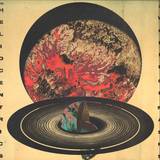
The Heliocentrics are a group for which genres are meaningless and boundaries invisible. Since first appearing on DJ Shadow's 2006 album The Outsider the group have gone on to release a string of records that float through jazz, hip-hop, psych, krautrock, and musique concrete whilst collaborating with numerous genre heavyweights from Mulatu Astake to Gaslamp Killer and picking up prestigious fans along the way, such as Madlib and the recently departed David Axelrod.
The primarily instrumental group, who operate out of their vintage analogue studio in East London called the Quatermass Sound Lab, bring in a new singer on album number four - a young Slovakian singer called Barbora Patkova. The result is an album that takes the band, already solidified in ever-expanding grooves and rhythms into new previously unexplored dimensions.The group's deep-set ability to craft music intuitively and impulsively stems from a desire to avoid typical processes or generic structures. Since its conception, the band's music has mainly been created from live improvisation. This musical approach gives the band its own sound and identity -'for anything to happen it must be at that time from the people in the room, and on the spot'. A decade of such sonic adventures has resulted in a tightly knit bond that the group refer to as almost a form of telepathy' with musical changes that otherwise would be near impossible to write.
Order now and we will order the item for you at our supplier.
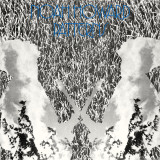
Classic free jazz album reissued for the first time since the 70s. Old-style gatefold sleeve LP, with liner notes by Ed Hazell.
Noah Howard, an alto saxophonist and composer, was known for weaving intricate and innovative musical patterns, often likening his work to "sound paintings." His 1971 album Patterns, the first LP he self-produced on his Altsax label, stands as a testament to his experimental and spiritual approach to music. In interviews, Howard frequently used visual terms like "patterns" and "shapes" to describe his compositions, emphasizing the importance of melody and structure even in highly improvisational settings. For Howard, patterns and melodies were essential to guiding listeners through his explorations without alienating them, maintaining a balance between innovation and accessibility. Howard's quest for an original sound was deeply influenced by jazz greats like Charlie Parker, Ornette Coleman, and Jackie McLean. While he admired these legends, Howard avoided imitation, striving instead to develop his own distinct voice. His sound was unmistakably his own, and he felt a deep obligation to carry the jazz tradition forward through personal expression, not by mimicking others. His music was also rooted in spirituality, a legacy he traced to his upbringing in the Black Baptist Church. He believed jazz had always contained a spiritual essence, from Louis Armstrong to John Coltrane, and his work aimed to channel this cosmic, spiritual energy.
Patterns was recorded in the Netherlands during Howard's second stint in Europe, where he found a more open, less racially charged environment compared to the U.S. For the album, Howard collaborated with Dutch musicians such as Misha Mengelberg (piano), Han Bennink (drums), and Earl Freeman (bass). Despite the challenges faced by guitarist Jaap Schoonhoven, who felt out of place in the session, the album came together as a powerful mix of blues, jazz, and classical elements.
The music on Patterns is a high-energy fusion of American free jazz and Dutch improvisation. Howard's saxophone work alternates between leading with passionate, lyrical lines and blending into the collective improvisation. The album’s dynamic interplay, particularly between Mengelberg’s dissonant piano clusters and Bennink’s thunderous drumming, creates a vivid "sound painting" full of contrasting forms and colors. Patterns remains one of Howard’s most unique and celebrated recordings, showcasing his visionary approach to jazz.
expected to be published on 06.12.2024

Die Schachtel Records is proud to present Ifigenia/Oreste, a new vinyl LP by celebrated Italian composer Paolo Spaccamonti. This album marks the seventh installment in the label's renowned Decay Music series, which has become synonymous with deeply emotive, abstract, and electronic/ambient music, which has so fare featured works of such names as Stefano Pilia, Giovanni di Domenico, Sandro Mussida, Vértice, Damavand and Claudio Rocchetti. Aim of the series is composing a fascinating scenario of the most interesting names of experimental musicians – mainly of Italian origins - working at the intersection of sound and music, abstract and visual, storytelling and abstract composition.
Paolo Spaccamonti has long been a significant figure in the contemporary music scene, known for his ability to bridge the worlds of instrumental, electronic, and experimental music. His most recent release, Nel Torbido (2023), is a testament to his ever-evolving artistry. With Nel Torbido, Spaccamonti delivered a haunting and immersive sonic experience that oscillates between tension and release, bringing together moody soundscapes, unsettling textures, and his signature understated guitar work. His exploration of silence, noise, and melodic tension has earned him recognition as one of the most unique voices in modern composition.
Composed by Spaccamonti, Ifigenia/Oreste is the original score for the theatrical production IFIGENIA / ORESTE, directed by Valerio Binasco and produced by Teatro Stabile di Torino. The music, both haunting and subtle, mirrors the play's minimalist and intense staging, immersing listeners in an evocative soundscape that blends ambient textures with guitar-driven melodies. The music was recorded and processed by Filippo Conti, with additional production and mixing by Stefano Pilia. The vinyl’s design has been crafted by Bruno Stucchi of Dinamomilano, making this release a fusion of sound, visual, staging and cultural reference.
In reflecting on his collaboration with director Valerio Binasco, Spaccamonti said: "From the first meeting with Valerio, it was clear that we aimed to create a production stripped of any unnecessary stylistic embellishments. Ifigenia and Oreste had to be severe, devoid of visual distractions, simple yet extreme in its own way. I sought to follow the same path with the music. The foundation is always the guitar, but I wanted to avoid overloading it, either harmonically or sonically. Sometimes, I treated it like a fragmented background noise; other times, I ventured into more aggressive, melancholic, or even melodic terrains, but always in a very human way. The text demanded an atmosphere that lived in the alternation of silence and rarefaction, like in the films of Bresson and Lanthimos. Short scenes interrupted by moments of darkness. In a marked rhythm, a suspense constantly suggesting the advance toward death, announced from the very first scene. Hence, the emphasis I wanted to place on silence through the music, even within individual tracks. Long, granular tails, like the (few) lights on stage."
expected to be published on 15.11.2024

As with most things, this project started with a conversation in the pub between me and Martin.
As we discussed what J-Walk and BiD could do next we chatted about our mutual love of DIY, Post Punk, Reggae, Digital & Dub, how about using that feel as an initial jump off on the next thing and see how you get on? I suggested.
As is his way Martin considered the suggestion, then promptly disappeared, 6 weeks later something landed in my inbox, it was titled Broken Beauty and the music contained embraced all those symbiotic ideals and culture.
Nailed it!
Recorded entirely in Stockport using a mixed kit bag of cheap forgotten keyboards, guitar, bass and effects pedals, this LP takes the J-Walk aesthetic and applies the wider palette of these influences to create something unique, those past and present influences forged together to bring you something truly DIY - instructions below.
How To Make Such A Thing...
Deactivate social media. Ignore the internet, don't answer text messages, avoid other music, the telly and other people. This is a process where it's only you in the room with whatever's in your mind. You will be there for some time and the loneliness can hurt a little.
Forget any predetermined ideas. Forget everything you've ever done before. This is an opportunity to start from scratch, but with years of accumulated knowledge and craftsmanship. Trust yourself.
Be scared. Be excited about not knowing what will happen and what will result.
Don't use midi sequencing, virtual instruments or samples. Just plug a toy instrument into an amp, press a rhythm and play around to see what happens. If it sounds good and fresh then record it. Plug a bass in to jam around and you'll soon hear and feel what sits in the pocket of the beat. Record it as it is. Dirty is real and good. Cleanliness equals sterility. Loop the bassline. Plug a guitar in and do the same.
Don't think when doing any of this. Just experiment with interest and curiosity and the music will take care of itself. You will now have a groove which is also about half a song minimum. Play some keys from the toys on top of what you have. Put 'em through effects pedals. Again, don't overthink it and don't try to get it clean. Add sound effects in right and random places.
There you go. Something you've never made before. But more importantly, it's something you've never heard before.
You don't have to die to be reincarnated.
BROKEN BEAUTY...You can't be either without also having been the other.
Order now and we will order the item for you at our supplier.

Dogo du Togo & The Alagaa Beat Band, are an innovative West African band with a one-of-a-kind hypnotic sound that combines psychedelic rock, Togolese rhythms, voodoo melodies, and dancefloor grooves. Dogo (the bandleader) calls their sound "Alagaa Trance." The band has recorded a stunning album called "Avoudé" that will be released in November on We Are Busy Bodies.
expected to be published on 08.11.2024

Where would a painter paint if it were not on a white canvas? Where would a composer compose if it were not on the stave and the spaces in between the lines? How would a musician play his instrument if there were no melodies composed, written down, painted for him to follow?
The magic of art needs a frame, a somewhat solid container to hold the freedom that can only be found once we integrate some form of structure. And that also holds in every other area of life. We all need a frame, a structure, a rhythm, or else, we fall apart. This human form needs the body, and yet it transcends the limitations of the body - through art.
Consistency being one of them seems oftentimes less tangible, for it resides more in the act of doing, and showing up for the practice, for devoting energy and presence. Strangely, if we consistently show up for our practice, regardless of its form, the solid frame of the hour we devote to playing the instrument, learning a language, doing the sport, sitting silently for that meditation: It feels different every single time. It feels new every single time.
The repetitive consistency in being present again and again allows for nothing short of magic to happen. Magic feeds consistency. Consistency feeds magic. Consistency sets a foundation that strengthens over time. It allows us to slowly but surely develop any kind of skill, to find and hence to embody expertise. On the fertile grounds of such a solid foundation, creativity fosters, and innovation blossoms.
Establishing consistent rituals and routines can bring a sense of comfort and safety into every-day-life. For routine beholds repetition and its frame enables our experience within to change. In the familiar, we dare to explore, maybe even experiment, merely because a part of us remembers we depart from, and always return to, a safe space. We do not get lost. We do not fall apart. As we practice, again and again, we build resilience in overcoming obstacles or literally persevering through challenging situations and stretches of time.
While consistency gifts steadiness and stability, its overdose risks to result in what may appear as uniformity. It feels like constantly - consistently - dancing on the fine line of freedom within a structure. Life is filled with unexpected twists and turns, adjustments need to be made to accommodate change and avoid rigidity. By striking a balance between consistency and flexibility, we can create harmony in our lives, just like a beautiful melody that flows smoothly from one note to the next.
Within the magical waves of music, skills are needed, too. Consistency is key to show up and do the work. It frames the freedom of magic that resides beyond and only beyond effort. Learning to play an instrument, learning to sing, does never happen within the blink of the eye. It takes time. Time to show up for the practice, to do precisely that: practice. Again and again, every single time, again and again. Precision feeds perfection that falls apart inside the structure of a song, a line, a rhythm, dissolving into magic.
Consistency in practicing, in composing and sharing music with the world regardless of the form allows any musician to refine his style, to carve out his uniqueness. For any artistic expression is, after all: Unique. And this uniqueness is born inside the vessel of any structure, over and over again. Sharing music in the form of new releases and public performances nourishes the bond between artist and audience. And for that to unfold, both parties need to show up - while the underlying beat of this never-ending practice is presence fuelled by consistency.
expected to be published on 08.11.2024

Mac DeMarco's breakthrough sophomore album, Salad Days - released on April Fools', 2014 - garnered widespread critical acclaim, landing on over 30 Year End lists. It was the album that catapulted DeMarco from "loveable slacker" to "mature songwriter with a gaptoothed grin," all at the tender age of 23. DeMarco's demos for Salad Days, originally included in an expanded edition of the album only available on Captured Tracks Mail Order site, peel back the curtain of said artist, who, up until then, may have been more known for his raucous live shows than his genuine talent as a songwriter and craftsman. This collection of demos and sketches as well as previously unreleased instrumental demos offer a rare insight into Mac's world and process.
expected to be published on 08.11.2024

Matter-of-factly, Lycox exclaims "Yaaahh" right at the beginning. That's an affirmation but in times of distress it can also mean resignation, something like "Yeah, whatever". Lycox says he was only freestyling though. Then the bassline appears. Elastic, expressive, full-bodied. And it's not even present the whole time. He was "trying to develop a new formula for the Kuduro beat."
Songs for the club? Most certainly. Different sensibilities, one same focused mind. Lycox evolves within tradition, he has mastered the groove, the ambience, the right tones. Simply called "Energia", the last track circles above wistfully, menacing but maybe just promising some sort of action. With a few drops one could almost switch over to a parallel universe of old school Trance, a reference that feels as alien here as maybe this track feels to someone for whom the standard Afro House sound represents modern African music.
These songs pile up in a threshold balanced between styles, sensations, maybe in the middle of life itself. Such a concentration of energy is bound to need release and that comes figuratively through details in the music reaching out to receptive ears. "To Bem Loko" explicitly tries to "literally drive everyone crazy on the dancefloor." Once again Lycox provides vocals, as in "Edson no Uige", about a friend who embarked on a trip to the Angolan province of Uige and came back speaking only the local dialect known as lingala. A nod to tradition, very emotional, without compromising complex arrangements. Consequently, we the listeners are kept believing there is still enough space for a bright future. To ears accustomed to Lycox productions the title "Contemporaneo" (opening of side B) reads like a redundancy, then.
Maybe this music can never be quite as massive as other Afro styles. Without sounding pretentious, it avoids simplistic patterns, it demands a bit more mental processing while it certainly aims to loosen the limbs. Universal in vocation, underground at the core, Lycox definitely calls it Batida but for some it is still Ghetto Music. Like DJ Veiga said when describing a previous release for Príncipe, Ghetto is home, though. Lycox adds it is a foundation of personality. "Few in our community will recognize your work when you come from the same environment, but once you establish your reputation outside of the neighbourhood and even outside of the country, people will look at you differently, as if you were a star."
Order now and we will order the item for you at our supplier.

Next up on Feral Child, sees not only a second ever release from New Zealand based VOR-STELLEN but a teaming up with one of label head dom’s favourite ever labels, the mighty Flying Nun. Despite some patchy European distribution the first VS release “Parallelograms”, was a constant player at FC HQ; 4 superb tracks of super laid back, kraut flavoured slow burners, (lead track “Voyager” especially, comes hugely recommended with its accompanying film clip), so when the band OK’d a second release for Feral Child, we were stoked. Vor-stellen is the experimental project of Brendan Moran, which blends fixated guitars and drums with ad-hoc electronic layers producing perforated waves of sustain which echoes off the fourth wall. Brendan has released work previously as part of avoid!avoid (their album “Particle and Wave” was released by Flying Nun in 2016) and The Subliminals, of which Flying Nun re-released -in 2021- a vinyl edition of their highly acclaimed album “United State”. With Vor-stellen he picks up where those other projects have left off as a foray into 'kraut' inspired compositions “which seek to transform pre-determined ideas of music into open-ended sound objects, untethered from any sense of conventional outcomes”. On this, second VS record, he teams up with his Subliminal buddies once again to continue on an exploration, “folding the weird and the eerie into a dark ecology of long-sound via indefatigable environments of modulation and improvisation, creating sonic counterpoints that hinge on a reanimation of musical gestures”. The record features two side long slow builders and are released in a beautiful Brendan Moran designed sleeve.
expected to be published on 28.10.2024

The new Wolfed EP sits in the Grumpy discography as their most confident and self-flourished work to date. Delivered in the serene clarity of a vulnerable voice inviting you to share in their world, the record glitters in its yearning for another, in its most jubilant highs and successes, and its most intimate internal monologues. We fall and hit the wrong notes, say the wrong thing. But we do it for love. For Grumpy, those missteps are not avoidable speed bumps in a relationship, but the highlights of the journey itself. For in those painful moments of a relationship, we find Truth about ourselves. There is simple serenity found in realizing your imperfections the hard way. But we can't get too comfortable_ as Wolfed fades out, the jittering, chopped-up melodies leave you on edge in a delicate balance of mistrust and unease. Can we hold on to this love forever? Grumpy has the answer.
expected to be published on 25.10.2024

Oxblood Coloured Vinyl[36,09 €]
Exploring late-night, after-hours meditations on sound; ‘Everything Above The Sky (Astral Travelling with Luke Una)’ is a new compilation by the titular DJ, promoter and enigmatic cultural curator. Off the back of the E Soul Cultura phenomena, this compilation comes at a timely point in Luke’s rich career as he soars the heights of playing all over the world. Avoiding any chance of his sound being pigeonholed, Luke has put together a tracklist of songs and music that have a transcendental feel, after coming off the grid, going back to source, outside the city walls .
Music has long been believed to aid out of body experiences and many of us have searched long and hard for a combination of those elusive ingredients that might alleviate some of the monotony of everyday life, our daily routines and obligations, and those things that seem to block us from the spirit of the universe. In this collection, Luke selects music with all the right ingredients in just the right quantities, allowing the listener to engage in an esoteric journey of enlightenment through sound. Being a prolific collector of music, Luke initially delivered enough tracks to compile several compilations, making the licensing process the biggest effort to date for the label. The music moves softly and slowly, never becoming too intrusive, exemplifying the wonderful elevating properties of simple songs played from the heart.
Luke’s Everything Above The Sky manifesto reads, “Astral Travelling in the meadowlands with acid folk, spiritual jazz, around midnight hocus pocus, cosmic psychedelic soul, magical spellbound whirling swirling love songs, Brazilian ballads of light into machine soul gospel utopia dreaming, Balearic bossa, Outer Space ancient African drum, the breath of trees, escaping the big bad modern world, gathering round winter fires, walking amongst the bracken in Padley Gorge in late summer twilight, overlooking the Hope Valley, escaping ego, detaching and finally letting go amongst the stars with the slowly floating people. It’s beautiful beyond. Everything above the Sky”.
Beginning his career as an original Sheffield house young blood in the mid 1980s, Luke’s move to Manchester and partnership with Justin Crawford saw the birth of Electric Chair, a cornerstone cult night in the UK underground club scene. Then came Electric Elephant, a Croatian festival paying homage to their wild eclecticism from Balearic to Brazilian to É Soul, house, disco and techno. Luke’s much loved, long-running Homoelectric night and more recently Homobloc sell out festival for 10,000 souls has been at the forefront of Manchester’s LGBTQ+ cultural landscape. Luke’s Friday evening show on Worldwide FM captured imaginations and became a cult four-hour must-listen monthly journey for fans all over the world. Today, Luke remains, as ever, at the forefront of a changing milieu, pairing the momentous legacy of Manchester’s 80s and 90s scene with the delivery of what today’s club communities need to get down.
Order now and we will order the item for you at our supplier.

After four tape editions on Seil Records, Sofie Birch's 2019 debut record "Planetes" is finally available on vinyl featuring new artwork and a beautiful analog remastering.
Sofie creates dream-like, elegant ambient music with an emphasis on exploration and wonder. Her distinctive organic and melodic sound is shaped by improvising with analog synthesizers, acoustic instruments, and field recordings. Repetitiveness is clinically avoided with harmonic progressions that resolve all tension brilliantly. Planetes was described as a beautiful sound universe where the atmospheric sound surfaces and textures gently and elegantly take the listener to new places all the time by Danish experimental music media Passive Aggressive.
For this record's 5th anniversary, apart from the regular vinyl edition, there are two special editions. The first one comes in translucent blue vinyl and includes a limited edition K7 inspired by 70’s yoga tapes. It contains a 20-minute guided meditation on one side and two beautiful unreleased tracks on the other. The second special edition comes in yellow vinyl and includes an inner sleeve with stickers so that you can create your own cover/ constellation for the record.
Sofie's own words about the release:
“It's a dream coming true to see my debut release Planetes coming out on vinyl for its 5th anniversary! Planetes means “a wanderer” in Greek, and I love how this word describes the wandering of celestial bodies, and how we humans wander through life both on a physical and spiritual plane. Wandering is being alive. Wandering is moving, and everything is always moving and changing. Shifting and transforming. The music was created with recordings from a pilgrim trip in Italy with my mom on a little cassette recorder and the music evolved from synth improvisations and the discovery of trusting sound as it is and creating music from immediacy rather than concept.”
Order now and we will order the item for you at our supplier.

Coke Bottle CLear Vinyl. The breakout success of 2016's Puberty 2 saw Mitski hailed as the new vanguard of indie rock, the one to save the genre from the white dudes who've historically dominated it. But the often overlooked aspect of being a rising star is the sheer amount of work that goes into it. "I had been on the road for a long time, which is so isolating, and had to run my own business at the same time," Mitski explains, "a lot of this record was me not having any feelings, being completely spent, but then trying to rally myself and wake up and get back to Mitski. I was feeling really nihilistic and trying to make pop songs."We want our artists to be strong but we also expect them to be vulnerable. Rather than avoiding this dilemma, she addresses directly the power that comes from appearing impenetrable and loneliness that follows. "With a lot of the romantic infatuations I've had," she says, "when I look back, I wonder, Did I want them or did I want to be them? Did I love them or did I want to absorb whatever power they had? I decided I could just be my own cowboy figure that I so desire." In Be The Cowboy, delves into the loneliness of being a symbol and the loneliness of being someone, and how it can feel so much like being no one.
expected to be published on 11.10.2024

Cloudy Baby Blue Vinyl. with you in spirit, the fourth Balance and Composure LP, is an arresting, atmospheric collection of melodic post-punk and towering rock. Due out October 4 on long-time collaborator and Grammy-nominated producer Will Yip's Memory Music, it's the band's first LP in eight years, and a thrilling full-length comeback after their four-year hiatus. It thunders and stirs, dipping between beautiful, crystalline arrangements and punishing, earth-shaking climaxes; in between all, a gripping, near-physical tension crackles and growls and grooves, waiting to rip open. It's an intensely self-reflective record for vocalist and guitarist Jon Simmons, an uprooting and examination of the supports on which a life is built. Preemptive grief, wrestling with god and faith, familial responsibility, familial mortality_these are the things Simmons was carrying while writing this material. They're also things he was trying, for better and worse, to avoid_ hence the record's title. with you in spirit feels like the work of songwriters reaching new heights, exploring new depths. Sometimes, the record itself feels like a band grappling with its own avoidance, its own mortality, and deciding to face these things the only way they know how. Balance and Composure are with us in spirit, yes, but in the flesh, too, for now.
expected to be published on 04.10.2024

with you in spirit, the fourth Balance and Composure LP, is an arresting, atmospheric collection of melodic post-punk and towering rock. Due out October 4 on long-time collaborator and Grammy-nominated producer Will Yip's Memory Music, it's the band's first LP in eight years, and a thrilling full-length comeback after their four-year hiatus. It thunders and stirs, dipping between beautiful, crystalline arrangements and punishing, earth-shaking climaxes; in between all, a gripping, near-physical tension crackles and growls and grooves, waiting to rip open.It's an intensely self-reflective record for vocalist and guitarist Jon Simmons, an uprooting and examination of the supports on which a life is built. Preemptive grief, wrestling with god and faith, familial responsibility, familial mortality_these are the things Simmons was carrying while writing this material. They're also things he was trying, for better and worse, to avoid_hence the record's title.with you in spirit feels like the work of songwriters reaching new heights, exploring new depths. Sometimes, the record itself feels like a band grappling with its own avoidance, its own mortality, and deciding to face these things the only way they know how. Balance and Composure are with us in spirit, yes, but in the flesh, too, for now.
expected to be published on 04.10.2024

From the very first listen to Bingo paradis, the perfect antithesis of Ultra Dramatic Kid, his previous album, the melodic evidence and the catchy choruses jump out at you. As on the unreleased single Athènes/Petit soldat (2021), released between his two albums, Muddy Monk reconnects with his melodic instincts and instantly finds the right tempo on Arpailles, a suave instrumental with an unstoppable spin that immediately gives him the colour of the record still in the making. As usual, the musician accumulates machines and samplers in his home studio to develop a sound palette that is readily organic.
Muddy Monk's impressive career has been built up in his native Switzerland, far from the hustle and bustle of Paris, and he has always collaborated with a wide range of artists (Ichon, Jimmy Whoo, Myth Syzer, Ruby Red). Now, with Italian Giorgio Poi, he has found a new sidekick for a bilingual duet in the form of a summer hit: Tic Tac. And there's no shortage of hits (Chaki Queen, Toujours t'avoir) on this album of cocagne. Accompanied here and there by keyboardist Paul Prier (Christine and the Queens, Charlotte Gainsbourg), Muddy Monk has pulled off a brilliant hat-trick, adding yet another masterpiece to his exemplary discography.
expected to be published on 27.09.2024

Tanukichan, the musical project of Oakland, CA’s Hannah van Loon, has been a prominent figure in modern shoegaze music since 2016, when she first collaborated with Chaz Bear of Toro y Moi. Together, they released an EP and two full-length albums under Bear's Company Records, culminating in 2023's GIZMO. With her new EP Circles, out September 20th, 2024, via Carpark Records, van Loon ventures into new territory by teaming up with a new producer for the first time – Franco Reid.
The genesis of their partnership dates back to the GIZMO campaign, when Reid noticed van Loon wearing an Incubus shirt in a press photo on Instagram. Intrigued by whether or not van Loon was a genuine fan, he sent her a DM. Their shared musical interest sparked a dialogue that eventually led to the creation of the single "NPC" in 2023.
Lead single “City Bus,” offers a reflection on van Loon's childhood bus rides in San Francisco, evoking the stop-and-go rhythm of commuter life through hard-hitting drums and heavy guitar feedback phasing in and out of the mix. Themes of self-reflection and societal belonging permeate the track, echoing van Loon's ongoing personal journey.
While much of Circles delves into internal struggles, “It Gets Easier” takes on a more celebratory tone as van Loon realizes she’s developed a heightened sense of maturity when dealing with hardship. “It feels easier to let go of situations or people that don’t serve me,” reflects van Loon, “Or if they can’t be avoided, at least I don’t have to dwell on the sadness or discomfort I feel when letting someone down.” Introduced by Reid, nu-gaze sensation Wisp, contributes a verse in her similarly ethereal vocal style.
There is a notable shift on Circles when you consider the first three Tanukichan releases were produced by a pioneer of the chillwave genre. With van Loon’s consistently dreamy songwriting and Reid at the helm, Tanukichan enters new sonic territory that feels larger, arena-ready, and more like a highspeed night drive than the hazy summer dream of its predecessors.
expected to be published on 20.09.2024

Île Flottante is Mr. Beatnick´s 5th album, following 2023’s Joy In Variation (including the notorious cover of Love on a Real Train) and his well-received off-beat collaboration with London-based avant-garde agitator Richard Greenan – Coasty – this is his first contribution to the International Feel trademark. Probably best known for some big deep house revivalist tunes circa 2013 on the now dormant Don’t Be Afraid record label, Beatnick now converts that aural quality and dimensionality into the Balearic system.
Île Flottante takes its name from the tastiest French pudding of Mr. Beatnick’s childhood holidays. The name, also a jeux de mots - floating island - hinting at the album’s inspirations and sense of identity, as a danceable soundtrack to a fictional island. Explored with high intensity and over a yearlong process, the sounds of the well-worn, but never failing Balearic universes were a mind expanding influence. Think of genre staples like Software, Manuel Goettsching, Mark Barrott, Len Leise, Don Carlos, Gaussian Curve, Joan Bibiloni or Yasuaki Shimuzu.
„I spent a year listening to a lot of synthesized island music, and marveling at the many twinkling wonders of the Balearic musical universe. Struck by a sense of belonging that had often eluded me on my musical journey thus far, as the weirdo at the back of the club who had orbited many scenes for 20 years, but never felt like I fitted in, I found music that made me feel like I had come home. The songs that came out of this process are presented in the order that they were written - an open book of ocean hymns, honest and spoken from the heart.“
Île Flottante tries its very hardest to avoid being any one thing in particular. At one point, it is a gentle beach walk accompanied by polyrhythmic drum plod and flourishes of Guzheng. At another, the infamous James Yancey septuplet swing is repurposed against a marimba melody that wouldn’t be out of place in one of Link’s forest adventures.
Elsewhere, there are the bellows of distant whales, touches of Italian dream house and a splash of vintage madchester, all working to create a space that feels both familiar and loaded with well worn tropes, but with its own quirky sense of personality, facets which are often attributed to Mr. Beatnick’s holistic b-boy approach. This is his understanding of a Balearic (b-boy) stance. Just with a float instead of a freeze.
Order now and we will order the item for you at our supplier.

This album takes you back to Colombia of the 50s and 60s. In those days, the tropical music of the Caribbean and Pacific coasts took over the country's mainland music scene by storm. One of the key figures during this period was Edmundo Arias. Together with Lucho Bermúdez and Pacho Galán, Arias is seen as one of the ‘big three’ composers of Colombian tropical music.
He was a rather introverted person who avoided being in the spotlight at all cost, leading to his work being less known than his contemporaries. With this album we hope to highlight the amazing legacy Edmundo Arias has left us. Think of big bands with sharp dressed musicians playing the finest cumbias, porros and other tropical sounds in fancy ballrooms on a hot evening in Medellin or Bogota.
Liner notes:
Edmundo Dante Arias Valencia was born in Tuluá, Valle del Cauca, on the 5th of November 1925. He came from a family of musicians. His father, Joaquín Arias Cardoza was a band leader and composer who taught his children to play music. Arias learned to play many instruments such as the guitar, bass, bandola (pear shaped string instrument related to the mandolin), tiple (12 string guitar), clarinet and saxophone. He proved to be a very talented musician and together with his father and his older brother Ricaurte he formed the ‘Trio Arias’. The family lived in different cities across Colombia depending on where they found work. When his father died unexpectedly in 1948, Edmundo and Ricaurte had to support their family working as musicians. In 1951, Arias decided to move to Medellín, in those days the heart of the Colombian music industry and the city where the most important record companies and the best musicians were based. It didn’t take long before Arias made a name for himself as a musician, composer, arranger and band leader for Colombia’s leading labels at the time; Zeida, Ondina, Silver and Sonolux. For the latter, he would eventually become the artistic director. Over the years, he wrote hundreds of songs, recorded many albums with his own orchestras or with the Orquesta Sonolux and collaborated with a countless number of musicians, often uncredited.
Together with Lucho Bermúdez and Pacho Galán, Edmundo Arias is seen as one of the ‘big three’ composers of the tropical music of Colombia. But despite the fact that Arias was renowned, very little is known about his personal life. He was a humble man who preferred to work in the background and avoided being in the spotlight at all cost. He declined interviews and kept away from public life. On some live performances of the orchestra that carried his name, Arias asked one of his musicians to pretend to be him, so that he wouldn’t have to come on stage. You might think that Arias was shy or anti-social, but this was not the case. Most people he worked with described him as a very jovial, good humoured person and enjoyed working with him.
His invisibility in public life belied how present he was behind the scenes. If he wasn’t working on his own productions, he was regularly collaborating with other musicians. Arias had his hand in the work of many of his colleagues and was a mentor for young artists. Some even say that in those days all the musicians in Medellín had worked with Arias in one way or the other. He had a strict working regime: composing, arranging and recording at night while sleeping during the day. He was also very productive. The story goes that on one occasion, he wrote arrangements for a 16 piece band in just a few minutes while the band was recording another song. His hard work and productiveness resulted in hundreds of compositions and many records that carry his name.
Edmundo Arias’ career ran over 6 decades until his death on the 29th of January 1993. Over the years, he left us a huge legacy. The songs on this record are a selection of his work during the 50s and 60s. Many see this period as the absolute highlight of his career. We picked out the songs we consider to be the most outstanding recordings from this period. The title of this compilation Guepa Je! is Colombian slang often used in cumbia to express joy or to celebrate. A free translation would result into something like ‘yeah’, ’let’s go’ or ‘groovy’. I guess this title says enough. Enjoy the music. Guepa Je!
Order now and we will order the item for you at our supplier.

Black Truffle is thrilled to present a Song for two Mothers / Occam IX the first ever solo release from Laetitia Sonami. Born in France in 1957, Sonami studied with Éliane Radigue in Paris before moving to California in 1978 to study electronic music at Mills College, going on to make important innovations in the field of live electronics interfaces and multi-media performance. Sonami is perhaps most closely associated with one of her inventions, the Lady’s Glove, an arm-length tailored glove fitted with movement sensors allowing the performer fluidly to control digital sound parameters and processing, as well as motors, lights and video playback. Having performed with the Lady’s Glove for 25 years, Sonami retired it in 2016, turning her attention to the interface/instrument heard and pictured here, the Spring Sprye.
In Sonami’s own description, “The Spring Spyre is composed of three thin springs that are attached to reverb tank pickups, mounted on a metal ring. The audio generated when the springs are touched, rubbed or struck is analyzed in Max/MSP. The extracted features are then used to train machine learning models in Wekinator and Rapidmax and control the audio synthesis in real time. We never actually hear the springs.” After decades of aversion to documenting her work on recordings, a Song for two Mothers / Occam IX treats listeners to two side-long performances with the Spring Spyre: the very first piece developed for the instrument and the most recent, the two contrasting remarkably in sound palette, energy and form. A Song for two Mothers (2023) spins an intricate web of rippling synthetic burbles, rapid sweeps and fizzing textures. Performed in real time with the sensitive and partly uncontrollable Spring Sprye ("a bit tyrannical," Sonami calls it), the music is delicate yet chaotic. Abrupt gestures hover against a backdrop of silence, "devoid of spatial or temporal direction". After several minutes, the sound-world becomes metallic and percussive, tapping and ticking in pointillistic flurries before a wavering harmonic cloud emerges, sprinkled with resonant drips and pops.
Occam IX is a radically different proposition. At the outset of Sonami’s exploration of the Spring Sprye, she asked her former teacher Éliane Radigue to compose a piece for it—and her: like all of Radigue’s work since she ceased working with analogue electronics at the beginning of the 21st century, Occam IX is written not only for an instrument but also for a particular performer. These scores are developed verbally, through meetings and conversations between performer and composer; each is grounded in an image (usually kept from listeners, to avoid influencing their experience); all magnify the subtlest acoustic phenomena and require great commitment and patience from the performer. Sonami’s is one of the few Occam pieces to make use of electronics, bringing it closer to Radigue’s famous longform pieces for ARP 2500. Beginning from a rumbling low tone, the listener is gradually immersed in slowly lapping waves of synthetic tones, eventually thinning out into delicate bell-like pings against a background of white noise, reminiscent of one of the most beautiful sections of Kyema from the Trilogie de la Morte.
Accompanied by notes from Sonami, her longtime collaborator Paul DeMarinis, and Radigue, and illustrated with scores, photographs and images of the Spring Spyre, a Song for two Mothers / Occam IX is an essential document celebrating an under-recognised pioneer of electronic music and performance.
Order now and we will order the item for you at our supplier.

The notion of house music as a form of uptempo soul music is intrinsic evidence with a record like the one on hand. Professor Supercool’s If You Love Somebody is many things at once: an example of a special brand of British pop music, influenced by US-American soul more or less from the get-go, the Second Summer of Love, the conception of Balearic as a music genre, the cultural interchange of European dance floors and DJs from across the pond and underground music marketing through the vessel of special one-time pressings. The mysterious Professor Supercool is actually a moniker for Dr. Rob of The Blow Monkeys’s fame, who produced the song with a veteran and legendary DJ of the Northern Soul scene „The Real Hector“ – a resident at the famous Wag Club.
Originally a part of the band’s Album Spring Time For The World, it appeared first as a special For-Promotion-Only-12“ in 1989 with limited information as a trial ballon to „avoid preconceptions“. The fear was without reason. Like the band’s other big dance floor record and Balearic fave LA Passionara a year later, it got played and supported by the DJs of its time. Next to Graeme Park at the Hacienda or Paul Oakenfold, it also got picked up by Mastermixer Tony
Humphries and became a staple at his radio and club sets for KissFm respectively Club Zanzibar. While the vocal mix found its way on said album, the preferred 12“ instrumental version has never been released anywhere else up until now and made the record go for a substantial amount of Discogs dollars.
Expanded with an edit by the label’s in-house DJ Gerd Janson that is supposed to work as a dub alternative to the vocal mix, the 12-inch and bundle download contain the original plus a faithfully restored and remastered version of the instrumental in demand. If you love this record it is impossible to let it go.
Order now and we will order the item for you at our supplier.