First Axis of People release for 2026.
Fantastic Man shifts the tone, dialling back recent trance leanings in favour of a more direct, house-driven sound. Deep chords and ethereal vocal fragments remain, but the focus moves away from the ‘epic-drops’ du jour toward something more fluid and propulsive.
A Little Bit More and Be There keep things warm and rolling, Inhibition adds extra drive, and Prophecy closes in dubbed-out broken-beat territory.
Поиск:axis of
Все
A dense and driving club interpretation of the well-loved ethereal classic “Genesis,” reworked into a hypnotic instrumental with plenty of low-end weight and emotional charge.
Built for impact, not nostalgia, it comes in four versions — each tuned with a different tone for different zones of the night. Out on vinyl and digital via Axis of People.
Mariachiara Troianiello, the force behind Katatonic Silentio, continues her exploration of spatial and sound design, slicing various forms of dub while following her instincts and storytelling through each work.
Troianiello's music and live sets are known to be meditative, with each transition subliminally serving a purpose. As 'Axis Of Light' delves into five pieces for this EP, one can experience the drops and transitions connecting, gradually uncovering hidden meanings.
Written and produced by Mariachiara Troianiello
Artwork by Apolo Cacho
Layout by Takashi Makabe
Digital Master by Paul Mac
Mastered and cut by Simon at The Exchange
Belgian Johan van Roy has had one of the longest careers in electro-industrial music, rising from humble beginnings in the '80s EBM scene to become a figurehead of the genre.
Suicide Commando's music is characterised van Roy's nasty, ultra-nihilistic worldview and his unflinching exploration of the dark side of human nature, combined with the intense, dancefloor-focused sounds in which it was packaged.
Now, exactly 20 years after its original release in 2003, Suicide Commando’s legendary Axis of Evil album is re-released with lots of brand new goodies.
Axis of Time is the stunning debut album from Philadelphia mallet percussionist and poet Angelo Outlaw. Featuring Eraserhood Sound's signature synth & soul production, Axis of Time is a dazzling blend of jazz, rare groove, funk, soul and r&b. According to Outlaw, the album is meant to transport the listener to a dream-like state, where space and time slowly fade away and reality is merely a distant memory. Each song sets a unique scene, as the pace of the music swells and sways_from the euphoric highs of lead single "Free My Mind" and uninhibited groove of "Speed of Light" to the trance-like meditation of "Dreams" and mournful melodies of "Invisible Clock," Angelo and the Eraserhood Sound house band truly go to the cosmos and back. The record is an extraordinary debut from Outlaw, a young gay Black man who hopes to serve as an inspiration to others who might be perceived as different or other. His work transcends race, creed, religion, and politics, and has the power to speak to the universality of time, space, and human connection.
Emotional Rescue finally gets around to reissuing some House music with the start of a 3 x 12 series from Miami's Dancefloor Records. Covering House and Freestyle, this is music as worthy as any other explored to date.Founded by British ex-pat Jeffery Collins in 1983, Dancefloor Records was the culmination of a music industry journeyman's long career from swinging sixties London to bohemian seventies NYC before relocating to the sunnier climbs of Miami.Taking in the City's unique mix of American, Latin and Caribbean sounds, Dancefloors early success came via a long association with reggae turned disco star King Sporty. While his legacy will be looked at in future, this series concentrates on Dancefloor's shift to the growing club sounds emanating from Chicago and NYC.First is the little is known Eighth Ray. As often the case, a project by a group of musician friends who went on to release under various pseudonyms. From the opening spoken word intro of Axis Of Love, the spaced-out 4/4 and spiritual, pulsing arps, this could be mistaken for the then in-vogue 'Italian House'. With Rimini in its sights, the vocals are the journey, underpinned by simple, up'n'back bass and Mateo and Matos style keys, pure 6am sunrise. Backed with the deeper 8th Ray, the EP eschews the bumpin' House then coming from NYC and looks to the sound system vibes out across the Atlantic. Deep House before the term had grabbed hold, been twisted and contorted and donned head-to-toe in black. Simply, real House music.
- 1: Värdelös
- 2: Demons And Angels
- 3: Pawn Sacrifice
- 4: The Wolven Law
- 5: Lockdown
- 6: The Punishment Begins
- 7: The Noose Tightens
- 8: Det Går Aldrig
- 9: Crush The Empire
- 10: Pre-Emptive Nuclear Strike
- 11: A Life Of Ceaseless Grind
- 12: Streams Of Sludge
- 13: Into The Hard Earth
- 14: The Pain Maze
- 15: Vile Behaviour
- 16: Defeat
- 17: Dull Dead Future
- 18: To Smite
- 19: A Brutal Truth
- 20: Flytande Död
The band formed in late 2013 by former Coldworker members Joel Fornbrant (vocals), Oskar Pålsson (bass) and Anders Jakobson (drums). The line-up was completed by guitarist Kristofer Jankarls (also in Livet som insats) a few months later and the quartet focused on songwriting. The first recording took place in the spring of 2015 and the 12 tracks were released on the two 7' EP's Time and again and Mankind crawls.Following the releases of the EP's and a few live shows Axis of Despair continued to work on material with the ultimate goal to create a striking grindcore album with an aggressive, yet diverse selection of strong songs. The writing process was spread out over a year until the band went into the studio and begun the recordings in the summer of 2017.Contempt for Man propels with twenty super-charged raging songs, clocking in around the half an hour mark - short enough to retain attention, and long enough to serve a good taste of the bands particular brand of European grindcore.
- A1: Axis Of Rotation
- A2: Solid Earth
- A3: Anacro Rhythm
- A4: Some Degree Of Sanctuary
- A5: Opal Light
- A6: Something Approaching Happiness
- A7: Dark Seed
- A8: Tunnel North 5
- A9: Follow Earth
- B1: I Dream In Vital Blue
- B2: This Place
- B3: Aint Gonna Lie
- B4: Next Town
- B5: Amplification Of Intelligence
- B6: The Day The Poles Shifted
- B7: Somewhere Near
- B8: Halodule
- B9: Gradual But Not Continuous
The original Environments album was conceived and written back in 1993. It became one of the great lost albums by The Future Sound Of London before the guys took in back to the studio to complete and issue in 2008. Since then has come the success of further instalments and following additional studio work during a period of extreme creativity comes two further volumes. Released separately but simultaneously, Environment 6 and accompanying Environment 6.5, when combined, create two CDs of 46 tracks. Sweeping between luscious dreamscapes to delicately melodically compositions to intensely highly programmed electronics sculptures Environment 6 and Environment 6.5 continue the journey towards the boundaries of the future of sound.
Und dies trifft 100% zu: kunstvoll vereinen BATTLE AXIS Thrash-Einflüsse mit starkem Power-Metal. Teils Doom-lastige Schwere und rockige Elemente. Wagemutig, atmosphärisch, teutonisch, BATTLE AXIS!
Lucrecia Dalt's Anticlines is a volume of bodily and geological substrates within poetic theory and sound. It is a place where skins and minerals dissolve and commingle, where gaseous subterranean leaks inflate lungs, where brain cavities echo interplanetary waves bent from passing through atmospheres.
A former geotechnical engineer from Colombia currently residing in Berlin, Dalt's concern with boundaries and edges shape the lyrics and music of Anticlines, her sixth album. Paying careful attention to pace, breath, and texture, Dalt microtonally shifts the distance between speech and song while using traditional South American rhythms to support her contemporary electronic composition.
Lucrecia arrived at the atmosphere of Anticlines after several months of studying and creating new patches for the Clavia Nord Modular, forming a rhythmic feedback flow with it, a Moogerfooger MuRF, and her voice. The overall effect of cavernous space backdroping Dalt's intimate vocal phrasing rewards contemplation, supported in the physical formats of Anticlines by a lyric booklet documenting Lucrecia's collaboration with Australian artist Henry Andersen.
The album opens with Edge,' bordering on a pathological circlusion of self upon other. The lyrics depart from the Colombian myth of El Boraro, an Amazonian monster who turns its victims insides to pulp before sucking them dry and inflating their bodies like balloons to lifelessly float away. Tar' ponders human dependence on earth at the boundary of the heliopause, where to inhale might be like breathing tar. Dalt's distant and obscured vocals end with, we touched only as atmospheres touch.'
The sonic rise and fall of Analogue Mountains' is inspired by martian traces found in Antarctica embedded by meteorite ALH84001, suggesting that we might well be living in mountains transferred from Mars.' The steadily winding music on Concentric Nothings' descends with the lyrical exercise of dissolution let my touch be indistinct and instinctive.'
Interspersed with the lyrical pieces of Anticlines are instrumental interstitials that demonstrate preceding concepts — as if to say, this is what antiforms sound like, and this is what the universe's indifference sounds like.' Dalt's ongoing experiments with visual artist Regina de Miguel support these ideas, their practice allowing the objects of their attention to slip in and out of being.
Mystic of matter, Lucrecia Dalt has previously performed and worked with Julia Holter and Gudrun Gut, her slippery spoken word and performative nature recalling the work of Laurie Anderson, Robert Ashley, Asmus Tietchens, or Lena Platonos. While touching stones, The Thing by Dylan Trigg, Cascade Experiment by Alice Fulton, and Wretched of the Screen by Hito Steyerl are but a few formative scripts that support Dalt's exploration of the betwixt and between.
In preparing a live set for Anticlines, Dalt plans to stage an uninterrupted configuration, like a kind of alienated lecture, aiming for gestures that create tensions with non-existent objects.' Dalt intends to provide meaning and a place for the listener to meditate or relate to the concerns and ideas' she presents.
- Lucrecia Dalt is a Colombian recording artist, songwriter, and producer.
- After studying civil engineering in Colombia, Dalt worked at a geo-technical company for two years and has since lived in Barcelona and Berlin, where she currently resides.
- She has released five solo albums and has collaborated with musicians Julia Holter, Laurel Halo and Rashad Becker, to name a few.
- Dalt has composed for sound design installations and performance pieces for institutions such as the Santa Monica Art Centre, Reina Sofia Museum and the Maisterravalbuena gallery of Madrid, in collaboration with visual artist Regina de Miguel.
- Anticlines is Dalt's sixth solo record, and her first on RVNG Intl., following the release of 2015's Ou.
- Anticlines explores the boundaries and limitations of human consciousness. The album's poetic lyrics were written collaboratively between Dalt and Henry Andersen during a weekend in Brussels, Belgium.
- 1: Oblique Axis
- 2: Lets Go
- 3: Wholly Unaware
- 4: Champagne Walk
- 5: Rave Splurge Noise Fm
- 6: Improvisation #1
- 7: In The Air Today
- 8: Gas Attack
- 9: Interlude
- 10: Drive (Minimal)
- 11: Heavy Handed Sunset
- 12: Underwater Electronic Struggle
- 13: Confirmation Of Our Worst Fears
- 14: Hardwax Flashback
- 15: Broken Mantra
- 16: Extended Industry Knowledge (For Oscar)
- 17: Noise Rave
Repress!
As Sure As Night Follows Day is Russell Haswell's landmark second album for London's Diagonal Records. Consolidating a quarter-century at the coal face of extreme computer music, techno and death metal in 19 tracks and 49 minutes, it's Haswell's most coherent yet varied burst of activity to date — zigzagging from improvised n0!se outbursts and asphyxiated R&B to a brace of thundering acid bullets that positively froth for the 'floor.
The album was extracted over a fast-working period in late 2014, and is best perceived as a sort
of fractured regression to his formative influences: you can hear the picnoleptic recollections of
grindcore shows in the Black Country, the refracted shades of mega-raves at Coventry's Eclipse,
the conflating toxic texture-memories of early Japanese noise, and the incandescent stomp of
Mills and Hood in that early 90s phase.
Fortunately for the ravers, this album includes some of Haswell's most direct dance floor attacks to
date. 'Hardwax Flashback', for instance, finds him in pure tekno panik mode — a four-to-the-floor
wrecking ball groove that someone, somewhere, may even be able to mix. 'Gas Attack' distils his
penchant for all things Belgium into a vicious strain of New Beat lactic acid. Haswell then doffs his
cap to Detroit electro legends Drecxiya on 'Underwater Electronic
Struggle' — a story goes that he once thrashed a jet-ski all over the Mediterranean while listening
to 'Wave Jumper' in his 'phones — before he does the salty freestyle electro flex 'ting on 'Industry
Knowledge (For Oscar)' while reminding his trusty apprentice, Powell, that he still has a lot to
learn. In between these 'floor-flexers, we find more freakish disturbances and intrusive drum-box
improvisations: the modular mind-floss of 'Rave Splurge Noise' or 'Noise Rave', for instance, or the
self-explanatory 'Improvisation #1'. 'In The Air
Today' investigates warehouse-ready electro-acoustic percussion, while the chaotic clusters
of 'Interlude' swarm and invade your senses with psychoacoustic incision. This is Diagonal and
Russell at their most f**ked up and fizzy, and an important reminder of the artist's stream-of-
consciousness genius — and the pressing need for more chaos and unpredictability in electronic
music today.
- A1: River Jordan
- A2: Mary Long Tongue
- A3: 21 Girls Salute
- A4: Fulllment
- A5: In Dis Time
- B1: Lets Do Right
- B2: The Day Had Just Begun
- B3: Lets Clean It Up
- B4: John Tom
- B5: Mercy
Barrington Levy's 3rd LP for Jah Life, another killer selection from the fruitful works of the Wright/Lawes/Levy axis. From the golden era of the Radics at Channel 1, mixed by Scientist at Tubby's, 10 tracks, great all the way thru. Finally available again, this was only repressed once before in the late 1990's, other than its original release in the early '80s. Featuring iconic cover art by the late NYC legend Jamaal Pete and pressed from the original mothers, identical to the original press.
12"[10,71 €]
2026 Repress
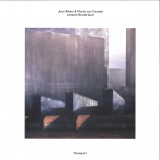
Juan Atkins and Moritz von Oswald - the two indispensable protagonists of the Electric Garden - plug back into the wilderness.
Transport' - the new full length effort of the Borderland collaborative project - brings together a new set of studio-refined sequences aimed at colonizing some of the dark energy that pulsates through those areas that are thoroughly electrified, even if not 'on the grid'.
The Detroit-Berlin axis triangulates to a third point which, like the atomic particle that lives in two places at once, flickers between a form of techno-charged ambience and a futuristic club-jazz which cannot be broken down into constitutive parts. Borderland remains caught in a state of enraptured stillness, invisibly moving between every imagined future for electronic sound making.
The result: a font from which springs serene and exhilarating musical ideas that vibrate with refined energy for sixty seconds in every minute.
A Sudden Burst of Noise is a study in equivalence between rotational frequency, material structure and sonic form. The album is based on sonified pulsar data and field recordings captured at a concrete radiotelescope located in the Eifel region of West Germany.
Following the core concept of BRUTALISM, architecture and infrastructure are not treated as backdrop but as structural agents. The radiotelescope – its reinforced concrete body, rotational mechanics and scientific function – serves as compositional framework. Rotational movement becomes rhythm. Structural tension becomes texture.
Measured cosmic data becomes sound.
The source material consists of astronomical measurement data translated into sound, combined with field recordings from the site itself: interacting with exposed concrete, mechanical resonance and electromagnetic presence. Dornen and Lomi process these elements into compositions that oscillate between abstraction and physical density.
The result is not a documentary representation of the site but a sonic architecture derived from it. Each track reflects a structural component: axis, mirror, descent, radiation. The record unfolds as a sequence of material states – from reduction and
erosion to rotation and amplification.
With A Sudden Burst of Noise, BRUTALISM continues its transformation of material, texture and structure into sonic forms. The vinyl format captures our site-specific research process as a physical object.
Analog Fingerprints Vol. 0 is a compilation bringing together the early 2000s works of Marco Passarani under his Analog Fingerprints alias, collecting key tracks originally released on Rome’s Plasmek and Pigna labels.
For Numbers, the story starts long before the label itself. In their formative years, digging in Glasgow’s Rubadub, Passarani’s records felt like dispatches from a future city. Releases on his own Nature Records and on labels such as Generator and Interr-Ference Communications were mind blowing: rooted in Detroit techno, Chicago house and electro, yet pushing somewhere new. Much like fellow travellers Autechre, who would remix him in 2001, Passarani’s music balanced machine funk with restless experimentation.
Information was scarce, and you would hear these records first on the dancefloor or at listening stations in shops like Rubadub. Print fanzines like Ear and early web outposts such as Forcefield offered only fragments. But there was a palpable axis forming between Detroit techno and a new European wave of record labels including Skam, Rephlex, Clone, Viewlexx and Nature itself. It was the sound that defined Saturday nights at Rubadub’s ‘69’ parties in Paisley, just outside of Glasgow.
Passarani’s records, in particular, were instrumental in bringing together the future Numbers co-founders. Richard had already booked him pre-Numbers; meanwhile Calum (Spencer) and Jack (Jackmaster), then 16/17 year olds working alternate Saturdays in Rubadub, were so enamoured with the Roman sound that they travelled to Rome for the Bitz Festival in 2003 to seek out Passarani and Lory D at their source.
The first Analog Fingerprints release landed as a 12” on Plasmek in 2001, following the fractured, IDM-leaning 6 Katun material. For Passarani, the project marked a recalibration. A DJ first and foremost, he had moved into production via early computer setups, from a Commodore Amiga through primitive PC audio, Cubase and Logic, later experimenting with Ableton. The IDM scene had offered a playground for trial and error, but there was always a tension between abstraction and the dancefloor. Analog Fingerprints became the bridge: still intelligent, but with more dance than distance. After years of broken beats and complex arrangements, he wanted directness without surrendering identity.
Working closely with Francesco de Bellis and Mario Pierro in the Pigneto district, the trio formed Pigna as a vehicle for reclaiming a more accessible dance sound, deliberately steering away from the minimal wave beginning to dominate Europe. Sessions were fast, instinctive, often stretching late into the night with friends dropping by. It was a studio as social space, production as collective energy.
“In that constant search for balance, Analog Fingerprints was my way of expressing something closer to the classic dance floor. The track 'Tribute' - a tribute to my favourite early Detroit techno track of all time, 'First Bass' by Separate Minds - came after I realised I had almost lost my connection with the dance floor. The simplest step was to take inspiration from early Chicago and Detroit and twist it in our Roman ‘Pigna’ way. My goal was to create more accessible dancefloor tracks by mixing my unconscious Italo roots with my teenage love for that early US sound, ensuring the result was as far as possible from the minimal sound that was starting to dominate everywhere.” - Marco Passarani
Technically, the Analog Fingerprints tracks span a transitional era: Roland TR-909, SH-101 and Alpha Juno hardware met early software experiments. A Novation Drumstation rack stood in for the unattainable TR-808, syncing with TB-303 and TR-606. Yet the true secret weapon was Jeskola Buzz, a tracker-style modular environment that allowed step-by-step parameter control and strange melodic constructions, later exported into the audio sequencer. Even the lead on ‘Tribute’ came from an early PPG Wave-style plugin. It was hybrid thinking at a moment when digital tools still felt unstable but full of possibility for technologists like Passarani.
Behind the music sat Finalfrontier, a loose Roman collective orbiting Nature and Plasmek. Distribution and production were intertwined; importing obscure records into Italy built connections with like-minded outsiders across Europe and the US. Expensive phone bills and fax machines forged an “electronix network” that linked Rome to Clone, Viewlexx, Skam, Rephlex, Rubadub and Detroit’s Underground Resistance. There was a shared sense of survival and resistance, of operating against commercial systems.
Passarani recalls “The first time I found a sheet of paper inside an Underground Resistance 12” with info about upcoming releases... and a huge picture of Spock on the back. Imagine that: you love the music, you love Star Trek, and there’s someone on the other side of the ocean sharing those same values and sounds. It was the perfect match. We even gave our original company the suffix ‘Finalfrontier’: that says it all.”
Feedback in that era arrived physically: distributor faxes, conversations with visiting DJs, the experience of playing abroad and meeting kids who had connected with the records. Glasgow became a key node in a scattered outlier network. Passarani personally brought the first two Nature releases to Fat Cat in London, playing them in-store. Shortly after, a fax arrived from Rubadub in Glasgow requesting copies.
“I still remember that phone buzz and the fax paper slowly sliding out, with someone I didn’t know saying they wanted 75 copies of Nature 001. Or like the time we got a fax from the Rephlex crew just saying, “Hello Nature Records, Keep up the good work.” That was how we knew the message was getting through. It was a fantastic feeling; just one piece of thermal fax paper as an analog notification - the mood for the entire week would change.” - Passarani
The connection to Glasgow has since stretched across generations. As Passarani reflects, links often fracture as scenes renew themselves, but in Glasgow something different happened. New and old mixed seamlessly. There was a visible trust in what came before, and a willingness to carry it forward rather than discard it. Observed from Rome, it was deeply encouraging.
Analog Fingerprints Vol. 0 captures that moment of exchange: Rome to Glasgow, Detroit to Europe, experiment to dancefloor. It documents an artist recalibrating his sound and a network of scenes discovering one another in real time, connected by vinyl, faxes and shared intent.
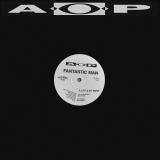
‘In Virus Times’ is an acoustic instrumental piece by Lee Ranaldo.
Composed during the pandemic, ‘In Virus Times’ is released as a onesided LP with an etching on Side B. The cover is a beautiful photo by
Lee’s friend, the great Brazilian photographer Anna Paula Bogaciovas.
Originally released as one track as part of a collaboration with Lucien
Jean for Le Presses du Reel, the music was featured on a mini CD that
accompanied a book that featured two short stories.
‘In Virus Times’, released by Mute, sees the track transformed into 4
pieces and is available on transparent turquoise vinyl with digital
download and an exclusive poster, designed, signed and individually
numbered by Lee Ranaldo. The poster design is based on an electron
microscope photo of the COVID-19 molecule.
Lee has written some of his own ‘loner notes’ for the release:
“This recording began on an evening in September 2020, stuck at home
in lower Manhattan during the dark days of the Covid-19 pandemic as
we came out of a deadly summer. A heightened sense of anxiety
stemming from the then-upcoming US Presidential elections as well as
the virus seemed to pervade all aspects of life, for myself and everyone I
knew. Its minimal quality reflects the sense of ‘motionless time’ that
many of us felt. I set up some microphones in our darkened living room
(studios being closed due to Covid restrictions), coaxing out one simple,
repetitive phrase, and then another, sounding them out into the air. The
casual home ambience - a siren or truck rumbling down the street out
the window; someone talking around the table in another part of the loft;
water running - intrudes at points. I worked to develop a few simple
thematic elements, but mostly I wanted to hear the notes and chords
ringing out, hanging in the air for a long time on that evening when the
world seemed close to stopped on its axis.
“I’d been listening closely to Morton Feldman’s catalog throughout the
pandemic. His sparse, long-duration music could often be heard playing
on repeat as we spent endless days locked inside. His willingness to do
very little, with very simple elements, and to such profound effect, has
been inspirational. I found the vast open spaces in his works thrilling,
miraculous, and comforting in those empty times. Additionally, the Drop
D guitar tuning used here has prompted my own variations on Bach’s
works for solo cello, open strings droning against melodic lines, so
simple and perfect…” - Lee Ranaldo, New York City, August 2021
Zweite EP zu Jeff Mills' neuer Videoserie "The Director's Cut Documentary" mit Interviews von Szeneleuten wie Künstlern, Club- und Plattenladenbetreibern zu Jeff Mills, seinen DJ-Skills und der Geschichte seines Axis-Labels. Die parallele 180g Vinyl-Serie enthält teils unveröffentlichte Raritäten aus den Axis-Archiven, oftmals remastered, und wird zum Jahresende in einer CD-Compilation gipfeln.
Looking back in hindsight to the activity and accomplishments of Axis is with much pride - to witness the relationship between the music and listener evolving to this point.
The Director's Cut reissue project is about manicuring detail. It?s about a rare opportunity to enhance what we've done so that the relationship strengthens for the long term''
- Jeff Mills
'The Director's Cut' series by Jeff Mills