2025 Repress
Gregory Porter’s “1960 What?” continues to be one of Expansion’s most sought after releases and comes now in new enhanced packaging. It combines the original with the Opolopo Kick & Bass re-Rub
Gregory Porter as narrator, sounding like Amiri Baraka, declares on “1960 What?” that “the motor city is burning y’all—that ain’t right” and refers to Martin Luther King Jr.’s death and describes trigger-happy policing (supported by a trumpet that blares, jabs, rumbles, and yearns); and the song portrays how certain events turn people against the possibilities of life and light. A vision that only recognizes strength and cruelty and rage is dangerously imperfect: rather, creativity, education, intelligence, sensitivity, democratic political participation, and compassionate social work are goals and virtues that can be affirmed, if not actively pursued, in all times.
Buscar:b b king
Knowledge The Pirate returns with a powerful new statement with his new album, The Round Table, which is now available. The Round Table is produced in its entirety by longtime collaborator and legend Roc Marciano through his Pimpire International imprint.
With roots in New York’s revered ‘90s hip-hop scene, Knowledge The Pirate has steadily built a reputation as one of the genre’s most consistent and authentic voices. A frequent Roc Marci collaborator and key figure in the modern underground renaissance, Knowledge fuses golden-age grit with new wave innovation—bridging generations while staying firmly rooted in New York’s timeless sound.
Since his 2018 debut Flintlock, Knowledge has carved a lane entirely his own through his label Treasure Chest Entertainment, Inc. With five acclaimed projects under his belt, including the recent 5lbs of Pressure, he continues to deliver unfiltered street wisdom and personal reflection in every bar.
The Round Table stands as a testament to his evolution—an uncompromising body of work laced with Roc Marciano’s signature production and Knowledge’s lived-in lyricism. It’s not just a record—it’s a meeting of the minds, an audio council of kings.
“The Round Table is cinematic storytelling, teaching street knowledge, eating etiquette that will save your life” Knowledge professes. “This album is like an Honorable Elijah Muhammad book; How To Eat To Live. Produced fully by the true creator of the new wave sound, Roc Marciano, you are all invited to a seat at The Round Table; and break bread with the true Godfathers of this new wave rap renaissance.”
Reintroducing Soar - the alias of Christian Aebi, serial DIY taper and one-man orchestra from Langenthal, a fog-shrouded town in the Swiss provinces. Krautophobia, ambient lo-fi agriculture, analogue soul balm and slowspeed psych gelati-blitz cardboard pop only gesture towards the sound world he coaxed from his broken Tascam four-track recorder, in attics, churches, junkyards and at the kitchen table.
The spark for Soar was likely time and space, somewhere in the autumn of 1994. Armed with a cable salad of Sixties guitar/bass, fairground drums, mould-speckled organs and toy instruments, Aebi coaxed five albums, an unverified run of 25 cassettes, and a handful of gigs. Mostly issued through Zurich label Corazoo, the records arrived in hand-pasted sleeves, rough-cut reproductions of his teddy bear-fixated artwork that carried the same imperfect immediacy as the music. With Rudi Steiner, performances in galleries, clubs and halls bent into live sound-image happenings - part installation, part film, part flea-market-instrument theatre - invariably leaving the house engineers bewildered.
At the time of his untimely death in 2021, Aebi remained a village secret, his music passed quietly between friends and local ears. Now, Swiss graphic designer and Ghost Riders compiler Ivan Liechti has pieced together a portrait from the afterglow, gathering tangled audio formats, paintings, illustrations, photographs and notebooks with his family, former label and peers. What emerges is a first glimpse of Soar's intimate cosmos - brushing against Füxa, Spectrum, Dump, Stereolab and King Crimson, but orbiting a dimension entirely his own.
Mia Moretti makes her Crosstown Rebels debut with ‘Safe With Me’, featuring Irma Thomas. The soulful new single, backed by a remix from Sweden’s Tiger Stripes.
Los Angeles-based DJ and producer Mia Moretti heads to Damian Lazarus’ Crosstown Rebels with ‘Safe With Me’, a disco-house celebration featuring New Orleans soul legend Irma Thomas, the Grammy-winning Soul Queen of New Orleans. Co-produced by award-winning producer Mark “Blakkat” Bell, a longtime figure in house and electronic music whose work spans from M People to King Britt, the release marks a full-circle moment for Moretti, who draws on her years of crate digging, gospel house expertise, and deep love for vocal-driven grooves.
‘Safe With Me’ pairs Moretti’s richly textured production with Thomas’ commanding vocal presence, creating a track that balances heartfelt emotion with dancefloor energy. Similar to Moretti's DJ sets, the track blends gospel, disco, and house sensibilities with storytelling. Swedish mainstay Tiger Stripes reinterprets the track with his own forward-thinking production. Known for his house and techno grooves that have energised clubs from Panorama Bar to Ministry of Sound, he injects ‘Safe With Me’ with shimmering synth layers and driving percussion, making it a perfect complement to the original production.Mia Moretti has established herself with vocal and gospel-driven house sets and productions. Her debut EP ‘Tambor’ (2023) marked a confident step as a producer sampling female bullerengue artists from Colombia, including Petrona Martinez and Toto La Momposina, followed by ‘Best I Can’ (2024) alongside gospel icon Vonita White and remixes from house music pioneers. In 2025, Mia has continued to build momentum with appearances from Ibiza to Paris Fashion Week alongside the launch of her Chef’s Kiss radio show on Diplo’s Revolution. ‘Safe With Me’ continues that trajectory, highlighting her instinct for timeless grooves and soulful storytelling.
Natural Element proudly presents the long-awaited album The Paradigm Shift by one of Amsterdam’s finest and most prolific producers, Kid Sublime. Following on from the 12” single ‘You Got Me Runnin’’ which dropped in the summer, this 8 track, double LP offering is a special piece of work crafted during the pandemic years and Turbulence recording sessions with maestros Beka Gochiashvili and Mishulino.
The album showcases the evolution of Kid Sublime’s sound and the influence of London’s vibrant broken beat scene, with him having connected with some of the artists around the time of the passing of the legendary Phil Asher. It touches on house, bruk and even techno, with his signature soulful touch palpable across the whole record. Features include talented London artist Oliver Night, Sydney-based vocalist Natalie Slade and long time collaborator, flautist Han Litz, amongst others.
The Paradigm Shift takes you on a deep sonic journey straight from the heart, celebrating love, connection, spirituality and human evolution. There’s introspective moments with the jazzy house drifter ‘The Awakening’ and the dubbed out bass of ‘Kingz’, as well as joyful moments such as the uplifting ‘Heaven’s Glory’ and the romantic ‘Stay Over’, which is as soulful as it gets. ‘Bring It Come’ brings some minimal bruk flavours reminiscent of Bugz in the Attic, and the title track takes things a bit darker with a club-ready roller.
Sitting somewhere between the living room and the dancefloor, this album is sure to enliven the spirits of many a discerning listener and bring some much needed radiance and hope into people’s lives.
After two self-produced EPs, Sarah Maison (2018) and Soleils (2021), and the EP Karma (2021) with Anoraak, French singer, musician, author, composer, arranger, and producer Sarah Maison finally unveils her first album, DIVAD, the fruit of four years of creation. Sarah opens up, tackling personal themes through an exploration of the soul and existential questions. She also ventures into more autobiographical subjects such as melancholy, derealization, the search for meaning, and the breakdown of romantic or friendly relationships: often through coded language but always with a touch of humor. DIVAD is a manifesto of artistic independence, boldly and uncompromisingly fusing French chanson, Egyptian music, 70s disco, synth-pop, and English pop. Her influences draw on musical history while reinventing it, bringing together Alan Vega and Martin Rev, the 70s Egyptian band Al Massrieen, the king of Iranian psychedelia Kourosh Yaghmei, as well as Brigitte Fontaine and Françoise Hardy. Each track is a cinematic tableau, where the artist"s theatrical voice, both imperious and vulnerable, carries an intimate narrative with universal overtones. Co-produced with Steve Surmely (sound engineer) and Timotée Pédron (sound designer), the album blurs the lines and asserts an artist who defies categorization. Throughout these twelve tracks, we witnessa rebirth, with Sarah fully embracing her character as a dark, grandiose, and tragicomic diva straight out of a Dario Argentofilm, a sort of tribute to her Italian muses. Danceable, elegant, and elusive, DIVAD is a flamboyant work that reflects Sarah Maison"s image: free, sunny, and daring.
- A1: Intro By Redman
- A2: Iron Man
- A3: Sample 420
- A4: Curtis May
- A5: 4Th Disciple
- B1: Windows
- B2: Pause
- B3: Georgy Porgy
- B4: Force Md
- B5: Break Beats
- B6: Beat Box
- C1: Rap Kingpin
- C2: Sale Of The Century
- C3: The Trail
- C4: Love Me Anymore
- C5: Soul Thang
- C6: Metaphysics
- D1: Candyland
- D2: Lenny Green
- D3: The Zoom
- D4: You Ma Friend
- D5: Knuckles
Black Vinyl[32,35 €]
- A1: I Missed The Target Again (Radio Edit) 3.40
- A2: It's Gonna Rain 4.06
- A3: Hang On In There 3.59
- A4: Shine A Light 4.26
- A5: The Lord Will Make A Way 4.56
- B1: There Will Be Peace In The Valley 3.26
- B2: 1963 5.20
- B3: Reach Down And Touch Heaven For Me 2.48
- B4: Love Breakthrough 3.46
- B5: In God's Hands We Rest Untroubled 4.58
- A1: My God Has A Telephone 3.25
- B1: God's Gonna Use Me Anyway 4.02
Soul Music legend Candi Staton returns to her down-home Alabama roots on her 32nd album, Back to My Roots. The twelve-track Americana set features an array of Staton-penned originals and some well-chosen covers.
"These songs represent my roots," Staton adds as she reflects on her many trials and triumphs. "Even the new songs on some level represent something I've experienced and that's what real soul music is about." Back to My Roots was produced by Staton with her second eldest son, Marcus Williams, a professional drummer who has toured with the likes of Peabo Bryson, Isaac Hayes, and Tyler Perry. They brought in Mark Nevers of Lambchop fame, who produced three of Staton’s prior Americana albums for Honest Jon’s and Thirty Tigers, to sweeten certain tracks. “Some of the first songs I ever heard were songs like `Peace in the Valley’ and `It’s Gonna Rain,’” says Staton. “The new songs or cover songs are tracks that remind me of that era when I was growing up as a child and evolving as a young woman. That’s why I named the album Back to My Roots because I’m going back to the roots that made me who I am.”
Staton received the Americana Music Association UK’s highest honour, the International Lifetime Achievement Award, at the UK Americana Music Awards ceremony at Hackney Church in London last year for her southern soul work that stretches from her 1969 Muscle Shoals hits to her more recent collaborations with the likes of Americana kings Jason Isbell and John Paul White.
The album opens with a mid-tempo Bonnie Raitt-styled contemporary blues “I Missed the Target Again” that finds Harry Connick Jr.’s longtime guitarist Jonathan DuBose Jr. (aka the Prophesying Guitarist) showing off his skills that set the tone for the song and the album.
Staton’s older sister, Maggie Staton Peebles (who alongside Staton was a member of the Jewel Gospel Trio in the 1950s), joins her for two duets. The first, “It’s Gonna Rain,” features just a drum, steel guitar and vocals. “My mother used to sing that song to us all the time when I was a child,” Staton recalls. “It’s a really soulful kind of song I wanted to revisit.” They then take turns leading Thomas Dorsey 1939 gem “There Will Be Peace in the Valley” that Elvis Presley popularized in the 1950s.
“Hang on in There” is a new, mid-tempo song that has an old school gospel flavour and features vocals from veteran bluesman, Larry McCray.
While in Europe in 2023 for her farewell concert tour that took her to the Glastonbury Festival and Love Supreme, Staton and her British band, PUSH, went into a London studio to record a new version of The Rolling Stones’ 1972 gem, “Shine A Light.” “I love the way that came out,” Staton says. “We put a big choir on it and put our own twist on it.”
From there, Staton revives another Thomas Dorsey classic, “The Lord Will Make a Way Somehow,” with a bluesy vibe. When Al Green started recording gospel in the early 1980s, he re-introduced this song into the culture.
“God’s Gonna Use Me Anyway” is a new mid-tempo blues with subtle Caribbean influences.
The mood takes a turn on “1963.” It’s a poignant, spoken-word reflection on September 15, 1963, when four black girls were killed in the Birmingham Church bombing. “I was in the city that day and I remember the chaos and horror after the bombing,” Staton recalls. “Just thinking of how racism and hatred caused those men to kill those girls was so emotional for me that I could only do it in one take.”
It's a perfect segue into "Reach Down and Touch Heaven," a haunting, plea for divine intervention into the affairs of mankind. "That's straight Baptist," she says. "I used to be a church pianist back in the 1960s. I've never played piano on one of my records before so that's a unique song for me because I’m finally playing on one of my records. The message of that song is about the homeless. It came to me when a homeless person on the street asked me for $5. When God touches your heart to help somebody else that’s heaven to God’s hears. So, when we reach into our purse or wallet to help someone, we’re touching heaven."
Staton offers love as an antidote to hate on the bouncy, Motown-styled, “Love Breakthrough.”
Her publicist brought Aaron Frazer & the Flying Stars of Brooklyn NY’s 2017 cut “My God Has a Telephone” to Staton’s attention. She shifts the track from a retro 1960s groove to more of a 1980s Malaco Records arrangement, a subtle but distinct variation. Staton brought in her longtime friend and STAX Records legend, William Bell (“I Forgot to Be Your Lover” and “Trying to Love Two”), to add raspy seasoning to the track.
The album closes with the wistful, “In God’s Hands We Rest Untroubled,” that was originally written and recorded by the late country star, Lari White, who died in 2017 at the age of 52. “Lari sent me that song to consider at least ten years ago and I always loved it,” Staton says. “The record label didn’t want it on the album or something, so I just held it.”
Staton says, “I grew up hearing a lot of these old songs when they were new songs. I toured with the Jewel Gospel Trio in the 1950s and we got to know people like Mahalia Jackson, Sam Cooke and others who sang these types of songs. So, I’m sort of paying tribute to them and the influence they had on me by refreshing these songs and making new songs in the old style.”’
- A1: Rattlesnake Man (2 44)
- A2: Don't Mind If I Do (4 43)
- A3: Long Gone Love (2 37)
- A4: Cold Stew (3 07)
- A5: Daydream Blues (3 08)
- A6: I'm Not (2 16)
- A7: Black Crows (2 56)
- B1: On Our Own (3 45)
- B2: All I've Got (3 28)
- B3: Dark House Of Fools (3 03)
- B4: Ready For Love (2 22)
- B5: Horse Flies (3 16)
- B6: Guitar Man (3 57)
- B7: Hand To Hold (2 40)
- C1: Blue Freightliner (4 16)
- C2: Hard Time (3 00)
- C3: Rounder (4 27)
- C4: Stag (3 06)
- C5: Roofer's Blues (3 29)
- C6: River (2 58)
- C7: Bottom Of The Sea (2 16)
- D1: The King Is Back (2 50)
- D2: Irrigator's Blues (3 11)
- D3: Orangutang (4 09)
- D6: The Party Song (4 40)
- D7: Tiger's Mouth (3 03)
- D4: Waste Of Time (2 04)
- D5: Seven & Steady (3 49)
- A1: Panafrican Dub Part1 Feat. Tydal Kamau
- A2: Panafrican Dub Part2 Feat. Tydal Kamau
- A3: Look At You
- A4: Nguê Ghara Feat. Lenna Bahule
- A5: Better Days Feat. Mark Wonder 03 33
- B1: The Government Part 1
- B2: The Government Part 2 Feat. Gengis Don
- B3: The Don Is Coming
- B4: Moto Fire Feat. Vimbai „Vee“ Mukarati
- B5: Kadudu
On "The Afrodub Experience," Umberto Echo takes us on a ride across four continents, exploring 50 years of Afro-Caribbean music history with numerous collaborators.
The inspiration is the Afrobeat of the 1970s, which he discovered through original musicians from Fela Kuti's "Africa 70" band in the Berlin project "Afrobeat Academy" which he began to fuse with dub and reggae.
Mitwirkende
wird veröffentlicht am 17. Oktober 2025
Recorded by Umberto Echo and the musicians in Berlin, Hamburg, Munich, New York, Melbourne,
Kingston Jamaica & São Paulo between 2008 and 2024
Mixed by Umberto Echo & Silvan Strauss, November 2024 at Apollo Studio Berlin
assisted by DJ Tobi Neumann & Robin Ludyga
Produced by Umberto Echo, co-produced by Silvan Strauss
Mastered by Umberto Echo
Artwork by aDUBta
Umberto Echo published by KKBB Publishing/Edition Dubvibes
Drums: Silvan Strauss, Giuseppe Coppola
Drum Programming: Silvan Strauss, Gengis Don, Umberto Echo
Bass: Daniel Stritzke, Oghene Kologbo, Patrick Frankowski, Giorgi Kiknadze
Percussion: Samuel Wootton, Nicholas Ado-Nettey, Umberto Echo, Djakali Kone, Giuseppe Coppola
Guitars: Umberto Echo, Mandjau Fati, Ferdinand Kirner, Oghene Kologbo, Giovanni Agostini
Cora: Sebastian Cuevas, Djakali Kone
Saxes: Ben Abarbanel-Wolff, Florian Riedl, Giovanni Pecorini, I Sax
Trumpets: Benny Brown, Philip Sindy, Sebastian Kölbl
Trombone: Roman Sladek
Keys: Barney McAll, Lionel Wharton, Markus Kuczewski, Umberto Echo, Silvan Strauss, Milo Winter
Vocals: Lenna Bahule, Gengis Don, Vimbai „Vee“ Mukarati, Mark Wonder, Tydal Kamau
Backing Vocals: Runtendo Machiridza, Tariro neGitare, Erica Nevell
2025 Repress
Powerhouse performer Gretel Hänlyn today releases her highly anticipated second EP Head Of The Love Club, via VLF Records. Premiering as Clara Amfo’s Hottest Record in the World on BBC Radio 1, focus track ‘King Of Nothing’ is a rollicking revenge track, cementing Gretel as one of this year’s most exciting breakout stories.
Gretel Hänlyn has spent the last year stamping her ground as one of female guitar music’s new frontrunners, imbued with a singular vision and wickedly unique voice. Inspired by 90s alternative artists like The Pixies, Smashing Pumpkins and PJ Harvey, Head Of The Love Club is a suitably contemporary stride forward in the hotly tipped artist's sound and marks a definitive departure from the indie-folk textures of her breakthrough debut EP Slugeye. A heady mix of hi-fi grunge, goth-pop and alt/indie ballads, the EP features previous singles ‘Drive’, ‘Today (can’t help but cry)’ and ‘Wiggy’ alongside five other tracks that candidly display Gretel’s exceptional storytelling.
Last year was vital for the rising star: she released her debut EP Slugeye to critical acclaim, collaborated with Mura Masa on his headrush of a single ‘2gether’ (9M+ streams on Spotify alone) and was also playlisted multiple times across UK radio - a rare feat for a fiercely independent artist. This year is set to be her breakout – Hänlyn has already been included in NME’s coveted NME100 list, performed live as part of DIY magazine’s ‘Class of 2023’ series and was dubbed one to watch by The Sunday Times, Metro, Time Out + more.
- 1: Toronto 20Xx
- 2: Theme From Scott Pilgrim Ex
- 3: Player Select
- 4: One More Summer
- 5: Stephen's House
- 6: Shopping District
- 7: High Fashion
- 8: High Park
- 9: Wallace's House
- 10: Downtown T.o
- 11: Hollie Hawkes
- 12: Food Court
- 13: Julie Powers
- 14: Coffee Break
- 15: Window Shopper
- 16: Wallace Wells
- 17: Band Practice
- 18: Ice Age
- 19: Dino Surf Rock
- 20: The Beaches
- 21: Vegan Banter
- 22: Vegan Brawl
- 23: Playtime
- 24: King Of The Rails
- 25: Chill Minigame
- 26: Benvie Tech 1F
- 27: Benvie Tech 2F
- 28: Benvie Tech 3F
- 29: Benvie Tech Boss Battle
- 30: Vpd Hq
- 31: Eldest Son
- 32: Vpd Boss
- 33: Medieval Julienne
- 34: Subspace Ex
- 35: Unchill Minigame
- 36: Demon Chat
- 37: Demon Attack
- 38: Casa Vania
- 39: Lady Envy
- 40: Let's Fight!
- 41: Movie Studio
- 42: Let's Throw Down!
- 43: Peaceful Casa
- 44: Throne Room
- 45: Demon Boss
- 46: Let's Do This!
- 47: Old Timey Movie Studio
- 48: Big Band Intro
- 49: Big Band Boss
- 50: Riff Rift Revisited
Scott Pilgrim EX, the newest video game from the Scott Pilgrim franchise developed by Tribute Games, is out now with an all new original soundtrack from Anamanaguchi. The sprawling soundtrack, which accompanies a brand-new storyline co-written by series creator Bryan Lee O’Malley, perfectly connects the band's legendary electronic past with their fuzzed out garage rock present while maintaining their unmistakable punchy style. Known for resonant world building across past projects, the depth of emotion and the range of styles displayed on Scott Pilgrim EX are uniquely Anamanaguchi while delivering a host of melodically anthemic and new energetic hooks that are sure to pack a punch for both newcomers and old school fans of the band alike.
Anamanaguchi's collaborative relationship with the Scott Pilgrim universe goes back to the early days of the band. After cutting their teeth programming music with playable Nintendo cartridges and helping to bring a wider audience to a largely internet based 8-bit chiptune scene, the band was brought in to score the fan-favorite soundtrack for Scott Pilgrim vs. the World: The Game. The success of this game soundtrack would help them to launch an early crowdfunding success story with their campaign for their debut album, 2013's Endless Fantasy. From there the band would go on to collaborate with virtual pop star Hatsune Miku (resulting in the perpetually viral, Fortnite featured hit, “Miku”), and later develop the intricately soundscaped compositions displayed across their second album, USA, but throughout it all the connection between the band and the Scott Pilgrim universe would remain a pivotal source of inspiration.
After being brought in to score the animated Netflix series, Scott Pilgrim Takes Off, in 2023, band members Peter Berkman and Luke Silas would credit the live kinetic energy they channeled when writing songs for the in-universe garage band Sex Bob-Omb with helping them get back in touch with the roots of how they learned to play music even before Anamanaguchi's earliest releases. This process would eventually lead to Peter and Luke alongside the remaining two band members — Ary Warnaar and James DeVito — flipping their typically meticulous digital writing process for the more collaborative, straight to tape, distorted angst that can be found on 2025's Anyway, marking another significant evolutionary turn for the band to come out of their relationship with Scott Pilgrim.
Now fresh off the heels of a nationwide tour in support of Anyway, Anamanaguchi have returned to the 8-bit beat em up world of Scott Pilgrim with a relentlessly high energy and genre defying original soundtrack for Scott Pilgrim EX. A return to form that comes with a depth of knowledge and innovative skills that have allowed the band to continue to evolve and grow alongside the characters in the Scott Pilgrim universe and the multi-generational fanbase that continues to follow along with them.
The new soundtrack for the latest installment in the Scott Pilgrim franchise, Scott Pilgrim EX
- Limited edition solid 2x12” vinyl LP.
- Housed in PMS printed inner sleeve, featuring custom fonts by No Format and spot gloss abstraction of the original album artwork.
- Accompanied with a double sided 2-panel insert and double sided 4 panel poster.
- All sleeved in a custom PMS reverse board outer sleeve with die cut square centre panel and belly band.
Grinning Cat confounded devotees of Sakura with a far more complex set of tracks. A landscape of ambiguous emotional resonance within an album of measured extremes. Sentimental without being schmaltzy, joyful without being saccharine, Grinning Cat sees Yokota at his most playful and experimental, channelling moments of transitory wonder and jubilation, and opening up a sonic environment in which we can romp and play.
Tell me something that makes a difference’ demands Gaia Weiss in Tenashee’s debut single. Something that immerses crisp melody into stodgy bass, collides warm dub with icy sound design, all the while slowly expanding like a supernova. ‘Tell me something’ takes the sounds and styles of the past and places them in a gravity-free future, while evoking an ethereal and precise atmosphere.
Gaia Weiss is an actress - not a singer by trade - and summons Charlotte Gainsbourg & Brigitte Bardot to deliver the spoken words as a fractured monologue, guiding us through splintered visions, and detuned chord progressions, in pursuit of the seemingly unattainable; ‘something that can make a difference’.
With this six-chapter journey on the newborn Street Cinema label, Tenashee (DJ Tennis and Ashee, Manfredi Romano and Joseph Ashworth) have crafted and refined - like two artisans from another era - a unique creation: a creature that reconnects electronic music with complexity and richness, fully aware of hyper-contemporaneity, yet capable of resisting surrender to it.
“Blink To Check It’s Real” featuring artist Campbell King - poet and beautiful soul - immediately immerses us in an electronic reality check, with 90s-inspired tweaking and glitching, all woven together with a poem from Campbell that contrasts the dizzying intensity of lust and connection with the comfort of being able to ‘loosen their grip’ and ‘make it safe.’
In ‘I Can See Now,’ Aurelia Ray (the stage name of pop-music-writing powerhouse Caitlin Stubbs) evokes a sense of serenity, pure love, and trust within a refined, spacious piece of minimalist electronica. “Blindsided” is a journey through pure, airy abstraction, a dance floor companion to the glacial trip-hop instrumental “Cold Logic”.
Finally, in “Memories,” the last track in the setlist but actually the first song the duo worked on, conceived and developed five years ago in 2020, the voice of Chinese German artist Mona Yim transports us to a place that is both emotionally introspective and intense, balancing on the edge between desire and reality.
“You should know where I go when I dream,” she states.
Over the course of five years, through exchanges, writing sessions, and fine-tuning in Paris, London, Saint Martin, and Ibiza, the world evolved, but Tenashee’s musical mission remained unchanged. The mini-album reflects the musical backgrounds of its two creators, their unique sensitivity to the present, and their desire to challenge each other with sharp, emotional, yet weightless styles and sounds. It is no longer just DJ Tennis; the successful DJ touring worldwide, organising events, and founding influential labels like Life & Death; nor only Joseph Ashworth with his scientific approach and creativity as a
producer and writer in the competitive world of pop; nor Ashee, with his releases on Circoloco and Aus Music. No, Tenashee is something more.
It is a duet searching for a thread that connects electronic music—past, present, and future—through experimentation, craft, and artistry. The moment has truly arrived for Tenashee to ‘tell us something.’
Bringing together the elder statesman of the Zulu guitar Madala Kunene and internationally acclaimed Sibusile Xaba, kwaNTU pulls two generations of South African guitar mastery into a single point of focus. Under-represented on recordings outside of South Africa, Madala Kunene (b. 1951), the ‘King of the Zulu Guitar’, is revered as the greatest living master of the Zulu guitar tradition. Sibusile Xaba, whose collaboration with Mushroom Hour Half Hour reaches back to his first recording in 2017 (Open Letter To Adoniah/Unlearning), has garnered international acclaim for his unique voice and virtuoso guitar stylings, which bring together multiple South African guitar lineages in an original, spiritualised fusion. Collaborating with Mushroom Hour and New Soil for kwaNTU, the two players come together to weave a filigree sonic fabric which reaches down to the heartwood of Zulu guitar music but moves resolutely outward, building on the past to create a deeply rooted statement about present conditions and future travels. kwaNTU – which can be roughly translated ‘the place of the life-spirit’ – is also conclave of teacher and student, as Xaba has been taught by Kunene for the last decade. Meditative, rich and sonically sui generis, kwaNTU finds these two musicians linking up within the inimitable space of sound and spirit that they share through Kunene’s teaching.
The great masters of South African music have not all had equal exposure. For many years the generation of musicians who were exiled during apartheid took centre stage, as the regime made it very difficult for those at home to be heard. More recently, a new cohort of important voices, especially in jazz, has broken through to international consciousness. But for the generation of musicians in between – those who shone like beacons in the most difficult final years of apartheid and immediately afterward – international recognition has been slow in coming.
Madala Kunene, ‘the King of the Zulu Guitar’, is among this number. A revered figure for current generations of South African musicians, Kunene began his recording career in 1990, at the bitter end of apartheid, with a now classic self-titled LP for David Marks’ storied Third Ear imprint. Born in 1951 in Cato Manor, near Durban, he had determined to be a musician from early childhood, and by the time he first entered a recording studio he had already had a long career as a popular performer. His virtuoso absorption and transformation of the venerable Zulu maskanda guitar tradition and his richly spiritualised approach to music immediately marked him out as someone special, and in the years that followed, Kunene cemented his position as one of South Africa’s musical elders. He is without doubt the grand master of the Zulu guitar tradition, but his sound and sensibility ranges far beyond it into varied sonic terrain, and he has collaborated with a wide range of musicians both at home and abroad. Now in his mid-seventies, he remains a shining light for those that are making music in contemporary South Africa.
‘He is really an amazing person,’ says the guitarist Sibusile Xaba, who has been mentored by Kunene for over a decade, and now invites a collaboration with him on kwaNTU. ‘As a mentor, he's really powerful in showing us the way. For us to have this opportunity to make music together and have a project together is really a blessing to me.’
Xaba himself grew up in Newcastle, KwaZulu-Natal, where his mother had been in a band and his father sang in a church choir, and from early childhood Xaba played homemade tin guitars. He only later realised that music was his calling. ‘I just loved music. I was fortunate. My parents loved music. And when it was time for me to leave home and go to study outside Newcastle, I knew that music was what I wanted to do. There was no second option. It was just music.’ Moving to Pretoria to study music formally, Xaba committed himself to his craft, developing a unique style that draws on both US jazz masters such as Wes Montgomery and Jim Hall, and the rich and varied heritage of the South African guitar, from inspirational jazz players such as Allen Kwela and Enoch Mthalane, to the music of the Malombo groups and Dr. Philip Tabane (Xaba has previously collaborated with Dr. Tabane’s late son, Thabang), and the Zulu guitar tradition embodied by Kunene.
‘I was really in love with the jazz guitar, I really admired it, and I was digging a lot in that direction,’ says Xaba, recalling his first encounter with Kunene’s music, over a decade ago. ‘And then one day on my timeline, Kunene popped up, and I was like – “What's this sound?” I was so connected to it. It really touched me deep. I started checking out his records, and then I found out he's from the same region as I am, which is Zululand.’ After Kunene played a show at the Afrikan Freedom Station in Johannesburg, Xaba make contact with him, and visited him at home in Durban. They struck up a friendship, and Xaba became the elder’s student, as Kunene began to pass on his knowledge and his inimitable way of playing.
kwaNTU is a tribute to this relationship and the deep learning that has defined it. The album was recorded in Zululand in the town of Utrecht, at a cultural centre called Kwantu Village, which gives its name to the album. ‘It's such a broad word,’ Xaba says, ‘but the elders teach us that Ntu is basically an energy, almost chi, an energy, a force that all living beings have within them. It's a living energy, so kwaNTU is like, almost the place of this energy.’ The two men sequestered themselves for five days of jamming, improvising and planning, and then the session was recorded in one take over a single night, with Gontse Makhene joining on percussion and backing vocals and Fakazile on vocals. Other voices and overdubs were later added in the studio in Johannesburg.
The result is a rich and meditative recording that finds two generations in a deeply engaged dialogue. Teaching and passing on his knowledge, the elder Kunene has brought Xaba into a space of sound and knowledge that they now share; Xaba’s own practice of deep communion with nature and his dedication to his musical craft make him the perfect interlocutor for Kunene. The result is an album that foregrounds the two musicians engaged at the highest levels of responsive listening, sympathetic unity, and collaborative concentration. Bringing an elder statesman of South African music to an international listening audience for the first time in decades by pairing him with one of South Africa’s most important new voices, kwaNTU is a meeting of generations and a powerful demonstration of musical lineage and continuity.
‘Before music, there is sound,’ Xaba observes, speaking of Kunene’s unique approach to music. ‘And sound is like a common compartment…it's not restricted to particular people or particular geographic places, you know what I mean? It's sound. Everybody can hear it. So when he constructs that sound into music, I think everybody resonates with the energy behind his construction of sound into song. Here at home, we really love him for preserving our history through the guitar, through his stories as well the music, the songs that he writes. We really, really admire him.’
- A1: The Chambers Brothers– Uptown
- A2: B B. King– Why I Sing The Blues
- A3: The 5Th Dimension*– Don't Cha Hear Me Callin' To Ya
- A4: The 5Th Dimension*– Aquarius / Let The Sunshine In (The Flesh Failures)
- B1: David Ruffin– My Girl
- B2: The Edwin Hawkins Singers*– Oh Happy Day
- B3: The Staple Singers– It's Been A Change
- B4: The Operation Breadbasket Orchestra & Choir* Featuring Mahalia Jackson & Mavis Staples– Precious Lord, Take My Hand
- C1: Gladys Knight & The Pips*– I Heard It Through The Grapevine
- C2: Mongo Santamaria– Watermelon Man
- C3: Ray Barretto– Together
- C4: Herbie Mann– Hold On, I'm Comin
- D1: Sly & The Family Stone– Sing A Simple Song
- D2: Sly & The Family Stone– Everyday People
- D3: Abbey Lincoln And Max Roach– Africa
- D4: Nina Simone– Backlash Blues
- D5: Nina Simone– Are You Ready?
Rotterdam's Bright Message Records' second release is the highly anticipated 12-inch vinyl "KING INNA THE RING," produced by Imperial Sound Army. The title refers to the powerful vocal version, sung by UK-based King Stanley, which immediately creates the impression of a true anthem and a strong tribute to Jah Rastafari. The vocal version is paired with a dub cut that strongly emphasizes this element of praise. The way this dub connects the A-side and B-side of the record, reveals both Dan-I's years of experience as a soundsystem selector and excellent production skills.
The B-side contains the fantastic melody version "TROMBONE INNA THE RING." With an unexpected intro and upfull vibes, Matic Horns shows he grooves like no one does and keeps the melody tuff till the end. The final track is a dub of Matic's melody version, in which Dan-I explores the full depth of his riddim.
"King Inna The Ring" is a versatile record that captivates from start to finish and was played as dubplate by a handful of well-known soundsystems during the summer of 2025.
Play it loud and let the world know who's the KING INNA THE RING!
Vocals: King Stanley (UK)
Trombone melody: Matic Horns (UK)
Horns vocal riddim: Ital Horns (UK)
Keys: Smiling Roots (IT)
Riddim, mixing and production: Imperial Sound Army (IT)
Mastering: Pressure Mastering (UK)
- A1: Blaze Presents Udaufl Feat Barbara Tucker – Most Precious Love (Df’s Future 3000 Mix)
- A2: Blaze Presents Udaufl Feat Barbara Tucker – Most Precious Love (Michael Gray Remix)
- B1: Nico De Andrea X Blaze Presents Udaufl Feat Barbara Tucker – Most Precious Love
- B2: Sam Divine X Blaze Presents Udaufl Feat Barbara Tucker – Most Precious Love
DJ Support: CamelPhat, Blond:ish, Eli & Fur, David Penn, Arielle Free, Bibi Seck Sam Divine
Armada Music and King Street Sounds team up again to celebrate the 20th anniversary of “Most Precious Love” by Blaze presents UDAUFL feat. Barbara Tucker. This release is a timeless classic captivating anyone who encounters it.
This 20th anniversary special includes the Bonafide classic remix by Dennis Ferrer, Michael Gray’s take and two brand new remixes for 2025 all presented in a beautifully designed record sleeve featuring the star herself on the cover.
Kicking things off on the A side is the “DF’s Future 3000 Mix” that has been championed time and time again by DJ’s from across the world. Next up is Michael Gray, a DJ and producer who needs little to no introduction his version breathes new life into the original by taking it down a couple notches and giving it more of a mellow feel. The first of the two brand new remixes is Nico de Andrea, an Afro-house maestro who sports his signature sound once again by bringing his rhythms and melancholic pop melodies presenting the classic in a whole new way. Rounding off is Sam Divine the first lady of Defected who has held residencies at clubs such as Pacha, Amnesia, Sankeys, Ushuaïa, Eden, among others. She sinks her teeth into this remix by building up the vocal into a drop which is sure to keep the dancefloor going for the late nights that need that boost of energy.
Whether this is the first time you’re hearing this anthem or the one hundredth, here’s your chance to own a slice of house music history.
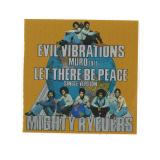
Mighty Ryeders
Let There Be Peace / Evil Vibrations (Muro edit)
Black Vinyl[21,43 €]
Although it was only reissued last year, that sold out in quick time, so now it lands once more but as a nice coloured pressing of The Mighty Ryeders' delightful single 'Let There Be Peace.' An OG is a rare and pricey collector's item and for good reasons - its scorching funk with big horns and raw rhythms. The B-side features 'Evil Vibrations' by MURO aka King Of Diggin', famously sampled by De La Soul in their brilliant 'A Roller Skating Jam Named Saturdays.' It's another timeless sound that pairs funk and soul into something as likely to get big reactions now as ever, not least because of how silky the groove is.
- 01: Tafese Tesfaye - The Dove &Amp; The Pigeon
- 02: Yetemwork Mulat - Heathen &Amp; Earth
- 03: Alemu Aga - The World Is But A Place Of Survival
- 04: Sosena Gebre Eyesus - Save Us From Our Death
- 05: Abiy Seyoum - The Last Judgement
- 06: Tafese Tesfaye - You Who Take Good Care Of Me
- 07: Sosena Gebre Eyesus - When I Say Your Name
- 08: Akalu Yossef - Who Can Doubt
- 09: Abiy Seyoum - We Are All Mortals
- 10: Yetemwork Mulat - The Second Coming Of Christ
- 11: Akalu Yossef - Our Father
- 12: Alemu Aga - Song Of Praise Played With A Plectrum
LP 2x12"[28,36 €]
The begena is a large ten-stringed lyre which is part of the traditional Amharic heritage of Ethiopia. The Amharas, who have long formed the politically and culturally dominant people of Ethiopia, mainly inhabit the central and northern part of the country. In the majority, they follow the monophysite Orthodox Tewahido Church established in the early fourth century AD.
Music plays a very important part in the life of the church. Most of the liturgy is sung and, contrary to secular music, it is accompanied by percussion instruments only. The begena occupies a special place because it is the one melodic instrument exclusively dedicated to the spiritual repertory. Because of its mythical origin, it is highly respected. Tradition holds that the begena was given to king David by God, and brought to Ethiopia by Menelik I, together with the Ark of the Covenant. It has always been the instrument of kings and nobles. Played by pious men and women of letters, it never became widespread. But it never disappeared either, not even under the Derg regime (1974-1991) which had banned the instrument.
Among Amhara string instruments, the begena is the most carefully crafted, especially with regard to the ornately sculpted crossbar. Its ten gut strings are cleaned and twisted several times. The characteristic buzzing timbre equalled by no other Amhara instrument is due to the enzirotch, that is, small bits of leather placed between each string and the bridge. This plays an important part in the sound production by creating a brief contact between the string and the upper rim of the bridge, thus modifying the vibrating properties of the string. In this manner, the spectrum of the sound is considerably enhanced (up to over 10 kHz).
The begena is a very powerful instrument, it keeps the devil thirty steps away, and its presence in the home wards off malicious spirits. Priests and preachers recommend its presence, especially during Lent (Fassika Tsom) when the Orthodox Amharas ponder their sins and repent. Because of its spiritual import, the begena generates intense emotion. According to some musicians, playing the begena brings them into direct contact with God or the Virgin Mary. The religious role of the begena is underscored by the shape of the instrument, each part symbolises an important element of the faith. The crossbar for instance, which reaches across the entire width of the instrument, represents God who is above all things. The belly which "gives birth" to the sound represents the Virgin Mary, and the ten strings recall the Ten Commandments.
Recorded by Stéphanie Weisser in Addis Ababa, Ethiopia, March 2002-December 2005.
Mastered by Renaud Millet-Lacombe.
Issued under license from VDE-Gallo, Switzerland.
During this summer’s European tour with Junior Dell & The D-Lites, we were honoured to share the stage at This Is Ska Festival in Germany with none other than The Pioneers.
After the show, fate had me driving Jackie and George back to the hotel. On the way, we got to reminiscing about our last collaboration — Jump Up!, released on Original Gravity Records in December 2023. Mid-conversation, Jackie casually said: “Hey Neil, I’m in England all of July, we could record something.”
I dropped the guys off, said goodnight, but as soon as my head hit the pillow, an idea sparked: wouldn’t it be cool to have them record Jackie Edwards’ northern soul classic I Feel So Bad — but reimagined in an early reggae style?
So in July, we set up a session at Farm Factory Studios in Welwyn Garden City. George and Jackie came down, and it was nothing short of magical to hear these legends harmonising together once again in the booth. The result captures that late-60s moment when soul and reggae collided on dancefloors, raw and full of energy.
To add another dimension, we also created a version as if it had traveled from Kingston to London. The “Boss” version imagines the raw Jamaican master — while the A-side reflects how Trojan Records might have “sweetened it up” with horns and strings for the UK pop market.
Two sides, one timeless tune — a tribute to both the grit and the gloss of reggae’s golden era.
Words courtesy of FOND/SOUND –
What makes チトチック/クラクラ (CHITOTIHC/KULA-kura) so fascinating is that, in some weird way, it’s a meeting of minds and musical language of disparate artists at the forefront of a new kind of groove. There might be no “L” in the Japanese language but that doesn’t stop it from trying to find a working substitute. Similarly, Chito enlisted members from his Asiabeat and East Pulse, others from Mu-Project, K2, and Adi, and brought in Haruomi Hosono to play mercurial bass. In the great expanse of experimental Japanese-made pop music all of them might have gone in “out-there” in separate directions but on this record it was Chito who pointed their focus all on the same track.
“Bayou (バイヨー)” presents this floating idea of dance music with beats and rhythms that hover among the ethereal. Other like “Scribble Dance (らくがき)” use Harry’s acid bass lines to dig cavernous grooves that only come up for air via adrenaline-fueled jumps by Haruo Kubota’s quite Adrian Belew-esque guitar lines. Perhaps, Discipline-era King Crimson is an apt comparison to what Chito and his crew pull off here.
Where Discipline signaled a way to reconcile the most out-there polymeter music of prog with the more satisfying parts of post-punk and the new electronic wave, so to do I think チトチック/クラクラ (CHITOTIHC/KULA-kura) has that bit of heart/spirit in mind. This is the out-there of Japanese experimental music satisfying the best parts of the, then, new electronic wave. It takes a certain degree of proficiency and sheer chutzpah to go from “11” to the wonderfully impressionistic, ambient minimalism of a track like “Sanghyang (サンヤン)”.
It’s the joy of not knowing what each new track will hold and just letting yourself follow the hard-working hands of such learned musicians that brings the most out of Chito’s vision. It’s this very liquid music that keeps you on your toes on tracks like “Astral Lamp (無影灯)”. Tracks like “Jagg-chagg (ジャグチャグ)” and “Filament (フィラメント)” present a fourth world music bifurcated in exponential parts by the glitch of newer, modern, electronic modalities, intersected by expressions by differing voices. Every track you switch to presents a new way to get lost in the many phases and places Chito wants you to travel to.
In the end, as always, it’s not the destination but the journey through it that plants this album in your memory. – Diego Olivas
This is the story of an artist in search of sound and breath: an artist who dares to question the rhythm of silence—an invitation to rethink music, sound, and musical collaboration. This is the story of a journey that, after opening countless paths, has finally found its vessel—and its messengers. Three artists of profound musical truth and radical freedom, merging into an exceptional trio that crosses genres and transcends words in a journey toward pure emotion.
Le Rythme du Silence is the culmination of this long search. Yom delivers it here with violinist Théo Ceccaldi and cellist Valentin Ceccaldi—kindred spirits in sound. “I’ve been working on this idea of the ‘rhythm of silence’ for years,” Yom explains. “I first heard the phrase from a Sufi master, describing the foundation of meditation. It struck something deep in me. I’ve practiced meditation for a long time, and we often think of it as a kind of stillness—opposed to noise and life. But in truth, the rhythm of silence enables meditation. It means accepting that the world continues to move and live around you, even as you try to be still. I wanted to compose from that place. To imagine sound as vibratory matter—the primal substance of creation. That required letting go of fixed structures: forgetting melodies, abandoning the idea of a constructed solo. I needed to leave behind music as a system, and touch sound as a living, breathing entity. It took years. Many projects led me elsewhere. But with the Ceccaldi brothers, I finally found the right resonance. Working with them was simply obvious—it was indredibly powerful.”
Yom first rose to prominence reimagining Jewish traditional music with his 2008 debut New King of Klezmer Clarinet. Since then, his path has led through rock (With Love, 2011; You Will Never Die, 2018), electronic utopias (The Empire of Love, 2013), meditative and sacred soundscapes (Prière, 2018), and countless unclassifiable hybrids (Unue, 2009; Green Apocalypse, 2010). It was inevitable that he would eventually cross paths with the free-spirited Théo and Valentin Ceccaldi—two artists who also place collaboration and genre-blurring at the heart of their artistic development. Their projects are always bold, demanding, and full of life (Kutu, Tricollectif, ONJ, Velvet Revolution, Grand Orchestre du Tricot, Lagon Noir, Constantine, etc.). And so, when the three met within the iXi string quartet, something clicked.
“I was seated between the two of them in the quartet,” Yom recalls, “and I could feel their energy flowing from both sides—it was wild! They’re so tuned into each other, they don’t need words. It’s like they’re connected by musical Wi-Fi. The groove happens instantly. They’re precise when they want to be—thanks to their experience in pop-influenced projects —but they can also let go completely, diving into pure sound. That’s exactly what this project needed.”
Without a single rehearsal, the trio formed instinctively. They began performing Yom’s compositions live, unfolding them into a single continuous piece, where clarinet and strings stretch the limits of sound and breath.
Bowed, plucked, or prepared with clothespins, the Ceccaldi strings engage in a playful and intense dialogue with Yom’s custom B-flat clarinet. Through their imaginative listening and fearless invention, air and space open into a vast new soundscape—one that lies somewhere between meditation and healing music.
“When Yom shared the concept of the rhythm of silence, we were immediately drawn in,” says cellist Valentin Ceccaldi. “There’s a deep intensity and spiritual commitment in his music that really spoke to me. With this trio, we’re trying to dive into the core of sound—but also to create a kind of communion with the audience. It’s like gradually turning up the volume on silence, and realizing it’s made of countless tiny sounds—the music of particles in motion" This stripped-down intensity demands full presence—body and mind—of these three musicians, vibrationally connected in a state close to trance. With them, we enter a journey - not religious, but sacred nonetheless.
The Rhythm of Silence becomes an echo of our most intimate, most distant inner landscapes.
An album—and a trio—to return to without end.
- A2: Bass Armor Bank
- A8: Skip Beat_Crown Drum
- B2: Durandal Bank
- B3: La Joyeuse Bank
- B4: Excalibur Bank
- B6: Classic Cuts Bank
- A1: The King's Bank
- A3: Kingdom Symphonia Bank
- A4: Battle Weapon Sentences
- A5: Skip_Call Me King
- A6: Skip_Rockin' With The Best
- A7: Skip_I'm Gonna Win
- B1: Skip_Ahhh, Ah Yeah
- B5: Meli-Melody Bank
- B7: Skip_Wow Yeah
- B8: Skip_The King Of The Scratch
- B9: Skip Beat - Knight Drum
Enter DJ Fly’s sonic arsenal with this precision-engineered breakbeat, crafted as a high-performance toolkit for the modern turntablist.
This vinyl delivers a sharp selection of expertly curated sound banks, including signature samples from DJ Fly’s legendary DMC routines, along with exclusive, never-before-heard material. All content is organized into thematically distinct sections to optimize workflow and creative output:
Epic & Orchestral – Acoustic & Electronic Instruments – Modern Textures & One-Shots.
Custom skipless loops (skipproofs) are designed to streamline cueing and enhance performance fluidity across all scratching and beat juggling techniques.
Features one side cut at 45 RPM and the other at 33 1/3 RPM, providing expanded control over pitch, tempo, and phrasing – perfect for hybrid routines and intricate transitions.
Each bank is structured to ensure harmonic, stylistic, or tempo-based coherence (BPM-aligned), supporting seamless layering, real-time improvisation, and the construction of musically cohesive sets.
A precision-cut breakbeat, purpose-built for vinyl technicians and battle-ready routines.
a A1 - The King's Bank Am/90bpm
[b] A2 - Bass Armor Bank [Fm/180bpm]
[h] A8 - Skip Beat_Crown Drum [90bpm]
[j] B2 - Durandal Bank [133,33bpm]
[k] B3 - La Joyeuse Bank [83,33bpm]
[l] B4 - Excalibur Bank [100bpm]
[n] B6 - Classic Cuts Bank [100bpm]
[83,33bpm]
- A1: Tafese Tesfaye - The Dove &Amp; The Pigeon
- A2: Yetemwork Mulat - Heathen &Amp; Earth
- A3: Alemu Aga - The World Is But A Place Of Survival
- B1: Sosena Gebre Eyesus - Save Us From Our Death
- B2: Abiy Seyoum - The Last Judgement
- B3: Tafese Tesfaye - You Who Take Good Care Of Me
- C1: Sosena Gebre Eyesus - When I Say Your Name
- C2: Akalu Yossef - Who Can Doubt
- C3: Abiy Seyoum - We Are All Mortals
- D1: Yetemwork Mulat - The Second Coming Of Christ
- D2: Akalu Yossef - Our Father
- D3: Alemu Aga - Song Of Praise Played With A Plectrum
Cassette[16,18 €]
The begena is a large ten-stringed lyre which is part of the traditional Amharic heritage of Ethiopia. The Amharas, who have long formed the politically and culturally dominant people of Ethiopia, mainly inhabit the central and northern part of the country. In the majority, they follow the monophysite Orthodox Tewahido Church established in the early fourth century AD.
Music plays a very important part in the life of the church. Most of the liturgy is sung and, contrary to secular music, it is accompanied by percussion instruments only. The begena occupies a special place because it is the one melodic instrument exclusively dedicated to the spiritual repertory. Because of its mythical origin, it is highly respected. Tradition holds that the begena was given to king David by God, and brought to Ethiopia by Menelik I, together with the Ark of the Covenant. It has always been the instrument of kings and nobles. Played by pious men and women of letters, it never became widespread. But it never disappeared either, not even under the Derg regime (1974-1991) which had banned the instrument.
Among Amhara string instruments, the begena is the most carefully crafted, especially with regard to the ornately sculpted crossbar. Its ten gut strings are cleaned and twisted several times. The characteristic buzzing timbre equalled by no other Amhara instrument is due to the enzirotch, that is, small bits of leather placed between each string and the bridge. This plays an important part in the sound production by creating a brief contact between the string and the upper rim of the bridge, thus modifying the vibrating properties of the string. In this manner, the spectrum of the sound is considerably enhanced (up to over 10 kHz).
The begena is a very powerful instrument, it keeps the devil thirty steps away, and its presence in the home wards off malicious spirits. Priests and preachers recommend its presence, especially during Lent (Fassika Tsom) when the Orthodox Amharas ponder their sins and repent. Because of its spiritual import, the begena generates intense emotion. According to some musicians, playing the begena brings them into direct contact with God or the Virgin Mary. The religious role of the begena is underscored by the shape of the instrument, each part symbolises an important element of the faith. The crossbar for instance, which reaches across the entire width of the instrument, represents God who is above all things. The belly which "gives birth" to the sound represents the Virgin Mary, and the ten strings recall the Ten Commandments.
Recorded by Stéphanie Weisser in Addis Ababa, Ethiopia, March 2002-December 2005.
Mastered by Renaud Millet-Lacombe.
Issued under license from VDE-Gallo, Switzerland.
- D1: The Train (King's Cross)
- A1: Look At You
- A2: Thinking Clean
- A3: Somewhere In Between
- B1: The Field (Feat. The Durutti Column, Tariq Al-Sabir, Caroline Polachek & Daniel Caesar)
- B2: Mind Loaded (Feat. Caroline Polachek, Lorde & Mustafa)
- B3: Vivid Light
- B4: Countryside (Feat. Eva Tolkin, Liam Benzvi & Ian Isiah)
- C1: The Last Of England
- C2: Life
- C3: Westerberg (Feat. Eva Tolkin & Liam Benzvi
- D2: Scared Of It (Feat. Brendan Yates & Ben Watt)
- D3: I Listened (Every Night)
- D4: I Can Go (Feat. Mabbe Fratti & Mustafa)
Repress 2026
k D1 | The Train (King's Cross) Feat. Caroline Polachek
[k] D1 | The Train (King's Cross) [Feat. Caroline Polachek]
[k] D1 | The Train (King's Cross) [Feat. Caroline Polachek]
- A6: Anthony Hamilton & Elayna Boynton– Freedom, Acoustic Guitar – Elayna Boynton, Co-Producer – Daniel Beard, Mixed By, Mastered By – Daniel Beard, Duane Allen (2), Piano, Electric Piano
- B7: Don Johnson And Christoph Waltz– Five-Thousand-Dollar Nigga's And Gummy-Mouth Bitches, Written-By
- B9: Don Straud– Sneaky Schultz And The Demise Of Sharp, Written-By
- B12: Rick Ross With Walton Goggins And Jamie Foxx– 100 Black Coffins, Engineer
- Recorded | By
- C14: Samuel L Jackson, Leonardo Dicaprio And Christoph Waltz– Hildi's Hot Box, Written-By
- C17: James Brown And 2Pac With James Russo (2), Christoph Waltz And Jamie Foxx– Unchained (The Payback / Untouchable), Mixed By
- D19: Brother Dege– Too Old To Die Young, Lyrics By, Music By – Dege Legg, Mastered By – Bruce Barielle, Mixed By – Dege Legg, Primo (9), Tony Daigle, Producer – Dege Legg, Primo (9), Tony Daigle, Recorded By – Dege Legg, Vocals, Resonator Guitar
- D20: Samuel L Jackson And Jamie Foxx– Stephen The Poker Player, Written-By
- D22: Samuel L Jackson And Jamie Foxx– Six Shots Two Guns, Written-By
- D23: Annibale E I Cantori Moderni*– Trinity Titoli, Composed By – Franco Micalizzi, L Stott*, Conductor
- A1: James Russo (2)– Winged, Written-By
- A4: Jamie Foxx And Christoph Waltz– "In That Case Django, After You ..", Written-By
- A2: Luis Bacalov, Rocky Roberts– Django Theme Song (English Version), Written-By – Luis Bacalov
- A3: Ennio Morricone– The Braying Mule, Written-By – Ennio Morricone
- A5: Luis Bacalov, Edda Dell'orso– Main Titles Theme Song (Lo Chiamavano King), Written-By – Luis Bacalov
- B8: Luis Bacalov– La Corsa (2Nd Version), Written-By – Luis Bacalov
- B10: Jim Croce– I Got A Name, Written-By – Charles Fox, Norman Gimbel
- B11: Riz Ortolani– I Giorni Dell'ira, Conductor – Riz Ortolani, Written-By – Riziero Ortolani*
- C13: Jerry Goldsmith Featuring Pat Metheny– Nicaragua, Soloist – Pat Metheny, Written-By – Jerry Goldsmith
- C15: Ennio Morricone– Sister Sara's Theme, Written-By – Ennio Morricone
- C16: Elisa– Ancora Qui, Written-By – Elisa Toffoli, Ennio Morricone
- D21: Ennio Morricone– Un Monumento, Written-By – Ennio Morricone
a A1 James Russo (2)– Winged, Written-By Dialogue – Quentin Tarantino
d A4 Jamie Foxx And Christoph Waltz– "In That Case Django, After You...", Written-By [Dialogue] – Quentin Tarantino
[f] A6 Anthony Hamilton & Elayna Boynton– Freedom, Acoustic Guitar – Elayna Boynton, Co-producer – Daniel Beard, Mixed By, Mastered By – Daniel Beard, Duane Allen (2), Piano, Electric Piano [Wurlitzer], Bass, Electric Guitar, Acoustic Guitar, Programmed By, Percussion – Kelvin Wootenm, Producer – Kelvin Wooten, Recorded By – Daniel Beard, Kelvin Wooten, Vocals, Backing Vocals – Anthony Hamilton, Elayna Boynton, Written-By – Anthony Hamilton, Elayna Boynton, Kelvin Wooten
[g] B7 Don Johnson And Christoph Waltz– Five-Thousand-Dollar Nigga's And Gummy-Mouth Bitches, Written-By [Dialogue] – Quentin Tarantino
[i] B9 Don Straud– Sneaky Schultz And The Demise Of Sharp, Written-By [Dialogue] – Quentin Tarantino
[l] B12 Rick Ross With Walton Goggins And Jamie Foxx– 100 Black Coffins, Engineer [Recording Engineer] – Isaiah Pryor, Phillip "Logann" Scott III*, Guitar – Charlie Burrel*, Lyrics By – Jamie Foxx, Rick Ross, Mixed By – Jaycen Joshua, Mixed By [Assisted] – Trehy Harris, Music By – Jamie Foxx, Producer – Ainz "Brainz" Dimilo*, Jamie Foxx
[m] Recorded By [Rick Ross's Vocals] – John Rivers*, Written-By [Dialogue] – Quentin Tarantino
[o] C14 Samuel L. Jackson, Leonardo DiCaprio And Christoph Waltz– Hildi's Hot Box, Written-By [Dialogue] – Quentin Tarantino
[r] C17 James Brown And 2Pac With James Russo (2), Christoph Waltz And Jamie Foxx– Unchained (The Payback / Untouchable), Mixed By [The Payback], Edited By [The Payback] – Claudio Cueni, Voice [As Ace Speck] – James Remar, Written-By [Dialogue] – Quentin Tarantino, Written-By [The Payback] – Fred Wesley, James Brown, John Starks*, Written-By [Untouchable (Swizz Beatz Remix)] – Anthony Henderson, Bruce Washington, Kasseem Dean*, Tupac Amaru Shakur*, Yafeu Fula, D18 John Legend– Who Did That To You?, Performer [Sample] – The Mighty Hannibal, Producer – Paul Epworth, Written-By – James T. Shaw (The Mighty Hannibal)*, John Stephens (3), Paul Epworth
[s] D19 Brother Dege– Too Old To Die Young, Lyrics By, Music By – Dege Legg, Mastered By – Bruce Barielle, Mixed By – Dege Legg, Primo (9), Tony Daigle, Producer – Dege Legg, Primo (9), Tony Daigle, Recorded By – Dege Legg, Vocals, Resonator Guitar [Slide/Dobro], Body Percussion [Stomps], Handclaps [Claps] – Dege Legg
[t] D20 Samuel L. Jackson And Jamie Foxx– Stephen The Poker Player, Written-By [Dialogue] – Quentin Tarantino
[v] D22 Samuel L. Jackson And Jamie Foxx– Six Shots Two Guns, Written-By [Dialogue] – Quentin Tarantino
[w] D23 Annibale E I Cantori Moderni*– Trinity: Titoli, Composed By – Franco Micalizzi, L. Stott*, Conductor [Orchestra Directed By] – M° Gianfranco Plenizio*
[a] A1 James Russo (2)– Winged, Written-By [Dialogue] – Quentin Tarantino
[d] A4 Jamie Foxx And Christoph Waltz– "In That Case Django, After You...", Written-By [Dialogue] – Quentin Tarantino
[f] A6 Anthony Hamilton & Elayna Boynton– Freedom, Acoustic Guitar – Elayna Boynton, Co-producer – Daniel Beard, Mixed By, Mastered By – Daniel Beard, Duane Allen (2), Piano, Electric Piano [Wurlitzer], Bass, Electric Guitar, Acoustic Guitar, Programmed By, Percussion – Kelvin Wootenm, Producer – Kelvin Wooten, Recorded By – Daniel Beard, Kelvin Wooten, Vocals, Backing Vocals – Anthony Hamilton, Elayna Boynton, Written-By – Anthony Hamilton, Elayna Boynton, Kelvin Wooten
[g] B7 Don Johnson And Christoph Waltz– Five-Thousand-Dollar Nigga's And Gummy-Mouth Bitches, Written-By [Dialogue] – Quentin Tarantino
[i] B9 Don Straud– Sneaky Schultz And The Demise Of Sharp, Written-By [Dialogue] – Quentin Tarantino
[l] B12 Rick Ross With Walton Goggins And Jamie Foxx– 100 Black Coffins, Engineer [Recording Engineer] – Isaiah Pryor, Phillip "Logann" Scott III*, Guitar – Charlie Burrel*, Lyrics By – Jamie Foxx, Rick Ross, Mixed By – Jaycen Joshua, Mixed By [Assisted] – Trehy Harris, Music By – Jamie Foxx, Producer – Ainz "Brainz" Dimilo*, Jamie Foxx
[m] Recorded By [Rick Ross's Vocals] – John Rivers*, Written-By [Dialogue] – Quentin Tarantino
[o] C14 Samuel L. Jackson, Leonardo DiCaprio And Christoph Waltz– Hildi's Hot Box, Written-By [Dialogue] – Quentin Tarantino
[r] C17 James Brown And 2Pac With James Russo (2), Christoph Waltz And Jamie Foxx– Unchained (The Payback / Untouchable), Mixed By [The Payback], Edited By [The Payback] – Claudio Cueni, Voice [As Ace Speck] – James Remar, Written-By [Dialogue] – Quentin Tarantino, Written-By [The Payback] – Fred Wesley, James Brown, John Starks*, Written-By [Untouchable (Swizz Beatz Remix)] – Anthony Henderson, Bruce Washington, Kasseem Dean*, Tupac Amaru Shakur*, Yafeu Fula, D18 John Legend– Who Did That To You?, Performer [Sample] – The Mighty Hannibal, Producer – Paul Epworth, Written-By – James T. Shaw (The Mighty Hannibal)*, John Stephens (3), Paul Epworth
[s] D19 Brother Dege– Too Old To Die Young, Lyrics By, Music By – Dege Legg, Mastered By – Bruce Barielle, Mixed By – Dege Legg, Primo (9), Tony Daigle, Producer – Dege Legg, Primo (9), Tony Daigle, Recorded By – Dege Legg, Vocals, Resonator Guitar [Slide/Dobro], Body Percussion [Stomps], Handclaps [Claps] – Dege Legg
[t] D20 Samuel L. Jackson And Jamie Foxx– Stephen The Poker Player, Written-By [Dialogue] – Quentin Tarantino
[v] D22 Samuel L. Jackson And Jamie Foxx– Six Shots Two Guns, Written-By [Dialogue] – Quentin Tarantino
[w] D23 Annibale E I Cantori Moderni*– Trinity: Titoli, Composed By – Franco Micalizzi, L. Stott*, Conductor [Orchestra Directed By] – M° Gianfranco Plenizio*
[a] A1 | James Russo (2)– Winged, Written-By [Dialogue] – Quentin Tarantino
[d] A4 | Jamie Foxx And Christoph Waltz– "In That Case Django, After You ..", Written-By [Dialogue] – Quentin Tarantino
[f] A6 | Anthony Hamilton & Elayna Boynton– Freedom, Acoustic Guitar – Elayna Boynton, Co-producer – Daniel Beard, Mixed By, Mastered By – Daniel Beard, Duane Allen (2), Piano, Electric Piano [Wurlitzer], Bass, Electric Guitar, Acoustic Guitar, Programmed By, Percussion – Kelvin Wootenm, Producer – Kelvin Wooten, Recorded By – Daniel Beard, Kelvin Wooten, Vocals, Backing Vocals – Anthony Hamilton, Elayna Boynton, Written-By – Anthony Hamilton, Elayna Boynton, Kelvin Wooten
[g] B7 | Don Johnson And Christoph Waltz– Five-Thousand-Dollar Nigga's And Gummy-Mouth Bitches, Written-By [Dialogue] – Quentin Tarantino
[i] B9 | Don Straud– Sneaky Schultz And The Demise Of Sharp, Written-By [Dialogue] – Quentin Tarantino
[l] B12 | Rick Ross With Walton Goggins And Jamie Foxx– 100 Black Coffins, Engineer [Recording Engineer] – Isaiah Pryor, Phillip "Logann" Scott III*, Guitar – Charlie Burrel*, Lyrics By – Jamie Foxx, Rick Ross, Mixed By – Jaycen Joshua, Mixed By [Assisted] – Trehy Harris, Music By – Jamie Foxx, Producer – Ainz "Brainz" Dimilo*, Jamie Foxx
[m] Recorded | By [Rick Ross's Vocals] – John Rivers*, Written-By [Dialogue] – Quentin Tarantino
[o] C14 | Samuel L Jackson, Leonardo DiCaprio And Christoph Waltz– Hildi's Hot Box, Written-By [Dialogue] – Quentin Tarantino
[r] C17 | James Brown And 2Pac With James Russo (2), Christoph Waltz And Jamie Foxx– Unchained (The Payback / Untouchable), Mixed By [The Payback], Edited By [The Payback] – Claudio Cueni, Voice [As Ace Speck] – James Remar, Written-By [Dialogue] – Quentin Tarantino, Written-By [The Payback] – Fred Wesley, James Brown, John Starks*, Written-By [Untouchable (Swizz Beatz Remix)] – Anthony Henderson, Bruce Washington, Kasseem Dean*, Tupac Amaru Shakur*, Yafeu Fula, D18 John Legend– Who Did That To You?, Performer [Sample] – The Mighty Hannibal, Producer – Paul Epworth, Written-By – James T Shaw (The Mighty Hannibal)*, John Stephens (3), Paul Epworth
[s] D19 | Brother Dege– Too Old To Die Young, Lyrics By, Music By – Dege Legg, Mastered By – Bruce Barielle, Mixed By – Dege Legg, Primo (9), Tony Daigle, Producer – Dege Legg, Primo (9), Tony Daigle, Recorded By – Dege Legg, Vocals, Resonator Guitar [Slide/Dobro], Body Percussion [Stomps], Handclaps [Claps] – Dege Legg
[t] D20 | Samuel L Jackson And Jamie Foxx– Stephen The Poker Player, Written-By [Dialogue] – Quentin Tarantino
[v] D22 | Samuel L Jackson And Jamie Foxx– Six Shots Two Guns, Written-By [Dialogue] – Quentin Tarantino
[w] D23 | Annibale E I Cantori Moderni*– Trinity Titoli, Composed By – Franco Micalizzi, L Stott*, Conductor [Orchestra Directed By] – M° Gianfranco Plenizio*
[a] A1 | James Russo (2)– Winged, Written-By [Dialogue] – Quentin Tarantino
[d] A4 | Jamie Foxx And Christoph Waltz– "In That Case Django, After You ..", Written-By [Dialogue] – Quentin Tarantino
[f] A6 | Anthony Hamilton & Elayna Boynton– Freedom, Acoustic Guitar – Elayna Boynton, Co-producer – Daniel Beard, Mixed By, Mastered By – Daniel Beard, Duane Allen (2), Piano, Electric Piano [Wurlitzer], Bass, Electric Guitar, Acoustic Guitar, Programmed By, Percussion – Kelvin Wootenm, Producer – Kelvin Wooten, Recorded By – Daniel Beard, Kelvin Wooten, Vocals, Backing Vocals – Anthony Hamilton, Elayna Boynton, Written-By – Anthony Hamilton, Elayna Boynton, Kelvin Wooten
[g] B7 | Don Johnson And Christoph Waltz– Five-Thousand-Dollar Nigga's And Gummy-Mouth Bitches, Written-By [Dialogue] – Quentin Tarantino
[i] B9 | Don Straud– Sneaky Schultz And The Demise Of Sharp, Written-By [Dialogue] – Quentin Tarantino
[l] B12 | Rick Ross With Walton Goggins And Jamie Foxx– 100 Black Coffins, Engineer [Recording Engineer] – Isaiah Pryor, Phillip "Logann" Scott III*, Guitar – Charlie Burrel*, Lyrics By – Jamie Foxx, Rick Ross, Mixed By – Jaycen Joshua, Mixed By [Assisted] – Trehy Harris, Music By – Jamie Foxx, Producer – Ainz "Brainz" Dimilo*, Jamie Foxx
[m] Recorded | By [Rick Ross's Vocals] – John Rivers*, Written-By [Dialogue] – Quentin Tarantino
[o] C14 | Samuel L Jackson, Leonardo DiCaprio And Christoph Waltz– Hildi's Hot Box, Written-By [Dialogue] – Quentin Tarantino
[r] C17 | James Brown And 2Pac With James Russo (2), Christoph Waltz And Jamie Foxx– Unchained (The Payback / Untouchable), Mixed By [The Payback], Edited By [The Payback] – Claudio Cueni, Voice [As Ace Speck] – James Remar, Written-By [Dialogue] – Quentin Tarantino, Written-By [The Payback] – Fred Wesley, James Brown, John Starks*, Written-By [Untouchable (Swizz Beatz Remix)] – Anthony Henderson, Bruce Washington, Kasseem Dean*, Tupac Amaru Shakur*, Yafeu Fula, D18 John Legend– Who Did That To You?, Performer [Sample] – The Mighty Hannibal, Producer – Paul Epworth, Written-By – James T Shaw (The Mighty Hannibal)*, John Stephens (3), Paul Epworth
[s] D19 | Brother Dege– Too Old To Die Young, Lyrics By, Music By – Dege Legg, Mastered By – Bruce Barielle, Mixed By – Dege Legg, Primo (9), Tony Daigle, Producer – Dege Legg, Primo (9), Tony Daigle, Recorded By – Dege Legg, Vocals, Resonator Guitar [Slide/Dobro], Body Percussion [Stomps], Handclaps [Claps] – Dege Legg
[t] D20 | Samuel L Jackson And Jamie Foxx– Stephen The Poker Player, Written-By [Dialogue] – Quentin Tarantino
[v] D22 | Samuel L Jackson And Jamie Foxx– Six Shots Two Guns, Written-By [Dialogue] – Quentin Tarantino
[w] D23 | Annibale E I Cantori Moderni*– Trinity Titoli, Composed By – Franco Micalizzi, L Stott*, Conductor [Orchestra Directed By] – M° Gianfranco Plenizio*
The 'Natty Dread a Weh She Want' set brings together two legends of Reggae Music.
The stylish and unmistakable falsetto voice of singer Horace Andy and the production/DJ singing skills of Tapper Zukie.
Both artists catalogues of music stand up strong but this, originally released 1979 set of songs seems to have brought something special out of both of them when producing/writing and arranging this set of tunes.
'Natty Dread a Weh She Want' was a massive hit when it was released by Tapper Zukie and Horace Andy but this timeless track still sounds as fresh today as the day it was released in 1979,as do the other tracks on this fine album...
Hope you enjoy the set....
This 4-track EP showcases Robot84’s eclectic and diverse taste in editing, as well as his unique skill in finding those somewhat forgotten underground nuggets and expertly reimagining them. From the classic ’80s sound of FGTH to jazz-infused reworks of Public Enemy and Angie Stone, and the disco fuel of The Supremes, Robot Edits Vol. 1 sets the tone for a series made with serious selectors in mind.
London artist CASSIMM returns to Rekids with ‘I’ll Take You There’, landing 26th September 2025. It follows his recent remixes for label boss Radio Slave and his 2024 ‘House of Moves’ EP on the imprint, which won support from the likes of Paul Woolford, Dam Swindle, Hannah Holland, and Laurent Garnier.
CASSIMM’s 'I’ll Take You There' is a chunky House cut with powerful bass and rolling drums, joined by filters which build the vibe while a diva vocal rings out with raw emotion. It's a perfect mix of gritty production and infectious rhythm that lights up the floor with pure underground credentials, while the club mix of ‘I’ll Take You There’ hypnotises with a loopy feel and toughed-up groove.
Over the last decade, CASSIMM has amassed a massive following via a slew of chart-topping releases on labels like Defected, King Street, and Rekids. His best-selling, party-ready, and radio-friendly music earns consistent support across the globe, backed by BBC Radio 1 and artists like Honey Dijon, Nic Fanciulli, and many more.
The Belfast duo make ready this exceptional 6-Track Sampler from their forthcoming debut LP...
After showcasing their broad and boisterous tastes on a series of super limited Edits 12's, plus original releases on labels like Touch Sensitive, Hoga Nord, Duca Bianco and Optimo Music, we finally have a fully formed suite of original cuts which take us on a journey through their varied and vivid vibrations...
A general tip of the hat to the dark, post industrial basements illuminated by Weatherall's 9 O'Clock Drop comp.
From haunted dancehall, via beautifully throbbing ethno-chug and mesmerising clank-fests, to gloriously scuffed and foreboding Crammed Disc and Wax Trax! reminiscent offerings to the strobe gods.
One very limited press wrapped in screen-printed sleeves - one for the ages !
- A1: Kifu Mitsuhashi - Asadoya Yunta
- A2: Toshiko Yonekawa - Tanchame
- A3: Kiyoshi Yamaya - Ryukyu Miyabi 2
- A4: Kiyoshi Yamaya - Ryukyu Miyabi 3
- A5: Kiyoshi Yamaya - Ryukyu Miyabi 4
- A6: Kiyoshi Yamaya - Nishinjo-Bushi/Asadoya Yunta/Tanchame
- B1: Tadaaki Misago And Tokyo Cuban Boys - Tanchame-Bushi
- B2: Tadaaki Misago And Tokyo Cuban Boys - Hatoma-Bushi
- B3: Minoru Murayama - Asadoya Yunta
- B4: Kiyoshi Yamaya - Ryukyu No Sora
- B5: Kiyoshi Yamaya - Ryukyu No Matsuri 1
- B6: Kifu Mitsuhashi – Tanchame
A compilation of tracks that rearrange Okinawan folk songs into Jazz Funk, crossover, and large ensemble jazz, featuring works by Kiyoshi Yamaya, who was also highlighted in "Diggers Dozen" (BBE) by the Japanese DJ MURO, known as the "King of Diggin," and "Wamono Groove: Shakuhachi & Koto Jazz Funk 1976" (180g). This collection debuts as the latest installment in the "Ryukyu Rare Groove" series, which was originally released in Japan in 2003 to great acclaim.
King Street Sounds return for the fifth sampler in the series. This release showcases four releases from six house music aficionados such as Mood II Swing, DJ Romain, Jon Cutler, Studio Apartment, Quentin Harris and Pal Joey under his Loop Trick guise.
The EP opens with New York duo Mood II Swing’s “Driving Me Crazy” originally released in 1995 and still sounds as good now, 30 years later. Up next is DJ Romain & Jon Cutler with De Ja Vu (Mr.V Roots Main Mix) featuring Jeannie Hopper delivering a mesmerizing vocal. This one’s built for those dim lit rooms.
Kicking things off on the B side is “Beat Freak” (The Shelter Dub) by Loop Trick (otherwise known as Pal Joey). An already outstanding record got a distinguished touch up from New York house legends Blaze.
Drawing this wonderful EP to a close is Studio Apartment featuring Terrance Downs with “We Are Lonely” (Quentin Harris Vocal Mix). The NYC legend adds his deft touch to the Japanese duo’s soulful offering.
Once more King Street Sounds have delivered a powerful EP that any respected collectors & DJ need in their collection.