Barry Walker Jr. is a pedal steel player and guitarist whose roots in Americana, Country and Folk traditions influence his melding of minimalism, ambient and spiritual music. The Portland-based instrumentalist is also a member of the Rose City Band, known for his gorgeous phrasing and deft interplay with guitarist Ripley Johnson. On Paleo Sol, Walker demonstrates his singular voice as a pedal steel player and composer. Evoking the American western ranges and basins, the album embodies a longer, geologic view of time that patiently marvels at the ripples of change throughout lifetimes and ages. Walker is joined on Paleo Sol by drummer Rob Smith (Rhytion, Pigeons) and bassist and Mouth Painter bandmate Jason Willmon (Fruited Planes). Paleo Sol"s tranquil landscapes glide, built on warm finger-picked guitar figures and pedal steel swells coupled with deft percussion and bass touches by Smith and Willmon respectively. The trio plays with exceptional fluidity either completing each others phrasing or working together to build momentum. Smith notes: "The drums are not keeping time as much as evidencing its elasticity, mixing into the other instruments, changing phase states." Every gesture on the album is rich with intention, moving with grace and playing with timbre and time.
Buscar:b base
- Primrose
- The Playground
- Mrs. Bean
- Grass
- Saturday
- Big Green Tree
- Tinker (She Heard The News)
- Everything Is Green
- Sixties
- Sun
- Carballo
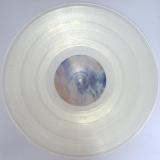
Originally released in 1999, Everything Is Green is the debut album from Brooklyn based The Essex Green, a seminal band within the Elephant 6 collective. Combining chiming guitars, warm harmonies, and subtle psych-pop textures, the album stands as a timeless document of late-90s indie pop creativity. This official vinyl reissue brings back the band's beloved debut in a beautiful transparent lime pressing, giving fans and collectors a chance to experience its delicate, sun-drenched melodies on wax for the first time since their original release in 1999. A must-have for those discovering the Elephant 6 universe or revisiting a modern classic of indie pop. For fans of: The Apples in Stereo, The Olivia Tremor Control, Camera Obscura.
First-ever vinyl edition of Magic Castles' 2014 cult album The Lore Of Mysticore. A hypnotic blend of shimmering psych pop, hazy drones, and kaleidoscopic guitar textures, this record captures the Minneapolis band at the height of their creative powers. Originally released in 2014, The Lore Of Mysticore stands as one of the most compelling documents of the contemporary psychedelic underground. Minneapolis-based Magic Castles craft a hypnotic and immersive sound that blends shimmering psych-pop, hazy drones, and kaleidoscopic guitar textures into expansive, sun-drenched songs. This first-ever vinyl edition brings the band's beloved debut album to wax for the very first time, offering fans a chance to experience its swirling, cinematic beauty in a format that truly does it justice. Essential listening for fans of The Brian Jonestown Massacre, The Asteroid #4 and Spacemen 3
Released in partnership with our friends at Neon and Filmtrax to release Edo Van Breemen’s score to Osgood Perkin’s latest horror hit The Monkey. Based on the Stephen King short story produced by James Wan (The Conjuring, Saw), The Monkey is a new trip by Longlegs writer/director Osgood Perkins. When twin brothers find a mysterious wind-up monkey, a series of outrageous deaths tear their family apart.
Twenty-five years later, the monkey begins a new killing spree, forcing the estranged brothers to confront the cursed toy. The score is as playful as the movie itself, whimsical when it needs to be, but also managing to be terrifying and tense.
Lenticular edition strictly limited to 1000 copies pressed on brown & green split vinyl, housed in a printed outer O-Card. Composer Edo Van Breeman told us that when they were recording the score, "Mr. King’s Monkey haunted our process for the entire duration of post-production on this film while Mr. Perkins possessed us to mutilate sounds and arrangements in a manner beyond our control. We hope you enjoy this record, and if not... shit, man, that sucks.”
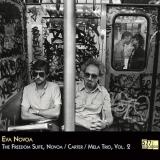
"Brooklyn-based pianist Eva Novoa returns with The Freedom Suite: Novoa / Carter / Mela Trio, Vol. 2 — the second radiant release from her compelling trio with saxophone icon Daniel Carter and celebrated drummer Francisco Mela. This marks Novoa’s sixth album with 577 Records. The trio first came together live in 2021, followed by a series of performances, including appearances in Cambridge (Boston) and later at the Brooklyn edition of the NY Forward Festival.
"The Freedom Suite is an homage to jazz titan Duke Ellington — particularly his masterful big band suites and legendary orchestra featuring Johnny Hodges and other luminaries who helped define an era of jazz greatness. In contrast, Novoa presents her Suite in a more intimate format: the piano trio. The album comprises twelve pieces — mostly brief — with a few extended tracks such as Free to Be Free and Cyborgs.
"For this recording, Novoa also steps in as a vocalist on several tracks, including Mainstream Media, Big Grande, Global, Free to Be Free, Dream, and Cyborgs. These pieces often feature a vocal dialogue between Novoa and Mela, whose expressive, word-infused style draws from rich Cuban traditions.
'Words are powerful,' says Novoa. 'They define who we are, where we come from, and who we hope to become. Without words, there is no conversation — and without conversation, there is no real sense of time, space, or connection.'
The Freedom Suite emerged from deep philosophical and creative conversations — spoken, written, and improvised — between Novoa, Carter, and Mela. In the studio, Novoa introduced printed texts that served as thematic foundations for spontaneous, in-the-moment musical interpretation. The result is an urgent and organic interplay, where instruments speak to one another in a language as fluid as it is fearless.
"Standout track Cyborgs begins with Novoa’s percussive piano, exemplifying the trio’s dynamic, conversational energy. Creative Destruction features Novoa on electric harpsichord in a wild, electric exchange. While Free to Be Free stands out as the album’s leading single, it also captures the essence and message of the entire Suite.
"Recorded in 2021 at New York City’s legendary Sear Sound Studio, the album captures a creative explosion of sound and spirit. Novoa dazzles on piano, Fender Rhodes, electric harpsichord, Chinese gongs — even whistle — showcasing her expansive sonic palette. Together, the trio embodies the power of free improvisation and emotional storytelling.
"Originally from Barcelona, Spain, Eva Novoa has been cultivating her distinctive voice since childhood. Now a staple of the New York creative music scene, she has performed across the globe and collaborated with some of the most adventurous voices in jazz and beyond."
About DJ Yoke..
Born in the small city of Aveiro, Portugal, DJ Yoke (Gabriel Casal) is a hip hop DJ and producer with over two decades of experience shaping the underground scene. In 2011, he was awarded Hip Hop Band of the Year in Portugal and crowned champion of the DMC Battle Supremacy, alongside multiple finalist appearances in the same competition.
Known for blending raw hip hop beats with broken beat and groove-driven textures, DJ Yoke has built a solid independent catalogue, including three solo albums and three beat tapes released independently.
In 2025, he unveils Yoke Fora de Órbita, a landmark release that represents a more mature and refined stage of his artistic journey. The album marks his first physical release, available on vinyl and cassette, and reflects the strong influence of his recent years based in London.
Conceived to be performed both as a live act with musicians and as a DJ set, Yoke Fora de Órbita expands Yoke’s sonic universe beyond the traditional DJ format. Live performances with musicians are scheduled for London, Lisbon, and other European cities.
No longer just a DJ, DJ Yoke continues to redefine his role as an artist — while keeping the turntable as his core instrument.
- 1: Magic Accident
- 2: My Own Highway
- 3: Family Tree
- 4: I Compare Everyone To You
- 5: Nothing At All
- 6: Out Run 'Em
- 7: Lifeline
- 8: Little Bird
- 9: What You're Looking For
- 10: Takes All Kinds
With a GRAMMY nomination and years of touring experience, this female- forward string band releases a career- defining album with Magic Accident . Longtime supporters of women in roots music, Della Mae teamed up with producer Alison Brown for this new release, their first on Nashville-based Compass Records. Magic Accident showcases the band's range of talents, from Americana songs that evoke early Chicks to energetic bluegrass and dreamy indie folk-inspired tunes.
The band's vocal power and instrumental skill shine throughout this mostly original collection, with standout tracks including "Out Run 'Em," written by guitarist Avril Smith and featuring champion fiddler and band founder Kimber Ludiker, "Lifeline," sung by bassist Vickie Vaughn, and the title track, written and sung by Celia Woodsmith. Guest artists on the project include Mary Bragg (vocals) and Jen Gunderman (accordion), with Brown playing banjo and guitar throughout. Since forming in Boston in 2010, Della Mae has proved to the roots music world that an all-women band is no novelty. Their 2013 Rounder Records release, This World Oft Can Be, earned them their first GRAMMY nomination for Best Bluegrass Album. That same year, the International Bluegrass Music Association named them Emerging Artist of the Year. Della Mae has performed in over 30 countries on behalf of the U.S. State Department. They are favorites on the roots music circuit, where their highenergy performances always get audiences on their feet, inspired by the power of their music and message. Available on turquoise coloured vinyl with 4-page folder and digipak CD editions
- 1: Highway Star (Live At Schleyer-Halle)
- 2: The Cut Runs Deep
- 3: Vavoom: Ted The Mechanic
- 4: Ramshackle Man
- 5: A Castle Full Of Rascals
- 6: Perfect Strangers (Live At Schleyer-Halle)
- 7: Truth Hurts
- 8: Solitaire
- 9: Loosen My Strings
- 10: Anyone's Daughter (Live At The Nec)
- 11: A Touch Away
- 12: Black Night (Live At Schleyer-Halle)
- 13: Nasty Piece Of Work
- 14: Slow Down Sister
- 15: Child In Time (Live At Schleyer-Halle)
- 16: Anya (Live At Schleyer-Halle)
- 17: Love Conquers All
- 18: Sometimes I Feel Like Screaming
- 19: Wicked Ways
- 20: The Purpendicular Waltz
- 21: Speed King (Live At Schleyer-Halle)
- 22: The Battle Rages On
- 23: King Of Dreams
- 24: Soon Forgotten
- 27: Fortuneteller
- 28: Lazy (Live At Schleyer-Halle)
- 29: Somebody Stole My Guitar
- 30: Hush (Live At The Nec)
- 31: Smoke On The Water (Live At The Nec)
- 32: Knockin' At Your Back Door (Live At The Nec)
- 33: Fire In The Basement
- 25: Time To Kill
- 26: Cascades: I'm Not Your Lover
"Deep Purple's Greatest Hits, released in 2009, is a comprehensive compilation showcasing the legendary band's most iconic tracks. Spanning their groundbreaking career, the album features classic live versions of hits like ""Smoke on the Water,"" ""Highway Star,"" ""Child in Time,"" and ""Black Night,"" offering a perfect introduction to Deep Purple's influential sound. Known as pioneers of hard rock and heavy metal, the band’s virtuosic guitar solos, soaring vocals, and dynamic keyboard riffs shine throughout this collection. Greatest Hits captures the essence of Deep Purple's heyday while celebrating their timeless appeal. It highlights the band’s ability to blend powerful rock energy with intricate musicianship, making them a cornerstone of the genre. For longtime fans and newcomers alike, this compilation is an essential addition to any rock music collection, solidifying Deep Purple’s legacy as one of the most influential bands in rock history. Greatest Hits is available as a limited edition of 1500 individually numbered copies on purple coloured vinyl."
- 1: Puritatem Tuam Interiorem Serva
- 2: Todeslied
- 3: The Road
- 4: Hero And Leander
- 5: Mariner's Song
- 6: Shores In Flames
- 7: White Dress
Blue, Grey & Black Marble vinyl[23,49 €]
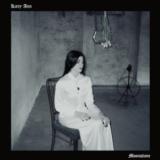
Through crushing riffs and haunting vocals, it reflects on loss, the forces of nature, and existential struggle. The production balances raw intensity with a deep, immersive atmosphere, enhancing the album's emotional depth. The album opens with a song in Latin, setting the tone with a ritualistic invocation. As its title suggests, it serves as a reminder to preserve one's inner purity in a decaying world, weaving ancient echoes into the album's foundation.
Todeslied follows as a hymn to death, carrying a solemn mood. The record also draws upon literary inspirations: one track is based on The Road by Cormac McCarthy, evoking apocalyptic desolation and the desperate fight for survival, while Dress in flames gives voice to the fury and imprisonment of Bertha Mason, the tormented character in Charlotte Bronte's victorian novel Jane Eyre. Compared to her previous release, which was more personal, Moonstone marks a shift towards greater collaboration within the band, with a more unified approach to songwriting and arrangements. The album, featuring two tracks by bassist Francesca Papi, has been arranged and refined together with Davide Rosa (guitar) and Fabio Orticoni (drums). The release also includes a powerful tribute to Bathory with a reinterpretation of Shores in Flames.
Recorded at Produzione Rumorose, mixed by Maurizio Baggio, and mastered by Giovanni Versari, this record represents a powerful evolution in the band's sound, sharpening their identity and pushing the boundaries of their musical expression.
Through crushing riffs and haunting vocals, it reflects on loss, the forces of nature, and existential struggle. The production balances raw intensity with a deep, immersive atmosphere, enhancing the album's emotional depth. The album opens with a song in Latin, setting the tone with a ritualistic invocation. As its title suggests, it serves as a reminder to preserve one's inner purity in a decaying world, weaving ancient echoes into the album's foundation.
Todeslied follows as a hymn to death, carrying a solemn mood. The record also draws upon literary inspirations: one track is based on The Road by Cormac McCarthy, evoking apocalyptic desolation and the desperate fight for survival, while Dress in flames gives voice to the fury and imprisonment of Bertha Mason, the tormented character in Charlotte Bronte's victorian novel Jane Eyre. Compared to her previous release, which was more personal, Moonstone marks a shift towards greater collaboration within the band, with a more unified approach to songwriting and arrangements. The album, featuring two tracks by bassist Francesca Papi, has been arranged and refined together with Davide Rosa (guitar) and Fabio Orticoni (drums). The release also includes a powerful tribute to Bathory with a reinterpretation of Shores in Flames.
Recorded at Produzione Rumorose, mixed by Maurizio Baggio, and mastered by Giovanni Versari, this record represents a powerful evolution in the band's sound, sharpening their identity and pushing the boundaries of their musical expression.
Berlin-based Swedish dynamic duo of sax man Otis Sandsjö and bassist/producer Petter Eldh return with new music on We Jazz Records. Remember the hard hitting banger "Tremendoce" from Otis Sandsjö's "Y-OTIS 2"? Well, the saga continues, and the new directions are surprising to say the least, just as we like it!!! Some proper late night / early morning out there vibes on this one, and the flip is yet another step forward, bringing in Kathrin Pechlof on harp. Things are liquid, just as you would guess, but the whole consistency of the substance has flipped and evolved. A new sound. A new idea. Another new day in Mauerpark, Berlin.
Berlin-based Swiss vocalist Lucia Cadotsch returns with her celebrated Speak Low trio for their second album, released by We Jazz Records on 27 Nov. "Speak Low II" features Cadotsch on voice, Otis Sandsjö on tenor saxophone and Petter Eldh on double bass, and introduces guest artists Kit Downes on hammond organ and Lucy Railton on cello. "Speak Low II" picks up where their genre-bending and forward-looking debut album left off, introducing new shades into the band's sound and also diving even deeper into the songs they tackle. What makes Speak Low special is their approach to really get to the heart of each composition with seemingly minimal means, yet generating a sound which is both instantly recognisable and remarkably impactful.
"Speak Low II" comes almost five years after the band's lauded debut, and proves the depth of the band's approach right from the start. At the core of the trio's operation is an openness to their love of the music and to their surrounding scene(s). The album comes across as a unified collection of songs made truly theirs and found through listening to records and spending time with their musician friends, often on the road. The highly evolved band sound and the equality of the musicians shines through on the Speak Low sound, as the group uses their 100+ performances together as a vehicle for the development of their music.
"The first album was filled with pretty famous songs, but that was actually not at all intentional" explains Cadotsch. "Those were just my favourite songs of the previous 10 years and we started working on making them ours, musically. We were playing around with concepts for the second album, but soon realised that we just needed to find the right songs and adapt them organically, which comes through in how we interact with the songs and each other. This time around, we wanted to dig deeper and made finished arrangements of around 20 tracks, half of which we ditched in the process. The ones that made the cut have been through a lot and they just felt right for us."
In a way, the Speak Low approach could be described as archaeological. Three music lovers connecting with songs found at various sources, readily throwing away any ideas that don't seem natural to them, and hanging on tight to the ones that do.
Turns out there is a concept to "Speak Low II". It's the band itself, their shared musical development and their love of music.
"Speak Low II" will be available on We Jazz Records on vinyl (PURPLE and BLACK editions), CD and digitally. The vinyl versions come with a heavy duty tip-on sleeve and a printed inner sleeve. CD in digisleeve with no breaking plastic parts.
It’s with great pride that we announce this amazing album on Optimo Music from Portland-based duo Natural Magic. It was the final vinyl release that Keith McIvor aka JD Twitch put into production before his untimely departure in late September this year.
Having been a long time lover of everything krautrock, space rock, experimental and psychedelic it seems more than fitting that he leaves us this LP as his parting gift; because this sublime album is all these things wrapped up into one and much more.
The album’s opening track “Galaxy Builder”, with its driving tempo, monolithic bass and screaming guitars might give the impression we’re about to hear a Neu for the 21st Century, but no, by the 2nd track we’re already on the first of several wild detours into uncharted territories: part shoe gaze, part ethereal, part psychedelia it’s a unique piece of beautiful euphoria from start to finish. By the time we reach the end of the A-side’s closing track “Distant Bells” the whole place is in tears after hearing possibly one of the most poignant pieces of electronic music of the entire year.
The B-side takes us even deeper into this trip through the duo’s homeland in the Pacific Northwest opening with “Skyward Eye”. If the Orb had ever teamed up with Slowdive and gotten Andrew Weatherall on production this could be it. “Get It Right” is a fuzz-filled epic with heavy dub leanings and meanings...it soars high up into the beyond and prepares us for “Ride”; an unashamed space voyage in the true sense…cosmic guitars, laden with FX; before returning gently down to the rolling green hills of Earth with the closing track “Chugsby’s Theme”. Whoever Chugsby is, his vibe is organic, deeply grounded and beautiful.
In the duo’s own words:
“Natural Magic II is a west coast road trip soundtrack for the fading summer. Taking inspiration from the majesty and myths of their home in the Pacific Northwest, the seven track album is culled from the late night, dimly lit, live sessions of Mike McKinnon on keys/drums and Matthew Quiet on bass. Overdubs of guitar, synths and percussion followed. All this from the same space they throw their legendary Limited Edition parties - all-night free experimentation celebrations in their own right. The album art work is handmade flower pigments, opium poppy pollen ink and wood-scrap charcoal by their friend and collaborator Pith Cocomici. Roll the widows down, tilt the seat back and turn it up. Gas, grass or black mass... there's magic in the hills.
Mikkel Metal makes a welcome return to Echocord with his new ‘Rebuild’ EP, accompanying remixes from Luke Hess and Frenk Dublin.
Copenhagen’s Mikkel Metal is a pioneering figure in dub-techno and minimal house, known for his atmospheric soundscapes and textured production. With acclaimed releases on Kompakt and Echocord, including Close Selections, Victimizer, and Peaks and Troughs he’s cemented his place as one of Denmark’s most distinctive electronic artists. Here he continues to dispay this further diving into new sonic realms with a new EP for Echocord.
Title-track ‘Rebuild’ opens, a hazy excursion through metallic, reverberations, expansive atmospherics and crisp drums before Detroit’s own Luke Hess steps in to offer his interpretation, delivering his signature groove-driven style, extracting the essence of the original and stirring it in amongst robust drums and spiralling dub echoes. ‘Bend’ is up next and displaying Mikkel’s production prowess as he blends murky bass flutters and analogue rhythms with psychedelic guitar melodies and dynamic space echoes, resulting in something that sounds uniquely his own. ‘Steam’ continues this theme with further psychedelia infused guitar tones flowing alongside breathy vocal stylings and fluttering atmospherics tucked into the depths. Rotterdam, Netherlands based artist Frenk Dublin delivers his ‘Deep Space Rework’ of ‘Stream next, reshaping the original into something entirely different with a dropped-tempo roots dub aesthetic, weaving fragments of the original into the composition alongside swaying dub drums and heavy doses of sub. ‘Midnite’ then concludes the release, another experimental sonic foray into unique effect processing, glitched out percussion, haunting vocals, plucked bass notes and expansive atmospherics
- A1: Robert Pico - Le Chien Fidèle
- A2: Annie Girardot - La Femme Faux Cils
- A3: Spauv Georges - Je Suis L'état
- A4: Zoé - Zoé
- A5: Jacques Da Sylva - Fou
- A6: Valentin - Je Suis Un Vagabond
- A7: Jacques Malia - Histoire De Gitan
- A8: Bernard Jamet - Raison Legale
- B1: Jean-Pierre Lebort - Barbara Au Chapeau Rose
- B2: Les Concentrés - Fils De Dégénérés
- B3: Les Missiles - Publicité
- B4: Hegessipe - Le Credi D'hegessipe
- B5: Marechalement Votre - Ethero Disco
- B6: Mamlouk - Decollez Les
- B7: Mozaique - L'amour Nu
- B8: Jean-Marc Garrigues - Je Dis Non
- B9: Penuel - Astronef 328
The journey through French-speaking pop archives continues with this fifth volume, packed with fuzz, gimmicks, and dissent. Far from the charts, the selected tracks display a great creative freedom, often backed by corrosive humor. Welcome to the surprising, kaleidoscopic, and colorful world of the late sixties and early seventies, Wizzz!
Born in Montauban, Robert Pico stumbled into music by chance when he met René Vaneste, then artistic director at Pathé-Marconi. René brought him to Paris to record his first 45 RPM EP in 1964. A year later, Pierre Perret introduced him to Vogue, where he recorded his second album with Claude Nougaro’s orchestra. Sylvie Vartan then introduced him to RCA, where he recorded four singles, including the astonishing "Chien Fidèle," a track backed by a hair-rising fuzz guitar. Alongside his solo career, he also composed for other artists like Alain Delon (the song was recorded but remains unreleased), Magali Noël, Bourvil, and Georges Guétary. In the Paris of the sixties, he mingled with Mireille Darc, Elsa Martinelli, Marie Laforêt, France Gall, Françoise Hardy, Petula Clark, Régine, Dani, Serge Gainsbourg, Joe Dassin, Franck Fernandel, Charles Level, and Roland Vincent. Despite his efforts and winning a Grand Prix Sacem for his final record, Robert Pico didn’t achieve the expected success in show business and decided to leave Paris and return to the Southwest, where he devoted himself to writing. He is the author of 23 books (including Delon et Compagnie, Jean-Marc Savary Editions 2025, a memoir about his youth and his many encounters). Today, he is relieved to never have become a celebrity and devotes himself to his work with passion.
In 1969, the Franco-Italian movie Erotissimo was released, directed by Gérard Pirès (who later directed Taxi in 1998, written and produced by Luc Besson). This pop comedy features Annie Girardot, Jean Yanne, Francis Blanche, Serge Gainsbourg, Nicole Croisille, Jacques Martin, and Patrick Topaloff. The soundtrack was written by Michel Polnareff and William Sheller, with lyrics by Jean-Lou Dabadie. "La Femme Faux-cils," performed by Annie Girardot. It recounts the feelings of a rich CEO's wife who seeks to develop her sex appeal under the influence of advertisement and magazines. Groovy, sparkling and light, this track, with ITS lush arrangements humorously critiques consumer society and feminine beauty standards.
“Je suis l’Etat” (1967) is the flagship track of the first EP by singer-songwriter Spauv Georges, aka Georges Larriaga, better known as Jim Larriaga (1941-2022). Born into a family of bakers, the young man was initially planning to become a hairdresser when he discovered English-speaking music through Elvis Presley and the Beatles. After this revelation, he decided he would become a songwriter and gave himself five years to succeed. He recorded his first two EP’s independently for RCA under the pseudonym Spauv Georges; meaning “that poor George”, a nickname given to him by the mother of her friend Jean-Pierre Prévotat (future drummer of the Players, Triangle, or Johnny Hallyday). Portraying a depressed and eccentric young man, Spauv Georges created corrosive and amusing songs that didn’t reach a wide audience, despite a TV appearance with Jean-Christophe Averty.
Supported by his loyal friend and fellow songwriter Jean-Max Rivière, Georges Larriaga met the future singer Carlos in the early '70s, then Sylvie Vartan’s assistant. He wrote songs for Carlos, including the popular "La vie est belle," "Y’a des indiens partout," and "La cantine", which went onto become a huge hit in 1972. He also composed for Claude François (“Anne-Marie”, 1971), Charlotte Julian (“Fleur de province”, 1972), helped launch child singer Roméo (who sold 4 million records), and later wrote the hit "Pas besoin d’éducation sexuelle" (1975) for the young Julie Bataille. In 1971, Jim recorded an album for Disc'Az: “L’univers étrange et fou de Jim Larriaga”, which featured pop gems like “La maison de mon père”.
The story of the song "Zoé" began when Pierre Dorsay, artistic director at Vogue Records, asked Swiss singer and musician Pierre Alain to write a song for a new female singer. The inspiration came when he realized that Zoé (the artist's name) was also the name of France's first atomic battery, created in 1948, which consisted of uranium oxide immersed in heavy water! The lyrics reflect a bubbling energy that must be handled with caution, while the instrumentation echoes this atomic theme, notably with the use of a theremin.
Zoé’s career lasted only as long as a single 45 RPM, but it seems Christine Fontane was the vocalist behind this pseudonym, who is known for several EPs, a good "popcorn" album in 1964, and a handful of children’s singles in the '70s. Regardless, the photograph on the cover is of a different girl entirely.
Later, Pierre Alain continued his career, writing songs for himself, Marie Laforêt, Danièle Licari, Alice Dona, Arlette Zola (3rd place in Eurovision 1982), and achieving multiple gold and platinum records in Canada. Also an inventor with several patents, president of the Romande Academy, and head of the French Alliance in Geneva, he now composes atonal music, books, and poetry. Moreover, he is also the host of "Les Mardis de Pierre Alain" at "Le P'tit Music'Hohl" in Geneva.
Filled with oriental choruses and fuzz guitar, "Fou" is from Jacques Da Sylva's only EP released by Vogue in 1967. Despite the quality of this recording, all traces of this singer disappear after this first effort.
Valentin is a baroque pop singer born in Belgium. He is the songwriter and composer of most of the tracks on his three singles released in the late 60s in Canada. A legend says that he reincarnated himself as Jacky Valentin during the 1970s for a rock'n'roll revival career in Belgium, but his older brother sadly debunked this story. Valentin's first two singles were arranged by Claude Rogen, a Parisian session pianist who had come to Canada to promote the song “Mister A Gogo”, a cover of David Bowie’s “Laughing Gnome”, adapted by singer Delphine, his wife at the time. Far from his usual network, Claude Rogen arranged music for Polydor, including the arrangements for “Je suis un vagabond” in 1969, a jerk tune with string arrangements and a furious optimism.
Jacques Malia wrote, composed, and recorded his only 45 EP for Festival in 1966. “Histoire de gitan” is an incredible beat track with bohemian scat that tells the story of a gypsy musician who came to Paris to make it in the Music-Hall, to no avail. The hero of the song and its author probably shared a similar fate, as Jacques Malia faded into anonymity after this remarkable attempt.
Bernard Jamet recorded two EPs for Barclay in the late sixties and co-wrote several songs with Christine Pilzer, Pascal Danel, and prolific songwriters Michel Delancray and Mya Simile. The track “Raison Légale” (1968), his masterpiece, immerses the listener in a courtroom right when a murderer is being judged, with jerk rhythm and free arrangements. A unique, paranoid, judicial, and psychedelic oddity.
Jean-Pierre Lebrot-Millers started his career in show business in 1967 as a singer and songwriter for the Philips label. After three singles, he wrote several songs of a new kind with his friend Pierre Halioche, in the midst of the sexual liberation movement and the democratization of drugs. With provocative lyrics, “Les filles du hasard” and “Barbara au Chapeau Rose” were released on a Philips singles in 1968. The character of Barbara was inspired by a queen of Parisian nightlife during the psychedelic years: model Charlotte Martin, who dated Eric Clapton from 1965 to 1968, then Jimmy Page from 1970 to 1983. Jean-Claude Petit’s arrangements, with a table-filled intro, soul brass, and Hendrixian guitar, emphasize the flamboyance of a hedonistic and sexy character, whose dog is named Junkie because “Junkie est un nom exquis”! The track was recorded live in three takes with a full orchestra.
Upon its release, the record was censored by Europe 1 and RTL due to its references to drug use. Jean-Pierre Lebrot was then banned from the airwaves and later dismissed by his record label. He changed his artist name to Jean-Pierre Millers, while his companion Pierre Halioche became D. Dolby for a new dreamy composition, “Chilla”, which Jean-Pierre produced himself with arrangements by Jean Musy. Once again, the song was immediately censored everywhere. After this setback, he decided to stop singing and started taking on odd jobs to support his Swedish wife and their son until the day he met Jean-Pierre Martin, then production manager at Decca, who had worked with Manu Dibango. Martin offered Jean-Pierre Lebrot-Millers, then employed at Rank Xerox, the position of artistic director at Decca. He accepted and became, a year later, promotion director (radio, press, TV). He worked on Julio Iglesias’s first album for Decca, which became a massive hit and allowed him to meet Claude Carrère. The latter asked him to write new songs and find their performers, much like a “talent scout.” It’s through him that Jean-Pierre discovered Julie Pietri and Corinne Hermès. He composed “Ma Pompadour” for Ringo, Sheila’s husband, and took the microphone again for the syncope hit “Rendez-Vous” in 1982.
That same year, Jean-Pierre Lebrot-Millers tried to release a track for which he had heavily gone into debt: “Si la vie est un cadeau”. Having recorded it in London, he presented it to numerous professionals, all of whom refused to get involved. The same thing happened with Antenne 2 and the Sacem when he proposed the song as France’s entry for Eurovision. He then met Haïm Saban, who was producing cartoon soundtracks and had just launched the Goldorak theme song. Saban, having listened to the song, declared it had the potential to become a hit. He sent Jean-Pierre and Corinne Hermès to meet the CEO of the Luxembourg radio and television network. The latter received them, asked to hear a verse and chorus a cappella in his office, and immediately hired them to represent Luxembourg at Eurovision 1983. They reworked the arrangements and recorded a new version with Haïm Saban as co-producer. The song ended up winning Eurovision 1983, a great comeback for our hero. He continued producing and hung out with the band Nacash in Belgium when a couple came to introduce their daughter for an impromptu audition in a hotel room. The girl sang “Les démons de minuit” while dancing to a radio cassette. Impressed, he had her take singing lessons for a year and composed a song for her (for which he had the melody and title, but no lyrics). This required him to go on the hunt for a lyricist, who ended up being Guy Carlier. They recorded the song, which was initially a ballad, at Bernard Estardy’s CBE studio, and gave the singer a new name: Melody. They showed the song around their industry network without success. Later, Estardy called Jean-Pierre to suggest changing the rhythm and making it pop-rock. Orlando, Dalida’s brother, liked the result and decided to co-produce the track. “Y’a pas que les grands qui rêvent » became a classic hit. The song has since been covered by Juliette Armanet (as a ballad, like the original) and Valentina.
Born into an aristocratic Breton family, Hervé Mettais-Cartier worked as a DJ at Queen Kiss, a nightclub in Poitiers, where he formed the band Les Concentrés with Michel (an actor) and Christian (a radio technician). Together, they created a repertoire of whimsical songs (“Ma bique est morte”, “J’suis un salaud”, “Fils de dégénéré”...) that they performed on stage dressed in white (in homage to “concentrated milk”). They performed at Bliboquet and Olympia in 1968 for the 10th edition of the “Relais de la chanson Française” organized by L’Humanité-Dimanche and Nous les Garçons et les Filles, sponsored by Pepsi Cola. Winners in the author-composer category, alongside Danish singer Dorte, their visibility allowed them to record a 45, and appear on television in Jean-Christophe Averty’s show. The A-side of the disc features Bruno le ravageur, a casatchok dedicated to Bruno Caquatrix, the director of Olympia, nicknamed in the song “Coq Atroce” or “croque-actrices”. The B-side is dedicated to “Fils de dégénéré”, a quirky tribute to Hervé's aristocratic roots, mixing absurdity with sophisticated vocal harmonies.
After Les Concentrés, Hervé Mettais-Cartier formed the duo La Paire et sa Bêtise with his friend Olivier Robert. They performed in Parisian cabarets and toured with Pierre Vassiliu. In the late 1970s, Hervé began a solo career. He recorded two albums for the Motors label in 1978 and 1979, which did not achieve their anticipated success due to lack of promotion. In 1980, he met Bernadette, with whom he started a family and created a “Chansons à voir” (songs to see) show that he performed until his death at the end of 2024.
Publicité comes from the final EP by the Missiles (Ducretet Thomson, 1966), a disc that also includes “La (nouvelle) guerre de cent ans”, featured on Volume 4 of our Wizzz! series. Please refer to the booklet for the story of the band.
“He’s 1.82 meters tall, 28 years old, weighs 135 kg, is black and Belgian”: this is the description of singer Hegesippe on the back of his sole single (Decca, 1967). He appears on the album cover wearing a Greek toga, like a hippie gag – we are at the end of the year 1967. In “Le crédo d’Hegesippe”, this former bodyguard of Antoine and the Charlots plays the delightful card of the thick brute converted to Flower-Power and non-violence, with arrangements by Jean-Daniel Mercier, aka Paul Mille.
“Ethéro-disco” was released on a promotional record for clients of the Maréchal company (Liège, Belgium) for the New Year 1979. Over a funky rhythm, celebrity impersonations (Brigitte Bardot, Jacques Dutronc, Fernandel…) deliver an enigmatic text about pharmaceutical products like ether, bismuth, and aspartate. The track was composed by Dan Sarravah (responsible for Joanna's “Hold-up inusité” featured on Wizzz! Volume 3) and Tony Talado, who was also a singer (one 45 in 1967), songwriter (with over a dozen credits between 1964 and 1985 in various styles from surf music to disco), author (Devenez Végétarien, Dricot Editions, 1985), ad designer, and psychologist.
Décollez-les is on the A-side of Mamlouk's only single, a pseudonym for Marsel Hurten, who is known for his work on several EPs in the late sixties, as well as composing music for Hervé Vilard’s “Capri, c’est fini”, Claude Channes' “La Haine”, Annie Philippe’s “On m’a toujours dit”, and Nancy Holloway’s “Panne de Cœur”.
This strange song, with Afrobeat horns and absurd dialogues between a chef and his kitchen staff, is the result of a collaboration between Marsel Hurten and one of his neighbors, a photographer from Pavillon-sous-Bois (93), where the musician settled after returning from the Algerian War. A music video was shot to promote the record.
Marsel Hurten was born in Tourcoing (59) into a musical family. At a young age, he joined the brass band founded by his grandfather, playing the piston before studying trumpet at the conservatory, as well as teaching himself how to play the guitar. As an orchestra musician, he toured in France, Belgium, Germany, and England. He released a series of solo 45’s between 1965 and 1968 for the DMF and Az labels before stopping recording to focus on working for other artists (Gilles Olivier, Noëlle Cordier…).
“L’amour nu” (Vogue, 1971) is the work of the short-lived Belgian band Mozaïque. The track, written by singer Jacques Albin, closely resembles another of his compositions, “Carré Blanc”, which he recorded in 1969 for Disc’AZ.
Represented by the Lumi Son micro-label based in Marignane (Côte d'Azur), Jean-Marc Garrigues released two 45 RPMs in the late sixties, defending the French jerk sound. The song “Je dis Non” is a short, joyful ode to youth, pop music, and rebellion.
Songwriter and performer Jacques Penuel released three singles. The first one, “Astronef 328” (Fontana, 1969), features a dizzying series of chords punctuated by sound effects, a sci-fi story, and arrangements by Jean-Claude Vannier.
We would like to sincerely thank Pierre Alain, Moon Blaha, Marsel Hurten, Bastien Larriaga, Jean-Pierre Lebrot-Millers, Bernadette Mettais-Cartier, Robert Pico, Olivier Robert, Claude Rogen, Micky Segura.
Beijinho do Brasil announce their second release with the highly anticipated follow-up from LA-based producer and multi-instrumentalist James Matthew Seven, featuring guest vocals on the A-side by Rio de Janeiro's Fabio Santanna.
Recorded in a small studio on the beach in Oaxaca, Mexico, "Feels Good, Do It" brings to mind a lost recording from Marcos Valle's time with Leon Ware. Funky and soulful with warm Fender Rhodes and a horn section reminiscent of Banda Black Rio, the tune is a breezy, mid-tempo ode to embracing life's pleasures. Originally with vocals in English, the track was translated and re-recorded in Rio de Janeiro by Fabio Santanna. Fabio has a long-established reputation in Brazil as a torchbearer of modern funk and boogie, continuing in the lineage of artists like Robson Jorge and Lincoln Olivetti. But with his releases on labels like Onda Boa and Dippin' Records (which sold out nearly instantly), his international reputation is steadily growing. He has a new 7" due out on Dippin' Records on October 10th, pushing his name to the forefront once again, right on time to generate more buzz for our next 45!
About the flip side, "Ilha Racional" (a nod to Tim Maia's Racional era):
I had this dream where I was in a dive bar discotheque somewhere in the Caribbean. A thick cloud of smoke hung in the air as the selector dropped this bass-heavy bop that had the whole crowd vibing. Then, out of nowhere, in walked Tim Maia with a bag of mushrooms. He proceeded to grab the mic and preach about this alien world of rational energy. Shit was bugged out. When I woke up, James Matthew Seven had sent me this track to check out.
Aedis, hailing from Barcelona and currently based in Amsterdam, presents his debut EP on Animalia. In his unique interpretation of the label, we find the artist diving deeper into a sound he's been shaping over time, refining its identity through subtle evolution and focus. The EP leans into an off-centre dance sound -- deep, dub-tinged, and anchored in groove and movement. It builds on techno's pulse and minimal structure, keeping the rhythm upfront while letting small shifts and textures do the talking.
Delve into the quirky and psych-tinged world of Brazilian pianist, composer and multi-instrumentalist Mauricio Fleury.
With more than a hint to Brazilian jazz greats like Azymuth, Deodato and CTI Records in their prime, Revoada is a groove based jazz-framed record, primed with other transitory musical vignettes which touches on Turkish psych and soul-jazz born out of the 70's film soundtrack genre.
Revoada is a 6 track album and storyboard of Mauricio's migration and travels through Brazil's geographical oddities , its rural and urban enclaves. Recorded in Brazil, it's the result of numerous treks through funky flea markets, soaking up old vinyls and vintage cultural artefacts combined with a new life led in Berlin since 2022.
Mauricio, as well as a founding member of Bixiga 70 (google Brazilian Afrobeat pioneers), a band he fronted for over 12 years, is also an in-demand collaborator and musician who as a pianist, guitarist and even percussionist has shared stages and studios with the likes of Brazilian greats including Gal Costa, Emicida, Lucas Santtana, João Donato and Liniker.
In 2007 he had a life-changing experience meeting Tony Allen, at the Red Bull Music Academy. After hanging out, chatting music and life, Tony insisted to Mauricio to participate with Tony in a jam with blacktronica and soulful house music pioneers Ron Trent, Theo Parrish and Steve Spacek. Mauricio sums it up, "From that moment on, I was never afraid to collaborate musically with anyone, no matter who's playing. It also brought me to researching the connection between Brazilian music and Afrobeat which is something that still means the world to me".
Another unforgettable session Mauricio undertook happened alongside João Donato and Marcos Valle, playing Donato's classic album Quem É Quem, live, a record seen as a blueprint for second generation bossa nova. Mauricio has worked with Gal Costa on two albums, Estratosférica Ao Vivo and her last studio album A Pele do Futuro. Fabio Sá and Vitor Cabral (bassist and drummer on Revoada) were playing with Gal at her last concerts, including in Berlin in 2022 before she passed.
In contemporary music, Mauricio was part of Toy Selectah and Mexican Institute of Sound's Compass project. He's worked with Colombia's Los Pirañas and has even recorded a mysterious and unreleased album with Quantic.
Revoada shows signature traces of Thelonious Monk, Ramsey Lewis' swinging soul sound, Deodato's drama, and styles from further afield, spreading into Turkish psych and Ethiopian jazz, when the time is right. Each track, led always by Mauricio playing multiple instruments with a choice selection of guests and core members on bass and drums, highlights Fleury's meticulous approach to finding the right timbre, utilising his arsenal of organs and effects pedals to set the mood, taking the listener to a specific place or memory that has shaped him.
A vinyl DJ for over 25 years and someone who is immersed in digger and collector's culture, Mauricio places a lot of emphasis on the importance of the complimentary relationship between two artforms (DJ and composer/producer) in the sense of having a broad repertoire of musical knowledge, references and perhaps predictably, being a Brazilian, understanding the connection between rhythms. This is an impressive debut album that struts itself right into the runout groove.
Perros' third installment is a sequel release from various artists that develops the theme Canerêve. Holding the usual multi-functional-tracker mission, this Volume 2 features four dancefloor house-lines facets.
DJ Cream struts with solid drum kicks that mellows into a structure that humps atmosphere dreams through a cheeky R'n'B sample, opening the record with warm charisma. A deep house blowgun truly on point. Following the info side of the record, we found a rising french producer based in Barcelona by the name of Groenogen, setting an elektrisch-soaked trip to tech house, throughout chunky basslines and infectious grooves that move inside a stridulous synth in combo with a sexy vocal chorus.
Artwork side, by the italian painter and tattoo guru FASE, starts with a showcase of layered high-quality projects throughout instruments knowledge and improvisation that just a live-act maestro like Emi Ömar can guarantee. Tribal, Deep, Acid, Electro,Funky. An immersive mixture of textures and emotions that enhances a full storytelling, a whole venture narrated by a hypnotic vocoder. The fourth and final track, comes up with a glimpse criteria, climbing the heights gradually. Then, when DJ Rou finally decides to start, that moment is just a boom! The break comes with energetic grooves, intricate percussions, sci-fi samples bounce all around with both acid and melodic flows of a potential hard-house hit.
- A1: E-Control - The Mind Of Robots
- A2: Konerytmi - Vaniljamunkki
- A3: Soft Pioneer - Dystopia
- B1: Basement Space - Massive
- B2: Alphone & Sween - Downfall (Dub Version)
- C1: Skywave Transmission Vs. Xotr - Existence
- C2: Kostas G - Calamity
- D1: Dawl - Time Phase
- D2: Zots - 314
- D3: Electrodefender - Electric Sunset
Childhood Drop Out’z - compiled by Childhood Intelligence (Tokyo/Berlin) & Tone Drop Out (London, UK). Timeless 2x12 featuring traxx by E-Control, Konerytmi, Soft Pioneer, Basement Space, Alphonse & Sween, Skywave Transmission vs. XOTR, Kostas G, DAWL, ZOTS and Electrodefender. A solid time travel into the early ages of Uk Bleep, Acid, Breakbeat, Techno and House - born in 2022.