T?t 41 is the latest record by modular synthesist and Berghain resident JakoJako (Sibel Koçer), marking her album debut for Mute.
Recorded during a trip to Vietnam and bookended by field recordings from T?t Lunar New Year celebrations, the album is illuminated by references to Koçer's heritage. The melodic palette breaks away from traditional Western scales, drawing instead from the tonal intricacies of the Vietnamese language, inspired by overheard conversations. The album and track titles further honour the vibrant T?t festivities, shrines, and landmarks she encountered during her travels.
This album is, in many ways, a distillation of ideas she has been exploring for years. Tapping into a deep understanding of machine-based music, crafted with a minimalist setup consisting of a Eurorack and Waldorf Iridium Core, T?t 41 reflects on notions of rebirth, and the pursuit of a sonic core. From this simplicity emerge some of her most expansive, unworldly compositions to date.
T?t 41 is available on vinyl in a limited run of just 500 copies worldwide.
Поиск:b base
Все
Looking behind the obvious, forming an orchestra out of everyday surroundings.
Finding the essence in the trivial, clarity in the complex, poetry in simplicity. All of this is part of the goal, meaning and character of Oh No Noh, the project of Leipzig-based guitarist, robot programmer, magnetic tape crumpler and composer Markus Rom. All of this floats and shines through "As Late As Possible", the third Oh No Noh album, which will be released on April 4th, 2025.
The focus of this album, as the title "As Late As Possible" suggests, was patience. A creative lingering, the selfimposed principle of letting ideas mature, consciously leaving them lying and looking at them again in order to discover and refine new things. Always looking for new ways of producing musical sounds, Markus Rom has been blurring the boundaries between LoFi, Indietronica, Postrock, Kraut and Pop with his solo project for several years. His main instruments for this are electric guitar, MIDI robots, tapes and samples. For “As Late As Possible”, Rom expands his setup with a new sound sources (acoustic guitar, banjo, organ) and musical guests: Damian Dalla Torre (Squama) on bass clarinet and Andi Haberl (the Notwist, Sun) on drums.
“As Late As Possible” continues the signature of past releases and adds new facets. Rom's distinctive looping in and over each other is particularly evident in the tracks “Missing the Point”, “Orb” and “Almost Everywhere”. With "Loot", a straightforward and folk-pop piece finds its way onto the album and coexists with math-trained tracks like "Dog Years" or "Dot", which conjure up associations with Weilheim bands like COUCH. The tracks "Bliss of Disconnect" and "Fawn" were created in collaboration with the featured guests Liz Kosack and KMRU. The confidently unplanned is one of the principles around which Oh No Noh itself is also continuously evolving. Part of this development: the radio series "Oh No Noh Radioh", which has so far consisted of over 40 parts, for which Rom invites a guest in each episode to research music together along roughly defined concepts, ideas and inspirations. Together with technology composer Hainbach, free jazz artist Limpe Fuchs and sound artist Elsa M’Bala, for example, encounters were created whose patient search and find and whose controlled coincidences also characterize “As Late As Possible” – but here concentrated, concise, and with all the love of sound and experimentation always committed to the song. With this will to create a song-like narrative, to move, to develop, “As Late As Possible” remains suspended and searching. Its concentration seems light-footed, its happy accidents well-placed, the melancholic beauty of outdated technologies, forgotten musical toys and broken noise sources always forward-looking. Music like the one that comes about when someone programs an entire robot band, which then becomes just a friendly part of the whole.
The artwork for “As Late As Possible” was created by Leipzig comic artist Anna Haifisch. The album was mixed by Adam Lenox and mastered by Frida Claeson Johannsson.
Danny Ward’s 30-year career has been far from predictable. While best known for the musical eclecticism of his Dubble D project, the dance floor-focused nous of his work as Moodymanc and as a member of the groundbreaking 20:20 Soundsystem, Ward’s bulging CV also includes stints drumming for artists as diverse as Fila Brazillia, Rae & Christian, and The Pharcyde, to Jazz luminaries Mat Halsall and Nat Birchall, alongside countless collaborations (Flora Purim and Nightmares on Wax to name but a couple) and numerous evenings spent adding live percussion to DJ sets at iconic Leeds club night Back To Basics.
Now the long-serving Manchester musician and producer has a new project to share via NuNorthern Soul: Balaphonic. Inspired by a mixture of lockdown-era studio experiments, online collaborations, his long-held love for Afro-Cuban and Afro-Brazilian rhythms and a desire to do things differently, Resolution Revolutions is a gorgeously sonically detailed and immersive album that takes Ward’s musical output to a whole new level.
Like many musicians, Ward used the forced lockdowns of the global COVID-19 pandemic to retreat to his basement studio and make music. Focusing on utilising all of the acoustic and electronic tools at his disposal – not least his beloved percussion instruments – Ward took the opportunity not only to draw on a wide range of musical influences and ideas, but also rhythms, grooves and time signatures. As well as composing new tracks from scratch, he also revisited older compositions with fresh eyes and ears.
The results are simply stunning. Ward sets his stall out via the exotic, slow-burn Balearic warmth of ‘Sunflowers in Dub (Deep Summer Mix)’, where echoing whistles, harmonica motifs, sitar sounds, and cascading piano motifs rise above dub-wise bass and seductive, soft-focus beats. The heady, eyes closed vibe continues on the sunrise-ready awakening of ‘Disorganics (All Strings Mix)’, a samba-soaked summer shuffle rich in sparkling acoustic guitars and infectious Latin percussion, and the fretless bass-sporting Afro-Cuban yearning of ‘Six Fingers’.
As Resolution Revolutions progresses, Ward’s deep love of club-adjacent and dancefloor-focused rhythms subtly comes to the fore. There’s ‘Udders’, a hybrid – and hypnotising – fusion of chopped-up South American percussion, marimba-style melodic motifs, looped bass and spacey electronics, and Ocean Waves Brasil collaboration ‘Oxum’, a mid-tempo Afro-Brazilian deep house number wrapped in deliciously dreamy chords and gentle acid lines.
Similarly impressive and inspired is closing cut ‘Bloco Manco’, where Ward peppers a delay-laden Latin beat and a deep, weighty, dancehall style bassline in waves of echoing hand percussion and restless timbales patterns. Stripped-back, raw and seriously sub-heavy, it provides a jaw-dropping conclusion to one of Ward’s most perfectly formed albums yet.
a A1: Sunflowers In Dub Deep Summer Mix
[b] A2: Disorganics [All Strings Mix]
DJ Support: DJ EZ, Dr Banana and Enzo Siragusa.
ODF is a Leeds-based DJ and producer originally from London known for his eclectic genre-bending sets. Many of his productions have caught the attention of some high-profile artists such as Ben UFO, Bicep, Ilario Alicante, Michael Bibi and Interplanetary Criminal, as well as support on Radio 1, Kiss FM, Rinse FM and Reprezent.
Kicking off his new Imprint On Da Floor with a banging double header Tell Them & Underground.
The A side, Tell Them, is a dark, speed-garage-laced roller that oozes intensity, showcasing the gritty, bass-heavy sound that has defined ODF’s unique style. Its driving rhythms and shadowy undertones make it a late-night anthem for dancefloor aficionados.
The B Side, Underground, mirrors ODF’s signature sound with a bubbly organ top line and hip-hop-influenced vocal chops, delivering a playful yet irresistibly groovy vibe.
Limited Pressing Buy or Cry.
Ferdinger, a producer and DJ from southern Germany now based in Paris, has established himself as a
key figure in contemporary techno. His sound, deeply inspired by the textures of the '90s, stands out for its modern and immersive approach, blending hypnotic rhythms with meticulously crafted grooves.
His new EP, Up at Night, set for release on RAW in both vinyl and digital formats, delves into the restless experience of sleepless nights, those hours spent trapped in relentless thought loops, unable to find peace. Through four hypnotic tracks and a digital bonus, Ferdinger translates this mental state into pulsating motifs, dissonant harmonies, and atmospheric dub-infused textures, capturing the unease and intensity of nocturnal overthinking.
The Ibex Band, with Giovanni Rico and Selam Woldemariam at the creative helm, provided the musical backbone for legends like Aster Aweke, Girma Beyene, Tilahun Gessesse, Mulatu Astatke, and Mahmoud Ahmed, including the iconic album Ere Mela Mela, shaping modern Ethiopian music as we know it today. This 1976 album (Ge’ez Year 1968) played a pivotal role in that legacy and has now resurfaced to set the record straight.
There’s a tendency to talk about the seventies as a golden age of Ethiopian music. There are good reasons for that, and just as good reasons against it. However, the notion of a golden past privileges the role of Western explorers and suggests that the pinnacle of Ethiopia’s musical culture is something only a foreigner can appreciate and unearth. It downplays the complexities of Ethiopia’s culture and history, creating an artificial divide between then and now. And it underestimates the constantly evolving sound that has followed.
The legendary musical outfit The Ibex Band, later metamorphosed into The Roha Band, has played a central role in defining the sound of many of the greatest stars on the music scene of Ethiopia from the mid-seventies onwards–but their golden output has never really waned. The story of the origins of the band that provided the musical backbone for greats such as Aster Aweke, Girma Beyene, Tilahun Gessesse, backing the solo career of group member Mahmoud Ahmed as well as backing Mulatu Astatke and many others has yet to be properly told.
Two misconceptions plague the image of Ethiopian music, one is that the music is pure because it is, by some notion, unexploited, the other is that it is all traditional. To begin with, a combination of political changes between the late sixties and the mid-nineties created an environment where only the most dedicated and skilled musicians struggled on and pursued a musical career against fierce odds. The whole Ibex Band, with Giovanni Rico and Selam “Selamino” Seyoum Woldermarian at the creative helm, are arguably the origo of the vibrant scene in the mid-seventies, and the said pair are foremost responsible for not only navigating the band through troubled times, but also modernizing the 6/8 chickchicka rhythm to a contemporary form. Giovanni laid the rhythmic foundation with heavy looped basslines that reinvented traditional melodies as dance music, and with Selamino’s innovative guitar work they influenced scores of musicians from Abegaz Kibrework Shiota to Henock Temesgen. Even Giovanni’s Fender bass and Selamino’s Gibson guitar inspired younger musicians in their choice of instruments. Not only in choice of instruments but also in sound–even as the digital revolution hit Ethiopian music, a lot of popular music still took its cue from the masters from Ibex and Roha.
Ibex emerged out of the ashes of the sixties group the Soul Echos band, adding Giovanni and Selamino to their ranks and taking their cues from a slew of influences, such as Motown and The Beatles, fused with traditional music. A tighter-knit unit than most bands at the time – Ibex has remained six to seven members throughout their whole career, compared to many bands that were as large as fifteen or sixteen men strong when Ibex set out. Their playing has been viciously focused, economical yet heavy. Just a year before the recording sessions of the album in your hands, Giovanni and Selamino made a contribution to the popular musical lexicon of Ethiopia that was simply defining the popular sound: their arrangement and recording of bandmate Mahmoud Ahmed’s solo effort and real commercial breakthrough tune and eponymous album, Ere Mela Mela, from 1975.
Selamino has never limited himself to being an adroit lead guitarist, but has always been a scholar of history, and as such he has probably contributed as much to modern Ethiopian music with his guitar playing and compositions as with a deepened understanding of modern or contemporary – Zemenawi – Ethiopian music. Selamino’s contributions serve as a metaphor for those of the whole band, at one and the same time creating and defining a new, danceable and updated sound anchored in Giovanni’s bass, whilst also elevating the broader scene through their support for others on the scene and on top of that, increasing the understanding of the music.
There is an understandable desire to romanticize the musical heyday Ibex and Roha were at the forefront of, because so much of the output is sorrowfully hard to come by. Ibex creativity was nothing short of ridiculously fierce compared to many of their Western contemporaries. Based on their sheer recorded output alone they could have usurped the title “hardest working in show business” from James Brown, recording more than 250 albums or 2500 songs in the seventies and eighties. Some only surface as cassettes today, others were never given full LP release, and some are simply impossible to find today. In the light of that, it’s nothing short of a miracle that the recording Stereo Instrumental Music from 1976 (Ge’ez Year 1968) has resurfaced. Unearthed in perfect condition on a chrome cassette, this is musical history comes alive–to set the future straight. Stereo Instrumental Music was recorded in collaboration with Karl-Gustav Lundgren, a Swedish national working for the Radio Voice of the Gospel. It took two sessions at the Ras Hotel ballroom in Addis Ababa. The Ibex Band was the first band in Ethiopia to employ a four-track recorder for their recording (the first available in the country, lent by Karl-Gustav). Later the same week, Giovanni and Selamino realized that, lengthwise, the recorded material fell short of what they wished for, so they recorded four more tracks in one more session on a single-track recorder. The Ras Hotel and Ghion Hotel, where the Ibex Band held musical residencies were to Ethiopia in general and Addis Ababa in particular what Motown was to the USA and Detroit a few years earlier – a hotbed of musical creativity and showmanship.
The most astonishing thing about Ethiopian music of the last half century is how tradition and modernity are intertwined. Because of this feature, it’s kind of hard to tell when there ever was or when we are in a “golden age”. So much of music from the past has been criminally neglected, but because of the hardships in the past, it would be an oversimplification to say that said past was a golden age. Probably, the golden age is what we are approaching, because for the first time both the past and future are accessible, and the monumental contributions from before can lay a firm foundation for a thriving music scene today. The Ibex Band stands firmly in the past, present and the future. That, if anything, is golden.
The detailed history of Stereo Instrumental Music is in many ways unique. To begin with, it couldn’t have been recorded earlier (there were no four-track recorders available) and it really couldn’t have been recorded afterwards either, at least not in the years directly following, because of the toll the musical scene took from the unfavorable political climate that followed when the nascent Derg regime and rival groups tried to assert themselves, the musical equipment lent from The Voice of Gospel Radio simply disappeared from Ethiopia when the radio station folded in 1977. Karl-Gustav Lundgren,
the Swedish foreign national who assisted during the recording, worked with the Ethiopian Evangelical Church Mekane Yesus at the time, recalls how they only had about fifteen minutes to get the microphones in place for the recording as to not alert neither the management at Ras Hotel nor the authorities and most importantly, to complete the recording before the curfew came into effect at midnight. In leaping to the opportunity to use previously unavailable equipment to push their sound forward and improvising to meet the logistical challenges, the Ibex Band displayed the very avant-gardism and adaptability that explains their longevity as a band through the years. The recording of Stereo Instrumental Music is from a given time in history, but it sounds as beyond time.
Much of the energy that burst out of the scene that Stereo Instrumental Music came out of dissipated or got sidetracked during the societal changes Ethiopia went through in the 1970s and 80s. Whilst leaders might have professed to be revolutionary, the work ethic of the Ibex Band can truly be described as that. They never called it quits, but adapted, toured extensively abroad in Africa, Europe, and the Middle East, and found ways to work even in the face of the curfew that curtailed a lot of musical life. They even played major arenas in the nineteen eighties, despite said curfew and restrictions. The whole extent of their legacy has never been told, but their music speaks louder than words, so therefore… tune in to the Ibex Band’s Stereo Instrumental Music.
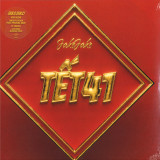
Âsan’s self-released Beychen EP is a raw odyssey through the chaos and catharsis of creation. Across four relentless tracks, the producer mirrors the turmoil of nearly losing their passion for music—only to rediscover it by dismantling old habits and surrendering to the unknown. What emerges is a vortex of psychedelic techno, where layered rhythms spiral into the deep-down and morphing soundscapes warp time itself.
The title track Beychen channels the claustrophobic unease of a creative block with its brainmelting progression, only to erupt in a complete loss of control and, therefore, relief. The other three tracks deliver visceral techno in similar fashion, each piece evolving like an own entity with hypnotic force. This is music for darkened rooms and muddy forest stages, where the dancefloor becomes a mirror for Âsan’s internal reckoning. Here, the anxiety of creation is not conquered, but alchemized.
Âsan, a New York-based producer and co-founder of the label Cellar Door, always chases a certain feeling in his work—an elusive sensation that guides his creative journey. For him, dancing begins in the head, as rhythms and soundscapes take shape in a space between thought and intuition. His music invites listeners to step into that headspace, where the body follows the mind’s spiraling patterns.
After many years of digging deep and sharing music with like-minded individuals through various channels, 'The Wapstation' is proud to present its first release as a label.
This record comes from the masterful hand of producer, Roberto Manolio. Born and based in Italy. Following a series of sellout releases, Roberto graces the label with three stellar productions. The EP touches on multiple underground textures, blending shades of Techno, House, Electro, and Miami Bass. To top it off, shooting star of the scene Christopher Ledger delivers a wicked Electro flip of the title track.
“Trustworthy”. is the meaning of “danama”, this Bambara word from Mali. Believing in oneself, in others, in the word given, in desirable futures. Advocating optimism, momentum towards the future, collective strength and the wise magic of cultural blending… especially during these troubled times of endless wars, of nationalist withdrawals or the abundance of naturals disasters, all encouraged by a carnivorous capitalism?
So confidence, we need tons of it. Maintained by the flame, the phlegm and the stratagem of these afro-groove scientists, without ignoring their sorrows nor the scandals of History. This is the athletic art of Arat Kilo, who remain without question the best ethio-jazz orchestra in France, on the trail of this fifth album recorded in the Spring of 2024. Confidence was also needed to change the way things worked. For all the previous albums, the band came together in the studio to play each track together, all in the same room, in the romantic idea of a warm, lively, organic gesture, in the manner of the great Ethiopian masters of the 60s and 70s.
For Danama, the music was initially collected in tandem: guitar/bass, drums/percussion, saxophone/trumpet, and the two voices. A few new instruments were added along the way : dark synthesizers, a bass clarinet, a tiny guitalélé (similar to the ukulele) and a Malian n'goni (sometimes described as ‘the griot's lute’). Then, and above all, there was the question of experimenting with real sound production, using sound design, multi-track exploration and effects applied to the textures collected over eight days at the Gong studios in Montreuil and OneTwoPassIt in Bagnolet just outside Paris.
In this way the band, all growing up influenced by the hip French Radio Nova's ‘Grand Mix’, were completely free to express their natural taste for fusion between genres. Borrowing from the frantic rhythms of Newark's jersey club, English 2-step or New Orleans brass bands, grafted onto Arat Kilo's musical base: tezeta, the famous minor pentatonic scale typical of Ethiopian jazz, melancholic to perfection. The result is layers of sound, collages of emotions, like the album cover, created by artist Clément Laurentin from multicoloured fragments of posters torn up in the street.
So Arat Kilo are back: The same band, the same collective strength, the same fight for values, their new album “Danama” carries the demand for a better world even further, with words of hope from singer Mamani Keita and the social critique of American MC and poet Mike Ladd ! The result is this luminous voyage down the Danama canal. In all, eleven songs and an instrumental, mixed by Mathieu ‘Gib’ Gibert - one of French band La Fine Équipe's beatmakers - set to drive the crowds wild and remind us how to stick together again.
Following the epic and potent album 'Blood' recently released on Infinite Machine; Shanghai-based producer Laughing Ears alights on Hemlock with a killer three track EP.
Losing Track
Dense with pin-sharp atmospherics and gentle intertwined melodies, this lush piece evokes 90's IDM breakbeat and trance and propels them into far away realms.
Bite the Bullet
Bleeps and homespun breakbeats dance into the night on this quirky workout, keeping us on our toes with unhinged edits and a twisted breakdown.
Breakaway The rudest cut on the EP, Breakaway lamps up the pressure for a full sub bass rinse out riding on loose but fully loaded drums.
File under: IDM, grime, breakbeat
RIYL: rRoxymore, Autechre, Dj Crystl, Bruce, Musical Mob
Das BUTCHER BASEMENT Album markiert den Beginn der Band EXTERMINATION DISMEMBERMENT. Da es seit vielen Jahren einen besonderen Platz
in unseren Herzen einnimmt, haben wir uns schließlich entschlossen, ihm ein zweites Leben zu geben, indem wir es von Grund auf neu aufgenommen
haben. Einige Teile der Songs wurden komplett neu aufgenommen, einige wurden verändert. Ein Song wurde entfernt, und zwei neue wurden im
alten Stil komponiert, wobei Teile verwendet wurden, die es nicht auf das Album von 2010 geschafft hatten, aber zu dieser Zeit geschrieben wurden .
- I Heard That Noise
- Enything
- Take It From Me
- This House
- This Room
- Beginning Band Day One
- I Punched Through The Wall
- Hero
- Raven
- Drawn Away
- You Are
Mint Green Vinyl. Graham Jonson is drawn to the comforts of melody and noise. How the two conspire in tension, tonally and atonally, stirring up memory and mood. This quality animates the technicolor world of quickly, quickly, the psych-pop project that emanates from Kenton Sound, his basement studio in Portland, Oregon. "Everywhere your eye lands, there's another curio to marvel over," noted Pitchfork's Philip Sherburne when he visited Jonson's recording space for a Rising feature just after the release of his "strikingly original" 2021 debut LP, The Long and Short of It. Since then, Jonson formed a live band, released his Easy Listening EP in 2023, and navigated the up-and-downs of a young musician, the sustainability of tours and relationships. While shaped by personal bouts and fallouts, his highly-anticipated full-length follow-up finds Jonson making music that's universal, open-ended, and rewarding, like great songwriters can do. He set out to make a folk album but couldn't help coloring it in with noise; a confluence of lush instrumentation and unexpected sounds. Ambitious yet intimate, hi-fi yet homespun, the idiosyncratic songs on I Heard That Noise curve around the contours of everyday life with warmth, wit, and dissonance.
splatter vinyl[16,85 €]
Imagine having a song go viral for 17 years - without even knowing it. That's exactly what happened to the German 1980s band FEX. And this isn't just any song - it's The Most Mysterious Song on the Internet, a track that puzzled music detectives for decades before finally being identified in November 2024. Now, it has been officially released - twice.
The Story in Brief:
Sometime around 1984, a song was broadcasted on NDR Radio. The name of the song was Subways Of Your Mind - only found out 40 years later in November 2024. Back then, a listener recorded the NDR show on cassette, a common practice at the time. Decades later, the tape resurfaced, but while most songs from the recording were identified, one remained an enigma. On March 18, 2007, the track was uploaded to the internet in an attempt to uncover its origins. Due to its now-iconic opening lyric, it was tentatively titled Like The Wind. Over time, the mystery deepened, and the song was given a nickname: The Most Mysterious Song - or simply TMMS.
Starting in 2019, a dedicated Reddit group, TheMysteriousSong, now boasting over 63,000 members, took up the search. They meticulously documented every lead, hoping to solve the riddle of the song's origins. Then, in 2024, the breakthrough: Reddit user marjin1412 reached out to musician Michael Hädrich after discovering a reference to his band FEX in an old newspaper article. Hädrich, FEX's keyboardist, provided a recording from an old demo cassette which included an alternative version of the song. On November 4, 2024, the mystery was officially solved: FEX was the band, Subways Of Your Mind was the title.
What Happened Next:
Since then, FEX has released two singles - both featuring Subways Of Your Mind - through the Berlin-based independent label The Outer Edge. First, the demo cassette version was pressed onto vinyl, as the original NDR radio recording remained lost (see EDGE-028). The Remastered Demo Mix single instantly topped Bandcamp's global charts, holding the #1 spot for several days. By then, it was clear: this was more than just an internet curiosity. A real fanbase had formed. Enthusiastic comments on the sales page ranged from "best post-punk song to ever exist" to "FEX themselves (are) perhaps the most underrated musicians of all time."
But the story didn't end there. A higher-quality version of the NDR radio recording was rediscovered in late december, remastered, and now sent for a second vinyl pressing: the TMMS Version. This new vinyl 7" is backed with Talking Hands another great and unissued song that was found on the demo cassette.
Fame Comes with a Price
Suddenly, time isn't standing still for FEX. The band had to come to terms with the fact that they had become Lostwave super stars. A FEX fan club quickly formed on Reddit, fan-hosted FEX parties are popping up, and the internet is demanding more - an album, merchandise, live performances. But how does a band prepare for a comeback after a 40-year hiatus?
For now, FEX is carefully considering their next steps. Their demo cassette contains six songs - and a few other recordings have resurfaced which probably could be restored and compiled. But foremost, a brand new re-recording of Subways Of Your Mind is in progress.
One thing is certain: The Most Mysterious Song will continue its unstoppable journey around the world. Don't miss this (second) chance to own a piece of music history!
- A1: Hanadi 02 18
- A2: Dreams Of An Insomniac
- A3: Al Dollarji
- A4: Les Vents Dominants
- A5: Al Bahriye
- A6: Miramar
- A7: The Invisible Cut
- A8: Helia Featuring Sven Wunder
- B1: East Of What
- B2: La Calypso 02 41
- B3: Hawalat
- B4: Sfiha
- B5: La Virgule Suspendue
- B6: Preamble To The Conclusion
- B7: Chou Ostak
- B8: What Happened Next
- B9: Jana
If Hawalat sounds like a world tour that’s because it essentially is. “As much as Marzipan is a picture of Lebanon from the inside, Hawalat kind of picks up from where Marzipan finished but more looking to the outside, the diaspora, to the notion of exile.” Megarbane says he is interested in the connections between the global and the domestic, the mundane and the cosmic, and wanted to create space for non-linear progression.
Hawalat is based on the idea of hawala, informal money transfers that you can make to certain countries impacted by a lack of currency or unstable political and economic contexts. His use of the term on this album is not a financial one, Megarbane explains, but a nod to notions of creative exchange between “places, persons, generations.” It is the first time Megarbane called on other musicians in this way to inform his sound, including a collaboration with Sven Wunder on the song Helia featuring strings by the Stockholm Studio Orchestra.
The album opens with first single Hanadi, a punchy Somali-inspired track with warm non-lexical vocals and saxophone. It immediately pivots to the Dreams of an Insomniac, which balances soft, effortless vocals and keys with urgent violin intrusions. Al Dollarji feels like Megarbane’s bread and butter, that is Mediterranean sounds with intricate strings, while Al Bahriye takes this staple and introduces hip hop inflections. The result is a rich 17 track album that effortlessly blends genres and styles.
Including 8 page, 12" sized booklet with unseen photos and liner notes by Armani Syed.
Pink vinyl, limited to 350 copies. Hollows Made Homes In Their Sunken Cheeks came into existence as a result of Jon's wishes to take the Ungraven sound somewhere other than a standard 'rock band' setup. Moving away from the traditional 'drums / bass / guitar' structure has allowed Ungraven to experiment further with both sound and composition. 'Hollows_.' Is an experiment in sonics and allows both Davis and Perry to perform a sickening sonic duet as their respective instruments carve a universe shaped hole in your consciousness. Inspired by the duo's past collaborations on Conan tracks such as "Older than Earth" and "Grief Sequence" as well as artists such as Tangerine Dream, Circle, Zombi and Harold Budd. Hollows is a combination of composed and improvised elements, constructed remotely from their bases in England and Denmark. The addition of Perry's synth, organ and piano to Davis's slab like 6 string delivery has produced two epics that are both introspective and pummelling at the same time. Fall untethered into a bleak and expansive soundscape of psychedelic terror, experience a new chapter in Ungraven's tome of tone.
"After more than 20 years, Band Of Brothers is still considered one of HBO's most important series. Produced by Steven Spielberg and Tom Hanks, the series has won major awards such as the Golden Globe for Best Miniseries and the Emmy Award for Outstanding Miniseries. Band Of Brothers is a war drama miniseries based on historian Stephen E. Ambrose's 1992 non-fiction same titled book. It follows the story of Easy Company of the U.S. Army 101st Airborne Division and their mission in World War II Europe, from Operation Overlord to V-J Day. The score, composed by the late Michael Kamen, is credited as one of the essential elements in creating the realistic atmosphere of the series. Kamen was best known for scoring movies such as Die Hard, Lethal Weapon and X-Men, and received an Academy Award nomination for both Don Juan DeMarco and Robin Hood: Prince Of Thieves. Revisit the Band Of Brothers score with this deluxe reissue on white coloured vinyl, available as a limited edition of 1500 individually numbered copies. The 2LP is housed in a sleeve finished with linen laminate and includes a 4-page booklet with a large cast picture on the inside."
2x12" Vinyl[32,98 €]
Lunchbox's legendary lost album "Evolver" is lost no more! Sparklingly remastered for the album’s twentieth (and a few!) anniversary and available on CD, cassette and (for the first time) vinyl, this psychedelic masterpiece fills a crucial hole in the band's discography. Recorded in the couple's 1990s Oakland basement between stays in Berlin, tour dates in London, and dreamy sojourns up the rugged Mendocino coastline, "Evolver" fuses jangle and jungle, ambient and dub into a striking pop statement.
Marrying refined songcraft to the serendipitous magic hidden in half-broken reel-to-reel tape decks and vintage synthesizers, the "Evolver" plants its pop flag on the terrain of magic and mystery. Dreamy jangle pop gems emerge seamlessly out of a sea of loops, drones, and dubbed-out horn fanfares, cascades of tape echo feedback and whispers from outer space providing a trance-inducing backdrop to the pop sensibility for which Lunchbox is well-known. Hook-filled and hypnotic, "Evolver" is a sublime slice of post-pop psychedelia that you won't want to miss.
For this special and long-overdue reissue we've raided the bands vaults for three previously unreleased tunes that add extra dimensions to the album's uniquely trippy flow. And for the vinyl heads we're pressing this as a double LP for maximum fidelity and playability, including a vinyl-only fourth side of beats, loops, interludes and puzzling aural ephemera, all taken directly from the original master tapes. Super cool!
A collaboration between US label Astral Spirits and Sweden’s Thanatosis Produktion, It could / If I marks the debut album from Stockholm-based duo Johan Jutterström (saxophone) and Alex Zethson (piano). Together, they reinterpret jazz standards and explore an eclectic mix of compositions by Leonard Cohen, Pet Shop Boys, John Lurie, and 19th-century composer Alexander Fesca.
Jutterström and Zethson’s musical partnership dates back to their teenage years, when they bonded over a love for jazz and the struggle to find their own voice within it. Their duo work has always been about navigating that tension—trying to capture jazz, failing, and finding another way forward. This album continues that pursuit, emphasizing not just what is played, but how it is played.
The record’s title reflects their approach: a process of reaching for something just out of grasp. Songs are deconstructed, rearranged, and treated like palimpsests—scrubbed clean and rewritten while allowing traces of the original to shine through. The result is a dynamic and deeply personal exploration of sound, filled with both reverence and reinvention.
Both musicians have extensive backgrounds in jazz, improvisation, and experimental music. Zethson, a prolific pianist and composer, has worked with ensembles like Fire! Orchestra and Trondheim Jazz Orchestra, and plays keyboards in ensembles such as Vilhelm Bromander Unfolding Orchestra, Goran Kajfes Tropiques, Vathres, and Angles (current with the jazzopera The Death of Kalypso). Jutterström, a saxophonist with an artistic PhD, has performed internationally and runs the ensemble STHLM svaga, a band who have performed commissioned pieces by jazz legends such as Ron Carter, Archie Shepp and Roscoe Mitchell.
With It could / If I, the duo crafts an intricate, ever-shifting dialogue—an ongoing attempt to "stick jazz music," as they put it, constantly approaching, never quite arriving, and finding beauty in the pursuit.
"Chicago-based composer, improviser, multi-media artist and underground legend, Rob Mazurek, joins forces with modular-synth maestro and light magician, Alberto Novello for a blacklight invocation that hurls us out into new and uncharted sound-dimensions.
Born of a chance encounter, Alberto Novello and Rob Mazurek's improvised collaboration, Sun Eaters, was recorded in a single afternoon at Dobialab, an experimental artist run space in Northern Italy. Alberto provided a loose rythmic and timbral bedrock over which Rob Mazurek sketched and weaved delicate harmonies with trumpets, adding atmosphere with bells and sampler.
Sun Eaters is a dizzying and disorientating space ritual, a totally out excercise in telepathic collaboration and psychedelic sound."
Modular Synth by Alberto Novello.
Trumpets, sampler, bells by Rob Mazurek.
Produced by Alberto Novello.
Recorded at Dobialab, Italy on 6th February 2024 by Michele Pegan.
Mixed by Alberto Novello at Ni Dieu Ni Maitre Studios Italy & Air Residency Austria.
Mastered by Hrvoje Nikšić, Croatia.
Artwork by Giulia Spanghero.
Dedicated to the memory of Filippo Novello.
Tornamented Walls is the first result of a collaboration that began in 2022. The album is a freeze-frame of emergence: personal preparations prior and minor aside, the album was live and improvised. Rosa Anschütz sings, speaks, plays harmonium, and utilizes a looper as an instrument in itself. Her symbolic prose is at the heart of the music, emotionally direct yet haunted by a translucent potential of meaning. In lockstep with the voice, Tennota dissolve the dense rhythmic complexity of their recent work into a creeping mantra, the material interrogated until the patina of the sound is the music itself.
Tornamented Walls floats on top of a wave of slow-motion techno influences, a deepened ambient and experimental perspective, and a feel of subtle and subdued lyricism not strictly limited to its vocal parts. It is a record of darkly ambient and abstracted techno pop, listening music to be played loud. More disenchanted than dark, it is confrontational through its fearless incorporation of a widely varying set of different states of mind.
Tennota are Tom Wheatley & Grundik Kasyansky. Since 2019, they have been reimagining the relationship between physical and digital worlds through music, using gut strings, sine waves, tree sap, and feedback, and flexing them over contemporary technologies into an elemental suspension. Not futuristic, but rather an alternative present.
Rosa Anschütz is an artist and musician whose sound-based practice is framed by sculpture, installation, and scenography. Her meditative and sometimes haunting compositions combine the dark ambiance of post-punk and cold wave with ethereal polyphony, synth-driven melodies, and spoken word.
Теnnota & Rosa Anschütz will be touring in April, stopping over in Eupen on April 18th for a concert night at the Galerie vorn und oben. Further on the bill that night will be Tristwch Y Fenywod.