From the cold corners of the Canadian soil, Illect's Newselph returns with some fiery furnace baked heat in the form of a remix album. On If It Ain't Broke, Remix It, Newselph carries on tradition in the spirit of Hip Hop legends like Pete Rock, Erick Sermon and Buckwild in the sacred art of remixing and refixing. Like the boom baptists before him, Newselph's ear hears transmissions reserved for angels and dolphins. He takes tracks that in their original incarnations are perfectly fine, banging even, and gets all up in the inner workings of said slaps to create something entirely different. For his latest release, he mines his backyard and reworks ten tracks from his Illect labelmates. The lead single, Those Were The Days, features the UK's Kinetik and BREIS. Newselph turns breezy into bluesy, and the track morphs into a makeshift teleportation device to a simpler time when fat laces, arcade games and handwritten letters reigned supreme. The Flowers remix features Jurny Big and Brand Nubian's most recognisable voice, Sadat X. The two emcees come together to the world and the roles they play within it. Newselph's push-and-pull guitar groove would fit perfectly as the backdrop for a campfire convo filled with nostalgic stories and witty anecdotes. Things get deeper than Atlantis on Matters Of Man, where Newselph again links up with his man, Sareem Poems, and one-third of the Ugly Heroes crew, Chris Orrick. Serving up a healthy slice of adult contemporary musings, the two rhyme writers break down this thing called life with the kind of knowledge, wisdom and understanding that would make King Solomon chill. Like watery clay in the hands of Sam Wheat and Molly Jensen, Newselph scrapes and shapes a rubbery bassline, dreamy droplets of keys and pensive melodies into a reassuring ode of optimism. Other guest appearances on the album include Sivion, Sojourn, MidCentury Modern, Ozay Moore, Dre Murray, DJ Because and many more. Like the classic TV show The Wire, all the pieces matter, and the sum of parts come together seamlessly to form something more meaningful.
[h] 9. Matters of Man (Remix) [
Suche:b key
- A1: The Great Hen-Yuan’ River
- A2: Summer Will Not Come
- A3: Six Coral Devils (Part Ii)
- A4: Six Coral Devils (Part Iii)
- A5: Six Coral Devils (Part Iv)
- A6: Six Coral Devils (Part V)
- A7: Six Coral Devils (Part Vii)
- A8: Definitely That Ketsal
- A9: The Waltz Windows On The Floor
- B1: Blue
- B2: Kwolyj Twist (Slow Twist)
- B3: Argolida (Part I)
- B4: Argolida (Part Ii)
- B5: Argolida (Part Iii)
- B6: Argolida (Part V)
- B7: Argolida (Part Vi)
- B8: Argolida (Part Vii)
- B9: Argolida (Part Viii)
- C1: All Secrets Of A Poem (Part Iii)
- C2: All Secrets Of A Poem (Part Iv)
- C3: All Secrets Of A Poem (Part Vi)
- C4: All Secrets Of A Poem (Part Vii)
- C5: Poliuwannia (The Hunt)
- C6: Smilywo Chodit’ Do Zymy (Walk Brave To The Winter)
- D2: Widen Spyt’ (Vienna Is Sleeping)
- D3: Wartowyj (The Stand Guard)
- D4: Procesija Mertwych (Dead Ceremony)
- D5: Na Skryni (On The Basket)
- D6: Untitled (Bonus Track)
- C7: Zradnyky (The Traitors)
- D1: Obminaj Misce (Around This Place)
The founders of Cukor Bila Smert’ (Ukrainian: Цукор– Біла Смерть, English: Sugar – White Death) band were Svitlana Okhrimenko (a.k.a. Svitlana Nianio), Oleksandr Kohanovs’kyi, and Tamila Mazur, who studied at the Reinhold Glier Kyiv Academy of Music in 1984-1988. In the summer of 1988, they got acquainted with Eugene Taran, a young guitarist and artist. He joined the band and also became the ideologist of Sugar – White Death. Moreover, Eugene coined the name for the band: the irony towards the Yellow Press. The musicians gathered at Kohanovs’kyi’s house, where they spent their free time not only playing music but also listening to and discussing new records and thinking about the conception of their new project.
For two years, the band recorded a few home-made albums, such as “Rhododendrons Coral Aspides” in 1988 (which is considered lost), where Kostyantyn Dovzhenko took part as a guitarist and sound engineer. He also replaced Taran during the recording session because Eugene was passing an exam at that time. The band also recorded another album – “Lilies and Amaralises,” in 1989, which is also considered lost. Eugene remembers that the band made a lot of recordings but did not pay so much attention to them. Sugar – White Death played live occasionally but spent more time creating their own sound, which was named by Oleksii Dekhtyar (a founder of “Ivanov Down”) as a “sugar calypso sound.” At that time, the music was mostly created by Oleksandr Kohanovs’kyi, and the lyrics were written by Svitlana Okhrimenko and Eugene Taran.
In February 1990, a quartet came to the Scientists House Studio in Kyiv, where they had one studio session only, recorded by Valerii Papchenko. Musicians played live for about one take. This session was represented on the “Mannered Music” compilation by several blocks – “Venus with Long Neck,” “The New Sissies,” and “Rhododendrons Coral Aspides,” which was shortened to “Rhododendrons” on the cassette (two songs from which – “Summer Will Not Come” and “The Great Hen-Yuan’ River,” dedicated to Grigorii Khoroshylov, the sinologist from Kyiv). The compilation cover design was created by Eugene Taran. Later, this tape got to Vlodek Nakonechnyj, the founder of Koka Records, a young Polish label, who released “Mannered Music” on cassettes and made efforts to invite Sugar – White Death to play several gigs in Poland.
In November 1990, Sugar – White Death played their last gig as a quartet in Kharkiv. They were invited by Sergii Myasoyedov, who curated the art association “Nova Scena” (The New Scene). The band played selected tracks from the albums “The New Sissies” and “The Shellfishes in Gold Wrappers” (the last one is also considered lost). Due to Sergii Myasoyedov's efforts, the performance was documented: he saved a lot of photos and fragments of soundboard recordings on reel-to-reel tape.
Later, Oleksandr Kohanovs’kyi and Tamila Mazur left Sugar – White Death: Oleksandr founded his own project Pan Kifared, and Tamila became a bass player of Shake Hi-Fi (whose co-founder was Eugene Taran). Sugar became a duo of Svitlana and Eugene. They started to focus on their next work: “Antinoy Is Leaving” in late 1990.
In 1992, they were also invited by Sergii Myasoyedov for a studio session in Kharkiv, where due to the efforts of Oleksandr Vakulenko, Sugar recorded the new album called “All Secrets Of A Poem”. Some tracks from the work (“Dead Ceremony,” “Vienna Is Sleeping,” and “Untitled”) were released on their next and last album, “Selo” (“The Village”). The rest compositions were published as a part of the compilation for the first time.
In the autumn of 1992, the musicians went to Poland, where Vlodek Nakonechnyj, who wanted Sugar to come to a “real” studio, organized their last recording session. Although the journey’s beginning was unsuccessful (Eugene’s guitar was taken away by a customs officer when crossing the border), the musicians worked fast during the session at the Arek Was studio at Marki on an 8-track reel-to-reel machine. Boleslav Blazhchyk took part as a cellist, playing the parts created by Svitlana. The album was completed in three days – the musicians spent two days recording and one-day mixing, mostly done by Eugene Taran. In 1993, this work was released as “Selo” (“The Village”) album on cassette tapes by Koka Records (remastered by Tadeusz Sudnik). Later, Sugar – White Death was disbanded.
Credits:
Cukor Bila Smert’: Svitlana Okhrimenko (lyrics, keyboards, piano, vocals), Eugene Taran (lyrics, keyboards, guitar), Oleksandr Kohanovs’kyi (piano, A1-B2), Tamila Mazur (cello, A1-B2), Boleslaw Blaszczyk (cello, C5-D6)
Cover photo by Vlad Urazovs’kiy
Photo archive courtesy: Vlad Urazovs’kiy, Vlodek Nakonechnyj (Koka Records),
Oleh Yuhrinov, Sergii Myasoyedov
Audio archive courtesy: Vlodek Nakonechnyj (Koka Records), Guido Erfen,
Sergii Myasoyedov
Liner notes: Vlad Yakovlev
Compiled by Dmytro Nikolaienko, Dmytro Prutkin and Sasha Tsapenko
© ? Shukai / Cukor Bila Smert’
2024
- A1: Wenn Es Jetzt Losgeht (Unveröffentlichter Song)
- A2: Gib Mir Sonne
- A3: Der Moment (Neue Version)
- A4: Wir Sind Am Leben
- A5: Ich Geh In Flammen Auf
- B1: Liebe Ist Alles
- B2: Aus Liebe Wollt Ich Alles Wissen
- B3: Ich Komm An Dir Nicht Weiter
- B4: Auch Im Regen
- B5: Drüberstehn (Unveröffentlichter Song)
- C1: Willkommen
- C2: Lied Von Den Vergessenen
- C3: Wie Weit Ist Vorbei
- C4: Was Kann Ich Für Eure Welt (Überarbeiteter Neuer Mix)
- C5: Nichts Von Alledem (Tut Mir Leid)
- D1: Mein Leben Im Aschenbecher (Neue Version, Gesungen Von Anna)
- D2: Feier Das Leben (Ursprungsversion Von ›Gib Mir Sonne‹)
- D3: Muss Nicht Höher, Muss Nicht Weiter (Unveröffentlichter Song)
- D4: Ich Trag Heut Weiß (Denn Du Bist Tot) (Unveröffentlichter Song)
- D5: Sex Im Hotel (Neue Version)
- D6: Lass Sie Reden (Neue Version)
- E1: Herzensschöner (Überarbeiteter Neuer Mix)
- E2: Königin
- E3: Schlampenfieber
- E4: Nur Einmal Noch
- E5: Perlentaucher
- E6: Total Eclipse (Mit Marc Almond)
- F1: Sternraketen
- F2: Es Tut Immer Noch Weh
- F3: Die Schlampen Sind Müde
- F4: Lachen (Unveröffentlichte Liveversion)
- F5: Wie Lang Kann Ein Mensch Tanzen? (Überarbeiteter Neuer Mix)
Rosenstolz – ein Name wie eine Botschaft. So ausdrucksvoll und bis heute eine Legende. Kaum eine
Gruppierung im deutschsprachigen Raum der Popmusik, versinnbildlicht die enorme Entwicklung und beeindruckende Geschichte der Beteiligten so sehr wie die, zur Zeit der deutschen Wiedervereinigung gegründeten, 2-Kopf Band. Beflügelt durch die ungewohnte neue Freiheit, beginnt sich in den 1990er Jahren in
Berlin-Friedrichshain etwas zu entwickeln, was der deutschen Musiklandschaft bis heute seinen Stempel
aufdrücken soll. Die gebürtige Ost-Berlinerin AnNa R. und der aus West-Deutschland stammende Peter Plate schlossen sich zusammen und starteten auf in eine Reise, welche bis hierhin kaum spannender
hätte sein können. Den Soundtrack dazu lieferten sie praktischerweise stets gleich mit. Anfangs noch mit
selbstproduzierten Demos und dem Keyboard auf dem eigenen Herd, über Konzerte in Szenekneipen, bis
später endlich auf die ganz großen Bühnen und Award Shows. Rosenstolz blickt mittlerweile zurück auf
eine faszinierende Bilanz von ein Dutzend Studioalben, 4 Live-Scheiben und darunter 7 mal Platz Eins der
Charts, des weiteren diverse Top 10-Singles, Millionen verkaufter Platten, zahlreiche Awards, ausverkaufte
Konzerte und Tourneen, und vor allem hunderttausende Fans. Die 2. Auflage, der von Rosenstolz selbst
kuratierten und zusammengestellten Kollektion ”Lass es Liebe sein”. Diese wunderbare Zeitreise erscheint
nun physisch erstmals auf farbigem Vinyl, im passenden roten Design.
Der amerikanische Musiker Bobby Keys war langjähriger Weggefährte und Saxophonist der Rolling Stones. Mit einer Pause in den 80ern war er seit 1969 bis zu seinem Tod in 2014 festes Mitglied der Live-Band und spielte auf Alben wie „Let It Bleed” (1969), „Sticky Fingers“ (1971) und „Exile on Main Street“ (1972). Neben den Stones spielte er u.a. auch für Eric Clapton, John Lennon und B.B. King. 1972 erschien sein einziges selbst-betiteltes Solo-Album unter der Mitwirkung von Ex-Beatles George Harrison und Ringo Starr. In den frühen 80ern nahm Bobby Keys über mehrere Jahre hinweg zusammen mit Ronnie Wood und Keith Richards unter der Leitung von Produzent Clive Hunt dieses Album auf, das über Jahre in dessen Archiv verschwand, jetzt wiederentdeckt wurde und nun endlich erscheint!
THEODOR is a psychedelic sweet soul band formed by members with diverse musical backgrounds.
Whilst on a road trip to Italy Rob and Lui were listening to tapes of contemporary soul music. The idea was born to record an album channeling a moody and relaxed soundscape. „Right after our trip we called up our good friends Max and Greg, who were immediately on board. We wrote and recorded deep in the pandemic. Those weekend sessions captured this peaceful solitude“ The outcome was their self-titled debut album which will be released in February 2023 on the french label Broc Recordz.
The rich sonic texture and unconventional arrangements of their very first single SHEPARD’S LULLABY gives a hint on what is to be expected on their forthcoming LP. THEODOR created a perfect soundtrack for a hot and humid summer day having a magic dash in your twelve o’clock tea. Playful melodic bass lines and the soulful acoustic drums build the playground for the warm and dreamy keys such as farfisa organs, fender rhodes and 80's synths. The lush instrumentals are spiced by the very different yet complementary voices of Max and Lui.
Freestyle comes correct again with a killer slice of 1987 UK Street Soul from Purely Fizzycal, originally issued on the duo's own Pure Impact Productions label.
North Londoner Trish Langley met South Londoner Ash Kamat initially in the the mid 1980s on Tin Pan Alley, while Ash was working at Rod Argent's keyboard shop and running UK soul-focussed zine Soul Trade, and the quickly began working together. Handling the programming and production, Ash says his inspiration came from a mixture of London pirate radio sounds and the US-based sounds of Kashief, Jimmy Jam & Terry Lewis etc. While Trisha's vocals and melodies were influenced by growing up listening to her parents reggae records, plus her brother's taste for the likes of Brothers Johnson, Maze, Isley Brothers, and a little lovers rock such as Janet Kay - which, together with Ash's raw drum machine sounds, bears all the hallmarks for this uniquely UK take on soul.credits
The Pheromoans are tenants of an unruly domain. Over the last 18 years the group have evolved from garage rock primitivists to auteurs of their own curious sound; a frothy brew of loose electronics, refractory rock and humdrum musing. Their songs are mutable, capricious, unreliable narrations, often withholding as much as they reveal. Russell Walker’s understated vocal has always been the band’s unifying focus, it is wry, unsparing and wilfully honest. Walker’s lyrics are an observational tour de force, sometimes droll, yet often tipping over into unlikely pathos. With previous releases on Upset The Rhythm, Convulsive and Alter, 2024 will witness The Pheromoans return with lucky album number 13, entitled ‘Wyrd Psearch’ (out March 1st on Upset The Rhythm).
‘Wyrd Psearch’ was recorded in Lewes throughout 2023. This was undertaken by founding member James Tranmer, his keen instinct for how the band should sound shaping many of the creative decisions. Joined by new guitarist Henry Holmes, the five piece doubled down on a decidedly breezy, melodic approach. Scott Reeve’s drumming is ever brisk, whilst Daniel Bolger explores AOR peripheries on keyboard and bass. “Wyrd Psearch finds us on relatively zestful form” affirms Walker “whether it be merrily recalling the Jason Williamson / Tim Lovejoy Covid summit, or mentally bathing in the pleasures of lunch hours spent strapped to a listening post in Borders.” With The Pheromoans there is always a familiarity at play, only broken and reassembled, like a bygone sitcom gone rogue in your memory. This contributes to the group’s peculiarly British outsider perspective, one that shouts from the sidelines, but never goes unnoticed.
Subjects covered lyrically on ‘Wyrd Psearch’ include “mid-life crises, male pattern baldness, and thwarted artistic and personal ambitions” according to Walker himself. “Nothing is off limits for scrutiny, even rural arts communities” he concludes. Lead single ‘Downtown’ swings with chiming guitars and finds Walker mid-breakdown trying to persuade a loved one to accompany him into the town centre to collect controlled medication and wind back the clock to happier times. “I want to keep you in cotton wool until pay day” he confides. ‘Cropped to Death’ and ‘Father Austin’ are ruminative and more relaxed in nature, whilst ‘Twibbon Wife’ is a more energetic effort, all jabbed synth chords, circuitous basslines and rampant drum fills. ‘Faith in the Future’ similarly bounds along with reverie.
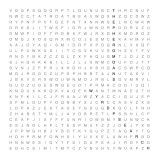
Walker claims that the album’s title is an expression of his frustration at the ubiquity of people claiming things are eerie or weird / wyrd in the present cultural milieu. The artwork for the record is designed as an actual word search too, a knowing nod to how we all grapple for meaning amongst the absurdity of each day. Leaning into ‘weird’ as a coping mechanism is not on The Pheromoans’ agenda however. This album holds little sway with the supernatural, it’s not enough. The overriding impression given by ‘Wyrd Psearch’ is of a band renewed with ideas. There’s no trouble finding the right words, they’re hitting their mark, keeping up with the commentary. ‘Wyrd Psearch’ is a document of The Pheromoans mastering their unquiet moment.
Blending sounds of early 70s Funk & Soul, Latin-Jazz, and Afrobeat, Mestizo Beat kicks the year off with a heavy dose of new material. First up is “She’s A Rose b/w Lotsapapa,” their next 45, offering two sides of masterful instrumental soul music written & produced by The Magaña Brothers out of their hillside studio, Spc 166 in Topanga, CA. Side A’s “She’s A Rose” takes us back to the golden years of the Blaxploitation film genre and the soundtracks we have grown to love. This song was inspired by the compositional and orchestral arrangements from the greats, such as Curtis Mayfield’s “Superbad,” Johnnie Pate’s “Shaft in Africa,” and Bobby Womack’s “Across 110 Street.” Featuring Tim Felten of Surefire Soul Ensemble on keys, with horns written and arranged by Jesse Audelo, Mestizo Beat takes the listener on an evolving journey, exploring the mood and cinematic elements of flute, saxophone, and wha’d-out guitar, topped off with a funky drum and percussion break. On the flip, “Lotsapapa” rounds out the B-Side, blending the musical styles of Latin and Nigerian disco-funk into a track that’s perfect for the dancefloor and those late nights out. Written about Bernard “Lotsapapa” Crowe, a notorious drug dealer who survived an attempted murder by Charles Manson, this side is sure to get the body moving with the afro-disco rhythms and chant vocals, dubbed out around a tightly arranged horn section written and arranged by Jesse Audelo and Jason Cressey. “Lotsapapa” features guests Steve Haney from Jungle Fire on Percussion and Cressey of the True Loves on trombone.
With each side highlighting the various talents of the ensemble, Mestizo Beat always stays true to their sound and recording techniques. Both tracks are mixed by Sergio Rios at Killion Sound and are featured on the forthcoming LP, Jaraguá, coming mid-2024.
Burn Out - the latest release from Mini Trees - is a defiantly euphoric EP with the sonic and emotional bandwidth of a full-length record packed neatly into five new songs from Los Angeles-based songwriter Lexi Vega. Inspired by a relentless touring schedule that followed the release of her 2021 debut album Always In Motion, the songs of Burn Out confront questions of identity, exhaustion, and how to navigate creating art in an industry fixated on commodifying it.
A month away from music sparked Vega’s creativity and inspired her to return with long-time friend and producer Jon Joseph. Together they determined to push the limits of Mini Trees’ “bedroom pop” description, opening the door to a number of new
collaborators - keys from Zac Rae (Death Cab for Cutie, Lana Del Rey), arrangements from James McAllister (Sufjan Stevens, Taylor Swift), and even bass from longtime family friend Jimmy Johnson (James Taylor, Phil Collins). These songs shimmer in production, even as they’re saturated with the pervasive sense of fractured identity, disillusionment, and otherness that has shaped much of Vega’s sense of self. The overwhelming weight of these disparate identities is reflected in the EP’s cover art - a bed cluttered with clothes she’s chosen not to wear, familial heirlooms and mementos strewn at her feet.
For a long time, the music of Congo-born Bony Bikaye had to be sought in the purgatory of "world music", where diamonds in the rough cohabited with bland nightmares of white dudes who froze rumba like fish sticks. Worse, they did put it on the menu, when so many longed to move on. Take Bikaye, who grew up listening to modern european music, digs Krautrock, struggles with tradition, obviously looking for trouble in the genre. In Brussels, he recorded a few albums with CY1 (Loizillon/Micheli), and brilliant defectors from Aksak Maboul, produced by Hector Zazou. Now it's up to french trio TONN3RR3 to take up the torch and build this project that proudly brags: "It's a bomb". Thought up at home by Guillaume Gilles (compo/keyboards), the album was finished at One Two Pass It studio, with Olivier Viadero and Gae"lle Salomon on percussion, Yoann Dubaud (machines & bass) and Guillaume Loizillon (synth of CY1 fame, and matchmaker of this affair). It's a deeply musical record, crafted by no-attitude reference players with nothing left to prove, and you can hear it. Floats well above the fray. "Keba na butu", beware. Indeed : beyond the simple pleasures of soukouss, or the rumba guitar riff that spins like a merry-go-round that skipped technical inspection, lie lush orchestrations. Freestyle, synthetic : something old, something new, something what-the- fuck-is-that-now. There's straight, there's syncopated, there's 808 and knee-jerk inducing bass patterns_with a vision. BIKAY3 plays his voice more than ever. His crazy vibrato has improved like hard liquor over the years. In "Zela" and "Balobi" in particular, he puts it to good use with flamboyant, Screamin' Jay Hawkins-style antics. He can also resort to pure storytelling : "La fore^t et les dieux", is a French-spoken excursion into the wild, moving along in grasslands of synths and percussion with TONN3RR3. A tale of gods and spirits, plain and simple. Nicole Mitchell brings the occasional flute in "Akei" for this trip in the bush of ghosts where lingala and kikongo rub with English and French. They saved "It's a bomb" for the end, a bastardized rumba, with rimshots that slap like a cool hand on willing skin. We're living in a golden age of reissues coming out in droves and satisfying our desire to catch up on our neighbors' musical heritage, but let's not miss the boat : it's now or never to listen to the music of the living. - Halory Goerger
Best known for his work for legendary Thai director Apichatpong Weerasethakul (he even designed the enigmatic “bang” in 2021’s labyrinthine ‘Memoria’), Japan’s Koichi Shimizu has been honing a unique musical language since the early ‘90s, where some of his earliest material can be found on a split LP with Yoshiteru Himuro via once-iconic imprint Worm Interface (itself home to music from Autechre side-line Gescom). ‘Imprint’, was initially released quietly back in 2021 and has been remastered for this new edition, removing one track and bumping it up with four more, making it all available on vinyl for the first time.
The album offers a perfect overview of Shimizu’s broad palette, ranging from fine-wrought keys to electronic brutalism and guttural rhythmic pulses, plotted with an underlying narrative cadence that evinces his ability to heighten the impact of moving image, whilst also colouring the imagination with ephemeral sound imagery. His tekkerz are in bracing, anticipatory effect on a retooled, expanded version of his music from ‘Memoria’ within the convulsive, swarming silhouette of ‘Imprint’, and ‘The Path’ finds his aural accompaniment to ‘Uncle Boonmee...’ given room to breathe and develop into an unexpected, OOBE-like experience. In ‘Moth’ he magnifies and anthropomorphises a winged insect with finely chiselled technical nous, and his exquisite arrangement to ‘Faded Sign’ is somehow comparable to the ephemeral emotional register of cinematic collaborations between Ryuichi Sakamoto and Carsten Nicolai.
Acclaimed Japan “minyo footwork” duo WaqWaq Kingdom - aka Shigeru Ishihara (DJ Scotch Egg / Seefeel) and Kiki Hitomi (ex-King Midas Sound) - return with feverishly joyous new album Hot Pot Totto, a bubbling hot pot of dance music that responds to ecological anxiety.
“Two words are conjoined: hot pot and ottotto,” vocalist Kiki Hitomi tells us. “Ottotto is the Japanese equivalent of “oops”, or said when someone nearly falls over but manages to get their balance back: “it was dangerous but now we are safe!” Combined with the heady brew of their musical styles (“like a psychedelic Nabe hot pot: melting traditional Japanese Minyo with Jamaican dancehall, footwork, dub, techno, tribal polyrhythms and Super Nintendo soundtracks”), producer Shige Ishihara’s time in East Africa working with local musicians, and the dayglo hallucinogen of the duo’s visual aesthetic, WaqWaq Kingdom’s thumping, thrilling, irresistible third release is a unique ride.
Thematically - despite its ostensibly celebratory impact - Hot Pot Totto addresses the world’s grave ecological state. “Now our earth is on the way to catastrophe, as global warming becomes a serious problem through humanity’s fault. We are on the edge,” Hitomi writes. “We need to get back on the right track.” The ottotto of the album title refers to this experience - the need to get back on track. However, this is not lamenting music: it is fiercely defiant, full of colour and rapture, maintaining an optimism that we can.
Opening single “Hakke Yoi” ties treated voice, a floor-shaking beat, and a dizzying, transforming colour palette to a heart-quickening BPM. The track is named after the traditional cry of a sumo wrestling match, shouted by the referee to maintain tempo, commonly translated as “put some spirit into it!” The lyrics refer to humanity’s sacrifice of our planet for our own material gains. Later, key track “Buri Buri” features Ugandan experimental dance producer Catu Diosis and centres around the lyric “Turn disaster to our advantage / good fortune and happiness will come to those who smile,” offering not regret but encouragement and empowerment with its neon alien sonics and relentless vibrancy.
Kiki Hitomi was formerly a member of Ninja Tune / Hyperdub’s King Midas Sound (along with The Bug and Roger Robinson), and co-founded iconic Japanese dubstep-noise duo Dokkebi Q. She is also a celebrated illustrator and designer, having created artwork for countless record sleeves (including this one) and brands. Shigeru Ishihara - aka DJ Scotch Egg - has been orbiting the dance music galaxy for over a decade, releasing radiantly unpredictable solo records through Lightning Bolt’s Load Records, as a member of Warp Records’ legendary Seefeel, and performing with both projects across the world. He recently undertook a residency at the Nyege Nyege Villa in Uganda, working with Phantom Limb alumnus MC Yallah. More recently, Ishihara has been releasing music under the guise of Scotch Rolex, collaborating with the likes of Shackleton, Swordman Kitala, Lord Spikeheart and more.
Hot Pot Totto is WaqWaq Kingdom’s third release for Phantom Limb, following the rapturously received album Essaka Hoisa in 2019 and follow-up EP Dokkoisho in 2020. The band recently performed at the label’s sold out 5th anniversary event in London, setting an ecstatic venue alight with energy.
f B1 Buri Buri feat. Catu Diosis
B2 Recordings hits release number 13 with DJ Rocca and Lex combing on a trio of fresh house cuts that blend elements of disco, Latin and soul. Up first is the glorious 'Solid Street' which has loose and percussive disco-house grooves overlaid with big synth energy and steamy vocals. 'Solar System' is slower and deeper, with a more rugged bassline and low slung sense of funk that never lets up. 'Last of all, 'Rose Tree' is a ramshackle house arrangement with whistles, Rhodes keys, tin-pot percussion, florid flutes and plenty of sunny energy all making it a real standout. A timeless EP packed with musicality.
Marcello Cassanelli is back on Ten Lovers Music after previously appearing on TLM030 with the incredible track Fantasia. This time Marcello delivers a fantastic 7″ project for us with two superb tracks where he plays keys, bass, percussion and drum programming himself. He also wrote, produced and mixed both the tracks.
On the A side Espresso is an uptempo number showcasing Marcello’s trademark sound just superb music which carries on with the AA side They Groove which slows the tempo down but still keeps his unique sound running throughout the track. An exciting release to start 2024.
Released in 1960, Giant Steps was a watershed album for John Coltrane, solidifying the saxophone legend's reputation as one of the most influential and innovative musicians in jazz history, as well as delivering jazz to an increasingly mainstream audience, while garnering significant critical acclaim.
Although this was John Coltrane's debut for Atlantic, he was concurrently performing and recording with Miles Davis. Within the space of less than three weeks, Coltrane would complete his work with Davis and company on another genre-defining disc, Kind of Blue, before commencing his efforts on this one.
Coltrane (tenor sax) is flanked here by essentially two different trios. Recording commenced in early May of 1959 with a pair of sessions that featured Tommy Flanagan (piano) and Art Taylor (drums), as well as Paul Chambers — who was the only bandmember other than Coltrane to have performed on every date. When recording resumed in December of that year, Wynton Kelly (piano) and Jimmy Cobb (drums) were instated — replicating the alternate non-Bill Evans lineup featured on "Freddie the Freeloader" on Kind of Blue, sans Miles Davis of course. At the heart of these recordings, however, is the laser-beam focus of Coltrane's tenor solos.
All seven pieces issued on the original Giant Steps are Coltrane compositions. He was, in essence, beginning to rewrite the jazz canon with material that would be centered on solos — enabling the solo to become infinitely more compelling. This would culminate in a frenetic performance style using melodic phrasing that noted jazz journalist Ira Gitler accurately dubbed "sheets of sound."
The Giant Steps chord progression consists of a distinctive set of chords that create key centers a major third apart. Jazz musicians ever since have used it as a practice piece, its difficult chord changes presenting a "kind of ultimate harmonic challenge", and serving as a gateway into modern jazz improvisation. Several pieces on this album went on to become jazz standards, most prominently "Naima" and "Giant Steps."
The Penguin Guide to Jazz selected this album as part of its suggested "Core Collection" calling it "Trane's first genuinely iconic record." In 2003, the album was ranked No. 102 on Rolling Stone magazine's list of The 500 Greatest Albums of All Time, 103 in a 2012 revised list, and 232 in a 2020 revised list.
Undeniable music perfection deserves definitive sound and top-notch packaging. This reissue was mastered directly from the original master tape by Ryan K. Smith at Sterling Sound and cut at 45 RPM. Pressed on 180-gram vinyl at Quality Record Pressings, and housed in tip-on old style gatefold double pocket jackets with film lamination by Stoughton Printing.
Overall, Giant Steps is not only a critical triumph but also a defining moment in John Coltrane's career. Its innovative compositions, masterful performances, and profound influence on jazz make it an essential entry in Coltrane's discography and a timeless masterpiece in the history of the genre.
Paice Ashton Lord hatten einen kurzen, aber dafür spektakulären Moment in der Geschichte des Rock'n'Roll.
Es gab großes Getöse in der Musikpresse als Drummer Ian Paice und Organist Jon Lord nach der unschönen Auflösung von Deep Purple eine neue Band zusammen mit Tony Ashton (Vocals, Keyboards) aufmachte.
Ein Album, einen verpatzten TV Auftritt, eine Tour und ein nie vollendetes zweites Album später endete die Geschichte von PAL im Jahre 1978 auch schon wieder. Eine Geschichte, die es wert ist, noch einmal zelebriert zu werden.
Mit einer Fusion aus Rock mit Big Band Swing, Blues und Funk bietet »Malice In Wonderland« treibenden Feel Good Rock vom Feinsten.
We have been really liking what we've heard from the Dolphin label out if the US of late. Now we get a taster of an upcoming album from Blaque Dynamite with a second single from it. Beka Gochiashvili features on keyboards and synthesizers throughout the cut. The Stefan Ringer remix is a wet and funky mix of jazz, house and experimental sound. It has a sleazy sense of vocal naughtiness to it with shuffling broken beats and rich layers of percussion. The original is an organic and loose-limbed deep house vibe and Ben Hixon brings a little more edgy tech to the drums.
Warehouse Find!
A true studio visionary and son of Incognito's Jean-Paul 'Bluey' Maunick, Daniel Maunick virtually grew up behind the mixing desk and worked his way through the scenes of drum n' bass, acid-jazz, disco, samba, deep house and beyond. As Far Out's in-house producer his work is a key component in the consistency and transience of the label's sound, with key albums include Azymuth's Fênix, Marcos Valle's Estatica, Sabrina Malheiros' Dreaming and Far Out Monster Disco Orchestra. His latest credit on the catalogue is the next chapter of his Dokta Venom alias, Moodswings.Each track brings you a visceral dancefloor experience both sonically and structurally. Opener 'See the Sun' evokes an elevated, cloudy ether, with each kick drum another step up to the sky. Title track 'Mood Swings' deploys components of broken beat, garage, house, IDM and boogie, but shrouds them into a hazy deepness, like a dream through Maunick's musical memories. Whilst keeping the same intensity, 'I Owe u Something' ups the tempo and swings the mood. Propulsive percussion blurs the acoustic with the electric, glowing synths and anguished vocals formulate this eruptive full-floor belter that lodges somewhere in between early Pepe Bradock and Azymuth.With a solo album from Azymuth drummer Ivan 'Mamao' Conti, a collaboration between Sean Khan and Hermeto Pascoal, along with a long awaited new record from Sabrina Malheiros, 2017 is set to be an exceptional year for Maunick and Mood Swings is an inspired prelude of things to come.
Standard EP[18,45 €]
Warehouse find!
Three major players from the now multi-generational broken beat scene: Henry Wu, Dego (2000black) and IG Culture have assembled for an irresistible late summer bruk-samba trip.Brazilian rhythms have always been foundational influences on the broken-beat and future jazz movements, and this EP continues to explore these connections, a running theme throughout Far Out's 23 year history with Seiji, Mark Pritchard, Afronaught, Domu, Da Lata and Jazzanova being just a few of the names to have contributed to this particular avenue of the label's pantheon of dance music.The joyful samba-soul in the title track of Sabrina Malheiros' latest album features the bass and keys of Brazilian Jazz-funk legends Azymuth, and is inspired by the quest for clarity in the face of difficult times, Clareia in Sabrina's own words means to clear, light, brighten or illuminate'. But this remix EP beautifully ruptures the 'clarity' in style, each crafting the breezy Brazilian beats into their own distinct brand of future-thinking club-funk... these beats were made to be broken!
Felix Machtelinckx is a singer, composer, producer and lyricist from Belgium. Featuring an array of film scores, dance soundtracks, pop, folk and electronic music, Felix's music resonates with a familiar, almost nostalgic patina, applied with a distinctly crooked touch. Through artistic collaboration, coaching and production, Felix has cut a dash in the pop and indie cult scenes of Belgium, especially with his band Tin Fingers, who are feted as one of the most promising indie acts of the moment. Night Scenes, Felix’s solo debut is, in contrast to his other work, more humble and less traditional, roughly hewn from a series of ambient soundscapes, earthy textures and playful structures. Felix’s voice, normally the flagship of his music, becomes more of a distant memory, an indistinct emotion feathered throughout the music. Many lyrics are improvised, sometimes unintelligible, conjuring haunted, uncertain undertones. Similarly, the album is innately peripatetic to the core, being created, written and recorded in Lithuania, Belgium, France, mastered in the US, and finally released in the UK. In the first instance, some of the tracks were created for the contemporary dance piece Doggy Rugburn by Brandon Lagaert of Kaiho and Peeping Tom; others were created enigmatically for a film that never surfaced; while the remainder are the product of more personal work and research. As Felix began to collect and review these disparate parts, the concept of a unified album began to evolve. With 'night' featuring as a suitably dark leitmotif, or backdrop to a series of emotionally fraught 'scenes', each track depicts a form of trauma, locked within the confines of the mind. Felix observes: "Imagine yourself in a dusty old room unable to sleep. Emotions, fears and other demons haunt your mind. This in-between state makes your mind reach for other worlds. This is Night Scenes." For the most part, Night Scenes was created using a variety of old, and rare, analogue equipment. With almost no digital editing, the record was primarily mixed through a vintage cassette desk, giving it a nostalgic character with a noisy undertone. Felix fully embraced the synergy of his emotional themes and retrograde gear, enthusing: "A lot of textures were created on an old Soviet synthesizer that causes a blackout when you hit the lowest note on the keyboard. The dysfunctionality of the synths was often used to create rhythm and texture." This unnerving ability Night Scenes has to comfort and confound the listener is summed up by Jordan Hudson, House Of Media producer, and music podcaster, when he concludes: "Some songs on the album have this sort of fleeting comfort and tonality, which dissolves into a subtle rhythmic/structural or modulated disarray the moment I settle into them - this really fits with my experience of the night .. This record is a winner, and will be something I'll listen to a lot from here on