Smos & Baby Bee: Party Flyers And More. Reminiscences Of A Unique Era In Belgian Nightlife Culture. (1993–2010)
Throughout 326 flyers and many stories from the personal archives of Baby Bee, Smos and a bunch of friends and fellow DJs, the story of the legendary duo was recreated.
Sad news shook up our scene in April 2020: Smos had passed away. Aged 53, the Antwerp based DJ was a key figure of our Belgian nightlife scene. As yin to yang, Smos was connected to Baby Bee. The inseparable duo - who have been lovers as well - has rocked dance floors all over Belgium and abroad for 20 years of which 18 as resident DJs in Café d’Anvers and four in the Motion room in Fuse in Brussels. Having started their DJ career in the early nineties,
their story is closely linked with the beginnings of Belgian DJ culture and the electronic music scene.
Smos & Baby Bee were prominently rocking the electronic music scene since its dawn, shortly after the infamous second summer of love in the UK during the late 1980s and the rising of a new youth culture, a pivotal point in music history when under the spell of XTC a large audience became enthralled by the exciting new style of music coming from American cities such as Detroit and Chicago. They were DJing all over Belgium and through their genuine approach and straight forward mentality bringing together scenes from Brussels, Ghent, Antwerp or Wallonia. They were a DJ duo, a constellation nowadays well known but at the time truly rare. And not to forget, Baby Bee was a female acting in a mostly male world.
The visual archive presented in this publication generates an important cache of a creative culture that has been going through ups and downs, but is still very much alive and kicking to this very day. The book wishes to commemorate Smos, who is missed by many and remains in our hearts forever.
Written by Koen Galle
Flyers photographed by Baby Bee from her and Smos’ archive
Photography by Benoit Meeus, Jockum Klenell, Baby Bee & Jamila De Backer
Designed by Otis Verhoeve
Search:b key
- A1: Sleepwalking
- A2: Ashes Ft Rider Shafique
- A3: Freedom Of Speech Ft Prynce Mini
- A4: Skullz & Bonez Ft Gardna & Mādły
- A5: Cool & Deadly Ft Solo Banton
- A6: Dead! Ft Killa P & Jman
- B1: Weeper's Lament
- B2: In The Night Ft Charli Brix & Gardna
- B3: Tira Ft Nãnci Correia
- B4: Loving Cause Ft Catching Cairo
- B5: Living People Ft Joe Yorke
- B6: End (Operator)
“Solid foundations of polished drums and deep sub bass are coloured with moody, cinematic melodies and intricate effects” - begins to unearth the futuristic sounds of KREED.
Based in Bristol UK, his signature sound is commonly interpreted as contemporary sound system music, as first and foremost it fully delivers that essential low end needed to generate waves in the dance whilst making regular visits down some well trodden paths across a wide scope of genres. As we move forwards through KREED’s soundscape, we find that each track cleverly hooks you in with a combination of theatrical songwriting, dynamic arrangements, twisting melodies and naturally intricate production values. Imagine an orchestra playing Casio keyboards to a silent movie set in the Wild West but filmed in Bristol - or something like that. KREED dreams up a world for his music to exist in, with each track being complete with scenery, characters and a story to tell.
Dennis Quin returns to his own self-titled imprint with the ‘Temptation’ EP, comprised of four sturdy original House cuts from the Dutch producer and DJ.
Throughout the past decade, Dutch artist Dennis Quin has amassed widespread support from many leading figures in the underground house scene through material on the likes of PIV, Cecille, Defected, Jerome Sydenham’s Iconic Ibadan and Kaoz Theory, as well as collaborating with the latter label’s founder, Kerri Chandler, and yet another icon of House, Todd Terry amongst others. Here though, Dennis tips the focus towards his own label to deliver more of his raw grooves, crisp beats, and bouncy bass lines.
Title-track ‘Temptation’ leads and lays down a choppy bass line, euphoric piano keys, classic rave stabs and a hooky vocal lick alongside his signature swinging, robust drum style. ‘Ascending’ follows next and sees Quin lean towards a more percussive led feel via heavily shuffled drums, dubbed out vocal chants and twitchy stab sequences.
Opening the flip side of the EP is ‘Odessey’, this time bringing a wavey, elongated bass line into the limelight, subtly nuanced throughout for hypnotic effect while a bouncy drum workout carries the groove throughout. ‘Love Fiyaa’ then rounds out the EP on a raw and reduced tip, fusing ethereal pad swells and murky bass flutters with a stripped-back and sporadic dub vocals.
DJ Support:
Enzo Siragusa
Archie Hamilton
Chrissy
Okain
Freedom
Severino
Jimpster
Mr. V
We are happy to announce that Ruf Dug, the Mancunian record producer, radio host, and self-professed video game freak is the latest artist to climb aboard the Pinchy train.
Well known for his kaleidoscopic approach both in the DJ booth and in the studio, Ruf Dug has touched on genres as diverse as street soul, vaporwave, and acid house over the years. He has released material on labels such as Rhythm Section, Klasse Wrecks, and his own Moodymann approved Ruf Kutz.
For his Pinchy & friends’ debut (there's a 6-song EP in the works as well) the NTS radio host distils some of these aforementioned influences and presents a two-track 12" that explores dub techno, Chicago acid, and atmospheric balearica.
Built around a solid, techy thud, "Thru The Night!" rides seismic bass waves and reverb-laden stabs to more tropical climes, thanks to gusts of echoed flutes and a catchy, 8-bit vocal hook.
On the flip, "I Love You" takes a minor-key synth riff and sends it off to music school for some late-night nasty dance floor bliss.
-2023 Repress-
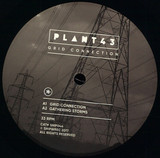
Following his acclaimed Scars of Intransigence album of 2014, Emile Facey (Plant43) is back on terra Shipwrec. On skeletal rhythm supports strings and bass intertwine, link and disappear. Facey performs audio alchemy, transforming cold chords into organic warmth, transfiguring electrical impulses into palpable emotion. Frigid currents flow through bright bars, ephemeral percussion snap at heels of soaring keys as Plant 43 draws you deeper and deeper into the bare and beautiful brilliance of Grid Connection.
A1 - Divine Intervention - ASC opens up with intent a heavy piece, thick analogue kicks thumping around the expertly crafted breakbeats, switching the pace effortlessly as the backdrop melodies float along with some trademark vocal hits. ASC once again proves himself to be a true master of his craft, delivering an emotive, powerful track that's both technically impressive and emotionally resonant.
A2 - Variable State - Changing the pace we see ASC introduce an edgy, nervy energy to Variable State, combining classic breakbeats more modern beat accompaniment before a catchy wavy key melody overtakes. Soon the anxious vibes pull us back as Variable State lives up to its name, ebbing and flowing several times before we reach our conclusion, almost serving as a commentary on modern times in old school language.
B1 - Azure - A delightful roller continues the proceedings with Azure, featuring gentle, lingering bells that craft the melody over a bed of deep, rolling basslines and intricate percussion. The track is both uplifting and introspective, perfect for late night listening while the rain dots the window and you gaze out into the twilight hours.
B2 - Loose Ends - Tying things up for the EP we have Loose Ends, opening with off-beat breaks and FX, slowly enveloped by haunting synthwork. Soon the intense, moody bassline notches up the intensity before the track does a 180 and an uplifting rhythmic key melody provides some respite. The creepy ambience returns soon enough, completing this curiously cohesive creation in style.
Stoned Part I was the first self-released album from lost soul phenomenon Lewis Taylor. His third album proper, it was initially released on his own label Slow Reality in 2002 and it's been licensed to Be With for this long-awaited double LP release, its first ever vinyl edition. The songs are varied, hook filled and outstanding. Beloved by his legions of diehard fans, it's nothing short of a masterpiece.
After parting ways with Island, and without a label deal, Lewis went back to his home studio and began to record Stoned Part I in 2001. Co-written and co-produced with longtime collaborator Sabina Smyth, Lewis sings and plays all the instruments on this beautiful, emotional and very human album. It represents Lewis at his most accessible and finds him in the middle ground between his two Island releases. In some ways, Stoned Part I distills the best of his musical sensibilities. The flawless production is dense, layered and very early-2000s slick. The bottom end is thick, funky and sexy.
The complex, proggy-soul of title track "Stoned" opens the album and instantly captivates. Deep swinging funk with truly sweet soulful vocals, complemented by wah-wah guitar and swelling acidic synths. As Lewis himself told us, the ad libs at the end of the track were a nod to Paul McCartney at the end of "Hey Jude". Fan favourite "Positively Beautiful" has shades of Curtis and Marvin; its richly layered harmonies propelled by a simple, metronomic click-track that gives way to a more fully fleshed beat for the magnificent coda.
The slow, sweeping majesty of "Lewis IV" is all moody atmosphere, featuring dense, richly textured music and heavenly multi-tracked harmonies. The stop-you-in-your-tracks incredible "Send Me An Angel" could have been a huge AM radio hit, beautifully crafted sophisticated soul-pop songwriting in the vein of the very best Sade records. Yep! *That good* The smooth, psychedelia-lite "Til The Morning Light" is a gorgeous, sun-dappled love song, layered with Lewis' distinctive honey drenched vocals and, again, the type of record you could've easily heard all over the radio at the time of initial release.
The remarkable, wide-eyed "Shame" packs so many shifting styles into one song, it has to be heard to be believed. Opening in a laconic, breezy style, not unlike a Dallas Austin or Rodney Jerkins produced R&B hit of the day, it morphs into a heavy psych-soul Soulaquarians wig-out (the solo bearing an uncanny resemblance to Carlos Santana’s on "She’s Not There") before elegantly sliding into string-assisted symphonic soul and then back around again. And again. Sheer brilliance. The sublime, gentle head-nod funk-soul of "When Will I Ever Learn" (Part 1) is a strikingly well-turned-out tune, a neat, sweet bass-driven guitar-soul jam that ensures our jaw won't be leaving the floor anytime soon. "Lovin’ U More" sounds like a classic turn-of-the-century Neptunes production, the likes of which they'd lay on for JT BITD. A Latin-tinged groover with more than a little Nile Rodgers-driven slick funk stylings, it's yet another instant Lewis bomb with those gorgeous harmonies and chart-friendly irresistible key-changes to boot. Another indisputable (non-)HIT!
The funky seductive swagger of "From The Day We Met - Part II" opens the final side of wax, giving way to the gigantic buzzing synth-funk beast "Lovelight", a track so insouciantly mighty it should have been a massive hit for someone. Wait, what's that? Robbie Williams covered it? Ah, OK, well, I guess that says something about the effortless pop genius contained within. Containing a seemingly unnoticed nod to Kraftwerk’s "Computer World", it's Lewis's favourite song on the album. It's easy to hear why: "Sabina’s production totally nails it. I love the restraint and the subtlety, and that mixture of warmth and sweetness from the singing against the slightly cold, yet beautiful airy-ness of the backing track." To close this phenomenal album, the twisted electronic soul of "Sheneverdid" marries Lewis's beautiful falsetto to his virtuoso playing and an easy-cum-ominous musical backdrop. Stunning.
Simon Francis’s vinyl mastering, approved by Lewis himself, presents the eleven tracks over a double LP so, as ever, it sounds sensational. The records have been cut by Cicely Balston at Air Studios and pressed at Record Industry. Allow Lewis Taylor to get you Stoned.
- Celebrating 20 years since the release of ‘Neon Nights’
- ‘Neon Nights’ saw Dannii Minogue enter her imperial pop phase, with four consecutive UK Top Ten singles and UK Club Number ones
- The album entered the UK Top 10 and reached Gold Sales
- This picture disc features the Official Bootleg Edition track listing, with 2 key mash-up versions following the trends of the day. The CD+DVD with bonus track, music videos & BBC performances
- Begin to Spin Me Round mashes Dannii’s I Begin To Wonder with Dead or Alive’s Number One hit You Spin Me Round (Like A Record)
- Don’t Wanna Lose This Groove mashes Dannii’s Don’t Wanna Lose This Feeling with Madonna’s Into The Groove, her first formally approved sample usage
- Features new mash-up artwork by Argentinian graphic artist and collagist Molokid
Für Fifth Angel-Fans oder Fans von melodischem Power Metal ist dieses Album einfach ein Muss. Die Texte und Themen der letzten Trilogie der Fifth Angel-Alben werden zu einem doppelten Konzeptalbum verwoben, das sich in die Reihe von Helloweens "Keeper of the Seven Keys", Pink Floyds "The Wall" oder Queensryches "Operation Mindcrime" einreiht: "When Angels Kill" ist ein Paradebeispiel für "All Killer No Filler" US Metal. Jeder Song ist ein eigenständiges Werk, und die Doppelvinyl-, CD- und Digitalversionen sind fast siebzig Minuten lang. Fifth Angel melden sich nach ihrem gefeierten "The Third Secret" (2018) mit einem Paukenschlag zurück, der herausragende Tracks wie "When Angels Kill", "On Wings of Steel", "We Are Immortal", "Resist The Tyrant" und "Empire of Hate" zu bieten hat.
Extrem melodischer, eingängiger und makelloser Metal für Fans von Queensryche, Judas Priest und Metal Church ist, was FIFTH ANGEL auf dem Titeltrack ihres vierten Werks "When Angels Kill" liefern. Obwohl die Band in den 80er Jahren gegründet wurde, ist Retro nicht das, was diese Jungs wollen. Das hier ist zeitloser, kraftvoller Metal in seiner besten Form!
Clear Vinyl[27,69 €]
Strut presents an exclusive new collaboration between UK jazz keyboardist Greg Foat and Venetian ambient / electronic maestro Gigi Masin on ‘Dolphin’.
Recorded remotely during 2021-2022 the album took shape in the form of mutual compositions, gradually developed and embellished online. Final recording sessions took place at the majestic Chale Abbey Studios on the Isle Of Wight with Moses Boyd (drums), Tom Herbert (bass) and Siobhan Cosgrove (flute, clarinet) adding elements to several pieces. Tracks include the reflective, wistful single ‘Viento Calido’ and drifting ambient piece ‘Sabena’, a beautiful tribute to Gigi’s wife who sadly passed away during 2022.
Greg Foat has recorded prolifically in recent years for Athens Of The North, Jazzman and Strut including acclaimed albums Symphonie Pacifique (2020) and The Mage (2019). Best known for his 1986 ambient masterpiece Wind and as a member of Gaussian Curve, Gigi Masin has enjoyed a revival in recent years through his Calypso album on R&S’s Apollo label and renewed touring. Dolphin represents Greg and Gigi’s first landmark recording collaboration together. “I first heard Gigi’s album Wind in 2016,” remembers Greg. “I was living in Miami and I heard it playing one Summer evening Since then, it has always been in my mind to be able to record together.”
Black Vinyl[22,27 €]
Strut presents an exclusive new collaboration between UK jazz keyboardist Greg Foat and Venetian ambient / electronic maestro Gigi Masin on ‘Dolphin’.
Recorded remotely during 2021-2022 the album took shape in the form of mutual compositions, gradually developed and embellished online. Final recording sessions took place at the majestic Chale Abbey Studios on the Isle Of Wight with Moses Boyd (drums), Tom Herbert (bass) and Siobhan Cosgrove (flute, clarinet) adding elements to several pieces. Tracks include the reflective, wistful single ‘Viento Calido’ and drifting ambient piece ‘Sabena’, a beautiful tribute to Gigi’s wife who sadly passed away during 2022.
Greg Foat has recorded prolifically in recent years for Athens Of The North, Jazzman and Strut including acclaimed albums Symphonie Pacifique (2020) and The Mage (2019). Best known for his 1986 ambient masterpiece Wind and as a member of Gaussian Curve, Gigi Masin has enjoyed a revival in recent years through his Calypso album on R&S’s Apollo label and renewed touring. Dolphin represents Greg and Gigi’s first landmark recording collaboration together. “I first heard Gigi’s album Wind in 2016,” remembers Greg. “I was living in Miami and I heard it playing one Summer evening Since then, it has always been in my mind to be able to record together.”
Nach ihrem Hit 'Funky Worm' verließen die Ohio Players Westbound Records und ihr Keyboarder und Sänger Junie verließ die Band. Es folgte eine Solokarriere, die weniger kommerziell aber musikalisch faszinierend war. Er nahm drei Soloalben für Westbound auf, wobei 'When We Do' das Debüt 1975 war, das nun erstmalig als LP (klassisch Black Vinyl) wieder aufgelegt wird. 'When We Do' enthält Junies einzigartigen Mix aus Funk und Soul, einschließlich des Klassikers 'Tight Rope' und des Titeltracks, später gesampelt von Lyrics Born.
Die beliebte Band Bright Eyes mit der dritten Welle von Veröffentlichungen im Rahmen ihres laufenden Companions-Reihe. Das Projekt sieht vor, dass die Band ihren gesamten Katalog neu auflegt, wobei jedes Originalalbum von Neueinspielungen begleitet wird. Diese Companion EPs enthalten dazu Gastauftritte von Johanna and Klara Söderberg (aka First Aid Kit), Gillian Welch und Alynda Segarra (Hurray For The Riff Raff) sowie eine Coverversionen von "Wrecking Ball" von Gillian Welch. Eines der Dinge, die Conor Oberst auffielen, als er und seine Band durch mehr als zwanzig Jahre Musik gingen, war, dass er vielleicht tatsächlich die ganze Zeit über denselben Song geschrieben hat. Natürlich nicht klanglich, aber konzeptionell. Diese letzte Welle enthält mit Noise Floor frühe Bright Eyes-Songs, die so roh sind, dass Oberst sie damals nicht direkt veröffentlicht hat, sowie mit Cassadaga und The People's Key die ausgefeiltesten und anspruchsvollsten Alben der Band. Als Bright Eyes mit Cassadega auf Tournee gingen, spielten sie 7 ausverkaufte Abende in der Town Hall in New York. Was gibt es Erwachseneres als einen Rockstar? Und doch ... "Thematisch unterscheiden sich diese frühen Songs gar nicht so sehr von denen, die ich jetzt mache", sagt Oberst und schüttelt den Kopf. "Es hat etwas Bestätigendes und Entmutigendes an sich. Man fragt sich: Habe ich mich wirklich verändert oder bin ich gewachsen? Aber vielleicht liegt es auch nur daran, dass ich von Anfang an wusste, worüber ich schreiben wollte. Es war eine interessante Reise, all diese alten Songs wieder aufzugreifen und neu zu interpretieren."
Die beliebte Band Bright Eyes mit der dritten Welle von Veröffentlichungen im Rahmen ihres laufenden Companions-Reihe. Das Projekt sieht vor, dass die Band ihren gesamten Katalog neu auflegt, wobei jedes Originalalbum von Neueinspielungen begleitet wird. Eines der Dinge, die Conor Oberst auffielen, als er und seine Band durch mehr als zwanzig Jahre Musik gingen, war, dass er vielleicht tatsächlich die ganze Zeit über denselben Song geschrieben hat. Natürlich nicht klanglich, aber konzeptionell. Diese letzte Welle enthält mit Noise Floor frühe Bright Eyes-Songs, die so roh sind, dass Oberst sie damals nicht direkt veröffentlicht hat, sowie mit Cassadaga und The People's Key die ausgefeiltesten und anspruchsvollsten Alben der Band. Als Bright Eyes mit Cassadega auf Tournee gingen, spielten sie 7 ausverkaufte Abende in der Town Hall in New York. Was gibt es Erwachseneres als einen Rockstar? Und doch ... "Thematisch unterscheiden sich diese frühen Songs gar nicht so sehr von denen, die ich jetzt mache", sagt Oberst und schüttelt den Kopf. "Es hat etwas Bestätigendes und Entmutigendes an sich. Man fragt sich: Habe ich mich wirklich verändert oder bin ich gewachsen? Aber vielleicht liegt es auch nur daran, dass ich von Anfang an wusste, worüber ich schreiben wollte. Es war eine interessante Reise, all diese alten Songs wieder aufzugreifen und neu zu interpretieren."
Since the release of Surprise Chef's 2022 album, Education & Recreation, they have been touring across the US, Europe, and Australia selling out shows and cementing themselves as a force to be reckoned with. Releasing three albums and a string of successful 7" singles since 2019, their output is nothing short of prolific and they show no signs of slowing down with the announcement of their new Friendship EP. Friendship is a six song 12" EP recorded during the Education & Recreation sessions that stands as "a humble monument to the most crucial principle of our band: that the love we share for one another is, at all times, the most important thing".
Surprise Chef holed up for a marathon of a recording session and laid down more tracks than would fit on an album. Here now, we dig in the vault from those sessions and share some absolute gems. The EP opens with "Rosemary Hemphill", a nod to David Axelrod that takes the listener through a myriad of musical changes and moods in proper cinematic soul fashion.
"Friendship Theme" is a bouncy and energetic number with an infectious and driving clavinet topline that is sure to move dancefloors around the globe. "Over The Moon" is pure mood music that puts Surprise Chef's restraint and tasteful use of space front and center while "Spiky Boi" is a frantic upbeat number drenched in percussion and keyboards.
SC have a heavy touring schedule for the rest of 2023 and will be finishing up the recording of their next album which is due out in 2024 in between runs. UK shows: May 29 Pink Room - Manchester, May 30 Village Underground – London. Also Available From Surprise Chef: Money Music 7", Education & Recreation LP / CD, Velodrome7”
Cinthie joins the Heist fam with an EP full of lush, epic house music with 3 originals and a St. David remix.
Cinthie is the kind of artist who seems to be everywhere all at once. In the past years, we’ve seen her compile a lush DJ Kicks compilation, release numerous EP’s on labels such as Aus music, run one of Berlin’s finest record stores (Elevate Records), tour the world fiercely, and create an all-new live show. Her EP for Heist has been in the works for a long, long time and it’s an absolute pleasure to finally present the ‘Music for Discotheques’ EP. Spoiler alert: It’s a no holds-back, ‘all killers, no fillers’ record. Just the way we like it.
In classic Cinthie fashion, this EP has the Berlin-based artist explore various sides of house music, starting with the vocal cut ‘Won’t u take me’. Lush pads, shuffling snares and a dreamy female vocal work together to bring a warm and classy house track with a clear nod to 90’s US house, but with its feet firmly rooted in the present.
Piano heaven takes you on an Italo-meets-deephouse excursion straight into…Drum roll…: Piano heaven. A driving 909 groove and a deceptively simple bass form the foundation of the track, but it’s the keys (and strings) that bring this track to its full peak-time potential. The energy in this track is of the ‘hands-in-the-air / screaming-out-loud’ type and it has already become one of the biggest tracks in Cinthie’s live-show.
On the flip, Cinthie explores the pacier electronic side of the dance spectrum, with the footwork inspired jam ‘Masterplan’. Think classic 808’s, loopy synths and a cheeky spoken word piece that lifts the song to a level where it’s extremely danceable and quite simply put; really fun.
The final track of the EP is the expertly crafted remix by Italian house maestro St. David; an artist Cinthie has always been a big fan of. He’s made a dazzling rework of ‘Piano Heaven’: A deep and driving deephouse version that’s layered in sweeps, fx and bleeps for an altogether mesmerizing effect.
We’re thrilled that we can share Cinthie’s music on the label and have her join the family after having played so many shows together and having spoken about doing something together for such a long time. As always, play it loud and dance, dance, dance!
Yours Sincerely,
Maarten & Lars
Die Folk-Pagan-Metal-Instanz ARKONA kehrt zurück und präsentiert ihr neuntes Album Kob‘, das am 16. Juni 2023 via Napalm Records erscheint. Ein weiteres Mal tauchen die Musiker in die Philosophien
und Zukunftsansichten von Sängerin Masha ab und rücken die moderne Gesellschaft in den thematischen Fokus.
Seit der Veröffentlichung ihres letzten Albums Khram (2018) haben ARKONA aufmerksam das Weltgeschehen verfolgt und spiegeln auf den acht neuen Tracks jeweils ein Problem der modernen Gesellschaft
als auch den Abstieg in die Hölle wider.
„Kob‘“ (DE: Die Zauberei) gräbt die längst vergessene Vergangenheit aus. Melodische Synthie-Einstreuungen und bedrohliche Gitarrenspiele untermalen die Aussage des Songs, dass die Menschheit nicht aus den Fehlern der Geschichte gelernt hat sondern in einem Teufelskreis steckt und besagte Fehler immer wieder erneut
begeht. Auf ”Razryvaya plot’ ot bezyskhodnosti bytiya” (was im Deutschen so viel heißt wie: Einer hoffnungslosen Existenz das Fleisch vom Knochen reißen) gibt sich Sängerin Masha einem emotionale Keyboard-Solo hin, das Bände spricht. Kriege, religiöse Überzeugungen und Umweltprobleme läuten die letzten Stunden ein während nachdenkliche Flöten- und akustische Gitarreneinlagen das letzte bisschen Vernunft ausdiskutieren. Obgleich Kob’ tief im Pagan Metal der frühen Tage verwurzelt ist, richtet es sich durch seine moderne Produktion und Diversität nicht nur an langjährige Fans, sondern gleichermaßen an neue Zielgruppen.
The next chapter of the Natural Information Society is here. Since Time Is Gravity, credited to Natural Information Society Community Ensemble with Ari Brown, presents a newly expanded manifestation of acclaimed composer & multi-instrumentalist Joshua Abrams nearly 15 year, 7 albums &-counting flagship ensemble. Joining the core NIS of Abrams (guimbri & bass), Lisa Alvarado (harmonium) Mikel Patrick Avery (drums) & Jason Stein (bass clarinet) are Hamid Drake (percussion), Josh Berman & Ben Lamar Gay (cornets), Nick Mazzarella & Mai Sugimoto (alto saxophones & flute), Kara Bershad (harp) & Chicago living legend of the tenor saxophone Ari Brown. Recorded live to tape at Electrical Audio & The Graham Foundation, cover painting Vibratory Cartography: Nepantla, by Lisa Alvarado. 2xLP on Eremite USA, 2xLP & CD on Aguirre/Eremite Europe. Out 14-04.
Since first developing Natural Information Society in 2010, Joshua Abrams has been gradually expanding the group’s conceptual underpinnings, its musical references & the sheer number of the group’s members. Its music is, in a sense, an expansive form of minimalism, based in repeated & overlaid rhythmic patterns, ostinatos & modality. Its roots, its scale & its meaning become clearer in time. If time is gravity, it also allows us to carry more. Having begun as fundamentally a rhythm section with Abrams’ guimbri at its core, the version here can stretch to a tentet, including six horns.
Abrams has been expanding his minimalism gradually, but he has long understood a key to minimalism’s potential: the breadth of its roots in the late 1950s & early 1960s, ranging from the dissatisfaction of young European-stream composers with the limitations of serialism to the simultaneous dissatisfaction of jazz musicians with the dense harmonic vocabulary of bop & hard bop. The former began exploring rhythmic complexity & narrow tonal palates in place of harmonic abstraction (Steve Reich’s Drumming, Philip Glass’ Music with Changing Parts; perhaps above all Terry Riley’s In C & his late ‘60s all-night organ & loop concerts); the later reduced dense chord changes to scales (signally with Miles Davis' Kind of Blue, but rapidly expanding with John Coltrane’s vast project). In the 1950s the LP record opened the world with documentation of Asian & African musics, key influences on both minimalists & jazz musicians. If John Coltrane’s soprano saxophone suggested the keening shehnai of Bismillah Khan, the instrument was rapidly taken up by two key minimalists, LaMonte Young & Riley, similarly appreciative of its flexible intonation, the same thing that kept it out of big bands.
If the guimbri, the North African hide-covered lute that Abrams plays with NIS, involves a rich tradition of hypnotic healing music associated with the Gnawa people, Abrams’ music also touches on other musics as well — other depths, memories & healings, different drones, rhythms & modes. As the group expands on Since Time Is Gravity, he has made certain jazz traditions in the same stream more explicit as well. If there is a mystical & elastic quality involved in the experience of time, both in direction & duration, you will catch it here. The parts for the choir of winds expand on the roles of Abrams’ guimbri, Mikel Patrick Avery & Hamid Drake’s percussion & Lisa Alvarado’s harmonium: at times, the winds are almost looping in the tentet version, each hitting a repeating note in turn, at once drone & distinct inflection on temporal sequence. The brilliance of the work resides in Abrams’ compositions, the NIS’ intuitive execution & in Ari Brown’s singular embodiment of the great tenor saxophone tradition, including the oracular genius of Eddie “Lockjaw” Davis, & Yusef Lateef. The three pieces by the expanded NIS featuring Brown —the opening “Moontide Chorus” & “Is” & the ultimate “Gravity”— have an immediate impact, & togther might be considered a kind of concerto for tenor saxophone. Here Brown presses almost indistinguishably from composed melody to improvised speech, getting so close to language that he might have a text. Everything here is a sign. Note the tap of the Rhythm Ace that links “Moontide Chorus” to “Is”, the attentive heart always present, even when signed by a machine. There’s a link here to the methodologies & meanings of dub music & the linear & vertical collage of beats, textures & tongues: treated with reverence, a sample of a beat-box can be as soulful, as hypnotic, as a mbira or a tamboura. If those pieces with Brown are heard as a suspended concerto, the three embrace & enfold the other works, like the sepals of a flower. That placement will also touch on the mysteries of our perception of time.
Particularly in “Is”, but elsewhere as well, a phenomenon of transcendence arises in which time appears to be tripartite, at once moving backwards & forwards & standing still. This is an act of technical brilliance certainly, but also an illumination of music’s ability to represent temporal consciousness through polymetrics. This particular listener has only heard it before in a few places, including the horn shouts & bowed basses of Coltrane’s Africa, in moments of Charles Mingus’ The Black Saint & the Sinner Lady, in certain pieces where tapes were literally running backwards, & earlier still in Dizzy Gillespie’s Cubana Be, Cubana Bop, in which the composer George Russell & conguero Chano Pozo found a music that spoke at once in the voices of Stravinsky’s Rite of Spring & the vestigial rites, rhythms & songs of the Yoruba language & Santeria religion of inland Cuba.
In Joshua Abrams’ compositions & the realization of them by the NIS, in the time of one’s close listening & memory thereof, distinctions between the “natural” & the “social”, the “quotidian” & the “transcendent” are erased, suspended or perhaps irrelevant. Consider two of the ensemble pieces, one named for nature, the other social science. In “Murmuration” the repeated wind figures of flute & alto saxophone combine with the interlocking patterns of harp, guimbri & frame drum (tar) to create a perfect moving stillness, not an imitation but a witness to the miracle of the starlings’ astonishing collective art, a surfeit of beauty that might be the ultimate defense tactic.
“Stigmergy” takes its name & concept from the Occupy movement’s Heather Marsh, who proposes a social system based on a cooperative rather than competitive models, one in which ideas are freely contributed & developed as ideas rather than an individual’s property. In its form, Abrams’ “Stigmergy” is the closes thing to traditional jazz, a series of accompanied solos by each of the wind players. However, the composed accompaniment is a radically collectivist notion: a repeated rhythmic figure, call it ostinato or riff, in which the different winds each play only a note or two of the figure, a concept both more collectivist & individualistic in its conception than any typical unison figure. It suggests another of the underlying recognitions that propel the Natural Information Society, the group as social organism, the teleology of hypnotic anarchy, all parts in place, functioning systematically, evolving & expressing itself, its nature & society, as a transformative organism.
George Lewis has described music as “a space for reflection on the human condition”. This suggests that, rather than a “distraction”, at least some music might serve as a distraction from distraction. It’s a focus, a clarity, a awareness, an external invitation to interiority, as if music itself is a model for form & contemplation, an organism contemplating for us or as us. If that is a possibility, & I am sure I have heard such musics, than this music is among them. How many of our rhythms, melodies & harmonies (cultural, historical, biological, psychic) might such music carry, translate & transform in the particulate ecstasy of our own murmuration? (Stuart Broomer, April 2022)
- 1: Stalked Through The Shadowy Vapor
- 2: Black Clouds Gather Once More
- 3: Beat Of The Mummified Heart
- 4: Ectoplasmic Refraction
- 5: Skeleton Keys In Trembling Hands
- 6: Those Crows Are Up To Something
- 7: Wandering On The Moonlit Manor
- 8: They Roam The Night
- 9: Mournful Howls Echo Across The Land
- 10: A Haunted Transmission
- 11: The Return Of The Pumpkin Witch
The 4th Pumpkin Witch album released by Deathbomb Arc, and their first non-reissue for the label. Nothing can keep the Pumpkin Witch dead for long. The Witch is back! And her web of evil is larger than ever, her vile plans call for nothing short of world domination... The Three Dark Figures have conjured up 11 new tracks of creepy cackles and crazed cacophony that create an audiological kaleidoscope of terror. An emphasis on percussion and an evident influence from goth club music blends with the horror soundtrack-fueled dark ambience of albums past, making this perfect listening for any unholy ritual or cemetery soiree. You can lock your doors, board up your windows, and say your prayers but nothing can protect you from "The Return of the Pumpkin Witch"!
Formerly known as James Lascelles’ Quartet, Talking Spirits present a unique blend of world jazz. These highly respected London based session musicians - with a very mixed repertoire - have touched audiences wherever they play. The quartet mixes up world music, folk, jazz and Anglo/Caribbean grooves, inspired by influences from all over the world.
They have honed their skills over the decades working with some of the biggest names in music, including Frank Zappa, Joan Armatrading, Lee ‘Scratch’ Perry, L Shankar, Ginger Baker, Jeff Beck, Steve Winwood, Incognito, Van Morrison, Billy Ocean, Mick Taylor and Steve Harley & Cockney Rebel.
The new Talking Spirits album ‘Hands’ will be released on Zephyrus Records early June. Tracks feature regular band members James Lascelles (various keys and percussion), Tim Herniman and former bandmates from the legendary Breakfast Band Richard Bailey (drums and percussion) and Kuma Harada (bass and guitar). Guests appearances by Tony Maronie on congas, Didier Malherbe (once of “Gong”) on duduk and sax, and the wonderful Mongolian group Andaunion, for whom James specially wrote Grasslands to feature the haunting morinhuur (horse-hair fiddle) and hoomei or overtone singing.