Anadol and Marie Klock have teamed up for a joint album, La Grande Accumulation. They met two years ago at a festival in England crowded with violent seagulls and outsider musicians. Klock being prone to barking on stage and Anadol not laughing at jokes she doesn’t find funny, they straight away had the intuition that they would meet again. And so they did, a few months later, at Anadol’s studio in Istanbul.
Today, the two Pingipung artists present the fruit of this musical friendship. La Grande Accumulation was born out of the peculiar atmosphere of the studio neighbourhood in Büyükada, an island where thousands of cats run free and humans randomly destroy things during apocalyptic times when parts of Turkey had just been turned into dust by terrible earthquakes. The French lyrics are inspired by hours of conversations, the music is consequently drenched in absurdity, overflowing with a strong urge to live and enjoy. According to the LP sticker, this album has been certified “Best handshake of 2024”, and stickers never lie.
La Grande Accumulation brings together Marie Klock's mysterious metaphors and Anadol's intriguing radiophonic psych-pop. Stretching forms beyond common sense to see how long they can resist is probably their favourite game. The result are six highly imaginative tracks that challenge the sub-3-minutes standards of Spotify pop.
Gözen Atila aka Anadol is well known to the Pingipung audience, with three solo LPs on the label. Her music follows a kind of collage logic, she interweaves countless styles, combining field and studio recordings with obscure quotation marks here and there. "I hope no one will come and explain this music to me, because it's the most beautiful music there is", says Kristoffer Cornils about her solo album Felicita.
Marie Klock is a French writer and musician who produces songs oscillating between synthpop and neo-folk, full of anarchic humour and existential dread. Her recent solo LP on Pingipung was a captivating tribute to the recently deceased poet Damien Schultz entitled Damien est vivant.
Marie Klock delivers her lyrics in song or spoken word, stream-of-consciousness musings on strange human adventures, and her rich keyboard melodies culminate in a nonchalant dialogue with the bass trombone (La Reine des Bordels). In the opulent opening piece (La Grande Accumulation), a woman is cursed to take home everything she kicks in the street; a bit later, we stumble upon a ghoul hiding in the gutter (Sirop amer), Mona Lisa loses her teeth (Sonate au Jambon) and a warthog struggles to climb the stairs of a silver tower (Sabots triviaux).
La Grande Accumulation was mixed and mastered by Jonas Romann at Chaos Compressor Club in Hamburg and cut to vinyl by Kassian Troyer at D&M in Berlin. It's an audiophile LP that invites to focus on every detail in this heap of musical ideas.
Suche:b key
We are thrilled to announce the release of "Sequoia" by Reptile on vinyl, a track that has made waves in the techno scene since its digital debut! This anthem, which has taken over dance floors and garnered support from key figures in the industry, now returns in a special edition: an exclusive vinyl release featuring the original track alongside four powerful remixes.
The remixes come from renowned artists Blasha & Allatt, JKS, Not A Headliner, and Mental Duality, each delivering their own unique take on "Sequoia." These reinterpretations bring fresh energy while maintaining the deep, driving essence that has made "Sequoia" a standout.
This release celebrates the impact "Sequoia" has had and serves as a tribute to the artists who have supported and elevated the track to new heights. Don't miss the chance to own this gem on vinyl!
No stranger to the Spatial family following the release of his excellent Age of Awareness EP back in 2023, Eusebeia brings his eclectic breakbeat driven vibes to sister label
Curvature for an EP spanning a variety of energies with a free-spirited approach to drum patterns and atmosphere you wont want to miss.
A1 Set In Motion
Shimmering melodic keys and light hi hats quietly introduce Set In Motion, as Eusebeia takes a laid back opening approach to his Curvature debut. Clean, wandering breaks enter the mix and develop continually, as a subtly used, luscious female vocal greets the listener with a curiously soothing vibe. Following the breakdown, a deep, pounding bassline punctuates skillful synthwork riddled with intrigue and atmosphere to round off
a unique, eclectic track.
A2 In Perpetuum
Stepping things up with a doggedly breakbeat focus, In Perpetuum is an energetic piece with an opening backdrop akin to an aging printer being coaxed back to life,
before an echoed vocal welcomes hyperactive, rasping breaks, edited and chopped with the scintillating talent we have come to expect from Eusebeia. The latter half of the
track changes up the vibe slightly with inquisitive padwork gliding above the omnipresent edits.
B1 Flow State
Subtle cowbell style cymbals and gentle melodies introduce Flow State, before an inimitable duality of old school atmospheric breaks pass the baton repeatedly through the track in typically impactful style from Eusebeia. The melodies and an understated bassline wrapped around kickdrums continues through the various phrases before the beats depart, leaving the listener to reflect on a truly captivating track just as the title
suggests.
B2 The Cure For What Ails You Reverberating percussion and classic whale sounds instantly grasp your attention
before ominous 808 bass ushers in a thunderous helping of pure amen pleasure sent straight from the old school - edited and programmed to perfection by Eusebeia with a
finesse seldom seen in modern production. Dense kickdrums vibe perfectly with the highs and mids of a track destined to headline many an atmospheric junglists set.
More brutal sounds from the thriving UK scum/noise rock underground.
LOUSE: purveyors of the finest cellar-dweller scum rock since 2020; a disgusting cocktail comprised of 4 parts Foot Hair (Box Records) and 2 parts The Shits (Rocket Recordings), served over a capsized cruise-liner.
Described as wielding “damp and sticky instruments”, being “rotten from the inside” and sonically “stinking drunk, shirtless with no shoes, crawling around in your head”, LOUSE gleefully pummel one riff into oblivion, deranged howls & punishing buzzsaw guitars growl over driving disco beats and slide bass. A carnival in an open sewer.
Creep Call – LOUSE’s debut LP, after various tapes, live recordings and a split 10” lathe cut with The Shits – is a true statement of intent. Presented by the magnificent Riot Season, the record is the result of a (wasted) life’s work honing and toning the platonic ideal of single-riff noise rock, all wrapped up in a grindhouse, Giallo-flick package.
Briefly elevated from the basement, Creep Call was recorded with James Atkinson at The Station House Studio in 2023 and mastered by S. Bishop, so the carnage has never sounded better. Perfectly balanced ugliness drenched in feedback, pumped up with Stooges keys and sax (honk honk) - the closest thing to experiencing the deafening, goofy, beer-soaked-undergarment chaos of a LOUSE show first hand.
Creep Call features wholesome ruminations on perpetual home invasion, road-side pornography addiction, perfecting a cannibalistic diet, and an unmistakable cowboy/line-dancing anthem. Do the wrong thing, and answer the call.
Moodena & Charles Levine drop ‘Badman’ on Rekids. Radio Slave and Cratebug remix the track, with the EP landing this October.
‘Badman’ sees Moodena & Charles Levine team up on Rekids this October, including remixes from label founder Radio Slave, and Cratebug. The vocal mix of Moodena & Charles Levine’s ‘Badman’ is up first, a high-energy dance track with classic house strings and an infectious bassline, telephone-like samples dialling the keypad, and a big vocal to top it off. Chicagoan edit royalty Cratebug steps up to remix ‘Badman’ first, turning the track into a hypnotic after-hours cut with plenty of dub echo, the original faintly shining through its rolling elements.
On the B-side, Moodena & Charles Levine’s ‘Badman’ is then remixed by Rekids’ own Radio Slave, who in turn transforms the track with a more low-slung vibe, cruising along with tripped-out sonics and traces of the vocals while bringing the dial-up sounds forward. Closing out the EP, there is also a dub which loses the original ‘Badman’ vocal but maintains the classy house heat.
Moodena has been active in the Disco and Nu-Disco scenes for over thirty years, earning accolades via releases on Midnight Riot, Nervous Records, and his own Tropical Disco Records. Following a twenty-year-long friendship, he collaborates with one-half of Soul Clap, Charles Levine, for the first time for the ‘Badman’ EP on Radio Slave’s Rekids. With Soul Clap, Levine influenced the House and Nu-disco scenes through varied tracks on labels like Defected and Crosstown Rebels while releasing tracks from artists like Jkriv, Josh Wink and DJ Rocca on their eponymous Soul Clap Records label.
Grover Washington Jr, Hydra. This jazz classic finds its first time on 45. Released in 1975 with arrangement and keys by Bob James it’s no surprise to hear an infectious head nod groove under
GWJ’s sublime sax licks. The drums have been sampled over 100 times from ATCQ to Biggie, but
most will recognise the bass hook obviously sampled by Black Moon
for their underground hip hop classic “How Many MC’s”.
Seals & Crofts, Sweet Green Fields. Never before on 45, the Californian soft rock duos’
album cut can easily slip by most diggers. The familiar staccato bassline will have your neck snapping, while a proggy folky riff floats over head. A slightly extended DJ friendly intro showcases the
bass and drum hook sampled for Busta Rhymes’ 1997 hit “Put Your Hands Where My Eyes Could
See”.
Nottetempo are welcoming a new artist into their fold. Caramel Chameleon will be known already to many, his fluid brand of braindance having graced imprints like 030303 and Undersound’s NOUN sublabel. The sonic shapeshifter, Francesco Pio Nitti, arrives at the Milan label with Compact Demons.
Distorted beams and a steady kick introduce “…And You Feel So Lucky.” Drums descend into a glitchy soup of snare rolls before gentle notes take hold, a melody of soft synth warmth is dappled with breathy samples. Pound and thump are given a full workout in “Monologue Duetto,” echoes of glowsticks glimmer before the floor is calmed by silken keys. “d-_-b Future Is Blind” opens with oozing basslines and skittish beats. Tender pads and playful melodies bob and weave, breaks creating generous spaces for string-filled meditation to bloom in this absorbing work. Kicks return for “Inter27wined (cottage mix)”, a nervous energy soothed by globular synth-lines. A late evening feel permeates the piece, a comfort countered by Nitti’s bending and stretching of percussive patterns. For those needing a little more, Nottetempo have drafted in Legowelt for a remix of “…And You Feel So Lucky.” The track, available digitally, sees Wolfers sideline his own trademark sound to focus on the essence of the original. The result is considered interpretation, beats are relaxed and steady with a touch of analogue dreaminess coming to the fore.
There’s a sense that Caramel Chameleon is building up a head of steam. With each release, the Italian artist is further honing his sound as he crafts ever more intricate melodies and structures. Compact Demons is proof of this. In the same breath, Nottetempo continue to fortify their catalogue and roster with a release of excellent electronics. Quality cuts from Milan.
Uniquely personal, yet gently relatable…
Istanbul-based drummer and composer Danae Palaka’s first album “Velox” is a retrospective journey into the artist’s own roots.
Born in Athens to a musical family partially hailing from Istanbul, Danae’s relocation to the city of her ancestry in 2021 became a key influence in the creation of Velox.
Produced in a collaborative effort with producer Nikos Dervisis, Velox showcases Danae’s dense and energetic drumming style, influenced by Afrobeat and Anatolian rhythms, contemporary jazz and electronic music.
Developed by Palaka’s necessity to perform solo with a drum-kit and a sampler, the album wraps you with complex rhythms, evolving textures and polyphonies that resemble some vaguely remembered childhood memories, tales told by the elders and Danae’s exploration of her family roots, as well as her own personal experiences with Istanbul’s multi-layered structure intertwining past and present throughout its 8 track course.
In Danae’s own words: “This album is built on feelings and thoughts about places, memories, animas and circumstances and aspires to transmit certain feelings to the listener; a superpower I wish I had since I was little. Each song is a small universe of its own but also part of a whole. Velox is a sphere, a glowing warm star that I hold in my palms, whose energy expands when loved and supported.”
Showcase A delivers a refined collection of four stylish tracks, each crafted by a different artist, yet unified by their high-quality production and distinctiveness.
Opening with Fedo's 'Tunisian Rex', it immediately strikes you with a sophisticated fusion of house and techno. The track's smooth, polished sound is anchored by a key bassline, effortlessly guiding the listener through its very enjoyable flow. Following this, Andrey Djackonda & Ovil bring a lively energy with 'Lui Lui'. This song blends upbeat house vibes with playful jazz elements, creating an atmosphere of fun and positive spirit that's impossible to resist. On the second side, Legit Trip's 'Skripi Daddy' introduces a deeper, more minimal groove. The track's busy tech rhythm is skillfully layered with just enough room to then include a melody to elevate it further. Closing the album, Firesc's 'Left Or Right' offers a techy sound infused with eastern samples. The track's bouncy bassline and snapping percussion give it a unique, vibrant character that leaves a lasting impression.
Liquid Memory presents their third release, "Pick up the Slack," featuring the deep and dynamic sounds of Terraflow, the night-time alias of renowned Jazz/House producer AJ Edward. With this project, Terraflow delves into the realms of progressive house, crafting a sonic experience that is darker, faster, and undeniably captivating. This release is a key moment for Liquid Memory, as it marks their first single-artist release. The EP also includes a remix by co label head Ori Raz, providing a different take on Terraflow's “Pick up the Slack”.
In July 2019, eleven years after Jay-Z became the first hip-hop artist to headline Glastonbury, Stormzy became the first English rapper to follow suit. Wearing a customised stab-proof vest designed by Banksy, the South London rapper delivered an explosive performance and finished by thanking the “legends for paving the way,” name-checking Wiley, Dizzee Rascal, and Giggs. Despite how unlikely it seemed for decades, UK rap was now firmly a part of pop music and the greater hip-hop canon.
Rich, nuanced, and often misunderstood, the history of UK rap is a story of music that refused to stand still. Factoring in socioeconomics, gender, identity, music industry disruption, and innovation, What Do You Call It? charts the artform’s first four decades, beginning when rap landed on our island in the early 1980s. Shaped by sound system culture, inspired by punk, and accelerated by rave, it has evolved from Britcore, UK hip-hop, and trip-hop of the late twentieth century to garage, grime, and drill.
Through cultural theory, historical research, and original interviews with key figures and collaborators in the UK rap scene, from pioneers like Malcolm McLaren, Soul II Soul, Tricky, Roots Manuva, and Roll Deep to modern artists like Dave, CASISDEAD, Little Simz, Loyle Carner, and Skengdo x AM, adds a rich human dimension to the UK rap story — one that helped change British music and culture forever.
“A long overdue exploration of rap music in the UK and its longstanding – albeit overlooked – legacy and influence. In an era when UK rappers dominate the charts, star in major movies and TV shows and front huge advertising campaigns for multi-national corporations, Kane traces back the arduous journey from maligned sub-culture to celebrated mascot of neoliberal capitalism.” Jehst
“David Kane writes with a deft touch and possesses a disarming and deeply insightful interview style. Sparking life, humour, and sorrow across every page of more than three decades of UK rap history.” Charlie Dark MBE
“Kane builds bridges in a rich musical universe full of heroes and villains—and plot twists. With an inimitable style, he merges culture high and low to bring new meaning to the music. What Do You Call It? is a landmark tome for UK rap music.” Brian DiGenti, Wax Poetics
“A mind rich in ideas” Stanley Ledbetter, The New Yorker
A sense of destiny hangs over Sentir Que No Sabes, Mabe Fratti’s fourth solo-credited album released in a five year span. Her work has always possessed a finely tuned sense of drama capable of expressing a range of emotional states, and across this new album, she conveys the struggle to process various relationships or situations–and the actions that come next. Sentir Que No Sabes is urgent and clear, poppy, generous and approachable, while showcasing a considerable emotional hinterland. It is also, as Fratti is quick to mention, “groovy.”
Written and recorded with her partner, multi-instrumentalist, and co-composer Héctor Tosta (I.La Católica, Titanic), Sentir Que No Sabes is the result of an intense, detail-oriented process. Fueled by a new confidence gained in their collaborative project, Titanic, and its critically acclaimed 2023 LP, Vidrio, the two hunkered down in the familiarity of their studio (aka Tinho Studios) to bash out the initial sonic coordinates of her new record. “We talked and talked, and discussed ways of playing and recording, until things became inevitable,” Fratti explains. “We recorded a bunch of demos at our home studio and that meant we had a lot of time to re-edit and experiment. We really dug in. We were super focused on detail.” Tosta also took up the controls as producer and arranger-in-chief for all additional instruments. The album was later completed at Willem Twee Studios in Den Bosch in the Netherlands, and Pedro y el Lobo Studios and Soy Sauce Studios, in Mexico City.
For the final studio recordings, the pair were joined by drummer Gibran Andrade and trumpetist Jacob Wick to fill out and expand on Tosta’s percussion and brass arrangements. This small group of friends were able to work quickly and openly, and without fear: a testament to the exhaustive groundwork put in at Tinho Studios. This can be heard in three short, intermediary tracks that also manage to be the most aggressive on the record: “Kitana” (a scratch-laden instrumental that acts as a strange prelude for the last track, “Angel nuevo”) and a pair of two-minute instrumental interludes, “Elastica” I and II. None are throwaway mood pieces; rather they act as emotional cue cards, and hint at the way Fratti and Tosta created the overall atmosphere of Sentir Que No Sabes.
A strong sense of rhythm irrigates the sound from the jump, as heard on the glorious opening track, “Kravitz.” Here, the brilliant plucked cello line acts as a bassline and props up the steady thump of the kick drum. The cello’s growl serves as a conduit for a set of slightly paranoid lyrics that tell us “Quizás haya oídos en el techo” (“maybe there are ears in the ceiling”), while the song also introduces another staple of the record: the clever brass stabs, whistles, parps, and other interjections that paint a canvas of traffic in a city. It’s a postmodern, widescreen sound that for some might recall The Blue Nile’s Hats.
Sentir Que No Sabes is a record full to the brim with a modern pop sensibility, invoked by the sort of magpie spirit that ensnares anything it can find, repositioning sounds for the here and now. The keys and melody on the melancholy “Pantalla azul” (“Blue screen error”) transport us back to the glossy mid-1980s. “Oídos” (“Ears”) is a beautiful slice of contemporary, hybrid pop, in which Fratti’s vocal lines delicately spin themselves around the lean structures erected by the brass and drums, and the descending “plink” of a set of piano chords. Then we have a gloriously strong ending with the swell of “Angel nuevo” (“New angel”), another cinematic track full of gentle, instrument-rich swells and eddies that manages to be almost endless in its range–and yet intensely personal, as Fratti’s voice is close, almost whispering in your ear. A much needed lullaby for our fractious times.
The lyrics, for their part, have a stop-start quality to them, and hint at the small, incremental emotional taxes we pay through just living our lives. They circle around the music like birds waiting to swoop. There is something of the spiritual in all of Fratti’s work that expresses itself in a form of yearning: she looks to new horizons while personal dramas find themselves internalized, contextualized, and then dealt with through metaphor. Here, she was keen to mention Tosta’s constant encouragement in her finding a path to best sing or phrase her words to impart their maximum effect. “Hector was super inquisitive about my lyrics and asked me questions about what I meant, which sometimes is something you don't wonder so much about in isolation,” Fratti explains. “Besides, he is a great poet, and you can see that in what he did on the Titanic record. This made me go deeper into my lyric writing and definitely transformed it into something that I feel super happy about now.”
Take “Enfrente” (“In Front”), a track that initially comes across as a languid, glossy number, with plucked cello strings standing in for a bass line and brittle synth parts. Soon we catch on to a brilliant minor chord switch, which mirrors the fear and doubt expressed in the lyrics as someone “trembles up to the podium” in a “search for meaning.” There’s also the startling introduction of a vocoder in “Quieras o no” (“Whether you want it or not”); it comes precisely at the point Fratti sings “Quieras o no es un desastre” (“Whether you want it or not, it's a disaster”). Moments like these leave room for interpretation and, over time, create a strong bond between the listener and the record.
In fact, across Sentir Que No Sabes, each phrase–whether instrumental or vocal–becomes at some level emblematic of acts and moods that impart deep emotional significance. We see this best on “Intento fallido” (“Failed attempt”), which could be the score to feeling trapped in self-doubt, only to suddenly be sprung free by the song’s gloriously upbeat ending. On “Márgen del índice” (“Index margin”), the quicksilver switch between initial disharmony and a beautiful melody is breathtaking, all augmented by evocative arrangements, textured production, and the slightly playful, gnomic lyrics. The track’s emotional ecosystem allows another brilliant ending, which uses the simple repeated phrase, “Cómo lo va a ver?” (“How are you going to see it?”).
So what to make of Sentir Que No Sabes? High gloss Pastoralism? The sound of a city-bound, post-post modern soulscape? No matter the emotions evoked, it's the work of an artist coming into their own, and creating a benchmark record.
After an extensive catalog of digital deep, minimal and tech house releases, Mole Music makes its debut in the realm of vinyl with a fresh selection of dancefloor weapons from a fine array of artists, each offering their unique takes on deep house, tech, and minimal sounds. The A-side kicks off with JHNS "Nevermind", a minimalistic, low-end heavyweight groove driven by rubbery drums and a tight bassline. Steve End & Colau follow with a silky late-night hypnotic track, while El Funkador closes the A-side with an uplifting, drum-shuffling deep house cut, complete with funky synths and chord progressions. On the B-side, "Night Strobe", a collaboration between Alben, LAJE, and Erratic, brings a retro-futuristic feel with a fast-paced, garage-tinged vibe. This sets the stage for HOT DLVRY's "Friction", a thumping deep groove led by spacious chords and keys, all anchored by an analog bassline. To round off this well-balanced compilation, Craftsmanship delivers a warm, humid deep house sound featuring bold chords and punchy drums - one of the defining motifs of this standout EP.
Wellington, New Zealand-based producer, drummer and band leader Cory Champion aka Borrowed CS delivers his second release on Planet Trip Records ~ Rise N Shine EP, expanding the infectious outsider boogie sound he explored on ‘Mystic Shuffle’ (off 2020’s Balance/Ascend EP) into a six-song suite of neon-lit machine funk, mutant post-disco and uptempo future soul. Draped in synthesisers that sparkle and glitter like summer sunlight hitting the harbour waters, the programmed Roland TR-606 drums and keyboard bass on these club tracks absolutely snap, wobble and groove.
From the space-aged melodies and throwback electro bounce of ‘All My People’ (featuring the pioneering British electronic soul vocalist Steve Spacek) to the dialled-in dancefloor weaponry of the title track and ‘Potplant’, the A-side of Rise n Shine unfolds like Friday night at a 1980s roller disco. On the flip, Champion reconnects with the idiosyncratic Māori singer-songwriter Mara TK to pen another golden-voiced chapter in the hi-tek South Pacific future soul story with ‘Hearsay’ before diving into some deep mid-tempo body music on ‘Subsonix’ and ‘Mystic Dream’. One for the dancefloor dreamers, Rise n Shine, will be available in 12” vinyl (limited to 300 copies) and digital versions.
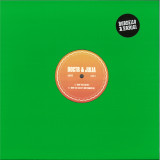
Doctr is no stranger to the Bordello. Now You Can Fly is his third visit to the label, his first with company. Paired with Julia, the offering is pure peak-time elation. Bending bars are cut through by beats and synth stabs, Doctr building a palpable energy with vocals synergising perfectly. Daring key shifts unveil the full track, inspirational words and melodic wizardry waltzing arm-in-arm. Flying ever higher, electrical pulses of hi-nrg jolt this dancefloor burner. Julia’s vocals are parred back for the flip, leaving those sun-kissed synthlines to soar above calypso-infused percussion. Two works of sheer happiness; just what the Doctr ordered.
Osmose's Deep & Dub EP on Smokecloud delivers a diverse selection of deep house tracks with a unique flair. Side-1 opens with 'Mystic House,' which blends a vintage 70s sound with a loose rhythm section and smooth organ feel, creating a delightful, jazz-infused atmosphere. 'Afternoon DUB' follows, reimagining the late 70s classic 'Afternoon Delight' into a dub version that adds a fresh, rhythmic twist. 'GSK (Guitar Sax Keys)' fuses jazz, funk, and house, showing a seamless blend of genres that keeps the groove dynamic and engaging. Closing the EP, 'Live Magic' is a late-night, atmospheric groove that's both soft and sexy, perfect for winding down. Overall, the Deep & Dub EP is a journey back in time with each track offering a distinct and enjoyable experience rich in 70s inspired nightlife.
Acquit Records are setting out on an ambitious one, presenting their latest foray into vinyl releasing with this incredible new LP from Arbilla. Both label and artist move incredibly low-key, but unearthing the info was worth it. Arbilla aka. Phil Robertson and his own adjacent imprint, Xistence Records, follows up prior greats such as the 'Movement' EP with this full-length, which takes after Detroit techno and catapults it to ever further cosmic reaches. Zooming out to the macro-point of galaxy filaments and Bootes Voids, we begin with the brukky opus '3500 Miles Away From Detroit' before seguing into the percussive workouts of 'Brighter Swallow' and 'Mecca'. A real sense of expanse is given off from the otherwise raw and up-close analogue sound; the cosmos is, of course, airtight.
TrioRox is a project born from the meeting of three protagonists of the Italian music scene (and not only): pianist Giovanni Guidi, bassist Joe
Rehmer and electronic musician DJ Rocca (Luca Roccatagliati). Three characters who boast an eclectic and consistent curriculum. Guidi, enfant prodige of Jazz piano, has published several albums for the prestigious ECM label, and has collaborated with the best jazz and electronic musicians, from Enrico Rava to Matthew Herbert, from Joe Lovano to Ricardo Villalobos. Joe Rehmer, an American transplanted to Italy, is one of the most sought-after bass players, sharing stages and recording studios together with authorities such as Bob Mintzer, James Moody and Danny Gottlieb.
DJ Rocca is a DJ and musician active since the nineties, and boasts numerous albums, singles and remixes with, and for key protagonists of the alternative dance scene (Andrew Weatherall, Dimitri From Paris and Howie B), as well as a militancy in the jazz scene with several albums together with Franco D’Andrea.
The music that the trio proposes is a mix of electronic, dance, Jazz and pop, with groove impulses in the field of house and techno music, without neglecting mixes between electro, classical and minimalism. A melting pot of styles between Keith Jarrett and Carl Craig.
Album to be released by IRMA Records in October 2024, with guests Luigi Di Nunzio, Gianluca Petrella, Dan Kinzelman and Jacopo Fagioli.
“Moods” is the debut album of Triorox that represents the photograph of the ‘Here and Now’. All the music was born from a studio session that lasted a few days, in which the mood of the three musicians gave the album its sound imprint. What came out of it became incandescent material to elaborate the musical flow of the entire work, which had three different phases.
The first, in which the tracks were born from the recordings, some developed as creations with a common denominator (the three moments of Mood), some as thematic suggestions (Angels, Corea and Next To Canada), and others as a stylistic challenge (the techno of Space Rain, or the drum and bass of Sax & The City).
The second phase, where the compositions were subjected to the test of live concerts, in which it was understood how the tracks could be better arranged, optimizing them and keeping the best ones. The last phase was the choice and insertion of the guests, reasoning according to the type of suggestion that we wanted to give to the specific song. So we gave free rein to Luigi Di Nunzio, who also participated in phase two, playing with us on stage on some occasions. In the same way, Gianluca Petrella chose the piece where he felt most at ease, also contributing to the arrangement.
Dan Kinzelman, a historic collaborator of both Guidi and Rehmer, was included because we wanted his bass clarinet in a specific suggestive situation. Finally, we wanted Jacopo Fagioli (the Tuscan reincarnation of Don Cherry), we wanted him in a specific episode of Mood, for his particular style, impeccable in determining the mood that the piece needed.
Open Space is proud to present our first ever full-length LP by LA’s newest 3-man band, Puli. Some words from our dear friend Matt McDermott below:
In recent years, a cadre of musicians from the east side of Los Angeles have reestablished the city of angels as the first city of Balearica. Alex Ho’s “Move Through It” followed in the lumbering footsteps of Project Sandro’s “Blazer.” Now, there’s a new landmark for the floating west coast sound. Swirling, the first album from LA supergroup Puli.
If you’ve got your ear to the ground you know the names involved here. Drummer and producer Damon Palermo’s pedigree stretches back a good 15 years or so, starting off with dub punks Mi Ami. Phil Cho is one of the busiest DJs, musicians and advocates for the deep stuff in LA, throwing legendary hillside parties under the Third Place banner. John Jones, the preternaturally talented guitarist and electronic tinkerer, records as AV Moves, is a key member of the Suzanne Kraft and Baba Stiltz live configurations and plays in The Trilogy Tapes-affiliated act Geo Rip.
But this listing of personnel and credentials puts too fine a point on it. Puli are three close friends who go to parties, DJ and get tacos together, repairing to their Chinatown studio a few times a week and coming out with remarkably textured, idiosyncratic downtempo jams. Building off the solid foundation of their 7-inch of heavyweight dubs for Melbourne’s Constant Delay, Swirling is an exploration of new horizons in chill out.
“Ramona” acts a statement of purpose—with halftime/double-time dub-tinged rhythms, hazy yet bright synth motifs and atmospheric guitar from Jones, not terribly far from the expansive approach of Japanese dub aesthetes Pecker. “Cloudy,” meanwhile, is a sort of deconstructed and bittersweet Balearic pop featuring Cho’s ethereal vocals. “Bongo Springs” is steppers’ house not far from close LA peer Benedek or the Mood Hut crew up north.
But what truly sets this record apart is the space and layers in the production—while it’s nominally an electronic record, Puli is a band that has slowly crafted these songs in the rehearsal space. “Havana Jam” cruises along a sliding roundwound bass guitar take with dubby chords and textural guitars. Palermo’s hand drums and live percussion enmesh perfectly with icy pads on “Leech Seed Dub.” Cho is back on the mic for the gorgeous closer, “C.S.B.”, underpinned by breakbeat and trunk-rattling sub bass. Puli doesn’t sound like anyone else, and is ultimately reflective of the city itself. Listening to Swirling feels like navigating a warren of side streets in the eternal sunshine. Take the drive and dive.