Venom wurde 1979 in Newcastle upon Tyne gegründet. Gegen Ende der New Wave of British Heavy Metal
erlangten sie Bekanntheit. Ihre ersten beiden Alben – „Welcome to Hell“ (1981) und „Black Metal“ (1982)
– gelten als prägend für Thrash Metal und Extreme Metal im Allgemeinen. Das zweite Album war so
einflussreich, dass sein Titel als Name für das Extreme-Metal-Subgenre Black Metal verwendet wurde. Von
Bands wie Metallica, Behemoth, Celtic Frost und Mayhem oft als wichtige Einflüsse genannt, zählen sie zu
den meistverehrten Bands ihrer Generation.
„Into Oblivion“ ist Venoms sechzehntes Studioalbum und präsentiert die langjährige Besetzung mit Cronos
(Bass/Gesang und Gründungsmitglied), Rage (Gitarre) und Dante (Schlagzeug). Es sind ihre ersten neuen
Aufnahmen seit „Storm The Gates“ aus dem Jahr 2018. Ihr neues Album umfasst dreizehn Songs im
typischen Venom-Stil: heavy, düster und eingängig. Es vereint ihren klassischen 80er-Jahre-Sound mit
einem moderneren, progressiveren Ansatz, ohne dabei jedoch die alte Energie und den unbändigen Elan
einzubüßen.
quête:b lan 3
Andris Nelsons gewann jüngst seinen sechsten Grammy und widmet sich nun mit den Wiener Philharmonikern ihrem lang erwarteten Mahler-Sinfoniezyklus für die Deutsche Grammophon: mit einer atemberaubenden Interpretation der Fünften Sinfonie, die 2022 bei den Salzburger Festspielen aufgenommen wurde.
Diese Einzelveröffentlichung fängt den strahlenden Klang des Orchesters und Nelsons’ zutiefst menschliche
Herangehensweise an Mahlers Musik ein – mal intim, mal ekstatisch, mal transzendent. Die mitreißende
Intensität der Aufführung und das strahlende Adagietto bieten einen spannenden Einstieg zum kommenden
Gesamtzyklus und versprechen eines der bedeutendsten Mahler-Projekte unserer Zeit.
Nelsons folgt Mahlers vielschichtiger Partitur mit feinem Gespür für Kontraste, Übergänge und emotionale
Tiefe. So entsteht eine Lesart, die die Dramatik des Werks ebenso ernst nimmt wie seine lichteren, beinahe
entrückten Momente.
Diese Doppelvinyl-Veröffentlichung gibt den Auftakt zu Nelsons’ Mahler-Zyklus mit den Wiener Philharmonikern und lädt dazu ein, eines der zentralen Werke des symphonischen Repertoires neu zu entdecken.
- A1: Jackson Mico Milas - Sea, Interior
- A2: Majid Bekkas & Magic Spirit Quartet - Annabi
- A3: Jesse Bru - The Coast
- A4: Loket - Afternoon At Barenquell
- B1: Superpitcher - Yves (Exclusive Lnt Edit)
- B2: Scott Orr - Scott B3 Barry Can't Swim - Sometimes I Feel So Alone
- B4: Marigold Sun - Here Lies Love
- B5: Barry Can't Swim - Chala (My Soul Is On A Loop)
- B6: Freddy Da Stupid - Back To Pangea Part Ii (Jazzapella Version)
- C1: Factory Floor - How You Say(Daniel Avery Remix)
- C2: Ronald Langestraat - Lowdown
- C3: Lance Desardi - The Power Of Suggestion
- D1: O'flynn - Kola
- D2: Accelera Deck - This Bliss
- D3: Pépe - Goma (A-Mix)
- D4: This Mortal Coil - The Lacemaker
- D5: St Francis Hotel - Dawn
- D6: Barry Can't Swim - Ferdinand Magellan (Exclusive Felt Cover Version)
- D7: Seamus - Ultrasound (Exclusive Lnt Spoken Word Track)
In the last two years, Barry Can’t Swim has released two albums – When Will We Land? and Loner. The debut was nominated for a Mercury Music Prize, winning 2024’s Best Dance Act on BBC Radio 1 and being nominated for Best Dance Act at the BRIT Awards in the same year. The latest album, 2025’s Loner, hit the top ten in the UK charts and was number one in the dance charts. This summer, Barry Can’t Swim cemented his position as one of the most singular new voices in electronic music with a gangbusting performance as a headliner at All Points East in London’s Victoria Park, building on his back-to-back performance with Bonobo at Coachella in 2024. Barry’s Late Night Tales mix brings together disparate styles and forms them into a coherent narrative. The powerful house tracks, like Lance DeSardi’s ‘Power of Suggestion’ and Daniel Avery’s remix of Factory Floor, intertwine with the abstract grooves of Freddie Da Stupid or Ronald Langestraat’s leftfield reading of Boz Scaggs’ ’70s smash ‘Lowdown’. There are exclusive tracks from Barry Can’t Swim himself (in the form of new single ‘Chala’ and an exclusive edit of Superpitcher’s ‘Yves’) and from friends and contemporaries, like Ninja Tune labelmate O’Flynn. Leaving aside the obvious quality of the mix, with its serpentine twists and dramatic turns, you can tell Josh is a fan of this series by bringing in his own personal poet, the brilliant Seamus, for the spoken word section right at the end. He’s a one-man Late Night Tales programmer.
On the cover: The Body & Dis Fig. Inside: Farida Amadou, Steve Beresford, Pavel Richter, Dialect, petals, Erica Dawn Lyle, H-Fusion, Invisible Jukebox: Melt-Banana, The Inner Sleeve: Eve Libertine, Epiphanies: Roy Claire Potter, Global Ear: Barcelona, Unlimited Editions: YOUTH, plus in the review sections: Laurie Anderson, Belong, Seefeel, Three Quarter Skies, Dhangsha, NicoNote, Laura Cannell, Primitive Percussion Youth Orchestra, Endon, Bobby Hutcherson, Harold Land, Red Kross, David Corio’s images of Black musicians, the Gnaoua & World Music Festival, Gary Stewart, Lonnie Holley, specialist columnists, and more.
On the cover: Keiji Haino. Inside: Shamica Ruddock, Seppuku Pistols, Jabu, Gregory TS Walker, Viktar Siamaška, The Primer: John Butcher, Invisible Jukebox: Wolfgang Voigt, Epiphanies: Mark Webber on Spaceman 3, The Inner Sleeve: Céline Gillain on Leonard Cohen, Global Ear: Nicosia, Unlimited Editions: Nashazphone, and in the reviews sections: Wendy Eisenberg, Ivo Perelman, Yellow Swans, Meshell Ndegeocello, Tristwch Y Fenywod, Byard Lancaster, Zdeněk Liška, Dr John, Supernormal, Heroines Of Sound, and much more.
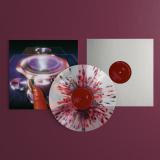
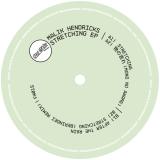
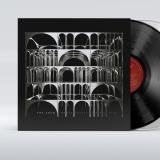
DISPLACES represents Fabris' most personal musical journey to date, inspired by the concept of hyperobjects and cartographic practices. The album sculpts a high-dimensional phased time-space composed of concrete materials and digital archetypes in a state of constant displacement. It delves into the symbolic and philosophical realms of mapping as one of the greatest sense-making mechanisms for life, in dialogue with object-oriented environments, superimposition and non-locality applied to cosmic, temporal, and emotional memory.
The sonic ecosystem expands on the image of navigating a path through a set of places, from the microcosm of quanta to the macro force of dark matter, from underwater depths to overland terrains, encapsulating the cyclical flow between birth and death, both in ecological and anthropological sense. The intersection of these shifting states is explored through the extensive processing of the langspil, Iceland's only traditional instrument, intertwined with manipulated field recordings of biophonies and geophonies captured across Icelandic and Venetian territories. These recordings form the backdrop for a meditative process that relocate familiar objects into unfamiliar realms, reflecting on the transformative power of self-reflection while encapsulating the fragmentation and entanglement found in nature and the human state. The record plunges the listener into a disconcerting and physical soundscape, as a “ghostly spectrality that comes in and out of phase with normalized human spacetime,” evoking sensations of suffocation and release as each layer continuously unfolds the palimpsest of the enclosed labyrinth.
“Extraction of the I” embodies a subatomic reaction—erupting as a molecular force that rises, only to re-submerge with a solitary exhale underwater. In this mutated dark space, beluga whales breathe into "Xanadu Phasing," creating a pulsating tension that releases only to unveil a frozen landscape.
In “Barricading the Ice Sheets” the glacial material morphs into a liquid tunnel of digital artifacts, building a wall of noise that shatters into scattered fragments of ice, resembling bird calls from another world.
A moment of stasis is offered with the appearance of an asymmetrical loop in Monolith I, evoking a primitive rite before an unknown force emerges.
The physical intensity of subsonic material in "A Quake in Being" interrupts the hieratic tone, detuning into polluted sonic matter sourced from relics of the First World War in the Venetian Prealps. The geography of this place reconciles with the original homeland in "The Map is the Territory," blending negative space with anthropogenic elements and exploited sounds of the langspil.
The burning density of "Wolf-Rayet" projects into the void, echoing the residual sounds of a local church as relics of fossilized religions. Wolf tones are the remains in Monolith II, introducing the final track, "Topography of Extinction," where evolving psilocin textures invite the listener to uncover deeper layers of meaning and dislocation.
Sushitech's first release for 2026 marks a landmark project from London based tech house pioneer Gideon Jackson.
Tokinowa : Seven, from the Japanese meaning “a circle of time” reflects the seven year period which these tracks were produced, 1999 – 2005. The release is a retrospective journey into the raw and warm sound of a producer who helped shape the London underground sound in the early 2000's and went on inspire generations that followed.
Pressed as a special triple 180g gatefold collectors edition, Tokinowa : Seven welcomes us into Gideon Jackson's world of art and vision, featuring original photography by Gideon himself paired with artwork by Sushitech's in-house designer Jeremy.
Sushitech's first release for 2026 marks a landmark project from London based tech house pioneer Gideon Jackson.
Tokinowa : Seven, from the Japanese meaning “a circle of time” reflects the seven year period which these tracks were produced, 1999 – 2005. The release is a retrospective journey into the raw and warm sound of a producer who helped shape the London underground sound in the early 2000's and went on inspire generations that followed.
Pressed as a special triple 180g gatefold collectors edition, Tokinowa : Seven welcomes us into Gideon Jackson's world of art and vision, featuring original photography by Gideon himself paired with artwork by Sushitech's in-house designer Jeremy.
Complimenting his singular debut LP, 2025’s ‘Light Months Will Fly Over Us’, singer-songwriter and producer Addy Weitzman sees his thoughtful artrock and new wave aesthetic expanded by The Time & Space Machine for a limited three-track 12".
The long-running alias of British DJ, archivist and acid pioneer Richard Norris, this trio of remixes from The Time & Space Machine’s central processing unit finds Norris in a jubilant raving mode, his trademark psychedelia contributing to Slacker at its best and baggiest. The initial mix captures Weitzman’s songwriting in full, including his portentous vocal hook – “No man is a prophet in his own land” – a proverb first found in the gospels, blessed with the innovative Norris’s application of hypnotic groove, fat low-end and a ton of percussion.
The B-side sees Norris stripping things back in two directions: the Shango Dub draws focus on the higher vibrations found in the track’s beautifully intertwined percussive and synth elements, while the Riddim Mix reduces the frequencies further still, with a phased, slightly fried drum workout primed to spin heads as the night gets deeper and darker.
Following releases based in Amsterdam and Rotterdam, this one marks the "D" in Lost Trax's ARD trilogy. On SAID Principles, shaping their style to this landscape, the mysterious Lost Trax charts four hard-hitting techno tracks, imposing their demands on all those who can hear. It is up to you to now adapt.
SY3 (pronounced ‘sigh’) is a new project from LA-based Chinese-American artists Kelly Guan, Alex Ho, and Phil Cho. The trio started working on music together in 2023 after connecting over a shared love of Hong Kong New Wave cinema, Cantonese pop songs, r&b, and melody-driven dance music. Singer Kelly Guan aka Jia Pet has been independently releasing ‘bubbly’ pop music since 2022, and recently toured with the genre-bending indie artist Sasami. Multi-instrumentalists Ho (keyboards, saxophone) and Cho (guitar, bass) have collaborated frequently over the past decade, most notably on Ho’s 2021 debut album 'Move Through It' for Music From Memory.
Lead single ‘Tell Me,’ the track that initially caught the ears of MFM's Jamie Tiller and Tako, nods to the hazy downtempo explored by Chinese pop stars like Faye Wong and Zhou Xun in the ‘00s, while also recalling Japanese producer Yoshinori Sunahara’s iconic album 'Lovebeat'. Beyond musical influences, SY3’s neon-drenched pop songs draw from a cinematic language, particularly y2k-era films like Made in Hong Kong and Suzhou River, which speak to a generation of disillusioned youth in an increasingly fast-paced world. Guan’s lyrics depict characters caught in bittersweet love affairs (‘dial tone, when I’m alone, you promised we’ll be in touch') forever looking towards an escape from their current realities (‘I know the walls are high, these graceless hands are slipping’). Title track ‘梦游 Sleepwalker’ features a Cantonese spoken-word story about a sleepwalking young girl who sits alone on a balcony wondering where she might have gone the night before. The drifting ambient production loosely references a traditional Chinese folk melody, and closes out the EP with a delicate, layered saxophone solo from Ho.
Balancing intimacy with a wider emotional and visual language, SY3’s debut unfolds as a series of nocturnal pop vignettes shaped by memory, cinema, and place. Released digitally and on vinyl through Music From Memory on March 25th. Sleeve art and design by Michael Willis.
Following the digital release of the single “Meu Canto” in early February 2026, Gerardo Frisina and singer Luzia Dvorek return to Brazilian music with a new and compelling interpretation of a timeless classic, “A Lenda do Abaeté” by Dorival Caymmi; the release of this 45rpm single brings to a close a special project entirely dedicated to Bahia, the beating heart and symbol of Brazilian culture.
“Meu Canto” takes shape from an original composition by Gerardo Frisina, who signs both music and production, crafting a soundscape that is suspended between delicacy and depth upon which Luzia Dvorek - joined by songwriter Toco, whose refined backing vocals further enrich the song’s emotional dialogue - has drawn the melodic line and written the lyrics. A journey into roots and origins that tells the story of Luzia’s family, deeply embedded in the warm, fertile land of northeastern Brazil. “Meu Canto” sees also the participation of Alfonso Deidda on flute, whose airy timbre introduces new shades of color to the composition.
In “A Lenda do Abaeté”, the 45rpm B-side, Gerardo Frisina weaves an elegant and immersive rhythmic framework, evoking soundscapes that feel both deep-rooted and timeless. Within this setting, Luzia Dvorek’s voice unfolds with emotional intensity, balancing expressive strength and subtle delicacy as it narrates the ancient legend of the Abaeté lagoon. A place steeped in charm and mystery, suspended between myth and reality, whose stories have been passed down through generations in Salvador, in Brazil’s north-eastern region.
The project is further enriched by the acoustic guitar of Francesco Borrelli - who also took care of the tracks mixing and mastering - and Toco’s distinctive vocal contributions, which add depth and nuance to the overall sound.
Black Truffle is pleased to present Radis, the first recording by the Oslo-based trio of Andrea Giordano (voice and organetto), Kalle Moberg (accordion) and Jo David Meyer Lysne (guitar and snare drum). Now based in Norway, Giordano is a native of Cuneo, in the Piedmont region in the north-west of Italy and her exploration of the Piedmontese language provides the starting point and conceptual anchor of the trio improvisations heard on Radis, which make use of the words of 20th century Piedmontese poets Nino Costa, Bianca Dorato and Oreste Gallina. As the musicians explain, the project is an attempt to preserve the beauty and singularity of a language at risk of extinction.
Fittingly, the first sound we hear on the opening piece ‘Fiorìa’ is Giordano’s unaccompanied voice. She sings a poem from Oreste Gallina as a kind of floating cadenza, the accompanying silence sensitizing the listener to the pellucid quality of Giordano’s voice and the unique sound of the Piedmontese language. The voice dies away and into the silence swells a single tone, sounded by Moberg’s accordion and—special guest on this opening piece—the alto saxophone of Mario Gabola. Extended techniques and preparations create unexpected timbres from the acoustic instruments: Gabola’s saxophone is augmented with tin cans and springs and Moberg’s unorthodox techniques allow the accordion to generate wheezing, buzzing textures and patterns of microtonal beating. Giordano’s voice returns, picking up the thread of the languorous opening melody, coexisting for a while with the shifting drone before the piece takes an unexpected yet organic left-turn into a delicate saxophone solo of sorts.
Recorded in several locations across Italy and Norway over the course of three years, Radis documents an ensemble who have developed both a distinctive sound-world and a remarkably sensitive group dynamic. Moving from folkish duets between accordion and Giordano’s organetto (the small accordion used in Italian folk music) to episodes of metallic guitar scraping from Meyer Lysne, the music is both quietly contemplative and gently chaotic. Ensemble roles shift with disarming ease. If on ‘Profij dëspers’ Meyer Lysne’s prepared guitar adds a haywire noise element to a lyrical episode of organetto and accordion, the next piece, ‘D’antorn a lor’, is grounded in chiming guitar chords of stunning beauty; once Giordano’s joins, the result calls up the most spacious moments of Maria Monti’s Il Bestiario. Throughout the seven pieces, the trio explore countless possibilities of group interaction and the margin between conventional euphony and pure abstraction: at times the voice floats against silence or seems almost disconnected from the gentle clatter of the instruments (sometimes reminiscent of Nikiforas Rotas’ haunting settings of Cavafy), while at other points the instruments touch on conventional harmonic accompaniment. What is perhaps most striking of all is the way that voice and instruments relate to each other, the extended technique reframing the voice as a kind of abstract sound object, while the melodic beauty of Giordano’s voice lends a contemplative, almost melancholic air to the wheezing and scraping of accordion and guitar.
Captured in gorgeously intimate recordings, Jim O’Rourke’s careful and beautifully spacious mix highlights the wealth of textural detail in each element. Accompanied by notes, session photos and the text of the Piedmontese poems, Radis is a work of stunning beauty that demonstrates the vitality of exploratory music in Norway today.
Der bahnbrechende Titel ,Je te laisserai des mots" ist der erste französischsprachige Song, der mehr als eine Milliarde Streams auf Spotify erreicht hat und im Laufe der Jahre erheblich an Popularität gewonnen hat. Der Titel hat mehr als 50 Milliarden Aufrufe und 20 Millionen Kreationen auf TikTok erzielt, darunter emotionale Kreationen, Coverversionen und mehr. Er hat genug Streams gesammelt, um in 29 Ländern Platin-Status und in 34 Ländern Gold-Status zu erreichen. In den USA wurde er mit Doppelplatin ausgezeichnet.
Presenting Deyjavoo Volume One - A compilation of neverheard-before tracks from four iconic artists/collaborations.
These tracks were pulled from old computers, long-lost hard drives and DAT tapes almost forgotten. A very special collection indeed. The music comes from the legendary Lance DeSardi & JT Donaldson, Audio Soul Project (Mazi), Jacob London and Ilija Rudman & Richard Littler. A reminder of the timeless magic of music and its refusal to never grow old. This project is brought to you by Bizarre Trax.
Cassette[14,50 €]
Aspen is very proud to introduce ‘Non Sonett’ by the Christian Wallumrød Ensemble. This ensemble is a pioneering Norwegian chamber group whose work on ECM and Hubro has redefined the boundaries between jazz, contemporary composition and folk music.Across seven albums, the ensemble has developed a highly distinctive l anguage built on restraint, timbral nuance and collective interplay, placing it among the most influential European ensembles of the 21st century.
Bringing together some of the finest musicians in Norway, the ensemble draws on a rare collective sensitivity, where each player contributes to a deeply integrated and texturally rich sound world.
With Non Sonett, the Christian Wallumrød Ensemble opens a new chapter that grows directly out of recent years of work in more solitary and cross-disciplinary contexts. In this period, Wallumrød has developed material for solo performance as well as for dance, allowing ideas to take shape in more fluid and exploratory formats. Some of this material now finds its way into the ensemble, where it is met by the possibilities offered by instrumentation, collective playing, and the distinct voices of the musicians. At the same time, older pieces—originating in entirely different settings— re-emerge here in new forms, reshaped by the ensemble context.
A defining aspect of Non Sonett is the way many of the pieces function less as fully determined compositions and more as open frameworks: starting points, suggestions, or “springboards” for music. These structures invite response rather than prescribe outcome, relying on the ensemble’s inherent sensitivity and capacity to realize and transform the material in performance. The result is music that feels both precise and fluid, shaped in equal measure by composition and by the interpretative presence of the players.
Central to this album is a continued deepening of Wallumrød’s long-standing interest in ambiguity and in dissolving boundaries between different musical elements and expressive worlds. By placing contrasting materials and associations side by side—sometimes subtly, sometimes more overtly—the music opens up spaces where meanings remain fluid and interconnected. On Non Sonett, this approach is taken a step further, allowing these juxtapositions to play an even more active role in shaping the music’s character and flow.
This approach connects closely with the ensemble’s broader artistic trajectory. Over time, the Christian Wallumrød Ensemble has developed a language that is immediately recognizable—marked by reduction, clarity and a deep attention to sonic detail. While each release has its own character, the underlying aesthetic remains consistent: a focus on the inner life of sound itself. Rather than foregrounding gesture or virtuosity, the music draws the listener toward the smallest elements, where meaning emerges gradually through texture, spacing and timbre.
The listening experience becomes one of concentration and proximity, where each sound carries weight, and the accumulation of detail forms a larger whole. References may be sensed—to early polyphonic music, Norwegian folk traditions, or more recent experimental practices—but these are absorbed into a singular musical language that resists categorization.
As with the ensemble’s recent work, Non Sonett also continues the integration of electronics as a fundamental part of the sound world. Each musician engages with electronic elements alongside their acoustic instruments, creating a layered and dynamic sonic environment. At times, this leads into extended, exploratory passages reminiscent of analogue musique concrète; at others, electronics operate almost imperceptibly, subtly altering and extending the acoustic textures in real time.
vinyl[21,81 €]
Aspen is very proud to introduce ‘Non Sonett’ by the Christian Wallumrød Ensemble. This ensemble is a pioneering Norwegian chamber group whose work on ECM and Hubro has redefined the boundaries between jazz, contemporary composition and folk music.Across seven albums, the ensemble has developed a highly distinctive l anguage built on restraint, timbral nuance and collective interplay, placing it among the most influential European ensembles of the 21st century.
Bringing together some of the finest musicians in Norway, the ensemble draws on a rare collective sensitivity, where each player contributes to a deeply integrated and texturally rich sound world.
With Non Sonett, the Christian Wallumrød Ensemble opens a new chapter that grows directly out of recent years of work in more solitary and cross-disciplinary contexts. In this period, Wallumrød has developed material for solo performance as well as for dance, allowing ideas to take shape in more fluid and exploratory formats. Some of this material now finds its way into the ensemble, where it is met by the possibilities offered by instrumentation, collective playing, and the distinct voices of the musicians. At the same time, older pieces—originating in entirely different settings— re-emerge here in new forms, reshaped by the ensemble context.
A defining aspect of Non Sonett is the way many of the pieces function less as fully determined compositions and more as open frameworks: starting points, suggestions, or “springboards” for music. These structures invite response rather than prescribe outcome, relying on the ensemble’s inherent sensitivity and capacity to realize and transform the material in performance. The result is music that feels both precise and fluid, shaped in equal measure by composition and by the interpretative presence of the players.
Central to this album is a continued deepening of Wallumrød’s long-standing interest in ambiguity and in dissolving boundaries between different musical elements and expressive worlds. By placing contrasting materials and associations side by side—sometimes subtly, sometimes more overtly—the music opens up spaces where meanings remain fluid and interconnected. On Non Sonett, this approach is taken a step further, allowing these juxtapositions to play an even more active role in shaping the music’s character and flow.
This approach connects closely with the ensemble’s broader artistic trajectory. Over time, the Christian Wallumrød Ensemble has developed a language that is immediately recognizable—marked by reduction, clarity and a deep attention to sonic detail. While each release has its own character, the underlying aesthetic remains consistent: a focus on the inner life of sound itself. Rather than foregrounding gesture or virtuosity, the music draws the listener toward the smallest elements, where meaning emerges gradually through texture, spacing and timbre.
The listening experience becomes one of concentration and proximity, where each sound carries weight, and the accumulation of detail forms a larger whole. References may be sensed—to early polyphonic music, Norwegian folk traditions, or more recent experimental practices—but these are absorbed into a singular musical language that resists categorization.
As with the ensemble’s recent work, Non Sonett also continues the integration of electronics as a fundamental part of the sound world. Each musician engages with electronic elements alongside their acoustic instruments, creating a layered and dynamic sonic environment. At times, this leads into extended, exploratory passages reminiscent of analogue musique concrète; at others, electronics operate almost imperceptibly, subtly altering and extending the acoustic textures in real time.
The long-overdue recognition of a songwriting genius The lyrics of Dan Treacy"s band Television Personalities transport listeners to a parallel universe consisting of unique mixtures of euphoric Sixties references and harsh social realism: brightly coloured, psychedelic worlds in which Syd Barrett, Salvador Dalí, Andy Warhol and the young Woody Allen meet, or a dreariness of marital crises, unpaid bills, loneliness and depression. Nuances: rather rare, and when they do occur, so subtle that they take the listener"s breath away. Admired by Kurt Cobain and Pavement, praised by Alan McGee, covered by the Tindersticks and musically immortalised by MGMT ("Song for Dan Treacy"); the Television Personalities are one of, if not the reference band of indie pop, which - the world has never been fair - was denied major chart success. "If I Could Write Poetry" now brings together for the first time the lyrics of 100 of Dan Treacy"s most important songs. But this book is much more than a collection of lyrics; it also contains very personal impressions, anecdotes and tributes from around 50 musicians, friends and fans. Contributors from the German-speaking world include artists such as Carsten Friedrich (Superpunk, Die Liga der gewöhnlichen Gentlemen), Bachmann Prize winner Tex Rubinowitz, and musicians Phillip Boa and Klaus Cornfield (Throw that Beat in the Garbagecan). The book is published and edited by Gregor Kessler, who emphasises that he found it difficult to maintain his professional neutrality towards Dan Treacy, as he has been an avid listener of Television Personalities records for four decades now. An English-language publication
- A1: Save The Children (Prod By Statik Selektah)
- A2: Greenbax Introlude (Prod By Lee Bannon)
- A3: Paper Trail$ (Prod. By Dj Premier)
- A4: Piece Of Mind (Prod By Freddie Joachim)
- B1: Big Dusty (Prod By Kirk Knight)
- B2: Hazeus View (Prod. By Kirk Knight)
- B3: Like Me Feat. Bj The Chicago Kid (Prod. By J Dilla & The Roots)
- B4: Belly Of The Beast Feat. Chronixx (Prod By Hit Boy)
- C1: No. 99 (Prod. By Statik Selektah)
- C2: Christ Conscious (Prod. By Basquiat)
- C3: On And On Feat. Maverick Sabre & Dyemond Lewis (Prod By Freddie Joachim)
- C4: Escape 120 Feat. Raury (Prod. By Chuck Strangers)
- D1: Black Beetles (Prod By Chuck Strangers)
- D2: O.c.b. (Prod. By Sam I Am W/ Instrumentation By The Soul
- D3: Curry Chicken (Prod. By Statik Selektah)
Mit gerade mal 17 Jahren releaste Joey Bada$$ sein erstes Mixtape "1999" welches den Sound der goldenen Hiphop-Ära der 90er Jahre adaptierte, so authentisch und selbstverständlich als sei er mit dabei gewesen.
Die Kritiker überschlugen sich in ihren begeisterten Rezensionen und es folgten Features mit Asap Rocky, Kendrick Lamar, Mac Miller & Action Bronson. Der junge Brooklynite ist schon längst mehr als nur ein Geheimtipp. Die ersten audiovisuellen Kostproben gab es in den vergangenen Monaten in Form von "Big Dusty" und "Christ Conscious". Am 20. Januar erscheint nun sein Debütalbum, das den Titel "B4.DA.A$$" trägt.
- It Gets So Hot
- Dancing On The Wall
- Eastside Girls
- Wannabeher
- On Call
- So What
- Party's Over
- Big Stick
- Mary Jane
- Girl's Girl
- Unless
- Why Do I Get A Good Feeling
- Buzzkiller
CLEAR RED VINYL[23,49 €]
Die Reise von MUNA war schon immer davon geprägt, Raum für die komplexen, chaotischen und ekstatischen Realitäten des Lebens zu schaffen, und mit ihrem vierten Album "Dancing On The Wall" sind sie so prägnant, düster und mitreißend wie nie zuvor. Ausgehend von den funkelnden, mit Konfetti übersäten Höhen ihres selbstbetitelten Albums aus dem Jahr 2022 kanalisieren sie nun die ängstliche, unsichere Energie des Lebens in einem Los Angeles, das von politischen Spannungen, Umweltzerstörung und dem stillen Druck der Prekarität der Millennials geprägt ist. Das Ergebnis ist ein Album, das sich sowohl intim als auch spektakulär anfühlt, eine Popwelt, die mit Biss, Witz und emotionaler Resonanz aufgebaut ist, ein Soundtrack für Herzen, die gleichzeitig in Flammen stehen und das Chaos um sie herum beobachten. Auf dem gesamten Album erkundet MUNA Sehnsucht, Intimität und Verbundenheit vor dem Hintergrund einer Welt im Wandel. Es gibt eine stille Auseinandersetzung damit, wie man weiterleben, lieben und sich gegenseitig erreichen kann, während man Zeuge politischer Brutalität und systemischer Gewalt wird, und wie Freude ohne Verleugnung überleben kann. Tracks wie "Wannabeher" fangen den schwindelerregenden Nervenkitzel ein, sich vollständig in die Fantasie eines anderen zu begeben, während "Why Do I Get A Good Feeling" noch lange nach dem Ende des Beats nachhallt, eine Meditation über flüchtige Freude und ausgesetzte Möglichkeiten. Das Album schließt mit "Buzzkiller", einer schonungslosen Auseinandersetzung mit Sehnsüchten und ihren Folgen, dem Schmerz, etwas erreicht zu haben, nur um festzustellen, dass neue Fragen, Zweifel und Sehnsüchte zurückbleiben. "Dancing On The Wall" wurde von Naomi McPherson produziert, wobei ihre charakteristische Liebe zum Detail mühelos mit der ausgefeilten Pop-Technik ihrer Bandkollegin Josette Maskin hinter den Kulissen verschmilzt, um lebendige, atmende Welten für die prägnanten Texte und die unverwechselbare Stimme der Leadsängerin Katie Gavin zu schaffen. "Dancing On The Wall" verbindet euphorische Klanglandschaften mit prägnanten, menschlichen Geschichten. Das Album spiegelt einen intensiven, selbstgesteuerten kreativen Prozess wider, der von Instinkt, Vertrauen und vollständiger künstlerischer Kontrolle geprägt ist. Es wirkt lebendig, eindringlich und filmisch und spiegelt eine Generation wider, die sich durch Unsicherheit navigiert und sich dennoch nicht von ihrer Freude abbringen lässt. Mit diesem Album beweisen MUNA erneut, dass Pop gewagt, intim und sozialbewusst zugleich sein kann: ein Album, das nicht nur den Moment einfängt, sondern ihn zu einer Welt destilliert, in der man leben möchte.