
В наличии на складе
Есть у нас в наличии и готов к отправке
13,03 €
Есть у нас в наличии и готов к отправке

Everyone knows the story of American disco.
But few are aware that, between the late 1960s and the late 1980s, Italy wrote a parallel one — spontaneous, surprising, and incredibly creative.
It is a story that spans two distinct seasons: the Italian disco of the 1970s — melodic, handmade, sometimes naïve yet always original — and the emerging Italo Disco of the 1980s, electronic, futuristic, and lightheartedly projected toward the future.
Two different languages, yet both driven by the same desire for freedom and modernity. Discoteca Sound — Italian Discoteca Underground 1975–1986 brings together 18 rare tracks — including two previously unreleased — that tell this story of transition: from the orchestral and sentimental disco of Italian dance halls to the synthetic and visionary sound of the first drum machines.
A journey through private archives, local labels, regional studios, and forgotten voices — the sonic map of a country that has always danced, but to its own rhythm. From Mediterranean disco to the first Italo Disco, from the dim lights of provincial dance halls to the early home synthesizers, each track opens a window onto an Italy that dreamed of the dance floor as a universal language of connection during the brief season of revolutionary utopias.
This compilation celebrates ten years of work by Disco Segreta — a decade dedicated to the research, recovery, and appreciation of Italian disco and electronic culture. An act of justice owed to all those artists who had their moment yet were never remembered by history — bringing back to light an essential, still too little known part of our musical heritage.
Because dancing today remains, more than ever, a living act of memory.
Limited edition 2LP, features 2 previously unreleased tracks and a new 2025 version of Coscarella & Polimeno – Station to Station.
f Grazia Vitale – Poi (1975) Previously Unreleased
q Daniel Sentacruz Ensemble – Vivo Solo Con Te (1982) Previously Unreleased
f Grazia Vitale – Poi (1975) Previously Unreleased
q Daniel Sentacruz Ensemble – Vivo Solo Con Te (1982) Previously Unreleased
f B2. Grazia Vitale – Poi (1975) Previously Unreleased
q D4. Daniel Sentacruz Ensemble – Vivo Solo Con Te (1982) [Previously Unreleased]
[f] B2. Grazia Vitale – Poi (1975) [Previously Unreleased]
[q] D4. Daniel Sentacruz Ensemble – Vivo Solo Con Te (1982) [Previously Unreleased]
[f] B2. Grazia Vitale – Poi (1975) [Previously Unreleased]
[q] D4. Daniel Sentacruz Ensemble – Vivo Solo Con Te (1982) [Previously Unreleased]
Есть у нас в наличии и готов к отправке

To submit or to surrender? Robert Johnson resident Oskar Offermann doesn’t have the answers, and that’s kind of the point. Things change: one moment you’re touring the globe as a recognizable face of one of the greatest clubs in the world, the next you’ve started a new life as a teacher. How do you handle that shift? On this record, Offermann doesn’t offer solutions so much as trace his own way through it, reflecting the whole process in his music and creative work.
Whatever the story, whatever the case, Oskar Offermann can still produce some of the most emotive, bleepy, strange dance music out there and this 12 inch is the proof. Sonically and conceptually it leans into that precise, melancholic German school: at points drawing from 80s wave and experimental music, then flirting with trancey motifs and closing in divinely crafted breakbeat. In just four tracks it packs in a surprising amount of functional range, exactly what you’d expect from one of RJ’s longest-standing residents. The A- and B-sides mirror each other: they open at full intensity, tempos pushed well past the 130 BPM mark, easy to imagine ripping through a peak-time floor – and still both sides land on something far more personal and reflective.
Even inside a framework of high-intensity club tunes, Oskar’s character shines through loud and proud. Think the slightly disjarring yet melodically captivating winds in the middle of the B1 trance induced number “Accepting”, or the masterfully paced build of opener “Planet Interface”. The same goes for A2 “Televise Improvise” and B2 “Sei mal nur lieb”: on paper they should feel like breathers next to the two behemoths, but they don’t. Offermann crams so much substance and personality into them that they become quietly dangerous. There’s that magical mix of squelchy acid, rough low end and naturalistic melodies on B2, and the relentless emotional drive of A2 “Televise Improvise”. Oskar is really, really good at making dance music irresistible.
Character, skill and honesty in one record, meant for the attentive listener and the brave DJ. A rare combination nowadays, get it fast!
Есть у нас в наличии и готов к отправке

Welcoming London-based artist House on the Strand to the Eastern Nurseries fold following his impressive 2024 debut, "Heroine", Ruben Elbrond-Palmer channels a sombre, cinematic sense of sound with "Unrest".
Interpolating the visual sensibilities of some of his favourite artists, filmmakers, and photographers into the sonic field, Elbrond-Palmer’s palette cuts loose from the percussive elements of his previous work, blending analogue synthesis with repurposed guitars, haunting melodies, and field recordings that call to mind the hazy delirium of a dusty summer’s day. Sitting at its core, "Unrest" places harmony front and centre, with each sombre movement rising and falling as electric fences hum, helicopters hover overhead, and unknown events are set in motion.
Deceptively simple, the resultant album is gestalt—an elegy of melancholic moments, lost to the world.
Mastered by Ike Zwanniken of Hysterical Love Project - mainstay mastering engineer behind majority of INDEX, Co:Clear & Theory Therapy Releases
Established in 2019, Eastern Nurseries is a platform for deeply emotional contemporary electronic music based between Porto and Newcastle upon Tyne. Curated by Rui P. Andrade (aka Canadian Rifles) and Christopher Macarthur Owen (aka Burning Pyre).
The label has released a steady yet considered magna of records from Hasfeldt, Emma Acs, innerinnerlife and VAs encompassing the likes of Conna Harraway, Severin Black & Slowfoam.
Eastern Nurseries no. 41
Written & produced by Ruben Elbrond-Palmer
Recorded in London, Kobaek & Aude, 2019-2024
Mastered by Ike Zwanikken
Cover photo by Andrew Weathers
Есть у нас в наличии и готов к отправке
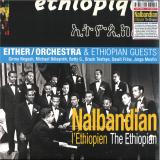
The Éthiopiques series returns! Essential archive recordings from an extremely fruitful period in Ethiopian music.
Before “Swinging Addis” took over the world, there was Moussié Nerses Nalbandian — the Armenian-born composer who shaped modern Ethiopian music. Mentor, arranger, and pioneer, he laid the foundations of Ethio-jazz.
This Éthiopiques volume revives his forgotten legacy, recorded live by Either/ Orchestra First issue ever with new exclusive photos and in depth liner 8-page insert.
“Ethiopian jazzmen are the best musicians that we have seen so far in Africa.
They really are promising handlers of jazz instruments.”
Wilbur De Paris
(1959, after a concert in Addis Ababa)
አዲስ፡ዘመን። *Addis zèmèn* **A new era.**
The time is the mid-1950s and early 1960s, just before "Swinging Addis" bloomed – or rather boomed – onto the scene. Brass instruments are still dominant, but the advent of the electric guitar, and the very first electronic organs, are just around the corner. Rock’n'Roll, R’n’B, Soul and the Twist have not yet barged their way in. Addis Ababa is steeped in the big band atmosphere of the post-war era, with Glenn Miller's *In the* *Mood* as its world-wide theme song, neck and neck with the Latin craze that was in vogue at the same period. Life has become enjoyable once again, with the return of peace after the terrible Italian Fascist invasion of Ethiopia (1935-1941). The redeployment of modern music is part and parcel of the postwar reconstruction. *Addis zèmèn* – a new era – is the watchword of the postwar period, just as it was all across war-torn Europe.
The generation who were the young parents of baby boomers** were the first to enjoy this musical renaissance, before the baby boomers themselves took over and forever super-charged the soundtrack of the final days of imperial reign. Music is Ethiopia's most popular art form, and very often serves as the best barometer for the upsurge of energy that is critical for reconstruction. Whether it be jazz in Saint-Germain-des-Prés or the *zazous* who revolutionised both jazz and French *chanson* after the *Libération*, be it Madrid's post-Franco Movida, or Dada, the Surrealists and *les années folles* that followed World War I, the periods just after mourning and hardship always give rise to brighter and more tuneful tomorrows. Addis Ababa, as the country's capital, and the epicentre of change, was no exception to this vital rule.
**Two generations of Nalbandian musicians**
Nersès Nalbandian belonged to a family of Armenian exiles, who had moved to Ethiopia in the mid-1920s. The uncle Kevork arrived along with the fabled "*Arba Lidjotch*", the** "*40 Kids*", young Armenian orphans and musicians that the Ras Tafari had recruited when he visited Jerusalem in 1924, intending to turn their brass band into the official imperial band. If Kevork Nalbandian was the one who first opened the way of modernism, pushing innovation so far as to invent musical theatre, it was his nephew Nersès who would go on to become, from the 1940s and until his death in 1977, a pivotal figure of modern Ethiopian music and of the heights it. Going all the way back to the 1950s. Nothing less. And it is Nersès who is largely to thank for the brassy colours that so greatly contributed to the international renown of Ethiopian groove. While the younger generations today venture timidly into the genealogy of their country's modern music, often losing their way amidst a distinctly xenophobic historiographical complacency, many survivors of the imperial period are still around to bear witness and pay tribute to the essential role that "Moussié Nersès" played in the rise of Abyssinia's musical modernity.
Given the year of his birth (15 March 1915), no one knows for sure if Nersès Nalbandian was born in Aintab, today Gaziantep (Turkiye/former Ottoman Empire) or on the other side of the border in Alep, Syria... What is certain is that his family, like the entire Armenian community, was amongst the victims of the genocide perpetrated by the Turks. Alep, the place of safety – today in ruins.
Before Nersès then, there was uncle Kevork (1887-1963). For a quarter of a century, he was a whirlwind of activity in music teaching and theatrical innovation. *Guèbrè Mariam le Gondaré* (የጎንደሬ ገብረ ማርያም አጥቶ ማግኘት, 1926 EC=1934) is his most famous creation. This play included "ten Ethiopian songs" — a totally innovative approach. According to his autobiographical notes, preserved by the Nalbandian family, Kevork indicates that he composed some 50 such pieces over the course of his career. This shows just how much he understood, very early on, the critical importance of song as Ethiopia's crowning artistic form. Indeed, for Ethiopian listeners, the most important thing is the lyrics, with all their multifarious mischief, far more than a strong melody, sophisticated arrangements or even an exceptional voice. (This is also why Ethiopians by and large, and beginning with the artists and producers themselves, believed for a long time — and wrongly — that their music could not possibly be exported, and could never win over audiences abroad, who did not speak the country's languages).
Last but not least, one of Kevork's major contributions remains composing Ethiopia's first national anthem – with lyrics by Yoftahé Negussié.
Nersès Nalbandian moved to Ethiopia at the end of the 1930s, at the behest of his ground-breaking uncle. Proficient in many instruments (pretty much everything but the drums), conductor, choir director, composer, arranger, adapter, creator, piano tuner, purveyor of rented pianos,... he was above all an energetic and influential teacher. From 1946 onwards, thanks to Kevork's connexion, Nersès was appointed musical director of the Addis Ababa Municipality Band. In just a few years, Nersès transformed it into the first truly modern ensemble, thanks to the quality of his teaching, his choice of repertoire, and the sophistication of his arrangements. It was this group that would go on to become the orchestra of the Haile Selassie Theatre shortly after its inauguration in 1955, which was a major celebration of the Emperor's jubilee, marking the 25th anniversary of his on-again-off-again reign.
At some point or other in his long career, Nersès Nalbandian had a hand in the creation of just about every institutional band (Municipality Band, Police Orchestra, Imperial Bodyguard Band, Army Band, Yared Music School…), but it was with the Haile Selassie Theatre – today the National Theatre – that his abilities were most on display, up until his death in 1977. To this must be added the development of choral singing in Ethiopia, hitherto unknown, and a sort of secret garden dedicated to the memory of Armenian sacred music, and brought together in two thick, unpublished volumes. Shortly before his death (November 13, 1977), he was appointed to lead the impressive Ethiopian delegation at Festac in Lagos, Nigeria (January-February 1977).
His status as a stateless foreigner regularly excluded him from the most senior positions, in spite of the respect he commanded (and commands to this day) from the musicians of his era. Naturally gifted and largely self-taught, Nerses was tirelessly curious about new musical developments, drawing inspiration from the very first imported records, and especially from listening intensely to the musical programmes broadcast over short-wave radio – BBC *First*. A prolific composer and arranger, he was constantly mindful of formalising and integrating Ethiopian parameters (specific “musical modes”, pentatonic scale, and the dominance of ternary rhythms) into his “modernisation” of the musical culture, rather than trying to over-westernise it. It even seems very probable that *Moussié* Nerses made a decisive contribution to the development of tighter music-teaching methods, in order to revitalise musical education during this period of prodigious cultural ferment. Flying in the face of all the historiographical and musicological evidence, it is taken as sacrosanct dogma that the four musical modes or chords officially recognised today, the *qǝñǝt* or *qiñit* (ቅኝት), are every bit as millennial as Ethiopia itself. It would appear however that some streamlining of these chords actually took place in around 1960. It was only from this time onward that music teaching was structured around these four fundamental musical modes and chords: *Ambassel*, *Bati*, *Tezeta* and *Antchi Hoyé*. A historical and musical “details” that is, apparently, difficult to swallow, especially if that should honour a *foreigner*. Modern Ethiopian music has Nersès to thank for many of its standards and, to this day, it is not unusual for the National Radio to broadcast thunderous oldies that bear unmistakable traces of his outrageously groovy touch.
Есть у нас в наличии и готов к отправке

Originally released in 1972, Toni Tornado's self-titled debut is a landmark in Brazilian soul and funk - a gritty, groovy record that helped define the sound of the Black Rio movement. Blending deep soul, psychedelic funk, and bold orchestration, this album channels the revolutionary energy of James Brown with the tropical swagger of Rio's streets. From the urgent rhythms of 'Torniente' to the undeniable strut of 'Mané Beleza' and 'Tornado,' Toni's music pulses with a fierce sense of pride and liberation. It's the sound of a new cultural identity taking shape - where African-American soul met Afro-Brazilian reality. Often compared to the legendary Tim Maia, Tornado brought his own explosive edge to Brazil's growing soul scene. By the 1970s, other Brazilian musicians, such as Banda Black Rio, Cassiano, Gerson King Combo, Jorge Ben and Gilberto Gil, began making soul records. DJs started throwing soul-only parties. Toni Tornado's voice carries grit and passion, his grooves hit hard, and his message is crystal clear - Black is beautiful, and the funk is real. Back on vinyl for a new generation, this reissue is more than a collector's gem - it's a time capsule from an era when music moved bodies and minds. Essential listening for fans of vintage soul, global funk, and revolutionary sounds. Reissue on 180g vinyl.
Есть у нас в наличии и готов к отправке

Color Vinyl[31,51 €]
"The Land of the Sun, the Moon and Cosmic Melodies" is a conceptual Opera of III movements, inspired by a cosmogony that features the planets of the sun and the moon. These two characters guides us on a journey of light and shadow, rising and setting in a cycle of unexplored musical territories.
The Collective Move presents its debut album with a broad palette of sounds, ranging from jazz to opera, from southern Italian folk music to northern Indian classical music, orchestrating a 60-minute "sonic narration" that ends with the fable "What do the birds tell?".
The Collective Move is an international group of young musicians formed in the Amsterdam Conservatory in 2022. The Collective's vision is to unite diverse artistic expressions and musical genres, inviting diverse artists and musicians from diverse cultures and countries to collaborate in flexible and interdisciplinary formations.
Есть у нас в наличии и готов к отправке

Есть у нас в наличии и готов к отправке

Suchst du nach einer coolen 45er-Platte für die Weihnachts-Feiertage? Dann bist du bei Parlor Greens, dem netten Orgeltrio aus der Nachbarschaft, genau richtig! Ihre Interpretation des Klassikers ,Auld Lang Syne" von The Black On White Affair auf der A-Seite ist echt der Hammer. Scone spielt die Orgel so, dass nur noch ein paar Strümpfe und etwas Geschenkpapier übrig bleiben. Dreh die Platte um und lass den Abend mit einer wunderschönen und sanften Instrumentalversion von William Bells ,Every Day Will Be Like A Holiday" ausklingen. Zwei Seiten dieser sehr festlichen Medaille.
Есть у нас в наличии и готов к отправке

Kutiman joins Batov Records’ Middle Eastern Grooves Series with explosive double-sider
Batov Records is thrilled to announce the debut of pioneering producer, multi-instrumentalist, and multidisciplinary artist Kutiman on its highly collectable Middle Eastern Grooves 45s series. The release features two essential, souk-fuelled, psych-funk heaters: “Haraka” and “Khamsin”.
A prolific musical force, Kutiman delivers the goods on “Haraka” (“movement”), layering neck-snapping rock drums, irresistible psychedelic basslines, and haunting organ riffs, with microtonal-bending synths and tabla-inspired percussion.
On the B-side, “Khamsin” (“heatwave”) continues the trip with another heavy dose of Middle Eastern psych and funk, culminating in a blistering guitar solo in his signature Middle Eastern style by longtime collaborator Uri Brauner Kinrot (Ouzo Bazooka, Boom Pam), who also contributes beguilingly languid bass guitar riffs.
Both tracks showcase Kutiman’s distinctive ability to fuse regional traditions with modern grooves, marking a bold new addition to the label’s standout series.
Есть у нас в наличии и готов к отправке

Есть у нас в наличии и готов к отправке

Sylvan Esso ist eine Band aus Durham, North Carolina. Im Laufe ihrer Karriere haben Amelia Meath und Nick Sanborn vier hochgelobte Alben veröffentlicht, wurden für zwei GRAMMYs nominiert und haben mit einer breiten, vielseitigen Gemeinschaft von Künstlern zusammengearbeitet, darunter Arooj Aftab, Maggie Rogers, Tyler Childers, Reyna Tropical, Califone und viele weitere. ,WDID" ist die erste neue Musik der Band seit 2022. Der Track sowie seine hypnotische, wellenförmige B-Seite ,KEEP ON" entstanden beide aus einer intensiven Phase des Schaffens und Experimentierens der Band. Meath und Sanborn haben das letzte Jahr damit verbracht, mit einer Reihe neuer Mitwirkender an neuem Material zu arbeiten und ohne Zeitdruck in den üppigen Wäldern von Chapel Hill, North Carolina, aufzunehmen. Der Song ist auch der erste, den Sylvan Esso über ihr eigenes Plattenlabel Psychic Hotline veröffentlichen. ,WDID" ist ein komplexer, eindringlicher Track; ein manisches Summen, das sich irgendwo zwischen einem Doom-Scroll um 3 Uhr morgens und der Tanzfläche abspielt. Er sprudelt vor Angst, einer alles verschlingenden, endlosen Kaskade von Krisen. Der ausgefallene, elektrisierende Pop der Band hat sich schon immer aus einem zentralen Spannungsfeld entwickelt - Meath und Sanborn scherzen schon lange, dass das Songwriting von Sylvan Esso aus einem Streit entsteht, einem Hin und Her der Möglichkeiten. Das Songwriting hier - und in der neuen Musik im Allgemeinen - ist locker und verletzlich, eine disparate Collage, die mit Klebeband zusammengehalten wird und etwas hervorbringt, das letztlich sowohl magisch als auch seltsam ist, ein dyspnoischer, schattenhafter Sound, der die Menschen an der Spitze von Sylvan Esso mit einer neuen Unmittelbarkeit zeigt. ,WDID" wurde in Betty's, dem Studio von Sylvan Esso in Chapel Hill, North Carolina, aufgenommen und wurde zusätzlich von Jake Luppen (Hippo Campus, Samia) produziert. ,KEEP ON" entstand aus einer Woche Improvisation mit dem Bassisten Daniel Aged (Frank Ocean, Dijon) und dem Schlagzeuger TJ Maiani (Weyes Blood, Neneh Cherry). Diese limitierte 12"-Single verfügt über eine speziell angefertigte, ausgestanzte Hülle, die als Malvorlage verwendet werden kann.
Есть у нас в наличии и готов к отправке

"Goodbye Horses: The Many Lives of Q Lazzarus (Music From The Motion Picture)". Purple + Black & White Splatter Vinyl. Der Einstieg in die Musik von Q Lazzarus erfolgte für fast alle über "Goodbye Horses". Der Song tauchte erstmals 1988 in Jonathan Demmes "Married to the Mob" auf, aber er sollte sich erst dann vollständig im Bewusstsein der Menschen verankern, als er 1991 in Demmes "The Silence of the Lambs" wieder auftauchte. "Goodbye Horses" fühlte sich an wie ein in sich geschlossenes Universum - traumhaft und völlig ungewöhnlich, ein sofortiger Klassiker, der die Zuhörer fesselte und neugierig auf die geheimnisvolle Stimme dahinter machte. Diese Stimme gehörte Diane Luckey, einer einzigartig talentierten Künstlerin, deren Musik ihrer Zeit voraus war und die letztlich zu Lebzeiten weitgehend unerkannt bleiben sollte. In Verbindung mit der Veröffentlichung des Dokumentarfilms "Goodbye Horses: The Many Lives of Q Lazzarus" von Aridjis Fuentes veröffentlicht Sacred Bones eine Sammlung von Songs, die die gesamte Karriere von Q abdecken und die verschiedenen Epochen ihres Schaffens und die ganze Bandbreite ihrer Persönlichkeit zeigen. "Goodbye Horses" ist die erste Musiksammlung, die den Segen von Qs verbliebener Familie erhalten hat, und hat die Besonderheit, ihre erste und einzige Albumveröffentlichung in voller Länge zu sein. Aufgenommen zwischen 1985 und 1995, spiegelt diese Fundgrube bisher unveröffentlichter Musik einige der interessantesten Facetten der Popmusik der letzten vier Jahrzehnte auf eine Weise wider, die sowohl versiert als auch wild eklektisch wirkt. Das titelgebende "Goodbye Horses" bleibt ein einzigartiges Stück gespenstischer New-Wave-Perfektion, und man könnte sich ein ganzes Q-Lazzarus-Album vorstellen, das sich um diese Ästhetik dreht, aber ähnlich den Gesangsikonen Alison Moyet, Annie Lennox oder Lisa Gerrard eignet sich Qs chamäleonhafte Stimme perfekt für eine Vielzahl von Stilen und Settings. Ihre Coverversion von Talking aHeads' "Heaven" verwandelt den Song in eine aus voller Kehle gesungene Power-Ballade mit klimpernden Klavierverzierungen, während ihre Interpretation von Gershwins "Summertime" wie eine dubbige Club-Reduktion klingt, die zu einem Grace Jones Stück der Nightclubbing-Ära hätte passen können. Tracks wie "My Mistake" und "Hellfire" flirten mit House-Musik und zeigen, wie frech und glockig Qs Stimme sein kann, wenn sie sich richtig austobt, während "Don't Let Go" wie eine bombastische Radiosingle klingt, die Cher vor einigen Jahrzehnten hätte veröffentlichen können. Andere Songs wie "Bang Bang" und "I See Your Eyes" sind von einer gitarrenbetonten Alt-Rock-Sensibilität, die in einem Paralleluniversum auch auf MTVs 120 Minutes Show hätte laufen können. "Goodbye Horses" verkörpert das Potenzial für so viele verschiedene Arten von Karrieren, die, aus welchen Gründen auch immer, nie vollständig verwirklicht wurden. Dass wir jetzt diese Songs in der Welt haben und ein klareres Bild von der Person dahinter, ist nichts weniger als ein Segen.
Есть у нас в наличии и готов к отправке

Danza Tribale — the visionary label founded and curated by Adiel — presents Connessioni, the new release from Tamburi Neri, a two-part sonic exploration of connection, vibration, and ritual. Rooted in the spirit of tribal modernism, Danza Tribale has become a platform for artists who transcend genre boundaries — channeling raw energy, rhythm, and emotion into sound. With Connessioni, this philosophy deepens further, inviting listeners into a realm where body, city, and earth speak the same language. Connessioni is the reflection of water moving with the melody, the breath of air between intertwining lungs, the intersection of glances and voices that speak. It is an invisible map — cables carrying frequencies to speakers, amplifying not only sounds but also stories, emotions, and encounters. The release unfolds across two EPs that resonate on different frequencies yet share a single voice: that of the body, the city, and the earth.
Есть у нас в наличии и готов к отправке

Influences and inspirations come from far and wide. Sometimes they can be household names or pioneers. Other times, they can be lesser-known outfits; less known, but no less influential. Futuro belong to the latter category for Italo Moderni.
Javier and Raúl are two Spanish synthesizer sorcerers who are steeped in the traditions of italo disco and the analogue sounds of the 1980s. While Italo Moderni was still in its infancy, Futuro were a shining light with a young upstart by the name of Adrian Marth even making videos for their tracks. From these beginnings, a mutual respect and friendship developed. Now, the circle is complete with the six tracks making their way onto Accidenti; an EP that marks Futuro’s debut on Italo Moderni.
The collection showcases the breadth of Futuro’s sound. With all instrumentation played through classic analogue machines, the six works journey through neon-streaked city nights, deep uncharted jungle and sun-kissed beaches. Drawing on the music of Rimini, silver screen soundtracks and arcade innocence, this is an EP that remembers and reimagines the 1980s. Intent is immediately set, with the tense and textured “L’assalto” delivering movie score synth stabs alongside crisp percussion. “Matador” is pure elegance, panpipe playfulness countered by glacial refrains and shimmering key shifts. “Iguazu” transports the listener to the wildlife and wilderness of the Amazon; cascading chords glisten as the canopy sings. Futuro takes to the skies with the sonorous swoops of “Il sogno dell’aviatore” before the lovelorn landing of “Fantasma d’amore”, a sumptuous synthesizer serenade of unrequited romance. To close, we’re firmly on the ground for “Sotto le stelle.” Under these sparkling stars, glimmering notes glow with warmth in a finale fitting for such an EP.
And, it is fitting to finally have Futuro on Italo Moderni. A group that has inspired and will continue to do so well into the future. An accidental discovery, mutual respect and a partnership rooted in a love of synthesizers has brought Accidenti into being.
Есть у нас в наличии и готов к отправке

Legendary Hiroaki Sugawara in the form of Sergio Maria Saguaro presents Rain Guitar.
Step into paradise alone to deeply savor an exotic experience.
“I first learned about this album thanks to GOKA, who built the sound system for my record shop, CELLAR RECORDS. Around 2019, it was praised by some connoisseurs, but it’s different from the so-called “popular ambient” sound that was in vogue at the time. This work is a Japanese obscure pop album created in 2002 by Hiroaki Sugawara, who goes by the name “Sergio Maria Saguaro,” mixing all types of exotic moods and completed in a secluded space. In particular, A-2 “Window with a Dog” and B-5 “Washing Machine” are truly a sonic paradise. When you put this record on your shelf, be sure to place it next to Tatsuhiko Asano’s excellent soundtrack “Following in the Footsteps of Doshin,” which was happily reissued in 2022, or Steve Hiett’s “Down On The Road By The Beach.”” -浜公氣 (Cellar Records)
“This sophisticated sound file paints natural landscapes, depicting rich and abundant scenes while floating through them, creating a world that is as beautiful as a kaleidoscope, appearing in the soundscape in a way that is always gentle, natural, and organic. It makes extensive use of four types of stringed instruments, modulators, flutes, and ethnic instruments, possessing a refined sense of elegant ambiance.” -Walearic / Gokaine Sound Research Institute
Есть у нас в наличии и готов к отправке

SOULMEEX record label marks its first anniversary in November 2025 with a milestone release: the label’s debut 7-inch. This special edition offers a new opportunity to expand its catalogue of forward-thinking sounds while honoring the timeless spirit of vinyl.
For the occasion, SOULMEEX presents signature tracks from NYC-based artist Evan Michael, whose productions balance depth and groove with finesse. On Side A, “Drifted Past” flows with hypnotic textures and steady momentum, creating a journey that bridges nostalgia and modern club energy. Side B, “Total Fiction” reveals a darker, more intricate narrative, weaving subtle rhythms and immersive layers that highlight Michael’s skill in uniting experimentation with dancefloor appeal.
As in the label’s very first release a year ago, the artwork is once again crafted by watercolor artist Celia Egea, whose visual language perfectly captures the spirit and emotion behind SOULMEEX sound.
More than a record, this release acts as a bridge between tradition and innovation, embodying the SOULMEEX vision: connecting timeless electronica aesthetics with fresh artistic voices. One year of music, community, and creative exploration.
Есть у нас в наличии и готов к отправке

Recognized as one of the most prolific emerging producers of Latin American electronic music, Entrañas presents his second album Los Cueros Al Sol, a project that redefines his sound through a deeper connection with tradition, instrumentation, and his personal narrative. This album represents his most organic work to date, incorporating recorded instruments and showcasing Entrañas himself on guitar throughout several tracks, along with drums and guitars recorded by guest musicians.
The album offers an exploration of local rhythms, reimagined through his unique production style, characterized by carefully crafted sound design and rhythms full of distortion and energy that dissolve between textures and atmospheres. Alongside these traditions and sounds, aggressive and enveloping basses and synths emerge, accentuating the hybrid nature of his work.
True to its title, Los Cueros Al Sol, an expression that evokes the idea of laying bare the truth, of revealing oneself raw and without artifice, the project draws on everyday life in Quito, the hometown of Entrañas, with song titles reminiscent of traditional street foods. This intimate resource anchors the music in the land and memory, interweaving its local identity in every detail.
Есть у нас в наличии и готов к отправке

On “Cold Sweat,” James Brown famously called to “give the drummer some.” In 1974, Philadelphia vibraphonist Khan Jamal called to Give the Vibes Some, with superb results. Pianist and composer Jef Gilson’s PALM label gave Jamal the platform he needed to deliver a thorough exploration of contemporary vibraphone. After launching PALM in 1973, Gilson quickly demonstrated that he would only produce records not found anywhere else. Give the Vibes Some, PALM number 10, was another confirmation of this guiding principle.
Raised and based in Philadelphia, Khan Jamal took up the vibes in 1968, after two years in the army during which he was stationed in France and Germany. Decisively drawn to the instrument by the work of the Modern Jazz Quartet’s Milt Jackson, Jamal studied under Philadelphia vibraphone legend Bill Lewis and soon made his debuts in the local underground.
Early in 1972, Jamal made his first recording, with the Sounds of Liberation. The band attempted an original fusion of conga-heavy grooves with avant-garde jazz soloing. Saxophonist Byard Lancaster, an important figure in Jamal’s development, contributed much of the solo work. Later in 1972, Jamal made his leader debut with Drum Dance to the Motherland, a reverb-drenched, never-to-be-replicated experiment with live sound processing. Both albums appeared on the tiny musician-run Dogtown label.
“We couldn’t get no play from nowhere. No gigs or recording sessions or anything. So I took off for Paris,” Jamal recalled in a Cadence interview with Ken Weiss. “Within a few weeks, I had a few articles and I did a record date. It didn’t make me feel good about America.” That was in 1974, while Byard Lancaster was recording the music gathered on Souffle Continu’s recent The Complete PALM Recordings, 1973-1974.
Jamal’s record date delivered Give the Vibes Some. At its core, it was an exploratory solo vibraphone album, even if two tracks added (through technological resourcefulness?) a très célèbre French drummer very much into Elvin Jones appearing under pseudonym for contractual reasons. Another track, for which Jamal switched to the vibes’s wooden ancestor, the marimba, added young Texan trumpeter Clint Jackson III. The most notable article published on Jamal during this stay in France was a Jazz Magazine interview. Jamal’s last word there were “The Creator has a master plan/drum dance to the motherland.” “Give the vibes some” could be added to this programmatic statement.
Есть у нас в наличии и готов к отправке

The Xuntanza series returns with its sixth volume, reaffirming the collaborative spirit that has made it a reference within contemporary electronic music.
In this new chapter, five artists from singular sonic universes come together on one record to shape a collective journey: Legowelt, Synth Alien, Vema Diodes, Irrational Language, and Sound Synthesis.
The result is a mosaic of sounds in tune with the open and daring identity of Fanzine Records. Join this new Xuntanza and be part of the history of Fanzine Records.
Есть у нас в наличии и готов к отправке
