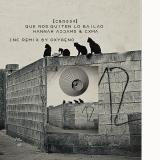
CBR009 by Hannah Addams & Cxma (Including Oxygeno Remix) Hannah Addams, Label Owner is back on the imprint after a long period of silence. First of many releases to come is a collaboration with Cxma.
This EP is the result of a whole life together in Sin City, a friendship longer than 30 years, thousands of moments, raves, parties, countless time sharing their love for music. 3 Original Mixes, Raw music, dirty bass lines, crazy random Synthe patterns. A style where both artists feel like at home. It is notorious how comfy they feel swimming on those seas. The EP gets to its maximum when a good old friend of
both, after listening to the tracks, realizes and decides he would love remixing one of them. Oxygeno Remix of "Danza de los ET" is adding the class and cleanness that was missing in the though original mixes.
Cerca:b line
- A1: Caravelli - L’étrange Docteur Personne (1977)
- A2: Pierre Dutour Et Son Orchestre - The Man From Nowhere (1970)
- A3: Jean-Claude Petit - Rocking Chair (1974)
- A4: Jean-Louis Bucchi - Nostalgia (1976)
- A5: Pierre Cavalli - Un Soir Chez Norris (1971)
- A6: Claude Vasori - Les Calanques (1968)
- B1: Francis Lai - Le Voyou (1970)
- B2: Karl Heinz Schafer - Nous N’irons Plus Au Labrador (1976)
- B3: Yan Tregger - Banana Slush (1975)
- B4: Oswald D’andrea - Thème D’amour (1977)
- B5: Eric Demarsan - La Trace (1980)
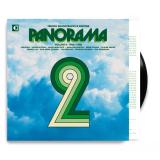
Transversales Disques proudly presents PANORAMA Vol. 2, another deep dive into rare French soundtracks, Library music, and instrumental oddities that have largely remained untouched by reissues or compilations.
This curated selection features 11 forgotten gems recorded between 1968 and 1980. It showcases the brilliance of celebrated maestros like Francis Lai, Karl-Heinz Schäfer, Eric Demarsan and Jean-Claude Petit, standing shoulder-to-shoulder with unsung composers such as Oswald d'Andréa, and Jean-Louis Bucchi.
Embark on a cinematic journey brimming with moody string arrangements, funky flanged drums, signature French basslines, and deeply dramatic atmospheres.
Deluxe Tip-On jacket LP with printed innersleeves
Including exclusive and extensive liner notes.
Vinyl Only / No Digital
- A1: Kind Hearted Woman Blues
- A2: I Believe I'll Dust My Broom
- A3: Sweet Home Chicago
- A4: Rambling On My Mind
- A5: Phonograph Blues
- A6: They're Red Hot
- A7: Dead Shrimp Blues
- A8: Preachin' Blues
- B1: I'm A Steady Rollin' Man
- B2: From Four Till Late
- B3: Little Queen Of Spades
- B4: Malted Milk
- B5: Drunken Hearted Man
- B6: Stop Breakin' Down Blues
- B7: Honeymoon Blues
- B8: Love In Vain
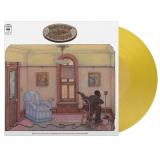
Robert Johnson was an American blues musician whose 1936 and 1937 recordings heavily influenced many, many future generations of artists. Despite the fact his recording career spanned a mere seven months, he is universally recognized as a master of the Delta blues style, one of the earliest-known styles of blues emerging from the Mississippi delta in the early twentieth century.
This second compilation of the King of the Delta Blues collects sixteen recordings previously available on the 78 rpm format and includes recordings of two Johnson songs that have since become blues standards: "Sweet Home Chicago" and "I Believe I'll Dust My Broom." In contrast to the deeply emotive songs released on the 1961 album, many of the tracks on this volume display Johnson's lighter side. In 2003 the record was ranked #424 on Rolling Stone's list of 500 Greatest Albums of All Time.
Whether he really needed to sell his soul to the devil at the crossroads to reach these great heights, we'll never know...
King Of The Delta Blues Singers, Vol.2 is available as a limited edition of 1000 individually numbered copies on yellow vinyl and includes an insert with liner notes by Pete Welding.
- 1: (I’m Afraid) The Masquerade Is Over
- 2: Let Your Conscience Be Your Guide
- 3: Hitch Hike
- 4: Pride And Joy
- 5: Can I Get A Witness
- 6: Once Upon A Time (With Mary Wells)
- 7: Stubborn Kind Of Fellow
- 8: How Sweet It Is (To Be Loved By You)
- 1: It Takes Two (With Kim Weston)
- 2: I’ll Be Doggone
- 3: Ain’t That Peculiar
- 4: Ain’t No Mountain High Enough (With Tammi Terrell)
- 5: I Heard It Through The Grapevine
- 6: Ain’t Nothing Like The Real Thing (With Tammi Terrell)
- 7: You’re All I Need To Get By (With Tammi Terrell)
- 8: Too Busy Thinking About My Baby
- 1: What’s Going On
- 2: Mercy Mercy Me (The Ecology)
- 3: Inner City Blues (Make Me Wanna Holler)
- 4: Trouble Man
- 5: Let’s Get It On
- 6: You Are Everything (With Diana Ross)
- 1: Distant Lover
- 2: I Want You
- 3: Got To Give It Up
- 4: Heavy Love Affair
- 5: Sexual Healing
- 6: Sanctified Lady
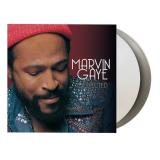
Marvin Gaye always dreamed of being a smooth crooner, “sitting on a stool, possibly behind a piano,” delivering velvety songs like Nat King Cole. But Motown had other plans. Pushed between raw R&B and polished pop, Gaye fought to find his own voice, eventually rising to become one of the greatest soul singers in history.
Motown Records released the first Marvin Gaye record in 1961 "(I'm Afraid) The Masquerade Is Over", a single intended for (radio) promotion from the singer's debut album. This was followed up by the officially released "Let Your Conscience Be Your Guide" a week later. Gaye scored his first real hit with "Stubborn Kind of Fellow" in 1962, which he had co-written himself, joking about his alleged stubbornness. He found his own unique style with the single released at the end of the year: "Hitch Hike". The foundations were now laid for an enormous series of chart successes: "Pride And Joy", "Can I Get A Witness", "How Sweet It Is (To Be Loved By You)" and "Ain't That Peculiar" are all Motown classics from 1963-1965 which are still being regularly played today after all these years. The duets he recorded with Kim Weston ("It Takes Two"), especially Tammi Terrell and Diana Ross were certainly at least as good.
He scored his biggest ever hit with "I Heard It Through The Grapevine" in 1968. "What's Going On" from the same titled album became a number 1 hit in the USA. The album was received as a masterpiece and is regarded as one of the most important records in pop history. In 1973, the artistically and commercially very successful, "Let's Get It On" album was mainly a musical ode to Marvin's love for his new muse Janis Hunter. His journey continued after a turbulent relationship, addiction and a dramatic creative rebirth in Belgium, where he crafted the global hit “Sexual Healing in 1982.
Marvin Gaye left behind timeless hits, groundbreaking albums, and a legacy that shaped the sound of modern soul. His story, from ambition to artistry, from struggle to brilliance, remains as powerful as the music he created.
Music On Vinyl proudly presents a special coloured vinyl edition of the Marvin Gaye Collected album which is available as a limited edition of 10.000 individually numbered copies on white (LP1) and silver coloured vinyl (LP2) and includes a booklet with liner notes.
- A1: Sunday In The Park With George
- A2: No Life
- A3: Color And Light
- A4: Gossip
- B1: The Day Off
- B2: Everbody Loves Louis
- B3: Finishing The Hat
- B4: We Do Not Belong Together
- C1: Beautiful
- C2: Sunday
- C3: It's Hot Up Here
- C4: Chromolume #7 / Putting It Together
- D1: Children And Art
- D2: Lesson #8
- D3: Move On
- D4: Sunday
- D5: Putting It Together
- D6: Sunday
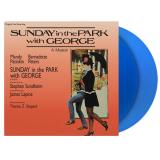
Sunday in the Park with George presents the music from the original 1984 Broadway production of Stephen Sondheim and James Lapine’s acclaimed musical. Recorded shortly after the show’s premiere, the album features the original cast performing Sondheim’s layered score, inspired by Georges Seurat’s painting "A Sunday Afternoon on the Island of La Grande Jatte".
The cast of the musical is led by Mandy Patinkin and Bernadette Peters, whose performances tell a story about art, love, and artistic legacy across two time periods. The recording includes notable songs such as “Sunday,” “Finishing the Hat,” and “Move On.” Winner of the Pulitzer Prize for Drama, Sunday in the Park with George is widely regarded as one of Sondheim’s most distinctive works. Produced by Thomas Z. Shepard, the recording won the 1984 Grammy Award for Best Cast Show Album.
The soundtrack of Sunday in the Park with George is available as a limited edition on blue vinyl and includes a 4-page booklet. The 2LP is packaged in a deluxe sleeve with linen laminate finish.
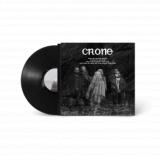
Irish drone-doom-folk act One Leg One Eye, the project of founding Lankum member Ian Lynch and veteran noise monger George Brennan, announce their new album, CRONE, out on 1 May on AD 93.
Today the group share the first track on the album, ‘Many are my Names Besides’, on which they are joined by the elemental force that is legendary actor, performer, writer and director Olwen Fouéré (Operating Theatre) contributing vocals.
Olwen Fouéré comments:
“When Ian and George first approached me to work with them, they were already creating the Crone album as a sonic invocation of the ‘sovereignty goddess’, who personifies the land and the legitimacy to rule it, in her darkest and most terrifying form. As we spoke, the triple goddess figure of the Morrigan entered my mind, reinforced by a marked presence of crows every time we met. The Morrigan is essentially a war goddess, frequently appearing as a crow in a battlefield, a death prophet, a guardian of sovereignty, and a very powerful figure in Irish Mythology.
So I invoked her energy as a starting point, using text extracts that Ian sent me from the Ulster Cycle and other sources. The voice recording was done in one day, improvising the source material while the already composed music occupied my psyche through headphones.
Listening back, at this time in our world, I can only wonder at how much blood and war the Crone/ Crow of sovereignty is preparing to unleash now. Watch out.”
CRONE is the second album from Lynch and Brennan, following on from 2022’s slowburn slab of ambient grit, …And Take The Black Worm With Me. Bewildering, psychedelic and ultimately transcendental, the four tracks of One Leg One Eye’s CRONE shapeshift and morph endlessly in a coarse miasma. Traditional song structures and vocal melody are eschewed, instead the trio directly channel energies from the rich seams of mythological significance submerged below the Irish psyche. The anger, rage and beauty of the sovereignty goddess burn a consistent and deliberate line through the album in the form of obscure incantations and dire pronouncements, the gnarled sinews that bind it all together.
Just as the subject matter of the tracks delve deeper into Irish myth and the remote past, the temporal reality of the album reaches back into the bands prehistory, with the majority of it the material being recorded by Lynch and Brennan in 2021 before One Leg One Eye was conceived of as an entity with Brennan working on the CRONE project while Lynch worked on …And Take The Black Worm With Me.
When they were there they saw a lone woman coming to the door of the Hostel, after sunset, and seeking to be let in. As long as a weaver’s beam was each of her two shins, and they were as dark as the back of a stag-beetle. A greyish, wooly mantle she wore. Her lower hair used to reach as far as her knee. Her lips were on one side of her head.
She came and put one of her shoulders against the door-post of the house, casting the evil eye on the king and the youths who surrounded him in the Hostel. He himself addressed her from within.
"Well, O woman," says Conaire, "if thou art a wizard, what seest thou for us?"
"Truly I see for thee," she answers, "that neither fell nor flesh of thine shall escape from the place into which thou hast come, save what birds will bear away in their claws."
"It was not an evil omen we foreboded, O woman," saith he: "it is not thou that always augurs for us. What is thy name, O woman?"
"Calib," she answers.
"That is not much of a name," says Conaire.
"Lo, many are my names besides."
"Which be they?" asks Conaire.
"Easy to say," quoth she. "Samon, Sinand, Seisclend, Sodb, Caill, Coll, Díchóem, Dichiúil, Díthím, Díchuimne, Dichruidne, Dairne, Dáríne, Déruaine, Egem, Agam, Ethamne, Gním, Cluiche, Cethardam, Níth, Némain, Nóennen, Badb, Blosc, Bloár, Huae, óe Aife la Sruth, Mache, Médé, Mod."
On one foot, and holding up one hand, and breathing one breath she sang all that to them from the door of the house.
Time To Get On Board A New Black Universal Express.
With each new recording Anthony Joseph presents an imaginative, personal vision of contemporary black culture, and The Ark is yet another compelling album by the award-winning Trinidadian poet and musician. This second part of a sequence of two albums launched with last year’s Rowing Up River To Get Our Names Back, finds Joseph giving full vent to his desire to explore many thought-provoking themes. However, there is a specific thread running through the glorious offering of sounds.
”I was especially interested in the idea of using Afrofuturism as a means of using the future in order to correct the wrongs of the past,” explains Joseph. “And so a lot of lyrics reimage or imagine an alternate black history. At the same time there are elements of autobiography.” The aforesaid cultural phenomenon, a view of the black experience through the prism of science fiction and ancient Egypt and Africa, as mapped out by visionaries from music and literature such as Sun Ra, Parliament-Funkadelic and Octavia E. Butler, has previously inspired Joseph. His 2006 novel The African Origins Of UFOs was a multi-hued work, and the new music shows how Joseph
has, much like all significant artists, gone on to broaden his conceptual palette, creating beguiling new stories and images set to startling rhythms and tones. Tracks such as ‘James’, with its taut, crisp bass and dubbed-up brass, and ‘Transposition Of Space (Glissant)’, a potent evocation of the influential Martiniquan theorist set in a haze of jazz guitar and ambient synthesizers, are marvels of text-sound painting.
As for ‘Baron Samedi’, shaped by a languid, almost wounded guitar line and slow rise of horns that frame Joseph’s journey to the ‘mountain of fire, almost touching the sky’ it is an epic blend of commanding vocal delivery and dramatic sonic tapestry.
Joseph led the Spasm band in the early 2000s and recorded well-received albums such as Bird Head Son and Time, in which songs were largely based on spirituals or chants enhanced by improvisation. But his musical curiosity has naturally led to collaborations, and the new work is produced by Dave Okumu, the prodigiously talented guitarist-vocalist-composer known as the leader of Mercury Music Prize-nominated The Invisible, and who was also a member of the seminal band Jade Fox.
Having first performed together at a show curated by influential saxophonist-flautist Shabaka Hutchings at the storied Total Refreshment Centre In London during lockdown, Joseph and Okumu struck up a rapport that further developed when the former guested on he latter’s album. With the connection made Joseph knew Okumu was the ideal producer for this latest project, which has a freewheeling, almost black psychedelic thing. After sifting through demos and loops the guitarist made on pro-tools the poet started to live with the music. Many months later words began to take shape. Joseph then went into the studio with Okumu’s band and set about creating a magnum opus. Boasting a stellar cast such as vocalist Eska Mtungwazi, trumpeter Byron Wallen and keyboardist Nick Ramm, The Ark is a highly intricate musical mosaic framed by simmering funk grooves, wily jazz improvisation and haunting dub effects. Through the use of many genres the music has simply become its own genre.
The Ark can be perceived as a vessel or means of transport to new worlds, along the lines of Sun Ra’s Ark or Funkadelic’s Mothership, and the material it contains is a unique blend of who Anthony Joseph is and how he sees the world and society in these stimulating, challenging times. “It balances the personal with the universal in a much more vulnerable, accessible way than on previous albums,” Joseph explains.
“It has become less about a personal experience and more about a collective, communal experience in which the artist is conduit, messenger, urban griot.”
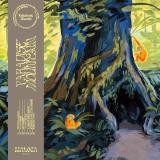
Brussels-based Maloca presents Paradise Mountain, the new EP from Katatonic Silentio, DJ and production moniker of Italian sound artist Mariachiara Troianiello. Positioned in counterpoint to her darker,
more visceral work, the record delicately folds Detroit electro and techno drum structures into a softened New Age glow, generating environments that breathe, shimmer, and slowly coalesce.
Across the EP, tracks unfold gently, rife with wet modular tones, chromatic arpeggiations, and light-touch percussion which drifts in and out of focus, blurring the line between dancefloor function and inward-facing sound art. Paradise Mountain ultimately traces a slow ascent through luminous, carefully crafted terrain - quietly joyful and deeply hypnotic in its approach.
- A1: Herbaliser – A Mother
- A2: Small World – Livin’ Free (Soundtrack Mix)
- B1: Tango – Spellbound
- B2: The Lab Rats – Give My Soul
- B3: Statik Sound System – Revolutionary Pilot
- C1: Jmj & Flytronix – In Too Deep
- C2: Aquasky – Kauna
- C3: James Bong – Mr. Kiss Kiss Bong Bong (Big Brothers Dubbing You Full On - Dub Tractor Remix)
- D1: Hardfloor Presents Dadamnphreaknoizephunk – Dupdope (Dubdope)
- D2: Thievery Corporation – Shaolin Satellite
- D3: Kruder & Dorfmeister – High Noon
- E1: Beanfield – Keep On Believing
- E2: Sapien – Que Dolor
- E3: Shantel – Bass And Several Cars
- F1: Karma – Look Up Dere
- F2: Showroom Recordings – Radio Burning Chrome
- F3: Kruder & Dorfmeister – Black Baby (Dj-Kicks)
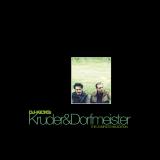
For its 30th anniversary, Kruder & Dorfmeister’s DJ-Kicks is available for the first time in mixed form on 3LP, remastered by Bernie Grundman and packaged in a special box set including original imagery. Kruder & Dorfmeister's rendition of the series created an era defining moment, which tied together a glowing array of musical registers. The Viennese downtempo royalty blended a fusion of slowed down moments across many genres with rolling Drum and Bass from the likes of Aquasky, the melting acid lines of deep Hardfloor and the 90s boom bap sampling, smoked out atmospherics of Thievery Corporation amongst many more.
These masters of mood channeled the sound of a moment with their DJ-Kicks, which still retains a certified cinematic sheen, the patina of the real – curation and mixing at its most playful and refined. It remains to this day one of the most recognizable DJ-Kicks and mixes of all time. Containing two certified cuts from K&D themselves; the wooze is strong on “High Noon” with Dorfmeister's intoxicating jazz flute licks and a trembling harmonica atop a mirage of breaks. Their DJ-Kicks original and legendary tune “Black Baby” closes the mix providing a piece of grandeur, riding off into the distance deep to the vanishing point.
When the mix dropped in 1996, the slo-beat pioneers were among the hottest producers in the dance universe. Even though they only produced two unreleased maxis, names like Count Basie, Bomb The Bass, Alex Reece or United Future Organization had some of their tracks remixed by these exceptional producers. Rumour has it during the work for DJ-Kicks and their debut album they refused doing remixes for U2, Grace Jones, Elvis Costello and the Fantastic Four! ‘DJ-Kicks: Kruder & Dorfmeister’ took its place in the pantheon a long while back, effortless in its ability to traverse sounds, styles and tempos while retaining a selection which remains timelessly recognisable as: Kruder & Dorfmeister.
- 1: A Family Affair
- 2: Angry Times
- 3: Bass Guajira
- 4: Noisy World
- 5: Brooklyn Impression
- 6: Spherical Intermezzo
- 7: Nana
- 8: Red Hook - New York
- 9: Delay
- 10: Sunday Song
With Gregor Huebner (violin, electronics) and Veit Huebner (bass, electronics), a vibrant musical dialogue unfolds between two brothers. Using loop stations and live effects, the acclaimed jazz musicians create layered, almost orchestral soundscapes—both transparent and powerful, energetic yet deeply poetic. Their music thrives in the moment: lines are looped, transformed, and reshaped into virtuosic improvisations. Jazz blends with classical influences, grooves meet sonic experimentation, and delicate chamber-like passages erupt into dynamic outbursts. Original compositions, jazz standards, and newly interpreted classical works sound intimate yet powerful in the duo format. Known as two-thirds of the trio Berta Epple, the Huebner brothers now present themselves for the first time as a pure duo. The result is a distilled artistic essence of more than four decades of shared and individual stage experience, with electronics serving not as an effect but as a third musical voice.
An improvisational musician, composer and poet, Titi Robin has travelled extensively since the early 1980s – from Brittany to Catalonia, India to Morocco – crafting his own musical aesthetic. Throughout his journey, he has built bridges between his native Anjou, where he still resides, and the Gypsy cultures of many lands. Neither a compilation nor a mere summary, this selection offers a certain perspective on his body of work, which has earned him praises by luminaries like Peter Gabriel or Brian Eno.
Despite his many travels, it would be a mistake to view Titi Robin as an explorer of the "elsewhere". While he plays the guitar, the bouzouq, or the oud, he does not seek to imitate a Gypsy, Syrian, or Greek style; rather, he plays in a voice that is uniquely his own—a syncretism of his personal journey, from his teenage years playing at Moroccan community celebrations to his collaborations with Gypsy musicians from Southeast France and India. In Angers, in the Roseraie neighbourhood, he was immersed in the rhythms of Moroccan chaabi from an early age. Later, he frequented the gypsy neighbourhood of Saint-Jacques in Perpignan. These encounters nourished an aesthetic territory he likes to call ‘Titistan’, which includes Perpignan and Rajasthan. He views Mediterranean culture as "a bridge, a crossroads, a network of long-standing links woven between North and South, East and West." In this selection, you will hear the palmas marking the compas of the Catalan rumba; strings enveloping the melody of the bouzouq, answered at times by the clarinet or the kaval flute popular in the Balkans and Anatolia.
Produced between 1993 and 2011 these songs have been fully remastered and are presented here for the first time on vinyl, with extensive liner notes.
Give me some crystal meth, put it in a line and snort it - there you go."
Ella Fitzgerald meets Gangsta Rap and the Beach Boys encounter their despotic father. AMERICAN PSYCHE by Raymond Pettibon & Oliver Augst is an ABC of Jazz standards and nostalgia on speed, "that the world will never forget."
2026 Repress
The Illegal Disco Limited series is already so wrong it's right and once again it is the inimitable Monsieur Van Pratt dropping two undeniable edits on this one. 'What About Me' kicks off and is a clever flip of a classic groove that has a Chic-style baseline keeping busy down below natty piano work and with hefty drums powering it on. 'Sunset
Driver' is a chugging retro-future disco sound with Michael Jackson vocals from an elusive demo. On the flip, Van Pratt teams up with Boogietraxx for a bright take on the Japanese viral fav 'Stay With Me' and Boogietraxx then takes over solo, first with the funk-driven 'Moving Down the Line' before closing with the feel-good spark of 'Pretty Good Feeling.'
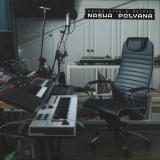
We present an EP from two house masters Artem Stan & Matpri on Analog Concept records.
This record was born like in the classic 90s from jam sessions in the studio, when musicians caught the groove and connected their deep universes, showing true love for house music. Everything is combined here - the sound of drum machines 909 and not only, atmospheric acid impulses of 303, classic pads that paint these paintings bright and filled with deep meaning, as well as much more. Amazing two sides and four compositions, each with its own story.
The Midnight Seduction track opens the telling of these stories on side A. From the first seconds, immersing in the atmosphere of synthesizer temptation, the analog bass line combined with the default drum section and elements of bright metal claps quickly gain the necessary energy and immerse in the images of a closed nightclub with long corridors and hidden dance floors. The light plume of the classic M1 organ and the accentuating Acid lead maintain balance. Secret nocturnal seduction, light ecstasy and an atmosphere of love.
French Kiss - everything is great here, as soon as you listen to the harmony of accordion-like synthesizers and deeply addictive pads, you are instantly transported to the image of Parisian streets. Elements of bells, a rhythm section filled with unpredictable percussion, acid inclusions and an unexpected immersion into a broken beat in the middle of the composition, a real deep French kiss.
Matpri is known for its sophisticated approach to music and is rightfully the guru of micro and minimal house. Having created the maximum sound quality of the rhythm section and the deep bass that was addictive from the first seconds, mixing old-school vibe, while not losing touch with his minimalistic sound image, he filled the House Template track with the smallest details and percussion, which is confidently based on the B-side.
Four certainly high-quality compositions were created in the studio of Artem Stan in the mountains of Krasnaya Polyana and one of the tracks on the B-side - "Nasha Polyana" - is dedicated to this location, it conveys a certain playful atmosphere of a mountain village with a vibe of complete freedom and daily carefree. A complete release with decent house music.
Celebrating a decade since its live debut, Detroit-based artist Rebecca Goldberg announces the first-ever vinyl release of her original score for A Trip to the Moon, the iconic 1902 silent film by Georges Méliès. Composed in 2016, Goldberg’s reimagining of the groundbreaking film—originally titled Le Voyage dans la Lune—translates early cinema fantasy into a minimalist electronic soundscape shaped by synthesis, texture, and composed foley.
Goldberg’s approach honors the wonder and theatricality of Méliès’ vision while grounding it in Detroit’s lineage of forward-thinking electronic music. The score premiered in Paris in 2016 with live performances at Silencio, the club founded by David Lynch, and at Bar à Bulles, located above the legendary Moulin Rouge. The Paris events were produced by Why So Serious Productions and marked a rare convergence of experimental electronic performance and historic cinematic space. Goldberg also presented the live score in her native Detroit, reinforcing the transatlantic bridge that has long shaped her conceptual record projects.
Now, ten years later, the score will be released for the first time on vinyl in a limited edition of 300 copies. The pressing captures the nuance of the original live compositions while offering listeners a new way to experience the interplay between silence, rhythm, and sonic illusion. As with Goldberg’s previous conceptual 12" releases, the vinyl format serves not only as a medium but as an artifact that preserves and reframes cultural memory.
Gatefold Sleeve
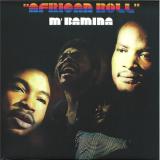
M’Bamina – African Roll (1975)
The story of an album born between Africa, Italy, and the nightclub culture of the 1970s
In the heart of 1970s Italy — a country undergoing profound social change and a music scene just beginning to open itself to distant sounds and cultures — an extraordinary, almost improbable story took shape. It is the story of a group of young African musicians who found their way to Europe, of a Turin nightclub that became a crossroads for communities and experimenters, and of an album which, released in small numbers and largely unnoticed at the time, is now considered a rare jewel of Afro-fusion.
The band called themselves M’Bamina — an ensemble of musicians from Congo, Cameroon, and Benin, who arrived in Italy in the early Seventies. Settling between northern Italy and the Pavia area, they began performing in small clubs and community events, bringing with them a vibrant rhythmic heritage: African polyrhythms, call-and-response vocals, funk-infused bass lines, and Caribbean or Afro-Latin colours absorbed along their musical journeys. Their raw, contagious energy on stage quickly drew attention.
Meanwhile, in Turin, another story was unfolding. There was a venue becoming almost legendary: Voom Voom, one of the city’s liveliest nightclubs, run by Ivo Lunardi. The club attracted an eclectic crowd — students, artists, foreigners, night owls — and Lunardi quickly understood that the dancefloor wasn’t just a place for music, but a melting pot for a new kind of cultural energy. Out of this vibrant atmosphere came his idea: to turn the club’s name into a small independent record label, Voom Voom Music, capable of capturing the spirit of those years and giving voice to unconventional projects.
When Lunardi heard M’Bamina, he immediately sensed that this was the sound he had been searching for: fresh, different from anything circulating in Italy at the time, and capable of blending African tradition with funk and European sensibility. He brought them into the studio.
Production was handled by Lunardi along with Christian Carbaza Michel, while the engineering was entrusted to Danilo Pennone, a young sound technician with a sharp, intuitive ear.
The recording sessions — held in Turin in 1975 — produced a remarkably warm and direct sound. The music feels almost live: grooves rooted in African tradition, but open to funk-rock structures and modern arrangements. It is a natural fusion, never forced. Tracks move between tribal rhythms, funk basslines, light electric guitars, congas and Afro-Latin percussion, with call-and-response vocals and melodies that echo both Congolese tradition and the lineage of Latin jazz. Not by chance, one of the album’s most striking tracks, Watchiwara, reinterprets a Latin standard through M’Bamina’s own rhythmic language.
The album was titled African Roll — a name that was already a statement of intention. It is African music that “rolls,” that moves, adapts, transforms within a new geographic and cultural setting. It is not strictly Afrobeat, nor Congolese rumba, nor Western funk: it is a spontaneous, hybrid blend, shaped more by lived experience than by any calculated aesthetic program.
When African Roll was released, the world around it barely noticed. Distribution was limited, and 1970s Italy had yet to develop a cultural framework for receiving such music. The national music press rarely paid attention to African or “world” productions. The album slipped into silence — though the band’s own story did not.
M’Bamina continued performing across Europe and Africa, even sharing a stage in Cameroon with none other than Manu Dibango. By the late Seventies, they moved to Paris, signed with Fiesta/Decca, and recorded a second LP, Experimental (1978). Meanwhile, the peculiar record they had made in Turin began to resurface quietly among vinyl collectors, Afro-funk enthusiasts, and DJs hunting for forgotten grooves.
That is when the album’s fate began to shift.
Over the decades, African Roll emerged as an almost unique document: a snapshot of an intercultural Italy before the word “intercultural” even existed, a fragment of migrant history, a spontaneous experiment in musical fusion born far from major industry circuits but rich in authenticity. Original copies began commanding high prices on the collector’s market, and the album became recognized as one of the hidden classics of European Afro-fusion from the 1970s.
Today, more than fifty years later, this reissue finally restores visibility and dignity to a project that deserves to be heard, studied, and celebrated. It is not simply an album: it is the testimony of a rare cultural encounter, born in an Italy unaware of how fertile such exchanges would one day become.
It is the story of a visionary producer, an extraordinary band, and a fleeting moment in which music, migration, and nightlife came together to create something genuinely new.
African Roll is — now more than ever — the sound of a bridge: between continents, between eras, between cultures. A record that, after rolling far and wide, has finally come home.
The Illegal Disco Limited series makes its return with a purple vinyl treat. On the A-side, Monsieur Van Pratt delivers two sure-fire weapons: 'What About Me', a familiar sample flipped for today's dancefloors, and 'Sunset Driver', a killer reconstruction of MJ's rare demo. Flip over for the B-side, opening with a collab between Van Pratt and BoogietraxxAon the viral Japanese gem 'Stay With Me'. BoogietraxxAthen takes control with the funky 'Moving Down the Line' before closing the record in style with 'Pretty Good Feeling'. A must-have for disco and edit heads alike.
2026 Repress
French DJ and producer Hemka makes a striking solo debut on Mutual Rytm with 'Introspection'.
Born in Marseille and based in Paris, Hemka has been shaping her take on techno for over a decade, steadily growing her international presence with music on respected imprints such as Token. Her music fuses the raw energy of 90s techno with modern textures and is fast-paced, groovy and laced with subtle psychedelia. By weaving in her own vocals, Hemka adds a deeply personal and authentic layer that resonates with both the body and mind. Following the strong reception of her track 'Fragrance' on the 'Federation Of Rytm III' compilation, this potent new EP is a powerful reflection of her bold, emotional and forward-thinking artistic voice and the start of an exciting new chapter with SHDW's Mutual Rytm.
'Abyss' kicks off with tightly coiled, heavy-hitting drum funk and eerie synths that never let up while ghoulish vocals layer in extra darkness and anxiety. 'Time' is another sleek, stripped-back but banging wedge of linear techno excellence and 'I Can't Shine' layers up paranoid vocals with high-speed glitches and rubbery drums to ensure maximum impact in the club. The excellence continues with 'The Bad Place' with booming drums and moody synth atmospheres, getting you up on your toes and keeping you there. Last, 'Unchanged' fizzes with static electricity as wordless vocals refract around the mix next to wispy synths and icy hi-hats. Digital bonus cuts 'Voice In My Head' and 'Eternity' round things out with more heady and intense techno for driving deep into the night.
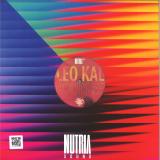
NUTRIA Sounds proudly welcomes Leo Kal to the family with his debut EP, The Roots EP (NUTRIA 004). Across five tracks, Leo Kal delivers a deeply musical statement—grounded, expressive, and rich with intention—perfectly aligning with what NUTRIA Sounds continues to cultivate: organic sound, essential rhythm, and soulful movement.
The Roots EP showcases Leo Kal’s true musicianship, blending groove, harmony, and texture into a body of work that feels both timeless and forward-thinking. Each track is driven by feel and craft, emphasizing connection over excess and allowing the music to breathe naturally on the dancefloor and beyond.
Celba opens the EP with an uplifting, bouncy groove—light on its feet yet firmly rooted, setting a joyful and inviting tone.
Station Verlaine soars effortlessly, carried by smooth, flowing keys that glide across a warm, rhythmic foundation. Roots, the EP’s title track, shines with warm piano lines and earthy percussion, embodying the spirit and intention behind the project.
Round 50 delivers the EP’s most club-friendly moment, channeling a spacey, late-’90s feel with a modern, refined touch.
Second Eyes closes the EP on a downtempo, junglesque note, wrapping the listener in texture and atmosphere while leaving them wanting more.
With this release, NUTRIA Sounds continues its mission to highlight nutrient sounds for the soul and the feet—music that is honest, rooted, and deeply connected. Leo Kal’s debut stands as a confident and inspired entry into the catalog, reinforcing the label’s commitment to artistry, balance, and musical integrity.
Electro as its best! SS001 marks the first transmission from Serpiente Sounds, a debut 12" split that keeps it lean, direct, and floor-focused. Viewtiful Joe handles the A-side with two cuts that balance Electro snap and Detroit discipline: clean drum architecture, crisp low-end, and synth lines that feel both futuristic and functional. On the flip, Subversive brings two late-night weapons with a colder edge and a deeper swing. SS001 is a debut statement with zero filler, a compact toolkit of Electro/Detroit tools for the booth.