“Tunggak Semi” is the third album from Indonesian musician and producer Bambang Pranoto. Originally released in 2000, it’s an exemplary slice of what has become his signature style, a dream-like meditation on aspects of nature, combining elements of accordion, acoustic guitar, flute and percussion. The compositions cross eastern and western notation to inhabit a world of their own, a world between worlds, where harmonies reflect the beauty and joy of nature.
Bambang had a rather atypical entry into music, and studied electronics and telecommunications, before he took advantage of the wave of computer software like Cubase and Protools in the 1990s that enabled him to set about recording his own compositions and soundscapes. After playing in groups, he developed his own approach to constructing his productions. He invites musicians to record interpretations of his themes, which he then pieces together in Protools like a jigsaw puzzle. “The musicians have never even met!” he chuckled on a Skype call.
“Tunggak Semi” refers to the giant trees that appear all over Bali, and their process of renewal and regeneration. “If you cut the tree, and leave the roots, they will grow again. Everytime we cut, they grow again. It’s limitless. This philosophy means there’s always something new coming, whether an idea or music, anything.” This approach has grown out of Bambang’s studies into meditation, including Indian and Chinese scriptures, also Balinese and Indonesian religions. Music, like meditation, is a daily practice, and acceptance of the music and its ‘unfinishedness’, forms a central part of the process.
“We must not just think, but we must also feel, and we must accept that feeling,” explains Bambang, and that’s a step of opening one’s mind to possibility. It seems in keeping with two of Bambang’s musical inspirations, namely Ryuichi Sakamoto and Peter Gabriel, both known for their love of world folk music, and fusion of musical traditions. That’s mirrored in Bambang’s own collage-like approach, recording elements and piecing them together to make something unimagined. While the acoustic sound palette for “Tunggak Semi” is rooted in live recordings, Bambang is not afraid to put the digital technology to good use.
“We have to use the computer as a tool in the best way we can,” Bambang says. “Sometimes people say music is made by people, not by the computer, but it’s just another piece of equipment. What can we compose from this equipment? It’s technology music!”
Written and produced by Bambang Pranoto at interactive garden studio, Depok, Bogor between September and December 2001. 2025 version remastered by Wouter Brandenburg at Brandenburg Mastering.
Search:b o c production
- A1: Ersatz
- A2: Demain Berlin
- B1: Mauve
- B2: Peine Perdue
First time reissue of this French cold-wave / minimal-synth treasure.
November 1981 – In the heart of autumn, we set off in two cars along the Nationale 1 (!) to reach Choisy-le-Roi, where a 16-track studio was waiting for us—a place where, over the course of a weekend, we would finally be able to carve our own grooves into vinyl. We were quite nervous, as Guerre Froide had already been around for a year and a half. Our elders in Kas Product had already released two EPs—one with four tracks, the other with three—in 1980, even though they’d started only a few months before us. Admittedly, there wasn’t really a sense of urgency—some of us came from the punk movement, where the prevailing mood was still very much No Future, even if we’d long since stopped believing in it... And yet others had truly lost everything, like those from the generation before us. The reasons, ironically, were often the same: heroin and/or love—hard drugs, in both cases.
Speaking of which, I had a terrible stomach ache—due to nerves or some form of tension—which forced us to make a pit stop in the Oise region so I could rush to the toilet of a local café. That same stomach discomfort would hit me again once we arrived at the studio—whose name, incidentally, I’ve since forgotten...
We had gotten there thanks to the generous initiative of a friend, Sylvain S., known as “Perlin” (what a phonetic coincidence!?), who had specifically created the Stechak Products label to produce our record. Stechak because it was consistent with his earlier association called Tchernoziom, and Products as a plural tribute to the trailblazers from Nancy.
Guerre Froide originally consisted of four members: Fabrice Fruchart on guitar-synth (Korg MS-20), Patrick Mallet on bass, and Gilbert Deffais, known as “Bébert”, on Korg drum machine. At the time, I was already singing in a rock/post-punk band called Stress, and that’s how Guerre Froide picked up the bad habit of rehearsing in the same basement in Amiens as Stress. Within a month or two, we had half a dozen songs. We then had the opportunity to record a 4-track demo with a friend from Radio France Picardie, and to perform in October at a festival held at the Amiens municipal circus. Then came the now-legendary concert on November 11 at B.J.’s Club. After that, we self-produced and released 50 completely DIY copies of a cassette titled Cicatrice. A few concerts later—after Jean-Michel Bailleux had joined us on bass and Patrick had switched to guitar, which felt more natural to him—and with more concrete plans starting to take shape, we had to find a new rehearsal space and start renting a room.
Then came the moment when Fabrice told us he was leaving to go study in Lille... After the June 19, 1981 concert, which was naturally dubbed “Farewell to 2F,” Marie-José, Bébert’s wife, offered to take over on synth.
That’s when Perlin, who was a close friend of the Deffais couple and a great fan of our music, offered to fully finance the production of a 4-track 12-inch EP—covering the studio time, mastering, pressing, and artwork. What up-and-coming band would have turned that down? An improvised contract was signed with each member of Guerre Froide. The first step was choosing which four songs we would record. Berlin 81 was an obvious pick, having already become the group’s flagship track. We wanted to avoid reusing songs from Cicatrice, so the focus shifted to new material—some written before, some after Fabrice’s departure. Ersatz, for example, was his composition, but Mauve and Peine Perdue, which were also selected, were both written by Patrick.
- Breadfan
- Baby Please Don’t Go
- You Know I’ll Always Love You
- You’re The Biggest Thing Since Powdered Milk
- In The Grip Of A Tyrefitter’s Hand
- Riding My Nightmare
- Parents
Never Turn Your Back on a Friend" is the third studio album by Welsh heavy metal band Budgie, released on 18 May 1973.
This was drummer Ray Phillips' final appearance on a Budgie recording to date.
The album shows the band continuing the successful heavy metal formula of their previous album Squawk,
adding a hint of speed metal in the single "Breadfan," one of the band's best known songs.
- In For The Kill
- Crash Course In Brain Surgery
- Wondering What Everyone Knows
- Zoom Club
- Hammer And Tongs
- Running From My Soul
- Living On Your Own
In for the Kill! is the fourth studio album by Welsh rock band Budgie. It was released through MCA Records in May 1974.
The album includes the song "Crash Course in Brain Surgery," originally released in 1971
as a single and was included on their self-titled debut album.
The song was covered by Metallica for their 1987 EP The $5.98 E.P. - Garage Days Re-Revisited,
while the album's title track was covered by Van Halen during the group's club days
- A1: Lord Finesse Intro
- A2: Return Of The Funky Man
- A3: I Like My Girls With A Boom
- A4: Yes You May (Feat. Ag Aka Andre The Giant And Percee P)
- B1: Hey Look At Shorty
- B2: Praise The Lord
- B3: Save That Shit
- B4: Show Em How We Do Things
- C1: Isn't He Something
- C2: Fat For The 90'S
- C3: Stop Sweating The Next Man
- C4: Funky On The Fast Tip
- D1: That's How Smooth I Am
- D2: Party Over Here
- D3: Fuck Em
- D4: Kicking Flavor With My Man (Feat. Percee P)
Return Of The Funky Man is the second album by New York legend Lord Finesse. Originally released in 1992, this album was highly anticipated after his debut on the scene just a few years prior. Having already established himself as a punch-line king capable of humorous storytelling, Return of the Funky Man cemented Finesse as a top-notch producer. Tracks such as “Fat for the 90s” and “I Like My Girls With A Boom” showed the Funky Man truly living up to his name, both on the mic and behind the boards. After the gruff-voiced “Lord Finesse Intro”, the album goes on a nonstop journey of witty wordplay over genre-defining boom bap beats. Along for this ride, Finesse brings D.I.T.C. brethren Showbiz and Diamond D on the production side (plus Aladdin & SLJ) while AG and (at the time) newcomer Percee P share mic duties. Topically, Finesse doesn’t stray too far from reminding us why he’s earned the title The Funky Man. Whether it's bragging and boasting, or breaking down females, he has a way of doing it with a tongue-in-cheek type way that is sure to have you letting out a laugh or two every couple of lines. He possesses that rare quality of being a solo MC that is capable of entertaining throughout the entire hour plus listening experience. Standout tracks such as “Yes You May”, “Stop Sweating the Next Man”, and “Party Over Here” all show why this album was instantly praised by fans and critics alike.
- A1: To The Blade
- A2: Distant Past
- A3: Get To Heaven
- A4: Regret
- A5: Spring / Sun / Winter / Dread
- A6: The Wheel (Is Turning Now)
- B1: Fortune 500
- B2: Blast Doors
- B3: Zero Pharaoh
- B4: No Reptiles
- B5: Warm Healer
Released in 2015, Get To Heaven is the third studio album by British art-rock band Everything Everything. The album blends elements of indie rock, electronic, and experimental pop, showcasing the band's signature complex rhythms, sharp lyricism, and dynamic vocal performances by frontman Jonathan Higgs.Featuring standout tracks like "Distant Past", "Regret", and "No Reptiles", the album explores themes of political unrest, media influence, and societal anxiety, wrapped in vibrant, high-energy production. Get To Heaven received widespread critical acclaim for its bold sound and thought-provoking lyrics, solidifying Everything Everything as one of the most innovative bands of the 2010s.With its infectious hooks, intricate instrumentation, and emotionally charged songwriting, Get to Heaven remains a defining album in modern alternative music, appealing to fans of intelligent, genre-blending rock.This much sought-after cult classic is now reissued on 1LP for the first time in a decade. Get To Heaven is available as a limited edition on translucent magenta coloured vinyl.
Makin Moves present two supreme releases featuring one of our favourite singer-songwriters Shezar! Side A features Natural High, where Shezar teams up with French producer Laroye, who has worked with labels from Freerange to Glitterbox Records, always exploring genres from broken beat, disco to house. Here we get a quality piece of broken beat and heartfelt song from Shezar. On the B side is her collaboration with UK producer Wipe The Needle and French producer Venus Beats, both long-time contributors to Makin Moves including the hit Tenderly with Josh Milan. The original mix is a killer soulful house meets broken beat track with energetic keys, with Shezar and her sister JayBaydelivering an uplifting vocal about positivity, unity and overcoming adversity: We Shall Overcome. On the flip, the legendary Frankie Feliciano brings his exceptional NYC production and musicianship with a stunning remix.
Decades on, the time has come for Island Issues, in collaboration with Onis, to proudly dust off a selection of César de Melero & Mr. Claude’s productions that have shaped the highs of countless nights.
Side A opens with D.O.D.’s “1, 2, 3, 4”, a trusted tool for DJs worldwide since 1997. While the elusive “De Pompidou’s Mix”, previously only available on the Sónar ’99 CD compilation, makes its first appearance on vinyl, revealing a deeper, late-night dimension. On the flip, D.D.D.’s “Moovin’ (Bisexual Mix)” channels pure 1996 rave energy, turning the core sample shared with the A-side into a raw and infectious groove. Closing the record, “The Struggle” weaves a James Baldwin speech into layers of warm, old-school deepness, sustaining tension and purpose until the very last bar.
Dedicated to Pro-Zak Trax founder Alex Lamarque.
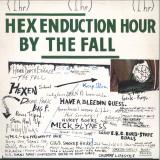
1982 was a decisive year for The Fall. Their critically acclaimed album ‘Hex Enduction Hour’ was released in March on Kamera Records, closely followed by ‘Room To Live’ in September of that year. ‘Hex Enduction Hour’ was the fourth studio album by The Fall, building on their lo-fi production and featuring a two-drummer line-up. The album was recorded in Reykjavik, Iceland and Hitchin, Hertfordshire. Featuring the classic line-up of Mark E. Smith alongside Steve Hanley (bass), Craig Scanlon (guitar), Karl Burns (drums), Paul Hanley (drums) and Marc Riley (guitar). This is another fine addition to Cherry Red’s series of deluxe Fall re-issues – “Fall Sound Archive”. ‘Hex Enduction Hour’ and ‘Room to Live’ are also available on a 7-CD boxset – “1982” Founded by its only constant member, Mark E. Smith, The Fall formed in Manchester in 1976 and were one of the most prominent post-punk groups in the world. Musically, there may have been several stylistic changes over the years, but it was often characterised by an abrasive guitar-driven sound and frequent use of repetition, always underpinned by Smith's distinctive vocals and often cryptic lyrics. “They are always different; they are always the same.” John Pee
"Crisis Del Nuevo Siglo" is the first installment of a conceptual EP produced by Impakto 83.
Inspired by the rhythmic harshness of new beat and the mechanical of EBM, this work reflects the industrial impact of a fractured era — the crisis of a future past.
A distorted criticism to the age of mass production.
Here, an endless workday.
- 1: Intro
- 2: Bear Hill
- 3: Pomogranite
- 4: Veterans Only Billionaire Rehab (Skit)
- 5: Wild Corsicans
- 6: 1 Life
- 7: Barber Shop Bullies (Skit)
- 8: Open Doors
- 9: 600 School
- 10: The Guy That Plans It
- 11: Da Heavies
- 12: Officer Full Beard (Skit)
- 13: The Omerta
- 14: Get Outta Here
- 15: The Sober Dose Gift (Skit)
- 16: Debra Night Wine
- 17: Mac & Lobster
Color Vinyl[27,10 €]
Focus Track: Bear Hill Album Description: Raekwon’s The Emperor’s New Clothes is a sharp return to form, showcasing the Wu-Tang veteran’s lyrical precision and timeless street wisdom. The album is powerful with equal parts - high-quality bars and carefully sculpted production. Raekwon recruits a stacked lineup of guests, including Nas, Griselda, Method Man, Inspectah Deck, and Ghostface Killah, injecting the project with gritty energy and legacy chemistry. Marsha Ambrosius and Stacy Barthe provide smooth, soulful hooks, adding emotional layers to the hard-edged verses. Production comes courtesy of Nottz, Swizz Beatz J.U.S.T.I.C.E League and more. The LP is a reminder of Raekwon’s enduring power as a lyricist and curator. A veteran artist showing that mastery doesn’t need excess. The Emperor’s New Clothes is regal, streetwise, and sharply tailored for those who value craft.
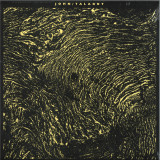
If there is one person, who has been causing a stir on the international club circuit recently, it is Barcelona's John Talabot. Already his debut “My Old School“ (which is meant literally by the way) on Permanent Vacation in 2009 and shortly after that the single “ Sunshine”, which he put out on his own Hivern Disc imprint, made him one of the most promising musicians of the Spanish electronic scene. And those two releases also already set the mark for John Talabot’s unparalleled music: raw, loopy, heavy on the kick drum, sample based, moderate on the tempo, distorted on the drums and light years away from the clean and ever revolving house sound of today. This unique style which also blends influences from afro beat, Detroit techno, Chicago house and cosmic disco, but also northern soul or the energy of Flamenco, immediately turned some heads around. James Murphy, Âme and Aeroplane started including Talabot music in their sets like it was the most natural thing. However - and this is quite rare - he not only gained legions of fans in the house and disco community, but also amongst the leftfield pop and indie rock followers. NME and Resident Advisor both had “Breakthrough“ features on John Talabot and he can be proud of a “Best New Music“ dubbing on
Pitchfork. (Being rather elusive on showing his face in magazines or the web it also came to some funny rumors that John Talabot was the alter ego of a well-known techno producer from Detroit).
At the same time he drew the attention of like-minded artists like James Holden and Luke Abott from Border Community, Blondes or Delorean, which lead to a bunch of fertile collaborations: Luke Abbott and Blondes remixed Talabot’s “Sunshine“ single , John Talabot remixed a track by Delorean and vice versa Delorean’s Ekhi contributed vocals to the track “Journeys “ on John’s album). Another example is the Young Turks Label (home of Jamie XX, Holy Fuck, El Guincho or SBTRKT ) on which he released the “Families“ EP in 2010. It was praised beyond limits. Pitchfork for
instance hailed: “… where pop and house influences sweetly buffer up against one another to provide an unyielding sense of elation“ and even brought Talabot a comparison with artists like Four Tet or Caribou.
While staying true to his sound, John Talabot has nevertheless shown a constant evolution as a producer since his first release. He has traced a solid musical path that has turned him into one of the big references of European House and has made him also a highly in demand Remixer (for the likes of The XX, Francesco Tristano’s “Aufgang” project, Shit Robot on DFA, Thaiti 80, Joakim or Teengirl Fantasy to name just a few ).
A progression that now crystallizes in “ƒin”, his first full-length album for Permanent Vacation. A record, in which the Barcelona mastermind sets aside the danceable immediacy to expand his stylistic palette more than ever. For that purpose, Talabot melts all the elements that have constructed his distinctive sound until now and makes them emerge from a new perspective, in which the construction of complex song structures, intricate rhythms and superpositions of ever-evolving melodies and atmospheres pick up the baton of the “a kick-drum and a sampler” philosophy of his initial productions. The result brings us 11 tracks (we should call them songs really!) dominated by dark ambiances, gaseous textures and bittersweet moods that, above all, reveal a kind of vivacity that’s really hard to find in contemporary electronics. “Fin” is far from being a track collection. From the majestic opener “Depak Ine“ to it’s solemn ending with
“So Will Be Now“ , one of the two tracks that features Talabot’s soul and label mate Pional, each song traces an overall dialogue with the rest, culminating a highly emotional journey through Talabot’s always compelling and unique musical vision.
Celebrating 50 years since the release of the iconic Cathedrals album, U.S. disco legend D.C. LaRue returns with never-before-released remixes of all four original classics—pressed on strictly limited vinyl.
Top contemporary disco producers The Reflex, Dr. Packer, and Mannix breathe new life into LaRue’s 1976 masterpiece:
The Reflex (Stevie Wonder, Cerrone) delivers dancefloor-driven edits using digitized analog multitracks.
Dr. Packer (First Choice, Loleatta Holloway) reinvents one of LaRue’s biggest hits with fresh, soulful energy.
Mannix, head of Dafia Records, adds deep, dubby textures to complete this dynamic remix package.
Each track is respectfully reimagined—maintaining the emotional depth of the originals while enhancing clarity, rhythm, and relevance with modern production.
Bonus: Includes two standout remixes from LaRue’s second LP The Tea Dance—"Overture" (The Reflex) and "O Ba Ba" (Mannix).
These remixes aren’t just nostalgic—they’re timeless. Essential for collectors, DJs, and anyone who lives for disco.
Grab your copy before it’s gone.