Reissue of early Japanese house outing by Junichi Soma, Shuji Wada and Katsuya Sayo. Comes with insert with liner notes.
All musical movements require a spark to set them alight; in the case of Japanese house music, that spark was provided by the forward-thinking resident DJs of The Bank in Roppongi, Tokyo. In 1989, to celebrate the ground-breaking club’s first birthday, the venue released a 12” EP featuring first-time productions from three of its DJs, Junichi Soma, Shuji Wada and Strong Katsuya AKS Katsuya Sayo.
Widely considered to be one of the first ever EP of house music produced in Japan, 1st Unit was never officially released. Instead, 500 of the 1000 copies pressed were given away at The Bank’s first birthday party, with the rest initially being sold not in local record stores, but rather the venue’s own in-house shop. Three decades on, the 12” is finally set to get its first worldwide release via Rush Hour’s Store JPN Series.
The record has its roots in The Bank’s willingness to give its ever-changing roster of DJs a free hand to play what they liked – at the time a rarity in Tokyo nightclubs, whose musical offerings usually revolved around strictly defined playlists. At The Bank in 1989, it was not only common to hear European body music and the kind of post-disco New York productions associated with Larry Levan’s sets at the Paradise Garage, but also acid house – something not offered at the time by other clubs in the city.
This cutting-edge blend of sounds, combined with the venue’s unique decor (it was modeled on the inside of a London bank, complete with a cashier’s window to take entrance fees), made The Bank a go-to spot for young party-goers, celebrities and forward-thinking Japanese musicians (Ryuichi Sakamoto was reportedly a weekly visitor).
When it came to celebrating the club’s birthday by cutting a unique record, it made sense for The Bank’s owners to turn to three of their most exciting resident DJs, who were assisted by Heigo Tani and Jun Ebi. The collective name, 1st Unit, was chosen to reflect the fact that all three resident DJs were debutants with no previous studio experience.
As this reissue proves, the music remains timeless, magical, and authentic to the sound of American house productions of the period – albeit with occasional twists,. Katsuya Sano’s EP opener, ‘I Need Love’, sounds like a twist on Larry Heard productions of the period – all jacking TR-909 drums, undulating analogue bass, dreamy JUNO synthesizer chords and evocative vocal samples.
The influence of Chicago acid house is also evident on Junichi Souma’s ‘Ubnormal Life’, whose unusual title contains what he says was an intentional misspelling. Driven forwards by restless drum machine handclaps, sweet chords and rising and falling melodic motifs, the track is an energetic and uplifting treat.
Perhaps the most influential of the three tracks at the time – within Japan at least – was Shuji Wada’s similarly misspelled ‘Endless Load’. Deeper and more melodic with a more expansive arrangement, the track’s combination of marimba-style lead lines, tribal drum patterns, dreamy chords and jazz-funk influenced bass offered a loose blueprint for the more successful and better-known Japanese deep house tracks that followed.
Cerca:b o c production
- Saylo
- Can't Take The Hood To Heaven
- Attack Of The Dreadlocks (Feat. Rae Khalil)
- Lynn's Lullaby (Interlude)
- Brownskin Cinnamon
- Grey Seas (Feat. Reaper Mook)
- Cowboy Leather (Feat.pink Siifu)
- Overseas Sam
- Bullets From A Butterfly
- Pearly Gates Playlist
- Things Grandma Told Me
- Bygones
- Lagonda (Feat. Goya Gumbani)
- The Card Players (Feat. Jayellz)
- When I Met Rose
Forest Green Vinyl[27,31 €]
Seafood Sam is a futuristic artifact. If that description might sound confusing at first, it matches the eclectic dualities found in true originals. With his effortless cool and timeless style, the North Long Beach native defies convention and exact comparison. He's a virtuosic rapper, a stop-you-in-your tracks singer, and a symphonic producer. Welcome to the lavish life of a laid-back transcontinental man of mystery, rolling in old school Cadillacs, eating caviar with a blade in his pocket, and making plays in vintage Pelle Pelle gear. A blaxploitation icon for the Instagram age, blessed with the bars of a `90s legend and 23rd century swagger. Seafood Sam is a true hero of modernity. On his full-length album debut for up-and-coming label drink sum wtr (Kari Faux, Deem Spencer, Aja Monet) debut, Standing on Giant Shoulders, Sam splits the difference between Snoop Dogg and D' Angelo, Curren$y and David Ruffin. The songs reveal a forward-thinking sensibility rooted in ancestral soul. He creates spiritual hymns for the streets that tap into universal ideals and irrepressible groove. In an era plagued by short-term thinking, his ambitions reveal a crate-digging depth of music history and a meticulous ear for detail. The giant shoulders in the album's title refer to James Brown, Bobby Brown, and Miles Davis - the holy trinity who inspired Sam's process. From the Godfather of Soul, Sam took a perfectionist's rigor and focus. The example of Bobby Brown lent an unshakeable confidence and self-belief. While the constant artistic left turns of the trumpeter that birthed Ccool offered an aspirational archetype. The story starts in the glory days of Long Beach hip-hop. As a young child, the G-Funk era soundtracked rides in Sam's father's car. Some of his earliest memories are trying to memorize Snoop's verse on "Nuthin' But a "G" Thang." Beyond gangsta rap, the LBC has historically doubled as a capital of lowrider soul and carwash oldies. At any intersection, you could hear Dogg Food or Brenton Wood, Warren G or Barbara Lynn. This too was absorbed via osmosis. It also just so happened that the art of performance was always in Sam's blood. So at family functions, he and his sister supplied entertainment by singing karaoke renditions of The Isley Brothers. While his Harlem Shake remains a thing of local lore. Long Beach is a culturally diverse mecca of skate parks and gang life, street fashion and tricky dance moves. This is the place that raised Sam on a diet of Wu-Tang and Nelly Furtado, Lil Bow Wow and Allen Iverson. He was the middle ground between his two older brothers: one who gangbanged, the other who graduated with a master's degree from UC-Santa Barbara. But it wasn't until the end of high school that Sam started to take rap seriously. Alongside long-time collaborators like Huey Briss and Reaper Mook, Sam's name began to make waves on the northside of the city, but he was partially distracted by a modeling career that paid the bills and took him all to way to walk in Paris' fashion week. The first turning point arrived with 2018's "Ramsey," a self-produced, slick-talk anthem with over 10,000,000 streams across all platforms. With each subsequent release, Sam showcased his peerless consistency, building buzz both online and in the city streets. Spin hailed his "smooth and unhurried cadences and understated lyricism_ that sounds like nothing else in Long Beach." Clash raved about Sam's "evolution as an artist, cruising through nostalgic production with slick, witty rhymes." The culmination arrives with Standing on Giant Shoulders. It's the evidence of a master, a young sensei in the model of Quincy Jones. All rhymes, singing, production, and arrangements were handled by Sam - with an assist from his close Long Beach kinsman Tom Kendall from the group Soular System. It's hard-edged and lyrical enough for disciples of Larry June and Roc Marciano, but orchestral and melodic enough for fans of Anderson .Paak and H.E.R.
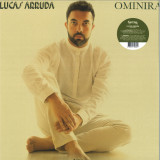
5 years after his last and 3rd album, Lucas Arruda finally presents his long awaited new LP, Ominira.
Since the release of his first album on Favorite Recordings (Sambadi / 2013), Lucas Arruda has clearly established himself as one of the most talented contemporary artist and composer from Brazil. His music is filled with fusion style, mixing influences and elements from his Latin musical background, with his genuine admiration for Jazz, Soul, Pop and Funk music.
During these 10 years of collaboration with label honcho Pascal Rioux, Lucas Arruda’ music has always received great supports and feedbacks from international media and tastemakers, each album perfecting the level of composition and production. With Onda Nova (2019), Lucas dived willingly into Robson Jorge & Lincoln Olivetti influences, aiming to capture the true essence of Brazilian Funk and AOR tradition. Now a father and family man, he turned more deeply into his native influences when composing this new beautiful album. Fully composed and produced by Lucas, Ominira also features appearances from friends local musicians and artists such as Italo Vinicius (Drums), Thiago Arruda (guitars), Roger Rocha (sax), or Flavia K and Andre Motta on vocals.
"Ominira is about freedom, art and music. It's also about honoring my ancestors and my musical influences. I delved a little deeper into my African roots, in addition to Brazilian music and rhythms, and my longtime passion for Soul/Funk. After a long production process I feel like I made my best album. So, I present to you OMINIRA, a new chapter in my career. Have a nice trip!"
Bruno Berle, the young songwriter and poet originally hailing from Maceió, the capital of Brazil’s Alagoas state, crafts songs that are simple, direct, and full of tender nuance. With his first album No Reino Dos Afetos (which translates to "In the Realm of Affections” and was released in 2022), Berle firmly established himself as a unique and important voice in the burgeoning scene of new Brazilian artists making a global impact, including peers like Ana Frango Elétrico, Tim Bernardes, Bala Desejo, Sessa and more. Now back with his second album, No Reino Dos Afetos 2, he stretches that further.
Bruno Berle’s music lives between two worlds – a traditional Brazilian folk talent steeped in history, and a contemporary, dreamy electronic pop; the result is songwriting that’s genre-bending, intentional, iconoclastic and consuming, spacious and sinewy and singular, a striking reflection of its composer while leaving space for the listener to settle in. The album follows Bruno’s relocation to São Paulo, and the songs are a reflection of his past and present. A rebuke of former categorizations of his work in Brazilian music scenes, and an idea of where his music can move, unfettered.
Berle’s music is purposeful in being a true portrait of himself, and a reflection of the music, art, and fashion scenes he personally moves through. Berle aims to provide an entrypoint for Black queer joy in his music, in his storytelling, in his presence and vision as a creative. For him, it feels subversive to be playing MPB laced with dubstep and lo-fi, a sort of intentional sacrilege, capturing a dialogue of modernity in traditional music.
Berle wrote most of the arrangements and co-produced his new album, Reino Dos Afetos 2 with longtime friend and musical partner Batata Boy, who is also from Maceió; the album was recorded in Rio de Janeiro, Maceió, and São Paulo, his new home, and picks up the conversation begun in 2022 on Berle’s debut album No Reino dos Afetos. Both records are the result of a nonlinear but coherent seven-year music creation process culminating in these albums, holding hands across space and time.
“Tirolirole,” the first single from the record, was released at the end of 2023; sun-soaked rhythms and soft voice coat the song, the lilting refrain of “Tirolirole” throughout – hushed, gentle, but somehow almost tactile, a golden-hour moment unlocked in the mind. “Tirolirole” is a triumphant future classic about the temporality of a blossoming love, with Bruno’s stunning vocal soaring over melodies which ebb and flow like the waters on the Atlantic shore. Of the track, Berle explains: “Despite ‘Tirolirole’ being an expression that evokes my childhood, just like the light words about nature, the harmony, and the poetry are epic, carrying a great hope for love.”
In fact, the guiding theme of No Reino dos Afetos 2 is a relationship, unfolding in the arc of a weekend. It traverses the innocence of an early young love, how that can be formative, can stretch on to take new shapes, or shape you. The album happens at the genesis of meeting someone and falling for them, before the relationship is thrown into overdrive – set in a big city, against a backdrop of major life changes, rising energy, the sound of São Paulo.
Something transcendental emerges in “Dizer Adeus,” with an arrangement that echoes a gospel atmosphere (evangelical and Catholic environments were pivotal to Berle’s upbringing). On “É Só Você Chegar,” piano and flute gracefully intertwine, a dance, while “Quando Penso” skews sparser, the voice-and-guitar minimalism somehow cultivating an entirely different shape – somehow both cozy and melancholy, with the background sound of a rainy day. Coupled with the lo-fi aspects that shape much of the album’s personality in the vocals and the production, No Reino Dos Afetos 2 is meticulously elaborated by Berle’s sonic alchemy, like on the mid-album instrumental “Sonho,” which feels like floating. “It’s the apex. It’s when lovers are sleeping together,” Berle explains of the feeling he wanted to encapsulate in the song.
On “Love Comes Back” Berle interprets Arthur Russell, the late Iowa musician who only reached greater visibility after he died in 1992. “His way of making music is similar to mine,” Berle explains. “He sings in a more fragile way, has more of an experimental way of recording, letting ‘chance’ appear in the final work.”
Even so, Berle doesn’t want his music to be buried in sentimentality – and the purposefulness of his craft serves as a sort of north star. The production, the arrangements, his restraint and intentionality in crafting his songs feel just as vital as their emotional cores. His songwriting is amorphous, fluid, an encompassing genre-bending movement in-and-of-itself, quietly daring. The songs are often in conversation with other works – drinking in fountains as diverse as the filmmaking of Ingmar Bergman, the poetry of Walt Whitman, the rhythm of Djavan, and the painting of Maxwell Alexandre. Musically he weaves together a rich tapestry of Brazilian folk, UK 2-step garage/dub, trip hop and sun soaked west coast songwriters; something akin to the worlds of Milton Nascimento, Arthur Russell, James Blake, Feist, and Sade colliding into one. But even then No Reino Dos Afetos 2 floats separately, a romanticism driven by a simplicity and intimacy, an open-ended possibility, Berle’s singularity as an artist at the helm of the ship.
Zwischen bezaubernder Zärtlichkeit und Brutalität, zwischen den Feuern der Unterwelt und den kältesten Dämpfen des Nordens, das ist das Wesen, das WINTERHORDE genannt wird. Gegründet im Jahr 2002 in Nordisrael, hat sich die Progressive Extreme Metal Gruppe weiterentwickelt und versucht, mit jedem Akkord, den sie spielen und aufnehmen, etwas Größeres zu werden. Nur der Himmel ist die Grenze. Ob durch die uralten Künste des geschwärzten Metal bis hin zu den Juwelen der Progression, WINTERHORDE sind auf dem Weg, das nächste Ding der artikulierten Extremität zu sein.
WINTERHORDE hatten das große Vergnügen und das Privileg, mit einigen der größten Bands des Metal wie JUDAS PRIEST, BEHEMOTH, ACCEPT, W. A. S. P, DIMMU BORGIR, KEEP OF KALESSIN, AMORPHIS, SATYRICON und vielen mehr auf den Bühnen verschiedener europäischer Festivals wie "Metal Days", "Rockstadt Extreme Fest", "OST Mountain Fest", "Metalhead Meeting", "Maximum Rock" und "Metal yard" aufzutreten.
WINTERHORDE bahnten ihren Weg in den progressiven Manierismus des Extreme Metal und veröffentlichten ihr Debüt "Nebula" (2006, Burning Star Records), dem eine komplette Europatour mit den finnischen Black Metalern CATAMENIA folgte. Das zweite Album "Underwatermoon" (2010, Twilight Vertrieb) wurde von V. Santura (DARK FORTRESS, OBSCURA, PARADOX, TRYPTIKON) aufgenommen und produziert. Anfang 2016 vollendete WINTERHORDE eines ihrer abenteuerlichen und höchst geheimnisvollen Epos, "Maestro" (Vicisolum Productions) wurde erneut von V. Santura produziert und von Jens Bogren gemastert. Kritiker und Fans begrüßten das dritte Studioalbum "Maestro", das im Mai 2016 veröffentlicht wurde.
Sechs Jahre später, und WINTERHORDE sind wieder bereit für die nächste Herausforderung. Voller Energie und einer neuen, überwältigenden Besetzung haben WINTERHORDE die Arbeit an ihrem neuen, vierten Studioalbum "Neptunian" geschafft.
Im Juni 2022 wurde die Single "The Greatest Plague of Earth" veröffentlicht.
Metal Temple zine:
"This is an expression of extreme passion, through a whirlwind, and a strong character. Winterhorde is back different, but preserving their miraculous nature"
Winterhorde's bassist and founder, Alexander Latman, comments on "The Spirit Of Freedom"
"This song deals with the unbreakable spirit of simple people, who are ready to die for keeping their land free. We wanted to show this spirit, not only in the warrior himself but also in his family members who are filled with pride of their fallen loved one. The simple people are those who sacrifice their lives for unnecessary wars waged by rich people's games. They die, but never give up their freedom and identity. The conflict of life versus freedom at any cost".
Sales Info:
- PR-Kampagne über die deutsche Agentur ALL NOIR für Print / Presse / Radio in der EU + O'Donnell Medien für PR in den USA
- frühere Musikvideos haben jeweils 5-stellige Ansichten auf YT erreicht
- neues Album gemischt und gemastert von Jaime Gomez Arellano (Ghost, Paradise Lost, Insomnium, Moonspell)
- Feat. Künstler auf Album: Kobi Farhi von Orphaned Land und Davidavi Dolev von Subterranean Masquerade
Demenz ist ein Dieb. Die bösartige Krankheit raubt ihren Opfern erst Stück für Stück ihr Gedächtnis, dann ihre Identität, schließlich Familie und Freunde - und oft genug sogar ihre Menschenwürde. Die in Los Angeles ansässigen Electro-Forscher THIEF nehmen auf ihrem vierten Album "Bleed, Memory" das Thema "Erinnerung" sowohl lyrisch als auch musikalisch unter die Lupe, was sich wie ein roter Faden durch das gesamte Album zieht. Der Kopf des Soloprojekts, Dylan Neal, wurde zu diesem Album durch das Schicksal seines Vaters inspiriert, der nach der Diagnose einer Demenz von leichter Vergesslichkeit und Verwirrung unaufhaltsam zu akuten Episoden von falschen Erinnerungen, Wahnvorstellungen, Visionen und seltsamem Verhalten überging. Das macht "Bleed, Memory" zu einer sehr persönlichen Schöpfung. Durch die harte Erfahrung begann Neal damit, erst seine eigenen Erinnerungen zu hinterfragen und dann mit der Erforschung, wie sie seine Identität und Realität formen. Erinnerung besteht nicht nur aus den Geschichten, die wir uns selbst und anderen erzählen. Neal vergleicht sie mit Geistern, die keine physische Existenz haben und dennoch unter denen Schrecken verbreiten, die an sie glauben. Das Rückgrat von THIEF bilden wieder einmal gesampelte sakrale Gesänge. Einige wurden beim Wühlen in digitalen Kisten gefunden und gesampelt, andere in verschiedenen orthodoxen Kirchen aufgenommen. Diese Samples wurden gedehnt, geschnitten, verstümmelt, umgeformt und gepitcht, um letztlich so wie jedes andere Instrument zu funktionieren. Neal hat "Bleed, Memory" bewusst so gestaltet, dass es gespenstisch klingt. Eine der Techniken, die er zur Erzielung dieses Effekts einsetzte, ist "Granular Synthesis". Der verstärkte Einsatz der Methode auf diesem Album bedeutet, dass Samples in kleine Audioschnipsel zerlegt wurden, die kaum mehr als 100 Millisekunden andauern. Dieser einzigartige Ansatz, der musikalische Elemente aus Ambient, Industrial, Chormusik, Black Metal und Trip-Hop sowie andere Einflüsse zu einem neuen Klangerlebnis verschmelzen lässt, hat THIEF unter Eingeweihten längst Kultstatus verschafft. Den Großteil des Albums hat Neal wieder einmal in seiner Wohnung aufgenommen und abgemischt. Für das Mastering konnte er erneut John Greenham gewinnen, der mit Künstlern von THE LOCUSTS über KATY PERRY bis hin zu DEATH GRIPS zusammengearbeitet hat und für sein Mastering für BILLIE EILISH im Jahr 2019 mit drei Grammy Awards ausgezeichnet wurde. Mit "Bleed, Memory" liefern THIEF eine verstörende und doch wunderschöne künstlerische Betrachtung eines grausamen Leidens, die gleichzeitig Emotionen wie Wut, Melancholie, Trauer und Verlust als lyrisches, musikalisches und visuelles Gesamtkunstwerk verarbeitet. Aber Vorsicht! Dieser Geist aus Klängen wird lange in der Erinnerung seiner Hörer spuken!
Factor City kicks off its third decade in full swing, led by Undo solo and accompanied by its usual partners Casiowaves and Vicknoise.
It all began in 2003 when Undo & Vicknoise laid the foundation for the label with "Noctámbula," and over the years, they continued to collaborate closely, managing the label and producing "hits" such as "Orca" or "Happy Monday." From 2011 onward, following an amicable parting, Undo began to run the label solo while maintaining the same spirit and distinctive sound of the Barcelona-based label, always at the forefront of dance music produced in Spain.
Now, in 2024, in a "digital” world where fewer and fewer things can be touched with our fingers and where 100,000 songs are uploaded to Spotify every day, Factor City is charting a different course and starts a new decade on the dance floors by returning to vinyl releases and persisting in their low key and relaxed approach, releasing few and carefully curated records from their artists each year.
“Ciudad Futura” opens with "Good Times," a track by Undo that radiates joy and positivity. An euphoric ride through landscapes of analog synthesizers and drum machines. The second track on side A is signed by Undo & Vicknoise, who hadn't produced together in 15 years. And we hope they won't take as long to get back in the studio together after hearing the fantastic track "Electric Rainbow." A delightful slice of electro-disco. The B side is signed by the recent combo of Undo and Casiowaves. The first track, "Secret Worlds," follows in the wake of their recent releases on Factor City and Melodize with that winning combination of retro 80s and 90s synths with vocoders and a more contemporary production. Closing out the record is "Astralia," a vibrant "power synth pop" anthem adorned with FM synths and acid-tinged melodies. Thanks for listening!
This Album serves as a 2023 wrap up, focusing primarily on two releases: Energy Exchange Records Vol. I and 30/70 ART MAKE LOVE. In the spirit of the Energy Exchange family, we have shared the duties of remixing/re-imaging some of our most in demand cuts from the year utilizing our in-house production team and extended family 30/70 collective. Keep it locked, we are just warming up!
Support from : Severino (Horse Meat DIsco), Stu (Wolf Recordings), Mali (Rhythm Section), Quinton (Strut Records), Mr Redley, Jonny Alexander, Aly Bandcamp, Gilles Secretsundaze, Lucas Benjamin, Dean Chew (Darker Than Wax), Aroop Roy, Alex Attias, Louis Mixmag, Marcel Vogel, cosmosofi, Delfonic
toe is a Japanese music group long revered in post-rock circles, while their song structures and dynamics have taken on elements from all styles of music, ranging from math-rock, jazz, pop, and R&B. toe is composed of Kashikura Takashi on drums, Mino Takaaki on guitar, Yamane Satoshi on bass guitar, and Yamazaki Hirokazu on guitar. The band has formally played with this lineup since their inception in 1998. The vast majority of the music is instrumental and features the swift, agile drumming of Takashi. The band is also known for melodic, clean guitar, often employing the juxtaposition of electric and acoustic. While the compositions feature the repetition of typical rock motifs, the subtle changes in beat and rhythm form a unique rhythmic dialect. The band has consistently expanded their sound throughout their musical tenure by incorporating singing, rhodes piano, mallet percussion, and electronic production elements.
This release comes with a Poster & Insert & Sticker & Download Code.
The vinyl is pressed as a colour in colour, green & yellow disc.
toe is a Japanese music group long revered in post-rock circles, while their song structures and dynamics have taken on elements from all styles of music, ranging from math-rock, jazz, pop, and R&B. toe is composed of Kashikura Takashi on drums, Mino Takaaki on guitar, Yamane Satoshi on bass guitar, and Yamazaki Hirokazu on guitar. The band has formally played with this lineup since their inception in 1998. The vast majority of the music is instrumental and features the swift, agile drumming of Takashi. The band is also known for melodic, clean guitar, often employing the juxtaposition of electric and acoustic. While the compositions feature the repetition of typical rock motifs, the subtle changes in beat and rhythm form a unique rhythmic dialect. The band has consistently expanded their sound throughout their musical tenure by incorporating singing, rhodes piano, mallet percussion, and electronic production elements.
FIRST 100 ORDERS COME WITH A DOUGLAS DARE OMNI CONDOM, ON A FIRST COME FIRST SERVED BASIS**First Pressing on Limited Translucent Red Vinyl**British artist Douglas Dare announces the release of his fourth album Omni. Seen by Douglas himself as a bold rebirth and embrace of the electronic, Omni is all at once a throbbing, avant-garde, queer, dark and cinematic record imbued with a love of rave culture and sense of fearless storytelling that’s deeply evocative. Omni will be released on May 10 via Erased Tapes. To mark the announcement, Douglas today shares the first taster of the record with ‘Mouth To Mouth’, a pulsing, synth-laden track that begs to be played loud. ‘Mouth To Mouth’ sees a collaboration with label mate Daniel Brandt who appears on production duties, with beats supplied by Rival Consoles. Speaking on the track, Douglas says, “life, death, fate and orgies; this is the heartfelt club track I always wanted to write.” Since 2013, Douglas has blurred classical, chamber-pop, folk and avant-garde to dazzling effect, with a startling voice that can stop you in your tracks. It’s why he’s played with luminaries like Nils Frahm, Perfume Genius and Ólafur Arnalds, and was selected by David Lynch and The Cure’s Robert Smith for their respective cultural festivals in Manchester (MIF) and London (Meltdown). But Douglas’s fourth album, Omni, is a fresh awakening. Encouraged by Erased Tapes founder Robert Raths, he decided to step away from acoustic instruments, especially the piano he grew up playing, and swapped them for synths and drum machines. His new music has much in common with Arca and the late SOPHIE, two artists for whom self-expression meant liberation. “I got to hang out in the studio with her,” says Douglas of the latter musician, “the way she made music made a big impression on me.” And yet Omni is steeped in the kind of deft storytelling, sweeping strings, elegant contrasts and fairytale atmosphere that marks Douglas out as a crucial and singular voice. It’s not often you hear a strutting electro banger that could have been straight out of 90s Soho, with vocal loops inspired by US experimentalist Meredith Monk. For Douglas, Omni is about reconciling all those different sides of himself – the songwriter, the raver, the lover, the observer. It’s a hugely queer record: seductive, sexy, lusty, untethered from the genre binary. “It’s even got sailors on it!” laughs Douglas. “You don’t get more queer than that.
There is no in-between, neither is it only black or white - it is always, also, a question about contrast.
This is the third edit release on the newly reborn Tech-nology label.
The first was played by Luca Bacchetti at Burning Man 2023 and by Michael Meyer in his Soundcloud, radioshow - a big thanks.
The second is yet to be discovered, but mostly jazz and afro with a Minimal and Chicago touch.
The edit series is a mix between techno, which was initially the start of the label, so!
The edit series is not disco in the sense that is most popular or most accepted, this is a new way!
Making a techno approach to attack the original disco track.
Tech-nology!
This output is the third and not a secret track.
Here it is black, like the techno sound behind.
There is the basic well-known one-to-one production with extra techno breaks for your dancing
pleasure.
But the flipside, with 2 versions, is the big room killer.
There is always white noice
There is no in-between, neither is it only black or white - it is always, also, a question about contrast.
This is the third edit release on the newly reborn Tech-nology label.
The first was played by Luca Bacchetti at Burning Man 2023 and by Michael Meyer in his Soundcloud, radioshow - a big thanks.
The second is yet to be discovered, but mostly jazz and afro with a Minimal and Chicago touch.
The edit series is a mix between techno, which was initially the start of the label, so!
The edit series is not disco in the sense that is most popular or most accepted, this is a new way!
Making a techno approach to attack the original disco track.
Tech-nology!
This output is the third and not a secret track.
Here it is black, like the techno sound behind.
There is the basic well-known one-to-one production with extra techno breaks for your dancing
pleasure.
But the flipside, with 2 versions, is the big room killer.
There is always white noice
Polistrumentalist, composer and producer Alex Puddu (Al Dente/Schema Records), also known for his collaborations with Edda Dell'Orso (Maestro Morricone's legendary vocalist,) Joe Bataan, Lonnie Jordan from L.A funk band War, and Gene Robinson Jr of Breakwater, and who boasts a solo discography of 17 albums, including the three original volumes of the red light soundtracks of Danish films" The Golden Age Of Danish xxxography. He debuts for the first time with a new double single sang in Italian language, with two tracks "Pullover Grigio" and Texas Blonde", proposing a new sound that draws us into the Italian funk pop music of the late 70s and early 80s and into the pop/indie melodies of the new Italian scene, up to electronic sounds (as Calcutta, Fulminacci, Fra Quintale, Marco Castello and Nu Genea have done), between soul and disco, which are part of Alex Puddu's unmistakable production style. Don’t Miss It!
As a professional sound engineer by day, Colin Dunkerley aka Lapsed Pacifist, spends much of his time traveling and rarely gets to focus on producing his own music. Despite high praise from those who have become familiar with his work over the years, Colin’s previous productions have mainly consisted of shares with friends and DJs in smaller circles through his ‘Negative Neutron’ alias.
Colin envisaged a more pronounced and darker ambient style to emerge one day, but struggled to dedicate the time. ‘Hypatia’ came to life over an extended and fragmented period, with field recordings and loops of audio created on the go, later processed through his modular setup. In the autumn of 2022, Colin spent time collating and listening to these many fragments and field recordings, making notes in a book as he wandered around cold, unfamiliar places with headphones on, trying to shape disparate starting points into something thematically connected.
The title of Lapsed Pacifist’s debut album, ‘Hypatia’ is a reference to one of the many fantastical descriptions of imaginary places by Marco Polo in the book, Invisible Cities. Written as a dialogue between Mongol emperor Kublai Khan and Marco Polo, the book became the inspiration and a clear parallel for how Hypatia came to be and what it means to Colin today.
Attaching music to a place and time can become a very powerful and long-lasting memory. Across its eight tracks, Hypatia depicts fragmented glimpses of color and textures –a scrapbook of senses– traversing the optimistic first steps; the first smell of cold air; cityscapes burnt into your head; and the many emotions from exploring new places that stick with you longer than any photograph ever could.
“The experience of moving between places so frequently can be fascinating but also dislocating and often quite lonely. I have so many small stories about places I’ve been, but I often think they aren’t necessarily real reflections of anywhere, no more real than anything Invisible Cities author Calvino dreamt up”. - Lapsed Pacifist.
Hypatia is available on Transparent Copper smoke 12” + digital, mastered by Rafael Anton Irisarri and featuring artwork by Noah M / Keep Adding.
Memories are, to say the least, complex. They can weigh us down like stones or be treasured in their unresolved ambivalence. In Ciro Vitiello’s debut album, they take on a dynamic and elusive nature, both bouncy and tricky, moving away when approached and dipping into the haze of the subconscious. Dreams, in turn, find their shape through memory itself. The Island Of Bouncy Memories is, for Vitiello, a place populated by reveries and hypnagogic impressions, interwoven with the imprints of childhood experiences—a threshold between the comforting embrace of nostalgia and the acceptance of adulthood.
The album's inception traces back to a collection of toy recordings initially amassed by Vitiello as a backdrop for his wide-weave synthetic fabric. Evolving these initial sketches, the Naples-born artist intended the 13 tracks to form a continuous flux of undeciphered impressions. Repeating motifs phase in and out of the cloudy ambience, punctuating the inevitable waves of melancholy with delicate melodic structures.
Crucial to the album's development were contributions from vocalist Zimmy, vocalist/guitarist CRÆBABE and guitarist Attilio Novellino. Their input not only expanded the sonic palette but also cultivated themes and poetic scenarios through intense and sincere exchanges of personal experiences, recurring dreams, and childhood remembrances. CRÆBABE’s lyrics, in particular, provide an adult counterpoint to the album's more childlike elements—a map of murmured relics and epiphanies as she sits in conversation with herself.
The music's emotional depth envelops Vitiello's Island in an ocean of pure sensitivity, its tides drifting through apparitions of talking animals, reminiscent of those in his recurring dreams. At other times, it reflects the tragic echoes of Nisida—an island off the coast of Naples, infamous for hosting a youth detention center.
The Island of Bouncy Memories is a meditative reconnection with the past, a puzzling journey through pain and acceptance. Notably it marks the first-ever co-production between Hundebiss and Haunter Records, uniting two main players in the Italian electronic and experimental scene in an unprecedented collaboration.
Alles fließt, nichts bleibt wie es ist. Diese philosophische Erkenntnis gilt auch für das dritte Studioalbum der aufstrebenden niederländischen Rockband DOOL. Der treffende Titel "The Shape of Fluidity" zielt keineswegs nur auf die musikalische Innovation. Sondern das Album dreht sich um Themen wie persönlicher Wandel, physische Veränderung, psychologische Weiterentwicklung und die sich erneuernde Welt um uns herum. DOOL und insbesondere Sänger/in und Gitarrist/in Raven van Dorst stellen Fragen: Wie wirkt sich der Wandel auf uns aus? Wie bleiben wir uns selbst in einer Welt treu, die so unglaublich herausfordernd und aggressiv gegenüber dem Individuum ist? Wir müssen so fließend wie Wasser sein, um in diesem Ozean von Möglichkeiten und Ungewissheiten erfolgreich zu navigieren - und Frieden mit Chaos und Unbeständigkeit zu schließen. Musikalisch setzen DOOL den auf den beiden vorangegangenen Studioalben eingeschlagenen Weg fort, der emotionale Rockmusik mit Elementen aus dem Metal kombiniert. Dabei demonstrieren die Niederländer eine auffällige Reife und Kontrolle im Songwriting, die aus Jahren der Erfahrung gewachsen sind. "The Shape of Fluidity" zeigt eine eklektische, aber nahtlose Verschmelzung von Progressive und Post-Rock sowie Doom und Heavy Metal, die mit einer stets präsenten Eingängigkeit und hintergründigen Dynamik kombiniert sind. Es ist offenkundig, dass sich das Album thematisch mit dem Konzept der Identität vor dem Hintergrund einer sich ständig verändernden Welt befasst. Die Texte des Albums sind eng mit der Biografie von Leadsänger/in Raven verknüpft. Von Geburt an intersexuell, entschieden die Ärzte chirurgisch, dass der Säugling als Mädchen durchs Leben gehen solle. Dies führte zu einer Existenz auf der Suche nach der eigenen Seele, dem Kampf gegen Tabus und die Überschreitung von Grenzen, bis Raven vor kurzem beschloss, das zurückzufordern, was andere versuchten hatten, ihnen wegzunehmen - und ihre hermaphroditische Natur zu akzeptieren. Der Bandname DOOL leitet sich vom niederländischen Wort für "Wandern" ab. Bereits das im Jahr 2017 erschienene Debütalbum "Here Now, There Then" landete einen sofortigen Volltreffer. Der frisch-wilde Rock- und Metalsound aus den Niederlanden wurde von den renommierten deutschen Magazinen Metal Hammer und Rock Hard zum "Album des Monats" gekürt. Auch Vice (US), Aardschok (NL) und De Volkskrant (NL) überschütteten die junge Band mit Lob. Mit ihrem zweiten Album "Summerland", das 2020 erschien, übertrafen DOOL die ohnehin schon hochgesteckten Erwartungen. Es gab weitere "Album des Monats"-Auszeichnungen in den deutschen Magazinen Rock Hard (10/10) und Sonic Seducer sowie eine #2 Soundcheck-Position in Metal Hammer (DE) und Metal.de, und eine weitere #1 im polnischen Metal Hammer - mit einem Berg herausragender Kritiken auf beiden Seiten des Atlantiks. Mit "The Shape of Fluidity" bieten DOOL sehr viel mehr als nur verdammt coole Musik. Die zusätzlichen Dimensionen von Tiefe und Bedeutung sind Teil ihres einzigartigen Reizes und kommen auf dem neuen Album deutlich zum Vorschein. Mögen sich alle, die wandern, unter der fluiden Flagge von DOOL versammeln!
- A1: Return Of The Mecca
- A2: For Pete's Sake
- A3: Ghettos Of The Mind
- A4: Lots Of Lovin
- A5: Act Like You Know
- B1: Straighten It Out
- B2: Soul Brother #1
- B3: Wig Out
- B4: Anger In The Nation
- B5: They Reminisce Over You (T.r.o.y.)
- C1: On And On
- C2: It's Like That
- C3: Can't Front On Me
- C4: The Creator (Remix) Bonus Track
- D1: Mecca And The Soul Brother (Remix) Bonus Track
- D2: The Basement (Featuring Heavy D., Rob-O, Grap & Dida)
- D3: If It Ain't Rough, It Ain't Right
- D4: Skinz (Featuring Grand Puba)
Mecca And The Soul Brother from Pete Rock & C.L. Smooth is considered by fans and critics as one of the finest hip hop albums of the early 90s. Songs like “Lots of Lovin”, “They Reminisce Over You (T.R.O.Y.)”,”Anger In The Nation” and “It It Ain’t Rough, It Ain’t Right” have everything; funky basslines, solid production, convincing lyrics and lots of soul. Producer Pete Rock built his beats from obscure R&B, funk and jazz records and CL Smooth added his sometimes philosophical raps. Guest rappers on the album include Grand Puba (of Brand Nubian), Heavy D, Rob-O, Grap & Dida, and it reached #7 in the US R&B/Hip-hop charts and #43 in the US album charts.
Mecca And The Soul Brother by Pete Rock & C.L. Smooth is considered by fans and critics as one of the finest hip hop albums of the early Nineties. Songs like "Lots of Lovin", "They Reminisce Over You (T.R.O.Y.)","Anger In The Nation" and "If It Ain't Rough, It Ain't Right" have everything; funky basslines, solid production, convincing lyrics and lots of soul. Producer Pete Rock built his beats from obscure R&B, funk and jazz records and CL Smooth added his sometimes-philosophical raps. Guest rappers on the album include Grand Puba (of Brand Nubian), Heavy D, Rob-O, Grap & Dida, and it reached #7 in the US R&B/Hip-hop charts and #43 in the US album charts.