Since I have announced this repress, originally released in 1993, I have had a few people contact me to say that this was their secret battle record. One thats been under the radar but every track is an absolute Halloween Monster! I think it's time to share how amazing this record is with everyone - plus DJ Sphinx gets to make a few quid too... so win win!
Поиск:b say
Все
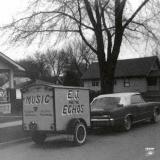
Michigan Band EJ & the Echoes: Rediscovering a Soul Legacy
The story of EJ & the Echoes represents a remarkable chapter in Michigan's music history and the early American soul scene. Its origins date back to the late 1950s, when Everett J. "EJ" Gronda was already active as a young musician. While studying at Central Michigan University in the early 1960s, he met the talented vocalist Manuel "Manny" Holcolm. Together with other musicians, they formed vocal groups that soon performed throughout the state and even recorded near Detroit's legendary Motown studios.
In 1963, Gronda founded EJ & the Echoes, a band that quickly gained popularity at dances, clubs, and weddings across Michigan. With Manny Holcolm as lead singer, the group developed a distinctive harmony-driven sound, blending influences ranging from the Beatles to James Brown. The band served as a house band in Traverse City, opened for national acts, and performed regularly at well-known Detroit venues.
Between 1964 and 1967, EJ & the Echoes released several singles on the Diamond Jim Records label. Although major commercial success eluded them at the time, their recordings later found international recognition. Today, their songs remain staples of the British Northern Soul scene.
After the band dissolved, the members pursued different paths. EJ Gronda became a schoolteacher but remained devoted to music throughout his life. In 2006, the musicians reunited for an emotional jam session. EJ Gronda passed away in 2022, followed by Manuel Holcolm in 2024. Their musical legacy endures-on this vinyl release, dance floors, and in the memory of a remarkable era.
Our sincere thanks go to author and blues historian Fred Reif. He wrote the accompanying text and provided all the pictures of the band printed in the gatefold cover. Without him, this project would not have been possible.
- A1: Wishing For Blue Sky
- A2: Does The Shade Choose Who To Comfort
- A3: Two Magpies
- A4: Memorise Your Senses
- B1: Dark Edges
- B2: Keeping You Awake
- B3: I Buried All The Answers
- B4: Spirit Of Place
Winter Gorse coloured vinyl[32,35 €]
These days – on the new, ninth Fink album – Greenall is operating within a lineage of authentic, quietly revolutionary artists from England’s verdant southwestern toe. Artists like Michael Chapman. In 1970, the elusive acoustic guitar wizard released an album called Fully Qualified Survivor. The cult-classic served as a lodestar for Greenall – along with bandmates Tim Thornton and Guy Whittaker – as he began jigsawing together The City Is Coming to Erase it All, the follow-up to 2024’s Beauty In Your Wake. He even considered covering a song from it, but in the process, inadvertently stumbled into what became the album’s opener. ‘Wishing For Blue Sky’ circles a universal teenage ache: waiting for life to start. “No point dying of patience” goes the first lyric as crunching footsteps cue a resonant, open-tuned acoustic swaying into view. By 18, Greenall was fed up with waiting, so he left suburban Bristol and saw the world, sending postcards from the edge, waiting tables, squirreling away tips for the next flight. Thornton had similar experiences when the guitarist/drummer busked across Eur
This is nowstalgia more than nostalgia, though; there’s a parallel between these 18-year-olds and Fink’s autumn-aged family men. “You’re expected to be boring and settling down at this age,” Thornton says. “But we’ve still got this tremendous wanderlust. We want to go and discover, and also achieve things. It’s a nice life – home and family – but fuck, I can’t wait to get back out there.” City is a product of this hunger for discovery, and idolatry of the album as a form – like we had in 1974. City’s cover mirrors its interior, the first song is the greeting, the instrumental closer the conclusion. It’s a story. It’s a record for people who, like its creators, are curious. People who happily face a little cold for music, who light a crackling fire back home, who sit with these songs until they’re ready to chase after their own blue sky
These days – on the new, ninth Fink album – Greenall is operating within a lineage of authentic, quietly revolutionary artists from England’s verdant southwestern toe. Artists like Michael Chapman. In 1970, the elusive acoustic guitar wizard released an album called Fully Qualified Survivor. The cult-classic served as a lodestar for Greenall – along with bandmates Tim Thornton and Guy Whittaker – as he began jigsawing together The City Is Coming to Erase it All, the follow-up to 2024’s Beauty In Your Wake. He even considered covering a song from it, but in the process, inadvertently stumbled into what became the album’s opener. ‘Wishing For Blue Sky’ circles a universal teenage ache: waiting for life to start. “No point dying of patience” goes the first lyric as crunching footsteps cue a resonant, open-tuned acoustic swaying into view. By 18, Greenall was fed up with waiting, so he left suburban Bristol and saw the world, sending postcards from the edge, waiting tables, squirreling away tips for the next flight. Thornton had similar experiences when the guitarist/drummer busked across Eur
This is nowstalgia more than nostalgia, though; there’s a parallel between these 18-year-olds and Fink’s autumn-aged family men. “You’re expected to be boring and settling down at this age,” Thornton says. “But we’ve still got this tremendous wanderlust. We want to go and discover, and also achieve things. It’s a nice life – home and family – but fuck, I can’t wait to get back out there.” City is a product of this hunger for discovery, and idolatry of the album as a form – like we had in 1974. City’s cover mirrors its interior, the first song is the greeting, the instrumental closer the conclusion. It’s a story. It’s a record for people who, like its creators, are curious. People who happily face a little cold for music, who light a crackling fire back home, who sit with these songs until they’re ready to chase after their own blue sky
- 1: Lake Walk
- 2: Lazy Daisy
- 3: Ups & Downs
- 4: Silently
- 5: There Was A Nice Sunset
- 6: Somewhere Good
- 7: Slow Island
- 8: Movin’ On
If – in some parallel universe (or perhaps a not-so-distant-future version of the one we’re already sentenced to living in) – the evil overloads of artificial intelligence were actually successful in their attempts to create convincingly enjoyable “original music,” more specifically tasked with wholly encapsulating my own personal tastes by data-chugging some cocktail of – oh, I don’t know – the posters on my wall, the records in my “most listened to” pile, the mixtapes I made for others, intensive physical scans of my auditory cortex, amygdala, hippocampus, heart strings, whatever else they have splayed out on their autopsy table with the intention of generating one all-encompassing “perfect band” based on the fruitful sum of their findings – that band, for me, would be (or would at least sound exactly like) the Tara Clerkin Trio. It is, quite simply, without exception, the music I wish to hear.
Formed in Bristol UK (where none of them are from yet all of whom are deeply engrained) in 2020, the Tara Clerkin Trio – as it somewhat democratically exists today, despite the singular authority implied by its name – consists of the titular Tara Clerkin, her partner Sunny Joe Paradisos, and Sunny’s brother, Patrick Benjamin. I’ll confess, I don’t know what their respective roles are within the operation and there’s only a very small part of me that cares to learn, as one of my favorite qualities in an objective listening experience is the mystery of who is playing what, which sounds are “authentic” versus synthesized, which chunks are performed “live” in a room together versus meticulously Frankenstein’ed from measure to measure, or how exactly the overall sound is so (seemingly) effortlessly achieved. Though, I suspect, if and when I do witness a live performance by this band at any point, my enjoyment of the music will not be lost in my better understanding of it.
With two extraordinary mini-albums – In Spring (2021) and On The Turning Ground (2023) – making a splash on London’s formidable World of Echo label in wake of their self-titled 2020 debut, this upcoming Somewhere Good LP is, in many ways, the band’s most realised work. In running their usual gauntlet of idiosyncratic (*an overused adjective for which here there is regrettably no sufficient alternative) approaches, Clerkin & co. colour in and outside of compositional lines over the course of 40+ celebratory minutes - never wallowing, despite inherently somber subject matters of self-defeat, disease, displacement, restlessness, gentrification - allowing their arrangements and improvisations ample space and time to situate, stretch out, breathe, cross-pollinate, and ultimately take deeper hold on the listener’s imagination – all while somehow sounding more like themselves than ever before.
Of course, there are traceable influences herein, if one felt that such comparisons were necessary to properly examine and enjoy this music (they aren’t)… Being the big dumb American from the small boring town that I am, cornfed on ‘90s alternative radio with the enchantingly exotic sounds of Maxinquaye and Mezzanine emanating from my chunky tube television, I can’t help but to make a blatantly obvious reference to a “Bristol sound”, ie the whole trip-hop trip, the pastoral crooning over the suggestive urban grime of cracked electro/piano treatments, the digitally-yet-primitively reconstructed James Bond soundtrack string-beats, etc.. But the Tara Clerkin Trio is so infinitely much more than that. There are elements of avant-pop, modern classical, kraut-folk, audio verité, dare I say indie rock (and not of the beer guzzling, masturbatory fuzz-flex variety but perhaps more like a Trish Keenan-fronted Faust, Adrian Sherwood at the mixing desk of If You’re Feeling Sinister, or – in expanding on our alternate reality – a world in which High Llamas cut a full-length for Warp Records with Andrew Weatherall on coffee duty).
The hazy, unmappable skyline-mirage of droning harmonium, upright bass, peculiarly accentuated wind instruments, acoustic guitar, hushed yet literally mighty keys combine to hypnotizing effect. The band may make underlying nods to jazz, sure, but it’s not appropriation, it’s that they have the actual chops to build it out. Beneath the janky samples and oddball percussive embellishment lies actually great drumming. Beyond the manipulated vocal witchery and woefully reflective plain-spoke moments are Tara’s subtly inspired melodies, sung with what might honestly be the glue to the whole crazy equation. A calming consistency throughout the otherwise unpredictably dynamic, boldly intuitive, uniquely British exploration of this (their own) universe in song. – Ryan Davis (Chicago, February 2026)

Ltd Edition 10"
Budapest based concept label Blue Sun welcomes formerly independent local afrobeat-jazz ensemble to its catalogue with a nuanced 4 tracker EP. The release not only marks the beginning of the collaboration, but a definite new musical direction in the band’s life.
Written in a one week jam session retreat in the Hungarian countryside, and recorded at one of the highest peaks of Hungary after a year of global touring, The Garden becomes an amalgamation of the band's personal and artistic experiences. The material conveys a more jazzier approach, with complex harmonies, and an almost cinematic, dreamlike atmosphere, somewhat distancing from (but not completely forgetting) the previously emphasized, dance-oriented Afro- and Latino roots. Song for Ramon serves as the EP’s emotional climax inspired by the passing of a close friend and local underground chef pioneer.
Formed in 2019 in Budapest, Hakumba is a staple of the Hungarian festival circuit, with a growing international presence (SXSW London, SHIP, PIN Music Showcase). They’ve recently finished a tour in Australia this January.
The groove-driven ensemble blends afrobeat, jazz, and various strands of world music into a sound that is both rhythmically powerful and harmonically adventurous. With an eleven-piece lineup featuring an expansive horn section, multiple vocalists, percussion, and keys, the band moves effortlessly between dancefloor energy and more intricate, jazz-influenced musical ideas.
Like the band’s previous album, the EP was again recorded, mixed, and mastered by András Weil, the producer behind The Qualitons, the only hungarian band ever performed Live at KEXP. This continuity preserves Hakumba’s recognizable sonic identity while giving space for new colors and more complex musical ideas to emerge.
Written & performed by:
Soma Számel – drums
Endre Szép – bass
Imre Hegedűs – guitar
Zalán Bendegúz Huff – guitar, vocals
Csongor Mari – keys
Noel Nagy – percussion, vocals
Dorka Foster – flute, vocals
Kristóf Szabó – alto sax
Alpár Sikó – tenor sax
Gáspár Simon – trumpet
András Téglásy – baritone sax
Produced, recorded, mixed and mastered by Andras Weil
Artwork by Eszter Lukács
Graphic design by Péter Tóth
Manufactured by AD Records
Distributed by Rush Hour
Recorded at Galyatető, Hungary
Released under the Blue Sun
- A1: Temptation With Low Steppa Ft.ragdoll
- A2: Midas Touch With Kelli-Leigh
- B1: Love Like This With Kele Le Roc
- B2: El Gitano With Chico Castillo
- C1: Canto Al Amor With Aaron Sevilla & Kristen Knight
- C2: How Do We Say Goodbye With Karen Harding
- D1: Come My Way
- D2: I Don't Wanna Know Ft. Mel C
- E1: Grinnin' With Fedde Le Grand
- E2: Clouds Ft. Escala
- F1: Caught Feelings With Carnao Beats & Donae’o
- F2: Falling Ft Stealth
- F3: Dark Days With Leo Wood
Roger Sanchez announces his new studio album ‘SPECTRUM’, marking his first full-length release in two decades. The record is following on from his 2006 LP ‘Come With Me’.
Six years in the making, ‘SPECTRUM’ features a wide range of collaborators, including Fedde Le Grand, Karen Harding, Donae-o, Kelli-Leigh, Kele Le Roc, Chico Castillo, Aaron Sevilla & Kristen Knight, Escala, Carnao Beats, Stealth, Leo Wood, and Melanie C. The announcement comes alongside the release of a new single, ‘Temptation’, a collaboration with Low Steppa and Ragdoll.
Speaking about the track, Sanchez said: “Teaming up with my brother Low Steppa was a perfect merger of our New York to London roots. And working with Ragdoll for the first time was a joy… She absolutely kills it on the vocals! This is currently one of my favourite tracks in my box to set off the dancefloor and one of my favourite collaborations.”
Earlier this year, Sanchez shared ‘Come My Way’, the only solo production on the album. He noted that recent summers spent working in London played a role in shaping the record’s direction.
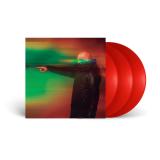
‘SPECTRUM’ is available as a special 3LP limited-edition pressed on red transparent vinyl.
- A1: Return Of The Knödler Show 2 52
- A2: The Frogs Of Miwa - Cho (1) 4 52
- A3: Waiting (I) 5 38
- A4: An Old Friend Passes By 3 46
- A5: Coco Bolo Strip (1) 5 25
- B1: Peace And Pipe Utopia 3 14
- B2: Unidentified Dancing Object 1 44
- B3: The Call (I) 2 41
- B4: Wenn Das Rohr Dommelt 4 03
- B5: Mariahilf (Live Version) 3 36
- B6: Watching The Shades (I) 2 59
- B7: Playing The Table Music (Ii) 2 43
- C1: Could Be Nice Too 5 29
- C2: Ox Of Inner Depth 4 51
- C3: Ymir Shows Up 3 58
- C4: Could Be Nice 5 24
- C5: Playing The Table Music (I) 4 23
- D1: Coco Bolo Strip (Ii) 4 52
- D2: Locusts Looking Like Men 5 55
- D3: Waiting (Ii) ︎ 3 36
- D4: No Stove 2 29
- D5: An Old Friend Passes By Again 3 00
- D6: Heimkehr Der Holzböcke 3 16
Black Truffle is thrilled to announce Dalbergia Retusa, an extensive double LP selection of the solo guitar music of Hans Reichel, compiled by Oren Ambarchi. Last heard on Black Truffle as one quarter of the joyously anarchic Bergisch-Brandenburgisches Quartett, Hans Reichel (1949-2011) is one of the great figures of experimental guitar music. Though perhaps lesser known than peers like Derek Bailey, Fred Frith and Keith Rowe, Reichel’s rethinking of the instrument was in some ways the most radical of all. Early on, he dispensed with existing guitars to build a series of his own that explored the use of additional strings and fretboards, moveable pickups, extra bridges, special capos, and other innovations documented in the extensive booklet accompanying this release.
Reichel was a long-term resident of Wuppertal, the small Western Germany city that became an unlikely centre of European free jazz in the late 1960s, also home to Peter Brötzmann and Peter Kowald. His solo debut Wichlinghauser Blues was an early entry into the FMP discography and began a relationship with the label that stretched into the 1990s; all the solo performances heard here were first released on FMP. As Reichel says in the charming archival interview with Markus Müller included here, he was ‘always a cuckoo’s egg at FMP’, a label that began as an outlet for roaring European free jazz. What strikes the listener right from the opening selection on Dalbergia Retusa—‘Return of the Knödler show’, from 1987’s The Dawn of Dachsman—is the extraordinary beauty of Reichel’s music, at once alien in the shimmering sonorities and unconventional pitch relationships made possible by his invented instruments, and deeply lyrical, even romantic in its harmonic content. Growing up in West Germany in the 1960s, Reichel’s formative influences were mainly British and American rock bands, a background that shines through in many of the pieces included here: ‘An old friend passes by’ is haunted by the ghost of Hendrix’s rhythm guitar, and the wild closer ‘Heimkehr der Holzböcke’, taken from a rare 1975 7” and the only piece to use overdubbing, layers errant hammer-on and slide tones over a Canned Heat boogie chug.
Reichel was an important source for the development of Oren Ambarchi’s own extended approach to the electric guitar. Appropriately enough, his selection opens with the very first piece by Reichel he ever heard, on a flexidisc included with a 1989 issue of Guitar Player magazine. Though Reichel collaborated with others extensively in many settings and also performed on violin and his other major contribution to instrument invention, the daxophone, his music for solo guitar remains at the core of his oeuvre. Focusing exclusively on solo pieces recorded between 1973 and 1988, the 23 pieces on Dalbergia Retusa showcase the range and consistency of Reichel’s work, allowing the listener to see how his performances developed hand-in-hand with his instrumental inventions. On a piece from his very first LP, played on an 11-string instrument (partly strung with piano strings and using a schnapps glass a slide), we hear his intensive exploration of fret-hammering to create zither-like, chiming tone, which Reichel would hone further in later years with a double fretboard guitar specifically designed to be hammered rather than fretted and picked. On a piece from 1979’s Death of the Rare Bird Ymir, Reichel uses two steel-string acoustic guitars at once, with beautiful results: ‘some even say too beautiful’, he jokes in the interview included here. Many of the pieces from the 1980s make use of varieties of the ‘pick behind the bridge guitar’, instruments of uncanny harmonic richness primarily designed to be played on the ‘wrong’ side of the bridge. At times the unexpected behaviour of attacks, resonance, and decay can almost seem electronic, conjuring up the technology-assisted work of Henry Kaiser or even Fennesz, but realised solely through Reichel’s unorthodox techniques on his invented instruments. Extensively illustrated with photos and Reichel’s own plans and drawings of his instruments, Dalbergia Retusa is an essential introduction to the unique world of Hans Reichel. Rarely has music been at once so strange and so beautiful.
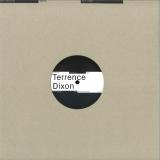
Detroit original, Terrence Dixon, returns to Tresor Records to kick off 2026 with ‘When Stars Remember’. Despite his thirty-year career, Terrence has always managed to keep a lower profile than his peers; he has given few interviews, preferring instead to speak through his music, with cryptic song titles hinting at the thoughts swirling around their creation.
However, ‘When Stars Remember’ finds him stepping forward. “I wanted to get closer to the dancefloor. I consciously made this one feel louder…made with Tresor specifically in mind.” And the EP does just that: whilst many of the hall marks of a Terrence Dixon production are present, the drums are more forward; the synth arpeggios so bold that ‘monumental’ seems a better descriptor than ‘minimal’.
“I put three or four sounds together on the same track, layering to make something bigger”, he says of opening track ‘Mono Collapse’, though the statement could apply to any of the music appearing on the release as all four pieces fold in sonics to create something hypnotic; more than the individual parts: “If you stick with the same layered tones, and repeat it over, after a while your brain changes it on its own; you hear a lot of things: things that you didn’t notice at first, things that maybe aren’t even there.”
The absence of things is another main theme of the EP, especially what Dixon sees as ‘The Forgotten’, a group of fundamental principles like common sense, trust, loyalty, honesty and respect that are missing from modern life. “This world is different…the love is gone. But I love everybody, man. I think, secretly, everybody love everybody, but they just don’t know it.”
New York-based Patrick Sullivan AKA P-Sol has long proven his credentials when it comes to editing hip-hop joints, mashing together classics, and generally pulling apart favourite jams and rebuilding them with a different perspective. Most of them come on the PS7, as does this new long player, which is a top-shelf example of how to sample properly. Tittle tracks make subtle hints at inspirations if not source material as the works through loopy, sketchy jams that are short but sweet, more club-ready rollers and loved-up beats that drip with sexuality and jazzy sophistication. A great accompaniment to a long journey or lazy afternoon.
- 1: Eureka 378-B
- 2: Brain Of The Firm
- 3: Rotation I
- 4: Playing And Reality
- 5: Rotation Ii
- 6: First Galactic Utopia
- 7: Rotation Iii
- 8: Before The Law
- 9: After The Last Sky
- 10: A City Yet To Come
- 11: Second Galactic Utopia
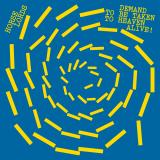
- 12: Demand To Be Taken To Heaven Alive!
WHITE VINYL[23,49 €]
Die Musik auf Horse Lords' "Demand to Be Taken to Heaven Alive!" wirkt zugleich unglaublich detailliert und zutiefst menschlich. Die zwölf versammelten Stücke sind vielschichtig, verflochten, tonal und rhythmisch komplex - moiré-artige Muster aus Interaktion und Verzahnung, die sich sowohl körperlich als auch geistig entfalten, voller klanglicher Gänge mit einem unausweichlichen Groove. Künstler sind nicht notwendigerweise Wissenschaftler, Logiker oder spirituelle Führer, doch durch ihr persönliches Verständnis von Ordnung und Erfahrung eröffnen sie einen unmittelbaren Zugang zu gesteigerten Zuständen von Materialität und Immaterialität. Horse Lords wurden 2010 in Baltimore gegründet; sie gingen aus einer anderen Gruppe namens Teeth Mountain hervor und starteten als Trio mit Gitarrist Owen Gardner, Bassist Max Eilbacher und Schlagzeuger Sam Haberman, bevor der Altsaxofonist Andrew Bernstein zum Kernensemble hinzustieß. Obwohl das Quartett aus einer fruchtbaren Noise- und Experimental-Rock-Szene hervorgegangen ist - einem legendären Umfeld für Künstler und Außenseiter, das viele einflussreiche Bands hervorgebracht hat (Lungfish, Matmos) - war ihr Ansatz über sechs Alben, zahlreiche Kollaborationen und als gefeierte Liveband weit vielseitiger, als es die punktierten Rhythmen instrumentaler elektrischer Rockmusik vermuten lassen. Für dieses Projekt wird die Band durch Bassklarinettistin Madison Greenstone, Posaunist Weston Olencki und - erstmals bei Horse Lords - durch Gesang von Nina Guo und Evelyn Saylor ergänzt. Der Entstehungsprozess von "D2BT2HA!" brachte geografische Hürden mit sich, da die vier Mitglieder seit 2021 in unterschiedlichen Städten leben. Nach sechzehn Jahren als funktionierende Band übersteigt ihre gemeinsame Sprache jedoch jeden Ort. Die aus Deutschland stammenden Gardner, Eilbacher und Bernstein trafen sich in Berlin für die Aufnahmen, während Haberman die Schlagzeugparts in Baltimore erarbeitete. Beim Hören würde man dies nicht unbedingt erkennen, und gemeinsames, räumlich getrenntes Arbeiten ist heutzutage ohnehin keine Seltenheit mehr. Die Band merkt an, dass "es wichtiger war, den Konzepten und Visionen der jeweils anderen zu vertrauen, als Abschnitte immer wieder zu spielen, um zu überprüfen, ob die Musik funktioniert - obwohl dieses Vertrauen nur durch sehr enges gemeinsames Arbeiten möglich wurde". Obwohl "D2BT2HA!" nicht im engeren Sinne eine Suite ist, beeinflusst und durchdringt sich die Musik in komplexen Verknüpfungen selbst. Horse Lords erklären: "Uns gefällt die Vorstellung von Kunst als Werkzeug zur Perspektivveränderung - dass man Ideen rotieren kann und sie aus einem anderen Blickpunkt sehen/hören/fühlen kann." Oder, wie es der Swami Satchidananda Saraswati zugeschriebene Satz ausdrückt: "Understanding is standing under where you are already standing." Das Eröffnungsstück ,Eureka 378-B" ist ein Arrangement von sakraler Harfenmusik aus dem 19. Jahrhundert, getragen vom Gesang von Guo und Saylor; seine Melodie entfaltet sich weit und setzt einen tonalen Startpunkt für vieles, was folgt. Dazu kommen die kurzen "Rotations", die Fragmente aus anderen Stücken isolieren. Offensichtlich tragen die Titel der Stücke einiges an Bedeutung, und "D2BT2HA!" bildet da keine Ausnahme - Transzendenz und Erhebung sind der Musik inhärent, und wenn jede Kunst politisch ist, so sind die Tendenzen von Horse Lords optimistisch und gemeinschaftsorientiert. Transformation und Neubetrachtung sind nicht nur kompositorische Strategien, sondern eine philosophische Haltung, was sich in Titeln wie ,A City Yet To Come", dem Titeltrack oder utopischen Bezügen zeigt. Wie sie selbst sagen: "Wir versuchen Musik zu machen, die den Status quo herausfordert und dem Hörer einen Weg zur Befreiung eröffnet. Das Studium und die Erforschung von Klang und Musik hat eine spirituelle und ekstatische Dimension, und wir haben große Ehrfurcht vor ihrer Wirkung auf den Einzelnen und die Welt." "D2BT2HA!" enthält unzählige klangliche und konzeptuelle Schichten, doch angesichts der unverkennbaren Kraft und Menschlichkeit der Musik ist der Prozess, sie zu entschlüsseln, begeisternd und zutiefst lohnend. Selten ist eine Platte, die einen so unmittelbar packt und zugleich bei jedem Hören vollkommen neu erscheint.
In Lande’s words: “It’s a daydreaming song about wanting a life of excitement and adventure rather than a dull and ordinary life - one where people underestimate you and belittle you. And where you’re forced to buy into capitalism and become a pathetic, losing player in a game that you hate. I’d rather escape and live in a queer space fantasy and be brave.”
Available on limited turquoise vinyl and digipack CD
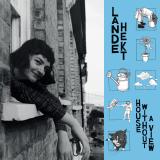
It is with both pride and excitement that we announce the reissue of ‘House Without A View’, the out-of-print second album by singer-songwriter Lande Hekt – the first of a three-part reissue series on Circuitry, with ‘Going To Hell’ and ‘Gigantic Disappointment’ (first time physically) to follow in the coming months.
With a new album ‘Lucky Now’ released on Tapete in January, supported by an extensive spring UK tour (dates below), Lande’s contemporary twist on the classic C86 indie sound - with a queer feminist punk identity lyrically explicit throughout – is drawing in an ever-growing audience of devotees, such is the consistent quality of her songwriting, and the personality within.
The opening track of the album is ‘Half With You’ which “is about growing into yourself as a queer person, and enjoying who you are after not enjoying it for so long,” says Lande. ‘Cut My Hair’ is about how her relationship with her gender has changed over the last few years, becoming more comfortable in herself and understanding more about what makes her happy. “It’s also about how easy it is to not talk to people when you’re struggling, which is something I did for a long time,” admits Lande.
The title track of ‘House Without a View’ deals with childhood trauma and how events of our formative years “affect us so much into our adult lives and are intrinsic to our personalities and the way we cope (or don’t) with life and relationships,” says Lande. Although there’s darkness and sadness within the record, there’s also some shining beacons of positivity and a light-hearted side, albeit with a side of frustration. ‘Lola’ was written about Lande’s cat shortly after she came to live with her and her girlfriend. “She’s the first pet I’ve ever had and I wasn’t quite ready for how hard it would be to not be able to verbally communicate with her. I worried constantly that she was depressed because all she did was sleep, but my girlfriend assured me that that was regular cat behaviour.”
APRIL 2026 DATES: 4th Cardiff/5th Trowbridge/6th Penryn/7th Portsmouth/9th Ramsgate/10th Cambridge/11th Norwich/12th Nottingham/13th York/19th London/20th Brighton/21st Bristol/22nd Exeter/23rd Manchester/24th Sheffield/25th Oxford
- 1: Intro
- 2: Sciatiq
- 3: Sakakinik
- 4: Regarding Others Ft. Talin
- 5: Flayosc Ft. Jules Regard
- 6: Proud B - Pt1
- 7: Proud B – Pt2
- 8: From The Ending F. Mathieu Fabre
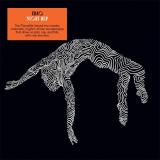
Growing together both personally and musically… That is indeed the good fortune of the musicians in the Marseille-based trio ubaq. We’re talking about bassist Antoine Carletto, guitarist Lucas Schemidt, and drummer Antoine Saussol, winners of the Rezzo springboard competition at Jazz à Vienne 2025. In their early twenties, they met in their late teens while still honing their musical skills. Nearly ten years later, they burst onto the scene, in perfect harmony, with their very first album, “Night WIP,” a follow-up to their EP, “20bis,” released in 2024. They owe their stylized stage name—written in lowercase with a “q”—to the ubac, that side of a mountain with very little sun exposure, where twilight reigns. “We liked that idea because we’re night owls,” says bassist Antoine Carletto. Hence the “night” for “nuit” and the “WIP” for “Work In Progress,” explains guitarist Lucas Shemidt. ubaq’s music is characterized by a nocturnal, melancholic heaviness, pierced by beams of light. “We love creating music that soothes us and highlights the precious nature of composing and playing in complete harmony,” says Antoine Carletto. “We cultivate complex tones, sometimes difficult to bear, whether they’re nostalgic or even verging on depression. But we manage to convey emotions without falling into clichés,” adds Antoine Saussol. Night and twilight serve as the perfect catalysts for this trio, which moves forward with perfect chemistry and harmony.
On this album, they feature the German-Armenian rapper and singer Talin, who is also based in Marseille. She appears on the track “Regarding Others,” where she chants that even though the year 2026 may see mothers weeping in every corner of the world, she still manages to smile. Thus, this track explores the three musicians’ relationship with the world and the necessity of looking at others. The unsettling “Sciatiq,” the haunting “Sakakinik,” and the ambivalence of “Flayosc”—the final track, on which the trio features trombonist Jules Regard—owe their titles to the musicians’ own observations and experiences. The multi-faceted track “Proud,” in two parts, is a tribute to Lucas Schemidt’s mother, who has since passed away. The presence of wind instruments—whether Jules Regard’s trombone or Mathieu Fabre’s saxophone on the intense track “From The Ending”—adds textures missing from the natural landscape depicted in “Night WIP.” This debut album captures the obsessions and introspective wanderings—sometimes anxious, sometimes enchanted—of a trio that cultivates melody as a pledge of warm fulfillment.
- 1: When Hamlet Left Town 0:32
- 2: Radio Four 05:45
- 3 34: E 03:34
- 4: Solid Ground 0:25
- 5: Arc 04:37
- 6: Aelita 03:12
- 7: All Tomorrows Past Part Ii 04:26
- 8: Interlude 03:26
- 9: Henry & The Ghosts 03:22
- 1: Space Minor 03:22
- 2: Loop D 03:36
- 3: Tomorrows Past Part I 0:11
- 4: Modest Farewell 03:5
- 5: Nordlead 03:3
- 6: Momo 03:12
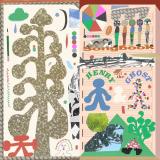
On his new album, Micha Acher rearranged compositions for bands such as Tied & Tickled Trio and Ms. John Soda from previous years.
Why are we interested in ghosts? What fascinates us about the eerie? According to cultural theorist Mark Fisher, the allure that the eerie possesses is not captured by the idea that we „enjoy what scares us“. It has, rather, to do with a fascination for the outside. For that which lies beyond standard perception, cognition or experience, as he writes in his book „The Weird and the Eerie“.
In fact, also none of the 15 pieces from Henry and the Ghost is really scary. On the contrary, they all feel strangely familiar. Like revenants or doppelgängers, which in fact they are. They have all been released before. But in a different form. In different line-ups. With different band projects such as Tied & Tickled Trio, The Notwist or the Alien Ensemble.
With the „Songbook“, Micha Acher's aim was, as he says, to find out how the familiar pieces sound in a chamber music instrumentation. Therefore he met with Theresa Loibl (bass clarinet, piano), Timm Kornelius (bassoon), Markus Rom (guitar, banjo, electronics) and Simon Popp (drums, percussion) in his living room for a musical séance in the summer of 2022. The séance lasted two days. Afterwards, Markus Rom (Oh No Noh), added some haunting electronical ideas.
The mood of most of the pieces is melancholic. There are surprising twists and siren-like melodies. Just as ghost stories should be. However, most of the songs sound very light-footed. With their feet in pop, folk, jazz and classical music. Pieces such as „Johanna“ with its wheezing harmonium and spooky piano, or the dreamy „Modest Farewell“ on the other hand have a cinematic flair. Immediately faces and scenes arise in the mind. But at the beginning, there is „Hamlet“. It starts with ghostly electronics and merges into a calm, almost classical guitar piece. Could it be that the ghost of Hamlet's father is hiding between the strings?
„34E“ begins with a banjo. Then the deep humming of Micha Achers sousaphone and the other brass instruments kick in. In the slow, solemn „Aelita“, the sousaphone starts a dialogue with a children's piano. With the banjo and the other wind instruments acting as mediators. The title of „All Tomorrow's Past“ brings Velvet Undergrounds „All Tomorrow's Parties“ to mind. Another ghost from the past. What connects the two pieces is free-floating percussion, which accompanies the sumptuous melodies.
„Arc“ takes us on an exhilarating voyage at sea, with the sousaphone providing powerful propulsion. Towards the end, things get quite turbulent. With the clarinet stirring up the water, before the sea calms down again. „Henry and the Ghost“ is characterised by a ghostly mood change between major and minor. In „Radio Four“ the banjo with its stoic chords keeps the lively brass section in check. „Solid Ground“ is imbued with melancholy. „Space Minor“ takes us into outer space, with the power of sousaphone and percussion.
„Tomorrows“ is filled with cautious optimism. And the concluding „Nordlead“ turns out to be a revenant of the instrumental „N.L.“ from The Notwist's legendary album „Shrink“ from 1998. In the new version, the piece sounds like a distant echo. One that also brings to mind how Micha Acher's music has evolved. Which new worlds he explored and opened up since the nineties. And yet Acher's signature is recognisable in every single note of this fascinating „Songbook“.
A little over a year ago Tim Reaper made his first appearance in the town LoDubs is based in, Portland, Oregon, at the always forward thinking westside venue Barn Radio. The bill was rounded out by yours truly, Jon AD, who set the standard for the night, which was a boggy, thick warehouse vibe, even though the venue was more of a tightly packed repurposed storefront with an overactive fog machine.
This stop turned into a bit of a several day stopover for the TR, who saw the town, met up with other Portland people, and after that was left with a bit of a aural vision of the whole experience, the DIY ethos of the Portland, and the desire to document these impressions on the label of his bill mate for the aforementioned night, LoDubs.
Shortly thereafter "Triumphant March" arrived at the LoDubs mailbox, and reverb heavy, oozing slab of Jungle funkiness.
Upon realizing this would be good material for a dubby remix, the next step was reaching out for people to do so, and Beatrice M was at that time really getting noticed with their take on Dub. This year has seen them really move up the ranks, needless to say.
2026 Repress
In March 2023, Tresor Records will release "Crash Recoil", a new album by Surgeon. It marks Anthony Child's first techno LP in five years, following a period in which he felt uncertainty in his role as a techno producer and found it tough to locate inspiration. This new album encounters him drawing on spontaneous techniques to arrive at unchartered topographies.
"Crash Recoil" originates from Surgeon's recent live sets, where he experimented with constraints in performing and embracing the twists, turns and paradoxes that arrive from this. Each fresh iteration on consistent MIDI sequences and hardware reconfigured tracks into dierent constellations, creating an inspiring vortex of unpredicted events where ideas could flourish. This new approach allowed him to capture the spontaneous energy of his live shows in a way he had never done before. "This is not a live album, since it has not been recorded in one go during a live performance. In the same way that bands tour songs before going into the studio to record an album, I was able to explore these songs and hone their eectiveness during my live performances before creating a studio version."
The result is eight tracks that emphasise a new techno sound for Surgeon, drawing in references from across the musical spectrum. "I can hear Coil, King Tubby, Detroit Techno and The Cure all wrapped up with 30 years of DJing," Surgeon says of the album. Melancholic hum-like ambiences smudge around unadorned, near-droning basslines, crunching rhythm and percolating arpeggiations. The tracks carry unique and potent locomotion, with a low-slung grind through toughened terrains, breathing with a free spirit, untethered by a studio-based perspective. We hear manifestations of the same raw material across the album, like a textural motif, carving new variants and creating a cohesive work full of recollection.
Damian Dalla Torre returns with People Pleaser, a record shaped by movement, collaboration and an ever-deepening relationship with sound as environment.
The Leipzig-based multi-instrumentalist, composer and producer first found wide attention with his 2022 debut Happy Floating, and his subsequent album I Can Feel My Dreams was named the #1 Contemporary Album of 2024 by The Guardian, an accolade that broadened his audience and deepened confidence in his evolving voice. That second album, written between Europe and South America, opened unexpected doors and took Dalla Torre to stages across New York, Japan and Italy. “When you release music, it’s very intimate,” he reflects. “You show your emotions pretty raw. I was kind of scared. But getting so much positive feedback gave me a lot of self-confidence to try out more.”
People Pleaser begins in that quiet shift of confidence.
The title stayed with him for months before he committed to it. “It was a working title for a long time,” he says. “I didn’t actually think I would use it. But this term also felt somehow relevant in connection with the phase of self-negotiation during the development process. Some aspects are related to pressure, others are positive.” The ambiguity felt right. Rather than presenting it as a statement, Dalla Torre leaves it open, an invitation rather than a confession.
At the centre of People Pleaser is collaboration. Guitarist Bertram Burkert, whose playing stretches from classical delicacy to electric abstraction, joined Dalla Torre in the studio for an intensive three-day session, recording a wide palette of textures that would become the backbone of the album. Vocalist Laura Zöschg, a key live collaborator, harpist Babett Niclas, organist Felix Römer, tape experimentalist Markus Rom, marimba and vibraphonist Volker Heuken and Japanese artist Manami Kakudo also contribute, creating a sound that feels intimate yet expansive.
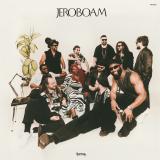
Original Funk Band from Paris
With just three years on the scene, Jéroboam is already considered as one of the most exciting and essential new voices in contemporary soul funk.
A true manifesto for live music and the dancefloor, this 11-piece live machine hits the stage like a juggernaut and doesn’t just play funk, they live and breathe it.
After a slew of certified underground classic releases on Space Grapes and Chuwanaga which have been supported worldwide by tastemakers and connoisseurs, Jéroboam is now presenting its long awaited first LP on Favorite Recordings.
From boogie-funk to 2-step soul crossover, Jéroboam delivers 8 heartelf songs, combining razor-sharp compositions with genuine and relatable lyrics.
Achieving such an exciting and challenging piece of work is the outcome of a long and inspiring process started more than 10 years ago in Paris.
From their early beginnings on the local scene, the core musicians of Jéroboam thrived on their mutual love for funk music under the name and concept of Echoes Of.
Building on these successful experiences and expanding its line up over the years, the band has been able to sharpen its sound, craft a distinctive crossover identity and create its own original music under a brand new entity : Jéroboam.
This momentum culminates in their debut full-length album, set for release in june 2026 on Favorite Recordings, a defining moment for one of Europe’s most vital modern funk acts.