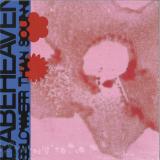
London duo Babeheaven — vocalist Nancy Andersen and producer/multi- instrumentalist Jamie Travis — return after four years with their highly anticipated 5-track EP ‘Slower Than Sound’, released via Scenic Route on October 24.
Following their singles ‘Beloved’ and the 6 Music-premiered track ‘Picture This’, ‘Slower Than Sound’ marks a deeply personal and intimate turn for Babeheaven. Written and recorded largely in Nancy’s home studio, the EP embraces minimal instrumentation, acoustic textures, and spacious arrangements, capturing the emotional vulnerability and euphoria the duo describe as “Post Rave” — the music you listen to on the ride home from a
party.
“It feels like a rebirth in a lot of ways,” says Nancy. “Writing at home gave me space to experiment, make mistakes, and rebuild confidence. Once I brought the songs to Jamie, we shaped them together into what you hear now.”
The EP explores love, reflection, and personal growth. Beloved conjures a comforting, almost mythic presence, while Lost For Words reflects the struggle to connect with the world and oneself. Picture This offers snapshots of a relationship, looking back while imagining its future. The cover Tiny Demons by Todd Rundgren blends seamlessly with the EP’s introspective mood, and Loud Thoughts, featuring Samba Jean-Baptiste, captures heartbreak, burnout, and creative pressure. “I hope people can find their own meaning in these songs,” Nancy says. “I’m writing for myself, but music is for each listener to interpret.”
Since debuting with Friday Sky in 2016, Babeheaven have steadily built a loyal following through their acclaimed albums Home For Now and Sink Into Me, amassing over 65 million Spotify streams and earning support from BBC Radio 1, 6 Music, and KCRW. Their live shows have sold out Village Underground,
Bush Hall, and Jazz Cafe, and they’ve shared stages with Cigarettes After Sex, Loyle Carner, and Nilüfer Yanya. Visually, Babeheaven’s world has been shaped alongside creatives including Margot Bowman, Frank Lebon, Tegen Williams, Sacha Beeley, and Joyce Ng, cementing their reputation as one of the UK’s most distinctive acts.
After facing cancelled tours, industry pressures, and a period of creative doubt, Slower Than Sound represents a return to the core of their artistry: intimate, honest, and self-produced. Jamie reflects: “Not putting out music for so long was hard, so we hope this is the start of a more prolific period for us, reconnecting with the London music community and beyond.”
Поиск:b say
Все
SOPHIE’s ‘OOH’ and ‘GET HIGHER’ are now available as a double A-side 12" vinyl. This release follows the single-series packaging format used for the other singles from PRODUCT: one track and slide image per side, black vinyl in a black inner sleeve, screen-printed with a white SOPHIE logo housed in a clear archive bag.
Earlier in 2025, Numbers marked 10 years since SOPHIE’s game-changing singles collection PRODUCT, with a special edition featuring 11 songs across Deluxe Vinyl and Compact Disc.
SOPHIE classics ‘BIPP’, ‘LEMONADE’ and ‘VYZEE’ were joined by two immaculate PRODUCT-era songs ‘OOH’ and ‘GET HIGHER’ recorded and produced at the time, each with colourful single artwork completing the set.
‘OOH’ is one of SOPHIE's earliest productions that has been through several revisions since 2011. It was one of three original tracks that Numbers had signed when SOPHIE uploaded the song alongside 'BIPP' and 'ELLE' to her Soundcloud, and while it had been through several iterations and speed changes, this finalised version was completed by SOPHIE in 2019.
SOPHIE once described ‘OOH’ as “hi tech club dance pop”. Musically speaking, the earworm hook is carved out by her signature portamento-infused synths and candy-coated lyrics, a firm cult classic approved by AG Cook and Charli XCX. Initially titled 'MAKE RESPECT', the track was first performed live by SOPHIE in 2011 to a handful of lucky people at a beach afterparty surrounding Sonar Festival, Barcelona and later that year at Manhattan's New Museum. The vocal was recorded as the first track in the same one-day recording session as SOPHIE's debut single 'NOTHING MORE TO SAY', released on the Huntley & Palmers label, where Sophie's songwriting was performed by the London vocalist Jaide Green.
The genesis of the ‘OOH’ and ‘NOTHING MORE TO SAY’ recording session is lore-worthy in its own right: after watching Jaide Green perform live with Olly Murs during the sixth series of The X Factor in 2009, SOPHIE reached out and invited Jaide to record in her home bedroom studio.
‘GET HIGHER’ was born during joyous sessions in 2013, when SOPHIE’s beat was introduced to the vocalists Cassie Davis and Sean Mullins. The track feels like a visionary precursor to ‘Vroom Vroom’, and doesn't sound out of place next to the sub-clang intensity of SOPHIE’s ‘HARD’ and ‘MSMSMSM’. Striking a playful balance between blissed-out hyperpop and club-ready Atlanta trap, it showcases SOPHIE’s signature, laser sharp sound design. Originally released as a bonus track on the Japanese CD edition of PRODUCT, ‘GET HIGHER’ has remained a hidden gem.
• Digital download card
12th Isle founding member Stewart Brown and London-based percussionist Pike present six tracks born out of preparations for live shows at Cafe Oto and The Three Wheel Drive festival, the culmination of collaborating on ‘No Direction’ from the first Material Things album (with DJ support from Donato Dozzy, Orpheu The Wizard, Not Waving, I-Sha, Donna Leake, Optimo and Huntley & Palmers).
Inspired by various traditions of experimentalism, the pair touch upon reference points such as Eliane Radigue and Nurse With Wound’s “Soliloquy for Lilith” (on “Coastal Town”), as well as the wider canon of motorik, dub and drone practitioners over the past 60 years. Concerned with the interplay between early exports of free jazz and more modern electronics, Rain & Cymbals builds on the project's first outing with a more refined approach to production and a clearer modus operandi, combining ambient pads with additional synth work by Dan Macintyre, multifaceted percussion work and heads-down, emotive minimalism.
Cody 'Coflo' Ferreira is hyped right now, and for all the right reasons. Spinning all over the world and producing killer tunes on all the right labels (including Local Talk).
But we think he is at his very best when he goes in the studio with US vocalist Lee Wilson. Even though they delivered some great tunes in the past, we can honestly say that this is the best one by far...yet.
The track 'We Can Make It' comes in two versions, one "soulful mix" for all the garage heads, and on the flip, there's a darker and more electronic mix (but still loaded with soul).
DJ Support: Dj Harvey, Artwork, Pete Herbert, Sean Johnston ALFOS, Howler, Bill Brewster, Logan Fisher (Tryouts)
The Totem Projects hit last year and caused a huge stir, especially after solid support and plays of “dream forever” from DJ Harvey for well over a year at most of his international sets. Therefore demand on a vinyl release was high, so we acted…so sow say hello to the new TOTEM PROJECTS vinyl series. with full EPs of original tracks, and more exclusive edits to come. TOTEM duo Justin Deighton and Leo Zero are joined on this first outing by Pete Herbert and Howler.
- A1: Driving Fast (With Beau Neptune)
- A2: Different Time
- A3: Still Fading (With Alecc Crisostomo)
- A4: Direct With It (With Beau Neptune)
- B1: Mutt
- B2: Stay Blessed (With Alecc Crisostomo)
- B3: Hard2Sleep (With Beau Neptune)
- B4: Drinking To Get Drunk
- C1: All My Fault (With Thals)
- C2: Shine A Light (With Zayden)
- C3: Maximum
- C4: Liza M1 (With Liza Flume)
- D1: 20 Anymore
- D2: Holly (With Junior Simba)
- D3: We F-Up (With Liza Flume)
Swimming Paul’s music has always lived in the push-and-pull between euphoria and melancholy; the rare kind of electronic music that can make you cry while your body keeps moving.
On Smiling Through the Pain 2 (out October 24 via Headroom Records), the French-born, London-based producer doubles down on that emotional duality, delivering an album that feels as much like a diary as it does a DJ set.
Over the course of 15 tracks, Paul stitches together late-night catharsis, suburban nostalgia, and the jagged tenderness of early adulthood. The record is sequenced like an unbroken night out: the giddy anticipation, the sudden moments of reflection, the quiet comedown as the sun edges in. It’s an album that refuses to treat joy and sadness as opposites, they coexist here, often in the same chord progression.
“I don’t want to escape the feelings, I want to bring them with me” Paul says. “If you can’t stop thinking about something, you might as well dance with it.”
That philosophy runs through the singles: the emotional release of Holly (with Junior Simba), the aching nostalgia of Different Time, the hypnotic haze of Hard 2 Sleep, and the house-driven Drinking to Get Drunk, a bittersweet ode to nights spent outrunning your own thoughts. Elsewhere, Liza M1 folds heartbreak into an almost triumphant piano hook, while Shine a Light urges listeners to take risks and live without hesitation—as if youth’s boldness could be bottled.
Since debuting in 2023, Swimming Paul has quietly built an empire on emotional resonance: 150 million streams across platforms, 1.9 million monthly listeners on Spotify and more than 50 editorial placements (including Dance Party, Crying on the Dancefloor, Electronic Rising….), 10,000+ radio spins worldwide, and sold-out tours across Europe and North America. His sound has earned co-signs from BBC Radio 1, Triple J, KCRW, Sirius XM and a wave of DJs who value melody as much as momentum.
But Smiling Through the Pain 2 isn’t chasing charts, it’s chasing connections. Paul’s global fanbase, nurtured through a lively Discord community and nights on the road, has become a two-way conversation, with fans’ stories feeding back into the music’s emotional core.
This autumn, Paul takes the album to stages that match its ambition, from London to a string of US club dates, festivals and intimate pop ups designed for shared release.
Smiling Through the Pain 2 is an invitation to feel everything at once. To sweat through the sadness. To let your guard down under strobe lights. To realise that the best nights out don’t make you forget; they help you remember.
- A1: Anything To Say You're Mine
- A2: My Dearest Darling
- A3: Trust In Me
- A4: A Sunday Kind Of Love
- A5: Tough Mary
- A6: Next Door To The Blues
- A7: Don't Cry Baby
- A8: Fool That I Am
- B1: I Just Want To Make Love To You
- B2: At Last
- B3: All I Could Do Was Cry
- B4: Stormy Weather
- B5: Girl Of My Dreams
- B6: Spoonful
- B7: It's A Crying Shame
- B8: Something's Got A Hold On Me
Making this album was an absolute joy. We used Rothko’s artwork as a major influence. His use of colour fields, blending, mood and scale really helped us build an album of tracks that could stand on their own and also work together as a coherent whole across all the tones we had been working with. It was also a chance to fall back in love with our 909, 808 and 707.
While working on music for several other projects, the “Rothko” project got renamed Loud Ambient because it did not really sit right with the My Brutal Life series. We often talked about what people make of The Black Dog and whether they think we only make ambient music. We do not. Over the last year or so, one of us would be working on something and someone else would say, “That is a Loud Ambient track.” The name stuck. We liked the funny side of it.
With Loud Ambient, everything just fell into place creatively. Surprisingly for us, the tracklisting never changed, just small tweaks here and there. That rarely happens. It marks a first for us as a band. All the stars aligned and the confidence in this album is the strongest we have ever had.
Loud Ambient was made to dance to, something we have not done in a while. We welcome the return to the dancefloor with both hands. Will you join us?
Das Avant-Rock-Sextett aus Beirut verschmilzt auf diesem großartigen Nachfolger seines gefeierten 2023er Debüts "Mais Um" Psych/Kraut, Improv/Skronk, Elektronik, Gothic und Jazzelemente mit traditionellem ägyptischem Gesang und moderner arabischer Poesie. Produziert von Radwan Moumneh (Matana Roberts, Sarah Davachi, Jerusalem In My Heart). Der Titel des zweiten SANAM-Albums ist ebenso vielversprechend wie die Musik der libanesischen Band. "Sametou Sawtan" bedeutet aus dem Arabischen übersetzt "Ich habe eine Stimme gehört". Spukhaft oder spirituell, wie auch immer man die Phrase liest, sie spricht von der Fähigkeit von Klang und Sprache, innezuhalten, Aufmerksamkeit zu stehlen und uns für den Moment zu öffnen. In ähnlicher Weise vermischt die Musik von SANAM zarte Rasereien und feuerverbrannte Balladen, indem sie frei fließende Rock- und Jazzgerüste mit der tief verwurzelten arabischen Tradition verbindet. Sie in vollem Flug zu hören bedeutet, in der Gegenwart gehalten zu werden und sich neu zu orientieren, um einen offenen Horizont zu eröffnen. Die Arbeit an "Sametou Sawtan" begann im Frühjahr 2024. Die ersten Ideen, die in den Tunefork Studios in Beirut entstanden, wurden im April während eines Aufenthalts in Beit Faris, einem mittelalterlichen Haus in der Küstenstadt Byblos, weiter ausgearbeitet. Das Sextett: Sandy Chamoun (Gesang), Antonio Hajj (Bass), Farah Kaddour (Buzuq), Anthony Sahyoun (Gitarre, Synthesizer), Pascal Semerdjian (Schlagzeug) und Marwan Tohme (Gitarren), wurde vom Produzenten Radwan Ghazi Moumneh (Jerusalem In My Heart) unterstützt. Die letzten beiden Tracks des Albums sind Aufnahmen aus den Beit Faris-Sessions, während der Rest in den La Frette Studios in Paris während der Europareise der Band im Sommer 2024 aufgenommen wurde. Die Platte verarbeitet Gefühle der Distanz und der Entwurzelung. "In den letzten fünf Jahren hatte ich das Gefühl, dass jeder den Libanon verlässt", erklärt Chamoun. "Das Album handelt nicht wortwörtlich davon, sondern von der Vorstellung, dass dich etwas verlässt. Eine Distanz zu den Ereignissen, obwohl du in ihnen lebst, eine Distanz zu deinem Haus, obwohl du in ihm wohnst." Ob in der sehnsüchtigen Ballade "Goblin" oder dem langsam brennenden, autotune-überladenen Freakout von "Habibon", Sametou Sawtan fängt das Streben nach festem Boden in einer Welt ein, die diesen nur selten bieten kann . Das Album hat die hypnotisierende Intensität des SANAM-Live-Erlebnisses, während es der Musik Nuancen, Tiefe und eine enorme dynamische Bandbreite verleiht. Wie bei ihrem Debüt sind die Texte vieler Tracks entliehen, Worte, die in neue Kontexte gestellt werden, um die Gegenwart zu verarbeiten. "Hamam" interpretiert ein ägyptisches Volkslied neu. In "Hadikat Al Ams" treibt der krachende Hardrock-Stampfer den Text des zeitgenössischen libanesischen Schriftstellers Paul Shaoul an. Und sowohl "Sayl Damei" als auch der Titeltrack verwenden Gedichte des iranischen Dichters und bahnbrechenden Mathematikers Omar Khayyam aus dem zwölften Jahrhundert. "Wenn man etwas von Omar liest, fühlt man eine Verbindung zur Gegenwart", sagt Chamoun. "Das Gefühl, dass es keinen klaren Weg gibt." "Sametou Sawtan" enthält auch zwei Lieder mit Chamouns eigenen Texten, darunter den Opener "Harik". Es war die Keimzelle des Albums, geschrieben von Chamoun im Februar 2024, wobei die Band den Track um ihre Worte herum aufbaute. Es beginnt mit einem Schauder, zerfetzter Elektronik und einer keuchenden Stimme, die das Schlagzeug durchdringt, bevor sich die Band zu einem triumphalen Aufstieg aufschwingt. Es geht um Eintauchen in "ein unendliches Feuer", verrät Chamoun. Den Text zu "Tatayoum" schrieb sie allein, bevor sie ihn der Band vorlegte. Er spiegelt eine andere Art von Intensität wider, "eine Schleife, eine Besessenheit", wie sie sagt. Buzuq webt durch schwebende Elektronik und drängende Trommeln, während Chamoun arabische Worte rezitiert, die die Liebe beschreiben. Die unaufhörlichen Energien, die in diesen Tracks erforscht werden, sind nicht unbedingt negativ. Sie vergleicht deren Intensität mit der eines Schriftstellers, der in einem Gedankengang gefangen ist, im Guten wie im Schlechten. "Es geht nicht darum, deprimiert oder traurig zu sein", sagt Chamoun. "Es ist eine Falle, aber sie kann auch magisch sein." "Sametou Sawtan" wurde von Farah Fayyad mit ikonischen Grafiken und Design versehen.
„Cloudy Eyes (Dance Tonight)“ marks Reznik’s and Jesse Boykins III’s second collaboration. Remember Rez’ remix for Tiga & Hudson Mohawke’s „Silence Of Love“ from last year? Working with Jesse’s vocals struck quite a few chords, so the next obvious move was to produce an original track together. And that one just hits all the sweet spots. Those piano chords. Those string pads and synth arpeggios. This driving rhythmic footing. Quite the ideal sonic environment for Jesse’s soulful croon to thrive on. „Cloudy Eyes (DanceTonight)“ has become a set-highlight of all the Keinemusik members throughout the summer season and the triggered feedback and ID requests have been no less than overwhelming. Safe to say, this is one of the most anticipated tunes of the year and its unmistakable imperative to dance tonight is about to wreak a lot more of the sweetest emotional havoc on dancefloors worldwide.
Iconic Club Anthem "Ecstasy (Take Your Shirts Off) by Johnny Vicious" returns with a fresh Remix by DJ Licious.
Belgian label Serious Beats Classics, renowned for reviving essential club tracks for new generations, proudly announces a new remix of the iconic dance anthem "Johnny Vicious feat. Lula - Ecstasy (Take Your Shirts Off)". Originally launched in 1998 on Groovilicious and later immortalized in the club scene with DJ Wout's explosive remix, this timeless track is now reborn with a brand-new remix from DJ Licious.
A fixture of late-'90s raves and clubs around the world, "Ecstasy (Take Your Shirts Off)" became synonymous with sweat-soaked dancefloors and euphoric nights. With DJ Licious's remix, the track fuses the original's raw energy with modern production power, making it as irresistible today as it was in 1998.
"As a kid I was dreaming of becoming a DJ/producer and when I started going out to raves this tune was smashing every dancefloor I went to," says DJ Licious. "Now being able to actually remix that song makes this a full circle moment for me."
- A1: Disco Wich Aa
- A2: Nainan Da Pyar De Gaya
- A3: Par Toon Ki Janay
- A4: Pyar Mainu Kar
- A5: Aye Deewane
- B1: Soniya Mukh Tera
- B2: Mainu Apne Pyar Wich
- B3: Chum Chum Dil Nal
- B4: Ve Tu Jaldi Jaldi Aa
- B5: Dohai Ni Dohai
- C1: Disco Wich Aa (Peaking Lights Remix)
- C2: Turbotito & Ragz Featuring Piya Malik - Nainan Da Pyar De Gaya
- C3: Par Toon Ki Janay (Danger Boys Remix)
- D1: Nainan Da Pyar De Gaya (Psychemagik Remix)
- D2: Par Toon Ki Janay (Dexter+Franz Remix)
- D3: Mainu Apne Pyar Wich (Mystic Jungle Remix)
- D4: Disco Wich Aa (Baalti Remix)
Naya Beat is incredibly excited to announce the release of an astonishing lost “holy grail”, Mohinder Kaur Bhamra’s 1982 masterpiece ‘Punjabi Disco’. Unknown and inaccessible to even the deepest of diggers, it is the first British Asian electronic dance album recorded and a true lost relic. A chance find of the original multitrack masters during the Covid lockdown led to ‘Punjabi Disco’ being rediscovered. Lovingly mixed down and remastered from these very studio recordings, the reissue also includes remixes by Peaking Lights, Baalti, Mystic Jungle, Psychemagik, and Danger Boys, as well as a cover by Say She She’s Piya Malik and Turbotito & Ragz and a previously unreleased track. It is available for pre-order and out on x2LP vinyl and all digital platforms on October 31st, 2025.
Released the same year and into equal obscurity as ‘Ten Ragas To A Disco Beat’, Charanjit Singh’s acid house opus, the reissue of ‘Punjabi Disco’ is set to have similar reverberations in the world of dance music. Produced by Mohinder’s eldest son and legendary bhangra pioneer Kuljit Bhamra using a recently acquired Roland SH-1000 synthesizer and a CR-8000 CompuRhythm drum machine played by his then 11-year-old brother, the album was recorded at Roxy Music bass player Rick Kenton’s studio in London. The concept for a Punjabi disco album was subsequently stolen from the Bhamra’s by the very record label that had agreed to distribute the album. Eventually self-released with no label support, ‘Punjabi Disco’ vanished into complete obscurity.
A pivotal figure in British Asian music, West London-based vocalist and first-generation immigrant Mohinder Kaur Bhamra became the first woman to sing at Punjabi weddings and other community events in the UK. Her son, Kuljit, would accompany her, playing tabla at her events from the age of six. Wedding music was traditionally a tame, segregated affair: men and women seated and separated on opposite sides of the room. ‘Punjabi Disco’ was born out of a desire to create an unsegregated dancefloor and inspired by the sounds of disco from the era. A tapestry of electric drum rhythm, warbling bass, and psychedelic siren-like Roland synth melodies provide a vehicle for Mohinder’s powerful voice. Part disco, part funk, part acid house, and infused with Punjabi folk melodies, the sound of ‘Punjabi Disco’ is as mesmerising as it is undefinable.
Featuring an incredible gatefold package and exhaustive liner notes by the Guardian’s Global Music Critic, Ammar Kalia, the x2LP release has been cut to vinyl for the discerning listener and DJ by Grammy-nominated Frank Merritt from The Carvery, London.
This is Naya Beat’s ninth release in a series of reissues, remixes, and compilations dedicated to uncovering electronic and dance music from the subcontinent and South Asian diaspora.
- A1: Sir Benni Miles
- A2: Roaches Don’t Fly
- A3: Black Sunlight Featuring Kayana
- A4: Indian Summer
- A5: Aubergine Featuring Fielded
- A6: God’s Feet
- A7: Peppertree
- B1: Scaffolds
- B2: Falling Out The Sky Featuring Earl Sweatshirt
- B3: Wishing Bad Featuring Curly Castro & Amani
- B4: Chicharrones Featuring Quelle Chris
- B5: Squeegee
- B6: Robert Moses
- B7: Stonefruit
Looking back more than four years later at Haram, it is easier to see the forest for the trees. At the time, much of the attention fell on how this outsider duo would fare under the bright lights- which was fair, Armand Hammer had never done a single producer record before- and here they were working with a living legend. Now, with a little distance, it’s easier to see how Alchemist stepped out of his comfort zone to meet them where they were, and how all three artists then absconded for parts unknown. The flashbulb energy of “Bring The Stars Out”, asymmetric drone of “Chicharrones”, fugue-bounce of “God’s Feet”, and good luck finding analogues for “Peppertree” or “Stonefruit”. Haram doesn’t sound like anything else in the ALC discography, nor in Armand Hammer’s, for that matter. Haram was a one-shot kill that somehow contained some of the most accessible work ELUCID and billy woods had ever done, as well as some of their most experimental, and it all sounded cohesive.
Needless to say, they didn’t do this alone; KAYANA’s golden voice upps the wattage on “Black Sunlight,” while Fielded’s sultry alto gets chopped and screwed on “Aubergine”. Earl Sweatshirt’s cameo on the sun-soaked “Falling Out the Sky” is already a classic. Curly Castro, Amani, and Quelle Chris all turn up the heat when called upon.
But since we are talking about retrospect here, the thing about Haram isn’t that it still sounds as good as it did when it came out. The amazing thing is that it actually sounds even better than it did then. You don’t have to take our word for it either, run it up one time, with the lights low and something on ice, see if it doesn’t take you somewhere new, again.
- A1: Ulrika Spacek - 'Interesting Corners
- A2: Empty Country - 'D3Sp4Ir
- A3: The Reds, Pinks & Purples - 'New Market Space (Down The Stairs Ver )
- A4: Cindy - 'The Thousand First
- A5: April Magazine - 'U Bop
- B1: Index For Working Musik - 'Going To Heaven On The End Of A String
- B2: Midding - 'Do As You Would
- B3: Luft - 'My Third Eye
- B4: Hospital - '25 Jade Place
- B5: William Doyle - 'The Sun Ain't Doing It For Me Lately
- B6: Daily Toll - 'Begin Again
LTD BLUE VINYL[26,68 €]
After so long it becomes harder to say new things about older things you now just do. Some things you've become. Some things you simply (never simply) are. The thing becomes a slippery notion. The self slides along with it. After this long, the story is whatever are the songs. A Self-portrait at two decades. Here are 11 new ones, from the current constellation, and a future still to come. The cement is still wet on that one. From the forest near where I now live you can hear a chorus of different birds in voice at once, competing but each defined, in defence of a territory or to attract a mate. There's an app that tells you so. I wonder, too, what that app doesn't reveal, if their nature need not share those same purposes. This is simply (never simply) how it exists. If we can't speak to the mysteries of these strategies, they at least persist, regardless of who picks up the frequency. Singing to itself, and there will always be these kinds of songs. 1. Ulrika Spacek - 'Interesting Corners' 2. Empty Country - 'D3SP4IR' 3. The Reds, Pinks & Purples - 'New Market Space (Down the Stairs Ver.) 4. Cindy - 'The Thousand First' 5. April Magazine - 'U Bop' 6. Index For Working Musik - 'Going to Heaven On the End of A String' 7. Midding - 'Do As You Would' 8. Luft - 'My Third Eye' 9. Hospital - '25 Jade Place' 10. William Doyle - 'The Sun Ain't Doing It For Me Lately' 11. Daily Toll - 'Begin Again'
Bringing together the elder statesman of the Zulu guitar Madala Kunene and internationally acclaimed Sibusile Xaba, kwaNTU pulls two generations of South African guitar mastery into a single point of focus. Under-represented on recordings outside of South Africa, Madala Kunene (b. 1951), the ‘King of the Zulu Guitar’, is revered as the greatest living master of the Zulu guitar tradition. Sibusile Xaba, whose collaboration with Mushroom Hour Half Hour reaches back to his first recording in 2017 (Open Letter To Adoniah/Unlearning), has garnered international acclaim for his unique voice and virtuoso guitar stylings, which bring together multiple South African guitar lineages in an original, spiritualised fusion. Collaborating with Mushroom Hour and New Soil for kwaNTU, the two players come together to weave a filigree sonic fabric which reaches down to the heartwood of Zulu guitar music but moves resolutely outward, building on the past to create a deeply rooted statement about present conditions and future travels. kwaNTU – which can be roughly translated ‘the place of the life-spirit’ – is also conclave of teacher and student, as Xaba has been taught by Kunene for the last decade. Meditative, rich and sonically sui generis, kwaNTU finds these two musicians linking up within the inimitable space of sound and spirit that they share through Kunene’s teaching.
The great masters of South African music have not all had equal exposure. For many years the generation of musicians who were exiled during apartheid took centre stage, as the regime made it very difficult for those at home to be heard. More recently, a new cohort of important voices, especially in jazz, has broken through to international consciousness. But for the generation of musicians in between – those who shone like beacons in the most difficult final years of apartheid and immediately afterward – international recognition has been slow in coming.
Madala Kunene, ‘the King of the Zulu Guitar’, is among this number. A revered figure for current generations of South African musicians, Kunene began his recording career in 1990, at the bitter end of apartheid, with a now classic self-titled LP for David Marks’ storied Third Ear imprint. Born in 1951 in Cato Manor, near Durban, he had determined to be a musician from early childhood, and by the time he first entered a recording studio he had already had a long career as a popular performer. His virtuoso absorption and transformation of the venerable Zulu maskanda guitar tradition and his richly spiritualised approach to music immediately marked him out as someone special, and in the years that followed, Kunene cemented his position as one of South Africa’s musical elders. He is without doubt the grand master of the Zulu guitar tradition, but his sound and sensibility ranges far beyond it into varied sonic terrain, and he has collaborated with a wide range of musicians both at home and abroad. Now in his mid-seventies, he remains a shining light for those that are making music in contemporary South Africa.
‘He is really an amazing person,’ says the guitarist Sibusile Xaba, who has been mentored by Kunene for over a decade, and now invites a collaboration with him on kwaNTU. ‘As a mentor, he's really powerful in showing us the way. For us to have this opportunity to make music together and have a project together is really a blessing to me.’
Xaba himself grew up in Newcastle, KwaZulu-Natal, where his mother had been in a band and his father sang in a church choir, and from early childhood Xaba played homemade tin guitars. He only later realised that music was his calling. ‘I just loved music. I was fortunate. My parents loved music. And when it was time for me to leave home and go to study outside Newcastle, I knew that music was what I wanted to do. There was no second option. It was just music.’ Moving to Pretoria to study music formally, Xaba committed himself to his craft, developing a unique style that draws on both US jazz masters such as Wes Montgomery and Jim Hall, and the rich and varied heritage of the South African guitar, from inspirational jazz players such as Allen Kwela and Enoch Mthalane, to the music of the Malombo groups and Dr. Philip Tabane (Xaba has previously collaborated with Dr. Tabane’s late son, Thabang), and the Zulu guitar tradition embodied by Kunene.
‘I was really in love with the jazz guitar, I really admired it, and I was digging a lot in that direction,’ says Xaba, recalling his first encounter with Kunene’s music, over a decade ago. ‘And then one day on my timeline, Kunene popped up, and I was like – “What's this sound?” I was so connected to it. It really touched me deep. I started checking out his records, and then I found out he's from the same region as I am, which is Zululand.’ After Kunene played a show at the Afrikan Freedom Station in Johannesburg, Xaba make contact with him, and visited him at home in Durban. They struck up a friendship, and Xaba became the elder’s student, as Kunene began to pass on his knowledge and his inimitable way of playing.
kwaNTU is a tribute to this relationship and the deep learning that has defined it. The album was recorded in Zululand in the town of Utrecht, at a cultural centre called Kwantu Village, which gives its name to the album. ‘It's such a broad word,’ Xaba says, ‘but the elders teach us that Ntu is basically an energy, almost chi, an energy, a force that all living beings have within them. It's a living energy, so kwaNTU is like, almost the place of this energy.’ The two men sequestered themselves for five days of jamming, improvising and planning, and then the session was recorded in one take over a single night, with Gontse Makhene joining on percussion and backing vocals and Fakazile on vocals. Other voices and overdubs were later added in the studio in Johannesburg.
The result is a rich and meditative recording that finds two generations in a deeply engaged dialogue. Teaching and passing on his knowledge, the elder Kunene has brought Xaba into a space of sound and knowledge that they now share; Xaba’s own practice of deep communion with nature and his dedication to his musical craft make him the perfect interlocutor for Kunene. The result is an album that foregrounds the two musicians engaged at the highest levels of responsive listening, sympathetic unity, and collaborative concentration. Bringing an elder statesman of South African music to an international listening audience for the first time in decades by pairing him with one of South Africa’s most important new voices, kwaNTU is a meeting of generations and a powerful demonstration of musical lineage and continuity.
‘Before music, there is sound,’ Xaba observes, speaking of Kunene’s unique approach to music. ‘And sound is like a common compartment…it's not restricted to particular people or particular geographic places, you know what I mean? It's sound. Everybody can hear it. So when he constructs that sound into music, I think everybody resonates with the energy behind his construction of sound into song. Here at home, we really love him for preserving our history through the guitar, through his stories as well the music, the songs that he writes. We really, really admire him.’
For their first album as Gilla Band (formerly Girl Band), the
foursome have redrawn their own paradigm. ‘Most Normal’ is like
little you’ve heard before, a kaleidoscopic spectrum of noise put in
service of broken pop songs, FX-strafed Avant-punk rollercoaster
rides and passages of futurist dancefloor nihilism.
Lockdown robbed Gilla Band of any opportunity to try the new
material out live, but the pandemic also incinerated any idea of a
deadline for the new album. They were free to tinker at leisure, to
rewrite and restructure and reinvent tracks they’d cut, to, as
drummer Adam Faulkner puts it, “pull things apart and be like,
‘Let’s try this. We could try out every wild idea.’”
The group also fell under the spell of modern hip-hop, “where
there’s really heavy-handed production and they’re messing with
the track the whole time,” says Fox. “That felt like a fun route to go
down, it was a definite influence.”
‘Most Normal’ opens with an absolute industrial-noise banger that
sounds like a manic house party throbbing through the walls of the
next room as a downed jetliner brings death from above. What
follows is unpredictable, leading the listener through a sonic house
of mirrors, where the unexpected awaits around every corner.
The common thread holding ‘Most Normal’’s ambitious Avant-pop
shapes together is frontman Dara Kiely. Throughout, he’s an antic,
antagonistic presence, barking wild, hilarious, unsettling spiels,
babbling about smearing fish with lubricant or dressing up in binliners or having to wear hand-me-down bootcut jeans (“It was a
big, shameful thing, growing up, not being able to afford the look I
wanted and having to wear all my brother’s old clothes,” says
Kiely).
‘Most Normal’, then, is a triumph, the bold work of a group who’ve
taken the time to evolve their ideas, to deconstruct and reconstruct
their music and rebuild it into something new, something
challenging and infinitely rewarding. It’s a headphone masterpiece.
It’s a majestic exploration of the infinite possibilities of noise. It’s a
bold riposte to your parochial beliefs on whatever a pop song can
or should be. It’s the best work these musicians have put to
(mangled) tape.
Belgian pop superstar Max Colombie, aka Oscar and the Wolf, announces new
album ‘The Shimmr’, on PIAS Recordings.
Enter Colombie’s world and you’ll discover a uniquely dazzling and shimmering
fusion of contemporary R&B and a more European electro-pop sensibility, uniting
shivery melody, shifting beats and vocals steeped in drama, sensuality and yearning.
Colombie hears, “a twilight zone where it doesn’t sound dark nor happy. It’s like the
name Oscar and the Wolf; it’s a balance between light and dark, this perfect
combination between the sun and the moon. It’s beautiful and scary at the same
time.”
Oscar and the Wolf’s official debut, the 2012 EP ‘Summer Skin’, showed his gifts
arrived virtually fully formed, but he truly came of age in 2014 with his debut album
‘Entity’. Balanced between dancefloor anthems and slow jams, ‘Entity’ went 4 times
Platinum in his native Belgium and quickly jettisoned Colombie to superstar status.
He sold out arenas in Belgium and the Netherlands, taking the penultimate
headlining slot (behind Muse) at 2016’s Lowlands festival before headlining
Belgium’s Pukkelpop festival, sharing the bill with Rihanna and LCD Soundsystem.
Released in 2017, the second Oscar and the Wolf album, ‘Infinity’, went Platinum at
home, whilst amassing a huge Middle Eastern fanbase across Turkey (where his
2018 tour sold out in minutes), Egypt, Israel and Iran. On stage, Colombie cut a
commanding and lithe performer, often garbed in shimmering outfits that interacted
with the dynamic lighting.
The new Oscar and the Wolf album, ‘The Shimmer’, distils the essence of Colombie’s
sound and vision in its title and the image of Colombie on the album cover, bathed in
starry light. The album is a benchmark of his transformation on record; whereas
‘Entity’ was recorded in a barn, “very lo-fi with no access to gear,” he recalls.
‘The Shimmer’’s bold, rich and layered dynamics were captured at ICP Studios in
Brussels, home to, “one of the best live rooms in Europe, with all this vintage gear.”
More intimate moments were added at Colombie’s house outside the city, “those
magic takes we made just after we’d written something, which are so hard to capture
again.”
By ‘we’, Colombie includes producer Jeroen De Pessemier and multi-instrumentalist
Ozan Bozdag, who had both worked on ‘Infinity’ (and Bozdag on ‘Entity’ too). “It’s a
magical trio,” Colombie says. “Everyone is allowed to be themselves, and to explore
themselves. I’m really happy with ‘The Shimmer’ because I hear a more mature
version of myself. I always want things to grow, and I’m proud that I allowed myself to
not follow people’s expectations and reproduce what had been successful before.
There are no four-to-the-floor clubby pop songs this time.”
Instead, ‘The Shimmer’ more accurately reflects Colombie’s personality. “My
emotions run from super-happy to super-melancholic in a split second,” he says. “To
me, ‘The Shimmer’ feels like the soundtrack to a blockbuster, with many types of
tracks and themes. It’s always changing."
fabric presents salute features music from pioneers and contemporaries alike, including Kerri Chandler, Bodhi, Dorian Concept, Junior Sanchez, Redhead and more, alongside two originals from salute. More than a collection of tracks, it’s a cultural statement: a journey through club culture, personal identity, and global roots. To celebrate the release, salute will headline fabric’s Room 2 on 10th October, joined by a handpicked lineup (TBA), bringing their vision full circle from mix to dancefloor.
Lead single ‘double luxury’ sets the tone for the project, capturing salute’s signature blend of soulful energy, deep groove, and euphoric release. Built on spacious low-end and an undercurrent of euphoria, warped vocals twist through sleek, propulsive drums to form a house cut that channels the emotional intensity and groove at the heart of their sound. Arriving off the back of a huge summer, with standout sets at Coachella, Glastonbury, a North American tour and All Points East, ‘double luxury’ provides a fitting entry into a milestone chapter for one of the most vital voices in club culture.
salute says:
“my contribution to the fabric presents compilation series is my way of contextualising the music i've been writing over the last couple of years. i wanted to include bits of all the things that make up the salute sonic palette: loopy, sample based house music, dense and soulful chords and beautiful synths, slick and groovy drum work. it's an exercise in beautiful house and techno music, or my definition of it anyway.”
Launched in 2019, fabric presents has become one of electronic music’s most respected mix platforms, with contributions from Andrew Weatherall, Laurent Garnier, The Martinez Brothers, SHERELLE, Bonobo, Overmono, Confidence Man, The Streets, and more. Rooted in the legacy of fabric’s monthly CD mixes, the series now embraces a wider range of releases across digital, CD, and vinyl, each paired with a performance at the iconic London venue. With fabric presents: salute, they take their place in this lineage, joining the dots between underground heritage and the future of club culture.
Vienna-born salute has become more than a producer: they are a cultural innovator representing a club scene that is diverse, queer, and community-driven. Since emerging as one of the UK’s most exciting electronic voices, they have built a reputation for balancing raw emotion with dancefloor ecstasy, weaving grime, UK garage, electro, French house, jazz, gospel, R&B and hip hop into a singular, unmistakable vision.
Their music channels as much emotional resonance as physical release, tracks that turn longing into euphoria, intimacy into collective celebration. This ability has not only won over audiences worldwide but also earned praise from heavyweights including Four Tet, DJ Seinfeld, Floating Points, Skrillex, Fred again.., Annie Mac and Benji B. Their now-legendary Melbourne Boiler Room set, one of the platform’s most-watched, further cemented salute’s reputation as a defining force in the global underground.
The release of their 2024 debut album True Magic on Ninja Tune solidified salute as one of dance music’s most vital voices, its success confirming what the underground had long known. With fabric presents, they mark another milestone, bringing their curatorial vision and boundary-pushing sound to one of electronic music’s most iconic platforms.


![Etta James - At Last! [limited Edition]](https://www.deejay.de/images/l/3/0/1191430.jpg)