Der weltweit gefeierte und Grammy-dotierte Electronic-Artist & Produzent Flume veröffentlicht am 17. November seine Rarities-Compilation "Things Don't Always Go the Way You Plan" mit ungehörter Musik aus dem letzten Jahrzehnt auf Vinyl.
Die Musik, die Tracks mit Injury Reserve, Panda Bear und Isabella Manfredi enthält, umfasst Hip-Hop, Pop und Ambient-Beats sowie Produktionen, die für seinen Aufstieg in den frühen 2010er Jahren stehen. Artwork von Jonathan Zawada.
out of Stock
Last delivered 2 years ago available to reorder, subject to availability
Der weltweit gefeierte und Grammy-dotierte Electronic-Artist & Produzent Flume veröffentlicht am 17. November seine Rarities-Compilation "Arrived Anxious, Left Bored" mit ungehörter Musik aus dem letzten Jahrzehnt auf Vinyl.
Die Musik, die Tracks mit Emile Haynie und Jim-E Stack sowie Flumes erste eigene Vocals auf "All There 1.9 2019 Export Wav" enthält, umfasst Hip-Hop, Pop und Ambient-Beats sowie Produktionen, die für seinen Aufstieg in den frühen 2010er Jahren stehen. Artwork von Jonathan Zawada.
out of Stock
Last delivered 2 years ago available to reorder, subject to availability
Das Fieber-Mixtape auf Vinyl. 19 Anspielstationen inklusive Skits und mehreren Gästen. Gepresst auf schwarzem Vinyl, mit Bordeaux-rotem Front- und Backcover. Erhabene Hochprägung auf dem Cover, alle Zähne und „Fieber“-Schriftzug in Silber. Schwarze „Schach“-Innentasche und „Schach“-Labels auf der Vinyl selber. Der Rücken der Vinyltasche ist um 5 mm verstärkt und mit einer „Abriss“-Lasche verschlossen. Entweder als Sammlerstück verschlossen halten oder aufreissen und das Fieber ausbrechen lassen! Für das totale Mixtape-Hörerlebnis ohne Kennrillen gepresst. Die Nadel läuft auf jeder Seite an einem Stück durch. Inklusive (gefaltetem) Poster (600x900mm) in der Vinyltasche. Limitiert auf 2000 Stück. Nur solange der Vorrat reicht.
out of Stock
Last delivered 2 years ago available to reorder, subject to availability
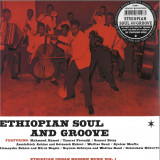
"Urban Ethiopian music stands out within the African continent thanks to its creativity and originality. Whatever the shade -- pop, blues, jazz or soul -- it comes from a fusion of local musical traditions mixed with an echo of Western music. It bewitched Ethiopia during the Swinging Addis decade before recently winning the favors of a well-informed audience all over the world. This first vinyl volume of Ethiopian Urban Modern Music presents some of the Ethiopian grooves & jewels drawn from the essential CD Ethiopiques series directed by Francis Falceto and published by Buda music;
REPRESS!! Although he is still completely unknown to Western audiences, for Ethiopians, Tlahoun Gèssèssè (pronounced Guèssèssè) is THE VOICE.The first-ever pan-Ethiopian star, he has embodied such nonstop unanimity since the end of the 1950s that is a role-model and a point of reference.
In the 1950s Chicago was the blues capital of the world. But by 1966 musical tastes had changed. R & B had morphed into hard soul and newer soft soul musical stylings had coalesced from earlier doo wop motifs, with bigger and more sophisticated productions. This was the era of the small independent owners / producers, all vying for airplay and sales in a hugely competitive marketplace. This landmark LP showcases many of the best of this output – the sounds that hit music listeners and buyers straight from the street. The mix here is a perfect blend of the tough hard soul style and the softer soul sounds. Just right for the feet and the heart. Enjoy!
Most southern soul fans will tell you that that the music produced in Memphis in 1967 and 1968 was the pinnacle of quality. So following on from our look at the River City’s soul output in 1967, we now turn our attention to an album covering the next year. As before, the singers here are a heady mixture of local Tennessee talent and welcome soulful guests who journeyed down south hoping that a little of the famous Memphis magic would rub off on their songs. There are soul genres to suit all tastes here – from the deepest ballads to upbeat tracks that will rock your socks off. Soul doesn’t get much better than the artists and their tunes on this LP!
Telephone Explosion proudly presents the self-titled debut LP from Toronto’s UH HUH, out physically and digitally on April 14, 2023. The album features eight tracks of dub-damaged art rock which conjure a potent vision of spaced-out 1980s post-punks feeding their angular rhythms and bass-heavy grooves through layer upon layer of grime-spattered spring reverb.
There is a palpable sense of discovery and exploration throughout UH HUH’s 37 heady minutes. Elastic basslines and serpentine guitar phrases throb and glide, cutting through dubwise reverberations like hands moving through an opaque cloud of reefer smoke.
Formerly known as Teenanger, the reconfigured (and reinvigorated) group’s newfound sense of sonic identity is put on display the moment the door kicks open. The percolating spaciousness of opener “Somewhere Beyond” is followed by the cyclical grooves of “Redemption Pause.” Vocalists Christopher Swimmings and Melissa Ball each take respective turns at lead vocal duties, showcasing their contrasting yet complimentary styles.
“Babylon”, a slab of overcast, loping funk features both singers on the same track, alternating between Swimmings’ stoned syncopation and Ball’s saccharine melancholy. This juxtaposition leans against a backdrop of reverb-soaked drums, watery guitar chords and rippling trumpet.
The slinking, fractured grooves of “Rain (In The Afternoon)” and “Citrus Song” call to mind the deranged minimal dub-wave of Naffi or Vivien Goldman. Both songs feature lyrical content heavily inspired by the Florida swamplands, although the aural landscape on these tracks is decidedly more brutalist than Boca Raton. Two of the songs included here are reworkings of previously released Teenanger numbers. “Blinds Drawn” is reduced to its core elements of bottom-heavy rhythm, spliced guitar shanks and Swimmings’ murmured ruminations. “Good, You”, on the other hand, is completely re-imagined as a blissed-out melt of opiated bossa nova.
After countless hours of experimentation during the album’s recording sessions at Toronto’s Studio Z, the band decided to send their drum machines, snare drums and percussion through an obscure 1960’s Japanese Guyatone guitar amp with a notoriously ecstatic spring reverb sound. The result was immediately inspiring.
The dank, busted and clanking tones produced by the Guyatone evoke a muggy, humid atmosphere that mimics the photo on UH HUH’s cover. The process of re-amping is literally the means through which UH HUH found the sound of this record. UH HUH is a record that asks more questions than it does provide answers. This is searching music that requires that the listener lean into it, the more time you spend in between the beats, bars, notes contained within, the more vivid the picture becomes.
Hailed as the ‘Godmother of rock ‘n’ roll,’ the pioneering singer and guitarist Sister Rosetta Tharpe was the first major gospel star, her skills on electric guitar and blend of the sacred and secular a major influence on Little Richard, Jerry Lee Lewis, Johnny Cash and Elvis, as well as Eric Clapton, Keith Richards, and Jeff Beck. She began recording in the 1930s and Gospel Train, her first for Mercury, was a dynamite comeback, recorded in 1956 with quartet the Harmonizing Four, its popularity leading to a four-month UK tour. It’s a killer set from start to finish and required listening for lovers of rock, blues, and gospel. Get it and be awed!
Texan country blues legend Lightnin’ Hopkins was a fingerpicking genius with a mournful voice who, after a spell in prison, first came to prominence through recordings for Aladdin and Gold Star in the late 1940s. Somehow, by the mid-1950s, his star had waned, but when Samuel Charters appeared at his one-room Houston apartment with a bottle of gin, Hopkins agreed to cut ten unaccompanied songs for Folkways, the resultant Lightnin’ a pivotal success that reignited his career, sparking the blues revival in the process. Full of haunting loneliness, despair, sly innuendo and doses of good humour, this must-have LP is absolutely brilliant!
The iconic baritone country singer Johnny Cash sold over 90 million records, an incredible achievement for one who endured terrible hardship in the Great Depression, picking cotton with his sharecropper family from the age of five. After a spell in the Air Force, Cash settled in Memphis and with guitarist Luther Perkins and bassist Marshall Grant, known as the ‘Tennessee Two,’ Cash pitched up at Sun Records just as Carl Perkins and Elvis were trying their luck, Cash’s brilliant debut With His Hot And Blue Guitar containing all-time anthems like ‘Folsom Prison Blues’ and his perky cut of ‘Rock Island Line’. A must for all Cash fans.
Meaning of Life is the eighth studio album by American singer Kelly Clarkson. This vinyl release is a part of Atlantic Records' 75th Anniversary vinyl collection.
The Exciters began as the Masterettes, a girl group formed by high school friends Brenda Reid, Carol Johnson, Lillian Walker, and Sylvia Wilbur. A single was cut for Brooklyn’s Le Sage label before Wilbur was replaced by Brenda’s husband, Herb Rooney, and after auditioning for Leiber & Stoller, the Exciters recorded the international smash ‘Tell Him’, a song so popular that it spawned foreign language renditions. Our edition of this marvellous debut LP includes the spectacular follow-up hit, ‘Do Wah Diddy,’ another immortal nugget of irresistible pop soul. Bright, light grooves for your dancing feet!
Texan country blues kingpin Lightnin’ Hopkins was rated one of the top 100 guitarists of all time by Billboard, and was a notable influence on Stevie Ray Vaughan, among others. Recordings for Aladdin and Gold Star cemented his reputation, and after performing at Carnegie Hall with Pete Seeger and Joan Baez, ‘Mojo Hand’ was a breakthrough hit. The superb 1961 LP Lightnin’ (The Blues of Lightnin’ Hopkins) benefits from the understated presence of King Curtis’ drummer, Belton Evans, and jazz bassist Leonard Gaskin, placing Hopkins’ guitar licks and raspy voice at centre stage, playfully relating heartbreak and woe.
The iconic baritone country singer Johnny Cash sold over 90 million records, an incredible achievement for one who endured terrible hardship in the Great Depression, picking cotton with his sharecropper family from the age of five. After a spell in the Air Force, Cash settled in Memphis and with guitarist Luther Perkins and bassist Marshall Grant, known as the ‘Tennessee Two,’ Cash pitched up at Sun Records just as Carl Perkins and Elvis were trying their luck, Cash’s brilliant debut With His Hot And Blue Guitar containing all-time anthems like ‘Folsom Prison Blues’ and his perky cut of ‘Rock Island Line’. A must for all Cash fans.
The iconic baritone country singer Johnny Cash sold over 90 million records, an incredible achievement for one who endured terrible hardship in the Great Depression, picking cotton with his sharecropper family from the age of five. After a spell in the Air Force, Cash settled in Memphis and with guitarist Luther Perkins and bassist Marshall Grant, known as the ‘Tennessee Two,’ Cash pitched up at Sun Records just as Carl Perkins and Elvis were trying their luck, Cash’s brilliant debut With His Hot And Blue Guitar containing all-time anthems like ‘Folsom Prison Blues’ and his perky cut of ‘Rock Island Line’. A must for all Cash fans.
The iconic baritone country singer Johnny Cash sold over 90 million records, an incredible achievement for one who endured terrible hardship in the Great Depression, picking cotton with his sharecropper family from the age of five. After a spell in the Air Force, Cash settled in Memphis and with guitarist Luther Perkins and bassist Marshall Grant, known as the ‘Tennessee Two,’ Cash pitched up at Sun Records just as Carl Perkins and Elvis were trying their luck, Cash’s brilliant debut With His Hot And Blue Guitar containing all-time anthems like ‘Folsom Prison Blues’ and his perky cut of ‘Rock Island Line’. A must for all Cash fans.
The iconic baritone country singer Johnny Cash sold over 90 million records, an incredible achievement for one who endured terrible hardship in the Great Depression, picking cotton with his sharecropper family from the age of five. After a spell in the Air Force, Cash settled in Memphis and with guitarist Luther Perkins and bassist Marshall Grant, known as the ‘Tennessee Two,’ Cash pitched up at Sun Records just as Carl Perkins and Elvis were trying their luck, Cash’s brilliant debut With His Hot And Blue Guitar containing all-time anthems like ‘Folsom Prison Blues’ and his perky cut of ‘Rock Island Line’. A must for all Cash fans.
Classic Miles Davis LP pressed on 180 gram vinyl, with a bonus CD digipack included containing the complete album ‘Birth Of The Cool’ album plus 11 bonus tracks and updated liner notes.
“The virtuosity led to relaxing, stylish mood music as the end result - the very thing that came to define West Coast or ‘cool’ jazz - but this music is so inventive, it remains alluring even after its influence has been thoroughly absorbed into the mainstream.” - **** AllMusic (Stephen Thomas Erlewine)
Classic Miles Davis LP pressed on 180 gram vinyl, with a bonus CD digipack included containing the complete album ‘Birth Of The Cool’ album plus 11 bonus tracks and updated liner notes.
“The virtuosity led to relaxing, stylish mood music as the end result - the very thing that came to define West Coast or ‘cool’ jazz - but this music is so inventive, it remains alluring even after its influence has been thoroughly absorbed into the mainstream.” - **** AllMusic (Stephen Thomas Erlewine)
Classic Solo Album From Founding Member of The Byrds!
"... one of the greatest singer/songwriter albums ever made." -All Music
Gene Clark's 1971 classic "White Light" is a bittersweet and knowing statement from a singer/songwriter at the peak at his creative powers. Having fronted The Byrds, Clark on his own here is stripped down in guitarist Jesse Ed Davis' stark production. The lyrics, singing and guitar playing are so powerful that less production here is immeasurably more musically.
White Light was 100% Analogue Mastered by Kevin Gray at CoHEARent Audio from the best source available- phenomenal-sounding 1/2" safety copies of the original stereo master tapes. The results are amazing! The beautiful guitar playing is finally full and rich, and you can hear the full body of the instruments, not just the strings. Gene's aching vocals have never been so emotive and immediate.
1995's 100% Fun is the third leg of Matthew Sweet's Holy Trinity of Power Pop! Produced by Brendan O'Brien, it's a densely-layered production full of grinding guitars, heavy bass lines and BIG drum sounds.
Intervention's 19-track Expanded Edition 2x LP set is the defining presentation of this great album! While the original repertoire's 12 tracks are bigger and better than ever, the 7 Bonus Tracks are on their own 12" 45 RPM 180-gram LP!
100% Fun's album art was lovingly restored by Intervention's Art Director Tom Vadakan, and printed as a gorgeous "Old Style" gatefold by Stoughton printing in LA. It's printed on heavy stock and film-laminated for superior coluor depth, beauty and durability. The center labels are printed by Dorado.
Mastering Notes
100% Fun is 100% Analog Mastered from the Original Master Tapes by Ryan K. Smith at Sterling Sound. The Master Tapes are 30ips 1/2" analogue reels, and the seven bonus tracks are on their own reel. Intervention's cut is big, punchy and dynamic with plenty of producer Brendan O'Brien signature crunch completely intact. Matthew's amazing vocals really shine here amid the layered densities of O'Brien's mix. A big, bold improvement over the 1990s original LP, and so much better than the CD as to make that comparison a total farce.
The Church’s Starfish is a dreamy, atmospheric masterpiece, guitar-driven alt-rock before alt-rock was a term. It includes the timeless smash hit “Under the Milky Way,” and “Reptile,” both First Wave staples.
Intervention's 2X 180-Gram LP, Artist-Approved Expanded Edition is 18-tracks total, including 8 amazing bonus tracks that were not on the original LP. These bonus tracks kick off with wonderful acoustic versions of “Under the Milky Way” and “Antenna.” The other tracks are so strong that it’s very apparent that Starfish could have been a potent double LP.
Starfish is 100% Analogue Mastered with the original repertoire cut directly from THE Original Master Tapes by Ryan K. Smith at Sterling Sound. Intervention's cut expands the original 10-song repertoire to three vinyl sides opening up the already massive soundstage and presenting this amazing recording with FULL bass extension and dynamic power. All of the 8 bonus tracks are 100% Analog Mastered from separate tape reels assembled by Ryan K. Smith.
The 180-gram LPs are ultra-quiet, pressed at boutique press, RTI in Camarillo, CA. Intervention replaces its stampers every 500 copies so every pressing is is a hot stamper.
Starfish’s album art was lovingly restored by Intervention's Art Director Tom Vadakan, and the original inner sleeve here is printed as the interior of a gorgeous gatefold jacket. The jacket is an “Old Style” gatefold made by wizards at Stoughton printing in LA. It's printed on heavy stock and film-laminated for superior colour depth, beauty and durability. The centre labels are printed by Dorado.
Mastering Notes
Starfish is 100% Analog Mastered from THE Original Master Tapes by Ryan K. Smith at Sterling Sound. Intervention's cut expands the original 10-song repertoire to three vinyl sides for maximum bass and dynamics. Even the bonus tracks were mastered 100% Analogue from tapes assembled by Ryan K. Smith.
Charles Mingus brought together an amazing lineup spanning the totality of the nation's jazz scene with such luminaries as Eric Dolphy, Buddy Collette, Clark Terry, Zoot Sims, Pepper Adams, Jaki Byard, Grady Tate, and more. Brought together to perform new Mingus compositions for the first time in public, the recording was initially considered weak due to limited rehearsal time but the years have been kind to this recording and it's a fantastic set of Mingus compositions, including the powerful "Freedom" which rivals the works on Mingus Ah-Um (1959) for its strength of purpose and message, in a similar vein to Max Roach's legendary We Insist! album (1960). Mingus is one of the most important figures in 20th century music and this live recording documents his compositional and arranging process as well as sheer swinging joy.
Texan rhythm and blues icon Barbara Lynn made an incredible impact in 1962 with the chart-topping debut single, ‘You’ll Lose A Good Thing,’ which has since been covered by Aretha Franklin, Freddy Fender, and countless others. A southpaw guitarist who wrote her own material, debut LP You’ll Lose A Good Thing captured our heroine at her best, the soulful smoky voice a striking contrast to the blues base of her backing musicians (including Dr John on keyboards). Containing the follow-up hits ‘Second Fiddle Girl’ and ‘Letter To Mommy And Daddy’ as well as the cherished title track, it’s a winner from start to finish.
This is a superior Jah Thomas record with all the great midnight rock Rub A Rub riddims. A big album that represents Jah Thomas, packed full of early dancehall numbers that let you fully enjoy the wonderful atmosphere of the time, including the big hit title track!!
Legendary Jamaican songsmith Gregory Isaacs' 1995 album 'Private Lesson' on Radiation Roots. The set includes laidback cuts 'Preacher Boy', 'Feeling Sad Tonight', Diplomatic Fool', 'She Doesn't Want Me', 'Slave Master' and many more.
Reissue of this 1982 release, recorded and mixed at Channel One and King Tubby's Studios. Includes killer songs such as "Reggae Dance," "Unwilling Baby Mother," "Sweet Reggae Music," and "This Kind Of Way". A dancehall classic!
#40 ON ROLLING STONE'S 500 GREATEST ALBUMS OF ALL TIME: ANTICIPATES LATE 1960S TURBULENCE VIA PROPHETIC SONGS AND DARK THEMES
1/4" / 15 IPS analogue master to DSD 256 to analogue console to lathe
Any discussion about the finest psychedelic rock record ever recorded is incomplete if it doesn't grant consideration to Love's Forever Changes. Ranked by Rolling Stone as the 40th greatest album ever made, and named by Mojo the second-greatest psychedelic set in history, the effort is an internationally recognized seminal work of art. Transcending language and convention, its magnitude and magnificence need to be heard again and again. For here is an effort whose mind-boggling acoustic complexities and kaleidoscopic nuances are tailored for high-fidelity playback.
Nearly unlimited headroom, vast instrumental separation, transparent clarity, artifact-free atmospherics, and faithful balances appear out of jet-black backgrounds. Turn it up as loud as you want; the sole limitation will be your system's potential.
Commercially ignored upon release in November 1967, Forever Changes confronts the alienation, paranoia, violence, and strife that would soon plague the countercultural movement and send the Summer of Love into a tailspin. Apart from its lyrical themes and prescient malaise, the record's enduring nature equally owes to intertwined arrangements sewn together with Latin guitar-picked lines, finessed folk harmonies, mariachi-inspired horn charts, and subdued strings.
The seemingly opposing combination – ominous, dark reflections situated amidst lush, light melodic beds – affords Forever Changes a distinguished tension of claustrophobia and openness, dourness and ecstasy, ugliness and elegance enjoyed by no other record in the rock canon. Much of the contrast owes to leader Arthur Lee's mental state and pertinent observations. Lee, whose suppressed romanticism often surfaces even amidst the blackest shadows and most cynical moments, believed he would soon die, and hence channeled everything from lasting hopes to acid-addled decay to the chilling testimony of a Vietnam veteran in his narratives.
Alternatively sad and beautiful, the album-opening and flamenco-inspired "Alone Again Or" establishes the mood for what follows. Vocals overlap and soar; tempos rise and fall; surrealism trades places with reality.Forever Changes thrives both because of and in spite of a surfeit of labyrinthine chords and difficult notes that never repeat. Its ambitious construction almost forced the already fractured band to cede responsibilities to session musicians, which appear on two tracks. The quintet's resolve to not only complete the album, but to do so with such poignancy and curiosity, further enhances Forever Changes' standing.
No wonder that, in the twilight of his troubled career, Lee performed the record in its entirely during concerts met with overwhelming critical acclaim. It was, and will always be, a personal manifesto of timeless relevance and appeal.
EASYGOING PORTRAIT OF DOWN-HOME SOUL SINGER COMING INTO HIS OWN AND ESTABLISHING AN INDELIBLE BOND BETWEEN PERFORMER AND AUDIENCE
1/4" / 15 IPS / Dolby A analogue master to DSD 64 to analogue console to lathe
On par with the most treasured concert albums of the 60s and 70s, Bill Withers' transformative Live at Carnegie Hall is a forgotten classic – an easygoing portrait of a down-home soul artist coming into his own in front of an audience eager to share every moment of his brilliance. Soothing with subtlety, charming with calmness, and healing with a vocal timbre as relaxing as his grooves, Withers uses the stage to expand the range of favorites and engage in dialog with the crowd. Distinguished with sonics that restore the performances' balance and improve the sound-staging, this reissue takes you inside the venue.
Moreover, aspects that really make this concert document unique – the energetic crowd, Withers and his band's willingness to extend arrangements, and the undeniable communicative bond between the performer and his fans – are brought into fuller relief. While most live albums give you the sense of what transpired, our reissue allows it to seem that what you're hearing and sensing is happening right now, in the moment. You are as much a participant as listener. For this reason and more, Live at Carnegie Hall ranks with James Brown's Live at the Apollo and B.B. King's Live at the Regal. No small claims, but the proof is in the grooves.
The antithesis of the sweaty R&B shouter that prowls the edge of stages, Withers deals in mellowness and vulnerability, qualities that come to fore. The songs here span soul, blues, and folk and often times, contain elements of all three styles. Live at Carnegie Hall also deals with serious subject matter with unflinching honesty and simple directness. Companionship, poverty, war, maturity, family, and love all crop up within Withers' tunes, yet the messages are never overly cumbersome or preachy. Credit goes to his easygoing style and relatable lyrics, not to mention a tight-as-a-vice band that on this night is simply "on."
"One more time?" Withers asks in response to a request for another stanza during "Use Me," and like the snap of fingers, his musicians are right back on cue, the crowd clapping along on every beat. This classic, as well as the instantly familiar "Ain't No Sunshine," poignant "Grandma's Hands," and all-time favorite "Lean On Me" are delivered with utmost soulfulness, passion, and electricity. Few, if any, live albums demonstrate such a bond between the crowd and artist as Live at Carnegie Hall. You'll definitely want to be there.
Walter “JUNIE” Morrison was a former member of the OHIO PLAYERS and responsible for writing and arranging their early 1970s hit singles “Pain”, “Pleasure”, “Ecstasy” and most notably, the group’s first Billboard R&B Number One “Funky Worm”. In 1978 he joined George Clinton’s Funk Mob PARLIAMENT FUNKADELIC and, as their musical director, played a key role during the creation of the hit albums “One Nation Under A Groove”, “Motor Booty Affair”, “Gloryhallastoopid” and their R&B Number Ones, “One Nation Under A Groove” and "(Not Just) Knee Deep". In between acts he released three solo albums for Westbound Records that showcased his unique take on the funk. “The Funky Worm – Live at Dooley’s 1976” is a one of kind live recording from his mid-70s Westbound solo period that was only recently discovered.
Regrooved Records is proud to present the very first live album of funk icon JUNIE MORRISON.
All the music from the iconic Mr Benn cartoons, available for the only time. Recorded in two sessions - Olympic Studios in 1969, and Gateway Studios in 2004. All the music was written by Duncan Lamont, and featured some iconic session musicians including
Kenny Wheeler, Ray Swinfield and Duncan Lamont himself. Ray Swinfield used the same instruments as he used on The Beatles Penny Lane on these recordings. Mr Benn has an enduring popularity, and was shown on The BBC every year from 1971 - 1999, then on Nick Jnr till 2010. The sessions have ben fully remastered, and sound fabulous! It was due to Nick Jnr that a 14th Mr Benn cartoon was made, and the second session features re-working of some of the original tunes as well as lots of new tunes for Gladiator.
The packaging features an insert with Mr Benn dressed in all his adventure outfits, and a game to match all the souvenirs to each adventure. Not to be missed. A must for everybody that grew up with Mr Benn. All the sleeve notes have been written by The Mr Benn cartoon producer Clive Juster, and are full of insights from the recording sessions.
Trailblazing instrumental synth pop experiments created to soundtrack Japan’s booming 1980s cartoon and comic industries. The brightly futuristic instrumentals on this collection reflect the mindset of composers and musicians who believed in a technological future where everything was possible.
In the late 1980s Japan experienced a brief but heady period where societal changes combined with new-found wealth to open up a world of possibilities. A huge influx of cash - artificially created by slashed interest rates after an agreement with the US to weaken the dollar relative to the yen - resulted in the inflation of real estate and stock market at a rapid pace. While the economic bubble it created was unprecedented and impossible to sustain, for a while money was in plentiful supply.
The musical genre City Pop reflected the aspirations of the country’s booming leisure class. Video games flourished with Nintendo's 1983 launch of their Family Computer (or FamiCom). Studio Ghibli was founded 1985 to later became one of the most famous and respected animation studios in the world, and Anime and Manga were established as major forms of entertainment for all generations of the Japanese public.
Music was no mere footnote to the anime and manga boom: the two forms of media often went hand in hand, and not simply through the presence of background melodies. With generous budgets available, even two-dimensional static manga comics could be released with an accompanying soundtrack of original music known as an ‘Image Album’.
Composer and arranger Kazuhiko Izu was one such beneficiary of this open budget approach. Written to accompany artist Katsuhiro Otomo’s manga comic Domu, the composer and arranger took advantage of the world-leading (and wallet-busting) Japanese synthesiser technology available at King Records’ fully equipped studio. Featured on this compilation, A3: Act 2 Scene 26 reflected the story’s sci fi themes with a blazingly futuristic yet warmly funky slice of synth pop that presents a joyful celebration of synthesisers and their seemingly endless possibilities.
Kan Ogasawara was another composer who made early mastery of the litany of synthesisers, drum machines and sequencers that had become available. Two tracks written to accompany the 1985 period manga Yume No Ishibumi are featured here; Honowo’s experimental electronic textures add spice to a jaunty electro pop melody that recalls the Rah band’s 1983 hit Messages From Stars; the jazz-tinged Utage rounds out Ogasawara’s shimmering synth textures with beautifully crafted backing from legendary musicians Yuji Toriyama (guitar), Pecker (percussion) and Jun Fukamachi (piano).
Before becoming one of the pioneers of Japanese Kankyo Ongaku (Ambient Music), Takashi Kokubo worked on the proto techno track Kiki (Jungle At Night). It was put together for the 1984 anime film Shonen Keniya (Kenya Boy) using some of the most expensive music technologies available at the time. This Africa-Inspired dance track offers a contemporary parallel to the early techno music that young Detroit based producers were then creating using cheap Japanese Roland drum machines and synthesisers.
This is the first compilation of Japanese anime and manga soundtracks curated by Kay Suzuki and Rintaro Sekizuka from Vinyl Delivery Service (a Tokyo based online record shop which also operates in East London's renowned wine and hifi shop Idle Moments). With a cover by artist Kazuki Takakura and two pages of liner notes, this vinyl only compilation of music never before released outside of Japan, captures a vital aural snapshot of an era whose forward-thinking sounds went hand in hand with cutting edge technology.