London based experimental producer and composer "Leifur James" announces his return with news of a six date EU tour and the release ‘Wise Old Man’. The first single taken from his highly anticipated second album ‘Angel in Disguise’, which is due for release on the
24th April 2020 via "Night Time Stories" - Sister label to the coveted ‘LateNightTales’.
Driving, melancholic electronica, ‘Wise Old Man’ is a nod to what can be expected of James’ second album, Angel In Disguise, showcasing a more experimental side to his production. Traversing through musicality, progressive synths and introspection, this first single unveils the producer’s distinct sound with disorientated vocals; speaking of the interplay between reason and emotion, the lyrics repeat “Wise old man in my brain, soul bursting through my veins”, opening the gates to this captivating electronically steered opus.
This news comes after an incredible few years for the artist. In 2018 saw James release his esteemed debut album A Louder Silence on Night Time Stories and follow up remix EP that championed upcoming electronic talent including Bruce, FaltyDL and Whities producer, Coby Sey, on rework duties; projects which captured the attention of key tastemakers including Resident Advisor, Pitchfork, Mixmag, Electronic Sound and Future Music UK.
An aesthetically driven artist dedicated to marrying powerful visual backdrops with sonic explorations, James teamed up with Hungarian director, Balázs Simon; producing the critically acclaimed, ‘Wurlitzer’ project which saw widespread support from the likes of Boiler Room, CLASH, Directors’ Notes, Motionographer, the UK and Berlin Music Video Awards, the London Short Film Festival, Dublin International Film Festival and more.
Angel In Disguise promises to explore the themes of love and loss through a masterful blend of harmonic vocals from James himself, nuanced electronic soundscapes and vibrant percussion -
punctuated by bespoke visuals, directed by Balázs Simon.
This exciting project is expected to make waves and see James
step up, exhibiting his discerning ear and painstakingly honed production craft on aseminal label.
Search:back in black
- 1: At The End Of My Daze
- 2: The Wolf
- 3: Psychotic Reaction
- 4: A Sinner’s Fame
- 5: The Misery Shows (Act Ii)
- 6: R.i.p
- 7: Black Shapes Of Doom
- 8: Heaven On My Mind
- 9: E.n.d
- 10: All Is Forgiven
- 1: R.i.p
- 2: Black Shapes Of Doom
- 3: Psalm 9
- 4: The Wolf
- 5: At The End Of My Daze
- 6: Assassin
- 7: The Misery Shows (Act Ii)
- 8: Psychotic Reaction
- 9: Bastards Will Pay
- 10: The Tempter
- 11: All Is Forgiven
Trouble’s absolute classic: the legendary album from 1990 and the pinnacle of Trouble’s impressive career. Heavy Metal was never better than this! Includes a live bonus CD recorded in Dallas, Taxas (USA)! Trouble’s debut album did great things for Metal and remains one of the darkest, thrashiest Doom albums to date. A lot of things can change in six years, especially when you’re talking Metal and the dates are 1984 and 1990. The decade may have changed them, but not in a way that suggests decay or a decline in the quality of their resolve or their skill as musicians and performers. On the contrary, Trouble’s 1990 self-titled release is arguably their most mature, boasting a fleshed out sound with unparalleled songwriting, a great production, and the time-crafted vocals of Eric Wagner which had improved major in the years since their previous efforts. All of this culminates in what is my mind the most “complete” thing Trouble ever created. From the mid-paced chug of a killer opener in “At the End of My Daze” to the last notes of “All Is Forgiven”, I can’t see filler or anything resembling a weak link. The riffs here are some of the best ever written, by Trouble or anyone else; every song has a manically awesome main riff that demands a display of headbanging. Riffs are undoubtedly the point of focus here; they make the songs, and they’re a timeless variety of great. Also, the interplay between guitarists Bruce Franklin and Rick Wartell is some of the best lead work you will ever hear in Metal. Trouble basically reinvented themselves with this release, and while I think it was a fantastic rebirth, those who aren’t so keen on the laid back stoner vibe they chose to adopt may not see it as a rejuvenation, but a step back (they did go from doom and gloom to collectively embracing their inner acid dropping free love hippie, after all). But the Metal remained fully intact! And as I’ve said, I think this is Trouble at their best. This is originality and innovation at its best, it is supreme quality. A leader of bands paves the way and then steps aside to create something that will serve as an example of how to improve upon an established formula: that is, by doing it really damn well.
- 1: Black Cauldron
- 2: Pray The Devil Back To Hell
- 3: Day At The Soccer Fields
- 4: Bloodline
- 5: A Foreshadowing
- 6: Little By Little
- 7: Old Fort Steel Trail
- 8: Whose Face Am I
- 9: Running Boy
- 10: Field Song
- 11: Somewhere Down In Georgia
- 12: Oh Wide World
- 13: Code Of Many Colors
- 14: Heavy Foot
- 15: Infinite Pines
- 16: Where The Mountain Meets The Sea
Frankie Knuckles Pres. Director's Cut Featuring Jamie Principle
Your Love
LTD Edition Clear Vinyl Version
Arguably one of the most memorable house music moments, born out of the black LGBT scene in Chicago at the legendary Warehouse and known as one of Frankie Knuckles earliest productions; ‘Your Love’ is a stone cold classic. A record that is up there with the greats, instantly recognisable and a song that only get better with time.
Written by Jamie Principle and originally released in 1986, ‘Your Love’ has become a seminal recording over the past 34 years. Originally an underground club anthem, famously borrowed on the crossover hit ‘You’ve Got The Love’ (The Source feat. Candi Staton), and most recently re-produced by as part of the Director’s Cut project which aimed to update a number of classic cuts for the modern dancefloor, this is a record that endures the test of time. Working alongside The Frankie Knuckles Foundation and Eric Kupper, SoSure Music now releases two new remixes for 2020 from Darrius Syrossian and Alan Dixon.
First up, House music aficionado and legendary Sankey’s resident Darius Syrossian offers his unique blend of beats to the remix package. With releases on the likes of Get Physical, Viva Music and Hot Creations, Darius’ production is heavily influenced by some of the greats – think of the finest spinners from Detroit, New York and Chicago – and is well placed to approach this huge task. Darius introduces a rolling house beat and some old skool breakbeats into his mix, keeping the energy high throughout; bringing a feeling of a euphoria and hitting the peak time moment.
Charting a rapid rise through the ranks in a relatively short time Alan Dixon is already building a name for himself in House and Nu Disco scene and has recently released on labels including Glitterbox, Permanent Vacation, Running Back and True Romance. Alan’s remix aims directly at the centre of the disco dancefloor. A strong beat dominates a unique energy through the mix along with a slightly nostalgic vibe. With a beautiful floaty interlude and a raw emotion this remix updates a classic with respect while also giving a fresh new twist.
- Mean Street
- Dirty Movies
- Sinners Swing!
- Hear About It Later
- Unchained
- Push Comes To Shove
- So This Is Love?
- Sunday Afternoon In The Park
- One Foot Out The Door
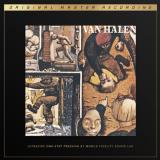
The song titles on Van Halen's aptly titled Fair Warning don't lie. The likes of "Unchained," "Mean Street," "Push Comes to Shove," "One Foot Out the Door," and more indicate the mood the band channels on its double-platinum 1981 record — the nastiest, darkest, and fiercest album of the group's storied career. For the fourth time in four years, Van Halen throws down the gauntlet to all challengers and emerges victorious.
Sourced from the original analog tapes, pressed on MoFi SuperVinyl at Fidelity Record Pressing, and strictly limited to 5,000 numbered copies, Mobile Fidelity's UltraDisc One-Step 180g 45RPM 2LP set plays with unfettered clarity, dynamics, and immediacy. Benefitting from superb groove definition, an ultra-low noise floor, and dead-quiet surfaces, this vinyl edition captures what went down in the studio with tremendous realism and involving presence.
Taking a more controlled approach in the studio and still completing everything in less than two weeks, Van Halen and producer Ted Templeman relied on studio amplifiers to direct the sound. Further diverging from the live-on-the-floor approach of its earlier albums, the ensemble also employed overdubs to great effect. The result: Dense, stacked architecture that underlines the hard-hitting tenor of the songs — and which comes alive like never before on this reference edition that looks as good as it sounds.
The premium packaging and gorgeous presentation befit the reissue's select status. Housed in a deluxe slipcase, it features special foil-stamped jackets and faithful-to-the-original graphics that illuminate the splendor of the recording. Aurally and visually, it is made for listeners who want to immerse themselves in everything involved with the album, including the iconic cover art adopted from William Kurelek's haunting painting, "The Maze."
Isolated frames from Kurelek's childhood-inspired work — including a man bashing his head into a brick wall, a guy pinning down an adversary as he delivers bare-fist blows to his face and others watch with apparent glee, a boy tied down on a conveyer belt and being sent through the equivalent of a meat saw — adorn the front and back covers. The sunnier visual disposition of Van Halen's prior efforts gives way to something sinister and tortured, traits reflective of the music within. The band members, too, are visually depicted not in glamorous shots but in a serious black-and-white portrait in which the quartet is clad in black leather jackets.
Tough, aggressive, stark: Fair Warning comes on like a series of bare-knuckled punches to the solar plexus and boasts lyrical narratives to match. Though not a concept record, the concise album revolves around themes of roughing it on the streets and struggling to survive amid dim prospects. Singer David Lee Roth reportedly penned many of the initial lyrics after traveling to Haiti and observing extreme poverty. The characters and situations populating Fair Warning reflect hardscrabble existence, last-chance desperation, and underlying danger.
Witness the crazies, poor folks, and hunters of “Mean Street”; the former prom queen turned pornographic actress on “Dirty Movies”; the menace and vice of “Sinners Swing!”; the streetwise hustle of “Unchained”; the isolation and alienation of “Push Comes to Shove”; the desire for escape on “One Foot Out the Door”: A carefree California beach party Fair Warning is not.
Having said he felt angry and frustrated during the sessions, guitarist Eddie Van Halen uses the forceful arrangements as a playground for his seemingly unlimited arsenal. Supported by a crack rhythm section and a hyped-up Roth, he performs with an almost impossible combination of punk-like intensity, technical finesse, lyrical fluidity, and unbridled emotion. The virtuoso was increasingly butting heads with Templeton and seeking a freedom in the studio he believed denied him.
No wonder he plays like a bat out of hell. Listen to the rapid-fire manner in which he slaps the high and low E strings on the 12th fret of his instrument on “Mean Street,” instilling the tune with funk flair and metal-spiked sharpness. For the pouty strut of “Dirty Movies,” Eddie Van Halen contributes slide guitar magic made possible after he sawed off the lower portion of a Gibson SG so he could reach further down the fretboard.
Related intensity, urgency, and daredevil momentum punctuate the surging “Sinner’s Swing!” A heavily flanged, delicately melodic introduction frames the attitudinal “Hear About It Later,” among the most creative arrangements of Van Halen’s career. And do riffs come any bigger or magnetic than those on the high-wire kick of “Unchained”? As for the out-of-left-field “Sunday in the Park,” an instrumental composed on an Electro-Harmonix micro-synthesizer: Who but Eddie Van Halen to supply creep factor in such an ingenious way?
Despite selling fewer quantities than Van Halen’s prior efforts, Fair Warning remains for many diehards the record that epitomizes all of the band’s immense strengths —Roth’s manic energy and tongue-wagging humor, Alex Van Halen’s rhythmic heartbeat-in-your-chest bombast, and Michael Anthony’s lucid bass lines included. Arriving when the New Wave of British Heavy Metal and new-wave movements were taking flight, it signaled a shot across the bow from a band determined to stay a step ahead and provide proof nobody could touch what it delivered.
More than four decades later, Fair Warning still sounds that alarm.
- A1: (Part I)
- B1: Prelude (Part Ii)
- B2: Maiysha
- C1: Interlude
- C2: Theme From Jack Johnson
The capstone of Miles Davis’ electric period, Agharta reigns as a funk-rock fireball — a blazing comet streaked energy and elan, a fearless organism feasting on adventure and freedom, a seven-headed Godzilla stomping its way through Osaka, Japan. Recorded on February 1, 1975 at Osaka Festival Hall at the first of a two-show stand, the double album offers an endless abundance of surprises and shifts — as well as a road-proven ensemble whose chemistry and abilities equal that of any of Davis’ celebrated bands. If the true measure of jazz is the capacity to adapt to the moment and challenge perception, Agharta is consummate.
Sourced from the original master tapes, housed in a Stoughton gatefold jacket, and pressed at Fidelity Record Pressing in California, Mobile Fidelity’s numbered-edition 180g 33RPM 2LP set of this epic live release presents it in audiophile sound on a domestic pressing for the first time. Offering greater degrees of separation, detail, and richness than the compressed CD editions and more clarity, openness, and presence than older vinyl copies, this version of the 1975 release helps bring the concert stage to your home. Just make sure your turntable and speakers are up to the challenge of Davis and Co.’s explosive performances — and producing the decibels they demand.
Teeming with vibrant colors, tones, and pace, Mobile Fidelity’s reissue captures the hear-it-to-believe-it flow, sweep, and moodiness of the music. Though the group honors looseness and freedom with religious verve, the specificity and scale rendered by this remaster allows you to detect methods behind the alleged madness that are often otherwise harder to discern. This insight extends to the understated changes in volume, harmonics, and phrasings. In many ways, you can listen as Davis himself did that early February evening as he helped coordinate the overall direction and decided on whether to blow his wah-wah-wired trumpet or take a turn on the organ.
Tellingly, Agharta would likely never have been made if not for Davis’ ventures overseas and, specifically, to the Land of the Rising Sun. Having for years faced a backlash on his native soil for his choices to experiment and blow past all known borders, Davis was welcomed with open arms in Japan. The concert documented on Agharta — as well as the day’s later show, captured on the equally exciting Pangea — stemmed from a sold-out three-week tour that would ultimately mark Davis’ final public appearances for years, as he soon settled into semi-retirement and nursed the wounds connected to an unprecedented stretch of restless and relentless output.
For all the band-fueled merit of Agharta — and there’s plenty, given the cast of saxophonist Sonny Fortune, bassist Michael Henderson, drummer Al Foster, percussionist James Mtume, and guitarists Reggie Lucas and Pete Cosey seemingly blasts off to outer space and travels distant galaxies by the time this minimally edited record runs its course — Davis’ own playing often remains overlooked. As critics Richard Cook and Brian Morton observed, it is “often fantastically subtle, creating surges and ebbs in a harmonically static line, allowing him to build huge melismatic variations on a single note.” He attacks like a man on a mission, out to prove naysayers wrong and bent on trailblazing another new path forward. Convention and skeptics be damned.
Noisy and furious, dark and discordant, abstract and off-balance, radical and intense, abrasive and atmospheric, strangely beautiful and hypnotically eccentric: Agharta evades simple description, and refuses to be pinned down in any established category — rock, jazz, punk, ambient, prog, avante-garde, or otherwise. Shot through with trench-deep grooves, screaming riffs, scalding solos, and free-improv leads, its cosmic thrust comes on as the equivalent of an animated pointillist painting comprised of millions of textured dots, dashes, and dabs that hold your attention so raptly you want to revisit the ideas again and again.
Always steps ahead of everyone else, Davis knew what he was doing even when Agharta debuted in Japan before later hitting U.S. markets. Though “Maiysha” and “Theme from Jack Johnson” are identified in the track listing, the record contains a number of uncredited references to other Davis works, including a nod to “So What.” This decision to bypass labels only adds to the art of the reveal — the rare black magic in which Agharta expertly deals.
- 1: The Barbarian
- 2: Take A Pebble
- 3: Knife-Edge
- 4: The Three Fates A. Clotho B. Lachesis C. Atropos
- 5: Tank
- 6: Lucky Man
Supergroups existed before Emerson, Lake & Palmer formed in 1970. And, as we all know well, many came after. But few, if any, matched the English trio’s chemistry and its elevated combination of virtuosity, vision, and verve. Having influenced a multitude of followers, ELP’s prowess was obvious from the start. The band’s self-titled debut stands as a towering statement of creative imagination, execution, and discipline more than five decades after its original release.
Mastered at MoFi’s California studio, housed in a Stoughton jacket, and pressed at Fidelity Record Pressing, Mobile Fidelity’s numbered-edition 180g 33RPM LP of Emerson, Lake & Palmer presents the benchmark album in audiophile sound. Clear, dynamic, and balanced, this collectible edition honors the perfectionist approaches that both informed the playing and recording of the record.
Distinguished with black backgrounds, this reissue brings to light the epic scope, tonal depth, and mind-bending degrees of musicianship on display. Aspects — textures, nuances, effects, melodies, tempo changes — that go hand-in-hand with the trio’s compositions and interplay are rendered amid broad soundstages and delivered with pinpoint detail. Whether you’ve owned multiple copies of this touchstone or seeking out your first version, you’ll relish the presence, separation, imaging, and crispness that help make every song come across as if the group has set up shop in your listening space.
Opening the door to the seemingly infinite possibilities of progressive rock while steering clear of excess, Emerson, Lake & Palmer achieved a rare feat in that its complex, cerebral music didn’t prevent it from attaining mainstream success. The gold-certified effort launched the career of a band that would sell tens of millions of records. It also landed a Top 50 single in the form of the ballad “Lucky Man,” whose vocal harmonies, folksy strumming, multi-tracked instrumentation, and breakthrough Moog solo almost feel quaint in the face of the other fare on the album.
Comprised of genre-defying originals and hybrid arrangements of two classical pieces, the album Rolling Stone originally and rightly said is “best heard as a whole” matches outrageous ambition with the otherworldly skills of three musicians who remain among the finest to ever pick up their respective instruments. While Emerson soon drew the lion’s share of headlines for his ability on keys — clavinet, Moog, piano, Hammond organ, and pipe organ included — Greg Lake’s aptitude on guitar and bass, along with well as Carl Palmer’s monster talents behind the kit, created a three-headed hydra that devoured everything in front of it.
That extends to the radical reinterpretation of Bela Bartok’s “The Barbarian” that begins the LP, a performance that in less than four-and-a-half minutes runs the gamut from distorted to churchy to angular and blustery. More classical flourishes, keyboard wizardry, hard-rock heaviness, and gothic signatures emerge throughout “Knife-Edge,” which reimagines music by Leos Janacek and J.S. Bach — and ultimately invites you to explore a cathedral of sound teeming with separate bursts of keys and percussion.
And did someone say “drumming”? Check out Palmer’s monster salvo on “Tank,” a rhythmic showcase that marches out with knee-bent notes and mirror-reflected passages. Or dive into the mythological suite “The Three Fates.” Replete with three parts and Emerson playing the pipe organ at Royal Festival Hall, it shoots off sonic fireworks via sophisticated arpeggios, jazz improvisations, dancing counter-meters, sizzling chords, and a few explosions. Please don’t hold anyone at MoFi responsible if your system cannot handle it; this is heady stuff.
Indeed, everything on Emerson, Lake & Palmer is there for a purpose. Whether you aim to attempt to dissect all of the notes, shifts, and polyrhythmic bluster or just want to absorb this album as one living, breathing organism, this version invites you to do both as many times as you desire.
- Kangen, Sandaien Ichigu- I - Hyojo No Choshi
- Kangen, Sandaien Ichigu- Ii - Jo
- Kangen, Sandaien Ichigu- Iii - Ha
- Kangen, Sandaien Ichigu- Iv - Kyu
- Bagaku, Shunnoden Ichigu- I - Ichikotsucho No Choshi
- Bagaku, Shunnoden Ichigu- Ii - Yusei
- Bagaku, Shunnoden Ichigu- Iii - Jo
- Bagaku, Shunnoden Ichigu- Iv - Satto
- Bagaku, Shunnoden Ichigu- V - Juha
- Bagaku, Shunnoden Ichigu- Vi - Tessho
- Bagaku, Shunnoden Ichigu- Vii - Kissho
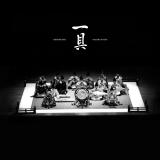
Gagaku is the oldest of the Japanese performing arts, with a history more than a thousand years old. The term refers to Japanese classical music and dance, traditionally performed by families of musicians linked to the ancient Imperial court, and later passed down in Buddhist temple ceremonies and Shinto shrines. Shiba Sukeyasu, founder and director of the Reigakusha ensemble, descends from the Koma clan, whose origins date back to the end of the 10th century. The recordings partly reflect repertoires borrowed from Chinese music between the 5th and 9th centuries. The incredible variety of timbres of the instruments greatly amplifies our exotic imagination: the eternal breath of the flutes (ryuteki and hichiriki) creates a sort of suspension of time, together with the hypnotic and hallucinatory atmosphere of the mouth organs (shō). The meditative tone of the string instruments (bika and koto) that punctuate the voids and silences is impressive, as is the enigmatic percussion section, with the tolling of the gong (shōko) and the calibrated beats of the drums (taiko and kakko).
Released in limited numbers in tandem with Black Mahogani back in 2004 and never repressed. Black Mahogani II was a departure from Kenny Dixon Jr's usual house based music and featured cuts from Kenny Dixon Jr's late night jazz band sessions
The centrepiece is the eighteen minute 'When She Follows', a deep jazz session skittering live drum rolls into an electric Fender Rhodes, loping acoustic bass and distant saxophone all wrapped up in an amorphous vocal that drifts ever onwards like some epic detroit techno cut replayed by Gil Scott Heron's band in 1970. Incredible music.
'Rectify' follows in a similar mode, jazz in a detroit techno framework, while the final two tracks 'Dirty Little Bonus Beats' and 'When She (Reprise)' are revisions of the main cut, the former altering the bassline, adding vocal sighs and more rhythmic drums, while the latter shifts up the tempo with a wigged out techno synth element.
Stone, cold.
Peripheral Minimal records is proud to present it's latest release: Cold Colors / Xiu "Tristesse" 7". The single comes from a cassette released by Vocoder Tapes in 2013. It will be limited to 250 copies on black vinyl.
The two tracks on the 7" are beautifully constructed minimal wave / synth tracks, that are simultaneously melancholic and uplifting, perhaps for comparison we could think of: Figure Study, Xeno & Oaklander or Selofan.
Cold Colors is Frédérick Barbe who hails from Bordeaux. He has released material on several well-known labels, including: Lux Rec, Oráculo Records, Waste Editions, Nocta Numerica, F.I.R., Romance Moderne, and now Peripheral Minimal.
Xiu is Oksana Rodionova who is based in Milan but originates from Estonia. "Xiu's music is a synthesis between retro-pop and futurist synth waves. It delivers spacy looped electronica, groovy rhythms, linear lo-fi synth washes, softly dreamy pop melodies sometimes admitting dramatic tones and mysterious textural ambiences. The conceptual background deals with thematics related to dystopia, occult arts and mystic beliefs."
The recordings were made between France and Italy during the "Loneliness" E.P. sessions 2013 / 14.
Fracture & Neptune return to Astrophonica with their first collaborative 12” on the label since 2010.
Two epic, psychedelic, and deeply authentic tracks for both the floor and the head, carrying the unmistakable hallmarks of the duo’s classic sound — A psychedelic concoction of Jazz, Sci-Fi, Dub, and Breakbeat Choppage. Rooted in the lineage of Jungle and Drum & Bass, yet delivered in Fracture & Neptune’s unmistakably unique style.
To celebrate the release, UTILE — responsible for all Astrophonica design — have gone all out on the artwork, creating an iconic, type-based image for both tracks, presented on a full-colour, double-sided printed sleeve. Massive shout to UTILE for being as important to the label as the music.
“Erase Everything” is a journey through LA 2049 via London 1999 — as if Deckard were blasting an AWOL tape in his Spinner. Merging classic breaks and analogue saturation with soaring, cutting-edge pads and city-wide reverb, the result is both devastating and deeply thoughtful.
“Good Stuff” is inspired by a love of digging for samples across Jazz, Hip Hop, and Rock, and by a dedication to crafting kaleidoscopic soundscapes — All that good stuff, blended into one hallucinogenic trip.
Meeting at Islington Sixth Form College in 1996, Charlie (Fracture) and Nelson (Neptune) bonded over their deep love for the defining sound of London at the time — Jungle and Drum & Bass. Countless trips to Black Market Records in Soho, playing on pirate radio stations, and eventually, a makeshift bedroom studio — complete with an E-Mu ESI4000, a Mackie desk, and a few FX units — set the foundation for their journey. Their first release arrived in 2002 on Droppin’ Science, the label run by legendary Hardcore and Jungle pioneer — and fellow breakbeat manipulator — Danny Breaks. A run of mid-2000s releases on Ireland’s Bassbin, Paradox’s Outsider, and London’s Inperspective Records propelled Fracture & Neptune further into the cosmos. In 2009, they founded Astrophonica — initially as a home for their own music, but it quickly evolved into a hub for like-minded artists to experiment and explore freely. Almost 30 years on, they’re back in the studio with APHA034 — with more to come.
Black Vinyl[15,76 €]
There’s no mystery to this one, it’s another phat Krash Slaughta 45 remix – in this case of a Wu-Tang Clan classic to follow recent cheeky versions of Guru and MF DOOM on 7″. You may remember the original Da Mystery Of Chessboxin’ as an archetypal RZA production characterised by clashing sword samples and a skeletal piano motif with the grit coming from the ‘Clan’s vox and the crunch of the boom-bap drums. KS’s remix is utterly different – as we’ve come to expect – and sees him provide a beat that matches the energy of the original vocals rather than provide a counterpoint to them. Out go (most of) the swords and keys and in come guitars and furious scratching. Side B’s the radio edit, the A’s the ‘Full Phat’ version, cop it in black or yellow wax and remember – in the front, in the back, Killa Beez on attack!
Bone w/ black splatter vinyl. NYC ska/reggae legends The Slackers are back with a new collection of rarities - or as they put it, "Tales of Mirth, Heartbreak, and Woe!" - from their extensive catalog with the release of Lost & Found Vol 2 on Pirates Press Records. In their well over 30-year career, The Slackers have been one of the most consistently prolific artists in the game. While that means their legions of worldwide fans are never wanting for new material, it can also mean that once in a while, even dedicated fans can miss a new song here or there. Thus, it's helpful that the band periodically collects some of these lesser known and sought-after gems for wide release under the Lost & Found banner! Lost & Found Vol 2 includes some of the rarest Slackers tunes of them all. Live versions of several songs as well as the studio track "Diskambobulated" come from ultra-rare lathe cut singles. Still others come from limited one-time-only single pressings on PPR, including two 12" singles and one collaborative 7" which features vocals by Japanese dancehall sensation Papa B. Finally, it includes a dub mix of "Time Won't Set You Free" that is previously unreleased.
To mark the 50th Anniversary of Punk and The Sex Pistols we have relaunched one of the original books on The Sex Pistols. The book details the groups worldwide releases with over 200 colour and black and white illustrations. A detailed timeline of the bands history and list of gigs and appearances up to their initial demise in 1978. The story has not changed since this books first release. The Sex Pistols are the last great Rock `n’ Roll band that signified change. Never before or since has music, art, youth and social statement peaked at the same time. The Sex Pistols were very much a vinyl orientated phenomenon that consisted great artwork. So sit back and enjoy their story through their releases around the world. 96 pages Over 200 pictures of rare and deleted releases throughout the world Plus history of the band and list of gigs and appearances.
- A1: War Inna Dub Source:war Inna Babylon Rhythm
- A2: Vampire Dub Source:vampire Rhythm
- A3: Curly Dub Source:curly Locks Rhythm
- A4: Words Dub Source:words Rhythm
- A5: Judgement Dub Source:judgement Day Rhythm
- A6: Praising Dub Dub Source:thanks And Praise Rhythm
- B1: Fixing Dub Source:mr Fix It Rhythm
- B2: Every Trick Dubwise Source:every Trick In The Book Rhythm
- B3: Promoting Dub Source:everybody Need Promotion Rhythm
- B4: A Heavenly Dub Source:heaven Less Rhythm
- B5: M16 Dub Style Source:m16 Rhythm
- B6: A Real Rocking Dub Source:real Rock Rhythm
- B7: A Drifting Wood Source:drifting Rhythm
2025 Repress
What Two Great Producers Other Then Lee Perry And Bunny Lee Would Be Best Suited For A Dub Soundclash.
Both Producers Were Integral At The Birth Of Dub Music And Would Share Many Rhythms And Sessions, Their Musical Paths Would Cross All Through Their Careers.
It Was In Fact Bunny Lee's Rhythm That Provided The Back Drop To Lee Perry's 'shocks Of Mighty Cut.
Jobs Were Passed From One To The Other, Bunny Lee Taking Over Lee Perry's Position At Wirl Records.
Yes Two Producers Whose Paths Always Seemed To Cross As It Does With This Release.
We Have Selected Some Of Lee Perry's Rhythms, Side One Of This Set, Against Some Bunny Lee Rhythm On Side Two.you Can Hear The Distinctive Sound Of Lee Perry's Black Ark Studio With His Echo-plex Giving His Trademark Whirling Sound Against Bunny Lee's Rhythms Cut At Many Different Studios.
The Winner Of The Soundclash We Will Leave That Decision Up To You The Listener.....
But In This Dub Session There Is No Loser...
All Killer ..no Filler...enjoy...
At the beginning of the 1960s, at the Berklee College of Music, Byard Lancaster met some feisty friends: Sonny Sharrock, Dave Burrell and Ted Daniel. It is easy to see why he rapidly became involved in free jazz. Once he was settled in New York, he appeared on Sunny Murray Quintet, recorded under the leadership of the drum crazy colleague of Albert Ayler.
In 1968, the saxophonist and flutist recorded his first album under his own name: It’s Not Up To Us. The following year he came to Paris in the wake of… Sunny Murray. He would come back to France in 1971 (again with Murray) and in 1973 (without Murray for a change). This is when he met Jef Gilson, the pianist and producer who encouraged him to record under his own name again.
On Palm Records (Gilson’s label), he would release four albums: Us, Mother Africa, Exactement and Funny Funky Rib Crib. “Us”, the first of the four records was recorded on November 24th, 1973 with Sylvin Marc on electric bass (a Fender… Lancaster?) and the evergreen Steve McCall on drums.
On the album, the trio works from the John Coltrane model; free jazz shook up by the timely contributions of the bassist, followed by a mesmerizing atmospheric music. Then, Lancaster delivers a sinuous solo path, which is a reminder of his unique tone. On the album’s companion single, the trio launches into great black music of a different genre which would lead the clairvoyant François Tusques to claim that Byard Lancaster is an “authentic representative of soul/free jazz”, to sum up this is Great Black Music!
crédits
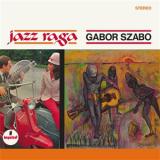
Das 1967 veröffentlichte Album "Jazz Raga" ist mehr als nur ein Album - es ist ein furchtloser Sprung in unbekanntes musikalisches Terrain. Gábor Szabó, der ungarische Jazzgitarrist, der für seinen grenzüberschreitenden Stil bekannt ist, liefert mit diesem Meisterwerk eines der faszinierendsten Alben seiner Karriere in diesem Genre. "Jazz Raga" vereint Jazz, Rock, psychedelischen Folk und östliche Einflüsse - mit Sitar-Melodien und lateinamerikanisch angehauchten Rhythmen, die dem legendären Funk-Schlagzeuger Bernard Purdie zu verdanken sind - und lässt sich keiner Kategorie zuordnen. Es ist eine hypnotische Fusion, in der europäische Tradition auf den Gegenkulturgeist der 60er Jahre trifft, alles verbunden durch Szabós unverkennbaren Gitarrensound. Vom verträumten Groove von ,Walking On Nails" über die wirbelnde Mystik von ,Mizrab" bis hin zu seiner eindringlich originellen Interpretation von ,Paint It Black" der Rolling Stones schafft Szabó eine Klanglandschaft, die sowohl gewagt als auch zutiefst gefühlvoll ist. Sein Spiel ist elektrisierend - voller ungewöhnlicher Akkorde, fließender Improvisationen und einer ganz eigenen Stimme. Auch Jahrzehnte später ist ,Jazz Raga" noch immer ein Meilenstein kreativer Freiheit und globaler Einflussnahme - ein Muss für alle, die Musik suchen, die Grenzen und Erwartungen überschreitet. Wenn Sie diesen Kultklassiker noch nicht kennen, ist es jetzt an der Zeit, dass Gábor Szabó Ihren musikalischen Horizont erweitert. Neuauflage auf 180-g-Vinyl.
- Way Back In The Way Back
- The Great Mystifier
- Mighty Dollar
- Quietly Blowing It
- It Will If We Let It
- Hardlytown
- If It Comes In The Morning
- Glory Strums (Loneliness Of The Long-Distance Runner)
- Painting Houses
- Angels In The Headlights
- Sanctuary
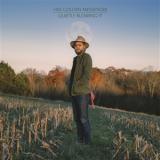
Coke Bottle Clear vinyl. Jun 25, 2021 (EST) CD MRG755cd 673855075525 $6.00 Jun 25, 2021 (EST) LP - Black MRG755lp 673855075518 $11.00 Dec 02, 2022 (EST) LP - Coke Bottle Clear MRG755lp-dlx-C1 673855075556 $12.50 TOTAL Quietly Blowing It was written and arranged by Taylor in his home studio_his 8' x 10' sanctuary packed floor to ceiling with books, records, and old guitars_as he watched the chaotic world spin outside his window. "Writing became a daily routine," he explains, "and that was a ballast for me. Having spent so much time on the road over the past ten years, where writing consistently with any kind of flow can be tricky, it felt refreshing. And being in my studio, which is both isolated from and totally connected to the life of my family, felt appropriate for these songs." Between March and June, Taylor wrote and recorded upwards of two dozen songs_in most cases playing all of the instruments himself_before winnowing the collection down and bringing them to the Hiss band. In July, the group of musicians, with Taylor in the production seat, went into Overdub Lane in Durham, NC, for a week, where they recorded Quietly Blowing It as an organic unit honed to a fine edge from their years together on the road. "We all needed to be making that music together," he recalls. "We've all spent so many years traveling all over the world, but in that moment, it felt cathartic to be recording those particular songs with each other in our own small hometown."
Introducing: Temporary Blessings, the new project by stalwart Naarm / Melbourne trumpet player and composer Liam McGorry.
Assembled to realise McGorry's compositions drawing on 1960s Italian & French soundtrack music, Temporary Blessings brings together trusted instrumentalists and fellow travelers from Melbourne's rich enclave of cinematic soul. With Liam at the helm, the group is composed of members of Surprise Chef, Karate Boogaloo, Saskwatch and Let Your Hair Down.
The resulting recordings realise McGorry's sonic visions of film noir, giallo, library music and cinematic soul, captured live in one room with what the maestro describes as "a shared spirit". The recordings, produced by paragon Henry Jenkins, bring together emotive string arrangements, tough horns and a steadfast rhythm section with an acute attention to detail McGorry has developed over years in the saddle.
Liam says: "I find great comfort in collaborating with good friends and playing together in the same room and taking these blessings as they come."
A veteran of Melbourne soul, McGorry's steady hands have touched some of the city's most revered projects over the last 15 years; McGorry-led projects Saskwatch, Dorsal Fins and Ex-Olympian sit aside Sampa The Great, Ella Thompson and Adrian Eagle on Liam's heavy list of credits and collaborators. He has contributed more than his fair share of bricks to the great structure of Melbourne soul, always playing the background, true to his humble nature.
LP available in black or orange and brown splatter vinyl.
Introducing: Temporary Blessings, the new project by stalwart Naarm / Melbourne trumpet player and composer Liam McGorry.
Assembled to realise McGorry's compositions drawing on 1960s Italian & French soundtrack music, Temporary Blessings brings together trusted instrumentalists and fellow travelers from Melbourne's rich enclave of cinematic soul. With Liam at the helm, the group is composed of members of Surprise Chef, Karate Boogaloo, Saskwatch and Let Your Hair Down.
The resulting recordings realise McGorry's sonic visions of film noir, giallo, library music and cinematic soul, captured live in one room with what the maestro describes as "a shared spirit". The recordings, produced by paragon Henry Jenkins, bring together emotive string arrangements, tough horns and a steadfast rhythm section with an acute attention to detail McGorry has developed over years in the saddle.
Liam says: "I find great comfort in collaborating with good friends and playing together in the same room and taking these blessings as they come."
A veteran of Melbourne soul, McGorry's steady hands have touched some of the city's most revered projects over the last 15 years; McGorry-led projects Saskwatch, Dorsal Fins and Ex-Olympian sit aside Sampa The Great, Ella Thompson and Adrian Eagle on Liam's heavy list of credits and collaborators. He has contributed more than his fair share of bricks to the great structure of Melbourne soul, always playing the background, true to his humble nature.
LP available in black or orange and brown splatter vinyl.