Session Victim need little by way of introduction having been releasing on Delusions consistently for the last 10 years and becoming the undisputed poster boys for the label in the process. Despite their regular appearance however, it’s always a real treat to announce a new record from the German duo and we have to say, the Screen Off EP may well find them in their finest form to date! Coming hot off their latest downtempo LP entitled Low Key, Low Pressure for Night Time Stories, you can tell Hauke and Matthias were ready to take things back to the dance-floor and have delivered an EP which looks set to become a future classic and no doubt big in the box of discerning DJ’s the world over.
Screen Off is really it’s own thing, living somewhere on the long and winding road between the Bar Kays and the Bad Brains, suffice to say that what it lacks in easily definable attributes it makes up for in sheer energy and raw attitude. Hauke and Matthias re-invite Jamaican poet and vocalist Ras Stimulant, who contemplates our screen addictions and urges us to disconnect and be present in the moment. Matthias’ rolling bassline provides the backbone, whilst hints of crunchy Moog and chopped guitar samples all bring a sense of urgency to the track.
Light The Way acts as an antidote, bringing a sense of calm melancholia in contrast to the title track’s low-end, funked-up fervour. A soft focus and almost distant drum groove draws us in whilst arpeggiating synths add a sense of optimism, reinforcing the tracks title.
Closing out the release we have Session Victim’s studio partner, good friend and all-round top producer Iron Curtis in for a remix of Light The Way. Johannes takes an interesting approach for his Illuminati interpretation, enhancing the breakbeat feel and mixing up chopped samples with classic 808 drums. A muscular bassline adds extra weight to his remix but without losing the subtle musicality and positive vibe of the original.
Being the vinyl purists they are, Session Victim and Iron Curtis top up the physical 12“ EP with the exclusive Screen Off Acapella and an additional Iron Curtis Remix Reprise.

Suche:back in time
Red Vinyl[26,85 €]
British four-piece rock band Collateral are set to release their highly anticipated sophomore album Should’ve Known Better on May 24, 2024. The album is distributed worldwide by Cargo. The album will be released on CD, red vinyl, picture disc, limited edition cassette, and digital. Friday February 9th saw the release of the lead single “Glass Sky.”. The new single “Glass Sky” and the forthcoming album Should’ve Known Better is produced by Dan Weller (Those Damn Crows, Enter Shikari, Monster Truck, Kris Barras, Holding Absence, Bury Tomorrow). "I love massive riffs, massive hooks and feel-good guitar music,” says Weller. “When Collateral sent me their demos, I jumped at chance to produce their new record. I’m proud of what we managed to create. It’s Collateral mk2 - ambitious, daring and refined. I can’t wait for people to hear it." Since the band released their debut album (Top 5 UK Rock Album Chart) at the start of 2020 Collateral have spent no time standing still. Covid came only weeks after the debut album was released and forced the band to cancel their highly successful tour with Phil X (Bon Jovi) halfway through. This made the band hungry to keep the momentum. With innovative ways to produce top quality live streams, the band became special guests supporting the likes of Skid Row, H.E.A.T and Reckless Love. The exciting and flamboyant Kent-based rock and roll band are comprised of Angelo Tristan (lead vocals, guitar), Louis Malagodi (guitar), Jack Bentley-Smith (bass) and Ben Atkinson (drums). On October 21, 2022, Collateral independently released a re-mixed and re-mastered version of their debut album “Re-Wired” which featured Jeff Scott Soto, Phil X, Kee Marcello, Rudy Sarzo, Danny Vaughn, and Joel Hoekstra. The re-release saw the band in the Official UK Rock Charts at #12. After the gruelling back-to-back tours with Skid Row, H.E.A.T and Reckless Love, the band ignited a spark and strengthened their already loyal fanbase leading them to win the opening slot at 2023s Stonedead Festival, leading the band to perform their biggest show. Collateral’s hotly tipped sophomore album looks like it will take them to the next level. A lot of people don’t know what to expect from the new album, as the band have been tight-lipped about the new songs. Collateral have created a state-of-the-art rock album that will immerse listeners in their rock music universe, enabling fans to feel the blood, sweat and glory that went into the recording of every song. “We felt that our debut album was lacking the production,” reflects Collateral’s frontman, Angelo Tristan. “For the sophomore album, I wanted to make sure that this time we left no room for error and so got one of the hottest producers in the music industry, Dan Weller, to help lift these songs into a new dimension. With Dan’s pioneering studio expertise, this album has massive production quality that enables you to get lost in each character-filled track. Dan really brought out the emotions we were trying to portray and has achieved it with his own unique style.” “We wanted this album to express where we were in our own lives since the release of our first. So much has happened since then, I mean the world shut down for what felt like a lifetime! And it was obvious that people were going to need some sort of optimism. I hope ‘Glass Sky’ is one of those songs that gives people the belief to find themselves again.” “Whereas, the feel-good ‘Just One Of Those Days’ is trying to find the good side of a bad day. Me being me, couldn’t help but to write a big power ballad, ‘The Long Road’, that I wrote from a very hard and deep place, in hope that it could maybe bring some peace and comfort to people who need it. I think there’s all aspects of life running though this album and what it means to us will remain in our hearts forever. ”Should’ve Known Better” is an album that goes beyond specific music genres,” says Angelo. “It’s almost like a soundtrack to a beating heart. It’s an album that will remain timeless in years to come
Picture Disc[26,85 €]
British four-piece rock band Collateral are set to release their highly anticipated sophomore album Should’ve Known Better on May 24, 2024. The album is distributed worldwide by Cargo. The album will be released on CD, red vinyl, picture disc, limited edition cassette, and digital. Friday February 9th saw the release of the lead single “Glass Sky.”. The new single “Glass Sky” and the forthcoming album Should’ve Known Better is produced by Dan Weller (Those Damn Crows, Enter Shikari, Monster Truck, Kris Barras, Holding Absence, Bury Tomorrow). "I love massive riffs, massive hooks and feel-good guitar music,” says Weller. “When Collateral sent me their demos, I jumped at chance to produce their new record. I’m proud of what we managed to create. It’s Collateral mk2 - ambitious, daring and refined. I can’t wait for people to hear it." Since the band released their debut album (Top 5 UK Rock Album Chart) at the start of 2020 Collateral have spent no time standing still. Covid came only weeks after the debut album was released and forced the band to cancel their highly successful tour with Phil X (Bon Jovi) halfway through. This made the band hungry to keep the momentum. With innovative ways to produce top quality live streams, the band became special guests supporting the likes of Skid Row, H.E.A.T and Reckless Love. The exciting and flamboyant Kent-based rock and roll band are comprised of Angelo Tristan (lead vocals, guitar), Louis Malagodi (guitar), Jack Bentley-Smith (bass) and Ben Atkinson (drums). On October 21, 2022, Collateral independently released a re-mixed and re-mastered version of their debut album “Re-Wired” which featured Jeff Scott Soto, Phil X, Kee Marcello, Rudy Sarzo, Danny Vaughn, and Joel Hoekstra. The re-release saw the band in the Official UK Rock Charts at #12. After the gruelling back-to-back tours with Skid Row, H.E.A.T and Reckless Love, the band ignited a spark and strengthened their already loyal fanbase leading them to win the opening slot at 2023s Stonedead Festival, leading the band to perform their biggest show. Collateral’s hotly tipped sophomore album looks like it will take them to the next level. A lot of people don’t know what to expect from the new album, as the band have been tight-lipped about the new songs. Collateral have created a state-of-the-art rock album that will immerse listeners in their rock music universe, enabling fans to feel the blood, sweat and glory that went into the recording of every song. “We felt that our debut album was lacking the production,” reflects Collateral’s frontman, Angelo Tristan. “For the sophomore album, I wanted to make sure that this time we left no room for error and so got one of the hottest producers in the music industry, Dan Weller, to help lift these songs into a new dimension. With Dan’s pioneering studio expertise, this album has massive production quality that enables you to get lost in each character-filled track. Dan really brought out the emotions we were trying to portray and has achieved it with his own unique style.” “We wanted this album to express where we were in our own lives since the release of our first. So much has happened since then, I mean the world shut down for what felt like a lifetime! And it was obvious that people were going to need some sort of optimism. I hope ‘Glass Sky’ is one of those songs that gives people the belief to find themselves again.” “Whereas, the feel-good ‘Just One Of Those Days’ is trying to find the good side of a bad day. Me being me, couldn’t help but to write a big power ballad, ‘The Long Road’, that I wrote from a very hard and deep place, in hope that it could maybe bring some peace and comfort to people who need it. I think there’s all aspects of life running though this album and what it means to us will remain in our hearts forever. ”Should’ve Known Better” is an album that goes beyond specific music genres,” says Angelo. “It’s almost like a soundtrack to a beating heart. It’s an album that will remain timeless in years to come
Club music culture necessarily shifted gears in many ways during and after the course of the pandemic. Older participants found their way into other interests and younger participants took new reigns to orient spaces they felt good inside of. The agenda for the music, and the cultural industry surrounding it at large, took a more frivolous and “fun” turn. Clubs needed to recoup lost money, people needed more refreshing catharsis for their nightlife escape, and in some pockets scattered around the globe a newer and younger cadre of producers/promoters/DJ’s pulled optical cues from a scattering of “darker” influences to give an alternate aesthetic to the aforementioned “vibes” culture. In the midst of this, a large polarization of conceptual energy shifted within the compositional and utilitarian machinations of the club music culture leaving behind the brooding and cerebral placeholders for different kind of enjoyable hedonism. Terrestrial Paradise’ “Artificial Hell” harkens to another prescient time before that shift occurred. “Artificial Hell’ might just be an illustration of what all of this fun escapism encapsulates.
Terrestrial Paradise is the latest moniker from Montreal come Los Angeles based producer Jaclyn Kendal. Having developed and cemented her sonic positionality with releases on North American labels like Ascetic House and Summer isle over the years, as well as a series of monolithic live sets, Bank is pleased to announce Kendal’s Terrestrial Paradise first full length album “Artificial Hell”. Over the course of nine recordings, “Artificial Hell” gives a master class in pressurized industrial techno of the slower variety. Fitting with the legacy of Bank’s output since it’s inception, Terrestrial Paradise’s aesthetic sensibilities sit within the canon of a certain tinge of club music imbued with a sense of natural grit, sans pretense.
“Artificial Hell” nods to artists like Scorn, Regis, and 400 PPM while maintaining it’s own territory in the landscape of cerebral and brooding rhythmic techno. Ominous, mechanistic drones sit above succinctly exacted percussion composition and sound design. Throughout “Artificial Hell”, Kendal shows her proficiency with the push and pull of building and releasing tension. On tracks like “Salvation” and “Relativity” she melds her synth wash wallscapes with driving percussion, serving as both a hint and counterpoint to the the entirety of the latter part of the album taking on spartan ambient compositions as a way to keep the listener in a subdued stasis. This album is a statement piece from a long time participant in the North American underground music sectors. It reminds the listener through perilous, considered rhythms and darker drone impositions to cement themselves back into a place where not
everything is always a good time.
The Guardian wrote “the Canadian songwriter has one of the all-time great singing voices in popular music, an intensely romantic Chet Baker-ish instrument that seems to float with piercing direction, like a paper aeroplane thrown hard through mist.” With Uncut describing his songcraft “as delicate and lovely as a rare orchid” and Record Collector praising the album’s “sublime alien balladry” such are the accolades that have accrued throughout Chenaux’s unique and consummately uncompromising solo music for well over a decade now. Delights Of My Life opens a new chapter for the singer/guitarist and formally introduces the Eric Chenaux Trio, with Toronto-based musicians Ryan Driver on Wurlitzer organ and Phillipe Melanson on electronic percussion. Driver is a longtime collaborator, appearing on several of Chenaux’s solo albums (even embedded into the very title of the 2010 masterpiece Warm Weather With Ryan Driver). Melanson has a long list of involvements that include Bernice, Joseph Shabason, and U.S Girls, and a recent release with his Impossible Burger project on Chenaux’s own experimental label Rat-drifting, but this marks the first fulsome involvement between the two as players on a recording. In many ways Delights Of My Life also picks up right where Chenaux’s previous album left off, in its subversions of a classic, timeless jazz-inflected balladry, while the interplay of the trio formation indeed unfurls many new delights. Recording together at Chenaux’s spartan home studio in rural France, Driver’s harmonically warped organ and Melanson’s electroacoustic sampling and percussion hold time in newfound ways. Where previously Chenaux relied on a freeze/sustain pedal and minimalist rhythmic triggers to generate both pulse and chordal foundations, Melanson now paints timekeeping with expressive and intricate colourations, through live deployments of fluid sampled percussion (including orchestral timbres like timpani, kettle drums, and woodblock) that blur the boundaries between acoustic and electronic. Driver also ramps up his role in the song arrangements (prefigured in his support playing on Say Laura), teasing out chords and melodic filigree on Wurlitzer that percolate more prominently with Chenaux’s signature fried guitar solos and succulent singing. Both trio members add dulcet backing vocals, most notably on the 10-minute tour-de-force of fuzzed and ring-modulated swing “This Ain’t Life” that opens the record. All seven songs on the album groove and sway, simmer and sparkle, like nothing in the inestimable Chenaux discography to date. Chenaux’s tunes have the uncanny ability to sound like jazz standards; songs you feel you’ve heard before, though certainly never quite like this. Yet these are of course all originals, compositionally and interpretively, bent through an inimitable avant/out-music lens. Delights Of My Life conveys warm familiarity, shot through with the exuberantly experimental subversion and playful, even mischievous, iconoclasm that continues to mark Chenaux as defiantly, virtuosically, and genially one-of-kind
With his new album, the wryly titled My Bad Side Wants a Good Time, Paul and company further expound upon the groove- laden approach that remains so essential to the Sooner State's revered traditions, some of the songs were recorded in the restored environs of Church Studio in Tulsa, the former home of Shelter Records once owned and operated by Leon Russell.
The recording efforts have clearly paid off, while also remaining true to the vision Paul had for the album early on. "I wanted make a record that encompassed the sounds coming out of that historic studio in it's glory days," he reflects. "Now, when I listen back, I find that it also echoes a vibe that was consistent with the diverse sounds once heard during the glory days of rock and roll radio. I can almost hear a deejay talking up each track while segueing between songs."
- 01: No One Gives A Shit
- 02: Compulsive Disposition
- 03: All Go No Emo
- 04: Public Display Of Infection
- 05: Overpowered Violence
- 06: Semiconscious Godsize Dumbass
- 07: Spot A Pathetic
- 08: Evolved Into Nothing
- 09: Butt Krieg Is Showing
- 10: Fucking Fierce So What
- 11: Ferocious Bombardment
- 12: Principle Of Puppet Warfare
- 13: Deceased Occupation
- 14: Waste Of Time
- 15: Stench Of Ignorance
- 16: Meteor To The Face
- 17: Addicts Of Misery
- 18: You Suffer But Why Is It My Problem
- 19: Erased Existence
- 20: Back Stabber Mission Aborted
- 21: Destruct The Bastards
- 22: Plunged Into Illusions
- 23: Manipulation
- 24: A Dead Issue
- 25: The Final Insult
- 26: Grind Emergency
- 27: Grind On Impulse
Wormrot's 2011 follow-up to 'Abuse' is about as far from "the difficult second album" as you can get, presenting an even more refined, stream-lined and dynamic take on their ferocious grindcore sound. Whipping past in less than eighteen and a half minutes, there's not a second wasted here whatsoever, and the trio's musicianship has been honed to perfection. The blastbeats are even faster, the riffs even heavier and vocalist Arif deploys an even wider array of shrieks, grunts, growls and barks this time. Whilst the addition of new drummer Vijesh in 2015 would take the band to even greater heights, this is arguably the original lineup's defining statement.
Great modern roots tune from Frankie Diamond of Still Cool, with rhythm by his long time collaborators Carl "Stereo" Fletcher and Pablove Black. The vocal saw very limited release on JA 45 back in the late 00's, the version side is now released for the first time ever.
Black vinyl back in for the first time in a while, note new price. Produced by Leon Michels. Toured with Chicano Batman. Planned touring with Lee Fields & The Expressions. What is Buck? Buck is a state of mind, a way of life, a demeanor that gets you through the good times and the bad. If you ask Brainstory, It is also the energy that permeates their debut album. Kevin, Tony, and Eric are a trio of brothers bounded by blood, fate, and a small town with nothing to do. Their story begins in the long lost lands of the San Bernardino Valley, in the twilight zone known as Rialto, California: An arid wasteland of boredom and empty lots. Through punk rock and skateboarding they found temporary liberation from the local monotony. However, it wouldn’t be long before a hunger for more led them to explore musical realms beyond that of the hardcore punk they admired. After stints at music school and steady disappointment trying to navigate their local jazz scene they moved to Los Angeles and Brainstory was born. Through a introduction from Chicano Batman’s bassist, Brainstory caught the ears of Big Crown head honchos Danny Akalepse and Leon Michels. Shortly thereafter they were on their way to Queens, to record at The Legendary Diamond Mine with Michels at the helm. An instant chemistry yielded 10 songs in 10 days and now Brainstory has gifted the world with one hell of an introduction to all things Buck. Highlights include the sublime slow burner, “Dead End” which was the A-side to their first 45 on Big Crown that sold out in a matter of days. With Kevin’s sublime falsetto floating atop Tony and Eric’s unflappable and unmistakable backbeat, this tune has become a favorite with the ballad heads, the low-riders, and the slowie collectors. “Breathe” showcases another side of their sound taking a page out of the Shuggie Otis playbook and flipping the script with some stoned out west coast swag. Kev and Tony’s father, Big Tone, an accomplished performer himself, steps in on “Peter Pan” to sing lead vocals over a chorus of friends and family. Bassist extraordinaire, Tony, takes over lead vocal duties on “Sorry”, a smoked out, G Funk groove that is just waiting to be sampled. These guys have come a long way from their self released EPs and opening tours with Chicano Batman. Their musical growth is undeniable, and taking their California sunshine vibes and mixing them with Michels’ NYC aesthetic has proven to be an amazing combination. It’s a debut record that pulls influences from so many genres seamlessly it’s hard to nail down. Call it Funk, call it Rock, call it Soul, but over here at Big Crown HQ, we’ve decided to call it BUCK.
Mesh-Key reissue of a true desert island disc, criminally out of print for nearly 40 years. They've spared no expense bringing this classic back to life in a format befitting its brilliance, carefully orchestrating transfers of the original analog reel-to-reel tapes for remastering, and packaging each record in a heavy tip-on jacket with film lamination, and a double-sided, printed inner sleeve.
This seminal, eponymous post-punk album by Japanese group Aunt Sally, fronted by experimental singer Phew, was first released by the iconic Vanity Records label in 1979. Over the past forty-plus years, Phew has forged a singular path through a wide range of styles - from free improvisation to pop - and has collaborated with the likes of Ryuichi Sakamoto, members of Can, DAF, Einstürzende Neubauten, The Raincoats and more. But Aunt Sally is where she got her start and, despite the members’ young ages (still in college at the time), Phew and the band delivered a mature, timeless take on minimalistic punk. Remastered from the original analog tapes, this fully authorized reissue is packaged in a heavy, tip-on jacket from Stoughton, and is housed in a double-sided, printed inner sleeve.
- A1: Black & Street Intro
- A2: This Is How We Roll
- A3: No Diggity
- A4: Fix
- A5: Good Lovin
- B1: Let's Stay In Love
- B2: We Gonna Take You Back / Don't Leave Me
- B3: Never Gonna Let You Go
- B4: I Wanna Be Your Man
- B5: Taja's Lude (Interlude)
- C1: My Paradise (Interlude)
- C2: Deja's Poem
- C3: (Money Can't) Buy Me Love
- C4: Blackstreet (On The Radio)
- C5: I Can't Get You (Out Of Mind)
- D1: I'll Give It To You
- D2: Happy Song (Tonite)
- D3: Motherlude
- D4: The Lord Is Real (Time Will Reveal)
Powered by the massive hit single “No Diggity,” (which sam- ples Bill Withers’ “Grandma’s Hand”) featuring Dr. Dre and Queen Pen, Another Level is arguably the best album created by Teddy Riley, the leader of Blackstreet. Riley is a very influ- ential producer, known for inventing a whole new sound, a combination of soul harmonies, rap breaks and hip-hop beats called new jack swing.
Another Level is the second album by the American R&B group. Released in 1996, it reached #3 on the Billboard 200 albums chart, and #1 on the Top R&B Albums chart for five weeks and has sold over 4 million copies. This was the first album with new members Eric Williams and Mark Middleton. They joined the group after replacing departed members Dave Hollister and Levi Little.
Another Level is available on black vinyl and includes a 4-page booklet.
She loves jazz, art and fashion and last summer she wrote her very first song. If you are an undeniable fan of Jaqueline Taeib, Cleo, Suzanne Gabriello, Gillian Hills, Catherine Spaak, Sylvie Vartan, Francoise Hardy, Sheila, "Rodin" will most certainly take you right back in time. Camille sings about love, life and loneliness, an original composition about the love affair between Auguste Rodin and his student Camille Claudel and also includes a fantastic cover song from an artiste we all adore, NINO FERRER's "Alexandre"
Hot on the heels of our New Year’s smash, “Someday” by The Tempests, Outta Sight proudly presents the Cornelius Brothers and Sister Rose with their two most requested sides… back-to-back for the very first time!!!
The group formed in 1970 in their home town of Dania Beach, Florida. Original members were siblings Carter, Eddie and Rose Cornelius and friend Cleveland Barrett who was tragically killed in a car crash before they hit the charts. In mid-1970 they released their first single “Treat Her Like A Lady” which went to #3 on the U.S. Hot 100 earning the trio a Gold Disc. The follow-up single, “Too Late To Turn Back Now” (featured here),faired even better, hiting #2 on 22nd July 1972 scoring a second Gold Disc. Both tracks featured on their self-titled debut LP, a top 30 Pop hit in ’72. Despite the huge Stateside success of “Too Late To Turn Back Now” it failed to hit in the U.K. and even at the time, it resonated more with the easy-listening MOR audience than the soul fraternity who were tuned in to the harder-edged funky grooves of the likes of Isaac Hayes and Curtis Mayfield. It wasn’t until the Nineties that the Cornelius family finally caught the imagination of the U.K. rare soul scene and have remained a turntable favourite ever since.
Our chosen B-side, “Big Time Lover”, is the title track from the group’s second album released in 1973 and, wonderful as it is, it failed to break the Hot 100, and only dented the R&B Charts peaking at #88. Again, it was completely ignored by the U.K. and yet today it is the more popular of the two sides. Ironically, both original United Artist singles are actually quite hard to find in the U.K., despite the Gold Disc status of “Too Late To Turn Back Now”. A quick look on ‘discogs’ reveals only one copy currently available and zero copies of “Big Time Lover”!
Imaginary time is a representation of time that appears in some approaches to quantum mechanics; mathematically speaking, it simply is a line perpendicular to the time axis. Inspired by this concept and by the possibilty of transcending the normal restrictions of time and space through the power of imagination, Industrial / DIY music cult act Nocturnal Emissions released a first raw and irregular version of Imaginary Time in 1996, followed three years later by a new more rave inspired mix, this time reflecting a political urge of that particular moment in time when the squatting scene, free parties, and non commercial raves - all existing tied up with campaigns of anti-capitalist protests going on in the late 90s - were upsetting the powers of the ruling class and the authoritarian government in the UK. Sunny Crypt is beyond happy to bring back to life all the past forms of Imaginary Time in another particular moment on this timeline as its sixth release with a fully remastered vinyl reissue, with a brand new powerhouse 4/4 remix by all things Techno / Electro / Jacking wizard Gesloten Cirkel and a renewed graphic outfit. There’s another kind of time!
Black Vinyl[27,52 €]
"Loving You Backwards, the debut album from Blood, flourishes in the subtle, the ambiguous, the shades of gray. In winter of 2021, longtime Austin residents Blood made a fresh start, using a move into a house together in Philadelphia as a chance to reorient and spend time writing music around the clock. As they wrote, the sound of the band began to shift. Blood, in the past, made huge, angry, grandiose, operatic songs. Loving You Backwards, was not that. Instead, this debut record is quieter, less reactive, but no less powerful.
As an organism, Blood circa Loving You Backwards, was a six piece. Tim O'Brien is the lyric writer, but the song writing and arrangement is a painstakingly collaborative process in which the band aims for democracy over swiftness. The record also features the band’s first major work with the producer Daniel Enrique Howard, whom the band recorded with at his studio in Brooklyn. Howard helped guide Blood into this new sonic territory. It is not a bedroom project, but instead fully realized, somehow sounding both intimate like Liz Harris’ Grouper feels intimate and totally vast in the way that a Talk Talk record feels vast. It’s in the same universe as Ought in its earlier iterations.
The songs on Loving You Backwards exist in the realm of ballads, heart-wrenching and weird pop with a post rock sensibility. It explores, as the title implies, approaching a relationship in the reverse, dealing with your past while you try to stay in the present. Loving You Backwards is a record of ideas and big honesty, but it’s also a record of genuinely pristine pop. A definitive statement from a band that is more than on the rise as truly excellent songwriters and performers."
Originally released in 1987, Life Time is the full-length debut by Rollins Band. This reissue—released on ROLLINS’ 2.13.61 label—has been remastered for vinyl by TJ LIPPLE and includes updated artwork by JASON FARRELL. Henry Rollins on Life Time: “Life Time is the first studio record by the Rollins Band. We did our first practice on 04-07-87 and went out on a long tour of America and Europe. On the road we wrote songs and put them into the set. By late October we finished the shows in London, UK. We went up to Leeds where Chris had a place to live and booked studio time at the same place that he and I did the Hot Animal Machine recordings a year before. I had no producer for this record and feared that since everyone in the band had strong opinions on how it all should be done that if we tried to do it ourselves we would do more harm than good. I called Ian MacKaye and asked for help. He got on a plane and came right out. That's Ian. We got straight to work as we had little time or money. All twelve songs were cut and mixed in a few days. We would do a take and Ian would tell us that it was good and we were moving on. When someone would say that they wanted to do it over again, he listened patiently and then asked again which song we wanted to do next. We got it all done and dragged it back to America for about 3,200 dollars. My, how things have changed. The album cover was drawn on the back of a diner place mat by Stephen Myers as a gift for my then roommate, Laura. Only the offset reproduction of the piece remains as the original went with her when she gave up her room. She shot herself a few years ago. Special thanks to Ian for coming to the rescue on such short notice. Thanks to you for checking this out.” Download code for full album plus live tracks. Also comes with lyric insert.
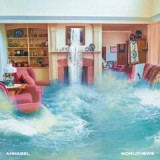
"On “We Are Where We Are,” a glimmering mid-tempo highlight from Annabel’s new album, Ben Hendricks sings of “a modern way to fill the empty space.” Worldviews, the band’s fourth LP and first in nine years finds the band reconciling with the ways the world has changed in the decade since they’ve been away. His protagonists are trying to determine the boundaries between what’s real and imagined, navigating their worldviews and the dominant ones around them, fighting for an escape or at least a distraction, wondering where the time goes, “going through the motions, running in a circle.” That could’ve been Annabel’s fate, too. But the core of the Ohio band is brothers Ben and Andy Hendricks, and as long as they’ve got each other, we’ve still got Annabel. In a world that feels so uncertain and so disconnected, where else is there to turn but back to Annabel? Think of Worldviews less like a comeback and more as the product of years spent gestating.
Hendricks spends the chorus of “All Time” promising to “make up for all the lost time,” and Annabel makes good on that promise for the next half hour. Worldviews is the most locked in the band has ever sounded, perfecting and building on their indie-emo sound. The title track and “Dog” are classic Annabel, sprightly and jangly midwestern rock songs, while “Defense Mechanism” is a rougher-edged update; when they go in the opposite direction, it results in some of their best work: “Every Home Needs a Ghost” is spartan and spectral, worthy of its title, and the beautiful “Small Victories” dabbles in downtempo electronics. They don’t sound like a band returning after nearly a decade; they sound at the same time hungry and lively like scrappy upstarts and wizened and seasoned like they never left."
One can hardly imagine the genre-busting, culture-crossing musical magic of Outkast, Prince, Erykah Badu, Rick James, The Roots, or even the early Red Hot Chili Peppers without the influence of R&B pioneer Betty Davis. Her style of raw and revelatory punk-funk defies any notions that women can’t be visionaries in the worlds of rock and pop. In recent years, rappers from Ice Cube to Talib Kweli to Ludacris have rhymed over her intensely strong but sensual music.
There is one testimonial about Betty Davis that is universal: she was a woman ahead of her time. In our contemporary moment, this may not be as self-evident as it was thirty years ago – we live in an age that’s been profoundly changed by flamboyant flaunting of female sexuality: from Parlet to Madonna, Lil Kim to Kelis. Yet, back in 1973 when Betty Davis first showed up in her silver go-go boots, dazzling smile and towering Afro, who could you possibly have compared her to? Marva Whitney had the voice but not the independence. Labelle wouldn’t get sexy with their “Lady Marmalade” for another year while Millie Jackson wasn’t Feelin’ Bitchy until 1977. Even Tina Turner, the most obvious predecessor to Betty’s fierce style wasn’t completely out of Ike’s shadow until later in the decade.
Ms. Davis’s unique story, still sadly mostly unknown, is unlike any other in popular music. Betty wrote the song “Uptown” for the Chambers Brothers before marrying Miles Davis in the late ’60s, influencing him with psychedelic rock, and introducing him to Jimi Hendrix — personally inspiring the classic album Bitches Brew.
But her songwriting ability was way ahead of its time as well. Betty not only wrote every song she ever recorded and produced every album after her first, but the young woman penned the tunes that got The Commodores signed to Motown. The Detroit label soon came calling, pitching a Motown songwriting deal, which Betty turned down. Motown wanted to own everything. Heading to the UK, Marc Bolan of T. Rex urged the creative dynamo to start writing for herself. A common thread throughout Betty’s career would be her unbending Do-It-Yourself ethic, which made her quickly turn down anyone who didn’t fit with the vision. She would eventually say no to Eric Clapton as her album producer, seeing him as too banal.
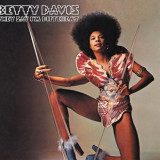
Her 1974 sophomore album They Say I’m Different features a worthy-of-framing futuristic cover challenging David Bowie’s science fiction funk with real rocking soul-fire, kicked off with the savagely sexual “Shoo-B-Doop and Cop Him” (later sampled by Ice Cube). Her follow up is full of classic cuts like “Don’t Call Her No Tramp” and the hilarious, hard, deep funk of “He Was A Big Freak.”
"The new avant-garde isn't about creating something that doesn't yet exist, it's about abandoning and confusing rigid genres. I want to open up, in order to both abolish and reconstruct the musical past." — Noémi Büchi
Noémi Büchi's album 'Does It Still Matter' completes a series of releases whose titles - 'Matière', 'Matter', and 'Does It Still Matter' - place the physicality of music in the center of attention. Büchi's specific sound structures and aesthetic choices question the state of materiality in a world that is becoming more and more fluid and intangible.
From 'Matière' to 'Matter', Büchi subtly transferred from a focus on substance to questioning the enigmatic core of
being, passing from a noun to a verb, and from a single word to an inquiry. 'Does It Still Matter' weighs in on the importance of questioning. Her pieces juxtapose multi-layered analog synthesizer textures, crystal clear sounds and almost brutalistic noises, while they unfold in compositional structures akin to pop songs. Driven by an orchestra of myriad parts, her music creates transcendent intonations that resonate deeply with the listeners' bodies. A daring blend of complexity and accessibility are molded into captivating sound sculptures that challenge and intrigue listeners alike.
Deviating from conventional time divisions, 'Does It Still Matter' immerses listeners in a discordant succession of elements, and guides them towards an eternal present that erases the past with each new revelation, while maintaining it through recurring themes that serve as intimate memories. Büchi's electronic maximalism questions our linear perception of time, offering a glimpse into a world where the past, present, and future converge into a singular moment. Her avant-garde approach rejects predictability, inviting listeners to immerse themselves fully in the present. Everything starts anew at any given instant. Each musical idea exists for one precise moment, rendering the future unpredictable.
'Does It Still Matter' unfolds against a backdrop of collective disaster and biocidal urgency, challenging the very essence of time. Büchi explains: "The world appears to have gone mad. It's all but impossible to reflect on the meaning of avant-garde in music, considering the future in this sepulchral kind of stability of the human condition." Her compositions resonate like an infernal machine, questioning the instantaneous dissipation of everything. Finally, echoes and fragments of sounds remain, haunting memories like ghostly companions.
'Does It Still Matter' is an immersive experience that invites listeners to contemplate the impermanence of our world and the enduring power of sound.
- A1: Wonka's Welcome Song
- A2: Augustus Gloop
- A3: Violet Beauregarde
- A4: Veruca Salt
- A5: Mike Teavee
- A6: Main Titles
- B1: Wonka's First Shop
- B2: The Indian Palace
- B3: Wheels In Motion
- B4: Charlie's Birthday Bar
- B5: The Golden Ticket / Factory
- C1: Chocolate Explorers
- C2: Loompa Land
- C3: The Boat Arrives
- C4: The River Cruise
- C5: First Candy
- C6: Up And Out
- C7: The River Cruise - Part 2
- D1: Charlie Declines
- D2: Finale
- D3: End Credit Suite
Tim Burton’s 2005 adaptation of Roald Dahl’s classic children’s book was conceived as long ago as 1991 and was in development for several years before Burton was involved in the production. He immediately brought regular collaborators Johnny Depp and Danny Elfman aboard.
Charlie and the Chocolate Factory represents the first time since The Nightmare Before Christmas that Elfman contributed to a film score using written songs and his vocals. The film was released to critical praise and was a box office success, grossing $475 million worldwide.
The wonderfully quirky melodic score and songs from one of Hollywood’s great composers harks back to Edward Scissorhands, Burtons’ and Elfman’s most personal work, and is a return to the composer’s “vintage” sound from the late 1980s and early 1990s.
First released on vinyl in 2015, this latest edition brings the popular soundtrack back to vinyl on Marshmallow Pink and Chocolate Brown Vinyl.
“It was more fun than I ever had working on a movie. It was so crazy and doing all the vocals was so much fun. I found myself falling into voices, singing vocal mannerisms. I was having such a gas.”
- Danny Elfman