With one foot planted in jazz and the other in the township groove of Mbaqanga, saxophonist Sello Mmutung was a powerful crossover figure in the history of popular music in South Africa. Using the stage name Bra Sello, meaning “brother” and used as a term of affection and respect in the jazz community, he came up in the era of shellac 78s as an exponent of the 1960s sax jive sound that brought the swinging rhythm of kwela into the domain of South African jazz. Despite the injection of American rhythm and blues into South African pop in the late-1960s, Bra Sello’s first releases on vinyl on the CBS label saw him backed by the group Abafana Bentuthuko and holding down an unapologetic township sound.
Joining the independent Soweto label under producer Cambridge Matiwane in the mid-1970s, Bra Sello recorded two records in the hit-making bump jive style popularised by serious jazz musician Dollar Brand on the one hand and prolific studio group the Movers, operating in funk and soul territory, on the other. Blending modern American and traditional African elements into joyful hip-swinging rhythms, Butterfly (1975) and The Battle of Disco (1977) reflect the vivacity of urban life in South Africa and document an era when dance music was performed by bands as extended jams laced with jaw-dropping solos. With music trends shifting dramatically in the late-1970s, the title of The Battle of Disco was an ironic call to arms in response to the territory that group musicians were beginning to cede to synthesisers and DJs.
For enthusiasts of African music from the 1970s, a full appreciation of the continent’s output is incomplete without South Africa’s pop-jazz sound providing a regional counterpoint to the funk experimentation of West Africa. Reissued for the very first time, Bra Sello returns in 2023 with limited replica editions from Afrodelic using master tape sources from the As-Shams/The Sun collection. Afrodelic’s unique edition of Butterfly features a previously unreleased track on Side B.
quête:back in time
- Each record includes a download code for the release + 2 digital bonus tracks -
BlueBox is the first of its kind! The new colored series on Front Left by Elad Magdasi.
Elad is going back to his roots while trying something new. Keeping a balance between his serious and playful side, the release includes 4 DJ tools that are different yet embody Elad's sound in every way.
All the tracks are named by their position on the record, similar to the oldskool way, focusing on the music alone.
All BlueBox tracks were produced at the same time, on the same wave of inspiration, they compliment each other though being completely different.
Front Left Love.
Duality Trax first opened its books in 2020 with an EP featuring Radiant Love regular Fio Fa and a remix of the year contender coming from Lisbon’s Violet. Since then the label has become known for its acute attention to detail, giving each release the shine it deserves while avoiding disposable practices and challenging the industry through its dedication to duality and balance, whether that be sonically or surrounding gender identity. It’s really no surprise that one of house music's leading label ¦gures Tywi was destined to make an appearance. Having started the Haŵs imprint in his home city of Cardiff, the label’s wide-spread popularity began to gain the attention from some of the industry’s most respected heads and became a breeding ground for new artists to emerge. A shared love of music resulted in tracks being shared over time and eventually DUALITY6 was born. In what will be his ¦rst full length EP, Tywi continues to join
the dots between 90’s house, prog, breaks and trance, with a huge remix coming from Frankfurt-based artist Maruwa. Title track ‘Reality Checkpoint’ connects various styles with a modern take on progressive trance. Sonics feel as if they’ve been projected from space in a kaleidoscopic mind-warping ride, coupled with the producer's impressive ear for world building soundscapes. A child of the ‘90s, Maruwa combines her classically trained ear with the nostalgia of her upbringing in the remix; channeling early trance records and deep, chugging rhythms into a wave of euphoria ¦t for peaktime. It’s the ¦rst time the label has also delved head ¦rst intofull trance territory, turning the intensity levels up while paying homage to both label owner and artist’s early musical in§uences. The B side opens up with ‘Spellbound’ which feels like a guided tour around the cosmos, sat beside trusted travelers and embraced by everything-will-be-alright energy . The track’s interior is built around synths that feel both effortless and light as our tour guide brings us towards our ¦nal destination. The EP comes to a close with ‘Laws Of Motion’, building slowly with shades of leafy greens and deep oceanic blues as it gently brings us back down to earth.
Composed, produced and arranged by Evangelia VS, the artist behind Abyss X, Freedom Doll is the culmination of a year of emotional unloading through songwriting, offering an introspective journey into the ocean of her mind. Produced and recorded between an artist residency near the Mayan jungle in Mexico and her Berlin home, the album chronicles transformations the performer tackled mentally during the writing process, tracing the rollercoaster of falling in love during the pandemic, as well as the pleasures and tribulations of womanhood.
Freedom Doll encapsulates the romantic escapade between her voice and the guitar. The amalgamation of seduction, sexual tension, vulnerability and assertiveness pulses throughout the entirety of the album, spiralling out of the cracks spawned from her vocal chords. From the twirling dance between her lush harmonies and the progressions of the acoustic guitar in tracks such as Ascend and From Hot to Cold, to the explosive confrontation between the metallic and operatic qualities of her voice, the searing sound of the electric guitar in industrial rock / psychedelic anthems such as Torture Grove and Banyana and the cathartic momentum found in the gospel inclined chants in A CHEW - Freedom Doll untethers the dramatics and theatricality that defines Abyss X’s vocal performance and music production, while maintaining the sensual vibrations of her creative essence.
Freedom Doll is the encapsulation of the Minoan woman, the elusive harlequin tiptoeing her way through the “circus of terror” that is living and loving her way through womanhood. With this visual reference, Abyss X pays tribute to her ancestors and their groundbreaking ancient artistry. The back cover of the vinyl features a reiteration of depictions of bulls leaping found in Minoan frescoes; an inherently male cultural act that in the ancient Minoan times presumably gave expression to a tension that underlies man's somewhat tenuous mastery of nature. Freedom Doll’s artwork challenges this preconceived notion through an eco-feminist approach, bringing the Minoan woman slash Gaia in the seat of the bull leaper, taming the unhinged and predominantly male earth - threatening human force.
Duo Drunken Kong step up for their Drumcode debut.
The residents at Tokyo’s legendary Womb have a distinct sound signature, as dreamy melodic and vocal elements rub shoulders with the pair’s trademark groove-orientated rhythms to create hypnotic techno outings that span the breadth of the genre, from heads down rollers to peak-time pleasure.
Their maiden outing on Drumcode is an inspiring four-track work ‘I Want To See’ that lays down this sonic manifesto, with each track built around different vocal samples used to skilful effect.
EP opener ‘It’s Then’ brings atmosphere in spades, mixing up a chugging bottom end, a sleek synth line and a sublime vocal that simmers throughout.
The title track is another late-night dancefloor affair that shifts between function and fun, as a slick mix of polished grooves and hypnotising melodies build towards a thrilling crescendo. ‘That’s It’ brings peak-time energy against a plump electro backbone and ’90-tinged vocal.
The EP rounds out with evocative ‘Need It’, as a stirring vox and metallic drumlines propel the track forward.
The dance-floor attack of Mr Mangiadischi continues with the 3rd episode of the label.
On the logo side, A1 with a hip-house interpretation of a late 80’s classic hip hop bad ass tune, and on the A2 with a perfect fusion between early 80’s electro synth-pop and early 90’s minimal tech.
On the back side, an early night/afterparty/umbrellacocktail/ poolside smoother, to complete and add an extra hint of diversity to the release.
Long Beach legend Scotty Coats links the West Coast eclecticism of Stones Throw to the NYC cool of DFA and Rong to the Balearic gods of DJ Harvey et al. He personally introduced Be With to Ned Doheny 10 years ago and he was immortalised on Smith & Mudd's last LP. And he's the main man behind the mysteriously titled duo Todd Russell & The Dangerous Coats, alongside Erick "Todd" Coomes (Lettuce founder/bassist).
In very real danger of being lost forever, we unearthed two of their private recordings and present them as a double A-Side 12", adorned with S-T-U-N-N-I-N-G artwork, courtesy of Arizona artist Frank Gonzales.
"Playa Larga" is a melodic, mellow masterpiece and is quintessentially Balearic. It's stretched out, low slung, guitar-soaked drum-machine soul music. It's multi-layered and contains multitudes: it builds and builds and builds and mesmerises as it does so. On the flip, "1900 Ocean Avenue" is a super slo-mo, sunbaked drug-chug which is already blowing minds thanks to early leaks of this cosmic, psychedelic detonation.
On first listen back, Erick said to Scotty: “So wait, nothing really happens, I mean nothing bad happens but nothing really happens”. Apparently these tracks were a bit foreign for Erick, musically, because of the lack of structure in the songs.
One morning, years later, Erick called Scotty and excitedly declared: “dude, I get it now!”. He was listening to random music with a lady friend while watching the sunrise in his 1900 Ocean Ave apartment and "Playa Larga" came on randomly. He'd forgotten all about it and said he had to get up and see what song it was because "it was the perfect soundtrack for a psychedelic sunrise over the ocean."
And that's exactly how we came across it, circa 2018, randomly popping up on a playlist while we were busy doing other things. It stopped us in our tracks but, when trying to find any info on iTunes, we were out of luck. It was only years later that we worked out Scotty had sent it to us. Ever since, we've been working on getting this out to you all. It's finally time.
We've only 500 pressed for the world, with many of them spoken for by those lucky enough to be already ITK, so these are gonna fly: be warned!
Scotty is a world class raconteur so we'll hand over to him to explain how these songs came about and why they mean so much to him in the context of his wider raison d'être:
"These were made 13 years ago when I was a new dad and left my job at Ubiquity Records to provide security for my newborn son, Nolan Liam Chai Coats. I became miserable working a job outside of music for the first time in my life and I was laid off 4 months into it. I was left wondering how the fuck am I going to provide for my family?
I lived in Long Beach and Erick lived a few blocks away. I would walk to his house when Jen finally got Nolan to sleep so I could escape my panic, drink some beers (is it beerlearic?) and make some music. He lived overlooking the ocean with the Queen Mary on the horizon, so I guess mellow Long Beach nights unintentionally inspired the music. These songs were the first two songs we ever made and they embody the desperation and hope I really needed at that time. 12 years later, when Rob at Be With expressed an interest in releasing it, we had Erick's brother Tyler Tycoon Coomes play drums on it at Jazzcats Studio in LBC, with Jonny Bell.
Shortly after I was laid off, I discovered The Stepkids. I was blown away by "Shadows On Behalf" and sent it on to Gilles Peterson. He played it on Worldwide the next day. The Stepkids pulled me back into music and made me realize I wasn't prepared to do anything but be involved with music. After I heard their unreleased album, I knew there was something there so I sent it to my good friend Jamie Strong who was at Stones Throw at the time. Jamie passed it along to Peanut Butter Wolf and the band asked me to be their manager. I didn't think I was the right guy for the job but wanted to see them do well so I told them I would help shop their album. Jamie suggested I take his place at Stones Throw, just as he did when he left Ubiquity Records. I always joke that Jamie can call me Scotty Coat Tails because I had been riding his for years.
Wolf told him that "Scotty is a nice guy but has horrible taste in music", which was ironic because he was literally trying to sign the band that I brought him. The Stepkids signed with Stones Throw and found a real manager. 6 or so months later Jamie sent me a note saying "Stones Throw is hiring and you should apply lol". I told him I was going to send my resume and the subject of the email was to read I HAVE GREAT FUCKING TASTE IN MUSIC. I did just that and got a call the next day from their new GM asking me to come in for an interview. When I walked in I was in Wolf's office where I had been 6 months before, signing The Stepkids
deal. Wolf and Jason McGuire were asking me some questions and wanted to introduce me to Jeff Jank. Jank walked in and said "Isn't this the guy that Jamie wanted to bring on 6 months ago?" They confirmed and he threw his hands up and walked out saying "I've seen enough". I got the job. I worked there for 2 or 3 years until I left to join forces with Jamie Strong at his label and stayed there for almost 7 years."
Scotty wanted to use a painting by his good friend, Frank Gonzales, for the front cover image. Frank was incredibly generous in letting us use this one, and Scotty was completely honoured. We think you'll agree, it's pretty striking. Simon Francis carefully mastered the original audio for both tracks and Cicely Balston's precise cut for Alchemy at AIR Studios ensures this double A-side 12" sounds appropriately outstanding. The immaculate Record Industry pressing will ensure these previously unheard, recently discovered recordings finally get a chance to shine.
Repress.
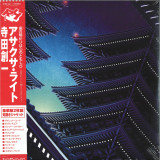
Back in 2015, Japanese DIY house pioneer Soichi Terada stepped back into the limelight courtesy of Rush Hour's 'Sounds From The Far East', a Hunee curated retrospective of material first released on his own Far East Recording label in the 1990s and early 2000s. Buoyed by the positive response and renewed interest in his work, Terada went back into studio to record his first new album of house music for over 25 years, Asakusa Light.
Developed over 18 months, Terada tried to recreate the mental and physical processes that led to the creation of his acclaimed earlier work. Those familiar with Terada’s celebrated, dancefloor-focused sound of the 1990s – a vibrant, atmospheric, and emotive take on deep house powered by the twin attractions of groove and melody – will find much to enjoy on Asakusa Light.
“I tried to recall my feelings 30 years ago, but when I tried it, I found it super difficult,” he explains. “I didn’t even know what I thought about myself five years ago, and the mental metabolic cycle seems to be faster than I thought. I tried different methods, including digging up my old MIDI data and composing by remembering old experiences. With the help of Rush Hour, I found some of the light from my heart that I had 30 years ago. I nicknamed the light I found in my heart, ‘Asakusa Light’.”
Produced using the very same synthesizers and drum machines that powered his 1990s work, the album is a joyous, colourful and life-affirming collection of timeless house music that not only recalls Terada’s own impeccable back catalogue, but also that of similarly celebrated contemporaries such as the Burrell Brothers or Ben Cenac (Dream 2 Science, Sha-Lor).
Terada, who has spent much of the last two decades writing video game music, has always had a gift for combining warm, undulating synthesizer basslines and perfectly programmed machine drums with stirring chords, smile-inducing melodies and mellow musical flourishes. It’s this immersive, sun-kissed and tuneful trademark style that takes centre stage on Asakusa Light, an album for the ages.
The set begins with the alien-sounding chords, soft-touch percussion and dawn-friendly warmth of ‘Silent Chord’ and ends on a high via the bouncing string stabs, starlight chords and thickset grooves of ‘Blinker’; in between, you’ll find a deluge of effortlessly feelgood music that’s the aural equivalent of a dopamine rush at sunrise.
There are subtle variations aplenty throughout the album – see the 8-bit lead lines and pulsing electronic textures of ‘Takusambient’, the vintage Tony Humphries flex of ‘Diving Into Minds’ and the effortlessly funky ‘Marimbau’ – but it’s the uniquely atmospheric, vivid and tactile nature of Terada’s loved-up sound that resonates. After well over 30 years in house music, the light in his heart is shining brighter than ever.
Another vinyl and another electric debut as we introduce France's Casual Treatment to EarToGround. New to the label but an extremely well versed, well known prolific producer and DJ to our scene.
This powerful Extended Player effortfully delivers four bright cuts of razor sharp Techno. The two originals from Casual express a somewhat soulful experience of his production range with the use of immersive chords and shimmering female vocals backed by obsessive grooves and perfectly executed percussion.
To fully augment the experience exponentially two Portuguese leading lights of the movement deliver their own input to the release via two separate remixes. Vil enterers in with his unique rolling attitude to bring you a true peak time performance and completing the release Cravo lets rip with an intense, sharp, fast paced rework with his dark undertones.
A true essential 12".
- A1: Fk Pres Director’s Cut Feat. Jamie Principle – Baby Wants To Ride (Re-Directed)
- A2: Fk Pres Director's Cut Feat. Sybil - Let Yourself Go (A Director's Cut Master)
- B1: Fk Pres Director’s Cut Starring Inaya Day - Let's Stay Home (A Director's Cut Classic Club Mix)
- B2: Fk Pres Director’s Cut Feat. B. Slade – You Make Me Feel (Mighty Real) (Dj Meme's Mix Of Epic Proportions)
- C1: Lou Rawls - You’ll Never Find Another Love Like Mine (Kenny Summit, Frankie Knuckles & Eric Kupper Unreleased Anthem)
- C2: Soulful Session Starring Lynn Lockamy - Hostile Takeover (Director's Cut Remix)
- D1: Hardsoul Feat Ron Carroll - Back Together (Director's Cut Classic Club Mix)
- D2: Spencer Parker & Dan Beaumont - The Look (Director's Cut Signature Mix)
There are few people across the globe, who will have not been touched by the work of Frankie Knuckles. Forever regarded as ‘The Godfather of House’. A Grammy Award winner, Frankie had a street in Chicago named after him where the old Warehouse once stood to commemorate the first ever Frankie Knuckles Day on 25th August 2004. Five years ago, Frankie passed away in Chicago on 31st March 2014 leaving behind one of the greatest house music legacies spanning almost four decades.
Now he is commemorated once again by long time writing and production partner Eric Kupper who will release part II of the special commemorative album on vinyl around this date. Eric, himself a seasoned DJ producer and writer, working side by side with Frankie on many his seminal classics, as well as personally working on over 116 Billboard #1 Dance Records. Having both worked together for many years they established themselves at ‘Director’s Cut’ from 2011 and set about producing original releases and remixes based on the classic ‘Def Mix’ sound while sharing equal credits for their creations.
The album features some of Directors Cut’s best works with the Re-Directed version of the seminal classic ‘Baby Wants To Ride’ plus their re rubs of Inaya Day, Sybil, Hardsoul and Lou Rawls - You’ll Never Find Another Love Like Mine (Kenny Summit, Frankie Knuckles & Eric Kupper Unreleased Anthem).
This album is to be released in collaboration with The Frankie Knuckles Foundation who work to continue Frankie’s legacy whilst focusing on music in schools, LGBTQ youth homelessness, AIDS research / prevention & diabetes research / education.
More than a decade after the release of ´Land Lines', the mythical Humboldt County, California based duo of Brian Pyle and Merrick McKinlay reappears seemingly out of nowhere with 'Atheistsaregods'. With past releases on such cult-like labels as Root Strata, Weird Forest, Blackest Rainbow or Digitalis, Starving Weirdos were an indelible part of a sprawling and loose network of artists in Northern America whose DIY work ethic and extreme activity revolved around shoestring-budget constant touring, numerous limited editions on CDR, tape and vinyl and a relentless drive to push the boundaries of genre.
Out of that cauldron, Starving Weirdos stood out as one of the most persistent and visionary acts, developing a mind altering body of work that went from warm soundscapes through droney digressions, freeform improvisation and raucous noise summoned from a myriad of instrumentation and low budget processing - vocals, keyboards, violin, flute, percussion and an assortment of less identifiable sound sources. 10 years on their legacy remains a timeless and wildly under-appreciated one, but hopefully this new album will shine a light on their idiosyncratic approach. As time itself was never a constraint. This is music suspended outside of it.
Right from the start with the echoing percussion, dissonant keys and processed vocals of 'Haiku Nagasaki', 'Atheistsaregods' draws a continuous flux of psychedelic elevation that goes from the gloomy electronic motifs not unlike the early Cluster vibes of 'Invocation' into the dank percussive maze of the appropriately titled 'Barulho do Samba'. The self titled track induces a sense of post-apocalyptic vertigo via hallucinatory scraps of voice, suspended synth tones and reverberating field recordings, connecting into the droney mystics of 'Dudukahar (Reed Prayer)'. Coming full circle, 'For Vinny' brings back the echoing percussion amidst hypnotic cello lines until it drifts off into the unknown. With the same palpable sense of urgency, Starving Weirdos feel as vital as ever. And even if we didn't realize it we were in need of them. Welcome back.
The EP FACE II is a continuation of the Faces EP series, of which the first EP was released in october 2022. The basis here is also a literary fixpoint with KAFKAS VER- WANDLUNG.
the examination of the urban modern man has its origin in the album JAHRE and is now explored in more detail here. What happens to us in a time of digital transparency as a glass human of the city and night.
It starts with THE VOID, which was originally intended as a poem about being lost. We go out into the night, some to search, some to forget and some to never come back as the same again. On our journey we often take substances that we expect to make this journey easier and faster. the escape from ourselves and from our relationships to the environment and humans can‘t just be skipped. a fast way is always a dangerous way and often leads to an even bigger EMPTINESS.
In THE GHOST something appears to us late at night, it is like a shadow of the previous hours, something that has followed us on the streets and accompanied us un- discovered until we reached our home. We wake up and at first it is unclear whether we are dreaming.
In half-sleep the dimensions blur together and the whole polyva- lence of the different existences gapes open. We blink into the DARKNESS and try to recognize something, the light remains far away and yet we hear this piercing sound, which in the end leaves us only with ourselves. we are the spirit of the night, trapped on an old tape in the chest of nothing.
The next section THE MOON shows us the light in the darkness. The shadows and ghosts give way for a moment and the light flows through our veins and molecules. The poem describes our unspoken longing to follow the light, in the light our fears disappear and everything blurs into an unknown familiarity. We stagger back and forget the encounters with our inner DAWN.
In the light the ghosts disappear like childhood memories left behind.
The last chapter is written by THE DAWN, a stanza from the poem of the same name as a spoken reconciliation with the world. In spite of everything, we seek harmony and connectedness. No one wants to become an exile, even if we can‘t always bring it about ourselves. We love LIFE and we hear and feel everything around us, if we let ourselves ...
ALL LOVE
AMAS_DHE / AMAS_PHI
Next up on Toolroom’s 4-track vinyl sampler series is another tasty collab from label founder, Mark Knight with legendary House DJ and producer Todd Terry and the Darryl James & David Anthony Project. Diving straight back into that classic 90’s House sound, Mark Knight delivers a taste of his finest production to date after unearthing Todd Terry’s edit of ‘Buddah’ by Darryl James & David Anthony Project, shaping up a seriously killer reworking of this gem fresh for the dance floor in 2023.
Next up, renowned German selector Eddie Thoneick makes a label debut with his club orientated big room weapon ‘Take It Back’. Taking it back straight through to the dance floor, Eddie Thoneick has become a name synonymous with high quality productions, providing remixes for Armand Van Helden, Steve Angello, Bob Sinclar and David Guetta. Eddie’s chunky production style shines through on ‘Take It Back’, offering up a slice of raw Tech House with deep, rumbling bass lines, metallic percussive elements and a resonating hook which will cause uproar in any club its played in.
Up next is another heater from DJ, producer and Toolroom Academy tutor Pete Griffiths who drops what can only be described as a House anthem in the making, with his brand-new track ‘Get Together’. A peak time record that sees Pete Griffiths dive deep into the sound of 90’s nostalgia, dropping a seriously well-produced and classy House banger. Also featuring on the record is American R&B, Gospel vocalist Ann Nesby, formerly the lead vocalist of the Sounds of Blackness ensemble who brings her powerful vocals to the forefront, elevating this release to anthemic status.
Last but not least, Hungarian duo Muzzaik return to the label with StadiumX on their collab track ‘Echoes’. Together, Muzzaik and StadiumX bring their signature sound to Toolroom with ‘Echoes’, a record that’ll command any dance floor it’s dropped on. Featuring a toughened-up groove, rolling bass line, and chopped vocal cuts mixed with just the right amount of edge.
microCastle’s third offering of 2023 welcomes Ditian back to the label for his first artist EP. Splitting time between Buenos Aires, Berlin and Barcelona, the Argentinean artist has carved out a unique place in the electronic underground over the last half decade. With an immediately recognizable sonic signature, Ditian channels languages of varied musical landscapes, churning them into his own complex rollercoaster of intricate electronica. A sound that is equally at home on rebellious dance floors around the world or in the sweet spot of a late-night leftfield listening session. A short but meticulous discography reflects Ditian's choosy nature; with Exit Strategy, Innervisions and TAU serving as the primary landing spots for his musical output. Having remixed Ivory’s ‘Arpstairs’ for his microCastle debut last summer, a project which was followed by a contribution to Dixon and Ame’s Secret Weapons 15 collection to begin the year, Ditian now returns to the label with a four-track showcase entitled ‘Serpenta’.
The crushing title track crashes in and sets any preconceived ideas of Ditian’s music alight, forecasting jet force propulsions and wild signal bending synths. As somewhat of a departure from his previous experiments, Ditian’s clustered pungi mutations provide an enduring main theme, while a wonderfully warped break is sure to cast a paranoid spell over the dancefloor.
‘Venena’ follows in fine style and further hammers down Ditian’s elusive vision. Dizzying, rapid-fire sequences of rhythm, granular textures and heavily manipulated synths travel to the very edges, while maelstroms of drums and contorted basslines highlight a high-octane second act.
‘Inertia’ lands at the collection’s midway point and does so in remarkably twisted fashion, stepping decisively on the gas and steering into shadowy transgressions. Never one to shy away from darkness or pushing boundaries, Ditian’s metallic storyboarding rises and falls across act one, consciously withholding energy, as grooves pulse and effects orbit, creating tension that eventually gets resolved as clusters burst open and oscillate in kaleidoscopic fashion.
Ditian’s creative attitude reveals itself further on collection closer ‘Influenza’. Presenting some of his most club-adjacent rhythms yet, it’s a clever coax of billowing tones and scrappy melodica which get wrapped up in a concordant fog, eventually getting washed away; because after all, the oceanic drones are all the better when they’re magnified to full size.
Cover art: Mauricio Seidel
The dynamic duo of Komponente & Kurilo from the Ukrainian label Trance Pandemic are preparing for their next sold-out record. This “Defenders” EP is made from tracks, that were made before the full-scale Russian invasion in Ukraine and also it is the continuation of “For A Brave” EP.
The main track of the release, also called “Defenders” is a signature piece for their duo. Moderately slow and calm, that evolves into something bigger around the third minute. The mayhem of sounds with that hell’s bells also. And there’s a little Easter egg at 1:29. If you know the sample – you’ll smile for a bit.
The record starts with “Victory”. Bold, a bit broken at the beginning piece, that is also evolving. This time we’re talking about the structure. The straight one comes after that broken start. “Kharkiv Mnemonic” also has some bells inside, paired with a nice, bubbling acid and a heavenly melody a bit closer to the end. The calmest track on the release.
Last, but definitely not least (the choice for the pick was between these two from the B-side) is “Broken Dreams”. Still can’t get enough of that break that we know lately from Alec Falconer’s release on Art Of Dark (not that lately, to be honest) and a dozen of other tracks. Here it’s hidden a bit in the back, so we can hear another kinda trancey and melancholic melody in full.
- A1: Wrong (Album Version)
- A2: Wrong (Thin White Duke Remix)
- B1: Wrong (Trentemøller Club Remix)
- B2: Wrong (Caspa Remix)
- C1: Wrong (Magda's Scallop Funk Mix)
- C2: Wrong (D I.m. Vs Boys Noize Remix)
- D1: Wrong (Trentemøller Club Remix Dub)
- D2: Oh Well (Black Light Odyssey Remix)
- E1: Peace (Single Version)
- E2: Peace (Sixtoes Remix)
- E3: Come Back (Jonsi Remix)
- F1: Peace (Ben Klock Remix)
- F2: Peace (The Japanese Popstars Remix)
- G1: Peace (Sid Lerock Remix)
- G2: Peace (Justus Köhncke Extended Disco Club Vocal Remix)
- H1: Peace (The Exploding Plastic Inevitable Jk Disco Dub)
- H2: Peace (Pan/Tone Remix)
- I1: Fragile Tension (Stephan Bodzin Remix)
- I2: Fragile Tension (Kris Menace's Love On Laserdisc Remix)
- J1: Hole To Feed (Popof Vocal Mix)
- J2: Hole To Feed (Paul Woolford's Easyfun Ethereal Disco Mix)
- K1: Perfect (Roger Sanchez Club Mix)
- K2: Perfect (Ralphi Rosario Dub)
- L1: Peace (Hervé's 'Warehouse Frequencies' Remix)
- M4: Fragile Tension (Laidback Luke Remix)
- N1: Fragile Tension (Peter Bjorn And John Remix)
- N2: Hole To Feed (Joebot Remix)
- N3: Perfect (Ralphi & Craig Club Mix)
- N4: Fragile Tension (Solo Loves Panorama Remix)
- L2: Peace (Sander Van Doorn Remix)
- M1: Fragile Tension (Radio Mix)
- M2: Hole To Feed (Radio Mix)
- M3: Come Back (Sixtoes Remix)
Sounds Of The Universe | The 12" Singles, a deluxe collector's
edition box set, contains seven 12" vinyl discs presenting
singles--including Wrong, Peace, the double A-side Fragile
Tension/Hole To Feed--alongside B-sides, remixes, dub
versions and other recordings contemporaneous to Depeche
Mode's 12th studio album, Sounds Of The Universe, originally
released by Mute Records in April 2009.
Sounds Of The Universe | The 12" Singles offers a full range of
ear-grabbing mixes--radio, club, dub and more--of Depeche
Mode originals with three discs (Discs Two, Four and Seven)
newly compiled for this collection, bringing together B-sides
and mixes first released across CD and maxi-singles
contemporaneous to the album's release.
When it came time to record the Sounds Of The Universe
album, DM's classic core (Dave Gahan, Martin Gore, Andrew
Fletcher) returned to the studio to make their second album
with producer Ben Hillier, whose intuitive contributions to
their previous studio album, 2005's Playing The Angel, had
created new sonic possibilities for the band expanding
Depeche Mode's vision and repertoire while continuing their
tradition of issuing monumental 12“ singles.
- A1: Island Band – Idle Hours 4 55
- A2: Chaz Jankel – Manon Manon 4 56
- A3: Gilbert O’sullivan – So What (Nail Edit) 8 44*
- B1: Rheinzand – Kills And Kisses (Scorpio Twins Remix) 8 10*
- B2: Canada High – Le Chiffre 5 02*
- B3: Lanowa – Burning Up 6 38*
- C1: Khruangbin – So We Won’t Forget (Mang Dynasty Irreverent Dub) 7 16*
- C2: Fernando – 1998 7 00*
- C3: Debbe& The Code – Code Of Love 6 02
- D1: Jana Koubková - Nijána 6 15
- D2: Ipg V Hot Toddy – Open Space 7 32*
- D3: Smashed Atoms & Backdoor Man – Hey Dreamer 6 50*
This July the esteemed scribe, proper DJ, and discreetly deft twiddler Bill Brewster, drops the latest instalment in his ‘After Dark’ series, for Late Night Tales.
A throbbing, louche and leisurely affair, groove is very much at the heart of this freestyle selection, a vibe which Bill de- scribes as “a basement, a red light and a sound system. Or, as the Beastie’s once rapped, slow and low, that is the tempo”.
There’s Hawaiian drum machine bossa balearica from Island Band, percussive afro post punk from Czech jazz singer Jana Koubkova, and breathy-bubbling-dubwise-slap-bass-soul from Debbe& The Code.
There’s also sultry deep house mood music from Lanowa, infectious bouncy jazz funk breaks from Canada High, and Nail’s life affirming re-edit of singer songwriter Gilbert O Sullivan’s electro pop gem ‘So What’.
Bill’s own studio skills are present and correct too, featuring an undulating bassy version of country troubadour Jeb Loy Nichols, reworked along Alex Tepper under their Hotel Motel moniker, and a chugged-up squelchy disco take on Khruang- bin, this time paired with Raj Gupta, as Mang Dynasty.
Chock full of exclusives, tracks are either completely brand new, or available digitally for the first time, whilst others are wallet-rinsing rarities if purchased elsewhere. Whichever way you slice it though, every tune is a highlight, working equally well as standalone nuggets, or within Bill’s fluidly cohesive mix.
Whether he’s taking the roof off a club with his unique selec- tion of deep and tough house music, enchanting a backroom with a genre-bending set of disco, Balearic, rock and hip hop or playing chillout music in a bay in Croatia, Bill Brewster is the man for all occasions.
In a former life, Bill was a punk rocker, a chef and also the co-editor of football magazine When Saturday Comes but has been a record nerd all of his life. He began DJing in the 1980s, but came into his own in the early 1990s, particularly during a two-year stint in New York running DMC’s office, where nights at the Sound Factory and hanging out with Danny Tenaglia gave him the musical grounding you can still hear in his music today.
Bill was also one of the founding residents at Fabric in London, a position he held for five years. There are few still playing regularly today that have his dedication, eclecticism and encyclopedic knowledge of music.
His parallel life is as a writer, and with his long-term part- ner-in-crime Frank Broughton, they have written four books together, including the acclaimed ‘Last Night A DJ Saved My Life’ (latest edition published last July), ‘How To DJ (Prop- erly)’ and ‘The Record Players’.
He has been working in the industry’s fringes for over 40 years including the running of various labels from Twisted UK and Forensic in the ’90s to Disco Sucks and Anorak in the noughties.
He is one of NTS radio’s new residents for 2023 and his ‘Low Life Loves You’ show is available on the first Tuesday of every month.
John Howard was one of the best and most creative DJs of the west coast house scene back in the 90’s. His mixes and productions were full of house groove, soul, breaks and jazzy rhythms. This new series on Repeat contains of three parts including Howard’s best productions. These tracks are all huge influence for many producers that later discovered these kind of psychedelic house grooves on European based DJ sets… John Howard was on his own journey much ahead of time and his music still sound absolutely incredible 25 years later… Mesmerizing release.
As it celebrates its 50th anniversary, Bill Withers' Still Bill remains true to its title – and stands as the greatest male-fronted soul album not made by a singer named Marvin, Al, Sam, James, or Ray. Though the saying "keeping it real" did not exist in popular parlance when Withers released his sophomore effort on Sussex Records, no words better capture the music's approach, mindset, and value. Every facet of Still Bill radiates honesty, truth, and emotion.
These characteristics – along with Withers' strong singing, hybrid arrangements, and deceptively simple songwriting – have allowed the album to endure to the point where it sounds as fresh today as in 1972.
After rising into the Top 5 of the Billboard Album charts and attaining gold status within a year of release, Still Bill has long been evaluated not by sales – but according to its merit, spirit, and agelessness. Included by The Guardian on its "1,000 Albums to Hear Before You Die" list (2007) as well as in Tom Moon's 1,000 Recordings to Hear Before You Die book (2008), its contemporary standing as one of history's most venerated soul efforts eclipses the positive reception it enjoyed in the early ‘70s.
Still Bill walks the same hallowed ground as What's Going On, Call Me, Night Beat, and Genius + Soul = Jazz. Like those landmarks, Still Bill plays with a mix of consistency, effortlessness, and complexity that rewards repeat listening and transcends categorization.
In combining four of the era's predominant styles – Philly soul, sweaty funk, Southern-reared blues, acoustic-based folk – and melding them with standout production borrowed from both minimalist affairs and sophisticated singer-songwriter albums, Still Bill occupies a distinct universe.
Its rhythmic fare is equally laidback and invigorating; relaxing and rollicking; eloquent and muscular; soft and tough. Withers' calm, self-assured voice hovers above it all, doubling as a warm blanket that adds comfort and grace to lyrics steeped in maturity, perspective, and compassion.
Withers' balanced outlook on human desires, needs, and situations stem from his own existence as a former blue-collar employee who believed his time as a musician would soon end. That grounding forever separates Withers from other contemporary soul greats – and stamps Still Bill with a conversational nature and egoless approachability.
"I mean look, I'm really a factory worker," said Withers in 1972. "That's a real job." There's that word again: real. The songs on Still Bill are tethered to modesty and actuality, wedded to a belief in simplicity, and connected to universal truths that link us all – independent of our economic or social standing. No track better exemplifies those principles than "Lean on Me," a feel-good paean to brotherhood and community that hit No. 1 on the pop and R&B charts en route to becoming a mainstream staple.
Withers approaches the plainspoken insight on "Lonely Town, Lonely Street" and heartbreaking vulnerability of "I Don't Want You on My Mind" with similar sincerity and straightforwardness. His proclivity for authenticity extends to the record's other big hit: the sexual, funk-laden "Use Me," which reached No. 2 and reflects the singer's everyman persona. It's an identity couched in keeping it real, the very inclination that ultimately led Withers to retire in the mid-'80s rather than bend to industry pressures or risk credibility.
That commitment to truthfulness and realism helps make Still Bill feel as unaffected as the air we breathe. Looking back on "Lean on Me" years later, Withers said it seemed like "something that was there before I got here" – the kind of song that could be 100 or 10 years old, or one we encounter anew 10 years into the future. The same can be said for every note on Still Bill.
“This device isn’t a spaceship, it’s a time machine. It goes backwards, and forwards… it takes us to a place where we ache to go again. It’s not called the wheel, it’s called the carousel. It lets us travel the way a child travels - around and around, and back home again, to a place where we know we are loved.”
(Don Draper)
Call Back Carousel is an audio time-travelogue, a slideshow of the mind’s eye - projecting Kodachrome memories directly into the listener’s mind by means of sound alone. It is a way of travelling without ever having to leave the home. A vicarious vacation for the imagination. Pure audio escapism.
Each episode is based on a found tape of a pre-recorded slideshow commentary. Most of these tapes were made by amateur tape recording enthusiasts and hobbyist photographers of the 60s and 70s. Their recorded commentaries would at one time have been used in conjunction with a sequence of 35mm slides but only the taped voices now remain. The recordings themselves come from Vernon's own archive of found reel-to-reel tapes that he has collected over the past twenty years.
Using these found slideshow commentaries as a framework, a series of musical soundscapes have been created to bring the absent images to life, activating the listeners’ imagination in the classic tradition of ‘cinema for the ears’. It’s a little like looking through a family photo album where only the hand written captions and mounting corners remain; the photographs themselves have all been removed. The evocative rattle and clack of the projector shuffles through different slides as the fragile voices of our tour guides accompany us on a sonic journey that fractures time - and through the cracks, the past bleeds through into our present.