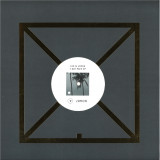
Continuing our quest to get all of the classic early AMT albums released on vinyl, we turn to 2006’s ‘Starless And Bible Black Sabbath’, and with the help of Makoto Kawabata’s studio wizardry, we’ve made it possible.
This latest instalment in the ‘Acid Mothers Temple Vinyl Archives - First Time On Vinyl’ series (as with the three previous SOLD OUT releases in the series) have all been meticulously put together with the help of Makoto Kawabata with the original CD artwork recreated for these vinyl editions from archive photos stored in the vaults at the Acid Mothers Temple in Osaka, Japan and the original audio remastered by James Plotkin.
Here’s what "Brainwashed" had to say upon it’s original CD only release back in 2006 …
“The title track is the meat of the beast, beginning with a minute of booms and gongs reminiscent of a thunderstorm before launching into some slow, heavy Sabbath-esque riffs. Squealing guitar and synth effects accompany the vocals of bassist Tabata Mitsuru, whose voice captures some of the sound and feeling of Ozzy's more than it does the melody. The pace is slower than most AMT fare, but things speed up considerably around the eight and a half minute mark. The group convincingly imitates the Sabbath guitar sound here and the rhythm section is particularly tight, giving listeners something on which to hang their ears or even providing them with a chance to gasp for air during Makoto's guitar explorations. Around the sixteen minute mark, everything comes to a wailing halt before the band returns to the dirge-like tempo that started the song. This pattern continues for the duration of the piece, until a couple of minutes before the ending, when the group makes a smooth transition to acoustic guitar and processed vocals to cool down.
Clocking in at nearly thirty-five minutes, the length alone may tax some listeners. However, the second track, "Woman From A Hell, "provides relief, which with a running time of six minutes is uncommon in the Acid Mothers canon for its brevity. This one condenses many of the ideas of the title track, and accomplishes much of the same evocation of Sabbath, but with the vocals in a more prominent role. The disc comes full circle, ending with thunderstorm sounds much like theones which started the album. Though the title track could have been shortened and perhaps an additional track included, this album remain some of the group's more accessible releases in some time and should please fans old and new alike.
According to the group's website, Makoto is reviving the Melting Paraiso U.F.O. line-up after a year of recording and touring with the Cosmic Inferno. This is a shame of sorts, since the Cosmic Inferno infused a much-needed vitality to the group that it had lacked since the departure of vocalist Cotton Casino. Yet the reformed Melting Paraiso U.F.O. has the potential to be even better since, if anything, Makoto seems to be the Mother of Reinvention.”
Acid Mothers Temple & The Cosmic Inferno are: Tabata Mitsuru - Bass, Vocal, Maratab - Hiroshi Higashi - Synthesizer, Dancin' King - Shimura Koji - Drums, Latino Cool - Okano Futoshi - Drums, God Speed - Makoto Kawabata - Guitars, Speed Guru
Buscar:back on track
Way back in 2008 Soul Junction released a 45 on Duane Williams “Yes My Love Is Real” with Duane being one half of the Detroit husband and wife singing duo Beverley and Duane. The duo under the guidance of their lifelong friend Will Hatcher recorded six songs of which two “ We Got To Stick Together” and “Glad I Got You Baby” were picked up by local Detroit label president Woodrow ‘Woody Wilson for release as a 45 single on his Fee label. The popularity of the 45 was to attract attention from the major Ariola label, who picked it up for national distribution during 1978 leading to the subsequent Ariola album ‘Beverley & Duane”. As the 1980’s dawned Beverley and Duane recorded a solitary 45 single for the independent Detroit Brown Bomber label “Love/You Belong To Me”. The label was owned by John L. Barrow a nephew of former heavyweight boxing champion Joe Louis, (Brown Bomber being Louis’s nickname). Beverley and Duane later moved to the west coast until their amicable divorce which led to Duane returning to his native Detroit to reacquaint himself with his former mentor Will Hatcher. This meeting of old friends led to the creation of Duane’s first solo project which Will brought to Soul Junction in late 2007. Hot on the heels of Duane’s hugely popular Soul Junction 45 came his subsequent CD album “These Songs Are For You” (SJ5001) released in 2009. Contained within this album was the very pertinent gospel/social commentary song “Father We’re Having Trouble” a song which two very close and knowledgeable friends of mine the late John Anderson and Bill Randle claimed had all the right ingredients for a potential hit record. Over the ensuing years this song has always remained in my thoughts until a few years ago I broached the idea with my good friend Jesse James recording a cover version of it, Jesse upon hearing the song was very receptive to the idea. Another period of time elapsed before we again reignited the idea. A decade or so on from Duane’s original version and the lyric’s of this particular song still remain as pertinent as ever, if not more so! During early 2020 Jesse entered, Con Funk Shun multi-instrumentalist and vocalist Felton Pilate’s Felstar Studio in Atlanta to lay down the basic tracks with Felton acting as co-producer on this project. Everything was progressing nicely until a worldwide pandemic intervened. With Jesse locked down in his new home on the West Coast and Felton in Atlanta the project unfortunately came to a holt. During this enforced period of inactivity further racial and political upheaval occurred which only added more poignance to the project. Eventually with the lifting of lockdown restrictions Jesse finally made it back to Atlanta to finish the project, the fruits of which you have before you now.
After dominating 2023 with two joint albums from two of hip-hop’s biggest producers in The Alchemist (The Great Escape) & Cardo (The Night Shift), Larry June is back with his first full length offering of 2024, Doing It For Me. Going back to his roots of what made him the type of man he is today and the formula that initially brought him success, the album contains no features and focuses on Larry doing things his way, for himself. From enlightening listeners on how to move like a boss and live a healthy lifestyle, to flashing what his hard work has brought, fans are sure to be able to soak up some game on how to improve their own situations. The 15-track album features production from Jake One, DJ Khalil, Harry Fraud, Cardo, Cookin’ Soul, Teeko & more. Singles include "Imported Couches," "Meet Me In Napa," "Dreams," & "Like A Mack." If there’s one thing we know about Uncle Larry thus far, it’s consistency. Listen to Doing It For Me and prepare to watch your habits improve. Picture Disc vinyl, housed in a gatefold jacket, and includes a 12x12 Insert and obi strip.
THEY COULD NEVER MAKE ME HATE YOU is the sixth studio album from Miami, FL rapper and underground rap luminary, Pouya, and first full length studio offering since 2023s GATOR. The 9 track album clocks in at a blistering pace of 25 minutes long, and includes the previously released singles, “BLAME GAME,” “FORGET ABOUT EVERYTHING” & “UH OH (feat. Rick Ross).” The album marks a defining moment in Pouya's career, revealing an artist at his most raw and unfiltered. It serves as a bold declaration of resilience and defiance, where Pouya peels back the layers of his psyche to confront the pain, betrayal, and perseverance that have shaped him. The project is a sonic exploration of the highs and lows of life, intertwined with Pouya's relentless pursuit of
2024 Repress
Johnny Clarke stands tall as one of the great vocalists that ruled the Jamaican reggae scene from the mid 1970's to the early 1980's Dancehall period. This re-issue of his 'Don't Stay Out Late' set shows his versatility to sing any song that was put in front of him and make it his own. Under producer Bunny 'Striker' Lee's guidance, Mr Clarke produced a run of singles and albums few could match.
Johnny Clarke (b 1955, Jamaica, West Indies) cut his first record 'God Made the See and Sun', after winning a local singing contest in the Bull Bay area of Jamaica. Although the single was not a hit, it led to two follow up tracks for producer Rupie Edwards, '
Everyday Wandering' and 'Julie' that fared much better, both on the island and overseas in England and Canada. These tracks also brought the singer to the attention of producer Bunny Lee and a working relationship that would go on to produce a prolific catalogue of music.
Johnny Clarke's Dread Conscious/ Love Song style were to grace many hits around this time in 1974. Such tunes as 'None Shall Escape The Judgement' , 'Move Out Of Babylon' , 'Rock With Me Baby' , 'Enter The Gates With Praise' to name but a few. All new songs added to a host of cover tunes, recommended by Bunny Lee, many taken from singer John Holt's catalogue, that suited Clarke's vocal style.
The rhythms were cut at various studios around the Island. Randy's Studio 17, Channel I, Treasure Isle, Dynamic Sounds and Harry J's by a group of musicians loosely called The Aggravators and voiced King Tubby's studio.
All great tracks backed by great rhythms, cut by Mr Johnny Clarke with a voice that few could equal.
Four Flies keeps digging into the secret archives of Alessandro Alessandroni to bring hidden treasures back to light. After two successful releases - the EP Afro Discoteca and the compilation album Lost & Found -, it is now the turn of a new 7'' single featuring two tracks with a strong soul-funk influence, sung by the Maestro's beloved Cantori Moderni in a typically Italian harmonizing style, poised somewhere in between gospel and disco music. Both tracks are previously unreleased and were recorded in the same 1976 sessions that birthed Sangue di sbirro (Knell / Bloody Avenger), his most blaxploitation-inspired soundtrack.
Shine On, on Side A, is a disco-funk anthem driven by a killer rhythm section, with heavy drum breaks and bass lines enhanced by a powerful brass section, string interludes and Fender Rhodes phrasings with a distinctly jazz-funk flavour. In the same vein, Prohibition on Side B is a mid-tempo funk floor-filler built on a super groovy bass line on top of which are layered prominent brass and Wurlitzer passages.
This is another great find that expands the known horizons of Alessandroni's discography. And it won't be the last one…
Naoki Zushi. Perhaps best known for his stellar guitar contributions to psych folk group, Nagisa Ni Te, Zushi has had a parallel career, for several decades, slowly releasing solo albums that spotlight his exultant guitar playing. Originally released to CD only by Shinji Shibayama of Nagisa Ni Te’s Org imprint in 2018, IV has Zushi playing and writing at a peak, its six songs slowly unfurling with a kind of paradoxical understated grandeur. This is psychedelic guitar music at its most paced and considered, yet given to flights of inspiration, and in this respect, Zushi sits within a lineage of guitarists who’ve used their instrument both as textural anchor and improvisatory tool – think of figures like Phil Manzanera and Robert Fripp, but also Roy Montgomery, Liz Harris of Grouper, even Tom Verlaine on his instrumental solo albums. Like those artists, Zushi locates moments of deep emotional resonance amidst luxuriant textural and melodic exploration. Zushi’s history stretches back to the mid 1970s. While for many, he first appeared on the scene as a founding member of noise legends Hijokaidan, alongside Jojo Hiroshige, his musical contributions predate that encounter. He started out playing progressive rock and improvised music, making home recordings of when he was in high school. He was a member of Rasenkaidan (Spiral Staircase) alongside Hiroshige and Idiot (Kenichi Takayama), the group that soon mutated into Hijokaidan (Emergency Staircase). Zushi and Takayama would soon form Idiot O’Clock, in 1982; Zushi also led his own Naoki Zushi Unit, starting in 1983. But for many, Zushi’s first significant appearance on record was as a member of Shinji Shibayama’s mid-eighties psych-pop group, Hallelujahs, whose sole album was recently reissued on vinyl. That group mutated into Nagisa Ni Te, and Zushi has played a significant role as their lead guitarist for several decades. His own solo music has appeared sporadically – Paradise (1987), Phenomenal Luciferin (1998), III (2005) and IV, with a few recent, meditative offerings, For My Friends’ Sleep (2021) and Nocturnes (2022). With IV, though, Zushi achieved something remarkable, a kind of extended exploration of the time-altering properties of echoplexed, hypnotically spiralling guitar interplay. The opening ‘Mirror’, “a song about the mirror inside me,” Zushi explains, starts out as a lush psych-folk song, slow and gentle, but soon takes to the skies with a cat’s cradle of Fripp-esque guitars, before thick, droning chords sweep the song to a drowsy coda. ‘Nocturne’ weaves silver skeins of guitar melody around a cyclical chord pattern; it gathers energy and quiet intensity through insistent repetition. The rest of the album explores the nuance Zushi can draw out of simple elements, building on what ‘Mirror’ and ‘Nocturne’ offer – the profundity of a chord change; the melancholy of a few quietly sighed words; the exhilaration of a guitar solo bursting out of the speakers; the subtle shifts in emotional register offered by tone and touch. Throughout, there’s something quiet, yet ineffable, shading the contours of the songs, such that it makes perfect sense when Zushi says, “What I want to express through music may be ‘sense of mystery’.” A few of the songs had their basic parts recorded at LM Studio and Studio Nemu with Shibayama and Masako Takeda joining on bass and drums, respectively; much of the album, however, was tracked at Zushi’s home studio. That seems appropriate for a collection of songs that are expansive in their intimacy. Asked what drove the sessions, Zushi answers, “I thought I’d make IV an album that particularly focuses on the guitar play.” And focus it does, as Zushi’s sky-scraping, soaring, elemental tone is front and centre throughout. But these are no guitar heroics; rather, Zushi uses the guitar as conduit and diviner, a tool for spirit location, and IV is his most eloquent expression yet of such singular magic.
Red Vinyl[15,55 €]
repressed !
It's been a busy 3 years since Danny Berman aka Red Rack'em released on his own Bergerac imprint.
Since then he's toured relentlessly, released a whole album of live music based disco/punk funk for Sonar Kollektiv as Hot Coins, managed to completely update his biggest track 'In Love Again' to make it a hit the second time around plus released spaced out, wonky party smashers on Wolf Music, Phonica, City Fly and Telefonplan.
While all this was going on Bergerac was largely on ice but now Berman is turning his energy back to the label with a vengeance.
Wonky Bassline Disco Banger is accurately titled. An uplifting intro breaks down into a slamming disco house number and just when you think you know what's going on...
Then the trademark Red Rack'em wonky bass drops in. 150% Guaranteed party smasher... Jazzy House Extension is super vintage Red Rack'em from around 2004 - something for the jazz heads out there - cracked out piano and far too loud double bass come together to birth a euphoric yet banging snapshot of a producer learning his chops. Destined is a slightly demented leftfield house number featuring mangled, pitch shifting fretless bass and vocals samples discussing someone's destiny.
A woozy end to the EP.
Frenchie King is a veteran artist and producer from the world of Reggae music. He was born in Jamaica and moved to the UK at the age of 12, where he began singing in a church choir. In the late 1960s he formed a church band with two friends called "The Ressurectors". Their music caught the attention of Reggae star Alton Ellis. After meeting Alton a new band formed called "Black Stallion" and their first song on Venture Records was released entitled - "Love Power". Alton was mentor and guiding light for Frenchie and crew; enabling them to jam with a host of Studio One artists.
Frenchie went on to work with noteworthy Reggae arists like: Alton Ellis, Dennis Brown, Dennis Alcapone, Ken Parker, Tito Simon, Dave Barker, Bobby Davis (The Sensations), Ruff Cutt, Owen Gray and Akabu.We didn't tour with Dennis or John Holt but Alton would always call them to the stage to jam, but we did a few shows with Alton sister Hortense Ellis and few other too much to mention...
Moving into the 1980s, Frenchie started a solo career and switched to the label "M1" where he released projects like "Your Entitled" and "Poor Me Natty Dread". During this time he also worked with renowned producer Sid Buckner (Studio One), before taking a brief hiatus; returning to help produce artist Owen Gray. He also wrote the song "Blackbird" for the band Akabu which was released in 1995 on U-Sound. M1 recording produce yours truly under name countryman linkup with the man Ezekiel in Luton hence M1
Moving forward into the 2000s, along with other musical adventures the iconic album "People Had Enough" was released in 2017, along with singles, "Let Us Do Something" and "Dance Cork". On let us do something and dance (kark) is produce by Michael McNeil aka the original jah son , a good musical sou-jah.
Which brings us up to date. In 2023 Frenchie hooked up with The Blackstones. Through this came the opportunity to work with Iron Sound Records and producer Alien Dread. This is the first single on ISR, with a solid Roots vocal track backed by studio band: Alvin Davis, Asha B and Steven Wright. More to follow!
Lex first grabbed our attention following his brilliant release on B2 Recordings which became a staple vibe setter in Jimpster’s DJ sets and Sofa Sessions streams in 2021. Gaining his deep musical knowledge through his own revered record store Radical Soundz, the Greek DJ and producer has been immersed in dance music for over 20 years and considered one of the key figures in the Athens underground house scene. With releases and remixes on labels such as Leng, Samosa, King Street and Black Riot, Lex is making waves internationally with a unique sound that fuses live elements and expansive arrangements taking influence from masters such as Ron Trent but adding a warm, cosmic glow. Fellow Greek artist Locke joins pro- ceedings for this EP bringing his own psychedelic sound garnered from his years playing crazy events taking in South American jungle parties, burning hot African desert raves, the underground clubs of Berlin to the sparkling coastal shores of Baja California. Locke is more than just a DJ. He is a connector, educator and traveler whose soulful music has the crowds chasing the sun as he brings love and celebra- tion to the events he plays.
On title track 7 Day Path we’re treated to a beautiful spacious jam which unfolds across 7 minutes, driving, live percussion keeping the energy high whilst Herbie- esque synth leads help to create a beautifully paced and dynamic arrangement.
Next up we have Italian legend DJ Rocca onboard for a remix of 7 Day Path. The prolific producer and DJ has been a tour de force since the late 90’s collaborating with the likes of Howie B, Dimitri From Paris, Chris Coco, Daniele Baldelli and Jazzanova producing singles, remixes and albums for labels such as Sonar Kollekt- iv, Compost, Classic, Rekids, Futureboogie, !K7, Tirk, International Feel, Defected, Rotters Golf Club and Faze Action Recordings. Here he adds his trademark dubby disco wiggle pushing the original in a jazzy direction with live flute. Definitely one to be heard under the stars on a Croatian beach for maximum Adriatica effect!
Flipping over, things head deeper and darker with See No Ball featuring Locomot- ives, a more straight-up heads-down stripped back club jam with a repeated vocal, funky guitar chops and a smattering of improvised synth and Hammond B3 keeping things jazzy and musical.
Closing out this brilliant EP we have Catch Up With The Sun which drops the BPM’s for a low-slung cosmic jam loaded with good vibes.
Who is Isabelle Lewis, anyway?
What kind of music does she make? Is she an opera singer? Does she write pop songs? Does she compose ethereal ambient soundscapes? Does she play chamber music on the violin? Is she producing dark, electronic beats?
Well… yes. But Isabelle Lewis is not so much a person as a project. Isabelle’s debut album, Greetings, credits a trio of composer–performers at its heart: producer Valgeir Sigurðsson, vocalist Benjamin Abel Meirhaeghe, and violinist Elisabeth Klinck. The sound of the elusive Isabelle Lewis is heard most clearly in the push and pull between them, the three-way tension that gives the album its musical and emotional drive.
Each of the three brings more to the collaboration than those epithets might imply. Elisabeth’s solo performance practice incorporates composition, improvisation, live electronics, and a close command of bowing and fingering techniques that make her fiddle sing, whisper or whistle as required. Benjamin is a self-taught countertenor - keening, crooning, and swelling to a voluptuous sensuality—but also an interdisciplinary stage director and performer. Well known for his work as a producer and studio collaborator, and as a composer of scores for film and stage, Valgeir’s solo discography interweaves meticulously crafted electronics, drones, noise, and other digital elements with acoustic instruments and vocals recorded with naked, unflinching clarity.
But the extravagant theatricality Benjamin brings to the aptly titled “Drama”—also featuring a heroic violin solo from Elisabeth—grapples against the thudding bass of the implacable digital backdrop. On “Mother, Shelter Me” Valgeir’s austere and detailed production throws the hushed violin and vocals into stark relief. The result is an exquisitely uncanny juxtaposition of past and present, human and mechanical, like a Rococo treasure viewed under cold fluorescent lights, or an 18th-century automaton slowly opening its clockwork eyes.
Even the lyrics seem somehow out of time. On “O Solitude,” Benjamin goes so far as to quote an entire song by the first great English opera composer, Henry Purcell, verbatim. No stranger to Purcell’s music, which has made its way into Benjamin’s theatrical productions as well, here Isabelle Lewis removes Purcell’s melodies and harmonies and sets the text, Katherine Phillips’s 17th century translation of a poem by Antoine Girard de Saint-Amant, to new music whose heightened, archaic character nevertheless seems haunted by Baroque ghosts.
Throughout the album, the outsized emotions and timeless archetypes of Benjamin’s lyrics feel like relics from some half-forgotten past—from the neatly rhymed couplets of “Fisherman,” a seemingly straightforward (but still somewhat askew) character study, to the abstraction of “Moonshell,” whose words seem like the fragments of some ancient, lost lament. It is just another of many ways in which Isabelle Lewis carefully distorts the listener’s notions of time. On a more micro level, time can stop for a moment of weightless, drifting ambience, and then plunge forward as the cloud of harmonies suddenly lock into tempo with the drop of the bass or the change of a chord. Or else that weightless moment is allowed to be, as in the aptly named prologue and epilogue to these Greetings (“Voicemail”/“…and farewell”), or in the interstitial tracks that bind the album together, connecting its dramatic peaks with expanses of meditative stasis.
The album as a whole is elegantly shaped, swelling from an intimate, interpersonal statement into something deeper and more spacious. The first half of the album leans slightly towards self-contained pop songcraft and ticking beats, while side B jumps off from “O Solitude” into the almost symphonic grandeur of songs like “Moonshell” or the instrumental “Not the water, air, or the dirt.”
But as it progresses, the contrasts only grow more sublime: antique and postmodern, human and machinelike. The ominous weight of the droning sub-bass and trombone (guest player Helgi Hrafn Jónsson) only makes the interplay between vocals and violins (guest player Daniel Pioro joining Elisabeth) seem more delicate and vulnerable. The ethereal string tremolos of “Moonshell” seem to pull against the heavy, shuddering electronics and layers of crooning vocals.
And that, in short, is where you will find Isabelle Lewis. Like an ancient stone archway, or a delicate house of cards, the architecture of Greetings is held together by the tension between opposing forces. Not just in Elisabeth’s playing, Benjamin’s singing, or Valgeir’s arrangements and production but in the conflict and contrast that generates the synergy between them.
Oh—Isabelle says hi, by the way. She’s looking forward to meeting you.
- A1: Body & Soul (Remix)
- A2: Pra Voce (Feat Toco - Extended Remix)
- A3: In The Name Of Love (Feat Laura Fedele - Extended Remix)
- A4: Blow My Mind (Feat Afra Kane - Remix)
- A5: Flying Away (Feat Afra Kane - Remix)
- B1: Rosa Da Ribeira (Feat Toco - Extended Remix)
- B2: (Got To) Move On (Got To)
- B3: No Meio Do Samba (Feat Toco - Remix)
- B4: Odoya (Feat Toco - The Invisible Session Remix)
- B5: Midnight Sun (Remix)
S-Tone Inc., one of the most acclaimed artists on Schema Records, with +300.000 monthly listeners and millions of plays on Spotify, is back with a full rework of his previous full-length "Body & Soul", a homage to the late '70s / early '80s disco music that the artist used to immerse in during those adventurous years. Early '90s British acid jazz, '70s soul, Brazilian and jazz music are here reworked in a nu-disco key, with the exception of the downbeat tracks "Flying Away" and "Midnight Sun" and the 'spacey' "Odoya", rearranged by The Invisible Session without mining the overall mood of this release.
* Limited to 500 copies, Double Neon green Vinyl LPs in a 5mm Album sleeve printed with colour on the front and tracklist on the back is printed in glossy ink, 2 x printed inner sleeves
"KCT 3" marks a new chapter for The Hempolics, showcasing their growth as musicians and their commitment to pushing musical boundaries. With each track carefully crafted to perfection, the album offers a mix of infectious rhythms and soulful melodies that are sure to get you grooving.
From upbeat anthems to introspective ballads, "KCT 3" takes listeners on a musical journey through a variety of sounds and styles. Drawing inspiration from a diverse range of influences, the album invites listeners to explore new sonic landscapes and embrace the unexpected.
So happy to be able to bring you An amazing rare groove collection from the one and only Sweet Charles. 3 tracks for the album including "I Like it like that" first time on vinyl, plus "Soul Man" only came out on 7" Styrene back in the 70s, leaving one more.... "Yes its you" the sunshine club classic and rare groove mover !!
- A1: Just One More Day
- A2: It's Growing
- A3: Cigarettes And Coffee
- A4: Chain Gang
- A5: Nobody Knows You ( When You're Down And Out )
- A6: Fa-Fa-Fa-Fa_Fa (Sad Song)
- A7: Try A Little Tenderness
- A8: My Lover`s Prayer
- B1: Good To Me
- B2: Scratch My Back
- B3: Treat Her Right
- B4: Everybody Makes A Mistake
- B5: Any Ole Way
- B6: Sweet Lorene
The Soul Album is the fourth studio album by American soul singer-songwriter Otis Redding, released in 1966. It features Redding performing songs that he co-wrote, as well as covers of songs by such musicians as Sam Cooke, Eddie Floyd, Roy Head, and Smokey Robinson. Guitarist Steve Cropper contributed guitar on the album and is also credited as the co-author of three tracks. The Soul Album shows Otis Redding moving from strength to strength in a string of high-energy, sweaty soul performances, interspersing his own songs with work by Sam Cooke ("Chain Gang"), Roy Head ("Treat Her Right"), Eddie Floyd ("Everybody Makes a Mistake"), and Smokey Robinson ("It's Growing") and recasting them in his own style, so that they're not "covers" so much as reinterpretations.
We are back with more songs from Nicolai Zellmani, presenting a selection of 4 previously unreleased tracks from the vaults, retouched and Deejay ready.
Fans of his first EP on Public Possession „Percussion Heaven“ will notice with delight: a similarly tribalistic, warm & spheric approach to Techno on the tracks „Yongheng Forever“ and „Smutt“. Then you have „Nuevo Portamento“ a crazy, harmonius leftfield anthem and „Eternal Loop“ the ultimate song for a late night (early morning) ecstasy experience. Big Tip!
Coming off a successful transatlantic exchange, Brian Kage and his Michigander label keep the momentum, and the collaborative spirit, moving with an EP that hits closer to home. For any Detroit artist, working with Delano Smith would be on the bucket list, as one of the city's original, more influential DJs — before the D developed any of its "waves" — who would come into his own as a producer later to, once again, help mold the Techno City's sound. Make no mistakes about it, this tastemaker had a ripple effect back before techno even had a name, when it was just "progressive" music and mixing. The thing is, the feeling of admiration and respect here is mutual, from the moment Smith first stumbled across one of Kage's records and had to know who was making these sounds. This meeting of the minds happened organically and timely, with Keep 'em Movin’ as the result.
Opening the release is the title track, a driving number with pulsating synth tones and deep, call and response piano stabs. The ever so slightly pitched down vocals are modern and effortlessly cool, a style that resonates with today's dancefloors, but done tastefully, and with lyrical content that sets the record straight about what it really means to represent Detroit.
"D Spirit" takes an ancestral turn. This is spaced-out Detroit techno meets afro deep at its finest. Forward moving keys are bathed in deep, celestial pads as shuffling hats accented by light hand percussion beckon the body to move. Lively marimbas cut through the hypnotic undertones and awaken the senses with soulful appeal. A fluid bassline rumbles beneath while baroque pianos add tension and heighten the atmosphere.
The final track rounds the release out with an exclamation mark. For lovers of Delano Smith's infamous remix of "A
Lisbon's Para?so is back with its 14th release 'Crossroads' by local legend-in-the-making Salbany and remixes from portuguese dance music pioneer Cisco Ferreira a.k.a. The Advent and Detroit's own AMX otherwise known as The AM. The record opens with 'My Life', a warm yet propulsive detroit-referencing techno cut with pad washes, shuffling hi hats, an introspective vocal sample, cascading organ solos and arpeggios to a blissful effect. A2 'Crossroads' brings us a raw, bouncy, jam-like rhythmic section with syncopated toms and snares offset by a piano stab motif and emotive strings. 'Next Morning' closes side A, a hypnotic, curveball roller featuring a warm, rolling bass, offbeat drum hits glued together by immersive pads and UR-esque strings. Side B opener 'Mito' delves into trippier territories with admirable skill - not losing an inch in dancefloor potential - fusing bleeps and bells, beautiful chord progressions and hyper groovy drum machine programming. Techno icon Cisco Ferreira steps in with his 'Lisbon Dub' remix, transforming 'Crossroads' into a sparser, delay-infused slow-burner held together by a dope bass line. AMX brings the lead synth of 'Mito' to a lower octave, mutating it into a swingy midwestern experimental cut that inspires urgency and life force. A restless mantra emerges via the digital bonus track, an alternate 'Elevated' remix of 'Crossroads' that superbly merges original detroitian leanings and industrial textures in a no-frills peaktime banger. This is one of those records that lovingly reminds us techno is about emotion, swing, energy. As in life, nothing here sits still: movement, physical and metaphysical, is the messenger of progress.
For Quiet Town, her first album of new material in 12 years, Smith called on producer and musician Neilson Hubbard, alongside engineer Dylan Alldredge. Hubbard enlisted guitarists Will Kimbrough, Megan McCormick, and Juan Solorzano, bassist Lex Price, Danny Mitchell on keys and horns, and a host of acclaimed vocalists for the background vocals, including Maureen Murphy, Nickie Conley, Jodi Seyfried, Matraca Berg, Kate York, and Park Chisolm.
Smith’s talent for expressing the most human of vulnerabilities is on full display on the new album. Beyond the title track, other album highlights include “Jericho,” co-written with esteemed artist and Nashville Songwriters Hall of Fame songwriter Matraca Berg, which gives voice to anticipation of impending life changes of monumental import; “I’d Rather Be a Bridge,” a plea for compassion and connection; and “Farther Than We Should Have,” co-written with Natalie Hemby and K.S. Rhoads. The latter is a song about overcoming the deck stacked against kindred spirits who together trek through a difficult journey and find footing beyond beating the odds.
- Buffalo
- Toothless
- Uglie
- Shelley
- Frankenstein
- Rip
Second EP from Bristol indie pop six-piece, Hamburger. ‘Beat Back The Ghouls’ sees the band take their sound in a more lush, subtle and layered direction, developing skilfully on the raw songwriting ability offered in their debut. On this record Hamburger create a more complex and sophisticated sound, flitting masterfully between driven guitar hooks, emotive lilting melodies, singalong angst-fuelled hits, and warm dreamy fuzz. ‘Beat Back The Ghouls’ is a record packed with songwriting craft. Each track is a finely-tuned pop song, with catchiness, beautiful melodic turns and delicate harmonic progressions at its heart. The soft, layered vocals add a wonderful contrast to the distorted, driven guitars, as they explore themes such as longing, want and alienation. If you’ve heard Hamburger before, ‘Beat Back the Ghouls’ will mark a new, more refined experience, a band finding itself fully-grown. If you haven’t heard them before, this record is an opportunity not to be missed. Limited to 300 copies on black vinyl.