Conform Re-Touched Series has delivered other 5 gems to collect with the Vol.IV! The result is brilliant thanks to the contribution of great artists such as Radio Slave, Honey Dijon, Mark Broom, Adriana Lopez and Shlomi Aber.
When it comes to Radio Slave, no one can ever remain indifferent to the quality of Matt Edwards' production. Once again it has hit the mark by re-interpreting "Inside" by Gaetano Parisio in a masterly way. The track is a continuous crescendo but always well anchored to its original groove. The great British producer, Mark Broom, once again leaves no doubt about his ability to create real dace-floor killers. Seems that his edit was created to challenge the sound systems of all clubs around the world. It is the dream of all DJs to play a track of such impact during a party. His version remains faithful to the original but it has that broomish which makes it super catching.
Honey Dijon, an absolute star in the world techno firmament, makes her debut on Conform with her Re Rub interpretation of a classic like Dual Ep by C&G Southsystem, the project created by Gaetano Parisio and Marco Carola. Honey puts all of her Chicago background into this version. By adding vocal she manages perfectly to make two such different schools coexist, the Neapolitan one and the Chicago one. The result is simply sublime.
Likewise, it's a debut on the label also for Adriana Lopez absolutely respected throughout the techno scene for her extreme quality music. Her interpretation leaves no room for doubt that she doesn't like middle ways. Her remix is dark and hypnotic at the same time. Adriana gave her best and the delivery is just outstanding.
The grand finale takes place with the digital bonus track. Ben Sims "Carnival part one" re-edited by Shlomi Aber. This is definitely the icing on the cake! If you are a DJ you'll immediately desire to play this track as soon as possible. His edit it's just perfect leaving intact the original vibe of the English legend's track. Its tribal groove echoes the early 2000s sound. For those who love the genre this is unmissable.
Suche:background
We stumbled onto Al Muntzie’s under the radar soul beauty ‘Die Happy’ after conducting an interview with Joe Quarterman for a feature on our website.
It got us salivating about the prospect of further productions, which Joe had recorded, but had perhaps been overlooked. ‘Die Happy’ was originally released in 1976 and was the only release on S.B. Moon Records. The record has a crossover vibe as it sits beautifully between modern soul, funk, and proto-disco.
Initial research didn’t shed much light onto the background of the song. The trail was sparse, other than the record appearing on the sales list of rare-soul collectors and record dealers. So we decided to go back to the source and find out about the record directly from Joe himself.
“I met Al Muntzie through my bass guitar player, Elliot Adams. Elliot informed me that Al was looking for a song that was funky and suitable for a group. At that time, 1976 - 79, I had written the words and melody to ‘Die Happy” and Elliot cranked out a mean bass part that gave the song life. He should be credited as co-writer for his outstanding bass part. At this time my band, FreeSoul, had dis-banded and worked as sideman musicians.
Elliot and I made a demo of the song on a cassette and we let Al Muntzie hear it: he liked it. We set a recording date at the Omega Recording Studio in northern Virginia. We used a combination of two bands; FreeSoul and Experience Unlimited (EU). Al sang lead vocal and me and the Embracebles did the background vocals. Al was very cooperative and did not say much during the session. He followed my direction and got the job done.
The session took all day into the late evening hours where we mixed and mastered the tune to perfection. We had a good time creating this work of art.” We are forever thankful to Joe for giving us the opportunity to present this fantastic production by Al, Elliot, and Joe, and to give it the new lease of life, which it rightfully deserves. Produced by the legendary Joe Quarterman
Who else would have thought before the year 2020, that this new decade starts with a devastating natural incident that pushes the entire world in a health crisis and recession? Well, we sure
didn’t. And still, after 11 months, this damn virus doesn’t seem to go away. But no matter how bad this pandemic is. There is no need to stop being creative!
Many people used their time during the lockdowns as much as possible to make new music. And Jakobin is one of these guys who took his time this spring to work on brand new material, that is slowly
but surely coming out the next months on various labels. One of them is his Locked EP on our imprint - fortunea.
The title track on the A-side is an amazing piece of house music. A great homage on the raw punching Chicago sound and the late 80s/early 90s UK rave era. Heavy Breakbeat-loops blend in
perfect together with the use of 909 kicks, low-frequenced acid lines and a stabbing piano.
Turning over to the B-side there is the track ‚Pad Work’. A deep dub house tune with a nuance of Lo-fi-nism in it. Mysterious voices that are coming forward from the background of this bouncing
beat, a restrained but also smooth bassline and hypnotic string- and synthesizer-passages are the main characters in this tableau. While ‚Dreadbox’ is sealing the deal on this release with an
abstract melancholic sci- fi elektro approach.
Overall a conspicuous release, that lets you forget the chaos that is happening right now in this world.
All we wanna say at the end of this text is stay safe out there! And don’t give up!
Limited to 300 copies! There will be no repress!
Bringing a combination of two conceptual artists Ultrastretch 11 moves away from dance music to present this comtemporary off kilter.
On the A side, Montreal based producer Ohm Hourani, known for minimalistic jazz influenced works on his own imprint ANOMA and beyond, with compositions showcasing infusions of organic sounds combined with modular synthestisers, drum machines and vocalists such as his collaboration with award winning Jazz singer and Vocalist Diminique Fils Aime.
On this release he presents a 14 minute stripped down, intrinsically and subtly arranged combination of elements Initiale by a minimalistic kick drum joined by a synth driven, quirky / hypnotic mind drilling element paired with the finest straight hihats delicately placed on the background as the Constant. The subtle movement of the track is introduced by percussive drumming, vocals and piano keys forming the most beautiful atmospheric melody. The last element of surprise brings shuffling hihats bringing amazing swing to the overall elegantly slick piece.
The B side brings the highly sought-after drummer Samuel Rohrer. Ranging from ECM sideman to member of KAVE, a quartet alongside techno pioneer Max Loderbauer, Stian Westerhus and Tobias Freund as well as collaborative works with Ricardo Villalobos and Laurie Anderson, he is known for his unique sound aesthetics on advanced musical cross-pollination, developments of improvisation in acoustic jazz and wider horizons of live electronics.
Rohrer also brings a hypnotic reinterpretation but in a very different manner / mood than the A side. Initiated by strings combined with Rohrer’s tight drumming patterns at the forefront and bass line underneath as the constant, combination by which forms a tense yet peaceful core pattern to this track. To compliment this, synths create movement by adding cosmic and quirky sounds forming an atmospheric soundscape with the whispering vocal “shake it” on top. Overall, the paradoxical relationship between tight (rhythm) and lose (soundscape) is presented in perfect harmony with each other.
Following the release of a number of EPs on Swiss, German, British and Australian labels, Trinidad will release their debut album ‘Palm Trees & Thirty Degrees’ on October 16th 2020.
The album draws on the Swiss-based trio’s experience of sustaining the energy of festival and club shows, while also providing the perfect background to a relaxed summer evening with friends.
The project provides an opportunity for the trio to indulge in a range of musical influences, blending together a mix of synthesizers with the haunting tones of a church organ, the warmth of a string quartet and regality of an opera singer. The album grew organically, with inspiration taking hold beyond the confines of the studio: the bonus track recorded with a Jamaican reggae singer in the back of a VW bus in Greece. Soundscapes from Colombia to India were captured and embedded.
With "Palm Trees & Thirty Degrees" Trinidad guide listeners on a journey to a tropical paradise; to a wonderful, perhaps peculiar place of confidence, created and shaped by the mental theatre of the moment.
The soft kiss of a warm breeze hits you as you adjust to your new surroundings ("Desembarco"); leaving the static chatter of your thoughts behind in the "Lobby" (feat. MonoAbe) of your mind; you allow yourself to imagine what the evening holds in store (“Kopfkino”); But first, there’s a drink in the “Sunset Bar”, a refreshing cocktail "Luciola" that serves as a gateway for you to plunge into the night. A night of unlimited possibilities, the first instances a blur ("Sagrada"), as time starts to lose its meaning ("Tempus Fugit"); everything spins, everything is possible, everything is ("Elevate"). Suddenly, hours (or is it days?) have passed – it doesn’t matter; what matters is the first sign of dawn, the unmistakable warmth dissolving the darkness (“Alma”); the beat slows, and you feel the "Libération" of the new day; looking around you see the moments you’ve shared etched on the faces of your friends ("Fleeting" feat. Julia Portmann); It is not goodbye, it is only "Au Revoir".
The album was produced by Trinidad in their own studios in Bern and Zurich. It features collaborations with a number of artists: Cornelia Aeschbacher Firmin (Hang), MonoAbe (Mallets & Percussion), Jack Williams (text of "Fleeting"), Julia Portmann (vocals), Zenyth (vocals) and Michael Meier (electric bass). The songs were mixed by Marcel Schneider, mastered by Benjamin Fay. Raïssa Lara Lütolf was responsible for the graphic design.
The label ZIEMIA (Polish for EARTH) is centred around a growing group of friends from Poland. Administered by Bartosz Kruczyñski (Earth Trax), Adam Brocki and Jan Wójcicki (Private Press), it is a natural extension of a studio in the heart of Warsaw, where the majority of their music is being created. Ambient sounds and club vibes make the foundation layers of this collaboration, and you can see this theme evolving in some of their first releases on labels such as Growing Bin, Into The Light, Shall Not Fade, Indigo Aera, Phonica Records and Dopeness Galore. ZIEMIA's focus positions itself between club music and ethereal with an Eastern European background.
The second release captures different shades of club environment, from the straight-forward, rough DJ tool by Earth Trax and Newborn Jr. (A1) to deeper and more ethereal dub oriented grooves of Private Press (A2, B1). The last cut on the EP is an after hour downtempo anthem (Earth Trax and Newborn Jr. again), with uplifting pads and chilling leads layered over deep TR-808 drums.
German-Syrian band Shkoon will release their long-awaited debut album “Rima”, sending out a message of cultural diversity to the world. Shkoon’s concerts have attracted a diverse audience for many years, bringing together people of all religions, colors and backgrounds. For their album-tour through Germany and Switzerland, stops in Berlin, Hamburg, Cologne, Munich and Zurich are planned.
Musically, the album is situated between influences of electronic downbeat, deep house, dub and hip-hop. The band members come from a variety of different musical backgrounds and have created their very own sound with a mix of influences between the Arabic and Western world. Piano, violin, synthesizers, percussion and vocals merge oriental melodies with western electronic beats, taking the listener on a journey that blurs the boundaries of cultures.
Shkoon is more than a German-Syrian live act with Arabic lyrics. In addition to their own lyrics, the band uses traditional musical folklore elements of the Arab community, which today appear more relevant than ever. The title song of the debut album is inspired by a story from Arabic folklore, in which a mother tells peaceful tales to her child as the world sinks into chaos. This song is accompanied by the singer and rapper Tareq Abu Kwaik, also known as "El Far3i", by the band
47Soul.
After the war in their home country drove the two Syrians to relocate to Germany, Ameen, Thorben and Maher met in the hanseatic city of Hamburg in 2015. During a spontaneous jam session, an unexpected energy and thus the project Shkoon emerged, which was soon followed by the release of the band’s very first EP a few months later.
During the first performances of Shkoon, a spark quickly jumped over to the audience, which soon allowed the group to play major festival stages all over Europe. Even as Shkoon’s musical expression knows no boundaries, it is not easy for the band to travel other countries, as Ameen (the vocalist) and Maher (the violinist) consistently face difficulties of getting visa documents due to their refugee status.
This is particularly lamented in Arab countries, where the band has long been celebrated as stars, for example when they played a sold-out show in Beirut for an audience of more than 3,000 people. But also in Europe, especially in Germany, there is immense enthusiasm in their fans-base is huge.
The prescient sound of an abstract never-coming future built from the everlasting commitment to the boundless experimentation. The prolific one-of-a-kind Terrence Dixon is back to 30D Records.
“Vertical Hold EP”, holds on his unlimited creative scheme: on the basis of the Detroit sound, he transforms that legacy in a fully refurbished approach wherein the true creativity smashes any possible stereotype.
Every track leads us to the unexpected. From the skillful Dixon’s mind, any sonic universe is possible. The straight low pad of “Due Process” flows on a kaleidoscopic background, energized by a danceable bass drum. Second cut, “Vertical Hold”, is a wicked amazing sequential madness from a dreamlike dance floor. “Transition Area” seeks and finds out the depth, a mental mantra to disappear in. The rhythmic and mechanical arpeggiator of “Total Vehicle” drive us to a dancing frenetic hypnosis. And, finally, “Assembly Building”, unfolds a fine-draw and imaginative minimalistic groove.
Five tracks that you cannot miss out. An essential state-of-art Techno work you must have
To Celebrate The 5th Anniversary Of The Agency, Rotate Has A Hefty 2xlp Compilation Coming, Featuring Its In-house Artists As A Follow-up To rotations I' From 2016. In The Meantime, The Imprint Prepared A 10" Split-ep Teaser, Appropriately Named mini Rotations I', Featuring Cleymoore And Loopdeville. This Release Will Also Kickstart A Series Of Split 10" Records For In-house Artists To Explore Their Solo Music Identities. The A-side 'how Far Would You Go' Brings Cleymoore Back To Rotate, And While It May Sound Very Different From What He Has Been Creating Over The Years, His Extended Storytelling Techniques, Attention To Detail And Peculiar Mind-body Targetting Are Still Identifiable, And Slightly Matured. Deeply Swung Basslines, Echoes Of Detailed, Syncopated Drum-arrangements, Nostalgia-drenched Pads And Spellbinding Melodies Are His Ingredients For Hypnosis, Bending Time, Space And Musical Genres. Loopdeville's 'why So Dark' Fills The B-side With A Lighter, More Playful Tone. Sparkling Modular Glitches, Synthesizer Stabs And Vocal Snippets Fill The Space Like A Micro-cosmos That Is As Colorful As It Is Dreamy, While The Roaring Bassline And The Tight, But Slightly Shuffled Hi-hats Keep Everything Groovy And Strangely Jazzy. Echoing Piano Loops In The Background Ensuring The Mind's Need For Something Organic And Warm, And Further Enabling The Effectiveness Of Syncopated Dance Moves So Familiar To Micro-house Aficionados. "mini Rotations I" Is A Versatile Start For This Series Of Split 10" Eps Where Artists Can Be Themselves, Loyal To Their Own Sound And Their Very Distinct Personalities. Artwork And Design By Max Binski.
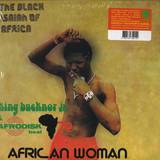
A fantastic afro-beat album from a Fela Anikulapo Kuti disciple and Kalakuta Republic member. A sublime spiritual and political session recorded in 1979 at the Emi studio in Lagos (Nigeria). Arranged and self-produced, this second Kingsley Bucknor's album, hopelessly obscure and impossible to find ranks alongside the best afro-beat album in history!
.
At the age of 19, King Bucknor Jr, also known as the Black Isaiah of Africa, released his second album backed by a 16 band members called The Afrodisk' and 10 background singers .
Two long and hypnotic grooves with all the afro -beat ingredients, fluid and complex drums patterns, strong horns, female voices on chorus, strong lyrics, beautiful keys and horns solos .
Essential for all the afro collectors and music lovers.
Midgar is proud to introduce a newcomer for the third release. A great debut for the maltese Cloned, delivering Sapphire 1990 E.P. The record, way more straightforward and groove centered than the previous Midgar outputs, opens with - Sapphire 1990 - , track that sounds like very nostalgic memories from a timeless rave. On the same side, a live out-take from Cloned's repertory, - The Pendulum - swinging synth-lines which dominate pretty direct rhythmics over a costant background noise. - Belgassem - as the first cut on the B side, is an absolutely heavy one for the label's standards, empowered by a really strong and obsessive acid-line. Closing the vinyl, the slow - Submerging - , groovy drums embraced by very brights heavenly pads.
There’s no direct English translation for the word “hiraeth”. In the Welsh language, it describes a form of longing for an intangible something, somewhere or someone that no longer exists. Sofie Birch and Antonina Nowacka draw on the concept to guide their second collaborative album, a suite of vulnerable, open-hearted improvisations and reflections that attempt to grasp an image of the past that’s chimeric, dissolving almost as soon as it materializes. The duo’s process follows the same distant beacon; unlike Languoria, their critically acclaimed debut, Hiraeth is, at heart, an acoustic record, informed by in-person improvisations with voices and string instruments that gesture to an era before computers, AI and DAWs. It’s just as lush, but Hiraeth is warmer and more muted than its predecessor.
Nowacka and Birch conceived the album in the wake of a slew of collaborative live concerts, spurred on by serendipitous improvisations and an interest in paring down their setup. Unsound arranged a retreat in Sokołowsko, an idyllic village nestled in the verdant hills of Southern Poland, close to the Czech border. Sokołowsko surrounds a large ruined sanatorium that’s rumored to have inspired Thomas Mann’s 1924 novel The Magic Mountain, and has long been a magnet for artists. The two took the opportunity to rethink their approach completely, arriving with just a guitar, a zither and a portable Nagra reel-to-reel machine. Recording directly to tape, they sketched out ideas with just their voices and instruments, reflecting their surroundings without being distracted or mediated by modern technology.
“We wanted to get away from screens as much as possible,” says Birch, “to bring to the world something vulnerable and honest. Without advance preparation, every day we went out into the open air, finding places to sit, during sunset or the midday sun. We discovered new tunings on our instruments, picked up a melody, and started the machine, playing over
and over till we got a take.” In the autumn, they met again in a Copenhagen studio, sparingly and carefully layering old synths and organs to add more depth without muddying the mix.
Both Nowacka and Birch sing throughout, their voices threading the acoustic instruments and tangling with each other, almost becoming one. But it’s the environment of Sokołowsko, “the birds and the light, even the wind playing against the harps,” that’s woven into the music’s lining. Affected by time spent meditating and in nature, as well as the fact that Birch was pregnant whilst recording, the album feels alive and remarkably present. Even the sound quality of the tape machine gives Hiraeth a tactile, organic quality, as Nowacka puts it, “like being in a warm bath.”
They still have the raw recordings from Sokołowsko on old reels, physical souvenirs of their time spent making music in a “habitat for intuitive songs, a little ecosystem, alive and spirited.” The outmoded gear and remote setting helped the duo disengage from the modern world for a few moments and imagine an existence that’s been lost to time and nominal progress. With digital technology receding into the background, Nowacka and Birch had space to make “intuitive connections with frequencies and people,” as Birch explains. Hiraeth is a testament not to nostalgia, but to the power of kinship.
A guitar stands alone in Wedding, that metropolitan biotope in the western center of Berlin, caught in constant transformation between idyll and abyss. It lets its gaze wander, unsettled, almost shy, until it encounters a trumpet, with which it begins a cautious, then ever more intimate pas de deux.
Welcome to the second studio album by the Berlin-based band Conic Rose.
The album title Wedding is no coincidence. The story of Conic Rose is closely intertwined with the Berlin neighborhood that gives the record its name. The band's studio is located here, and both studio albums were created in the immediate vicinity of the small river Panke. This place settles over the music like a warming patina. The album feels as though the musicians and the neighborhood have invited one another to get to know each other. Not least because Wedding also means marriage. These marriages between a band and an urban landscape, a fading past and an emerging future, fear and hope - unfold in every single song on Wedding.
For their second album, Conic Rose repositioned themselves completely. Not in terms of personnel, but in the question of how to move forward. Conic Rose still sound like Conic Rose; their distinctive blend of cinematic jazz, ambient textures and guitar-led contemporary music remains untouched. And yet Wedding is, in many ways, the conceptual counterpart to their debut album Heller Tag. Where the debut documented movement within an urban setting, Wedding describes a state of being. Behind every piece seems to hover a large question mark.The group opens up its palette, allowing more influences, becoming at once more subtle, more profound, more filigree. It is less about definition than about the spaces in between. The most immediately striking difference from the previous album is the strong presence of the guitar. In Bertram Burkert's playing, many voices seem to converge. His yearning openness forms an equal counterpoint to Döben's trumpet and flugelhorn. Blurred and layered sounds occasionally make the ground seem to slip away beneath one's feet, while Döben's gliding lines create both closeness and distance. Together, the band express in a deeply subtle way a sense of life that corresponds precisely to our time. Something lurks in the background, omnipresent yet still unnameable. Conic Rose need no words to convey this feeling of uncertainty with remarkable eloquence. Perhaps this has something to do with Wedding being a place of confrontational introspection, but Conic Rose confront the escape from escape itself. With the recording and release of Wedding, this process is far from complete. The seed only begins to grow in the listener's ear. With every listen and the echo it leaves behind in memory, the studio bud continues to bloom. The album is merely the point of departure. What ultimately matters is what it sets in motion within those who encounter it.
- 01: The Right Waythe Right Way
- 02: Thinking About You
- 03: Never The Same
- 04: There Is A Light
- 05: Wanna Be With You
- 06: But I Do
- 07: Maybe In Another Life
- 08: By Your Side
- 09: A Miracle Or Two
lovetempo is the solo project of Mattie Safer, former member of the beloved New York electroclash band The Rapture, now channeling his club-rooted background into contemporary disco and electronic soul. The album features a strong cast of collaborators including Dougie Stu (Brijean), Toribio, Kate Mattison (79.5), and multi-instrumentalist Izaak Mills, with mixing and additional production by Carlos Truly (Ava Luna, Juan Wauters, Frankie Cosmos). The project has received tastemaker support from Gilles Peterson and Laurent Garnier, airplay on BBC 6Music, KEXP, and KCRW, and editorial placement on Spotify playlists including Pollen, Metropolis, and Jazz House.
- 01: Taste This Sound
- 02: Make Me Dance
- 03: Go Let Your Freedom Grow
- 04: Fight!
- 05: Tic Toc
- 06: No More
- 07: Once Again
- 08: Feel It
- 09: Aria
- 10: Falling Down
Until We Are Free is the debut album from fabric, a collective of musicians from diverse backgrounds united by a shared goal: to fuse irresistible rhythms and grooves with a direct, socially conscious message that draws vital attention to the contradictions of modern life. The project's name itself evokes the idea of a living, dynamic ensemble—a creative intertwining of different threads, from musical genres to founding musicians and guest collaborators, all actively woven into the social fabric.
The record blends funk, soul, and Afrobeat with a sharp, contemporary urban attitude, resulting in a sound that functions simultaneously as sonic resistance and an invitation to the dancefloor.
It finds its place in a lineage that runs from Fela Kuti and ESG to The Comet Is Coming, Sault and Jungle.
At its core is the conviction that music and civic engagement can coexist seamlessly without being didactic. While the lyrics—entirely in English—tackle themes of rights, equality, and freedom, the groove remains the heartbeat: constant, pulsing, and relentless.
Mixed by Tom Campbell (whose credits include Sault, Little Simz, Adele, Michael Kiwanuka, and Jungle) and featuring art direction by Raissa Pardini, Until We Are Free is a soundtrack for complex times. It is an invitation to refuse neutrality and isolation, and to imagine—together—new possibilities for movement, resistance, and the future.
fabric's singles "Taste This Sound" and "Fight!" have been featured in FIP's Spotify Playlists "FIP Radio (en live)" and KEXP's "New This Week" and "KEXP Rotation".
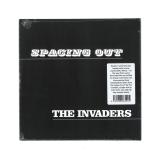
Rough n' wild funk jam loaded with insane psychedelic effects - all the way from sunny Bermuda! Reissueing now these two instrumental funk masterpieces taken from the mega rare LP by The Invaders. 'Spacing Out' is an instrumental funk masterpiece only ever issued in Bermuda at the turn of 1970, taken from an exceedingly rare album sought out by rock, funk, soul and hip hop sample fiends - and bootlegged - for decades. It lays out the band's funk bonafides: a relentlessly tight conga-filled groove, the punchy wall of intertwined horn leads, and raucous unintelligible background vocals adding extra mystique. Above all was the exaggerated deployment of reverb and echo (a decision most of the group's members credit to recording engineer Ian Marshall) which ricocheted off and reanimated every lick as an otherworldly transmission, infusing a vibe both earthy and interstellar. On the flip we find 'Latin Lips' a heavy funk cut with a jazzier vibe, also taken from the mega rare LP by The Invaders. 7" vinyl reissue of these essential funk masterpieces from Bermuda loaded with insane psychedelic effects!
Laputa, a title taken from the fantastical floating island of Gulliver's Travels is aptly named as 'The album that never landed' for, apart from a limited touchdown in Japan, Laputa was never released. This mystical world is a summation of Yokota's journey so far, a complex and at times challenging work but immeasurably rewarding. Beguiling and bewitching in equal measure.
Over fifteen undulating sonic fugue states, he guides listeners round a liminal world, made up of familiar materials but formed in a way defying all laws of perspective and physics. Background murmurings give way to almost uncomfortably foregrounded chattering, and one perceived soundstage segues into another impossible tableau of sonic apparitions, some recognisable in form, but all boldly decontextualised and arranged in expertly cluttered amalgams.
Laputa's obscurity was a prime reason Lo Recordings decided on the Skintone retrospective. Falling as it did between The Boy and the Tree on The Leaf Label and our own debut of Symbol. It was something of an audio crime that the album had never been properly explored and discovered. Lo Recordings hope Laputa can now ascend to its rightful place... hovering above us.
The history of house and disco music is full of gospel soul singers creating anthemic bangers for the dance floor. Annie and the Caldwells, a family band from West Point, Mississippi, are the latest to join their ranks.
============================
This collection — featuring remixes from musclecars, Kornél Kovács, Alexis Taylor (of Hot Chip), and disco icons Nicky Siano and Justin Strauss — follows the release of the Caldwells’ wildly acclaimed debut Can’t Lose My (Soul) Luaka Bop, Spring 2025. Hailed as “a masterpiece” by The Guardian (★★★★★), and one of the best albums of the year by The Times, MOJO, UNCUT, and The Economist, Can’t Lose My (Soul) found fans all over the world — like Sir Elton John, who called their album “A great, great record that I insist you go out and buy.”
“I was blown away when I first heard the original version of ‘Wrong’,” says Kornel Kovács, whose remix of “Wrong” appears on this white label. “Deborah’s voice floored me, as well as the background singers. One of the greatest vocal performances I’ve heard, let alone worked with. The result is a club-ready take that’s become a highlight in my recent DJ sets.”
Producers Brandon Weems and Craig Handfield (of musclecars) had a similar experience when they heard the family for the first time: “We quickly fell in love with the groovy bassline and the choir vocals,” said Craig. “We thought it’d be fitting to put our own spin on it, while paying homage to those jive brothers from Tulsa. The uplifting keys paired with the punch of the drums, rounded out with that organ…this one is sure to bring a joyful noise!”
Annie Caldwell and her family have since performed in more than twenty countries on four continents, and recently made a star turn on the UK's preeminent music program Later... with Jools Holland. They’re hitting the road again in 2026. Watch this space.
[c] Wrong [You Dropped a Bomb] - Extended Wooden Dance Floor Mix (A Nicky Siano Production) 6:48
- 01: Cottongrass
- 02: Tundra
- 03: Cold Blow
- 04: Desolation
- 05: Ascending
- 06: Voices
- 07: Metamorphosis
- 08: First Light
- 09: Kaleidoscope
- 10: Adrift
- 11: White Fields
- 12: Last Light
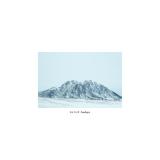
London-based musician, composer, and NTS resident Kit Grill presents his extraordinary new album 'Andøya', inspired by a solo residency on the eponymous Norwegian island, a profoundly dramatic territory situated in the Vesterålen archipelago, inside the Arctic circle.
With evocative, sonorous ambient, drone, minimalism, experimentalism, and modern classical music, Grill captures the environmental essence of a remarkable region; an isolated Nordic landscape of small coastline villages, raw peatlands and sublime mountain ranges, surrounded by wide, open views of the Arctic ocean.
Drawn from his experience on solitary excursions around the island - hiking, exploring, and encountering the locals - 'Andøya' is a beautifully stark, stirring exploration of acoustic phenomena, seclusion in nature, and the expressive power of unique landscapes. For Grill, the trip entailed a surreal day-night cycle, and his experience has had far-reaching, existential implications, both for his practice and his perspective:
"On the 8th January 2025 I travelled to the Norwegian island of Andøya, in the Arctic Circle for a three week solo residency. Surrounded by sea, snow, and mountains, I lived in isolation and travelled around the island each day documenting the landscape. At 10am, the background light of the sun beneath the horizon would light the day and in the 4 hour window of light, I would hike into the mountains and explore the wilderness. It was a profound experience that changed the way I thought about sound, solitude, and what it means to be alone in nature."
"Since returning, I created a body of music informed by that time to try and capture the vastness and unpredictability of the Arctic landscape. The album moves through the sensory extremes: ice cracking, storms forming and fading, the rumble of tectonic plates, waves crashing, harsh winds, trudging through snow, and the sharpness of freezing air. The album aims to reflect both the landscape itself and the shifting emotions that came with living in isolation and the Arctic environment. The music and photography serve as a recorded diary of my time there, documenting the experience."
L. Jacobs releases his second album, Behind the Great Curve, on the Belgian label Blickwinkel. Featuring contributions from Milan W., Sarah Yu Zeebroek, and Joachim Badenhorst, the follow-up to the surprising debut Enthusiasm was initially composed and recorded in Jacobs’ small attic room and later refined at Milan W.’s Van den Nest Studio, where W. also handled production and mixing.
A line or outline which gradually deviates from being straight for some or all of its length.
Behind the Great Curve explores and celebrates the beauty and universality of the abstract notion above and what we commonly refer to as the curve. Its presence, allegedly, is everywhere. It is a form that appears visually, mathematically, and symbolically — a line that suggests motion, time, expectation, and impermanence.
This album aims to listen to all of this — the poetry, the irony, and the faint background hum of modern life — with quiet curiosity. Within a gently meandering, synthesized landscape, a collection of dreamlike compositions unfolds: delicate melodies, sparse percussion, warm buzzing synths, and fragments of field recordings coexist in carefully measured imperfection. Colorful yet minimal in aesthetic, the album does not seek to explain the curve, but to follow it.