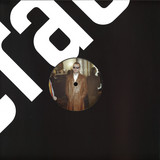
The remarkable thing about BELP's new album is its two-dimensional function. It works both on a loud and a quiet volume. Some tracks would go down well as a club track, like opener 'Travelling Thru Galaxies'. This track brings back memories of the best work released on the Hyperdub label, with it's fine combination of synths and irresistible, dubby beats. Elsewhere, 'Off Ending' might start off as 'dancehall-but-not-quite dancehall' track but when half way the synths kick in they change the feeling of the track to a more cerebral level.
BELP is the artist name of Sebastian Schnitzenbaumer. Born in Munich, he partially grew up on the Seychelles islands off the coast of East Africa. Educated in classical piano, those two gravitational poles, European and African influences, form the basis for his musical development. Currently he has close ties to the (dub) Sausage Studio in Hackney, London. In his hometown Munich, the Bavarian capital, BELP took a central role in a series of discussions and events aiming to improve the image and possibilities of Munich, which to his regret is a predominantly posh and hedonistic city where optimistic and uplifting music take central role.
In different guises Schnitzenbaumer works as a much needed antidote. Since 2013 he runs the Schamoni label, focusing on supporting local artists like Leroy and Protein. Its sublabel Jahmoni is responsible for recent works by international artists like Aaron Spectre and DJ Marcelle/Another Nice Mess.
BELP's music is dark, serious and layered. His love for dub and dancehall shines through in his broken beats. At the same time the synth layered tracks give the album an atmospheric feeling.
This also is what makes this album essential: it's refusal to be pigeonholed. The last track on side A, 'By Beauteous Softness', is an a cappella rendition of a 17th century Henry Purcell piece, beautifully sung by Alexander Schneider. This track is preceded by 'Transmission', which is a brilliant abstract work, sounding like wind closing on you from all sides. And you can sip a cocktail whilst listening to the jazzy 'Time And Again' (BELP once worked as a jazz pianist).
It's clear to hear BELP took a long time recording this album. Every note, synth, drum beat, is carefully placed. But what the album might lack on spontaneity it more than compensates this with its sheer musical beauty. This also reflects on the abstract sleeve, like 'Elephants' designed by BELP himself.
Enjoy this album on big speakers, as background music or simply on headphones. There will always be new sounds and layers to be discovered!
Search:background
Fresh on Francis Harris' Kingdoms imprint comes Rasmus Juncker's 'Ophold' - six tracks of sublime atmospheres and textures. The Danish musician, sound composer and DJ fits perfectly with the label's aesthetic, joining the dots between ambient, leftfield electronica and modern classical.
Juncker has a background in studying jazz drumming and has been playing improvised music within the jazz domain for many years. He also started to DJ at the age of 14 and was introduced to the world of electronic music production at the same time.
When Rasmus started to think about his debut album he spent several months trying to find his own way to combine his favourite musical influences, improvisation, electronics and classical music. 'Almost a year later', Juncker says, "I went to a sensory deprivation floating tank in Copenhagen while researching for another performance and while I was lying there, floating in the water, deprived from most of my senses, I got the idea to do something drastic in my musical process. Philosophers like Immanuel Kant describe this deprived state as a mental 'Cesura', which became some sort of guideline for the album."
So Juncker decided to start working on the album by leaving the process as well as the final result completely open. 'I wanted to create sounds and music that I had no idea what they would sound like, but would feel like a mental 'Cesura', an 'Ophold' (in Danish)' he states.
He invited musicians, one after the other, to his studio. "I had an electronic musician to improvise patterns and new interesting sounds based on my experience in the deprivation tank. I chose some of the takes and some weeks later I invited a jazz guitarist to listen and improvise on top of what he heard. Then a classical string quartet and a double bass player came to my studio months later, and finally I recorded myself on percussion and drums.
Throughout the recording process I've been experimenting with special microphones in various setups, used noises from the recordings and the room became absolutely essential for the pieces." Juncker states.
"The material I used was all first take improvision which I arranged, layered and edited into compositions. The final pieces were mixed by Andreas Pallisgaard with the same improvised and experimental approach of the recording and the production. None of the musician met each other, but their sounds developed into something completely fantastic I think. The presence of the acoustic instruments and the depth and complexity of the synthesized layers gave some kind of an indescribable sounding music from another galaxy.
Track by track:
'Norddrum' starts proceedings - ethereal, grainy sounds merge and disassociate, as a distant rhythm gradually finds its way to the fore.
The second track, 'Sora' , clocking in at under 2 minutes, is an interlude full of strings, pads, and percussive hits, rich in feeling. This strong sense of sound design and seemingly disparate sounds woven together into a whole carries through into 'Eksotisk Tirsdag' - the strings, plucked instruments and electronics harking back to 4th world adventurers like Jon Hassel and Brian Eno.
'Cyklus' dives into drone textures, pulsing and modulating to create an unearthly soundtrack.
'Havekunst' is another 2 minutes interlude, this time bringing a fully charged rhythmic barrage to the front.
'Cesura', the final track is in essence the EP's centerpiece - a sprawling 8 minute journey that traverses tense, fibrous sections and on into pulsing modular passages, before opening up into glorious moments of wonder and brightness. It's a hugely bold yet fragile endeavour, in line with the whole release.
The third release on the sister label, NEW YORK TRAX Imports, comes from the legendary Dutch producer and founder of one of the most eclectic underground record labels, Vincent Koreman aka Drvg Cvltvre of New York Haunted. Since 2009, Drvg Cvltvre has been working on his own blend of dystopian acid, no wave, and experimental house. Respected in the international underground for his groundbreaking work in experimental techno as RA-X in the 90's on labels like Bunker and KK Records, Drvg Cvltvre comes from a DIY punk background and opts for hard work rather than hollow pose. The 4-track EP for NEW YORK TRAX Imports is an accurate representation of his style: dark and melancholic, but also uncompromisingly intense.
Face Time is the second release from the trio of Oren Ambarchi, Kassel Jaeger, and James Rushford, following on from their 2016 debut Pale Calling. Recorded at the GRM studios in Paris in June 2017, the record immediately returns to the idiosyncratic sound-world of the trio's first release, a simmering stew of electronic smears, pitched-down animal moans, and mysteriously emotive microtonal organ chords. But before long the record takes an unexpected turn, as sounds that initially enter as occasional percussive pitter-patter build to a halting rhythm. Equally reminiscent of Basic Channel-style dub techno and the sound of a microphone loose in a pocket, these stumbling rhythmic figures provide the framework for the remainder of the record's two sides, occasionally receding into the background to allow squelching electronics, chiming bells, distorted autoharp, inchoate grunts and the sound of a Cristal Baschet to take centre stage, but each time returning with the inevitability of a an idée fixe.
Eschewing any clear sense of form, the two side-long pieces move seamlessly through episodes with the organic flow of improvisation, embracing the happy accidents of events conjoined by chance and lingering on liminal moments. Gradually washing out into a cavernous roar, the record's final moments are suddenly enlivened by shimmering metallic percussion and a sequence of woozy synth chords, combining with the muted rhythms and a distant thunderstorm to become a sort of oneiric tribute to the work of Wally Badarou. Bringing together three of contemporary experimental music's most individual voices, Face Time is an essential slice of outsider electro-acoustics. Cover design by Stephen O'Malley. Mastered and cut by Rashad Becker at D&M, Berlin.
* Following on from last year's debut release on Cold Recordings, Cocktail Party Effect makes a welcome return to the imprint with 4 new genre-melting rhythmical workouts, charged and ready for the dancefloor.
* 'Lemons', the eponymous EP title track, kicks things off, opening with dubbed-out chords and a fidgety, rattling percussive loop which eventually disappears into the background as the breakdown primes itself for the drop. Suddenly, in comes a hyperactive rhythmical workout, rolling at 128bpm but turbo charged with double time percussive flicks. Soon the dub elements return to fill out the sonic, keeping the pace lively and engaging. Quality, effective dancefloor music.
* Following straight on is 'Bangers' which almost sounds like an imagined collaboration between JA rhythms stars of the moment, Equiknoxx and Walton or Batu. Squelchy drums and a t'umping bassline roll things out in fine style.
* Flip the plate then for 'Quite' which brings things back into slightly more familiar territories, utilising a swooping bassline as pitched, deranged vocal stabs swirl about and tight drum programming keeps the pace moving. Last up is 'Flat Football' which returns to a similar form as the title track, 'Lemons'. Manic drum programming is used to create the impression of being in fast forward without moving the tempo over 130bpm! Not for the faint hearted.
South African Mbaqanga And Bubblegum Instrumentals For The Dance-floor. First Time Available Outside South Africa. Cult Favorite Among Collectors. Follows The Successful Reissue Of bafana Bafana' Last Year. Professor Rhythm's 1991 Recording Professor 3 Is A Vivid Reflection Of Urban South Africa As Apartheid Was Ending. Thami Mdluli's Production Project Had Young And Old Dancing To A Sound That Sought To Unite Blacks Within Southern Africa. our Music Gave Hope To The Hopeless,' He Says. Mdluli's Third Instrumental Album (which Contains Some Background Vocals, To Be Exact), Portrays The Moment When The Dominant Mbaqanga And American R&b-based Bubblegum Sounds Being Produced In Johannesburg And Other Urban Centers Were Transforming Into House And Hip-hop-inspired Kwaito. The Pop Of The 80's And All That Went With It—from The Models Of Synths And Drum Machines To The Lyrical Style—gave Way To A Changing Melodic Emphasis And New, Much Slower Tempi Using A Completely Different Rhythmic Skeleton. Upbeat, Chipper Bubblegum, Often With Double-time Breakdowns And Upstroke Syncopations, Faded And The Sounds Began To More Closely Resemble Those Of Contemporary Black America—where Hip-hop Was Slowing Down And The Bass-lines And Melodies Were Getting Moodier, Darker In General. At The Same Time House Music Had Briefly Reached Mainstream Acceptance In The States And That Popularity Continued To Feed Into Awareness Overseas. These Two Influences Blended With The Burgeoning House Music Scenes In Johannesburg And Pretoria As Professor Rhythm 3 Was Being Produced In March 1991 (the Same Year Apartheid Ended). Mdluli Explains, we Were Influenced By Foreign Bands And So People Updated Their Sound.' According To Mdluli, The Evolving Sound Was Bolstered By Widening Availability Of House And Rap Records From Abroad While, Most Importantly, An Increasing Sense That Apartheid Might Soon Be Finished Was Met With A New Positivity Vibe Society. 1991, '92, '93... Mandela Was Released. People Were Upbeat, They Were Happy, The Music Was Good.' Professor 3 Came Out On Vinyl As The Lp Business Was Dying In South Africa And Sold Around 20,000 Copies. It Was Mainly Distributed On Tape, Which Sold Closer To 100,000. With The Help Of Engineer Fab Rosso, The Recording Features Backing Vocalists From Mango Groove. After Making A Half-dozen Records As Professor Rhythm, Mdluli Once Again Shifted His Focus Musically. By The Mid-90's He Had Veered Off Gospel Music— And Left Playing In Bands And Started Making His Own Solo Recordings. His Enormous Success In The Gospel Realm In The Years Since Is A Remarkable Story In Its Own Right, But For Now We Are Only Dancing.
Losoul's Another Picture label follows on from EPs in 2017 by Honesty and the label boss himself with a new two tracker by Japanese artist Sasaki Hiroaki. The Yotsume label owner is based in Tokyo and his sleek sounds take cues from 80s new wave and look for a soulful vibe in electronic music. 2018 has already seen him release on Open Recordings and now he offers up some warm house rollers for Another Picture. 'EO1' is eight minutes of rubbery drums and loose, scattered percussion, tumbling toms and clicks. Dreamy chords light up the background and the whole thing drives ever deeper into the night, always evolving as it goes. On the flip, 'Plain Song' is just as heartfelt, but icy hi hats and metal stabs are more upright, getting you on your toes and keeping you there for another eight minutes of organic, authentic deep house bliss.
Here We Are Releasing The Second Album Of Cologne Born Producer Thyladomid Who Is Familiar To Many Through His Work On Hamburg Label Diynamic Which Has Lead Him To Perform Around The World, Together With Artists Such As: Adriatique, Solomun, Kollektiv Turmstraße, Hosh, David August, Stimming, And Many More. More Then 30 Minutes Playing Time, 6 Tracks And Artwork By Florian Kramer Offer A Lot To Discover. Thyladomid Is Famous For His Forward Thinking Deep Melodic Dance Music Which Earned Him Respect And Support From Many People Of The Scene And Evolved Also In Cooperations With Adriatique And The Singer Mahfoud. You Can Find Two Tracks Featuring Mahfoud On The Album. With His First Album "interstellar Destiny" In 2015 Thyladomid Has Already Changed Towards More Introspective Music And You Will Hear He Has Taken That A Step Further Here. In Comparison To His First Album, "places" Refers To Different Places Which Inspired Him To Write The Album And Offers A Higher Level Of Complexity In The Making Of Music Which Has Helped Thyladomid To Enhance The Moody Quality In A Dazzling Way Sometimes Even Spine Tingling When You Let Yourself Go To Explore The Abundance Of The Trax. As He Said In His Own Words: - the Albums Intention Was That Of An Organic Produced Album With Different Moods. Instruments Such As Piano And And Violin As Well As Field Recording Bring Alive A Special Quality. The Bouncing Of Stones On A Frozen Pond Recorded With Multiple Microphones Suggest For Example An Authentic Spacious Quality. The Self Recorded Percussion, Sometimes Quite Exotic Were Included In All Of The Tracks. The Combination Of Synthetic Sounds With Traditionally Instruments Was One Of The Big Challenges For Me. The Piano And Prophet 6 Und The Moog Sub37 Were The Main Instruments Used For The Album'. Thyladomid Started Working On The Album 2 1/2 Years Ago. His Classical Training On The Piano Helped To Quickly Come Up With A Musical Theme Which Is Based On Different Tonalities Which Were Then Linked To Each Other And Which Actually Helped To Structure The Whole Release. The Good Weather In Summer Was A Good Inspiration And Finally Led To The Idea To Dedicate Tracks To A Certain Place, A Place Which Means A Lot For Him. From That Idea The Title Of The Whole Album Derived: "places ". "a Little Church In Amsterdam" As He Says "is Such A Track Encouraged By The City Of Amsterdam I Love And Respects So Much And Actually Have Spend So Much Time In. It Is A Track I Played Outside In My Garden To Friends And Which Works Perfectly For Me.' "a Little Church In Amsterdam" Is A Track Where Melodies Bloom And Flourish. It Feels Like Zooming In On Nature Grasping A Time Lapse Symphony. "blossoming Limburg Ft Mahfoud" Was Born In The Capital Of Limburg Which Is Located In The South Of The Netherlands And Reflects The Summer Of 2017 And Was Recorded In A Warehouse. It Reflects The Intimacy And Synergetic Level Between Mahfoud And Thyladomid. The Fantastic Deep Vocal Track Is Spiced Up With Lots Of Acoustic Details Which All Happen In The Background But Effectively Surface To Pull The Listener Into His World. "night Owl" Is A Lyrical Dreamy Piano Piece With A Melancholic Note And An Ear For Details. Acoustic Finesse Presented On An Episodic Scale. We Guess The Track Was Influenced By The Works Of Four Tet Or Pantha Du Prince. "kollwitzplatz" Is A Small Park In Berlin's Prenzlauer Berg Which Was Thyladomid's Home For 2 Years . - the Cafes And Restaurants Laced By The Alleys Of The Kollwitz District Resemble A Piece Of Home For Me And Represents The Time Of My Stay In Berlin'. Musically "kollwitzplatz" Is Full Of Life. You Can Hear Children Talking While The Piano Attracts Sounds Like Moths Are Attracted To Light. The Track Offers This Richness Of Percussive Elements And Sound Sources Creating A Stunning Complexity Which Does Not Limiting Itself But Rather Creates This Free Flow Of Acoustic Signals. You Instantly Will Feel: There Is A Lot To Discover At "kollwitzplatz". "underwater Rhapsody", The Title Says It All: It Has That Episodic, Free-flowing Structure, Featuring A Range Of Highly Contrasted Moods, Color And Tonality. What It Actually Means To The Listener Is That Grande Chords Meet Dissonances Of Sound That Fly In Like Drones Cross The Big Time Melodies That Gain A Centrifugal Force At Times... And All This Leaves You Dizzy And Creates Another Big Listening Experience As The Whole Album Is Directed To Entertain You In A Smart And Distinguished Way.
[E b2 | Places Ft. Mahfoud
For the second release, we bring you obscure 1985 North Carolina boogie/gospel/electro banger filled with crazy bass synths, piano chords and rhythm machines. Very proud we managed to put out this unique record.
Also supported and played by Peanut Butter Wolf from Stones Throw!
Few words from the man himself:
"I was 32 years old when I did "Come Together", I recorded it in the studio in Charlotte, North Carolina, USA. It was my first studio project. I wrote it to reflect on how we all are God's creation and we all need each other no matter our skin color or background, we should love each other as God tells us to. I always wanted my music to go mainstream and worldwide to reach everyone. Shurfine gospel record company picked up my record and the rest is history..."
Coletivo Vandalismo kick-start a new 12" series for the Contort Yourself label. Hailing from the city of Porto the duo also DJ under the name GAM and released their debut LP on Lake Haze's Eye For An Eye label. Their music has an immediacy that seems to stem from a background in live performance as opposed to polished studio sessions - an improvisational punk aesthetic that manages to carry this EP so strongly. Wild, crashing fx and unrecognisable vocal distortions layer atop wonky 90bpm drum machine grooves and the pair even show off what may be their turntablism skills on 'Zombie Zombie'. There's a nod to early concrete on the closing track 'Black Sun's Demise' with whirring, mechanical noise motifs suddenly jolting us into punishing gabber-at-33-minus-8 territory. The DIY spirit is alive and well here and the feeling that things could fall apart at any minute just adds to the tension.
Berlin based Jens Dohle is a man of many talents. An accomplished composer and arranger for theatre productions across Europe, classically trained multi instrumentalist, explosive live drummer for YE:SOLAR, Munk, Hot Coins, Sado Opera. Longtime collaborator with Danilo Plessow aka MCDE and Noema from African Shakedown fame. Remixer for Jazzanova and 4 Hero. There's not enough room here to list his amazing work.
2018 ushers forth a new identity to his already enviable C.V with his first EP as James Dole (a jokingly anglicised version of his birth name). The 3 tracks here all showcase his ability to create a strong mood and use great splashes of melody and rhythm but without ever losing the groove. Written during a period of 'introspection' in deepest, darkest Berlin, each one tells a different story.
Ex is a moody monster of a track. It builds and builds into a pounding nightime symphony with a kind of epic-ness which hints at many years spent mining the highs and lows of music, love and life. Big room yet with a gut wrenching soul beneath the slightly flamboyant majesty. Made in East Berlin and well road tested in the cities debauched nightclubs.
Fantasia shows off Mr Doles jazz and broken beat background with rolling, funky drums sashaying with hip hoppy live jazz keys. Then those signature euphoric yet melancholic synths appear halfway through the track to create an emotionally halcyon mood. WIBES.
The EP closes with Grande. Super melodic yet cinematic with amazing synth work and a sophisticated arrangement showcasing James's well trained musicianship and artistry. An opus of melody and longing built for Italian arthouse films about unrequited love.
DJ Support from - Midland, Honey Soundsystem, Sandrino, Jimpster, Ame, DVS1, Shadow Child, Joe Goddard, Red Rack'em, Futureboogie, Soft Rocks, Domenic Cappello, Downtown Party Network, Danny Russell
he 30D Records machinery does not stop. A new stylistic adventure has been concretized in the new label's series 'Eyes Have It', which will be conducted by the well-known Sonar and 30D's resident DJ, Angel Molina, as A&R.
The Lucio Fulci's movies iconic scary-eyes synthesizes the series essence perfectly. 'Eyes Have It' builds the fundamentals for the boundless experimentation, lightlessness, cold and mechanical dynamics.
The EP 'Shelter' is the very first result of this new proposal, an incontestable work signed by Isolated Lines. The Swiss artist has a solid background in underground music throughout various projects, in and outside of electronics.
That means a wider creative resources that can be easily noticeable, for instance, in the music harmonies. Avant-garde, solid sound and savoir-faire, that is what defines the Isolated Lines production.
'Shelter' EP stylistic codes are crystal clear, brazen obstinacy of the rhythm base which sets the basis for epic distorted textures, that may become deeply emotional, like in the cases of 'Onshore' and 'Landfall'. Steadfast rhythmic cycles on slamming sound mantras.
Furthermore, the EP includes an industrially nervous revision of 'Onshore' constructed by 30drop.
Isolated Lines' 'Shelter' EP is an utterly flawless starting point for this strongly promising new 30D series. So henceforth, keep always an eye on 'Eyes Have It'!
"Emotional Rescue begins the first in a series of reissues looking at the music of guitarist Carl Weingarten and his Multiphase Records label, starting at his highly sought after collaborate album with Walter Whitney, Dreaming In Colors. With an early interest in photography and Super 8 film leading to a degree in cinema production, Weingarten's other, self-taught, love was the slide guitar. Taking its blues roots and merging them with his visual arts background created a unique "painting in sound" style of playing. While looking to break into the film industry he began writing and recording his own film scores and other music for modern dance companies. From this, he founded Multiphase Records in St Louis in 1980. By the time of Dreaming In Colors, the label had released a series of cassettes and vinyl albums offering abstract, experimental, jazz-fusion, new wave and increasingly, new age compositions. Throughout this period the work of engineer, keyboardist and programmer, Walter Whitney was often present and by the 1985 release of Dreaming In Colors the duo had collaborated for a number of years and released several projects together, most notably as members of the Delay Tactics band. Recorded during off days from the Delay Tactics sessions, the album came together at Whitney's Subterranean Sound studio with a focus away from the bands guitar driven instrumentals to explore a multilayered approach to synthesis, blending textures with Whitney's original samples and sound design, while Weingarten's guitar moved from shining solo moments to complimenting the overall oeuvre, all with heavy washes of delay. This ecumenical approach led to the creation of this compelling album. A masterful conceptual whole that is linked by rich melodies and a concise playing style, heavy on substance while never forgoing the uplifting vibrations. "
In the Eighties there was an incredibly interesting underground scene emerging in the Belgian Leuven area. Bands like 'The Neon Judgement', 'Sovjet War' and countless others all came from that area and era. One of the most underestimated bands in that scene was 'Company Of State', a duo with a unique sound that played dark moody guitar-electro with a minimal DIY touch. Influenced by a wide array of artists (such as Joy Division, Velvet Underground & Edith Piaf) the duo Rudolf Hecke & Paul Taes formed the band 'Company Of State' and recorded their self-titled debut (a four track 7'EP) on their self-founded label in 1983. Best described as: wild guitars with all kinds of feedback & distortion combined with a heavy bumping rhythm-box in the background... and once the vocals kick in you get that melancholic magic that makes this EP a true classic. With this kind of pedigree, it was only logical that the band landed in the stable of Ludo Camberlin and his label 'Anything But Records', where Belgian dark & danceable underground groups such as 'The Neon Judgement' & 'Aroma Di Amore' resided in those days. Later the band would move to Maurice Engelen's label 'Antler', in company of similar acts such as '2 Belgen', 'Nacht Und Nebel', 'Siglo XX' and many others.
"The kind of melancholia I'm talking about, by contrast, consists not in giving up on desire, but in refusing to yield. It consists, that is to say, in a refusal to adjust to what current conditions call 'reality' - even if the cost of that refusal is that you feel like an outcast in your own time." (Mark Fisher, Ghosts Of My Life, Zero Books 2014, p. 24) In Ghosts of My Life: Writings on Depression, Hauntology and Lost Futures', the author Mark Fisher outlines - to put it in a big way - a resistant melancholy. This stands in contrast to leftist melancholy resignation', as well as something which Fisher does not talk about: its common masculine counterpart, habitual post-left cynicism - as in seen it all before'. Fisher calls this hauntological melancholy. Haunting, spooks, ghosts and apparitions are an almost constant presence on I Started Wearing Black', the second album by the Cologne-based artist Sonae (pronounced so-nah'). The term hauntology shares a fate with retro-futurism when it comes to inflationary overuse and abuse. It's a conceptual container that looks good and can hold a lot, indeed, too much. Furthermore, hauntology has its peak season behind it, a term on the threshold of its expiration date. Nevertheless, I would like to rehabilitate hauntology and use it properly to characterize I Started Wearing Black', because the term is rarely as compelling to describe music as is the case here. The most recent other example could be Asiatisch' by Fatma Al Qadiri, but with a completely different frame of reference. What are the ghosts of this music It rustles, crackles, ruffles, crunches, rattles, scrapes, sometimes a beat emerges from the constant noise, sometimes an obscure voice mumbles incomprehensibly, sometimes a melancholy piano figure is prevented by this noise from coming too much to the foreground. It definitely is eerie - to bring into play another term used by Fisher in the title of his latest book, The Weird and the Eerie'. In British pop-jargon, eerie first occurred to me more often when referring to particularly leftfield, spooky and... well... ghostly dub, a bass-heavy, echoing noise, from Augustus Pablo to Creation Rebel to Burial. Unlike the Wald & Wagner records by Wolfgang Voigt, Sonae is not a kind of neo-romantic veiling with a tendency for escapist nebula. It is more a noise of latency. The noise signals a latent - not necessarily acute - threat, a latent uneasiness about... yes... about what About a System Immanent Value Defect' That's the name of a track on I Started Wearing Black' where something that sounds like a French Horn (or a foghorn) battles for attention through or against the background noise. An email from Sonae: The piece 'System Immanent Value Defect' should actually be called 'I See Turkey'. I wrote it for my fellow student Elif - she is a pianist and Gezi Park activist from Istanbul. Through her I witnessed the inner conflict and agitation that political circumstances can create: her feelings of guilt when there was an attack, with her safe in Germany as a student, watching the events from afar. It was horrible. When her mother begged her not to come home because she feared for her safety, I felt a cold shiver run down my spine. I started with the piece from this mood, beginning with the piano, then the noise (modulated sinusoidal curves), which reminded me of waves and the then heatedly discussed Mediterranean sea: atmospheric, melancholy motifs. In contrast is the anger, the pressure, represented in corresponding sounds - hopefully audible! - During this time I started to think about world views as they can be found around the globe, in how far they held by societies and their political representation. I realized that I know of no political system that is actually about the people and what would do them good. It's always about positions, power, money. I thought that was a lot more frightening on a global scale than merely viewing Turkey in isolation. That's why the piece is called "System Immanent Value Defect", because our world suffers from precisely that. Everywhere, it's all about the wrong things.' Between the wrong things there are happy moments. In the title track, after 184 seconds of rattling and hissing, a beat is unleashed, like an arrow released from a spanned bow, a beatific relief, if there is such a thing. White Trash Rouge Noir' first meanders along spookily, then after 144 seconds it transforms itself into a distant cousin of Einstu¨rzende Neubauten's Yu¨ Gung', but there is no Big Male Ego to be fed here, and the black in the album title is a completely different type of black from that of the Neubauten. Furthermore, I Started Wearing Black' was finished long before the black dresses were worn at the Golden Globes as a sign of protest against sexual violence. Sonae writes that she herself started wearing black some time ago. Her reasons are so-called personal ones: ... resulting from an individual situation (lovesickness), I started to wear black (gaining weight and feeling ugly).' The political dimension of gaining weight, feeling ugly and therefore dressing in black in I Started Wearing Black' lurks within the noise and never becomes explicit and only rarely manifest - or a manifesto. Sonae writes about the track We Are Here': A piece for minorities... in this case, considering the current pop-feminist discourse, explicitly for women. Female artists have long been saying loud and clear that 'we are here' and 'electronic music is not a boys club!' But this pop-feminist moment should only be seen as one part of the dedication of the piece. It is for minorities, for the oppressed, who didn't belong enough.'
Klaus Walter
Instant is the trio of Bernd Schöll (Bass, Vocals, Rhythm), Mike Hauer (Guitar, Synth, Percussion), and Marion Siekmann (Vocals) from Munich, Germany. They formed in 1980 after meeting through mutual friends attending the local art and graphic design school. The trio were dissatisfied with their surrounding musical environment. Inspired by the Velvet Underground, Kraftwerk, and Giorgio Moroder, they set out to create their own brand of Neue Deutsche Welle fusing Dada, disco, and Krautrock.
Over the course of 2 weeks in Summer 1980 the band teamed up with local producer Mario Strack to record 6 songs. These would make up their debut eponymous album that was originally self-released on 10' vinyl in 1981. They utilized a simple set up of guitar, bass, and keyboards, plus the BOSS DR-55 Dr. Rhythm drum machine. Metal scraps clanging appear on the tracks 'Do Not' and 'Optimate Minimum', and a washing machine was sampled on the track 'Joyboy', which features Marion reading from the appliance's instruction manual. The A-side features 4 tracks in 11 minute, while the B-side hosts 2 songs in the same stretch of time. 'Charade' features no wave saxophone accompaniment from Kai Taschner of Munich New Wave band Luna Set. Marion's vocals are between Nico's Teutonic chill and Alison Statton's (Young Marble Giants) playfulness, while Bernd takes a monotone approach. Lyrics for 'My Boy' and 'Everybody's Gotta Mutate' were adapted from 'Rotwang', a fragmented novel written by Tim Hildebrandt, one of the brothers famous for illustrating the works of Tolkien.
All songs have been remastered for vinyl by George Horn at Fantasy Studios in Berkeley. The vinyl comes housed in a replica of the original jacket design, which features a neon red screen-printed drawing of a cut-out doll family on a stark white background. Each LP includes a postcard insert with lyrics.
* Taking its title from a Minoan legend that deals with rage, greed and destruction, the latest release from Abyss X expands and reconstructs conceptions of aural space and time. Out on February 16 on Danse Noire, Pleasures of the Bull finds the multi-disciplinary artist and producer flirting with the sounds of hard jazz while mystifying the parameters of experimental music across several distinct movements, thus allowing the listener to break free from their sonic principles.
* Intoxicating, ambient textures mesh with Abyss X's own expressive vocals, as well as the sounds of the traditional Cretan lyra, played by Maria Skoula. Her sound modification creates a collage of temporalities - allow yourself to move outside linear dimensions, and her to confide in you. Prog rock guitar lines twist stolidly beneath warped vocal samples, and the timbre of the bowed lyra permeates the atmosphere in a thick, suffocating haze.
* As the listener travels through space and time, so too does the artist. Abyss X delves into the fullness of her craft, drawing from her background in theater and performance, in addition to the frenzied energy of her live shows as a musician. The music throbs with a frantic yet unmistakably deliberate drama. Pleasures of the Bull feels like a gentle punch in the gut; a compelling auditory performance and a bold exploration of the narrative album format.
more talking all that jazz, more high aiming music by fumio itabashi: mule musiq is ready to release another record by the legendary japanese jazz pianist, born in ashikaga, tochigi in the year 1949.
this time his first solo record ever: the heavy jazzing 'nature', which has never been reissued on vinyl since its birth in 1979. it has been recorded at nippon columbia 1st studio, tokyo from march 13 to 15 in the year of its release.
it features itabashi making feverish love with the piano and sharing the studio with the great bass players hideaki mochizuki and koichi yamazaki, drummers kenichi kameyama and ryojiro furusawa, soprano saxophonist yoshio otomo and vibraphone wizard hiroshi hatsuyama.
they all joined him to perform his very own songs, composed by itabashi himself and produced by ryonosuke honmura, who also produced japanese jazz heroes like saxophonist keizo inoue during his career.
but enough background information. what counts is sound. it is fresh, propulsive, twitchy and melodi-ous from the first to the last tone. sometimes the instrumentalists play a classic solo in an overall deep modal jazz atmosphere that seems to be made for cats that love the good old stars and inventors - from john coltrane to mile davis, from thelonious monk to art blakey.
'nature' also shows how deep itabashi studied the history of the genre, while keeping his very own vision of jazz alive. the man that made his professional debut as a member of the sadao watanabe quintet in 1971 and that also was a member of the elvin jones jazz machine world tour from 1985 to 1987, plays the piano in all tempos: nervous high-flying quick, deeply blue blues style slow.
besides the traditional jazz flavours, you get a feeling of mind-expanding spiritual jazz, that grand mas-ters like pharaoh sanders or gary bartz turned into a sacred music genre. a master-class record in ravishing big city jazz music, adventurous, sometimes meditative, sometimes faster than the speed of light, always grooving with a bright, pure-toned sensibility and deeply soulful melodic imaginations.
it extends the jazz history with a fine balance between tradition and innovation. and it stays infectious all the time while sounding surprisingly fresh due to a lot of thrilling musical spontaneity that touches profoundly even though all notes have been written down by fumio itabashi before he and his combat-ants entered the studio.
and maybe that's the mystery of these timeless five at times epic recordings: all notes been written on paper but each musician had the freedom to dance with them in his very own unique way. so, turn the volume loud and get ready to be steamrolled by fumio itabashi's 'nature', an inebriant album that is talking all that jazz deeply!
Nights of jam sessions in the city of Seville led to the encounter of a Senegalese Birane Amar Wane aka One Pac and Andalusian José Goméz. The couple brings out the best of each other and share their knowledge.
Side B "Ngeum Ngeum" is from their first album called "African Groove" and it has sounds of funk, hip hop and soul with spices from African music.
The record was made with the collaboration of musicians from different backgrounds and origins.
The third chapter in the vinyl installments on Gaze ill's Danish Cue Line Records is written by Belgian artist Zygos, Georgio Roumans. An unforgettable piece formed by 3 distinct original tracks plus an outstanding remix by Italy's most wanted, DPRTNDRP (D- Operation Drop).
The EP opens with the toxic symphony of 'Laicism'. By chest pressuring hits right from the beginning, we're pushed into another world where everything is moving though it feels like time stands still for a moment. Mellow melodies formed in layers of feedback alike sounds and endless reverberated stabs generate a persistent tension held tight by the static, marching drums. The title track 'Sudd' forms part 2 of the journey through Georgio Roumans' explorative universe. To think everything can move this fast yet keeping a minimal expression is beyond reality. From 8th to 16th to 24th notes - variations through the bass, percussion, and melody sections - a discreetly conducted progression is reached throughout the track. Accompanied by weird background soundscapes the sub bass takes the lead on the tight Halfstep- package of 'Tapered'. The drums are simple and hard, which is just what's needed to tame and control the strong movements from the sub. Super minimal for the sound system. Italian DPRTNDRP brings new life to 'Sudd', which awakens in a completely different light than the tempo- filled original. Strange sounds and rhythms, raw and dirty. DPRTNDRP makes the remix a must hear.
The vibe is intense from start to end, and the EP hits perfection due to Georgio's naturally alive style, and the clever remix from the ever boundary pushing DPRTNDRP. Signature sound, deluxe on 180 grams heavyweight vinyl!